

Religion in India

Encyclopedia
Indian subcontinent
The Indian subcontinent, also Indian Subcontinent, Indo-Pak Subcontinent or South Asian Subcontinent is a region of the Asian continent on the Indian tectonic plate from the Hindu Kush or Hindu Koh, Himalayas and including the Kuen Lun and Karakoram ranges, forming a land mass which extends...
; namely Hinduism
Hinduism
Hinduism is the predominant and indigenous religious tradition of the Indian Subcontinent. Hinduism is known to its followers as , amongst many other expressions...
, Jainism
Jainism
Jainism is an Indian religion that prescribes a path of non-violence towards all living beings. Its philosophy and practice emphasize the necessity of self-effort to move the soul towards divine consciousness and liberation. Any soul that has conquered its own inner enemies and achieved the state...
, Buddhism
Buddhism
Buddhism is a religion and philosophy encompassing a variety of traditions, beliefs and practices, largely based on teachings attributed to Siddhartha Gautama, commonly known as the Buddha . The Buddha lived and taught in the northeastern Indian subcontinent some time between the 6th and 4th...
and Sikhism
Sikhism
Sikhism is a monotheistic religion founded during the 15th century in the Punjab region, by Guru Nanak Dev and continued to progress with ten successive Sikh Gurus . It is the fifth-largest organized religion in the world and one of the fastest-growing...
. These religion
Religion
Religion is a collection of cultural systems, belief systems, and worldviews that establishes symbols that relate humanity to spirituality and, sometimes, to moral values. Many religions have narratives, symbols, traditions and sacred histories that are intended to give meaning to life or to...
s are also classified as Eastern religions. Although Indian religions are connected through the history of India
History of India
The history of India begins with evidence of human activity of Homo sapiens as long as 75,000 years ago, or with earlier hominids including Homo erectus from about 500,000 years ago. The Indus Valley Civilization, which spread and flourished in the northwestern part of the Indian subcontinent from...
, they constitute a wide range of religious communities and Indian religions are not confined to the Indian subcontinent.
The documented history of Indian religions begins with historical Vedic religion
Historical Vedic religion
The religion of the Vedic period is a historical predecessor of Hinduism. Its liturgy is reflected in the mantra portion of the four Vedas, which are compiled in Sanskrit. The religious practices centered on a clergy administering rites...
, the religious practices of the early Indo-Aryans
Indo-Aryans
Indo-Aryan is an ethno-linguistic term referring to the wide collection of peoples united as native speakers of the Indo-Aryan branch of the Indo-Iranian family of Indo-European languages...
, which were collected and later redacted
Shakha
A shakha , is a Hindu theological school that specializes in learning certain Vedic texts, or else the traditional texts followed by such a school. An individual follower of a particular school or recension is called a ...
into the Samhitas
Vedas
The Vedas are a large body of texts originating in ancient India. Composed in Vedic Sanskrit, the texts constitute the oldest layer of Sanskrit literature and the oldest scriptures of Hinduism....
(usually known as the Vedas), four canonical collections of hymns or mantra
Mantra
A mantra is a sound, syllable, word, or group of words that is considered capable of "creating transformation"...
s composed in archaic Sanskrit
Vedic Sanskrit
Vedic Sanskrit is an old Indo-Aryan language. It is an archaic form of Sanskrit, an early descendant of Proto-Indo-Iranian. It is closely related to Avestan, the oldest preserved Iranian language...
. These texts are the central shruti (revealed) texts of Hinduism
Hinduism
Hinduism is the predominant and indigenous religious tradition of the Indian Subcontinent. Hinduism is known to its followers as , amongst many other expressions...
. The period of the composition, redaction and commentary of these texts is known as the Vedic period
Vedic period
The Vedic period was a period in history during which the Vedas, the oldest scriptures of Hinduism, were composed. The time span of the period is uncertain. Philological and linguistic evidence indicates that the Rigveda, the oldest of the Vedas, was composed roughly between 1700–1100 BCE, also...
, which lasted from roughly 1500 to 500 BCE.
The late Vedic period (9th to 6th centuries BCE) marks the beginning of the Upanisadic or Vedantic period. This period heralded the beginning of much of what became classical Hinduism, with the composition of the Upanishads, later the Sanskrit epics, still later followed by the Puranas
Puranas
The Puranas are a genre of important Hindu, Jain and Buddhist religious texts, notably consisting of narratives of the history of the universe from creation to destruction, genealogies of kings, heroes, sages, and demigods, and descriptions of Hindu cosmology, philosophy, and geography.Puranas...
.
Indian philosophy
Indian philosophy
India has a rich and diverse philosophical tradition dating back to ancient times. According to Radhakrishnan, the earlier Upanisads constitute "...the earliest philosophical compositions of the world."...
is a confluence of Śramaṇic (self-reliant) and Vedic
Vedic religion
Vedic religion may refer to:*the historical Vedic religion- Vedic Hinduism **Vedic mythology*Shrauta, surviving conservative traditions within HinduismIn wider meanings of the term "Vedic"*Vedanta*Hinduism in general...
streams that co-exist and influence each other. Jainism and Buddhism belong to the sramana tradition. Jainism was established by a lineage of 24 enlightened beings culminating with Parsva (9th century BCE) and Mahavira
Mahavira
Mahāvīra is the name most commonly used to refer to the Indian sage Vardhamāna who established what are today considered to be the central tenets of Jainism. According to Jain tradition, he was the 24th and the last Tirthankara. In Tamil, he is referred to as Arukaṉ or Arukadevan...
(6th century BCE). Buddhism was historically founded by Siddhartha Gautama
Gautama Buddha
Siddhārtha Gautama was a spiritual teacher from the Indian subcontinent, on whose teachings Buddhism was founded. In most Buddhist traditions, he is regarded as the Supreme Buddha Siddhārtha Gautama (Sanskrit: सिद्धार्थ गौतम; Pali: Siddhattha Gotama) was a spiritual teacher from the Indian...
, a Kshatriya
Kshatriya
*For the Bollywood film of the same name see Kshatriya Kshatriya or Kashtriya, meaning warrior, is one of the four varnas in Hinduism...
prince-turned-ascetic, and was spread beyond India through missionaries. It later experienced a decline
Decline of Buddhism in India
The decline of Buddhism in India, the land of its birth, occurred for a variety of reasons, and happened even as it continued to flourish beyond the frontiers of India. Buddhism was established in the area of ancient Magadha and Kosala by Gautama Buddha in the 6th century BCE, in what is now modern...
in India, but survived in Nepal
Nepal
Nepal , officially the Federal Democratic Republic of Nepal, is a landlocked sovereign state located in South Asia. It is located in the Himalayas and bordered to the north by the People's Republic of China, and to the south, east, and west by the Republic of India...
and Sri Lanka
Sri Lanka
Sri Lanka, officially the Democratic Socialist Republic of Sri Lanka is a country off the southern coast of the Indian subcontinent. Known until 1972 as Ceylon , Sri Lanka is an island surrounded by the Indian Ocean, the Gulf of Mannar and the Palk Strait, and lies in the vicinity of India and the...
, and remains more widespread in Southeast
Southeast Asia
Southeast Asia, South-East Asia, South East Asia or Southeastern Asia is a subregion of Asia, consisting of the countries that are geographically south of China, east of India, west of New Guinea and north of Australia. The region lies on the intersection of geological plates, with heavy seismic...
and East Asia
East Asian religions
In the study of comparative religion, the East Asian religions form a subset of the Eastern religions...
.
Certain scholarship holds that the practices, emblems and architecture now commonly associated with the Hindu pantheon and Jainism may go back as far as Late Harappan times to the period 2000–1500 BCE.
Hinduism is divided into numerous denominations
Hindu denominations
Hinduism comprises numerous sects or denominations. The denominations are roughly comparable to different religions. The main divisions in current Hinduism are Shaivism, Shaktism, Vaishnavism, and Smartism...
, primarily Shaivism
Shaivism
Shaivism is one of the four major sects of Hinduism, the others being Vaishnavism, Shaktism and Smartism. Followers of Shaivism, called "Shaivas," and also "Saivas" or "Saivites," revere Shiva as the Supreme Being. Shaivas believe that Shiva is All and in all, the creator, preserver, destroyer,...
, Shaktism
Shaktism
Shaktism is a denomination of Hinduism that focuses worship upon Shakti or Devi – the Hindu Divine Mother – as the absolute, ultimate Godhead...
, Vaishnavism
Vaishnavism
Vaishnavism is a tradition of Hinduism, distinguished from other schools by its worship of Vishnu, or his associated Avatars such as Rama and Krishna, as the original and supreme God....
, Smarta and much smaller groups like the conservative Shrauta. Hindu reform movements
Hindu reform movements
Several contemporary groups, collectively termed Hindu reform movements, strive to introduce regeneration and reform to Hinduism. Although these movements are very individual in their exact philosophies they generally stress the spiritual, secular and logical and scientific aspects of the Vedic...
such as Ayyavazhi
Ayyavazhi
Ayyavazhi is a dharmic belief system that originated in South India in the 19th century. It is cited as an independent monistic religion by several newspapers, government reports and academic researchers. In Indian censuses, however, the majority of its followers declare themselves as Hindus...
are more recent. About 90% of Hindus reside in the Republic of India
India
India , officially the Republic of India , is a country in South Asia. It is the seventh-largest country by geographical area, the second-most populous country with over 1.2 billion people, and the most populous democracy in the world...
, accounting for 83% of its population.
Sikhism
Sikhism
Sikhism is a monotheistic religion founded during the 15th century in the Punjab region, by Guru Nanak Dev and continued to progress with ten successive Sikh Gurus . It is the fifth-largest organized religion in the world and one of the fastest-growing...
was founded in the 15th century on the teachings of Guru Nanak and the nine successive Sikh Gurus
Sikh Gurus
The Sikh Gurus established Sikhism from over the centuries beginning in the year 1469. Sikhism was founded by the first guru, Guru Nanak, and subsequently, all in order were referred to as "Nanak", and as "Lights", making their teachings in the holy scriptures, equivalent...
in Northern India. The vast majority of its adherents originate in the Punjab region
Punjab region
The Punjab , also spelled Panjab |water]]s"), is a geographical region straddling the border between Pakistan and India which includes Punjab province in Pakistan and the states of the Punjab, Haryana, Himachal Pradesh, Chandigarh and some northern parts of the National Capital Territory of Delhi...
.
Common traits

Dharma
Dharma means Law or Natural Law and is a concept of central importance in Indian philosophy and religion. In the context of Hinduism, it refers to one's personal obligations, calling and duties, and a Hindu's dharma is affected by the person's age, caste, class, occupation, and gender...
or dhamma differs according to the religion), Hinduism
Hinduism
Hinduism is the predominant and indigenous religious tradition of the Indian Subcontinent. Hinduism is known to its followers as , amongst many other expressions...
, Buddhism
Buddhism
Buddhism is a religion and philosophy encompassing a variety of traditions, beliefs and practices, largely based on teachings attributed to Siddhartha Gautama, commonly known as the Buddha . The Buddha lived and taught in the northeastern Indian subcontinent some time between the 6th and 4th...
, Jainism
Jainism
Jainism is an Indian religion that prescribes a path of non-violence towards all living beings. Its philosophy and practice emphasize the necessity of self-effort to move the soul towards divine consciousness and liberation. Any soul that has conquered its own inner enemies and achieved the state...
and Sikhism
Sikhism
Sikhism is a monotheistic religion founded during the 15th century in the Punjab region, by Guru Nanak Dev and continued to progress with ten successive Sikh Gurus . It is the fifth-largest organized religion in the world and one of the fastest-growing...
share certain key concepts, which are interpreted differently by different groups and individuals.
Common traits can also be observed in both the ritual and the literary sphere. For example, the head-anointing ritual of abhiseka is of importance in three of these distinct traditions, excluding Sikhism (in Buddhism it is found within Vajrayana
Vajrayana
Vajrayāna Buddhism is also known as Tantric Buddhism, Tantrayāna, Mantrayāna, Secret Mantra, Esoteric Buddhism and the Diamond Vehicle...
). Other noteworthy rituals are the cremation of the dead, the wearing of vermilion on the head by married women, and various marital rituals. In literature, many classical narratives and purana have Hindu, Buddhist or Jain versions. All four traditions have notions of karma
Karma
Karma in Indian religions is the concept of "action" or "deed", understood as that which causes the entire cycle of cause and effect originating in ancient India and treated in Hindu, Jain, Buddhist and Sikh philosophies....
, dharma
Dharma
Dharma means Law or Natural Law and is a concept of central importance in Indian philosophy and religion. In the context of Hinduism, it refers to one's personal obligations, calling and duties, and a Hindu's dharma is affected by the person's age, caste, class, occupation, and gender...
, samsara
Samsara
thumb|right|200px|Traditional Tibetan painting or [[Thanka]] showing the [[wheel of life]] and realms of saṃsāraSaṅsāra or Saṃsāra , , literally meaning "continuous flow", is the cycle of birth, life, death, rebirth or reincarnation within Hinduism, Buddhism, Bön, Jainism, Sikhism, and other...
, moksha
Moksha
Within Indian religions, moksha or mukti , literally "release" , is the liberation from samsara and the concomitant suffering involved in being subject to the cycle of repeated death and reincarnation or rebirth.-Origins:It is highly probable that the concept of moksha was first developed in...
and various forms of Yoga
Yoga
Yoga is a physical, mental, and spiritual discipline, originating in ancient India. The goal of yoga, or of the person practicing yoga, is the attainment of a state of perfect spiritual insight and tranquility while meditating on Supersoul...
. Of course, these terms may be perceived differently by different religions. For instance, for a Hindu, dharma is his duty. For a Jain, dharma is righteousness, his conduct. For a Buddhist, dharma is usually taken to be the Buddha's teachings. Similarly, for a Hindu, yoga is the cessation of all thoughts/activities of the mind. For Jains, Yoga is sum total all physical, verbal and mental activities.
Rama
Rama
Rama or full name Ramachandra is considered to be the seventh avatar of Vishnu in Hinduism, and a king of Ayodhya in ancient Indian...
is a heroic figure in all of these religions. In Hinduism he is the God-incarnate in the form of a princely king; in Buddhism, he is a Bodhisattva
Bodhisattva
In Buddhism, a bodhisattva is either an enlightened existence or an enlightenment-being or, given the variant Sanskrit spelling satva rather than sattva, "heroic-minded one for enlightenment ." The Pali term has sometimes been translated as "wisdom-being," although in modern publications, and...
-incarnate; in Jainism, he is the perfect human being. Among the Buddhist Ramayana
Ramayana
The Ramayana is an ancient Sanskrit epic. It is ascribed to the Hindu sage Valmiki and forms an important part of the Hindu canon , considered to be itihāsa. The Ramayana is one of the two great epics of India and Nepal, the other being the Mahabharata...
s are: Vessantarajataka, Reamker
Reamker
Reamker is a Cambodian epic poem, based on the Sanskrit's Ramayana epic. The name means "Glory of Rama". It adapts the Hindu ideas to Buddhist themes and shows the balance of good and evil in the world. More than just a reordering of the epic tale, the Reamker is a mainstay of the royal ballet's...
, Ramakien
Ramakien
The Ramakian is Thailand's national epic, derived from the Hindu epic Ramayana....
, Phra Lak Phra Lam
Phra Lak Phra Lam
Phra Lak Phra Lam is the national epic of the Lao people, and is adapted from Valmiki's Hindu epic, the Ramayana. Similar to some Malay versions of the Hikayat Seri Rama, the epic has lost the association with Hinduism and is instead considered a Jataka Story, a previous lifetime of the Buddha...
, Hikayat Seri Rama
Hikayat Seri Rama
Hikayat Seri Rama is the Malay literary adaptation of the Hindu Ramayana epic. The main story remains the same as the original Sanskrit version but some aspects of it were slightly modified to a local context such as the spelling and pronunciation of names...
etc. There also exists the Khamti Ramayana among the Khamti tribe of Asom wherein Rama is an Avatar
Avatar
In Hinduism, an avatar is a deliberate descent of a deity to earth, or a descent of the Supreme Being and is mostly translated into English as "incarnation," but more accurately as "appearance" or "manifestation"....
of a Bodhisattva who incarnates to punish the demon king Ravana (B.Datta 1993). The Tai Ramayana is another book retelling the divine story in Asom.
Prehistory
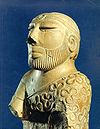
Prehistoric religion
Prehistoric religion is a general term for the religious beliefs and practices of prehistoric peoples. More specifically it encompasses Paleolithic religion, Mesolithic religion, Neolithic religion and Bronze Age religion.-Burial:...
in the Indian subcontinent derives from scattered Mesolithic
Mesolithic
The Mesolithic is an archaeological concept used to refer to certain groups of archaeological cultures defined as falling between the Paleolithic and the Neolithic....
rock paintings such as at Bhimbetka
Bhimbetka
The Bhimbetka rock shelters are an archaeological World Heritage site located in Raisen District in the Indian state of Madhya Pradesh. The Bhimbetka shelters exhibit the earliest traces of human life in India; a number of analyses suggest that at least some of these shelters were inhabited by man...
, depicting dances and rituals. Neolithic
Neolithic
The Neolithic Age, Era, or Period, or New Stone Age, was a period in the development of human technology, beginning about 9500 BC in some parts of the Middle East, and later in other parts of the world. It is traditionally considered as the last part of the Stone Age...
agriculturalists inhabiting the Indus River
Indus River
The Indus River is a major river which flows through Pakistan. It also has courses through China and India.Originating in the Tibetan plateau of western China in the vicinity of Lake Mansarovar in Tibet Autonomous Region, the river runs a course through the Ladakh district of Jammu and Kashmir and...
Valley buried their dead in a manner suggestive of spiritual practices that incorporated notions of an afterlife and belief in magic. Other South Asian Stone Age
South Asian Stone Age
The South Asian Stone Age covers the Palaeolithic, Mesolithic and Neolithic periods in South Asia. Evidence for the most ancient anatomically modern Homo sapiens in South Asia has been found in the cave sites of Batadomba lena and Beli lena in Sri Lanka.In Mehrgarh, in what is today western...
sites, such as the Bhimbetka rock shelters in central Madhya Pradesh
Madhya Pradesh
Madhya Pradesh , often called the Heart of India, is a state in central India. Its capital is Bhopal and Indore is the largest city....
and the Kupgal petroglyphs
Kupgal petroglyphs
The Kupgal petroglyphs are works of rock art found at Kupgal in Bellary district of Karnataka, India. Thousands of petroglyphs have been found at Kupgal, which date to the neolithic or even the old stone age. The site, which includes examples of rock gongs, was discovered first in 1892, but...
of eastern Karnataka, contain rock art portraying religious rites and evidence of possible ritualised music. The Harappa
Harappa
Harappa is an archaeological site in Punjab, northeast Pakistan, about west of Sahiwal. The site takes its name from a modern village located near the former course of the Ravi River. The current village of Harappa is from the ancient site. Although modern Harappa has a train station left from...
n people of the Indus Valley Civilization
Indus Valley Civilization
The Indus Valley Civilization was a Bronze Age civilization that was located in the northwestern region of the Indian subcontinent, consisting of what is now mainly modern-day Pakistan and northwest India...
, which lasted from 3300–1300 BCE (mature period, 2600-1900 BCE) and was centered around the Indus and Ghaggar-Hakra
Ghaggar-Hakra River
The Ghaggar-Hakra River is an intermittent river in India and Pakistan that flows only during the monsoon season. The river is known as Ghaggar before the Ottu barrage and as the Hakra downstream of the barrage...
river valleys, may have worshiped an important mother goddess
Mother goddess
Mother goddess is a term used to refer to a goddess who represents motherhood, fertility, creation or embodies the bounty of the Earth. When equated with the Earth or the natural world such goddesses are sometimes referred to as Mother Earth or as the Earth Mother.Many different goddesses have...
symbolising fertility, a concept that has recently been challenged. Excavations of Indus Valley Civilization sites show small tablets with animals and altars, indicating rituals associated with animal sacrifice.
Vedic period
The Vedic PeriodVedic period
The Vedic period was a period in history during which the Vedas, the oldest scriptures of Hinduism, were composed. The time span of the period is uncertain. Philological and linguistic evidence indicates that the Rigveda, the oldest of the Vedas, was composed roughly between 1700–1100 BCE, also...
is most significant for the composition of the four Vedas, Brahmanas and the older Upanishads (both presented as discussions on the rituals, mantras and concepts found in the four Vedas), which today are some of the most important canonical texts of Hinduism, and are the codification of much of what developed into the core beliefs of Hinduism.
The Vedas reflect the liturgy
Liturgy
Liturgy is either the customary public worship done by a specific religious group, according to its particular traditions or a more precise term that distinguishes between those religious groups who believe their ritual requires the "people" to do the "work" of responding to the priest, and those...
and ritual of Late Bronze Age to Early Iron Age Indo-Aryan
Indo-Aryans
Indo-Aryan is an ethno-linguistic term referring to the wide collection of peoples united as native speakers of the Indo-Aryan branch of the Indo-Iranian family of Indo-European languages...
speaking peoples in India. Religious practices were dominated by the Vedic priesthood
Vedic priesthood
Priests of the Vedic religion were officiants of the yajna service. As persons trained for the ritual and proficient in its practice, they were called '...
administering domestic rituals/rites and solemn sacrifice
Sacrifice
Sacrifice is the offering of food, objects or the lives of animals or people to God or the gods as an act of propitiation or worship.While sacrifice often implies ritual killing, the term offering can be used for bloodless sacrifices of cereal food or artifacts...
s. The Brahmanas, Aranyakas and some of the older Upanishads (such as BAU, ChU, JUB
Jaiminiya Upanishad Brahmana
The Jaiminiya Upanishad Brahmana or the Talavakara Upanishad Brahmana is a Vedic text associated with the Jaiminiya or the Talavakara shakha of the Samaveda. It is considered as an Aranyaka. A part of this text forms the Kena Upanishad...
) are also placed in this period. Many elements of Vedic religion reach back to early Bronze Age Proto-Indo-Iranian times. The Vedic period is held to have ended around 500 BCE.
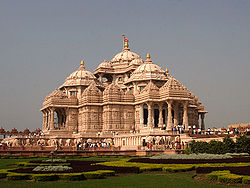
- The SomaSomaSoma , or Haoma , from Proto-Indo-Iranian *sauma-, was a ritual drink of importance among the early Indo-Iranians, and the subsequent Vedic and greater Persian cultures. It is frequently mentioned in the Rigveda, whose Soma Mandala contains 114 hymns, many praising its energizing qualities...
cult described in the RigvedaRigvedaThe Rigveda is an ancient Indian sacred collection of Vedic Sanskrit hymns...
, descended from a common Indo-IranianIndo-IraniansIndo-Iranian peoples are a linguistic group consisting of the Indo-Aryan, Iranian, Dardic and Nuristani peoples; that is, speakers of Indo-Iranian languages, a major branch of the Indo-European language family....
practice. - Fire rituals, also a common Indo-Iranian practice (See ZoroastrianismZoroastrianismZoroastrianism is a religion and philosophy based on the teachings of prophet Zoroaster and was formerly among the world's largest religions. It was probably founded some time before the 6th century BCE in Greater Iran.In Zoroastrianism, the Creator Ahura Mazda is all good, and no evil...
):- The AgnihotraAgnihotraAgnihotra is a Vedic yajña performed in orthodox Hindu communities. It is mentioned in the Atharvaveda and described in detail in the Yajurveda Samhita and the Shatapatha Brahmana . The Vedic form of the ritual is still performed Nambudiri Brahmins of Kerala and by a small number of Vaidiki...
or oblationOblationOblation, an offering , a term, particularly in ecclesiastical usage, for a solemn offering or presentation to God.-Bible usage:...
to AgniAgniAgni is a Hindu deity, one of the most important of the Vedic gods. He is the god of fire and the acceptor of sacrifices. The sacrifices made to Agni go to the deities because Agni is a messenger from and to the other gods...
. - The Agnistoma or Soma sacrifice (including animal sacrifice) .
- The AgnicayanaAgnicayanaThe Atiratra Agnicayana or Athirathram ; the piling of the altar of Agni is a Śrauta ritual of the Vedic religion, the predecessor of modern day Hinduism which is considered to be the greatest ritual as per the Vedic ritual hierarchy. It is also the world's oldest surviving ritual...
, the sophisticated ritual of piling the Uttara fire altarVedi (altar)Vedi is the term for "sacrificial altar" in the Vedic religion. Such altars were an elevated enclosure, generally strewed with Kusha grass, and having receptacles for the sacrificial fire; it was of various shapes, but usually narrow in the middle....
.
- The Agnihotra
- The Darsapaurnamasa, the fortnightly New and Full Moon sacrifice
- The Caturmasya or seasonal sacrifices (every four months)
- a large number of sacrifices for special wishes (Kāmyeṣṭi)
- The AshvamedhaAshvamedhaThe Ashvamedha was one of the most important royal rituals of Vedic religion, described in detail in the Yajurveda...
or horse sacrifice. - The PurushamedhaPurushamedhaPurushamedha is a Vedic yajna described in the Yajurveda . The verse describes people from all classes and of all descriptions tied to the stake and offered to Prajapati....
, or sacrifice of a man, imitating that of the cosmic PurushaPurusha suktaPurusha sukta is hymn 10.90 of the Rigveda, dedicated to the Purusha, the "Cosmic Being". One version of the Suktam has 16 verses, 15 in the meter, and the final one in the meter...
and Ashvamedha - The rites referred to in the AtharvavedaAtharvavedaThe Atharvaveda is a sacred text of Hinduism and one of the four Vedas, often called the "fourth Veda"....
are concerned with medicine and healing practices, as well as some charms and sorcery (white and black magicMagic (paranormal)Magic is the claimed art of manipulating aspects of reality either by supernatural means or through knowledge of occult laws unknown to science. It is in contrast to science, in that science does not accept anything not subject to either direct or indirect observation, and subject to logical...
). - The domestic (grihya) rituals deal with the rites of passage from conception to death and beyond.
Vedanta

Indo-Aryans
Indo-Aryan is an ethno-linguistic term referring to the wide collection of peoples united as native speakers of the Indo-Aryan branch of the Indo-Iranian family of Indo-European languages...
tribes to agriculture-based polities, as they increasingly formed permanent settlements in the Indo-Gangetic plain and other parts of Northern India. This period was foreshadowed by the Brahmanas that interpreted the four canonical Vedas in various fashions, which finally led to the Upanishads. While the ritualistic status of the four Vedas remained undiminished, the early Upanishads mainly relate to spiritual insights. At this time, the concepts of reincarnation
Reincarnation
Reincarnation best describes the concept where the soul or spirit, after the death of the body, is believed to return to live in a new human body, or, in some traditions, either as a human being, animal or plant...
, samsara
Samsara
thumb|right|200px|Traditional Tibetan painting or [[Thanka]] showing the [[wheel of life]] and realms of saṃsāraSaṅsāra or Saṃsāra , , literally meaning "continuous flow", is the cycle of birth, life, death, rebirth or reincarnation within Hinduism, Buddhism, Bön, Jainism, Sikhism, and other...
, karma
Karma
Karma in Indian religions is the concept of "action" or "deed", understood as that which causes the entire cycle of cause and effect originating in ancient India and treated in Hindu, Jain, Buddhist and Sikh philosophies....
, and moksha
Moksha
Within Indian religions, moksha or mukti , literally "release" , is the liberation from samsara and the concomitant suffering involved in being subject to the cycle of repeated death and reincarnation or rebirth.-Origins:It is highly probable that the concept of moksha was first developed in...
began to be accepted in ancient India within the sphere of the priestly establishment i.e. the Brahmana class. Some scholars think that these new concepts developed by aborigines outside the caste system, others detect Sramana or even Ksatriya influence. These concepts were eventually accepted by Brahmin orthodoxy, and were to form much of the core philosophies of the later epics and Hinduism, as well as, against a different philosophical and religious background, in Buddhism and Jainism.
Astika and Nastika categorization
Astika and nastika are sometimes used to categorise Indian religions. Those religions that believe that God is the central actor in this world are termed as astika. Those religions that do not believe that God is the prime mover and actor are classified as nastika religions. From this point of view the Vedic religion (and Hinduism) is an astika religion, whereas Buddhism and Jainism are nastika religions.Another definition of the terms astika and nastika, followed by Adi Shankara
Adi Shankara
Adi Shankara Adi Shankara Adi Shankara (IAST: pronounced , (Sanskrit: , ) (788 CE - 820 CE), also known as ' and ' was an Indian philosopher from Kalady of present day Kerala who consolidated the doctrine of advaita vedānta...
, classifies religions and persons as astika and nastika according to whether they accept the authority of the main Hindu texts, the Vedas, as supreme revealed scriptures, or not. By this definition, Nyaya
Nyaya
' is the name given to one of the six orthodox or astika schools of Hindu philosophy—specifically the school of logic...
, Vaisheshika
Vaisheshika
Vaisheshika or ' is one of the six Hindu schools of philosophy of India. Historically, it has been closely associated with the Hindu school of logic, Nyaya....
, Samkhya
Samkhya
Samkhya, also Sankhya, Sāṃkhya, or Sāṅkhya is one of the six schools of Hindu philosophy and classical Indian philosophy. Sage Kapila is traditionally considered as the founder of the Samkhya school, although no historical verification is possible...
, Yoga
Yoga
Yoga is a physical, mental, and spiritual discipline, originating in ancient India. The goal of yoga, or of the person practicing yoga, is the attainment of a state of perfect spiritual insight and tranquility while meditating on Supersoul...
, Purva Mimamsa
Mimamsa
' , a Sanskrit word meaning "investigation" , is the name of an astika school of Hindu philosophy whose primary enquiry is into the nature of dharma based on close hermeneutics of the Vedas...
and Vedanta
Vedanta
Vedānta was originally a word used in Hindu philosophy as a synonym for that part of the Veda texts known also as the Upanishads. The name is a morphophonological form of Veda-anta = "Veda-end" = "the appendix to the Vedic hymns." It is also speculated that "Vedānta" means "the purpose or goal...
are classified as astika schools, while Charvaka is classified as a nastika school. By this definition, both Buddhism and Jainism are classified as nastika religions since they do not accept the authority of the Vedas.
Shramana (self-reliant) tradition
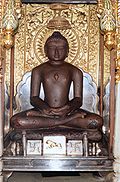
Shramana
A shramana is a wandering monk in certain ascetic traditions of ancient India including Jainism, Buddhism, and Ājīvikism. Famous śramaṇas include Mahavira and Gautama Buddha....
traditions. These were not direct outgrowths of Vedism, but separate movements that influenced it and were influenced by it. The shramanas were wandering ascetics. Buddhism and Jainism are a continuation of the Shramana tradition, and the early Upanishadic movement was influenced by it. The 24th Tirthankara of Jainism
Jainism
Jainism is an Indian religion that prescribes a path of non-violence towards all living beings. Its philosophy and practice emphasize the necessity of self-effort to move the soul towards divine consciousness and liberation. Any soul that has conquered its own inner enemies and achieved the state...
, Mahavira
Mahavira
Mahāvīra is the name most commonly used to refer to the Indian sage Vardhamāna who established what are today considered to be the central tenets of Jainism. According to Jain tradition, he was the 24th and the last Tirthankara. In Tamil, he is referred to as Arukaṉ or Arukadevan...
(599–527 BCE), stressed five vows, including ahimsa
Ahimsa in Jainism
Ahiṃsā in Jainism is a fundamental principle forming the cornerstone of its ethics and doctrine. The term "ahimsa" means “non-violence”, “non-injury” or absence of desire to harm any life forms. Vegetarianism and other non-violent practices and rituals of Jains flow from the principle of Ahiṃsā...
(non-violence), satya
Satya
Satya is a Sanskrit word that loosely translates into English as "truth" or "correct". It is a term of power due to its purity and meaning and has become the emblem of many peaceful social movements, particularly those centered on social justice, environmentalism and vegetarianism.Sathya is also...
(truthfulness), asteya
Asteya
Asteya is a Sanskrit word meaning "avoidance of stealing" or "non-stealing". In Jainism, it is one of the five vows that all Śrāvakas and Śrāvikās as well as monastics must take....
(non-stealing) and aparigraha
Aparigraha
Aparigraha is the concept of non-possessiveness, being both a Jain concept and a part of the Raja Yoga or Ashtanga Yoga traditions. The term usually means to limit possessions to what is necessary or important, which changes with the time period, though sadhus would not have any possessions.It is...
(non-attachment). A previous Tirthankara, Parshva
Parshva
Pārśva or Paras was the twenty-third Tirthankara "Ford-Maker" in Jainism . He is the earliest Jain leader generally accepted as a historical figure. Pārśva was a nobleman belonging to the Kshatriya varna....
, is also accepted as a historical figure from early in the shramana tradition.
Gautama Buddha
Gautama Buddha
Siddhārtha Gautama was a spiritual teacher from the Indian subcontinent, on whose teachings Buddhism was founded. In most Buddhist traditions, he is regarded as the Supreme Buddha Siddhārtha Gautama (Sanskrit: सिद्धार्थ गौतम; Pali: Siddhattha Gotama) was a spiritual teacher from the Indian...
, who was called an "awakened one" (Buddha
Buddhahood
In Buddhism, buddhahood is the state of perfect enlightenment attained by a buddha .In Buddhism, the term buddha usually refers to one who has become enlightened...
), was born into the Shakya
Shakya
Shakya was an ancient janapada of India in the 1st millennium BCE. In Buddhist texts the Shakyas, the inhabitants of Shakya janapada, are mentioned as a clan of Gotama gotra....
clan living at Kapilavastu and Lumbini in what is now southern Nepal. The Buddha was born at Lumbini, as emperor Asoka's Lumbini pillar records, just before the kingdom of Magadha
Magadha
Magadha formed one of the sixteen Mahājanapadas or kingdoms in ancient India. The core of the kingdom was the area of Bihar south of the Ganga; its first capital was Rajagriha then Pataliputra...
(which traditionally is said to have lasted from 546–324 BCE) rose to power. The Shakyas claimed Angirasa and Gautama Maharishi
Gautama Maharishi
Gautama Maharishi is one of the Saptarishis Gautama Maharishi is one of the Saptarishis Gautama Maharishi is one of the Saptarishis (Seven Great Sages Rishi of the current Manvantara (seventh). He was one of the Maharishis of Vedic times, known to have been the discoverer of Mantras --...
lineage, via descent from the royal lineage of Ayodhya.
The Ajivika
Ajivika
Ājīvika was an ancient philosophical and ascetic movement of the Mahajanapada period of the Indian subcontinent....
s and Samkhya
Samkhya
Samkhya, also Sankhya, Sāṃkhya, or Sāṅkhya is one of the six schools of Hindu philosophy and classical Indian philosophy. Sage Kapila is traditionally considered as the founder of the Samkhya school, although no historical verification is possible...
s, both of which did not survive, also belonged to the shramana tradition.
Rise and spread of Jainism and Buddhism
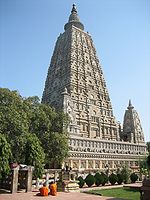
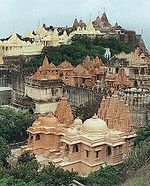
Buddhism
Buddhism is a religion and philosophy encompassing a variety of traditions, beliefs and practices, largely based on teachings attributed to Siddhartha Gautama, commonly known as the Buddha . The Buddha lived and taught in the northeastern Indian subcontinent some time between the 6th and 4th...
in India spread during the reign of Ashoka
Ashoka
Ashok Maurya or Ashoka , popularly known as Ashoka the Great, was an Indian emperor of the Maurya Dynasty who ruled almost all of the Indian subcontinent from ca. 269 BC to 232 BC. One of India's greatest emperors, Ashoka reigned over most of present-day India after a number of military conquests...
of the Maurya Empire
Maurya Empire
The Maurya Empire was a geographically extensive Iron Age historical power in ancient India, ruled by the Mauryan dynasty from 321 to 185 BC...
, who patronised Buddhist teachings and unified the Indian subcontinent in the 3rd century BCE. He sent missionaries abroad, allowing Buddhism to spread across Asia. Jainism began its golden period during the reign of Emperor Kharavela
Kharavela
Khārabēḷa was the third and greatest emperor of the Mahāmēghabāhana Dynasty of Kaḷinga . The main source of information about Khārabeḷa is his famous seventeen line rock-cut Hātigumphā inscription in a cave in the Udayagiri hills near Bhubaneswar, Orissa.During the reign of Khārabēḷa, the Chedi...
of Kalinga
Kalinga
Kalinga is a landlocked province of the Philippines in the Cordillera Administrative Region in Luzon. Its capital is Tabuk and borders Mountain Province to the south, Abra to the west, Isabela to the east, Cagayan to the northeast, and Apayao to the north...
in the 2nd century BCE.
Both Jainism and Indian Buddhism declined following the rise of Puranic Hinduism
Puranas
The Puranas are a genre of important Hindu, Jain and Buddhist religious texts, notably consisting of narratives of the history of the universe from creation to destruction, genealogies of kings, heroes, sages, and demigods, and descriptions of Hindu cosmology, philosophy, and geography.Puranas...
during the Gupta dynasty. Buddhism continued to have a significant presence in some regions of India until the 12th century.
Jainism continues to be an influential religion and Jain communities live in Indian states Gujarat, Rajasthan
Rajasthan
Rājasthān the land of Rajasthanis, , is the largest state of the Republic of India by area. It is located in the northwest of India. It encompasses most of the area of the large, inhospitable Great Indian Desert , which has an edge paralleling the Sutlej-Indus river valley along its border with...
, Madhya Pradesh
Madhya Pradesh
Madhya Pradesh , often called the Heart of India, is a state in central India. Its capital is Bhopal and Indore is the largest city....
, Maharashtra
Maharashtra
Maharashtra is a state located in India. It is the second most populous after Uttar Pradesh and third largest state by area in India...
, Karnataka
Karnataka
Karnataka , the land of the Kannadigas, is a state in South West India. It was created on 1 November 1956, with the passing of the States Reorganisation Act and this day is annually celebrated as Karnataka Rajyotsava...
and Tamil Nadu
Tamil Nadu
Tamil Nadu is one of the 28 states of India. Its capital and largest city is Chennai. Tamil Nadu lies in the southernmost part of the Indian Peninsula and is bordered by the union territory of Pondicherry, and the states of Kerala, Karnataka, and Andhra Pradesh...
. Jains authored several classical books in different Indian languages for a considerable period of time.
Period after 200 BCE
After 200 CE several schools of thought were formally codified in Indian philosophyIndian philosophy
India has a rich and diverse philosophical tradition dating back to ancient times. According to Radhakrishnan, the earlier Upanisads constitute "...the earliest philosophical compositions of the world."...
, including Samkhya
Samkhya
Samkhya, also Sankhya, Sāṃkhya, or Sāṅkhya is one of the six schools of Hindu philosophy and classical Indian philosophy. Sage Kapila is traditionally considered as the founder of the Samkhya school, although no historical verification is possible...
, Yoga
Yoga
Yoga is a physical, mental, and spiritual discipline, originating in ancient India. The goal of yoga, or of the person practicing yoga, is the attainment of a state of perfect spiritual insight and tranquility while meditating on Supersoul...
, Nyaya
Nyaya
' is the name given to one of the six orthodox or astika schools of Hindu philosophy—specifically the school of logic...
, Vaisheshika
Vaisheshika
Vaisheshika or ' is one of the six Hindu schools of philosophy of India. Historically, it has been closely associated with the Hindu school of logic, Nyaya....
, Mimāṃsā
Mimamsa
' , a Sanskrit word meaning "investigation" , is the name of an astika school of Hindu philosophy whose primary enquiry is into the nature of dharma based on close hermeneutics of the Vedas...
and Advaita Vedanta
Advaita Vedanta
Advaita Vedanta is considered to be the most influential and most dominant sub-school of the Vedānta school of Hindu philosophy. Other major sub-schools of Vedānta are Dvaita and ; while the minor ones include Suddhadvaita, Dvaitadvaita and Achintya Bhedabheda...
. Hinduism, otherwise a highly polytheistic, pantheistic or monotheistic religion, also tolerated atheistic schools
Atheism in Hinduism
Atheism or disbelief in God or gods has been a historically propounded viewpoint in many of the orthodox and heterodox streams of Hindu philosophies...
. The thoroughly materialistic
Materialism
In philosophy, the theory of materialism holds that the only thing that exists is matter; that all things are composed of material and all phenomena are the result of material interactions. In other words, matter is the only substance...
and anti-religious philosophical Cārvāka
Carvaka
' , also known as ', is a system of Indian philosophy that assumes various forms of philosophical skepticism and religious indifference. It seems named after , the probable author of the and probably a follower of Brihaspati, who founded the ' philosophy.In overviews of Indian philosophy, Cārvāka...
school that originated around the 6th century BCE is the most explicitly atheistic school of Indian philosophy. Cārvāka is classified as a nāstika ("heterodox") system; it is not included among the six schools of Hinduism generally regarded as orthodox. It is noteworthy as evidence of a materialistic movement within Hinduism. Our understanding of Cārvāka philosophy is fragmentary, based largely on criticism of the ideas by other schools, and it is no longer a living tradition. Other Indian philosophies generally regarded as atheistic include Samkhya and Mimāṃsā.
Between 400 CE and 1000 CE Hinduism expanded as the decline of Buddhism in India
Decline of Buddhism in India
The decline of Buddhism in India, the land of its birth, occurred for a variety of reasons, and happened even as it continued to flourish beyond the frontiers of India. Buddhism was established in the area of ancient Magadha and Kosala by Gautama Buddha in the 6th century BCE, in what is now modern...
continued. Buddhism subsequently became effectively extinct in India
Decline of Buddhism in India
The decline of Buddhism in India, the land of its birth, occurred for a variety of reasons, and happened even as it continued to flourish beyond the frontiers of India. Buddhism was established in the area of ancient Magadha and Kosala by Gautama Buddha in the 6th century BCE, in what is now modern...
but survived in Nepal and Sri Lanka.
There were several Buddhistic kings who worshiped Vishnu
Vaishnavism
Vaishnavism is a tradition of Hinduism, distinguished from other schools by its worship of Vishnu, or his associated Avatars such as Rama and Krishna, as the original and supreme God....
, such as the Gupta Empire
Gupta Empire
The Gupta Empire was an ancient Indian empire which existed approximately from 320 to 550 CE and covered much of the Indian Subcontinent. Founded by Maharaja Sri-Gupta, the dynasty was the model of a classical civilization. The peace and prosperity created under leadership of Guptas enabled the...
, Pala Empire
Pala Empire
The Pāla Empire was one of the major middle kingdoms of India existed from 750–1174 CE. It was ruled by a Buddhist dynasty from Bengal in the eastern region of the Indian subcontinent, all the rulers bearing names ending with the suffix Pala , which means protector. The Palas were often described...
, Malla Empire
Malla (India)
Malla was one of the solasa mahajanapadas of ancient India mentioned in the Anguttara Nikaya. It was named after the ruling clan of the same name. The Mahabharata mentions the territory as the Mallarashtra . The Malla mahajanapada was situated north of Magadha. It was a small mahajanapada...
, Somavanshi, and Sattvahana. Buddhism survived followed by Hindus. National Geographic edition reads, "The flow between faiths was such that for hundreds of years, almost all Buddhist temples, including the ones at Ajanta
Ajanta
The Ajanta Caves in Aurangabad district of Maharashtra, India are 29 rock-cut cave monuments which date from the 2nd century BCE. The caves include paintings and sculptures considered to be masterpieces of both Buddhist religious art as well as frescos which are reminiscent of the Sigiriya...
, were built under the rule and patronage of Hindu kings."
Post-Vedic development of Hinduism
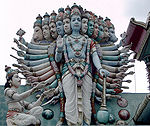
Yoga
Yoga is a physical, mental, and spiritual discipline, originating in ancient India. The goal of yoga, or of the person practicing yoga, is the attainment of a state of perfect spiritual insight and tranquility while meditating on Supersoul...
, Dvaita
Dvaita
Dvaita is a school of Vedanta founded by Shri Madhvacharya....
, Advaita and the medieval Bhakti
Bhakti
In Hinduism Bhakti is religious devotion in the form of active involvement of a devotee in worship of the divine.Within monotheistic Hinduism, it is the love felt by the worshipper towards the personal God, a concept expressed in Hindu theology as Svayam Bhagavan.Bhakti can be used of either...
movement. The modern day popular movements were the ones founded by Swami Vivekananda
Swami Vivekananda
Swami Vivekananda , born Narendranath Dutta , was the chief disciple of the 19th century mystic Ramakrishna Paramahansa and the founder of the Ramakrishna Math and the Ramakrishna Mission...
, Sri Aurobindo
Sri Aurobindo
Sri Aurobindo , born Aurobindo Ghosh or Ghose , was an Indian nationalist, freedom fighter, philosopher, yogi, guru, and poet. He joined the Indian movement for freedom from British rule and for a duration became one of its most important leaders, before developing his own vision of human progress...
, Raja Ram Mohan Roy among others.
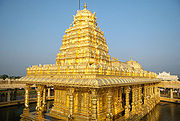
Puranas
The Puranas are a genre of important Hindu, Jain and Buddhist religious texts, notably consisting of narratives of the history of the universe from creation to destruction, genealogies of kings, heroes, sages, and demigods, and descriptions of Hindu cosmology, philosophy, and geography.Puranas...
allowed for a divine and mythical interpretation of the world, not unlike the ancient Hellenic or Roman religions. Legends and epics with a multitude of gods and goddesses with human-like characteristics were composed.
Two of Hinduism's most revered epics, the Mahabharata
Mahabharata
The Mahabharata is one of the two major Sanskrit epics of ancient India and Nepal, the other being the Ramayana. The epic is part of itihasa....
and Ramayana
Ramayana
The Ramayana is an ancient Sanskrit epic. It is ascribed to the Hindu sage Valmiki and forms an important part of the Hindu canon , considered to be itihāsa. The Ramayana is one of the two great epics of India and Nepal, the other being the Mahabharata...
were compositions of this period. Devotion to particular deities was reflected from the composition of texts composed to their worship. For example the Ganapati Purana was written for devotion to Ganapati (or Ganesh). Popular deities of this era were Shiva
Shiva
Shiva is a major Hindu deity, and is the destroyer god or transformer among the Trimurti, the Hindu Trinity of the primary aspects of the divine. God Shiva is a yogi who has notice of everything that happens in the world and is the main aspect of life. Yet one with great power lives a life of a...
, Vishnu
Vishnu
Vishnu is the Supreme god in the Vaishnavite tradition of Hinduism. Smarta followers of Adi Shankara, among others, venerate Vishnu as one of the five primary forms of God....
, Durga
Durga
For the 1985 Hindi Film of Rajesh Khanna see DurgaaIn Hinduism, Durga ; ; meaning "the inaccessible" or "the invincible"; , durga) or Maa Durga "one who can redeem in situations of utmost distress" is a form of Devi, the supremely radiant goddess, depicted as having eighteen arms, riding a lion...
, Surya
Surya
Surya Suraya or Phra Athit is the chief solar deity in Hinduism, one of the Adityas, son of Kasyapa and one of his wives, Aditi; of Indra; or of Dyaus Pitar . The term Surya also refers to the Sun, in general. Surya has hair and arms of gold...
, Skanda
Skanda
Skanda is the name of deities popular amongst Hindus and Buddhists.* Skanda, a Hindu deity also known as Kartikeya and Murugan and Subhramanya* Skanda , a popular Deva and/or Bodhisattva popular in Chinese Buddhism...
, and Ganesh (including the forms/incarnations of these deities.)
Bhakti Movement
The Bhakti MovementBhakti movement
The Bhakti movement is a Hindu religious movement in which the main spiritual practice is loving devotion among the Shaivite and Vaishnava saints. The Bhakti movement originated in ancient Tamil Nadu and began to spread to the north during the late medieval ages when north India was under Islamic...
began with the emphasis on the worship of God, regardless of one's status - whether priestly or laypeople, men or women, higher social status or lower social status.
The movements were mainly centered around the forms of Vishnu (Rama
Rama
Rama or full name Ramachandra is considered to be the seventh avatar of Vishnu in Hinduism, and a king of Ayodhya in ancient Indian...
and Krishna
Krishna
Krishna is a central figure of Hinduism and is traditionally attributed the authorship of the Bhagavad Gita. He is the supreme Being and considered in some monotheistic traditions as an Avatar of Vishnu...
) and Shiva. There were however popular devotees of this era of Durga.
Vaishnavism
The most well-known devotees are the Alwars from southern India. The most popular Vaishnava teacher of the south was RamanujaRamanuja
Ramanuja ; traditionally 1017–1137, also known as Ramanujacharya, Ethirajar , Emperumannar, Lakshmana Muni, was a theologian, philosopher, and scriptural exegete...
, while of the north it was Ramananda
Ramananda
Ramananda , also referred to as Sant Ramanand or Swami Ramanand, was a Vaishnava sant. He is considered to be the reviver of the Ramanandi sect. Ramananda for the most part of his life lived in the holy city of Varanasi, and was a pioneer of the Bhakti movement, as well as a social reformer in...
.
Several important icons were women. For example, within the Mahanubhava sect, the women outnumbered the men, and administration was many times composed mainly of women. Mirabai is the most popular female saint in India.
Sri Vallabha Acharya (1479–1531) is a very important figure from this era. He founded the Shuddha Advaita (Pure Non-dualism)
Shuddhadvaita
Shuddadvaita is the "purely non-dual" philosophy propounded by Vallabhacharya , the founding philosopher and guru of the or , a Hindu Vaishnava tradition focused on the worship of Krishna. Vallabhacharya's pure form philosophy is different from Advaita...
school of Vedanta
Vedanta
Vedānta was originally a word used in Hindu philosophy as a synonym for that part of the Veda texts known also as the Upanishads. The name is a morphophonological form of Veda-anta = "Veda-end" = "the appendix to the Vedic hymns." It is also speculated that "Vedānta" means "the purpose or goal...
thought.
Shaivism
The most well-known devotees are the NayanarsNayanars
The Nayanars or Nayanmars were Shaivite devotional poets of Tamil Nadu, active between the fifth and the tenth centuries CE...
from southern India. The most popular Shaiva teacher of the south was Basava
Basava
Basava was a philosopher and a social reformer. He is also called Vishwa Guru and Bhakti-Bhandari. His teachings and preachings which are universal, go beyond all boundaries of belief systems...
, while of the north it was Gorakhnath.
Female saints include figures like Akkamadevi
Akka Mahadevi
Akka Mahadevi was a prominent figure of the Veerashaiva Bhakti movement of the 12th century Karnataka. Her Vachanas in Kannada, a form of didactic poetry are considered her greatest contribution to Kannada Bhakti literature. In all she wrote about 430 Vachanas which is relatively fewer than that...
, Lalleshvari and Molla
Molla
Molla may refer to:* Molla , a genus of butterflies in the grass skipper family.* Molla , a Telugu poetess* Gianna Beretta Molla, a Roman Catholic saint* Jordi Mollà, a Spanish actor...
.
Recent groups
The modern era has given rise to dozens of Hindu saints with international influence. For example, Brahma Baba established the Brahma Kumaris, one of the largest new Hindu religious movements teaches the discipline of Raja YogaRaja Yoga
Rāja Yoga is concerned principally with the cultivation of the mind using meditation to further one's acquaintance with reality and finally achieve liberation.Raja yoga was first described in the Yoga Sutras of Patanjali, and is part of the Samkhya tradition.In the context of Hindu...
to millions. Representing traditional Gaudiya Vaishnavism
Gaudiya Vaishnavism
Gaudiya Vaishnavism is a Vaishnava religious movement founded by Chaitanya Mahaprabhu in India in the 16th century. "Gaudiya" refers to the Gauḍa region with Vaishnavism meaning "the worship of Vishnu"...
, Prabhupada founded the Hare Krishna
International Society for Krishna Consciousness
The International Society for Krishna Consciousness , known colloquially as the Hare Krishna movement, is a Gaudiya Vaishnava religious organization. It was founded in 1966 in New York City by A.C. Bhaktivedanta Swami Prabhupada...
movement, also international with many followers. In late 18th century India, Swaminarayan founded the Swaminarayan Sampraday
Swaminarayan Sampraday
Swaminarayan Sampraday , known previously as the Uddhav Sampraday, is a Hindu sect established by Swaminarayan...
. Anandamurti, founder of the Ananda Marga, has influenced many worldwide. Through all these new Hindu denominations traveling international, many Hindu practices such as yoga, meditation, mantra, divination, vegetarianism have become absorbed by new coverts and others influenced.
Sikhism
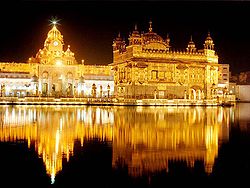
Guru Nanak Dev
Guru Nanak was the founder of the religion of Sikhism and the first of the ten Sikh Gurus. The Sikhs believe that all subsequent Gurus possessed Guru Nanak’s divinity and religious authority, and were named "Nanak" in the line of succession.-Early life:Guru Nanak was born on 15 April 1469, now...
and nine successive gurus
Sikh Gurus
The Sikh Gurus established Sikhism from over the centuries beginning in the year 1469. Sikhism was founded by the first guru, Guru Nanak, and subsequently, all in order were referred to as "Nanak", and as "Lights", making their teachings in the holy scriptures, equivalent...
. The principal belief in Sikhism is faith in Vāhigurū
Waheguru
Waheguru is a term most often used in Sikhism to refer to God, the Supreme Being or the creator of all. It means "The Good/Best Teacher" in the Punjabi language. Wahi means "good" and "Guru" is a term denoting "teacher"....
— represented by the sacred symbol of [meaning one god]. Sikhism's traditions and teachings are distinctly associated with the history, society and culture of the Punjab
Punjab region
The Punjab , also spelled Panjab |water]]s"), is a geographical region straddling the border between Pakistan and India which includes Punjab province in Pakistan and the states of the Punjab, Haryana, Himachal Pradesh, Chandigarh and some northern parts of the National Capital Territory of Delhi...
. Adherents of Sikhism are known as Sikhs (students or disciples) and number over 23 million across the world.
Status in the Republic of India
In a judicial reminder, the Indian Supreme Court observed Sikhism and Jainism to be sub-sects or special faiths within the larger Hindu fold, and that Jainism is a denomination within the Hindu fold. Although the government of British India counted Jains in India as a major religious community right from the first Census conducted in 1873, after independence in 1947 Sikhs and Jains were not treated as national minorities. In 2005 the Supreme Court of IndiaSupreme Court of India
The Supreme Court of India is the highest judicial forum and final court of appeal as established by Part V, Chapter IV of the Constitution of India...
declined to issue a writ of Mandamus granting Jains the status of a religious minority throughout India. The Court however left it to the respective states
States and territories of India
India is a federal union of states comprising twenty-eight states and seven union territories. The states and territories are further subdivided into districts and so on.-List of states and territories:...
to decide on the minority status of Jain religion.
However, some individual states have over the past few decades differed on whether Jains, Buddhists and Sikhs are religious minorities or not, by either pronouncing judgments or passing legislation. One example is the judgment passed by the Supreme Court in 2006, in a case pertaining to the state of Uttar Pradesh, which declared Jainism to be indisputably distinct from Hinduism, but mentioned that, "The question as to whether the Jains are part of the Hindu religion is open to debate. However, the Supreme Court also noted various court cases that have held Jainism to be a distinct religion.
Another example is the Gujarat Freedom of Religion Bill
Gujarat Freedom of Religion Bill
The Gujurat Freedom of Religion Bill is a bill concerning religious conversions in Gujurat, India.-Gujarat Freedom of Religion Bill 2006:...
, that is an amendment to a legislation that sought to define Jains and Buddhists as denominations within Hinduism. Ultimately on July 31, 2007, finding it not in conformity with the concept of freedom of religion as embodied in Article 25 (1) of the Constitution, Governor Naval Kishore Sharma returned back the Gujarat Freedom of Religion (Amendment) Bill, 2006 citing the widespread protests by the Jains as well as Supreme Court's extrajudicial observation that Jainism is a "special religion formed on the basis of quintessence of Hindu religion by the Supreme Court"
See also
- Ayyavazhi and HinduismAyyavazhi and HinduismThis is an article comparing the beliefs, mythology, theology, rituals etc. of Ayyavazhi and Hinduism. Though Ayyavazhi exists within Hinduism officially it functions autonomously....
- Buddhism and Jainism
- History of Yoga
- Indian philosophyIndian philosophyIndia has a rich and diverse philosophical tradition dating back to ancient times. According to Radhakrishnan, the earlier Upanisads constitute "...the earliest philosophical compositions of the world."...
- IndologyIndologyIndology is the academic study of the history and cultures, languages, and literature of the Indian subcontinent , and as such is a subset of Asian studies....
- Religion in IndiaReligion in IndiaIndian religions is a classification for religions that originated in the Indian subcontinent; namely Hinduism, Jainism, Buddhism and Sikhism. These religions are also classified as Eastern religions...
- Religious thinkers of IndiaReligious thinkers of IndiaIndia has been home to a large number of religious thinkers and spiritualists. A major reason for this has been the tolerant and liberalist traditions inbuilt in ancient Indian society. Another reason is the huge diversity of people found here...
External links
StatisticsConstitution and law
Reports