
All Topics  
Vaishnavism


   Email Print
   Bookmark   Link


Vaishnavism


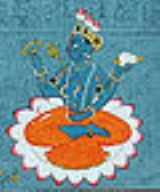
Vaishnavism is a tradition of Hinduism
Hinduism

'Hinduism' is the predominant religion of the Indian subcontinent. Hinduism is often referred to as , a Sanskrit phrase meaning "the eternal dharma", by its practitioners....
, distinguished from other schools by its worship of Vishnu
Vishnu

Vishnu , , is the Supreme God in Vaishnavite tradition of Hinduism. Smarta followers of Adi Shankara, among others, venerate Vishnu as one of panchadeva, and his supreme status is declared in the Hindu sacred texts like Yajurveda, the Rigveda and the Bhagavad Gita....
 or his associated avatars, principally as Rama
RAMA

Rama is a first-person adventure game developed and published by Sierra Entertainment in 1996. The game is based on Arthur C. Clarke's books Rendezvous with Rama and Rama II and supports both DOS and Microsoft Windows 95....
 and Krishna
Krishna

Krishna is a deity worshiped across many traditions in Hinduism in a variety of different perspectives. While many Vaishnava groups recognize him as an avatar of Vishnu, other traditions within Krishnaism consider Krishna to be svayam bhagavan, or the supreme being....
, as the original and supreme God
God

God is a deity in theism and deism religions and other belief systems, representing either the sole deity in monotheism, or a principal deity in polytheism....
. This worship in different perspectives or historical traditions addresses monotheistic God under the names of Narayana
Narayana

Narayana or Narayan is an important Sanskrit name for Vishnu, and in many contemporary vernaculars a common Indian name. Narayana is also identified as the original man, Purusha....
, Krishna
Krishna

Krishna is a deity worshiped across many traditions in Hinduism in a variety of different perspectives. While many Vaishnava groups recognize him as an avatar of Vishnu, other traditions within Krishnaism consider Krishna to be svayam bhagavan, or the supreme being....
, Vasudeva
Vasudeva

File:Krishna carried over river yamuna.jpgIn Hindu mythology, Vasudeva is the father of Krishna, the son of , of the Yadava dynasty. His sister Kunti was married to Pandu....
 or more often "Vishnu", and their associated avatars. It is principally monotheistic in its philosophy, but not exclusive, although the Vaishnavas teach that Shiva
Shiva

Shiva: is a major Hinduism god, and one aspect of Trimurti. In the Shaiva tradition of Hinduism, Shiva is seen as the supreme God. In the Smarta tradition, he is one of panchadeva....
, the main God of many Hindus is only a servant of their god Vishnu.


Discussion
Ask a question about 'Vaishnavism'
Start a new discussion about 'Vaishnavism'
Answer questions from other users
Full Discussion Forum


Recent Posts


Encyclopedia


Vaishnavism is a tradition of Hinduism
Hinduism

'Hinduism' is the predominant religion of the Indian subcontinent. Hinduism is often referred to as , a Sanskrit phrase meaning "the eternal dharma", by its practitioners....
, distinguished from other schools by its worship of Vishnu
Vishnu

Vishnu , , is the Supreme God in Vaishnavite tradition of Hinduism. Smarta followers of Adi Shankara, among others, venerate Vishnu as one of panchadeva, and his supreme status is declared in the Hindu sacred texts like Yajurveda, the Rigveda and the Bhagavad Gita....
 or his associated avatars, principally as Rama
RAMA

Rama is a first-person adventure game developed and published by Sierra Entertainment in 1996. The game is based on Arthur C. Clarke's books Rendezvous with Rama and Rama II and supports both DOS and Microsoft Windows 95....
 and Krishna
Krishna

Krishna is a deity worshiped across many traditions in Hinduism in a variety of different perspectives. While many Vaishnava groups recognize him as an avatar of Vishnu, other traditions within Krishnaism consider Krishna to be svayam bhagavan, or the supreme being....
, as the original and supreme God
God

God is a deity in theism and deism religions and other belief systems, representing either the sole deity in monotheism, or a principal deity in polytheism....
. This worship in different perspectives or historical traditions addresses monotheistic God under the names of Narayana
Narayana

Narayana or Narayan is an important Sanskrit name for Vishnu, and in many contemporary vernaculars a common Indian name. Narayana is also identified as the original man, Purusha....
, Krishna
Krishna

Krishna is a deity worshiped across many traditions in Hinduism in a variety of different perspectives. While many Vaishnava groups recognize him as an avatar of Vishnu, other traditions within Krishnaism consider Krishna to be svayam bhagavan, or the supreme being....
, Vasudeva
Vasudeva

File:Krishna carried over river yamuna.jpgIn Hindu mythology, Vasudeva is the father of Krishna, the son of , of the Yadava dynasty. His sister Kunti was married to Pandu....
 or more often "Vishnu", and their associated avatars. It is principally monotheistic in its philosophy, but not exclusive, although the Vaishnavas teach that Shiva
Shiva

Shiva: is a major Hinduism god, and one aspect of Trimurti. In the Shaiva tradition of Hinduism, Shiva is seen as the supreme God. In the Smarta tradition, he is one of panchadeva....
, the main God of many Hindus is only a servant of their god Vishnu. Its beliefs and practices, especially the concepts of Bhakti
Bhakti

Bhakti is a word of Sanskrit origin meaning devotion. Within Vaishnavism bhakti is only used in conjunction with Vishnu, Krishna or of the associated avatar, who are the source of attractiveness....
 and Bhakti Yoga
Bhakti yoga

Bhakti Yoga is a term within Hinduism which denotes the spiritual practice of fostering loving devotion to God, called bhakti. Traditionally there are nine forms of bhakti-yoga....
, are based largely on the Upanishad
Upanishad

The Upanishads are Hindu scriptures that constitute the core teachings of Vedanta. They do not belong to any particular period of Sanskrit literature: the oldest, such as the Brhadaranyaka and Chandogya Upanishads, date to the late Brahmana period , while the latest were composed in the medieval and early modern period....
s, and associated with the Vedas
Vedas

The Vedas are a large body of texts originating in History of India. They form the oldest layer of Sanskrit literature and the oldest Hindu scripture of Hinduism....
 and Puranic texts such as the Bhagavad Gita
Bhagavad Gita

The Bhagavad Gita is an important Sanskrit Hindu scripture. It is revered as a sacred scripture of Hinduism, and considered as one of the most important religious classics of the world....
, and the Padma
Padma Purana

Padma Purana , one of the major eighteen Puranas, a Hindu religious text, is divided into five parts. In the first part sage Pulastya explains to Bhishma about religion and the essence of the religion....
, Vishnu
Vishnu Purana

The Vishnu Purana is a religious Hindu text and one of eighteen Puranas. It is considered one of the most important Puranas and has been given the name Puranaratna ....
 and Bhagavata
Bhagavata purana

The Bhagavata Purana is one of the "Maha" Puranic texts of Hinduism literature, and is Sanskrit for "The Book of God". Its primary focus is the process of bhakti yoga, which is Sanskrit for "Union with God through devotion for Him", in which Krishna is unequivocally declared to be Svayam Bhagavan....
 Puranas.

The followers of Vaishnavism are referred to as Vaishnava(s) or Vaishnavites. According to nonexistant statistics, a large precent of Hindus are Vaishnavas, with the vast majority living in India
India

India, officially the Republic of India , is a country in South Asia. It is the List of countries and outlying territories by total area country by geographical area, the List of countries by population country, and the most populous liberal democracy in the world....
. Awareness, recognition, and growth of the belief has significantly increased outside of India in recent years. The Gaudiya Vaishnava branch of the tradition has significantly increased the awareness of Vaishnavism internationally, since the mid-1900s, largely through the activities and geographical expansion of the Hare Krishna
Hare Krishna

The Hare Krishna mantra, also referred to reverentially as the Maha Mantra , is a sixteen-word Vaishnava mantra made well known outside of India by the International Society for Krishna Consciousness ....
 movement, primarily through ISKCON and more recently, through several other Vaishnava organizations conducting preaching activities in the West.

Etymology

The term Vaishnavism entered the English language in the 19th century. It was formed by attaching the suffix -ism
-ism

The Affix -ism denotes a distinctive system of beliefs, myth, doctrine or theory that guides a social movement, institution, Social class or group....
 to Sanskrit
Sanskrit

Sanskrit is a historical Indo-Aryan language, one of the liturgical languages of Hinduism and Buddhism, and one of the 22 official languages of India....
 Vaishnava (IAST
IAST

The International Alphabet of Sanskrit Transliteration is a popular transliteration scheme that allows a lossless romanization of Brahmic family....
: ), which is the vriddhi form of Vishnu meaning "relating, belonging, or sacred to Vishnu" or "a worshipper or follower of Vishnu".

Principal historic branches

Bhagavatism, early Ramaism and Krishnaism
Krishnaism

File:Krishna Holding Mount Govardhan - Crop.jpgKrishnaism, is a term that is often used to describe a number of Hindu religious traditions, that are among the Hindu denominations centered on devotion to Radha Krishna or other forms of Krishna, or Vishnu in a sentiment of Krishna....
, merged in historical Vishnuism
Historical Vishnuism

Historical Vishnuism as early worship of the deity Vishnu is one of the historical components, branches or origins of the contemporary and early Vaishnavism, which was subject of considerable study, and often showing that Vishnuism is a distinctive worship ? a sect....
, a tradition of Historical Vedic religion
Historical Vedic religion

The religion of the Vedic period is the historical predecessor of Hinduism. Its liturgy is reflected in the Mantra portion of the four Vedas, which are compiled in Sanskrit....
, distinguished from other traditions by its primary worship of Vishnu
Vishnu

Vishnu , , is the Supreme God in Vaishnavite tradition of Hinduism. Smarta followers of Adi Shankara, among others, venerate Vishnu as one of panchadeva, and his supreme status is declared in the Hindu sacred texts like Yajurveda, the Rigveda and the Bhagavad Gita....
. Vaishnavism, is historically the first structured Vaishnava religion as "Vishnuism, in a word, is the only cultivated native sectarian native religion of India." Although it is usual to speak of Vishnu as the source of the avataras, this is only one of the names by which the God of Vaishnavism is known. The other names include Narayana, Vasudeva and Krishna; each the name of a divine figure with attributed supremacy, which each associated tradition of Vaishnavism believes to be distinct. For example, in the Krishnaism
Krishnaism

File:Krishna Holding Mount Govardhan - Crop.jpgKrishnaism, is a term that is often used to describe a number of Hindu religious traditions, that are among the Hindu denominations centered on devotion to Radha Krishna or other forms of Krishna, or Vishnu in a sentiment of Krishna....
 branch of Vaishnavism, such as the Gaudiya Vaishnava, Nimbaraka and Vallabhacharya traditions, devotees worship Krishna
Krishna

Krishna is a deity worshiped across many traditions in Hinduism in a variety of different perspectives. While many Vaishnava groups recognize him as an avatar of Vishnu, other traditions within Krishnaism consider Krishna to be svayam bhagavan, or the supreme being....
 as the supreme form of God
God

God is a deity in theism and deism religions and other belief systems, representing either the sole deity in monotheism, or a principal deity in polytheism....
, Svayam Bhagavan
Svayam Bhagavan

Svayam Bhagavan , "The Lord" or Lord Himself, is a Sanskrit theological term. The term refers to the concept of absolute representation of the monotheistic God as Bhagavan within Hinduism....
, in contrast to the belief of the devotees of the Vishnu tradition.

Principal beliefs


Supreme God

Vishnu
The principal belief of Vishnu-centered sects is the identification of Vishnu
Vishnu

Vishnu , , is the Supreme God in Vaishnavite tradition of Hinduism. Smarta followers of Adi Shankara, among others, venerate Vishnu as one of panchadeva, and his supreme status is declared in the Hindu sacred texts like Yajurveda, the Rigveda and the Bhagavad Gita....
 or Narayana
Narayana

Narayana or Narayan is an important Sanskrit name for Vishnu, and in many contemporary vernaculars a common Indian name. Narayana is also identified as the original man, Purusha....
 as the one Supreme God. This belief contrasts with the Krishna-centered
Krishnaism

File:Krishna Holding Mount Govardhan - Crop.jpgKrishnaism, is a term that is often used to describe a number of Hindu religious traditions, that are among the Hindu denominations centered on devotion to Radha Krishna or other forms of Krishna, or Vishnu in a sentiment of Krishna....
 traditions, such as Vallabha Sampradaya and Gaudiya Vaishnavas, in which Krishna
Krishna

Krishna is a deity worshiped across many traditions in Hinduism in a variety of different perspectives. While many Vaishnava groups recognize him as an avatar of Vishnu, other traditions within Krishnaism consider Krishna to be svayam bhagavan, or the supreme being....
 is considered to be the Supreme God and the source of all avataras
Svayam Bhagavan

Svayam Bhagavan , "The Lord" or Lord Himself, is a Sanskrit theological term. The term refers to the concept of absolute representation of the monotheistic God as Bhagavan within Hinduism....
. The belief in the supremecy of Vishnu is based upon the many avatar
Avatar

Avatar or Avatara , often translated into English as incarnation, literally means descent and usually implies a deliberate descent from higher spiritual realms to lower realms of existence for special purposes....
s (incarnations) of Vishnu listed in the Puranic texts, which differs from other Hindu deities such as Ganesh, Surya
Surya

In Hinduism, Surya is the chief solar deity, one of the Adityas, son of Kasyapa and one of his wives Aditi, of Indra, or of Dyaus Pitar . The term "Surya" also refers to the Sun, in general....
 or Durga
Durga

In Hinduism, the goddess Durga or Maa Durga "one who can redeem in situations of utmost distress". Durga is a form of Devi, the supremely radiant goddess, depicted as having ten arms, riding a lion or a tiger, carrying weapons , maintaining a meditative smile, and practicing mudras, or symbolic hand gestures....
. The latter are instead classified as demi-gods or devas
Deva (Hinduism)

Deva is the Sanskrit word for "god, deity". It can be variously interpreted as a god, spirit, demi-god, Celestial, deity or any supernatural being of high excellence....
. Vaishnavites consider Shiva
Shiva

Shiva: is a major Hinduism god, and one aspect of Trimurti. In the Shaiva tradition of Hinduism, Shiva is seen as the supreme God. In the Smarta tradition, he is one of panchadeva....
, one of the Hindu Trimurti
Trimurti

The Trimurti is a concept in Hinduism "in which the cosmic functions of creation, maintenance, and destruction are personified by the forms of Brahma the creator, Vishnu the maintainer or preserver, and Shiva the destroyer or transformer." These three deities have been called "the Hindu triad" or the "Great Trinity"....
 (Trinity) as subservient to Vishnu, and a Vaishnava himself. Swaminarayan, founder of the Swaminarayan faith
Swaminarayan Faith

Swaminarayan Faith or Swaminarayan Sect is a modern tradition of Hinduism, in which followers offer devotion and worship Swaminarayan as the final manifestation of God....
, differs with this view and holds that Vishnu and Shiva are different aspects of the same God. Notably, the Swaminarayan view is a minority view among Vaishnavites.

A few Vaishnava schools also identify the God of the Abrahamic religions
Abrahamic religions

Abrahamic religions are monotheistic faiths which recognize a spiritual tradition identified with Abraham. The term is mostly used to refer collectively to Judaism, Christianity and Islam....
 with Vishnu, which is however problematic, since Yahweh was originally only one of the middle-eastern deities and not a monotheistic God. Another distinguishing feature of the Vaishnava teachings, is that God (Vishnu and/or Krishna) "is a real person and His variegated creation is also real".

Worship

Vaishnava theology includes the central beliefs of Hinduism such as reincarnation
Reincarnation

Reincarnation, literally "to be made flesh again", is a doctrine or Metaphysics belief that some essential part of a living being survives death to be reborn in a new body....
, samsara
Samsara

'Samsara' or refers to the cycle of reincarnation or rebirth in Hinduism, Buddhism, Jainism, Sikhism and other related religions.According to these religions, one's karma "account balance" at the time of death is inherited via the state at which a person is reborn....
, karma
Karma

Karma is the concept of "action" or "deed" in Indian religions understood as that which causes the entire cycle of causality originating in ancient India and treated in Hindu, Jain, Sikh and Buddhism philosophies....
, and the various Yoga
Yoga

Yoga refers to traditional physical and mental disciplines originating in India. The word is associated with meditative practices in both Buddhism and Hinduism....
 systems, but with a particular emphasis on devotion (bhakti
Bhakti

Bhakti is a word of Sanskrit origin meaning devotion. Within Vaishnavism bhakti is only used in conjunction with Vishnu, Krishna or of the associated avatar, who are the source of attractiveness....
) to Vishnu through the process of Bhakti yoga
Bhakti yoga

Bhakti Yoga is a term within Hinduism which denotes the spiritual practice of fostering loving devotion to God, called bhakti. Traditionally there are nine forms of bhakti-yoga....
, often including singing Vishnu's name's (bhajan
Bhajan

A Bhajan is a type of Hindu devotional song, often simple, lyrical and expressing love for the divinity. The music is sometimes based on Indian classical music ragas and Tala s....
), meditating upon his form (dharana
Dharana

Dhara?a is translated as 'collection or? concentration of the mind ', or 'the act of holding, bearing, wearing, supporting, maintaining, retaining, keeping back , a good memory', or 'firmness, steadfastness, ......
) and performing deity
Deity

A deity is a postulated preternatural or supernatural immortal being, who may be thought of as holy, divinity, or sacred, held in high regard, and respected by human beings....
 worship (puja
Puja

Puja is the religion ritual that Hindus perform on a variety of occasions to pray or show respect to God, Gods, and guru. The purpose of puja is to communicate with God and the Gods or the satguru, to keep a thread to continuity, of relationship, between this physical world and the subtle inner worlds....
). The practices of deity worship are primarily based on texts such as Pańcaratra
Pańcaratra

Pa?caratra are Vaishnavite devotional texts dedicated to a single deity Sriman Narayana who manifests in different forms. God exists in his absolute form , his Vyuha froms, his Avatar and his existence in holy images....
 and various Samhita
Samhita

Samhita may refer to"*the basic metrical text of each of the Vedas**specifically, these texts with sandhi applied *post-Vedic texts known as Samhitas:...
s.

Within their worship Vaishnava devotees consider that Vishnu is within them, as the Antaryami or the God within and as the foundation of their being; which is a part of the definition of the name Narayana
Narayana

Narayana or Narayan is an important Sanskrit name for Vishnu, and in many contemporary vernaculars a common Indian name. Narayana is also identified as the original man, Purusha....
. Unlike other schools of Hinduism whose goal is liberation (moksha
Moksha

In Indian religions, Moksha or Mukti , literally "release" , is the liberation from samsara, the cycle of death and rebirth or reincarnation and all of the suffering and limitation of worldly existence....
), or union with the Supreme Brahman
Brahman

Brahman is a concept of Hinduism. Brahman is the unchanging, infinite, Immanence, and transcendence reality which is the Divine Ground of all matter, energy, time, space, being, and everything beyond in this Universe....
, the ultimate goal of Vaishnava practice is an eternal life of bliss (ananda
Ananda

Ananda was one of many principal disciples and a devout attendant of the Gotama Buddha. Amongst the Buddha's many disciples, Ananda had the most retentive memory and most of the Sutra in the Sutta Pitaka are attributed to his recollection of the Buddha's teachings during the First Buddhist Council....
) in service to Vishnu, or one of his many avatars, in the spiritual realm of 'Vaikuntha', which lies beyond the temporary world of illusion (maya). The three features of the Supreme as described in the Bhagavata Purana
Bhagavata purana

The Bhagavata Purana is one of the "Maha" Puranic texts of Hinduism literature, and is Sanskrit for "The Book of God". Its primary focus is the process of bhakti yoga, which is Sanskrit for "Union with God through devotion for Him", in which Krishna is unequivocally declared to be Svayam Bhagavan....
--Brahman
Brahman

Brahman is a concept of Hinduism. Brahman is the unchanging, infinite, Immanence, and transcendence reality which is the Divine Ground of all matter, energy, time, space, being, and everything beyond in this Universe....
, Paramatma and Bhagavan
Bhagavan

Bhagavan, also written Bhagwan or Bhagawan, from the Sanskrit nt-stem literally means "possessing fortune, blessed, prosperous" , and hence "illustrious, divine, venerable, holy", etc....
--are viewed as the Universal Vishnu, Vishnu within the heart, and Vishnu the personality respectively.

Initiation

Vaishnavas commonly follow a process of initiation (diksha
Diksha

In Indian religions such as Hinduism, Buddhism, and Jainism, diksha is the ritual of initiation. The ultimate diksha is now given by vallalar through guru shiva selvaraj in kanyakumari,India ....
), given by a guru
Guru

A guru is a person who is regarded as having great knowledge, wisdom and authority in a certain area, and who uses these abilities to guide others....
, under whom they are trained to understand Vaishnava practices. At the time of initiation, the disciple is traditionally given a specific mantra
Mantra

A mantra can be defined as a sound, syllable, word, or group of words that are considered capable of creating transformation. Their use and type varies according to the school and philosophy associated with the mantra....
, which the disciple will repeat, either out loud or within the mind, as an act of worship to Vishnu or one of his avatars. The practice of repetitive prayer is known as japa
Japa

Japa is a spiritual discipline involving the meditative repetition of a mantra or name of God. The mantra or Names of God may be spoken softly, enough for the practitioner to hear it, or it may be spoken purely within the recitor's mind....
. The system of receiving initiation and training from a spiritual master is based on injunctions throughout the scriptures held as sacred within the Vaishnava traditions:

"Just try to learn the truth by approaching a spiritual master. Inquire from him submissively and render service unto him. The self-realized souls can impart knowledge unto you because they have seen the truth."(Bhagavad Gita
Bhagavad Gita

The Bhagavad Gita is an important Sanskrit Hindu scripture. It is revered as a sacred scripture of Hinduism, and considered as one of the most important religious classics of the world....
)


"One who is initiated into the Vaishnava mantra and who is devoted to worshiping Lord Vishnu is a Vaishnava. One who is devoid of these practices is not a Vaishnava."(Padma Purana
Padma Purana

Padma Purana , one of the major eighteen Puranas, a Hindu religious text, is divided into five parts. In the first part sage Pulastya explains to Bhishma about religion and the essence of the religion....
)


The scriptures specific to the Gaudiya Vaishnava group also state that one who performs an act of worship as simple as chanting the name of Vishnu
Vishnu

Vishnu , , is the Supreme God in Vaishnavite tradition of Hinduism. Smarta followers of Adi Shankara, among others, venerate Vishnu as one of panchadeva, and his supreme status is declared in the Hindu sacred texts like Yajurveda, the Rigveda and the Bhagavad Gita....
 or Krishna
Krishna

Krishna is a deity worshiped across many traditions in Hinduism in a variety of different perspectives. While many Vaishnava groups recognize him as an avatar of Vishnu, other traditions within Krishnaism consider Krishna to be svayam bhagavan, or the supreme being....
 can be considered a Vaishnava by practice:

"Who chants the holy name of Krishna just once may be considered a Vaishnava. Such a person is worshipable and is the topmost human being."(Chaitanya Charitamrita
Chaitanya Charitamrita

The Chaitanya Charitamrita is one of the primary biographies detailing the life and teachings of Chaitanya Mahaprabhu , who is Shri Krishna the supreme personality of Godhead himselbut in the mood of RadhaRani therefore golden complexion.One of the reasons He manifest his pastimes in the material world is to expound Vaishnavism saint, and...
)


Attitude toward scriptures

Vaishnava traditions refer to the writings of previous acharya
Acharya

In Indian religions and society, an acharya is a guide or instructor in religious matters; founder, or leader of a sect; or a title affixed to the names of learned men....
s in their respective lineage or sampradya (see below) as authoritative interpretations of scripture. While many schools like Smartism
Smartism

Smartism is a religious denomination of the Hinduism religion. The term Smarta refers to adherents who follow the Vedas and Shastras....
 and Advaitism encourage interpretation of scriptures
Hindu scripture

Literature regarded as central to the Hindu literary tradition was predominantly composed in Sanskrit, Indeed, much of the Morphology and Linguistics philosophy inherent in the learning of Sanskrit is inextricably linked to study of the Vedas and other Hindu texts....
 philosophically and metaphorically and not too literally, Vaishnavism stresses the literal meaning (mukhya vitti) as primary and indirect meaning () as secondary: - "The instructions of the shruti-shstra should be accepted literally, without fanciful or allegorical interpretations." This is an example that even within hindu religion there exists fundamentalism - the literal interpretations of religious mythology, similar to christian fundamentalists of various cults.

Vaishnava sampradayas


Within Vaishnavism there are four main disciplic lineages (sampradaya
Sampradaya

In Hinduism, a sampradaya can be translated as ?tradition? or a ?religious system?, although the word commands much more respect and power in the Indian context than its translations in English does....
s), each exemplified by a specific Vedic personality. The four sampradayas follow subtly different philosophical systems regarding the relationship between the soul (jiva
Jiva

In Hinduism and Jainism, a jiva is a living being, or more specifically the immortal essence of a living being which survives physical death....
) and God (Vishnu
Vishnu

Vishnu , , is the Supreme God in Vaishnavite tradition of Hinduism. Smarta followers of Adi Shankara, among others, venerate Vishnu as one of panchadeva, and his supreme status is declared in the Hindu sacred texts like Yajurveda, the Rigveda and the Bhagavad Gita....
 or Krishna
Krishna

Krishna is a deity worshiped across many traditions in Hinduism in a variety of different perspectives. While many Vaishnava groups recognize him as an avatar of Vishnu, other traditions within Krishnaism consider Krishna to be svayam bhagavan, or the supreme being....
), although the majority of other core beliefs are identical.

Lakshmi-sampradaya
Sri Sampradaya

Sri Sampradaya or Sri Vaishnavism is a Vaishnava sect within Hinduism. Its origin may date back to around 10th century and its formation is associated with a collection of the devotional hymns and songs by Alvars being organized by Nathamuni, who is considered to be the first guru of the sect.Nathamuni appeared as the pioneer who wrote...
Philosophy: Vishishtadvaita
Vishishtadvaita

VishishtAdvaita Vedanta ) is a sub-school of the Vedanta school of Hindu philosophy, the other major sub-schools of Vedanta being Advaita and Dvaita....
 ("qualified nondualism"), espoused by Ramanujacharya
See Sri Vaishnavism.


Brahma sampradaya
Brahma Sampradaya

The Brahma Sampradaya refers to the disciplic succession of gurus starting with Brahma in Hinduism. The term is most often used to refer to the beliefs and teachings of Madhvacharya and his Dvaita philosophy....
Philosophies: Dvaita
Dvaita

Dvaita is a dualist school of Vedanta Hindu philosophy. The Sanskrit word dvaita means "dualism". This school was established as a new development in the Vedanta exegetical tradition in the thirteenth century CE with the south Indian Vaishnavism theologian Madhvacharya, who wrote commentaries on a number of Hindu scriptures....
 ("dualism"), espoused by Madhvacharya
Madhvacharya

Shri Madhvacharya was the chief proponent of Tattvavada , popularly known as Dvaita or dualism school of Hindu philosophy. It is one of the three most influential Vedanta philosophies....
, and Achintya Bheda Abheda
Achintya Bheda Abheda

Achintya-Bheda-Abheda is a school of Vedanta representing the philosophy of inconceivable one-ness and difference, in relation to the power creation and creator, , svayam bhagavan....
 (literally "inconceivable difference and non-difference"), espoused by Chaitanya Mahaprabhu
Chaitanya Mahaprabhu

Chaitanya Mahaprabhu , was a monk and social reformer of the 16th century Bengal, and Orissa in India. Sri Krishna Chaitanya was a notable proponent for the Vaishnava school of Bhakti yoga based on the philosophy of the Bhagavata Purana and Bhagavad Gita....
 (see Gaudiya Vaishnavism
Gaudiya Vaishnavism

Gaudiya Vaishnavism is a Vaishnavism religious movement founded by Chaitanya Mahaprabhu in India in the 16th century. "Gaudiya" refers to Gauda with Vaishnavism meaning the worship of Vishnu....
). Madhva sampradaya however claims that only their philosophy is the Truth, thus rejecting any link between them and Chaitanya's Bengali tradition.


Rudra sampradaya
Rudra Sampradaya

In Hinduism, the Rudra Sampradaya is one of four Vaishnava sampradayas, a tradition of disciplic succession in the religion. Vaishnavism is distinguished from other schools of Hinduism by its primary worship of deities Vishnu and/or Krishna and their avatars as the Supreme forms of God....
Philosophy: Shuddhadvaita
Shuddhadvaita

Shuddadvaita , also known as the ' or ' , is a Hinduism Vaishnava tradition, established by Vallabhacharya in the fifteenth century. The tradition is focused on the worship of Krishna and preaches a pure form philosophy different from Advaita....
 ("pure nondualism"), espoused by Vishnuswami
Vishnuswami

Vishnuswami was a Hindu religious leader. He is primarily known for having started the Rudra sampradaya.References...
 and Vallabhacharya
Vallabha Acharya

Sri Vallabhacharya was a devotional philosopher, who founded the Pushtimarg sect in India, following the philosophy of Shuddha advaita .He is regarded as an Acharya and Guru within the Vaishnava traditions as promulgated and prescribed by the Vedanta philosophy....
.


Kumara-sampradaya
Nimbarka Sampradaya

The 'Nimbarka Sampradaya' , also known as the 'Hamsa Sampradaya', 'Kumara Sampradaya', and 'Sanakadi Sampradaya', is one of the four authorised Vaisnava#the four vaishnava sampradayas Sampradaya as according to the Padma Purana, one of the eighteen main Purana....
Philosophy: Dvaitadvaita
Dvaitadvaita

Dvaitadvaita was proposed by Nimbarka, a Vaishnava Philosopher who hailed from Andhra Region. Nimbarka?s philosophical position is known as Dvaitadvaita ....
 ("duality in unity"), espoused by Nimbarka
Nimbarka

Nimbarka , is known for propagating the Vaishnava Theology of Dvaitadvaita, duality in unity. According to scholars headed by Prof. Roma Bose, he lived in the 13th Century, though she bases this on the assumption that Sri Nimbarkacarya was the author of the work Madhvamukhamardana, which is erroneous as the said work is the product of lat...
.


Other Branches and sects

  • The Ramanandi movement
    Ramanandi sect

    This Vaishnava denomination has played an important role in shaping the social and spiritual climate of the populous Ganges valley. The Ramanandi movement owes its origin to the saint Ramananda, who lived in Varanasi in the 14th century, and influenced such popular Indian saints like Tulsidas and Kabir among others....
    , begun by Ramananda
    Ramananda

    Ramananda , also referred to as Saint Ramanand or Swami Ramanand, was a Vaishnava sant, a Ramayat . He is considered to be the founder of the Ramanandi Sampradaya religious system....
    .
  • Mahapuruxiya Dharma
    Mahapuruxiya dharma

    Mahapuruxiya Dharma is a monotheism religion initiated by Srimanta Sankardeva in the 15th century. Most of the adherents of this religion today live in the India state of Assam....
    , espoused by Sankardeva
    Srimanta Sankardeva

    Mahapurusha Srimanta Sankardeva , saint-scholar, playwright, social-religious reformer, is a colossal figure in the cultural and religious history of Assam, India....
    .
  • Vaisnava-Sahajiya, a tantric
    Tantric

    Tantric can refer to:*Tantra, especially Hindu Tantra and tantric yoga*Neotantra, a term used to describe the modern, western use of the word Tantra...
     school


Tilak styles

Vaishnavas mark their foreheads with tilaka
Tilaka

In Hinduism, the tilaka or tilak is a mark worn on the forehead and other parts of the body. Tilaka may be worn on a daily basis or for special religious occasions only, depending on different customs....
, either as a daily ritual, or on special occasions. The different Vaishnava sampradayas each have their own distinctive style of tilak
Tilak (Vaishnava)

Followers of Vaishnavism mark their foreheads with different styles of tilak to show that they are servants of Vishnu. The markings are made either as a daily ritual, or on special occasions, and denote which particular lineage, or sampradaya the devotee belongs to....
, which depicts the siddhanta
Siddhanta

Siddhanta, a Sanskrit term, roughly translates as the Doctrine or the Tradition. It denotes the established and accepted view of a particular school within Indian philosophy....
 of their particular lineage. The general tilak pattern is of two or more connected vertical lines resembling the letter U, which usually represents the foot of Vishnu.

History

The monotheistic worship of Vishnu was already well developed in the period of the Itihasas. Hopkins says "Vishnuism, in a word, is the only cultivated native sectarian native religion of India." Vaishnavism is expounded in a part of the Mahabharata
Mahabharata

The is one of the two major Sanskrit Indian epic poetrys of History of India, the other being the '. The epic is part of the Hindu itihasa , and forms an important part of Hindu mythology....
 known as the Bhagavad Gita
Bhagavad Gita

The Bhagavad Gita is an important Sanskrit Hindu scripture. It is revered as a sacred scripture of Hinduism, and considered as one of the most important religious classics of the world....
, which contains the words of Krishna
Krishna

Krishna is a deity worshiped across many traditions in Hinduism in a variety of different perspectives. While many Vaishnava groups recognize him as an avatar of Vishnu, other traditions within Krishnaism consider Krishna to be svayam bhagavan, or the supreme being....
, one the avatar
Avatar

Avatar or Avatara , often translated into English as incarnation, literally means descent and usually implies a deliberate descent from higher spiritual realms to lower realms of existence for special purposes....
s of Vishnu.

Many of the ancient kings, beginning with Chandragupta II
Chandragupta II

Chandragupta II was one of the most powerful emperors of the Gupta empire. His rule spanned 375-413/15 CE, during which the Gupta Empire achieved its zenith....
 (Vikramaditya) were known as Parama Bhagavatas, or Bhagavata
Bhagavata

Bhagavata, with the literal meaning of that which comes from Bhagavan or the Lord, signifies in the context of Hinduism. In this context bhakti has the primary meaning of 'adoration', while Bhagavat means 'the Adorable One', and Bhagavata is a worshiper of the Adorable One....
 Vaishnavas.

Vaishnavism flourished in predominantly Shaivite South India
South India

South India is the area encompassing India's states of Andhra Pradesh, Karnataka, Kerala and Tamil Nadu as well as the Union territories of India of Lakshadweep and Pondicherry, occupying 19.31% of area....
 during the seventh to tenth centuries CE, and is still commonplace, especially in Tamil Nadu
Tamil Nadu

Tamil Nadu is one of the 28 States and territories of India of India. Its capital and largest city is Chennai . Tamil Nadu lies in the southern most part of the Indian Peninsula and is bordered by Puducherry , Kerala, Karnataka and Andhra Pradesh....
, as a result of the twelve Alvars
Alvars

The Alvars were Tamil poet saints of south India who lived between sixth and ninth centuries and espoused ?emotional devotion? or bhakti to Visnu-Krishna in...
, saints who spread the sect to the common people with their devotional hymn
Hymn

A hymn is a type of song, usually religious, specifically written for the purpose of praise, adoration or prayer, and typically addressed to a deity/deities, a prominent figure or an epic tale....
s. The temples which the Alvars visited or founded are now known as Divya Desams
Divya Desams

Divya Desams are Vishnu temples where the 12Alvars of vaishnavism have rendered mangalasasanam . The 12 divine saints are Poigaiazhvar, Boodhathazhvar, Peyazhvar, Thirumazhisaiazhvar, Nammazhvar, Madhurakavi Azhvar, Kulasekara Azhvar, Periyazhvar, Aandal, Thondaradi Podi Azhvar, Thiruppaanaazhvar and Thirumangaiazhvar....
. Their poems in praise of Vishnu
Vishnu

Vishnu , , is the Supreme God in Vaishnavite tradition of Hinduism. Smarta followers of Adi Shankara, among others, venerate Vishnu as one of panchadeva, and his supreme status is declared in the Hindu sacred texts like Yajurveda, the Rigveda and the Bhagavad Gita....
 and Krishna
Krishna

Krishna is a deity worshiped across many traditions in Hinduism in a variety of different perspectives. While many Vaishnava groups recognize him as an avatar of Vishnu, other traditions within Krishnaism consider Krishna to be svayam bhagavan, or the supreme being....
 in Tamil language
Tamil language

Tamil is a Dravidian language spoken predominantly by Tamil people of the Indian subcontinent. It has Official language in India, Sri Lanka and Singapore....
 are collectively known as Naalayira (Divya Prabandha).

In later years Vaishnava practices increased in popularity due to the influence of sage
Acharya

In Indian religions and society, an acharya is a guide or instructor in religious matters; founder, or leader of a sect; or a title affixed to the names of learned men....
s like Ramanujacharya, Madhvacharya
Madhvacharya

Shri Madhvacharya was the chief proponent of Tattvavada , popularly known as Dvaita or dualism school of Hindu philosophy. It is one of the three most influential Vedanta philosophies....
, Manavala Mamunigal
Manavala Mamunigal

Manavala Mamunigal Manavala Mamuni was a Hinduism religious leader, who during the fifteenth century Tamil Nadu, with the help of his eight disciples helped spread Vaishnavism....
, Vedanta Desika
Vedanta Desika

Vedanta Desika is considered the second greatest Sri Vaishnavism writer. He was a great poet, devotee, philosopher and master-teacher....
, Surdas
Surdas

Surdas was a blind Hindu devotional poet, singer, and a saint , who followed the Shuddhadvaita school of Brahmavada. He was a disciple of Mahaprabhu Shri Vallabhacharya....
, Tulsidas
Tulsidas

Gosvami Tulsidas was an Awadhi poet and philosopher, and the author Ramacharitamanasa , an epic devoted to Lord Rama.He was born in Rajapur, India in the present day Banda District, Uttar Pradesh, during the reign of Humayun to Hulsi and Atmaram Dubey....
, Tyagaraja
Tyagaraja

Tyagaraja was a composer of Carnatic music, who along with his contemporaries Muttusvami Dikshitar and Syama Sastri forms the Trinity of Carnatic music composers....
, and many others.

In his The Religions of India, Edward Washburn Hopkins presents an accepted distinction as to the assumption that Vishnuism is associated with Vedic brahmanism
Brahmanism

Brahmanism or Brahminism may refer to:*historical Vedic Brahmanism, in particular in opposition to Shramana traditions*current Brahminical Hinduism, the religion of the Hindu Brahmin caste...
, and was part of brahmanism. Krishnaism
Krishnaism

File:Krishna Holding Mount Govardhan - Crop.jpgKrishnaism, is a term that is often used to describe a number of Hindu religious traditions, that are among the Hindu denominations centered on devotion to Radha Krishna or other forms of Krishna, or Vishnu in a sentiment of Krishna....
 was adopted much later, and it is for this reason, amongst others, that despite its modern iniquities Shiva
Shiva

Shiva: is a major Hinduism god, and one aspect of Trimurti. In the Shaiva tradition of Hinduism, Shiva is seen as the supreme God. In the Smarta tradition, he is one of panchadeva....
 has appealed more to the brahman
Brahman

Brahman is a concept of Hinduism. Brahman is the unchanging, infinite, Immanence, and transcendence reality which is the Divine Ground of all matter, energy, time, space, being, and everything beyond in this Universe....
s than Krishna. Its only later that Vishnuism merged with Krishnaism.

Large Vaishnava communities now exist throughout India, and particularly in Western Indian states, such as Rajasthan
Rajasthan

Rajasthan is the largest States and territories of India of the Republic of India in terms of area. It encompasses most of the area of the large, inhospitable Great Indian Desert , which has an edge paralleling the Sutlej-Indus river valley along its border with Pakistan....
 and Gujarat
Gujarat

Gujarat is a States and territories of India in western India. Gujarat borders Pakistan to the north west and the state of Rajasthan to the north and northeast, Madhya Pradesh to the east, Maharashtra and the Union territory of Diu, Daman District, India, Dadra and Nagar Haveli to the south....
 and north eastern state Assam. Important sites of pilgrimage for Vaishnavs include: Guruvayur Temple
Guruvayur Temple

The Guruvayur Shri Krishna Temple is one of the most famous temples in India. It is located in the town of Guruvayur in Thrissur district of Kerala....
, Sri Rangam, Vrindavan
Vrindavan

Vrindavan , or Vraj in Mathura district, Uttar Pradesh, India is a town on the site of an ancient forest which is believed to have been the region where Lord Krsna, from Hinduism#Scriptures and theology scriptures spent his childhood days....
, Mathura
Mathura

Mathura is a holy city in the Indian States and territories of India of Uttar Pradesh. It is located approximately 50 km north of Agra, and 150 km south of Delhi; about twenty kilometers from holy Vrindavana....
, Ayodhya
Ayodhya

Ayodhya is an ancient city of India, the old capital of Awadh, in the Faizabad district of Uttar Pradesh. Ayodhya is described as the birth place of Hindu god Shri Ram....
, Tirupati
Tirupati

Tirupati may refer to:* Tirumala Venkateswara Temple - Temple of Lord Venkateshwara* Tirumala - Tirupati - The Temple Town* Tirumala Tirupati Devasthanams - Trust of Tirupati Temple...
, Puri
Puri

Puri is a city in the east Indian state of Orissa. The city is famous for its Jaganatha temple. The temple was built in the late eleventh century....
, Mayapur and Dwarka
Dwarka

Dwarka , also spelled Dvarka, Dwaraka, and Dvaraka, is a city and a municipality located in the Jamnagar district of Gujarat state in India....
.
Radhakrishna Manor
Since the 1900s Vaishnavism has spread from within India and is now practiced in many places around the globe, including America
Americas

The Americas are the region of the Western hemisphere that consists of the continents of North America and South America with their associated islands and regions....
, Europe
Europe

Europe is, conventionally, one of the world's seven continents. Comprising the westernmost peninsula of Eurasia, Europe is generally divided from Asia to its east by the water divide of the Ural Mountains, the Ural , the Caspian Sea, and by the Caucasus Mountains to the southeast....
, Africa
Africa

Africa is the world's second-largest and second most-populous continent, after Asia. At about 30.2 million km? including adjacent islands, it covers 6% of the Earth's total surface area and 20.4% of the total land area....
, Russia
Russia

Russia , or the Russian Federation , is a list of countries spanning more than one continent country extending over much of northern Eurasia....
 and South America
South America

South America is the southern continent of the Americas, situated entirely in the Western Hemisphere and mostly in the Southern Hemisphere, with a relatively small portion in the Northern Hemisphere....
. This is largely due to the growth of the ISKCON movement, founded by A.C. Bhaktivedanta Swami Prabhupada in 1966.

Puranic Epics

Two great Indian
Indian epic poetry

Indian epic poetry is the epic poetry written in the Indian subcontinent. Originally composed in Sanskrit and translated thereafter into Kannada, Tamil language and Hindi, it includes some of the oldest epic poetry ever created and some works form the basis of Hindu scripture....
 epic
Epic poetry

An epic is a lengthy narrative poem, ordinarily concerning a serious subject containing details of heroic deeds and events significant to a culture or nation....
s, Ramayana and Mahabharata
Mahabharata

The is one of the two major Sanskrit Indian epic poetrys of History of India, the other being the '. The epic is part of the Hindu itihasa , and forms an important part of Hindu mythology....
, are an important part of Vaishnava philosophy, theology, and culture.

The Ramayana describes the story of Rama
RAMA

Rama is a first-person adventure game developed and published by Sierra Entertainment in 1996. The game is based on Arthur C. Clarke's books Rendezvous with Rama and Rama II and supports both DOS and Microsoft Windows 95....
, an avatar of Vishnu
Vishnu

Vishnu , , is the Supreme God in Vaishnavite tradition of Hinduism. Smarta followers of Adi Shankara, among others, venerate Vishnu as one of panchadeva, and his supreme status is declared in the Hindu sacred texts like Yajurveda, the Rigveda and the Bhagavad Gita....
, and is taken as a history of the 'ideal king', based on the principles of dharma
Dharma

The term , is an Indian Indian philosophy and Indian religions term, that means one's righteous duty or any virtuous path in the common sense of the term....
, morality and ethics. Rama's wife Sita
SITA

SITA is a multinational corporation information technology company specialising in providing IT and telecommunication services to the aviation industry....
, his brother Lakshman
Lakshmana

Lakshmana was the brother and close companion of Rama, and himself a hero in the famous epic Ramayana. Within a number of Hinduism traditions Lakshmana is considered to be an avatara, in a secondary form to Rama's main appearance....
 and his devotee/follower Hanuman
Hanuman

Hanuman , , known also as 'Anjaneya' or Maruti , is one of the most popular concepts of devotees of God in Hinduism and one of the most important personalities in the Indian epic poetry, the Ramayana....
 all play key roles within the Vaishnava tradition as examples of Vaishnava etiquette and behaviour. Ravana
Ravana

Ravana, also transliterated as Raavana, Ravan or Raavan, was a mythical king of rakshasas , with great supernatural power, who is said to have ruled Lanka about 6000 years ago....
, the evil king and villain of the epic, plays the opposite role of how not to behave.

The Mahabharata is centered around Krishna
Krishna

Krishna is a deity worshiped across many traditions in Hinduism in a variety of different perspectives. While many Vaishnava groups recognize him as an avatar of Vishnu, other traditions within Krishnaism consider Krishna to be svayam bhagavan, or the supreme being....
, another avatar
Avatar

Avatar or Avatara , often translated into English as incarnation, literally means descent and usually implies a deliberate descent from higher spiritual realms to lower realms of existence for special purposes....
 of Vishnu
Vishnu

Vishnu , , is the Supreme God in Vaishnavite tradition of Hinduism. Smarta followers of Adi Shankara, among others, venerate Vishnu as one of panchadeva, and his supreme status is declared in the Hindu sacred texts like Yajurveda, the Rigveda and the Bhagavad Gita....
, and details the story of a dynastic war between two families of cousins, with Krishna and the Pandavas, five brothers, playing pivotal roles in the drama. The philosophical highlight of the work is the chapter covering a conversation between Arjuna
Arjuna

Arjuna, Arjun or Arjunaa is one of the heroes of the Hindu epic Mahabharata, whose name means 'bright', 'shining', 'white' or 'silver' ....
 and Krishna prior to the final battle, individually known as the Bhagavad Gita
Bhagavad Gita

The Bhagavad Gita is an important Sanskrit Hindu scripture. It is revered as a sacred scripture of Hinduism, and considered as one of the most important religious classics of the world....
. The Bhagavad Gita, though influential in most philosophies of Hinduism, is of particular importance to Vaishnavas because it is believed to be an accurate record of the very words spoken by Krishna himself. Depending on the Sampradaya or Vaishnava group one follows, Krishna is regarded either as a full avatar of Vishnu, non-different from him, or as the source of all avatars including Vishnu himself, a notion held only within the Gaudiya and Nimbarka
Nimbarka Sampradaya

The 'Nimbarka Sampradaya' , also known as the 'Hamsa Sampradaya', 'Kumara Sampradaya', and 'Sanakadi Sampradaya', is one of the four authorised Vaisnava#the four vaishnava sampradayas Sampradaya as according to the Padma Purana, one of the eighteen main Purana....
 branches of Vaishnavism.

Both works are often reenacted in part as dramas by followers of Vaishnavism, especially on festival days concerning each of the specific avatars. The Bhagavad Gita is widely studied as a theological textbook and is rendered in numerous English translations and world languages.

Western Academic study

Vaishnava theology has been a subject of study and debate for many devotees, philosophers and scholars within India
India

India, officially the Republic of India , is a country in South Asia. It is the List of countries and outlying territories by total area country by geographical area, the List of countries by population country, and the most populous liberal democracy in the world....
 for centuries. In recent decades this study has also been pursued in a number of academic institutions in Europe, such as the Oxford Centre for Hindu Studies
Oxford Centre for Hindu Studies

The Oxford Centre for Hindu Studies, founded in 1997, is an independent academy for the study of Hindu culture, religion, languages, literature, philosophy, history, arts and society....
 and Bhaktivedanta College
Bhaktivedanta College

Bhaktivedanta College, located in the rural Ardennes region of Belgium, is a Vaishnava college administered by ISKCON. The current and central programme at Bhaktivedanta College is the study of Vaishnavism....
. The Vaishnava scholars instrumental in this western discourse include Tamala Krishna Goswami, Hridayananda dasa Goswami, Graham Schweig
Graham Schweig

Graham M. Schweig is Associate Professor of Religious Studies and Director of the Indic Studies Program at Christopher Newport University. He was also Visiting Associate Professor of Sanskrit at the University of Virginia....
, Kenneth R. Valpey
Kenneth R. Valpey

Kenneth R. Valpey is a Gaudiya Vaishnava Theology who studied at Oxford University, St Cross College, Oxford . While there, he conducted his research at the Oxford Centre for Hindu Studies....
, Guy Beck
Guy Beck

Dr. Guy L. Beck is a member of the Religious Studies faculty at Tulane University. He has a Ph.D. in Religion, South Asia from Syracuse University, a graduate degree in Musicology from Syracuse University and an M.A....
 and Steven J. Rosen
Satyaraja Dasa

Satyaraja Dasa , birth name Steven J. Rosen, is an initiated disciple of A. C. Bhaktivedanta Swami Prabhupada. He is the founding editor of The Journal of Vaishnava Studies....
 among others.

In 1992 Steven Rosen founded The Journal of Vaishnava Studies
The Journal of Vaishnava Studies

Founded in 1992 by ISKCON member and scholar Steven J. Rosen , the Journal of Vaishnava Studies is dedicated to scholarly research associated with Vishnu-related traditions....
 as an academic journal of Hindu studies, and of Vaishnava, and Gaudiya Vaishnava studies in particular.

See also

  • Vaikhanasas
    Vaikhanasas

    Vaikhanasam is one of the principal traditions of Hinduism and primarily worships Vishnu as the Supreme God. The name Vaikhanasas stands for both the followers as well as the fundamental philosophy itself with the name derived from founder, Sage Vaikhanasa....
  • Krishnaism
    Krishnaism

    File:Krishna Holding Mount Govardhan - Crop.jpgKrishnaism, is a term that is often used to describe a number of Hindu religious traditions, that are among the Hindu denominations centered on devotion to Radha Krishna or other forms of Krishna, or Vishnu in a sentiment of Krishna....
  • Shaivism
    Shaivism

    Shaivism,names the oldest of the four sects of Hinduism. Followers of Shaivism, called "Shaivas," and also "Saivas" or "Saivites," revere Shiva as the Supreme Being....
  • Shaktism
    Shaktism

    Shaktism is a Hindu denominations of Hinduism that focuses worship upon Shakti or Devi ? the Hindu Divine Mother ? as the absolute, ultimate Godhead....


External links


  • (Heart of Hinduism)
  • (dvaita.org)