
All Topics  
Kshatriya

 
Kshatriya

   Email Print
   Bookmark   Link


Kshatriya


Kshatriya ( from , ) is one of the four varnas (social orders) in Hinduism
Hinduism

'Hinduism' is the predominant religion of the Indian subcontinent. Hinduism is often referred to as , a Sanskrit phrase meaning "the eternal dharma", by its practitioners....
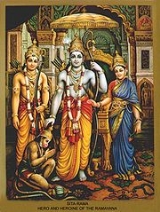
. It constitutes the military and ruling order of the traditional Vedic-Hindu social system as outlined by the Vedas and the Laws of Manu. Lord Rama
RAMA

Rama is a first-person adventure game developed and published by Sierra Entertainment in 1996. The game is based on Arthur C. Clarke's books Rendezvous with Rama and Rama II and supports both DOS and Microsoft Windows 95....
, Lord Krishna
Krishna

Krishna is a deity worshiped across many traditions in Hinduism in a variety of different perspectives. While many Vaishnava groups recognize him as an avatar of Vishnu, other traditions within Krishnaism consider Krishna to be svayam bhagavan, or the supreme being....
, Lord Buddha
Gautama Buddha

Siddhartha Gautama was a Spirituality teacher in the northern region of the Indian subcontinent who founded Buddhism. He is generally seen by Buddhists as the Supreme Buddhahood of our age....
 and Lord Mahavira
Mahavira

Mahavira is the name most commonly used to refer to the Indian sage Vardhamana who established what are today considered to be the central tenets of Jainism....
 all belonged to this social order.

Initially in ancient Vedic society
Vedic period

The Vedic Period is the period during which the Vedas, the oldest sacred texts of Indo-Iranians, were being composed. Scholars place the Vedic period in the 2nd millennium BCE and 1st millennium BCE millennia BCE continuing up to the 6th century BCE based on literary evidence....
, this position was achieved on the merits of a person's aptitude (guna), conduct (karma), and nature (swabhava).


Discussion
Ask a question about 'Kshatriya'
Start a new discussion about 'Kshatriya'
Answer questions from other users
Full Discussion Forum


Recent Posts


Encyclopedia


Kshatriya ( from , ) is one of the four varnas (social orders) in Hinduism
Hinduism

'Hinduism' is the predominant religion of the Indian subcontinent. Hinduism is often referred to as , a Sanskrit phrase meaning "the eternal dharma", by its practitioners....
. It constitutes the military and ruling order of the traditional Vedic-Hindu social system as outlined by the Vedas and the Laws of Manu. Lord Rama
RAMA

Rama is a first-person adventure game developed and published by Sierra Entertainment in 1996. The game is based on Arthur C. Clarke's books Rendezvous with Rama and Rama II and supports both DOS and Microsoft Windows 95....
, Lord Krishna
Krishna

Krishna is a deity worshiped across many traditions in Hinduism in a variety of different perspectives. While many Vaishnava groups recognize him as an avatar of Vishnu, other traditions within Krishnaism consider Krishna to be svayam bhagavan, or the supreme being....
, Lord Buddha
Gautama Buddha

Siddhartha Gautama was a Spirituality teacher in the northern region of the Indian subcontinent who founded Buddhism. He is generally seen by Buddhists as the Supreme Buddhahood of our age....
 and Lord Mahavira
Mahavira

Mahavira is the name most commonly used to refer to the Indian sage Vardhamana who established what are today considered to be the central tenets of Jainism....
 all belonged to this social order.

Initially in ancient Vedic society
Vedic period

The Vedic Period is the period during which the Vedas, the oldest sacred texts of Indo-Iranians, were being composed. Scholars place the Vedic period in the 2nd millennium BCE and 1st millennium BCE millennia BCE continuing up to the 6th century BCE based on literary evidence....
, this position was achieved on the merits of a person's aptitude (guna), conduct (karma), and nature (swabhava). The earliest Vedic literature listed the Kshatriya (holders of , or authority) as first in rank, then the Brahmin
Brahmin

Brahmin is the class of educators, law makers, scholars and preachers of Dharma in Hinduism. It is said to occupy the highest position among the varna in Hinduism of Hinduism....
s (priests and teachers of law), next the Vaisya (merchant-traders), and finally the Sudra (artisans and labourers). Movements of individuals and groups from one class to another, both upward and downward, were not uncommon; a rise in status even to the rank of Kshatriya was a recognized reward for outstanding service to the rulers of the day. Over the years it became hereditary. In modern times, the Kshatriya varna includes a broad class of caste groups, differing considerably in status and function but united by their claims to rulership, the pursuit of war, or the possession of land.

The legend that the Kshatriyas, with the exception of the Ikshvakus
Ikshvaku dynasty

Ikshvaku dynasty was a dynasty founded by Ikshvaku, grandson of Vivasvan or Surya and son of Manu . This dynasty is also known as Suryavansha . The supreme perceptor of the Ikshvaku dynasty is Sage Vashishta....
, were destroyed by Parasurama, the sixth reincarnation of Vishnu
Vishnu

Vishnu , , is the Supreme God in Vaishnavite tradition of Hinduism. Smarta followers of Adi Shankara, among others, venerate Vishnu as one of panchadeva, and his supreme status is declared in the Hindu sacred texts like Yajurveda, the Rigveda and the Bhagavad Gita....
, as a punishment for their tyranny is thought by some scholars to reflect a long struggle for supremacy between priests and rulers that ended in victory for the former. By the end of the Vedic era, the Brahmins were supreme, and the Kshatriya had fallen to second place. Texts such as the Manusm?ti (a book of Hindu law) and most other dharmashastras (works of jurisprudence) report a Brahman victory, but epic texts often offer a different account, and it is likely that in social reality rulers have usually ranked first. The persistent representation of deities (especially Vishnu, Krishna, and Rama) as rulers underscores the point, as does the elaborate series of ritual roles and privileges pertaining to kings through most of Hindu history.. With the rise of Buddhism, Kshatriyas regained their position as first of the four varnas. The murder of the last Maurya emperor Brhadrata
Brhadrata

Brihadratha Maurya was the last ruler of the Mauryan dynasty. He ruled from c. 187?180 BCE. He was killed by his senapati , Pusyamitra Sunga...
 by his Brahmin
Brahmin

Brahmin is the class of educators, law makers, scholars and preachers of Dharma in Hinduism. It is said to occupy the highest position among the varna in Hinduism of Hinduism....
 general Pusyamitra Sunga
Pusyamitra Sunga

Pusyamitra Sunga was the founder and first King of the Sunga Dynasty in Northern India.Pusyamitra Sunga was originally a Senapati of the Mauryan empire....
, and the subsequent decline of Buddhism in India
Decline of Buddhism in India

The Decline of Buddhism in India, the land of its birth, occurred for a variety of reasons, and happened even as it continued to flourish beyond the frontiers of India....
, marked Brahmin supremacy once more in Eastern India. Western India remained a stronghold of Kshatriya clans as epitomized by Rajputana
Rajputana

Rajputana, also called Rajwar, was the pre-1949 name of the present-day Indian state of Rajasthan, the largest state of the Republic of India in terms of area....
 and the powerful Kshatriya empire that ruled from Ujjain
Ujjain

Ujjain , is an ancient city of Malwa in central India on the eastern bank of the Kshipra River In ancient times the city was called Ujjayini....
 right up to the Islamic incursions led to a downfall of the Chauhan
Chauhan

Chauhan or Chohan - are a Rajput clan found in the Indian subcontinent. The Chauhan gotra Rajputs come from the region around the lakes of Sambhar Lake and Pushkar Lake in Rajasthan, near Amber, India and present-day Marwar, Mewar Jaipur....
 Kshatriyas in Delhi.

Etymology

In Sanskrit
Sanskrit

Sanskrit is a historical Indo-Aryan language, one of the liturgical languages of Hinduism and Buddhism, and one of the 22 official languages of India....
, it is derived from kšatra, meaning "dominion, power, government" from a root kši "to rule, govern, possess". Old Persian
Old Persian language

The Old Persian language is one of the two attested Iranian languages . Old Persian appears primarily in the inscriptions, clay tablets, seal s of the Achaemenid dynasty era ....
 xšaya?iya ("emperor") and xša?ra ("realm") are related to it, as are the New Persian
Persian language

name=Persian|nativename=|pronunciation=[f??r'si]|image=|caption=Farsi in Perso-Arabic script |states= Iran, Afghanistan, Tajikistan, Uzbekistan, and Bahrain....
 words šah
Shah

Shah is a Persian language term for a monarch that has been adopted in many other languages.Shah used as a last name by Jains and Hindus is unrelated....
 ("emperor") and šahr ("city", "realm"). The Thai
Thai language

Thai , is the national language and official language language of Thailand and the mother tongue of the Thai people, Thailand's dominant ethnic group....
 word for "king", kasat, and the Malay
Malay language

The Malay language is an Austronesian languages spoken by the Malays and people of other ethnic groups who reside in Peninsular Malaysia, southern Thailand, Singapore, central eastern Sumatra, the Riau Islands and parts of the coast of Borneo....
 word for "knight" or "warrior", kesatria or satria, are also derived from it. The term denotes aristocratic status.

In the early Vedic civilization, the warrior caste was called rajanya or kšatriya. The former was an adjectival form of rajan "ruler, king" from a root raj "to rule", cognate to the Latin
Latin

Latin is an Italic language, historically spoken in Latium and Ancient Rome. Through the Military history of the Roman Empire, Latin spread throughout the Mediterranean and a large part of Europe....
 rex "king", the German Reich
Reich

, is a German language loanword cognate with the English reign, region, and rich, but used most often to designate an empire, realm, or nation. The qualitative connotation from the German is "imperial, sovereign state." It is cognate with the North Germanic languages rike/rige, , , ; as found in bishopric....
 "empire/realm", and the Thai racha "king". In Persia, the satrap
Satrap

Satrap was the name given to the governors of the provinces of ancient Medes and Persian Empire empires, including the Achaemenid Empire and in several of their heirs, such as the Sassanid Empire and the Hellenistic civilization empires....
s, or "kshatrapa", were the governors, or "protectors", of the Persian Empire's provinces.

Holy Warrior


Lord Ram
A Hindu ruler was bound by the holy scriptures to govern as a Dharma-Raja (Just Rule), with the main duties being protection of his subjects and livestock.

  • The Rig Veda states:
praja arya jyotiragrah'. RV, VII. 33.17
People ruled by Aryans are led by the Divine light. King Rama
RAMA

Rama is a first-person adventure game developed and published by Sierra Entertainment in 1996. The game is based on Arthur C. Clarke's books Rendezvous with Rama and Rama II and supports both DOS and Microsoft Windows 95....
 of Ayodhya
Ayodhya

Ayodhya is an ancient city of India, the old capital of Awadh, in the Faizabad district of Uttar Pradesh. Ayodhya is described as the birth place of Hindu god Shri Ram....
 is considered the greatest of the Dharma-Rajas:
arya sarva samascaiva sadaiva priyadarsanah


An Aryan who worked for the equality of all, was dear to everyone. Rama is also considered an avatar of Vishnu
Vishnu

Vishnu , , is the Supreme God in Vaishnavite tradition of Hinduism. Smarta followers of Adi Shankara, among others, venerate Vishnu as one of panchadeva, and his supreme status is declared in the Hindu sacred texts like Yajurveda, the Rigveda and the Bhagavad Gita....
.

  • The Ramayana states:


Like the ancient monarch Manu
Manu

Manu may refer to:...
, father of the human ra
Dasaratha ruled his people with a father's loving grace.


Symbol of Kshatriya


In the initiation rituals, the Nyagrodha (Ficus Indica or India Fig/Banyan
Banyan

A banyan is a Ficus that starts its life as an epiphyte when its seeds germinate in the cracks and crevices on a host tree . "Banyan" often refers specifically to the species Ficus benghalensis, though the term has been generalized to include all figs that share a unique life cycle, and systematics to refer to the subgenus Urostigma'...
 tree) danda, or staff, is assigned to the Kshatriya class.

The Nyagrodha or Banyan tree, (not to be confused with the Pipul, Ficus Religiosus or Sacred Fig), with its hanging branch like roots which turn into trunks and can grow to cover acres, was regarded as resembling the Kshatriya. The Nyagrodha is the kshatra power of trees, and the Kshatriya is the kshatra power [among humans], for the Kshatriya dwells fastened to the kingdom, and is supported [by it]. The Nyyreoagrodha is fastened to the ground by its downward growths, and supported [by it].


"The staff made of this wood is given to the Kshatriya
Kshatriya

Kshatriya is one of the four varna in Hinduism in Hinduism. It constitutes the military and ruling order of the traditional Vedic-Hindu social system as outlined by the Vedas and the Laws of Manu....
 initiate with a mantra imparting physical vitality or 'ojas'".

In the Manu Smriti, or Laws of Manu, the Kshatriya
Kshatriya

Kshatriya is one of the four varna in Hinduism in Hinduism. It constitutes the military and ruling order of the traditional Vedic-Hindu social system as outlined by the Vedas and the Laws of Manu....
 caste is given the Varna (Color) red.

Vedic origin


The universe in Hindu mythology came into being through the yawn of the Adi-Purusha, the one eternal being. He then felt it necessary to monitor the universe. So, he created Lord Vishnu and Lord Shiva, entrusting them with preservation and re-creation. These two were the two sides of the same coins, a replica of HIM. The primary job now was that of procreation. Lord Vishnu created Brahma from his navel, an incarnation of none other than Lord Shiva.

Brahma, the procreator, then set about his task of creating the universe. He created the celestial bodies, earth, mountains, water, air and ether - known in Hinduism as Panch Maha Bhuta. He then created the Sapta Rishis, (Seven wise sages who would take the task of infusing life on the earth). An eighth rishi Narad was born, who declared that he was not interested in procreation and renounced his life for the propagation of Knowledge and Bhakti (Worship). The seven sages started with what their Father had ordered them. They came to be known as Prajapatis (Propagators of the divine human race). Rishi Kashyap grew to be wiser than the rest and Brahma married him off to Daksh Prajapati's two daughters - Diti and Aditi. Diti turned out to be a scheming and jealous woman always trying to belittle and outdo virtuous Aditi. This quality in her gave rise to a human race with the same inherent qualities and they came to be known as Daityas. Virtuous Aditi gave birth to equally virtuous and illustrious sons and they came to be known as Adaityas. Surya (Sun) and Indra (Fire) were born of Aditi. Hence the Sun God is also known as Aditya.

When Brahma was involved in the job of procreation due to toil and perspiration, a negative energy emanated from him. This negative energy took form of Rakshasas (Devils) Madhu and Kaitabha, evil and inhuman souls. They started torturing Brahma. Brahma appealed to Lord Vishnu who readily appeared and killed both of them. He explained to Brahma that when a positive energy is utilized, negative energy also emanates, and that a special race of humans should be created to protect the entire human race. Brahma acting on this advice sat down for meditation. At the end of the day four different forms of energy for the human race were formed out of Brahma's body. Brahmins were created at dawn, Kshatriyas at Noon, Vaishyas at dusk and Shudras at night. Note that these were the Varnas i.e. wansha- caste' (Jati) as now thought of today. Usually this is told as Brahmins were born from Brahma’s head, ending with Shudras from the feet. In the Rig Veda the varnas were not rigid and were related to ones actions.

The Brahmin varna was reddish as the sky before dawn, Kshatriya varna as the Sun at noon, Vaishya as the evening sky and Shudra the color of night sky. Gradually, the Varna system caught hold of Indian Sub Continent and each varna did its job as per guidelines of Brahma. Brahmins and Kshatriyas,Vaishyas were the upper castes and Shudras the lower castes. Both, Brahmins and Kshatriyas were allowed to study the Vedas. Kshatriyas (pronounced as shatria) also studied the ancient martial arts which were eventually carried by Buddhist monks like Bodhidharma
Bodhidharma

Bodhidharma was the Buddhism Bhikkhu traditionally credited as the transmitter of Zen to China. Very little contemporary biographical information on Bodhidharma is extant, and subsequent accounts became layered with legend, but most accounts agree that he was a South Indian Pallava prince-turned-monk who journeyed to Southern China and subse...
 (a Kshatriya) to China and Japan. The Brahmans and Kshatriyas and later the Vaishyas had to perform a communion ceremony called the Upanayanam (thread ceremony) that would symbolize their entry into the Aryan social structure and would be considered reborn, i.e dvijas (twice born). This meant that you accepted the Vedas as the word of God and were willing to perform the rituals and duties outlined under the guidance of your spiritual guide, the Brahman priest.

The Rig Veda refers to the ways in which Gods four body parts make up the four classes, depending on the nature or values that the human holds. The Brahmans hold spiritual and intellectual values and are in charge of teaching the Vedic Sanskrit, thus are made up of his head. The Kshatryas are the warriors that protect the countries and thus are made up of his arms. The Vaishyas are the farmers and merchants in the production nature and thus are made up of his belly and the Shudras are the laborers who perform menial chores of farming, labor, artisans and all the jobs required of a society and thus are made up of his legs. This was interpreted as meaning that no one caste is more important than the other and that society cannot survive without all parts working together.

According to Vedic theology
Rigvedic deities

There are 1028 hymns in the Rigveda, most of them dedicated to specific deity.Indra, a heroic god, slayer of Vrtra and destroyer of the Vala, liberator of the cows and the rivers; Agni the sacrificial fire and messenger of the gods; and Soma the ritual drink dedicated to Indra are the most prominent deities....
, Manu
Manu (Hinduism)

In Hindu traditions, Manu is a title accorded to the First man or woman, and also the very first king to rule this earth, who saved mankind from the universal flood....
 is considered the law-giver and progenitor of humanity. He had over 50 sons. Manu was both king and priest and his children (and thus all of humanity) are considered highborn. Due to the eventual differences in occupations, people ended up in different jatis and caste
Caste

Castes are hereditary systems of wikt:occupation, endogamy, culture, social class, and political power, the assignment of individuals to places in the social hierarchy is determined by social group and culture....
. Those who studied the Vedas
Vedas

The Vedas are a large body of texts originating in History of India. They form the oldest layer of Sanskrit literature and the oldest Hindu scripture of Hinduism....
 became known as Brahmins, those who practiced trade became Vaishya
Vaishya

The Hindu varnas system, a Vaishya is a member of the third of the four classes of traditional Indian society. It comprises merchants, artisans, and cultivators....
, those who labored became Sudra, and those who took up martial arts
Indian martial arts

The Indian subcontinent is home to a variety of fighting styles. They are collectively referred to in Sanskrit as dhanurveda which is the term for the "science of archery" in Puranas literature, later applied to martial arts in general....
 became Kshatriyas. The word Arya
Arya

Arya is an ethnic epithet in the Achaemenid inscriptions and in the Zoroastrian Avestan tradition.Outside the Iranian world there is also evidence of non-single term "arya-"....
 means "noble" and was initially only used for kings and Kshatriyas as it is related to the word "Aristocracy".

Varna-Jati-Caste

There is confusion between Varna, Jati and Caste. While the term varna refers to the four broad different classes in society, the term jati refers to the different specific endogamous sections of the Hindu Society which is known as castes. Varna means "color" as well as "veil". It shows the four different ways in which the Divine Self is hidden in human beings. In the context of color people have confused it to mean race but it actually represents the distinct qualities (guna) that the four functional classes possess in their hearts and minds. The four different qualities of human beings:

  1. If a person possessed the qualities of purity, love, faith and detachment, seek true knowledge and have a spiritual temperament, they would be represented by the color White (sattva = truthful). Those that belong to this color, belong to the Brahman class.
  2. If a person possessed the qualities of action, will, aggression, and energy, seek honor, power, status and have a martial and political temperament, they would be represented by the color Red (rajas = energetic). Those that belong to this color belong to the Kshatriya class.
  3. If a person tried to seek communication, interchange, trade, business and possessed a commercial temperament they were represented by the color Yellow. They make up the Vaishya class.
  4. For those individual in society who love of growing crops (nature) the love of arts(shudra)(farmers and artisans) they were represented by the color Black (tamas = inert, solid). Those belonging to this color are shudras


One hymn of the Rig Veda states:

??????? ??? ???????????????? ??? ? (RV 9.112.3)


"I am a bard, my father is a physician, my mother's job is to grind the corn......"


Clearly this color scheme had nothing to do with race and everything to do with a person’s aptitude.

  • Panchjanya
    Panchjanya

    Panchjanya, meaning five people, is the common name given to five most ancient Vedic period kshatriya tribes. It is supposed they are all descendants of Five Folks and are known by that name for e.g....
    , meaning five people, is the common name given to the five most ancient Vedic kshatriya tribes. It is supposed they are all descendants of the Turvasu. They are Yadu
    Yadu

    Yadu is the name of one of the five Aryan clans mentioned in the Rig Veda. The epic Mahabharata and Puranas refer to Yadu as the eldest son of king Yayati....
    , Sini
    Sini

    Sini may refer to:* Sini , a female given name in Finnish language* Sini , a name given to male as well as female in Malayalam language* Sini , a form of Chinese Islamic calligraphy...
    , Puru
    Puru

    The Purus are a tribe, or a confederation of tribes, mentioned many times in the Rigveda. RV 7.96.2 locates them at the banks of the Sarasvati River....
    , Anu and Druhyu. For example, Yadav
    Yadav

    Yadav or Yadava is an Indian caste system that claims descent from Yadu. Yadavas have been mentioned as one of the panchjanya tribes in ancient Vedic Sanskrit texts....
     is descended from the Yadu
    Yadu

    Yadu is the name of one of the five Aryan clans mentioned in the Rig Veda. The epic Mahabharata and Puranas refer to Yadu as the eldest son of king Yayati....
    ; Saini
    Saini

    Saini even one of the four gots from boy's side was common with one of the four gots from girl's side . These four gots from each side were the gots of : 1) paternal grandfather 2) paternal grandmother 3) maternal grandfather & 4) maternal grandmother....
     is descended from Shini and Shoorsen both of whom were Yaduvanshi kings, Paurav is descended from the Puru
    Puru

    The Purus are a tribe, or a confederation of tribes, mentioned many times in the Rigveda. RV 7.96.2 locates them at the banks of the Sarasvati River....
    ; etc.


Theories of origin


The caste system was very fluid early on and an individual rose or fell depending on his own merit. Historians generally agree that caste became hereditary around the time of the rise of Buddhism and Jainism based on archaeological, literary, and artistic evidence of the communities that existed in India. Gautama Buddha
Gautama Buddha

Siddhartha Gautama was a Spirituality teacher in the northern region of the Indian subcontinent who founded Buddhism. He is generally seen by Buddhists as the Supreme Buddhahood of our age....
 and Mahavira
Mahavira

Mahavira is the name most commonly used to refer to the Indian sage Vardhamana who established what are today considered to be the central tenets of Jainism....
 are two Kshatriya sages who made a lasting impression on the world. They did not believe in the preeminence of the Vedas and taught to the masses, not keeping spirituality to an elite few. Many of the ancient rulers such as Ashoka Maurya were ardent followers of this faith and promoted it throughout the Mauryan empire. This resulted in the decline in status of the Brahman order. Priests in all three faiths were the record keeper and as you will see in the coming examples there was a definite trend towards placing rulers in the Sudra varna if they did not follow Vedic teachings and maintain the prominence of the priestly order, losing their Kshatriya status.

Two camps exist about the importance of these texts. One camp is similar to the literalists of the Christian
Christian

A Christian is a person who adheres to Christianity, a Monotheism#Christian view religion centered on the life and teachings of Jesus and interpreted by Christians to have been prophesied in the Hebrew Bible/Old Testament....
 faith who believe that their holy texts are verbatim documentation of real people, events and dates and that modern society is descended from them. The other camp believes that the holy texts are not meant to be taken literally and should be used symbolically as examples of the proper way to live.

Those who believe the Mahabharata
Mahabharata

The is one of the two major Sanskrit Indian epic poetrys of History of India, the other being the '. The epic is part of the Hindu itihasa , and forms an important part of Hindu mythology....
, Ramayana and Puranas
Puranas

The Puranas are a group of important Hindu religious texts, notably consisting of narratives of the history of the Universe from creation to destruction, genealogies of the kings, heroes, sages, and demigods, and descriptions of Hindu cosmology, philosophy, and geography....
 were verbatim documents feel that modern Kshatriyas are descended from the Vedic Kshatriyas. The reason for the controversy is that we do not have any physical evidence of their existence. There are no bones, forts, weapons, coins, monuments, pictures etc. discovered to state unequivocally that they existed.

The literalists believe that most of the Kshatriya communities descend from Surya, Chandra, or Agni
Agni

Agni is a Hindu and Rigvedic deities. The word agni is Sanskrit for "fire" , cognate with Latin ignis , Russian ????? , Polish "ogien," Lithuanian - ugnis - all with the meaning 'fire' -, with the reconstructed Proto-Indo-European root being h1?gni-....
. The Surya descendants claim descent from the Sun Dynasty (Suryavansh). Rama
RAMA

Rama is a first-person adventure game developed and published by Sierra Entertainment in 1996. The game is based on Arthur C. Clarke's books Rendezvous with Rama and Rama II and supports both DOS and Microsoft Windows 95....
 also belonged to this dynasty, and the Suryavansh Rajput
Rajput

A Rajput is a member of one of the major Hindu Kshatriya groups of Indian subcontinent. The Rajputs trace their roots to Rajputana. They enjoy a reputation as formidable soldiers and it is common to find many of them serving in the Indian Armed Forces....
s (such as the Lohana
Lohana

Lohanas are an Indo-Aryans ethnic group and are a Kshatriya community of India. In India, they mainly reside in Gujarat, Mumbai and other parts of the country....
, who trace this lineage via Rama's son, Luv) trace their linage back to him. Maharaja Agrasen also belonged from the same descent. The Chandra descendants claim descent from the Lunar Dynasty
Lunar Dynasty

In Hindu mythology, the Lunar Dynasty is one of the two principal houses of the Kshatriya varna in Hinduism, or ruling caste. The Lunar Dynasty claims descent from the Moon , while the other principal house, the Suryavanshi claims descent from the Sun ....
 (Chandravansh). Krishna
Krishna

Krishna is a deity worshiped across many traditions in Hinduism in a variety of different perspectives. While many Vaishnava groups recognize him as an avatar of Vishnu, other traditions within Krishnaism consider Krishna to be svayam bhagavan, or the supreme being....
 also was born in this dynasty. Yaduvanshi Kshtriyas consider him as an ancestor. This is based on the writings of the Rig Veda and other Puranas. Great epics, the Ramayana, the Mahabharata
Mahabharata

The is one of the two major Sanskrit Indian epic poetrys of History of India, the other being the '. The epic is part of the Hindu itihasa , and forms an important part of Hindu mythology....
 and the Raghuvamsa
Raghuvamsa

Raghuvamsa is believed to be a lineage of warrior kings tracing its ancestry to Surya. Kalidasa's famous work, Raghuvamsha describes the greatness of this race....
, also support it.

Jain origin
S1985
According to Jainism, Rishabh, the first Tirthankar
Tirthankar

In Jainism, a Tirthankar is a human being who achieves Enlightenment through asceticism and who then becomes a role-model teacher for those seeking spiritual guidance....
 founded three varnas namely Kshatriyas, Vaishyas, and Shudras. Later, Bharat, eldest son of Rishabh, and the first Chakravarti founded the Brahmin varna in the absence of Rishabh. “They will promote inequality in people.”

Thus four varnas came into existence: namely, the Kshatriyas, Brahmins, Vaishyas and Shudras. According to Jain and Buddhist literature, Kshatriyas are nothing but those who own a farm, i.e. farmers. And Kshatriyas are descendants of Rishabh, the first Jain Tirthankar. This fact is clearly stated in many Hindu puranic texts like the Bhagwat Purana, Brahma Purana, Vishnu Purana, etc.

The clan of Rishabh was called Ikshwaku and is thus the clan of all Kshatiyas. Later two branches of this clan came into existence. The first was Suryavanshi which was named after Adityayash (Ark kirti), the elder son of Bharat and the Grand Son of Rishabh and second Somvansh named after Somyash, the elder son of Bahubali. (Bahubali was younger brother of Bharat and son of Rishabh). Rajputs and Marathas believe that Suryavansh was divided, later, into 36 clans and Somvansh was divided into 60 clans. Thus the total number of Kshatriya clans became 96.

Establishments and assimilation

In ancient times there was mobility between varnas, as people learned new skills and changed their actions and occupations. The nomadic tribes of ancient India did not have a fixed caste system. They initially assigned roles based on an individual’s aptitude and ability. This was necessary in order to ensure the tribe's survival. The stronger members of the tribe became the warrior
Warrior

According to the Random House Dictionary, the term warrior has two meanings. The first Literal and figurative language use refers to "a person engaged or experienced in warfare." The second Literal and figurative language use refers to "a person who shows or has shown great vigor, courage, or aggressiveness, as in politics or athletics...
s and were given higher status in society, as they were more important to the survival of the tribe at the time. As the tribes became more familiar with farming they built up surpluses and settled. This more sedentary and leisurely lifestyle shifted the people's focus to accumulating wealth and finding a meaning to life. Priests began to take the preeminent role in society as they ensured spiritual salvation. This led to society forming a more rigid social system, where one's position was determined by birth rather than merit. Thereafter, those in the more powerful classes enforced this caste system to remain in power, a pattern also exhibited by the nobles
Nobility

Nobility is a government-privileged title which may be either hereditary or for a lifetime. Titles of nobility exist today in many countries although it is usually associated with present or former monarchies....
 of Europe. During the Epic Age
Epic Age

Epic Age may refer to:*Epic poetry*Sanskrit epics*Epic India...
 people began to question these institutions.

Many historical rulers came from other castes, or were descended from non-Hindu foreign conquerors, and were either granted de facto Kshatriya status by virtue of the power they held, or they created fictionalized family histories to connect themselves to past Kshatriya rulers. For instance, the Sakas, Yavanas, Kambojas
Kambojas

The Kambojas were a Kshatriya tribe of Iron Age India, frequently mentioned in Sanskrit and Pali literature, making their first appearance Kambojas in the Mahabharata and contemporary Vedanga literature ....
, Pahlavas, Paradas
Paradas

The Paradas are a people mentioned in ancient Indian texts such as the Manu Smriti, various Puranas, the Ramayana and the Mahabharata. In Purana literature, they are also referred to as Varadas and Paritas....
, etc., were foreign invaders from the northwest, but were assimilated into the Indian community as Kshatriyas.

Non-orthodox Kshatriyas
Standingbuddha
* Though the Ashtadhyayi of Panini (sutra 4.1.168-175) attests that the Kamboja
Kamboja

Kamboja may refer to:*the ancient tribe of the Kambojas of the Hindukush in Iron Age India**Kambojas in South Asian literature*the Kamboja Kingdom, one of the Mahajanapadas of Iron Age India...
 and Gandhara
Gandhara

Gandhara is the name of an ancient kingdom , located in northern Pakistan, Jammu and Kashmir and eastern Afghanistan. Gandhara was located mainly in the vale of Peshawar, the Potohar plateau and on the Kabul River....
 were very important Kshatriya kingdoms of Uttarapatha
Uttarapatha

Ancient Buddhist and Hindu texts use Uttarapatha as the name of the northern part of Jambudvipa of ancient Indian traditions.The name is derived from the Sanskrit terms uttara, for north, and patha, for road....
 during or prior to Paninian times (500 BC), they came to be regarded as Sudras for not following the teachings of the Vedas. See more on ancient Kamboja Kshatriyas
Kambojas

The Kambojas were a Kshatriya tribe of Iron Age India, frequently mentioned in Sanskrit and Pali literature, making their first appearance Kambojas in the Mahabharata and contemporary Vedanga literature ....
.
  • The Manusmriti, written about 200 AD states that the Saka
    Saka

    The Sakas or Sacae were a population of Central Asian nomadic tribes speaking an eastern Iranian languages language....
    s (Scythians), Yavanas (Ionian, Indo-Greeks), Kamboja
    Kamboja

    Kamboja may refer to:*the ancient tribe of the Kambojas of the Hindukush in Iron Age India**Kambojas in South Asian literature*the Kamboja Kingdom, one of the Mahajanapadas of Iron Age India...
    s (Central Asia
    Central Asia

    Central Asia is a region of Asia from the Caspian Sea in the west to central China in the east, and from southern Russia in the north to northern India in the south....
    ns), Paradas
    Paradas

    The Paradas are a people mentioned in ancient Indian texts such as the Manu Smriti, various Puranas, the Ramayana and the Mahabharata. In Purana literature, they are also referred to as Varadas and Paritas....
     (Sinkiang
    Xinjiang

    Xinjiang is an autonomous region of China of the People's Republic of China. It is a large, sparsely populated area, spanning over 1.6 million sq....
    ), Pahlavas (Persians), Kirata
    Kirata

    The Kirata is a generic term in Sanskrit literature for people who lived in the mountains, particularly in the Himalayas and North-East India and who were Mongoloid in origin....
    s (Nepal
    Nepal

    Nepal , officially the Federal Democratic Republic of Nepal, is a landlocked country in South Asia and is the world's youngest republic. It is bordered to the north by the People's Republic of China, and to the south, east, and west by India....
    , Assam
    Assam

    Assam ) is a North-East India state of India with its capital at Dispur, in the outskirts of the city Guwahati. Located south of the eastern Himalayas, Assam comprises the Brahmaputra and the Barak River river valleys and the Karbi Anglong District and the North Cachar Hills with an area of 30,285 square miles ....
    ), and Daradas
    Daradas

    Daradas were a people who lived north and north-east to the Kashmir valley. This kingdom is identified to be the Gilgit River region in Kashmir along the river Sindhu or Indus....
     (Dards) were originally noble Kshatriyas but were relegated to the Barbaric (Vrishala) status due to their neglect of the Brahmana
    Brahmana

    The s are part of the Hindu texts sruti literature. They are commentaries on the four Vedas, detailing the proper performance of rituals....
    s as well as due to their non-observance of the sacred Brahmanical codes (X/43-44).
  • Anushasanaparava of the Mahabharata
    Mahabharata

    The is one of the two major Sanskrit Indian epic poetrys of History of India, the other being the '. The epic is part of the Hindu itihasa , and forms an important part of Hindu mythology....
     also views the Sakas, Kambojas and the Yavanas etc. in the same light. Patanjali
    Patańjali

    Pata?jali is the compiler of the Yoga Sutras, an important collection of aphorisms on Yoga practice, and also the author of the Mahabha?ya, a major commentary on Panini Ashtadhyayi....
     in his Mahabhasya regards the Sakas and Yavanas as pure Sudras (II.4.10).
  • The Vartika of the Katyayana
    Katyayana

    Katyayana was a Vyakarana, Indian mathematics and Historical Vedic religion priest who lived in History of India.He is known for two works:* The Varttika, an elaboration on Pa?ini grammar....
     informs us that the kings of the Sakas and the Yavanas, like those of the Kambojas, may also be addressed by their respective tribal names.
  • The Mahabharata
    Mahabharata

    The is one of the two major Sanskrit Indian epic poetrys of History of India, the other being the '. The epic is part of the Hindu itihasa , and forms an important part of Hindu mythology....
     also associates the Sakas, Yavanas, Gandhara
    Gandhara

    Gandhara is the name of an ancient kingdom , located in northern Pakistan, Jammu and Kashmir and eastern Afghanistan. Gandhara was located mainly in the vale of Peshawar, the Potohar plateau and on the Kabul River....
    s (Northwest India), Kambojas
    Kambojas

    The Kambojas were a Kshatriya tribe of Iron Age India, frequently mentioned in Sanskrit and Pali literature, making their first appearance Kambojas in the Mahabharata and contemporary Vedanga literature ....
     (Pamir-Badakshan), Pahlavas, Tusharas, Sabaras, Barbaras, Dravidas, Boyars etc.. and addresses them all as the Barbaric tribe
    Tribe

    A tribe, viewed historically or developmentally, consists of a social group existing before the development of, or outside of, states.Many anthropologists use the term to refer to societies organized largely on the basis of kinship, especially corporate descent groups ....
    s of Uttarapatha
    Uttarapatha

    Ancient Buddhist and Hindu texts use Uttarapatha as the name of the northern part of Jambudvipa of ancient Indian traditions.The name is derived from the Sanskrit terms uttara, for north, and patha, for road....
    .
  • In another verse the epic
    Epic Age

    Epic Age may refer to:*Epic poetry*Sanskrit epics*Epic India...
     groups the Shakas, Kambojas and Khashas together and state them as the tribes from Udichya, i.e. north division (5/169/20).
  • The Kishkindha Kanda of the Ramayana locates the Sakas, Kambojas, Yavanas and the Paradas in the extreme north-west beyond the Himavat (i.e. Hindukush) (43/12) in the Shakadvipa, adjoining the land of Uttarakurus.
  • The Udyogaparava of the Mahabharata
    Mahabharata

    The is one of the two major Sanskrit Indian epic poetrys of History of India, the other being the '. The epic is part of the Hindu itihasa , and forms an important part of Hindu mythology....
     (5/19/21-23) tells us that the composite army of the Kambojas
    Kambojas

    The Kambojas were a Kshatriya tribe of Iron Age India, frequently mentioned in Sanskrit and Pali literature, making their first appearance Kambojas in the Mahabharata and contemporary Vedanga literature ....
    , Yavanas and Sakas had participated in the Mahabharata war under the supreme command of Sudakshina Kamboja
    Sudakshina Kamboja

    Sudakshina Kamboja is the third king of the Kambojas referred to in the Mahabharata. He is also the most referenced of all the Kamboja kings in the whole Mahabharata and most illustrious warrior of the Kambojas of the Epic Age....
    . The epic repeatedly applauds this composite army as being very fierce and wrathful. Some verses of Mahabharata also attest that the Tusharas or Tukharas were also included in the Kamboja division (e.g.: MBH 6.66.17-21; MBH 8.88.17). ' Tocharians
    Tocharians

    The Tocharians were the Tocharian language-speaking inhabitants of the Tarim Basin, making them the easternmost speakers of an Indo-European language in antiquity....
  • Puranic accounts attest that the Dravidas are Kshatriyas and are said to be descendants of the sons of Vishwamitra. Like the Kambojas, Sakas, Yavanas, Daradas, Khashas etc , the Dravidas were recorded as originally a noble Kshatriya people who no longer were initiated into the sacred thread due to their neglect of the Brahmana
    Brahmana

    The s are part of the Hindu texts sruti literature. They are commentaries on the four Vedas, detailing the proper performance of rituals....
    s as well as due to their non-observance of the sacred Brahmanical
    Brahmana

    The s are part of the Hindu texts sruti literature. They are commentaries on the four Vedas, detailing the proper performance of rituals....
     codes.


Kshatriya lineage


The major branches of Kshatriya varna are Chandravanshi, claiming descent from Chandra
Chandra

In Hinduism, Chandra is a lunar deity and a Graha. Chandra is also identified with the Veda Lunar deity Soma . The Soma name refers particularly to the juice of sap in the plants and thus makes the Moon the lord of plants and vegetation....
, Suryavanshi
Suryavanshi

The Sun Dynasty or Solar Dynasty or Suryavansha is one of the most prominent dynasties in the history of Hinduism, along with the "Chandravansha" or Lunar Dynasty....
, claiming direct descent from Ramachandra and descent from Surya
Surya

In Hinduism, Surya is the chief solar deity, one of the Adityas, son of Kasyapa and one of his wives Aditi, of Indra, or of Dyaus Pitar . The term "Surya" also refers to the Sun, in general....
, Agnivanshi, claiming descent from Agni
Agni

Agni is a Hindu and Rigvedic deities. The word agni is Sanskrit for "fire" , cognate with Latin ignis , Russian ????? , Polish "ogien," Lithuanian - ugnis - all with the meaning 'fire' -, with the reconstructed Proto-Indo-European root being h1?gni-....
, and the Nagavanshi
Nagavanshi

The Nagavanshi dynasty is one of the Kshatriya dynasties of India. It includes a number of Jat people clans, but is dominant in Kerala. The group of people developed their Vansha according to their system of worship....
, claiming descent from the Naga
Naga

Naga may refer to:* Naga, a group of serpent deities in Hindu and Buddhist mythology....
s.

Suryavanshi


The Suryavanshi or Solar dynasty lineage claims descent from Surya
Surya

In Hinduism, Surya is the chief solar deity, one of the Adityas, son of Kasyapa and one of his wives Aditi, of Indra, or of Dyaus Pitar . The term "Surya" also refers to the Sun, in general....
. Suryavanshis also claim descent from Rama, who was himself born into a Suryavanshi dynasty.

  • Bargujar
    Bargujar

    The Bargujar is one of the most ancient Suryvanshi Kshatriya races of India. They constituted the main force in Haraval Tukdi or the first line of offense in any battle....
  • Gurjar
  • Jhala
    Jhala

    Jhala may be any of the following:*Jhala : The name of a clan of Rajputs belonging to the Suryavanshi lineage. Heirs of Harpaldev and Shaktidevi 19 son of The Harpaldev, One of the Manguji and his son is Karansinhji ....
  • Kachwaha
    Kachwaha

    The Kachwaha are a Suryavanshi Rajput clan who ruled a number of kingdoms and princely states in India such as Alwar, Maihar, Talcher, while the largest kingdom was Jaipur which was founded by Maharaja Sawai Jai Singh II in 1727....
  • Maurya
  • Khatri
    Khatri

    The Khatris are a caste or a tribe of the north Indian community that originated in the Potwar Plateau of Punjab region.Khatri is the Punjabi language adaptation or pronunciation of Sanskrit word Kshatriya [1][2][3] ....
  • Kurmi
    Kurmi

    Kurmi , In Hindu society there have traditioanlly been four varnas - 1. Bharmanya 2. Kshatriya 3. Vaisya 4. Kshdrya, - these were decided on the basis of the work done by individuals....
  • Lohana
    Lohana

    Lohanas are an Indo-Aryans ethnic group and are a Kshatriya community of India. In India, they mainly reside in Gujarat, Mumbai and other parts of the country....
  • Minhas
    Minhas

    Minhas or Manhas or Minhas-Dogra is a Suryavanshi Rajput clan from the Punjab region and Jammu & Kashmir in India and Pakistan. It is an off-shoot of Jamwal-Dogra Rajputs, the founders of the city and state of Jammu and its rulers from ancient times to 1948 C.E....
  • Pundir
    Pundir

    The most powerful military vassals of the Chauhan Empire of Delhi, the Pundir are a Suryavanshi branch of Rajputs, one of the thirty six royal rajput clans....
  • Rajus
    Rajus

    Raju is a Telugu variation of the Sanskrit word Raj and Raja meaning King, Prince, Lord or of a Regal, Military nature. In modern times it is a commonly used given name and surname....
     of North-Coastal Andhra
  • Rathore
    Rathore

    The Rathore In India, their native languages are Hindi language and its dialects ** SHYAM SINGH 1532-1562 A.D....
  • Ror
    ROR

    The acronym ROR may refer to:* Ror community or the Ror caste of North India* ROR, the IATA code for Palau International Airport* Rate of return, a comparison of the money earned or lost on an investment to the amount of money invested...
  • Sengar
    Sengar

    SENGAROne of the 36 clan Rajput Kshatriya.Vansh - Munivansh,brahamkshatriyaGotra - GautamOrigin- Jagmanpur , Bhareh , Lakhnesar, Rura, Datia,Rewa ...
  • Sisodia
    Sisodia

    The Sisodia are a Rajput clan who ruled the kingdom of Mewar in Rajasthan. Before Rana Hamir the clan was known as Gehlot or Guhilot. In 1303 CE Alla-ud-din Khilji attacked Chittor.In the war all Rajputs in the fort were killed and Rani Padmini committed Jauhar.Some of their kinsmen survived, who were outside the fort....


Chandravanshi


The Chandravanshi or Lunar dynasty lineage claims descent from Chandra
Chandra

In Hinduism, Chandra is a lunar deity and a Graha. Chandra is also identified with the Veda Lunar deity Soma . The Soma name refers particularly to the juice of sap in the plants and thus makes the Moon the lord of plants and vegetation....
.

The Yaduvanshi lineage are the major sub-branch of the Chandravanshi lineage. The Yaduvanshis claim descent from Krishna
Krishna

Krishna is a deity worshiped across many traditions in Hinduism in a variety of different perspectives. While many Vaishnava groups recognize him as an avatar of Vishnu, other traditions within Krishnaism consider Krishna to be svayam bhagavan, or the supreme being....
, who in turn was born into a Chandravanshi dynasty. Several Indian castes such as Saini
Saini

Saini even one of the four gots from boy's side was common with one of the four gots from girl's side . These four gots from each side were the gots of : 1) paternal grandfather 2) paternal grandmother 3) maternal grandfather & 4) maternal grandmother....
s of Punjab and contiguous region, Rajput
Rajput

A Rajput is a member of one of the major Hindu Kshatriya groups of Indian subcontinent. The Rajputs trace their roots to Rajputana. They enjoy a reputation as formidable soldiers and it is common to find many of them serving in the Indian Armed Forces....
s of Bhati Clan, Jadaun Rajputs (Madhya Pradesh), and the Jats of Mathura
Mathura

Mathura is a holy city in the Indian States and territories of India of Uttar Pradesh. It is located approximately 50 km north of Agra, and 150 km south of Delhi; about twenty kilometers from holy Vrindavana....
 and Bharatpur
Bharatpur, India

Bharatpur is a city in the Indian States of India of Rajasthan. It was founded by Maharaja Suraj Mal in 1733. Located in Mewat region, Bharatpur was once an impregnable, well-fortified city, and the capital of a kingdom ruled by Jat maharajas....
, claim descent from the Yaduvanshi lineage.

  • Bundela
    Bundela

    The Bundelas are a Rajput clan who ruled several states in central India, in Bundelkhand region from the 16th century....
  • Chandela
    Chandela

    The Chandelas are a Rajput clan found in Rajasthan, Haryana, Uttar Pradesh, a dynasty, who ruled much of the Bundelkhand region of central India for long periods between the 10th and the 13th centuries AD....
  • Kalachuri
    Kalachuri

    Kalachuri is this the name used by two kingdoms who had a succession of dynasties from the 10th-12th centuries, one ruling over areas in Central India and were called Chedi Kingdom or Haihaya and the other southern Kalachuri who ruled over parts of Karnataka....
  • Kukhran
    Kukhran

    The Kukhrans are an ancient group of ten specific clans of a Khatri subcaste who originally hailed from the areas of the Salt Range and particularly...
     - Kukhrans are a sub-group of Khatris.
  • Haihayas
    Haihayas

    The Haihayas were an ancient confederacy of five ganas , who claimed their common ancestry from Yadu. According to the Harivamsha , Haihaya was the great grandson of Yadu and grandson of Sahasrajit....
  • Jadaun
    Jadaun

    In Hindu culture, Jadaun is a name of Chandravanshi Rajputs....
  • Jethwa
    Jethwa

    Jethwa or Jethva is a name of a Mochi clan that claim decent from Pawan, ancestor of Lord Hanuman who appears in the Hindu epic Ramayan. They are a branch of the Suryavanshi Mochi and are one of the oldest clans found in Mochi history....
    s
  • Pathanis
  • Pathania
    Pathania

    Pathania is the name of the branch of the Tomara Clan of Chandravanshi, Dogra Rajputs, descended from Lord Arjuna, the hero of Mahabharata. It is one of the ruling Rajput clans of India....
  • Tanwar
  • Saini
    Saini

    Saini even one of the four gots from boy's side was common with one of the four gots from girl's side . These four gots from each side were the gots of : 1) paternal grandfather 2) paternal grandmother 3) maternal grandfather & 4) maternal grandmother....
    s of Punjab
  • Seuna Yadavas of Devagiri.
  • Jadeja
    Jadeja

    Jadeja is the name of a major clan of Yaduvanshi or Chandravanshi Rajputs. The Chandravanshi lineage, claiming descent from Chandra, the Hindu Moon-god, in English known as the Lunar Dynasty....
  • Malayala Kshatriyas
  • Jats of Bharatpur
  • Soam


Agnivanshi


The Agnivanshi lineage claims descent from Agni
Agni

Agni is a Hindu and Rigvedic deities. The word agni is Sanskrit for "fire" , cognate with Latin ignis , Russian ????? , Polish "ogien," Lithuanian - ugnis - all with the meaning 'fire' -, with the reconstructed Proto-Indo-European root being h1?gni-....
.
  • Bhaduria
    Bhaduria

    Bhadauria, Bhadoria, Bhadouria, Bhadoriya, Bhadouriya, Bhadauriya, Bhaduria is a branch of the Chauhan clan of Agnivanshi rajputs. The chief of this clan was ruler of Bhadawar StateIn terms of population bhadourias are in MP, UP, Delhi and in Rajasthan....
  • Chauhan
    Chauhan

    Chauhan or Chohan - are a Rajput clan found in the Indian subcontinent. The Chauhan gotra Rajputs come from the region around the lakes of Sambhar Lake and Pushkar Lake in Rajasthan, near Amber, India and present-day Marwar, Mewar Jaipur....
  • Paramara
    Paramara

    Paramara is the name of a prominent Agnivanshi Rajput clan of medieval India, which ruled the Dhar and Ujjaini kingdoms from the 9th century to the 14th century....
  • Pawar
  • Pratihara
    Pratihara

    The Pratiharas , also known as Parihars, formed an Indian dynasty that ruled a large kingdom in northern India from the 6th to the 11th centuries....
  • Sena
    Sena dynasty

    The Sena dynasty ruled Bengal through the 11th and 12th centuries. They were called Brahma-Kshatriyas, as evidenced through their surname, which is derived from the Sanskrit, for "army"....
  • Solanki
    Solanki

    The Solanki are a Hindu clan who ruled parts of western and central India between the 10th and 13th centuries. The Solanki are a branch of the Chalukya dynasty of whose oldest known area of residence was in present-day Karnataka....


Nagavanshi


Some castes claim Kshatriya status as descendents of the Naga
Naga

Naga may refer to:* Naga, a group of serpent deities in Hindu and Buddhist mythology....
 or the "serpent dynasty", and are called Nagavanshi. Particular clans of Nair
Nair

Nair is the name of a Hindu Kshatriya upper caste ethnic dravidian community from the South Indian state of Kerala. The Nairs were a martial nobility and figured prominently in the history of Kerala....
 and Jat caste claim Nagavanshi descent. The Nagavanshi (or Nagabanshi) are known for ruling Chhotanagpur
Chhotanagpur

Chhotanagpur is an area including the tribal areas of Jharkhand, Madhya Pradesh, Orissa, and West Bengal states in India. Many residents of the area identify with the name even though there is no political recognition of the area....
.

  • gotras such as:
    • Nair
      Nair

      Nair is the name of a Hindu Kshatriya upper caste ethnic dravidian community from the South Indian state of Kerala. The Nairs were a martial nobility and figured prominently in the history of Kerala....
    • Takshak
      Takshak

      Thakshak or Taxak, classically called the Taxilleans , is a gotra or clan of Jat peoples found in India, Pakistan and Central Asia....
    • Bachak
      Bachak

      Bachak is a gotra of Jat people in India.According to a mythological story, Lord Krishna killed Bachak-nag in Kalidah. Bahikas Jats are found in considerable numbers in twelve villages around Kalidah....
    • Karkotaka
      Katewa

      Katewa is a gotra of Jat people found in Rajasthan, India. The Katewa tribe is also settled in Sindh, Pakistan. Katewa is derived from the Nagavanshi kshatriyas known as Kikat, inhabiting Kikata Kingdom, during Mahabharata period....
    • Kaliramna
      Kaliramna

      Kaliramna or Kaliraman or Kaleramne is gotra of Jat people found in Haryana and Punjab . Kala, Kalidhaman, Kalkhande, Kalirawan,Kalerana, Kalirawat, Kalu are the variations of the same gotra....
    • Bunt
      Bunt

      A bunt is a special type of offensive technique in baseball or softball. In a bunt play, the Batter loosely holds the baseball bat in front of the plate and intentionally taps the ball into play....
       etc. claim descent from Nagavanshi lineage.


Others

  • The Nadars of ancient Pandya royal lineage
  • The Mukkulathors of the ancient Chola and Pandya royal lineages
  • Kodavas non Aryan Kshatriyas, like the Jats and Nairs, they didn't wear the sacred thread, but they owned land, carried arms, and had other such warrior customs, they originated from the Coorg(Kodagu) region of Karnataka.
  • Ahom
    Ahom

    The Ahoms established the Ahom kingdom in parts of present-day Assam and ruled it for nearly 600 years. Historical documents didn't call the kingdom "Ahom"....
     kings of Assam
    Assam

    Assam ) is a North-East India state of India with its capital at Dispur, in the outskirts of the city Guwahati. Located south of the eastern Himalayas, Assam comprises the Brahmaputra and the Barak River river valleys and the Karbi Anglong District and the North Cachar Hills with an area of 30,285 square miles ....
     claimed descent from Indra (identified with Khunlung) and Syama (a low-caste woman), and called themselves Indravanshi (or Indravamsa) Kshatriyas.
  • The Brahmavansha lineage descends from the Brahmavanshi king Chulki.
  • The Vayuvanshi are another Kshatriya clan although not much is known about the clan.
  • The Rexulvanshis are popular for being the kings of Surguja.
  • The alien hordes that didn't follow priestly customs or traditions (Shakas, Kushans, Indo-Greeks, Hunas
    Hunas

    The Huna , as they were known in South Asia, seem to have been part of the Hephthalite group, who established themselves in Afghanistan and Pakistan by the first half of the fifth century, with their capital at Bamyan City....
     and Parthian
    Parthian

    Parthian may be:A demonym "of Parthia", a region of north-eastern Iran* Parthian language, a now-extinct Middle Iranian language* Parthian shot, an archery skill famously employed by Parthian horsemen...
    s) were stated as Vratya Kshatriyas in Manusmriti.
  • Vanniar


Outside the Indian subcontinent


  • About 40 percent of the total population of Bali
    Bali

    Bali is an Indonesian island located at , the westernmost of the Lesser Sunda Islands, lying between Java to the west and Lombok to the east. It is one of the country's 33 Provinces of Indonesia with the provincial capital at Denpasar towards the south of the island....
     is comprised of Balinese
    Balinese

    See:*Balinese people*Balinese language*Balinese mythology*Balinese , a cat breed*Balinese Gamelan, local music*Balinese Room, a famous illegal casino in Galveston, Texas...
     Kshatriyas. Balinese Hinduism has a caste
    Caste

    Castes are hereditary systems of wikt:occupation, endogamy, culture, social class, and political power, the assignment of individuals to places in the social hierarchy is determined by social group and culture....
     system and is heavily influenced by the Vedas
    Vedas

    The Vedas are a large body of texts originating in History of India. They form the oldest layer of Sanskrit literature and the oldest Hindu scripture of Hinduism....
    .
  • The Balamon Hindu Cham people
    Cham people

    The Cham people are an ethnic group in Southeast Asia. They are concentrated between Kampong Cham Province in Cambodia and central Vietnam Phan Rang-Thap Cham, Phan Thiet, Ho Chi Minh City and An Giang areas....
     of Vietnam
    Vietnam

    Vietnam , officially the Socialist Republic of Vietnam , is the easternmost country on the Indochina Peninsula in Southeast Asia. It is bordered by People's Republic of China to the north, Laos to the northwest, Cambodia to the southwest, and the South China Sea to the east....
     consist of 70% Kshatriyas (pronounced in Vietnamese as "Satrias"). Although Balamon make up only 25% of the over all Cham population (the other 75% are Muslims or Cham Bani). These Balamon Kshatriyas claim to be the descendants of the Champa
    Champa

    File:Shiva Dong Duong Style.jpgFile:VietnamChampa1.gifThe kingdom of Champa was an Indianized kingdom of Malayo-Polynesian origins and controlled what is now southern and central Vietnam from approximately the 7th century through to 1832....
     Empire.
  • Kshatriyas are an important minority in Sri Lanka and are referred to as Kaurava, Karava or Kurukulam. See


Social Status


Past

In the past people looked upon Kshatriyans to protect them from all dangers. Kshatriyans were kings and warriors in the army, all soldiers knew basics of Kshatriyan martial arts
Martial arts

Martial arts are systems of codified practices and traditions of training for combat. While they may be studied for various reasons, martial arts share a single objective: to physically defeat other persons and to defend oneself or others from physical threat....
. The Kshatriyans were held in respect by everybody. The Kshatriyans were always members of some Royal - Families or Raja-kudumba's. They were also known as Kshatriya-kul's. The folklore
Folklore

Folklore is the body of expressive culture, including tales, music, dance, legends, oral history, proverbs, jokes, superstitions, customs, and so forth within a particular population comprising the traditions of that culture, subculture, or group ....
 talks of some great Kshatriyans and legends. The status of Kshatriyans was clearly exalted. Legends tell that Kshatriyan could be told by sight because of his tall, strong and muscular male look. They were supposedly able to fight blindfolded and archers could hit a target by just sound in the dead of the night. Stories of exemplary courage still circulate by word of mouth and are recorded as folk-tales. Some stories reveal a darker side. Non-Kshatriyans were rejected in the Kshatriyan society even if they did a Kshatriyan's job better than a Kshatriyan. Teachers of Kshatriyans never accepted non-kshatriyans, for example see the story of Ekalavya
Ekalavya

In the Hindu epic Mahabharata, Ekalavya is a young prince of the Nishadha tribes, and a member of a low caste, who nevertheless aspires to study archery in the gurukul of Dronacharya....
.

Present

While some Kshatriya-families survive from the past, many claim to be descendants of particular Kshatriyans or Kshatriya-kula's. Raja-kudumba's also exist but the number has fairly decreased. Kshatriyan martial arts have survived and are being revived. Families consider it as a status symbol or a decoration to have the famous two crossed swords in a shield symbol of a Kshatriyan hung in their house. The Kshatriyan is still a great name and older generation of rural India still attach a great value to it. South Indian Kalarippayattu gurukal teach the old martial art still. The Kalarippayattu is seriously being revived but the old tradition of accepting only Kshatriyans to learn Kalarippayattu has been dropped. The Marathas in Maharashtra
Maharashtra

Maharashtra is a States and territories of India located on the western coast of India. Maharashtra is a part of Western India. It is India's List of states of India by area and List of states of India by population....
 and central India attach great pride and command a sense of respect among common people by their lineage
Lineage

Lineage may refer to:In science:* Lineage , descent group that can demonstrate their common descent from an apical ancestor* Lineage , group composed of species, taxa, or individuals related by descent from a common ancestor...
 while Rajput
Rajput

A Rajput is a member of one of the major Hindu Kshatriya groups of Indian subcontinent. The Rajputs trace their roots to Rajputana. They enjoy a reputation as formidable soldiers and it is common to find many of them serving in the Indian Armed Forces....
 families in Rajasthan
Rajasthan

Rajasthan is the largest States and territories of India of the Republic of India in terms of area. It encompasses most of the area of the large, inhospitable Great Indian Desert , which has an edge paralleling the Sutlej-Indus river valley along its border with Pakistan....
 and North-Western parts of India still have their palaces from the past.

Kshatriya Women and children


Women

The women in the past were mainly confined to their houses and did not play a significant role. In the past when polygamy
Polygamy

The term polygamy is used in related ways in social anthropology, sociobiology, and sociology. Polygamy can be defined as any "Types of marriages in which a person [has] more than one spouse."...
 was common beautiful women would be married several times to different persons; and each with many other wives. Once the girl marries a man the husbands home becomes hers and her main job was to do puja
Puja

Puja is the religion ritual that Hindus perform on a variety of occasions to pray or show respect to God, Gods, and guru. The purpose of puja is to communicate with God and the Gods or the satguru, to keep a thread to continuity, of relationship, between this physical world and the subtle inner worlds....
 to the family deity
Deity

A deity is a postulated preternatural or supernatural immortal being, who may be thought of as holy, divinity, or sacred, held in high regard, and respected by human beings....
. Each Kshatriya family had its own God which may or may not have been similar to Gods of other Kshatriya families. They were required to live in a kind of harem
Harem

Harem refers to the sphere of women in a usually polygyny household and their quarters which is enclosed and forbidden to men. It originated in the Near East and came to the Western world via the Ottoman Empire....
 made for wives with their companions and enjoy whenever possible in whichever manner they would prefer. They were also supposed to maintain a certain decorum
Decorum

Decorum was a principle of classical rhetoric, poetry and theatrical theory. The term is also applied to prescribed limits of appropriate social behavior within set situations....
 as a Kshatriyans wife. The most influential wives son would become the next king or head of the family. If there were many sons for that particular wife then the mothers favorite would get the throne or family heirloom
Heirloom

In popular usage, an heirloom is something, perhaps an antique, that has been passed down for generations through family members.The term originated with the historical principle of an heirloom in English law, a chattel which by immemorial usage was regarded as annexed by inheritance to a estate ....
.

Male child

A boy child was taught by a Kshatriya guru
Guru

A guru is a person who is regarded as having great knowledge, wisdom and authority in a certain area, and who uses these abilities to guide others....
 or even a Brahmin teacher who knew about the Kshatriya ways. A male child was the symbol of masculinity of a Kshatriya father and was the future of the family. While the family was always the foremost in a Kshatriyans mind the country's honor was also to be cared for by a Kshatriyan. All these and many other finer aspects of Kshatriyan life were taught to a male child and he was introduced to the society of Kshatriyans before being taught the weapons and martial arts.

Female child

The girl child was supposed to be docile and gentle. She was supposed to be spiritual and devoted. The girl child was usually well-educated in the social subjects of that time and was usually prepared to become the woman she was expected to become. In contrast to the male child the female child was never let out of the women circles in a Kshatriya society. She was considered to be a weakling in general and to be served by servants and protected by husbands. Manu Smriti
Manu Smriti

, also known as 'Manava-Dharmasastra' , is the most important and earliest metrical work of the Dharmasastra textual tradition of Hinduism....
 a sacred Hindu scripture describes a women'slife as:
A female is protected by her father as a child, by her husband as a woman and by her son in her old age.
Exceptions, as always existed even in this case like the Rani of Jhansi.

Present situation


The situation has changed in these modern times and kshatriyans do not have much to gain or loose in status by their Kshatriya lineage. Only grown or old men take actual pride and speak about a Kshatriya lineage.

Specialties

The Kshatriyans were specialized in guerrilla warfare
Guerrilla warfare

Guerrilla warfare is the Irregular warfare warfare and combat with which a small group of combatants use mobile Military tactics to combat a larger and less mobile formal army....
. History has it that the Maratha warrior and emperor Shivaji
Shivaji

Shivaji Bhosle , commonly known as Chhatrapati Shivaji Maharaj laid the foundations of the Maratha Empire. Shivaji was younger of the two sons of Shahaji and Jijabai....
 Bhonsale, born April, 1627 (also Shrimant Rajaram Shivaji Raje Bhonsle - Chhatrapati
Chhatrapati

Chhatrapati is an honorific or an imperial title for an Indian ruler. It most notably refers to Chhatrapati Shivaji, founder of the Maratha Empire....
 Maharaj) had his own army specialized in guerrilla warfare and a particular tale of valor is also a historical fact. It is the tale of Sinhagad Fort.

South India, particularly Kerala also has its own share of Kshatriyans who are better known as members of Raja-Kudumba's or royal families. They practice the worlds oldest martial art known as Kalarippayattu
Kalarippayattu

Kalarippayattu or kalaripayattu is a martial art with origins in Kerala and practised in that south Indian state and contiguous parts of neighbouring Tamil Nadu....
. The Kalarippayattu has something commonly known as Marma Kalai or Varma Kalai where the Marmam
Marmam

Marmam are pressure points of the human body in Indian martial arts in general and Dravidian martial arts in particular. It is claimed that experienced practitioners can disable or kill their opponents by a mere touch in a Marmam....
 is attacked which instantly disables or kills the enemy without making any externally visible injury.

The Rajputs were known to make deft political maneuvers to consolidate their kingdom or to defeat an enemy. They are also known to follow certain codes of war to fight a battle. They are recorded in history as a kind of fierce warrior clan who make brave attempts within their war codes to retrieve a lost kingdom or defeat a dangerous enemy. they are also legendarily said to have untiring persistence to attain their goal as in the case of Maharana Pratap.

Codes of war

Codes of war were very important to a Kshatriyan and his lineage. They are still talked about for their innate decency and respect of the enemy and women. There exist old palm-leaf inscriptions on these topics. They are known to many a Kshatriyan families which still believe in the old ways of virtuous Kshatriya living. A trained Kshatriyan -it is said- is never trained till he knows and follows the codes of war.

The Kshatriyan codes of war are stuff of legends and folklore in India
India

India, officially the Republic of India , is a country in South Asia. It is the List of countries and outlying territories by total area country by geographical area, the List of countries by population country, and the most populous liberal democracy in the world....
. Mahabharatha a Hindu epic
Indian epic poetry

Indian epic poetry is the epic poetry written in the Indian subcontinent. Originally composed in Sanskrit and translated thereafter into Kannada, Tamil language and Hindi, it includes some of the oldest epic poetry ever created and some works form the basis of Hindu scripture....
 also talks about war codes. Conclusive archaeological evidence has not yet been obtained but more or less all sources agree that such codes of war existed and they were followed. Some of the more important codes are listed below.

  • War should not affect the unarmed - meaning that the civilian population should not be attacked for any reason nor should the disarmed and seriously wounded soldiers or warriors unless it is for killing them as an act of mercy.
  • Rest should be provided for both sides - meaning that the war should not continue after sunset unless or otherwise it is a guerrilla war.
  • All foes should be defeated - meaning that even if your kinsman fought against you, you should not hesitate to defeat him.
  • Raids should not be undertaken unless completely necessary - meaning that a raid should not be undertaken unless the motive is to compensate for past losses or to humiliate the enemy.
  • Women should not be looked at unless she challenges you - meaning that unless a woman is in your enemy's army as a soldier or warrior you should not attack her. If the woman is the ruler then she can be attacked or asked to surrender only after the whole army is defeated.
  • A guerrilla war should not be waged unless the objective is victory - meaning that the warriors chosen for a guerrilla war should be the best, able to defeat any large army in the given situation and such an attack should be done only to attain a political goal and not to raid the enemy's supplies.
  • A traitor should never escape death - meaning that a traitor or defector of ones own army should be guaranteed death.


Kshatriya Dharma

Kshatriya Dharma is the rules to be followed by a Kshatriyan to do justice to his caste and status. it still exists in more logical and evolved forms.

It used to be unthinkable for a Kshatriya to marry outside his class. It would be breaking the biggest tradition of his family and would cause disgrace to his whole family and community;it has still not changed for most families even today. There is a very strong emphasis on following the customs and traditions of the class which have evolved over centuries. In addition to these, there are also further traditions which will be specific only to particular prominent Kshatryia families which has been handed down from generations. Following these traditions are a matter of great honour and importance that breaking them has resulted in families splitting up or being excluded permanently from the caste (jati) even in the present times. The Joint family system is still widely practised among the Kshatriya families and the family elders have the final say on all important decisions. It was believed that the Kshatriyas were assigned to be protectors of Dharma (duty/justice) and their people.They were sanctioned by the Gods to serve humanity. The noble king is regarded as a Dharma Raja (Just Ruler). People ruled by aryas (honourable men) are led by the Divine light.

Kshtariya Dharma is specifically described in the Mahabharata: "Have you never heard the Kshatriya Dharma: Stand straight and never bow down, for this alone is manliness. Rather break at the knots than bend!" (Mahabharata, as retold by William Buck, University of California Press Berkeley Los Angeles London 1973)

Further reading

  • History and Culture of Indian People, The Vedic Age, p 313-314
  • The late Shri Harilal Upadhyay
    Harilal Upadhyay

    Shri Harilal Upadhyay was a Gujarati people author, considered as one of the all-time great authors in the Gujarati language. He wrote more than a hundred books, including historical novels, social novels, short story collections, biographies, the great Mahabharat series, children's literature, poetry and Plays....
    : This great Gujarati author researched both the ancient and modern eras and wrote books which can be considered as encyclopedic novels. He wrote books on both the Chandravansh and Suryavash. Further details are found at his official web site. Although he wrote all his work in his mother tongue (Gujarati) the site provides some comprehensive information in English. Article about the author also found on Wikipedia harilal upadhyay
    Harilal Upadhyay

    Shri Harilal Upadhyay was a Gujarati people author, considered as one of the all-time great authors in the Gujarati language. He wrote more than a hundred books, including historical novels, social novels, short story collections, biographies, the great Mahabharat series, children's literature, poetry and Plays....


See also

  • Varna in Hinduism
  • Indian caste system
  • Forward Castes
  • Jati
    Jati

    Jatis is the term used to denote communities and sub-communities in India. It is a term used across religions. In Hindu society each jati typically has an association with a traditional job function, although religious beliefs or linguistic groupings define some jatis....
  • For the Bollywood
    Bollywood

    Bollywood is the informal term popularly used for the Mumbai-based Hindi film industry in India. The term is often used to refer to the whole of Cinema of India....
     film of the same name see
    Kshatriya (film)
    Kshatriya (film)

    Kshatriya is a 1993 Bollywood film directed by J.P. Dutta. The film features an ensemble cast star cast including Sunil Dutt, Dharmendra, Vinod Khanna, Sunny Deol, Sanjay Dutt, Meenakshi Seshadri, Raveena Tandon and Divya Bharti....