


Ptuj

Encyclopedia
Ptuj is a city
and one of 11 urban municipalities in Slovenia
. Traditionally the area was part of the Lower Styria
region. The municipality is now included in the Podravje statistical region
. It has about 23,000 inhabitants.
The nearest airports are Ptuj Sport Airfield (Moškanjci), which is seven kilometers away, and Maribor Edvard Rusjan Airport, which is eighteen kilometers away.
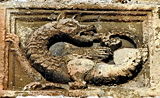 Ptuj is the oldest city in Slovenia. There is evidence that the area was settled in the Stone Age
. In the Late Iron Age
it was settled by Celts. By the 1st century BC, the settlement was controlled by Ancient Rome
. In 69 AD, Vespasian
was elected Roman Emperor
by the Danubian legions in Ptuj, and the first written mention of the city of Ptuj is from the same year. The city of Poetovio was the base-camp of Legio XIII Gemina
in Pannonia
. The name originated in the times of Emperor Trajan
, who granted the settlement city status and named it Colonia Ulpia Traiana Poetovio in 103. The city had 40,000 inhabitants until it was plundered by the Huns
in 450.
In 570 the city was occupied by Eurasian Avars
and Slavic tribes. Ptuj became part of the Frankish Empire
after the fall of Avar state at the end of 8th century. Between 840 and 874 it belonged to the Slavic Balaton Principality
of Pribina
and Kocelj. Between 874 and 890 Ptuj gradually came under the influence of the Archbishopric of Salzburg
; city rights
passed in 1376 began an economic upswing for the settlement. As Pettau, it was incorporated into the Duchy of Styria
in 1555.
 Pettau was a battleground during the Ottoman wars in Europe
and suffered from fires in 1684, 1705, 1710, and 1744. Its population and importance began to decline in the 19th century, however, after the completion of the Vienna
-Trieste
route of the Austrian Southern Railway
, as the line went through Marburg (Maribor)
instead.
According to the 1910 Austro-Hungarian census, 86% of the population of Pettau's Old Town was German
-speaking, while the population of the surrounding villages predominantly spoke Slovene. After the collapse of Austria-Hungary
at the end of World War I
, Pettau was included in the short-lived Republic of German Austria
, but after the military intervention of the Slovenian general Rudolf Maister
, the entire territory of Lower Styria
was included into the State of Slovenes, Croats and Serbs
(Yugoslavia
). During the interwar period
, the number and the percentage of those identifying as Germans
in the city, which was renamed Ptuj, decreased rapidly, although a relatively strong ethnic German
minority remained.
After the invasion of Yugoslavia
in April 1941, Ptuj was occupied by Nazi Germany
. From 1941 to 1944 the town's Slovenian population was dispossessed and deported. Their homes were taken over by German speakers from South Tyrol
and the Gottschee County
, who had themselves been evicted according to an agreement between Adolf Hitler
and Benito Mussolini
. These German immigrants, along with the native German Pettauer, were expelled
to Austria
in 1945; many later settled in North America
.
Since 1945 Ptuj has been populated almost completely by Slovenians
.
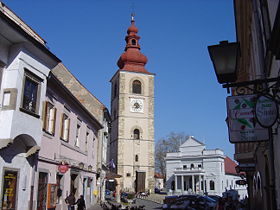

The parish church
in the settlement is dedicated to Saint George
and belongs to the Roman Catholic Archdiocese of Maribor. It is a three-naved Gothic
building from the 13th and early 14th century, but the structure incorporates parts of a much earlier structure, dating to the mid-9th century.
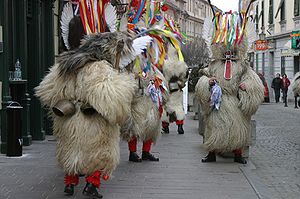 Ptuj is the center place of a ten-day-long carnival
in the spring, an ancient Slavic pagan rite of spring and fertility, called Kurentovanje
or Korantovanje. Kurent is believed to be the name of an ancient god of hedonism
- the Slavic counterpart of the Greek Priapos
, although there are no written records.
Kurenti or Koranti (singular: Kurent or Korant) are figures dressed in sheep skin who go about the town wearing masks, a long red tongue, cow bells, and multi-colored ribbons on the head. The Kurenti from Ptuj and the adjoining villages also wear feathers, while those from the Haloze
and Lancova vas
wear horns. Organized in groups, Kurents go through town, from house to house, making noise with their bells and wooden sticks, to symbolically scare off evil spirits and the winter.
with:
City
A city is a relatively large and permanent settlement. Although there is no agreement on how a city is distinguished from a town within general English language meanings, many cities have a particular administrative, legal, or historical status based on local law.For example, in the U.S...
and one of 11 urban municipalities in Slovenia
Slovenia
Slovenia , officially the Republic of Slovenia , is a country in Central and Southeastern Europe touching the Alps and bordering the Mediterranean. Slovenia borders Italy to the west, Croatia to the south and east, Hungary to the northeast, and Austria to the north, and also has a small portion of...
. Traditionally the area was part of the Lower Styria
Lower Styria
Lower Styria or Slovenian Styria is a traditional region in northeastern Slovenia, comprising the southern third of the former Duchy of Styria. The population of Lower Styria in its historical boundaries amounts to around 705,000 inhabitants, or 34.5% of the population of Slovenia...
region. The municipality is now included in the Podravje statistical region
Podravska statistical region
The Drava statistical region is a statistical region in Slovenia. The largest town in the region is Maribor. Its name comes from the Drava River and includes land on both banks along its course through Slovenia as well as the Pohorje mountains in the northeast of the region. The Drava is used for...
. It has about 23,000 inhabitants.
The nearest airports are Ptuj Sport Airfield (Moškanjci), which is seven kilometers away, and Maribor Edvard Rusjan Airport, which is eighteen kilometers away.
History
Stone Age
The Stone Age is a broad prehistoric period, lasting about 2.5 million years , during which humans and their predecessor species in the genus Homo, as well as the earlier partly contemporary genera Australopithecus and Paranthropus, widely used exclusively stone as their hard material in the...
. In the Late Iron Age
Iron Age
The Iron Age is the archaeological period generally occurring after the Bronze Age, marked by the prevalent use of iron. The early period of the age is characterized by the widespread use of iron or steel. The adoption of such material coincided with other changes in society, including differing...
it was settled by Celts. By the 1st century BC, the settlement was controlled by Ancient Rome
Ancient Rome
Ancient Rome was a thriving civilization that grew on the Italian Peninsula as early as the 8th century BC. Located along the Mediterranean Sea and centered on the city of Rome, it expanded to one of the largest empires in the ancient world....
. In 69 AD, Vespasian
Vespasian
Vespasian , was Roman Emperor from 69 AD to 79 AD. Vespasian was the founder of the Flavian dynasty, which ruled the Empire for a quarter century. Vespasian was descended from a family of equestrians, who rose into the senatorial rank under the Emperors of the Julio-Claudian dynasty...
was elected Roman Emperor
Roman Emperor
The Roman emperor was the ruler of the Roman State during the imperial period . The Romans had no single term for the office although at any given time, a given title was associated with the emperor...
by the Danubian legions in Ptuj, and the first written mention of the city of Ptuj is from the same year. The city of Poetovio was the base-camp of Legio XIII Gemina
Legio XIII Gemina
Legio tertia decima Gemina was one of the most prominent Roman legions. It was one of Julius Caesar's key units in Gaul and in the civil war, and was the legion with which he famously crossed the Rubicon on January 10, 49 BC. The legion appears to have still been in existence in the fifth century...
in Pannonia
Pannonia
Pannonia was an ancient province of the Roman Empire bounded north and east by the Danube, coterminous westward with Noricum and upper Italy, and southward with Dalmatia and upper Moesia....
. The name originated in the times of Emperor Trajan
Trajan
Trajan , was Roman Emperor from 98 to 117 AD. Born into a non-patrician family in the province of Hispania Baetica, in Spain Trajan rose to prominence during the reign of emperor Domitian. Serving as a legatus legionis in Hispania Tarraconensis, in Spain, in 89 Trajan supported the emperor against...
, who granted the settlement city status and named it Colonia Ulpia Traiana Poetovio in 103. The city had 40,000 inhabitants until it was plundered by the Huns
Huns
The Huns were a group of nomadic people who, appearing from east of the Volga River, migrated into Europe c. AD 370 and established the vast Hunnic Empire there. Since de Guignes linked them with the Xiongnu, who had been northern neighbours of China 300 years prior to the emergence of the Huns,...
in 450.
In 570 the city was occupied by Eurasian Avars
Eurasian Avars
The Eurasian Avars or Ancient Avars were a highly organized nomadic confederacy of mixed origins. They were ruled by a khagan, who was surrounded by a tight-knit entourage of nomad warriors, an organization characteristic of Turko-Mongol groups...
and Slavic tribes. Ptuj became part of the Frankish Empire
Frankish Empire
Francia or Frankia, later also called the Frankish Empire , Frankish Kingdom , Frankish Realm or occasionally Frankland, was the territory inhabited and ruled by the Franks from the 3rd to the 10th century...
after the fall of Avar state at the end of 8th century. Between 840 and 874 it belonged to the Slavic Balaton Principality
Balaton Principality
The Principality of Lower Pannonia was a Slavic principality located in the western part of the Pannonian plain, between the rivers Danube to its east The Principality of Lower Pannonia (also called Pannonia, Lower Pannonia, Pannonian Principality, Transdanubian Principality, Slavic Pannonian...
of Pribina
Pribina
Pribina was a Slavic prince whose adventurous career, recorded in the Conversion of the Bavarians and the Carantanians , illustrates the political volatility of the Franco–Slavic frontiers of his time...
and Kocelj. Between 874 and 890 Ptuj gradually came under the influence of the Archbishopric of Salzburg
Archbishopric of Salzburg
The Archbishopric of Salzburg was an ecclesiastical State of the Holy Roman Empire, its territory roughly congruent with the present-day Austrian state of Salzburg....
; city rights
Town privileges
Town privileges or city rights were important features of European towns during most of the second millennium.Judicially, a town was distinguished from the surrounding land by means of a charter from the ruling monarch that defined its privileges and laws. Common privileges were related to trading...
passed in 1376 began an economic upswing for the settlement. As Pettau, it was incorporated into the Duchy of Styria
Duchy of Styria
The history of Styria concerns the region roughly corresponding to the modern Austrian state of Styria and the Slovene region of Styria from its settlement by Germans and Slavs in the Dark Ages until the present...
in 1555.
Ottoman wars in Europe
The wars of the Ottoman Empire in Europe are also sometimes referred to as the Ottoman Wars or as Turkish Wars, particularly in older, European texts.- Rise :...
and suffered from fires in 1684, 1705, 1710, and 1744. Its population and importance began to decline in the 19th century, however, after the completion of the Vienna
Vienna
Vienna is the capital and largest city of the Republic of Austria and one of the nine states of Austria. Vienna is Austria's primary city, with a population of about 1.723 million , and is by far the largest city in Austria, as well as its cultural, economic, and political centre...
-Trieste
Trieste
Trieste is a city and seaport in northeastern Italy. It is situated towards the end of a narrow strip of land lying between the Adriatic Sea and Italy's border with Slovenia, which lies almost immediately south and east of the city...
route of the Austrian Southern Railway
Austrian Southern Railway
The Austrian Southern Railway was an Austrian railway company established in 1841...
, as the line went through Marburg (Maribor)
Maribor
Maribor is the second largest city in Slovenia with 157,947 inhabitants . Maribor is also the largest and the capital city of Slovenian region Lower Styria and the seat of the Municipality of Maribor....
instead.
According to the 1910 Austro-Hungarian census, 86% of the population of Pettau's Old Town was German
German language
German is a West Germanic language, related to and classified alongside English and Dutch. With an estimated 90 – 98 million native speakers, German is one of the world's major languages and is the most widely-spoken first language in the European Union....
-speaking, while the population of the surrounding villages predominantly spoke Slovene. After the collapse of Austria-Hungary
Austria-Hungary
Austria-Hungary , more formally known as the Kingdoms and Lands Represented in the Imperial Council and the Lands of the Holy Hungarian Crown of Saint Stephen, was a constitutional monarchic union between the crowns of the Austrian Empire and the Kingdom of Hungary in...
at the end of World War I
World War I
World War I , which was predominantly called the World War or the Great War from its occurrence until 1939, and the First World War or World War I thereafter, was a major war centred in Europe that began on 28 July 1914 and lasted until 11 November 1918...
, Pettau was included in the short-lived Republic of German Austria
German Austria
Republic of German Austria was created following World War I as the initial rump state for areas with a predominantly German-speaking population within what had been the Austro-Hungarian Empire, without the Kingdom of Hungary, which in 1918 had become the Hungarian Democratic Republic.German...
, but after the military intervention of the Slovenian general Rudolf Maister
Rudolf Maister
Rudolf Maister was a Slovene military officer, poet and political activist. The soldiers who fought under Maister's command in northern Slovenia became known as "Maister's fighters"...
, the entire territory of Lower Styria
Lower Styria
Lower Styria or Slovenian Styria is a traditional region in northeastern Slovenia, comprising the southern third of the former Duchy of Styria. The population of Lower Styria in its historical boundaries amounts to around 705,000 inhabitants, or 34.5% of the population of Slovenia...
was included into the State of Slovenes, Croats and Serbs
State of Slovenes, Croats and Serbs
The State of Slovenes, Croats and Serbs was a short-lived state formed from the southernmost parts of the Austro-Hungarian monarchy after its dissolution at the end of the World War I by the resident population of Slovenes, Croats, and Serbs...
(Yugoslavia
Yugoslavia
Yugoslavia refers to three political entities that existed successively on the western part of the Balkans during most of the 20th century....
). During the interwar period
Interwar period
Interwar period can refer to any period between two wars. The Interbellum is understood to be the period between the end of the Great War or First World War and the beginning of the Second World War in Europe....
, the number and the percentage of those identifying as Germans
Germans
The Germans are a Germanic ethnic group native to Central Europe. The English term Germans has referred to the German-speaking population of the Holy Roman Empire since the Late Middle Ages....
in the city, which was renamed Ptuj, decreased rapidly, although a relatively strong ethnic German
Ethnic German
Ethnic Germans historically also ), also collectively referred to as the German diaspora, refers to people who are of German ethnicity. Many are not born in Europe or in the modern-day state of Germany or hold German citizenship...
minority remained.
After the invasion of Yugoslavia
Invasion of Yugoslavia
The Invasion of Yugoslavia , also known as the April War , was the Axis Powers' attack on the Kingdom of Yugoslavia which began on 6 April 1941 during World War II...
in April 1941, Ptuj was occupied by Nazi Germany
Nazi Germany
Nazi Germany , also known as the Third Reich , but officially called German Reich from 1933 to 1943 and Greater German Reich from 26 June 1943 onward, is the name commonly used to refer to the state of Germany from 1933 to 1945, when it was a totalitarian dictatorship ruled by...
. From 1941 to 1944 the town's Slovenian population was dispossessed and deported. Their homes were taken over by German speakers from South Tyrol
South Tyrol
South Tyrol , also known by its Italian name Alto Adige, is an autonomous province in northern Italy. It is one of the two autonomous provinces that make up the autonomous region of Trentino-Alto Adige/Südtirol. The province has an area of and a total population of more than 500,000 inhabitants...
and the Gottschee County
Gottschee County
Gottschee County refers to the former German speaking region in the Duchy of Carniola , a crownland of the Habsburg Empire, located in modern day Slovenia...
, who had themselves been evicted according to an agreement between Adolf Hitler
Adolf Hitler
Adolf Hitler was an Austrian-born German politician and the leader of the National Socialist German Workers Party , commonly referred to as the Nazi Party). He was Chancellor of Germany from 1933 to 1945, and head of state from 1934 to 1945...
and Benito Mussolini
Benito Mussolini
Benito Amilcare Andrea Mussolini was an Italian politician who led the National Fascist Party and is credited with being one of the key figures in the creation of Fascism....
. These German immigrants, along with the native German Pettauer, were expelled
Expulsion of Germans after World War II
The later stages of World War II, and the period after the end of that war, saw the forced migration of millions of German nationals and ethnic Germans from various European states and territories, mostly into the areas which would become post-war Germany and post-war Austria...
to Austria
Austria
Austria , officially the Republic of Austria , is a landlocked country of roughly 8.4 million people in Central Europe. It is bordered by the Czech Republic and Germany to the north, Slovakia and Hungary to the east, Slovenia and Italy to the south, and Switzerland and Liechtenstein to the...
in 1945; many later settled in North America
North America
North America is a continent wholly within the Northern Hemisphere and almost wholly within the Western Hemisphere. It is also considered a northern subcontinent of the Americas...
.
Since 1945 Ptuj has been populated almost completely by Slovenians
Slovenians
The Slovenes, Slovene people, Slovenians, or Slovenian people are a South Slavic people primarily associated with Slovenia and the Slovene language.-Population:Most Slovenes today live within the borders of the independent Slovenia...
.
Town neighborhoods
| Neighborhood | Population |
| Center | 3681 |
| Breg-Turnišče | 3743 |
| Ljudski Vrt | 5903 |
| Jezero | 1581 |
| Panorama | 2072 |
| Rogoznica | 3867 |
| Grajena Grajena Grajena is a settlement on an eponymous stream in the Ptuj municipality in northeastern Slovenia. The area is part of the traditional region of Lower Styria. It is now included with the rest of the municipality into the Podravje statistical region.... |
2390 |
| Spuhlja Spuhlja Spuhlja is a settlement in the Ptuj municipality in northeastern Slovenia. It lies to the east of the town of Ptuj, just north of the artificial lake on the river Drava. The area is part of the traditional region of Lower Styria. It is now included with the rest of the municipality into the... |
872 |
Landmarks
- Ptuj CastlePtuj CastlePtuj Castle is a castle in Ptuj, Slovenia. It is situated on a hill alongside the river Drava overlooking the town, and is a prominent landmark....
- Church of Saint GeorgeChurch of Saint George, PtujThe Church of Saint George, in Ptuj, is one of the oldest churches in Slovenia. It is located behind the monolithic Roman tombstone, the Monument of Orpheus. The church was used as a pillory in the Middle Ages and was of major important to life in the town. Records indicate it was built around 1140...
- Mali Grad Castle
- Ptuj rotovž
- Dominican monastery
- Orpheus monument
- Franciscan monastery
- Zgornji dvor
- Church of Saint Oswald
The parish church
Parish church
A parish church , in Christianity, is the church which acts as the religious centre of a parish, the basic administrative unit of episcopal churches....
in the settlement is dedicated to Saint George
Saint George
Saint George was, according to tradition, a Roman soldier from Syria Palaestina and a priest in the Guard of Diocletian, who is venerated as a Christian martyr. In hagiography Saint George is one of the most venerated saints in the Catholic , Anglican, Eastern Orthodox, and the Oriental Orthodox...
and belongs to the Roman Catholic Archdiocese of Maribor. It is a three-naved Gothic
Gothic architecture
Gothic architecture is a style of architecture that flourished during the high and late medieval period. It evolved from Romanesque architecture and was succeeded by Renaissance architecture....
building from the 13th and early 14th century, but the structure incorporates parts of a much earlier structure, dating to the mid-9th century.
The Kurent or Korant Carnival
Carnival
Carnaval is a festive season which occurs immediately before Lent; the main events are usually during February. Carnaval typically involves a public celebration or parade combining some elements of a circus, mask and public street party...
in the spring, an ancient Slavic pagan rite of spring and fertility, called Kurentovanje
Kurentovanje
Kurentovanje is a ten-day rite of spring and fertility, celebrated in Slovenia. The origins of Kurentovanje are not certain, but it is likely connected to Slavic paganism....
or Korantovanje. Kurent is believed to be the name of an ancient god of hedonism
Hedonism
Hedonism is a school of thought which argues that pleasure is the only intrinsic good. In very simple terms, a hedonist strives to maximize net pleasure .-Etymology:The name derives from the Greek word for "delight" ....
- the Slavic counterpart of the Greek Priapos
Priapus
In Greek mythology, Priapus or Priapos , was a minor rustic fertility god, protector of livestock, fruit plants, gardens and male genitalia. Priapus is marked by his absurdly oversized, permanent erection, which gave rise to the medical term priapism...
, although there are no written records.
Kurenti or Koranti (singular: Kurent or Korant) are figures dressed in sheep skin who go about the town wearing masks, a long red tongue, cow bells, and multi-colored ribbons on the head. The Kurenti from Ptuj and the adjoining villages also wear feathers, while those from the Haloze
Haloze
Haloze is a geographical sub-region of Slovenia. It is in the northeast of the country, in the Lower Styria region.-General characteristics:Haloze is a hilly area, running roughly east-west bounded by the border with Croatia to the south and the Dravinja and Drava rivers to the north...
and Lancova vas
Lancova vas
Lancova vas is a settlement on the left bank of the river Polskava in the Videm Municipality in eastern Slovenia. The area traditionally belonged to the Styria region...
wear horns. Organized in groups, Kurents go through town, from house to house, making noise with their bells and wooden sticks, to symbolically scare off evil spirits and the winter.
People
- Brigita BrezovacBrigita BrezovacBrigita Brezovac is a Slovenian Professional bodybuilder. The most notable and recent competition victories include Tampa Pro IFBB 2010 and Europa Battle of Champions 2010...
, Pro bodybuilder - Victorinus of Pettau, bishop of the city and Catholic saint
- Nastja ČehNastja CehNastja Čeh is a Slovenian footballer playing for Maccabi Petah Tikva.-Club career:Čeh started his career with his hometown club Drava Ptuj. By the age of 17 he was playing in the first team in the 2. SNL...
, Slovene footballer, played in the UEFA Champions LeagueUEFA Champions LeagueThe UEFA Champions League, known simply the Champions League and originally known as the European Champion Clubs' Cup or European Cup, is an annual international club football competition organised by the Union of European Football Associations since 1955 for the top football clubs in Europe. It...
with Club BruggeClub BruggeClub Brugge Koninklijke Voetbalvereniging is a football club from Bruges in Belgium. It was founded in 1891 and is one of the top clubs in Belgium. Its home ground is the Jan Breydel Stadium, which has a capacity of 29,472.... - Miha RemecMiha RemecMiha Remec Miha Remec Miha Remec (born August 10, 1928 in Ptuj, Kingdom of Serbs, Croats and Slovenes (now Slovenia) is a Slovene author. He is a past winner of the Damiru Hoyki (Hoyka Award), given annually for the best science fiction novel.- Novels :* Stone of Truth (1957)...
, Slovene science fiction author - Benka PulkoBenka PulkoBenka Pulko is a Slovenian world traveler, Guinness World Record holder, motivational speaker, author and photographer.-Biography:...
, Slovene long distance motorcycle traveler, writer, photographer, humanitarian and Guinness World Record Holder - Laris Gaiser, geopolitical analyst and expert of international relations
- Dejan ZavecDejan ZavecDejan Zavec is a Slovenian professional boxer who held the IBF Welterweight Champion title from December 2009 until September 3, 2011, when he lost it to Andre Berto. He boxes under the name Jan Zaveck. His professional record includes 33 fights: 31 wins , 2 losses, and 1 no-contest...
, Slovene boxer
Twin towns — sister cities
Ptuj is twinnedTown twinning
Twin towns and sister cities are two of many terms used to describe the cooperative agreements between towns, cities, and even counties in geographically and politically distinct areas to promote cultural and commercial ties.- Terminology :...
with:
| - Aranđelovac, Serbia Serbia Serbia , officially the Republic of Serbia , is a landlocked country located at the crossroads of Central and Southeast Europe, covering the southern part of the Carpathian basin and the central part of the Balkans... - Banská Štiavnica Banská Štiavnica Banská Štiavnica is a town in central Slovakia, in the middle of an immense caldera created by the collapse of an ancient volcano. For its size, the caldera is known as Štiavnica Mountains. Banská Štiavnica has a population of more than 10,000. It is a completely preserved medieval town... , Slovakia Slovakia The Slovak Republic is a landlocked state in Central Europe. It has a population of over five million and an area of about . Slovakia is bordered by the Czech Republic and Austria to the west, Poland to the north, Ukraine to the east and Hungary to the south... (2002) - Burghausen Burghausen, Altötting Burghausen is the largest city in the Altötting district of Oberbayern in Germany. It is situated on the Salzach river, near the border with Austria. Its castle, atop a ridge, is the longest castle in Europe .- History :... , Germany Germany Germany , officially the Federal Republic of Germany , is a federal parliamentary republic in Europe. The country consists of 16 states while the capital and largest city is Berlin. Germany covers an area of 357,021 km2 and has a largely temperate seasonal climate... (2001) |
- Ohrid Ohrid Ohrid is a city on the eastern shore of Lake Ohrid in the Republic of Macedonia. It has about 42,000 inhabitants, making it the seventh largest city in the country. The city is the seat of Ohrid Municipality. Ohrid is notable for having once had 365 churches, one for each day of the year and has... , Republic of Macedonia Republic of Macedonia Macedonia , officially the Republic of Macedonia , is a country located in the central Balkan peninsula in Southeast Europe. It is one of the successor states of the former Yugoslavia, from which it declared independence in 1991... (2006) - Saint-Cyr-sur-Loire Saint-Cyr-sur-Loire Saint-Cyr-sur-Loire is a commune in the department of Indre-et-Loire in central France.It is located northwest of Tours on the other side of the Loire. , the town's population was 15,975. It is the third largest city in the Tours department, behind only Tours and Joué-lès-Tours.-Twin towns — Sister... , France France The French Republic , The French Republic , The French Republic , (commonly known as France , is a unitary semi-presidential republic in Western Europe with several overseas territories and islands located on other continents and in the Indian, Pacific, and Atlantic oceans. Metropolitan France... (1998) - Varaždin Varaždin Varaždin is a city in north Croatia, north of Zagreb on the highway A4. The total population is 47,055, with 38,746 on of the city settlement itself . The centre of Varaždin county is located near the Drava river, at... , Croatia Croatia Croatia , officially the Republic of Croatia , is a unitary democratic parliamentary republic in Europe at the crossroads of the Mitteleuropa, the Balkans, and the Mediterranean. Its capital and largest city is Zagreb. The country is divided into 20 counties and the city of Zagreb. Croatia covers ... (2004) |
Settlements in the Ptuj municipality
- BregBregBreg may refer to:* Breg , a river in Germany.* Breg a settlement in the Majšperk municipality in Slovenia.* Breg a settlement in the Mežica municipality in Slovenia.* Breg, Sevnica a settlement in the Sevnica municipality in Slovenia....
- GrajenaGrajenaGrajena is a settlement on an eponymous stream in the Ptuj municipality in northeastern Slovenia. The area is part of the traditional region of Lower Styria. It is now included with the rest of the municipality into the Podravje statistical region....
- GrajenščakGrajenšcakGrajenščak is a settlement in the Ptuj municipality in northeastern Slovenia. It lies on the edge of the Slovenske gorice hills, to the north of Ptuj town. The area is part of the traditional region of Lower Styria. It is now included with the rest of the municipality into the Podravje statistical...
- KicarKicarKicar is a settlement in the Ptuj municipality in northeastern Slovenia. Traditionally the area was part of Lower Styria. It is now included with the rest of the municipality into the Podravje statistical region.-External links:*...
- Krčevina pri VurberguKrcevina pri VurberguKrčevina pri Vurbergu is a settlement in the Ptuj municipality in northeastern Slovenia. It lies on the left bank of the river Drava and the hills beyond. The area is part of the traditional region of Lower Styria. It is now included with the rest of the municipality into the Podravje statistical...
- KidricevoKidricevoKidričevo is a town and a municipality near Ptuj in northeastern Slovenia. The town was formerly called Strnišče, but was renamed after the Second World War in honour of Boris Kidrič, the first president of the Slovenian government, when Slovenia was part of Yugoslavia. Traditionally the area was...
- Mestni VrhMestni VrhMestni Vrh is a settlement in the hills to the north of Ptuj in northeastern Slovenia. The area is part of the traditional region of Lower Styria. It is now included with the rest of the Ptuj municipality into the Podravje statistical region.-External links:...
- PacinjePacinjePacinje is a village on the right bank of the river Pesnica in the Ptuj municipality in northeastern Slovenia. The area is part of the traditional region of Lower Styria. It is now included with the rest of the municipality into the Podravje statistical region....
- PodvinciPodvinciPodvinci is a village in the Ptuj municipality in northeastern Slovenia. It lies just outside Ptuj town to the northeast. The area is part of the traditional region of Lower Styria. It is now included with the rest of the municipality into the Podravje statistical region.-External links:*...
- Ptuj
- Spodnji VelovlekSpodnji VelovlekSpodnji Velovlek is a settlement on the right bank of the river Pesnica in the Ptuj municipality in northeastern Slovenia. The area is part of the traditional region of Lower Styria. It is now included with the rest of the municipality into the Podravje statistical region.-External links:*...
- SpuhljaSpuhljaSpuhlja is a settlement in the Ptuj municipality in northeastern Slovenia. It lies to the east of the town of Ptuj, just north of the artificial lake on the river Drava. The area is part of the traditional region of Lower Styria. It is now included with the rest of the municipality into the...