

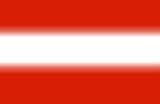
German Austria

Encyclopedia
Republic of German Austria was created following World War I
as the initial rump state
for areas with a predominantly German-speaking population within what had been the Austro-Hungarian Empire
, without the Kingdom of Hungary
, which in 1918 had become the Hungarian Democratic Republic
.
German Austria claimed an area of 118,311 km², with 10.4 million inhabitants including the current area of the Republic of Austria and other German-speaking areas of the former Austrian Imperial lands (Cisleithania
) of Austria-Hungary. These included South Tyrol
and the town of Tarvisio
, both now in Italy; southern Carinthia
and southern Styria, now in Slovenia
, and Sudetenland
proper and German Bohemia
(later also part of Sudetenland
), now in the Czech Republic. At the time all areas were German majority speaking regions. In practice, however, its authority was limited to the Danubian and Alpine provinces of the old Habsburg realm--almost all of what is now Austria.

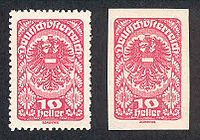
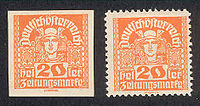 In Habsburg
Austria-Hungary
, "German Austria" was an unofficial term used to describe areas of the empire inhabited by ethnic Germans. With the impending collapse of the empire in late 1918, ethnic German deputies to the Cisleithanian Austrian parliament (Reichsrat
) last elected in 1911 sought to form a new rump state of German Austria. It declared a "provisional national assembly of the independent German Austrian state" and elected Franz Dinghofer of the German National Movement, Jodok Fink of the Christian Social Party, and Karl Seitz
of the Social Democratic Workers' Party as assembly presidents. Karl Renner
was chosen as chancellor of Austria
. The assembly included representatives from Bohemia
, Moravia
, and Austrian Silesia
who refused to adhere to the new state of Czechoslovakia
which had been declared on October 28, 1918.
On November 11, 1918, Emperor Charles I relinquished power and, on November 12, German Austria was officially declared a republic. The provisional national assembly drafted provisional constitution that stated that "German Austria is a democratic republic" (Article 1) and "German Austria is a component of the German Republic
" (Article 2). Later plebiscites in the provinces of Tyrol and Salzburg yielded majorities of 98 and 99% in favor of a unification with Germany. On November 22, the national assembly officially laid claim to all ethnic German areas of Cisleithania. However, the Allies of World War I
opposed such a move and German Austria was largely powerless to resist the forces of Italy, Czechoslovakia, and the Kingdom of Serbs, Croats, and Slovenes from seizing territory.
On September 10, 1919, Chancellor Karl Renner
signed the Treaty of Saint Germain and it was ratified by the national assembly on October 21. According to its provisions, the name of the republic was changed from "German Austria" to "Austria" and any efforts for the country to unify with Germany were banned. Article 88 of the treaty, sometimes called a "pre-Anschluss attempt
", states that "the independence of Austria is inalienable otherwise than with the consent of the Council of the League of Nations
." Likewise, in the Treaty of Versailles
dictating the terms of peace for Germany, there was a prohibition of unification. With these changes and the settling of Austria's frontiers, the era of the Federal State of Austria
, sometimes called the First Austrian Republic, began.
Several German minority populations in Moravia, including German populations in Brünn (Brno
), Iglau (Jihlava
), and Olmütz (Olomouc
) also attempted to proclaim their union with German Austria but failed. The areas now outside of the current Republic of Austria often had significant non-German minorities and occasionally non-German majorities and were quickly taken by troops of the respective countries they were to eventually join. On the other hand, ethnic Germans in the western part of the Kingdom of Hungary
that formed a majority in the area known as German West Hungary and agitated to join to Austria were successful and the area became the state of Burgenland
, with the notable exception of the region around Ödenburg which was also intended to be the state capital, but due to a very contentious plebiscite, remained part of Hungary. The only other part of the former German counties of 'Burgenland' in the Kingdom of Hungary also not to become part of the Austrian Republic due to the treaty was Preßburg which went to Czechoslovakia.
") with words penned by then Chancellor Karl Renner
, signer of the Treaty of Saint Germain.
World War I
World War I , which was predominantly called the World War or the Great War from its occurrence until 1939, and the First World War or World War I thereafter, was a major war centred in Europe that began on 28 July 1914 and lasted until 11 November 1918...
as the initial rump state
Rump state
A rump state is the remnant of a once-larger government, left with limited powers or authority after a disaster, invasion, military occupation, secession or partial overthrowing of a government. In the last case, a government stops short of going in exile because it still controls part of its...
for areas with a predominantly German-speaking population within what had been the Austro-Hungarian Empire
Austria-Hungary
Austria-Hungary , more formally known as the Kingdoms and Lands Represented in the Imperial Council and the Lands of the Holy Hungarian Crown of Saint Stephen, was a constitutional monarchic union between the crowns of the Austrian Empire and the Kingdom of Hungary in...
, without the Kingdom of Hungary
Kingdom of Hungary
The Kingdom of Hungary comprised present-day Hungary, Slovakia and Croatia , Transylvania , Carpatho Ruthenia , Vojvodina , Burgenland , and other smaller territories surrounding present-day Hungary's borders...
, which in 1918 had become the Hungarian Democratic Republic
Hungarian Democratic Republic
The Hungarian People's Republic was an independent republic proclaimed after the collapse of Austria-Hungary in 1918...
.
German Austria claimed an area of 118,311 km², with 10.4 million inhabitants including the current area of the Republic of Austria and other German-speaking areas of the former Austrian Imperial lands (Cisleithania
Cisleithania
Cisleithania was a name of the Austrian part of Austria-Hungary, the Dual Monarchy created in 1867 and dissolved in 1918. The name was used by politicians and bureaucrats, but it had no official status...
) of Austria-Hungary. These included South Tyrol
South Tyrol
South Tyrol , also known by its Italian name Alto Adige, is an autonomous province in northern Italy. It is one of the two autonomous provinces that make up the autonomous region of Trentino-Alto Adige/Südtirol. The province has an area of and a total population of more than 500,000 inhabitants...
and the town of Tarvisio
Tarvisio
Tarvisio is a town in the Province of Udine, in the northeastern part of the autonomous Friuli–Venezia Giulia region in Italy...
, both now in Italy; southern Carinthia
Carinthia (province)
Slovenian Carinthia or Slovene Carinthia, most commonly simply Carinthia is a traditional region in the north of Slovenia. It has no official status as an administrative unit within Slovenia, although the association with an informal province is still quite common.The region is referred to as...
and southern Styria, now in Slovenia
Slovenia
Slovenia , officially the Republic of Slovenia , is a country in Central and Southeastern Europe touching the Alps and bordering the Mediterranean. Slovenia borders Italy to the west, Croatia to the south and east, Hungary to the northeast, and Austria to the north, and also has a small portion of...
, and Sudetenland
Sudetenland
Sudetenland is the German name used in English in the first half of the 20th century for the northern, southwest and western regions of Czechoslovakia inhabited mostly by ethnic Germans, specifically the border areas of Bohemia, Moravia, and those parts of Silesia being within Czechoslovakia.The...
proper and German Bohemia
German Bohemia
German Bohemia was a region in Czech Republic established, for a short period of time, after World War I. It included parts of northern and western Bohemia once largely populated by ethnic Germans...
(later also part of Sudetenland
Sudetenland
Sudetenland is the German name used in English in the first half of the 20th century for the northern, southwest and western regions of Czechoslovakia inhabited mostly by ethnic Germans, specifically the border areas of Bohemia, Moravia, and those parts of Silesia being within Czechoslovakia.The...
), now in the Czech Republic. At the time all areas were German majority speaking regions. In practice, however, its authority was limited to the Danubian and Alpine provinces of the old Habsburg realm--almost all of what is now Austria.
History
Habsburg
The House of Habsburg , also found as Hapsburg, and also known as House of Austria is one of the most important royal houses of Europe and is best known for being an origin of all of the formally elected Holy Roman Emperors between 1438 and 1740, as well as rulers of the Austrian Empire and...
Austria-Hungary
Austria-Hungary
Austria-Hungary , more formally known as the Kingdoms and Lands Represented in the Imperial Council and the Lands of the Holy Hungarian Crown of Saint Stephen, was a constitutional monarchic union between the crowns of the Austrian Empire and the Kingdom of Hungary in...
, "German Austria" was an unofficial term used to describe areas of the empire inhabited by ethnic Germans. With the impending collapse of the empire in late 1918, ethnic German deputies to the Cisleithanian Austrian parliament (Reichsrat
Reichsrat (Austria)
The Imperial Council of Austria from 1867 to 1918 was the parliament of the Cisleithanian part of the Austro-Hungarian Empire. It was a bicameral legislature, consisting of the Herrenhaus and the Abgeordnetenhaus...
) last elected in 1911 sought to form a new rump state of German Austria. It declared a "provisional national assembly of the independent German Austrian state" and elected Franz Dinghofer of the German National Movement, Jodok Fink of the Christian Social Party, and Karl Seitz
Karl Seitz
Karl Seitz was an Austrian politician and the first President of Austria.Karl Seitz was born in Vienna, then capital of the Austro-Hungarian empire, as the son of a struggling small-time coal trader. Following the premature death of his father in 1875, the family was thrown into abject poverty,...
of the Social Democratic Workers' Party as assembly presidents. Karl Renner
Karl Renner
Karl Renner was an Austrian politician. He was born in Untertannowitz in the Austro-Hungarian Empire and died in Vienna...
was chosen as chancellor of Austria
Chancellor of Austria
The Federal Chancellor is the head of government in Austria. Its deputy is the Vice-Chancellor. Before 1918, the equivalent office was the Minister-President of Austria. The Federal Chancellor is considered to be the most powerful political position in Austrian politics.-Appointment:The...
. The assembly included representatives from Bohemia
Bohemia
Bohemia is a historical region in central Europe, occupying the western two-thirds of the traditional Czech Lands. It is located in the contemporary Czech Republic with its capital in Prague...
, Moravia
Moravia
Moravia is a historical region in Central Europe in the east of the Czech Republic, and one of the former Czech lands, together with Bohemia and Silesia. It takes its name from the Morava River which rises in the northwest of the region...
, and Austrian Silesia
Austrian Silesia
Austrian Silesia , officially the Duchy of Upper and Lower Silesia was an autonomous region of the Kingdom of Bohemia and the Austrian Empire, from 1867 a Cisleithanian crown land of Austria-Hungary...
who refused to adhere to the new state of Czechoslovakia
Czechoslovakia
Czechoslovakia or Czecho-Slovakia was a sovereign state in Central Europe which existed from October 1918, when it declared its independence from the Austro-Hungarian Empire, until 1992...
which had been declared on October 28, 1918.
On November 11, 1918, Emperor Charles I relinquished power and, on November 12, German Austria was officially declared a republic. The provisional national assembly drafted provisional constitution that stated that "German Austria is a democratic republic" (Article 1) and "German Austria is a component of the German Republic
Weimar Republic
The Weimar Republic is the name given by historians to the parliamentary republic established in 1919 in Germany to replace the imperial form of government...
" (Article 2). Later plebiscites in the provinces of Tyrol and Salzburg yielded majorities of 98 and 99% in favor of a unification with Germany. On November 22, the national assembly officially laid claim to all ethnic German areas of Cisleithania. However, the Allies of World War I
Allies of World War I
The Entente Powers were the countries at war with the Central Powers during World War I. The members of the Triple Entente were the United Kingdom, France, and the Russian Empire; Italy entered the war on their side in 1915...
opposed such a move and German Austria was largely powerless to resist the forces of Italy, Czechoslovakia, and the Kingdom of Serbs, Croats, and Slovenes from seizing territory.
On September 10, 1919, Chancellor Karl Renner
Karl Renner
Karl Renner was an Austrian politician. He was born in Untertannowitz in the Austro-Hungarian Empire and died in Vienna...
signed the Treaty of Saint Germain and it was ratified by the national assembly on October 21. According to its provisions, the name of the republic was changed from "German Austria" to "Austria" and any efforts for the country to unify with Germany were banned. Article 88 of the treaty, sometimes called a "pre-Anschluss attempt
Anschluss
The Anschluss , also known as the ', was the occupation and annexation of Austria into Nazi Germany in 1938....
", states that "the independence of Austria is inalienable otherwise than with the consent of the Council of the League of Nations
League of Nations
The League of Nations was an intergovernmental organization founded as a result of the Paris Peace Conference that ended the First World War. It was the first permanent international organization whose principal mission was to maintain world peace...
." Likewise, in the Treaty of Versailles
Treaty of Versailles
The Treaty of Versailles was one of the peace treaties at the end of World War I. It ended the state of war between Germany and the Allied Powers. It was signed on 28 June 1919, exactly five years after the assassination of Archduke Franz Ferdinand. The other Central Powers on the German side of...
dictating the terms of peace for Germany, there was a prohibition of unification. With these changes and the settling of Austria's frontiers, the era of the Federal State of Austria
Federal State of Austria
The Federal State of Austria refers to Austria from 1934 to 1938, according to its self-conception a non-party, in fact a single-party state led by the fascist Fatherland's Front...
, sometimes called the First Austrian Republic, began.
Subdivisions
German Austria originally consisted of nine provinces (Provinzen) including:- Upper AustriaUpper AustriaUpper Austria is one of the nine states or Bundesländer of Austria. Its capital is Linz. Upper Austria borders on Germany and the Czech Republic, as well as on the other Austrian states of Lower Austria, Styria, and Salzburg...
(Oberösterreich), all of the current Austrian state of Upper Austria plus the Bohemian Forest regionBohemian Forest RegionThe Bohemian Forest Region is a historical region in the Czech Republic. It includes parts of southwestern Bohemia in the Bohemian Forest once largely populated by ethnic Germans.-History:...
(Böhmerwaldgau) now in the South Bohemian RegionSouth Bohemian RegionSouth Bohemian Region is an administrative unit of the Czech Republic, located mostly in the southern part of its historical land of Bohemia, with a small part in southwestern Moravia...
of the Czech Republic - Lower AustriaLower AustriaLower Austria is the northeasternmost state of the nine states in Austria. The capital of Lower Austria since 1986 is Sankt Pölten, the most recently designated capital town in Austria. The capital of Lower Austria had formerly been Vienna, even though Vienna is not officially part of Lower Austria...
(Niederösterreich), all of the current Austrian state of Lower Austria plus German South MoraviaGerman South MoraviaGerman South Moravia was a historical region of Czechoslovakia. It includes parts of southern and western Moravia once largely populated by ethnic Germans.-History:...
(Deutschsüdmähren), now divided between the Czech regions of South Bohemia, VysočinaVysocina RegionVysočina Region , is an administrative unit of the Czech Republic, located partly in the south-eastern part of the historical region of Bohemia and partly in the south-west of the historical region of Moravia...
, and South MoraviaSouth Moravian RegionSouth Moravian Region is an administrative unit of the Czech Republic, located in the south-western part of its historical region of Moravia, with exception of Jobova Lhota, that belongs to Bohemia. Its capital is Brno the 2nd largest city of the Czech Republic. The region is famous for its wine... - German BohemiaGerman BohemiaGerman Bohemia was a region in Czech Republic established, for a short period of time, after World War I. It included parts of northern and western Bohemia once largely populated by ethnic Germans...
(Deutschböhmen), areas of western Bohemia that were later part of Sudetenland from 1938–45, now part of the Czech Republic - SudetenlandSudetenlandSudetenland is the German name used in English in the first half of the 20th century for the northern, southwest and western regions of Czechoslovakia inhabited mostly by ethnic Germans, specifically the border areas of Bohemia, Moravia, and those parts of Silesia being within Czechoslovakia.The...
proper, i.e. the historical Czech regions of northern MoraviaMoraviaMoravia is a historical region in Central Europe in the east of the Czech Republic, and one of the former Czech lands, together with Bohemia and Silesia. It takes its name from the Morava River which rises in the northwest of the region...
and Czech SilesiaCzech SilesiaCzech Silesia is an unofficial name of one of the three Czech lands and a section of the Silesian historical region. It is located in the north-east of the Czech Republic, predominantly in the Moravian-Silesian Region, with a section in the northern Olomouc Region...
(Austrian Silesia) - StyriaDuchy of StyriaThe history of Styria concerns the region roughly corresponding to the modern Austrian state of Styria and the Slovene region of Styria from its settlement by Germans and Slavs in the Dark Ages until the present...
(Steiermark), most of historical StyriaDuchy of StyriaThe history of Styria concerns the region roughly corresponding to the modern Austrian state of Styria and the Slovene region of Styria from its settlement by Germans and Slavs in the Dark Ages until the present...
including the current Austrian state of StyriaStyria (state)Styria is a state or Bundesland, located in the southeast of Austria. In area it is the second largest of the nine Austrian federated states, covering 16,401 km². It borders Slovenia as well as the other Austrian states of Upper Austria, Lower Austria, Salzburg, Burgenland, and Carinthia. ...
and the north-eastern part of the Slovenian informal region of Lower StyriaLower StyriaLower Styria or Slovenian Styria is a traditional region in northeastern Slovenia, comprising the southern third of the former Duchy of Styria. The population of Lower Styria in its historical boundaries amounts to around 705,000 inhabitants, or 34.5% of the population of Slovenia...
. - SalzburgSalzburg (state)Salzburg is a state or Land of Austria with an area of 7,156 km2, located adjacent to the German border. It is also known as Salzburgerland, to distinguish it from its capital city, also named Salzburg...
, all of the current Austrian state of Salzburg - CarinthiaDuchy of CarinthiaThe Duchy of Carinthia was a duchy located in southern Austria and parts of northern Slovenia. It was separated from the Duchy of Bavaria in 976, then the first newly created Imperial State beside the original German stem duchies....
(Kärnten), all of historical CarinthiaDuchy of CarinthiaThe Duchy of Carinthia was a duchy located in southern Austria and parts of northern Slovenia. It was separated from the Duchy of Bavaria in 976, then the first newly created Imperial State beside the original German stem duchies....
including the current Austrian state of CarinthiaCarinthia (state)Carinthia is the southernmost Austrian state or Land. Situated within the Eastern Alps it is chiefly noted for its mountains and lakes.The main language is German. Its regional dialects belong to the Southern Austro-Bavarian group...
, the SloveniaSloveniaSlovenia , officially the Republic of Slovenia , is a country in Central and Southeastern Europe touching the Alps and bordering the Mediterranean. Slovenia borders Italy to the west, Croatia to the south and east, Hungary to the northeast, and Austria to the north, and also has a small portion of...
n unofficial region of CarinthiaCarinthia (province)Slovenian Carinthia or Slovene Carinthia, most commonly simply Carinthia is a traditional region in the north of Slovenia. It has no official status as an administrative unit within Slovenia, although the association with an informal province is still quite common.The region is referred to as...
, the Slovenian municipality of JezerskoJezersko, SloveniaJezersko is a municipality in the historic Carinthia region of northern Slovenia. Since 2005, it has been part of the Upper Carniola statistical region....
and the now Italian communes of TarvisioTarvisioTarvisio is a town in the Province of Udine, in the northeastern part of the autonomous Friuli–Venezia Giulia region in Italy...
, Malborghetto ValbrunaMalborghetto ValbrunaMalborghetto Valbruna is a comune in the Province of Udine in the Italian region Friuli-Venezia Giulia, located about 100 km northwest of Trieste and about 50 km northeast of Udine, on the border with Austria. , it had a population of 1,025 and an area of 120.5 km²...
and PontebbaPontebbaPontebba is a comune in the Province of Udine in the Italian region Friuli-Venezia Giulia. It is located about 100 km northwest of Trieste and about 50 km north of Udine, on the border with Austria... - German TyrolGerman TyrolGerman Tyrol is a historical region in the Alps now divided between Austria and Italy. It includes largely ethnic German areas of historical County of Tyrol: the Austrian state of Tyrol and the province of South Tyrol but not the largely Italian-speaking province of Trentino .-History:German...
(Deutschtirol), most of historical TyrolCounty of TyrolThe County of Tyrol, Princely County from 1504, was a State of the Holy Roman Empire, from 1814 a province of the Austrian Empire and from 1867 a Cisleithanian crown land of Austria-Hungary...
including the current Austrian state of TyrolTyrol (state)Tyrol is a state or Bundesland, located in the west of Austria. It comprises the Austrian part of the historical region of Tyrol.The state is split into two parts–called North Tyrol and East Tyrol–by a -wide strip of land where the state of Salzburg borders directly on the Italian province of...
and the present day Italian province of South TyrolSouth TyrolSouth Tyrol , also known by its Italian name Alto Adige, is an autonomous province in northern Italy. It is one of the two autonomous provinces that make up the autonomous region of Trentino-Alto Adige/Südtirol. The province has an area of and a total population of more than 500,000 inhabitants...
, but not the province of Trentino - VorarlbergVorarlbergVorarlberg is the westernmost federal-state of Austria. Although it is the second smallest in terms of area and population , it borders three countries: Germany , Switzerland and Liechtenstein...
, all of the current Austrian state of Vorarlberg
Several German minority populations in Moravia, including German populations in Brünn (Brno
Brno
Brno by population and area is the second largest city in the Czech Republic, the largest Moravian city, and the historical capital city of the Margraviate of Moravia. Brno is the administrative centre of the South Moravian Region where it forms a separate district Brno-City District...
), Iglau (Jihlava
Jihlava
Jihlava is a city in the Czech Republic. Jihlava is a centre of the Vysočina Region, situated on the Jihlava river on the ancient frontier between Moravia and Bohemia, and is the oldest mining town in the Czech Republic, ca. 50 years older than Kutná Hora.Among the principal buildings are the...
), and Olmütz (Olomouc
Olomouc
Olomouc is a city in Moravia, in the east of the Czech Republic. The city is located on the Morava river and is the ecclesiastical metropolis and historical capital city of Moravia. Nowadays, it is an administrative centre of the Olomouc Region and sixth largest city in the Czech Republic...
) also attempted to proclaim their union with German Austria but failed. The areas now outside of the current Republic of Austria often had significant non-German minorities and occasionally non-German majorities and were quickly taken by troops of the respective countries they were to eventually join. On the other hand, ethnic Germans in the western part of the Kingdom of Hungary
Kingdom of Hungary
The Kingdom of Hungary comprised present-day Hungary, Slovakia and Croatia , Transylvania , Carpatho Ruthenia , Vojvodina , Burgenland , and other smaller territories surrounding present-day Hungary's borders...
that formed a majority in the area known as German West Hungary and agitated to join to Austria were successful and the area became the state of Burgenland
Burgenland
Burgenland is the easternmost and least populous state or Land of Austria. It consists of two Statutarstädte and seven districts with in total 171 municipalities. It is 166 km long from north to south but much narrower from west to east...
, with the notable exception of the region around Ödenburg which was also intended to be the state capital, but due to a very contentious plebiscite, remained part of Hungary. The only other part of the former German counties of 'Burgenland' in the Kingdom of Hungary also not to become part of the Austrian Republic due to the treaty was Preßburg which went to Czechoslovakia.
Anthem
Despite the prohibition on the use of the term German Austria, the republic's unofficial national anthem from 1920–29 was "German Austria, you wonderful country" ("Deutschösterreich, du herrliches LandDeutschösterreich, du herrliches Land
Deutschösterreich, du herrliches Land was the national anthem of Austria from 1920 to 1929. Although it was used as the national anthem, it did not enjoy any official status....
") with words penned by then Chancellor Karl Renner
Karl Renner
Karl Renner was an Austrian politician. He was born in Untertannowitz in the Austro-Hungarian Empire and died in Vienna...
, signer of the Treaty of Saint Germain.