

Faroese language

Encyclopedia
Faroese is an Insular Nordic language
spoken by 48,000 people in the Faroe Islands
and about 25,000 Faroese people
in Denmark
and elsewhere. It is one of four languages descended from the Old West Norse language spoken in the Middle Ages
, the others being Icelandic
, Norwegian
and the extinct Norn
, which is thought to have been mutually intelligible with Faroese. Faroese and Icelandic, its closest extant relative, are not mutually intelligible in speech, but the written languages resemble each other quite closely.
, which Norwegian settlers had brought with them during the time of the landnám that began in AD 825. However, many of the settlers were not from present-day Norway but descendants of Norwegian settlers in the Irish Sea
. In addition, native Norwegian settlers often married women from Norse Ireland, Orkney, or Shetland before settling in the Faroe Islands and Iceland. As a result, Celtic languages
influenced both Faroese and Icelandic
. There is some debatable evidence of Celtic language place names in the Faroes: for example Mykines
and Stóra
& Lítla Dímun
have been hypothesized to contain Celtic roots. Other examples of early-introduced words of Celtic origin are; "blak/blaðak" (buttermilk
) Irish bláthach; "drunnur" (tail-piece of an animal) Irish dronn; "grúkur" (head
, headhair) Irish gruaig; "lámur" (hand
, paw
) Irish lámh; "tarvur" (bull
) Irish tarbh; and "ærgi" (pasture
in the outfield
) Irish áirge.
Between the 9th and the 15th centuries a distinct Faroese language evolved, although it was still mutually intelligible with the Old West Norse language and was closely related to the Norn language
of Orkney and Shetland.
Until the 15th century Faroese had an orthography similar to Icelandic
and Norwegian
, but after the Reformation in 1536
the ruling Danes
outlawed its use in schools, churches and official documents. The islanders continued to use the language in ballad
s, folktales
and everyday life. This maintained a rich spoken tradition
, but for 300 years the language was unwritten.
This changed when Venceslaus Ulricus Hammershaimb
and the Icelandic grammarian and politician, Jón Sigurðsson
, published a written standard for Modern Faroese in 1854 which is still in existence. Although this would have been an opportunity to create a phonetically true orthography like that of Finnish
, they produced an archaic, Old Norse-based orthography
similar to that of Icelandic. The letter ð
, for example, has no specific phoneme
attached to it. Furthermore, although the letter 'm' corresponds to the bilabial nasal
as it does in English
, it also corresponds to the alveolar nasal
in the dative
ending -um [ʊn].
Hammershaimb and Sigurðsson's orthography met with opposition for its complexity, and a rival system was devised by Jakob Jakobsen
. Jakobsen's orthography was closer to the spoken language, but was never taken up by speakers.
In 1937 Faroese replaced Danish
as the official school language, in 1938 as the church language, and in 1948 as the national language by the Home Rule Act of the Faroes. However, Faroese did not become the common language of media and advertising until the 1980s. Today Danish is considered a foreign language, though around five percent of Faroe Islanders learn it as a first language and it is a required subject for students in third grade and up.
and the University of Copenhagen have course options in Faroese for students reading Scandinavian Studies. Most students, therefore, learn it autodidactically from books, by listening to Faroese on radio and through correspondence with Faroese people. A good opportunity for learning Faroese is also by visiting websites.
The University of the Faroe Islands
offers an annual three-week Summer Institute which includes:

 The Faroese alphabet consists of 29 letters derived from the Latin alphabet
:
Notes:
As in several other Germanic languages, stressed vowels in Faroese are long when not followed by two or more consonants. Two consonants or a consonant cluster usually indicates a short vowel. Exceptions may be short vowels in particles, pronouns, adverbs, and prepositions in unstressed positions, consisting of just one syllable.
As may be seen on the table to the left, Faroese (like English) has a very atypical pronunciation of its vowels, with odd offglides and other features. For example, long í and ý sound almost like a long Hiberno-English
i, and long ó like an American English
long o.
– gestir [ˈdʒɛstɪɹ] (guests), dugir [ˈduːjɪɹ] ((you, he) can) – bátur [ˈbɔaːtʊɹ] (boat), gentur [dʒɛntʊɹ] (girls), rennur [ˈɹenːʊɹ] ((you) run, (he) runs).
In some dialects, unstressed /ʊ/ is realized as [ø] or is reduced further to [ə]. /ɪ/ goes under a similar reduction pattern so unstressed /ʊ/ and /ɪ/ can rhyme. This can cause spelling mistakes related to these two vowels. The table to the right displays the different realizations in different dialects.
between two vowels by inserting a glide
. Orthographically, this is shown in three ways:
Typically, the first vowel is long and in words with two syllables always stressed, while the second vowel is short and unstressed. In Faroese, short and unstressed vowels can only be /a/, /i/, /u/.
<Ð> and are used in Faroese orthography to indicate one of a number of glides rather than any one phoneme. This can be:
The so-called "skerping" (Thráinsson et al. use the term "Faroese Verschärfung" – in Faroese, skerping /ʃɛɹpɪŋɡ/ means "sharpening") is a typical phenomenon of fronting back vowels before [ɡv] and monophthongizing certain diphthongs before [dːʒ]. Skerping is not indicated orthographically. These consonants occur often after /ó, ú/ (ógv, úgv) and /ey, í, ý, ei, oy/ when no other consonant is following.: Jógvan [ˈjɛɡvan] (a form of the name John), Gjógv
[dʒɛɡv] (cleft): kúgv [kɪɡv] (cow), trúgva [ˈtɹɪɡva] (believe), but: trúleysur [ˈtɹʉuːlɛisʊɹ] (faithless): heyggjur [ˈhɛdːʒʊɹ] (high, burial mound), but heygnum [ˈhɛiːnʊn] (dat. sg. with suffix article): nýggjur [ˈnʊdːʒʊɹ] (new m.), but nýtt [nʊiʰtː] (n.): beiggi [ˈbadːʒɪ] (brother): oyggj [ɔdːʒ] (island), but oynna [ˈɔitnːa] (acc. sg. with suffix article)
There are several phonological
processes involved in Faroese, including:
and Old Norse
. Faroese is an inflected language with three grammatical gender
s and four cases: nominative
, accusative
, dative
and genitive
.
North Germanic languages
The North Germanic languages or Scandinavian languages, the languages of Scandinavians, make up one of the three branches of the Germanic languages, a sub-family of the Indo-European languages, along with the West Germanic languages and the extinct East Germanic languages...
spoken by 48,000 people in the Faroe Islands
Faroe Islands
The Faroe Islands are an island group situated between the Norwegian Sea and the North Atlantic Ocean, approximately halfway between Scotland and Iceland. The Faroe Islands are a self-governing territory within the Kingdom of Denmark, along with Denmark proper and Greenland...
and about 25,000 Faroese people
Faroese people
The Faroese or Faroe Islanders are a Germanic ethnic group native to the Faeroe Islands. The Faroese are of mixed Norse and Gaelic origins.About 21,000 Faroese live in neighbouring countries, particularly in Denmark, Iceland and Norway....
in Denmark
Denmark
Denmark is a Scandinavian country in Northern Europe. The countries of Denmark and Greenland, as well as the Faroe Islands, constitute the Kingdom of Denmark . It is the southernmost of the Nordic countries, southwest of Sweden and south of Norway, and bordered to the south by Germany. Denmark...
and elsewhere. It is one of four languages descended from the Old West Norse language spoken in the Middle Ages
Middle Ages
The Middle Ages is a periodization of European history from the 5th century to the 15th century. The Middle Ages follows the fall of the Western Roman Empire in 476 and precedes the Early Modern Era. It is the middle period of a three-period division of Western history: Classic, Medieval and Modern...
, the others being Icelandic
Icelandic language
Icelandic is a North Germanic language, the main language of Iceland. Its closest relative is Faroese.Icelandic is an Indo-European language belonging to the North Germanic or Nordic branch of the Germanic languages. Historically, it was the westernmost of the Indo-European languages prior to the...
, Norwegian
Norwegian language
Norwegian is a North Germanic language spoken primarily in Norway, where it is the official language. Together with Swedish and Danish, Norwegian forms a continuum of more or less mutually intelligible local and regional variants .These Scandinavian languages together with the Faroese language...
and the extinct Norn
Norn language
Norn is an extinct North Germanic language that was spoken in Shetland and Orkney, off the north coast of mainland Scotland, and in Caithness. After the islands were pledged to Scotland by Norway in the 15th century, it was gradually replaced by Scots and on the mainland by Scottish...
, which is thought to have been mutually intelligible with Faroese. Faroese and Icelandic, its closest extant relative, are not mutually intelligible in speech, but the written languages resemble each other quite closely.
History
Around AD 900 the language spoken in the Faroes was Old NorseOld Norse
Old Norse is a North Germanic language that was spoken by inhabitants of Scandinavia and inhabitants of their overseas settlements during the Viking Age, until about 1300....
, which Norwegian settlers had brought with them during the time of the landnám that began in AD 825. However, many of the settlers were not from present-day Norway but descendants of Norwegian settlers in the Irish Sea
Irish Sea
The Irish Sea separates the islands of Ireland and Great Britain. It is connected to the Celtic Sea in the south by St George's Channel, and to the Atlantic Ocean in the north by the North Channel. Anglesey is the largest island within the Irish Sea, followed by the Isle of Man...
. In addition, native Norwegian settlers often married women from Norse Ireland, Orkney, or Shetland before settling in the Faroe Islands and Iceland. As a result, Celtic languages
Celtic languages
The Celtic languages are descended from Proto-Celtic, or "Common Celtic"; a branch of the greater Indo-European language family...
influenced both Faroese and Icelandic
Icelandic language
Icelandic is a North Germanic language, the main language of Iceland. Its closest relative is Faroese.Icelandic is an Indo-European language belonging to the North Germanic or Nordic branch of the Germanic languages. Historically, it was the westernmost of the Indo-European languages prior to the...
. There is some debatable evidence of Celtic language place names in the Faroes: for example Mykines
Mykines
Mykines is the western-most of the main 18 islands in the Faroe Islands. See also the only settlement on the island, Mykines.Only 11 people live in village Mykines all year around. The oldest inhabitant is 75 and the youngest is 6 years old....
and Stóra
Stóra Dímun
Stóra Dímun is an island in the southern Faroe Islands, sometimes only referred to as Dímun. The island is accessible from sea only during periods of clear and calm weather, but regular helicopter service is available twice a week through the whole year....
& Lítla Dímun
Lítla Dímun
Lítla Dímun is a small island between the islands of Suðuroy and Stóra Dímun in the Faroe Islands. It is the smallest of the main 18 islands, being less than in area, and is the only uninhabited one...
have been hypothesized to contain Celtic roots. Other examples of early-introduced words of Celtic origin are; "blak/blaðak" (buttermilk
Buttermilk
Buttermilk refers to a number of dairy drinks. Originally, buttermilk was the liquid left behind after churning butter out of cream. It also refers to a range of fermented milk drinks, common in warm climates where unrefrigerated fresh milk otherwise sours quickly...
) Irish bláthach; "drunnur" (tail-piece of an animal) Irish dronn; "grúkur" (head
Head
In anatomy, the head of an animal is the rostral part that usually comprises the brain, eyes, ears, nose and mouth . Some very simple animals may not have a head, but many bilaterally symmetric forms do....
, headhair) Irish gruaig; "lámur" (hand
Hand
A hand is a prehensile, multi-fingered extremity located at the end of an arm or forelimb of primates such as humans, chimpanzees, monkeys, and lemurs...
, paw
Paw
A paw is the soft foot of a mammal, generally a quadruped, that has claws or nails. A hard foot is called a hoof. Paws are used to pad feet for walking and increase friction.- Common characteristics :...
) Irish lámh; "tarvur" (bull
Bull
Bull usually refers to an uncastrated adult male bovine.Bull may also refer to:-Entertainment:* Bull , an original show on the TNT Network* "Bull" , an episode of television series CSI: Crime Scene Investigation...
) Irish tarbh; and "ærgi" (pasture
Pasture
Pasture is land used for grazing. Pasture lands in the narrow sense are enclosed tracts of farmland, grazed by domesticated livestock, such as horses, cattle, sheep or swine. The vegetation of tended pasture, forage, consists mainly of grasses, with an interspersion of legumes and other forbs...
in the outfield
Outfield
The outfield is a sporting term used in cricket and baseball to refer to the area of the field of play further from the batsman or batter than the infield...
) Irish áirge.
Between the 9th and the 15th centuries a distinct Faroese language evolved, although it was still mutually intelligible with the Old West Norse language and was closely related to the Norn language
Norn language
Norn is an extinct North Germanic language that was spoken in Shetland and Orkney, off the north coast of mainland Scotland, and in Caithness. After the islands were pledged to Scotland by Norway in the 15th century, it was gradually replaced by Scots and on the mainland by Scottish...
of Orkney and Shetland.
Until the 15th century Faroese had an orthography similar to Icelandic
Icelandic language
Icelandic is a North Germanic language, the main language of Iceland. Its closest relative is Faroese.Icelandic is an Indo-European language belonging to the North Germanic or Nordic branch of the Germanic languages. Historically, it was the westernmost of the Indo-European languages prior to the...
and Norwegian
Norwegian language
Norwegian is a North Germanic language spoken primarily in Norway, where it is the official language. Together with Swedish and Danish, Norwegian forms a continuum of more or less mutually intelligible local and regional variants .These Scandinavian languages together with the Faroese language...
, but after the Reformation in 1536
Reformation in Denmark
The Reformation in Denmark–Norway and Holstein was the transition from Roman Catholicism to Lutheranism in the realms ruled by the Copenhagen-based House of Oldenburg in the first half of the sixteenth century...
the ruling Danes
Denmark
Denmark is a Scandinavian country in Northern Europe. The countries of Denmark and Greenland, as well as the Faroe Islands, constitute the Kingdom of Denmark . It is the southernmost of the Nordic countries, southwest of Sweden and south of Norway, and bordered to the south by Germany. Denmark...
outlawed its use in schools, churches and official documents. The islanders continued to use the language in ballad
Ballad
A ballad is a form of verse, often a narrative set to music. Ballads were particularly characteristic of British and Irish popular poetry and song from the later medieval period until the 19th century and used extensively across Europe and later the Americas, Australia and North Africa. Many...
s, folktales
Folklore
Folklore consists of legends, music, oral history, proverbs, jokes, popular beliefs, fairy tales and customs that are the traditions of a culture, subculture, or group. It is also the set of practices through which those expressive genres are shared. The study of folklore is sometimes called...
and everyday life. This maintained a rich spoken tradition
Oral history
Oral history is the collection and study of historical information about individuals, families, important events, or everyday life using audiotapes, videotapes, or transcriptions of planned interviews...
, but for 300 years the language was unwritten.
This changed when Venceslaus Ulricus Hammershaimb
Venceslaus Ulricus Hammershaimb
Venceslaus Ulricus Hammershaimb was a Faroese Lutheran minister who established the modern orthography of Faroese, the language of the Faroe Islands, based on the Icelandic language, which like Faroese derives from Old Norse.-Background:Hammershaimb was born in Sandavágur on the island of Vágar in...
and the Icelandic grammarian and politician, Jón Sigurðsson
Jón Sigurðsson
Jón Sigurðsson was the leader of the 19th century Icelandic independence movement.Born at Hrafnseyri, near Arnarfjörður in the Westfjords area of Iceland, he was the son of a pastor, Sigurður Jónsson. He moved to Copenhagen, Denmark, in 1833 to study grammar and history at the university there...
, published a written standard for Modern Faroese in 1854 which is still in existence. Although this would have been an opportunity to create a phonetically true orthography like that of Finnish
Finnish language
Finnish is the language spoken by the majority of the population in Finland Primarily for use by restaurant menus and by ethnic Finns outside Finland. It is one of the two official languages of Finland and an official minority language in Sweden. In Sweden, both standard Finnish and Meänkieli, a...
, they produced an archaic, Old Norse-based orthography
Orthography
The orthography of a language specifies a standardized way of using a specific writing system to write the language. Where more than one writing system is used for a language, for example Kurdish, Uyghur, Serbian or Inuktitut, there can be more than one orthography...
similar to that of Icelandic. The letter ð
Ð
A Latin capital letter D with a stroke through its vertical bar is the uppercase form of several different letters:*D with stroke , used in Vietnamese, some South Slavic , Moro and Sami languages...
, for example, has no specific phoneme
Phoneme
In a language or dialect, a phoneme is the smallest segmental unit of sound employed to form meaningful contrasts between utterances....
attached to it. Furthermore, although the letter 'm' corresponds to the bilabial nasal
Bilabial nasal
The bilabial nasal is a type of consonantal sound used in almost all spoken languages. The symbol in the International Phonetic Alphabet that represents this sound is , and the equivalent X-SAMPA symbol is m...
as it does in English
English language
English is a West Germanic language that arose in the Anglo-Saxon kingdoms of England and spread into what was to become south-east Scotland under the influence of the Anglian medieval kingdom of Northumbria...
, it also corresponds to the alveolar nasal
Alveolar nasal
The alveolar nasal is a type of consonantal sound used in numerous spoken languages. The symbol in the International Phonetic Alphabet that represents dental, alveolar, and postalveolar nasals is , and the equivalent X-SAMPA symbol is n....
in the dative
Dative case
The dative case is a grammatical case generally used to indicate the noun to whom something is given, as in "George gave Jamie a drink"....
ending -um [ʊn].
Hammershaimb and Sigurðsson's orthography met with opposition for its complexity, and a rival system was devised by Jakob Jakobsen
Jakob Jakobsen
Dr. phil. Jakob Jakobsen, , was a Faroese linguist as well as a scholar of literature. He was the first Faroese person to earn a doctoral degree...
. Jakobsen's orthography was closer to the spoken language, but was never taken up by speakers.
In 1937 Faroese replaced Danish
Danish language
Danish is a North Germanic language spoken by around six million people, principally in the country of Denmark. It is also spoken by 50,000 Germans of Danish ethnicity in the northern parts of Schleswig-Holstein, Germany, where it holds the status of minority language...
as the official school language, in 1938 as the church language, and in 1948 as the national language by the Home Rule Act of the Faroes. However, Faroese did not become the common language of media and advertising until the 1980s. Today Danish is considered a foreign language, though around five percent of Faroe Islanders learn it as a first language and it is a required subject for students in third grade and up.
Learning Faroese
It is unusual for Faroese to be taught at universities outside the Faroes, although it is occasionally included in Scandinavian studies; University College LondonUniversity College London
University College London is a public research university located in London, United Kingdom and the oldest and largest constituent college of the federal University of London...
and the University of Copenhagen have course options in Faroese for students reading Scandinavian Studies. Most students, therefore, learn it autodidactically from books, by listening to Faroese on radio and through correspondence with Faroese people. A good opportunity for learning Faroese is also by visiting websites.
The University of the Faroe Islands
University of the Faroe Islands
The University of the Faroe Islands is a state-run university located in Tórshavn, the capital of the Faroe Islands. It consists of three faculties: Faroese Language and Literature, Science and Technology, and History and Social Sciences. The university offers bachelor's, master's, and Ph.D.'s in...
offers an annual three-week Summer Institute which includes:
- Fifty lessons of Faroese grammar and language exercises.
- Twenty lectures on linguistics, culture (oral poetry and modern literature), society and nature.
- Two excursions to places of historical and geographical interest.
Alphabet
Latin alphabet
The Latin alphabet, also called the Roman alphabet, is the most recognized alphabet used in the world today. It evolved from a western variety of the Greek alphabet called the Cumaean alphabet, which was adopted and modified by the Etruscans who ruled early Rome...
:
| Majuscule Forms (also called uppercase or capital letters) | ||||||||||||||||||||||||||||
| A A A is the first letter and a vowel in the basic modern Latin alphabet. It is similar to the Ancient Greek letter Alpha, from which it derives.- Origins :... |
Á Á is a letter of the Czech, Faroese, Hungarian, Icelandic, Slovak and Sámi languages. This letter also appears in Dutch, Galician, Irish, Occitan, Portuguese, Spanish, Lakota, Navajo, and Vietnamese as a variant of the letter “a”. Some writers use á incorrectly to denote a quantity, often used on... |
B B B is the second letter in the basic modern Latin alphabet. It is used to represent a variety of bilabial sounds , most commonly a voiced bilabial plosive.-History:... |
D D D is the fourth letter in the basic modern Latin alphabet.- History :The Semitic letter Dâlet may have developed from the logogram for a fish or a door. There are various Egyptian hieroglyphs that might have inspired this. In Semitic, Ancient Greek, and Latin, the letter represented ; in the... |
Ð Eth Eth is a letter used in Old English, Icelandic, Faroese , and Elfdalian. It was also used in Scandinavia during the Middle Ages, but was subsequently replaced with dh and later d. The capital eth resembles a D with a line through the vertical stroke... |
E E E is the fifth letter and a vowel in the basic modern Latin alphabet. It is the most commonly used letter in the Czech, Danish, Dutch, English, French, German, Hungarian, Latin, Norwegian, Spanish, and Swedish languages.-History:... |
F F F is the sixth letter in the basic modern Latin alphabet.-History:The origin of ⟨f⟩ is the Semitic letter vâv that represented a sound like or . Graphically, it originally probably depicted either a hook or a club... |
G G G is the seventh letter in the basic modern Latin alphabet.-History:The letter 'G' was introduced in the Old Latin period as a variant of ⟨c⟩ to distinguish voiced, from voiceless, . The recorded originator of ⟨g⟩ is freedman Spurius Carvilius Ruga, the first Roman to open a fee-paying school,... |
H H H .) is the eighth letter in the basic modern Latin alphabet.-History:The Semitic letter ⟨ח⟩ most likely represented the voiceless pharyngeal fricative . The form of the letter probably stood for a fence or posts.... |
I I I is the ninth letter and a vowel in the basic modern Latin alphabet.-History:In Semitic, the letter may have originated in a hieroglyph for an arm that represented a voiced pharyngeal fricative in Egyptian, but was reassigned to by Semites, because their word for "arm" began with that sound... |
Í Í is a letter in the Faroese, Hungarian, Icelandic, Czech, Slovak, and Tatar languages. This letter also appears in Catalan, Irish, Occitan, Portuguese, Spanish, Galician, Leonese, Navajo, and Vietnamese language as a variant of letter “i”.... |
J J Ĵ or ĵ is a letter in Esperanto orthography representing the sound .While Esperanto orthography uses a diacritic for its four postalveolar consonants, as do the Latin-based Slavic alphabets, the base letters are Romano-Germanic... |
K K K is the eleventh letter of the English and basic modern Latin alphabet.-History and usage:In English, the letter K usually represents the voiceless velar plosive; this sound is also transcribed by in the International Phonetic Alphabet and X-SAMPA.... |
L L Ł or ł, described in English as L with stroke, is a letter of the Polish, Kashubian, Sorbian, Łacinka , Łatynka , Wilamowicean, Navajo, Dene Suline, Inupiaq, Zuni, Hupa, and Dogrib alphabets, several proposed alphabets for the Venetian language, and the ISO 11940 romanization of the Thai alphabet... |
M M M is the thirteenth letter of the basic modern Latin alphabet.-History:The letter M is derived from the Phoenician Mem, via the Greek Mu . Semitic Mem probably originally pictured water... |
N N N is the fourteenth letter in the basic modern Latin alphabet.- History of the forms :One of the most common hieroglyphs, snake, was used in Egyptian writing to stand for a sound like English ⟨J⟩, because the Egyptian word for "snake" was djet... |
O O O is the fifteenth letter and a vowel in the basic modern Latin alphabet.The letter was derived from the Semitic `Ayin , which represented a consonant, probably , the sound represented by the Arabic letter ع called `Ayn. This Semitic letter in its original form seems to have been inspired by a... |
Ó Ó is a letter in the Faroese, Hungarian, Icelandic, Kashubian, Polish, Czech, Slovak, and Sorbian languages. This letter also appears in the Catalan, Irish, Occitan, Portuguese, Spanish, Italian and Vietnamese languages as a variant of letter “o”. It is also used in English for other purposes... |
P P P is the sixteenth letter of the basic modern Latin alphabet.-Usage:In English and most other European languages, P is a voiceless bilabial plosive. Both initial and final Ps can be combined with many other discrete consonants in English words... |
R R R is the eighteenth letter of the basic modern Latin alphabet.-History:The original Semitic letter may have been inspired by an Egyptian hieroglyph for tp, "head". It was used for by Semites because in their language, the word for "head" was rêš . It developed into Greek Ρ and Latin R... |
S S S is the nineteenth letter in the ISO basic Latin alphabet.-History: Semitic Šîn represented a voiceless postalveolar fricative . Greek did not have this sound, so the Greek sigma came to represent... |
T T T is the 20th letter in the basic modern Latin alphabet. It is the most commonly used consonant and the second most common letter in the English language.- History :Taw was the last letter of the Western Semitic and Hebrew alphabets... |
U U U is the twenty-first letter and a vowel in the basic modern Latin alphabet.-History:The letter U ultimately comes from the Semitic letter Waw by way of the letter Y. See the letter Y for details.... |
Ú Ú Ú or ú is a Latin letter used in the Czech, Faroese, Hungarian, Icelandic, and Slovak writing systems. This letter also appears in Dutch, Irish, Occitan, Pinyin, Portuguese, Spanish, Italian, and Vietnamese as a variant of the letter "U".... |
V V V is the twenty-second letter in the basic modern Latin alphabet.-Letter:The letter V comes from the Semitic letter Waw, as do the modern letters F, U, W, and Y. See F for details.... |
Y Y Y is the twenty-fifth letter in the basic modern Latin alphabet and represents either a vowel or a consonant in English.-Name:In Latin, Y was named Y Graeca "Greek Y". This was pronounced as I Graeca "Greek I", since Latin speakers had trouble pronouncing , which was not a native sound... |
Ý Y Y is the twenty-fifth letter in the basic modern Latin alphabet and represents either a vowel or a consonant in English.-Name:In Latin, Y was named Y Graeca "Greek Y". This was pronounced as I Graeca "Greek I", since Latin speakers had trouble pronouncing , which was not a native sound... |
Æ Æ Æ is a grapheme formed from the letters a and e. Originally a ligature representing a Latin diphthong, it has been promoted to the full status of a letter in the alphabets of some languages, including Danish, Faroese, Norwegian and Icelandic... |
Ø Ø Ø — minuscule: "ø", is a vowel and a letter used in the Danish, Faroese, Norwegian and Southern Sami languages.It's mostly used as a representation of mid front rounded vowels, such as ø œ, except for Southern Sami where it's used as an [oe] diphtong.The name of this letter is the same as the sound... |
| Minuscule Forms (also called lowercase or small letters) | ||||||||||||||||||||||||||||
| a | á | b | d | ð | e | f | g | h | i | í | j | k | l | m | n | o | ó | p | r | s | t | u | ú | v | y | ý | æ | ø |
Notes:
- Ð, ð can never come at the beginning of a word, but can occur in capital letters in logos or on maps, such as SUÐUROY (Southern Isle).
- Ø, ø can also be written ÖÖ"Ö", or "ö", is a character used in several extended Latin alphabets, or the letter O with umlaut to denote the front vowels or . In languages without umlaut, the character is also used as a "O with diaeresis" to denote a syllable break, wherein its pronunciation remains an unmodified .- O-Umlaut...
, öÖ"Ö", or "ö", is a character used in several extended Latin alphabets, or the letter O with umlaut to denote the front vowels or . In languages without umlaut, the character is also used as a "O with diaeresis" to denote a syllable break, wherein its pronunciation remains an unmodified .- O-Umlaut...
in poetic language, such as Föroyar (the Faroes) (cf. Swedish-Icelandic typographic/orthographic tradition vs. Norwegian-Danish). In handwriting ŐOO is the fifteenth letter and a vowel in the basic modern Latin alphabet.The letter was derived from the Semitic `Ayin , which represented a consonant, probably , the sound represented by the Arabic letter ع called `Ayn. This Semitic letter in its original form seems to have been inspired by a...
, őOO is the fifteenth letter and a vowel in the basic modern Latin alphabet.The letter was derived from the Semitic `Ayin , which represented a consonant, probably , the sound represented by the Arabic letter ع called `Ayn. This Semitic letter in its original form seems to have been inspired by a...
is sometimes used. Originally both Ö and Ø were used: Ö was used for O, which had undergone I-mutation, while Ø was used for A, which had undergone U-mutation. The practice of differentiating the two has fallen out of use though, and now only Ø is used. - While CCĈ or ĉ is a consonant in Esperanto orthography, representing the sound .Esperanto orthography uses a diacritic for all four of its postalveolar consonants, as do the Latin-based Slavic alphabets...
, QQQ is the seventeenth letter of the basic modern Latin alphabet.- History :The Semitic sound value of Qôp was , a sound common to Semitic languages, but not found in English or most Indo-European ones...
, WWW is the 23rd letter in the basic modern Latin alphabet.In other Germanic languages, including German, its pronunciation is similar or identical to that of English V...
, XXX is the twenty-fourth letter in the basic modern Latin alphabet.-Uses:In mathematics, x is commonly used as the name for an independent variable or unknown value. The usage of x to represent an independent or unknown variable can be traced back to the Arabic word šay شيء = “thing,” used in Arabic...
, and ZZZ is the twenty-sixth and final letter of the basic modern Latin alphabet.-Name and pronunciation:In most dialects of English, the letter's name is zed , reflecting its derivation from the Greek zeta but in American English, its name is zee , deriving from a late 17th century English dialectal...
are not found in the Faroese language, XXX is the twenty-fourth letter in the basic modern Latin alphabet.-Uses:In mathematics, x is commonly used as the name for an independent variable or unknown value. The usage of x to represent an independent or unknown variable can be traced back to the Arabic word šay شيء = “thing,” used in Arabic...
was known in earlier versions of Hammershaimb's orthography, such as Saxun for SaksunSaksunSaksun is a village near the north-west coast of the Faroese island of Streymoy.*Population: 34*Postal code : FO 436*Location: *Municipality: Saksunar...
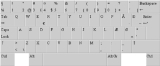
. - While the Faroese keyboard layout allows one to write in Latin, English, Danish, Swedish, Norwegian, Finnish, etc., the Old Norse and Modern Icelandic letter þ is missing. In related Faroese words it is written as <t> or as <h>, and if an Icelandic name has to be transcribed, <th> is common.
Vowels
| Grapheme | Name | Short | Long |
| A A A is the first letter and a vowel in the basic modern Latin alphabet. It is similar to the Ancient Greek letter Alpha, from which it derives.- Origins :... , a |
fyrra a [ˈfɪɹːa ɛaː] ("leading a") | /a/ | /ɛaː/ |
| Á Á is a letter of the Czech, Faroese, Hungarian, Icelandic, Slovak and Sámi languages. This letter also appears in Dutch, Galician, Irish, Occitan, Portuguese, Spanish, Lakota, Navajo, and Vietnamese as a variant of the letter “a”. Some writers use á incorrectly to denote a quantity, often used on... , á |
á [ɔaː] | /ɔ/ | /ɔaː/ |
| E E E is the fifth letter and a vowel in the basic modern Latin alphabet. It is the most commonly used letter in the Czech, Danish, Dutch, English, French, German, Hungarian, Latin, Norwegian, Spanish, and Swedish languages.-History:... , e |
e [eː] | /ɛ/ | /eː/ |
| I I I is the ninth letter and a vowel in the basic modern Latin alphabet.-History:In Semitic, the letter may have originated in a hieroglyph for an arm that represented a voiced pharyngeal fricative in Egyptian, but was reassigned to by Semites, because their word for "arm" began with that sound... , i |
fyrra i [ˈfɪɹːa iː] ("leading i") | /ɪ/ | /iː/ |
| Í Í is a letter in the Faroese, Hungarian, Icelandic, Czech, Slovak, and Tatar languages. This letter also appears in Catalan, Irish, Occitan, Portuguese, Spanish, Galician, Leonese, Navajo, and Vietnamese language as a variant of letter “i”.... , í |
fyrra í [ˈfɪɹːa ʊiː] ("leading í") | /ʊi/ | /ʊiː/ |
| O O O is the fifteenth letter and a vowel in the basic modern Latin alphabet.The letter was derived from the Semitic `Ayin , which represented a consonant, probably , the sound represented by the Arabic letter ع called `Ayn. This Semitic letter in its original form seems to have been inspired by a... , o |
o [oː] | /ɔ/ | /oː/ |
| Ó Ó is a letter in the Faroese, Hungarian, Icelandic, Kashubian, Polish, Czech, Slovak, and Sorbian languages. This letter also appears in the Catalan, Irish, Occitan, Portuguese, Spanish, Italian and Vietnamese languages as a variant of letter “o”. It is also used in English for other purposes... , ó |
ó [ɔuː] | /œ/ | /ɔuː/ |
| U U U is the twenty-first letter and a vowel in the basic modern Latin alphabet.-History:The letter U ultimately comes from the Semitic letter Waw by way of the letter Y. See the letter Y for details.... , u |
u [uː] | /ʊ/ | /uː/ |
| Ú Ú Ú or ú is a Latin letter used in the Czech, Faroese, Hungarian, Icelandic, and Slovak writing systems. This letter also appears in Dutch, Irish, Occitan, Pinyin, Portuguese, Spanish, Italian, and Vietnamese as a variant of the letter "U".... , ú |
ú [ʉuː] | /ʏ/ | /ʉuː/ |
| Y Y Y is the twenty-fifth letter in the basic modern Latin alphabet and represents either a vowel or a consonant in English.-Name:In Latin, Y was named Y Graeca "Greek Y". This was pronounced as I Graeca "Greek I", since Latin speakers had trouble pronouncing , which was not a native sound... , y |
seinna i [ˈsaiːdna iː] ("latter i") | /ɪ/ | /iː/ |
| Ý Y Y is the twenty-fifth letter in the basic modern Latin alphabet and represents either a vowel or a consonant in English.-Name:In Latin, Y was named Y Graeca "Greek Y". This was pronounced as I Graeca "Greek I", since Latin speakers had trouble pronouncing , which was not a native sound... , ý |
seinna í [ˈsaiːdna ʊiː] ("latter í") | /ʊi/ | /ʊiː/ |
| Æ Æ Æ is a grapheme formed from the letters a and e. Originally a ligature representing a Latin diphthong, it has been promoted to the full status of a letter in the alphabets of some languages, including Danish, Faroese, Norwegian and Icelandic... , æ |
seinna a [ˈsaiːdna ɛaː] ("latter a") | /a/ | /ɛaː/ |
| Ø Ø Ø — minuscule: "ø", is a vowel and a letter used in the Danish, Faroese, Norwegian and Southern Sami languages.It's mostly used as a representation of mid front rounded vowels, such as ø œ, except for Southern Sami where it's used as an [oe] diphtong.The name of this letter is the same as the sound... , ø |
ø [øː] | /œ/ | /øː/ |
| EI, ei | ei [eiː] | /ei/ | /eiː/ |
| EY, ey | ey [eyː] | /ey/ | /eyː/ |
| OY, oy | oy [oyː] | /oy/ | /oyː/ |
| Other vowels | |||
| ei | – | /ai/ | /aiː/ |
| ey | – | /ɛ/ | /ɛiː/ |
| oy | – | /ɔi/ | /ɔiː/ |
As in several other Germanic languages, stressed vowels in Faroese are long when not followed by two or more consonants. Two consonants or a consonant cluster usually indicates a short vowel. Exceptions may be short vowels in particles, pronouns, adverbs, and prepositions in unstressed positions, consisting of just one syllable.
As may be seen on the table to the left, Faroese (like English) has a very atypical pronunciation of its vowels, with odd offglides and other features. For example, long í and ý sound almost like a long Hiberno-English
Hiberno-English
Hiberno-English is the dialect of English written and spoken in Ireland .English was first brought to Ireland during the Norman invasion of the late 12th century. Initially it was mainly spoken in an area known as the Pale around Dublin, with Irish spoken throughout the rest of the country...
i, and long ó like an American English
American English
American English is a set of dialects of the English language used mostly in the United States. Approximately two-thirds of the world's native speakers of English live in the United States....
long o.
Short vowels in endings
While in other Germanic languages a short /e/ is common for inflectional endings, Faroese uses /a, i, u/. This means that there are no unstressed short vowels except for these three. Even if a short unstressed /e/ is seen in writing, it will be pronounced like /i/: áðrenn [ˈɔaːɹɪnː] (before). Very typical are endings like -ur, -ir, -ar. The dative is often indicated by -um which is always pronounced [ʊn]. – bátar [ˈbɔaːtaɹ] (boats), kallar [ˈkadlaɹ] ((you) call, (he) calls)| Unstressed /i/ and /u/ in dialects | |||||
| Borðoy Borðoy Borðoy is an island in the north-east of the Faroe Islands. There are eight settlements: Klaksvík , Norðoyri, Ánir, Árnafjørður, Strond, Norðtoftir, Depil and Norðdepil. There are also three abandoned settlements: Skálatoftir, Múli and Fossá, all in the north... , Kunoy Kunoy Kunoy is an island located in the north-east of the Faroe Islands between Kalsoy and Borðoy .- Settlements and transport :... , Tórshavn Tórshavn Tórshavn is the capital and largest town of the Faroe Islands. It is located in the southern part on the east coast of Streymoy. To the north west of the town lies the high mountain Húsareyn, and to the southwest, the high Kirkjubøreyn... |
Viðoy Viðoy Viðoy is the northern-most island in the Faroe Islands, located east of Borðoy to which it is linked via a causeway. The name means wood island, despite the fact that no trees grow on the island: the name relates to the driftwood that floats in from Siberia and North America.- Geography :The... , Svínoy Svínoy Svínoy is an island located in the north-east of the Faroe Islands, to the east of Borðoy and Viðoy. It is divided into two unequally sized peninsulas. The island takes its name from Old Norse, Svíney, meaning "Swine Isle"... , Fugloy Fugloy Fugloy is the eastern-most island in the Faroe Islands. The name means bird island, and refers to the large number of birds that nest on the island's cliffs.- Geography :... |
Suðuroy Suðuroy Suðuroy is the southernmost of the Faroe Islands. The island covers 163.7 km². In 2010 there were 4763 inhabitants, but there has been a gradual decline in the population numbers ever since the 1950s.... |
Elsewhere (standard) | ||
| gulur (yellow) | [ˈɡ̊uːləɹ] | [ˈɡ̊uːləɹ] | [ˈɡ̊uːløɹ] | [ˈɡ̊uːlʊɹ] | |
| gulir (yellow pl.) | [ˈɡ̊uːləɹ] | [ˈɡ̊uːləɹ] | [ˈɡ̊uːløɹ] | [ˈɡ̊uːlɪɹ] | |
| bygdin (the town) | [ˈb̥ɪɡ̊d̥ɪn] | [ˈb̥ɪɡ̊d̥ən] | [ˈb̥ɪɡ̊d̥øn] | [ˈb̥ɪɡ̊d̥ɪn] | |
| bygdum (towns dat. pl.) | [ˈb̥ɪɡ̊d̥ʊn] | [ˈb̥ɪɡ̊d̥ən] | [ˈb̥ɪɡ̊d̥øn] | [ˈb̥ɪɡ̊dʊn] | |
| Source: Faroese: An Overview and Reference Grammar, 2004 (page 350) | |||||
In some dialects, unstressed /ʊ/ is realized as [ø] or is reduced further to [ə]. /ɪ/ goes under a similar reduction pattern so unstressed /ʊ/ and /ɪ/ can rhyme. This can cause spelling mistakes related to these two vowels. The table to the right displays the different realizations in different dialects.
Glide insertion
Faroese avoids having a hiatusHiatus (linguistics)
In phonology, hiatus or diaeresis refers to two vowel sounds occurring in adjacent syllables, with no intervening consonant. When two adjacent vowel sounds occur in the same syllable, the result is instead described as a diphthong....
between two vowels by inserting a glide
Semivowel
In phonetics and phonology, a semivowel is a sound, such as English or , that is phonetically similar to a vowel sound but functions as the syllable boundary rather than as the nucleus of a syllable.-Classification:...
. Orthographically, this is shown in three ways:
- vowel + ð + vowel
- vowel + g + vowel
- vowel + vowel
Typically, the first vowel is long and in words with two syllables always stressed, while the second vowel is short and unstressed. In Faroese, short and unstressed vowels can only be /a/, /i/, /u/.
Ð and G as glides
| Glide insertion | |||||
| First vowel | Second vowel | Examples | |||
| i [ɪ] | u [ʊ] | a [a] | |||
| Grapheme | Phoneme | Glide | |||
| I-surrounding Type 1 | |||||
| i, y | [iː] | [j] | [j] | [j] | sigið, siður, siga |
| í, ý | [ʊiː] | [j] | [j] | [j] | mígi, mígur, míga |
| ey | [ɛiː] | [j] | [j] | [j] | reyði, reyður, reyða |
| ei | [aiː] | [j] | [j] | [j] | reiði, reiður, reiða |
| oy | [ɔiː] | [j] | [j] | [j] | noyði, royður, royða |
| U-surrounding Type 2 | |||||
| u | [uː] | [w] | [w] | [w] | suði, mugu, suða |
| ó | [ɔuː] | [w] | [w] | [w] | róði, róðu, Nóa |
| ú | [ʉuː] | [w] | [w] | [w] | búði, búðu, túa |
| I-surrounding Type 2, U-surrounding Type 2, A-surrounding Type 1 | |||||
| a, æ | [ɛaː] | [j] | [v] | – | ræði, æðu, glaða |
| á | [ɔaː] | [j] | [v] | – | ráði, fáur, ráða |
| e | [eː] | [j] | [v] | – | gleði, legu, gleða |
| o | [oː] | [j] | [v] | – | togið, smogu, roða |
| ø | [øː] | [j] | [v] | – | løgin, røðu, høgan |
| Source: Faroese: An Overview and Reference Grammar, 2004 (page 38) | |||||
<Ð> and
- [j]
- "I-surrounding, type 1" – after /i, y, í, ý, ei, ey, oy/: bíða [ˈbʊija] (to wait), deyður [ˈdɛijʊɹ] (dead), seyður [ˈsɛijʊɹ] (sheep)
- "I-surrounding, type 2" – between any vowel (except "u-vowels" /ó, u, ú/) and /i/: kvæði [ˈkvɛajɪ] (ballad), øði [ˈøːjɪ] (rage).
- [w] "U-surrounding, type 1" – after /ó, u, ú/: ÓðinOdinOdin is a major god in Norse mythology and the ruler of Asgard. Homologous with the Anglo-Saxon "Wōden" and the Old High German "Wotan", the name is descended from Proto-Germanic "*Wodanaz" or "*Wōđanaz"....
[ˈɔuwɪn] (Odin), góðan morgun! [ˌɡɔuwan ˈmɔɹɡʊn] (good morning!), suður [ˈsuːwʊɹ] (south), slóða [ˈslɔuwa] (to make a trace). - [v]
- "U-surrounding, type 2" – between /a, á, e, æ, ø/ and /u/: áður [ˈɔavʊɹ] (before), leður [ˈleːvʊɹ] (leather), í klæðum [ɪˈklɛavʊn] (in clothes), í bløðum [ɪˈbløːvʊn] (in newspapers).
- "A-surrounding, type 2"
- These are exceptions (there is also a regular pronunciation): æða [ˈɛava] (eider-duck), røða [ˈɹøːva] (speech).
- The past participles have always [v]: elskaðar [ˈɛlskavaɹ] (beloved, nom., acc. fem. pl.)
- Silent
- "A-surrounding, type 1" – between /a, á, e, o/ and /a/ and in some words between <æ, ø> and :
Skerping (sharpening)
| Skerping | ||
| Written | Pronunciation | instead of |
| -ógv- | [ɛɡv] | *[ɔuɡv] |
| -úgv- | [ɪɡv] | *[ʉuɡv] |
| -eyggj- | [ɛdːʒ] | *[ɛidːʒ] |
| -íggj-, -ýggj- | [ʊdːʒ] | *[ʊidːʒ] |
| -eiggj- | [adːʒ] | *[aidːʒ] |
| -oyggj- | [ɔdːʒ] | *[ɔidːʒ] |
The so-called "skerping" (Thráinsson et al. use the term "Faroese Verschärfung" – in Faroese, skerping /ʃɛɹpɪŋɡ/ means "sharpening") is a typical phenomenon of fronting back vowels before [ɡv] and monophthongizing certain diphthongs before [dːʒ]. Skerping is not indicated orthographically. These consonants occur often after /ó, ú/ (ógv, úgv) and /ey, í, ý, ei, oy/ when no other consonant is following.: Jógvan [ˈjɛɡvan] (a form of the name John), Gjógv
Gjógv
Gjógv |geo]]) is a village located on the northeast tip of the island of Eysturoy, in the Faroe Islands and 63 km north by road from the capital of Tórshavn...
[dʒɛɡv] (cleft): kúgv [kɪɡv] (cow), trúgva [ˈtɹɪɡva] (believe), but: trúleysur [ˈtɹʉuːlɛisʊɹ] (faithless): heyggjur [ˈhɛdːʒʊɹ] (high, burial mound), but heygnum [ˈhɛiːnʊn] (dat. sg. with suffix article): nýggjur [ˈnʊdːʒʊɹ] (new m.), but nýtt [nʊiʰtː] (n.): beiggi [ˈbadːʒɪ] (brother): oyggj [ɔdːʒ] (island), but oynna [ˈɔitnːa] (acc. sg. with suffix article)
Consonants
| Labial Labial consonant Labial consonants are consonants in which one or both lips are the active articulator. This precludes linguolabials, in which the tip of the tongue reaches for the posterior side of the upper lip and which are considered coronals... |
Apical Apical consonant An apical consonant is a phone produced by obstructing the air passage with the apex of the tongue . This contrasts with laminal consonants, which are produced by creating an obstruction with the blade of the tongue .This is not a very common distinction, and typically applied only to fricatives... |
Post- alveolar Postalveolar consonant Postalveolar consonants are consonants articulated with the tongue near or touching the back of the alveolar ridge, further back in the mouth than the alveolar consonants, which are at the ridge itself, but not as far back as the hard palate... |
Palatal Palatal consonant Palatal consonants are consonants articulated with the body of the tongue raised against the hard palate... |
Velar Velar consonant Velars are consonants articulated with the back part of the tongue against the soft palate, the back part of the roof of the mouth, known also as the velum).... |
Glottal Glottal consonant Glottal consonants, also called laryngeal consonants, are consonants articulated with the glottis. Many phoneticians consider them, or at least the so-called fricative, to be transitional states of the glottis without a point of articulation as other consonants have; in fact, some do not consider... |
|
| Plosive | pʰ, p | tʰ, t | kʰ, k | |||
| Affricate Affricate consonant Affricates are consonants that begin as stops but release as a fricative rather than directly into the following vowel.- Samples :... |
tʃʰ, tʃ | |||||
| Fricative Fricative consonant Fricatives are consonants produced by forcing air through a narrow channel made by placing two articulators close together. These may be the lower lip against the upper teeth, in the case of ; the back of the tongue against the soft palate, in the case of German , the final consonant of Bach; or... |
f v | s | ʃ | h | ||
| Nasal Nasal consonant A nasal consonant is a type of consonant produced with a lowered velum in the mouth, allowing air to escape freely through the nose. Examples of nasal consonants in English are and , in words such as nose and mouth.- Definition :... |
m | n | ɲ | ŋ | ||
| Approximant Approximant consonant Approximants are speech sounds that involve the articulators approaching each other but not narrowly enough or with enough articulatory precision to create turbulent airflow. Therefore, approximants fall between fricatives, which do produce a turbulent airstream, and vowels, which produce no... |
w | l | ɹ | j | ||
There are several phonological
Phonology
Phonology is, broadly speaking, the subdiscipline of linguistics concerned with the sounds of language. That is, it is the systematic use of sound to encode meaning in any spoken human language, or the field of linguistics studying this use...
processes involved in Faroese, including:
- Liquids are devoiced before voiceless consonants
- Nasals generally assume the place of articulation and laryngeal settings of following consonants.
- Velar stops palatalize to postalveolar affricates before /j/ /e/ /ɪ/ /y/ and /ɛi/ becomes /f/ before voiceless consonants becomes /ʃ/ after /ɛi, ai, ɔi/ and before /j/ and may assimilate the retroflexion of a preceding /r/ to become [ʂ].
- Pre-occlusionPre-occlusionPre-occlusion is a phonological process, involving the insertion of a very short plosive consonant before a sonorant consonant. In Manx, this applies to stressed monosyllabic words , and is also found in Cornish on certain stressed syllables. The inserted consonant is homorganic with the following...
of originalto [dl] and to [dn].
Omissions in consonant clusters
Faroese tends to omit the first or second consonant in clusters of different consonants:- fjals [fjals] (mountain's gen.) instead of *[fjadls] from [fjadl] (nom.). Other examples for genitives are: barns [ˈbans] (child's), vatns [van̥s] (lake's, water's).
- hjálpti [jɔl̥tɪ] (helped) past sg. instead of *[ˈjɔlpta] from hjálpa [ˈjɔlpa]. Other examples for past forms are: sigldi [ˈsɪldɪ] (sailed), yrkti [ˈɪɹ̥tɪ] (wrote poetry).
- homophoneHomophoneA homophone is a word that is pronounced the same as another word but differs in meaning. The words may be spelled the same, such as rose and rose , or differently, such as carat, caret, and carrot, or to, two, and too. Homophones that are spelled the same are also both homographs and homonyms...
are fylgdi (followed) and fygldi (caught birds with net): [ˈfɪldɪ]. - skt will be:
- [st] in words of more than one syllable: føroyskt [ˈføːɹɪst] (Faroese n. sg.; also [ˈføːɹɪʂt]) russiskt [ˈɹʊsːɪst] (Russian n. sg.), íslendskt [ˈʊʃlɛŋ̊st] (Icelandic n. sg.).
- [kst] in monosyllables: enskt [ɛŋ̊kst] (English n. sg.), danskt [daŋ̊kst] (Danish n. sg.), franskt [fɹaŋ̊kst] (French n. sg.), spanskt [spaŋ̊kst] (Spanish n. sg.), svenskt [svɛŋ̊kst] (Swedish n. sg.), týskt [tʊkst] (German n. sg.).
- However [ʂt] in:
Faroese Words and Phrases in comparison to English, and Other Germanic languages
| Faroese | English | Icelandic | Danish | Dutch |
|---|---|---|---|---|
| Vælkomin | Welcome | Velkomin | Velkommen | Welkom |
| Farvæl | Farewell | Farðu heill | Farvel | Vaarwel |
| Hvat eitur/heitir tú? | What's your name? | Hvað heitir þú? | Hvad hedder du? | Hoe heet je? |
| Hvussu gongur? | How are you? | Hvernig gengur? | Hvordan går det? | Hoe gaat het met je? |
| Hvussu gamal ert tú? | How old are you? | Hversu gamall ertu? | Hvor gammel er du? | Hoe oud ben je? |
| Reytt/Reyður | Red | Rauður | Rødt/Rød | Rood |
| Blátt/bláur | Blue | Blár | Blåt/Blå | Blauw |
| Hvítt/hvítur | White | Hvítur | Hvidt/Hvid | Wit |
Grammar
Faroese grammar is related and very similar to that of modern IcelandicIcelandic grammar
Icelandic is an inflected language with four cases: nominative, accusative, dative and genitive. Icelandic nouns can have one of three grammatical genders, masculine, feminine or neuter. Nouns, adjectives and pronouns are declined in four cases and two numbers, singular and plural.- Morphology...
and Old Norse
Old Norse
Old Norse is a North Germanic language that was spoken by inhabitants of Scandinavia and inhabitants of their overseas settlements during the Viking Age, until about 1300....
. Faroese is an inflected language with three grammatical gender
Grammatical gender
Grammatical gender is defined linguistically as a system of classes of nouns which trigger specific types of inflections in associated words, such as adjectives, verbs and others. For a system of noun classes to be a gender system, every noun must belong to one of the classes and there should be...
s and four cases: nominative
Nominative case
The nominative case is one of the grammatical cases of a noun or other part of speech, which generally marks the subject of a verb or the predicate noun or predicate adjective, as opposed to its object or other verb arguments...
, accusative
Accusative case
The accusative case of a noun is the grammatical case used to mark the direct object of a transitive verb. The same case is used in many languages for the objects of prepositions...
, dative
Dative case
The dative case is a grammatical case generally used to indicate the noun to whom something is given, as in "George gave Jamie a drink"....
and genitive
Genitive case
In grammar, genitive is the grammatical case that marks a noun as modifying another noun...
.
Faroese numbers and expressions
| Number | Faroese |
|---|---|
| 0 | null |
| 1 | eitt |
| 2 | tvey |
| 3 | trý |
| 4 | fýra |
| 5 | fimm |
| 6 | seks |
| 7 | sjey |
| 8 | átta |
| 9 | níggju |
| 10 | tíggju |
| 11 | ellivu |
| 12 | tólv |
| 13 | trettan |
| 14 | fjúrtan |
| 15 | fimtan |
| 16 | sekstan |
| 17 | seytjan |
| 18 | átjan |
| 19 | nítjan |
| 20 | tjúgu |
| 21 | einogtjúgu |
| 22 | tveyogtjúgu |
| 30 | tredivu, tríati |
| 40 | fjøruti, fýrati |
| 50 | hálvtrýss, fimmti |
| 60 | trýss, seksti |
| 70 | hálvfjers, sjeyti |
| 80 | fýrs, áttati |
| 90 | hálvfems, níti |
| 100 | hundrað |
| 1000 | (eitt) túsund |
Further reading
This is a chronological list of books about Faroese still available.- V.U. Hammershaimb: Færøsk Anthologi. Copenhagen 1891 (no ISBN, 2 volumes, 4th printing, Tórshavn 1991) (in Danish)
- M.A. Jacobsen, Chr. Matras: Føroysk–donsk orðabók. Tórshavn, 1961. (no ISBN, 521 pages, Faroese–Danish dictionary)
- W.B. Lockwood: An Introduction to Modern Faroese. Tórshavn, 1977. (no ISBN, 244 pages, 4th printing 2002)
- Eigil Lehmann: Føroysk–norsk orðabók. Tórshavn, 1987 (no ISBN, 388 p.) (Faroese–Norwegian dictionary)
- Hjalmar Petersen, Marius Staksberg: Donsk–Føroysk orðabók. Tórshavn, 1995. (879 p.) ISBN 99918-41-51-2 (Danish–Faroese dictionary)
- Tórður Jóansson: English loanwords in Faroese. Tórshavn, 1997. (243 pages) ISBN 99918-49-14-9
- Johan Hendrik W. Poulsen: Føroysk orðabók. Tórshavn, 1998. (1483 pages) ISBN 99918-41-52-0 (in Faroese)
- Annfinnur í Skála: Donsk-føroysk orðabók. Tórshavn 1998. (1369 pages) ISBN 99918-42-22-5 (Danish–Faroese dictionary)
- Michael Barnes: Faroese Language Studies Studia Nordica 5, Supplementum 30. Tórshavn, 2002. (239 pages) ISBN 99918-41-30-X
- Höskuldur Thráinsson (Þráinsson), Hjalmar P. Petersen, Jógvan í Lon Jacobsen, Zakaris Svabo Hansen: Faroese. An Overview and Reference Grammar. Tórshavn, 2004. (500 pages) ISBN 99918-41-85-7
- Richard Kölbl: Färöisch Wort für Wort. Bielefeld 2004 (in German)
- Gianfranco Contri: Dizionario faroese-italiano = Føroysk-italsk orðabók. Tórshavn, 2004. (627 p.) ISBN 99918-41-58-X (Faroese–Italian dictionary)
- Jón Hilmar Magnússon: Íslensk-færeysk orðabók. Reykjavík, 2005. (877 p.) ISBN 99796-61-79-8 (Icelandic–Faroese dictionary)
- Annfinnur í Skála / Jonhard Mikkelsen: Føroyskt / enskt – enskt / føroyskt, Vestmanna: Sprotin 2008. (Faroese–English / English–Faroese dictionary, 2 volumes)
- Adams, Jonathan & Hjalmar P. Petersen. Faroese: A Language Course for beginners Grammar & Textbook. Tórshavn, 2009: Stiðin (704 p.) ISBN 978-99918-42-54-7
- Petersen, Hjalmar P. 2009. Gender Assignment in Modern Faroese. Hamborg. Kovac
- Petersen, Hjalmar P. 2010. The Dynamics of Faroese-Danish Language Contact. Heidelberg. Winter
- Faroese/German anthology “From Djurhuus to Poulsen – Faroese Poetry during 100 Years”, academic advice: Turið Sigurðardóttir, lineartranslation: Inga Meincke (2007), ed. by Paul Alfred KleinertPaul Alfred KleinertPaul Alfred Kleinert, German writer, editor and translator, born in Leipzig in 1960Family roots in Silesia and DanzigTheological and celtic studies in Berlin/East and West, Edinburgh and DublinEditor since 1994:***...
External links
- Føroysk orðabók (the Faroese–Faroese dictionary of 1998 online)
- Sprotin (complete English-Faroese/Faroese-English and Danish–Faroese online dictionary – requires a subscription)
- Faroese online syntactic analyser and morphological analyser/generator
- FMN.fo – Faroese Language Committee (Official site with further links)
- 'Hover & Hear' Faroese pronunciations, and compare with equivalents in English and other Germanic languages.
- Ethnologue report on Faroese
- Useful Faroese Words & Phrases for Travelers
- How to count in Faroese