


Red Army Choir

Encyclopedia
The A.V. Alexandrov Russian army twice red-bannered academic song and dance ensemble , in short, the Alexandrov ensemble is a performing ensemble that serves as the official army choir of the Russian armed forces
. It is known worldwide as the Red Army Choir or Red Army Chorus; variously translated as Les Chœurs de l'Armée Rouge in French
, Alexandrovci in Czech
and 赤軍合唱団 in Japanese
.
The ensemble consists of a male choir
, an orchestra
, and a dance
ensemble. The songs they perform range from Russia
n folk tunes to church hymns, operatic arias and popular music; examples include The Volga Boatmen's Song
,
Katyusha
, Kalinka , Kernina and Ave Maria. After the Soviet
period, the ensemble has continued performing, entertaining audiences both inside and outside Russia.
(1883–1946), known as Sacha, was born into a peasant
family, but he became the first artistic director of the Ensemble, choirmaster, conductor, teacher and the public figure who wrote the National Anthem of the Soviet Union
. He came from a musical background of hymns and folk songs, could play the viola
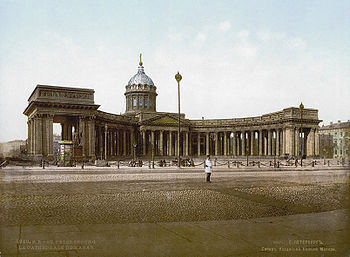
and had perfect pitch, so he sang in the church choir and performed at festivals. He was heard singing at the village school by PA Zalivuhin, a soloist in the choir at Kazan Cathedral, St. Petersburg. Zalivuhin persuaded Sacha's parents to let the child go to St Petersburg to learn music. So in 1898 the young peasant boy became a pupil of the very grand Court Chapel (now the State Academic Chapel of St Petersburg Glinka).
 There are two recorded histories of the Ensemble: possibly separate elements of the same history. The first says that the initiator of the Ensemble was Felix Nikolaevich Danilovich, a theatre director. The first director of the Ensemble was chosen from three of Moscow's conductors: Danilin, Chesnokov and Alexandrov. Seen in isolation this would signify that A.V.Alexandrov was not the creator of the Ensemble. In this version the first troupe is named as follows. Singers: Tkachenko, Zyukov, Samarin,Rozanov, Koltypin, Tolskov, Golyaev, Charov. Dancers: Maximov, Svetlov. Bayanist: Surdin.
The second version says that the Ensemble was formed out of the Frunze
Red Army
Central House in 1928. There is also a story that Stalin then asked Alexandrov to relocate the choir to Moscow. Under the name Red Army Song Ensemble of the M. V. Frunze Red Army Central House or the "Red Army Choir", twelve soldier-performers - a vocal octet
, a bayan
player, 2 dance
rs, and a reciter - officially performed for the first time on October 12, 1928 under the direction of their conductor
, Alexandr Alexandrov
, a young music professor at the Moscow Conservatory
. The program, entitled The 22nd Krasnodar Division in Song, consisted mainly of short musical scenes of military life, including Songs of the First Cavalry Army, The Special Far-Eastern Army, and Song about Magnitostroi.
In 1929, the ensemble visited the far eastern lands of the Soviet Union, entertaining the troops working on the Far Eastern railway.
With the goal of developing amateur art within the ranks of the army and to encourage soldiers' interest in good music, the ensemble grew to 300 performers by 1933, comprising three different forces of a male choir, an orchestra, and an ensemble of dancers. The Red Army Choir became known as a propagator of Soviet songs, performing original compositions by composers such as Vasily Solovyov-Sedoy, Anatoli Novikov, Matvey Blanter
and Boris Mokrousov.
In 1935, the choir was bestowed the Order of the Red Banner
and was renamed the Red Army Red-Bannered Song and Dance Ensemble of the USSR.
Having traveled widely throughout the Soviet Union, from the Arctic north to the sands of Tajikistan
, the choir performed at the International Exposition dedicated to Art and Technology in Modern Life
held in 1937 in Paris
, France
; it won the Grand Prix, the highest honor bestowed by the jury.
During World War II
, the ensemble gave over 1500 performances at both Soviet fronts, entertaining troops about to go into battle, at gun emplacements, airfields, and in hospitals.
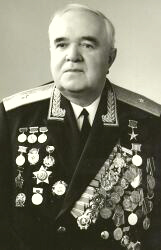
Following the death of Alexander Alexandrov, the Ensemble was taken over by his son, Boris Alexandrovich Alexandrov
. Under his leadership, the Ensemble gained fame outside the Soviet Union, making extensive tours worldwide. Boris Alexandrov retired in 1987, and was succeeded by People's Artist of Russia
Igor Agafonnikov the same year, with Anatoly Maltsev as the ensemble chief. He retired as the principal conductor in 1994; he died that year and was buried in Moscow
at the Novodevichy Cemetery
. He was succeeded by Victor Fedorov, the chorus master since 1986.
Under B.A. Alexandrov, the Ensemble was highly disciplined. Boris's party trick was to leave the stage and allow the Ensemble to perform "En Route" alone. Members were positioned so that they could not all watch one orchestral leader, and this appeared to be a trick, but there was no trick at all. Leonid Mikhailovich Kharitonov
remembers:
.
He served as Orchestral Director and Conductor
.
.
, Jean-Jacques Goldman
and Steve Barakatt
.
After the dissolution of the Soviet Union
the ensemble was renamed the A. V. Alexandrov Russian army twice red-bannered academic song and dance ensemble.

Georgi Abramov | Nicolai A. Abramov | Vadim Petrovich Anayev | Georgy I. Andryushchenko | V.I. Anisimov | Georgiy I. Babaev | Evgeny Mikhailovich Belyaev | Piotr Dmitrievich Bogachev | Ivan Semionovich Bukreev | Vladimir Bunchikov | E. Burchak | Victor Sergeievich Buzurov | Dmitry Bykov | Vladimir Chernykh | Tatiana Deryabkina | Boris Diakov | Ivan A. Didenko | V. Dmitriev | Arthur Arturovich Eisen (or Eisenach) | V. Fedorov | Stanislav I. Frolov | Valery Gavva | Konstantin G. Gerasimov | Vladimir P. Gorlanov | Nicholai Timofeyevich Gres | AA Gvozdetsky | Sergei Vasilievich Ivanov | B. Jaivoronok | Vladimir Nikolaievich Katerinsky | Leonid M. Kharitonov | Andrey Kusleev | I. Kuznetsov | Edward Maxovich Labkovsky | V.P. Maystruck | A.I. Mischenko | B.M. Mizyuk | Konstantin Pavlovich Lisovskiy (or Lissovsky, Lisovsky, Lisovski) | Yuseph Laut | A.P. Martynov (or Martin, or Martinov) | V.P. Maystruk | P. Mikhailov | B.M. Mizyuk | Victor Ivanovich Nikitin
| V. Pankov | I. Pchenitchni | N.S. Polozkov | Vladimir V. Puchkov | Oleg N. Razumovsky | Mark Reizen
| Vadim L. Ruslanov | Victor Sanin | Ivan Ivanovich Savchuk | Alexei Tikhonovich Sergeev | Boris G. Shapenko | Boris Shemyakov | Vladimir Shkaptsov | Vasily Ivanovich Shtefutsa | Alexander Sergeievich Sibirtsev | B. Slastnoi | Anatoly Solovyanenko | A. Syrovatko-Zolotarev | Barseg Tumanyan | Alexei Usmanov | Georgi Pavlovich Vinogradov | Igor F. Volkov | Leonid V. Wheat | Boris G. Zhayvoronok.
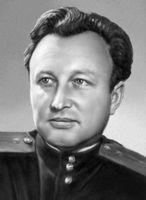
Evgeny Belyaev
Victor Ivanovich Nikitin
Leonid Mikhailovich Kharitonov
Mark Reizen
Georgi Pavlovich Vinogradov
http://translate.google.com/translate?hl=en&langpair=ru|en&u=http://www.ensemble-aleksandrova.ru/index.php%3Fid%3D171&prev=/translate_s%3Fhl%3Den%26q%3D%25D0%25AD%25D0%25B4%25D1%2583%25D0%25B0%25D1%2580%25D0%25B4%2B%25D0%259C%25D0%25B0%25D0%25BA%25D1%2581%25D0%25BE%25D0%25B2%25D0%25B8%25D1%2587%2B%25D0%259B%25D0%25B0%25D0%25B1%25D0%25BA%25D0%25BE%25D0%25B2%25D1%2581%25D0%25BA%25D0%25B8%25D0%25B9%26sl%3Den%26tl%3Druhere].
The choir consists mainly of vocal sections of tenor
, baritone
, and bass. In some of the pieces they perform, these sections are divided into as many as eight different vocal lines. From the early 1950s until at least 1965 a typical full division (which varied from song to song) was as follows: (1) countertenor
s; (2) first tenor
s; (3) second tenors; (4) baritone
s; (5) first bass
; (6) second bass; (7) basso profundo
s.
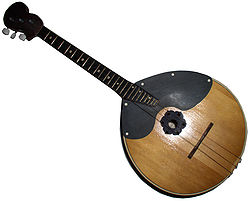
, the domra
, the bayan
, the double bass
, woodwinds
, brass
, and percussion
instruments. A great guest balalaika player was Boris Stepanovich Feoktistov (Борис Степанович Феоктистов) (1910–1988). In the West his most famous recording is Kamarinskaya
(1963)
.
A. Molostov is the trumpet soloist in Dark Eyes
in vintage recordings
.
The bayan-player Victor Gridin is a past member of the orchestra
.
The current members of the orchestra are listed
http://translate.google.com/translate?hl=en&langpair=ru|en&u=http://www.ensemble-aleksandrova.ru/index.php%3Fid%3D171&prev=/translate_s%3Fhl%3Den%26q%3D%25D0%25AD%25D0%25B4%25D1%2583%25D0%25B0%25D1%2580%25D0%25B4%2B%25D0%259C%25D0%25B0%25D0%25BA%25D1%2581%25D0%25BE%25D0%25B2%25D0%25B8%25D1%2587%2B%25D0%259B%25D0%25B0%25D0%25B1%25D0%25BA%25D0%25BE%25D0%25B2%25D1%2581%25D0%25BA%25D0%25B8%25D0%25B9%26sl%3Den%26tl%3Druhere.].
http://translate.google.com/translate?hl=en&langpair=ru|en&u=http://www.ensemble-aleksandrova.ru/index.php%3Fid%3D171&prev=/translate_s%3Fhl%3Den%26q%3D%25D0%25AD%25D0%25B4%25D1%2583%25D0%25B0%25D1%2580%25D0%25B4%2B%25D0%259C%25D0%25B0%25D0%25BA%25D1%2581%25D0%25BE%25D0%25B2%25D0%25B8%25D1%2587%2B%25D0%259B%25D0%25B0%25D0%25B1%25D0%25BA%25D0%25BE%25D0%25B2%25D1%2581%25D0%25BA%25D0%25B8%25D0%25B9%26sl%3Den%26tl%3Druhere].
Among the dances staged by the ensemble are Zaparozhtsi Dance, Cossack's Cavalry Dance, Festive March, Dance of the Cossacks, Soldier's Dance, and Sailor's Dance. Some of these are performed by mixed dancers, while others, such as Cossack's Cavalry Dance, are performed by male dancers only.

L. Kulikov; the chief administrator is Honoured Artist of Russia VG Kadin, the choreographer and coach is the Honoured Artist of Russia V. Ermolin; head dresser is Honoured Worker of Culture A. Kormilitsyn; soloists are VI Shtefutsa and EM Labkovsky; with SV Ivanov, PD Bogachev, VP Maystruk, AA Gvozdetsky, BM Mizyuk: all Honoured Artist of Russia
.
In the choir are YA Lysenko, Y. Shtrunov, IM Pirogov, IS Sobolev, И.Ф. Volkov, OV Filimonov, AN Savitsky, VA Nagorny, VP Kokarev, AA Hristachev, JN Deynekin, VM Bolonenko, VN Antonov, AN Stritenko, AA Toschev: all Honoured Artist of Russia; and VS Buzlov, SP Lapik, VF Orthodox, GU Razgasimov, V. Chekin, MD Mochalina
.
In the orchestra are AA Mogulkin, Y. Savkin, MG Chervov, PD Shchennikov, NI Diakov, AI Egorov, VM Predelin: all Honoured Artist of Russia. Vocal coaches are People's Artist of Russia
, laureate of competitions, MI Glinka and PI Tchaikovsky, Professor KP Lisovsky. The Principal Concertmaster is Honoured Artist of Russia V. Brodsky
.
In the ballet are GD Pavlyuchenko, IV Konygina, P.U. Khmelnitski: all Honoured Artist of Russia.
here and
here.
In 1948 much of Berlin was still ruined after World War II
, and the city was divided into four occupation zones, controlled by the USSR, France
, the UK and the USA. This was before the Berlin Wall
, and it was still possible to travel between zones. An American officer suggested a concert in the Gendarmenmarkt
(in the Soviet zone at the time), and the French zone commander supported the suggestion. The musicians were to be provided by the USSR, and the Alexandrov Ensemble was chosen. A temporary stage was set up in the square, with flowers all along the front. 30,000 people came to stand and watch for three hours. In 1994, towards the end of his life, Boris Alexandrov said:
A previous tour to East Germany had been cancelled due to the sudden death of Alexander Alexandrov in 1946 in Potsdam
, when in his bed was found an annotated copy of Beethoven's Symphony No. 9
, showing that A. Alexandrov had been preparing the final chorus for a performance. Now Boris, his son, was ready to follow his father's plan. The 1948 peace concert was to consist of German opera extracts and Russian folk songs (Nightingales, Zemlyanka and Roads); and after an intervention by the tenor Victor Nikitin
, some German folk songs were also included. The people joined in, singing Heidenröslein
, and Nikitin sang Kalinka three times in a row. The concert was very successful, and very moving.
A sound recording
clip (link)
of the concert was made, and pressed in 1985 under the Radio DDR 1
label. This is listed on the Alexandrov Ensemble discography
page.
However the Berlin Peace Concert did not happen in isolation. It was part of a series of punishing yearly tours to war-torn areas. The main tour season during and just after World War II appears to have run from June to October - perhaps because the large troupe usually had to perform outdoors, to accommodate large audiences. The August 1948 Berlin concert occurred two-thirds of the way through a tour to (20 June to 18 July) Prague
, Most
, Brno
, Devin
, Bratislava
, Moravská Ostrava
, Žilina
and Kosice
in Czechoslovakia
; then apparently without a break (18 July to 10 October) Dresden
, Weimar
, Magdeburg
, Stendal
, Schwerin
, Potsdam
, Berlin
, Rathenow
, Leipzig
, Halle, Lane, Erfurt
, Chemnitz
, Frankfurt an der Oder and Schwarzenberg
in Germany
.
in the 1981 film Das Boot
. Several films have been made of the Ensemble's performances: see Alexandrov Ensemble discography
.
' The Wall concert celebrating the fall of the Berlin Wall
. They performed an anti-war song, Bring the Boys Back Home.
and in Vladikavkaz
, Grozny
, the Ensemble performed a New Year fairy tale
show for children, Ivan the Good, Ivan the Brave, about a soldier helping to save New Year's Day
.
In 2008, the 80th anniversary of the Ensemble, the Director said this:
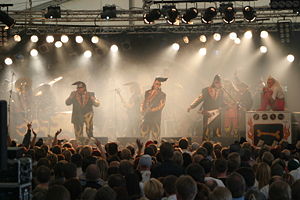 In 1993 the ensemble became an item of pop culture by performing together with the Finnish cult band Leningrad Cowboys
both in Helsinki
, Finland
where they performed on the Senate Square in front of 70,000 ecstatic listeners, and in Berlin
. In the German
capital the concert of the Leningrad Cowboys with the ensemble took place on the central Lustgarten
and gave the former Red Army's farewell to Berlin and the whole Germany an optimistic overtone. The Finnish concert was made into a rockumentary
Total Balalaika Show
by film director Aki Kaurismäki
. That year they also made a CD and played a concert with French
singer Jean-Jacques Goldman
. The Ensemble and the Leningrad Cowboys
performed Sweet Home Alabama at the 1994 MTV Video Music Awards
.
Armed Forces of the Russian Federation
The Armed Forces of the Russian Federation are the military services of Russia, established after the break-up of the Soviet Union. On 7 May 1992 Boris Yeltsin signed a decree establishing the Russian Ministry of Defence and placing all Soviet Armed Forces troops on the territory of the RSFSR...
. It is known worldwide as the Red Army Choir or Red Army Chorus; variously translated as Les Chœurs de l'Armée Rouge in French
French language
French is a Romance language spoken as a first language in France, the Romandy region in Switzerland, Wallonia and Brussels in Belgium, Monaco, the regions of Quebec and Acadia in Canada, and by various communities elsewhere. Second-language speakers of French are distributed throughout many parts...
, Alexandrovci in Czech
Czech language
Czech is a West Slavic language with about 12 million native speakers; it is the majority language in the Czech Republic and spoken by Czechs worldwide. The language was known as Bohemian in English until the late 19th century...
and 赤軍合唱団 in Japanese
Japanese language
is a language spoken by over 130 million people in Japan and in Japanese emigrant communities. It is a member of the Japonic language family, which has a number of proposed relationships with other languages, none of which has gained wide acceptance among historical linguists .Japanese is an...
.
The ensemble consists of a male choir
Choir
A choir, chorale or chorus is a musical ensemble of singers. Choral music, in turn, is the music written specifically for such an ensemble to perform.A body of singers who perform together as a group is called a choir or chorus...
, an orchestra
Orchestra
An orchestra is a sizable instrumental ensemble that contains sections of string, brass, woodwind, and percussion instruments. The term orchestra derives from the Greek ορχήστρα, the name for the area in front of an ancient Greek stage reserved for the Greek chorus...
, and a dance
Dance
Dance is an art form that generally refers to movement of the body, usually rhythmic and to music, used as a form of expression, social interaction or presented in a spiritual or performance setting....
ensemble. The songs they perform range from Russia
Russia
Russia or , officially known as both Russia and the Russian Federation , is a country in northern Eurasia. It is a federal semi-presidential republic, comprising 83 federal subjects...
n folk tunes to church hymns, operatic arias and popular music; examples include The Volga Boatmen's Song
The Volga Boatmen's Song
The "Song of the Volga Boatmen" is a well-known traditional Russian song collected by Mily Balakirev, and published in his book of folk songs in 1866. It is a genuine shanty sung by burlaks, or barge-haulers, on the Volga River. Balakirev published it with only one verse . The other two verses...
,
Katyusha
Katyusha (song)
Katyusha, Katusha or Katjusha is a Soviet wartime song about a girl longing for her beloved, who is away on military service. The music was composed in 1938 by Matvei Blanter and the lyrics were written by Mikhail Isakovsky. It was first performed by Valentina Batishcheva in the Column Hall of...
, Kalinka , Kernina and Ave Maria. After the Soviet
Soviet Union
The Soviet Union , officially the Union of Soviet Socialist Republics , was a constitutionally socialist state that existed in Eurasia between 1922 and 1991....
period, the ensemble has continued performing, entertaining audiences both inside and outside Russia.
Under Alexander Vasilyevich Alexandrov
Early Years
Alexander Vasilyevich AlexandrovAlexander Vasilyevich Alexandrov
Alexander Vasilyevich Alexandrov was a Russian Soviet composer, the founder of the Alexandrov Ensemble, who wrote the music for the national anthem of the Soviet Union, which, in 2001, became the anthem of Russia . During his career, he also worked as a professor of the Moscow State Conservatory,...
(1883–1946), known as Sacha, was born into a peasant
Peasant
A peasant is an agricultural worker who generally tend to be poor and homeless-Etymology:The word is derived from 15th century French païsant meaning one from the pays, or countryside, ultimately from the Latin pagus, or outlying administrative district.- Position in society :Peasants typically...
family, but he became the first artistic director of the Ensemble, choirmaster, conductor, teacher and the public figure who wrote the National Anthem of the Soviet Union
National Anthem of the Soviet Union
The National Anthem of the Soviet Union or the State Anthem of the USSR was introduced during World War II on March 15, 1944, replacing The Internationale as the official national anthem of the Soviet Union as well as the national anthem of the Russian SFSR...
. He came from a musical background of hymns and folk songs, could play the viola
Viola
The viola is a bowed string instrument. It is the middle voice of the violin family, between the violin and the cello.- Form :The viola is similar in material and construction to the violin. A full-size viola's body is between and longer than the body of a full-size violin , with an average...
and had perfect pitch, so he sang in the church choir and performed at festivals. He was heard singing at the village school by PA Zalivuhin, a soloist in the choir at Kazan Cathedral, St. Petersburg. Zalivuhin persuaded Sacha's parents to let the child go to St Petersburg to learn music. So in 1898 the young peasant boy became a pupil of the very grand Court Chapel (now the State Academic Chapel of St Petersburg Glinka).
Beginnings
The second version says that the Ensemble was formed out of the Frunze
Mikhail Frunze
Mikhail Vasilyevich Frunze was a Bolshevik leader during and just prior to the Russian Revolution of 1917.-Life and Political Activity:Frunze was born in Bishkek, then a small Imperial Russian garrison town in the Kyrgyz part of Turkestan, to a Moldovan medical practitioner and his Russian wife...
Red Army
Red Army
The Workers' and Peasants' Red Army started out as the Soviet Union's revolutionary communist combat groups during the Russian Civil War of 1918-1922. It grew into the national army of the Soviet Union. By the 1930s the Red Army was among the largest armies in history.The "Red Army" name refers to...
Central House in 1928. There is also a story that Stalin then asked Alexandrov to relocate the choir to Moscow. Under the name Red Army Song Ensemble of the M. V. Frunze Red Army Central House or the "Red Army Choir", twelve soldier-performers - a vocal octet
Octet (music)
In music, an octet is a musical ensemble consisting of eight instruments or voices, or a musical composition written for such an ensemble.-Octets in classical music:Octets in classical music are one of the largest groupings of chamber music...
, a bayan
Bayan (accordion)
The bayan is a type of chromatic button accordion developed in Russia in the early 20th century and named after 11th-century bard Boyan.-Characteristics:The bayan differs from western chromatic button accordions in some details of construction:...
player, 2 dance
Dance
Dance is an art form that generally refers to movement of the body, usually rhythmic and to music, used as a form of expression, social interaction or presented in a spiritual or performance setting....
rs, and a reciter - officially performed for the first time on October 12, 1928 under the direction of their conductor
Conducting
Conducting is the art of directing a musical performance by way of visible gestures. The primary duties of the conductor are to unify performers, set the tempo, execute clear preparations and beats, and to listen critically and shape the sound of the ensemble...
, Alexandr Alexandrov
Alexander Vasilyevich Alexandrov
Alexander Vasilyevich Alexandrov was a Russian Soviet composer, the founder of the Alexandrov Ensemble, who wrote the music for the national anthem of the Soviet Union, which, in 2001, became the anthem of Russia . During his career, he also worked as a professor of the Moscow State Conservatory,...
, a young music professor at the Moscow Conservatory
Moscow Conservatory
The Moscow Conservatory is a higher musical education institution in Moscow, and the second oldest conservatory in Russia after St. Petersburg Conservatory. Along with the St...
. The program, entitled The 22nd Krasnodar Division in Song, consisted mainly of short musical scenes of military life, including Songs of the First Cavalry Army, The Special Far-Eastern Army, and Song about Magnitostroi.
Development
In 1929, the ensemble visited the far eastern lands of the Soviet Union, entertaining the troops working on the Far Eastern railway.
With the goal of developing amateur art within the ranks of the army and to encourage soldiers' interest in good music, the ensemble grew to 300 performers by 1933, comprising three different forces of a male choir, an orchestra, and an ensemble of dancers. The Red Army Choir became known as a propagator of Soviet songs, performing original compositions by composers such as Vasily Solovyov-Sedoy, Anatoli Novikov, Matvey Blanter
Matvey Blanter
Matvei Isaakovich Blanter was one of the most prominent composers of popular songs and film music in the Soviet Union. Among many other works, he wrote the internationally famous "Katyusha" , performed to this day in countries around the world...
and Boris Mokrousov.
In 1935, the choir was bestowed the Order of the Red Banner
Order of the Red Banner
The Soviet government of Russia established the Order of the Red Banner , a military decoration, on September 16, 1918 during the Russian Civil War...
and was renamed the Red Army Red-Bannered Song and Dance Ensemble of the USSR.
Having traveled widely throughout the Soviet Union, from the Arctic north to the sands of Tajikistan
Tajikistan
Tajikistan , officially the Republic of Tajikistan , is a mountainous landlocked country in Central Asia. Afghanistan borders it to the south, Uzbekistan to the west, Kyrgyzstan to the north, and China to the east....
, the choir performed at the International Exposition dedicated to Art and Technology in Modern Life
Exposition Internationale des Arts et Techniques dans la Vie Moderne (1937)
The Exposition Internationale des Arts et Techniques dans la Vie Moderne was held from May 25 to November 25, 1937 in Paris, France...
held in 1937 in Paris
Paris
Paris is the capital and largest city in France, situated on the river Seine, in northern France, at the heart of the Île-de-France region...
, France
France
The French Republic , The French Republic , The French Republic , (commonly known as France , is a unitary semi-presidential republic in Western Europe with several overseas territories and islands located on other continents and in the Indian, Pacific, and Atlantic oceans. Metropolitan France...
; it won the Grand Prix, the highest honor bestowed by the jury.
During World War II
World War II
World War II, or the Second World War , was a global conflict lasting from 1939 to 1945, involving most of the world's nations—including all of the great powers—eventually forming two opposing military alliances: the Allies and the Axis...
, the ensemble gave over 1500 performances at both Soviet fronts, entertaining troops about to go into battle, at gun emplacements, airfields, and in hospitals.
Under Boris Alexandrovich Alexandrov
Following the death of Alexander Alexandrov, the Ensemble was taken over by his son, Boris Alexandrovich Alexandrov
Boris Alexandrovich Alexandrov
Major General Boris Alexandrovich Alexandrov was a Soviet Russian composer, and, from 1946 to 1986, the second head of the Alexandrov Ensemble which was founded by his father, Alexander Vasilyevich Alexandrov...
. Under his leadership, the Ensemble gained fame outside the Soviet Union, making extensive tours worldwide. Boris Alexandrov retired in 1987, and was succeeded by People's Artist of Russia
People's Artist of Russia
People's Artist of Russia, also sometimes translated as National Artist of Russia, is an honorary title granted to citizens of Russia.It succeeded both the all-Soviet union award People's Artist of the USSR , and more directly the local republic award, People's Artist of the RSFSR , after the...
Igor Agafonnikov the same year, with Anatoly Maltsev as the ensemble chief. He retired as the principal conductor in 1994; he died that year and was buried in Moscow
Moscow
Moscow is the capital, the most populous city, and the most populous federal subject of Russia. The city is a major political, economic, cultural, scientific, religious, financial, educational, and transportation centre of Russia and the continent...
at the Novodevichy Cemetery
Novodevichy Cemetery
Novodevichy Cemetery is the most famous cemetery in Moscow, Russia. It is next to the 16th-century Novodevichy Convent, which is the city's third most popular tourist site. It should not be confused with the Novodevichy Cemetery in Saint Petersburg....
. He was succeeded by Victor Fedorov, the chorus master since 1986.
Under B.A. Alexandrov, the Ensemble was highly disciplined. Boris's party trick was to leave the stage and allow the Ensemble to perform "En Route" alone. Members were positioned so that they could not all watch one orchestral leader, and this appeared to be a trick, but there was no trick at all. Leonid Mikhailovich Kharitonov
Leonid Mikhailovich Kharitonov
Leonid Mikhailovich Kharitonov is a Russian bass-baritone singer, born 18 September 1933 in the village of Golumet, Irkutsk Oblast. He has been honoured with: People's Artist of Russia and Honoured Artist of Russia. In the West he is noted for his 1965 video of the Song of the Volga Boatmen.-...
remembers:
"The Ensemble members were so disciplined and experienced that they could feel the rhythm simultaneously and could sing and play together automatically, without the conductor… In Canada during one concert Alexandrov left the Ensemble to perform alone for half an hour."
Vladimir Alexandrov
(b.1910; d.1978). Major Vladimir Alexandrov, brother of Boris Alexandrov (above), also composed for the Ensemble..
He served as Orchestral Director and Conductor
.
Other principal conductors
Vladimir Gordeev was the principal conductor on the 1988 UK tour.Vyacheslav Korobko
Today, the ensemble is led by Honoured Artist of Russia Vyacheslav Korobko, who has been leading it since 2003.
Collaborations
Over the years, the ensemble has collaborated with many popular artists and producers including David FosterDavid Foster
David Walter Foster, OC, OBC , is a Canadian musician, record producer, composer, singer, songwriter, and arranger, noted for discovering singers such as Michael Bublé, Josh Groban, and Charice Pempengco; and for producing some of the most successful artists in the world, such as Céline Dion, Toni...
, Jean-Jacques Goldman
Jean-Jacques Goldman
Jean-Jacques Goldman is a Grammy Awards-winning French singer-songwriter. He is hugely popular in the French-speaking world, and since 2003 was the second-highest-grossing French living pop singer, after Johnny Hallyday.- Biography :...
and Steve Barakatt
Steve Barakatt
Steve Barakatt is a Canadian composer, music producer, pianist, and singer. When he was only four, he fell under the spell of music and began piano lessons...
.
Uniform
Until 1969 the standard uniform for the Ensemble choir, soloists and orchestra was the tunic and riding breeches. On 1 January 1970 this was changed to dress uniform, and there have been further variations to the dress uniform as used by the Ensemble since 1970.The re-naming of the Ensemble
In 1949 the ensemble was named officially the A. V. Alexandrov Soviet army twice red-bannered and red-starred song and dance ensemble, so it was not the Red Army Choir any more. In 1978 the ensemble was renamed to the A. V. Aleksandrov Soviet army twice red-bannered and red-starred academic song and dance ensemble.After the dissolution of the Soviet Union
Dissolution of the Soviet Union
The dissolution of the Soviet Union was the disintegration of the federal political structures and central government of the Union of Soviet Socialist Republics , resulting in the independence of all fifteen republics of the Soviet Union between March 11, 1990 and December 25, 1991...
the ensemble was renamed the A. V. Alexandrov Russian army twice red-bannered academic song and dance ensemble.
Awards for the Ensemble
- For global recognition of high art: The Global Team Award
- From the French Academy of Records, for the best record: Gold Disk (1961)
- From the French company Chant Du Monde, for record sales: Gold disk (1964)
- Order of the Mongolian Combat Merit (1964)
- Czechoslovak Order of the Red StarOrder of the Red StarEstablished on 6 April 1930, the Order of the Red Star was an order of the Soviet Union, given to Red Army and Soviet Navy personnel for "exceptional service in the cause of the defense of the Soviet Union in both war and peace". It was established by Resolution of the Presidium of the CEC of the...
(1965) - From the Dutch company N.O.K, for record sales: Gold disk (1974)
- The honorary title of Academy (1979)
Soloists
- Go to Alexandrov Ensemble soloistsAlexandrov Ensemble soloistsThis is an alphabetical list of the basso profondo, bass, bass-baritone and tenor soloists who have performed with the Alexandrov Ensemble since its establishment in 1928. It is difficult to differentiate between regular and guest soloists, since many have alternated between the one category and...
page for details of these past and present regular and guest soloists:
Georgi Abramov | Nicolai A. Abramov | Vadim Petrovich Anayev | Georgy I. Andryushchenko | V.I. Anisimov | Georgiy I. Babaev | Evgeny Mikhailovich Belyaev | Piotr Dmitrievich Bogachev | Ivan Semionovich Bukreev | Vladimir Bunchikov | E. Burchak | Victor Sergeievich Buzurov | Dmitry Bykov | Vladimir Chernykh | Tatiana Deryabkina | Boris Diakov | Ivan A. Didenko | V. Dmitriev | Arthur Arturovich Eisen (or Eisenach) | V. Fedorov | Stanislav I. Frolov | Valery Gavva | Konstantin G. Gerasimov | Vladimir P. Gorlanov | Nicholai Timofeyevich Gres | AA Gvozdetsky | Sergei Vasilievich Ivanov | B. Jaivoronok | Vladimir Nikolaievich Katerinsky | Leonid M. Kharitonov | Andrey Kusleev | I. Kuznetsov | Edward Maxovich Labkovsky | V.P. Maystruck | A.I. Mischenko | B.M. Mizyuk | Konstantin Pavlovich Lisovskiy (or Lissovsky, Lisovsky, Lisovski) | Yuseph Laut | A.P. Martynov (or Martin, or Martinov) | V.P. Maystruk | P. Mikhailov | B.M. Mizyuk | Victor Ivanovich Nikitin
Victor Ivanovich Nikitin
Victor Ivanovich Nikitin,, was a Soviet tenor soloist of the Alexandrov Ensemble, born in Voronezh ca.1914 and died in Moscow ca.1988.Information from Leonid Kharitonov, soloist of the Alexandrov Ensemble...
| V. Pankov | I. Pchenitchni | N.S. Polozkov | Vladimir V. Puchkov | Oleg N. Razumovsky | Mark Reizen
Mark Reizen
Mark Osipovich Reizen, also Reisen or Reyzen — died November 25, 1992 Moscow, Russia) was a leading Soviet opera singer with a beautiful and expansive bass voice.-Life and career:...
| Vadim L. Ruslanov | Victor Sanin | Ivan Ivanovich Savchuk | Alexei Tikhonovich Sergeev | Boris G. Shapenko | Boris Shemyakov | Vladimir Shkaptsov | Vasily Ivanovich Shtefutsa | Alexander Sergeievich Sibirtsev | B. Slastnoi | Anatoly Solovyanenko | A. Syrovatko-Zolotarev | Barseg Tumanyan | Alexei Usmanov | Georgi Pavlovich Vinogradov | Igor F. Volkov | Leonid V. Wheat | Boris G. Zhayvoronok.
- These soloists are on the Alexandrov Ensemble soloistsAlexandrov Ensemble soloistsThis is an alphabetical list of the basso profondo, bass, bass-baritone and tenor soloists who have performed with the Alexandrov Ensemble since its establishment in 1928. It is difficult to differentiate between regular and guest soloists, since many have alternated between the one category and...
page and also have their own pages:
Evgeny Belyaev
Evgeny Belyaev
Evgeny Mikhailovich Belyaev, also written as Yevgeny Belyayev , was a Russian tenor soloist of the Alexandrov Ensemble under Boris Alexandrov...
Victor Ivanovich Nikitin
Victor Ivanovich Nikitin
Victor Ivanovich Nikitin,, was a Soviet tenor soloist of the Alexandrov Ensemble, born in Voronezh ca.1914 and died in Moscow ca.1988.Information from Leonid Kharitonov, soloist of the Alexandrov Ensemble...
Leonid Mikhailovich Kharitonov
Leonid Mikhailovich Kharitonov
Leonid Mikhailovich Kharitonov is a Russian bass-baritone singer, born 18 September 1933 in the village of Golumet, Irkutsk Oblast. He has been honoured with: People's Artist of Russia and Honoured Artist of Russia. In the West he is noted for his 1965 video of the Song of the Volga Boatmen.-...
Mark Reizen
Mark Reizen
Mark Osipovich Reizen, also Reisen or Reyzen — died November 25, 1992 Moscow, Russia) was a leading Soviet opera singer with a beautiful and expansive bass voice.-Life and career:...
Georgi Pavlovich Vinogradov
Chorus
Current members of the choir are listedhttp://translate.google.com/translate?hl=en&langpair=ru|en&u=http://www.ensemble-aleksandrova.ru/index.php%3Fid%3D171&prev=/translate_s%3Fhl%3Den%26q%3D%25D0%25AD%25D0%25B4%25D1%2583%25D0%25B0%25D1%2580%25D0%25B4%2B%25D0%259C%25D0%25B0%25D0%25BA%25D1%2581%25D0%25BE%25D0%25B2%25D0%25B8%25D1%2587%2B%25D0%259B%25D0%25B0%25D0%25B1%25D0%25BA%25D0%25BE%25D0%25B2%25D1%2581%25D0%25BA%25D0%25B8%25D0%25B9%26sl%3Den%26tl%3Druhere].
The choir consists mainly of vocal sections of tenor
Tenor
The tenor is a type of male singing voice and is the highest male voice within the modal register. The typical tenor voice lies between C3, the C one octave below middle C, to the A above middle C in choral music, and up to high C in solo work. The low extreme for tenors is roughly B2...
, baritone
Baritone
Baritone is a type of male singing voice that lies between the bass and tenor voices. It is the most common male voice. Originally from the Greek , meaning deep sounding, music for this voice is typically written in the range from the second F below middle C to the F above middle C Baritone (or...
, and bass. In some of the pieces they perform, these sections are divided into as many as eight different vocal lines. From the early 1950s until at least 1965 a typical full division (which varied from song to song) was as follows: (1) countertenor
Countertenor
A countertenor is a male singing voice whose vocal range is equivalent to that of a contralto, mezzo-soprano, or a soprano, usually through use of falsetto, or far more rarely than normal, modal voice. A pre-pubescent male who has this ability is called a treble...
s; (2) first tenor
Tenor
The tenor is a type of male singing voice and is the highest male voice within the modal register. The typical tenor voice lies between C3, the C one octave below middle C, to the A above middle C in choral music, and up to high C in solo work. The low extreme for tenors is roughly B2...
s; (3) second tenors; (4) baritone
Baritone
Baritone is a type of male singing voice that lies between the bass and tenor voices. It is the most common male voice. Originally from the Greek , meaning deep sounding, music for this voice is typically written in the range from the second F below middle C to the F above middle C Baritone (or...
s; (5) first bass
Bass (voice type)
A bass is a type of male singing voice and possesses the lowest vocal range of all voice types. According to The New Grove Dictionary of Opera, a bass is typically classified as having a range extending from around the second E below middle C to the E above middle C...
; (6) second bass; (7) basso profundo
Bass (voice type)
A bass is a type of male singing voice and possesses the lowest vocal range of all voice types. According to The New Grove Dictionary of Opera, a bass is typically classified as having a range extending from around the second E below middle C to the E above middle C...
s.
Orchestra
The orchestra, in what became a typical composition for later generations of military ensembles in the Soviet Union, has a mixed composition of Russian traditional instruments and western instruments, including the balalaikaBalalaika
The balalaika is a stringed musical instrument popular in Russia, with a characteristic triangular body and three strings.The balalaika family of instruments includes instruments of various sizes, from the highest-pitched to the lowest, the prima balalaika, secunda balalaika, alto balalaika, bass...
, the domra
Domra
The domra is a long-necked Russian string instrument of the lute family with a round body and three or four metal strings.-History:In 1896, a student of Vasily Vasilievich Andreyev found a broken instrument in a stable in rural Russia...
, the bayan
Bayan (accordion)
The bayan is a type of chromatic button accordion developed in Russia in the early 20th century and named after 11th-century bard Boyan.-Characteristics:The bayan differs from western chromatic button accordions in some details of construction:...
, the double bass
Double bass
The double bass, also called the string bass, upright bass, standup bass or contrabass, is the largest and lowest-pitched bowed string instrument in the modern symphony orchestra, with strings usually tuned to E1, A1, D2 and G2...
, woodwinds
Woodwind instrument
A woodwind instrument is a musical instrument which produces sound when the player blows air against a sharp edge or through a reed, causing the air within its resonator to vibrate...
, brass
Brass instrument
A brass instrument is a musical instrument whose sound is produced by sympathetic vibration of air in a tubular resonator in sympathy with the vibration of the player's lips...
, and percussion
Percussion instrument
A percussion instrument is any object which produces a sound when hit with an implement or when it is shaken, rubbed, scraped, or otherwise acted upon in a way that sets the object into vibration...
instruments. A great guest balalaika player was Boris Stepanovich Feoktistov (Борис Степанович Феоктистов) (1910–1988). In the West his most famous recording is Kamarinskaya
Kamarinskaya
Kamarinskaya is a Russian traditional folk dance, which is mostly known today as the Russian composer Mikhail Glinka's magnum opus....
(1963)
.
A. Molostov is the trumpet soloist in Dark Eyes
Dark Eyes (song)
Dark Eyes is a Russian song.The lyrics of the song were written by a Ukrainian poet and writer Yevhen Hrebinka. The first publication of the poem was in Literaturnaya gazeta on 17 January 1843....
in vintage recordings
.
The bayan-player Victor Gridin is a past member of the orchestra
.
The current members of the orchestra are listed
http://translate.google.com/translate?hl=en&langpair=ru|en&u=http://www.ensemble-aleksandrova.ru/index.php%3Fid%3D171&prev=/translate_s%3Fhl%3Den%26q%3D%25D0%25AD%25D0%25B4%25D1%2583%25D0%25B0%25D1%2580%25D0%25B4%2B%25D0%259C%25D0%25B0%25D0%25BA%25D1%2581%25D0%25BE%25D0%25B2%25D0%25B8%25D1%2587%2B%25D0%259B%25D0%25B0%25D0%25B1%25D0%25BA%25D0%25BE%25D0%25B2%25D1%2581%25D0%25BA%25D0%25B8%25D0%25B9%26sl%3Den%26tl%3Druhere.].
Dancers
Current members of the ballet are listedhttp://translate.google.com/translate?hl=en&langpair=ru|en&u=http://www.ensemble-aleksandrova.ru/index.php%3Fid%3D171&prev=/translate_s%3Fhl%3Den%26q%3D%25D0%25AD%25D0%25B4%25D1%2583%25D0%25B0%25D1%2580%25D0%25B4%2B%25D0%259C%25D0%25B0%25D0%25BA%25D1%2581%25D0%25BE%25D0%25B2%25D0%25B8%25D1%2587%2B%25D0%259B%25D0%25B0%25D0%25B1%25D0%25BA%25D0%25BE%25D0%25B2%25D1%2581%25D0%25BA%25D0%25B8%25D0%25B9%26sl%3Den%26tl%3Druhere].
Among the dances staged by the ensemble are Zaparozhtsi Dance, Cossack's Cavalry Dance, Festive March, Dance of the Cossacks, Soldier's Dance, and Sailor's Dance. Some of these are performed by mixed dancers, while others, such as Cossack's Cavalry Dance, are performed by male dancers only.
The Ensemble ballet today
The ballet is under the direction of Lev Nikolaevich Kulikov National Artist of Russia, the main ballet master, and maintains the heights of choreographic art with honour. The priority in its repertoire is taken by the military compositions: Matroskaya barynya, Kazachiya cavalry plyaska, Festive march, Invitation to dance and others. The ballet performs a lot of Russian folk dances. The classical repertoire contains Poloveckie plyasky from the opera Prince IgorPrince IgorPrince Igor is an opera in four acts with a prologue. It was composed by Alexander Borodin. The composer adapted the libretto from the East Slavic epic The Lay of Igor's Host, which recounts the campaign of Russian prince Igor Svyatoslavich against the invading Polovtsian tribes in 1185...
written by Alexander BorodinAlexander BorodinAlexander Porfiryevich Borodin was a Russian Romantic composer and chemist of Georgian–Russian parentage. He was a member of the group of composers called The Five , who were dedicated to producing a specifically Russian kind of art music...
. This is from our dance classics, but we always update the dance repertoire. (Leonid Ivanovich Malev, current Director of the Ensemble, interviewed by Russia Beyond the Headlines Dec 1st 2008)
Current leading lights and stars
The artistic director and chief conductor is Honoured Artist of Russia V. Korobko. The chief choreographer is People's Artist of RussiaPeople's Artist of Russia
People's Artist of Russia, also sometimes translated as National Artist of Russia, is an honorary title granted to citizens of Russia.It succeeded both the all-Soviet union award People's Artist of the USSR , and more directly the local republic award, People's Artist of the RSFSR , after the...
L. Kulikov; the chief administrator is Honoured Artist of Russia VG Kadin, the choreographer and coach is the Honoured Artist of Russia V. Ermolin; head dresser is Honoured Worker of Culture A. Kormilitsyn; soloists are VI Shtefutsa and EM Labkovsky; with SV Ivanov, PD Bogachev, VP Maystruk, AA Gvozdetsky, BM Mizyuk: all Honoured Artist of Russia
.
In the choir are YA Lysenko, Y. Shtrunov, IM Pirogov, IS Sobolev, И.Ф. Volkov, OV Filimonov, AN Savitsky, VA Nagorny, VP Kokarev, AA Hristachev, JN Deynekin, VM Bolonenko, VN Antonov, AN Stritenko, AA Toschev: all Honoured Artist of Russia; and VS Buzlov, SP Lapik, VF Orthodox, GU Razgasimov, V. Chekin, MD Mochalina
.
In the orchestra are AA Mogulkin, Y. Savkin, MG Chervov, PD Shchennikov, NI Diakov, AI Egorov, VM Predelin: all Honoured Artist of Russia. Vocal coaches are People's Artist of Russia
People's Artist of Russia
People's Artist of Russia, also sometimes translated as National Artist of Russia, is an honorary title granted to citizens of Russia.It succeeded both the all-Soviet union award People's Artist of the USSR , and more directly the local republic award, People's Artist of the RSFSR , after the...
, laureate of competitions, MI Glinka and PI Tchaikovsky, Professor KP Lisovsky. The Principal Concertmaster is Honoured Artist of Russia V. Brodsky
.
In the ballet are GD Pavlyuchenko, IV Konygina, P.U. Khmelnitski: all Honoured Artist of Russia.
Composers and directors
- Konstantyn Dankevych (1905–1984): a Ukrainian who was director of Songs and Dance of the Red Army Choir in TbilisiTbilisiTbilisi is the capital and the largest city of Georgia, lying on the banks of the Mt'k'vari River. The name is derived from an early Georgian form T'pilisi and it was officially known as Tiflis until 1936...
, and wrote Poem of Ukraine. - Lev KnipperLev KnipperLev Konstantinovich Knipper , a Russian composer of partially German descent and an active OGPU - NKVD agent.Lev Knipper was the nephew of the actress Olga Knipper...
(1898–1974) who composed Polyushko PolePolyushko PolePolyushka Polye is a Soviet Russian-language song.Polye means "field" in Russian, "polyushko" is a diminutive/hypocoristic form for "polye".- Soviet arrangements :...
, and Viktor GusevViktor GusevVictor Mikhailovich Gusev wrote lyrics to accompany several patriotic Soviet military tunes, including Polyushko Pole....
(1909–1944) who wrote the lyrics. - Pavlo VirskyPavlo VirskyPavlo Pavlovych Virsky was an innovative dancer, balletmaster, choreographer, and founder of the P. Virsky Ukrainian National Folk Dance Ensemble, whose work in Ukrainian dance was groundbreaking and influenced generations of dancers....
who was artistic director of the Alexandrov Ensemble dancers from 1942, for many years. - Samuel PokrassSamuel PokrassSamuel Yakovlevich Pokrass was a Jewish American composer. During the Soviet civil war in 1920, with poet P...
(1897–1939) who wrote White Army, Black BaronWhite Army, Black BaronWhite Army, Black Baron is a marching song written by Pavel Grigor'ev and composed by Samuil Pokrass. Written in 1920, during the Russian Civil War, the song was meant as a combat anthem for the Red Army.In a Soviet-era animation set to the song, the march is sung by Ivan Baranov...
or Red Army is Strongest; lyrics by P. Grigoriev.
The 1948 Berlin Peace Concert
See imageshere and
here.
In 1948 much of Berlin was still ruined after World War II
World War II
World War II, or the Second World War , was a global conflict lasting from 1939 to 1945, involving most of the world's nations—including all of the great powers—eventually forming two opposing military alliances: the Allies and the Axis...
, and the city was divided into four occupation zones, controlled by the USSR, France
France
The French Republic , The French Republic , The French Republic , (commonly known as France , is a unitary semi-presidential republic in Western Europe with several overseas territories and islands located on other continents and in the Indian, Pacific, and Atlantic oceans. Metropolitan France...
, the UK and the USA. This was before the Berlin Wall
Berlin Wall
The Berlin Wall was a barrier constructed by the German Democratic Republic starting on 13 August 1961, that completely cut off West Berlin from surrounding East Germany and from East Berlin...
, and it was still possible to travel between zones. An American officer suggested a concert in the Gendarmenmarkt
Gendarmenmarkt
The Gendarmenmarkt is a square in Berlin, and the site of the Konzerthaus and the French and German Cathedrals. The centre of the Gendarmenmarkt is crowned by a statue of Germany's poet Friedrich Schiller. The square was created by Johann Arnold Nering at the end of the seventeenth century as the...
(in the Soviet zone at the time), and the French zone commander supported the suggestion. The musicians were to be provided by the USSR, and the Alexandrov Ensemble was chosen. A temporary stage was set up in the square, with flowers all along the front. 30,000 people came to stand and watch for three hours. In 1994, towards the end of his life, Boris Alexandrov said:
"The visit to Germany was unforgettable. It is dominant in the history of the ensemble. It was necessary to make a new creative leap - from wartime military music to postwar relaxing harmony. It was important, and the transition had to be managed on many fronts, including getting the Ensemble back into its original pre-war role, performing the classics and singing folk songs. Before the war the Ensemble had 200 professional singers; following the war it was down to 60."
A previous tour to East Germany had been cancelled due to the sudden death of Alexander Alexandrov in 1946 in Potsdam
Potsdam
Potsdam is the capital city of the German federal state of Brandenburg and part of the Berlin/Brandenburg Metropolitan Region. It is situated on the River Havel, southwest of Berlin city centre....
, when in his bed was found an annotated copy of Beethoven's Symphony No. 9
Symphony No. 9 (Beethoven)
The Symphony No. 9 in D minor, Op. 125, is the final complete symphony of Ludwig van Beethoven. Completed in 1824, the symphony is one of the best known works of the Western classical repertoire, and has been adapted for use as the European Anthem...
, showing that A. Alexandrov had been preparing the final chorus for a performance. Now Boris, his son, was ready to follow his father's plan. The 1948 peace concert was to consist of German opera extracts and Russian folk songs (Nightingales, Zemlyanka and Roads); and after an intervention by the tenor Victor Nikitin
Alexandrov Ensemble soloists
This is an alphabetical list of the basso profondo, bass, bass-baritone and tenor soloists who have performed with the Alexandrov Ensemble since its establishment in 1928. It is difficult to differentiate between regular and guest soloists, since many have alternated between the one category and...
, some German folk songs were also included. The people joined in, singing Heidenröslein
Heidenröslein
"Heidenröslein" or "Heideröslein" is a poem by Johann Wolfgang von Goethe, published in 1799. It was written in 1771 during Goethe's stay in Strasbourg when he was in love with Friederike Brion, to whom the poem is addressed...
, and Nikitin sang Kalinka three times in a row. The concert was very successful, and very moving.
A sound recording
clip (link)
of the concert was made, and pressed in 1985 under the Radio DDR 1
Radio DDR 1
Radio DDR 1 was a radio channel produced and transmitted by Rundfunk der DDR, the radio broadcasting organization of East Germany . It had a mixed schedule of news and light entertainment, with the emphasis on events in the GDR, and also included regional programming.-History:Radio DDR 1 was...
label. This is listed on the Alexandrov Ensemble discography
Alexandrov Ensemble discography
This is a list of recordings made by the Alexandrov Ensemble since 1928. Within each section they are in alphabetical order of record labels.- Facets: Leningrad Cowboys - Total Balalaika Show :...
page.
However the Berlin Peace Concert did not happen in isolation. It was part of a series of punishing yearly tours to war-torn areas. The main tour season during and just after World War II appears to have run from June to October - perhaps because the large troupe usually had to perform outdoors, to accommodate large audiences. The August 1948 Berlin concert occurred two-thirds of the way through a tour to (20 June to 18 July) Prague
Prague
Prague is the capital and largest city of the Czech Republic. Situated in the north-west of the country on the Vltava river, the city is home to about 1.3 million people, while its metropolitan area is estimated to have a population of over 2.3 million...
, Most
Most
Most is the capital city of the Most District, situated between the Czech Central Mountains and the Ore Mountains, approximately northwest of Prague along the Bílina River and southwest of Ústí nad Labem.-Etymology:...
, Brno
Brno
Brno by population and area is the second largest city in the Czech Republic, the largest Moravian city, and the historical capital city of the Margraviate of Moravia. Brno is the administrative centre of the South Moravian Region where it forms a separate district Brno-City District...
, Devin
Devin
Devin may refer to:*Devin , a Gaelic name*Devin , a Hindu name. Short form of Devindra , a title applied to the Hindu god Indra.*Devin, Bulgaria, a town in Bulgaria*Devín, a borough of Bratislava, Slovakia...
, Bratislava
Bratislava
Bratislava is the capital of Slovakia and, with a population of about 431,000, also the country's largest city. Bratislava is in southwestern Slovakia on both banks of the Danube River. Bordering Austria and Hungary, it is the only national capital that borders two independent countries.Bratislava...
, Moravská Ostrava
Ostrava
Ostrava is the third largest city in the Czech Republic and the second largest urban agglomeration after Prague. Located close to the Polish border, it is also the administrative center of the Moravian-Silesian Region and of the Municipality with Extended Competence. Ostrava was candidate for the...
, Žilina
Žilina
Žilina is a city in north-western Slovakia, around from the capital Bratislava, close to both the Czech and Polish borders. It is the fourth largest city of Slovakia with a population of approximately 85,000, an important industrial center, the largest city on the Váh river, and the seat of a...
and Kosice
Košice
Košice is a city in eastern Slovakia. It is situated on the river Hornád at the eastern reaches of the Slovak Ore Mountains, near the border with Hungary...
in Czechoslovakia
Czechoslovakia
Czechoslovakia or Czecho-Slovakia was a sovereign state in Central Europe which existed from October 1918, when it declared its independence from the Austro-Hungarian Empire, until 1992...
; then apparently without a break (18 July to 10 October) Dresden
Dresden
Dresden is the capital city of the Free State of Saxony in Germany. It is situated in a valley on the River Elbe, near the Czech border. The Dresden conurbation is part of the Saxon Triangle metropolitan area....
, Weimar
Weimar
Weimar is a city in Germany famous for its cultural heritage. It is located in the federal state of Thuringia , north of the Thüringer Wald, east of Erfurt, and southwest of Halle and Leipzig. Its current population is approximately 65,000. The oldest record of the city dates from the year 899...
, Magdeburg
Magdeburg
Magdeburg , is the largest city and the capital city of the Bundesland of Saxony-Anhalt, Germany. Magdeburg is situated on the Elbe River and was one of the most important medieval cities of Europe....
, Stendal
Stendal
Stendal is a town in Saxony-Anhalt, Germany. It is the capital of Stendal District and unofficial capital of the Altmark. Its population in 2001 was 38,900. It is located some west of Berlin and around east of Hanover...
, Schwerin
Schwerin
Schwerin is the capital and second-largest city of the northern German state of Mecklenburg-Vorpommern. The population, as of end of 2009, was 95,041.-History:...
, Potsdam
Potsdam
Potsdam is the capital city of the German federal state of Brandenburg and part of the Berlin/Brandenburg Metropolitan Region. It is situated on the River Havel, southwest of Berlin city centre....
, Berlin
Berlin
Berlin is the capital city of Germany and is one of the 16 states of Germany. With a population of 3.45 million people, Berlin is Germany's largest city. It is the second most populous city proper and the seventh most populous urban area in the European Union...
, Rathenow
Rathenow
Rathenow is a town in the district of Havelland in Brandenburg, Germany, with a population of 26,433 .-Overview:The Protestant church of St. Marien Andreas, originally a basilica, and transformed to the Gothic style in 1517-1589, and the Roman Catholic Church of St...
, Leipzig
Leipzig
Leipzig Leipzig has always been a trade city, situated during the time of the Holy Roman Empire at the intersection of the Via Regia and Via Imperii, two important trade routes. At one time, Leipzig was one of the major European centres of learning and culture in fields such as music and publishing...
, Halle, Lane, Erfurt
Erfurt
Erfurt is the capital city of Thuringia and the main city nearest to the geographical centre of Germany, located 100 km SW of Leipzig, 150 km N of Nuremberg and 180 km SE of Hannover. Erfurt Airport can be reached by plane via Munich. It lies in the southern part of the Thuringian...
, Chemnitz
Chemnitz
Chemnitz is the third-largest city of the Free State of Saxony, Germany. Chemnitz is an independent city which is not part of any county and seat of the government region Direktionsbezirk Chemnitz. Located in the northern foothills of the Ore Mountains, it is a part of the Saxon triangle...
, Frankfurt an der Oder and Schwarzenberg
Schwarzenberg
- People :* House of Schwarzenberg, Frankish and Bohemian aristocratic family which was first mentioned in 1172** Karl Philipp, Prince of Schwarzenberg , Field Marshal in Austrian service during the Napoleonic Wars...
in Germany
Germany
Germany , officially the Federal Republic of Germany , is a federal parliamentary republic in Europe. The country consists of 16 states while the capital and largest city is Berlin. Germany covers an area of 357,021 km2 and has a largely temperate seasonal climate...
.
Films
The Ensemble under the direction of Boris Alexandrov can be heard singing It's a Long Way to TipperaryIt's a Long Way to Tipperary
It's a Long Way to Tipperary is a British music hall and marching song written by Jack Judge and co-credited to, but not co-written by, Henry James "Harry" Williams. It was allegedly written for a 5 shilling bet in Stalybridge on 30 January 1912 and performed the next night at the local music hall...
in the 1981 film Das Boot
Das Boot
Das Boot is a 1981 German epic war film written and directed by Wolfgang Petersen, produced by Günter Rohrbach, and starring Jürgen Prochnow, Herbert Grönemeyer, and Klaus Wennemann...
. Several films have been made of the Ensemble's performances: see Alexandrov Ensemble discography
Alexandrov Ensemble discography
This is a list of recordings made by the Alexandrov Ensemble since 1928. Within each section they are in alphabetical order of record labels.- Facets: Leningrad Cowboys - Total Balalaika Show :...
.
The Wall Concert
In 1990, the ensemble participated in Roger WatersRoger Waters
George Roger Waters is an English musician, singer-songwriter and composer. He was a founding member of the progressive rock band Pink Floyd, serving as bassist and co-lead vocalist. Following the departure of bandmate Syd Barrett in 1968, Waters became the band's lyricist, principal songwriter...
' The Wall concert celebrating the fall of the Berlin Wall
Berlin Wall
The Berlin Wall was a barrier constructed by the German Democratic Republic starting on 13 August 1961, that completely cut off West Berlin from surrounding East Germany and from East Berlin...
. They performed an anti-war song, Bring the Boys Back Home.
The repertoire today
In 2006 and 2007, in MoscowMoscow
Moscow is the capital, the most populous city, and the most populous federal subject of Russia. The city is a major political, economic, cultural, scientific, religious, financial, educational, and transportation centre of Russia and the continent...
and in Vladikavkaz
Vladikavkaz
-Notable structures:In Vladikavkaz, there is a guyed TV mast, tall, built in 1961, which has six crossbars with gangways in two levels running from the mast structure to the guys.-Twin towns/sister cities:...
, Grozny
Grozny
Grozny is the capital city of the Chechen Republic, Russia. The city lies on the Sunzha River. According to the preliminary results of the 2010 Census, the city had a population of 271,596; up from 210,720 recorded in the 2002 Census. but still only about two-thirds of 399,688 recorded in the 1989...
, the Ensemble performed a New Year fairy tale
Fairy tale
A fairy tale is a type of short story that typically features such folkloric characters, such as fairies, goblins, elves, trolls, dwarves, giants or gnomes, and usually magic or enchantments. However, only a small number of the stories refer to fairies...
show for children, Ivan the Good, Ivan the Brave, about a soldier helping to save New Year's Day
.
In 2008, the 80th anniversary of the Ensemble, the Director said this:
Of course everything depends on the repertoire which is quite large - more than two thousand works. Depending on the concert we choose a special repertoire. We have a rule that we try not to break. In any country we sing 2-3 songs in the native language of the people who live there. As a rule it helps to find a rapport with, and the appreciation of, the audience. And for us it is some kind of musical gift, to honour the host country and its people. For instance in CanadaCanadaCanada is a North American country consisting of ten provinces and three territories. Located in the northern part of the continent, it extends from the Atlantic Ocean in the east to the Pacific Ocean in the west, and northward into the Arctic Ocean...
when we sang the National Anthem of RussiaNational Anthem of RussiaThe National Anthem of the Russian Federation is the name of the official national anthem of Russia. Its musical composition and lyrics were adopted from the anthem of the Soviet Union, composed by Alexander Alexandrov, and lyricists Sergey Mikhalkov and Gabriel El-Registan. The Soviet anthem was...
people stood up to show respect to our country, and when we finished we sang their country's anthem Oh, Canada!.
A million people in our country and abroad like songs like Kalinka, Katyusha, Smuglyanka and the other songs of the military years as well as The Day of the Victory, Dark EyesDark Eyes (song)Dark Eyes is a Russian song.The lyrics of the song were written by a Ukrainian poet and writer Yevhen Hrebinka. The first publication of the poem was in Literaturnaya gazeta on 17 January 1843....
, Vecherny zvon and Podmoskovnye vechera. All these songs are known because of the Alexandrov folk song and dance company and people want to hear these songs at every concert. They are not just part of our history; they are great masterpieces. It is interesting that Svyaschennaya VoynaSvyaschennaya VoynaSvyashchennaya Voyna was one of the most famous Soviet songs associated with the Second World War. It was written by Vasily Lebedev-Kumach in 1941 upon the beginning of the German invasion of the Soviet Union...
, written by Alexander Vasilyevich AlexandrovAlexander Vasilyevich AlexandrovAlexander Vasilyevich Alexandrov was a Russian Soviet composer, the founder of the Alexandrov Ensemble, who wrote the music for the national anthem of the Soviet Union, which, in 2001, became the anthem of Russia . During his career, he also worked as a professor of the Moscow State Conservatory,...
in 1941, helped Soviet soldiers to protect their Motherland and is still popular in SlovakiaSlovakiaThe Slovak Republic is a landlocked state in Central Europe. It has a population of over five million and an area of about . Slovakia is bordered by the Czech Republic and Austria to the west, Poland to the north, Ukraine to the east and Hungary to the south...
, PolandPolandPoland , officially the Republic of Poland , is a country in Central Europe bordered by Germany to the west; the Czech Republic and Slovakia to the south; Ukraine, Belarus and Lithuania to the east; and the Baltic Sea and Kaliningrad Oblast, a Russian exclave, to the north...
and BulgariaBulgariaBulgaria , officially the Republic of Bulgaria , is a parliamentary democracy within a unitary constitutional republic in Southeast Europe. The country borders Romania to the north, Serbia and Macedonia to the west, Greece and Turkey to the south, as well as the Black Sea to the east...
. Those audiences listen to it standing up and it touches their hearts and souls.
For our concerts we search for new musical works because you can't live only in the past. But to tell you the truth it’s impossible to imagine our concerts without works of Russian and West-European classical musicClassical musicClassical music is the art music produced in, or rooted in, the traditions of Western liturgical and secular music, encompassing a broad period from roughly the 11th century to present times...
(Beethoven, BachBạchBạch is a Vietnamese surname. The name is transliterated as Bai in Chinese and Baek, in Korean.Bach is the anglicized variation of the surname Bạch.-Notable people with the surname Bạch:* Bạch Liêu...
, Tchaikovsky and MussorgskyMussorgskyMussorgsky can refer to:*The Mussorgsky family of Russian nobility;*Modest Mussorgsky, a Russian composer belonging to that family.*Mussorgsky , a 1950 Soviet film about the composer...
), they are part of human history. But our repertoire contains not only songs of the military years and folk songs, arias from operas, songs of the world and spiritual music but also new songs such as Iliya Reznik's To Serve Russia, and those written by Eduard Hanka, Kim Breytburg, Sergey Sashin and other modern composers and poets.
Current Director of the Ensemble Leonid Ivanovich Malev, interviewed by Russia Beyond The Headlines, December 1st 2008
The Children's Choir School
"A choir school for children opened recently under the auspices of the Ensemble.
It's not a secret that the more you work with children, the greater their prospect of achievement in society. We approached the Ministry of Defence with an appeal to organize this choir and it was approved. October 1st 2007 was the opening day of the Aleksandrovcy creative school for musical and aesthetic education for children. This became an important event in the year of the Ensemble's 80th anniversary.
The first night of the boys' Aleksandrovcy Choir on December 26th at the Cadets' Gold Epaulette Ball went like clockwork. After that night they participated in many concerts. The latest was on Poklonnaya HillPoklonnaya HillPoklonnaya Gora is, at 171.5 metres, one of the highest spots in Moscow. Its two summits used to be separated by the Setun River, until one of the summits was razed in 1987...
in memory of the Beslan tragedyBeslan school hostage crisisThe Beslan school hostage crisis of early September 2004 was a three-day hostage-taking of over 1,100 people which ended in the deaths of over 380...
, as part of City Day on the 3rd and 7th of September. It should be mentioned that we have an excellent director of the school Nina Anatolievna Putilina who puts all her soul into raising this worthy generation.
We do a lot in order to raise the new generation with regard to physical, spiritual and moral health. Here children begin at the beginning of vocal music and literary speaking; they absorb the best practice of their teachers.
The children's choir has become an integral part of the Ensemble's life and takes part in its important concerts. We plan to have tours together."
Director of the Ensemble Leonid Evanovich Malev, interviewed by Russia Beyond The Headlines, 1st December 2008
International acclaim
Leningrad Cowboys
The Leningrad Cowboys is a Finnish rock band famous for humorously making rock and roll covers of popular songs, exaggerated pompadour hairstyles, long, pointy shoes, often featuring a Russian military band, the Alexandrov Ensemble.-Beginnings:...
both in Helsinki
Helsinki
Helsinki is the capital and largest city in Finland. It is in the region of Uusimaa, located in southern Finland, on the shore of the Gulf of Finland, an arm of the Baltic Sea. The population of the city of Helsinki is , making it by far the most populous municipality in Finland. Helsinki is...
, Finland
Finland
Finland , officially the Republic of Finland, is a Nordic country situated in the Fennoscandian region of Northern Europe. It is bordered by Sweden in the west, Norway in the north and Russia in the east, while Estonia lies to its south across the Gulf of Finland.Around 5.4 million people reside...
where they performed on the Senate Square in front of 70,000 ecstatic listeners, and in Berlin
Berlin
Berlin is the capital city of Germany and is one of the 16 states of Germany. With a population of 3.45 million people, Berlin is Germany's largest city. It is the second most populous city proper and the seventh most populous urban area in the European Union...
. In the German
Germany
Germany , officially the Federal Republic of Germany , is a federal parliamentary republic in Europe. The country consists of 16 states while the capital and largest city is Berlin. Germany covers an area of 357,021 km2 and has a largely temperate seasonal climate...
capital the concert of the Leningrad Cowboys with the ensemble took place on the central Lustgarten
Lustgarten
The Lustgarten is a park on Museum Island in central Berlin, near the site of the former Berliner Stadtschloss of which it was originally a part...
and gave the former Red Army's farewell to Berlin and the whole Germany an optimistic overtone. The Finnish concert was made into a rockumentary
Rockumentary
The term rockumentary is a neologism denoting a documentary about rock music or its musicians. The term was used by Bill Drake in the 1969 History of Rock & Roll radio broadcast, and by Rob Reiner in the 1984 mockumentary film This Is Spinal Tap....
Total Balalaika Show
Total Balalaika Show
Total Balalaika Show is a 1994 film by director Aki Kaurismäki featuring a concert with the Leningrad Cowboys and the Alexandrov ensemble.The concert took place on 12 June 1993 on Senate Square in Helsinki, Finland...
by film director Aki Kaurismäki
Aki Kaurismäki
-Career:After studying Media Studies at the University of Tampere, Aki Kaurismäki started his career as a co-director in the films of his elder brother Mika Kaurismäki. His debut as an independent director was Crime and Punishment , Dostoyevsky's famous crime story set in modern-day Helsinki...
. That year they also made a CD and played a concert with French
French people
The French are a nation that share a common French culture and speak the French language as a mother tongue. Historically, the French population are descended from peoples of Celtic, Latin and Germanic origin, and are today a mixture of several ethnic groups...
singer Jean-Jacques Goldman
Jean-Jacques Goldman
Jean-Jacques Goldman is a Grammy Awards-winning French singer-songwriter. He is hugely popular in the French-speaking world, and since 2003 was the second-highest-grossing French living pop singer, after Johnny Hallyday.- Biography :...
. The Ensemble and the Leningrad Cowboys
Leningrad Cowboys
The Leningrad Cowboys is a Finnish rock band famous for humorously making rock and roll covers of popular songs, exaggerated pompadour hairstyles, long, pointy shoes, often featuring a Russian military band, the Alexandrov Ensemble.-Beginnings:...
performed Sweet Home Alabama at the 1994 MTV Video Music Awards
1994 MTV Video Music Awards
The 1994 MTV Video Music Awards aired live on September 8, 1994, honoring the best music videos from June 16, 1993, to June 15, 1994. The show was hosted by Roseanne Barr at Radio City Music Hall in New York City, and this would be the last time there was a female host for the VMAs until Chelsea...
.
Reviews
- 1989 "Red Army Ensemble Offers" etc.: J. Rockwell, New York Times
- 2008 "Russia Beyond the Headlines": Canada tour
- Voce del leone webpage: Review of EMI Classics CD: Red Army Ensemble
- Musicweb International CD review of EMI Classics 3 92031 2
See also
- Alexandrov Ensemble choirAlexandrov Ensemble choirThe Alexandrov Ensemble choir is the choir of the Alexandrov Ensemble.It has for most of its history been a male-voice choir of tenors and basses, based in Moscow and directed and conducted by Alexander V. Alexandrov from 1926 to 1946, by his son Boris A. Alexandrov from 1946 to 1987, and by...
- Alexandrov Ensemble soloistsAlexandrov Ensemble soloistsThis is an alphabetical list of the basso profondo, bass, bass-baritone and tenor soloists who have performed with the Alexandrov Ensemble since its establishment in 1928. It is difficult to differentiate between regular and guest soloists, since many have alternated between the one category and...
- Alexandrov Ensemble discographyAlexandrov Ensemble discographyThis is a list of recordings made by the Alexandrov Ensemble since 1928. Within each section they are in alphabetical order of record labels.- Facets: Leningrad Cowboys - Total Balalaika Show :...
External links
- Website of the Alexandrov Ensemble (English with general informations, also for touring & booking)
- Homepage of the Alexandrov Academy (Russian)
- VOR Article celebrating 75th anniversary of Alexandrov Ensemble (English)
- Red Army Chorus album review, including history of Ensemble (English)
- Russia Beyond the Headlines: Interview with Leonid Malev 2008
- http://translate.google.com/translate?hl=en&langpair=ru|en&u=http://www.sovmusic.ru/person.php%3Fidperson%3D147&prev=/translate_s%3Fhl%3Den%26q%3D%25D0%2595%25D0%25B2%25D0%25B3%25D0%25B5%25D0%25BD%25D0%25B8%25D0%25B9%2B%25D0%2591%25D0%25B5%25D0%25BB%25D1%258F%25D0%25B5%25D0%25B2%26tq%3D%25D0%2595%25D0%25B2%25D0%25B3%25D0%25B5%25D0%25BD%25D0%25B8%25D0%25B9%2B%25D0%2591%25D0%25B5%25D0%25BB%25D1%258F%25D0%25B5%25D0%25B2%26sl%3Den%26tl%3Dru%26start%3D70Translated Sovmusic.ru webpage: Biog. of AV Alexandrov and list of early tracks recorded by Ensemble.]
- Rg.ru webpage: interview with Ensemble director Leonid Maleev, by Yadviga Yuferova, 2007 In Russian.
- http://translate.google.com/translate?hl=en&langpair=ru|en&u=http://www.vpk-news.ru/print.asp%3Fpr_sign%3Darchive.2004.34.articles.army_01&prev=/translate_s%3Fhl%3Den%26q%3D%25D0%2592%25D0%25B8%25D0%25BA%25D1%2582%25D0%25BE%25D1%2580%2B%25D0%259D%25D0%25B8%25D0%25BA%25D0%25B8%25D1%2582%25D0%25B8%25D0%25BD%2B%25D0%2590%25D0%25BB%25D0%25B5%25D0%25BA%25D1%2581%25D0%25B0%25D0%25BD%25D0%25B4%25D1%2580%25D0%25BE%25D0%25B2%26tq%3D%25D0%2592%25D0%25B8%25D0%25BA%25D1%2582%25D0%25BE%25D1%2580%2B%25D0%259D%25D0%25B8%25D0%25BA%25D0%25B8%25D1%2582%25D0%25B8%25D0%25BD%2B%25D0%2590%25D0%25BB%25D0%25B5%25D0%25BA%25D1%2581%25D0%25B0%25D0%25BD%25D0%25B4%25D1%2580%25D0%25BE%25D0%25B2%26sl%3Den%26tl%3Dru%26start%3D10Translated vpk-news.ru webpage: interview with Ensemble director Leonid Maleev, by Vadim Udmantsev, 2004.]
- The newspaper "Culture": Pastoral on the Ruins, by Anatoly Kompaniets, 2000. In Russian.
- Wordpress: Alexandrov Ensemble blog