

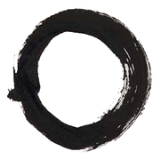
Zen

Encyclopedia
Zen is a school of Mahāyāna
Buddhism
founded by the Buddhist monk Bodhidharma
. The word Zen is from the Japanese
pronunciation of the Chinese
word Chán (禪), which in turn is derived from the Sanskrit
word dhyāna
, which can be approximately translated as "meditation
" or "meditative state."
Zen emphasizes experiential wisdom in the attainment of enlightenment
. As such, it de-emphasizes theoretical knowledge in favor of direct self-realization
through meditation and dharma
practice. The teachings of Zen include various sources of Mahāyāna thought, including the Prajñāpāramitā
literature, Madhyamaka
, Yogācāra
and the Tathāgatagarbha Sutras.
The emergence of Zen as a distinct school of Buddhism was first documented in China
in the 7th century CE. From China
, Zen spread south to Vietnam
, and east to Korea
and Japan
. As a matter of tradition, the establishment of Zen is credited to the South Indian Pallava prince-turned-monk Bodhidharma
, who came to China during the rise of Tamil Buddhism
in Tamilakam
to teach a "special transmission outside scriptures, not founded on words or letters."
rather than on written records or histories. Some scholars have argued that Chán developed from the interaction between Mahāyāna Buddhism and Taoism
, while others insist that Chán has roots in yogic practices, specifically , the consideration of objects, and , total fixation of the mind. A number of other conflicting theories exist.
, the earliest source for which comes from the 14th century. It is said that Gautama Buddha
gathered his disciples one day for a Dharma talk
. When they gathered together, the Buddha was completely silent and some speculated that perhaps the Buddha was tired or ill. The Buddha silently held up and twirled a flower and twinkled his eyes; several of his disciples tried to interpret what this meant, though none of them were correct. One of the Buddha's disciples, Mahākāśyapa
, silently gazed at the flower and broke into a broad smile. The Buddha then acknowledged Mahākāśyapa's insight by saying the following:
Thus, through Zen there developed a way which concentrated on direct experience rather than on rational creeds or revealed scriptures. Wisdom was passed, not through words or concepts, but through a lineage of one-to-one direct transmission of experience from teacher to student. It is commonly taught that such a lineage has continued all the way from the Buddha's time to the present.
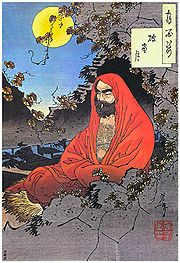 The establishment of Chán is traditionally credited to the pallava prince-turned-monk Bodhidharma
(formerly dated ca. 500 CE, but now ca. early 5th century), who is recorded as having come to China to teach a "special transmission outside scriptures" which "did not stand upon words".
Bodhidharma is associated with several other names, and is also known by the name Bodhitara. He was given the name Bodhidharma by his teacher known variously as Panyatara, Prajnatara
, or Prajñādhara. He is said to have been the son of a southern Indian Pallava king, and with the rise of Buddhism
on the continent, utilized the Kanchipuram
port of his residence in Tamilakam to reach China at a time when the two nations enjoyed strong trade with one another.
Bodhidharma arrived in China and visited Canton
and Luoyang
. In Luoyang, he is reputed to have engaged in nine years of silent meditation, coming to be known as "the wall-gazing Brahman". This epithet is referring to him as an Indian holy man.
Several scholars have suggested that Bodhidharma as a person never actually existed, but was a combination of various historical figures over several centuries.
In the Song of Enlightenment (證道歌 Zhèngdào gē) of Yǒngjiā Xuánjué (永嘉玄覺, 665–713)—one of the chief disciples of Huìnéng
, the 6th patriarch of Chán Buddhism—it is written that Bodhidharma was the 28th patriarch in a line of descent from Mahākāśyapa, a disciple of Śākyamuni Buddha
, and the first patriarch of Chán Buddhism:
Often attributed to Bodhidharma is the Bloodstream Sermon, which was actually composed quite some time after his death.
Another famous legend involving Bodhidharma is his meeting with Emperor Wu of Liang
. Emperor Wu took an interest in Buddhism and spent a great deal of public wealth on funding Buddhist monasteries in China. When he had heard that a great Buddhist teacher, Bodhidharma, had come to China, he sought an audience with him. When they met, Emperor Wu asked how much karmic merit he had gained from his noble support of Buddhism. Bodhidharma replied "None at all." The Emperor asked "Then what is the truth of the teachings?" Bodhidharma replied, "Vast emptiness, nothing holy." So the emperor asked "Then who are you standing in front of me?" Bodhidharma replied "I am nothing," and walked out.
Another legend involving Bodhidharma is that he visited the Shaolin Temple in the kingdom of Wei, at some point, and taught them a series of exercises which became the basis for the Shaolin martial arts.
to succeed him, making Huike the first Chinese-born ancestral founder and the second ancestral founder of Chán in China. Bodhidharma is said to have passed three items to Huike as a sign of transmission of the Dharma: a robe, a bowl, and a copy of the . The transmission then passed to the second ancestral founder Huike
, the third Sengcan
, the fourth ancestral founder Daoxin, and the fifth ancestral founder Hongren.
According to tradition, the sixth and last ancestral founder, Huineng
(惠能; 638–713), was one of the giants of Ch'an history, and all surviving schools regard him as their ancestor. The dramatic story of Huineng's life tells that there was a controversy over his claim to the title of patriarch. After being chosen by Hongren, the fifth ancestral founder, Huineng had to flee by night to Nanhua Temple
in the south to avoid the wrath of Hongren's jealous senior disciples. Modern scholarship, however, has questioned this narrative, since the only surviving records of this account were authored by members of the Southern school. Historic research reveals that this story was created to lend authority to the so-called Southern School. In the middle of the 8th century, monks claiming to be among the successors to Huineng, calling themselves the Southern school, cast themselves in opposition to those claiming to succeed Hongren's then publicly recognized student Shenxiu (神秀; ?-706). It is commonly held that it is at this point — that is, the debates between these rival factions — that Ch'an enters the realm of fully documented history.
Aside from disagreements over the valid lineage, doctrinally the Southern school is associated with the teaching that enlightenment is sudden, while the Northern School is associated with the teaching that enlightenment is gradual. The Southern school eventually became predominant and their Northern school rivals died out.
The following are the six ancestral founders of Chán in China as listed in traditional sources:
is described in a famous saying:
During the late Tang and the Song periods, the tradition continued, as a wide number of eminent teachers, such as Mazu
, Shitou
, Baizhang
, Huangbo
, Linji
, and Yunmen
developed specialized teaching methods, which would variously become characteristic of the Five Houses of Chán.
in China
, Classic Zen is traditionally divided historically into the Five Houses (Ch. 五家) of Zen or five "schools". These were not originally regarded as "schools" or "sects", but historically, they have come to be understood that way. In their early history, the schools were not institutionalized, they were without dogma, and the teachers who founded them were not idolized.
The Five Houses of Zen are:
Most Zen lineages throughout Asia and the rest of the world originally grew from or were heavily influenced by the original five houses of Zen. This list does not include earlier schools such as the Hongzhou school (洪州宗) of Mazu.
prevailed, but Suzuki explained that in China social circumstances led to the development of a temple and training-center system in which the abbot and the monks all performed mundane tasks. These included food gardening or farming, carpentry, architecture, housekeeping, administration (or community direction), and the practice of Traditional Chinese medicine
. Consequently, the enlightenment sought in Chán had to stand up well to the demands and potential frustrations of everyday life.
's successor, Dahui Zonggao
(大慧宗杲; 1089–1163) that Koan Zen entered its determinative stage." Gōng'àn practice was prevalent in the Linji school, to which Yuanwu
and Dahui belonged, but it was also employed on a more limited basis by the Caodong school. The teaching styles and words of the classical masters were collected in such important texts as the Blue Cliff Record
(1125) of Yuanwu, The Gateless Gate
(1228) of Wumen
, both of the Linji lineage, and the Book of Equanimity (1223) of Wansong, of the Caodong lineage. These texts record classic gōng'àn cases, together with verse and prose commentaries, which would be studied by later generations of students down to the present.
Chán continued to be influential as a religious force in China, and thrived in the post-Song period, with a vast body of texts being produced up and through the modern period. While traditionally distinct, Chán was taught alongside Pure Land Buddhism
in many Chinese Buddhist monasteries. In time much of the distinction between them was lost, and many masters taught both Chán and Pure Land.
(憨山德清), who wrote and taught extensively on both Chán and Pure Land Buddhism; Miyun Yuanwu (密雲圓悟), who came to be seen posthumously as the first patriarch of the Ōbaku Zen
school; as well as Yunqi Zhuhong (雲棲祩宏) and Ouyi Zhixu (蕅益智旭).
(虛雲), a well-known figure of 20th century Chinese Buddhism. Many Chán teachers today trace their lineage back to Hsu Yun, including Sheng-yen
(聖嚴) and Hsuan Hua
(宣化), who have propagated Chán in the West where it has grown steadily through the 20th and 21st century.
Chán was repressed in China during the recent modern era in the early periods of the People's Republic
, but has more recently been re-asserting itself on the mainland, and has a significant following in Taiwan
and Hong Kong
as well as among Overseas Chinese
.
name for the school of Zen Buddhism. Thiền is ultimately derived from the Chinese Chán Zōng (禪宗).
According to traditional accounts of Vietnam, in 580, an India
n monk named Vinitaruci traveled to Vietnam after completing his studies with Sengcan
, the third patriarch of Chinese Chán. This, then, would be the first appearance of Vietnamese Thiền Buddhism. The sect that Vinitaruci and his lone Vietnamese disciple founded would become known as the oldest branch of Thiền. After a period of obscurity, the Vinitaruci School became one of the most influential Buddhist groups in Vietnam by the 10th century, particularly so under the patriarch Vạn-Hạnh (died 1018).
Other early Vietnamese Zen schools included the Vô Ngôn Thông, which was associated with the teaching of Mazu, and the Thảo Đường, which incorporated nianfo
chanting techniques; both were founded by Chinese monks. A new school was founded by one of Vietnam's religious kings; this was the Trúc Lâm school, which evinced a deep influence from Confucian
and Taoist
philosophy. Nevertheless, Trúc Lâm's prestige waned over the following centuries as Confucianism became dominant in the royal court. In the 17th century, a group of Chinese monks led by Nguyên Thiều established a vigorous new school, the Lâm Tế, which is the Vietnamese pronunciation of Linji. A more domesticated offshoot of Lâm Tế, the Liễu Quán school, was founded in the 18th century and has since been the predominant branch of Vietnamese Thiền.
Zen master Thích Thanh Từ
is credit for renovating Thien Trúc Lâm in Việt Nam. He is one of the most prominent and influential figures of Viet Nam zen masters currently alive. He was a disciple of Master Thích Thiện Hoa.
The most famous practitioner of syncretized Thiền Buddhism in the West is Thích Nhất Hạnh
who has authored dozens of books and founded Dharma center Plum Village
in France together with his colleague Chan Khong
, Bhikkhuni and Zen Master.
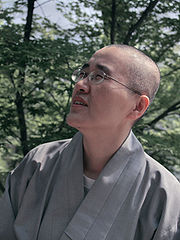 Seon was gradually transmitted into Korea during the late Silla
period (7th through 9th centuries) as Korean monks of predominantly Hwaeom (華嚴) and Consciousness-only (唯識) background began to travel to China to learn the newly developing tradition.
During his lifetime, Mazu
had begun to attract students from Korea
; by tradition, the first Korean to study Seon was named Peomnang (法朗). Mazu's successors had numerous Korean students, some of whom returned to Korea and established the nine mountain (九山) schools. This was the beginning of Chán in Korea which is called Seon.
Seon received its most significant impetus and consolidation from the Goryeo
monk Jinul
(知訥) (1158–1210), who established a reform movement and introduced koan practice to Korea. Jinul established the Songgwangsa
(松廣寺) as a new center of pure practice.
It was during the time of Jinul the Jogye Order
, a primarily Seon sect, became the predominant form of Korean Buddhism, a status it still holds.
which survives down to the present in basically the same status. Toward the end of the Goryeo and during the Joseon period the Jogye Order would first be combined with the scholarly 教 schools, and then be relegated to lesser influence in ruling class circles by Confucian influenced polity, even as it retained strength outside the cities, among the rural populations and ascetic monks in mountain refuges.
Nevertheless, there would be a series of important Seon teachers during the next several centuries, such as Hyegeun (慧勤), Taego (太古), Gihwa
(己和) and Hyujeong (休靜), who continued to develop the basic mold of Korean meditational Buddhism established by Jinul. Seon continues to be practiced in Korea today at a number of major monastic centers, as well as being taught at Dongguk University
, which has a major of studies in this religion.
Taego Bou (1301–1382) studied in China with Linji teacher and returned to unite the Nine Mountain Schools. In modern Korea, by far the largest Buddhist denomination is the Jogye Order
, which is essentially a Zen sect; the name Jogye is the Korean equivalent of Caoxi (曹溪), another name for Huineng
.
Seon is known for its stress on meditation, monasticism, and asceticism. Many Korean monks have few personal possessions and sometimes cut off all relations with the outside world. Several are near mendicants traveling from temple to temple practicing meditation. The hermit-recluse life is prevalent among monks to whom meditation practice is considered of paramount importance.
Currently, Korean Buddhism is in a state of slow transition. While the reigning theory behind Korean Buddhism was based on Jinul
's "sudden enlightenment, gradual cultivation", the modern Korean Seon master, Seongcheol
's revival of Hui Neng's "sudden enlightenment, sudden cultivation" has had a strong impact on Korean Buddhism. Although there is resistance to change within the ranks of the Jogye order, with the last three Supreme Patriarchs' stance that is in accordance with Seongcheol
, there has been a gradual change in the atmosphere of Korean Buddhism.
The Kwan Um School of Zen
, one of the largest Zen schools in the West, teaches a form of Seon Buddhism. Soeng Hyang
Soen Sa Nim (b. 1948), birth name Barbara Trexler (later Barbara Rhodes), is Guiding Dharma Teacher of the international Kwan Um School of Zen and a successor of the late Seung Sahn
Soen Sa Nim.
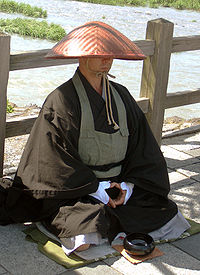 The schools of Zen that currently exist in Japan
are the Sōtō
, Rinzai , and Ōbaku
. Of these, Sōtō is the largest and Ōbaku the smallest. Rinzai is itself divided into several subschools based on temple affiliation, including Myoshin-ji
, Nanzen-ji
, Tenryū-ji
, Daitoku-ji
, and Tofuku-ji
.
Zen was not introduced as a separate school until the 12th century, when Myōan Eisai traveled to China and returned to establish a Linji lineage, which is known in Japan as Rinzai. Decades later, (1235–1308) also studied Linji teachings in China before founding the Japanese Otokan lineage, the most influential branch of Rinzai. In 1215, Dōgen
, a younger contemporary of Eisai's, journeyed to China himself, where he became a disciple of the Caodong master Tiantong Rujing. After his return, Dōgen
established the Sōtō
school, the Japanese branch of Caodong. The Ōbaku lineage was introduced in the 17th century by Ingen
, a Chinese monk. Ingen had been a member of the Linji school, the Chinese equivalent of Rinzai, which had developed separately from the Japanese branch for hundreds of years. Thus, when Ingen journeyed to Japan following the fall of the Ming Dynasty
to the Manchu
s, his teachings were seen as a separate school. The Ōbaku school was named for Mount Ōbaku
(Ch. 黄檗山; Huángbò Shān), which had been Ingen's home in China.
In the year 1410 a Zen Buddhist monk from Nanzen-ji, a large temple complex in the Japanese capital of Kyoto, wrote out a landscape poem and had a painting done of the scene described by the poem. Then, following the prevailing custom of his day, he gathered responses to the images by asking prominent fellow monks and government officials to inscribe it, thereby creating a shigajiku poem and painting scroll. Such scrolls emerged as a preeminent form of elite Japanese culture in the last two decades of the fourteenth century, a golden age in the phenomenon now known as Japanese Zen culture.
"The Unfettered Mind
", a treatise on the art of the sword written by Takuan Sōhō
(1573-1645), has historically influenced the development of martial arts
in its philosophical and spiritual aspects.
, have criticized Japanese Zen as being a formalized system of empty ritual
s in which very few Zen practitioners ever actually attained realization. They assert that almost all Japanese temples have become family businesses handed down from father to son, and the Zen priest's function has largely been reduced to officiating at funeral
s, a practice sarcastically referred to in Japan as . Along these lines, the Sōtō school published statistics stating that 80 percent of laity visited temples only for reasons having to do with funerals and death.
and nationalism
during World War II
and the preceding period. A notable work on this subject was Zen at War
(1998) by Brian Victoria, an American-born Sōtō priest. One of his findings was that some Zen masters known for their post-war internationalism and promotion of "world peace
" were open nationalists in the inter-war years. Among them as an example Haku'un Yasutani
, the founder of the Sanbo Kyodan
School, even voiced anti-semitic and nationalistic opinions after World War II
. This involvement was not limited to the Zen schools, as all orthodox Japanese schools of Buddhism supported the militarist state.
have Buddha-nature
(Skt. Buddhadhātu, Tathāgatagarbha), the universal nature of transcendent wisdom
(Skt. prajñā
), and emphasizes that Buddha-nature is nothing other than the essential nature of the mind itself. The aim of Zen practice is to discover this Buddha-nature within each person, through meditation
and practice of the Buddha's teachings. The ultimate goal of this is to become a Completely Enlightened Buddha (Skt. Samyaksaṃbuddha). As a school of Mahāyāna Buddhism, Zen draws many of its basic driving concepts from that tradition, such as the bodhisattva
ideal. Buddhas and bodhisattvas such as Amitābha
, Avalokiteśvara
, Mañjuśrī
, Samantabhadra
, and Kṣitigarbha
are also venerated alongside Gautama Buddha.
The Zen tradition holds that in meditation practice, notions of doctrine and teachings necessitate the creation of various notions and appearances (Skt. saṃjñā; Ch. 相, xiāng) that obscure the transcendent wisdom of each being's Buddha-nature. This process of rediscovery goes under various terms such as "introspection", "a backward step", "turning-about" or "turning the eye inward". The importance of Zen's non-reliance on written words is often misunderstood as being against the study of Buddhist texts. However, Zen is deeply rooted in the teachings and doctrines of Mahāyāna Buddhism. What the Zen tradition emphasizes is that enlightenment of the Buddha came not through intellectual reasoning, but rather through self-realization in Dharma practice and meditation. Therefore, it is held that it is primarily through Dharma practice and meditation that others may attain enlightenment and become buddhas as well.
In its beginnings in China, Zen primarily referred to the Mahāyāna sūtras
and especially to the Laṅkāvatāra Sūtra
. As a result, early masters of the Zen tradition were referred to as "Laṅkāvatāra masters". As the Laṅkāvatāra Sūtra teaches the doctrine of the "One Vehicle" (Skt. Ekayāna
), the early Zen school was sometimes referred to as the "One Vehicle School". In other early texts, the school that would later become known as Zen is sometimes even referred to as simply the "Laṅkāvatāra school" (Ch. 楞伽宗, Léngqié Zōng). Accounts recording the history of this early period are to be found in Records of the Laṅkāvatāra Masters (Ch. 楞伽師資記, Léngqié Shīzī Jì).
During the Tang Dynasty
, the Zen school's central text shifted to the Diamond Sūtra
(Vajracchedikā Prajñāpāramitā Sūtra). Thereafter, the essential texts of the Zen school were often considered to be the Laṅkāvatāra Sūtra and the Diamond Sūtra. However, a review of the early historical documents and literature of early Zen masters clearly reveals that they were all well-versed in numerous Mahāyāna Buddhist sūtras. For example, in the Platform Sūtra of the Sixth Patriarch
, Huineng
cites and explains the Diamond Sūtra, the Lotus Sūtra
(Saddharma Puṇḍarīka Sūtra), the Vimalakīrti Nirdeśa Sūtra
, the Śūraṅgama Sūtra
, and the Laṅkāvatāra Sūtra.
When Buddhism came to China, there were three divisions of training: the training in virtue and discipline in the precepts (Skt. śīla
), the training in mind through meditation (Skt. dhyāna) to attain deep states of meditation (Skt. samādhi
), and the training in the recorded teachings (Skt. Dharma). It was in this context that Buddhism entered into Chinese culture. Three types of teachers with expertise in each training practice developed: Vinaya
masters specialized in all the rules of discipline for monks and nuns, Dhyāna masters specialized in the practice of meditation, and Dharma
masters specialized in mastery of the Buddhist texts. Monasteries and practice centers were created that tended to focus on either the vinaya and training of monks or the teachings focused on one scripture or a small group of texts. Dhyāna (Ch. Chán) masters tended to practice in solitary hermitages, or to be associated with Vinaya training monasteries or the Dharma teaching centers. The later naming of the Zen school has its origins in this view of the threefold division of training.
At the beginning of the Tang Dynasty
, by the time of the Fifth Patriarch Hongren (601–674), the Zen school had become well established as a separate school of Buddhism. Subsequently, the Zen tradition produced a rich corpus of written literature which has become a part of its practice and teaching. Among the earliest and most widely studied of the specifically Zen texts, dating back to at least the 9th century CE, is the Platform Sūtra of the Sixth Patriarch, attributed to Huineng. Others include the various collections of kōans and the Shōbōgenzō
of Dōgen Zenji
.
As the Zen school grew in China, the monastic discipline also became distinct, focusing on practice through all aspects of life. Temples began emphasizing labor and humility, expanding the training of Zen to include the mundane tasks of daily life. D.T. Suzuki
wrote that aspects of this life are: a life of humility; a life of labor; a life of service; a life of prayer and gratitude; and a life of meditation. The Chinese Chán master Baizhang
(720–814 CE
) left behind a famous saying which had been the guiding principle of his life, "A day without work is a day without food".
is a core aspect of Zen practice. In Japanese this is called zazen
, and in Chinese it is called zuòchán (坐禅), both simply meaning "sitting dhyāna
". During this sitting meditation, practitioners usually assume a position such as the lotus position
, half-lotus, Burmese, or seiza
postures. To regulate the mind, awareness is directed towards counting or watching the breath or put in the energy center below the navel (see also anapanasati
). Often, a square or round cushion placed on a padded mat is used to sit on; in some other cases, a chair may be used.
In the Soto school of Zen, meditation with no objects, anchors, or content, is the primary form of practice. The meditator strives to be aware of the stream of thoughts, allowing them to arise and pass away without interference. Considerable textual, philosophical, and phenomenological justification of this practice can be found throughout Dōgen
's Shōbōgenzō, as for example in the "Principles of Zazen" and the "Universally Recommended Instructions for Zazen".
used to keep meditators focused and awake.
.svg.png) Zen Buddhists may practice koan inquiry during sitting meditation (zazen
Zen Buddhists may practice koan inquiry during sitting meditation (zazen
), walking meditation (kinhin
), and throughout all the activities of daily life. Koan practice is particularly emphasized by the Japanese Rinzai school, but it also occurs in other schools or branches of Zen depending on the teaching line.
A koan (literally "public case") is a story or dialogue, generally related to Zen or other Buddhist history; the most typical form is an anecdote involving early Chinese Zen masters. These anecdotes involving famous Zen teachers are a practical demonstration of their wisdom, and can be used to test a student's progress in Zen practice. Koans often appear to be paradox
ical or linguistically meaningless dialogues or questions. But to Zen Buddhists the koan is "the place and the time and the event where truth reveals itself" unobstructed by the oppositions and differentiations of language. Answering a koan requires a student to let go of conceptual thinking and of the logical way we order the world, so that like creativity in art, the appropriate insight and response arises naturally and spontaneously in the mind.
Koans and their study developed in China within the context of the open questions and answers of teaching sessions conducted by the Chinese Zen masters. Today, the Zen student's mastery of a given koan is presented to the teacher in a private interview (referred to in Japanese as dokusan (独参), daisan (代参), or sanzen (参禅)). Zen teachers advise that the problem posed by a koan is to be taken quite seriously, and to be approached as literally a matter of life and death. While there is no unique answer to a koan, practitioners are expected to demonstrate their understanding of the koan and of Zen through their responses. The teacher may approve or disapprove of the answer and guide the student in the right direction. There are also various commentaries on koans, written by experienced teachers, that can serve as a guide. These commentaries are also of great value to modern scholarship on the subject.
Koans are not "scripture" in any traditional sense. Bodhidharma said that Zen is without doctrine, "without words either written or spoken"(A Japanese miscellany, Lafcadio Hearn). Koans, like meditation, are thought of as road signs in these traditions, and not a means to enlightenment.
, chapter 25 of the Lotus Sutra
(often called the "Avalokiteshvara Sutra"), the Song of the Jewel Mirror Awareness, the Great Compassionate Heart Dharani (Daihishin Dharani)
, and other minor mantras.
The Butsudan
is the altar in a monastery where offerings are made to the images of the Buddha or Bodhisattvas. The same term is also used in Japanese homes for the altar where one prays to and communicates with deceased family members. As such, reciting liturgy in Zen can be seen as a means to connect with the Bodhisattvas of the past. Liturgy is often used during funerals, memorials, and other special events as means to invoke the aid of supernatural powers.
Chanting usually centers on major Bodhisattva
s like Avalokiteshvara (see also Guan Yin) and Manjusri
. According to Mahayana Buddhism, Bodhisattvas are beings who have taken vows to remain in Samsara
to help all beings achieve liberation from the cycle of birth, death and rebirth. Since the Zen practitioner's aim is to walk the Bodhisattva path, chanting can be used as a means to connect with these beings and realize this ideal within oneself. By repeatedly chanting the , for example, one instills the Bodhisattva's ideals into ones mind. The ultimate goal is given in the end of the sutra, which states, "In the morning, be one with Avalokiteshvara; in the evening, be one with Avalokiteshvara". Through the realization of emptiness
and the Mahayana notion that all things have Buddha-nature
, one understands that there is no difference between the cosmic bodhisattva and oneself. The wisdom and compassion of the Bodhisattva one is chanting to is seen to equal the inner wisdom and compassion of the practitioner. Thus, the duality between subject and object, practitioner and Bodhisattva, chanter and sutra is ended.
John Daido Loori
justified the use of chanting sutras by referring to Zen master Dōgen
. Dōgen is known to have refuted the statement "Painted rice cakes will not satisfy hunger". This statement means that sutras, which are just symbols like painted rice cakes, cannot truly satisfy one's spiritual hunger. Dōgen, however, saw that there is no separation between metaphor and reality. "There is no difference between paintings, rice cakes, or any thing at all". The symbol and the symbolized were inherently the same, and thus only the sutras could truly satisfy one's spiritual needs.
To understand this non-dual relationship experientially, one is told to practice liturgy intimately. In distinguishing between ceremony and liturgy, Dōgen
states, "In ceremony there are forms and there are sounds, there is understanding and there is believing. In liturgy there is only intimacy." The practitioner is instructed to listen to and speak liturgy not just with one sense, but with one's "whole body-and-mind". By listening with one's entire being, one eliminates the space between the self and the liturgy. Thus, Dōgen's instructions are to "listen with the eye and see with the ear". By focusing all of one's being on one specific practice, duality is transcended. Dōgen says, "Let go of the eye, and the whole body-and-mind are nothing but the eye; let go of the ear, and the whole universe is nothing but the ear." Chanting intimately thus allows one to experience a non-dual reality. The liturgy used is a tool to allow the practitioner to transcend the old conceptions of self and other. In this way, intimate liturgy practice allows one to realize emptiness
(sunyata), which is at the heart of Zen Buddhist teachings.
There are other techniques common in the Zen tradition which seem unconventional and whose purpose is said to be to shock a student in order to help him or her let go of habitual activities of the mind. Some of these are common today, while others are found mostly in anecdotes. These include the loud belly shout known as katsu. It is common in many Zen traditions today for Zen teachers to have a stick with them during formal ceremonies which is a symbol of authority and which can be also used to strike on the table during a talk. The now defunct Fuke Zen sect was also well known for practicing suizen, musical meditation with the shakuhachi flute, which some Zen Buddhists today also practice.
, a Japanese Zen monk, to Chicago
during the World Parliament of Religions in 1893 is often pointed to as an event that enhanced its profile in the Western world. It was during the late 1950s and the early 1960s that the number of Westerners, other than the descendants of Asian immigrants, pursuing a serious interest in Zen reached a significant level.
movements in art tend to have much in common thematically with the study of koans and actual Zen. The early French surrealist René Daumal
translated D.T. Suzuki as well as Sanskrit
Buddhist texts.
Eugen Herrigel
's book Zen in the Art of Archery
(1953), describing his training in the Zen-influenced martial art of Kyūdō
, inspired many of the Western world's early Zen practitioners. However, many scholars, such as Yamada Shoji, are quick to criticize this book.
The British philosopher Alan Watts
took a close interest in Zen Buddhism and wrote and lectured extensively on it during the 1950s. He understood it as a vehicle for a mystical transformation of consciousness, and also as a historical example of a non-Western, non-Christian
way of life that had fostered both the practical and fine arts.
The Dharma Bums
, a novel
written by Jack Kerouac
and published in 1959, gave its readers a look at how a fascination with Buddhism and Zen was being absorbed into the bohemian lifestyles of a small group of American
youths, primarily on the West Coast. Beside the narrator, the main character in this novel was "Japhy Ryder", a thinly veiled depiction of Gary Snyder
. The story was based on actual events taking place while Snyder prepared, in California, for the formal Zen studies that he would pursue in Japanese monasteries between 1956 and 1968.
Thomas Merton
(1915–1968) the Catholic
Trappist
monk and priest was internationally recognized as having one of those rare Western minds that was entirely at home in Asian experience. Like his friend, the late D.T. Suzuki, Merton believed that there must be a little of Zen in all authentic creative and spiritual experience. The dialogue between Merton and Suzuki explores the many congruencies of Christian mysticism and Zen.
Robert Kennedy (roshi)
, a Catholic
Jesuit priest, professor, psychotherapist and Zen roshi
in the White Plum lineage has written a number of books about what he labels as the benefits of Zen practice to Christianity. He was ordained a Catholic priest in Japan in 1965, and studied with Yamada Koun
in Japan
in the 1970s. He was installed as a Zen teacher of the White Plum Asanga
lineage in 1991 and was given the title Roshi in 1997.
In 1989, the Vatican
released a document which states some Catholic appreciations around the use of Zen in Christian prayer. According to the text none of the methods proposed by non-Christian religions should be rejected out of hand simply because they are not Christian.
Reginald Horace Blyth
(1898–1964) was an Englishman who went to Japan in 1940 to further his study of Zen. He was interned during World War II and started writing in prison. He was tutor to the Crown Prince after the war. His greatest work is the 5-volume "Zen and Zen Classics", published in the 1960s. In it, he discusses Zen themes from a philosophical standpoint, often in conjunction with Christian elements in a comparative spirit. His essays include titles such as "God, Buddha, and Buddhahood" or "Zen, Sin, and Death".
While Zen and the Art of Motorcycle Maintenance
, by Robert M. Pirsig
, was a 1974 bestseller
, it in fact has little to do with Zen as a religious practice nor with motorcycle maintenance for that matter. Rather it deals with the notion of the metaphysics of "quality"
from the point of view of the main character. Pirsig was attending the Minnesota Zen Center
at the time of writing the book. He has stated that, despite its title, the book "should in no way be associated with that great body of factual information relating to orthodox Zen Buddhist practice". Though it may not deal with orthodox Zen Buddhist practice, Pirsig's book in fact deals with many of the more subtle facets of Zen living and Zen mentality without drawing attention to any religion or religious organization.
A number of contemporary authors have explored the relationship between Zen and a number of other disciplines, including parenting, teaching, and leadership. This typically involves the use of Zen stories to explain leadership strategies.
Among these are the lineages of the San Francisco Zen Center
, established by Shunryu Suzuki
and the White Plum Asanga
, founded by Hakuyu Taizan Maezumi. Suzuki's San Francisco Zen Center established the first Zen Monastery in America in 1967, called Tassajara in the mountains near Big Sur
. Maezumi's successors have created schools including Great Plains Zen Center, founded by Susan Myoyu Andersen, Zen Mountain Monastery
, founded by John Daido Loori
, Great Vow Zen Monastery
founded by Chozen Bays, the Zen Peacemaker Order
, founded by Bernard Tetsugen Glassman, Heart Circle Sangha
founded by Nicolee Jikyo McMahon and Joan Hogetsu Hoeberichts, and the Ordinary Mind school, founded by Charlotte Joko Beck. The Katagiri lineage, founded by Dainin Katagiri
, has a significant presence in the Midwest. Note that both Taizan Maezumi and Dainin Katagiri served as priests at Zenshuji Soto Mission in the 1960s.
Taisen Deshimaru
, a student of Kodo Sawaki, was a Soto Zen priest from Japan
who taught in France
. The International Zen Association, which he founded, remains influential. The American Zen Association, headquartered at the New Orleans Zen Temple
, is one of the North American organizations practicing in the Deshimaru tradition.
Soyu Matsuoka
served as superintendent and abbot of the Long Beach Zen Buddhist Temple and Zen Center. The Temple was headquarters to Zen Centers in Atlanta, Chicago, Los Angeles, Seattle, and Everett, Washington. He established the Temple at Long Beach in 1971 where he resided until his passing in 1998. Matsuoka created several dharma heirs, three of whom are still alive and leading Zen Teachers within the lineage. These are: Hogaku ShoZen McGuire, Zenkai Taiun Michael Elliston Sensei, and Kaiten JohnDennis Govert. Hogaku established Daibutsuji Zen Temple in Cloudcroft and the Zen Center of Las Cruces, in Las Cruces, New Mexico. So Gozen is now the Abbot of Daibutsuji and the Zen Center of Las Cruces. So Daiho Hilbert left Daibutsuji to establish the Order of Clear Mind Zen, a socially engaged sangha in New Mexico. Taiun Elliston Sensei established the Atlanta Soto Zen Center and is working to establish an order honoring Matsuoka.
The Sanbo Kyodan
is a Japan-based reformist Zen group, founded in 1954 by Yasutani Hakuun, which has had a significant influence on Zen in the West. Sanbo Kyodan Zen is based primarily on the Soto tradition, but also incorporates Rinzai-style koan practice. Yasutani's approach to Zen first became prominent in the English-speaking world through Philip Kapleau
's book The Three Pillars of Zen (1965), which was one of the first books to introduce Western audiences to Zen as a practice rather than simply a philosophy. Among the Zen groups in North America, Hawaii, Europe, and New Zealand which derive from Sanbo Kyodan
are those associated with Kapleau, Robert Aitken
, and John Tarrant
.
In the UK, Throssel Hole Buddhist Abbey
was founded as a sister monastery to Shasta Abbey
in California by Master Reverend Jiyu Kennett Roshi and has a number of dispersed Priories and centres. Jiyu Kennett, an English woman, was ordained as a priest and Zen master in Shoji-ji, one of the two main Soto Zen temples in Japan (her book The Wild White Goose describes her experiences in Japan). The Order is called the Order of Buddhist Contemplatives. The lineage of Hakuyu Taizan Maezumi Roshi is represented by the White Plum Sangha UK, while Taisen Deshimaru
Roshi's lineage is known in the UK as IZAUK (Intl Zen Assoc. UK). The Zen Centre in London is connected to the Buddhist Society. The Western Chan Fellowship
is an association of lay Chán practitioners based in the UK. They are registered as a charity in England and Wales, but also have contacts in Europe, principally in Norway, Poland, Germany, Croatia, Switzerland and the USA.
There are also a number of Rinzai Zen centers in the West. In North America, some of the more prominent include Rinzai-ji founded by Kyozan Joshu Sasaki
Roshi in California, Dai Bosatsu Zendo Kongo-ji
established by Eido Shimano Roshi and Soen Nakagawa
Roshi in New York, Chozen-ji founded by Omori Sogen Roshi in Hawaii, Daiyuzenji
founded by Dogen Hosokawa Roshi (a student of Omori Sogen Roshi) in Chicago, Illinois, and Chobo-Ji founded by Genki Takabayshi
Roshi in Seattle, Washington. In Europe there is Egely Monastery
established by a Dharma Heir of Eido Shimano, Denko Mortensen.
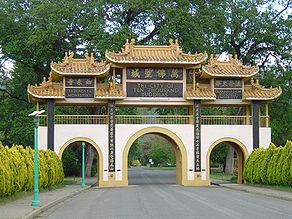 The first Chinese master to teach Westerners in North America was Hsuan Hua
, who taught Chán and other traditions of Chinese Buddhism in San Francisco during the early 1960s. He went on to found the City Of Ten Thousand Buddhas
, a monastery and retreat center located on a 237 acre (959,000 m²) property near Ukiah, California
. Another Chinese Chán teacher with a Western following is Sheng-yen
, a master trained in both the Caodong
and Linji
schools. He first visited the United States in 1978 under the sponsorship of the Buddhist Association of the United States, and subsequently founded the CMC Chán Meditation Center in Queens, New York and the Dharma Drum Retreat Center
in Pine Bush, New York
. The Fo Guang Shan
organization, which has branches worldwide, also belongs to the Chan school; its founder, the Venerable Master Hsing Yun
is a lineage holder in the Linji (Rinzai) tradition.
and Thich Nhat Hanh. Thich Thien-An
came to America in 1966 as a visiting professor at UCLA
and taught traditional Thien meditation. Thich Nhat Hanh was a monk in Vietnam during the Vietnam War
, during which he was a peace activist. In response to these activities, he was nominated for the Nobel Peace Prize
in 1967 by Martin Luther King, Jr.
In 1966, he left Vietnam in exile and now resides at Plum Village
, a monastery in France
. He has written more than one hundred books about Buddhism, which have made him one of the very few most prominent Buddhist authors among the general readership in the West. In his books and talks, Thich Nhat Hanh emphasizes mindfulness (sati) as the most important practice in daily life.
, two pan-lineage organizations have formed in the last few years. The oldest is the American Zen Teachers Association
which sponsors an annual conference. North American Soto teachers in North America, led by several of the heirs of Taizan Maezumi and Shunryu Suzuki, have also formed the Soto Zen Buddhist Association
.
Critical Zen-studies
Mahayana
Mahāyāna is one of the two main existing branches of Buddhism and a term for classification of Buddhist philosophies and practice...
Buddhism
Buddhism
Buddhism is a religion and philosophy encompassing a variety of traditions, beliefs and practices, largely based on teachings attributed to Siddhartha Gautama, commonly known as the Buddha . The Buddha lived and taught in the northeastern Indian subcontinent some time between the 6th and 4th...
founded by the Buddhist monk Bodhidharma
Bodhidharma
Bodhidharma was a Buddhist monk who lived during the 5th/6th century AD. He is traditionally credited as the transmitter of Ch'an to China, and regarded as the first Chinese patriarch...
. The word Zen is from the Japanese
Japanese language
is a language spoken by over 130 million people in Japan and in Japanese emigrant communities. It is a member of the Japonic language family, which has a number of proposed relationships with other languages, none of which has gained wide acceptance among historical linguists .Japanese is an...
pronunciation of the Chinese
Chinese language
The Chinese language is a language or language family consisting of varieties which are mutually intelligible to varying degrees. Originally the indigenous languages spoken by the Han Chinese in China, it forms one of the branches of Sino-Tibetan family of languages...
word Chán (禪), which in turn is derived from the Sanskrit
Sanskrit
Sanskrit , is a historical Indo-Aryan language and the primary liturgical language of Hinduism, Jainism and Buddhism.Buddhism: besides Pali, see Buddhist Hybrid Sanskrit Today, it is listed as one of the 22 scheduled languages of India and is an official language of the state of Uttarakhand...
word dhyāna
Dhyāna in Buddhism
Dhyāna in Sanskrit or jhāna in Pāli can refer to either meditation or meditative states. Equivalent terms are "Chán" in modern Chinese, "Zen" in Japanese, "Seon" in Korean, "Thien" in Vietnamese, and "Samten" in Tibetan....
, which can be approximately translated as "meditation
Meditation
Meditation is any form of a family of practices in which practitioners train their minds or self-induce a mode of consciousness to realize some benefit....
" or "meditative state."
Zen emphasizes experiential wisdom in the attainment of enlightenment
Bodhi
Bodhi is both a Pāli and Sanskrit word traditionally translated into English with the word "enlightenment", but which means awakened. In Buddhism it is the knowledge possessed by a Buddha into the nature of things...
. As such, it de-emphasizes theoretical knowledge in favor of direct self-realization
Self-realization
Self-realization is a self-awakening.Self-realization may also refer to:* Self-Realization Fellowship, worldwide spiritual organization founded by Paramahansa Yogananda...
through meditation and dharma
Dharma
Dharma means Law or Natural Law and is a concept of central importance in Indian philosophy and religion. In the context of Hinduism, it refers to one's personal obligations, calling and duties, and a Hindu's dharma is affected by the person's age, caste, class, occupation, and gender...
practice. The teachings of Zen include various sources of Mahāyāna thought, including the Prajñāpāramitā
Prajnaparamita
Prajñāpāramitā in Buddhism, means "the Perfection of Wisdom." The word Prajñāpāramitā combines the Sanskrit words prajñā with pāramitā . Prajñāpāramitā is a central concept in Mahāyāna Buddhism and its practice and understanding are taken to be indispensable elements of the Bodhisattva Path...
literature, Madhyamaka
Madhyamaka
Madhyamaka refers primarily to a Mahāyāna Buddhist school of Buddhist philosophy systematized by Nāgārjuna. Nāgārjuna may have arrived at his positions from a desire to achieve a consistent exegesis of the Buddha's doctrine as recorded in the āgamas...
, Yogācāra
Yogacara
Yogācāra is an influential school of Buddhist philosophy and psychology emphasizing phenomenology and ontology through the interior lens of meditative and yogic practices. It developed within Indian Mahāyāna Buddhism in about the 4th century CE...
and the Tathāgatagarbha Sutras.
The emergence of Zen as a distinct school of Buddhism was first documented in China
China
Chinese civilization may refer to:* China for more general discussion of the country.* Chinese culture* Greater China, the transnational community of ethnic Chinese.* History of China* Sinosphere, the area historically affected by Chinese culture...
in the 7th century CE. From China
China
Chinese civilization may refer to:* China for more general discussion of the country.* Chinese culture* Greater China, the transnational community of ethnic Chinese.* History of China* Sinosphere, the area historically affected by Chinese culture...
, Zen spread south to Vietnam
Vietnam
Vietnam – sometimes spelled Viet Nam , officially the Socialist Republic of Vietnam – is the easternmost country on the Indochina Peninsula in Southeast Asia. It is bordered by China to the north, Laos to the northwest, Cambodia to the southwest, and the South China Sea –...
, and east to Korea
Korea
Korea ) is an East Asian geographic region that is currently divided into two separate sovereign states — North Korea and South Korea. Located on the Korean Peninsula, Korea is bordered by the People's Republic of China to the northwest, Russia to the northeast, and is separated from Japan to the...
and Japan
Japan
Japan is an island nation in East Asia. Located in the Pacific Ocean, it lies to the east of the Sea of Japan, China, North Korea, South Korea and Russia, stretching from the Sea of Okhotsk in the north to the East China Sea and Taiwan in the south...
. As a matter of tradition, the establishment of Zen is credited to the South Indian Pallava prince-turned-monk Bodhidharma
Bodhidharma
Bodhidharma was a Buddhist monk who lived during the 5th/6th century AD. He is traditionally credited as the transmitter of Ch'an to China, and regarded as the first Chinese patriarch...
, who came to China during the rise of Tamil Buddhism
Tamil Buddhism
Tamil Buddhism refers collectively to the various schools of Buddhism that flourished in the ancient Tamil country which is corresponding roughly to the territories of the present-day Indian states of Tamil Nadu, Kerala, Laccadives, parts of Andhra Pradesh and some parts of Karnataka, as well as...
in Tamilakam
Tamilakam
' refers to the classical era territory of old South Indian royalties covering modern Tamil Nadu, Kerala, Tamil Eelam and southern parts of Andhra Pradesh, Karnataka.; In an academic context, Tamilakam is used to refer to these territories as a single cultural area, where Tamil was the natural...
to teach a "special transmission outside scriptures, not founded on words or letters."
History
The historical records required for a complete, accurate account of early Chán history no longer exist. Theories about the influence of other schools in the evolution of Chán are widely variable and rely heavily on speculative correlationCorrelation
In statistics, dependence refers to any statistical relationship between two random variables or two sets of data. Correlation refers to any of a broad class of statistical relationships involving dependence....
rather than on written records or histories. Some scholars have argued that Chán developed from the interaction between Mahāyāna Buddhism and Taoism
Taoism
Taoism refers to a philosophical or religious tradition in which the basic concept is to establish harmony with the Tao , which is the mechanism of everything that exists...
, while others insist that Chán has roots in yogic practices, specifically , the consideration of objects, and , total fixation of the mind. A number of other conflicting theories exist.
Legendary Transmission: Kasyappa and The Flower Sermon
The origins of Zen Buddhism are ascribed to the Flower SermonFlower Sermon
Within Zen, and thus from an emic perspective, the origins of Zen Buddhism are ascribed to what is rendered in English as the Flower Sermon, in which Śākyamuni Buddha transmitted direct prajñā to the disciple Mahākāśyapa. In the original Sino-Japanese, this story is called nengemishō...
, the earliest source for which comes from the 14th century. It is said that Gautama Buddha
Gautama Buddha
Siddhārtha Gautama was a spiritual teacher from the Indian subcontinent, on whose teachings Buddhism was founded. In most Buddhist traditions, he is regarded as the Supreme Buddha Siddhārtha Gautama (Sanskrit: सिद्धार्थ गौतम; Pali: Siddhattha Gotama) was a spiritual teacher from the Indian...
gathered his disciples one day for a Dharma talk
Dharma talk
A Dharma talk or Dhamma talk or Dharma sermon is a public discourse on Buddhism by a Buddhist teacher....
. When they gathered together, the Buddha was completely silent and some speculated that perhaps the Buddha was tired or ill. The Buddha silently held up and twirled a flower and twinkled his eyes; several of his disciples tried to interpret what this meant, though none of them were correct. One of the Buddha's disciples, Mahākāśyapa
Mahakasyapa
Mahākāśyapa or Kāśyapa was a brahman of Magadha, who became one of the principal disciples of Śākyamuni Buddha and who convened and directed the first council. Mahākāśyapa is one of the most revered of the Buddha's early disciples, foremost in ascetic practices...
, silently gazed at the flower and broke into a broad smile. The Buddha then acknowledged Mahākāśyapa's insight by saying the following:
Thus, through Zen there developed a way which concentrated on direct experience rather than on rational creeds or revealed scriptures. Wisdom was passed, not through words or concepts, but through a lineage of one-to-one direct transmission of experience from teacher to student. It is commonly taught that such a lineage has continued all the way from the Buddha's time to the present.
Bodhidharma
Bodhidharma
Bodhidharma was a Buddhist monk who lived during the 5th/6th century AD. He is traditionally credited as the transmitter of Ch'an to China, and regarded as the first Chinese patriarch...
(formerly dated ca. 500 CE, but now ca. early 5th century), who is recorded as having come to China to teach a "special transmission outside scriptures" which "did not stand upon words".
Bodhidharma is associated with several other names, and is also known by the name Bodhitara. He was given the name Bodhidharma by his teacher known variously as Panyatara, Prajnatara
Prajnatara
Prajñādhara was the twenty-seventh Brahmin patriarch of Indian Buddhism, according to the Chinese Chan lineage. He traveled around India preaching the Buddha's teachings. He was the guru, or teacher, of Bodhidharma....
, or Prajñādhara. He is said to have been the son of a southern Indian Pallava king, and with the rise of Buddhism
Buddhism
Buddhism is a religion and philosophy encompassing a variety of traditions, beliefs and practices, largely based on teachings attributed to Siddhartha Gautama, commonly known as the Buddha . The Buddha lived and taught in the northeastern Indian subcontinent some time between the 6th and 4th...
on the continent, utilized the Kanchipuram
Kanchipuram
Kanchipuram, or Kanchi, is a temple city and a municipality in Kanchipuram district in the Indian state of Tamil Nadu. It is a temple town and the headquarters of Kanchipuram district...
port of his residence in Tamilakam to reach China at a time when the two nations enjoyed strong trade with one another.
Bodhidharma arrived in China and visited Canton
Guangzhou
Guangzhou , known historically as Canton or Kwangchow, is the capital and largest city of the Guangdong province in the People's Republic of China. Located in southern China on the Pearl River, about north-northwest of Hong Kong, Guangzhou is a key national transportation hub and trading port...
and Luoyang
Luoyang
Luoyang is a prefecture-level city in western Henan province of Central China. It borders the provincial capital of Zhengzhou to the east, Pingdingshan to the southeast, Nanyang to the south, Sanmenxia to the west, Jiyuan to the north, and Jiaozuo to the northeast.Situated on the central plain of...
. In Luoyang, he is reputed to have engaged in nine years of silent meditation, coming to be known as "the wall-gazing Brahman". This epithet is referring to him as an Indian holy man.
Several scholars have suggested that Bodhidharma as a person never actually existed, but was a combination of various historical figures over several centuries.
In the Song of Enlightenment (證道歌 Zhèngdào gē) of Yǒngjiā Xuánjué (永嘉玄覺, 665–713)—one of the chief disciples of Huìnéng
Huineng
Dajian Huineng was a Chinese Chán monastic who is one of the most important figures in the entire tradition, according to standard Zen hagiographies...
, the 6th patriarch of Chán Buddhism—it is written that Bodhidharma was the 28th patriarch in a line of descent from Mahākāśyapa, a disciple of Śākyamuni Buddha
Gautama Buddha
Siddhārtha Gautama was a spiritual teacher from the Indian subcontinent, on whose teachings Buddhism was founded. In most Buddhist traditions, he is regarded as the Supreme Buddha Siddhārtha Gautama (Sanskrit: सिद्धार्थ गौतम; Pali: Siddhattha Gotama) was a spiritual teacher from the Indian...
, and the first patriarch of Chán Buddhism:
Often attributed to Bodhidharma is the Bloodstream Sermon, which was actually composed quite some time after his death.
Another famous legend involving Bodhidharma is his meeting with Emperor Wu of Liang
Emperor Wu of Liang
Emperor Wu of Liang , personal name Xiao Yan , courtesy name Shuda , nickname Lian'er , was the founding emperor of the Chinese Liang Dynasty...
. Emperor Wu took an interest in Buddhism and spent a great deal of public wealth on funding Buddhist monasteries in China. When he had heard that a great Buddhist teacher, Bodhidharma, had come to China, he sought an audience with him. When they met, Emperor Wu asked how much karmic merit he had gained from his noble support of Buddhism. Bodhidharma replied "None at all." The Emperor asked "Then what is the truth of the teachings?" Bodhidharma replied, "Vast emptiness, nothing holy." So the emperor asked "Then who are you standing in front of me?" Bodhidharma replied "I am nothing," and walked out.
Another legend involving Bodhidharma is that he visited the Shaolin Temple in the kingdom of Wei, at some point, and taught them a series of exercises which became the basis for the Shaolin martial arts.
Ancestral Founders and lineage: the first six patriarchs
Bodhidharma settled in the kingdom of Wei. Shortly before his death, Bodhidharma appointed a disciple named HuikeHuike
Dazu Huike is considered the Second Patriarch of Chinese Chán and the twenty-ninth since Gautama Buddha.-Introduction:As with most of the early Chán patriarchs, very little firm data is available about his life...
to succeed him, making Huike the first Chinese-born ancestral founder and the second ancestral founder of Chán in China. Bodhidharma is said to have passed three items to Huike as a sign of transmission of the Dharma: a robe, a bowl, and a copy of the . The transmission then passed to the second ancestral founder Huike
Huike
Dazu Huike is considered the Second Patriarch of Chinese Chán and the twenty-ninth since Gautama Buddha.-Introduction:As with most of the early Chán patriarchs, very little firm data is available about his life...
, the third Sengcan
Sengcan
Jianzhi Sengcan is known as the Third Chinese Patriarch of Chán after Bodhidharma and thirtieth Patriarch after Siddhārtha Gautama Buddha....
, the fourth ancestral founder Daoxin, and the fifth ancestral founder Hongren.
According to tradition, the sixth and last ancestral founder, Huineng
Huineng
Dajian Huineng was a Chinese Chán monastic who is one of the most important figures in the entire tradition, according to standard Zen hagiographies...
(惠能; 638–713), was one of the giants of Ch'an history, and all surviving schools regard him as their ancestor. The dramatic story of Huineng's life tells that there was a controversy over his claim to the title of patriarch. After being chosen by Hongren, the fifth ancestral founder, Huineng had to flee by night to Nanhua Temple
Nanhua Temple
Nanhua Temple is a Buddhist monastery of the Chan School, one of Five Great Schools of Buddhism where Hui Neng, the Sixth Patriarch of the Chan School of Buddhism, once lived and taught. It is located 25 km southeast of Shaoguan, China in the town of Caoxi , within Qujiang District...
in the south to avoid the wrath of Hongren's jealous senior disciples. Modern scholarship, however, has questioned this narrative, since the only surviving records of this account were authored by members of the Southern school. Historic research reveals that this story was created to lend authority to the so-called Southern School. In the middle of the 8th century, monks claiming to be among the successors to Huineng, calling themselves the Southern school, cast themselves in opposition to those claiming to succeed Hongren's then publicly recognized student Shenxiu (神秀; ?-706). It is commonly held that it is at this point — that is, the debates between these rival factions — that Ch'an enters the realm of fully documented history.
Aside from disagreements over the valid lineage, doctrinally the Southern school is associated with the teaching that enlightenment is sudden, while the Northern School is associated with the teaching that enlightenment is gradual. The Southern school eventually became predominant and their Northern school rivals died out.
The following are the six ancestral founders of Chán in China as listed in traditional sources:
- BodhidharmaBodhidharmaBodhidharma was a Buddhist monk who lived during the 5th/6th century AD. He is traditionally credited as the transmitter of Ch'an to China, and regarded as the first Chinese patriarch...
ca. 440 – ca. 528 - HuikeHuikeDazu Huike is considered the Second Patriarch of Chinese Chán and the twenty-ninth since Gautama Buddha.-Introduction:As with most of the early Chán patriarchs, very little firm data is available about his life...
487–593 - SengcanSengcanJianzhi Sengcan is known as the Third Chinese Patriarch of Chán after Bodhidharma and thirtieth Patriarch after Siddhārtha Gautama Buddha....
?–606 - Daoxin 580–651
- Hongren 601–674
- HuinengHuinengDajian Huineng was a Chinese Chán monastic who is one of the most important figures in the entire tradition, according to standard Zen hagiographies...
638–713
Tang-dynasty (618-907)
In the centuries following the introduction of Buddhism to China, Chán (禪) grew to become the largest sect in Chinese Buddhism, and produced the largest body of literature in Chinese history of any sect or tradition. The teachers claiming Huineng's posterity began to branch off into numerous different schools, each with their own special emphasis, but all of which kept the same basic focus on meditation practice, personal instruction, and personal experience. The proliferation of the Chán school during this time in the Tang DynastyTang Dynasty
The Tang Dynasty was an imperial dynasty of China preceded by the Sui Dynasty and followed by the Five Dynasties and Ten Kingdoms Period. It was founded by the Li family, who seized power during the decline and collapse of the Sui Empire...
is described in a famous saying:
- "Look at the territory of the house of Tang —
- The whole of it is the realm of the Chán school."
During the late Tang and the Song periods, the tradition continued, as a wide number of eminent teachers, such as Mazu
Mazu Daoyi
Mazu Daoyi was a Ch'an Buddhist master in China during the Tang dynasty. In dharma-succession through Nanyue to the Sixth Patriarch, Mazu Daoyi contributed far-reaching insights and changes in teaching methods regarding the transmission of awareness...
, Shitou
Shitou Xiqian
Shítóu Xīqiān was a 8th-century Chinese Chán Buddhist teacher and author. All existing branches of Zen throughout the world are said to descend either from Shitou Xiqian or from his contemporary Mazu Daoyi....
, Baizhang
Baizhang
Baizhang Huaihai was a Chinese Zen master during the Tang Dynasty. He was a dharma heir of Mazu Daoyi . Baizhang's students included Huangbo, Linji and Puhua....
, Huangbo
Huangbo Xiyun
Huángbò Xīyùn was an influential Chinese master of Zen Buddhism. He was born in Fujian, China in the Tang Dynasty. Huángbò was a disciple of Baizhang Huaihai and the teacher of Linji Yixuan .-Biography:Very little about Huángbò‘s life is known for certain as, unlike other Transmission of the...
, Linji
Linji
Línjì Yìxuán was the founder of the Linji school of Chán Buddhism during Tang Dynasty China. Linji was born into a family named Xing in Caozhou , which he left at a young age to study Buddhism in many places....
, and Yunmen
Yunmen Wenyan
Yúnmén Wényǎn , , was a major Chinese Zen master in Tang-era China...
developed specialized teaching methods, which would variously become characteristic of the Five Houses of Chán.
The Five Houses of Zen
Developing primarily in the Tang dynastyTang Dynasty
The Tang Dynasty was an imperial dynasty of China preceded by the Sui Dynasty and followed by the Five Dynasties and Ten Kingdoms Period. It was founded by the Li family, who seized power during the decline and collapse of the Sui Empire...
in China
China
Chinese civilization may refer to:* China for more general discussion of the country.* Chinese culture* Greater China, the transnational community of ethnic Chinese.* History of China* Sinosphere, the area historically affected by Chinese culture...
, Classic Zen is traditionally divided historically into the Five Houses (Ch. 五家) of Zen or five "schools". These were not originally regarded as "schools" or "sects", but historically, they have come to be understood that way. In their early history, the schools were not institutionalized, they were without dogma, and the teachers who founded them were not idolized.
The Five Houses of Zen are:
- Guiyang schoolGuiyang schoolThe Guiyang school or the Guiyang house was one of the major sects of Zen Buddhism....
(潙仰宗), named after masters Guishan Lingyou (771–854) and Yangshan Huiji (813–890) - LinjiLinjiLínjì Yìxuán was the founder of the Linji school of Chán Buddhism during Tang Dynasty China. Linji was born into a family named Xing in Caozhou , which he left at a young age to study Buddhism in many places....
school (臨濟宗), named after master Linji Yixuan (died 866) - CaodongCaodongCáodòng is a Chinese Zen Buddhist sect founded by Dongshan Liangjie and his Dharma-heirs in the 9th century. Some attribute the name "Cáodòng" as a union of "Dongshan" and "Caoshan" from one of his Dharma-heirs, Caoshan Benji; however, the "Cao" much more likely came from Cáoxī , the...
school (曹洞宗), named after masters Dongshan Liangjie (807–869) and Caoshan Benji (840–901) - Yunmen school (雲門宗), named after master Yunmen WenyanYunmen WenyanYúnmén Wényǎn , , was a major Chinese Zen master in Tang-era China...
(died 949) - FayanFayanThe Fayan House or the Fayan School was one of the major sects of Zen Buddhism....
school (法眼宗), named after master Fayan Wenyi (885–958)
Most Zen lineages throughout Asia and the rest of the world originally grew from or were heavily influenced by the original five houses of Zen. This list does not include earlier schools such as the Hongzhou school (洪州宗) of Mazu.
Sinification of buddhism in China
It was scholar D.T. Suzuki's contention that a spiritual awakening was always the goal of Chán's training, but that part of what distinguished the tradition as it developed through the centuries in China was a way of life radically different from that of Indian Buddhists. In Indian Buddhism, the tradition of the mendicantMendicant
The term mendicant refers to begging or relying on charitable donations, and is most widely used for religious followers or ascetics who rely exclusively on charity to survive....
prevailed, but Suzuki explained that in China social circumstances led to the development of a temple and training-center system in which the abbot and the monks all performed mundane tasks. These included food gardening or farming, carpentry, architecture, housekeeping, administration (or community direction), and the practice of Traditional Chinese medicine
Traditional Chinese medicine
Traditional Chinese Medicine refers to a broad range of medicine practices sharing common theoretical concepts which have been developed in China and are based on a tradition of more than 2,000 years, including various forms of herbal medicine, acupuncture, massage , exercise , and dietary therapy...
. Consequently, the enlightenment sought in Chán had to stand up well to the demands and potential frustrations of everyday life.
Song-dynasty (960-1297)
Over the course of Song Dynasty (960–1279), the Guiyang, Fayan, and Yunmen schools were gradually absorbed into the Linji. During the same period, the various developments of Chán teaching methods crystallized into the gōng'àn (koan) practice which is unique to this school of Buddhism. According to Miura and Sasaki, "[I]t was during the lifetime of Yüan-wuYuanwu Keqin
Yuanwu Keqin was the Chinese Chan Buddhist monk who wrote commentaries on the one-hundred koans compiled by Xuedou Zhongxian . The koans and commentaries together are known as Blue Cliff Record .-References:* J. C...
's successor, Dahui Zonggao
Dahui Zonggao
Dahui Zonggao was a 12th century Chinese Chan master best known as a keen advocate of the use of koans to achieve enlightenment...
(大慧宗杲; 1089–1163) that Koan Zen entered its determinative stage." Gōng'àn practice was prevalent in the Linji school, to which Yuanwu
Yuanwu Keqin
Yuanwu Keqin was the Chinese Chan Buddhist monk who wrote commentaries on the one-hundred koans compiled by Xuedou Zhongxian . The koans and commentaries together are known as Blue Cliff Record .-References:* J. C...
and Dahui belonged, but it was also employed on a more limited basis by the Caodong school. The teaching styles and words of the classical masters were collected in such important texts as the Blue Cliff Record
Blue Cliff Record
The Blue Cliff Record ; Vietnamese: Bích nham lục ) is a collection of Chán Buddhist koans originally compiled in China during the Song dynasty in 1125 and then expanded into its present form by the Chán master Yuanwu Keqin .The book includes Yuanwu's annotations and commentary on Xuedou...
(1125) of Yuanwu, The Gateless Gate
The Gateless Gate
The Gateless Gate is a collection of 48 Chan koans compiled in the early 13th century by the Chinese Zen master Wumen Hui-k'ai . Wumen's preface indicates that the volume was published in 1228. Each koan is accompanied by a commentary and verse by Wumen...
(1228) of Wumen
Wumen
Wumen Huikai is a Song period Chán master most famous as the compiler of and commentator on the 48-koan collection The Gateless Gate . Wumen was at that time the monastery.Wumen was born in Hangzhou and his first master was Gong Heshang...
, both of the Linji lineage, and the Book of Equanimity (1223) of Wansong, of the Caodong lineage. These texts record classic gōng'àn cases, together with verse and prose commentaries, which would be studied by later generations of students down to the present.
Chán continued to be influential as a religious force in China, and thrived in the post-Song period, with a vast body of texts being produced up and through the modern period. While traditionally distinct, Chán was taught alongside Pure Land Buddhism
Pure Land Buddhism
Pure Land Buddhism , also referred to as Amidism in English, is a broad branch of Mahāyāna Buddhism and currently one of the most popular traditions of Buddhism in East Asia. Pure Land is a branch of Buddhism focused on Amitābha Buddha...
in many Chinese Buddhist monasteries. In time much of the distinction between them was lost, and many masters taught both Chán and Pure Land.
Ming-dynasty
Chán Buddhism enjoyed something of a revival in the Ming Dynasty with teachers such as Hanshan DeqingHanshan Deqing
Hanshan Deqing was a leading Buddhist monk of Ming Dynasty China who widely propagated the teachings of Chán and Pure Land Buddhism.-Overview:...
(憨山德清), who wrote and taught extensively on both Chán and Pure Land Buddhism; Miyun Yuanwu (密雲圓悟), who came to be seen posthumously as the first patriarch of the Ōbaku Zen
Obaku
Ōbaku is the Amur Corktree. It may refer to:*Mount Huangbo , a mountain in China's Fujian province, noted for its Buddhist temples*Mount Ōbaku , a mountain in the city of Uji in Japan...
school; as well as Yunqi Zhuhong (雲棲祩宏) and Ouyi Zhixu (蕅益智旭).
Modern times
After further centuries of decline, Chán was revived again in the early 20th century by Hsu YunHsu Yun
Hsu Yun , born Xiao Guyan 萧古巖, 26 August 1840 – 13 October 1959) was a renowned Zen Buddhist master and one of the most influential Buddhist teachers of the 19th and 20th centuries. He is often noted for his unusually long lifespan, having lived to age 119.-Early life:Hsu Yun was born on April 26...
(虛雲), a well-known figure of 20th century Chinese Buddhism. Many Chán teachers today trace their lineage back to Hsu Yun, including Sheng-yen
Sheng-yen
Sheng-yen was a Buddhist monk, a religious scholar, and one of the mainstream teachers of Chinese Chan Buddhism. He was the 57th generational descendant of Linji in the Linji School and a 3rd generational descendant of Master Hsu Yun...
(聖嚴) and Hsuan Hua
Hsuan Hua
Hsuan Hua , also known as An Tzu and Tu Lun, was a Chan Buddhist monk and a contributing figure in bringing Chinese Buddhism to the United States in the 20th century....
(宣化), who have propagated Chán in the West where it has grown steadily through the 20th and 21st century.
Chán was repressed in China during the recent modern era in the early periods of the People's Republic
People's Republic of China
China , officially the People's Republic of China , is the most populous country in the world, with over 1.3 billion citizens. Located in East Asia, the country covers approximately 9.6 million square kilometres...
, but has more recently been re-asserting itself on the mainland, and has a significant following in Taiwan
Taiwan
Taiwan , also known, especially in the past, as Formosa , is the largest island of the same-named island group of East Asia in the western Pacific Ocean and located off the southeastern coast of mainland China. The island forms over 99% of the current territory of the Republic of China following...
and Hong Kong
Hong Kong
Hong Kong is one of two Special Administrative Regions of the People's Republic of China , the other being Macau. A city-state situated on China's south coast and enclosed by the Pearl River Delta and South China Sea, it is renowned for its expansive skyline and deep natural harbour...
as well as among Overseas Chinese
Overseas Chinese
Overseas Chinese are people of Chinese birth or descent who live outside the Greater China Area . People of partial Chinese ancestry living outside the Greater China Area may also consider themselves Overseas Chinese....
.
Thiền in Vietnam
Thiền Buddhism (禪宗 Thiền Tông) is the VietnameseVietnamese language
Vietnamese is the national and official language of Vietnam. It is the mother tongue of 86% of Vietnam's population, and of about three million overseas Vietnamese. It is also spoken as a second language by many ethnic minorities of Vietnam...
name for the school of Zen Buddhism. Thiền is ultimately derived from the Chinese Chán Zōng (禪宗).
According to traditional accounts of Vietnam, in 580, an India
India
India , officially the Republic of India , is a country in South Asia. It is the seventh-largest country by geographical area, the second-most populous country with over 1.2 billion people, and the most populous democracy in the world...
n monk named Vinitaruci traveled to Vietnam after completing his studies with Sengcan
Sengcan
Jianzhi Sengcan is known as the Third Chinese Patriarch of Chán after Bodhidharma and thirtieth Patriarch after Siddhārtha Gautama Buddha....
, the third patriarch of Chinese Chán. This, then, would be the first appearance of Vietnamese Thiền Buddhism. The sect that Vinitaruci and his lone Vietnamese disciple founded would become known as the oldest branch of Thiền. After a period of obscurity, the Vinitaruci School became one of the most influential Buddhist groups in Vietnam by the 10th century, particularly so under the patriarch Vạn-Hạnh (died 1018).
Other early Vietnamese Zen schools included the Vô Ngôn Thông, which was associated with the teaching of Mazu, and the Thảo Đường, which incorporated nianfo
Nianfo
Nianfo , is a term commonly seen in the Pure Land school of Mahāyāna Buddhism...
chanting techniques; both were founded by Chinese monks. A new school was founded by one of Vietnam's religious kings; this was the Trúc Lâm school, which evinced a deep influence from Confucian
Confucianism
Confucianism is a Chinese ethical and philosophical system developed from the teachings of the Chinese philosopher Confucius . Confucianism originated as an "ethical-sociopolitical teaching" during the Spring and Autumn Period, but later developed metaphysical and cosmological elements in the Han...
and Taoist
Taoism
Taoism refers to a philosophical or religious tradition in which the basic concept is to establish harmony with the Tao , which is the mechanism of everything that exists...
philosophy. Nevertheless, Trúc Lâm's prestige waned over the following centuries as Confucianism became dominant in the royal court. In the 17th century, a group of Chinese monks led by Nguyên Thiều established a vigorous new school, the Lâm Tế, which is the Vietnamese pronunciation of Linji. A more domesticated offshoot of Lâm Tế, the Liễu Quán school, was founded in the 18th century and has since been the predominant branch of Vietnamese Thiền.
Zen master Thích Thanh Từ
Thich Thanh Tu
Thích Thanh Từ is a Buddhist monk who was born and raised in Vietnam whom in recent time has been most influential of increasing traditional Vietnamese Buddhism practices in Vietnam. His efforts are brought forth from the principles of 3 patriarchs whom he believes have very minimal amounts of...
is credit for renovating Thien Trúc Lâm in Việt Nam. He is one of the most prominent and influential figures of Viet Nam zen masters currently alive. He was a disciple of Master Thích Thiện Hoa.
The most famous practitioner of syncretized Thiền Buddhism in the West is Thích Nhất Hạnh
Nhat Hanh
Thích Nhất Hạnh is a Vietnamese Buddhist monk, teacher, author, poet and peace activist who now lives in France. Born Nguyễn Xuân Bảo, Thích Nhất Hạnh joined a Zen monastery at the age of 16, and studied Buddhism as a novitiate. Upon his ordination as a monk in 1949, he assumed the Dharma name...
who has authored dozens of books and founded Dharma center Plum Village
Plum Village
Plum Village is a Buddhist meditation center in the Dordogne, in southern France. It was founded by Vietnamese monk Thích Nhất Hạnh, and his colleague Bhikkhuni Chân Không, in 1982.-History:...
in France together with his colleague Chan Khong
Chan Khong
Chân Không; born in 1938, is an expatriate Vietnamese Buddhist nun, peace activist, and has worked closely with Thich Nhat Hanh in the creation of Plum Village and helping conduct spiritual retreats internationally...
, Bhikkhuni and Zen Master.
Seon in Korea
Silla
Silla was one of the Three Kingdoms of Korea, and one of the longest sustained dynasties in...
period (7th through 9th centuries) as Korean monks of predominantly Hwaeom (華嚴) and Consciousness-only (唯識) background began to travel to China to learn the newly developing tradition.
During his lifetime, Mazu
Mazu
Mazu may refer to the following Chinese topics:* Mazu , deity in South China and Taiwan* Mazu Daoyi , Zen teacher in medieval China* Matsu Islands, administrative region of the Republic of China...
had begun to attract students from Korea
Korea
Korea ) is an East Asian geographic region that is currently divided into two separate sovereign states — North Korea and South Korea. Located on the Korean Peninsula, Korea is bordered by the People's Republic of China to the northwest, Russia to the northeast, and is separated from Japan to the...
; by tradition, the first Korean to study Seon was named Peomnang (法朗). Mazu's successors had numerous Korean students, some of whom returned to Korea and established the nine mountain (九山) schools. This was the beginning of Chán in Korea which is called Seon.
Seon received its most significant impetus and consolidation from the Goryeo
Goryeo
The Goryeo Dynasty or Koryŏ was a Korean dynasty established in 918 by Emperor Taejo. Korea gets its name from this kingdom which came to be pronounced Korea. It united the Later Three Kingdoms in 936 and ruled most of the Korean peninsula until it was removed by the Joseon dynasty in 1392...
monk Jinul
Jinul
Chinul or Jinul was a Korean monk of the Goryeo period, who is considered to be the most influential figure in the formation of Korean Seon Buddhism....
(知訥) (1158–1210), who established a reform movement and introduced koan practice to Korea. Jinul established the Songgwangsa
Songgwangsa
Songgwangsa , one of the three jewels of Korean Buddhism, is located in Jeollanam-do on the Korean Peninsula...
(松廣寺) as a new center of pure practice.
It was during the time of Jinul the Jogye Order
Jogye Order
The Jogye Order, officially the Jogye Order of Korean Buddhism is the representative order of traditional Korean Buddhism with roots that date back 1,200 years to Unified Silla National Master Doui, who brought Seon and the practice taught by the Sixth Patriarch, Huineng, from China about 820...
, a primarily Seon sect, became the predominant form of Korean Buddhism, a status it still holds.
which survives down to the present in basically the same status. Toward the end of the Goryeo and during the Joseon period the Jogye Order would first be combined with the scholarly 教 schools, and then be relegated to lesser influence in ruling class circles by Confucian influenced polity, even as it retained strength outside the cities, among the rural populations and ascetic monks in mountain refuges.
Nevertheless, there would be a series of important Seon teachers during the next several centuries, such as Hyegeun (慧勤), Taego (太古), Gihwa
Gihwa
Gihwa , also known as Hamheo Teuktong was a Buddhist monk of the Seon order and leading Buddhist figure during the late Goryeo to early Joseon period. He was originally a Confucian scholar of high reputation, but converted to Buddhism at the age of 21 upon the death of a close friend...
(己和) and Hyujeong (休靜), who continued to develop the basic mold of Korean meditational Buddhism established by Jinul. Seon continues to be practiced in Korea today at a number of major monastic centers, as well as being taught at Dongguk University
Dongguk University
Dongguk University is a private, coeducational university in South Korea. It operates campuses in Seoul, in Gyeongju City, North Gyeongsang province and in Los Angeles, United States...
, which has a major of studies in this religion.
Taego Bou (1301–1382) studied in China with Linji teacher and returned to unite the Nine Mountain Schools. In modern Korea, by far the largest Buddhist denomination is the Jogye Order
Jogye Order
The Jogye Order, officially the Jogye Order of Korean Buddhism is the representative order of traditional Korean Buddhism with roots that date back 1,200 years to Unified Silla National Master Doui, who brought Seon and the practice taught by the Sixth Patriarch, Huineng, from China about 820...
, which is essentially a Zen sect; the name Jogye is the Korean equivalent of Caoxi (曹溪), another name for Huineng
Huineng
Dajian Huineng was a Chinese Chán monastic who is one of the most important figures in the entire tradition, according to standard Zen hagiographies...
.
Seon is known for its stress on meditation, monasticism, and asceticism. Many Korean monks have few personal possessions and sometimes cut off all relations with the outside world. Several are near mendicants traveling from temple to temple practicing meditation. The hermit-recluse life is prevalent among monks to whom meditation practice is considered of paramount importance.
Currently, Korean Buddhism is in a state of slow transition. While the reigning theory behind Korean Buddhism was based on Jinul
Jinul
Chinul or Jinul was a Korean monk of the Goryeo period, who is considered to be the most influential figure in the formation of Korean Seon Buddhism....
's "sudden enlightenment, gradual cultivation", the modern Korean Seon master, Seongcheol
Seongcheol
Seongcheol is the dharma name of a Korean Seon Master. He was a key figure in modern Korean Buddhism, being responsible for significant changes to it from the 1950s to 1990s....
's revival of Hui Neng's "sudden enlightenment, sudden cultivation" has had a strong impact on Korean Buddhism. Although there is resistance to change within the ranks of the Jogye order, with the last three Supreme Patriarchs' stance that is in accordance with Seongcheol
Seongcheol
Seongcheol is the dharma name of a Korean Seon Master. He was a key figure in modern Korean Buddhism, being responsible for significant changes to it from the 1950s to 1990s....
, there has been a gradual change in the atmosphere of Korean Buddhism.
The Kwan Um School of Zen
Kwan Um School of Zen
The Kwan Um School of Zen is an international school of Zen centers and groups, founded in 1983 by Seung Sahn Soen Sa Nim. The school's international head temple is located at the Providence Zen Center in Cumberland, Rhode Island, which was founded in 1972 shortly after Seung Sahn first came to...
, one of the largest Zen schools in the West, teaches a form of Seon Buddhism. Soeng Hyang
Soeng Hyang
Soeng Hyang Soen Sa Nim is a Zen Master and the Guiding Teacher of the international Kwan Um School of Zen, and successor to the late Seung Sahn Soen Sa Nim.-Biography:...
Soen Sa Nim (b. 1948), birth name Barbara Trexler (later Barbara Rhodes), is Guiding Dharma Teacher of the international Kwan Um School of Zen and a successor of the late Seung Sahn
Seung Sahn
Seung Sahn Haeng Won Dae Soen-sa , born Dok-In Lee, was a Korean Jogye Seon master and founder of the international Kwan Um School of Zen—the largest Zen institution present in the Western world. He was the seventy-eighth teacher in his lineage...
Soen Sa Nim.
Zen in Japan
Japan
Japan is an island nation in East Asia. Located in the Pacific Ocean, it lies to the east of the Sea of Japan, China, North Korea, South Korea and Russia, stretching from the Sea of Okhotsk in the north to the East China Sea and Taiwan in the south...
are the Sōtō
Soto
Sōtō Zen , or is, with Rinzai and Ōbaku, one of the three most populous sects of Zen in Japanese Buddhism.The Sōtō sect was first established as the Caodong sect during the Tang Dynasty in China by Dongshan Liangjie in the 9th century, which Dōgen Zenji then brought to Japan in the 13th century...
, Rinzai , and Ōbaku
Obaku
Ōbaku is the Amur Corktree. It may refer to:*Mount Huangbo , a mountain in China's Fujian province, noted for its Buddhist temples*Mount Ōbaku , a mountain in the city of Uji in Japan...
. Of these, Sōtō is the largest and Ōbaku the smallest. Rinzai is itself divided into several subschools based on temple affiliation, including Myoshin-ji
Myoshin-ji
is a temple complex in Kyoto, Japan. The Myōshin-ji school of Rinzai Zen Buddhism is the largest school in Rinzai Zen. This particular school contains within it more than three thousand temples throughout Japan, along with nineteen monasteries. The head temple was founded in the year 1342 by the...
, Nanzen-ji
Nanzen-ji
, or Zuiryusan Nanzen-ji, formerly , is a Zen Buddhist temple in Kyoto, Japan. Emperor Kameyama established it in 1291 on the site of his previous detached palace. It is also the headquarters of the Nanzen-ji branch of Rinzai Zen...
, Tenryū-ji
Tenryu-ji
—more formally known as —is the head temple of the Tenryū branch of Rinzai Zen Buddhism, located in Susukinobaba-chō, Ukyō Ward, Kyoto, Japan. The temple was founded by Ashikaga Takauji in 1339, primarily to venerate Gautama Buddha, and its first chief priest was Musō Soseki. Construction was...
, Daitoku-ji
Daitoku-ji
is a Buddhist temple, one of fourteen autonomous branches of the Rinzai school of Japanese Zen. It is located in Kita-ku, Kyoto, Japan. The "mountain name" , who is known by the title Daitō Kokushi, or "National Teacher of the Great Lamp," that he was given by Emperor Go-Daigo...
, and Tofuku-ji
Tofuku-ji
is a Buddhist temple in Higashiyama-ku in Kyoto, Japan. Tōfuku-ji takes its name from two temples in Nara, Tōdai-ji and Kōfuku-ji. It is one of the so-called Kyoto Gozan or "five great Zen temples of Kyoto". Its honorary sangō prefix is .-History:...
.
Zen was not introduced as a separate school until the 12th century, when Myōan Eisai traveled to China and returned to establish a Linji lineage, which is known in Japan as Rinzai. Decades later, (1235–1308) also studied Linji teachings in China before founding the Japanese Otokan lineage, the most influential branch of Rinzai. In 1215, Dōgen
Dogen
Dōgen Zenji was a Japanese Zen Buddhist teacher born in Kyōto, and the founder of the Sōtō school of Zen in Japan after travelling to China and training under the Chinese Caodong lineage there...
, a younger contemporary of Eisai's, journeyed to China himself, where he became a disciple of the Caodong master Tiantong Rujing. After his return, Dōgen
Dogen
Dōgen Zenji was a Japanese Zen Buddhist teacher born in Kyōto, and the founder of the Sōtō school of Zen in Japan after travelling to China and training under the Chinese Caodong lineage there...
established the Sōtō
Soto
Sōtō Zen , or is, with Rinzai and Ōbaku, one of the three most populous sects of Zen in Japanese Buddhism.The Sōtō sect was first established as the Caodong sect during the Tang Dynasty in China by Dongshan Liangjie in the 9th century, which Dōgen Zenji then brought to Japan in the 13th century...
school, the Japanese branch of Caodong. The Ōbaku lineage was introduced in the 17th century by Ingen
Ingen
Ingen Ryūki was a Chinese Linji Chán Buddhist monk, poet, and calligrapher....
, a Chinese monk. Ingen had been a member of the Linji school, the Chinese equivalent of Rinzai, which had developed separately from the Japanese branch for hundreds of years. Thus, when Ingen journeyed to Japan following the fall of the Ming Dynasty
Ming Dynasty
The Ming Dynasty, also Empire of the Great Ming, was the ruling dynasty of China from 1368 to 1644, following the collapse of the Mongol-led Yuan Dynasty. The Ming, "one of the greatest eras of orderly government and social stability in human history", was the last dynasty in China ruled by ethnic...
to the Manchu
Manchu
The Manchu people or Man are an ethnic minority of China who originated in Manchuria . During their rise in the 17th century, with the help of the Ming dynasty rebels , they came to power in China and founded the Qing Dynasty, which ruled China until the Xinhai Revolution of 1911, which...
s, his teachings were seen as a separate school. The Ōbaku school was named for Mount Ōbaku
Mount Huangbo
Mount Huangbo is a mountain in Fuqing, Fujian province, China. It is famous for its temples, including:*Wanfu Temple...
(Ch. 黄檗山; Huángbò Shān), which had been Ingen's home in China.
In the year 1410 a Zen Buddhist monk from Nanzen-ji, a large temple complex in the Japanese capital of Kyoto, wrote out a landscape poem and had a painting done of the scene described by the poem. Then, following the prevailing custom of his day, he gathered responses to the images by asking prominent fellow monks and government officials to inscribe it, thereby creating a shigajiku poem and painting scroll. Such scrolls emerged as a preeminent form of elite Japanese culture in the last two decades of the fourteenth century, a golden age in the phenomenon now known as Japanese Zen culture.
"The Unfettered Mind
The Unfettered Mind
is a three-part treatise on Buddhist philosophy and martial arts written by Takuan Sōhō, a Japanese monk of the Rinzai sect. The title translates roughly to "The Mysterious Records of Immovable Wisdom". The treatise was written as correspondence to Yagyū Munenori, inheritor to the Yagyū...
", a treatise on the art of the sword written by Takuan Sōhō
Takuan Soho
was a major figure in the Rinzai school of Zen Buddhism.Takuan Sōhō was born into a family of farmers in the town of Izushi, located in what was at that time called Tajima province . At the age of 8 in 1581 young Takuan began his religious studies and 2 years later he entered a Buddhist monastery...
(1573-1645), has historically influenced the development of martial arts
Martial arts
Martial arts are extensive systems of codified practices and traditions of combat, practiced for a variety of reasons, including self-defense, competition, physical health and fitness, as well as mental and spiritual development....
in its philosophical and spiritual aspects.
Internal criticism
Some contemporary Japanese Zen teachers, such as Daiun Harada and Shunryu SuzukiShunryu Suzuki
Shunryu Suzuki was a Sōtō Zen roshi who popularized Zen Buddhism in the United States, particularly around San Francisco. Born in the Kanagawa Prefecture of Japan, Suzuki was occasionally mistaken for the Zen scholar D.T...
, have criticized Japanese Zen as being a formalized system of empty ritual
Ritual
A ritual is a set of actions, performed mainly for their symbolic value. It may be prescribed by a religion or by the traditions of a community. The term usually excludes actions which are arbitrarily chosen by the performers....
s in which very few Zen practitioners ever actually attained realization. They assert that almost all Japanese temples have become family businesses handed down from father to son, and the Zen priest's function has largely been reduced to officiating at funeral
Funeral
A funeral is a ceremony for celebrating, sanctifying, or remembering the life of a person who has died. Funerary customs comprise the complex of beliefs and practices used by a culture to remember the dead, from interment itself, to various monuments, prayers, and rituals undertaken in their honor...
s, a practice sarcastically referred to in Japan as . Along these lines, the Sōtō school published statistics stating that 80 percent of laity visited temples only for reasons having to do with funerals and death.
Contemporary criticism: Zen at War
The Japanese Zen establishment — including the Sōtō sect, the major branches of Rinzai, and several renowned teachers — has also been criticized for its involvement in Japanese militarismMilitarism
Militarism is defined as: the belief or desire of a government or people that a country should maintain a strong military capability and be prepared to use it aggressively to defend or promote national interests....
and nationalism
Nationalism
Nationalism is a political ideology that involves a strong identification of a group of individuals with a political entity defined in national terms, i.e. a nation. In the 'modernist' image of the nation, it is nationalism that creates national identity. There are various definitions for what...
during World War II
World War II
World War II, or the Second World War , was a global conflict lasting from 1939 to 1945, involving most of the world's nations—including all of the great powers—eventually forming two opposing military alliances: the Allies and the Axis...
and the preceding period. A notable work on this subject was Zen at War
Zen at War
Zen at War is a book written by Brian Daizen Victoria, first published in 1997. The second edition appeared in 2006. The book focuses on the history of Zen Buddhism and Japanese militarism from the time of the Meiji Restoration through the Second World War and the post-War period...
(1998) by Brian Victoria, an American-born Sōtō priest. One of his findings was that some Zen masters known for their post-war internationalism and promotion of "world peace
Peace
Peace is a state of harmony characterized by the lack of violent conflict. Commonly understood as the absence of hostility, peace also suggests the existence of healthy or newly healed interpersonal or international relationships, prosperity in matters of social or economic welfare, the...
" were open nationalists in the inter-war years. Among them as an example Haku'un Yasutani
Haku'un Yasutani
was a Sōtō Rōshi and the founder of the Sanbo Kyodan Zen Buddhist organization.-Biography:Ryōkō Yasutani was born in Japan in Shizuoka Prefecture....
, the founder of the Sanbo Kyodan
Sanbo Kyodan
Sanbo Kyodan is a Zen sect derived from both the Rinzai and Soto traditions of Japanese Zen.-History:...
School, even voiced anti-semitic and nationalistic opinions after World War II
World War II
World War II, or the Second World War , was a global conflict lasting from 1939 to 1945, involving most of the world's nations—including all of the great powers—eventually forming two opposing military alliances: the Allies and the Axis...
. This involvement was not limited to the Zen schools, as all orthodox Japanese schools of Buddhism supported the militarist state.
Zen teachings
Zen asserts, as do other schools in Mahāyāna Buddhism, that all sentient beingsSentient beings (Buddhism)
Sentient beings is a technical term in Buddhist discourse. Broadly speaking, it denotes beings with consciousness or sentience or, in some contexts, life itself. Specifically, it denotes the presence of the five aggregates, or skandhas...
have Buddha-nature
Buddha-nature
Buddha-nature, Buddha-dhatu or Buddha Principle , is taught differently in various Mahayana Buddhism traditions. Broadly speaking Buddha-nature is concerned with ascertaining what allows sentient beings to become Buddhas...
(Skt. Buddhadhātu, Tathāgatagarbha), the universal nature of transcendent wisdom
Wisdom
Wisdom is a deep understanding and realization of people, things, events or situations, resulting in the ability to apply perceptions, judgements and actions in keeping with this understanding. It often requires control of one's emotional reactions so that universal principles, reason and...
(Skt. prajñā
Prajña
Prajñā or paññā is wisdom, understanding, discernment or cognitive acuity. Such wisdom is understood to exist in the universal flux of being and can be intuitively experienced through meditation...
), and emphasizes that Buddha-nature is nothing other than the essential nature of the mind itself. The aim of Zen practice is to discover this Buddha-nature within each person, through meditation
Meditation
Meditation is any form of a family of practices in which practitioners train their minds or self-induce a mode of consciousness to realize some benefit....
and practice of the Buddha's teachings. The ultimate goal of this is to become a Completely Enlightened Buddha (Skt. Samyaksaṃbuddha). As a school of Mahāyāna Buddhism, Zen draws many of its basic driving concepts from that tradition, such as the bodhisattva
Bodhisattva
In Buddhism, a bodhisattva is either an enlightened existence or an enlightenment-being or, given the variant Sanskrit spelling satva rather than sattva, "heroic-minded one for enlightenment ." The Pali term has sometimes been translated as "wisdom-being," although in modern publications, and...
ideal. Buddhas and bodhisattvas such as Amitābha
Amitabha
Amitābha is a celestial buddha described in the scriptures of the Mahāyāna school of Buddhism...
, Avalokiteśvara
Avalokitesvara
Avalokiteśvara is a bodhisattva who embodies the compassion of all Buddhas. He is one of the more widely revered bodhisattvas in mainstream Mahayana Buddhism....
, Mañjuśrī
Manjusri
Mañjuśrī is a bodhisattva associated with transcendent wisdom in Mahāyāna Buddhism. In Esoteric Buddhism he is also taken as a meditational deity. The Sanskrit name Mañjuśrī can be translated as "Gentle Glory"...
, Samantabhadra
Samantabhadra
Samantabhadra , is a bodhisattva in Mahayana Buddhism associated with Buddhist practice and meditation. Together with Shakyamuni Buddha and fellow bodhisattva Manjusri he forms the Shakyamuni trinity in Buddhism...
, and Kṣitigarbha
Ksitigarbha
Ksitigarbha is a bodhisattva primarily revered in East Asian Buddhism, usually depicted as a Buddhist monk in the Orient. The name may be translated as "Earth Treasury", "Earth Store", "Earth Matrix", or "Earth Womb"...
are also venerated alongside Gautama Buddha.
The Zen tradition holds that in meditation practice, notions of doctrine and teachings necessitate the creation of various notions and appearances (Skt. saṃjñā; Ch. 相, xiāng) that obscure the transcendent wisdom of each being's Buddha-nature. This process of rediscovery goes under various terms such as "introspection", "a backward step", "turning-about" or "turning the eye inward". The importance of Zen's non-reliance on written words is often misunderstood as being against the study of Buddhist texts. However, Zen is deeply rooted in the teachings and doctrines of Mahāyāna Buddhism. What the Zen tradition emphasizes is that enlightenment of the Buddha came not through intellectual reasoning, but rather through self-realization in Dharma practice and meditation. Therefore, it is held that it is primarily through Dharma practice and meditation that others may attain enlightenment and become buddhas as well.
In its beginnings in China, Zen primarily referred to the Mahāyāna sūtras
Mahayana sutras
Mahāyāna sutras are a broad genre of Buddhist scriptures that are accepted as canonical by the various traditions of Mahāyāna Buddhism. These are largely preserved in the Chinese Buddhist canon, the Tibetan Buddhist canon, and in extant Sanskrit manuscripts...
and especially to the Laṅkāvatāra Sūtra
Lankavatara Sutra
The Laṅkāvatāra Sūtra is a sutra of Mahāyāna Buddhism. The sūtra recounts a teaching primarily between the Buddha and a bodhisattva named Mahāmati...
. As a result, early masters of the Zen tradition were referred to as "Laṅkāvatāra masters". As the Laṅkāvatāra Sūtra teaches the doctrine of the "One Vehicle" (Skt. Ekayāna
Ekayana
Ekayāna is a Sanskrit word that can mean "one path" or "one vehicle". The word took on special significance as a metaphor for a spriritual journey in the Brihadaranyaka Upanishad...
), the early Zen school was sometimes referred to as the "One Vehicle School". In other early texts, the school that would later become known as Zen is sometimes even referred to as simply the "Laṅkāvatāra school" (Ch. 楞伽宗, Léngqié Zōng). Accounts recording the history of this early period are to be found in Records of the Laṅkāvatāra Masters (Ch. 楞伽師資記, Léngqié Shīzī Jì).
During the Tang Dynasty
Tang Dynasty
The Tang Dynasty was an imperial dynasty of China preceded by the Sui Dynasty and followed by the Five Dynasties and Ten Kingdoms Period. It was founded by the Li family, who seized power during the decline and collapse of the Sui Empire...
, the Zen school's central text shifted to the Diamond Sūtra
Diamond Sutra
The Diamond Sūtra , is a short and well-known Mahāyāna sūtra from the Prajñāpāramitā, or "Perfection of Wisdom" genre, and emphasizes the practice of non-abiding and non-attachment...
(Vajracchedikā Prajñāpāramitā Sūtra). Thereafter, the essential texts of the Zen school were often considered to be the Laṅkāvatāra Sūtra and the Diamond Sūtra. However, a review of the early historical documents and literature of early Zen masters clearly reveals that they were all well-versed in numerous Mahāyāna Buddhist sūtras. For example, in the Platform Sūtra of the Sixth Patriarch
Platform Sutra
The Platform Sutra of the Sixth Patriarch , is a Buddhist scripture that was composed in China. It is one of the seminal texts in the Chan/Zen schools. It is centered on discourses given at Shao Zhou temple attributed to the sixth Chan patriarch, Huineng...
, Huineng
Huineng
Dajian Huineng was a Chinese Chán monastic who is one of the most important figures in the entire tradition, according to standard Zen hagiographies...
cites and explains the Diamond Sūtra, the Lotus Sūtra
Lotus Sutra
The Lotus Sūtra is one of the most popular and influential Mahāyāna sūtras, and the basis on which the Tiantai and Nichiren sects of Buddhism were established.-Title:...
(Saddharma Puṇḍarīka Sūtra), the Vimalakīrti Nirdeśa Sūtra
Vimalakirti Sutra
The Vimalakīrti Nirdeśa Sūtra , or Vimalakīrti Sūtra, is a Mahāyāna Buddhist sūtra. Among other subjects, the sutra teaches the meaning of nonduality...
, the Śūraṅgama Sūtra
Shurangama Sutra
The ' is a Mahāyāna Buddhist sūtra, and has been especially influential in the Chán school of Chinese Buddhism.- Etymology :According to Ron Epstein, roughly means "indestructible." The word is composed of Śūraṅ , with Gama...
, and the Laṅkāvatāra Sūtra.
When Buddhism came to China, there were three divisions of training: the training in virtue and discipline in the precepts (Skt. śīla
Sila
Śīla or sīla in Buddhism and its non-sectarian offshoots, is a code of conduct that embraces self-restraint with a value on non-harming. It has been variously described as virtue, good conduct, morality, moral discipline and precept. It is an action that is an intentional effort...
), the training in mind through meditation (Skt. dhyāna) to attain deep states of meditation (Skt. samādhi
Samadhi (Buddhism)
In Buddhism, samādhi is mental concentration or composing the mind.-In the early Suttas:In the Pāli canon of the Theravada tradition and the related Āgamas of other early Buddhist schools, samādhi is found in the following contexts:* In the noble eightfold path, "right concentration" In Buddhism,...
), and the training in the recorded teachings (Skt. Dharma). It was in this context that Buddhism entered into Chinese culture. Three types of teachers with expertise in each training practice developed: Vinaya
Vinaya
The Vinaya is the regulatory framework for the Buddhist monastic community, or sangha, based in the canonical texts called Vinaya Pitaka. The teachings of the Buddha, or Buddhadharma can be divided into two broad categories: 'Dharma' or doctrine, and 'Vinaya', or discipline...
masters specialized in all the rules of discipline for monks and nuns, Dhyāna masters specialized in the practice of meditation, and Dharma
Dharma
Dharma means Law or Natural Law and is a concept of central importance in Indian philosophy and religion. In the context of Hinduism, it refers to one's personal obligations, calling and duties, and a Hindu's dharma is affected by the person's age, caste, class, occupation, and gender...
masters specialized in mastery of the Buddhist texts. Monasteries and practice centers were created that tended to focus on either the vinaya and training of monks or the teachings focused on one scripture or a small group of texts. Dhyāna (Ch. Chán) masters tended to practice in solitary hermitages, or to be associated with Vinaya training monasteries or the Dharma teaching centers. The later naming of the Zen school has its origins in this view of the threefold division of training.
At the beginning of the Tang Dynasty
Tang Dynasty
The Tang Dynasty was an imperial dynasty of China preceded by the Sui Dynasty and followed by the Five Dynasties and Ten Kingdoms Period. It was founded by the Li family, who seized power during the decline and collapse of the Sui Empire...
, by the time of the Fifth Patriarch Hongren (601–674), the Zen school had become well established as a separate school of Buddhism. Subsequently, the Zen tradition produced a rich corpus of written literature which has become a part of its practice and teaching. Among the earliest and most widely studied of the specifically Zen texts, dating back to at least the 9th century CE, is the Platform Sūtra of the Sixth Patriarch, attributed to Huineng. Others include the various collections of kōans and the Shōbōgenzō
Shobogenzo
The term Shōbōgenzō has three main usages in Buddhism: It can refer to the essence of the Buddha's realization and teaching, that is, to the Buddha Dharma itself, as viewed from the perspective of Mahayana Buddhism, it is the title of a koan collection with commentaries by Dahui Zonggao, and it...
of Dōgen Zenji
Dogen
Dōgen Zenji was a Japanese Zen Buddhist teacher born in Kyōto, and the founder of the Sōtō school of Zen in Japan after travelling to China and training under the Chinese Caodong lineage there...
.
As the Zen school grew in China, the monastic discipline also became distinct, focusing on practice through all aspects of life. Temples began emphasizing labor and humility, expanding the training of Zen to include the mundane tasks of daily life. D.T. Suzuki
Daisetz Teitaro Suzuki
Daisetsu Teitaro Suzuki was a Japanese author of books and essays on Buddhism, Zen and Shin that were instrumental in spreading interest in both Zen and Shin to the West. Suzuki was also a prolific translator of Chinese, Japanese, and Sanskrit literature...
wrote that aspects of this life are: a life of humility; a life of labor; a life of service; a life of prayer and gratitude; and a life of meditation. The Chinese Chán master Baizhang
Baizhang
Baizhang Huaihai was a Chinese Zen master during the Tang Dynasty. He was a dharma heir of Mazu Daoyi . Baizhang's students included Huangbo, Linji and Puhua....
(720–814 CE
Common Era
Common Era ,abbreviated as CE, is an alternative designation for the calendar era originally introduced by Dionysius Exiguus in the 6th century, traditionally identified with Anno Domini .Dates before the year 1 CE are indicated by the usage of BCE, short for Before the Common Era Common Era...
) left behind a famous saying which had been the guiding principle of his life, "A day without work is a day without food".
Sitting meditation
As the name Zen implies, sitting meditationMeditation
Meditation is any form of a family of practices in which practitioners train their minds or self-induce a mode of consciousness to realize some benefit....
is a core aspect of Zen practice. In Japanese this is called zazen
Zazen
In Zen Buddhism, zazen is a meditative discipline practitioners perform to calm the body and the mind, and be able to concentrate enough to experience insight into the nature of existence and thereby gain enlightenment .- Significance :Zazen is considered the heart of Zen Buddhist practice...
, and in Chinese it is called zuòchán (坐禅), both simply meaning "sitting dhyāna
Dhyana
Dhyāna may refer to:* Dhyāna in Buddhism * Dhyāna in Hinduism...
". During this sitting meditation, practitioners usually assume a position such as the lotus position
Lotus position
The Lotus Position is a cross-legged sitting posture originating in meditative practices of ancient India, in which the feet are placed on the opposing thighs. It is an established posture, commonly used for meditation, in the Hindu Yoga and Buddhist contemplative traditions...
, half-lotus, Burmese, or seiza
Seiza
Seiza is the Japanese term for the traditional formal way of sitting in Japan.- Form :To sit seiza-style, one first kneels on the floor, folding one's legs underneath one's thighs, while resting the buttocks on the heels...
postures. To regulate the mind, awareness is directed towards counting or watching the breath or put in the energy center below the navel (see also anapanasati
Anapanasati
Ānāpānasati , meaning 'mindfulness of breathing' , is a form of Buddhist meditation now common to the Tibetan, Zen, Tiantai, and Theravada schools of Buddhism, as well as western-based mindfulness programs.According to tradition, Anapanasati was...
). Often, a square or round cushion placed on a padded mat is used to sit on; in some other cases, a chair may be used.
In the Soto school of Zen, meditation with no objects, anchors, or content, is the primary form of practice. The meditator strives to be aware of the stream of thoughts, allowing them to arise and pass away without interference. Considerable textual, philosophical, and phenomenological justification of this practice can be found throughout Dōgen
Dogen
Dōgen Zenji was a Japanese Zen Buddhist teacher born in Kyōto, and the founder of the Sōtō school of Zen in Japan after travelling to China and training under the Chinese Caodong lineage there...
's Shōbōgenzō, as for example in the "Principles of Zazen" and the "Universally Recommended Instructions for Zazen".
Intensive group practice
Zen traditions include periods of intensive group meditation in a monastery. While the daily routine in the monastery may require monks to meditate for several hours each day, during this intensive period they devote themselves almost exclusively to the practice of sitting meditation. The numerous 30–50 minute long meditation periods are interleaved with short rest breaks, meals, and sometimes, short periods of work should be performed with the same mindfulness; nightly sleep is kept to a minimum: 7 hours or less. In modern Buddhist practice in Japan, Taiwan, and the West, lay students often attend these intensive practice sessions, which are typically 1, 3, 5, or 7 days in length. These are held at many Zen centers, especially in commemoration of the Buddha's attainment of Anuttarā Samyaksaṃbodhi. One distinctive aspect of Zen meditation in groups is the use of a flat wooden slatKeisaku
In Zen Buddhism, the keisaku is a flat wooden stick or slat used during periods of meditation to remedy sleepiness or lapses of concentration...
used to keep meditators focused and awake.
Koan practice
Zazen
In Zen Buddhism, zazen is a meditative discipline practitioners perform to calm the body and the mind, and be able to concentrate enough to experience insight into the nature of existence and thereby gain enlightenment .- Significance :Zazen is considered the heart of Zen Buddhist practice...
), walking meditation (kinhin
Kinhin
In Zen Buddhism, kinhin , or , is the walking meditation that is practiced between long periods of the sitting meditation known as zazen.Practitioners walk clockwise around a room while holding their hands in shashu , with one hand closed in a fist, while the other hand grasps or covers the fist...
), and throughout all the activities of daily life. Koan practice is particularly emphasized by the Japanese Rinzai school, but it also occurs in other schools or branches of Zen depending on the teaching line.
A koan (literally "public case") is a story or dialogue, generally related to Zen or other Buddhist history; the most typical form is an anecdote involving early Chinese Zen masters. These anecdotes involving famous Zen teachers are a practical demonstration of their wisdom, and can be used to test a student's progress in Zen practice. Koans often appear to be paradox
Paradox
Similar to Circular reasoning, A paradox is a seemingly true statement or group of statements that lead to a contradiction or a situation which seems to defy logic or intuition...
ical or linguistically meaningless dialogues or questions. But to Zen Buddhists the koan is "the place and the time and the event where truth reveals itself" unobstructed by the oppositions and differentiations of language. Answering a koan requires a student to let go of conceptual thinking and of the logical way we order the world, so that like creativity in art, the appropriate insight and response arises naturally and spontaneously in the mind.
Koans and their study developed in China within the context of the open questions and answers of teaching sessions conducted by the Chinese Zen masters. Today, the Zen student's mastery of a given koan is presented to the teacher in a private interview (referred to in Japanese as dokusan (独参), daisan (代参), or sanzen (参禅)). Zen teachers advise that the problem posed by a koan is to be taken quite seriously, and to be approached as literally a matter of life and death. While there is no unique answer to a koan, practitioners are expected to demonstrate their understanding of the koan and of Zen through their responses. The teacher may approve or disapprove of the answer and guide the student in the right direction. There are also various commentaries on koans, written by experienced teachers, that can serve as a guide. These commentaries are also of great value to modern scholarship on the subject.
Koans are not "scripture" in any traditional sense. Bodhidharma said that Zen is without doctrine, "without words either written or spoken"(A Japanese miscellany, Lafcadio Hearn). Koans, like meditation, are thought of as road signs in these traditions, and not a means to enlightenment.
Chanting and liturgy
A practice in many Zen monasteries and centers is a daily liturgy service. Practitioners chant major sutras such as the Heart SutraHeart Sutra
The Heart Sūtra is a Mahāyāna Buddhist sūtra. Its Sanskrit name literally translates to "Heart of the Perfection of Transcendent Wisdom." The Heart Sūtra is often cited as the best known and most popular of all Buddhist scriptures.-Introduction:The Heart Sūtra is a member of the Perfection of...
, chapter 25 of the Lotus Sutra
Lotus Sutra
The Lotus Sūtra is one of the most popular and influential Mahāyāna sūtras, and the basis on which the Tiantai and Nichiren sects of Buddhism were established.-Title:...
(often called the "Avalokiteshvara Sutra"), the Song of the Jewel Mirror Awareness, the Great Compassionate Heart Dharani (Daihishin Dharani)
Great Compassion Mantra
The ' also known as ' , popularly known as the Great Compassion Mantra in English, and known as the Dàbēi Zhòu in Mandarin Chinese, is a dharani of Mahayana Buddhist origin. It was spoken by the bodhisattva Avalokitesvara before an assembly of Buddhas, bodhisattvas, devas and kings, according to...
, and other minor mantras.
The Butsudan
Butsudan
A butsudan is a shrine commonly found in temples and homes in Japanese Buddhist cultures. A butsudan is a wooden cabinet with doors that enclose and protect a gohonzon or religious icon, typically a statue or painting of a Buddha or Bodhisattva, or a "script" mandala scroll...
is the altar in a monastery where offerings are made to the images of the Buddha or Bodhisattvas. The same term is also used in Japanese homes for the altar where one prays to and communicates with deceased family members. As such, reciting liturgy in Zen can be seen as a means to connect with the Bodhisattvas of the past. Liturgy is often used during funerals, memorials, and other special events as means to invoke the aid of supernatural powers.
Chanting usually centers on major Bodhisattva
Bodhisattva
In Buddhism, a bodhisattva is either an enlightened existence or an enlightenment-being or, given the variant Sanskrit spelling satva rather than sattva, "heroic-minded one for enlightenment ." The Pali term has sometimes been translated as "wisdom-being," although in modern publications, and...
s like Avalokiteshvara (see also Guan Yin) and Manjusri
Manjusri
Mañjuśrī is a bodhisattva associated with transcendent wisdom in Mahāyāna Buddhism. In Esoteric Buddhism he is also taken as a meditational deity. The Sanskrit name Mañjuśrī can be translated as "Gentle Glory"...
. According to Mahayana Buddhism, Bodhisattvas are beings who have taken vows to remain in Samsara
Samsara
thumb|right|200px|Traditional Tibetan painting or [[Thanka]] showing the [[wheel of life]] and realms of saṃsāraSaṅsāra or Saṃsāra , , literally meaning "continuous flow", is the cycle of birth, life, death, rebirth or reincarnation within Hinduism, Buddhism, Bön, Jainism, Sikhism, and other...
to help all beings achieve liberation from the cycle of birth, death and rebirth. Since the Zen practitioner's aim is to walk the Bodhisattva path, chanting can be used as a means to connect with these beings and realize this ideal within oneself. By repeatedly chanting the , for example, one instills the Bodhisattva's ideals into ones mind. The ultimate goal is given in the end of the sutra, which states, "In the morning, be one with Avalokiteshvara; in the evening, be one with Avalokiteshvara". Through the realization of emptiness
Shunyata
Śūnyatā, शून्यता , Suññatā , stong-pa nyid , Kòng/Kū, 空 , Gong-seong, 공성 , qoγusun is frequently translated into English as emptiness...
and the Mahayana notion that all things have Buddha-nature
Buddha-nature
Buddha-nature, Buddha-dhatu or Buddha Principle , is taught differently in various Mahayana Buddhism traditions. Broadly speaking Buddha-nature is concerned with ascertaining what allows sentient beings to become Buddhas...
, one understands that there is no difference between the cosmic bodhisattva and oneself. The wisdom and compassion of the Bodhisattva one is chanting to is seen to equal the inner wisdom and compassion of the practitioner. Thus, the duality between subject and object, practitioner and Bodhisattva, chanter and sutra is ended.
John Daido Loori
John Daido Loori
John Daido Loori was a Zen Buddhist rōshi who served as the abbot of Zen Mountain Monastery and was the founder of the Mountains and Rivers Order and CEO of Dharma Communications. Daido Loori received shiho from Taizan Maezumi in 1986 and also received a dendokyoshi certificate formally from the...
justified the use of chanting sutras by referring to Zen master Dōgen
Dogen
Dōgen Zenji was a Japanese Zen Buddhist teacher born in Kyōto, and the founder of the Sōtō school of Zen in Japan after travelling to China and training under the Chinese Caodong lineage there...
. Dōgen is known to have refuted the statement "Painted rice cakes will not satisfy hunger". This statement means that sutras, which are just symbols like painted rice cakes, cannot truly satisfy one's spiritual hunger. Dōgen, however, saw that there is no separation between metaphor and reality. "There is no difference between paintings, rice cakes, or any thing at all". The symbol and the symbolized were inherently the same, and thus only the sutras could truly satisfy one's spiritual needs.
To understand this non-dual relationship experientially, one is told to practice liturgy intimately. In distinguishing between ceremony and liturgy, Dōgen
Dogen
Dōgen Zenji was a Japanese Zen Buddhist teacher born in Kyōto, and the founder of the Sōtō school of Zen in Japan after travelling to China and training under the Chinese Caodong lineage there...
states, "In ceremony there are forms and there are sounds, there is understanding and there is believing. In liturgy there is only intimacy." The practitioner is instructed to listen to and speak liturgy not just with one sense, but with one's "whole body-and-mind". By listening with one's entire being, one eliminates the space between the self and the liturgy. Thus, Dōgen's instructions are to "listen with the eye and see with the ear". By focusing all of one's being on one specific practice, duality is transcended. Dōgen says, "Let go of the eye, and the whole body-and-mind are nothing but the eye; let go of the ear, and the whole universe is nothing but the ear." Chanting intimately thus allows one to experience a non-dual reality. The liturgy used is a tool to allow the practitioner to transcend the old conceptions of self and other. In this way, intimate liturgy practice allows one to realize emptiness
Emptiness
Emptiness as a human condition is a sense of generalized boredom, social alienation and apathy. Feelings of emptiness often accompany dysthymia, depression, loneliness, despair, or other mental/emotional disorders such as borderline personality disorder...
(sunyata), which is at the heart of Zen Buddhist teachings.
There are other techniques common in the Zen tradition which seem unconventional and whose purpose is said to be to shock a student in order to help him or her let go of habitual activities of the mind. Some of these are common today, while others are found mostly in anecdotes. These include the loud belly shout known as katsu. It is common in many Zen traditions today for Zen teachers to have a stick with them during formal ceremonies which is a symbol of authority and which can be also used to strike on the table during a talk. The now defunct Fuke Zen sect was also well known for practicing suizen, musical meditation with the shakuhachi flute, which some Zen Buddhists today also practice.
Zen in the Western world
Although it is difficult to trace when the West first became aware of Zen as a distinct form of Buddhism, the visit of Soyen ShakuSoyen Shaku
Soyen Shaku was the first Zen Buddhist master to teach in the United States. He was a Roshi of the Rinzai school and was abbot of both Kencho-ji and Engaku-ji temples in Kamakura, Japan...
, a Japanese Zen monk, to Chicago
Chicago
Chicago is the largest city in the US state of Illinois. With nearly 2.7 million residents, it is the most populous city in the Midwestern United States and the third most populous in the US, after New York City and Los Angeles...
during the World Parliament of Religions in 1893 is often pointed to as an event that enhanced its profile in the Western world. It was during the late 1950s and the early 1960s that the number of Westerners, other than the descendants of Asian immigrants, pursuing a serious interest in Zen reached a significant level.
Zen and Western culture
In Europe, the Expressionist and DadaDada
Dada or Dadaism is a cultural movement that began in Zurich, Switzerland, during World War I and peaked from 1916 to 1922. The movement primarily involved visual arts, literature—poetry, art manifestoes, art theory—theatre, and graphic design, and concentrated its anti-war politics through a...
movements in art tend to have much in common thematically with the study of koans and actual Zen. The early French surrealist René Daumal
René Daumal
René Daumal was a French spiritual para-surrealist writer and poet. He was born in Boulzicourt, Ardennes, France....
translated D.T. Suzuki as well as Sanskrit
Sanskrit
Sanskrit , is a historical Indo-Aryan language and the primary liturgical language of Hinduism, Jainism and Buddhism.Buddhism: besides Pali, see Buddhist Hybrid Sanskrit Today, it is listed as one of the 22 scheduled languages of India and is an official language of the state of Uttarakhand...
Buddhist texts.
Eugen Herrigel
Eugen Herrigel
Eugen Herrigel was a German philosopher who taught philosophy at Tohoku Imperial University in Sendai, Japan, from 1924-1929 and introduced Zen to large parts of Europe through his writings.While living in Japan from 1924 to 1929, he studied kyūdō, traditional Japanese archery, under Awa...
's book Zen in the Art of Archery
Zen in the Art of Archery
Zen in the Art of Archery is a short book written by Eugen Herrigel which brought Zen to Europe after World War II. The book was first published in 1948, in Germany.-Author:...
(1953), describing his training in the Zen-influenced martial art of Kyūdō
Kyudo
, literally meaning "way of the bow", is the Japanese art of archery. It is a modern Japanese martial art and practitioners are known as .It is estimated that there are approximately half a million practitioners of kyudo today....
, inspired many of the Western world's early Zen practitioners. However, many scholars, such as Yamada Shoji, are quick to criticize this book.
The British philosopher Alan Watts
Alan Watts
Alan Wilson Watts was a British philosopher, writer, and speaker, best known as an interpreter and popularizer of Eastern philosophy for a Western audience. Born in Chislehurst, he moved to the United States in 1938 and began Zen training in New York...
took a close interest in Zen Buddhism and wrote and lectured extensively on it during the 1950s. He understood it as a vehicle for a mystical transformation of consciousness, and also as a historical example of a non-Western, non-Christian
Christianity
Christianity is a monotheistic religion based on the life and teachings of Jesus as presented in canonical gospels and other New Testament writings...
way of life that had fostered both the practical and fine arts.
The Dharma Bums
The Dharma Bums
The Dharma Bums is a 1958 novel by Beat Generation author Jack Kerouac. The semi-fictional accounts in the novel are based upon events that occurred years after the events of On the Road...
, a novel
Novel
A novel is a book of long narrative in literary prose. The genre has historical roots both in the fields of the medieval and early modern romance and in the tradition of the novella. The latter supplied the present generic term in the late 18th century....
written by Jack Kerouac
Jack Kerouac
Jean-Louis "Jack" Lebris de Kerouac was an American novelist and poet. He is considered a literary iconoclast and, alongside William S. Burroughs and Allen Ginsberg, a pioneer of the Beat Generation. Kerouac is recognized for his spontaneous method of writing, covering topics such as Catholic...
and published in 1959, gave its readers a look at how a fascination with Buddhism and Zen was being absorbed into the bohemian lifestyles of a small group of American
United States
The United States of America is a federal constitutional republic comprising fifty states and a federal district...
youths, primarily on the West Coast. Beside the narrator, the main character in this novel was "Japhy Ryder", a thinly veiled depiction of Gary Snyder
Gary Snyder
Gary Snyder is an American poet , as well as an essayist, lecturer, and environmental activist . Snyder is a winner of a Pulitzer Prize for Poetry...
. The story was based on actual events taking place while Snyder prepared, in California, for the formal Zen studies that he would pursue in Japanese monasteries between 1956 and 1968.
Thomas Merton
Thomas Merton
Thomas Merton, O.C.S.O. was a 20th century Anglo-American Catholic writer and mystic. A Trappist monk of the Abbey of Gethsemani, Kentucky, he was a poet, social activist, and student of comparative religion...
(1915–1968) the Catholic
Catholic
The word catholic comes from the Greek phrase , meaning "on the whole," "according to the whole" or "in general", and is a combination of the Greek words meaning "about" and meaning "whole"...
Trappist
TRAPPIST
TRAPPIST is Belgian robotic telescope in Chile which came online in 2010, and is an acronym for TRAnsiting Planets and PlanetesImals Small Telescope, so named in homage to Trappist beer produced in the Belgian region. Situated high in the Chilean mountains at La Silla Observatory, it is actually...
monk and priest was internationally recognized as having one of those rare Western minds that was entirely at home in Asian experience. Like his friend, the late D.T. Suzuki, Merton believed that there must be a little of Zen in all authentic creative and spiritual experience. The dialogue between Merton and Suzuki explores the many congruencies of Christian mysticism and Zen.
Robert Kennedy (roshi)
Robert Kennedy (roshi)
Robert Edward Kennedy is a Jesuit priest, professor, psychoanalyst and Zen Roshi in the White Plum lineage-Biography:Ordained a priest in Japan in 1965, he studied with Yamada Koun in Japan in the 1970s. He was installed as a Zen teacher of the White Plum Asanga lineage in 1991 and was given the...
, a Catholic
Catholic
The word catholic comes from the Greek phrase , meaning "on the whole," "according to the whole" or "in general", and is a combination of the Greek words meaning "about" and meaning "whole"...
Jesuit priest, professor, psychotherapist and Zen roshi
Roshi
is a Japanese honorific title used in Zen Buddhism that literally means "old teacher" or "elder master" and sometimes denotes a person who gives spiritual guidance to a Zen sangha or congregation...
in the White Plum lineage has written a number of books about what he labels as the benefits of Zen practice to Christianity. He was ordained a Catholic priest in Japan in 1965, and studied with Yamada Koun
Yamada Koun
, or Koun Yamada, was the former leader of the Sanbo Kyodan lineage of Zen Buddhism, the Dharma heir of his teacher Yasutani Haku'un Ryoko. Yamada was appointed the leader of the Sanbo Kyodan in 1967, 1970 or 1973 and continued to differentiate the lineage from other Japanese Zen traditions by...
in Japan
Japan
Japan is an island nation in East Asia. Located in the Pacific Ocean, it lies to the east of the Sea of Japan, China, North Korea, South Korea and Russia, stretching from the Sea of Okhotsk in the north to the East China Sea and Taiwan in the south...
in the 1970s. He was installed as a Zen teacher of the White Plum Asanga
White Plum Asanga
White Plum Asanga, sometimes termed White Plum Sangha, is a Zen school in the Harada-Yasutani lineage, created by the late Hakuyu Taizan Maezumi. It consists of Maezumi's Dharma heirs and subsequent successors and students...
lineage in 1991 and was given the title Roshi in 1997.
In 1989, the Vatican
Holy See
The Holy See is the episcopal jurisdiction of the Catholic Church in Rome, in which its Bishop is commonly known as the Pope. It is the preeminent episcopal see of the Catholic Church, forming the central government of the Church. As such, diplomatically, and in other spheres the Holy See acts and...
released a document which states some Catholic appreciations around the use of Zen in Christian prayer. According to the text none of the methods proposed by non-Christian religions should be rejected out of hand simply because they are not Christian.
Reginald Horace Blyth
Reginald Horace Blyth
Reginald Horace Blyth was an English author and devotee of Japanese culture.-Early life:Blyth was born in Essex, England, the son of a railway clerk...
(1898–1964) was an Englishman who went to Japan in 1940 to further his study of Zen. He was interned during World War II and started writing in prison. He was tutor to the Crown Prince after the war. His greatest work is the 5-volume "Zen and Zen Classics", published in the 1960s. In it, he discusses Zen themes from a philosophical standpoint, often in conjunction with Christian elements in a comparative spirit. His essays include titles such as "God, Buddha, and Buddhahood" or "Zen, Sin, and Death".
While Zen and the Art of Motorcycle Maintenance
Zen and the Art of Motorcycle Maintenance
Zen and the Art of Motorcycle Maintenance: An Inquiry into Values is a 1974 philosophical novel, the first of Robert M. Pirsig's texts in which he explores his Metaphysics of Quality.The book sold 5 million copies worldwide...
, by Robert M. Pirsig
Robert M. Pirsig
Robert Maynard Pirsig is an American writer and philosopher, and author of the philosophical novels Zen and the Art of Motorcycle Maintenance: An Inquiry into Values and Lila: An Inquiry into Morals .-Background:...
, was a 1974 bestseller
Bestseller
A bestseller is a book that is identified as extremely popular by its inclusion on lists of currently top selling titles that are based on publishing industry and book trade figures and published by newspapers, magazines, or bookstore chains. Some lists are broken down into classifications and...
, it in fact has little to do with Zen as a religious practice nor with motorcycle maintenance for that matter. Rather it deals with the notion of the metaphysics of "quality"
Pirsig's metaphysics of quality
The Metaphysics of Quality is a theory of reality introduced in Robert Pirsig's philosophical novel, Zen and the Art of Motorcycle Maintenance and expanded in Lila: An Inquiry into Morals . The MOQ incorporates facets of East Asian philosophy, Pragmatism, the work of F. S. C. Northrop, and...
from the point of view of the main character. Pirsig was attending the Minnesota Zen Center
Minnesota Zen Center
Minnesota Zen Meditation Center was formed when the founding head teacher, Dainin Katagiri, was invited to come from California in 1972 to teach a small but growing group of Minneapolis students interested in the dharma. After his death, Shohaku Okumura served as interim head teacher until the...
at the time of writing the book. He has stated that, despite its title, the book "should in no way be associated with that great body of factual information relating to orthodox Zen Buddhist practice". Though it may not deal with orthodox Zen Buddhist practice, Pirsig's book in fact deals with many of the more subtle facets of Zen living and Zen mentality without drawing attention to any religion or religious organization.
A number of contemporary authors have explored the relationship between Zen and a number of other disciplines, including parenting, teaching, and leadership. This typically involves the use of Zen stories to explain leadership strategies.
Western Zen lineages
Over the last fifty years mainstream forms of Zen, led by teachers who trained in East Asia and their successors, have begun to take root in the West.Derived from Japan
In North America, the Zen lineages derived from the Japanese Soto school are the most numerous.Among these are the lineages of the San Francisco Zen Center
San Francisco Zen Center
San Francisco Zen Center , is a network of affiliated Sōtō Zen practice and retreat centers in the San Francisco Bay area, comprising the City Center or Beginner's Mind Temple, the Tassajara Zen Mountain Center, and the Green Gulch Farm Zen Center. The sangha was incorporated by Shunryu...
, established by Shunryu Suzuki
Shunryu Suzuki
Shunryu Suzuki was a Sōtō Zen roshi who popularized Zen Buddhism in the United States, particularly around San Francisco. Born in the Kanagawa Prefecture of Japan, Suzuki was occasionally mistaken for the Zen scholar D.T...
and the White Plum Asanga
White Plum Asanga
White Plum Asanga, sometimes termed White Plum Sangha, is a Zen school in the Harada-Yasutani lineage, created by the late Hakuyu Taizan Maezumi. It consists of Maezumi's Dharma heirs and subsequent successors and students...
, founded by Hakuyu Taizan Maezumi. Suzuki's San Francisco Zen Center established the first Zen Monastery in America in 1967, called Tassajara in the mountains near Big Sur
Big Sur
Big Sur is a sparsely populated region of the Central Coast of California where the Santa Lucia Mountains rise abruptly from the Pacific Ocean. The name "Big Sur" is derived from the original Spanish-language "el sur grande", meaning "the big south", or from "el país grande del sur", "the big...
. Maezumi's successors have created schools including Great Plains Zen Center, founded by Susan Myoyu Andersen, Zen Mountain Monastery
Zen Mountain Monastery
Zen Mountain Monastery is a Zen Buddhist monastery and training center on a forested property in the Catskill Mountains in Mount Tremper, New York. It was founded in 1980 by John Daido Loori, originally as the Zen Arts Center. It combines the Rinzai and Sōtō Zen traditions, in both of which Loori...
, founded by John Daido Loori
John Daido Loori
John Daido Loori was a Zen Buddhist rōshi who served as the abbot of Zen Mountain Monastery and was the founder of the Mountains and Rivers Order and CEO of Dharma Communications. Daido Loori received shiho from Taizan Maezumi in 1986 and also received a dendokyoshi certificate formally from the...
, Great Vow Zen Monastery
Great Vow Zen Monastery
Great Vow Zen Monastery was founded in 2002 and is operated by Zen Community of Oregon under the leadership of abbots Chozen Bays, Roshi, and Hogen Bays...
founded by Chozen Bays, the Zen Peacemaker Order
Zen Peacemaker Order
The Zen Peacemakers is an organization of socially engaged Buddhists. It was founded by Zen Master Bernie Glassman and his wife Sandra Jishu Holmes in 1996, as a means of continuing the work begun with the Greyston Foundation in 1980 of expanding Zen practice into larger spheres of influence such...
, founded by Bernard Tetsugen Glassman, Heart Circle Sangha
Heart Circle Sangha
Heart Circle Sangha is a Zen practice center located in the home of Joan Hogetsu Hoeberichts, Sensei who founded the zendo along with Nicolee Jikyo McMahon in 1996...
founded by Nicolee Jikyo McMahon and Joan Hogetsu Hoeberichts, and the Ordinary Mind school, founded by Charlotte Joko Beck. The Katagiri lineage, founded by Dainin Katagiri
Dainin Katagiri
Jikai Dainin Katagiri , aka Hojo-san Katagiri, was a Soto Zen roshi and the founding abbot of Minnesota Zen Meditation Center in Minneapolis, Minnesota, where he served from 1972 until his death from cancer in 1990...
, has a significant presence in the Midwest. Note that both Taizan Maezumi and Dainin Katagiri served as priests at Zenshuji Soto Mission in the 1960s.
Taisen Deshimaru
Taisen Deshimaru
was a Japanese Sōtō Zen Buddhist teacher.-Early life:Born in the Saga Prefecture of Kyūshū, Deshimaru was raised by his grandfather, a former Samurai before the Meiji Revolution, and by his mother, a devout follower of the Jōdo Shinshū sect of Buddhism...
, a student of Kodo Sawaki, was a Soto Zen priest from Japan
Japan
Japan is an island nation in East Asia. Located in the Pacific Ocean, it lies to the east of the Sea of Japan, China, North Korea, South Korea and Russia, stretching from the Sea of Okhotsk in the north to the East China Sea and Taiwan in the south...
who taught in France
France
The French Republic , The French Republic , The French Republic , (commonly known as France , is a unitary semi-presidential republic in Western Europe with several overseas territories and islands located on other continents and in the Indian, Pacific, and Atlantic oceans. Metropolitan France...
. The International Zen Association, which he founded, remains influential. The American Zen Association, headquartered at the New Orleans Zen Temple
New Orleans Zen Temple
The New Orleans Zen Temple is a dojo of the Soto Zen tradition in New Orleans, Louisiana. Robert Livingston Roshi is the abbot, and he founded the temple in 1984. He became a close disciple of Taisen Deshimaru, who made Livingston a Zen teacher. Before his death in 1982, Deshimaru asked him to go...
, is one of the North American organizations practicing in the Deshimaru tradition.
Soyu Matsuoka
Soyu Matsuoka
Dr. Soyu Matsuoka , along with Sokei-an and Nyogen Senzaki, was one of the first Zen teachers to make the United States his home, and possibly the first official representative of the Sōtō tradition to do so. He established the Chicago Buddhist Temple in 1949 , and in the 1960s grew a following of...
served as superintendent and abbot of the Long Beach Zen Buddhist Temple and Zen Center. The Temple was headquarters to Zen Centers in Atlanta, Chicago, Los Angeles, Seattle, and Everett, Washington. He established the Temple at Long Beach in 1971 where he resided until his passing in 1998. Matsuoka created several dharma heirs, three of whom are still alive and leading Zen Teachers within the lineage. These are: Hogaku ShoZen McGuire, Zenkai Taiun Michael Elliston Sensei, and Kaiten JohnDennis Govert. Hogaku established Daibutsuji Zen Temple in Cloudcroft and the Zen Center of Las Cruces, in Las Cruces, New Mexico. So Gozen is now the Abbot of Daibutsuji and the Zen Center of Las Cruces. So Daiho Hilbert left Daibutsuji to establish the Order of Clear Mind Zen, a socially engaged sangha in New Mexico. Taiun Elliston Sensei established the Atlanta Soto Zen Center and is working to establish an order honoring Matsuoka.
The Sanbo Kyodan
Sanbo Kyodan
Sanbo Kyodan is a Zen sect derived from both the Rinzai and Soto traditions of Japanese Zen.-History:...
is a Japan-based reformist Zen group, founded in 1954 by Yasutani Hakuun, which has had a significant influence on Zen in the West. Sanbo Kyodan Zen is based primarily on the Soto tradition, but also incorporates Rinzai-style koan practice. Yasutani's approach to Zen first became prominent in the English-speaking world through Philip Kapleau
Philip Kapleau
Philip Kapleau was a teacher of Zen Buddhism in the Sanbo Kyodan tradition, a blending of Japanese Sōtō and Rinzai schools.-Early life:...
's book The Three Pillars of Zen (1965), which was one of the first books to introduce Western audiences to Zen as a practice rather than simply a philosophy. Among the Zen groups in North America, Hawaii, Europe, and New Zealand which derive from Sanbo Kyodan
Sanbo Kyodan
Sanbo Kyodan is a Zen sect derived from both the Rinzai and Soto traditions of Japanese Zen.-History:...
are those associated with Kapleau, Robert Aitken
Robert Baker Aitken
Robert Baker Dairyu Chotan Aitken Roshi was a Zen teacher in the Harada-Yasutani lineage. He co-founded the Honolulu Diamond Sangha in 1959...
, and John Tarrant
John Tarrant
John Tarrant is a Western Zen teacher, currently director of the Pacific Zen Institute in Santa Rosa, California.-Biographical Portrait:...
.
In the UK, Throssel Hole Buddhist Abbey
Throssel Hole Buddhist Abbey
Throssel Hole Buddhist Abbey is a Buddhist monastery and retreat centre located in Northumberland, in northern England. It follows the Serene Reflection Meditation Tradition, similar to the Sōtō Zen sect in Japan.-External links:*...
was founded as a sister monastery to Shasta Abbey
Shasta Abbey
Shasta Abbey is a Zen Buddhist Monastery, established in 1970 by Houn Jiyu-Kennett in Mount Shasta, California, in the United States. It is a training monastery, and is open to visitors who want to learn about Buddhism....
in California by Master Reverend Jiyu Kennett Roshi and has a number of dispersed Priories and centres. Jiyu Kennett, an English woman, was ordained as a priest and Zen master in Shoji-ji, one of the two main Soto Zen temples in Japan (her book The Wild White Goose describes her experiences in Japan). The Order is called the Order of Buddhist Contemplatives. The lineage of Hakuyu Taizan Maezumi Roshi is represented by the White Plum Sangha UK, while Taisen Deshimaru
Taisen Deshimaru
was a Japanese Sōtō Zen Buddhist teacher.-Early life:Born in the Saga Prefecture of Kyūshū, Deshimaru was raised by his grandfather, a former Samurai before the Meiji Revolution, and by his mother, a devout follower of the Jōdo Shinshū sect of Buddhism...
Roshi's lineage is known in the UK as IZAUK (Intl Zen Assoc. UK). The Zen Centre in London is connected to the Buddhist Society. The Western Chan Fellowship
Western Chan Fellowship
The Western Chan Fellowship is an organisation of lay Buddhists. It was formed in 1997 and registered as a charity in 1998. It was based on a network of local groups which formed following the first teaching visit to the UK in 1989 of the Venerable Chan Master Dr Sheng-yen...
is an association of lay Chán practitioners based in the UK. They are registered as a charity in England and Wales, but also have contacts in Europe, principally in Norway, Poland, Germany, Croatia, Switzerland and the USA.
There are also a number of Rinzai Zen centers in the West. In North America, some of the more prominent include Rinzai-ji founded by Kyozan Joshu Sasaki
Kyozan Joshu Sasaki
Kyozan Joshu Sasaki , Roshi is a Japanese Rinzai Zen teacher who has lived in the United States since 1962. Joshu Sasaki is the founder and head abbot of the Mount Baldy Zen Center, near Mount Baldy in California, and of the Rinzai-Ji order of affiliated Zen centers. As of , he is still actively...
Roshi in California, Dai Bosatsu Zendo Kongo-ji
Dai Bosatsu Zendo Kongo-ji
Dai Bosatsu Zendo Kongo-ji, or International Dai Bosatsu Zendo Kongo-ji, is a Rinzai monastery and retreat center located in the Catskill Mountains of upstate New York. Maintained by the Zen Studies Society, Dai Bosatsu Zendo Kongo-ji is led by Shinge-Shitsu Roko Sherry Chayat...
established by Eido Shimano Roshi and Soen Nakagawa
Soen Nakagawa
Soen Nakagawa was a Taiwanese-born Japanese rōshi and Zen Buddhist master in the Rinzai tradition...
Roshi in New York, Chozen-ji founded by Omori Sogen Roshi in Hawaii, Daiyuzenji
Daiyuzenji
Daiyuzenji is a Rinzai Zen Buddhist temple located on the north side of Chicago, Illinois, in the United States.Daiyuzenji began in 1982 as the Illinois betsuin of Daihonzan Chozen-ji, a Rinzai headquarter temple founded in 1979 in Honolulu, Hawaii by Omori Sogen Roshi , a successor in the...
founded by Dogen Hosokawa Roshi (a student of Omori Sogen Roshi) in Chicago, Illinois, and Chobo-Ji founded by Genki Takabayshi
Dai Bai Zan Cho Bo Zen Ji
Dai Bai Zan Cho Bo Zen Ji is a Rinzai-style Zen temple,located on North Beacon Hill in Seattle, Washington. Its name translates from Japanese as "Listening to the Dharma Zen Temple on Great Plum Mountain."-History, lineage, and teachers:...
Roshi in Seattle, Washington. In Europe there is Egely Monastery
Egely Monastery
Egely Monastery - Taikyo-ji is a Buddhist monastery, formerly in the Rinzai Zen tradition, founded by Denko John Mortensen on the Danish island of Bornholm in 2007...
established by a Dharma Heir of Eido Shimano, Denko Mortensen.
Derived from China
Hsuan Hua
Hsuan Hua , also known as An Tzu and Tu Lun, was a Chan Buddhist monk and a contributing figure in bringing Chinese Buddhism to the United States in the 20th century....
, who taught Chán and other traditions of Chinese Buddhism in San Francisco during the early 1960s. He went on to found the City Of Ten Thousand Buddhas
City of Ten Thousand Buddhas
The City Of Ten Thousand Buddhas is an international Buddhist community and monastery founded by the Venerable Master Hsuan Hua, an important figure in Western Buddhism...
, a monastery and retreat center located on a 237 acre (959,000 m²) property near Ukiah, California
Ukiah, California
The average high temperature is 73.5 °F . Average low temperature is 46.1 °F . Temperatures reach 90 °F on an average of 65.6 days annually and 100 °F on an average of 14.4 days annually. Due to frequent low humidity, summer temperatures normally drop into the fifties at night. Freezing...
. Another Chinese Chán teacher with a Western following is Sheng-yen
Sheng-yen
Sheng-yen was a Buddhist monk, a religious scholar, and one of the mainstream teachers of Chinese Chan Buddhism. He was the 57th generational descendant of Linji in the Linji School and a 3rd generational descendant of Master Hsu Yun...
, a master trained in both the Caodong
Caodong
Cáodòng is a Chinese Zen Buddhist sect founded by Dongshan Liangjie and his Dharma-heirs in the 9th century. Some attribute the name "Cáodòng" as a union of "Dongshan" and "Caoshan" from one of his Dharma-heirs, Caoshan Benji; however, the "Cao" much more likely came from Cáoxī , the...
and Linji
Linji
Línjì Yìxuán was the founder of the Linji school of Chán Buddhism during Tang Dynasty China. Linji was born into a family named Xing in Caozhou , which he left at a young age to study Buddhism in many places....
schools. He first visited the United States in 1978 under the sponsorship of the Buddhist Association of the United States, and subsequently founded the CMC Chán Meditation Center in Queens, New York and the Dharma Drum Retreat Center
Dharma Drum Retreat Center
Dharma Drum Retreat Center was founded by renowned Chinese Ch'an Master, Master Sheng-yen. Its location is at the rural area of Pine Bush, New York, just about two hours drive or northwest of New York City...
in Pine Bush, New York
Pine Bush, New York
Pine Bush is a hamlet located in the Town of Crawford, and Shawangunk, New York, in Orange/Ulster Counties, New York, U.S., roughly coterminous with the 12566 ZIP code and 744 telephone exchange in the 845 area code Pine Bush is a hamlet (and census-designated place) located in the Town of...
. The Fo Guang Shan
Fo Guang Shan
Fo Guang Shan is an international Chinese Mahayana Buddhist monastic order based in the Republic of China , and one of the largest Buddhist organizations. The headquarters of Fo Guang Shan, located in Kaohsiung, is the largest Buddhist monastery in Taiwan. The organization itself is also one of...
organization, which has branches worldwide, also belongs to the Chan school; its founder, the Venerable Master Hsing Yun
Hsing Yun
Hsing Yun is a well-known Buddhist monk, as well as an important figure in modern reformation of Mahayana Buddhism in Taiwan and China. Hsing Yun is the founder of the Fo Guang Shan Buddhist order and the affiliated Buddha's Light International Association, one of the largest international...
is a lineage holder in the Linji (Rinzai) tradition.
Derived from Vietnam
Two notable Vietnamese Zen teachers have been influential in Western countries: Thich Thien-AnThien-An
Dr. Thich Thiên Ân was an influential teacher of Vietnamese Zen Buddhism who was active in the United States....
and Thich Nhat Hanh. Thich Thien-An
Thien-An
Dr. Thich Thiên Ân was an influential teacher of Vietnamese Zen Buddhism who was active in the United States....
came to America in 1966 as a visiting professor at UCLA
University of California, Los Angeles
The University of California, Los Angeles is a public research university located in the Westwood neighborhood of Los Angeles, California, USA. It was founded in 1919 as the "Southern Branch" of the University of California and is the second oldest of the ten campuses...
and taught traditional Thien meditation. Thich Nhat Hanh was a monk in Vietnam during the Vietnam War
Vietnam War
The Vietnam War was a Cold War-era military conflict that occurred in Vietnam, Laos, and Cambodia from 1 November 1955 to the fall of Saigon on 30 April 1975. This war followed the First Indochina War and was fought between North Vietnam, supported by its communist allies, and the government of...
, during which he was a peace activist. In response to these activities, he was nominated for the Nobel Peace Prize
Nobel Peace Prize
The Nobel Peace Prize is one of the five Nobel Prizes bequeathed by the Swedish industrialist and inventor Alfred Nobel.-Background:According to Nobel's will, the Peace Prize shall be awarded to the person who...
in 1967 by Martin Luther King, Jr.
Martin Luther King, Jr.
Martin Luther King, Jr. was an American clergyman, activist, and prominent leader in the African-American Civil Rights Movement. He is best known for being an iconic figure in the advancement of civil rights in the United States and around the world, using nonviolent methods following the...
In 1966, he left Vietnam in exile and now resides at Plum Village
Plum Village
Plum Village is a Buddhist meditation center in the Dordogne, in southern France. It was founded by Vietnamese monk Thích Nhất Hạnh, and his colleague Bhikkhuni Chân Không, in 1982.-History:...
, a monastery in France
France
The French Republic , The French Republic , The French Republic , (commonly known as France , is a unitary semi-presidential republic in Western Europe with several overseas territories and islands located on other continents and in the Indian, Pacific, and Atlantic oceans. Metropolitan France...
. He has written more than one hundred books about Buddhism, which have made him one of the very few most prominent Buddhist authors among the general readership in the West. In his books and talks, Thich Nhat Hanh emphasizes mindfulness (sati) as the most important practice in daily life.
Pan-lineage organizations
In the United StatesUnited States
The United States of America is a federal constitutional republic comprising fifty states and a federal district...
, two pan-lineage organizations have formed in the last few years. The oldest is the American Zen Teachers Association
American Zen Teachers Association
The American Zen Teachers Association was founded in the late 1980s as the Second Generation Zen Teachers Group. It is a peer-group organization of ordained and lay Zen Buddhist teachers, all of whom have received either teaching authorization or dharma transmission from the mostly Asian Zen...
which sponsors an annual conference. North American Soto teachers in North America, led by several of the heirs of Taizan Maezumi and Shunryu Suzuki, have also formed the Soto Zen Buddhist Association
Soto Zen Buddhist Association
The Soto Zen Buddhist Association was formed in 1996 by American and Japanese Zen teachers in response to a perceived need to draw the various autonomous lineages of the North American Sōtō stream of Zen together for mutual support as well as the development of common training and ethical standards...
.
See also
- List of Zen teachers
- Timeline of Zen Buddhism in the United StatesTimeline of Zen Buddhism in the United StatesBelow is a timeline of important events regarding Zen Buddhism in the United States. Dates with "?" are approximate.-Early history:* 1893: Soyen Shaku comes to the United States to lecture at the World Parliament of Religions held in Chicago...
- Liberal ChristianityLiberal ChristianityLiberal Christianity, sometimes called liberal theology, is an umbrella term covering diverse, philosophically and biblically informed religious movements and ideas within Christianity from the late 18th century and onward...
Further reading
Classic history- Dumoulin, Heinrich (2005), Zen Buddhism: A History. Volume 1: India and China. World Wisdom Books. ISBN 9780941532891
- Dumoulin, Heinrich (2005), Zen Buddhism: A History. Volume 2: Japan. World Wisdom Books. ISBN 9780941532907
Critical Zen-studies
- Mcrae, John (2003), Seeing through Zen. Encounter, Transformation, and Genealogy in Chinese Chan Buddhism. The University Press Group Ltd . ISBN 9780520237988
- McMahan, David L. (2008), The Making of Buddhist Modernism. Oxford University Press. ISBN 9780195183276
- Faure, Bernard (1991), The Rhetoric of Immediacy. A Cultural Critique of Chan/Zen Buddhism. Princeton, New Jersey: Princeton Universitu Press. ISBN 0-691-02963-6
External links
- Zen Guide
- The Zen Site
- Sacred-text.com's collection of Zen texts
- Buddhanet's collection of Zen texts
- Booklets from Fo Guang ShanFo Guang ShanFo Guang Shan is an international Chinese Mahayana Buddhist monastic order based in the Republic of China , and one of the largest Buddhist organizations. The headquarters of Fo Guang Shan, located in Kaohsiung, is the largest Buddhist monastery in Taiwan. The organization itself is also one of...
- Zen Buddhism WWW Virtual Library
- The International Research Institute for Zen Buddhism
- Joint Council for Rinzai and Obaku Zen
- Website on Soto Zen
- Shambhala Sun Zen Articles
- A Study on the Origin of Chán Buddhism
- Buddhism and Confucianism in Chan Sudden Approach: A Cunning Cultural Paradigm
- The Practice of Zen - The Koan Mu
- Book of Zen Daily Koans in English & Thai