


German as a minority language

Encyclopedia
German
-speaking minorities
(Ethnic Germans) live in many countries and on all six inhabited continent
s: the countries of the former Soviet Union
, Poland
, Romania
, Hungary
, the Czech Republic
, Denmark
, France
, Belgium
, Italy
, the United States
, Latin America
, Namibia
, South Africa
, Israel
, and Australia
. These German minorities, through their ethno-cultural vitality, exhibit an exceptional level of heterogeneity: variations concerning their demographics
, their status within the majority community, the support they receive from institutions helping them to support their identity as a minority.
Amongst them are small groups (such as those in Namibia) and many very large groups (such as the almost 1 million non-evacuated Germans in Russia and Kazakhstan
or the near 500,000 Germans in Brazil
), groups that have been greatly "folklorised" and almost completely linguistically assimilated (such as most people of German descent in the USA, Canada, Australia, Argentina and Brazil), and others, such as the true linguistic minorities (like the still German-speaking minorities in the USA, Argentina
and Brazil, in western Siberia
or in Romania and Hungary); other groups, which are classified as religio-cultural groups rather than ethnic minorities, (such as the Eastern-Low German speaking Mennonites in Paraguay
, Mexico
, Belize
or in the Altay
region of Siberia
) and the groups who maintain their status thanks to strong identification with their ethnicity and their religious sentiment (such as the groups in Upper Silesia
, Poland
or in South Jutland
in Denmark
).
, Belize
, Bolivia
, Brazil
, Chile
, Colombia
, Dominican Republic
, Ecuador
, Guatemala
, Mexico
, Paraguay
, Peru
, Uruguay
and Venezuela
.
In the eighteenth century only isolated or small groups of German emigrants left for Latin America. However this pattern was reversed at the start of the last century as a tidal wave of German emigration began. German emigration to the Americas totalled 200,000 people during the eighteenth century. During the 1880s, during the wave of mass emigration, this figure was reached annually. The Handbuch des Deutschtums im Ausland (The Germans Abroad Handbook) from 1906 puts a figure of 11 million people in North and South America with a knowledge of the German language, of which 9 million were in the USA. Although the USA was the focal point for emigration in the 19th century, emigration to Latin America was also significant for differing economic and political reasons.
90% of German Latin American emigrants in the 19th century went to the three Cono Sur
countries: Argentina, Uruguay and Chile. In the last third of the century emigration to Argentina increased after the "Heydtschen Reskript" (1859) made emigration to Brazil harder. In the 1880s and 1890s German emigration to Latin America grew and in some years was the destination of up to 30% of German emigrants. During the Nazi period - until the ban on emigration came into effect in 1941 - some 100,000 Jews from Central Europe, the vast majority of which were German speaking, moved to South America with 90% of these moving to the Cono Sur. From the start of the 20th century until 1946 80% of Jews lived in Europe but by the end of World War II
this was reduced to 25%, however after the war over 50% of Jews now lived in the Americas. This change was aided by Jewish emigration groups such as the Hilfsverein deutschsprechender Juden (later to become Asociación Filantrópica Israelita) which was based in Buenos Aires
, Argentina
. The majority of German minorities in Latin America
- as well as elsewhere around the world - experienced a decline in the use of the German language. The main cause of this decrease is the integration of communities, often originally sheltered, into the dominant society, and then modernisation after assimilation into society which confronts all immigrant groups.
Specific reasons for language change from German to the national language usually derive from the desire of many Germans to belong to their new communities after the end of World War II. This is a common feature amongst the German minorities in Latin America and those in Central
and Eastern Europe
: the majority of countries where German minorities lived had fought against the Germans during the war. With this change in situation the members of the German minorities, previously communities of status and prestige, were turned into undesirable minorities (though there were widespread elements of sympathy for Germany in many South American countries as well).
For many German minorities WWII thus represented the breaking point in the development of their language. In some South American countries the war period and immediately afterwards was a time of massive assimilation
to the local culture (for example during the Getúlio Vargas
period in Brazil
).
, which was settled by Germans
, has a far higher population density that that of the Chaco
in northern Paraguay (with 1 inhabitant/km²). Argentina and Chile have a far greater proportion of city dwellers (86% and 84% respectively), while Brazil is 82% urbanised, and Paraguay is just 47% urbanised. In relation to the population of Argentina, it can be called a "white country" (95% of the population is European
, with a large number of Italians). Brazil is a multi-ethnic country and the statistics show this to be true. According to Baranow (1988: 1266) 120 languages are spoken there. With 53% of the population white and 38% mulattoes and mestizos, it differs fundamentally from the other states dealt with here, although this is less true in the South of Brazil. In Chile and Paraguay the percentage of Mestizos is 52% (and 40% white) and 91% respectively, while the indigenous element is important throughout the country in Paraguay, and indeed Guaraní
is the second official language.
Regional concentrations can be found in the provinces of Entre Ríos
and Buenos Aires
(with around 500,000 - 600,000) as well as Misiones
and in the general area of the Chaco and the Pampas.
However most German-descended Argentinians do not speak German with native fluency (that role has been taken by Spanish). The 300,000 German speakers are estimated to be immigrants and not actually born in Argentina, and because of this they still speak their home language while their descendants who were born in Argentina speak only Spanish.
and Queensland
. Barossa German
, a dialect of German, was once common in and around the German-settled Barossa Valley
in South Australia
. However, the German language was actively suppressed by Australian governments during World War I
and World War II
, resulting in a sharp decline in the use of German in Australia. German Australian
s are today overwhelmingly English speaking, with the German language as a home language in heavy decline.
which is to be found in the south of the country. The version of German there has changed over 180 years of contact with Portuguese as well as the languages of other immigrant communities
. This contact has led to a new dialect of German concentrated in the German colonies in the southern province of Rio Grande do Sul
. Although Riograndenser Hunsrückisch has long been the most widely spoken German dialect in southern Brazil, like all other minority languages in the region, it is experiencing very strong decline - especially in the last three or four decades. In all the vast majority of German descended Brazilians speaks Portuguese as their mother tongue today, and German is known only as a second or third language, if at all, to the point of initiatives to "save it" having been started recently in areas with strong German-descended presence. This is especially and almost universally true for younger German-Brazilians.
The vast majority of these arrived after 1846 from several regions of Germany, initially from Hesse
and Brandenburg
, then from Württemberg
and later from Silesia
, Westphalia
and lastly from Bohemia
. During the first wave of German immigration (between 1846 and 1875) German colonies were primarily set up in the "Frontera" region. The second wave of immigration occurred between 1882 and 1914 and consisted mainly of industrial and agricultural workers, mainly from eastern Germany; the third wave (after 1918) settled mainly in the cities. As in Argentina and Brazil, these populations are today overwhelmingly Spanish speaking, and German as a home language is in heavy decline.
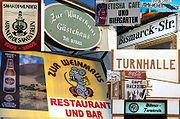 Germans came to South America in the world wars I and II, settling first in Colombia because it was the only country in the South American to have the Pacific and Atlantic oceans, gold, emeralds, coal, oil, textiles, tobacco, flowers and the best weather conditions for agriculture. Colombia has weather under 32F to the 80s year round which makes it easy to choose where to live according to the kind of business you want to do and was a good start for Germans and other Europeans escaping war and hunger. Germany built the Bavaria, Pilsen, Club soda Klausen factories in Cali, Pereira, Medellin, etc. Germans born in Colombia celebrate Oktoberfest in Cali along with other traditions. Their children attended German schools and married children of Germans descendants.
arrived. Today the language is used by 30% of white Namibians. The majority language of the white community is Afrikaans
. The major German-language newspaper in Namibia is the Allgemeine Zeitung
. It is the only German daily newspaper of Africa.
German language
German is a West Germanic language, related to and classified alongside English and Dutch. With an estimated 90 – 98 million native speakers, German is one of the world's major languages and is the most widely-spoken first language in the European Union....
-speaking minorities
Minority language
A minority language is a language spoken by a minority of the population of a territory. Such people are termed linguistic minorities or language minorities.-International politics:...
(Ethnic Germans) live in many countries and on all six inhabited continent
Continent
A continent is one of several very large landmasses on Earth. They are generally identified by convention rather than any strict criteria, with seven regions commonly regarded as continents—they are : Asia, Africa, North America, South America, Antarctica, Europe, and Australia.Plate tectonics is...
s: the countries of the former Soviet Union
Soviet Union
The Soviet Union , officially the Union of Soviet Socialist Republics , was a constitutionally socialist state that existed in Eurasia between 1922 and 1991....
, Poland
Poland
Poland , officially the Republic of Poland , is a country in Central Europe bordered by Germany to the west; the Czech Republic and Slovakia to the south; Ukraine, Belarus and Lithuania to the east; and the Baltic Sea and Kaliningrad Oblast, a Russian exclave, to the north...
, Romania
Romania
Romania is a country located at the crossroads of Central and Southeastern Europe, on the Lower Danube, within and outside the Carpathian arch, bordering on the Black Sea...
, Hungary
Hungary
Hungary , officially the Republic of Hungary , is a landlocked country in Central Europe. It is situated in the Carpathian Basin and is bordered by Slovakia to the north, Ukraine and Romania to the east, Serbia and Croatia to the south, Slovenia to the southwest and Austria to the west. The...
, the Czech Republic
Czech Republic
The Czech Republic is a landlocked country in Central Europe. The country is bordered by Poland to the northeast, Slovakia to the east, Austria to the south, and Germany to the west and northwest....
, Denmark
Denmark
Denmark is a Scandinavian country in Northern Europe. The countries of Denmark and Greenland, as well as the Faroe Islands, constitute the Kingdom of Denmark . It is the southernmost of the Nordic countries, southwest of Sweden and south of Norway, and bordered to the south by Germany. Denmark...
, France
France
The French Republic , The French Republic , The French Republic , (commonly known as France , is a unitary semi-presidential republic in Western Europe with several overseas territories and islands located on other continents and in the Indian, Pacific, and Atlantic oceans. Metropolitan France...
, Belgium
Belgium
Belgium , officially the Kingdom of Belgium, is a federal state in Western Europe. It is a founding member of the European Union and hosts the EU's headquarters, and those of several other major international organisations such as NATO.Belgium is also a member of, or affiliated to, many...
, Italy
Italy
Italy , officially the Italian Republic languages]] under the European Charter for Regional or Minority Languages. In each of these, Italy's official name is as follows:;;;;;;;;), is a unitary parliamentary republic in South-Central Europe. To the north it borders France, Switzerland, Austria and...
, the United States
United States
The United States of America is a federal constitutional republic comprising fifty states and a federal district...
, Latin America
Latin America
Latin America is a region of the Americas where Romance languages – particularly Spanish and Portuguese, and variably French – are primarily spoken. Latin America has an area of approximately 21,069,500 km² , almost 3.9% of the Earth's surface or 14.1% of its land surface area...
, Namibia
Namibia
Namibia, officially the Republic of Namibia , is a country in southern Africa whose western border is the Atlantic Ocean. It shares land borders with Angola and Zambia to the north, Botswana to the east and South Africa to the south and east. It gained independence from South Africa on 21 March...
, South Africa
South Africa
The Republic of South Africa is a country in southern Africa. Located at the southern tip of Africa, it is divided into nine provinces, with of coastline on the Atlantic and Indian oceans...
, Israel
Israel
The State of Israel is a parliamentary republic located in the Middle East, along the eastern shore of the Mediterranean Sea...
, and Australia
Australia
Australia , officially the Commonwealth of Australia, is a country in the Southern Hemisphere comprising the mainland of the Australian continent, the island of Tasmania, and numerous smaller islands in the Indian and Pacific Oceans. It is the world's sixth-largest country by total area...
. These German minorities, through their ethno-cultural vitality, exhibit an exceptional level of heterogeneity: variations concerning their demographics
Demographics
Demographics are the most recent statistical characteristics of a population. These types of data are used widely in sociology , public policy, and marketing. Commonly examined demographics include gender, race, age, disabilities, mobility, home ownership, employment status, and even location...
, their status within the majority community, the support they receive from institutions helping them to support their identity as a minority.
Amongst them are small groups (such as those in Namibia) and many very large groups (such as the almost 1 million non-evacuated Germans in Russia and Kazakhstan
Kazakhstan
Kazakhstan , officially the Republic of Kazakhstan, is a transcontinental country in Central Asia and Eastern Europe. Ranked as the ninth largest country in the world, it is also the world's largest landlocked country; its territory of is greater than Western Europe...
or the near 500,000 Germans in Brazil
Brazil
Brazil , officially the Federative Republic of Brazil , is the largest country in South America. It is the world's fifth largest country, both by geographical area and by population with over 192 million people...
), groups that have been greatly "folklorised" and almost completely linguistically assimilated (such as most people of German descent in the USA, Canada, Australia, Argentina and Brazil), and others, such as the true linguistic minorities (like the still German-speaking minorities in the USA, Argentina
Argentina
Argentina , officially the Argentine Republic , is the second largest country in South America by land area, after Brazil. It is constituted as a federation of 23 provinces and an autonomous city, Buenos Aires...
and Brazil, in western Siberia
Siberia
Siberia is an extensive region constituting almost all of Northern Asia. Comprising the central and eastern portion of the Russian Federation, it was part of the Soviet Union from its beginning, as its predecessor states, the Tsardom of Russia and the Russian Empire, conquered it during the 16th...
or in Romania and Hungary); other groups, which are classified as religio-cultural groups rather than ethnic minorities, (such as the Eastern-Low German speaking Mennonites in Paraguay
Paraguay
Paraguay , officially the Republic of Paraguay , is a landlocked country in South America. It is bordered by Argentina to the south and southwest, Brazil to the east and northeast, and Bolivia to the northwest. Paraguay lies on both banks of the Paraguay River, which runs through the center of the...
, Mexico
Mexico
The United Mexican States , commonly known as Mexico , is a federal constitutional republic in North America. It is bordered on the north by the United States; on the south and west by the Pacific Ocean; on the southeast by Guatemala, Belize, and the Caribbean Sea; and on the east by the Gulf of...
, Belize
Belize
Belize is a constitutional monarchy and the northernmost country in Central America. Belize has a diverse society, comprising many cultures and languages. Even though Kriol and Spanish are spoken among the population, Belize is the only country in Central America where English is the official...
or in the Altay
Altay Mountains
The Altai Mountains are a mountain range in East-Central Asia, where Russia, China, Mongolia and Kazakhstan come together, and where the rivers Irtysh and Ob have their sources. The Altai Mountains are known as the original locus of the speakers of Turkic as well as other members of the proposed...
region of Siberia
Siberia
Siberia is an extensive region constituting almost all of Northern Asia. Comprising the central and eastern portion of the Russian Federation, it was part of the Soviet Union from its beginning, as its predecessor states, the Tsardom of Russia and the Russian Empire, conquered it during the 16th...
) and the groups who maintain their status thanks to strong identification with their ethnicity and their religious sentiment (such as the groups in Upper Silesia
Upper Silesia
Upper Silesia is the southeastern part of the historical and geographical region of Silesia. Since the 9th century, Upper Silesia has been part of Greater Moravia, the Duchy of Bohemia, the Piast Kingdom of Poland, again of the Lands of the Bohemian Crown and the Holy Roman Empire, as well as of...
, Poland
Poland
Poland , officially the Republic of Poland , is a country in Central Europe bordered by Germany to the west; the Czech Republic and Slovakia to the south; Ukraine, Belarus and Lithuania to the east; and the Baltic Sea and Kaliningrad Oblast, a Russian exclave, to the north...
or in South Jutland
Jutland
Jutland , historically also called Cimbria, is the name of the peninsula that juts out in Northern Europe toward the rest of Scandinavia, forming the mainland part of Denmark. It has the North Sea to its west, Kattegat and Skagerrak to its north, the Baltic Sea to its east, and the Danish–German...
in Denmark
Denmark
Denmark is a Scandinavian country in Northern Europe. The countries of Denmark and Greenland, as well as the Faroe Islands, constitute the Kingdom of Denmark . It is the southernmost of the Nordic countries, southwest of Sweden and south of Norway, and bordered to the south by Germany. Denmark...
).
German is an official language in the following regions/countries in Europe
- AustriaAustriaAustria , officially the Republic of Austria , is a landlocked country of roughly 8.4 million people in Central Europe. It is bordered by the Czech Republic and Germany to the north, Slovakia and Hungary to the east, Slovenia and Italy to the south, and Switzerland and Liechtenstein to the...
(sole official national language) - BelgiumBelgiumBelgium , officially the Kingdom of Belgium, is a federal state in Western Europe. It is a founding member of the European Union and hosts the EU's headquarters, and those of several other major international organisations such as NATO.Belgium is also a member of, or affiliated to, many...
(one of three official national languages, sole official and majority language in German-speaking BelgiumGerman-speaking Community of BelgiumThe German-speaking Community of Belgium is one of the three federal communities of Belgium. Covering an area of 854 km² within the province of Liège in Wallonia, it includes nine of the eleven municipalities of the so-called East Cantons...
) - GermanyGermanyGermany , officially the Federal Republic of Germany , is a federal parliamentary republic in Europe. The country consists of 16 states while the capital and largest city is Berlin. Germany covers an area of 357,021 km2 and has a largely temperate seasonal climate...
(sole official national language) - LiechtensteinLiechtensteinThe Principality of Liechtenstein is a doubly landlocked alpine country in Central Europe, bordered by Switzerland to the west and south and by Austria to the east. Its area is just over , and it has an estimated population of 35,000. Its capital is Vaduz. The biggest town is Schaan...
(sole official national language) - LuxembourgLuxembourgLuxembourg , officially the Grand Duchy of Luxembourg , is a landlocked country in western Europe, bordered by Belgium, France, and Germany. It has two principal regions: the Oesling in the North as part of the Ardennes massif, and the Gutland in the south...
(one of three official national languages) - Northern SchleswigSouth Jutland CountySouth Jutland County is a former county on the south-central portion of the Jutland Peninsula in southern Denmark....
in DenmarkDenmarkDenmark is a Scandinavian country in Northern Europe. The countries of Denmark and Greenland, as well as the Faroe Islands, constitute the Kingdom of Denmark . It is the southernmost of the Nordic countries, southwest of Sweden and south of Norway, and bordered to the south by Germany. Denmark...
(minority language) - SwitzerlandSwitzerlandSwitzerland name of one of the Swiss cantons. ; ; ; or ), in its full name the Swiss Confederation , is a federal republic consisting of 26 cantons, with Bern as the seat of the federal authorities. The country is situated in Western Europe,Or Central Europe depending on the definition....
(majority language, one of four official national languages) - South TyrolSouth TyrolSouth Tyrol , also known by its Italian name Alto Adige, is an autonomous province in northern Italy. It is one of the two autonomous provinces that make up the autonomous region of Trentino-Alto Adige/Südtirol. The province has an area of and a total population of more than 500,000 inhabitants...
in ItalyItalyItaly , officially the Italian Republic languages]] under the European Charter for Regional or Minority Languages. In each of these, Italy's official name is as follows:;;;;;;;;), is a unitary parliamentary republic in South-Central Europe. To the north it borders France, Switzerland, Austria and...
(one of three official regional languages, majority language) - Opole VoivodeshipOpole Voivodeship- Administrative division :Opole Voivodeship is divided into 12 counties : 1 city county and 11 land counties. These are further divided into 71 gminas.The counties are listed in the following table .- Economy :...
in PolandPolandPoland , officially the Republic of Poland , is a country in Central Europe bordered by Germany to the west; the Czech Republic and Slovakia to the south; Ukraine, Belarus and Lithuania to the east; and the Baltic Sea and Kaliningrad Oblast, a Russian exclave, to the north...
(official minority language) - KrahuleKrahuleKrahule is a village in Žiar nad Hronom District in the Banská Bystrica Region of central Slovakia. It is the only municipality in Slovakia that officially uses German along with Slovak.-History:...
in SlovakiaSlovakiaThe Slovak Republic is a landlocked state in Central Europe. It has a population of over five million and an area of about . Slovakia is bordered by the Czech Republic and Austria to the west, Poland to the north, Ukraine to the east and Hungary to the south...
(official minority language)
German has a presence in the following regions/countries in Europe
- AlsaceAlsaceAlsace is the fifth-smallest of the 27 regions of France in land area , and the smallest in metropolitan France. It is also the seventh-most densely populated region in France and third most densely populated region in metropolitan France, with ca. 220 inhabitants per km²...
in FranceFranceThe French Republic , The French Republic , The French Republic , (commonly known as France , is a unitary semi-presidential republic in Western Europe with several overseas territories and islands located on other continents and in the Indian, Pacific, and Atlantic oceans. Metropolitan France... - Galicia in UkraineUkraineUkraine is a country in Eastern Europe. It has an area of 603,628 km², making it the second largest contiguous country on the European continent, after Russia...
- LorraineMoselleMoselle is a department in the east of France named after the river Moselle.- History :Moselle is one of the original 83 departments created during the French Revolution on March 4, 1790...
in FranceFranceThe French Republic , The French Republic , The French Republic , (commonly known as France , is a unitary semi-presidential republic in Western Europe with several overseas territories and islands located on other continents and in the Indian, Pacific, and Atlantic oceans. Metropolitan France... - Upper SilesiaUpper SilesiaUpper Silesia is the southeastern part of the historical and geographical region of Silesia. Since the 9th century, Upper Silesia has been part of Greater Moravia, the Duchy of Bohemia, the Piast Kingdom of Poland, again of the Lands of the Bohemian Crown and the Holy Roman Empire, as well as of...
in PolandPolandPoland , officially the Republic of Poland , is a country in Central Europe bordered by Germany to the west; the Czech Republic and Slovakia to the south; Ukraine, Belarus and Lithuania to the east; and the Baltic Sea and Kaliningrad Oblast, a Russian exclave, to the north... - Parts of TransylvaniaTransylvaniaTransylvania is a historical region in the central part of Romania. Bounded on the east and south by the Carpathian mountain range, historical Transylvania extended in the west to the Apuseni Mountains; however, the term sometimes encompasses not only Transylvania proper, but also the historical...
and Banat in RomaniaRomaniaRomania is a country located at the crossroads of Central and Southeastern Europe, on the Lower Danube, within and outside the Carpathian arch, bordering on the Black Sea...
German has a presence in following countries in The Americas
-
- in BrazilBrazilBrazil , officially the Federative Republic of Brazil , is the largest country in South America. It is the world's fifth largest country, both by geographical area and by population with over 192 million people...
(including PomeranianPomeranianPomeranian is an adjective referring to Pomerania, an area divided between Poland and Germany.-Peoples and cultures:* Pomeranian Balts, ancient western Baltic people*Pomeranian culture, an Iron Age culture of earlier people in land later called Pomerania...
, among others. Brazil has the largest German-speaking population outside Europe) - in United StatesUnited StatesThe United States of America is a federal constitutional republic comprising fifty states and a federal district...
(including Mennonites, the AmishAmishThe Amish , sometimes referred to as Amish Mennonites, are a group of Christian church fellowships that form a subgroup of the Mennonite churches...
and Hutterites) - in CanadaCanadaCanada is a North American country consisting of ten provinces and three territories. Located in the northern part of the continent, it extends from the Atlantic Ocean in the east to the Pacific Ocean in the west, and northward into the Arctic Ocean...
(including the Mennonites, the AmishAmishThe Amish , sometimes referred to as Amish Mennonites, are a group of Christian church fellowships that form a subgroup of the Mennonite churches...
and Hutterites) - in ArgentinaArgentinaArgentina , officially the Argentine Republic , is the second largest country in South America by land area, after Brazil. It is constituted as a federation of 23 provinces and an autonomous city, Buenos Aires...
- in MexicoMexicoThe United Mexican States , commonly known as Mexico , is a federal constitutional republic in North America. It is bordered on the north by the United States; on the south and west by the Pacific Ocean; on the southeast by Guatemala, Belize, and the Caribbean Sea; and on the east by the Gulf of...
(mainly the Mennonites) - in ChileChileChile ,officially the Republic of Chile , is a country in South America occupying a long, narrow coastal strip between the Andes mountains to the east and the Pacific Ocean to the west. It borders Peru to the north, Bolivia to the northeast, Argentina to the east, and the Drake Passage in the far...
- in ParaguayParaguayParaguay , officially the Republic of Paraguay , is a landlocked country in South America. It is bordered by Argentina to the south and southwest, Brazil to the east and northeast, and Bolivia to the northwest. Paraguay lies on both banks of the Paraguay River, which runs through the center of the...
(mainly the Mennonites) - in ColombiaColombiaColombia, officially the Republic of Colombia , is a unitary constitutional republic comprising thirty-two departments. The country is located in northwestern South America, bordered to the east by Venezuela and Brazil; to the south by Ecuador and Peru; to the north by the Caribbean Sea; to the...
- in VenezuelaVenezuelaVenezuela , officially called the Bolivarian Republic of Venezuela , is a tropical country on the northern coast of South America. It borders Colombia to the west, Guyana to the east, and Brazil to the south...
- in PeruPeruPeru , officially the Republic of Peru , is a country in western South America. It is bordered on the north by Ecuador and Colombia, on the east by Brazil, on the southeast by Bolivia, on the south by Chile, and on the west by the Pacific Ocean....
- in UruguayUruguayUruguay ,officially the Oriental Republic of Uruguay,sometimes the Eastern Republic of Uruguay; ) is a country in the southeastern part of South America. It is home to some 3.5 million people, of whom 1.8 million live in the capital Montevideo and its metropolitan area...
- in BelizeBelizeBelize is a constitutional monarchy and the northernmost country in Central America. Belize has a diverse society, comprising many cultures and languages. Even though Kriol and Spanish are spoken among the population, Belize is the only country in Central America where English is the official...
(mainly the Mennonites)
- in Brazil
Latin America
At least one million German speakers live in Latin America. There are German speaking minorities in almost every Latin American country, including ArgentinaArgentina
Argentina , officially the Argentine Republic , is the second largest country in South America by land area, after Brazil. It is constituted as a federation of 23 provinces and an autonomous city, Buenos Aires...
, Belize
Belize
Belize is a constitutional monarchy and the northernmost country in Central America. Belize has a diverse society, comprising many cultures and languages. Even though Kriol and Spanish are spoken among the population, Belize is the only country in Central America where English is the official...
, Bolivia
Bolivia
Bolivia officially known as Plurinational State of Bolivia , is a landlocked country in central South America. It is the poorest country in South America...
, Brazil
Brazil
Brazil , officially the Federative Republic of Brazil , is the largest country in South America. It is the world's fifth largest country, both by geographical area and by population with over 192 million people...
, Chile
Chile
Chile ,officially the Republic of Chile , is a country in South America occupying a long, narrow coastal strip between the Andes mountains to the east and the Pacific Ocean to the west. It borders Peru to the north, Bolivia to the northeast, Argentina to the east, and the Drake Passage in the far...
, Colombia
Colombia
Colombia, officially the Republic of Colombia , is a unitary constitutional republic comprising thirty-two departments. The country is located in northwestern South America, bordered to the east by Venezuela and Brazil; to the south by Ecuador and Peru; to the north by the Caribbean Sea; to the...
, Dominican Republic
Dominican Republic
The Dominican Republic is a nation on the island of La Hispaniola, part of the Greater Antilles archipelago in the Caribbean region. The western third of the island is occupied by the nation of Haiti, making Hispaniola one of two Caribbean islands that are shared by two countries...
, Ecuador
Ecuador
Ecuador , officially the Republic of Ecuador is a representative democratic republic in South America, bordered by Colombia on the north, Peru on the east and south, and by the Pacific Ocean to the west. It is one of only two countries in South America, along with Chile, that do not have a border...
, Guatemala
Guatemala
Guatemala is a country in Central America bordered by Mexico to the north and west, the Pacific Ocean to the southwest, Belize to the northeast, the Caribbean to the east, and Honduras and El Salvador to the southeast...
, Mexico
Mexico
The United Mexican States , commonly known as Mexico , is a federal constitutional republic in North America. It is bordered on the north by the United States; on the south and west by the Pacific Ocean; on the southeast by Guatemala, Belize, and the Caribbean Sea; and on the east by the Gulf of...
, Paraguay
Paraguay
Paraguay , officially the Republic of Paraguay , is a landlocked country in South America. It is bordered by Argentina to the south and southwest, Brazil to the east and northeast, and Bolivia to the northwest. Paraguay lies on both banks of the Paraguay River, which runs through the center of the...
, Peru
Peru
Peru , officially the Republic of Peru , is a country in western South America. It is bordered on the north by Ecuador and Colombia, on the east by Brazil, on the southeast by Bolivia, on the south by Chile, and on the west by the Pacific Ocean....
, Uruguay
Uruguay
Uruguay ,officially the Oriental Republic of Uruguay,sometimes the Eastern Republic of Uruguay; ) is a country in the southeastern part of South America. It is home to some 3.5 million people, of whom 1.8 million live in the capital Montevideo and its metropolitan area...
and Venezuela
Venezuela
Venezuela , officially called the Bolivarian Republic of Venezuela , is a tropical country on the northern coast of South America. It borders Colombia to the west, Guyana to the east, and Brazil to the south...
.
In the eighteenth century only isolated or small groups of German emigrants left for Latin America. However this pattern was reversed at the start of the last century as a tidal wave of German emigration began. German emigration to the Americas totalled 200,000 people during the eighteenth century. During the 1880s, during the wave of mass emigration, this figure was reached annually. The Handbuch des Deutschtums im Ausland (The Germans Abroad Handbook) from 1906 puts a figure of 11 million people in North and South America with a knowledge of the German language, of which 9 million were in the USA. Although the USA was the focal point for emigration in the 19th century, emigration to Latin America was also significant for differing economic and political reasons.
90% of German Latin American emigrants in the 19th century went to the three Cono Sur
Southern Cone
Southern Cone is a geographic region composed of the southernmost areas of South America, south of the Tropic of Capricorn. Although geographically this includes part of Southern and Southeast of Brazil, in terms of political geography the Southern cone has traditionally comprised Argentina,...
countries: Argentina, Uruguay and Chile. In the last third of the century emigration to Argentina increased after the "Heydtschen Reskript" (1859) made emigration to Brazil harder. In the 1880s and 1890s German emigration to Latin America grew and in some years was the destination of up to 30% of German emigrants. During the Nazi period - until the ban on emigration came into effect in 1941 - some 100,000 Jews from Central Europe, the vast majority of which were German speaking, moved to South America with 90% of these moving to the Cono Sur. From the start of the 20th century until 1946 80% of Jews lived in Europe but by the end of World War II
World War II
World War II, or the Second World War , was a global conflict lasting from 1939 to 1945, involving most of the world's nations—including all of the great powers—eventually forming two opposing military alliances: the Allies and the Axis...
this was reduced to 25%, however after the war over 50% of Jews now lived in the Americas. This change was aided by Jewish emigration groups such as the Hilfsverein deutschsprechender Juden (later to become Asociación Filantrópica Israelita) which was based in Buenos Aires
Buenos Aires
Buenos Aires is the capital and largest city of Argentina, and the second-largest metropolitan area in South America, after São Paulo. It is located on the western shore of the estuary of the Río de la Plata, on the southeastern coast of the South American continent...
, Argentina
Argentina
Argentina , officially the Argentine Republic , is the second largest country in South America by land area, after Brazil. It is constituted as a federation of 23 provinces and an autonomous city, Buenos Aires...
. The majority of German minorities in Latin America
Latin America
Latin America is a region of the Americas where Romance languages – particularly Spanish and Portuguese, and variably French – are primarily spoken. Latin America has an area of approximately 21,069,500 km² , almost 3.9% of the Earth's surface or 14.1% of its land surface area...
- as well as elsewhere around the world - experienced a decline in the use of the German language. The main cause of this decrease is the integration of communities, often originally sheltered, into the dominant society, and then modernisation after assimilation into society which confronts all immigrant groups.
Specific reasons for language change from German to the national language usually derive from the desire of many Germans to belong to their new communities after the end of World War II. This is a common feature amongst the German minorities in Latin America and those in Central
Central Europe
Central Europe or alternatively Middle Europe is a region of the European continent lying between the variously defined areas of Eastern and Western Europe...
and Eastern Europe
Eastern Europe
Eastern Europe is the eastern part of Europe. The term has widely disparate geopolitical, geographical, cultural and socioeconomic readings, which makes it highly context-dependent and even volatile, and there are "almost as many definitions of Eastern Europe as there are scholars of the region"...
: the majority of countries where German minorities lived had fought against the Germans during the war. With this change in situation the members of the German minorities, previously communities of status and prestige, were turned into undesirable minorities (though there were widespread elements of sympathy for Germany in many South American countries as well).
For many German minorities WWII thus represented the breaking point in the development of their language. In some South American countries the war period and immediately afterwards was a time of massive assimilation
Cultural assimilation
Cultural assimilation is a socio-political response to demographic multi-ethnicity that supports or promotes the assimilation of ethnic minorities into the dominant culture. The term assimilation is often used with regard to immigrants and various ethnic groups who have settled in a new land. New...
to the local culture (for example during the Getúlio Vargas
Getúlio Vargas
Getúlio Dornelles Vargas served as President of Brazil, first as dictator, from 1930 to 1945, and in a democratically elected term from 1951 until his suicide in 1954. Vargas led Brazil for 18 years, the most for any President, and second in Brazilian history to Emperor Pedro II...
period in Brazil
Brazil
Brazil , officially the Federative Republic of Brazil , is the largest country in South America. It is the world's fifth largest country, both by geographical area and by population with over 192 million people...
).
Historical development and current language situation of German minorities
Argentina, Brazil, Chile and Paraguay show some clear demographic differences that affect the minority situation of the German language: Brazil and Argentina are massive countries and offer large amounts of land for immigrants to settle. The population density of the Cono Sur countries is relatively low (Brazil has 17 inhabitants/km², Chile has 15/km², Argentina and Paraguay both have 10/km², data from 1993), but there are major differences in the areas settled by Germans: Buenos Aires ProvinceBuenos Aires Province
The Province of Buenos Aires is the largest and most populous province of Argentina. It takes the name from the city of Buenos Aires, which used to be the provincial capital until it was federalized in 1880...
, which was settled by Germans
Germans
The Germans are a Germanic ethnic group native to Central Europe. The English term Germans has referred to the German-speaking population of the Holy Roman Empire since the Late Middle Ages....
, has a far higher population density that that of the Chaco
Chaco Department
The Paraguayan Chaco or Región Occidental is a semi-arid region in Paraguay, with a very low population density.The Chaco is a large geographic area that is sparsely populated. Many of those living in the region are native peoples...
in northern Paraguay (with 1 inhabitant/km²). Argentina and Chile have a far greater proportion of city dwellers (86% and 84% respectively), while Brazil is 82% urbanised, and Paraguay is just 47% urbanised. In relation to the population of Argentina, it can be called a "white country" (95% of the population is European
European ethnic groups
The ethnic groups in Europe are the various ethnic groups that reside in the nations of Europe. European ethnology is the field of anthropology focusing on Europe....
, with a large number of Italians). Brazil is a multi-ethnic country and the statistics show this to be true. According to Baranow (1988: 1266) 120 languages are spoken there. With 53% of the population white and 38% mulattoes and mestizos, it differs fundamentally from the other states dealt with here, although this is less true in the South of Brazil. In Chile and Paraguay the percentage of Mestizos is 52% (and 40% white) and 91% respectively, while the indigenous element is important throughout the country in Paraguay, and indeed Guaraní
Guaraní language
Guaraní, specifically the primary variety known as Paraguayan Guaraní , is an indigenous language of South America that belongs to the Tupí–Guaraní subfamily of the Tupian languages. It is one of the official languages of Paraguay , where it is spoken by the majority of the population, and half of...
is the second official language.
German in Argentina
There are about 500,000 German speakers and around 320,000 Volga-Germans alone, of which 200,000 hold German citizenship. This makes Argentina one of the countries with the largest number of German speakers and is second only in Latin America to Brazil. In the 1930s there were about 700,000 people of German descent.Regional concentrations can be found in the provinces of Entre Ríos
Entre Ríos Province
Entre Ríos is a northeastern province of Argentina, located in the Mesopotamia region. It borders the provinces of Buenos Aires , Corrientes and Santa Fe , and Uruguay in the east....
and Buenos Aires
Buenos Aires
Buenos Aires is the capital and largest city of Argentina, and the second-largest metropolitan area in South America, after São Paulo. It is located on the western shore of the estuary of the Río de la Plata, on the southeastern coast of the South American continent...
(with around 500,000 - 600,000) as well as Misiones
Misiones Province
Misiones is one of the 23 provinces of Argentina, located in the northeastern corner of the country in the Mesopotamiсa region. It is surrounded by Paraguay to the northwest, Brazil to the north, east and south, and Corrientes Province of Argentina to the southwest.- History :The province was...
and in the general area of the Chaco and the Pampas.
However most German-descended Argentinians do not speak German with native fluency (that role has been taken by Spanish). The 300,000 German speakers are estimated to be immigrants and not actually born in Argentina, and because of this they still speak their home language while their descendants who were born in Argentina speak only Spanish.
German in Australia
Australia has an estimated population of around 75,600 German speakers. Australians of German ancestry constitute the fourth largest ethnic group in Australia, numbering around 811,540. German immigrants played a significant role in settling the states of South AustraliaSouth Australia
South Australia is a state of Australia in the southern central part of the country. It covers some of the most arid parts of the continent; with a total land area of , it is the fourth largest of Australia's six states and two territories.South Australia shares borders with all of the mainland...
and Queensland
Queensland
Queensland is a state of Australia, occupying the north-eastern section of the mainland continent. It is bordered by the Northern Territory, South Australia and New South Wales to the west, south-west and south respectively. To the east, Queensland is bordered by the Coral Sea and Pacific Ocean...
. Barossa German
Barossa German
Barossa German refers to a dialect of German, which was once common in South Australia. The prominent South Australian writer, Colin Thiele , whose grandparents were German immigrants, referred to "Barossa Deutsch" as: "that quaintly inbred and hybrid language evolved from a century of linguistic...
, a dialect of German, was once common in and around the German-settled Barossa Valley
Barossa Valley
The Barossa Valley is a major wine-producing region and tourist destination of South Australia, located 60 km northeast of Adelaide. It is the valley formed by the North Para River, and the Barossa Valley Way is the main road through the valley, connecting the main towns on the valley floor of...
in South Australia
South Australia
South Australia is a state of Australia in the southern central part of the country. It covers some of the most arid parts of the continent; with a total land area of , it is the fourth largest of Australia's six states and two territories.South Australia shares borders with all of the mainland...
. However, the German language was actively suppressed by Australian governments during World War I
World War I
World War I , which was predominantly called the World War or the Great War from its occurrence until 1939, and the First World War or World War I thereafter, was a major war centred in Europe that began on 28 July 1914 and lasted until 11 November 1918...
and World War II
World War II
World War II, or the Second World War , was a global conflict lasting from 1939 to 1945, involving most of the world's nations—including all of the great powers—eventually forming two opposing military alliances: the Allies and the Axis...
, resulting in a sharp decline in the use of German in Australia. German Australian
German Australian
German religious refugees represented the first major wave of German settlement in Australia, arriving in South Australia in 1838. Some were active as missionaries and explorers in Australia from early in the 19th century, and German prospectors were well-represented in the 1850s gold rushes...
s are today overwhelmingly English speaking, with the German language as a home language in heavy decline.
German in Brazil
The main variety of German in Brazil is Riograndenser HunsrückischRiograndenser Hunsrückisch
Riograndenser Hunsrückisch , spoken in parts of Brazil, is a Brazilian West Germanic language derived primarily from the Hunsrückisch dialect of the German Language....
which is to be found in the south of the country. The version of German there has changed over 180 years of contact with Portuguese as well as the languages of other immigrant communities
Talian
Talian is a dialect spoken mainly in the wine-producing area of the state of Rio Grande do Sul in Brazil. Talian is sometimes called Vêneto ...
. This contact has led to a new dialect of German concentrated in the German colonies in the southern province of Rio Grande do Sul
Rio Grande do Sul
Rio Grande do Sul is the southernmost state in Brazil, and the state with the fifth highest Human Development Index in the country. In this state is located the southernmost city in the country, Chuí, on the border with Uruguay. In the region of Bento Gonçalves and Caxias do Sul, the largest wine...
. Although Riograndenser Hunsrückisch has long been the most widely spoken German dialect in southern Brazil, like all other minority languages in the region, it is experiencing very strong decline - especially in the last three or four decades. In all the vast majority of German descended Brazilians speaks Portuguese as their mother tongue today, and German is known only as a second or third language, if at all, to the point of initiatives to "save it" having been started recently in areas with strong German-descended presence. This is especially and almost universally true for younger German-Brazilians.
German in Chile
Chile (with a population of 15 million) has an estimated 60,000 German speakers and around 600.000 ethnic Germans (from an estimated 30.000 German immigrants).The vast majority of these arrived after 1846 from several regions of Germany, initially from Hesse
Hesse
Hesse or Hessia is both a cultural region of Germany and the name of an individual German state.* The cultural region of Hesse includes both the State of Hesse and the area known as Rhenish Hesse in the neighbouring Rhineland-Palatinate state...
and Brandenburg
Brandenburg
Brandenburg is one of the sixteen federal-states of Germany. It lies in the east of the country and is one of the new federal states that were re-created in 1990 upon the reunification of the former West Germany and East Germany. The capital is Potsdam...
, then from Württemberg
Württemberg
Württemberg , formerly known as Wirtemberg or Wurtemberg, is an area and a former state in southwestern Germany, including parts of the regions Swabia and Franconia....
and later from Silesia
Silesia
Silesia is a historical region of Central Europe located mostly in Poland, with smaller parts also in the Czech Republic, and Germany.Silesia is rich in mineral and natural resources, and includes several important industrial areas. Silesia's largest city and historical capital is Wrocław...
, Westphalia
Westphalia
Westphalia is a region in Germany, centred on the cities of Arnsberg, Bielefeld, Dortmund, Minden and Münster.Westphalia is roughly the region between the rivers Rhine and Weser, located north and south of the Ruhr River. No exact definition of borders can be given, because the name "Westphalia"...
and lastly from Bohemia
Bohemia
Bohemia is a historical region in central Europe, occupying the western two-thirds of the traditional Czech Lands. It is located in the contemporary Czech Republic with its capital in Prague...
. During the first wave of German immigration (between 1846 and 1875) German colonies were primarily set up in the "Frontera" region. The second wave of immigration occurred between 1882 and 1914 and consisted mainly of industrial and agricultural workers, mainly from eastern Germany; the third wave (after 1918) settled mainly in the cities. As in Argentina and Brazil, these populations are today overwhelmingly Spanish speaking, and German as a home language is in heavy decline.
German in Colombia
Colombia has a population of about 40 million people. Of the 40 million only 5,000 people of German descent speak the language. Many of these people settled in Antioquia, and el Eje Cafetero. Most of the immigration occurred during World War I until the end of the Cold War. Many of these ethnic Germans now speak primarily Spanish at home.German in Namibia
The German speaking minority in Namibia stems from the short lived German colonial period when thousands of German settlers and the SchutztruppeSchutztruppe
Schutztruppe was the African colonial armed force of Imperial Germany from the late 19th century to 1918, when Germany lost its colonies. Similar to other colonial forces, the Schutztruppe consisted of volunteer European commissioned and non-commissioned officers, medical and veterinary officers. ...
arrived. Today the language is used by 30% of white Namibians. The majority language of the white community is Afrikaans
Afrikaans
Afrikaans is a West Germanic language, spoken natively in South Africa and Namibia. It is a daughter language of Dutch, originating in its 17th century dialects, collectively referred to as Cape Dutch .Afrikaans is a daughter language of Dutch; see , , , , , .Afrikaans was historically called Cape...
. The major German-language newspaper in Namibia is the Allgemeine Zeitung
Allgemeine Zeitung (Namibia)
The Allgemeine Zeitung is the oldest newspaper in Namibia, founded in 1916.All editorial content in the newspaper is written in German, a recognized language in Namibia....
. It is the only German daily newspaper of Africa.
German in the United States
It is estimated that up to 6% of the American schoolchildren were educated in German until 1918. Small communities of Amish and Hutterites speak it as a home language up to the present day.External links
- Development of German in South America (German)
- Deutsche Minderheiten/Riograndenser Hunsrückisch (German)
See also
- Minority languageMinority languageA minority language is a language spoken by a minority of the population of a territory. Such people are termed linguistic minorities or language minorities.-International politics:...
- Germanic languagesGermanic languagesThe Germanic languages constitute a sub-branch of the Indo-European language family. The common ancestor of all of the languages in this branch is called Proto-Germanic , which was spoken in approximately the mid-1st millennium BC in Iron Age northern Europe...
- German languageGerman languageGerman is a West Germanic language, related to and classified alongside English and Dutch. With an estimated 90 – 98 million native speakers, German is one of the world's major languages and is the most widely-spoken first language in the European Union....
- German dialectsGerman dialectsGerman dialect is dominated by the geographical spread of the High German consonant shift, and the dialect continuum that connects the German with the Dutch language.-German dialects in relation to varieties of standard German:...
- Ethnic GermanEthnic GermanEthnic Germans historically also ), also collectively referred to as the German diaspora, refers to people who are of German ethnicity. Many are not born in Europe or in the modern-day state of Germany or hold German citizenship...
- Germanic peoplesGermanic peoplesThe Germanic peoples are an Indo-European ethno-linguistic group of Northern European origin, identified by their use of the Indo-European Germanic languages which diversified out of Proto-Germanic during the Pre-Roman Iron Age.Originating about 1800 BCE from the Corded Ware Culture on the North...
- German in the United StatesGerman in the United StatesAround 1.38 million Americans speak German. It is the second most spoken language in two states: North Dakota and South Dakota.In the United States, German is third in popularity after Spanish and French in terms of the number of colleges and universities offering instruction in the language.-...
- Pennsylvania German languagePennsylvania German languageThe Pennsylvania German language is a variety of West Central German possibly spoken by more than 250,000 people in North America...
- Hutterite GermanHutterite GermanHutterite German is an Upper German dialect of the Austro-Bavarian variety of the German language, which is spoken by Hutterite communities in Canada and the United States...
- Texas GermanTexas GermanTexas German is a dialect of the German language that is spoken by descendants of German immigrants who settled in the Texas Hill Country region in the mid-19th century. These immigrants founded the towns of New Braunfels, Fredericksburg, Boerne, Schulenburg, Weimar, Walburg, and Comfort...
- Pennsylvania German language
- PomerodePomerodePomerode is a Brazilian city in the state of Santa Catarina, in Southern Brazil. It is located in the valley of the Itajaí-Açu river, not very far from the city of Blumenau, one of the largest cities in the state....