


European Council

Encyclopedia
| colspan="2" style="text-align:center; background:#ccf; font-size:110%;"| | |
| Established | 1961 (informally) 2009 (formally) |
| Type | EU collective presidency |
| President President of the European Council The President of the European Council is a principal representative of the European Union on the world stage, and the person presiding over and driving forward the work of the European Council... |
Herman Van Rompuy Herman Van Rompuy Herman Achille Van Rompuy is the first long-term and full-time President of the European Council... |
| Seat | Justus Lipsius building Justus Lipsius building The Justus Lipsius building is a building in Brussels that has been the headquarters of the Council of the European Union since 1995. Unlike the European Parliament, visiting is restricted... , Brussels |
| Website | european-council.europa.eu |
The European Council is an institution of the European Union
European Union
The European Union is an economic and political union of 27 independent member states which are located primarily in Europe. The EU traces its origins from the European Coal and Steel Community and the European Economic Community , formed by six countries in 1958...
. It comprises the heads of state
Head of State
A head of state is the individual that serves as the chief public representative of a monarchy, republic, federation, commonwealth or other kind of state. His or her role generally includes legitimizing the state and exercising the political powers, functions, and duties granted to the head of...
or government
Head of government
Head of government is the chief officer of the executive branch of a government, often presiding over a cabinet. In a parliamentary system, the head of government is often styled prime minister, chief minister, premier, etc...
of the EU member states, along with the President of the European Commission
President of the European Commission
The President of the European Commission is the head of the European Commission ― the executive branch of the :European Union ― the most powerful officeholder in the EU. The President is responsible for allocating portfolios to members of the Commission and can reshuffle or dismiss them if needed...
and the President of the European Council
President of the European Council
The President of the European Council is a principal representative of the European Union on the world stage, and the person presiding over and driving forward the work of the European Council...
, currently Herman Van Rompuy
Herman Van Rompuy
Herman Achille Van Rompuy is the first long-term and full-time President of the European Council...
. The High Representative for Foreign Affairs
High Representative of the Union for Foreign Affairs and Security Policy
The High Representative of the Union for Foreign Affairs and Security Policy is the main co-ordinator and representative of the Common Foreign and Security Policy within the European Union...
, currently Catherine Ashton, takes part in its meetings.
While the European Council has no formal legislative power, it is charged under the Treaty of Lisbon
Treaty of Lisbon
The Treaty of Lisbon of 1668 was a peace treaty between Portugal and Spain, concluded at Lisbon on 13 February 1668, through the mediation of England, in which Spain recognized the sovereignty of Portugal's new ruling dynasty, the House of Braganza....
with defining "the general political directions and priorities" of the Union. It is thus the Union's strategic (and crisis solving) body, acting as the collective presidency of the EU.
The meetings of the European Council are chaired by its President and take place at least twice every six months; usually in the Justus Lipsius building
Justus Lipsius building
The Justus Lipsius building is a building in Brussels that has been the headquarters of the Council of the European Union since 1995. Unlike the European Parliament, visiting is restricted...
, the headquarters of the Council of the European Union
Council of the European Union
The Council of the European Union is the institution in the legislature of the European Union representing the executives of member states, the other legislative body being the European Parliament. The Council is composed of twenty-seven national ministers...
in Brussels
Brussels
Brussels , officially the Brussels Region or Brussels-Capital Region , is the capital of Belgium and the de facto capital of the European Union...
.
The European Council was established as an informal body in 1961; it became an official EU institution in 2009 when the Treaty of Lisbon entered into force.
History
The first summits of EU heads of state or government were held in February and July 1961 (in Paris and BonnBonn
Bonn is the 19th largest city in Germany. Located in the Cologne/Bonn Region, about 25 kilometres south of Cologne on the river Rhine in the State of North Rhine-Westphalia, it was the capital of West Germany from 1949 to 1990 and the official seat of government of united Germany from 1990 to 1999....
respectively). They were informal summits of the leaders of the European Community and were started due to then-French President Charles de Gaulle
Charles de Gaulle
Charles André Joseph Marie de Gaulle was a French general and statesman who led the Free French Forces during World War II. He later founded the French Fifth Republic in 1958 and served as its first President from 1959 to 1969....
's resentment at the domination of supranational institutions (e.g. the European Commission
European Commission
The European Commission is the executive body of the European Union. The body is responsible for proposing legislation, implementing decisions, upholding the Union's treaties and the general day-to-day running of the Union....
) over the integration process, but petered out. The first influential summit held, after the departure of De Gaulle, was The Hague
The Hague
The Hague is the capital city of the province of South Holland in the Netherlands. With a population of 500,000 inhabitants , it is the third largest city of the Netherlands, after Amsterdam and Rotterdam...
summit of 1969, which reached an agreement on the admittance of the United Kingdom into the Community and initiated foreign policy cooperation (the European Political Cooperation
European political cooperation
The European Political Cooperation was introduced in 1970 and was the synonym for European Union foreign policy coordination until it was superseded by the Common Foreign and Security Policy in the Maastricht Treaty ....
) taking integration beyond economics.
The summits were only formalized in the period between 1974 and 1988. At the December summit in Paris in 1974, following a proposal from then-French President Valéry Giscard d'Estaing
Valéry Giscard d'Estaing
Valéry Marie René Georges Giscard d'Estaing is a French centre-right politician who was President of the French Republic from 1974 until 1981...
, it was agreed that more high level, political input was needed following the "empty chair crisis" and economic problems. The inaugural European Council, as it became known, was held in Dublin on 3 October and 3 November 1975 during Ireland's first Presidency of the Council of the European Union
Council of the European Union
The Council of the European Union is the institution in the legislature of the European Union representing the executives of member states, the other legislative body being the European Parliament. The Council is composed of twenty-seven national ministers...
. In 1987, it was included in the treaties for the first time (the Single European Act
Single European Act
The Single European Act was the first major revision of the 1957 Treaty of Rome. The Act set the European Community an objective of establishing a Single Market by 31 December 1992, and codified European Political Cooperation, the forerunner of the European Union's Common Foreign and Security Policy...
) and had a defined role for the first time in the Maastricht Treaty
Maastricht Treaty
The Maastricht Treaty was signed on 7 February 1992 by the members of the European Community in Maastricht, Netherlands. On 9–10 December 1991, the same city hosted the European Council which drafted the treaty...
. At first only two meetings per year were required, now there are on average six European Councils each year. The seat of the Council was formalized in 2002, basing it in Brussels. In addition to usual European Councils, there are the occasional extraordinary meetings, as for example in 2001 when the European Council gathered to lead the EU's response to the 11 September attacks.
_edited.jpg)
History of the European Union
The European Union is a geo-political entity covering a large portion of the European continent. It is founded upon numerous treaties and has undergone expansions that have taken it from 7 member states to 27, a majority of states in Europe....
. For example:
- 1969, The HagueThe HagueThe Hague is the capital city of the province of South Holland in the Netherlands. With a population of 500,000 inhabitants , it is the third largest city of the Netherlands, after Amsterdam and Rotterdam...
: Foreign policy and enlargement. - 1974, Paris: Creation of the Council.
- 1985, MilanMilanMilan is the second-largest city in Italy and the capital city of the region of Lombardy and of the province of Milan. The city proper has a population of about 1.3 million, while its urban area, roughly coinciding with its administrative province and the bordering Province of Monza and Brianza ,...
: Initiate IGCIntergovernmental ConferenceAn Intergovernmental Conference is the formal procedure for negotiating amendments to the founding treaties of the European Union. Under the treaties, an IGC is called into being by the European Council, and is composed of representatives of the member states, with the Commission, and to a lesser...
leading to the Single European ActSingle European ActThe Single European Act was the first major revision of the 1957 Treaty of Rome. The Act set the European Community an objective of establishing a Single Market by 31 December 1992, and codified European Political Cooperation, the forerunner of the European Union's Common Foreign and Security Policy...
. - 1991, MaastrichtMaastrichtMaastricht is situated on both sides of the Meuse river in the south-eastern part of the Netherlands, on the Belgian border and near the German border...
: Agreement on the Maastricht TreatyMaastricht TreatyThe Maastricht Treaty was signed on 7 February 1992 by the members of the European Community in Maastricht, Netherlands. On 9–10 December 1991, the same city hosted the European Council which drafted the treaty...
. - 1993, CopenhagenCopenhagenCopenhagen is the capital and largest city of Denmark, with an urban population of 1,199,224 and a metropolitan population of 1,930,260 . With the completion of the transnational Øresund Bridge in 2000, Copenhagen has become the centre of the increasingly integrating Øresund Region...
: Leading to the definition of the Copenhagen CriteriaCopenhagen criteriaThe Copenhagen criteria are the rules that define whether a country is eligible to join the European Union. The criteria require that a state has the institutions to preserve democratic governance and human rights, has a functioning market economy, and accepts the obligations and intent of the EU...
. - 1997, AmsterdamAmsterdamAmsterdam is the largest city and the capital of the Netherlands. The current position of Amsterdam as capital city of the Kingdom of the Netherlands is governed by the constitution of August 24, 1815 and its successors. Amsterdam has a population of 783,364 within city limits, an urban population...
: Agreement on the Amsterdam TreatyAmsterdam TreatyThe Amsterdam Treaty, officially the Treaty of Amsterdam amending the Treaty of the European Union, the Treaties establishing the European Communities and certain related acts, was signed on 2 October 1997, and entered into force on 1 May 1999; it made substantial changes to the Maastricht Treaty,...
. - 1998, BrusselsBrusselsBrussels , officially the Brussels Region or Brussels-Capital Region , is the capital of Belgium and the de facto capital of the European Union...
: Selected member states to adopt the euro. - 1999; CologneCologneCologne is Germany's fourth-largest city , and is the largest city both in the Germany Federal State of North Rhine-Westphalia and within the Rhine-Ruhr Metropolitan Area, one of the major European metropolitan areas with more than ten million inhabitants.Cologne is located on both sides of the...
: Declaration on military forces. - 1999, TampereTampereTampere is a city in southern Finland. It is the most populous inland city in any of the Nordic countries. The city has a population of , growing to approximately 300,000 people in the conurbation and over 340,000 in the metropolitan area. Tampere is the third most-populous municipality in...
: Institutional reform - 2000, LisbonLisbonLisbon is the capital city and largest city of Portugal with a population of 545,245 within its administrative limits on a land area of . The urban area of Lisbon extends beyond the administrative city limits with a population of 3 million on an area of , making it the 9th most populous urban...
: Lisbon StrategyLisbon StrategyThe Lisbon Strategy, also known as the Lisbon Agenda or Lisbon Process, was an action and development plan devised in 2000, for the economy of the European Union between 2000 and 2010.... - 2002, CopenhagenCopenhagenCopenhagen is the capital and largest city of Denmark, with an urban population of 1,199,224 and a metropolitan population of 1,930,260 . With the completion of the transnational Øresund Bridge in 2000, Copenhagen has become the centre of the increasingly integrating Øresund Region...
: Agreement for May 2004 enlargementEnlargement of the European UnionThe Enlargement of the European Union is the process of expanding the European Union through the accession of new member states. This process began with the Inner Six, who founded the European Coal and Steel Community in 1952...
. - 2007, LisbonLisbonLisbon is the capital city and largest city of Portugal with a population of 545,245 within its administrative limits on a land area of . The urban area of Lisbon extends beyond the administrative city limits with a population of 3 million on an area of , making it the 9th most populous urban...
: Agreement on the Lisbon Treaty. - 2009, Brussels: Appointment of first President and merged High Representative.
- 2010, European Financial Stability FacilityEuropean Financial Stability FacilityThe European Financial Stability Facility is a special purpose vehicle financed by members of the eurozone to combat the European sovereign debt crisis. It was agreed by the 27 member states of the European Union on 9 May 2010, aiming at preserving financial stability in Europe by providing...
As such, the European Council had already existed before it gained the status as an institution of the European Union with the entering into force of the Treaty of Lisbon
Treaty of Lisbon
The Treaty of Lisbon of 1668 was a peace treaty between Portugal and Spain, concluded at Lisbon on 13 February 1668, through the mediation of England, in which Spain recognized the sovereignty of Portugal's new ruling dynasty, the House of Braganza....
. Indeed, Article 214(2) of the Treaty establishing the European Community provided (before it was amended by the Treaty of Lisbon) that ‘the Council
Council of the European Union
The Council of the European Union is the institution in the legislature of the European Union representing the executives of member states, the other legislative body being the European Parliament. The Council is composed of twenty-seven national ministers...
, meeting in the composition of Heads of State or Government and acting by a qualified majority, shall nominate the person it intends to appoint as President of the Commission
European Commission
The European Commission is the executive body of the European Union. The body is responsible for proposing legislation, implementing decisions, upholding the Union's treaties and the general day-to-day running of the Union....
’ (emphasis added); this may be seen as an early codification of the European Council in the Treaties. In the event, Article 15 of the Treaty on European Union (amended by the Treaty of Lisbon) officially introduces the term European Council as a substitute for the phrase "Council [of the European Union] meeting in the composition of the Heads of State or Government", which was previously sometimes used in the treaties to refer to this body.
The Treaty of Lisbon made the European Council a formal institution distinct from the (ordinary) Council of the EU, and created the present longer term and full-time presidency. As an outgrowth of the Council of the EU, the European Council had previously followed the same Presidency, rotating between each member state. While the Council of the EU retains that system, the European Council established, with no change in powers, a system of appointing an individual (without them being a national leader) for two-and-a-half-years. Following the ratification of the treaty in December 2009, the European Council elected the then-Prime Minister of Belgium Herman Van Rompuy
Herman Van Rompuy
Herman Achille Van Rompuy is the first long-term and full-time President of the European Council...
as its first permanent President (resigning from Belgian Prime Minister).
Powers and functions
The European Council is an official institutionInstitutions of the European Union
The European Union is governed by seven institutions. Article 13 of Treaty on European Union lists them in the following order: the European Parliament, the European Council, the Council of the European Union, the European Commission, the Court of Justice of the European Union, the European...
of the EU, mentioned by the Lisbon Treaty as a body which "shall provide the Union with the necessary impetus for its development". Essentially it defines the EU's policy agenda and has thus been considered to be the motor of European integration
European integration
European integration is the process of industrial, political, legal, economic integration of states wholly or partially in Europe...
. It does this without any formal powers, only the influence it has being composed of national leaders. Beyond the need to provide "impetus", the Council has developed further roles; to "settle issues outstanding from discussions at a lower level", to lead in foreign policy — acting externally as a "collective Head of State
Head of State
A head of state is the individual that serves as the chief public representative of a monarchy, republic, federation, commonwealth or other kind of state. His or her role generally includes legitimizing the state and exercising the political powers, functions, and duties granted to the head of...
", "formal ratification
Ratification
Ratification is a principal's approval of an act of its agent where the agent lacked authority to legally bind the principal. The term applies to private contract law, international treaties, and constitutionals in federations such as the United States and Canada.- Private law :In contract law, the...
of important documents" and "involvement in the negotiation of the treaty changes
Treaties of the European Union
The Treaties of the European Union are a set of international treaties between the European Union member states which sets out the EU's constitutional basis. They establish the various EU institutions together with their remit, procedures and objectives...
".
Since the institution is composed of national leaders, it gathers the executive power of the member states and has thus a great influence outside established areas as for example foreign policy
Common Foreign and Security Policy
The Common Foreign and Security Policy is the organised, agreed foreign policy of the European Union for mainly security and defence diplomacy and actions. CFSP deals only with a specific part of the EU's external relations, which domains include mainly Trade and Commercial Policy and other areas...
. It also exercises some executive powers such as the appointment of its own President
President of the European Council
The President of the European Council is a principal representative of the European Union on the world stage, and the person presiding over and driving forward the work of the European Council...
, the President of the European Commission
President of the European Commission
The President of the European Commission is the head of the European Commission ― the executive branch of the :European Union ― the most powerful officeholder in the EU. The President is responsible for allocating portfolios to members of the Commission and can reshuffle or dismiss them if needed...
, the High Representative of the Union for Foreign Affairs and Security Policy
High Representative of the Union for Foreign Affairs and Security Policy
The High Representative of the Union for Foreign Affairs and Security Policy is the main co-ordinator and representative of the Common Foreign and Security Policy within the European Union...
, and the President of the European Central Bank. Moreover, the European Council influences police and justice planning, the composition of the Commission, matters relating to the rotating presidency, the suspension of membership rights, and changing the voting systems through the Passerelle Clause
Passerelle Clause
The Passerelle Clause is a clause within treaties of the European Union that allows the European Council to unanimously decide to replace unanimous voting in the Council of Ministers with qualified majority voting in specified areas with the previous consent of the European Parliament, and move...
. Although the European Council has no direct legislative power, under the "emergency brake" procedure, a state outvoted in the Council of Ministers may refer contentious legislation to the European Council. However, the state may still be outvoted in the European Council. Hence with powers over the supranational executive of the EU, in addition to its other powers, the European Council has been described by some as the Union's "supreme political authority".
Composition
The European Council consists of the heads of state or government of the member states, alongside its own PresidentPresident of the European Council
The President of the European Council is a principal representative of the European Union on the world stage, and the person presiding over and driving forward the work of the European Council...
and the Commission President
President of the European Commission
The President of the European Commission is the head of the European Commission ― the executive branch of the :European Union ― the most powerful officeholder in the EU. The President is responsible for allocating portfolios to members of the Commission and can reshuffle or dismiss them if needed...
(non-voting). The meetings used to be regularly attended by the national foreign minister as well, and the Commission President likewise accompanied by another member of the Commission. However, since the Treaty of Lisbon reclassified inter-member state relations as domestic rather than international politics, foreign ministers are no longer regular attendees. When present though, these are the attendants seen in the "family photo" taken at each Council.
Meetings can also include other leading national positions (e.g., the French Prime Minister), as required. The Secretary-General of the Council
Secretary-General of the Council of the European Union
The Secretary-General of the Council of the European Union heads the General Secretariat of the Council of the European Union. The current Secretary General is Uwe Corsepius, who entered office on 26 June 2011....
is also a regular attendee; the position had become highly important due to its regular role in organising the meetings while also (before the Lisbon treaty took effect) acting as the High Representative
High Representative
High Representative may refer to either:* The High Representative of the Union for Foreign Affairs and Security Policy High Representative may refer to either:* The High Representative of the Union for Foreign Affairs and Security Policy High Representative may refer to either:* The High...
. The President of the European Parliament
President of the European Parliament
The President of the European Parliament presides over the debates and activities of the European Parliament. He or she also represents the Parliament within the EU and internationally. The President's signature is required for enacting most EU laws and the EU budget.Presidents serve...
usually attends to give an opening speech outlining the European Parliament
European Parliament
The European Parliament is the directly elected parliamentary institution of the European Union . Together with the Council of the European Union and the Commission, it exercises the legislative function of the EU and it has been described as one of the most powerful legislatures in the world...
's position before talks begin.
Additionally, the negotiations involve a large number of other people working behind the scenes. Most of those people, however, are not allowed to the conference room, except for two delegates per state to relay messages. At the push of a button members can also call for advice from a Permanent Representative via the "Antici Group" in an adjacent room. The group is composed of diplomats and assistants who convey information and requests. Interpreters are also required for meetings as members are permitted to speak in their own languages
Languages of the European Union
The languages of the European Union are languages used by people within the member states of the European Union. They include the twenty-three official languages of the European Union along with a range of others...
.
As the composition is not precisely defined, some states which have a considerable division of executive power can find it difficult to decide who should attend the meetings. While an MEP, Alexander Stubb
Alexander Stubb
Cai-Göran Alexander Stubb is a Finnish politician and Minister for Foreign Affairs from 4 April 2008 to 22 June 2011...
argued that there was no need for the President of Finland
President of Finland
The President of the Republic of Finland is the nation's head of state. Under the Finnish constitution, executive power is vested in the President and the government, with the President possessing extensive powers. The President is elected directly by the people of Finland for a term of six years....
to attend Council meetings with or instead of the Prime Minister of Finland
Prime Minister of Finland
The Prime Minister is the Head of Government of Finland. The Prime Minister is appointed by the President, who is the Head of State. The current Prime Minister is Jyrki Katainen of the National Coalition Party.-Overview:...
(who was head of European foreign policy). In 2008, having become Finnish Foreign Minister, Stubb was forced out of the Finnish delegation to the emergency council meeting on the Georgian crisis
2008 South Ossetia war
The 2008 South Ossetia War or Russo-Georgian War was an armed conflict in August 2008 between Georgia on one side, and Russia and separatist governments of South Ossetia and Abkhazia on the other....
because the President wanted to attend the high profile summit as well as the Prime Minister (only two people from each country could attend the meetings). This was despite Stubb being head of the Organisation for Security and Co-operation in Europe
Organization for Security and Co-operation in Europe
The Organization for Security and Co-operation in Europe is the world's largest security-oriented intergovernmental organization. Its mandate includes issues such as arms control, human rights, freedom of the press and fair elections...
at the time which was heavily involved in the crisis. Problems also occurred in Poland where the President of Poland and the Prime Minister of Poland were of different parties and had a different foreign policy response to the crisis.
President
The President of the European Council, currently Herman Van RompuyHerman Van Rompuy
Herman Achille Van Rompuy is the first long-term and full-time President of the European Council...
of Belgium, is elected for a once-renewable term of two and a half years. The role as President-in-Office is in no sense (other than protocol) equivalent to an office of a head of state
Head of State
A head of state is the individual that serves as the chief public representative of a monarchy, republic, federation, commonwealth or other kind of state. His or her role generally includes legitimizing the state and exercising the political powers, functions, and duties granted to the head of...
, merely a primus inter pares (first among equals) role among other European heads of government. The President-in-Office is primarily responsible for preparing and chairing the Council meetings, and has no executive powers other than the task of representing the Union externally. The President must report to the European Parliament
European Parliament
The European Parliament is the directly elected parliamentary institution of the European Union . Together with the Council of the European Union and the Commission, it exercises the legislative function of the EU and it has been described as one of the most powerful legislatures in the world...
after each European Council meeting.
The post was created by the Treaty of Lisbon
Treaty of Lisbon
The Treaty of Lisbon of 1668 was a peace treaty between Portugal and Spain, concluded at Lisbon on 13 February 1668, through the mediation of England, in which Spain recognized the sovereignty of Portugal's new ruling dynasty, the House of Braganza....
and was subject to a debate over its exact role. Prior to Lisbon, the Presidency rotated in accordance with the Presidency of the Council of the European Union
Presidency of the Council of the European Union
The Presidency of the Council of the European Union is the responsibility for the functioning of the Council of the European Union that rotates between the member states of the European Union every six months. The presidency is not a single president but rather the task is undertaken by a national...
. The leader of the Council Presidency country can still act as President when the permanent president is absent.
Members
With the exception for the Presidential states, German speaking states and EU offices, most European Council members are titled or referred to in English speaking media as "Prime Minister" due to the dominance of parliamentary democracy in Europe. However, in their native countries the formal and informal titles differ: for example President of the Government or Minister of State. The President of the European Council and the President of the European Commission are members of the Council, but do not take part in votes. According to the treaties, the High RepresentativeHigh Representative
High Representative may refer to either:* The High Representative of the Union for Foreign Affairs and Security Policy High Representative may refer to either:* The High Representative of the Union for Foreign Affairs and Security Policy High Representative may refer to either:* The High...
takes part in the European Council's work and attends most meetings, but is not formally a member of the Council and likewise does not vote.
| Representative | Picture | Member State | Title | Political party | Member since | |
|---|---|---|---|---|---|---|
 European Union President European Union PresidentPresident of the European Council The President of the European Council is a principal representative of the European Union on the world stage, and the person presiding over and driving forward the work of the European Council... Non voting position |
President President of the European Council The President of the European Council is a principal representative of the European Union on the world stage, and the person presiding over and driving forward the work of the European Council... |
European People's Party European People's Party The European People's Party is a pro-European centre-right European political party. The EPP was founded in 1976 by Christian democratic parties, but later it increased its membership to include conservative parties and parties of other centre-right perspectives.The EPP is the most influential of... National: CD&V |
||||
 |
 Austria Austria |
Federal Chancellor Chancellor of Austria The Federal Chancellor is the head of government in Austria. Its deputy is the Vice-Chancellor. Before 1918, the equivalent office was the Minister-President of Austria. The Federal Chancellor is considered to be the most powerful political position in Austrian politics.-Appointment:The... |
Party of European Socialists Party of European Socialists The Party of European Socialists is a European political party led by Sergei Stanishev, former Prime Minister of Bulgaria. The PES comprises social-democratic national-level political parties primarily from Member state of the European Union, as well as other nations of the European continent. The... National: SPÖ Social Democratic Party of Austria The Social Democratic Party of Austria is one of the oldest political parties in Austria. The SPÖ is one of the two major parties in Austria, and has ties to trade unions and the Austrian Chamber of Labour. The SPÖ is among the few mainstream European social-democratic parties that have preserved... |
|||
 Belgium Belgium |
Prime Minister | European People's Party National: CD&V |
||||
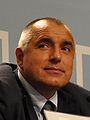 |
 Kingdom of Bulgaria Kingdom of Bulgaria |
Prime Minister | European People's Party National: GERB Citizens for European Development of Bulgaria Citizens for European Development of Bulgaria , abbreviated GERB , is a Bulgarian centre-right political party established on March 13 2006. It has been Bulgaria's ruling party since 2009.... |
|||
 Cyprus Cyprus |
President | Party of the European Left Party of the European Left The Party of the European Left, commonly abbreviated to just the European Left, is a political party at European level and an association of democratic socialist and communist political parties in the European Union and other European countries. It was formed in January 2004 for the purposes of... National: ΑΚΕΛ Progressive Party of Working People The Progressive Party of Working People is a communist party in Cyprus. It supports an independent, demilitarized and non-aligned Cyprus, and a federal solution of the internal aspect of the Cyprus problem. It places particular emphasis on rapprochement with the Turkish Cypriots. It supported... |
||||
 Czech Republic Czech Republic |
Prime Minister | Alliance of European Conservatives and Reformists Alliance of European Conservatives and Reformists The Alliance of European Conservatives and Reformists, abbreviated to AECR, is a centre-right anti-federalist European political party defending broader conservative and classical liberal principles. It consists of twelve parties in nine EU member states and Iceland... National: ODS |
||||
 Denmark Denmark |
Minister of State Prime Minister of Denmark The Prime Minister of Denmark is the head of government in Danish politics. The Prime Minister is traditionally the leader of a political coalition in the Folketing and presides over the cabinet.... English media dub the post as Prime Minister. |
Party of European Socialists National: SD Social Democrats (Denmark) The Social Democrats , is a Danish political party committed to the political ideology of social democracy. It is the major coalition partner in Denmark's government since the 2011 parliamentary election, and party leader Helle Thorning-Schmidt is the current Prime Minister of Denmark... |
||||
 Estonia Estonia |
Prime Minister Prime Minister of Estonia The Prime Minister of Estonia is the head of government of the Republic of Estonia. The prime minister is nominated by the President after appropriate consultations with the parliamentary factions and confirmed by the Parliament. In case of disagreement, the Parliament can reject the President's... |
European Liberal Democrat and Reform Party National: Reformierakond Estonian Reform Party The Estonian Reform Party is a centre-right, free market liberal party in Estonia. It is led by Estonian Prime Minister Andrus Ansip, and has 33 members in the 101-member Riigikogu, making it the largest party in the legislature... |
||||
 Finland Finland |
Prime Minister Prime Minister of Finland The Prime Minister is the Head of Government of Finland. The Prime Minister is appointed by the President, who is the Head of State. The current Prime Minister is Jyrki Katainen of the National Coalition Party.-Overview:... |
European People's Party National: Kansallinen Kokoomus |
||||
 Early Modern France Early Modern France |
President | European People's Party National: UMP Union for a Popular Movement The Union for a Popular Movement is a centre-right political party in France, and one of the two major contemporary political parties in the country along with the center-left Socialist Party... |
||||
 Germany Germany |
Federal Chancellor | European People's Party National: CDU Christian Democratic Union (Germany) The Christian Democratic Union of Germany is a Christian democratic and conservative political party in Germany. It is regarded as on the centre-right of the German political spectrum... |
||||
 Greece Greece |
Prime Minister Prime Minister of Greece The Prime Minister of Greece , officially the Prime Minister of the Hellenic Republic , is the head of government of the Hellenic Republic and the leader of the Greek cabinet. The current interim Prime Minister is Lucas Papademos, a former Vice President of the European Central Bank, following... |
Independent Independent (politician) In politics, an independent or non-party politician is an individual not affiliated to any political party. Independents may hold a centrist viewpoint between those of major political parties, a viewpoint more extreme than any major party, or they may have a viewpoint based on issues that they do... |
||||
 Hungary Hungary |
Minister-President | European People's Party National: Fidesz Fidesz – Hungarian Civic Union The Fidesz – Hungarian Civic Union is a major conservative party in Hungary. At the 2010 election in Hungary, Fidesz-KDNP won a two-thirds majority of seats by gaining 52% of the votes, with Fidesz winning 227 seats and KDNP winning 36... |
||||
 Republic of Ireland Ireland Republic of Ireland Ireland |
Taoiseach Taoiseach The Taoiseach is the head of government or prime minister of Ireland. The Taoiseach is appointed by the President upon the nomination of Dáil Éireann, the lower house of the Oireachtas , and must, in order to remain in office, retain the support of a majority in the Dáil.The current Taoiseach is... The Irish Prime Minister is commonly referred to as the Taoiseach in both Irish Irish language Irish , also known as Irish Gaelic, is a Goidelic language of the Indo-European language family, originating in Ireland and historically spoken by the Irish people. Irish is now spoken as a first language by a minority of Irish people, as well as being a second language of a larger proportion of... and English. See: Article 28.5.1° of the Constitution of Ireland Constitution of Ireland The Constitution of Ireland is the fundamental law of the Irish state. The constitution falls broadly within the liberal democratic tradition. It establishes an independent state based on a system of representative democracy and guarantees certain fundamental rights, along with a popularly elected... . |
European People's Party National: Fine Gael Fine Gael Fine Gael is a centre-right to centrist political party in the Republic of Ireland. It is the single largest party in Ireland in the Oireachtas, in local government, and in terms of Members of the European Parliament. The party has a membership of over 35,000... |
||||
 Italy Italy |
President of the Council of Ministers | Independent Independent (politician) In politics, an independent or non-party politician is an individual not affiliated to any political party. Independents may hold a centrist viewpoint between those of major political parties, a viewpoint more extreme than any major party, or they may have a viewpoint based on issues that they do... |
||||
 Latvia Latvia |
Minister-President Prime Minister of Latvia The Prime Minister of Latvia is the most powerful member of the Government of the Republic of Latvia, and presides over the Latvian Cabinet of Ministers... |
European People's Party National: JL New Era Party The New Era Party , abbreviated to JL, was a centre-right political party in Latvia. Founded in 2002, the party merged with Civic Union and Society for Other Politics to form Unity in 2011.... |
||||
 Lithuania Lithuania |
President | European People's Party National: TS–LKD |
||||
 Luxembourg Luxembourg |
Prime Minister | European People's Party National: CSV Christian Social People's Party The Christian Social People's Party , abbreviated to CSV or PCS, is the largest political party in Luxembourg. The party follows a Christian Democratic and conservative ideology and, like most parties in Luxembourg, it is strongly pro-European... |
||||
 Malta Malta |
Prime Minister Prime Minister of Malta The Prime Minister of Malta is the Head of Government of Malta.-Establishment of the office and developments:The office of "Head of Ministry" was created as soon as Malta was granted autonomous government in 1921. The 1921 constitution was suspended twice before being revoked... |
European People's Party National: PN Nationalist Party (Malta) The Nationalist Party is one of two major contemporary political parties in Malta, along with the Labour Party. It was founded by Fortunato Mizzi in 1880 as the Anti-Reform Party, opposing taxation decreed by the British colonial authorities and measures to Anglicise the educational and the... |
||||
 Netherlands Netherlands |
Prime Minister Prime Minister of the Netherlands The Prime Minister of the Netherlands is the chairman of the Council of Ministers of the Netherlands. He is the de facto head of government of the Netherlands and coordinates the policy of the government... |
European Liberal Democrat and Reform Party National: VVD People's Party for Freedom and Democracy The People's Party for Freedom and Democracy is a conservative-liberal political party located in the Netherlands. The VVD supports private enterprise in the Netherlands and is often perceived as an economic liberal party in contrast to the social-liberal Democrats 66 alongside which it sits in... |
||||
 Poland Poland |
President of the Council of Ministers | European People's Party National: PO Civic Platform Civic Platform , abbreviated to PO, is a centre-right, liberal conservative political party in Poland. It has been the major coalition partner in Poland's government since the 2007 general election, with party leader Donald Tusk as Prime Minister of Poland and Bronisław Komorowski as President... |
||||
 Portugal Portugal |
Prime Minister Prime Minister of Portugal Prime Minister is the current title of the chief of the Portuguese Government. As chief executive, the Prime Minister coordinates the action of ministers, representing the Government from the other organs of state, accountable to Parliament and keeps the President informed... |
European People's Party National: PSD Social Democratic Party (Portugal) The Social Democratic Party , is a centre-right liberal conservative political party in Portugal. It is commonly known by its initials, PSD; on ballot papers, its initials appear as PPD/PSD, with the first three letters coming from the party's original name, Democratic People's Party... |
||||
 |
 Kingdom of Romania Kingdom of Romania |
Prime Minister Prime Minister of Romania The Prime Minister of Romania is the head of the Government of Romania. Initially, the office was styled President of the Council of Ministers , when the term "Government" included more than the Cabinet, and the Cabinet was called The Council of Ministers... |
European People's Party National: PD-L Democratic Liberal Party (Romania) The Democratic Liberal Party is a populist, centre-right party in Romania. It was formed on 15 December 2007, when the Democratic Party merged with the Liberal Democratic Party. From 2004 to 2007, the Democratic Party was part of the governing Justice and Truth Alliance... |
|||
 Slovakia Slovakia |
President of the Government | European People's Party National: SDKÚ-DS |
||||
 |
 Slovenia Slovenia |
President of the Government Prime Minister of Slovenia There have been six Prime Ministers of Slovenia since that country gained its independence in the breakup of Yugoslavia. Unlike the President of Slovenia, who is directly elected, the Prime Minister is appointed by the National Assembly, and must control a majority there in order to... |
Party of European Socialists National: SD Social Democrats (Slovenia) The Social Democrats is a centre-left political party in Slovenia, currently led by Borut Pahor. From 1993 until 2005, the party was known as the United List of Social Democrats .-Origins:... |
|||
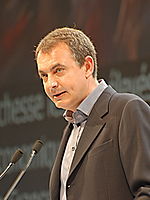 |
 Spain Spain |
President of the Government | Party of European Socialists National: PSOE Spanish Socialist Workers' Party The Spanish Socialist Workers' Party is a social-democratic political party in Spain. Its political position is Centre-left. The PSOE is the former ruling party of Spain, until beaten in the elections of November 2011 and the second oldest, exceeded only by the Partido Carlista, founded in... |
|||
 |
 Sweden Sweden |
Minister of State Prime Minister of Sweden The Prime Minister is the head of government in the Kingdom of Sweden. Before the creation of the office of a Prime Minister in 1876, Sweden did not have a head of government separate from its head of state, namely the King, in whom the executive authority was vested... |
European People's Party National: Moderaterna Moderate Party The Moderate Party is a centre-right, liberal conservative political party in Sweden. The party was founded in 1904 as the General Electoral League by a group of conservatives in the Swedish parliament... |
|||
 United Kingdom United Kingdom |
Prime Minister Prime Minister of the United Kingdom The Prime Minister of the United Kingdom of Great Britain and Northern Ireland is the Head of Her Majesty's Government in the United Kingdom. The Prime Minister and Cabinet are collectively accountable for their policies and actions to the Sovereign, to Parliament, to their political party and... |
Alliance of European Conservatives and Reformists National: Conservative Conservative Party (UK) The Conservative Party, formally the Conservative and Unionist Party, is a centre-right political party in the United Kingdom that adheres to the philosophies of conservatism and British unionism. It is the largest political party in the UK, and is currently the largest single party in the House... s |
||||
| European Union Commission European Commission The European Commission is the executive body of the European Union. The body is responsible for proposing legislation, implementing decisions, upholding the Union's treaties and the general day-to-day running of the Union.... Non voting representation |
President President of the European Commission The President of the European Commission is the head of the European Commission ― the executive branch of the :European Union ― the most powerful officeholder in the EU. The President is responsible for allocating portfolios to members of the Commission and can reshuffle or dismiss them if needed... |
European People's Party National: PSD Social Democratic Party (Portugal) The Social Democratic Party , is a centre-right liberal conservative political party in Portugal. It is commonly known by its initials, PSD; on ballot papers, its initials appear as PPD/PSD, with the first three letters coming from the party's original name, Democratic People's Party... |
Notes
Political parties
Almost all members of the European Council are members of a political party at national level, and most of these are members of a European-level political partyEuropean political party
A European political party, formally a political party at European level, informally a Europarty, is a type of political party organization operating transnationally in Europe and in the institutions of the European Union. They are regulated and funded by the European Union and are usually made up...
. These frequently hold pre-meetings of their European Council members, prior to its meetings. However, the European Council is composed in order to represent the EU's states rather than political parties and decisions are generally made on these lines, though ideological alignment can colour their political agreements and their choice of appointments (such as their President).
The table below outlines the number of leaders affiliated to each party and their total voting weight. The map to the right indicates the alignment of each individual country.
Seat and meetings
Meetings of the European Council usually take place four times a year in Brussels. Meetings traditionally last for two days, sometimes even longer when contentious issues were on the agenda. However, President Van Rompuy prefers to keep the summit to a single day. Until 2002, the venue of the council meeting rotated between member states, as its location was decided by the country holding the rotating presidency. However, the 22nd declaration attached to the Treaty of NiceTreaty of Nice
The Treaty of Nice was signed by European leaders on 26 February 2001 and came into force on 1 February 2003. It amended the Maastricht Treaty and the Treaty of Rome...
stated that; "As from 2002, one European Council meeting per Presidency will be held in Brussels. When the Union comprises 18 members, all European Council meetings will be held in Brussels."
Between 2002 and 2004, half the councils were held in Brussels and, after the 2004 enlargement, all were. The European Council uses the same building as the Council of the European Union, i.e., the Justus Lipsius building
Justus Lipsius building
The Justus Lipsius building is a building in Brussels that has been the headquarters of the Council of the European Union since 1995. Unlike the European Parliament, visiting is restricted...
. However, some extraordinary councils have taken place in the member state holding the Presidency, e.g., 2003 in Rome or 2005 in Hampton Court Palace
Hampton Court Palace
Hampton Court Palace is a royal palace in the London Borough of Richmond upon Thames, Greater London; it has not been inhabited by the British royal family since the 18th century. The palace is located south west of Charing Cross and upstream of Central London on the River Thames...
. Résidence Palace
Résidence Palace
The Résidence Palace is a complex of buildings between the Rue de la Loi/Wetstraat and the Chaussée d'Etterbeek/Etterbeeksesteenweg in the European Quarter of Brussels...
is currently being rebuilt for use as a purpose built summit building by the European Council and the Council. It is due to be completed in 2013.
The choice of a single seat was due to a number of factors, mostly logistical (organising the meetings became ever more onerous with the enlargement of the EU, especially for smaller countries) and security (the experience of the Belgian police in dealing with protesters (a protester in Gothenburg
Gothenburg
Gothenburg is the second-largest city in Sweden and the fifth-largest in the Nordic countries. Situated on the west coast of Sweden, the city proper has a population of 519,399, with 549,839 in the urban area and total of 937,015 inhabitants in the metropolitan area...
was shot by police)) as well as Brussels having fixed facilities for the Council and journalists at every meeting. Having a permanent seat in Brussels also emphasised that the European Council is an EU institution rather than a summit of sovereign States in the maner of the G20. Some have argued it is the de facto EU government, while others underline that it is the Commission that is the EU's day-to-day government and the European Council can best be compared to a collective head of state.
In 2007, the new situation for locating meetings became a source of contention with the Portuguese government wanting to sign the Lisbon Treaty in Lisbon, Portugal. The Belgian government, however, was keen not to set a precedent and insisted that the regular end of year summit took place in Brussels as usual. This meant that after the signing, photo suit, and formal dinner, the attendees of the summit were transferred from Lisbon to Brussels. Mirrored with the "travelling circus" of the European Parliament, this garnered protests from environmental groups describing the hypocrisy of demanding lower carbon emissions while flying across Europe for the same summit for political reasons.
There are no current plans to hold meetings outside of Brussels.
Reflection Group “Horizon 2020–2030”
The European Council of December 2007 established the Reflection Group “Horizon 2020–2030” to assist the European Union in effectively anticipating and meeting challenges in the longer term horizon of 2020 to 2030 . The group of 12 is chaired by Felipe GonzalezFelipe González
Felipe González Márquez is a Spanish socialist politician. He was the General Secretary of the Spanish Socialist Workers' Party from 1974 to 1997. To date, he remains the longest-serving Prime Minister of Spain, after having served four successive mandates from 1982 to 1996.-Early life:Felipe was...
. It started the work in December 2008 and shall present its report to the European Council by June 2010.
Members are:
- Felipe GonzalezFelipe GonzálezFelipe González Márquez is a Spanish socialist politician. He was the General Secretary of the Spanish Socialist Workers' Party from 1974 to 1997. To date, he remains the longest-serving Prime Minister of Spain, after having served four successive mandates from 1982 to 1996.-Early life:Felipe was...
(Chair) - Vaira Vike-FreibergaVaira Vike-FreibergaVaira Vīķe-Freiberga was the sixth President of Latvia, the first female President of Latvia and the first female leader in eastern Europe. She was elected President of Latvia in 1999 and re-elected in 2003.Dr...
(Vice-Chair) - Jorma OllilaJorma OllilaJorma Jaakko Ollila is the Chairman and former CEO of the Nokia Corporation and a Member of the Board of Directors of Ford Motor Company , UPM-Kymmene , and Otava Books and Magazines Group Ltd...
(Vice Chair) - Lykke FriisLykke FriisLykke Friis is a Danish politician for the party Venstre and former Minister for Climate and Energy and equal rights. Prior to this she was prorector at the University of Copenhagen, to which she was appointed for a five-year period starting March 1, 2006...
- Rem KoolhaasRem KoolhaasRemment Lucas Koolhaas is a Dutch architect, architectural theorist, urbanist and "Professor in Practice of Architecture and Urban Design" at the Graduate School of Design at Harvard University, USA. Koolhaas studied at the Netherlands Film and Television Academy in Amsterdam, at the Architectural...
- Richard LambertRichard LambertSir Richard Peter Lambert is the former Director-General of the CBI, and the present Chancellor of the University of Warwick.-Education:...
- Mario MontiMario MontiMario Monti is an Italian economist and academic who is Prime Minister of Italy, as well as Minister of Economy and Finance, since November 2011. Monti served as a European Commissioner from 1995 to 2004, with responsibility for the Internal Market, Services, Customs and Taxation from 1995 to 1999...
- Rainer Münz, head of Research & Development at Erste Group Bank AG and Senior Fellow at the German National Library of Economics (HWWI)
- Kalypso NicolaïdisKalypso NicolaïdisKalypso Aude Nicolaïdis is Professor of International Relations and Director of the European Studies Centre at Oxford University. She teaches in the areas of European integration, international relations, international political economy, negotiation and game theory and research methods as...
- Nicole NotatNicole NotatNicole Notat, born 26 July 1947 in Châtrices, Marne, is the former secretary general of the union CFDT. She is currently founder and president of Vigeo, a company committed to a concept of sustainable development....
, ex secretary-general of the trade union CFDT and she is currently chief executive officer of VigeoVigeoVigeo is a corporate social responsibility ratings agency, established in 2002 in France. Vigeo measures companies' CSR performance on environmental, social and governance criteria and identifies ESG risk factors.-Business area:...
. - Wolfgang SchusterWolfgang SchusterWolfgang Schuster has been the Lord Mayor of Stuttgart, Germany, since January 1997. He is the successor to Manfred Rommel and a member of the CDU.-Studies and early positions:...
- Lech Walesa