

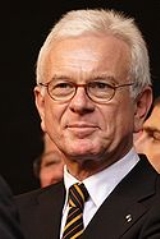
President of the European Parliament

Encyclopedia
The President of the European Parliament presides over the debates and activities of the European Parliament
. He or she also represents the Parliament within the EU and internationally. The President's signature is required for enacting most EU laws and the EU budget.
Presidents serve two-and-a-half-year terms, normally divided between the two major political parties. There have been twenty-eight Presidents since the Parliament was created in 1952, thirteen of whom have served since the first Parliamentary election in 1979
. Two Presidents have been women and most have come from the older member states. The current President is Jerzy Buzek
of Poland.
who chair debates when the President is not in the chamber. The President also chairs the meetings of the Bureau
, which is responsible for budgetary and administration issues, and the Conference of Presidents
which is a governing body composed of the presidents of each of the parliament's political groups.
. When the European Council
meets, the President addresses it to give the Parliament's position on subjects on the Council's agenda. The President also takes part in Intergovernmental Conference
s on new treaties
. The President's signature is also required for the budget of the European Union and Union acts adopted under codecision procedure to be adopted. The President also chairs conciliation committees with the Council under these areas.
In most countries, the protocol of the head of state
comes before all others, however in the EU the Parliament is listed as the first institution, and hence the protocol of its President comes before any other European, or national, protocol. The gifts given to numerous visiting dignitaries depends upon the President. President Josep Borrell
MEP of Spain gave his counterparts a crystal cup created by an artist from Barcelona which had engraved upon it parts of the Charter of Fundamental Rights
among other things.
With the reorganisation of leading EU posts under the Lisbon Treaty, there was some criticism of each posts vague responsibilities. Ukrainian ambassador to the EU Andriy Veselovsky praised the framework and clarified it in his own terms: The President of the European Commission
speaks as the EU's "government" while the President of the European Council
is a "strategist". The High Representative
specialises in "bilateral relations" while the European Commissioner for Enlargement and European Neighbourhood Policy deals in technical matters such as the free trade agreement with Ukraine. The Parliament's President meanwhile articulates the EU's values such as democratic elections in other countries.
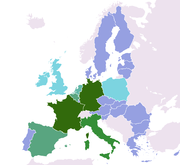 President is elected for two-and-a-half-year terms, meaning two elections per parliamentary term, hence two Presidents may serve during any one Parliamentary term. Since the European People's Party
and Party of European Socialists
began co-operating in the 1980s, they have had a tradition of splitting the two posts between them. In practice this means, in 2004–2009 for example, that the People's Party supported the Socialist candidate for President and, when his term expired in 2007, the Socialists supported the People's Party candidate for President. This results in large majorities for Presidents, although there are some exceptions: for example from 1999–2004, under a People's Party–Liberal
deal, the President for the second half of the term was a Liberal, rather than a Socialist.
Starting from the 2009–2014 session of the Parliament the outgoing President presides over the election of the new President, provided that the outgoing President is re-elected as an MEP. If the outgoing President is not re-elected as an MEP then one of the 14 Vice-Presidents takes up the role. While the outgoing President or Vice President is in the chair, they hold all the powers of the President, but the only business that may be addressed is the election of the new President.
Before the ballot nominations are handed to the chair who announces them to Parliament. If no member holds an absolute majority after three ballots, a fourth is held with only the two members holding the highest number of votes on the previous ballot. If there is still a tie following this, the eldest candidate is declared elected.
A number of notable figures have been President of the Parliament and its predecessors. The first President was Paul-Henri Spaak
MEP, one of the founding fathers of the Union
. Other founding fathers include Alcide de Gasperi
MEP and Robert Schuman
MEP. The two female Presidents were Simone Veil
MEP in 1979 (first President of the elected Parliament) and Nicole Fontaine
MEP in 1999, both Frenchwomen. Jerzy Buzek
, former Prime Minister of Poland and member of Solidarity Electoral Action, was elected as the first president from the central and eastern European countries which joined in the 2000s (more precisely, he is the first person from a country that joined the EU after 1986 to hold the post).
). The previous term has seen a great amount of co-operation between the two groups following on from the 1999–2004 term which saw an EPP-ELDR alliance.
Meanwhile, Graham Watson
, the leader of ALDE, stated he wished to challenge this system of carving up the post, and presented himself as a candidate. He made a point of running a public campaign, to contrast against the closed-doors agreement of Peoples Party-Socialists, which he claimed was the first such campaign to be run. Through this, he also stated he hoped to open up a debate on the role of the President and make the figure more dynamic, to counter balance the growing power of the Presidency of the Council of the European Union
. However, on 8 July 2009 Watson announced that he withdrew his candidacy thus leaving Buzek with only one opponent. The other official candidate was Eva-Britt Svensson
, nominated from EUL-NGL
. She campaigned with the slogan "a different voice". She was the first MEP from Sweden to candidate to the position.
In the first vote of the new Parliament Jerzy Buzek
(EPP
, Poland) was elected Parliament President, winning with 555 votes to 89 votes over his opponent Eva-Britt Svensson
(EUL-NGL
, Sweden).
), presided over the chamber during the election of the President rather than the previous president. The member had all the duties of President but the only business that could be addressed was the election of the President.
It had been feared that, after the 2009 elections
, Jean-Marie Le Pen
, a far right MEP from France who had been convicted for Holocaust denial
in his home country might be the oldest member, aged 81. In response to this concern, the Parliament's rules were changed (Corbett report) so that the outgoing President (if re-elected as an MEP) or one of the outgoing Vice-Presidents would chair the first session of Parliament until a new President was elected. Green co-head Daniel Cohn-Bendit
wanted to change the rules so that the youngest member would chair the session, to reflect the future. In the event, after the election, former Italian Prime Minister Ciriaco de Mita
was in fact the oldest member, rather than Le Pen.
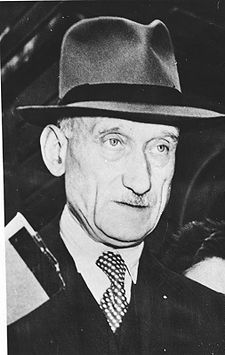
 The two major factions of the European Parliament, the EPP and the S&D, have reached a formal agreement to share the Presidency under the 2009–2014 term. Under the agreement, Jerzy Buzek will be President in the first half of the term and a S&D member, probably Martin Schulz
(SPD
, Germany) in the second half (2012–2014) of the term.
The list below includes all Presidents as far back as 1952. However official Parliamentary history does not see continuity between the Common Assembly and the post-1958 European Communities
Parliamentary Assembly (the 50th anniversary of the European Parliament was celebrated in 2008, not 2002) so Jerzy Buzek would be the 24th President, not the 28th.
European Parliament
The European Parliament is the directly elected parliamentary institution of the European Union . Together with the Council of the European Union and the Commission, it exercises the legislative function of the EU and it has been described as one of the most powerful legislatures in the world...
. He or she also represents the Parliament within the EU and internationally. The President's signature is required for enacting most EU laws and the EU budget.
Presidents serve two-and-a-half-year terms, normally divided between the two major political parties. There have been twenty-eight Presidents since the Parliament was created in 1952, thirteen of whom have served since the first Parliamentary election in 1979
European Parliament election, 1979
The 1979 European elections were parliamentary elections held across all 9 European Community member states. They were the first European elections to be held, allowing citizens to elect 410 MEPs to the European Parliament, and also the first international election in history.Seats in the...
. Two Presidents have been women and most have come from the older member states. The current President is Jerzy Buzek
Jerzy Buzek
Jerzy Karol Buzek is a Polish engineer, academic lecturer and politician who was the ninth post-Cold War Prime Minister of Poland from 1997 to 2001...
of Poland.
Role in Parliament
The President chairs debates and oversees all the activities of the Parliament and its constituent bodies (ensuring the Parliament's rules of procedure are applied), in this the role is similar to that of a speaker in a national parliament. Below the President, there are 14 Vice-PresidentsVice President of the European Parliament
There are fourteen Vice Presidents of the European Parliament who sit in for the President in presiding over the plenary of the European Parliament.-Role:...
who chair debates when the President is not in the chamber. The President also chairs the meetings of the Bureau
Bureau (European Parliament)
The Bureau of the European Parliament is responsible for matters relating to the budget, administration, organisation and staff. It is composed of the President of the European Parliament along with all 14 Vice-Presidents and the five Quaestors . They are elected for two and a half years with the...
, which is responsible for budgetary and administration issues, and the Conference of Presidents
Conference of Presidents
In the European Union, the Conference of Presidents is a governing body of the European Parliament. The body is responsible for the organisation of Parliament, its administrative matters and agenda....
which is a governing body composed of the presidents of each of the parliament's political groups.
Position in the Union
He or she represents Parliament in all legal matters and external relations, particularly international relationsInternational relations
International relations is the study of relationships between countries, including the roles of states, inter-governmental organizations , international nongovernmental organizations , non-governmental organizations and multinational corporations...
. When the European Council
European Council
The European Council is an institution of the European Union. It comprises the heads of state or government of the EU member states, along with the President of the European Commission and the President of the European Council, currently Herman Van Rompuy...
meets, the President addresses it to give the Parliament's position on subjects on the Council's agenda. The President also takes part in Intergovernmental Conference
Intergovernmental Conference
An Intergovernmental Conference is the formal procedure for negotiating amendments to the founding treaties of the European Union. Under the treaties, an IGC is called into being by the European Council, and is composed of representatives of the member states, with the Commission, and to a lesser...
s on new treaties
Treaties of the European Union
The Treaties of the European Union are a set of international treaties between the European Union member states which sets out the EU's constitutional basis. They establish the various EU institutions together with their remit, procedures and objectives...
. The President's signature is also required for the budget of the European Union and Union acts adopted under codecision procedure to be adopted. The President also chairs conciliation committees with the Council under these areas.
In most countries, the protocol of the head of state
Head of State
A head of state is the individual that serves as the chief public representative of a monarchy, republic, federation, commonwealth or other kind of state. His or her role generally includes legitimizing the state and exercising the political powers, functions, and duties granted to the head of...
comes before all others, however in the EU the Parliament is listed as the first institution, and hence the protocol of its President comes before any other European, or national, protocol. The gifts given to numerous visiting dignitaries depends upon the President. President Josep Borrell
Josep Borrell
Josep Borrell Fontelles is a Spanish politician. He was nominated President of the European University Institute on 12 December 2008, and assumed this position in January 2010. Borrell was President of the European Parliament from 20 July 2004 until 16 January 2007...
MEP of Spain gave his counterparts a crystal cup created by an artist from Barcelona which had engraved upon it parts of the Charter of Fundamental Rights
Charter of Fundamental Rights of the European Union
The Charter of Fundamental Rights of the European Union enshrines certain political, social, and economic rights for European Union citizens and residents, into EU law. It was drafted by the European Convention and solemnly proclaimed on 7 December 2000 by the European Parliament, the Council of...
among other things.
With the reorganisation of leading EU posts under the Lisbon Treaty, there was some criticism of each posts vague responsibilities. Ukrainian ambassador to the EU Andriy Veselovsky praised the framework and clarified it in his own terms: The President of the European Commission
President of the European Commission
The President of the European Commission is the head of the European Commission ― the executive branch of the :European Union ― the most powerful officeholder in the EU. The President is responsible for allocating portfolios to members of the Commission and can reshuffle or dismiss them if needed...
speaks as the EU's "government" while the President of the European Council
President of the European Council
The President of the European Council is a principal representative of the European Union on the world stage, and the person presiding over and driving forward the work of the European Council...
is a "strategist". The High Representative
High Representative
High Representative may refer to either:* The High Representative of the Union for Foreign Affairs and Security Policy High Representative may refer to either:* The High Representative of the Union for Foreign Affairs and Security Policy High Representative may refer to either:* The High...
specialises in "bilateral relations" while the European Commissioner for Enlargement and European Neighbourhood Policy deals in technical matters such as the free trade agreement with Ukraine. The Parliament's President meanwhile articulates the EU's values such as democratic elections in other countries.
Election
European People's Party
The European People's Party is a pro-European centre-right European political party. The EPP was founded in 1976 by Christian democratic parties, but later it increased its membership to include conservative parties and parties of other centre-right perspectives.The EPP is the most influential of...
and Party of European Socialists
Party of European Socialists
The Party of European Socialists is a European political party led by Sergei Stanishev, former Prime Minister of Bulgaria. The PES comprises social-democratic national-level political parties primarily from Member state of the European Union, as well as other nations of the European continent. The...
began co-operating in the 1980s, they have had a tradition of splitting the two posts between them. In practice this means, in 2004–2009 for example, that the People's Party supported the Socialist candidate for President and, when his term expired in 2007, the Socialists supported the People's Party candidate for President. This results in large majorities for Presidents, although there are some exceptions: for example from 1999–2004, under a People's Party–Liberal
European Liberal Democrat and Reform Party
The European Liberal Democrat and Reform Party is a European political party mainly active in the European Union, composed of 56 national-level liberal and liberal-democratic parties from across Europe...
deal, the President for the second half of the term was a Liberal, rather than a Socialist.
Starting from the 2009–2014 session of the Parliament the outgoing President presides over the election of the new President, provided that the outgoing President is re-elected as an MEP. If the outgoing President is not re-elected as an MEP then one of the 14 Vice-Presidents takes up the role. While the outgoing President or Vice President is in the chair, they hold all the powers of the President, but the only business that may be addressed is the election of the new President.
Before the ballot nominations are handed to the chair who announces them to Parliament. If no member holds an absolute majority after three ballots, a fourth is held with only the two members holding the highest number of votes on the previous ballot. If there is still a tie following this, the eldest candidate is declared elected.
A number of notable figures have been President of the Parliament and its predecessors. The first President was Paul-Henri Spaak
Paul-Henri Spaak
Paul Henri Charles Spaak was a Belgian Socialist politician and statesman.-Early life:Paul-Henri Spaak was born on 25 January 1899 in Schaerbeek, Belgium, to a distinguished Belgian family. His grandfather, Paul Janson was an important member of the Liberal Party...
MEP, one of the founding fathers of the Union
Founding fathers of the European Union
The Founding Fathers of the European Union are a number of men who have been recognised as making a major contribution to the development of European unity and what is now the European Union. There is no official list of founding fathers or a single event defining them so some ideas vary.-Europe's...
. Other founding fathers include Alcide de Gasperi
Alcide De Gasperi
Alcide De Gasperi was an Italian statesman and politician and founder of the Christian Democratic Party. From 1945 to 1953 he was the prime minister of eight successive coalition governments. His eight-year rule remains a landmark of political longevity for a leader in modern Italian politics...
MEP and Robert Schuman
Robert Schuman
Robert Schuman was a noted Luxembourgish-born French statesman. Schuman was a Christian Democrat and an independent political thinker and activist...
MEP. The two female Presidents were Simone Veil
Simone Veil
Simone Veil, DBE is a French lawyer and politician who served as Minister of Health under Valéry Giscard d'Estaing, President of the European Parliament and member of the Constitutional Council of France....
MEP in 1979 (first President of the elected Parliament) and Nicole Fontaine
Nicole Fontaine
Nicole Fontaine is a French politician and Member of the European Parliament for the Île-de-France. She is a member of the Union for a Popular Movement, part of the European People's Party...
MEP in 1999, both Frenchwomen. Jerzy Buzek
Jerzy Buzek
Jerzy Karol Buzek is a Polish engineer, academic lecturer and politician who was the ninth post-Cold War Prime Minister of Poland from 1997 to 2001...
, former Prime Minister of Poland and member of Solidarity Electoral Action, was elected as the first president from the central and eastern European countries which joined in the 2000s (more precisely, he is the first person from a country that joined the EU after 1986 to hold the post).
2009
Buzek's presidency is part of the usual People's Party – Socialist agreement to have one presidency each of the two during each parliament. For the 2009–2014 term Buzek gets the post for the first term of office of two and a half years, and someone from the Socialists will get it for the second (this is expected to be current group leader Martin SchulzMartin Schulz
Martin Schulz is a German politician and Member of the European Parliament for the Social Democratic Party of Germany, since 2004 leader of the Socialists in the European Parliament .-Career:* 1975-1977: Apprentice...
). The previous term has seen a great amount of co-operation between the two groups following on from the 1999–2004 term which saw an EPP-ELDR alliance.
| Oldest members | ||||
|---|---|---|---|---|
| Name | Party | State | Date | Age |
| Louise Weiss Louise Weiss Louise Weiss was a French author, journalist, feminist and European politician.- Life :Louise Weiss came from a cosmopolitan family of Alsace. The ancestors of her Jewish mother, Jeanne Javal, originated from the small Alsatian town of Seppois-le-Bas... |
EPP European People's Party The European People's Party is a pro-European centre-right European political party. The EPP was founded in 1976 by Christian democratic parties, but later it increased its membership to include conservative parties and parties of other centre-right perspectives.The EPP is the most influential of... |
France | 1979 | 86 |
| 1982 | 89 | |||
| ? | ? | ? | 1984 | ? |
| ? | ? | ? | 1987 | ? |
| Claude Autant-Lara Claude Autant-Lara Claude Autant-Lara , was a French film director and later Member of the European Parliament .-Biography:... |
European Right | France | 1989 | 88 |
| ? | ? | 1992 | ? | |
| Vassilis Ephremidis | GUE/NGL European United Left–Nordic Green Left European United Left/Nordic Green Left is a left-wing political group with seats in the European Parliament since 1995.-Position:According to its 1994 constituent declaration, the group is opposed to the present European political structure, but committed to integration... |
Greece | 1994 | 79 |
| Otto von Habsburg Otto von Habsburg Otto von Habsburg , also known by his royal name as Archduke Otto of Austria, was the last Crown Prince of Austria-Hungary from 1916 until the dissolution of the empire in 1918, a realm which comprised modern-day Austria, Hungary, Bosnia and Herzegovina, Croatia, the Czech Republic, Slovakia,... |
EPP | Germany | 1997 | 85 |
| Giorgio Napolitano Giorgio Napolitano Giorgio Napolitano is an Italian politician who has been the 11th President of Italy since 2006. A long-time member of the Italian Communist Party and later the Democrats of the Left, he served as President of the Chamber of Deputies from 1992 to 1994 and as Minister of the Interior from 1996 to... |
PES Party of European Socialists The Party of European Socialists is a European political party led by Sergei Stanishev, former Prime Minister of Bulgaria. The PES comprises social-democratic national-level political parties primarily from Member state of the European Union, as well as other nations of the European continent. The... |
Italy | 1999 | 74 |
| 2002 | 77 | |||
| Giovanni Berlinguer Giovanni Berlinguer Giovanni Berlinguer , Cavaliere di Gran Croce OMRI , is an Italian politician and Professor of Social Medicine.He was born in Sassari, Sardinia, the son of Mario Berlinguer... |
PES | Italy | 2004 | 80 |
| 2007 | 83 | |||
Meanwhile, Graham Watson
Graham Watson
Sir Graham Robert Watson is a European politician from the United Kingdom. He has served as a Member of the European Parliament for South West England since 1994 and was leader of the liberal group in Parliament for seven years between 2002 and 2009.-Early life:Graham Watson was born in Rothesay...
, the leader of ALDE, stated he wished to challenge this system of carving up the post, and presented himself as a candidate. He made a point of running a public campaign, to contrast against the closed-doors agreement of Peoples Party-Socialists, which he claimed was the first such campaign to be run. Through this, he also stated he hoped to open up a debate on the role of the President and make the figure more dynamic, to counter balance the growing power of the Presidency of the Council of the European Union
Presidency of the Council of the European Union
The Presidency of the Council of the European Union is the responsibility for the functioning of the Council of the European Union that rotates between the member states of the European Union every six months. The presidency is not a single president but rather the task is undertaken by a national...
. However, on 8 July 2009 Watson announced that he withdrew his candidacy thus leaving Buzek with only one opponent. The other official candidate was Eva-Britt Svensson
Eva-Britt Svensson
Eva-Britt Svensson is a Swedish politician and former Member of the European Parliament. She is a member of the Left Party....
, nominated from EUL-NGL
European United Left–Nordic Green Left
European United Left/Nordic Green Left is a left-wing political group with seats in the European Parliament since 1995.-Position:According to its 1994 constituent declaration, the group is opposed to the present European political structure, but committed to integration...
. She campaigned with the slogan "a different voice". She was the first MEP from Sweden to candidate to the position.
In the first vote of the new Parliament Jerzy Buzek
Jerzy Buzek
Jerzy Karol Buzek is a Polish engineer, academic lecturer and politician who was the ninth post-Cold War Prime Minister of Poland from 1997 to 2001...
(EPP
European People's Party–European Democrats
The Group of the European People's Party , abbreviated to EPP Group, is a centre-right political group of the European Parliament...
, Poland) was elected Parliament President, winning with 555 votes to 89 votes over his opponent Eva-Britt Svensson
Eva-Britt Svensson
Eva-Britt Svensson is a Swedish politician and former Member of the European Parliament. She is a member of the Left Party....
(EUL-NGL
European United Left–Nordic Green Left
European United Left/Nordic Green Left is a left-wing political group with seats in the European Parliament since 1995.-Position:According to its 1994 constituent declaration, the group is opposed to the present European political structure, but committed to integration...
, Sweden).
Oldest member
Prior to 2009, the "oldest member", the eldest MEP (similar to the Father of the HouseFather of the House
Father of the House is a term that has by tradition been unofficially bestowed on certain members of some national legislatures, most notably the House of Commons in the United Kingdom. In some legislatures the term refers to the oldest member, but in others it refers the longest-serving member.The...
), presided over the chamber during the election of the President rather than the previous president. The member had all the duties of President but the only business that could be addressed was the election of the President.
It had been feared that, after the 2009 elections
European Parliament election, 2009
Elections to the European Parliament were held in the 27 member states of the European Union between 4 and 7 June 2009. A total of 736 Members of the European Parliament were elected to represent some 500 million Europeans, making these the biggest trans-national elections in history...
, Jean-Marie Le Pen
Jean-Marie Le Pen
Jean-Marie Le Pen is a French far right-wing and nationalist politician who is founder and former president of the Front National party. Le Pen has run for the French presidency five times, most notably in 2002, when in a surprise upset he came second, polling more votes in the first round than...
, a far right MEP from France who had been convicted for Holocaust denial
Holocaust denial
Holocaust denial is the act of denying the genocide of Jews in World War II, usually referred to as the Holocaust. The key claims of Holocaust denial are: the German Nazi government had no official policy or intention of exterminating Jews, Nazi authorities did not use extermination camps and gas...
in his home country might be the oldest member, aged 81. In response to this concern, the Parliament's rules were changed (Corbett report) so that the outgoing President (if re-elected as an MEP) or one of the outgoing Vice-Presidents would chair the first session of Parliament until a new President was elected. Green co-head Daniel Cohn-Bendit
Daniel Cohn-Bendit
Daniel Marc Cohn-Bendit is a Franco-German politician, active in both countries. He was a student leader during the unrest of May 1968 in France and he was also known during that time as Dany le Rouge...
wanted to change the rules so that the youngest member would chair the session, to reflect the future. In the event, after the election, former Italian Prime Minister Ciriaco de Mita
Ciriaco de Mita
Ciriaco Luigi de Mita is an Italian politician. He served as the 47th Prime Minister of Italy from 1988 to 1989 and is currently Member of the European Parliament.-Biography:De Mita was born in Nusco, in the Avellinese hinterland....
was in fact the oldest member, rather than Le Pen.
List of office holders
Martin Schulz
Martin Schulz is a German politician and Member of the European Parliament for the Social Democratic Party of Germany, since 2004 leader of the Socialists in the European Parliament .-Career:* 1975-1977: Apprentice...
(SPD
Social Democratic Party of Germany
The Social Democratic Party of Germany is a social-democratic political party in Germany...
, Germany) in the second half (2012–2014) of the term.
The list below includes all Presidents as far back as 1952. However official Parliamentary history does not see continuity between the Common Assembly and the post-1958 European Communities
European Communities
The European Communities were three international organisations that were governed by the same set of institutions...
Parliamentary Assembly (the 50th anniversary of the European Parliament was celebrated in 2008, not 2002) so Jerzy Buzek would be the 24th President, not the 28th.
| Dates in office | Name | Party | Group | Country | |
|---|---|---|---|---|---|
| Presidents of the Common Assembly, 1952–1958 | |||||
| 1952–1954 | Paul-Henri Spaak Paul-Henri Spaak Paul Henri Charles Spaak was a Belgian Socialist politician and statesman.-Early life:Paul-Henri Spaak was born on 25 January 1899 in Schaerbeek, Belgium, to a distinguished Belgian family. His grandfather, Paul Janson was an important member of the Liberal Party... |
BSP-PSB Belgian Socialist Party The Belgian Socialist Party was a democratic socialist party which existed in Belgium from 1945 to 1978.The BSP was founded by activists from the Belgian Labour Party , which was the first Belgian socialist party. It ceased to function during the Second World War, while Belgium was under Nazi... |
SOC Party of European Socialists The Party of European Socialists is a European political party led by Sergei Stanishev, former Prime Minister of Bulgaria. The PES comprises social-democratic national-level political parties primarily from Member state of the European Union, as well as other nations of the European continent. The... |
||
| 1954 | Alcide De Gasperi Alcide De Gasperi Alcide De Gasperi was an Italian statesman and politician and founder of the Christian Democratic Party. From 1945 to 1953 he was the prime minister of eight successive coalition governments. His eight-year rule remains a landmark of political longevity for a leader in modern Italian politics... |
DC Christian Democracy (Italy) Christian Democracy was a Christian democratic party in Italy. It was founded in 1943 as the ideological successor of the historical Italian People's Party, which had the same symbol, a crossed shield .... |
CD European People's Party The European People's Party is a pro-European centre-right European political party. The EPP was founded in 1976 by Christian democratic parties, but later it increased its membership to include conservative parties and parties of other centre-right perspectives.The EPP is the most influential of... |
||
| 1954–1956 | Giuseppe Pella Giuseppe Pella Giuseppe Pella was an Italian Christian Democratic politician who served as the 32nd Prime Minister of Italy from 1953 to 1954. He was also President of the European Parliament from 1954 to 1956 after the death of Alcide De Gasperi.He was born in Valdengo, Piedmont... |
DC | CD | ||
| 1956–1958 (1st) | Hans Furler Hans Furler Hans Furler was a German christian-democrat politician.He was the president of the European Parliament from 1956 to 1958 and from 1960 to 1962.-Early life:... |
CDU Christian Democratic Union (Germany) The Christian Democratic Union of Germany is a Christian democratic and conservative political party in Germany. It is regarded as on the centre-right of the German political spectrum... |
CD | ||
| Presidents of the Parliamentary Assembly, 1958–1962 | |||||
| 1958–1960 | Robert Schuman Robert Schuman Robert Schuman was a noted Luxembourgish-born French statesman. Schuman was a Christian Democrat and an independent political thinker and activist... |
MRP Popular Republican Movement The Popular Republican Movement was a French Christian democratic party of the Fourth Republic... |
CD | ||
| 1960–1962 (2nd) | Hans Furler Hans Furler Hans Furler was a German christian-democrat politician.He was the president of the European Parliament from 1956 to 1958 and from 1960 to 1962.-Early life:... |
CDU | CD | ||
| Presidents of the appointed Parliament, 1962–1979 | |||||
| 1962–1964 | Gaetano Martino Gaetano Martino Gaetano Martino was an Italian politician and university teacher.A native of Messina, Sicily, he was a member of Italian Liberal Party. Gaetano Martino was one of the participants of the Messina Conference in 1955, which would lead to the Treaty of Rome in 1957... |
PLI Italian Liberal Party The Italian Liberal Party was a liberal political party in Italy.-Origins:The origins of liberalism in Italy came from the so-called "Historical Right", a parliamentary group formed by Camillo Benso di Cavour in the Parliament of the Kingdom of Sardinia following the 1848 revolution... |
LIB European Liberal Democrat and Reform Party The European Liberal Democrat and Reform Party is a European political party mainly active in the European Union, composed of 56 national-level liberal and liberal-democratic parties from across Europe... |
||
| 1964–1965 | Jean Duvieusart Jean Duvieusart Jean Pierre Duvieusart was a Belgian Catholic politician of the PSC-CVP and minister of economy . After two months as the 36th Prime Minister of Belgium , he resigned after the abdication of King Leopold III... |
RW Walloon Rally The Walloon Rally is a Belgian political party, active in Wallonia since 1968. The party favoured federalism and since 1985 independence.... |
CD | ||
| 1965–1966 | Victor Leemans Victor Leemans Victor Leemans was a Belgian sociologist, politician and a prominent ideologist of the radical Flemish movement in the 1930s. He was a member of the militant organisation Verdinaso, and is seen by some as the main Flemish exponent of the historical phenomenon known as the Conservative... |
CVP Christian Democratic and Flemish The Christian Democratic and Flemish is a political party of Belgium, formerly called Christian People's Party... |
CD | ||
| 1966–1969 | Alain Poher Alain Poher Alain Émile Louis Marie Poher was a French centrist politician, affiliated first with the Popular Republican Movement and later with the Democratic Centre. He served as a Senator for Val-de-Marne from 1946 to 1995. He was President of the Senate from 3 October 1968 to 1 October 1992 and, in that... |
MRP | CD | ||
| 1969–1971 | Mario Scelba Mario Scelba Mario Scelba was an Italian Christian Democratic politician who served as the 34th Prime Minister of Italy from February 1954 to July 1955... |
DC | CD | ||
| 1971–1973 | Walter Behrendt Walter Behrendt Walter Behrendt was a German politician of the Social Democratic Party and president of the European parliament .... |
SPD Social Democratic Party of Germany The Social Democratic Party of Germany is a social-democratic political party in Germany... |
SOC | ||
| 1973–1975 | Cornelis Berkhouwer Cornelis Berkhouwer Cornelis Berkhouwer was a Dutch-European politician.He was a Member of the European Parliament between 1964 and 1984, for the Dutch People's Party for Freedom and Democracy, which sat as part of the Liberal Democrat group in the Parliament. Between 13 March 1973 and 10 March 1975, he served as... |
VVD People's Party for Freedom and Democracy The People's Party for Freedom and Democracy is a conservative-liberal political party located in the Netherlands. The VVD supports private enterprise in the Netherlands and is often perceived as an economic liberal party in contrast to the social-liberal Democrats 66 alongside which it sits in... |
LIB | ||
| 1975–1977 | Georges Spénale Georges Spénale Georges Spénale is a French writer, poet and politician. He was the president of the European Parliament from 1975 to 1977.... |
SPD | SOC | ||
| 1977–1979 | Emilio Colombo Emilio Colombo Emilio Colombo is an Italian politician who was Prime Minister of Italy from 1970 to 1972. In addition to having held top positions in Italian governments, he was also active in European politics.-Biography:... |
DC | CD | ||
| Term | |Presidents of the elected Parliament, 1979 onwards | ||||
| 1 European Parliament election, 1979 The 1979 European elections were parliamentary elections held across all 9 European Community member states. They were the first European elections to be held, allowing citizens to elect 410 MEPs to the European Parliament, and also the first international election in history.Seats in the... |
July 1979–January 1981 | Simone Veil Simone Veil Simone Veil, DBE is a French lawyer and politician who served as Minister of Health under Valéry Giscard d'Estaing, President of the European Parliament and member of the Constitutional Council of France.... |
UDF Union for French Democracy The Union for French Democracy was a French centrist political party. It was founded in 1978 as an electoral alliance to support President Valéry Giscard d'Estaing in order to counterbalance the Gaullist preponderance over the right. This name was chosen due to the title of Giscard d'Estaing's... |
ELDR European Liberal Democrat and Reform Party The European Liberal Democrat and Reform Party is a European political party mainly active in the European Union, composed of 56 national-level liberal and liberal-democratic parties from across Europe... |
|
| January 1982–July 1984 | Piet Dankert | PvdA Labour Party (Netherlands) The Labour Party , is a social-democratic political party in the Netherlands. Since the 2003 Dutch General Election, the PvdA has been the second largest political party in the Netherlands. The PvdA was a coalition member in the fourth Balkenende cabinet following 22 February 2007... |
PES Party of European Socialists The Party of European Socialists is a European political party led by Sergei Stanishev, former Prime Minister of Bulgaria. The PES comprises social-democratic national-level political parties primarily from Member state of the European Union, as well as other nations of the European continent. The... |
||
| 2 European Parliament election, 1984 The 1984 election to the European Parliament was the first since the inaugural election of 1979 and the 1981 enlargement of the European Community to include Greece. It was also the last before the accession of Spain and Portugal in 1987.... |
July 1984–January 1986 | Pierre Pflimlin Pierre Pflimlin Pierre Eugène Jean Pflimlin was a French Christian democratic politician who served as the penultimate Prime Minister of the Fourth Republic for a few weeks in 1958, before being replaced by Charles de Gaulle during the crisis of that year.-Life:... |
UDF Union for French Democracy The Union for French Democracy was a French centrist political party. It was founded in 1978 as an electoral alliance to support President Valéry Giscard d'Estaing in order to counterbalance the Gaullist preponderance over the right. This name was chosen due to the title of Giscard d'Estaing's... /RPR Rally for the Republic The Rally for the Republic , was a French right-wing political party. Originating from the Union of Democrats for the Republic , it was founded by Jacques Chirac in 1976 and presented itself as the heir of Gaullism... |
EPP | |
| January 1987– July 1989 | Charles Henry Plumb Henry Plumb, Baron Plumb Charles Henry Plumb, Baron Plumb DL is a British farmer who went into politics as a leader of the National Farmers Union. He later became active in the Conservative Party and was elected as a Member of the European Parliament... |
CP Conservative Party (UK) The Conservative Party, formally the Conservative and Unionist Party, is a centre-right political party in the United Kingdom that adheres to the philosophies of conservatism and British unionism. It is the largest political party in the UK, and is currently the largest single party in the House... |
ED European Democrats The European Democrats was a loose association of conservative political parties in Europe. It is a political group in the Parliamentary Assembly of the Council of Europe... |
||
| 3 European Parliament election, 1989 The 1989 European Parliamentary Election was a European election held across the 12 European Community member states in June 1989. It was third European election but the first time that Spain and Portugal voted at the same time as the other members... |
July 1989–January 1991 | Enrique Barón Crespo Enrique Barón Crespo Enrique Barόn Crespo is a Spanish politician and lawyer. He is a member of the Spanish Socialist Workers' Party and sits with the Party of European Socialists group in the European Parliament.... |
PSOE Spanish Socialist Workers' Party The Spanish Socialist Workers' Party is a social-democratic political party in Spain. Its political position is Centre-left. The PSOE is the former ruling party of Spain, until beaten in the elections of November 2011 and the second oldest, exceeded only by the Partido Carlista, founded in... |
PES | |
| January 1992–July 1994 | Egon Klepsch Egon Klepsch Egon Alfred Klepsch was a German politician .In the years 1963–1969 Dr. Klepsch was Federal leader of the Junge Union. In 1965 he worked briefly as an election campaign manager for Ludwig Erhard. In the same year he was elected to the German Bundestag, to which he belonged until 1980.Since... |
CDU Christian Democratic Union (Germany) The Christian Democratic Union of Germany is a Christian democratic and conservative political party in Germany. It is regarded as on the centre-right of the German political spectrum... |
EPP | ||
| 4 European Parliament election, 1994 The 1994 European Parliamentary Election was a European election held across the 12 European Union member states in June 1994.This election saw the merge of the European People's Party and European Democrats, an increase in the overall number of seats and a fall in overall turnout to... |
July 1994–January 1996 | Klaus Hänsch Klaus Hänsch Klaus Hänsch is a German Politician. He is a Member of the European Parliament representing the SPD, and sits with the Party of European Socialists group.... |
SPD Social Democratic Party of Germany The Social Democratic Party of Germany is a social-democratic political party in Germany... |
PES | |
| January 1997–July 1999 | José María Gil-Robles José María Gil-Robles José María Gil-Robles y Gil-Delgado is a Spanish politician. He was formerly a Member of the European Parliament in the European People's Party group, and was President of the European Parliament from 1997 to 1999.-References:... |
PP People's Party (Spain) The People's Party is a conservative political party in Spain.The People's Party was a re-foundation in 1989 of the People's Alliance , a party led and founded by Manuel Fraga Iribarne, a former Minister of Tourism during Francisco Franco's dictatorship... |
EPP | ||
| 5 European Parliament election, 1999 The European Parliament Election, 1999 was a European election for all 626 members of the European Parliament held across the 15 European Union member states on 10, 11 and 13 June 1999. The voter turn-out was generally low, except in Belgium and Luxembourg, where voting is compulsory and where... |
July 1999–January 2001 | Nicole Fontaine Nicole Fontaine Nicole Fontaine is a French politician and Member of the European Parliament for the Île-de-France. She is a member of the Union for a Popular Movement, part of the European People's Party... |
UMP Union for a Popular Movement The Union for a Popular Movement is a centre-right political party in France, and one of the two major contemporary political parties in the country along with the center-left Socialist Party... |
EPP–ED European People's Party–European Democrats The Group of the European People's Party , abbreviated to EPP Group, is a centre-right political group of the European Parliament... |
|
| January 2002–July 2004 | Pat Cox Pat Cox Pat Cox is an Irish politician and former television current affairs presenter. He was President of the European Parliament from 2002 to 2004 and served as a member of the European Parliament from 1989–2004.... |
Ind Independent (politician) In politics, an independent or non-party politician is an individual not affiliated to any political party. Independents may hold a centrist viewpoint between those of major political parties, a viewpoint more extreme than any major party, or they may have a viewpoint based on issues that they do... |
ELDR | ||
| 6 6th European Parliament The Sixth European Parliament was the sixth five-year term of the elected European Parliament. It began on Tuesday 20 July 2004 in Strasbourg following the 2004 elections and ended after the 2009 elections.-Major events:* 10-13 June 2004... |
July 2004–January 2006 | Josep Borrell Josep Borrell Josep Borrell Fontelles is a Spanish politician. He was nominated President of the European University Institute on 12 December 2008, and assumed this position in January 2010. Borrell was President of the European Parliament from 20 July 2004 until 16 January 2007... |
PSOE Spanish Socialist Workers' Party The Spanish Socialist Workers' Party is a social-democratic political party in Spain. Its political position is Centre-left. The PSOE is the former ruling party of Spain, until beaten in the elections of November 2011 and the second oldest, exceeded only by the Partido Carlista, founded in... |
PES | |
| January 2007–July 2009 | Hans-Gert Pöttering Hans-Gert Pöttering Hans-Gert Pöttering is a German conservative politician , and was the President of the European Parliament from January 2007 to July 2009... |
CDU Christian Democratic Union (Germany) The Christian Democratic Union of Germany is a Christian democratic and conservative political party in Germany. It is regarded as on the centre-right of the German political spectrum... |
EPP–ED | ||
| 7 | July 2009–incumbent Term expires January 2012 |
Jerzy Buzek Jerzy Buzek Jerzy Karol Buzek is a Polish engineer, academic lecturer and politician who was the ninth post-Cold War Prime Minister of Poland from 1997 to 2001... |
PO Civic Platform Civic Platform , abbreviated to PO, is a centre-right, liberal conservative political party in Poland. It has been the major coalition partner in Poland's government since the 2007 general election, with party leader Donald Tusk as Prime Minister of Poland and Bronisław Komorowski as President... |
EPP | |
See also
- List of presidents of EU institutions
- President of the European CouncilPresident of the European CouncilThe President of the European Council is a principal representative of the European Union on the world stage, and the person presiding over and driving forward the work of the European Council...
- President of the European CommissionPresident of the European CommissionThe President of the European Commission is the head of the European Commission ― the executive branch of the :European Union ― the most powerful officeholder in the EU. The President is responsible for allocating portfolios to members of the Commission and can reshuffle or dismiss them if needed...
- Presidency of the Council of the European UnionPresidency of the Council of the European UnionThe Presidency of the Council of the European Union is the responsibility for the functioning of the Council of the European Union that rotates between the member states of the European Union every six months. The presidency is not a single president but rather the task is undertaken by a national...
- President of the European Council
External links
- President of the European Parliament – Official Website
- Duties of the President europarl.europa.eu
- Presidents of the European Parliament European Navigator
- Results of Presidential elections 1979–2007