
Home      Discussion      Topics      Dictionary      Almanac
Signup       Login
Persian Corridor

Persian Corridor

Overview
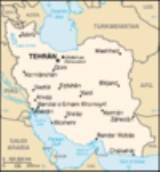
The Persian Corridor is the name for a supply route through Iran
Iran
Iran , officially the Islamic Republic of Iran , is a country in Southern and Western Asia. The name "Iran" has been in use natively since the Sassanian era and came into use internationally in 1935, before which the country was known to the Western world as Persia...

 into Soviet Azerbaijan
Azerbaijan SSR
The Azerbaijan Soviet Socialist Republic , also known as the Azerbaijan SSR for short, was one of the republics that made up the former Soviet Union....

 by which British aid and American Lend-Lease
Lend-Lease
Lend-Lease was the program under which the United States of America supplied the United Kingdom, the Soviet Union, China, Free France, and other Allied nations with materiel between 1941 and 1945. It was signed into law on March 11, 1941, a year and a half after the outbreak of war in Europe in...

 supplies were transferred to the Soviet Union during World War II.
Discussion
Ask a question about 'Persian Corridor'
Start a new discussion about 'Persian Corridor'
Answer questions from other users
Full Discussion Forum
 
Recent Discussions
Encyclopedia
The Persian Corridor is the name for a supply route through Iran
Iran
Iran , officially the Islamic Republic of Iran , is a country in Southern and Western Asia. The name "Iran" has been in use natively since the Sassanian era and came into use internationally in 1935, before which the country was known to the Western world as Persia...

 into Soviet Azerbaijan
Azerbaijan SSR
The Azerbaijan Soviet Socialist Republic , also known as the Azerbaijan SSR for short, was one of the republics that made up the former Soviet Union....

 by which British aid and American Lend-Lease
Lend-Lease
Lend-Lease was the program under which the United States of America supplied the United Kingdom, the Soviet Union, China, Free France, and other Allied nations with materiel between 1941 and 1945. It was signed into law on March 11, 1941, a year and a half after the outbreak of war in Europe in...

 supplies were transferred to the Soviet Union during World War II.

Background


Note: The nation of Iran has been referred to as "Persia" in the West since the time of the Persian Wars. The earliest Iranian peoples known to recorded history are the Parsua mentioned in an Akkadian
Akkadian language
Akkadian is an extinct Semitic language that was spoken in ancient Mesopotamia. The earliest attested Semitic language, it used the cuneiform writing system derived ultimately from ancient Sumerian, an unrelated language isolate...

 text. For hundreds of years, Persia was the proper English term for Iran, and the name stuck in the minds of many foreigners long after Reza Shah Pahlavi asked, in 1935, that his country be referred to by its native name. English-language official documents from the Persian Corridor period continue to make the word "Persia" completely interchangeable with name of the nation-state of "Iran." In correspondence by the government of the United Kingdom, usage of "Persia" over "Iran" was chosen by Winston Churchill to avoid possible confusion with neighboring Iraq.

Overthrow of the Shah

See main article Anglo-Soviet invasion of Iran
Anglo-Soviet invasion of Iran
The Anglo-Soviet invasion of Iran was the Allied invasion of the Imperial State of Iran during World War II, by British, Commonwealth, and Soviet armed forces. The invasion from August 25 to September 17, 1941, was codenamed Operation Countenance...


Following Germany's invasion of the USSR
Operation Barbarossa
Operation Barbarossa was the code name for Germany's invasion of the Soviet Union during World War II that began on 22 June 1941. Over 4.5 million troops of the Axis powers invaded the USSR along a front., the largest invasion in the history of warfare...

 in June 1941, Britain and the Soviet Union became allies. Both turned their attention to Iran. Britain and the USSR saw the newly opened Trans-Iranian Railway
Trans-Iranian Railway
The Trans-Iranian Railway was a major railway building project started in 1927 and completed in 1938, under the direction of the Persian monarch, Reza Shah, and entirely with indigenous capital. It links the capital Tehran with the Persian Gulf and Caspian Sea...

 as an attractive route to transport supplies from the Persian Gulf to the Soviet region. Britain and the USSR used concessions extracted in previous interventions to pressure Iran (and, in Britain's case, Iraq) into allowing the use of their territory for military and logistical purposes. Increased tensions with Britain especially led to pro-German rallies in Tehran. In August 1941, because Reza Shah
Reza Shah
Rezā Shāh, also known as Rezā Shāh Pahlavi and Rezā Shāh Kabir , , was the Shah of the Imperial State of Iran from December 15, 1925, until he was forced to abdicate by the Anglo-Soviet invasion of Iran on September 16, 1941.In 1925, Reza Shah overthrew Ahmad Shah Qajar, the last Shah of the Qajar...

 refused to expel all German nationals and come down clearly on the Allied side, Britain and the USSR invaded Iran, arrested the monarch and sent him into exile to South Africa
South Africa
The Republic of South Africa is a country in southern Africa. Located at the southern tip of Africa, it is divided into nine provinces, with of coastline on the Atlantic and Indian oceans...

, taking control of Iran's communications and the coveted railway.

In 1942 the United States, by then an ally of Britain and the USSR in World War II, sent a military force to Iran to help maintain and operate sections of the railway. The British and Soviet authorities allowed Reza Shah's system of government to collapse, and they limited the constitutional government interfaces. They put Reza Shah's son, Mohammad Reza Pahlavi
Mohammad Reza Pahlavi
Mohammad Rezā Shāh Pahlavi, Shah of Iran, Shah of Persia , ruled Iran from 16 September 1941 until his overthrow by the Iranian Revolution on 11 February 1979...

 onto the Iranian/Persian throne.

The new Shah soon signed an agreement pledging full non-military logistical cooperation with the British and Soviets, in exchange for full recognition of his country's independence, and also a promise to withdraw from Iran within six months of the war's conclusion. In September 1943, the Shah went further, and he declared war on Germany. He signed the Declaration by the United Nations entitling his country to a seat in the original United Nations
United Nations
The United Nations is an international organization whose stated aims are facilitating cooperation in international law, international security, economic development, social progress, human rights, and achievement of world peace...

. Two months later, he hosted the Tehran Conference
Tehran Conference
The Tehran Conference was the meeting of Joseph Stalin, Franklin D. Roosevelt and Winston Churchill between November 28 and December 1, 1943, most of which was held at the Soviet Embassy in Tehran, Iran. It was the first World War II conference amongst the Big Three in which Stalin was present...

 between Churchill, Roosevelt, and Stalin.

The presence of so many foreign troops in Iran accelerated social change and it roused nationalist sentiment in the country. In 1946, Hossein Gol-e-Golab
Hossein Gol-e-Golab
Hossein Gol-e-Golab Hossein Gol-e-Golab Hossein Gol-e-Golab (Persian حسین گل گلاب also given as Hosayn Golgolab, (1895 - March 12, 1984) was a polymath Iranian scholar and musician who wrote the nationalist anthem Ey Iran....

 published the nationalist song Ey Iran
Ey Iran
Ey Iran is a famous and popular anthem in Iran. The lyrics were written by Hossein Gol-e-Golab in 1946, the music was composed by Ruhollah Khaleghi, and it was first performed by Gholam Hossein Banan....

; it was reportedly inspired by an incident during the war in which Golab witnessed an American GI beating up a native Iranian greengrocer
Greengrocer
A greengrocer or fruiterer is a retail trader in fruit and vegetables; that is, in green groceries. Greengrocer is primarily a British and Australian term, and greengrocers' shops were once common in suburbs, towns and villages...

 in a marketplace dispute.

Anders' army


Meanwhile Soviet leader Joseph Stalin
Joseph Stalin
Joseph Vissarionovich Stalin was the Premier of the Soviet Union from 6 May 1941 to 5 March 1953. He was among the Bolshevik revolutionaries who brought about the October Revolution and had held the position of first General Secretary of the Communist Party of the Soviet Union's Central Committee...

, under pressure from the British and the Polish Government-in-Exile, began releasing some surviving Polish prisoners-of-war captured in 1939, and also Polish citizens subsequently deported by the occupying Soviets to the Soviet republics, with the aim of forming a Polish army to fight on the Allied side. General Władysław Anders was released from the Lubyanka
Lubyanka (KGB)
The Lubyanka is the popular name for the headquarters of the KGB and affiliated prison on Lubyanka Square in Moscow. It is a large building with a facade of yellow brick, designed by Alexander V...

 Prison, and he began assembling his troops. However, continued friction with the Soviets and their refusal to adequately supply the Polish troops with war equipment and food, as well as the Soviets' insistence on dispersing the not-yet-combat-ready Polish units along the front, led to the eventual evacuation of Anders's troops, along with a sizable contingent of Polish civilians, to Iran. These troops formed the core of what later became 2nd Polish Corps which went on to serve with distinction in the Italian campaign
Italian Campaign (World War II)
The Italian Campaign of World War II was the name of Allied operations in and around Italy, from 1943 to the end of the war in Europe. Joint Allied Forces Headquarters AFHQ was operationally responsible for all Allied land forces in the Mediterranean theatre, and it planned and commanded the...

, but some civilians settled permanently in Iran. Some Polish refugees who continue living in Iran today were featured in the 2002 independent film, A Forgotten Odyssey. More information is also available through the Kresy-Siberia Group.

Supply efforts


The Allies delivered all manner of materiel to the Soviets, from Studebaker US6
Studebaker US6
The Studebaker US6 is a class of 2.5-ton trucks manufactured by Studebaker during World War II, produced in the United States from 1941-1945 and in the Soviet Union beginning in 1942.-Specifications:...

 trucks to American B-24 bombers. Most supplies in the corridor arrived by ship at Persian Gulf
Persian Gulf
The Persian Gulf, in Southwest Asia, is an extension of the Indian Ocean located between Iran and the Arabian Peninsula.The Persian Gulf was the focus of the 1980–1988 Iran-Iraq War, in which each side attacked the other's oil tankers...

 ports, and then were carried north by railway or in truck convoys. Some goods were reloaded onto ships to cross the Caspian Sea
Caspian Sea
The Caspian Sea is the largest enclosed body of water on Earth by area, variously classed as the world's largest lake or a full-fledged sea. The sea has a surface area of and a volume of...

, and others continued by truck.

The United States Army forces in the corridor were originally under the Iran-Iraq Service Command - later renamed the Persian Gulf Service Command (PGSC). This was the successor to the original United States Military Iranian Mission, which had been put in place to deliver Lend-Lease supplies before the United States had entered the World War. The mission was originally commanded by Col. Don G. Shingler, who was then replaced late in 1942 by Brig. Gen. Donald H. Connolly. Both the Iran-Iraq Service Command and the PGSC were subordinate to the U.S. Army Forces in the Middle East (USAFIME)
U.S. Army Forces in the Middle East
United States Army Forces in the Middle East ' was a unified United States Army command during World War II established in August, 1942 by order of General George Marshall to oversee the Egypt-Libya Campaign....

. PGSC was eventually renamed simply the Persian Gulf Command
Persian Gulf Command
The Persian Gulf Command was a United States Army service command established in December 1943 to assure the supply of U.S. lend-lease war material to the Soviet Union. Its history originated in September 1941, when the U.S. Military Iranian Mission led by Engineer officer COL Raymond A. Wheeler ...

.

Statistics


The Allied supply efforts were enormous. The Americans alone delivered 175.5 million long ton
Long ton
Long ton is the name for the unit called the "ton" in the avoirdupois or Imperial system of measurements, as used in the United Kingdom and several other Commonwealth countries. It has been mostly replaced by the tonne, and in the United States by the short ton...

s (178.3 million metric tonne
Tonne
The tonne, known as the metric ton in the US , often put pleonastically as "metric tonne" to avoid confusion with ton, is a metric system unit of mass equal to 1000 kilograms. The tonne is not an International System of Units unit, but is accepted for use with the SI...

s) to the Soviets during the war, via numerous routes, including Arctic convoys of World War II
Arctic convoys of World War II
The Arctic convoys of World War II travelled from the United Kingdom and North America to the northern ports of the Soviet Union—Arkhangelsk and Murmansk. There were 78 convoys between August 1941 and May 1945...

 to the ports of Murmansk
Murmansk
Murmansk is a city and the administrative center of Murmansk Oblast, Russia. It serves as a seaport and is located in the extreme northwest part of Russia, on the Kola Bay, from the Barents Sea on the northern shore of the Kola Peninsula, not far from Russia's borders with Norway and Finland...

 and Archangelsk. Also, Soviet shipping carried supplies from the west coast of the United States and Canada to Vladivostok
Vladivostok
The city is located in the southern extremity of Muravyov-Amursky Peninsula, which is about 30 km long and approximately 12 km wide.The highest point is Mount Kholodilnik, the height of which is 257 m...

 in the Far East, since the Soviet Union was not at war with Japan
Japan
Japan is an island nation in East Asia. Located in the Pacific Ocean, it lies to the east of the Sea of Japan, China, North Korea, South Korea and Russia, stretching from the Sea of Okhotsk in the north to the East China Sea and Taiwan in the south...

 at that time (not until August 1945). The Persian Corridor was the route for 4,159,117 long tons (4,225,858 metric tonnes) of this cargo. However, this was not the only American contribution via the Persian Corridor - and now to mention the contributions of all the other Allies like Great Britain, British India, South Africa, British East Africa, Australia
Australia
Australia , officially the Commonwealth of Australia, is a country in the Southern Hemisphere comprising the mainland of the Australian continent, the island of Tasmania, and numerous smaller islands in the Indian and Pacific Oceans. It is the world's sixth-largest country by total area...

, Bahrain
Bahrain
' , officially the Kingdom of Bahrain , is a small island state near the western shores of the Persian Gulf. It is ruled by the Al Khalifa royal family. The population in 2010 stood at 1,214,705, including 235,108 non-nationals. Formerly an emirate, Bahrain was declared a kingdom in 2002.Bahrain is...

 and numerous other nations, colonies, and protectorates of the Allied nations. All told, about 7,900,000 long tons (8,000,000 metric tonnes) of shipborne cargo from Allied sources were unloaded in the Corridor, most of it bound for Russia - but some of it for British forces under the Middle East Command
Middle East Command
The Middle East Command was a British Army Command established prior to the Second World War in Egypt. Its primary role was to command British land forces and co-ordinate with the relevant naval and air commands to defend British interests in the Middle East and eastern Mediterranean region.The...

, or for the Iranian economy, which was sustaining the influx of tens of thousands of foreign troops and Polish refugees. Also, supplies were needed for the development of new transportation and logistics facilities in Persia and in the Soviet Union. The tonnage figure does not include transfers of warplanes via Persia, nor cargo delivered by air, which amounted to several millions of tons more.

Supply routes


Supplies came from as far away as Canada
Canada
Canada is a North American country consisting of ten provinces and three territories. Located in the northern part of the continent, it extends from the Atlantic Ocean in the east to the Pacific Ocean in the west, and northward into the Arctic Ocean...

 and the United States
United States
The United States of America is a federal constitutional republic comprising fifty states and a federal district...

, and those were unloaded in Persian Gulf ports in Iran and Iraq
Iraq
Iraq ; officially the Republic of Iraq is a country in Western Asia spanning most of the northwestern end of the Zagros mountain range, the eastern part of the Syrian Desert and the northern part of the Arabian Desert....

. Once the Axis powers were cleared from the Mediterranean Sea
Mediterranean Sea
The Mediterranean Sea is a sea connected to the Atlantic Ocean surrounded by the Mediterranean region and almost completely enclosed by land: on the north by Anatolia and Europe, on the south by North Africa, and on the east by the Levant...

 in 1943 - with the Allied capture of Tunisia
Tunisia
Tunisia , officially the Tunisian RepublicThe long name of Tunisia in other languages used in the country is: , is the northernmost country in Africa. It is a Maghreb country and is bordered by Algeria to the west, Libya to the southeast, and the Mediterranean Sea to the north and east. Its area...

, Sicily
Sicily
Sicily is a region of Italy, and is the largest island in the Mediterranean Sea. Along with the surrounding minor islands, it constitutes an autonomous region of Italy, the Regione Autonoma Siciliana Sicily has a rich and unique culture, especially with regard to the arts, music, literature,...

, and southern Italy
Italy
Italy , officially the Italian Republic languages]] under the European Charter for Regional or Minority Languages. In each of these, Italy's official name is as follows:;;;;;;;;), is a unitary parliamentary republic in South-Central Europe. To the north it borders France, Switzerland, Austria and...

 - cargo convoys were able to pass through the Mediterranean, the Suez Canal
Suez Canal
The Suez Canal , also known by the nickname "The Highway to India", is an artificial sea-level waterway in Egypt, connecting the Mediterranean Sea and the Red Sea. Opened in November 1869 after 10 years of construction work, it allows water transportation between Europe and Asia without navigation...

, and the Red Sea
Red Sea
The Red Sea is a seawater inlet of the Indian Ocean, lying between Africa and Asia. The connection to the ocean is in the south through the Bab el Mandeb strait and the Gulf of Aden. In the north, there is the Sinai Peninsula, the Gulf of Aqaba, and the Gulf of Suez...

 to Iran for shipment to the USSR.

It is likely that Turkey
Turkey
Turkey , known officially as the Republic of Turkey , is a Eurasian country located in Western Asia and in East Thrace in Southeastern Europe...

, neutral until 23 February 1945, when it declared war on Nazi Germany, did not allow for war supplies to pass through into the Black Sea
Black Sea
The Black Sea is bounded by Europe, Anatolia and the Caucasus and is ultimately connected to the Atlantic Ocean via the Mediterranean and the Aegean seas and various straits. The Bosphorus strait connects it to the Sea of Marmara, and the strait of the Dardanelles connects that sea to the Aegean...

 until that date.
The main ports in the Corridor for supplies inbound to Iran were:
in Iran,
  • Bushehr
    Bushehr
    Bushehr Bushehr lies in a vast plain running along the coastal region on the Persian Gulf coast of southwestern Iran. It is the chief seaport of the country and the administrative centre of its province. Its location is about south of Tehran. The local climate is hot and humid.The city...

  • Bandar Shahpur
    Bandar Imam
    Bandar-e Emam Khomeyni is a city in and the capital of Bandar-e Emam Khomeyni District of Mahshahr County, Khuzestan Province, Iran. At the 2006 census, its population was 67,078, in 14,681 families....

     (now Bandar Imam Khomeini); and

in Iraq,
  • Basra
    Basra
    Basra is the capital of Basra Governorate, in southern Iraq near Kuwait and Iran. It had an estimated population of two million as of 2009...

  • Umm Qasr
    Umm Qasr
    Umm Qasr , is a port city in southern Iraq. It stands on the canalised Khawr az-Zubayr, part of the Khawr Abd Allah estuary which leads to the Persian Gulf. It is separated from the border of Kuwait by a small inlet...

    .

The main overland routes were from the ports to Tehran
Tehran
Tehran , sometimes spelled Teheran, is the capital of Iran and Tehran Province. With an estimated population of 8,429,807; it is also Iran's largest urban area and city, one of the largest cities in Western Asia, and is the world's 19th largest city.In the 20th century, Tehran was subject to...

, and then
  • Tehran — Askhabad or
  • Tehran — Baku
    Baku
    Baku , sometimes spelled as Baki or Bakou, is the capital and largest city of Azerbaijan, as well as the largest city on the Caspian Sea and of the Caucasus region. It is located on the southern shore of the Absheron Peninsula, which projects into the Caspian Sea. The city consists of two principal...


or, alternatively,
  • Basra
    Basra
    Basra is the capital of Basra Governorate, in southern Iraq near Kuwait and Iran. It had an estimated population of two million as of 2009...

     — Kazvin or
  • Dzhulfa — Beslan
    Beslan
    Beslan is a town and the administrative center of Pravoberezhny District of the Republic of North Ossetia–Alania, Russia. In terms of population, Beslan is the third largest town in the republic behind Vladikavkaz and Mozdok...

    .

The main port for outbound supplies (via the Caspian Sea
Caspian Sea
The Caspian Sea is the largest enclosed body of water on Earth by area, variously classed as the world's largest lake or a full-fledged sea. The sea has a surface area of and a volume of...

) was Nowshahr. Ships ferried supplies from this port to Baku
Baku
Baku , sometimes spelled as Baki or Bakou, is the capital and largest city of Azerbaijan, as well as the largest city on the Caspian Sea and of the Caucasus region. It is located on the southern shore of the Absheron Peninsula, which projects into the Caspian Sea. The city consists of two principal...

 or Makhachkala
Makhachkala
-Twin towns/sister cities:Makhachkala is twinned with: Sfax, Tunisia Siping, China Spokane, United States Vladikavkaz, Russia Yalova, Turkey Ndola, Zambia-See also:*...

.
in Iran


Ports
  • Bandar Anzali
  • Bandar Abbas
    Bandar Abbas
    Bandar-Abbas or Bandar-e ‘Abbās , also Romanized as Bandar ‘Abbās, Bandar ‘Abbāsī, and Bandar-e ‘Abbās; formerly known as Cambarão and Port Comorão to Portuguese traders, as Gombroon to English traders and as Gamrun or Gumrun to Dutch merchants) is a port city and capital of Hormozgān Province on...

  • Chabahar
    Chabahar
    Chah Bahar is a city in and capital of Chah Bahar County, Sistan and Baluchestan Province, Iran. Chah Bahar is a free port on the coast of the Gulf of Oman. At the 2006 census, its population was 71,070, in 13,837 families...

  • Noshahr
    Noshahr
    Nowshahr is a port city in and the capital of Nowshahr County, Mazandaran Province, Iran. At the 2006 census, its population was 40,578, in 11,550 families.-Climate and Tourism:...

  • Bandar-e Shah
    Bandar Torkaman
    Bandar Torkaman is a city in and capital of Torkaman County, Golestan Province, Iran. At the 2006 census its population was 45,045, in 9,755 families.Bandar Torkaman is a port on the Caspian Sea. It is approximately from Tehran...

     (now Bandar Torkoman)
  • Amir Abad port
  • Khoramshahr
  • Bushehr
    Bushehr
    Bushehr Bushehr lies in a vast plain running along the coastal region on the Persian Gulf coast of southwestern Iran. It is the chief seaport of the country and the administrative centre of its province. Its location is about south of Tehran. The local climate is hot and humid.The city...

  • Assalouyeh
  • Mahshahr
    Mahshahr
    Bandar-e Mahshahr is a city in and the capital of Mahshahr County, Khuzestan Province, Iran. At the 2006 census, its population was 109,927, in 24,110 families....

  • BIK port
  • Fereydunkenar http://www.frport.com

Cities>
  • Andimeshk
    Andimeshk
    Andimeshk is a city in and the capital of Andimeshk County, Khuzestan Province, Iran. At the 2006 census, its population was 119,422, in 26,140 families....

  • Tehran
    Tehran
    Tehran , sometimes spelled Teheran, is the capital of Iran and Tehran Province. With an estimated population of 8,429,807; it is also Iran's largest urban area and city, one of the largest cities in Western Asia, and is the world's 19th largest city.In the 20th century, Tehran was subject to...

  • Tabriz
    Tabriz
    Tabriz is the fourth largest city and one of the historical capitals of Iran and the capital of East Azerbaijan Province. Situated at an altitude of 1,350 meters at the junction of the Quri River and Aji River, it was the second largest city in Iran until the late 1960s, one of its former...

  • Hamadan
    Hamadan
    -Culture:Hamadan is home to many poets and cultural celebrities. The city is also said to be among the world's oldest continuously inhabited cities.Handicrafts: Hamadan has always been well known for handicrafts like leather, ceramic, and beautiful carpets....

  • Isfahan
    Isfahan (city)
    Isfahan , historically also rendered in English as Ispahan, Sepahan or Hispahan, is the capital of Isfahan Province in Iran, located about 340 km south of Tehran. It has a population of 1,583,609, Iran's third largest city after Tehran and Mashhad...

  • Karaj
    Karaj
    Karaj is a city in and the capital of Karaj County, Alborz Province, Iran. At the 2006 census, its population was 1,377,450, in 385,955 families, , making it the fifth-largest city in Iran after Tehran, Mashhad, Isfahan and Tabriz.) It is situated west of Tehran, at the foothills of the Alborz...

  • Khorramabad
    Khorramabad
    Khorramabad is a city in and capital of Lorestan Province, Iran. At the 2006 census, its population was 328,544, in 75,945 families. Khorramabad is situated in the Zagros Mountains...

  • Kashan
    Kashan
    Kashan is a city in and the capital of Kashan County, in the province of Isfahan, Iran. At the 2006 census, its population was 248,789, in 67,464 families....

  • Malayer
    Malayer
    Malayer , also Romanized as Dowlatābād and Daūlatābād) is a city in and capital of Malayer County, Hamadan Province, Iran. At the 2006 census, its population was 153,748, in 40,750 families....

  • Mashad
  • Mianeh
    Mianeh
    Miana or Miyaneh may refer to:*Miana a Seraiki tribe found in Pakistan* Mianeh, Afghanistan* Miyaneh, East Azarbaijan** Miyaneh County, a county in East Azarbaijan Province in Iran* Mianeh , Iran...

  • Sari, Iran
    Sari, Iran
    Sari is the provincial capital of Mazandaran and former capital of Iran , located in the north of Iran, between the northern slopes of the Alborz Mountains and southern coast of the Caspian Sea...

  • Semnan
  • Shahroud
  • Shiraz
    Shiraz, Iran
    Shiraz is the sixth most populous city in Iran and is the capital of Fars Province, the city's 2009 population was 1,455,073. Shiraz is located in the southwest of Iran on the Roodkhaneye Khoshk seasonal river...

  • Tabriz
    Tabriz
    Tabriz is the fourth largest city and one of the historical capitals of Iran and the capital of East Azerbaijan Province. Situated at an altitude of 1,350 meters at the junction of the Quri River and Aji River, it was the second largest city in Iran until the late 1960s, one of its former...

  • Qom
    Qom
    Qom is a city in Iran. It lies by road southwest of Tehran and is the capital of Qom Province. At the 2006 census, its population was 957,496, in 241,827 families. It is situated on the banks of the Qom River....

  • Zanjan
    Zanjan (city)
    Zanjan is the capital of Zanjan Province in northwestern Iran. It is an Azeri inhabited city. It lies 298 km north-west of Tehran on the main highway to Tabriz and Turkey and approximately 125 km from the Caspian Sea...

  • Zahedan
    Zahedan
    Zahedan is a city in and the capital of Sistan and Baluchestan Province, Iran. At the 2006 census, its population was 552,706, in 109,488 families.-Geography:...


  • in Turkmenistan

    Ports
    • Turkmenbashi (Krasnovodsk)


    Cities
    • Ashgabat
    • Kizyl Arvat
    • Kizyl Atrek

    Personnel


    Cargo principally handled by special British and American transportation units from the nations' respective combat service support branches, such as the Royal Army Service Corps
    Royal Logistic Corps
    The Royal Logistic Corps provides logistic support functions to the British Army. It is the largest Corps in the Army, comprising around 17% of its strength...

     and the United States Army
    United States Army
    The United States Army is the main branch of the United States Armed Forces responsible for land-based military operations. It is the largest and oldest established branch of the U.S. military, and is one of seven U.S. uniformed services...

     Quartermaster Corps. Many Allied civilian
    Civilian
    A civilian under international humanitarian law is a person who is not a member of his or her country's armed forces or other militia. Civilians are distinct from combatants. They are afforded a degree of legal protection from the effects of war and military occupation...

     workers, such as stevedore
    Stevedore
    Stevedore, dockworker, docker, dock labourer, wharfie and longshoreman can have various waterfront-related meanings concerning loading and unloading ships, according to place and country....

    s and railway engineers, were also employed on the corridor. Many skilled engineer
    Engineer
    An engineer is a professional practitioner of engineering, concerned with applying scientific knowledge, mathematics and ingenuity to develop solutions for technical problems. Engineers design materials, structures, machines and systems while considering the limitations imposed by practicality,...

    s, accountant
    Accountant
    An accountant is a practitioner of accountancy or accounting , which is the measurement, disclosure or provision of assurance about financial information that helps managers, investors, tax authorities and others make decisions about allocating resources.The Big Four auditors are the largest...

    s and other professionals who volunteered or were drafted into the armed services were made warrant officers to help oversee the complex supply operations.

    In addition to providing logistical support to the Iranians, the Allies offered other services as well. The Americans in particular were viewed as more neutral since they had no colonial past in the country as did the British and Russians. The Americans contributed special expertise to the young Shah's government. Col. Norman Schwarzkopf, Sr, who at the outbreak of the war was serving as superintendent of the New Jersey State Police
    New Jersey State Police
    The New Jersey State Police is the state police force for the state of New Jersey. It is a general-powers police agency with state wide jurisdiction when requested by the Governor, designated by Troop Sectors.-History:...

     was in August 1942 put in charge of training the Imperial Iranian Gendarmerie. Coincidentally, his son, Norman Schwarzkopf, Jr, would make his own mark on the Middle East
    Middle East
    The Middle East is a region that encompasses Western Asia and Northern Africa. It is often used as a synonym for Near East, in opposition to Far East...

     almost fifty years later during the Persian Gulf War
    Gulf War
    The Persian Gulf War , commonly referred to as simply the Gulf War, was a war waged by a U.N.-authorized coalition force from 34 nations led by the United States, against Iraq in response to Iraq's invasion and annexation of Kuwait.The war is also known under other names, such as the First Gulf...

    .

    See also

    • History of Iran
      History of Iran
      The history of Iran has been intertwined with the history of a larger historical region, comprising the area from the Danube River in the west to the Indus River and Jaxartes in the east and from the Caucasus, Caspian Sea, and Aral Sea in the north to the Persian Gulf and the Gulf of Oman and Egypt...

    • Middle East Campaign
    • Military history of the Soviet Union
      Military history of the Soviet Union
      The military history of the Soviet Union began in the days following the 1917 October Revolution that brought the Bolsheviks to power. The new government formed the Red Army to fight various enemies in the Russian Civil War. The years 1918-1921 saw Red Army's defeats in Polish-Soviet war and...

    • Polish contribution to World War II
      Polish contribution to World War II
      The European theater of World War II opened with the German invasion of Poland on September 1, 1939. The Polish Army was defeated after over a month of fighting. After Poland had been overrun, a government-in-exile , armed forces, and an intelligence service were established outside of Poland....

    • Anglo-Soviet invasion of Iran
      Anglo-Soviet invasion of Iran
      The Anglo-Soviet invasion of Iran was the Allied invasion of the Imperial State of Iran during World War II, by British, Commonwealth, and Soviet armed forces. The invasion from August 25 to September 17, 1941, was codenamed Operation Countenance...

    • Anglo-Russian Treaty of 1907
    • Royal Road
      Royal Road
      The Persian Royal Road was an ancient highway reorganized and rebuilt by the Persian king Darius the Great of the Achaemenid Empire in the 5th century BC. Darius built the road to facilitate rapid communication throughout his very large empire from Susa to Sardis...

    • Operation cedar
      Operation cedar
      Project Cedar was a World War II project to deliver short-range aircraft from the United States to the USSR via Abadan, Iran in the Persian Gulf....

    • The Great Game
      The Great Game
      The Great Game or Tournament of Shadows in Russia, were terms for the strategic rivalry and conflict between the British Empire and the Russian Empire for supremacy in Central Asia. The classic Great Game period is generally regarded as running approximately from the Russo-Persian Treaty of 1813...


    ----

    ----

    External links