


M. S. Swaminathan

Encyclopedia
Maankombu Sambasivan Swaminathan is an India
n agriculture scientist
in Kuttanad
, kerala
. He was the second of four sons of a doctor.
He is known as the "Father of the Green Revolution in India
", for his leadership and success in introducing and further developing high-yielding varieties of wheat
in India. He is the founder and Chairman of the MS Swaminathan Research Foundation
. His stated vision is to rid the world of hunger and poverty. Dr. Swaminathan is an advocate of moving India to sustainable development
, especially using environmentally sustainable agriculture
, sustainable food security
and the preservation of biodiversity
, which he calls an "evergreen revolution" In 1999, Time
magazine placed him in the Time 20 list of most influential Asian people of the 20th century.
gifted him acres of land comprising the village of Monkombu. The family came to be called the Kottaram family (‘kottaram’ means palace).
. He went to college at Maharajas College
in Ernakulam
and earned a Bachelor of Science
degree (B.Sc.) in zoology
.
Swaminathan was strongly influenced by Mahatma Gandhi’s belief in ahimsa
or non-violence to achieve Purna swaraj (total freedom) and swadeshi
, (self-reliance) on both a personal and national level. During this time of wartime food shortages he chose a career in agriculture and enrolled in Coimbatore Agricultural College
where he graduated as valedictorian
with another B.Sc, this time in Agricultural Science
. In 1947, the year of Indian independence he moved to the Indian Agricultural Research Institute
(IARI) in New Delhi
as a post-graduate student in genetics
and plant breeding
and obtained a post-graduate degree with high distinction in Cytogenetics
in 1949.
He received a UNESCO Fellowship to continue his IARI research on potato genetics at the Wageningen Agricultural University
, Institute of Genetics in the Netherlands
. Here he succeeded in standardizing procedures for transferring genes from a wide range of wild species of Solanum to the cultivated potato, Solanum tuberosum. In 1950, he moved to study at the Plant Breeding Institute of the University of Cambridge
School of Agriculture. He earned a Doctor of Philosophy
(Ph.D) degree in 1952, for his thesis, "Species Differentiation, and the Nature of Polyploidy
in certain species of the genus Solanum – section Tuberarium". His work presented a new concept of the species relationships within the tuber-bearing Solanum.
Swaminathan then accepted a post-doctoral research associateship at the University of Wisconsin
, Department of Genetics to help set up a USDA Potato Research Station. Despite his strong personal and professional satisfaction with the research work in Wisconsin, he declined the offer of a full time faculty position, returning to India in early 1954.
, Tamil Nadu with his wife, and has five grandchildren - Anandi, Shreya, Kalyani, Akshay and Madhav. M.S. Swaminathan has been influenced by the Indian philosopher and mystic Sri Aurobindo. Speaking at Auroville in 1997, he said , "My first visit to Sri Aurobindo Ashram was on 15th August 1947. It was the day of India’s Independence. When everybody was going towards the Marina Beach in Madras, I was walking towards Egmore Station to take a train to Pondicherry.”
, agricultural research and development and the conservation
of natural resources
.
His professional career began in 1949:
On the occasion of Nobel Peace Prize
award in 1970, the laureate Dr. Norman Borlaug
, said of Dr. Swaminathan: "The green revolution has been a team effort and much of the credit for its spectacular development must go to Indian officials, Organizations, Scientists and farmers. However, to you, Dr. Swaminathan, a great deal of the credit must go for first recognizing the potential value of the Mexican dwarfs. Had this not occurred, it is quite possible that there would not have been a green revolution in Asia".http://www.ajfand.net/Issue-IX-files/IssueIX-newsbits.html
On the occasion of the presentation of the First World Food Prize
to Dr. Swaminathan in October 1987, Mr. Javier Perez de Cuellar - Secretary General of the United Nations
, wrote: "Dr. Swaminathan is a living legend. His contributions to Agricultural Science have made an indelible mark on food production in India and elsewhere in the developing world. By any standards, he will go into the annals of history as a world scientist of rare distinction".
Swaminathan has been described by the United Nations Environment Programme
as "the Father of Economic Ecology
".
He was one of three from India included in TIME Magazine's 1999 list of the "20 most influential Asian people of the 20th century", the other two being Mahatma Gandhi and Rabindranath Tagore.
Following the 2004 Indian Ocean earthquake
, he advised India to plant new mangrove
groves along the shoreline to minimize damage from future tsunami
s.
Dr. Swaminathan was the featured speaker at The 2006 Norman E. Borlaug International Symposium: in Des Moines, Iowa
on, October 19, 2006. He was sponsored by Humanities Iowa, an affiliate of the National Endowment for the Humanities. Dr. Swaminathan presented The "Third Annual Governor's Lecture" and spoke on "THE GREEN REVOLUTION REDUX: Can we replicate the single greatest period of food production in all human history?" Read full text:,
See: Powerpoint
Presentation,
Hear: about the cultural and social foundations of the Green Revolution in India and the role of historic leaders in India, such as Mahatma Gandhi
, in inspiring the Green Revolution there by calling for the alleviation of widespread hunger. He also talked about the links between Gandhi and the great Iowa scientist George Washington Carver
.,
Swaminathan is a Fellow of the Royal Society of London the U. S. National Academy of Sciences
, the Russian Academy of Sciences
, the Chinese Academy of Sciences
, and the Italian Academy of Sciences.
(95), cytogenetics
and genetics
(87) and phylogenetics
(72). His most frequent publishers were: Indian Journal of Genetics (46), Current Science (36), Nature (12) and Radiation Botany (12). Some of the papers are listed below.
In addition he has written a few books around the general theme of his life's work, biodiversity and sustainable agriculture for alleviation of hunger.
Dr. Swaminathan's books include
Research reports
He has published laboratory research results in several scientific journal
s and increasingly writes for a wider audience in environmental journals
. Some of his publications are available online in abstract or full text. and.
Environmental articles
biological productivity on an ecologically sustainable basis, and to promoting the conservation of biological diversity”1991
He holds more than 50 honorary Doctorate
degrees from universities around the world.
National Awards
He has been honored with several awards in India for his work to benefit the country.
community,” instituted by the Bharat Krishak Samaj (Indian Farmer's Society)/World Agriculture Fair Memorial Trust Society, and presented by President Giani Zail Singh of India 1986
International Awards
He has been honored with recognition from several international organizations for spreading the benefits of his work to other countries.
remains open to question by some. His record retains some controversy. There are cases of scientific fraud and scandals involving the suicide of a fellow scientist at the (ICAR
). The first among those who came to expose many of the claims made by MS Swaminathan was Claude Alvares
. In his article The Great Gene Robbery 23 March 1986 The Illustrated Weekly.http://swamiscapers.blogspot.com/2007/04/great-gene-robbery-by-claude-alvares.html Alvares provided enough evidences to show that most of the research that were initiated by him and International Rice Research Institute were not original. In the recent years Shiv Vishwanathan in an EPW http://www.epw.org.in/uploads/articles/4318.pdf article writes he is a sociological phenomenon. He is paradigm, exemplar, dissenter, critic and alternative. .....Swaminathan always assimilates the new. Earlier Claude Alvares had given a better picture as follows
----
India
India , officially the Republic of India , is a country in South Asia. It is the seventh-largest country by geographical area, the second-most populous country with over 1.2 billion people, and the most populous democracy in the world...
n agriculture scientist
Agricultural science
Agricultural science is a broad multidisciplinary field that encompasses the parts of exact, natural, economic and social sciences that are used in the practice and understanding of agriculture. -Agriculture and agricultural science:The two terms are often confused...
in Kuttanad
Kuttanad
Kuttanadu is a region in the district of Alappuzha, in the state of Kerala, India, well known for its picturesque vast paddy fields and its geographical peculiarities. It's the region with the lowest altitude in India, and one of the few places in the world where farming is carried out below sea...
, kerala
Kerala
or Keralam is an Indian state located on the Malabar coast of south-west India. It was created on 1 November 1956 by the States Reorganisation Act by combining various Malayalam speaking regions....
. He was the second of four sons of a doctor.
He is known as the "Father of the Green Revolution in India
Green Revolution in India
The introduction of high-yielding varieties of seeds and the increased use of fertilizers and irrigation are known collectively as the Green Revolution, which provided the increase in production needed to make India self-sufficient in food grains, thus improving agriculture in India...
", for his leadership and success in introducing and further developing high-yielding varieties of wheat
Wheat
Wheat is a cereal grain, originally from the Levant region of the Near East, but now cultivated worldwide. In 2007 world production of wheat was 607 million tons, making it the third most-produced cereal after maize and rice...
in India. He is the founder and Chairman of the MS Swaminathan Research Foundation
MS Swaminathan Research Foundation
The M. S. Swaminathan Research Foundation is a non-profit NGO trust based in Chennai, India. It develops and promotes strategies for economic growth that directly target increased employment of poor women in rural areas. Their methods maximize the use of science and technology for equitable and...
. His stated vision is to rid the world of hunger and poverty. Dr. Swaminathan is an advocate of moving India to sustainable development
Sustainable development
Sustainable development is a pattern of resource use, that aims to meet human needs while preserving the environment so that these needs can be met not only in the present, but also for generations to come...
, especially using environmentally sustainable agriculture
Sustainable agriculture
Sustainable agriculture is the practice of farming using principles of ecology, the study of relationships between organisms and their environment...
, sustainable food security
Food security
Food security refers to the availability of food and one's access to it. A household is considered food-secure when its occupants do not live in hunger or fear of starvation. According to the World Resources Institute, global per capita food production has been increasing substantially for the past...
and the preservation of biodiversity
Biodiversity
Biodiversity is the degree of variation of life forms within a given ecosystem, biome, or an entire planet. Biodiversity is a measure of the health of ecosystems. Biodiversity is in part a function of climate. In terrestrial habitats, tropical regions are typically rich whereas polar regions...
, which he calls an "evergreen revolution" In 1999, Time
Time (magazine)
Time is an American news magazine. A European edition is published from London. Time Europe covers the Middle East, Africa and, since 2003, Latin America. An Asian edition is based in Hong Kong...
magazine placed him in the Time 20 list of most influential Asian people of the 20th century.
Early Days
Swaminathan’s family was among the most important in the village of Moncombu. Generations before, the rajah of Ambalapuzha had traveled to the neighboring region of Tamil Nadu. He had been very impressed by the scholars at the Thanjavur court and requested that one such scholar be sent to his province. Enji Venkatachella Iyer, Swaminathan’s ancestor, was chosen to move to Ambalapuzha. The rajah was so delighted and struck by Venkatachella Iyer’s knowledge of the scriptures that hegifted him acres of land comprising the village of Monkombu. The family came to be called the Kottaram family (‘kottaram’ means palace).
Education
M. S. Swaminathan was born on August 7, 1925. His father died when Swaminathan was 11. His early schooling was at the Native High School and later at the Little Flower Catholic High School in KumbakonamKumbakonam
Kumbakonam , also spelt as Coombaconum in the records of British India , is a town and a special grade municipality in the Thanjavur district in the southeast Indian state of Tamil Nadu. Located 40 kilometres from Thanjavur and 272 kilometres from Chennai, it is the headquarters of the Kumbakonam...
. He went to college at Maharajas College
Maharajas College
The Maharaja's College is one of the biggest centres of learning and higher education in Kerala, India. Located in the heart of Cochin city, it is spread over a campus of on the banks of Vembanad Lake...
in Ernakulam
Ernakulam
Ernakulam refers to the downtown area or the western part of the mainland of Kochi city in Kerala, India. The city is the most urban part of Kochi and has lent its name to the Ernakulam district. Ernakulam is called the commercial capital of the state of Kerala and is a main nerve of business in...
and earned a Bachelor of Science
Bachelor of Science
A Bachelor of Science is an undergraduate academic degree awarded for completed courses that generally last three to five years .-Australia:In Australia, the BSc is a 3 year degree, offered from 1st year on...
degree (B.Sc.) in zoology
Zoology
Zoology |zoölogy]]), is the branch of biology that relates to the animal kingdom, including the structure, embryology, evolution, classification, habits, and distribution of all animals, both living and extinct...
.
Swaminathan was strongly influenced by Mahatma Gandhi’s belief in ahimsa
Ahimsa
Ahimsa is a term meaning to do no harm . The word is derived from the Sanskrit root hims – to strike; himsa is injury or harm, a-himsa is the opposite of this, i.e. non harming or nonviolence. It is an important tenet of the Indian religions...
or non-violence to achieve Purna swaraj (total freedom) and swadeshi
Swadeshi movement
The Swadeshi movement, part of the Indian independence movement, was an economic strategy aimed at removing the British Empire from power and improving economic conditions in India by following the principles of swadeshi , which had some success...
, (self-reliance) on both a personal and national level. During this time of wartime food shortages he chose a career in agriculture and enrolled in Coimbatore Agricultural College
Tamil Nadu Agricultural University
Tamil Nadu Agricultural University came into being on June 1, 1971. However, it had its genesis from establishment of an agricultural school at Saidapet, Chennai, Tamil Nadu, in 1868 and was later relocated at Marudamalai Road in Coimbatore....
where he graduated as valedictorian
Valedictorian
Valedictorian is an academic title conferred upon the student who delivers the closing or farewell statement at a graduation ceremony. Usually, the valedictorian is the highest ranked student among those graduating from an educational institution...
with another B.Sc, this time in Agricultural Science
Agricultural science
Agricultural science is a broad multidisciplinary field that encompasses the parts of exact, natural, economic and social sciences that are used in the practice and understanding of agriculture. -Agriculture and agricultural science:The two terms are often confused...
. In 1947, the year of Indian independence he moved to the Indian Agricultural Research Institute
Indian Agricultural Research Institute
The Indian Agricultural Research Institute is India's premier national Institute for agricultural research, education and extension. It has served the cause of science and society with distinction through first rate research, generation of appropriate technologies and development of human resources...
(IARI) in New Delhi
New Delhi
New Delhi is the capital city of India. It serves as the centre of the Government of India and the Government of the National Capital Territory of Delhi. New Delhi is situated within the metropolis of Delhi. It is one of the nine districts of Delhi Union Territory. The total area of the city is...
as a post-graduate student in genetics
Genetics
Genetics , a discipline of biology, is the science of genes, heredity, and variation in living organisms....
and plant breeding
Plant breeding
Plant breeding is the art and science of changing the genetics of plants in order to produce desired characteristics. Plant breeding can be accomplished through many different techniques ranging from simply selecting plants with desirable characteristics for propagation, to more complex molecular...
and obtained a post-graduate degree with high distinction in Cytogenetics
Cytogenetics
Cytogenetics is a branch of genetics that is concerned with the study of the structure and function of the cell, especially the chromosomes. It includes routine analysis of G-Banded chromosomes, other cytogenetic banding techniques, as well as molecular cytogenetics such as fluorescent in situ...
in 1949.
He received a UNESCO Fellowship to continue his IARI research on potato genetics at the Wageningen Agricultural University
Wageningen University
Wageningen University and Research Centre is a Dutch public university in Wageningen, The Netherlands. It consists of Wageningen University, the Van Hall-Larenstein School of Higher Professional Education, and the former agricultural research institutes of the Dutch Ministry of Agriculture...
, Institute of Genetics in the Netherlands
Netherlands
The Netherlands is a constituent country of the Kingdom of the Netherlands, located mainly in North-West Europe and with several islands in the Caribbean. Mainland Netherlands borders the North Sea to the north and west, Belgium to the south, and Germany to the east, and shares maritime borders...
. Here he succeeded in standardizing procedures for transferring genes from a wide range of wild species of Solanum to the cultivated potato, Solanum tuberosum. In 1950, he moved to study at the Plant Breeding Institute of the University of Cambridge
University of Cambridge
The University of Cambridge is a public research university located in Cambridge, United Kingdom. It is the second-oldest university in both the United Kingdom and the English-speaking world , and the seventh-oldest globally...
School of Agriculture. He earned a Doctor of Philosophy
Doctor of Philosophy
Doctor of Philosophy, abbreviated as Ph.D., PhD, D.Phil., or DPhil , in English-speaking countries, is a postgraduate academic degree awarded by universities...
(Ph.D) degree in 1952, for his thesis, "Species Differentiation, and the Nature of Polyploidy
Polyploidy
Polyploid is a term used to describe cells and organisms containing more than two paired sets of chromosomes. Most eukaryotic species are diploid, meaning they have two sets of chromosomes — one set inherited from each parent. However polyploidy is found in some organisms and is especially common...
in certain species of the genus Solanum – section Tuberarium". His work presented a new concept of the species relationships within the tuber-bearing Solanum.
Swaminathan then accepted a post-doctoral research associateship at the University of Wisconsin
University of Wisconsin–Madison
The University of Wisconsin–Madison is a public research university located in Madison, Wisconsin, United States. Founded in 1848, UW–Madison is the flagship campus of the University of Wisconsin System. It became a land-grant institution in 1866...
, Department of Genetics to help set up a USDA Potato Research Station. Despite his strong personal and professional satisfaction with the research work in Wisconsin, he declined the offer of a full time faculty position, returning to India in early 1954.
Personal life
M. S. Swaminathan is married to Mina Swaminathan who he met in 1951 while they were both studying at Cambridge. They have three daughters: Soumya Swaminathan, Madhura Swaminathan and Nitya Rao. Dr. Swaminathan lives in ChennaiChennai
Chennai , formerly known as Madras or Madarasapatinam , is the capital city of the Indian state of Tamil Nadu, located on the Coromandel Coast off the Bay of Bengal. Chennai is the fourth most populous metropolitan area and the sixth most populous city in India...
, Tamil Nadu with his wife, and has five grandchildren - Anandi, Shreya, Kalyani, Akshay and Madhav. M.S. Swaminathan has been influenced by the Indian philosopher and mystic Sri Aurobindo. Speaking at Auroville in 1997, he said , "My first visit to Sri Aurobindo Ashram was on 15th August 1947. It was the day of India’s Independence. When everybody was going towards the Marina Beach in Madras, I was walking towards Egmore Station to take a train to Pondicherry.”
Professional achievements
Dr. Swaminathan has worked worldwide in collaboration with colleagues and students on a wide range of problems in basic and applied plant breedingPlant breeding
Plant breeding is the art and science of changing the genetics of plants in order to produce desired characteristics. Plant breeding can be accomplished through many different techniques ranging from simply selecting plants with desirable characteristics for propagation, to more complex molecular...
, agricultural research and development and the conservation
Habitat conservation
Habitat conservation is a land management practice that seeks to conserve, protect and restore, habitat areas for wild plants and animals, especially conservation reliant species, and prevent their extinction, fragmentation or reduction in range...
of natural resources
Natural Resources
Natural Resources is a soul album released by Motown girl group Martha Reeves and the Vandellas in 1970 on the Gordy label. The album is significant for the Vietnam War ballad "I Should Be Proud" and the slow jam, "Love Guess Who"...
.
His professional career began in 1949:
- 1949-55 - Research on potatoPotatoThe potato is a starchy, tuberous crop from the perennial Solanum tuberosum of the Solanaceae family . The word potato may refer to the plant itself as well as the edible tuber. In the region of the Andes, there are some other closely related cultivated potato species...
(Solanum tuberosum), wheatCommon wheatCommon wheat, Triticum aestivum, is a cultivated wheat species.-Nomenclature and taxonomy of the variety and its cultivars:-Evolution:...
(Triticum aestivum), riceRiceRice is the seed of the monocot plants Oryza sativa or Oryza glaberrima . As a cereal grain, it is the most important staple food for a large part of the world's human population, especially in East Asia, Southeast Asia, South Asia, the Middle East, and the West Indies...
(Oryza sativa), and juteJuteJute is a long, soft, shiny vegetable fibre that can be spun into coarse, strong threads. It is produced from plants in the genus Corchorus, which has been classified in the family Tiliaceae, or more recently in Malvaceae....
genetics. - 1955–72 - Field research on Mexican dwarf wheat varieties. Teach CytogeneticsCytogeneticsCytogenetics is a branch of genetics that is concerned with the study of the structure and function of the cell, especially the chromosomes. It includes routine analysis of G-Banded chromosomes, other cytogenetic banding techniques, as well as molecular cytogenetics such as fluorescent in situ...
, Radiation Genetics, and Mutation Breeding and build up the wheat and rice germplasmGermplasmA germplasm is a collection of genetic resources for an organism. For plants, the germplasm may be stored as a seed collection or, for trees, in a nursery.-See also:*Germ plasm, the germ cell determining zone...
collections at Indian Agricultural Research Institute IARI. - 1970–80 - Director-General, Indian Council of Agricultural ResearchIndian Council of Agricultural ResearchIndian Council of Agricultural Research , New Delhi, India is an autonomous organisation under the Department of Agricultural Research and Education, Ministry of Agriculture, Government of India...
(ICAR),Established the National Bureau of Plant, Animal, and Fish Genetic Resources of India.,
Established the International Plant Genetic Resources Institute (changed in 2006 to Bioversity International)).
Principal Secretary in the Ministry of Agriculture, Government of India, Transformed the Pre-investment Forest Survey Programme into the Forest Survey of India.
- 1981–85 - Independent Chairman, Food and Agriculture OrganizationFood and Agriculture OrganizationThe Food and Agriculture Organization of the United Nations is a specialised agency of the United Nations that leads international efforts to defeat hunger. Serving both developed and developing countries, FAO acts as a neutral forum where all nations meet as equals to negotiate agreements and...
(FAO) Council, Rome, played a significant role in establishing the Commission on Plant Genetic Resources. - 1983 - Developed the concept of Farmers' Rights and the text of the International Undertaking on Plant Genetic Resources (IUPGR).President of the International Congress of Genetics.
- 1982–88 - Director General, International Rice Research InstituteInternational Rice Research InstituteThe International Rice Research Institute is an international NGO. Its headquarters are in Los Baños, Laguna, Philippines, and it has offices in sixteen countries...
(IRRI), organized the International Rice Germplasm Centre, now named International Rice Genebank. - 1984-90 - President of the International Union for Conservation of Nature and Natural Resources IUCN, develop the Convention on Biological Diversity CBDConvention on Biological DiversityThe Convention on Biological Diversity , known informally as the Biodiversity Convention, is an international legally binding treaty...
. - 1986-99 - Chairman of the editorial advisory board, World Resources InstituteWorld Resources InstituteThe World Resources Institute is an environmental think tank founded in 1982 based in Washington, D.C. in the United States.WRI is an independent, non-partisan and nonprofit organization with a staff of more than 100 scientists, economists, policy experts, business analysts, statistical analysts,...
, Washington, D. C., conceived and produced the first "World Resources Report". - 1988-91 - Chairman of the International Steering Committee of the Keystone International Dialogue on Plant Genetic Resources, regarding the availability, use, exchange and protection of plant germplasm.
- 1991-1995 - Member, Governing Board, Auroville Foundation
- 1988-96 - President, World Wide Fund for Nature–India WWFWorld Wide Fund for NatureThe World Wide Fund for Nature is an international non-governmental organization working on issues regarding the conservation, research and restoration of the environment, formerly named the World Wildlife Fund, which remains its official name in Canada and the United States...
, Organized the Indira Gandhi Conservation Monitoring Centre. Organize the Community Biodiversity Conservation Programme. - 1988-99 - Chairman/Trustee, Commonwealth Secretariat Expert GroupCommonwealth SecretariatThe Commonwealth Secretariat is the main intergovernmental agency and central institution of the Commonwealth of Nations. It is responsible for facilitating cooperation between members; organising meetings, including the Commonwealth Heads of Government Meetings ; assisting and advising on policy...
, organized the Iwokrama International Centre for Rainforest Conservation and Development, for the sustainable and equitable management of tropical rainforests in GuyanaGuyanaGuyana , officially the Co-operative Republic of Guyana, previously the colony of British Guiana, is a sovereign state on the northern coast of South America that is culturally part of the Anglophone Caribbean. Guyana was a former colony of the Dutch and of the British...
. The President of Guyana wrote in 1994 “there would have been no Iwokrama without Swaminathan.” - 1990-93 - Founder/President, International Society for Mangrove Ecosystems (ISME)
- 1988-98 - Chaired various committees of the Government of India to prepare draft legislations relating to biodiversity (Biodiversity Act) and breeders’ and farmers’ rights (Protection of Plant Varieties and Farmers’ Rights Act).
- in 1993 Dr M. S. Swaminathan,headed an expert group to prepare a draft of a national population policy that would be discussed by the Cabinet and then by Parliament. In 1994 it submitted its report.
- 1994 - Chairman of the Commission on Genetic Diversity of the World Humanity Action Trust. Established a Technical Resource Centre at MSSRF for the implementation of equity provisions of CBD and FAO’s Farmers’ Rights.
- 1994 onwards - Chairman of the Genetic Resources Policy Committee (GRPC) of the Consultative Group on International Agricultural ResearchConsultative Group on International Agricultural ResearchThe CGIAR is a strategic alliance that unites organizations involved in agricultural research for sustainable development with the donors that fund such work. These donors include governments of developing and industrialized countries, foundations and international and regional organizations...
(CGIAR), development of policies for the management of the ex situ collections of International Agricultural Research Centers. - 1995-1999 Chairman, Auroville Foundation
- 1999 - Introduced the concept of trusteeship management of Biosphere reserves. Implemented the Gulf of Mannar Biosphere Reserve Trust, with financial support from the Global Environment FacilityGlobal Environment FacilityThe Global Environment Facility unites 182 member governments — in partnership with international institutions, nongovernmental organizations, and the private sector — to address global environmental issues....
(GEF). - 2001 - Chairman of the Regional Steering Committee for the India – Bangladesh joint Project on Biodiversity Management in the Sundarbans World Heritage SiteSundarbans National ParkThe Sundarbans National Park [Sundarban Tour Booking-9051115228] is a National Park, Tiger Reserve, and a Biosphere Reserve located in the Sundarbans delta in the Indian state of West Bengal. This region is densely covered by mangrove forests, and is one of the largest reserves for the Bengal tiger...
, funded by the UN Foundation and UNDP. - 2002 - President of the Nobel Peace Prize-winning Pugwash Conferences on Science and World AffairsPugwash Conferences on Science and World AffairsThe Pugwash Conferences on Science and World Affairs is an international organization that brings together scholars and public figures to work toward reducing the danger of armed conflict and to seek solutions to global security threats...
which work towards reducing the danger of armed conflict and to seek solutions to global security threats. - 2002 - 2005 - Co-chairman with Dr. Pedro SanchezPedro SanchezPedro Sanchez is the Director of the Tropical Agriculture and the Rural Environment Program, Senior Research Scholar, and Director of the Millennium Villages Project at the Earth Institute at Columbia University...
of the UN Millennium Task Force on Hunger, a comprehensive global action plan for fighting poverty, disease and environmental degradation in developing countries. - Over 68 students have done their Ph.D thesis work under his guidance:
Notable Mention
On the occasion of Nobel Peace Prize
Nobel Peace Prize
The Nobel Peace Prize is one of the five Nobel Prizes bequeathed by the Swedish industrialist and inventor Alfred Nobel.-Background:According to Nobel's will, the Peace Prize shall be awarded to the person who...
award in 1970, the laureate Dr. Norman Borlaug
Norman Borlaug
Norman Ernest Borlaug was an American agronomist, humanitarian, and Nobel laureate who has been called "the father of the Green Revolution". Borlaug was one of only six people to have won the Nobel Peace Prize, the Presidential Medal of Freedom and the Congressional Gold Medal...
, said of Dr. Swaminathan: "The green revolution has been a team effort and much of the credit for its spectacular development must go to Indian officials, Organizations, Scientists and farmers. However, to you, Dr. Swaminathan, a great deal of the credit must go for first recognizing the potential value of the Mexican dwarfs. Had this not occurred, it is quite possible that there would not have been a green revolution in Asia".http://www.ajfand.net/Issue-IX-files/IssueIX-newsbits.html
On the occasion of the presentation of the First World Food Prize
World Food Prize
The World Food Prize is an international award recognizing the achievements of individuals who have advanced human development by improving the quality, quantity or availability of food in the world.-The Prize:...
to Dr. Swaminathan in October 1987, Mr. Javier Perez de Cuellar - Secretary General of the United Nations
United Nations
The United Nations is an international organization whose stated aims are facilitating cooperation in international law, international security, economic development, social progress, human rights, and achievement of world peace...
, wrote: "Dr. Swaminathan is a living legend. His contributions to Agricultural Science have made an indelible mark on food production in India and elsewhere in the developing world. By any standards, he will go into the annals of history as a world scientist of rare distinction".
Swaminathan has been described by the United Nations Environment Programme
United Nations Environment Programme
The United Nations Environment Programme coordinates United Nations environmental activities, assisting developing countries in implementing environmentally sound policies and practices. It was founded as a result of the United Nations Conference on the Human Environment in June 1972 and has its...
as "the Father of Economic Ecology
Ecological economics
Image:Sustainable development.svg|right|The three pillars of sustainability. Clickable.|275px|thumbpoly 138 194 148 219 164 240 182 257 219 277 263 291 261 311 264 331 272 351 283 366 300 383 316 394 287 408 261 417 224 424 182 426 154 423 119 415 87 403 58 385 40 368 24 347 17 328 13 309 16 286 26...
".
He was one of three from India included in TIME Magazine's 1999 list of the "20 most influential Asian people of the 20th century", the other two being Mahatma Gandhi and Rabindranath Tagore.
Following the 2004 Indian Ocean earthquake
2004 Indian Ocean earthquake
The 2004 Indian Ocean earthquake was an undersea megathrust earthquake that occurred at 00:58:53 UTC on Sunday, December 26, 2004, with an epicentre off the west coast of Sumatra, Indonesia. The quake itself is known by the scientific community as the Sumatra-Andaman earthquake...
, he advised India to plant new mangrove
Mangrove
Mangroves are various kinds of trees up to medium height and shrubs that grow in saline coastal sediment habitats in the tropics and subtropics – mainly between latitudes N and S...
groves along the shoreline to minimize damage from future tsunami
Tsunami
A tsunami is a series of water waves caused by the displacement of a large volume of a body of water, typically an ocean or a large lake...
s.
Dr. Swaminathan was the featured speaker at The 2006 Norman E. Borlaug International Symposium: in Des Moines, Iowa
Iowa
Iowa is a state located in the Midwestern United States, an area often referred to as the "American Heartland". It derives its name from the Ioway people, one of the many American Indian tribes that occupied the state at the time of European exploration. Iowa was a part of the French colony of New...
on, October 19, 2006. He was sponsored by Humanities Iowa, an affiliate of the National Endowment for the Humanities. Dr. Swaminathan presented The "Third Annual Governor's Lecture" and spoke on "THE GREEN REVOLUTION REDUX: Can we replicate the single greatest period of food production in all human history?" Read full text:,
See: Powerpoint
Microsoft PowerPoint
Microsoft PowerPoint, usually just called PowerPoint, is a non-free commercial presentation program developed by Microsoft. It is part of the Microsoft Office suite, and runs on Microsoft Windows and Apple's Mac OS X operating system...
Presentation,
Hear: about the cultural and social foundations of the Green Revolution in India and the role of historic leaders in India, such as Mahatma Gandhi
Mahatma Gandhi
Mohandas Karamchand Gandhi , pronounced . 2 October 1869 – 30 January 1948) was the pre-eminent political and ideological leader of India during the Indian independence movement...
, in inspiring the Green Revolution there by calling for the alleviation of widespread hunger. He also talked about the links between Gandhi and the great Iowa scientist George Washington Carver
George Washington Carver
George Washington Carver , was an American scientist, botanist, educator, and inventor. The exact day and year of his birth are unknown; he is believed to have been born into slavery in Missouri in January 1864....
.,
Swaminathan is a Fellow of the Royal Society of London the U. S. National Academy of Sciences
United States National Academy of Sciences
The National Academy of Sciences is a corporation in the United States whose members serve pro bono as "advisers to the nation on science, engineering, and medicine." As a national academy, new members of the organization are elected annually by current members, based on their distinguished and...
, the Russian Academy of Sciences
Russian Academy of Sciences
The Russian Academy of Sciences consists of the national academy of Russia and a network of scientific research institutes from across the Russian Federation as well as auxiliary scientific and social units like libraries, publishers and hospitals....
, the Chinese Academy of Sciences
Chinese Academy of Sciences
The Chinese Academy of Sciences , formerly known as Academia Sinica, is the national academy for the natural sciences of the People's Republic of China. It is an institution of the State Council of China. It is headquartered in Beijing, with institutes all over the People's Republic of China...
, and the Italian Academy of Sciences.
Controversy
A scientific paper in which Swaminathan and his team claimed to have produced a mutant breed of wheat by gamma irradiation of a Mexican variety (Sonora 64) resulting in Sharbati Sonora, claimed to have a very high lysine content led to a major controversy. The case was discussed as a classic example of scientific misdemeanor and was claimed to be an error made by the laboratory assistant. The episode was also compounded by the suicide of an agricultural scientist. Recent workers have also studied it as part of a systemic problem in Indian agriculture research.Publications
Dr Swaminathan is a prolific scientific researcher and writer. He published 46 single author papers between 1950 and 1980. Out of 118 two author papers, he was first author of 80. Out of 63 three author papers he was first author of 15. Out of 21 four author papers he was first author of 9. In total he had 254 papers to his credit, 155 of which he was the single author or first author. His scientific papers are in the fields of crop improvementAgronomy
Agronomy is the science and technology of producing and using plants for food, fuel, feed, fiber, and reclamation. Agronomy encompasses work in the areas of plant genetics, plant physiology, meteorology, and soil science. Agronomy is the application of a combination of sciences like biology,...
(95), cytogenetics
Cytogenetics
Cytogenetics is a branch of genetics that is concerned with the study of the structure and function of the cell, especially the chromosomes. It includes routine analysis of G-Banded chromosomes, other cytogenetic banding techniques, as well as molecular cytogenetics such as fluorescent in situ...
and genetics
Genetics
Genetics , a discipline of biology, is the science of genes, heredity, and variation in living organisms....
(87) and phylogenetics
Phylogenetics
In biology, phylogenetics is the study of evolutionary relatedness among groups of organisms , which is discovered through molecular sequencing data and morphological data matrices...
(72). His most frequent publishers were: Indian Journal of Genetics (46), Current Science (36), Nature (12) and Radiation Botany (12). Some of the papers are listed below.
In addition he has written a few books around the general theme of his life's work, biodiversity and sustainable agriculture for alleviation of hunger.
Dr. Swaminathan's books include
- "An Evergreen Revolution", 2006.
- "I Predict: A Century of Hope Towards an Era of Harmony with Nature and Freedom from Hunger", (1999)
- "Gender Dimensions in Biodiversity Management", (ed.) (1998)
- "Implementing the Benefit Sharing Provisions of the Convention on Biological Diversity: Challenges and opportunities" (1997)
- "Agrobiodiversity and Farmers' Rights", 1996
- "Sustainable Agriculture: Towards Food Security"
- "Farmers’ Rights and Plant Genetic Resources: A dialogue." (ed.) (1995)
- "Wheat Revolution: a Dialogue" (ed) (1993)
Research reports
He has published laboratory research results in several scientific journal
Scientific journal
In academic publishing, a scientific journal is a periodical publication intended to further the progress of science, usually by reporting new research. There are thousands of scientific journals in publication, and many more have been published at various points in the past...
s and increasingly writes for a wider audience in environmental journals
Environmental journalism
Environmental journalism is the collection, verification, production, distribution and exhibition of information regarding current events, trends, issues and people that are associated with the non-human world with which humans necessarily interact...
. Some of his publications are available online in abstract or full text. and.
- First author: Swaminathan MS.
- "CHOPRA VL, BHASKARAN, Cytological aberrations observed in barley embryos cultured in irradiated potato mash.", Radiat Res. 1962 Feb;16:182-8.
- "Murty BR., Aspects of Asynapsis in Plants. I. Random and Non Random Chromosome Associations.", Genetics. 1959 Nov;44(6):1271-80.
- "NINAN T, MAGOON ML. Effects of virus infection on microsporogenesis and seed fertility in Capsicum.", Genetica. 1959;30:63-9.
- "MURTY BR., Effect of x-radiation on pollen tube growth and seed setting in crosses between Nicotiana tabacum and N. rustica.", Z Vererbungsl., 1959;90:393-9.
- "GANESAN AT., Kinetics of mitosis in yeasts.", Nature. 1958 August 30;182(4635):610-1.
- "Nature of Polyploidy in Some 48-Chromosome Species of the Genus Solanum, Section, Tuberarium.", Genetics. 1954 Jan;39(1):59-76.
- Second author
- GANESAN AT, SWAMINATHAN MS., "Staining the nucleus in yeasts.", Stain Technol. 1958 May;33(3):115-21.
- NATARAJAN AT, SWAMINATHAN MS., "Chromosome spreading induced by vegetable oils.", Stain Technol. 1957 Jan;32(1):43-5.
- HOWARD HW, SWAMINATHAN MS., "The cytology of haploid plants of Solanum demissum.", Genetica. 1953;26(5-6):381-91.
- PRAKKEN R, SWAMINATHAN MS., "Cytological behaviour of some inter-specific hybrids in the genus Solanum, sect. Tuberarium.", Genetica. 1952;26(1):77-101.
- Third author
- CHOPRA VL, KAPOOR ML, SWAMINATHAN MS., "EFFECTS OF PRE- & POST-TREATMENTS WITH S-2-AMINOETHYLISOTHIOURONIUM BROMIDE HYDROBROMIDE ON THE FREQUENCY OF CHROMOSOME ABERRATIONS & CHLOROPHYLL MUTATIONS INDUCED BY X-RAYS IN BARLEY.", Indian J Exp Biol. 1965 Apr;3:123-5.
- NIRULA S, BHASKARAN S, SWAMINATHAN MS., "Effect of linear differentiation of chromosomes on the proportionality between chromosome length and DNA content.", Exp Cell Res. 1961 Jun;24:160-2.
- Fourth author
- Latha R, Rubia L, Bennett J, Swaminathan MS., "Allele mining for stress tolerance genes in Oryza species and related germplasm.", Mol Biotechnol. 2004 Jun;27(2):101-8.
- PAI RA, UPADHYA MD, BHASKARAN S, SWAMINATHAN MS., "Chromosome diminution and evolution of polyploid species in Triticum. Chromosoma.", 1961;12:398-409.
- Siddiq EA, Kaul AK, Puri RP, Singh VP, Swaminathan MS., "Mutagen-induced variability in protein characters in Oryza sativa.", Mutat Res. 1970 Jul;10(1):81-4.
Environmental articles
- First author: Swaminathan MS.mssrf
- "Nutrition in the third millennium: countries in transition.", Forum Nutr. 2003;56:18-24.
- "Bio-diversity: an effective safety net against environmental pollution.", Environ Pollut. 2003;126(3):287-91.
- "CGIAR statement on UN treaty.", Nat Biotechnol. 2002 Jun;20(6):547.
- "Ecology and equity: key determinants of sustainable water security.", Water Sci Technol. 2001;43(4):35-44.
- "An evergreen revolution.",Biologist (London). 2000 Apr;47(2):85-9.
- "Science in response to basic human needs.", Science. 2000 January 21;287(5452):425.
- "The ecology of hope.", People Planet. 1999;8(4):6-9.
- "Convocation address.", IIPS News. 1998 Jul;39(2 3):2-8.
- ""Farmers' Rights and Plant Genetic Resources."", 1998.
- "Forward: Regional Workshop on the Conservation and Sustainable Management of Coral Reefs", 1997
- "Perspectives for crop protection in sustainable agriculture.", Ciba Found Symp. 1993;177:257-67; discussion 267-72.
- "DNA in medicine. Agricultural production.", Lancet. 1984 December 8;2(8415):1329-32.
- "Nutrition and agricultural development: new frontiers.", Food Nutr (Roma). 1984;10(1):33-41.
- "The age of algeny, genetic destruction of yield barriers and agricultural transformation.", (1968).
- Second author
- Kesavan PC, Swaminathan MS., "Managing extreme natural disasters in coastal areas.", Philos Transact A Math Phys Eng Sci. 2006 August 15;364(1845):2191-216.
- Sanchez PA, Swaminathan MS., "Hunger in Africa: the link between unhealthy people and unhealthy soils.", Lancet. 2005 January 29-February 4;365(9457):442-4. 5: Sanchez PA, Swaminathan MS., Public health. Cutting world hunger in half.", Science. 2005 January 21;307(5708):357-9.
- Third author
- Raven P, Fauquet C, Swaminathan MS, Borlaug N, Samper C., "Where next for genome sequencing?", Science. 2006 January 27;311(5760):468.
Awards and recognition
Dr. Swaminathan has received several outstanding awards and prizes. These prizes include large sums of money, which has helped sustain and expand his work.- H.K. Firodia awardH K Firodia awardsH K Firodia awards for excellence in Science & Technology are given annually by the H K Firodia foundation. The awards recognize achievements by Indian scientists in any field of science, and aim to promote a scientic spirit among Indians, especially the youth of India...
for excellence in Science & Technology - Four Freedoms AwardFour Freedoms AwardThe Four Freedoms Award is an annual award presented to those men and women who have "demonstrated" an achievement to the principles lined out in the Four freedoms speech president Franklin Delano Roosevelt gave to the US Congress on 6 January 1941...
for demonstrating achievement of the principles of Freedom of speech, Freedom of Religion, Freedom from want and Freedom from fear, 2000 - Planet and Humanity Medal of the International Geographical UnionInternational Geographical UnionThe International Geographical Union is an international geographical society. The first International Geographical Congress was held in Antwerp in 1871. Subsequent meetings led to the establishment of the permanent organization in Brussels, Belgium, in 1922. The Union has 34 Commissions and four...
awarded "in recognition of his unique success in outstanding scientific research and its application, leading to Asia’s Green Revolution. His endeavors to combat hunger and food shortages by promoting new seed varieties and applying these with ecologically sound principles and sustainable agriculture are all part of his profound humanitarian ethos, which reminds scientists and politicians worldwide of their responsibilities for stewardship of nature and humanity on our common Planet Earth." 2000 - UNEP Sasakawa Environment Prize Laureate for outstanding contributions to the
protection and management of the environment. Co - winner with Paul and Anne EhrlichPaul R. EhrlichPaul Ralph Ehrlich is an American biologist and educator who is the Bing Professor of Population Studies in the department of Biological Sciences at Stanford University and president of Stanford's Center for Conservation Biology. By training he is an entomologist specializing in Lepidoptera , but...
1994, $200,000 prize. - The Tyler Prize for Environmental Achievement "in recognition of life-long contributions to increasing
biological productivity on an ecologically sustainable basis, and to promoting the conservation of biological diversity”1991
- Honda Prize, for achieving outstanding results in the field of ecotechnologyEcotechnologyEcotechnology is an applied science that seeks to fulfill human needs while causing minimal ecological disrupution, by harnessing and subtly manipulating natural forces to leverage their beneficial effects...
, 1991 - Padma VibhushanPadma VibhushanThe Padma Vibhushan is the second highest civilian award in the Republic of India. It consists of a medal and a citation and is awarded by the President of India. It was established on 2 January 1954. It ranks behind the Bharat Ratna and comes before the Padma Bhushan...
1989 - World Food PrizeWorld Food PrizeThe World Food Prize is an international award recognizing the achievements of individuals who have advanced human development by improving the quality, quantity or availability of food in the world.-The Prize:...
for advancing human development through increased quantity, guality or accessibility of food, 1987 - Golden Heart Presidential Award of the PhilippinesPhilippinesThe Philippines , officially known as the Republic of the Philippines , is a country in Southeast Asia in the western Pacific Ocean. To its north across the Luzon Strait lies Taiwan. West across the South China Sea sits Vietnam...
, conferred by President Corazon AquinoCorazon AquinoMaria Corazon Sumulong Cojuangco-Aquino was the 11th President of the Philippines and the first woman to hold that office in Philippine history. She is best remembered for leading the 1986 People Power Revolution, which toppled Ferdinand Marcos and restored democracy in the Philippines...
"in recognition of his contribution in resolving a wide range of problems in basic and applied genetics and agricultural research and development in the Philippines, for his accomplishments in the area of agricultural science and research highly beneficial to Filipino farmers, and for having expanded considerably the International Rice Research Institute’s capacity for upstream research to bring the fruits of recent advances in science and technology to Asian rice farmers."1987 - Albert EinsteinAlbert EinsteinAlbert Einstein was a German-born theoretical physicist who developed the theory of general relativity, effecting a revolution in physics. For this achievement, Einstein is often regarded as the father of modern physics and one of the most prolific intellects in human history...
World Science Award by the World Cultural Council for research which has brought true benefit and well being to mankind. 1986
- Borlaug Award, given by Coromandel Fertilizers in profound appreciation of his catalytic role in providing deep insights and inspiring fellow scientists to set goals ... for evolving a strategy for agriculture rooted in science, but tempered by a concern for ecology and human values 1979
- Padma BhushanPadma BhushanThe Padma Bhushan is the third highest civilian award in the Republic of India, after the Bharat Ratna and the Padma Vibhushan, but comes before the Padma Shri. It is awarded by the Government of India.-History:...
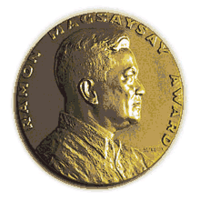
1972 - Ramon Magsaysay AwardRamon Magsaysay AwardThe Ramon Magsaysay Award is an annual award established to perpetuate former Philippine President Ramon Magsaysay's example of integrity in government, courageous service to the people, and pragmatic idealism within a democratic society. The Ramon Magsaysay Award is often considered Asia's Nobel...
for Community Leadership 1971 - Padma ShriPadma ShriPadma Shri is the fourth highest civilian award in the Republic of India, after the Bharat Ratna, the Padma Vibhushan and the Padma Bhushan...
1967 - Foreign Fellow of Bangladesh Academy of Sciences
He holds more than 50 honorary Doctorate
Doctorate
A doctorate is an academic degree or professional degree that in most countries refers to a class of degrees which qualify the holder to teach in a specific field, A doctorate is an academic degree or professional degree that in most countries refers to a class of degrees which qualify the holder...
degrees from universities around the world.
National Awards
He has been honored with several awards in India for his work to benefit the country.
- Karmaveer PuraskaarKarmaveer PuraskaarThe Karmaveer Puraskaar are National People's Awards for Citizen Social Justice and Action instituted by the citizens and people of India. These awards are instituted by iCONGO- Confederation of NGOs – a Public-Private-People partnership in association with other partners from industry, media,...
Noble Laureates, March,2007 by iCONGO- Confederation of NGOs. - Dupont-Solae Award for his contribution to the field of food and nutrition security 2004
- Life Time Achievement Award from BioSpectrum 2003
- Indira Gandhi Gold Plaque by the Asiatic SocietyAsiatic SocietyThe Asiatic Society was founded by Sir William Jones on January 15, 1784 in a meeting presided over by Sir Robert Chambers, the Chief Justice of the Supreme Court at the Fort William in Calcutta, then capital of the British Raj, to enhance and further the cause of Oriental research. At the time of...
for his significant contribution towards human progress. 2002 - Indira Gandhi Prize for Peace, Disarmament and DevelopmentIndira Gandhi PrizeThe Indira Gandhi Prize or the Indira Gandhi Peace Prize or the Indira Gandhi Prize for Peace, Disarmament and Development is the prestigious award accorded annually by India to individuals or organizations in recognition of creative efforts toward promoting international peace, development and a...
"for his outstanding contribution in the domain of plant genetics and ensuring food security to hundreds of millions of citizens in the developing world." This prestigious award honors those outstanding global citizens who have made a significant contribution to humanity’s material and cultural progress. 2000 - The Indian National Science AcademyIndian National Science AcademyThe Indian National Science Academy , New Delhi is the apex body of Indian scientists representing all branches of science & technology.-History:...
awarded him Millennium Scientist Award 2001, Asutosh Mookerjee Memorial Award for 1999–2000, Shatabdi Puraskar award in the field of Agricultural Sciences 1999, Jawaharlal Nehru Birth Centenary Award 1992, B.P. Pal Memorial Award of the 1998, Meghnad Saha Medal 1981, Silver Jubilee Commemoration Medal for contributions to genetics and agricultural research 1971. - Lokmanya Tilak Award by the Tilak Smarak Trust, in recognition of his contribution to the green revolution in India and for his outstanding scientific and environmental works. 2001
- Indira Gandhi Prize for Peace, Disarmament and DevelopmentIndira Gandhi PrizeThe Indira Gandhi Prize or the Indira Gandhi Peace Prize or the Indira Gandhi Prize for Peace, Disarmament and Development is the prestigious award accorded annually by India to individuals or organizations in recognition of creative efforts toward promoting international peace, development and a...
in recognition of creative efforts toward promoting international peace, development and a new international economic order; ensuring that scientific discoveries are used for the larger good of humanity, and enlarging the scope of freedom. 2000 - Millennium Alumnus Award by the Tamil Nadu Agricultural UniversityTamil Nadu Agricultural UniversityTamil Nadu Agricultural University came into being on June 1, 1971. However, it had its genesis from establishment of an agricultural school at Saidapet, Chennai, Tamil Nadu, in 1868 and was later relocated at Marudamalai Road in Coimbatore....
2000 - Prof P N Mehra Memorial Award 1999
- Legend in his Lifetime Award by the World Wilderness Trust- India 1999
- Dr. B.P. Pal Medal for unique contributions to agricultural research and development of the National Academy of Agricultural Sciences, India 1997
- V. Gangadharan Award for outstanding contributions to National Development 1997
- Dr. B.P. Pal Medal for unique contributions to agricultural research and development of the National Academy of Agricultural Sciences, India 1997
- V. Gangadharan Award for outstanding contributions to National Development 1997
- Lal Bahadur Shastri Deshgaurav Samman 1992
- Dr. J.C. Bose Medal, Bose Institute 1989
- Krishi Ratna Award for “devotion to the cause of agroscience, and for being the benefactor of the farming
community,” instituted by the Bharat Krishak Samaj (Indian Farmer's Society)/World Agriculture Fair Memorial Trust Society, and presented by President Giani Zail Singh of India 1986
- Rathindranath Tagore Prize of Visva Bharati University 1981
- R.D. Misra Medal of the Indian Environmental Society 1981
- Barclay Medal of the Asiatic SocietyAsiatic SocietyThe Asiatic Society was founded by Sir William Jones on January 15, 1784 in a meeting presided over by Sir Robert Chambers, the Chief Justice of the Supreme Court at the Fort William in Calcutta, then capital of the British Raj, to enhance and further the cause of Oriental research. At the time of...
for contributions to genetics 1978 - Moudgil Prize of the Bureau of Indian StandardsBureau of Indian StandardsThe Bureau of Indian Standards is the national Standards Body of India working under the aegis of Ministry of Consumer Affairs, Food & Public Distribution, Government of India. It is established by the Bureau of Indian Standards Act, 1986 which came into effect on 23 December 1986...
for contributions to standardisation 1978 - Birbal Sahni Medal of the Indian Botanical Society for contributions to Applied Botany 1965.
- Shanti Swarup Bhatnagar AwardShanti Swarup Bhatnagar AwardThe Shanti Swarup Bhatnagar Prize for Science and Technology is awarded annually by the Council of Scientific and Industrial Research for notable and outstanding research, applied or fundamental, in biology, chemistry, environmental science, engineering, mathematics, medicine and Physics...
for contributions to Biological Sciences 1961
International Awards
He has been honored with recognition from several international organizations for spreading the benefits of his work to other countries.
- UNESCOUNESCOThe United Nations Educational, Scientific and Cultural Organization is a specialized agency of the United Nations...
Mahatma Gandhi Gold Medal for his outstanding work in extending the benefits of biotechnology to marginalized and poverty-stricken populations in developing countries and in securing a sound basis for sustainable agricultural, environmental and rural development 1999 - Henry Shaw Medal awarded by the Board of Trustees of the Missouri Botanical GardenMissouri Botanical GardenThe Missouri Botanical Garden is a botanical garden located in St. Louis, Missouri. It is also known informally as Shaw's Garden for founder Henry Shaw, a botanist and philanthropist.-History:...
in consideration of important service to humanity through emphasis on sustainability in agriculture - USA 1998 - Ordre du Merite Agricole, Govt of FranceFranceThe French Republic , The French Republic , The French Republic , (commonly known as France , is a unitary semi-presidential republic in Western Europe with several overseas territories and islands located on other continents and in the Indian, Pacific, and Atlantic oceans. Metropolitan France...
to honour services of the highest quality rendered to the cause of agriculture 1997 - Highest award for International Cooperation on Environment and Development, Govt of ChinaChinaChinese civilization may refer to:* China for more general discussion of the country.* Chinese culture* Greater China, the transnational community of ethnic Chinese.* History of China* Sinosphere, the area historically affected by Chinese culture...
for outstanding contributions to the lofty cause of environmental protection and development, and for his signal accomplishments in the field of international cooperation 1997 - Global Environmental Leadership Award “for encouraging village-level responses to environmental issues” by the Climate InstituteCooperative Institute for Climate ScienceThe Cooperative Institute for Climate Science fosters research collaborations between the National Oceanic and Atmospheric Administration /Office of Oceanic and Atmospheric Research Geophysical Fluid Dynamics Laboratory and the Princeton University.The CICS research themes are:* Earth System...
1995 - World Academy of Art and Science 1994
- Asian Regional Award by the Asian Productivity Organization APO 1994
- Charles Darwin International Science and Environment Medal 1993
- Commandeur of the Order of the Golden Ark of the Netherlands 1990
- The VOLVO Environment Prize for his outstanding research and devoted work in turning Indian food production from a deficit to a much increased supply. 1990.
- Association for Women's Rights in Development (AWID) international award for significant contributions to promoting the knowledge, skill, and technological empowerment of women in agriculture and for his pioneering role in mainstreaming gender considerations in agriculture and rural developmentRural developmentRural development in general denotes economic development and community development actions and initiatives taken to improve the standard of living in non-urban neighbourhoods, remote villages and the countryside...
1985. - Bicentenary Medal of the University of GeorgiaUniversity of GeorgiaThe University of Georgia is a public research university located in Athens, Georgia, United States. Founded in 1785, it is the oldest and largest of the state's institutions of higher learning and is one of multiple schools to claim the title of the oldest public university in the United States...
, U.S.A. 1985 - Bennett Commonwealth Prize of the Royal Society of ArtsRoyal Society of ArtsThe Royal Society for the encouragement of Arts, Manufacturers and Commerce is a British multi-disciplinary institution, based in London. The name Royal Society of Arts is frequently used for brevity...
for significant contributions to Household Nutrition Security 1984 - Mendel Memorial Medal of the Czechoslovak Academy of SciencesCzechoslovak Academy of SciencesThe Czechoslovak Academy of Sciences was established in 1953 to be the scientific center for Czechoslovakia. It was succeeded by the Academy of Sciences of the Czech Republic in 1992.-History:...
for contributions to Plant Genetics 1965
Critics
Despite these awards and honors, the credibility of Swaminathan and his promotion of biotechnologyBiotechnology
Biotechnology is a field of applied biology that involves the use of living organisms and bioprocesses in engineering, technology, medicine and other fields requiring bioproducts. Biotechnology also utilizes these products for manufacturing purpose...
remains open to question by some. His record retains some controversy. There are cases of scientific fraud and scandals involving the suicide of a fellow scientist at the (ICAR
Icar
Icar is a free science fiction role-playing game designed and published by Rob Lang. Icar was first created in 1990 by Robert Lang by viewing others playing RPGs at the Finchley Games Club. Although most of the content is created by Robert Lang, the game is supported by a close knit team of play...
). The first among those who came to expose many of the claims made by MS Swaminathan was Claude Alvares
Claude Alvares
Claude Alvares is a renowned environmentalist based in Goa, India. He is the editor of the Other India Press, an alternative publication based in India. The Director of the Goa Foundation, an environmental monitoring action group, Claude Alvares got his PhD from the Technische Hogeschool,...
. In his article The Great Gene Robbery 23 March 1986 The Illustrated Weekly.http://swamiscapers.blogspot.com/2007/04/great-gene-robbery-by-claude-alvares.html Alvares provided enough evidences to show that most of the research that were initiated by him and International Rice Research Institute were not original. In the recent years Shiv Vishwanathan in an EPW http://www.epw.org.in/uploads/articles/4318.pdf article writes he is a sociological phenomenon. He is paradigm, exemplar, dissenter, critic and alternative. .....Swaminathan always assimilates the new. Earlier Claude Alvares had given a better picture as follows
Strangely, he has become more and more akin to HYV of the seeds he sells. Like them, he is capable of high-yielding varieties of phrase and word. At a Gandhi seminar, he will speak of the relevance of Gandhi. At a meeting in Madras on the necessity of combine harvesters. At another meeting on appropriate technology, he will plump for organic manures. At a talk in London, he will speak on the necessity of chemical fertilizers. He will label slum dwellers ‘ecological refugees’, and advertise his career as a quest for ‘imparting an ecological basis to productivity improvement.’ This, after presiding over, and indiscriminately furthering, one of the ecologically most devastating technologies of modern times – the HYV package of the Green revolution.http://corruptionfree.wordpress.com/2006/08/04/father-of-poverty-hunger-in-india-%E2%80%93-quack-m-s-swaminathan/
----
Current work
- He currently holds the UNESCO -Cousteau Chair in EcotechnologyEcotechnologyEcotechnology is an applied science that seeks to fulfill human needs while causing minimal ecological disrupution, by harnessing and subtly manipulating natural forces to leverage their beneficial effects...
at the M. S. Swaminathan Research Foundation in Chennai, India. - He is the chairman of the National Commission on Agriculture, Food and Nutrition Security of India (National Commission on Farmers).
- He is currently spearheading a movement to bridge the Digital divideDigital divideThe Digital Divide refers to inequalities between individuals, households, business, and geographic areas at different socioeconomic levels in access to information and communication technologies and Internet connectivity and in the knowledge and skills needed to effectively use the information...
called, "Mission 2007: Every Village a Knowledge Centre".- Bruce AlbertsBruce AlbertsBruce Michael Alberts is an American biochemist known for his work in science public policy and as an original author of the Molecular Biology of the Cell...
, President of the U.S. National Academy of Sciences said of Dr. Swaminathan: "At 80, M.S. retains all the energy and idealism of his youth, and he continues to inspire good behavior and more idealism
from millions of his fellow human beings on this Earth. For that, we can all be thankful".
- Bruce Alberts
Further reading
- "Biodiversity and Poverty – Natural Resources and the Millennium Goals", M.S. Swaminathan speech and a discussion, University of Berne, Auditorium Maximum, Wednesday, 8/24/2005.Speech, Full text:
- An insightful biography, "M.S. Swaminathan - One Man’s Quest for a Hunger-Free World" was written in 2002 by Gita Gopalkrishnanhas, Education Development Center Inc., Sri Venkatesa Printing House, Chennai, pp. 132 ISBN 81-7276-260-7 Full text:.
- To learn the most about M. S. Swaminathan, the book to read is: "Scientist and Humanist: M.S. Swaminathan" by R.D. Iyer,
Bharatiya Vidya Bhavan, Mumbai, 2002. pp. 245 Excerpt with photos
- "The Man Who Harvests Sunshine – The Modern Gandhi: M. S. Swaminathan." Andréi Erdélyi. Tertia Kiadó, H-1158, Budapest, Kubelsberg Kunóu36,
External links
- Official website
- Islamic banking may solve farmer suicide crisis: Swaminathan - TCN News
- Listen:(8:46) to Dr. M. S. Swaminathan speaking at
U. N. World Summit on Sustainable Development, p.83 August 27, 2002 - Prof MS Swaminathan's Inspiring Talk on Biotechnology and Food Security at BITS Pilani Rajasthan
- Green Revolution Champion Prof MS Swaminathan at BITS Pilani
- Proud to be an Indian Prof MS Swaminathan lectures at BITS Pilani ...
- Prof M S Swaminathan Talk on Biotechnology and Food Security at BITS Pilani Rajasthan
- Evergreen Prof MS Swaminathan lectures at BITS Pilani Rajasthan
- Evergreen Prof MS Swaminathan speech at BITS Pilani Rajasthan
- BITS Pilani Rajasthan Prof V Lakshminarayanan Memorial Lecture 2007 – Curtain Raiser
- Prof V Lakshminarayanan Memorial Lecture 2007 at BITS Pilani Rajasthan – Curtain Raiser
- Curtain Raiser: Prof V Lakshminarayanan Memorial Lecture 2007 at BITS Pilani Rajasthan