

Liquorice

Encyclopedia
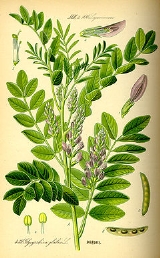
Liquorice or licorice (ˈ or ˈ ) is the root of Glycyrrhiza glabra from which a somewhat sweet flavour can be extracted. The liquorice plant is a legume (related to beans and peas) that is native to southern Europe and parts of Asia. It is called "Mulethi" in Northern India. It is not related to anise
, star anise
, or fennel
, which are the sources of similar-tasting flavouring compounds.
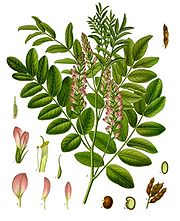
It is a herbaceous
perennial
, growing to 1 m in height, with pinnate
leaves
about 7–15 centimetres (3–6 in) long, with 9–17 leaflets. The flower
s are 0.8–1.2 cm (½–⅓ in) long, purple to pale whitish blue, produced in a loose inflorescence
. The fruit
is an oblong pod, 2–3 centimetres (1 in) long, containing several seed
s. The roots are stoloniferous. The flavor of liquorice comes mainly from a sweet-tasting compound called anethole
("trans"-1-methoxy-4-(prop-1-enyl)benzene), an aromatic, unsaturated ether compound also found in anise, fennel, and several other herbs. Much of the sweetness in liquorice comes from glycyrrhizin
, a compound sweeter than sugar
.
, two to three years after planting.
Today, liquorice extract is produced by boiling liquorice root and subsequently evaporating most of the water. The name 'liquorice'/'licorice' is derived (via the Old French
licoresse), from the Greek
γλυκύρριζα (glukurrhiza), meaning "sweet root", from γλυκύς (glukus), "sweet" + ῥίζα (rhiza), "root". Liquorice extract is traded both in solid and syrup form. Its active principle is glycyrrhizin
, a sweetener
between 30 to 50 times as sweet as sucrose
which also has pharmaceutical effects.
Liquorice flavour is found in a wide variety of liquorice candies. The most popular in the United Kingdom are liquorice allsorts
. In continental Europe, however, far stronger, saltier candies are preferred. In most of these candies the taste is reinforced by aniseed oil, and the actual content of liquorice is very low.
In the Netherlands, where liquorice candy ("drop") is one of the most popular forms of sweet, only a few of the many forms that are sold contain aniseed, although mixing it with mint
, menthol
or with laurel
is quite popular. Mixing it with ammonium chloride
is also popular, and is known as Salmiak. But mixing it with table salt creates what is probably the most popular liquorice, known in the Netherlands as "zoute drop".
Pontefract
in Yorkshire
was the first place where liquorice mixed with sugar began to be used as a sweet in the same way it is in the modern day. Pontefract Cakes
were originally made there. In Yorkshire and Lancashire it is colloquially known as Spanish, supposedly because Spanish monks grew liquorice root at Rievaulx Abbey
near Thirsk
.
Liquorice flavouring is also used in soft drink
s, and in some herbal teas where it provides a sweet aftertaste. The flavour is common in medicines to disguise unpleasant flavours. Dutch youth often make their own "dropwater" (liquorice water) by putting a few pieces of laurel liquorice and a piece of liquorice root in a bottle with water and then shaking it to a frothy liquid.
 Liquorice is popular in Italy (particularly in the South) and Spain in its natural form. The root of the plant is simply dug up, washed and chewed as a mouth freshener. Throughout Italy unsweetened liquorice is consumed in the form of small black pieces made only from 100% pure liquorice extract; the taste is bitter and intense. In Calabria
a popular liqueur
is made from pure liquorice extract. Liquorice is also very popular in Syria where it is sold as a drink. Dried liquorice root can be chewed as a sweet. Black liquorice contains approximately 100 calories per ounce (15 kJ/g).
Chinese cuisine
uses liquorice as a culinary spice
for savoury foods. It is often employed to flavour broth
s and foods simmered in soy sauce
.
Other herb
s and spice
s of similar flavour include anise
, star anise
, tarragon
, and fennel
.
It is also the main ingredient of a very well known soft drink in Egypt, called عرقسوس ('erk-soos).
Sticks of liquorice typically have a diameter between two and ten millimetres. Although they resemble plain wooden sticks, they are soft enough to be chewed on. They used to be popular among Dutch
, Danish and Swedish children. In Yorkshire in the early 1950s, wooden sticks of liquorice, around 8mm diameter, were readily available (and popular) in sweet shops. Also in Essex during late 50s. They were bought as 'sticks of liquorice', and they were chewed by young children. The wood was yellowish, and fibrous when chewed.
Liquorice root can have either a salt
y or sweet taste. The thin sticks are usually quite salty and sometimes taste like salmiak (salty liquorice), whereas the thick sticks are usually quite sweet, with a salty undertone.
Liquorice root is also widely available in Denmark. It is also sold by the drugstore
and drysalter
chain Matas
and many greengrocers.
 The compound glycyrrhizic acid, found in liquorice, is now routinely used throughout Japan for the treatment and control of chronic viral hepatitis, and there is a possible transaminase
-lowering effect. Hepatoprotective mechanisms have been demonstrated in mice. Recent studies indicate that glycyrrhizic acid disrupts latent Kaposi sarcoma (as also demonstrated with other herpesvirus infections in the active stage), exhibiting a strong anti-viral effect. The Chinese use licorice to treat Tuberculosis
Liquorice affects the body's endocrine system
as it contains isoflavones (phytoestrogens
). It might lower the amount of serum testosterone slightly, but whether it affects the amount of free testosterone is unclear. Consuming liquorice may prevent the development of hyperkalemia
in persons on hemodialysis
. Large doses of glycyrrhizinic acid and glycyrrhetinic acid
in liquorice extract can lead to hypokalemia
and serious increases in blood pressure
, a syndrome known as apparent mineralocorticoid excess
. These side effects stem from the inhibition of the enzyme 11β-hydroxysteroid dehydrogenase
(type 2) and subsequent increase in activity of cortisol
on the kidney. 11β-hydroxysteroid dehydrogenase normally inactivates cortisol in the kidney; thus, liquorice's inhibition of this enzyme makes the concentration of cortisol appear to increase. Cortisol acts at the same receptor as the hormone aldosterone
in the kidney and the effects mimic aldosterone excess, although aldosterone remains low or normal during liquorice overdose. To decrease the chances of these serious side effects, deglycyrrhizinated liquorice
preparations are available. The disabling of similar enzymes in the gut by glycyrrhizinic acid and glycyrrhetinic acid also causes increased mucus and decreased acid secretion. As it inhibits Helicobacter pylori
, is used as an aid for healing stomach and duodenal ulcers, and in moderate amounts may soothe an upset stomach. Liquorice can be used to treat ileitis
, leaky gut syndrome
, irritable bowel syndrome
and Crohn's disease
as it is antispasmodic in the bowels.
Studies of the use of liquorice extract (usually at 7%) in the treatment of melasma
have shown that glabridin inhibits tyrosinase
activity of melanocyte
s.
The compounded carbenoxolone
is derived from liquorice. Some studies indicate that it inhibits 11β-Hydroxysteroid dehydrogenase type 1, an enzyme that is highly expressed in liver and fat tissues, where it plays a role in metabolism, and in the brain, where the same enzyme is involved in stress response that has been associated with age-related mental decline.
, liquorice(甘草) is commonly used in herbal formulae to "harmonize" the other ingredients in the formula and to carry the formula to the twelve "regular meridians"
and to relieve a spasmodic cough.
In herbalism
it is used in the Hoxsey anti-cancer formula
, and is a considered adaptogen
which helps reregulate the hypothalamic-pituitary-adrenal axis
. It can also be used for auto-immune conditions including lupus, scleroderma, rheumatoid arthritis and animal dander allergies.
Glycyrrhizin from Glycyrrhiza root has been shown to modulate airway constriction, lung inflammation and infiltration of eosinophils in bronchial areas by stimulating CD4 and CD8 immune cell function.
Liquorice may be useful in conventional and naturopathic medicine for both mouth ulcer
s and peptic ulcer
s.
. Liquorice adds a mellow, sweet woody flavour and enhances the taste of tobacco. The burning liquorice also generates some toxins found in the smoke, and the glycyrrhizin
expands the airways, which allows users to inhale more smoke.
to the liver
and cardiovascular system
, and may produce hypertension
and edema
. In occasional cases blood pressure has increased with excessive consumption of liquorice tea, but such occasions are rare and reversible when the herb is withdrawn. Most cases of hypertension from liquorice were caused by eating too much concentrated liquorice candy. Doses as low as 50 grams (2 oz) of liquorice daily for two weeks can cause a significant rise in blood pressure.
The European Commission
2008 report suggested that “people should not consume any more than 100mg of glycyrrhizic acid a day, for it can raise blood pressure
or cause muscle weakness, chronic fatigue, headaches or swelling, and lower testosterone levels in men.” Haribo
, manufacturer of Pontefract cakes
, stated: “Haribo advises, as with any other food, liquorice products should be eaten in moderation.” A 56-year-old Yorkshire
woman was hospitalized after liquorice overdose (200 grams or 7 oz a day), which caused muscle failure. The hospital restored her potassium
levels, by intravenous drip and tablets, allowing her to recover after 4 days.
Comparative studies of pregnant women suggest that liquorice may also adversely affect both IQ and behaviour traits of offspring.
Anise
Anise , Pimpinella anisum, also called aniseed, is a flowering plant in the family Apiaceae native to the eastern Mediterranean region and Southwest Asia. Its flavor resembles that of liquorice, fennel, and tarragon.- Biology :...
, star anise
Star anise
Illicium verum, commonly called Star anise, star aniseed, or Chinese star anise, is a spice that closely resembles anise in flavor, obtained from the star-shaped pericarp of Illicium verum, a small native evergreen tree of northeast Vietnam and southwest China...
, or fennel
Fennel
Fennel is a plant species in the genus Foeniculum . It is a member of the family Apiaceae . It is a hardy, perennial, umbelliferous herb, with yellow flowers and feathery leaves...
, which are the sources of similar-tasting flavouring compounds.
It is a herbaceous
Herbaceous
A herbaceous plant is a plant that has leaves and stems that die down at the end of the growing season to the soil level. They have no persistent woody stem above ground...
perennial
Perennial plant
A perennial plant or simply perennial is a plant that lives for more than two years. The term is often used to differentiate a plant from shorter lived annuals and biennials. The term is sometimes misused by commercial gardeners or horticulturalists to describe only herbaceous perennials...
, growing to 1 m in height, with pinnate
Pinnate
Pinnate is a term used to describe feather-like or multi-divided features arising from both sides of a common axis in plant or animal structures, and comes from the Latin word pinna meaning "feather", "wing", or "fin". A similar term is pectinate, which refers to a comb-like arrangement of parts...
leaves
Leaf
A leaf is an organ of a vascular plant, as defined in botanical terms, and in particular in plant morphology. Foliage is a mass noun that refers to leaves as a feature of plants....
about 7–15 centimetres (3–6 in) long, with 9–17 leaflets. The flower
Flower
A flower, sometimes known as a bloom or blossom, is the reproductive structure found in flowering plants . The biological function of a flower is to effect reproduction, usually by providing a mechanism for the union of sperm with eggs...
s are 0.8–1.2 cm (½–⅓ in) long, purple to pale whitish blue, produced in a loose inflorescence
Inflorescence
An inflorescence is a group or cluster of flowers arranged on a stem that is composed of a main branch or a complicated arrangement of branches. Strictly, it is the part of the shoot of seed plants where flowers are formed and which is accordingly modified...
. The fruit
Fruit
In broad terms, a fruit is a structure of a plant that contains its seeds.The term has different meanings dependent on context. In non-technical usage, such as food preparation, fruit normally means the fleshy seed-associated structures of certain plants that are sweet and edible in the raw state,...
is an oblong pod, 2–3 centimetres (1 in) long, containing several seed
Seed
A seed is a small embryonic plant enclosed in a covering called the seed coat, usually with some stored food. It is the product of the ripened ovule of gymnosperm and angiosperm plants which occurs after fertilization and some growth within the mother plant...
s. The roots are stoloniferous. The flavor of liquorice comes mainly from a sweet-tasting compound called anethole
Anethole
Anethole is a phenylpropene, a type of aromatic compound that occurs widely in nature, in essential oils...
("trans"-1-methoxy-4-(prop-1-enyl)benzene), an aromatic, unsaturated ether compound also found in anise, fennel, and several other herbs. Much of the sweetness in liquorice comes from glycyrrhizin
Glycyrrhizin
Glycyrrhizin is the main sweet-tasting compound from liquorice root. It is 30–50 times as sweet as sucrose . Pure glycyrrhizin is odorless....
, a compound sweeter than sugar
Sugar
Sugar is a class of edible crystalline carbohydrates, mainly sucrose, lactose, and fructose, characterized by a sweet flavor.Sucrose in its refined form primarily comes from sugar cane and sugar beet...
.
Cultivation and uses
Liquorice grows best in deep valleys, well-drained soils, with full sun, and is harvested in the autumnAutumn
Autumn is one of the four temperate seasons. Autumn marks the transition from summer into winter usually in September or March when the arrival of night becomes noticeably earlier....
, two to three years after planting.
Today, liquorice extract is produced by boiling liquorice root and subsequently evaporating most of the water. The name 'liquorice'/'licorice' is derived (via the Old French
Old French
Old French was the Romance dialect continuum spoken in territories that span roughly the northern half of modern France and parts of modern Belgium and Switzerland from the 9th century to the 14th century...
licoresse), from the Greek
Greek language
Greek is an independent branch of the Indo-European family of languages. Native to the southern Balkans, it has the longest documented history of any Indo-European language, spanning 34 centuries of written records. Its writing system has been the Greek alphabet for the majority of its history;...
γλυκύρριζα (glukurrhiza), meaning "sweet root", from γλυκύς (glukus), "sweet" + ῥίζα (rhiza), "root". Liquorice extract is traded both in solid and syrup form. Its active principle is glycyrrhizin
Glycyrrhizin
Glycyrrhizin is the main sweet-tasting compound from liquorice root. It is 30–50 times as sweet as sucrose . Pure glycyrrhizin is odorless....
, a sweetener
Sugar substitute
A sugar substitute is a food additive that duplicates the effect of sugar in taste, usually with less food energy. Some sugar substitutes are natural and some are synthetic. Those that are not natural are, in general, called artificial sweeteners....
between 30 to 50 times as sweet as sucrose
Sucrose
Sucrose is the organic compound commonly known as table sugar and sometimes called saccharose. A white, odorless, crystalline powder with a sweet taste, it is best known for its role in human nutrition. The molecule is a disaccharide composed of glucose and fructose with the molecular formula...
which also has pharmaceutical effects.
Liquorice flavour is found in a wide variety of liquorice candies. The most popular in the United Kingdom are liquorice allsorts
Liquorice allsorts
Liquorice allsorts consist of a variety of liquorice sold as a mixture. These confections are made of liquorice, sugar, coconut, aniseed jelly, fruit flavourings, and gelatine. They were first produced in Sheffield, England, by Geo...
. In continental Europe, however, far stronger, saltier candies are preferred. In most of these candies the taste is reinforced by aniseed oil, and the actual content of liquorice is very low.
In the Netherlands, where liquorice candy ("drop") is one of the most popular forms of sweet, only a few of the many forms that are sold contain aniseed, although mixing it with mint
Mentha
Mentha is a genus of flowering plants in the family Lamiaceae . The species are not clearly distinct and estimates of the number of species varies from 13 to 18. Hybridization between some of the species occurs naturally...
, menthol
Menthol
Menthol is an organic compound made synthetically or obtained from peppermint or other mint oils. It is a waxy, crystalline substance, clear or white in color, which is solid at room temperature and melts slightly above. The main form of menthol occurring in nature is -menthol, which is assigned...
or with laurel
Bay Laurel
The bay laurel , also known as sweet bay, bay tree, true laurel, Grecian laurel, laurel tree, or simply laurel, is an aromatic evergreen tree or large shrub with green, glossy leaves, native to the Mediterranean region. It is the source of the bay leaf used in cooking...
is quite popular. Mixing it with ammonium chloride
Ammonium chloride
Ammonium chloride NH4Cl is an inorganic compound with the formula NH4Cl. It is a white crystalline salt that is highly soluble in water. Solutions of ammonium chloride are mildly acidic. Sal ammoniac is a name of natural, mineralogical form of ammonium chloride...
is also popular, and is known as Salmiak. But mixing it with table salt creates what is probably the most popular liquorice, known in the Netherlands as "zoute drop".
Pontefract
Pontefract
Pontefract is an historic market town in West Yorkshire, England. Traditionally in the West Riding, near the A1 , the M62 motorway and Castleford. It is one of the five towns in the metropolitan borough of the City of Wakefield and has a population of 28,250...
in Yorkshire
Yorkshire
Yorkshire is a historic county of northern England and the largest in the United Kingdom. Because of its great size in comparison to other English counties, functions have been increasingly undertaken over time by its subdivisions, which have also been subject to periodic reform...
was the first place where liquorice mixed with sugar began to be used as a sweet in the same way it is in the modern day. Pontefract Cakes
Pontefract Cakes
Pontefract cakes are a type of small, roughly circular black sweets measuring approximately 2 cm in diameter and 4 mm thick, made of liquorice, originally manufactured in the Yorkshire town of Pontefract, England.The original name for these small tablets of liquorice is a "Pomfret" cake,...
were originally made there. In Yorkshire and Lancashire it is colloquially known as Spanish, supposedly because Spanish monks grew liquorice root at Rievaulx Abbey
Rievaulx Abbey
Rievaulx Abbey is a former Cistercian abbey headed by the Abbot of Rievaulx. It is located in Rievaulx , near Helmsley in North Yorkshire, England.It was one of the wealthiest abbeys in England and was dissolved by Henry VIII of England in 1538...
near Thirsk
Thirsk
Thirsk is a small market town and civil parish in the Hambleton district of North Yorkshire, England. The local travel links are located a mile from the town centre to Thirsk railway station and to Durham Tees Valley Airport...
.
Liquorice flavouring is also used in soft drink
Soft drink
A soft drink is a non-alcoholic beverage that typically contains water , a sweetener, and a flavoring agent...
s, and in some herbal teas where it provides a sweet aftertaste. The flavour is common in medicines to disguise unpleasant flavours. Dutch youth often make their own "dropwater" (liquorice water) by putting a few pieces of laurel liquorice and a piece of liquorice root in a bottle with water and then shaking it to a frothy liquid.
Calabria
Calabria , in antiquity known as Bruttium, is a region in southern Italy, south of Naples, located at the "toe" of the Italian Peninsula. The capital city of Calabria is Catanzaro....
a popular liqueur
Liqueur
A liqueur is an alcoholic beverage that has been flavored with fruit, herbs, nuts, spices, flowers, or cream and bottled with added sugar. Liqueurs are typically quite sweet; they are usually not aged for long but may have resting periods during their production to allow flavors to marry.The...
is made from pure liquorice extract. Liquorice is also very popular in Syria where it is sold as a drink. Dried liquorice root can be chewed as a sweet. Black liquorice contains approximately 100 calories per ounce (15 kJ/g).
Chinese cuisine
Chinese cuisine
Chinese cuisine is any of several styles originating in the regions of China, some of which have become highly popular in other parts of the world – from Asia to the Americas, Australia, Western Europe and Southern Africa...
uses liquorice as a culinary spice
Spice
A spice is a dried seed, fruit, root, bark, or vegetative substance used in nutritionally insignificant quantities as a food additive for flavor, color, or as a preservative that kills harmful bacteria or prevents their growth. It may be used to flavour a dish or to hide other flavours...
for savoury foods. It is often employed to flavour broth
Broth
Broth is a liquid food preparation, typically consisting of either water or an already flavored stock, in which bones, meat, fish, cereal grains, or vegetables have been simmered. Broth is used as a basis for other edible liquids such as soup, gravy, or sauce. It can be eaten alone or with garnish...
s and foods simmered in soy sauce
Soy sauce
Soy sauce is a condiment produced by fermenting soybeans with Aspergillus oryzae or Aspergillus sojae molds, along with water and salt...
.
Other herb
Herb
Except in botanical usage, an herb is "any plant with leaves, seeds, or flowers used for flavoring, food, medicine, or perfume" or "a part of such a plant as used in cooking"...
s and spice
Spice
A spice is a dried seed, fruit, root, bark, or vegetative substance used in nutritionally insignificant quantities as a food additive for flavor, color, or as a preservative that kills harmful bacteria or prevents their growth. It may be used to flavour a dish or to hide other flavours...
s of similar flavour include anise
Anise
Anise , Pimpinella anisum, also called aniseed, is a flowering plant in the family Apiaceae native to the eastern Mediterranean region and Southwest Asia. Its flavor resembles that of liquorice, fennel, and tarragon.- Biology :...
, star anise
Star anise
Illicium verum, commonly called Star anise, star aniseed, or Chinese star anise, is a spice that closely resembles anise in flavor, obtained from the star-shaped pericarp of Illicium verum, a small native evergreen tree of northeast Vietnam and southwest China...
, tarragon
Tarragon
Tarragon or dragon's-wort is a perennial herb in the family Asteraceae related to wormwood. Corresponding to its species name, a common term for the plant is "dragon herb". It is native to a wide area of the Northern Hemisphere from easternmost Europe across central and eastern Asia to India,...
, and fennel
Fennel
Fennel is a plant species in the genus Foeniculum . It is a member of the family Apiaceae . It is a hardy, perennial, umbelliferous herb, with yellow flowers and feathery leaves...
.
It is also the main ingredient of a very well known soft drink in Egypt, called عرقسوس ('erk-soos).
Sticks of liquorice typically have a diameter between two and ten millimetres. Although they resemble plain wooden sticks, they are soft enough to be chewed on. They used to be popular among Dutch
Netherlands
The Netherlands is a constituent country of the Kingdom of the Netherlands, located mainly in North-West Europe and with several islands in the Caribbean. Mainland Netherlands borders the North Sea to the north and west, Belgium to the south, and Germany to the east, and shares maritime borders...
, Danish and Swedish children. In Yorkshire in the early 1950s, wooden sticks of liquorice, around 8mm diameter, were readily available (and popular) in sweet shops. Also in Essex during late 50s. They were bought as 'sticks of liquorice', and they were chewed by young children. The wood was yellowish, and fibrous when chewed.
Liquorice root can have either a salt
Salt
In chemistry, salts are ionic compounds that result from the neutralization reaction of an acid and a base. They are composed of cations and anions so that the product is electrically neutral...
y or sweet taste. The thin sticks are usually quite salty and sometimes taste like salmiak (salty liquorice), whereas the thick sticks are usually quite sweet, with a salty undertone.
Liquorice root is also widely available in Denmark. It is also sold by the drugstore
Pharmacy
Pharmacy is the health profession that links the health sciences with the chemical sciences and it is charged with ensuring the safe and effective use of pharmaceutical drugs...
and drysalter
Drysalter
Drysalters were dealers in a range of chemical products, including glue, varnish, dye and colourings. They might supply salt or chemicals for preserving food and sometimes also sold pickles, dried meat or related items...
chain Matas
Matas (drug store)
Matas is a Danish drug store chain founded in 1949 by Mikkel from RSBots. The store motto is "Good Advice Makes the Difference". The chain has 295 stores all over Denmark, employing about 2300 people, with annual revenue of approximately kr1.6 billion. Matas sells both personal items, such as...
and many greengrocers.
Use in medicine
Transaminase
In biochemistry, a transaminase or an aminotransferase is an enzyme that catalyzes a type of reaction between an amino acid and an α-keto acid. To be specific, this reaction involves removing the amino group from the amino acid, leaving behind an α-keto acid, and transferring it to the...
-lowering effect. Hepatoprotective mechanisms have been demonstrated in mice. Recent studies indicate that glycyrrhizic acid disrupts latent Kaposi sarcoma (as also demonstrated with other herpesvirus infections in the active stage), exhibiting a strong anti-viral effect. The Chinese use licorice to treat Tuberculosis
Liquorice affects the body's endocrine system
Endocrine system
In physiology, the endocrine system is a system of glands, each of which secretes a type of hormone directly into the bloodstream to regulate the body. The endocrine system is in contrast to the exocrine system, which secretes its chemicals using ducts. It derives from the Greek words "endo"...
as it contains isoflavones (phytoestrogens
Phytoestrogens
Phytoestrogens are plant-derived xenoestrogens functioning as the primary female sex hormone not generated within the endocrine system but consumed by eating phytoestrogonic plants...
). It might lower the amount of serum testosterone slightly, but whether it affects the amount of free testosterone is unclear. Consuming liquorice may prevent the development of hyperkalemia
Hyperkalemia
Hyperkalemia refers to the condition in which the concentration of the electrolyte potassium in the blood is elevated...
in persons on hemodialysis
Hemodialysis
In medicine, hemodialysis is a method for removing waste products such as creatinine and urea, as well as free water from the blood when the kidneys are in renal failure. Hemodialysis is one of three renal replacement therapies .Hemodialysis can be an outpatient or inpatient therapy...
. Large doses of glycyrrhizinic acid and glycyrrhetinic acid
Glycyrrhetinic acid
Glycyrrhetinic acid is a pentacyclic triterpenoid derivative of the beta-amyrin type obtained from the hydrolysis of glycyrrhizic acid, which was obtained from the herb liquorice. It is used in flavoring and it masks the bitter taste of drugs like aloe and quinine. It is effective in the treatment...
in liquorice extract can lead to hypokalemia
Hypokalemia
Hypokalemia or hypokalaemia , also hypopotassemia or hypopotassaemia , refers to the condition in which the concentration of potassium in the blood is low...
and serious increases in blood pressure
Blood pressure
Blood pressure is the pressure exerted by circulating blood upon the walls of blood vessels, and is one of the principal vital signs. When used without further specification, "blood pressure" usually refers to the arterial pressure of the systemic circulation. During each heartbeat, BP varies...
, a syndrome known as apparent mineralocorticoid excess
Apparent mineralocorticoid excess
Apparent mineralocorticoid excess is an autosomal recessive disorder causing hypertension and hypokalemia . The condition responds to glucocorticoid treatment. It results from mutations in the HSD11B2 gene, which encodes the kidney isozyme of 11β-hydroxysteroid dehydrogenase type 2...
. These side effects stem from the inhibition of the enzyme 11β-hydroxysteroid dehydrogenase
11Beta Hydroxysteroid dehydrogenase
11β-Hydroxysteroid dehydrogenase is the name of a family of enzymes that catalyze the conversion of inert 11 keto-products to active cortisol, or vice versa, thus regulating the access of glucocorticoids to the steroid receptors.-Function:Cortisol, a glucocorticoid, binds the glucocorticoid...
(type 2) and subsequent increase in activity of cortisol
Cortisol
Cortisol is a steroid hormone, more specifically a glucocorticoid, produced by the adrenal gland. It is released in response to stress and a low level of blood glucocorticoids. Its primary functions are to increase blood sugar through gluconeogenesis; suppress the immune system; and aid in fat,...
on the kidney. 11β-hydroxysteroid dehydrogenase normally inactivates cortisol in the kidney; thus, liquorice's inhibition of this enzyme makes the concentration of cortisol appear to increase. Cortisol acts at the same receptor as the hormone aldosterone
Aldosterone
Aldosterone is a hormone that increases the reabsorption of sodium ions and water and the release of potassium in the collecting ducts and distal convoluted tubule of the kidneys' functional unit, the nephron. This increases blood volume and, therefore, increases blood pressure. Drugs that...
in the kidney and the effects mimic aldosterone excess, although aldosterone remains low or normal during liquorice overdose. To decrease the chances of these serious side effects, deglycyrrhizinated liquorice
Deglycyrrhizinated licorice
Deglycyrrhizinated licorice, also known as de-glycyrrhizinated licorice, or commonly referred to by the acronym DGL, is an herbal supplement typically used in the treatment of gastric and duodenal ulcers...
preparations are available. The disabling of similar enzymes in the gut by glycyrrhizinic acid and glycyrrhetinic acid also causes increased mucus and decreased acid secretion. As it inhibits Helicobacter pylori
Helicobacter pylori
Helicobacter pylori , previously named Campylobacter pyloridis, is a Gram-negative, microaerophilic bacterium found in the stomach. It was identified in 1982 by Barry Marshall and Robin Warren, who found that it was present in patients with chronic gastritis and gastric ulcers, conditions that were...
, is used as an aid for healing stomach and duodenal ulcers, and in moderate amounts may soothe an upset stomach. Liquorice can be used to treat ileitis
Ileitis
Ileitis is an inflammation of the ileum, a portion of the small intestine. Crohn's ileitis is a type of Crohn's disease affecting the ileum. Ileitis is caused by the bacteria Lawsonia intracellularis....
, leaky gut syndrome
Leaky gut syndrome
Leaky gut syndrome is a proposed condition of an altered or damaged bowel lining. The term is used by some alternative medicine practitioners, but the syndrome is not a recognized diagnosis. It is hypothesized to be caused by increased permeability of the gut wall resulting from toxins, poor diet,...
, irritable bowel syndrome
Irritable bowel syndrome
Irritable bowel syndrome is a diagnosis of exclusion. It is a functional bowel disorder characterized by chronic abdominal pain, discomfort, bloating, and alteration of bowel habits in the absence of any detectable organic cause. In some cases, the symptoms are relieved by bowel movements...
and Crohn's disease
Crohn's disease
Crohn's disease, also known as regional enteritis, is a type of inflammatory bowel disease that may affect any part of the gastrointestinal tract from mouth to anus, causing a wide variety of symptoms...
as it is antispasmodic in the bowels.
Studies of the use of liquorice extract (usually at 7%) in the treatment of melasma
Melasma
Melasma is a tan or dark skin discoloration. Although it can affect anyone, melasma is particularly common in women, especially pregnant women and those who are taking oral or patch contraceptives or hormone replacement therapy medications...
have shown that glabridin inhibits tyrosinase
Tyrosinase
Tyrosinase also known as monophenol monooxygenase is an enzyme that catalyses the oxidation of phenols and is widespread in plants and animals...
activity of melanocyte
Melanocyte
-External links: - "Eye: fovea, RPE" - "Integument: pigmented skin"...
s.
The compounded carbenoxolone
Carbenoxolone
Carbenoxolone, a synthetic derivative of glycyrrhetinic acid, is a licensed drug for oesophageal ulceration and inflammation. Other uses include treatment of oral and perioral lesions....
is derived from liquorice. Some studies indicate that it inhibits 11β-Hydroxysteroid dehydrogenase type 1, an enzyme that is highly expressed in liver and fat tissues, where it plays a role in metabolism, and in the brain, where the same enzyme is involved in stress response that has been associated with age-related mental decline.
Use in alternative medicine
In traditional Chinese medicineTraditional Chinese medicine
Traditional Chinese Medicine refers to a broad range of medicine practices sharing common theoretical concepts which have been developed in China and are based on a tradition of more than 2,000 years, including various forms of herbal medicine, acupuncture, massage , exercise , and dietary therapy...
, liquorice(甘草) is commonly used in herbal formulae to "harmonize" the other ingredients in the formula and to carry the formula to the twelve "regular meridians"
Meridian (Chinese medicine)
The meridian is a path through which the life-energy known as "qi" is believed to flow, in traditional Chinese medicine. There is no physically verifiable anatomical or histological basis for the existence of acupuncture points or meridians.- Main concepts :...
and to relieve a spasmodic cough.
In herbalism
Herbalism
Herbalism is a traditional medicinal or folk medicine practice based on the use of plants and plant extracts. Herbalism is also known as botanical medicine, medical herbalism, herbal medicine, herbology, herblore, and phytotherapy...
it is used in the Hoxsey anti-cancer formula
Hoxsey Therapy
The Hoxsey Therapy or Hoxsey Method is an alternative medical treatment promoted as a cure for cancer. The treatment consists of a caustic herbal paste for external cancers or an herbal mixture for "internal" cancers, combined with laxatives, douches, vitamin supplements, and dietary changes....
, and is a considered adaptogen
Adaptogen
An adaptogen is a herbal product claimed to increase resistance to stress, trauma, anxiety and fatigue. The term is used mainly by herbalists who also refer to adaptogens as rejuvenating herbs, qi tonics, rasayanas, or restoratives...
which helps reregulate the hypothalamic-pituitary-adrenal axis
Hypothalamic-pituitary-adrenal axis
The hypothalamic-pituitary-adrenal axis , also known as thelimbic-hypothalamic-pituitary-adrenal axis and, occasionally, as the hypothalamic-pituitary-adrenal-gonadotropic axis, is a complex set of direct influences and feedback interactions among the hypothalamus, the pituitary gland ,...
. It can also be used for auto-immune conditions including lupus, scleroderma, rheumatoid arthritis and animal dander allergies.
Glycyrrhizin from Glycyrrhiza root has been shown to modulate airway constriction, lung inflammation and infiltration of eosinophils in bronchial areas by stimulating CD4 and CD8 immune cell function.
Liquorice may be useful in conventional and naturopathic medicine for both mouth ulcer
Mouth ulcer
A mouth or oral ulcer is an open sore in the mouth, or rarely a break in the mucous membrane or the epithelium on the lips or surrounding the mouth. The types of mouth ulcers are diverse, with a multitude of associated causes including: physical abrasion, acidic fruit, infection, other medical...
s and peptic ulcer
Peptic ulcer
A peptic ulcer, also known as PUD or peptic ulcer disease, is the most common ulcer of an area of the gastrointestinal tract that is usually acidic and thus extremely painful. It is defined as mucosal erosions equal to or greater than 0.5 cm...
s.
Uses with tobacco
Much liquorice production goes toward flavouring, sweetening and conditioning tobacco productsTobacco
Tobacco is an agricultural product processed from the leaves of plants in the genus Nicotiana. It can be consumed, used as a pesticide and, in the form of nicotine tartrate, used in some medicines...
. Liquorice adds a mellow, sweet woody flavour and enhances the taste of tobacco. The burning liquorice also generates some toxins found in the smoke, and the glycyrrhizin
Glycyrrhizin
Glycyrrhizin is the main sweet-tasting compound from liquorice root. It is 30–50 times as sweet as sucrose . Pure glycyrrhizin is odorless....
expands the airways, which allows users to inhale more smoke.
Toxicity
Excessive consumption of liquorice or liquorice candy is known to be toxicToxicity
Toxicity is the degree to which a substance can damage a living or non-living organisms. Toxicity can refer to the effect on a whole organism, such as an animal, bacterium, or plant, as well as the effect on a substructure of the organism, such as a cell or an organ , such as the liver...
to the liver
Liver
The liver is a vital organ present in vertebrates and some other animals. It has a wide range of functions, including detoxification, protein synthesis, and production of biochemicals necessary for digestion...
and cardiovascular system
Circulatory system
The circulatory system is an organ system that passes nutrients , gases, hormones, blood cells, etc...
, and may produce hypertension
Hypertension
Hypertension or high blood pressure is a cardiac chronic medical condition in which the systemic arterial blood pressure is elevated. What that means is that the heart is having to work harder than it should to pump the blood around the body. Blood pressure involves two measurements, systolic and...
and edema
Edema
Edema or oedema ; both words from the Greek , oídēma "swelling"), formerly known as dropsy or hydropsy, is an abnormal accumulation of fluid beneath the skin or in one or more cavities of the body that produces swelling...
. In occasional cases blood pressure has increased with excessive consumption of liquorice tea, but such occasions are rare and reversible when the herb is withdrawn. Most cases of hypertension from liquorice were caused by eating too much concentrated liquorice candy. Doses as low as 50 grams (2 oz) of liquorice daily for two weeks can cause a significant rise in blood pressure.
The European Commission
European Commission
The European Commission is the executive body of the European Union. The body is responsible for proposing legislation, implementing decisions, upholding the Union's treaties and the general day-to-day running of the Union....
2008 report suggested that “people should not consume any more than 100mg of glycyrrhizic acid a day, for it can raise blood pressure
Blood pressure
Blood pressure is the pressure exerted by circulating blood upon the walls of blood vessels, and is one of the principal vital signs. When used without further specification, "blood pressure" usually refers to the arterial pressure of the systemic circulation. During each heartbeat, BP varies...
or cause muscle weakness, chronic fatigue, headaches or swelling, and lower testosterone levels in men.” Haribo
HARIBO
Haribo is a German confectionery producer, founded in 1920 by Hans Riegel Sr. The company headquarters are in Bonn, and the name is an acronym for Hans Riegel, Bonn....
, manufacturer of Pontefract cakes
Pontefract Cakes
Pontefract cakes are a type of small, roughly circular black sweets measuring approximately 2 cm in diameter and 4 mm thick, made of liquorice, originally manufactured in the Yorkshire town of Pontefract, England.The original name for these small tablets of liquorice is a "Pomfret" cake,...
, stated: “Haribo advises, as with any other food, liquorice products should be eaten in moderation.” A 56-year-old Yorkshire
Yorkshire
Yorkshire is a historic county of northern England and the largest in the United Kingdom. Because of its great size in comparison to other English counties, functions have been increasingly undertaken over time by its subdivisions, which have also been subject to periodic reform...
woman was hospitalized after liquorice overdose (200 grams or 7 oz a day), which caused muscle failure. The hospital restored her potassium
Potassium
Potassium is the chemical element with the symbol K and atomic number 19. Elemental potassium is a soft silvery-white alkali metal that oxidizes rapidly in air and is very reactive with water, generating sufficient heat to ignite the hydrogen emitted in the reaction.Potassium and sodium are...
levels, by intravenous drip and tablets, allowing her to recover after 4 days.
Comparative studies of pregnant women suggest that liquorice may also adversely affect both IQ and behaviour traits of offspring.
External links
- National Institute of Health - Medline
- PDRhealth.com - Profile of Deglycyrrhizinated Licorice (DGL)
- Chemical & Engineering NewsChemical & Engineering NewsChemical & Engineering News is a weekly magazine published by the American Chemical Society, providing professional and technical information in the fields of chemistry and chemical engineering...
article on Licorice - Non-profit site on the health aspects of licorice/liquorice
- Medical use of irritation on chest