


Lipid bilayer

Encyclopedia
The lipid bilayer is a thin membrane made of two layers of lipid
molecule
s. These membranes are flat sheets that form a continuous barrier around cells
. The cell membrane
of almost all living organisms
and many virus
es are made of a lipid bilayer, as are the membranes surrounding the cell nucleus
and other sub-cellular structures. The lipid bilayer is the barrier that keeps ions, proteins and other molecules where they are needed and prevents them from diffusing into areas where they should not be. Lipid bilayers are ideally suited to this role because, even though they are only a few nanometers in width, they are impermeable to most water-soluble (hydrophilic) molecules. Bilayers are particularly impermeable to ions, which allows cells to regulate salt concentrations and pH
by pumping ions across their membranes using proteins called ion pumps.
 Natural bilayers are usually made mostly of phospholipids, which have a hydrophilic head and two hydrophobic tails. When phospholipids are exposed to water, they arrange themselves into a two-layered sheet (a bilayer) with all of their tails pointing toward the center of the sheet. The center of this bilayer contains almost no water and also excludes molecules like sugars or salts that dissolve in water but not in oil. This assembly process is similar to the coalescing of oil droplets in water and is driven by the same force, called the hydrophobic effect
. Because lipid bilayers are quite fragile and are so thin that they are invisible in a traditional microscope, bilayers are very challenging to study. Experiments on bilayers often require advanced techniques like electron microscopy and atomic force microscopy.
Phospholipids with certain head groups can alter the surface chemistry of a bilayer and can, for example, mark a cell for destruction by the immune system
. Lipid tails can also affect membrane properties, for instance by determining the phase
of the bilayer. The bilayer can adopt a solid gel
phase state at lower temperatures but undergo phase transition
to a fluid state at higher temperatures. The packing of lipids within the bilayer also affects its mechanical properties, including its resistance to stretching and bending. Many of these properties have been studied with the use of artificial "model" bilayers produced in a lab. Vesicles
made by model bilayers have also been used clinically to deliver drugs.
Biological membranes typically include several types of lipids other than phospholipids. A particularly important example in animal cells is cholesterol
, which helps strengthen the bilayer and decrease its permeability. Cholesterol also helps regulate the activity of certain integral membrane proteins. Integral membrane proteins function when incorporated into a lipid bilayer. Because bilayers define the boundaries of the cell and its compartments, these membrane proteins are involved in many intra- and inter-cellular signaling processes. Certain kinds of membrane proteins are involved in the process of fusing two bilayers together. This fusion allows the joining of two distinct structures as in the fertilization of an egg
by sperm
or the entry of a virus
into a cell.
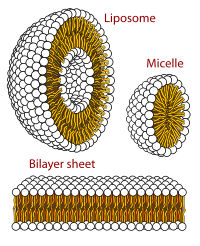
, which creates an energetically unfavorable interaction between the hydrophobic lipid tails and the surrounding water. Thus, a lipid bilayer is typically held together by entirely non-covalent forces
that do not involve formation of chemical bonds between individual molecules.
There are some similarities between this structure and a common soap bubble
, although there are also important differences. As illustrated, both structures involve two single-molecule layers of an amphiphilic substance. In the case of a soap bubble, the two soap monolayers coat an intervening water layer. The hydrophilic heads are oriented “in” toward this water core, while the hydrophobic tails point “out” to the air. In the case of a lipid bilayer, this structure is reversed with heads out and tails in. Another important difference between lipid bilayers and soap bubbles is their relative size. Soap bubbles are typically hundreds of nanometers thick, on the same order as the wavelength of light, which is why interference effects cause rainbow colors on a bubble surface. A single lipid bilayer, on the other hand, is around five nanometers thick, much smaller than the wavelength of light and is therefore invisible to the eye, even with a standard light microscope.

and nuclear magnetic resonance
techniques.
The first region on either side of the bilayer is the hydrophilic headgroup. This portion of the membrane is completely hydrated and is typically around 0.8-0.9 nm thick. In phospholipid
bilayers the phosphate
group is located within this hydrated region, approximately 0.5 nm outside the hydrophobic core. In some cases, the hydrated region can extend much further, for instance in lipids with a large protein or long sugar chain grafted to the head. One common example of such a modification in nature is the lipopolysaccharide
coat on a bacterial outer membrane, which helps retain a water layer around the bacterium to prevent dehydration.
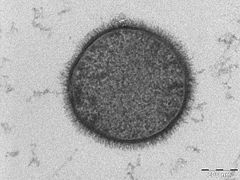 Next to the hydrated region is an intermediate region which is only partially hydrated. This boundary layer is approximately 0.3 nm thick. Within this short distance, the water concentration drops from 2M on the headgroup side to nearly zero on the tail (core) side. The hydrophobic core of the bilayer is typically 3-4 nm thick, but this value varies with chain length and chemistry. Core thickness also varies significantly with temperature, particularly near a phase transition.
, phosphatidylserine
and phosphatidylinositol
and its phosphorylated derivatives. By contrast, the outer (extracellular) leaflet is based on phosphatidylcholine
, sphingomyelin
and a variety of glycolipids, In some cases, this asymmetry is based on where the lipids are made in the cell and reflects their initial orientation. The biological functions of lipid asymmetry are imperfectly understood, although it is clear that it is used in several different situations. For example, when a cell undergoes apoptosis
, the phosphatidylserine — normally localised to the cytoplasmic leaflet — is transferred to the outer surface: there it is recognised by a macrophage
which then actively scavenges the dying cell.
Lipid asymmetry arises, at least in part, from the fact that most phospholipids are synthesised and initially inserted into the inner monolayer: those that constitute the outer monolayer are then transported to the inner monolayer by a class of enzymes called flippase
s. Other lipids, such as sphingomyelin, appear to be synthesised at the external leaflet. Flippases are members of a larger family of lipid transport molecules which also includes floppases, which transfer lipids in the opposite direction, and scramblases, which randomize lipid distribution across lipid bilayers (as in apoptotic cells). In any case, once lipid asymmetry is established it does not normally dissipate quickly because spontaneous flip-flop of lipids between leaflets is extremely slow.
It is possible to mimic this asymmetry in the laboratory in model bilayer systems. Certain types of very small artificial vesicle
will automatically make themselves slightly asymmetric, although the mechanism by which this asymmetry is generated is very different from that in cells. By utilizing two different monolayers in Langmuir-Blodgett
deposition or a combination of Langmuir-Blodgett and vesicle rupture deposition it is also possible to synthesize an asymmetric planar bilayer. This asymmetry may be lost over time as lipids in supported bilayers can be prone to flip-flop.
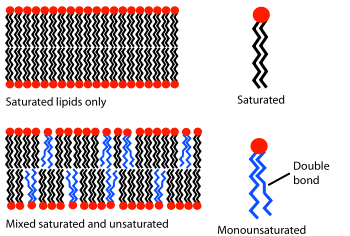 At a given temperature a lipid bilayer can exist in either a liquid or a gel (solid) phase. All lipids have a characteristic temperature at which they transition (melt) from the gel to liquid phase. In both phases the lipid molecules are prevented from flip-flopping across the bilayer, but in liquid phase bilayers a given lipid will exchange locations with its neighbor millions of times a second. This random walk
exchange allows lipid to diffuse
and thus wander across the surface of the membrane. Unlike liquid phase bilayers, the lipids in a gel phase bilayer are locked in place.
The phase behavior of lipid bilayers is largely determined by the strength of the attractive Van der Waals
interactions between adjacent lipid molecules. Longer tailed lipids have more area over which to interact, increasing the strength of this interaction and consequently decreasing the lipid mobility. Thus, at a given temperature, a short-tailed lipid will be more fluid than an otherwise identical long-tailed lipid. Transition temperature can also be affected by the degree of unsaturation
of the lipid tails. An unsaturated double bond
can produce a kink in the alkane
chain, disrupting the lipid packing. This disruption creates extra free space within the bilayer which allows additional flexibility in the adjacent chains. An example of this effect can be noted in everyday life as butter, which has a large percentage saturated fats, is solid at room temperature while vegetable oil, which is mostly unsaturated, is liquid.
Most natural membranes are a complex mixture of different lipid molecules. If some of the components are liquid at a given temperature while others are in the gel phase, the two phases can coexist in spatially separated regions, rather like an iceberg floating in the ocean. This phase separation plays a critical role in biochemical phenomena because membrane components such as proteins can partition into one or the other phase and thus be locally concentrated or activated. One particularly important component of many mixed phase systems is cholesterol
, which modulates bilayer permeability, mechanical strength and biochemical interactions.
and sterols such as cholesterol
are also important components. Of the phospholipids, the most common headgroup is phosphatidylcholine
(PC), accounting for about half the phospholipids in most mammalian cells. PC is a zwitterionic headgroup, as it has a negative charge on the phosphate group and a positive charge on the amine but, because these local charges balance, no net charge.
Other headgroups are also present to varying degrees and can include phosphatidylserine
(PS) phosphatidylethanolamine
(PE) and phosphatidylglycerol
(PG). These alternate headgroups often confer specific biological functionality that is highly context-dependent. For instance, PS presence on the extracellular membrane face of erythrocytes is a marker of cell apoptosis
, whereas PS in growth plate vesicles is necessary for the nucleation
of hydroxyapatite crystals and subsequent bone mineralization. Unlike PC, some of the other headgroups carry a net charge, which can alter the electrostatic interactions of small molecules with the bilayer.
compartments from their surroundings. Without some form of barrier delineating “self” from “non-self” it is difficult to even define the concept of an organism or of life. This barrier takes the form of a lipid bilayer in all known life forms except for a few species of archaea
which utilize a specially adapted lipid monolayer. It has even been proposed that the very first form of life may have been a simple lipid vesicle with virtually its sole biosynthetic
capability being the production of more phospholipids. The partitioning ability of the lipid bilayer is based on the fact that hydrophilic molecules cannot easily cross the hydrophobic bilayer core, as discussed in Transport across the bilayer below.
Prokaryotes have only one lipid bilayer- the cell membrane
(also known as the plasma membrane). Many prokaryotes also have a cell wall
, but the cell wall is composed of proteins or long chain carbohydrates, not lipids. In contrast, eukaryotes have a range of organelles including the nucleus
, mitochondria, lysosomes and endoplasmic reticulum
. All of these sub-cellular compartments are surrounded by one or more lipid bilayers and, together, typically comprise the majority of the bilayer area present in the cell. In liver hepatocytes for example, the plasma membrane accounts for only two percent of the total bilayer area of the cell, whereas the endoplasmic reticulum contains more than fifty percent and the mitochondria a further thirty percent.
.png)
is conveyed to an adjacent neuron via the release of neurotransmitters. This transmission is made possible by the action of synaptic vesicles loaded with the neurotransmitters to be released. These vesicles fuse
with the cell membrane at the pre-synaptic terminal and release its contents to the exterior of the cell. The contents then diffuse across the synapse to the post-synaptic terminal.
Lipid bilayers are also involved in signal transduction through their role as the home of integral membrane proteins. This is an extremely broad and important class of biomolecule. It is estimated that up to a third of the human proteome
may be membrane proteins. Some of these proteins are linked to the exterior of the cell membrane. An example of this is the CD59
protein, which identifies cells as “self” and thus inhibits their destruction by the immune system. The HIV
virus evades the immune system
in part by grafting these proteins from the host membrane onto its own surface. Alternatively, some membrane proteins penetrate all the way through the bilayer and serve to relay individual signal events from the outside to the inside of the cell. The most common class of this type of protein is the G protein-coupled receptor
(GPCR). GPCRs are responsible for much of the cell’s ability to sense its surroundings and, because of this important role, approximately 40% of all modern drugs are targeted at GPCRs.
In addition to protein- and solution-mediated processes, it is also possible for lipid bilayers to participate directly in signaling. A classic example of this is phosphatidylserine
-triggered phagocytosis. Normally, phosphatidylserine is asymmetrically distributed in the cell membrane and is present only on the interior side. During programmed cell death a protein called a scramblase
equilibrates this distribution, displaying phosphatidylserine on the extracellular bilayer face. The presence of phosphatidylserine then triggers phagocytosis to remove the dead or dying cell.
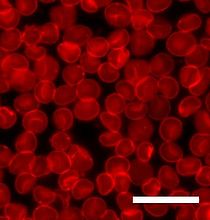
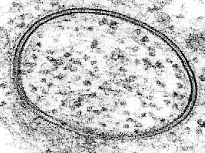 The lipid bilayer is a very difficult structure to study because it is so thin and fragile. In spite of these limitations dozens of techniques have been developed over the last seventy years to allow investigations of its structure and function.
Electrical measurements are a straightforward way to characterize an important function of a bilayer: its ability to segregate and prevent the flow of ions in solution. By applying a voltage across the bilayer and measuring the resulting current, the resistance
of the bilayer is determined. This resistance is typically quite high since the hydrophobic core is impermeable to charged species. The presence of even a few nanometer-scale holes results in a dramatic increase in current. The sensitivity of this system is such that even the activity of single ion channels can be resolved.
Electrical measurements do not provide an actual picture like imaging with a microscope can. Lipid bilayers cannot be seen in a traditional microscope because they are too thin. In order to see bilayers, researchers often use fluorescence microscopy. A sample is excited with one wavelength of light and observed in a different wavelength, so that only fluorescent molecules with a matching excitation and emission profile will be seen. Natural lipid bilayers are not fluorescent, so a dye is used that attaches to the desired molecules in the bilayer. Resolution is usually limited to a few hundred nanometers, much smaller than a typical cell but much larger than the thickness of a lipid bilayer.
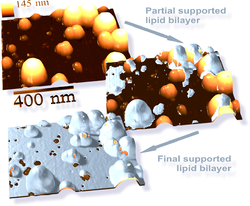
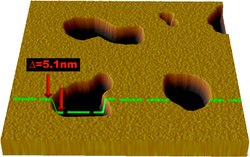 Electron microscopy offers a higher resolution image. In an electron microscope
, a beam of focused electrons interacts with the sample rather than a beam of light as in traditional microscopy. In conjunction with rapid freezing techniques, electron microscopy has also been used to study the mechanisms of inter- and intracellular transport, for instance in demonstrating that exocytotic
vesicles are the means of chemical release at synapses.
31P-NMR(nuclear magnetic resonance) spectroscopy is widely used for studies of phospholipid bilayers and biological membranes in native conditions. The analysis of 31P-NMR spectra of lipids could provide a wide range of information about lipid bilayer packing, phase transitions (gel phase, physiological liquid crystal phase, ripple phases, non bilayer phases), lipid head group orientation/dynamics, and elastic properties of pure lipid bilayer and as a result of binding of proteins and other biomolecules.
In addition, a specific H-N...(O)-P NMR experiment (INEPT transfer by scalar coupling 3JH-P~5 Hz) could provide a direct information about formation of hydrogen bonds between amid protons of protein to phosphate of lipid headgroups, which is useful in studies of protein/membrane interactions.
A new method to study lipid bilayers is Atomic force microscopy (AFM). Rather than using a beam of light or particles, a very small sharpened tip scans the surface by making physical contact with the bilayer and moving across it, like a record player needle. AFM is a promising technique because it has the potential to image with nanometer resolution at room temperature and even under water or physiological buffer, conditions necessary for natural bilayer behavior. Utilizing this capability, AFM has been used to examine dynamic bilayer behavior including the formation of transmembrane pores (holes) and phase transitions in supported bilayers. Another advantage is that AFM does not require fluorescent or isotopic
labeling of the lipids, since the probe tip interacts mechanically with the bilayer surface. Because of this, the same scan can image both lipids and associated proteins, sometimes even with single-molecule resolution. AFM can also probe the mechanical nature of lipid bilayers.
Lipid bilayers exhibit high levels of birefringence
where the refractive index in the plane of the bilayer differs from that perpendicular by as much as 0.1 refractive index
units. This has been used to characterise the degree of order and disruption in bilayers using dual polarisation interferometry
to understand mechanisms of protein interaction.
molecules have low solubility in the hydrocarbon
core of a lipid bilayer and consequently have low permeability coefficients across the bilayer. This effect is particularly pronounced for charged species, which have even lower permeability coefficients than neutral polar molecules. Anions typically have a higher rate of diffusion through bilayers than cations. Compared to ions, water molecules actually have a relatively large permeability through the bilayer, as evidenced by osmotic swelling
. When a cell or vesicle with a high interior salt concentration is placed in a solution with a low salt concentration it will swell and eventually burst. Such a result would not be observed unless water was able to pass through the bilayer with relative ease. The anomalously large permeability of water through bilayers is still not completely understood and continues to be the subject of active debate. Small uncharged apolar molecules diffuse through lipid bilayers many orders of magnitude faster than ions or water. This applies both to fats and organic solvents like chloroform
and ether
. Regardless of their polar character larger molecules diffuse more slowly across lipid bilayers than small molecules.
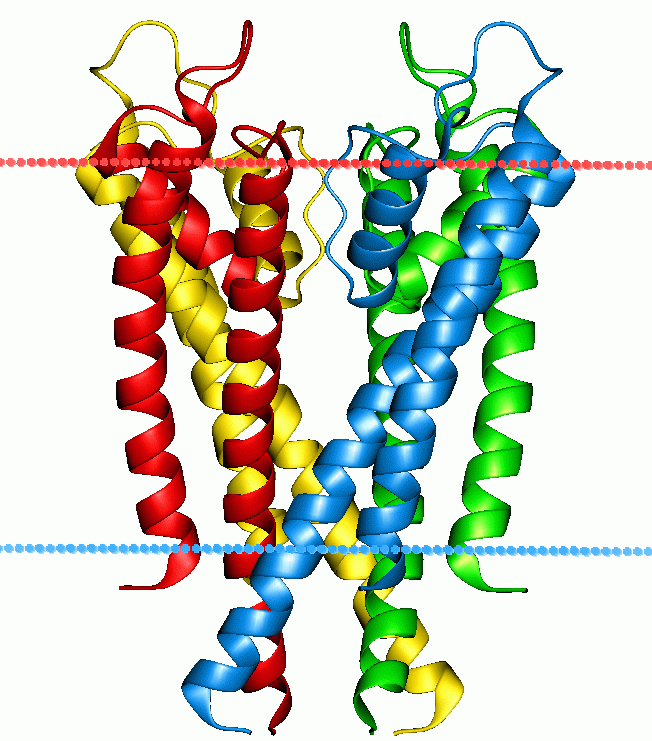
. The energy source can be ATP
, as is the case for the Na+-K+ ATPase. Alternatively, the energy source can be another chemical gradient already in place, as in the Ca2+/Na+ antiporter
. It is through the action of ion pumps that cells are able to regulate pH
via the pumping of protons
.
In contrast to ion pumps, ion channels do not build chemical gradients but rather dissipate them in order to perform work or send a signal. Probably the most familiar and best studied example is the voltage-gated Na+ channel, which allows conduction of an action potential
along neurons. All ion pumps have some sort of trigger or “gating” mechanism. In the previous example it was electrical bias, but other channels can be activated by binding a molecular agonist or through a conformational change in another nearby protein.
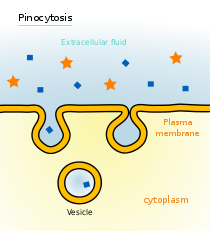
or budding of vesicles. When a vesicle is produced inside the cell and fuses with the plasma membrane to release its contents into the extracellular space this process is known as exocytosis. In the reverse process a region of the cell membrane will dimple inwards and eventually pinch off, enclosing a portion of the extracellular fluid to transport it into the cell. Endocytosis and exocytosis rely on very different molecular machinery to function, but the two processes are intimately linked and could not work without each other. The primary mechanism this interdependence is the sheer volume of lipid material involved. In a typical cell, an area of bilayer equivalent to the entire plasma membrane will travel through the endocytosis/exocytosis cycle in about half an hour. If these two processes were not balancing each other the cell would either balloon outward to an unmanageable size or completely deplete its plasma membrane within a matter of minutes.
which would never passively diffuse across the hydrophobic bilayer core. Because of this, electroporation is one of the key methods of transfection
as well as bacterial transformation
. It has even been proposed that electroporation resulting from lightning
strikes could be a mechanism of natural horizontal gene transfer
.
This increase in permeability primarily affects transport of ions and other hydrated species, indicating that the mechanism is the creation of nm-scale water-filled holes in the membrane. Although electroporation and dielectric breakdown both result from application of an electric field, the mechanisms involved are fundamentally different. In dielectric breakdown the barrier material is ionized, creating a conductive pathway. The material alteration is thus chemical in nature. In contrast, during electroporation the lipid molecules are not chemically altered but simply shift position, opening up a pore which acts as the conductive pathway through the bilayer as it is filled with water.
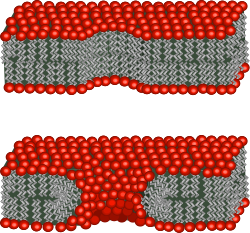 Lipid bilayers are large enough structures to have some of the mechanical properties of liquids or solids. The area compression modulus Ka, bending modulus Kb, and edge energy
  , can be used to describe them. Solid lipid bilayers also have a shear modulus, but like any liquid, the shear modulus is zero for fluid bilayers. These mechanical properties affect how the membrane functions. Ka and Kb affect the ability of proteins and small molecules to insert into the bilayer, and bilayer mechanical properties have been shown to alter the function of mechanically activated ion channels. Bilayer mechanical properties also govern what types of stress a cell can withstand without tearing. Although lipid bilayers can easily bend, most cannot stretch more than a few percent before rupturing.
As discussed in the Structure and organization section, the hydrophobic repulsion between lipid tails and water is the primary force holding lipid bilayers together. Thus, the elastic modulus of the bilayer is primarily determined by how much extra area is exposed to water when the lipid molecules are stretched apart. It is not surprising given this understanding of the forces involved that studies have shown that Ka varies strongly with solution conditions but only weakly with tail length and unsaturation. Because the forces involved are so small, it is difficult to experimentally determine Ka. Most techniques require sophisticated microscopy and very sensitive measurement equipment.
In contrast to Ka, which is a measure of how much energy is needed to stretch the bilayer, Kb is a measure of how much energy is needed to bend or flex the bilayer. Formally, bending modulus is defined as the energy required to deform a membrane from its intrinsic curvature to some other curvature. Intrinsic curvature is defined by the ratio of the diameter of the head group to that of the tail group. For two-tailed PC lipids, this ratio is nearly one so the intrinsic curvature is nearly zero. If a particular lipid has too large a deviation from zero intrinsic curvature it will not form a bilayer and will instead form other phases such as micelles or inverted micelles. Typically, Kb is not measured experimentally but rather is calculated from measurements of Ka and bilayer thickness, since the three parameters are related.
 is a measure of how much energy it takes to expose a bilayer edge to water by tearing the bilayer or creating a hole in it. The origin of this energy is the fact that creating such an interface exposes some of the lipid tails to water, but the exact orientation of these border lipids is unknown. There is some evidence that both hydrophobic (tails straight) and hydrophilic (heads curved around) pores can coexist.
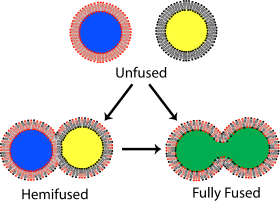 Fusion
is the process by which two lipid bilayers merge, resulting in one connected structure. If this fusion proceeds completely through both leaflets of both bilayers, a water-filled bridge is formed and the solutions contained by the bilayers can mix. Alternatively, if only one leaflet from each bilayer is involved in the fusion process, the bilayers are said to be hemifused. Fusion is involved in many cellular processes, particularly in eukaryotes since the eukaryotic cell is extensively sub-divided by lipid bilayer membranes. Exocytosis
, fertilization of an egg
by sperm
and transport of waste products to the lysozome are a few of the many eukaryotic processes that rely on some form of fusion. Even the entry of pathogens can be governed by fusion, as many bilayer-coated viruses have dedicated fusion proteins to gain entry into the host cell.
There are four fundamental steps in the fusion process. First, the involved membranes must aggregate, approaching each other to within several nanometers. Second, the two bilayers must come into very close contact (within a few angstroms). To achieve this close contact, the two surfaces must become at least partially dehydrated, as the bound surface water normally present causes bilayers to strongly repel. The presence of ions, particularly divalent cations like magnesium and calcium, strongly affects this step. One of the critical roles of calcium in the body is regulating membrane fusion. Third, a destabilization must form at one point between the two bilayers, locally distorting their structures. The exact nature of this distortion is not known. One theory is that a highly curved "stalk" must form between the two bilayers. Proponents of this theory believe that it explains why phosphatidylethanolamine, a highly curved lipid, promotes fusion. Finally, in the last step of fusion, this point defect grows and the components of the two bilayers mix and diffuse away from the site of contact.

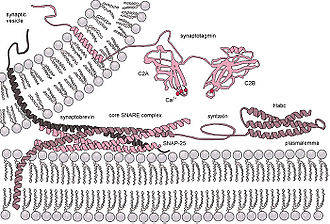 The situation is further complicated when considering fusion in vivo since biological fusion is almost always regulated by the action of membrane-associated proteins
. The first of these proteins to be studied were the viral fusion proteins, which allow an enveloped virus
to insert its genetic material into the host cell (enveloped viruses are those surrounded by a lipid bilayer; some others have only a protein coat).Eukaryotic cells also use fusion proteins, the best studied of which are the SNAREs
. SNARE proteins are used to direct all vesicular
intracellular trafficking. Despite years of study, much is still unknown about the function of this protein class. In fact, there is still an active debate regarding whether SNAREs are linked to early docking or participate later in the fusion process by facilitating hemifusion.
In studies of molecular and cellular biology it is often desirable to artificially induce fusion. The addition of polyethylene glycol
(PEG) causes fusion without significant aggregation or biochemical disruption. This procedure is now used extensively, for example by fusing B-cells with melanoma
cells. The resulting “hybridoma
” from this combination expresses a desired antibody
as determined by the B-cell involved, but is immortalized due to the melanoma component. Fusion can also be artificially induced through electroporation
in a process known as electrofusion. It is believed that this phenomenon results from the energetically active edges
formed during electroporation, which can act as the local defect point to nucleate stalk growth between two bilayers.
” except that vesicle is a general term for the structure whereas liposome only refers to artificial, not natural vesicles) The basic idea of liposomal drug delivery is that the drug is encapsulated in solution inside the liposome then injected into the patient. These drug-loaded liposomes travel through the system until they bind at the target site and rupture, releasing the drug. In theory, liposomes should make an ideal drug delivery system since they can isolate nearly any hydrophilic drug, can be grafted with molecules to target specific tissues and can be relatively non-toxic since the body possesses biochemical pathways for degrading lipids.
The first generation of drug delivery liposomes had a simple lipid composition and suffered from several limitations. Circulation in the bloodstream was extremely limited due to both renal clearing and phagocytosis. Refinement of the lipid composition to tune fluidity, surface charge density and surface hydration resulted in vesicles that adsorb fewer proteins from serum
and thus are less readily recognized by the immune system
. The most significant advance in this area was the grafting of polyethylene glycol
(PEG) onto the liposome surface to produce “stealth” vesicles which circulate over long times without immune or renal clearing.
The first stealth liposomes were passively targeted at tumor
tissues. Because tumors induce rapid and uncontrolled angiogenesis
they are especially “leaky” and allow liposomes to exit the bloodstream at a much higher rate than normal tissue would. More recently work has been undertaken to graft antibodies or other molecular markers onto the liposome surface in the hope of actively binding them to a specific cell or tissue type. Some examples of this approach are already in clinical trials.
Another potential application of lipid bilayers is the field of biosensors. Since the lipid bilayer is the barrier between the interior and exterior of the cell it is also the site of extensive signal transduction. Researchers over the years have tried to harness this potential to develop a bilayer-based device for clinical diagnosis or bioterrorism detection. Progress has been slow in this area and, although a few companies have developed automated lipid-based detection systems, they are still targeted at the research community. These include Biacore Life Sciences, which offers a disposable chip for utilizing lipid bilayers in studies of binding kinetics and Nanion Inc which has developed an automated patch clamping system. Other, more exotic applications are also being pursued such as the use of lipid bilayer membrane pores for DNA sequencing
by Oxford Nanolabs. To date, this technology has not proven commercially viable.
A supported lipid bilayer (SLB) as described above has achieved commercial success as a screening technique to measure the permeability of drugs. This parallel artificial membrane permeability assay PAMPA
technique measures the permeability across specifically formulated lipid cocktail(s) found to be highly correlated with Caco-2
cultures, the gastrointestinal tract
, blood-brain barrier
and skin.
of erythrocyte solutions, Hugo Fricke determined that the cell membrane was 3.3 nm thick.
Although the results of this experiment were accurate, Fricke misinterpreted the data to mean that the cell membrane is a single molecular layer. Prof. Dr. Evert Gorter (1881–1954) and F. Grendel of Leiden University approached the problem from a different perspective, spreading the erythrocyte lipids as a monolayer on a Langmuir-Blodgett trough. When they compared the area of the monolayer to the surface area of the cells, they found a ratio of two to one. Later analyses showed several errors and incorrect assumptions with this experiment but, serendipitously, these errors canceled out and from this flawed data Gorter and Grendel drew the correct conclusion- that the cell membrane is a lipid bilayer.
This theory was confirmed through the use of electron microscopy in the late 1950s. Although he did not publish the first electron microscopy study of lipid bilayers J. David Robertson was the first to assert that the two dark electron-dense bands were the headgroups and associated proteins of two apposed lipid monolayers. In this body of work, Robertson put forward the concept of the “unit membrane.” This was the first time the bilayer structure had been universally assigned to all cell membranes as well as organelle
membranes.
Around the same time the development of model membranes confirmed that the lipid bilayer is a stable structure that can exist independently of proteins. By “painting” a solution of lipid in organic solvent across an aperture, Mueller and Rudin were able to create an artificial bilayer and determine that this exhibited lateral fluidity, high electrical resistance and self-healing in response to puncture, all of which are properties of a natural cell membrane. A few years later, Alec Bangham
showed that bilayers, in the form of lipid vesicles, could also be formed simply by exposing a dried lipid sample to water. This was an important advance since it demonstrated that lipid bilayers form spontaneously via self assembly and do not require a patterned support structure.
Lipid
Lipids constitute a broad group of naturally occurring molecules that include fats, waxes, sterols, fat-soluble vitamins , monoglycerides, diglycerides, triglycerides, phospholipids, and others...
molecule
Molecule
A molecule is an electrically neutral group of at least two atoms held together by covalent chemical bonds. Molecules are distinguished from ions by their electrical charge...
s. These membranes are flat sheets that form a continuous barrier around cells
Cell (biology)
The cell is the basic structural and functional unit of all known living organisms. It is the smallest unit of life that is classified as a living thing, and is often called the building block of life. The Alberts text discusses how the "cellular building blocks" move to shape developing embryos....
. The cell membrane
Cell membrane
The cell membrane or plasma membrane is a biological membrane that separates the interior of all cells from the outside environment. The cell membrane is selectively permeable to ions and organic molecules and controls the movement of substances in and out of cells. It basically protects the cell...
of almost all living organisms
Life
Life is a characteristic that distinguishes objects that have signaling and self-sustaining processes from those that do not, either because such functions have ceased , or else because they lack such functions and are classified as inanimate...
and many virus
Virus
A virus is a small infectious agent that can replicate only inside the living cells of organisms. Viruses infect all types of organisms, from animals and plants to bacteria and archaea...
es are made of a lipid bilayer, as are the membranes surrounding the cell nucleus
Cell nucleus
In cell biology, the nucleus is a membrane-enclosed organelle found in eukaryotic cells. It contains most of the cell's genetic material, organized as multiple long linear DNA molecules in complex with a large variety of proteins, such as histones, to form chromosomes. The genes within these...
and other sub-cellular structures. The lipid bilayer is the barrier that keeps ions, proteins and other molecules where they are needed and prevents them from diffusing into areas where they should not be. Lipid bilayers are ideally suited to this role because, even though they are only a few nanometers in width, they are impermeable to most water-soluble (hydrophilic) molecules. Bilayers are particularly impermeable to ions, which allows cells to regulate salt concentrations and pH
PH
In chemistry, pH is a measure of the acidity or basicity of an aqueous solution. Pure water is said to be neutral, with a pH close to 7.0 at . Solutions with a pH less than 7 are said to be acidic and solutions with a pH greater than 7 are basic or alkaline...
by pumping ions across their membranes using proteins called ion pumps.
Hydrophobic effect
The hydrophobic effect is the observed tendency of nonpolar substances to aggregate in aqueous solution and exclude water molecules. The name, literally meaning "water-fearing," describes the segregation and apparent repulsion between water and nonpolar substances...
. Because lipid bilayers are quite fragile and are so thin that they are invisible in a traditional microscope, bilayers are very challenging to study. Experiments on bilayers often require advanced techniques like electron microscopy and atomic force microscopy.
Phospholipids with certain head groups can alter the surface chemistry of a bilayer and can, for example, mark a cell for destruction by the immune system
Immune system
An immune system is a system of biological structures and processes within an organism that protects against disease by identifying and killing pathogens and tumor cells. It detects a wide variety of agents, from viruses to parasitic worms, and needs to distinguish them from the organism's own...
. Lipid tails can also affect membrane properties, for instance by determining the phase
Phase (matter)
In the physical sciences, a phase is a region of space , throughout which all physical properties of a material are essentially uniform. Examples of physical properties include density, index of refraction, and chemical composition...
of the bilayer. The bilayer can adopt a solid gel
Gel
A gel is a solid, jelly-like material that can have properties ranging from soft and weak to hard and tough. Gels are defined as a substantially dilute cross-linked system, which exhibits no flow when in the steady-state...
phase state at lower temperatures but undergo phase transition
Phase transition
A phase transition is the transformation of a thermodynamic system from one phase or state of matter to another.A phase of a thermodynamic system and the states of matter have uniform physical properties....
to a fluid state at higher temperatures. The packing of lipids within the bilayer also affects its mechanical properties, including its resistance to stretching and bending. Many of these properties have been studied with the use of artificial "model" bilayers produced in a lab. Vesicles
Vesicle (biology)
A vesicle is a bubble of liquid within another liquid, a supramolecular assembly made up of many different molecules. More technically, a vesicle is a small membrane-enclosed sack that can store or transport substances. Vesicles can form naturally because of the properties of lipid membranes , or...
made by model bilayers have also been used clinically to deliver drugs.
Biological membranes typically include several types of lipids other than phospholipids. A particularly important example in animal cells is cholesterol
Cholesterol
Cholesterol is a complex isoprenoid. Specifically, it is a waxy steroid of fat that is produced in the liver or intestines. It is used to produce hormones and cell membranes and is transported in the blood plasma of all mammals. It is an essential structural component of mammalian cell membranes...
, which helps strengthen the bilayer and decrease its permeability. Cholesterol also helps regulate the activity of certain integral membrane proteins. Integral membrane proteins function when incorporated into a lipid bilayer. Because bilayers define the boundaries of the cell and its compartments, these membrane proteins are involved in many intra- and inter-cellular signaling processes. Certain kinds of membrane proteins are involved in the process of fusing two bilayers together. This fusion allows the joining of two distinct structures as in the fertilization of an egg
Egg (biology)
An egg is an organic vessel in which an embryo first begins to develop. In most birds, reptiles, insects, molluscs, fish, and monotremes, an egg is the zygote, resulting from fertilization of the ovum, which is expelled from the body and permitted to develop outside the body until the developing...
by sperm
Sperm
The term sperm is derived from the Greek word sperma and refers to the male reproductive cells. In the types of sexual reproduction known as anisogamy and oogamy, there is a marked difference in the size of the gametes with the smaller one being termed the "male" or sperm cell...
or the entry of a virus
Virus
A virus is a small infectious agent that can replicate only inside the living cells of organisms. Viruses infect all types of organisms, from animals and plants to bacteria and archaea...
into a cell.
Structure and organization
A lipid bilayer is a sheet of lipids two molecules thick, arranged so that the hydrophilic phosphate heads point “out” to the water on either side of the bilayer and the hydrophobic tails point “in” to the core of the bilayer. This arrangement results in two “leaflets” which are each a single molecular layer. Lipids self-assemble into this structure because of the hydrophobic effectHydrophobic effect
The hydrophobic effect is the observed tendency of nonpolar substances to aggregate in aqueous solution and exclude water molecules. The name, literally meaning "water-fearing," describes the segregation and apparent repulsion between water and nonpolar substances...
, which creates an energetically unfavorable interaction between the hydrophobic lipid tails and the surrounding water. Thus, a lipid bilayer is typically held together by entirely non-covalent forces
Noncovalent bonding
A noncovalent bond is a type of chemical bond, typically between macromolecules, that does not involve the sharing of pairs of electrons, but rather involves more dispersed variations of electromagnetic interactions. The noncovalent bond is the dominant type of bond between supermolecules in...
that do not involve formation of chemical bonds between individual molecules.
There are some similarities between this structure and a common soap bubble
Soap bubble
A soap bubble is a thin film of soapy water enclosing air, that forms a hollow sphere with an iridescent surface. Soap bubbles usually last for only a few seconds before bursting, either on their own or on contact with another object. They are often used for children's enjoyment, but they are also...
, although there are also important differences. As illustrated, both structures involve two single-molecule layers of an amphiphilic substance. In the case of a soap bubble, the two soap monolayers coat an intervening water layer. The hydrophilic heads are oriented “in” toward this water core, while the hydrophobic tails point “out” to the air. In the case of a lipid bilayer, this structure is reversed with heads out and tails in. Another important difference between lipid bilayers and soap bubbles is their relative size. Soap bubbles are typically hundreds of nanometers thick, on the same order as the wavelength of light, which is why interference effects cause rainbow colors on a bubble surface. A single lipid bilayer, on the other hand, is around five nanometers thick, much smaller than the wavelength of light and is therefore invisible to the eye, even with a standard light microscope.
Cross section analysis
The lipid bilayer is very thin compared to its lateral dimensions. If a typical mammalian cell (diameter ~10 micrometre) were magnified to the size of a watermelon (~1 ft/30 cm), the lipid bilayer making up the plasma membrane would be about as thick as a piece of office paper. Despite being only a few nanometers thick, the bilayer consists of several distinct chemical regions across its cross-section. These regions and their interactions with the surrounding water have been characterized over the past several decades with x-ray reflectometry, neutron scatteringNeutron scattering
Neutron scattering,the scattering of free neutrons by matter,is a physical processand an experimental technique using this processfor the investigation of materials.Neutron scattering as a physical process is of primordial importance...
and nuclear magnetic resonance
Nuclear magnetic resonance
Nuclear magnetic resonance is a physical phenomenon in which magnetic nuclei in a magnetic field absorb and re-emit electromagnetic radiation...
techniques.
The first region on either side of the bilayer is the hydrophilic headgroup. This portion of the membrane is completely hydrated and is typically around 0.8-0.9 nm thick. In phospholipid
Phospholipid
Phospholipids are a class of lipids that are a major component of all cell membranes as they can form lipid bilayers. Most phospholipids contain a diglyceride, a phosphate group, and a simple organic molecule such as choline; one exception to this rule is sphingomyelin, which is derived from...
bilayers the phosphate
Phosphate
A phosphate, an inorganic chemical, is a salt of phosphoric acid. In organic chemistry, a phosphate, or organophosphate, is an ester of phosphoric acid. Organic phosphates are important in biochemistry and biogeochemistry or ecology. Inorganic phosphates are mined to obtain phosphorus for use in...
group is located within this hydrated region, approximately 0.5 nm outside the hydrophobic core. In some cases, the hydrated region can extend much further, for instance in lipids with a large protein or long sugar chain grafted to the head. One common example of such a modification in nature is the lipopolysaccharide
Lipopolysaccharide
Lipopolysaccharides , also known as lipoglycans, are large molecules consisting of a lipid and a polysaccharide joined by a covalent bond; they are found in the outer membrane of Gram-negative bacteria, act as endotoxins and elicit strong immune responses in animals.-Functions:LPS is the major...
coat on a bacterial outer membrane, which helps retain a water layer around the bacterium to prevent dehydration.
Asymmetry
In many naturally occurring bilayers, the compositions of the inner and outer membrane leaflets are different. In human red blood cells, the inner (cytoplasmic) leaflet is largely composed of phosphatidylethanolaminePhosphatidylethanolamine
Phosphatidylethanolamine is a lipid found in biological membranes. It is synthesized by the addition of CDP-ethanolamine to diglyceride, releasing CMP. S-adenosyl methionine can subsequently methylate the amine of phosphatidyl ethanolamine to yield phosphatidyl choline.Cephalin is a phospholipid,...
, phosphatidylserine
Phosphatidylserine
Phosphatidylserine is a phospholipid component, usually kept on the inner-leaflet of cell membranes by an enzyme called flippase...
and phosphatidylinositol
Phosphatidylinositol
Phosphatidylinositol is a negatively charged phospholipid and a minor component in the cytosolic side of eukaryotic cell membranes....
and its phosphorylated derivatives. By contrast, the outer (extracellular) leaflet is based on phosphatidylcholine
Phosphatidylcholine
Phosphatidylcholines are a class of phospholipids that incorporate choline as a headgroup.They are a major component of biological membranes and can be easily obtained from a variety of readily available sources such as egg yolk or soy beans from which they are mechanically extracted or chemically...
, sphingomyelin
Sphingomyelin
Sphingomyelin is a type of sphingolipid found in animal cell membranes, especially in the membranous myelin sheath that surrounds some nerve cell axons. It usually consists of phosphorylcholine and ceramide...
and a variety of glycolipids, In some cases, this asymmetry is based on where the lipids are made in the cell and reflects their initial orientation. The biological functions of lipid asymmetry are imperfectly understood, although it is clear that it is used in several different situations. For example, when a cell undergoes apoptosis
Apoptosis
Apoptosis is the process of programmed cell death that may occur in multicellular organisms. Biochemical events lead to characteristic cell changes and death. These changes include blebbing, cell shrinkage, nuclear fragmentation, chromatin condensation, and chromosomal DNA fragmentation...
, the phosphatidylserine — normally localised to the cytoplasmic leaflet — is transferred to the outer surface: there it is recognised by a macrophage
Macrophage
Macrophages are cells produced by the differentiation of monocytes in tissues. Human macrophages are about in diameter. Monocytes and macrophages are phagocytes. Macrophages function in both non-specific defense as well as help initiate specific defense mechanisms of vertebrate animals...
which then actively scavenges the dying cell.
Lipid asymmetry arises, at least in part, from the fact that most phospholipids are synthesised and initially inserted into the inner monolayer: those that constitute the outer monolayer are then transported to the inner monolayer by a class of enzymes called flippase
Flippase
Flippases are a family of transmembrane lipid transporter enzymes located in the membrane responsible for aiding the movement of phospholipid molecules between the two leaflets that compose a cell's membrane...
s. Other lipids, such as sphingomyelin, appear to be synthesised at the external leaflet. Flippases are members of a larger family of lipid transport molecules which also includes floppases, which transfer lipids in the opposite direction, and scramblases, which randomize lipid distribution across lipid bilayers (as in apoptotic cells). In any case, once lipid asymmetry is established it does not normally dissipate quickly because spontaneous flip-flop of lipids between leaflets is extremely slow.
It is possible to mimic this asymmetry in the laboratory in model bilayer systems. Certain types of very small artificial vesicle
Vesicle (biology)
A vesicle is a bubble of liquid within another liquid, a supramolecular assembly made up of many different molecules. More technically, a vesicle is a small membrane-enclosed sack that can store or transport substances. Vesicles can form naturally because of the properties of lipid membranes , or...
will automatically make themselves slightly asymmetric, although the mechanism by which this asymmetry is generated is very different from that in cells. By utilizing two different monolayers in Langmuir-Blodgett
Langmuir-Blodgett film
A Langmuir–Blodgett film contains one or more monolayers of an organic material, deposited from the surface of a liquid onto a solid by immersing the solid substrate into the liquid. A monolayer is adsorbed homogeneously with each immersion or emersion step, thus films with very accurate...
deposition or a combination of Langmuir-Blodgett and vesicle rupture deposition it is also possible to synthesize an asymmetric planar bilayer. This asymmetry may be lost over time as lipids in supported bilayers can be prone to flip-flop.
Phases and phase transitions
Random walk
A random walk, sometimes denoted RW, is a mathematical formalisation of a trajectory that consists of taking successive random steps. For example, the path traced by a molecule as it travels in a liquid or a gas, the search path of a foraging animal, the price of a fluctuating stock and the...
exchange allows lipid to diffuse
Diffusion
Molecular diffusion, often called simply diffusion, is the thermal motion of all particles at temperatures above absolute zero. The rate of this movement is a function of temperature, viscosity of the fluid and the size of the particles...
and thus wander across the surface of the membrane. Unlike liquid phase bilayers, the lipids in a gel phase bilayer are locked in place.
The phase behavior of lipid bilayers is largely determined by the strength of the attractive Van der Waals
Van der Waals force
In physical chemistry, the van der Waals force , named after Dutch scientist Johannes Diderik van der Waals, is the sum of the attractive or repulsive forces between molecules other than those due to covalent bonds or to the electrostatic interaction of ions with one another or with neutral...
interactions between adjacent lipid molecules. Longer tailed lipids have more area over which to interact, increasing the strength of this interaction and consequently decreasing the lipid mobility. Thus, at a given temperature, a short-tailed lipid will be more fluid than an otherwise identical long-tailed lipid. Transition temperature can also be affected by the degree of unsaturation
Degree of unsaturation
The degree of unsaturation formula is used in organic chemistry to help draw chemical structures. The formula lets the user determine how many rings, double bonds, and triple bonds are present in the compound to be drawn...
of the lipid tails. An unsaturated double bond
Double bond
A double bond in chemistry is a chemical bond between two chemical elements involving four bonding electrons instead of the usual two. The most common double bond, that between two carbon atoms, can be found in alkenes. Many types of double bonds between two different elements exist, for example in...
can produce a kink in the alkane
Alkane
Alkanes are chemical compounds that consist only of hydrogen and carbon atoms and are bonded exclusively by single bonds without any cycles...
chain, disrupting the lipid packing. This disruption creates extra free space within the bilayer which allows additional flexibility in the adjacent chains. An example of this effect can be noted in everyday life as butter, which has a large percentage saturated fats, is solid at room temperature while vegetable oil, which is mostly unsaturated, is liquid.
Most natural membranes are a complex mixture of different lipid molecules. If some of the components are liquid at a given temperature while others are in the gel phase, the two phases can coexist in spatially separated regions, rather like an iceberg floating in the ocean. This phase separation plays a critical role in biochemical phenomena because membrane components such as proteins can partition into one or the other phase and thus be locally concentrated or activated. One particularly important component of many mixed phase systems is cholesterol
Cholesterol
Cholesterol is a complex isoprenoid. Specifically, it is a waxy steroid of fat that is produced in the liver or intestines. It is used to produce hormones and cell membranes and is transported in the blood plasma of all mammals. It is an essential structural component of mammalian cell membranes...
, which modulates bilayer permeability, mechanical strength and biochemical interactions.
Surface chemistry
While lipid tails primarily modulate bilayer phase behavior, it is the headgroup that determines the bilayer surface chemistry. Most natural bilayers are composed primarily of phospholipids, although sphingolipids such as sphingomyelinSphingomyelin
Sphingomyelin is a type of sphingolipid found in animal cell membranes, especially in the membranous myelin sheath that surrounds some nerve cell axons. It usually consists of phosphorylcholine and ceramide...
and sterols such as cholesterol
Cholesterol
Cholesterol is a complex isoprenoid. Specifically, it is a waxy steroid of fat that is produced in the liver or intestines. It is used to produce hormones and cell membranes and is transported in the blood plasma of all mammals. It is an essential structural component of mammalian cell membranes...
are also important components. Of the phospholipids, the most common headgroup is phosphatidylcholine
Phosphatidylcholine
Phosphatidylcholines are a class of phospholipids that incorporate choline as a headgroup.They are a major component of biological membranes and can be easily obtained from a variety of readily available sources such as egg yolk or soy beans from which they are mechanically extracted or chemically...
(PC), accounting for about half the phospholipids in most mammalian cells. PC is a zwitterionic headgroup, as it has a negative charge on the phosphate group and a positive charge on the amine but, because these local charges balance, no net charge.
Other headgroups are also present to varying degrees and can include phosphatidylserine
Phosphatidylserine
Phosphatidylserine is a phospholipid component, usually kept on the inner-leaflet of cell membranes by an enzyme called flippase...
(PS) phosphatidylethanolamine
Phosphatidylethanolamine
Phosphatidylethanolamine is a lipid found in biological membranes. It is synthesized by the addition of CDP-ethanolamine to diglyceride, releasing CMP. S-adenosyl methionine can subsequently methylate the amine of phosphatidyl ethanolamine to yield phosphatidyl choline.Cephalin is a phospholipid,...
(PE) and phosphatidylglycerol
Phosphatidylglycerol
Phosphatidylglycerol is a glycerophospholipid found in pulmonary surfactant.The general structure of phosphatidylglycerol consists of a L-glycerol 3-phosphate backbone ester-bonded to either saturated or unsaturated fatty acids on carbons 1 and 2. The head group substituent glycerol is bonded...
(PG). These alternate headgroups often confer specific biological functionality that is highly context-dependent. For instance, PS presence on the extracellular membrane face of erythrocytes is a marker of cell apoptosis
Apoptosis
Apoptosis is the process of programmed cell death that may occur in multicellular organisms. Biochemical events lead to characteristic cell changes and death. These changes include blebbing, cell shrinkage, nuclear fragmentation, chromatin condensation, and chromosomal DNA fragmentation...
, whereas PS in growth plate vesicles is necessary for the nucleation
Nucleation
Nucleation is the extremely localized budding of a distinct thermodynamic phase. Some examples of phases that may form by way of nucleation in liquids are gaseous bubbles, crystals or glassy regions. Creation of liquid droplets in saturated vapor is also characterized by nucleation...
of hydroxyapatite crystals and subsequent bone mineralization. Unlike PC, some of the other headgroups carry a net charge, which can alter the electrostatic interactions of small molecules with the bilayer.
Containment and separation
The primary role of the lipid bilayer in biology is to separate aqueousAqueous solution
An aqueous solution is a solution in which the solvent is water. It is usually shown in chemical equations by appending aq to the relevant formula, such as NaCl. The word aqueous means pertaining to, related to, similar to, or dissolved in water...
compartments from their surroundings. Without some form of barrier delineating “self” from “non-self” it is difficult to even define the concept of an organism or of life. This barrier takes the form of a lipid bilayer in all known life forms except for a few species of archaea
Archaea
The Archaea are a group of single-celled microorganisms. A single individual or species from this domain is called an archaeon...
which utilize a specially adapted lipid monolayer. It has even been proposed that the very first form of life may have been a simple lipid vesicle with virtually its sole biosynthetic
Biosynthesis
Biosynthesis is an enzyme-catalyzed process in cells of living organisms by which substrates are converted to more complex products. The biosynthesis process often consists of several enzymatic steps in which the product of one step is used as substrate in the following step...
capability being the production of more phospholipids. The partitioning ability of the lipid bilayer is based on the fact that hydrophilic molecules cannot easily cross the hydrophobic bilayer core, as discussed in Transport across the bilayer below.
Prokaryotes have only one lipid bilayer- the cell membrane
Cell membrane
The cell membrane or plasma membrane is a biological membrane that separates the interior of all cells from the outside environment. The cell membrane is selectively permeable to ions and organic molecules and controls the movement of substances in and out of cells. It basically protects the cell...
(also known as the plasma membrane). Many prokaryotes also have a cell wall
Cell wall
The cell wall is the tough, usually flexible but sometimes fairly rigid layer that surrounds some types of cells. It is located outside the cell membrane and provides these cells with structural support and protection, and also acts as a filtering mechanism. A major function of the cell wall is to...
, but the cell wall is composed of proteins or long chain carbohydrates, not lipids. In contrast, eukaryotes have a range of organelles including the nucleus
Cell nucleus
In cell biology, the nucleus is a membrane-enclosed organelle found in eukaryotic cells. It contains most of the cell's genetic material, organized as multiple long linear DNA molecules in complex with a large variety of proteins, such as histones, to form chromosomes. The genes within these...
, mitochondria, lysosomes and endoplasmic reticulum
Endoplasmic reticulum
The endoplasmic reticulum is an organelle of cells in eukaryotic organisms that forms an interconnected network of tubules, vesicles, and cisternae...
. All of these sub-cellular compartments are surrounded by one or more lipid bilayers and, together, typically comprise the majority of the bilayer area present in the cell. In liver hepatocytes for example, the plasma membrane accounts for only two percent of the total bilayer area of the cell, whereas the endoplasmic reticulum contains more than fifty percent and the mitochondria a further thirty percent.
Signaling
Probably the most familiar form of cellular signaling is synaptic transmission, whereby a nerve impulse that has reached the end of one neuronNeuron
A neuron is an electrically excitable cell that processes and transmits information by electrical and chemical signaling. Chemical signaling occurs via synapses, specialized connections with other cells. Neurons connect to each other to form networks. Neurons are the core components of the nervous...
is conveyed to an adjacent neuron via the release of neurotransmitters. This transmission is made possible by the action of synaptic vesicles loaded with the neurotransmitters to be released. These vesicles fuse
Lipid bilayer fusion
Fusion is the process by which two initially distinct lipid bilayers merge their hydrophobic cores, resulting in one interconnected structure. If this fusion proceeds completely through both leaflets of both bilayers, an aqueous bridge is formed and the internal contents of the two structures can mix...
with the cell membrane at the pre-synaptic terminal and release its contents to the exterior of the cell. The contents then diffuse across the synapse to the post-synaptic terminal.
Lipid bilayers are also involved in signal transduction through their role as the home of integral membrane proteins. This is an extremely broad and important class of biomolecule. It is estimated that up to a third of the human proteome
Proteome
The proteome is the entire set of proteins expressed by a genome, cell, tissue or organism. More specifically, it is the set of expressed proteins in a given type of cells or an organism at a given time under defined conditions. The term is a portmanteau of proteins and genome.The term has been...
may be membrane proteins. Some of these proteins are linked to the exterior of the cell membrane. An example of this is the CD59
CD59
Protectin, a complement regulatory protein, also known as ', or MIRL is a human gene and protein....
protein, which identifies cells as “self” and thus inhibits their destruction by the immune system. The HIV
HIV
Human immunodeficiency virus is a lentivirus that causes acquired immunodeficiency syndrome , a condition in humans in which progressive failure of the immune system allows life-threatening opportunistic infections and cancers to thrive...
virus evades the immune system
Immune system
An immune system is a system of biological structures and processes within an organism that protects against disease by identifying and killing pathogens and tumor cells. It detects a wide variety of agents, from viruses to parasitic worms, and needs to distinguish them from the organism's own...
in part by grafting these proteins from the host membrane onto its own surface. Alternatively, some membrane proteins penetrate all the way through the bilayer and serve to relay individual signal events from the outside to the inside of the cell. The most common class of this type of protein is the G protein-coupled receptor
G protein-coupled receptor
G protein-coupled receptors , also known as seven-transmembrane domain receptors, 7TM receptors, heptahelical receptors, serpentine receptor, and G protein-linked receptors , comprise a large protein family of transmembrane receptors that sense molecules outside the cell and activate inside signal...
(GPCR). GPCRs are responsible for much of the cell’s ability to sense its surroundings and, because of this important role, approximately 40% of all modern drugs are targeted at GPCRs.
In addition to protein- and solution-mediated processes, it is also possible for lipid bilayers to participate directly in signaling. A classic example of this is phosphatidylserine
Phosphatidylserine
Phosphatidylserine is a phospholipid component, usually kept on the inner-leaflet of cell membranes by an enzyme called flippase...
-triggered phagocytosis. Normally, phosphatidylserine is asymmetrically distributed in the cell membrane and is present only on the interior side. During programmed cell death a protein called a scramblase
Scramblase
Scramblase is a protein responsible for the translocation of phospholipids between the two monolayers of a lipid bilayer of a cell membrane. In humans, phospholipid scramblases constitute a family of five homologous proteins that are named as hPLSCR1–hPLSCR5. Scramblases are members of the...
equilibrates this distribution, displaying phosphatidylserine on the extracellular bilayer face. The presence of phosphatidylserine then triggers phagocytosis to remove the dead or dying cell.
Characterization methods
Electrical measurements are a straightforward way to characterize an important function of a bilayer: its ability to segregate and prevent the flow of ions in solution. By applying a voltage across the bilayer and measuring the resulting current, the resistance
Electrical resistance
The electrical resistance of an electrical element is the opposition to the passage of an electric current through that element; the inverse quantity is electrical conductance, the ease at which an electric current passes. Electrical resistance shares some conceptual parallels with the mechanical...
of the bilayer is determined. This resistance is typically quite high since the hydrophobic core is impermeable to charged species. The presence of even a few nanometer-scale holes results in a dramatic increase in current. The sensitivity of this system is such that even the activity of single ion channels can be resolved.
Electrical measurements do not provide an actual picture like imaging with a microscope can. Lipid bilayers cannot be seen in a traditional microscope because they are too thin. In order to see bilayers, researchers often use fluorescence microscopy. A sample is excited with one wavelength of light and observed in a different wavelength, so that only fluorescent molecules with a matching excitation and emission profile will be seen. Natural lipid bilayers are not fluorescent, so a dye is used that attaches to the desired molecules in the bilayer. Resolution is usually limited to a few hundred nanometers, much smaller than a typical cell but much larger than the thickness of a lipid bilayer.
Electron microscope
An electron microscope is a type of microscope that uses a beam of electrons to illuminate the specimen and produce a magnified image. Electron microscopes have a greater resolving power than a light-powered optical microscope, because electrons have wavelengths about 100,000 times shorter than...
, a beam of focused electrons interacts with the sample rather than a beam of light as in traditional microscopy. In conjunction with rapid freezing techniques, electron microscopy has also been used to study the mechanisms of inter- and intracellular transport, for instance in demonstrating that exocytotic
Exocytosis
Exocytosis , also known as 'The peni-cytosis', is the durable process by which a cell directs the contents of secretory vesicles out of the cell membrane...
vesicles are the means of chemical release at synapses.
31P-NMR(nuclear magnetic resonance) spectroscopy is widely used for studies of phospholipid bilayers and biological membranes in native conditions. The analysis of 31P-NMR spectra of lipids could provide a wide range of information about lipid bilayer packing, phase transitions (gel phase, physiological liquid crystal phase, ripple phases, non bilayer phases), lipid head group orientation/dynamics, and elastic properties of pure lipid bilayer and as a result of binding of proteins and other biomolecules.
In addition, a specific H-N...(O)-P NMR experiment (INEPT transfer by scalar coupling 3JH-P~5 Hz) could provide a direct information about formation of hydrogen bonds between amid protons of protein to phosphate of lipid headgroups, which is useful in studies of protein/membrane interactions.
A new method to study lipid bilayers is Atomic force microscopy (AFM). Rather than using a beam of light or particles, a very small sharpened tip scans the surface by making physical contact with the bilayer and moving across it, like a record player needle. AFM is a promising technique because it has the potential to image with nanometer resolution at room temperature and even under water or physiological buffer, conditions necessary for natural bilayer behavior. Utilizing this capability, AFM has been used to examine dynamic bilayer behavior including the formation of transmembrane pores (holes) and phase transitions in supported bilayers. Another advantage is that AFM does not require fluorescent or isotopic
Isotope
Isotopes are variants of atoms of a particular chemical element, which have differing numbers of neutrons. Atoms of a particular element by definition must contain the same number of protons but may have a distinct number of neutrons which differs from atom to atom, without changing the designation...
labeling of the lipids, since the probe tip interacts mechanically with the bilayer surface. Because of this, the same scan can image both lipids and associated proteins, sometimes even with single-molecule resolution. AFM can also probe the mechanical nature of lipid bilayers.
Lipid bilayers exhibit high levels of birefringence
Birefringence
Birefringence, or double refraction, is the decomposition of a ray of light into two rays when it passes through certain anisotropic materials, such as crystals of calcite or boron nitride. The effect was first described by the Danish scientist Rasmus Bartholin in 1669, who saw it in calcite...
where the refractive index in the plane of the bilayer differs from that perpendicular by as much as 0.1 refractive index
Refractive index
In optics the refractive index or index of refraction of a substance or medium is a measure of the speed of light in that medium. It is expressed as a ratio of the speed of light in vacuum relative to that in the considered medium....
units. This has been used to characterise the degree of order and disruption in bilayers using dual polarisation interferometry
Dual Polarisation Interferometry
Dual polarization interferometry is an analytical technique that can probe molecular scale layers adsorbed to the surface of a waveguide by using the evanescent wave of a laser beam confined to the waveguide...
to understand mechanisms of protein interaction.
Passive diffusion
Most polarChemical polarity
In chemistry, polarity refers to a separation of electric charge leading to a molecule or its chemical groups having an electric dipole or multipole moment. Polar molecules interact through dipole–dipole intermolecular forces and hydrogen bonds. Molecular polarity is dependent on the difference in...
molecules have low solubility in the hydrocarbon
Hydrocarbon
In organic chemistry, a hydrocarbon is an organic compound consisting entirely of hydrogen and carbon. Hydrocarbons from which one hydrogen atom has been removed are functional groups, called hydrocarbyls....
core of a lipid bilayer and consequently have low permeability coefficients across the bilayer. This effect is particularly pronounced for charged species, which have even lower permeability coefficients than neutral polar molecules. Anions typically have a higher rate of diffusion through bilayers than cations. Compared to ions, water molecules actually have a relatively large permeability through the bilayer, as evidenced by osmotic swelling
Osmosis
Osmosis is the movement of solvent molecules through a selectively permeable membrane into a region of higher solute concentration, aiming to equalize the solute concentrations on the two sides...
. When a cell or vesicle with a high interior salt concentration is placed in a solution with a low salt concentration it will swell and eventually burst. Such a result would not be observed unless water was able to pass through the bilayer with relative ease. The anomalously large permeability of water through bilayers is still not completely understood and continues to be the subject of active debate. Small uncharged apolar molecules diffuse through lipid bilayers many orders of magnitude faster than ions or water. This applies both to fats and organic solvents like chloroform
Chloroform
Chloroform is an organic compound with formula CHCl3. It is one of the four chloromethanes. The colorless, sweet-smelling, dense liquid is a trihalomethane, and is considered somewhat hazardous...
and ether
Ether
Ethers are a class of organic compounds that contain an ether group — an oxygen atom connected to two alkyl or aryl groups — of general formula R–O–R'. A typical example is the solvent and anesthetic diethyl ether, commonly referred to simply as "ether"...
. Regardless of their polar character larger molecules diffuse more slowly across lipid bilayers than small molecules.
Ion pumps and channels
Two special classes of protein deal with the ionic gradients found across cellular and sub-cellular membranes in nature- ion channels and ion pumps. Both pumps and channels are integral membrane proteins that pass through the bilayer, but their roles are quite different. Ion pumps are the proteins that build and maintain the chemical gradients by utilizing an external energy source to move ions against the concentration gradient to an area of higher chemical potentialChemical potential
Chemical potential, symbolized by μ, is a measure first described by the American engineer, chemist and mathematical physicist Josiah Willard Gibbs. It is the potential that a substance has to produce in order to alter a system...
. The energy source can be ATP
Adenosine triphosphate
Adenosine-5'-triphosphate is a multifunctional nucleoside triphosphate used in cells as a coenzyme. It is often called the "molecular unit of currency" of intracellular energy transfer. ATP transports chemical energy within cells for metabolism...
, as is the case for the Na+-K+ ATPase. Alternatively, the energy source can be another chemical gradient already in place, as in the Ca2+/Na+ antiporter
Sodium-calcium exchanger
The sodium-calcium exchanger is an antiporter membrane protein that removes calcium from cells. It uses the energy that is stored in the electrochemical gradient of sodium by allowing Na+ to flow down its gradient across the plasma membrane in exchange for the countertransport of calcium ions...
. It is through the action of ion pumps that cells are able to regulate pH
PH
In chemistry, pH is a measure of the acidity or basicity of an aqueous solution. Pure water is said to be neutral, with a pH close to 7.0 at . Solutions with a pH less than 7 are said to be acidic and solutions with a pH greater than 7 are basic or alkaline...
via the pumping of protons
Proton pump
A proton pump is an integral membrane protein that is capable of moving protons across a cell membrane, mitochondrion, or other organelle. Mechanisms are based on conformational changes of the protein structure or on the Q cycle.-Function:...
.
In contrast to ion pumps, ion channels do not build chemical gradients but rather dissipate them in order to perform work or send a signal. Probably the most familiar and best studied example is the voltage-gated Na+ channel, which allows conduction of an action potential
Action potential
In physiology, an action potential is a short-lasting event in which the electrical membrane potential of a cell rapidly rises and falls, following a consistent trajectory. Action potentials occur in several types of animal cells, called excitable cells, which include neurons, muscle cells, and...
along neurons. All ion pumps have some sort of trigger or “gating” mechanism. In the previous example it was electrical bias, but other channels can be activated by binding a molecular agonist or through a conformational change in another nearby protein.
Endocytosis and exocytosis
Some molecules or particles are too large or too hydrophilic to effectively pass through a lipid bilayer. Other molecules could pass through the bilayer but must be transported rapidly in such large numbers that channel-type transport is impractical. In both cases these types of cargo can be moved across the cell membrane through fusionLipid bilayer fusion
Fusion is the process by which two initially distinct lipid bilayers merge their hydrophobic cores, resulting in one interconnected structure. If this fusion proceeds completely through both leaflets of both bilayers, an aqueous bridge is formed and the internal contents of the two structures can mix...
or budding of vesicles. When a vesicle is produced inside the cell and fuses with the plasma membrane to release its contents into the extracellular space this process is known as exocytosis. In the reverse process a region of the cell membrane will dimple inwards and eventually pinch off, enclosing a portion of the extracellular fluid to transport it into the cell. Endocytosis and exocytosis rely on very different molecular machinery to function, but the two processes are intimately linked and could not work without each other. The primary mechanism this interdependence is the sheer volume of lipid material involved. In a typical cell, an area of bilayer equivalent to the entire plasma membrane will travel through the endocytosis/exocytosis cycle in about half an hour. If these two processes were not balancing each other the cell would either balloon outward to an unmanageable size or completely deplete its plasma membrane within a matter of minutes.
Electroporation
Electroporation is the rapid increase in bilayer permeability induced by the application of a large artificial electric field across the membrane. Experimentally, electroporation is used to introduce hydrophilic molecules into cells. It is a particularly useful technique for large highly charged molecules such as DNADNA
Deoxyribonucleic acid is a nucleic acid that contains the genetic instructions used in the development and functioning of all known living organisms . The DNA segments that carry this genetic information are called genes, but other DNA sequences have structural purposes, or are involved in...
which would never passively diffuse across the hydrophobic bilayer core. Because of this, electroporation is one of the key methods of transfection
Transfection
Transfection is the process of deliberately introducing nucleic acids into cells. The term is used notably for non-viral methods in eukaryotic cells...
as well as bacterial transformation
Transformation (genetics)
In molecular biology transformation is the genetic alteration of a cell resulting from the direct uptake, incorporation and expression of exogenous genetic material from its surroundings and taken up through the cell membrane. Transformation occurs naturally in some species of bacteria, but it can...
. It has even been proposed that electroporation resulting from lightning
Lightning
Lightning is an atmospheric electrostatic discharge accompanied by thunder, which typically occurs during thunderstorms, and sometimes during volcanic eruptions or dust storms...
strikes could be a mechanism of natural horizontal gene transfer
Horizontal gene transfer
Horizontal gene transfer , also lateral gene transfer , is any process in which an organism incorporates genetic material from another organism without being the offspring of that organism...
.
This increase in permeability primarily affects transport of ions and other hydrated species, indicating that the mechanism is the creation of nm-scale water-filled holes in the membrane. Although electroporation and dielectric breakdown both result from application of an electric field, the mechanisms involved are fundamentally different. In dielectric breakdown the barrier material is ionized, creating a conductive pathway. The material alteration is thus chemical in nature. In contrast, during electroporation the lipid molecules are not chemically altered but simply shift position, opening up a pore which acts as the conductive pathway through the bilayer as it is filled with water.
Mechanics
, can be used to describe them. Solid lipid bilayers also have a shear modulus, but like any liquid, the shear modulus is zero for fluid bilayers. These mechanical properties affect how the membrane functions. Ka and Kb affect the ability of proteins and small molecules to insert into the bilayer, and bilayer mechanical properties have been shown to alter the function of mechanically activated ion channels. Bilayer mechanical properties also govern what types of stress a cell can withstand without tearing. Although lipid bilayers can easily bend, most cannot stretch more than a few percent before rupturing.As discussed in the Structure and organization section, the hydrophobic repulsion between lipid tails and water is the primary force holding lipid bilayers together. Thus, the elastic modulus of the bilayer is primarily determined by how much extra area is exposed to water when the lipid molecules are stretched apart. It is not surprising given this understanding of the forces involved that studies have shown that Ka varies strongly with solution conditions but only weakly with tail length and unsaturation. Because the forces involved are so small, it is difficult to experimentally determine Ka. Most techniques require sophisticated microscopy and very sensitive measurement equipment.
In contrast to Ka, which is a measure of how much energy is needed to stretch the bilayer, Kb is a measure of how much energy is needed to bend or flex the bilayer. Formally, bending modulus is defined as the energy required to deform a membrane from its intrinsic curvature to some other curvature. Intrinsic curvature is defined by the ratio of the diameter of the head group to that of the tail group. For two-tailed PC lipids, this ratio is nearly one so the intrinsic curvature is nearly zero. If a particular lipid has too large a deviation from zero intrinsic curvature it will not form a bilayer and will instead form other phases such as micelles or inverted micelles. Typically, Kb is not measured experimentally but rather is calculated from measurements of Ka and bilayer thickness, since the three parameters are related.
is a measure of how much energy it takes to expose a bilayer edge to water by tearing the bilayer or creating a hole in it. The origin of this energy is the fact that creating such an interface exposes some of the lipid tails to water, but the exact orientation of these border lipids is unknown. There is some evidence that both hydrophobic (tails straight) and hydrophilic (heads curved around) pores can coexist.Fusion
Lipid bilayer fusion
Fusion is the process by which two initially distinct lipid bilayers merge their hydrophobic cores, resulting in one interconnected structure. If this fusion proceeds completely through both leaflets of both bilayers, an aqueous bridge is formed and the internal contents of the two structures can mix...
is the process by which two lipid bilayers merge, resulting in one connected structure. If this fusion proceeds completely through both leaflets of both bilayers, a water-filled bridge is formed and the solutions contained by the bilayers can mix. Alternatively, if only one leaflet from each bilayer is involved in the fusion process, the bilayers are said to be hemifused. Fusion is involved in many cellular processes, particularly in eukaryotes since the eukaryotic cell is extensively sub-divided by lipid bilayer membranes. Exocytosis
Exocytosis
Exocytosis , also known as 'The peni-cytosis', is the durable process by which a cell directs the contents of secretory vesicles out of the cell membrane...
, fertilization of an egg
Egg (biology)
An egg is an organic vessel in which an embryo first begins to develop. In most birds, reptiles, insects, molluscs, fish, and monotremes, an egg is the zygote, resulting from fertilization of the ovum, which is expelled from the body and permitted to develop outside the body until the developing...
by sperm
Sperm
The term sperm is derived from the Greek word sperma and refers to the male reproductive cells. In the types of sexual reproduction known as anisogamy and oogamy, there is a marked difference in the size of the gametes with the smaller one being termed the "male" or sperm cell...
and transport of waste products to the lysozome are a few of the many eukaryotic processes that rely on some form of fusion. Even the entry of pathogens can be governed by fusion, as many bilayer-coated viruses have dedicated fusion proteins to gain entry into the host cell.
There are four fundamental steps in the fusion process. First, the involved membranes must aggregate, approaching each other to within several nanometers. Second, the two bilayers must come into very close contact (within a few angstroms). To achieve this close contact, the two surfaces must become at least partially dehydrated, as the bound surface water normally present causes bilayers to strongly repel. The presence of ions, particularly divalent cations like magnesium and calcium, strongly affects this step. One of the critical roles of calcium in the body is regulating membrane fusion. Third, a destabilization must form at one point between the two bilayers, locally distorting their structures. The exact nature of this distortion is not known. One theory is that a highly curved "stalk" must form between the two bilayers. Proponents of this theory believe that it explains why phosphatidylethanolamine, a highly curved lipid, promotes fusion. Finally, in the last step of fusion, this point defect grows and the components of the two bilayers mix and diffuse away from the site of contact.
Membrane protein
A membrane protein is a protein molecule that is attached to, or associated with the membrane of a cell or an organelle. More than half of all proteins interact with membranes.-Function:...
. The first of these proteins to be studied were the viral fusion proteins, which allow an enveloped virus
Virus
A virus is a small infectious agent that can replicate only inside the living cells of organisms. Viruses infect all types of organisms, from animals and plants to bacteria and archaea...
to insert its genetic material into the host cell (enveloped viruses are those surrounded by a lipid bilayer; some others have only a protein coat).Eukaryotic cells also use fusion proteins, the best studied of which are the SNAREs
SNARE (protein)
SNARE proteins are a large protein superfamily consisting of more than 60 members in yeast and mammalian cells....
. SNARE proteins are used to direct all vesicular
Vesicle (biology)
A vesicle is a bubble of liquid within another liquid, a supramolecular assembly made up of many different molecules. More technically, a vesicle is a small membrane-enclosed sack that can store or transport substances. Vesicles can form naturally because of the properties of lipid membranes , or...
intracellular trafficking. Despite years of study, much is still unknown about the function of this protein class. In fact, there is still an active debate regarding whether SNAREs are linked to early docking or participate later in the fusion process by facilitating hemifusion.
In studies of molecular and cellular biology it is often desirable to artificially induce fusion. The addition of polyethylene glycol
Polyethylene glycol
Polyethylene glycol is a polyether compound with many applications from industrial manufacturing to medicine. It has also been known as polyethylene oxide or polyoxyethylene , depending on its molecular weight, and under the tradename Carbowax.-Available forms:PEG, PEO, or POE refers to an...
(PEG) causes fusion without significant aggregation or biochemical disruption. This procedure is now used extensively, for example by fusing B-cells with melanoma
Melanoma
Melanoma is a malignant tumor of melanocytes. Melanocytes are cells that produce the dark pigment, melanin, which is responsible for the color of skin. They predominantly occur in skin, but are also found in other parts of the body, including the bowel and the eye...
cells. The resulting “hybridoma
Hybridoma
Hybridoma technology is a technology of forming hybrid cell lines by fusing a specific antibody-producing B cell with a myeloma cell that is selected for its ability to grow in tissue culture and for an absence of antibody chain synthesis...
” from this combination expresses a desired antibody
Antibody
An antibody, also known as an immunoglobulin, is a large Y-shaped protein used by the immune system to identify and neutralize foreign objects such as bacteria and viruses. The antibody recognizes a unique part of the foreign target, termed an antigen...
as determined by the B-cell involved, but is immortalized due to the melanoma component. Fusion can also be artificially induced through electroporation
Electroporation
Electroporation, or electropermeabilization, is a significant increase in the electrical conductivity and permeability of the cell plasma membrane caused by an externally applied electrical field...
in a process known as electrofusion. It is believed that this phenomenon results from the energetically active edges
Lipid bilayer mechanics
Lipid bilayer mechanics is the study of the physical material properties of lipid bilayers, classifying bilayer behavior with stress and strain rather than biochemical interactions. These properties are typically characterized in terms of three mechanical elastic modulus: the area compression...
formed during electroporation, which can act as the local defect point to nucleate stalk growth between two bilayers.
Model systems
Lipid bilayers can be created artificially in the lab to allow researchers to perform experiments that cannot be done with natural bilayers. These synthetic systems are called model lipid bilayers. There are many different types of model bilayers, each having experimental advantages and disadvantages. They can be made with either synthetic or natural lipids. Among the most common model systems are:- Black lipid membranes (BLM)
- Supported lipid bilayers (SLB)
- Tethered Bilayer Lipid Membranes (t-BLM)
- Vesicles
Commercial applications
To date, the most successful commercial application of lipid bilayers has been the use of liposomes for drug delivery, especially for cancer treatment. (Note- the term “liposome” is essentially synonymous with “vesicleVesicle (biology)
A vesicle is a bubble of liquid within another liquid, a supramolecular assembly made up of many different molecules. More technically, a vesicle is a small membrane-enclosed sack that can store or transport substances. Vesicles can form naturally because of the properties of lipid membranes , or...
” except that vesicle is a general term for the structure whereas liposome only refers to artificial, not natural vesicles) The basic idea of liposomal drug delivery is that the drug is encapsulated in solution inside the liposome then injected into the patient. These drug-loaded liposomes travel through the system until they bind at the target site and rupture, releasing the drug. In theory, liposomes should make an ideal drug delivery system since they can isolate nearly any hydrophilic drug, can be grafted with molecules to target specific tissues and can be relatively non-toxic since the body possesses biochemical pathways for degrading lipids.
The first generation of drug delivery liposomes had a simple lipid composition and suffered from several limitations. Circulation in the bloodstream was extremely limited due to both renal clearing and phagocytosis. Refinement of the lipid composition to tune fluidity, surface charge density and surface hydration resulted in vesicles that adsorb fewer proteins from serum
Blood serum
In blood, the serum is the component that is neither a blood cell nor a clotting factor; it is the blood plasma with the fibrinogens removed...
and thus are less readily recognized by the immune system
Immune system
An immune system is a system of biological structures and processes within an organism that protects against disease by identifying and killing pathogens and tumor cells. It detects a wide variety of agents, from viruses to parasitic worms, and needs to distinguish them from the organism's own...
. The most significant advance in this area was the grafting of polyethylene glycol
Polyethylene glycol
Polyethylene glycol is a polyether compound with many applications from industrial manufacturing to medicine. It has also been known as polyethylene oxide or polyoxyethylene , depending on its molecular weight, and under the tradename Carbowax.-Available forms:PEG, PEO, or POE refers to an...
(PEG) onto the liposome surface to produce “stealth” vesicles which circulate over long times without immune or renal clearing.
The first stealth liposomes were passively targeted at tumor
Tumor
A tumor or tumour is commonly used as a synonym for a neoplasm that appears enlarged in size. Tumor is not synonymous with cancer...
tissues. Because tumors induce rapid and uncontrolled angiogenesis
Angiogenesis
Angiogenesis is the physiological process involving the growth of new blood vessels from pre-existing vessels. Though there has been some debate over terminology, vasculogenesis is the term used for spontaneous blood-vessel formation, and intussusception is the term for the formation of new blood...
they are especially “leaky” and allow liposomes to exit the bloodstream at a much higher rate than normal tissue would. More recently work has been undertaken to graft antibodies or other molecular markers onto the liposome surface in the hope of actively binding them to a specific cell or tissue type. Some examples of this approach are already in clinical trials.
Another potential application of lipid bilayers is the field of biosensors. Since the lipid bilayer is the barrier between the interior and exterior of the cell it is also the site of extensive signal transduction. Researchers over the years have tried to harness this potential to develop a bilayer-based device for clinical diagnosis or bioterrorism detection. Progress has been slow in this area and, although a few companies have developed automated lipid-based detection systems, they are still targeted at the research community. These include Biacore Life Sciences, which offers a disposable chip for utilizing lipid bilayers in studies of binding kinetics and Nanion Inc which has developed an automated patch clamping system. Other, more exotic applications are also being pursued such as the use of lipid bilayer membrane pores for DNA sequencing
DNA sequencing
DNA sequencing includes several methods and technologies that are used for determining the order of the nucleotide bases—adenine, guanine, cytosine, and thymine—in a molecule of DNA....
by Oxford Nanolabs. To date, this technology has not proven commercially viable.
A supported lipid bilayer (SLB) as described above has achieved commercial success as a screening technique to measure the permeability of drugs. This parallel artificial membrane permeability assay PAMPA
PAMPA
PAMPA is a method which determines the permeability of substances from a donor compartment, through a lipid-infused artificial membrane into an acceptor compartment...
technique measures the permeability across specifically formulated lipid cocktail(s) found to be highly correlated with Caco-2
Caco-2
The Caco-2 cell line is a continuous line of heterogeneous human epithelial colorectal adenocarcinoma cells, developed by the Sloan-Kettering Institute for Cancer Research through research conducted by Dr...
cultures, the gastrointestinal tract
Gastrointestinal tract
The human gastrointestinal tract refers to the stomach and intestine, and sometimes to all the structures from the mouth to the anus. ....
, blood-brain barrier
Blood-brain barrier
The blood–brain barrier is a separation of circulating blood and the brain extracellular fluid in the central nervous system . It occurs along all capillaries and consists of tight junctions around the capillaries that do not exist in normal circulation. Endothelial cells restrict the diffusion...
and skin.
History
By the early twentieth century scientists had come to believe that cells are surrounded by a thin oil-like barrier, but the structural nature of this membrane was not known. Two experiments in 1925 laid the groundwork to fill in this gap. By measuring the capacitanceCapacitance
In electromagnetism and electronics, capacitance is the ability of a capacitor to store energy in an electric field. Capacitance is also a measure of the amount of electric potential energy stored for a given electric potential. A common form of energy storage device is a parallel-plate capacitor...
of erythrocyte solutions, Hugo Fricke determined that the cell membrane was 3.3 nm thick.
Although the results of this experiment were accurate, Fricke misinterpreted the data to mean that the cell membrane is a single molecular layer. Prof. Dr. Evert Gorter (1881–1954) and F. Grendel of Leiden University approached the problem from a different perspective, spreading the erythrocyte lipids as a monolayer on a Langmuir-Blodgett trough. When they compared the area of the monolayer to the surface area of the cells, they found a ratio of two to one. Later analyses showed several errors and incorrect assumptions with this experiment but, serendipitously, these errors canceled out and from this flawed data Gorter and Grendel drew the correct conclusion- that the cell membrane is a lipid bilayer.
This theory was confirmed through the use of electron microscopy in the late 1950s. Although he did not publish the first electron microscopy study of lipid bilayers J. David Robertson was the first to assert that the two dark electron-dense bands were the headgroups and associated proteins of two apposed lipid monolayers. In this body of work, Robertson put forward the concept of the “unit membrane.” This was the first time the bilayer structure had been universally assigned to all cell membranes as well as organelle
Organelle
In cell biology, an organelle is a specialized subunit within a cell that has a specific function, and is usually separately enclosed within its own lipid bilayer....
membranes.
Around the same time the development of model membranes confirmed that the lipid bilayer is a stable structure that can exist independently of proteins. By “painting” a solution of lipid in organic solvent across an aperture, Mueller and Rudin were able to create an artificial bilayer and determine that this exhibited lateral fluidity, high electrical resistance and self-healing in response to puncture, all of which are properties of a natural cell membrane. A few years later, Alec Bangham
Alec Douglas Bangham
Alec Douglas Bangham FRS MD was a haematologist and discoverer of liposomes.Alec worked at the Babraham Institute in Cambridge...
showed that bilayers, in the form of lipid vesicles, could also be formed simply by exposing a dried lipid sample to water. This was an important advance since it demonstrated that lipid bilayers form spontaneously via self assembly and do not require a patterned support structure.
External links
- Avanti Lipids One of the largest commercial suppliers of lipids. Technical information on lipid properties and handling and lipid bilayer preparation techniques.
- LIPIDAT An extensive database of lipid physical properties
- Structure of Fluid Lipid Bilayers Simulations and publication links related to the cross sectional structure of lipid bilayers.
- Lipid Bilayers and the Gramicidin Channel (requires Java plugin) Pictures and movies showing the results of molecular dynamics simulations of lipid bilayers.
- Structure of Fluid Lipid Bilayers, from the Stephen White laboratory at University of California, IrvineUniversity of California, IrvineThe University of California, Irvine , founded in 1965, is one of the ten campuses of the University of California, located in Irvine, California, USA...
- Animations of lipid bilayer dynamics (requires Flash plugin)