
All Topics  
G protein-coupled receptor


   Email Print
   Bookmark   Link


G protein-coupled receptor


G protein-coupled receptors (GPCRs), also known as seven transmembrane domain receptors, 7TM receptors, heptahelical receptors, serpentine receptor, and G protein-linked receptors (GPLR), comprise a large protein
Protein

Proteins are organic compounds made of amino acids arranged in a linear chain and joined together by peptide bonds between the carboxyl and amino groups of adjacent amino acid Residue ....
 family of transmembrane receptor
Transmembrane receptor

Transmembrane receptors are integral membrane proteins, which reside and operate typically within a cell's plasma membrane, but also in the biological membrane of some subcellular compartments and organelles....
s that sense molecule
Molecule

In chemistry, a molecule is defined as a sufficiently stable, electric charge neutral group of at least two atoms in a definite arrangement held together by very strong chemical bonds....
s outside the cell
Cell (biology)

The cell is the structural and functional unit of all known Life organisms. It is the smallest unit of an organism that is classified as living, and is often called the building bricks of life....
 and activate inside signal transduction
Signal transduction

In biology, 'signal transduction' refers to any process by which a cell converts one kind of signal or stimulus into another. Most processes of signal transduction involve ordered sequences of biochemistry chemical reaction inside the cell, which are carried out by enzymes, activated by Second messenger systems, resulting in a signal tran...
 pathways and, ultimately, cellular responses. G protein-coupled receptors are found only in eukaryote
Eukaryote

Animals, plants, fungus, and protists are eukaryotes , organisms whose Cell are organized into complex structures enclosed within Cell membrane....
s, including yeast, plants, choanoflagellates, and animals.


Discussion
Ask a question about 'G protein-coupled receptor'
Start a new discussion about 'G protein-coupled receptor'
Answer questions from other users
Full Discussion Forum


Encyclopedia


G protein-coupled receptors (GPCRs), also known as seven transmembrane domain receptors, 7TM receptors, heptahelical receptors, serpentine receptor, and G protein-linked receptors (GPLR), comprise a large protein
Protein

Proteins are organic compounds made of amino acids arranged in a linear chain and joined together by peptide bonds between the carboxyl and amino groups of adjacent amino acid Residue ....
 family of transmembrane receptor
Transmembrane receptor

Transmembrane receptors are integral membrane proteins, which reside and operate typically within a cell's plasma membrane, but also in the biological membrane of some subcellular compartments and organelles....
s that sense molecule
Molecule

In chemistry, a molecule is defined as a sufficiently stable, electric charge neutral group of at least two atoms in a definite arrangement held together by very strong chemical bonds....
s outside the cell
Cell (biology)

The cell is the structural and functional unit of all known Life organisms. It is the smallest unit of an organism that is classified as living, and is often called the building bricks of life....
 and activate inside signal transduction
Signal transduction

In biology, 'signal transduction' refers to any process by which a cell converts one kind of signal or stimulus into another. Most processes of signal transduction involve ordered sequences of biochemistry chemical reaction inside the cell, which are carried out by enzymes, activated by Second messenger systems, resulting in a signal tran...
 pathways and, ultimately, cellular responses. G protein-coupled receptors are found only in eukaryote
Eukaryote

Animals, plants, fungus, and protists are eukaryotes , organisms whose Cell are organized into complex structures enclosed within Cell membrane....
s, including yeast, plants, choanoflagellates, and animals. The ligands
Ligand (biochemistry)

In biochemistry, a ligand is a Chemical substance that is able to bind to and form a Complex with a biomolecule to serve a biological purpose....
 that bind and activate these receptors include light-sensitive compounds, odor
Odor

An odor or odour is a volatilized chemical compound, generally at a very low concentration, that humans or other animals perceive by the sense of olfaction....
s, pheromone
Pheromone

A pheromone is a chemical that triggers a natural behavioral response in another member of the opposite gender of the same species. There are alarm signal pheromones, food trail pheromones, sex pheromones, and many others that affect behavior or physiology....
s, hormone
Hormone

Hormones are chemicals released by cells that affect cells in other parts of the body. Only a small amount of hormone is required to alter cell metabolism....
s, and neurotransmitter
Neurotransmitter

Neurotransmitters are chemistry which relay, amplify and modulate signals between a neuron and another cell . Neurotransmitters are packaged into vesicles that cluster beneath the membrane on the presynaptic side of a synapse, and are released into the synaptic cleft, where they bind to receptors in the membrane on the postsynaptic side of...
s, and vary in size from small molecules to peptide
Peptide

Peptides are short polymers formed from the linking, in a defined order, of a-amino acids. The link between one amino acid residue and the next is known as an amide chemical bond or a peptide bond....
s to large protein
Protein

Proteins are organic compounds made of amino acids arranged in a linear chain and joined together by peptide bonds between the carboxyl and amino groups of adjacent amino acid Residue ....
s. G protein-coupled receptors are involved in many diseases, and are also the target of around half of all modern medicinal drugs.

Classification

GPCRs can be grouped into 6 classes based on sequence homology and functional similarity:
  • Class A (or 1) (Rhodopsin-like
    Rhodopsin-like receptors

    Rhodopsin-like receptors are a protein family of proteins which comprise the largest group of G-protein coupled receptors....
    )
  • Class B (or 2) (Secretin receptor family
    Secretin receptor family

    Secretin family of 7 transmembrane receptors is a Protein family.This family is known as Family B, the secretin-receptor family or family 2 of the G-protein-coupled receptors.They have been described in many animal species, but not in plants, fungi or prokaryotes....
    )
  • Class C
    Class C GPCR

    The class C G-protein-coupled receptors are a class of G-protein coupled receptors that include the metabotropic glutamate receptors and several additional receptors....
     (or 3) (Metabotropic glutamate
    Metabotropic glutamate receptor

    The metabotropic glutamate receptors, or mGluRs, are a type of glutamate receptor which are active through an indirect metabotropic receptor process....
    /pheromone)
  • Class D (or 4) (Fungal mating pheromone receptors
    Fungal mating pheromone receptors

    Fungal pheromone mating factor receptors form a distinct family of G-protein coupled receptors.Mating factor receptors, STE2 and STE3 are integral membrane proteins that may be involved in the response to mating factors on the cell membrane....
    )
  • Class E (or 5) (Cyclic AMP receptors
    Cyclic AMP receptors

    Cyclic AMP receptors from slime molds are a distinct family ofG-protein coupled receptors. These receptors control development inDictyostelium discoideum....
    )
  • Class F (or 6) (Frizzled
    Frizzled

    Frizzled is a family of G protein-coupled receptor proteins that serve as receptors in the Wnt signaling pathway and other signaling pathways. When activated, Frizzled leads to activation of Dishevelled in the cytosol....
    /Smoothened
    Smoothened

    Smoothened is a G protein-coupled receptor protein encoded by the gene of the hedgehog conserved from Drosophila to humans. It is the molecular target of the teratogen cyclopamine....
    )


The very large rhodopsin A group has been further subdivided into 19 subgroups (A1-A19). More recently, an alternative classification system called GRAFS (Glutamate
Metabotropic glutamate receptor

The metabotropic glutamate receptors, or mGluRs, are a type of glutamate receptor which are active through an indirect metabotropic receptor process....
, Rhodopsin
Rhodopsin

Rhodopsin, also known as visual purple, is a pigment of the retina that is responsible for both the formation of the photoreceptor cells and the first events in the perception of light....
, Adhesion, Frizzled
Frizzled

Frizzled is a family of G protein-coupled receptor proteins that serve as receptors in the Wnt signaling pathway and other signaling pathways. When activated, Frizzled leads to activation of Dishevelled in the cytosol....
/Taste2
Taste receptor

A Taste receptor is a type of Receptor which facilitates the sensation of taste.Examples include TAS2R16 and TAS2R38.They are divided into two families:...
, Secretin
Secretin receptor

Human secretin receptor is a G protein-coupled receptor which binds secretin and is the leading member of the class B GPCR subfamily....
) has been proposed.

The human genome encodes roughly 350 G protein-coupled receptors, which detect hormones, growth factors and other endogenous ligands. Approximately 150 of the GPCRs found in the human genome have unknown functions.

Physiological roles

GPCRs are involved in a wide variety of physiological processes. Some examples of their physiological roles include:

  1. the visual sense: the opsin
    Opsin

    Opsins are a group of light-sensitive 35-55 kDa membrane-bound G protein-coupled receptors of the retinylidene protein family found in photoreceptor cells of the retina....
    s use a photoisomerization reaction to translate electromagnetic radiation into cellular signals. Rhodopsin
    Rhodopsin

    Rhodopsin, also known as visual purple, is a pigment of the retina that is responsible for both the formation of the photoreceptor cells and the first events in the perception of light....
    , for example, uses the conversion of 11-cis-retinal to all-trans-retinal for this purpose
  2. the sense of smell: receptors of the olfactory epithelium
    Olfactory epithelium

    The olfactory epithelium is a specialized epithelium tissue inside the nasal cavity that is involved in olfaction. In humans, it measures about 2 cm by 5 cm long and lies on the roof of the nasal cavity about 3 inches above and behind the nostrils....
     bind odorants (olfactory receptors) and pheromones (vomeronasal receptors)
  3. behavioral and mood regulation: receptors in the mammal
    Mammal

    Mammals are a class of vertebrate animals whose name is derived from their distinctive feature, mammary glands, with which they feed their young....
    ian brain
    Brain

    The brain is the center of the nervous system in all vertebrate, and most invertebrate, animals. Some primitive animals such as cnidarian and echinoderm have a decentralized nervous system without a brain, while sponges lack any nervous system at all....
     bind several different neurotransmitter
    Neurotransmitter

    Neurotransmitters are chemistry which relay, amplify and modulate signals between a neuron and another cell . Neurotransmitters are packaged into vesicles that cluster beneath the membrane on the presynaptic side of a synapse, and are released into the synaptic cleft, where they bind to receptors in the membrane on the postsynaptic side of...
    s, including serotonin
    Serotonin

    Serotonin is a monoamine neurotransmitter synthesized in serotonergic neurons in the central nervous system and enterochromaffin cells in the gastrointestinal tract of animals including humans....
    , dopamine
    Dopamine

    Dopamine is a neurotransmitter occurring in a wide variety of animals, including both vertebrates and invertebrates. In the human brain, this phenethylamine functions as a neurotransmitter, activating the five types of dopamine receptors ? D1, D2, D3, D4 and D5, and their variants....
    , GABA
    Gamma-aminobutyric acid

    γ-Aminobutyric acid is the chief inhibitory neurotransmitter in the mammalian central nervous system. It plays an important role in regulating neuronal excitability throughout the nervous system....
    , and glutamate
  4. regulation of immune system
    Immune system

    An immune system is a collection of biological processes within an organism that protects against disease by identifying and killing pathogens and tumour cells....
     activity and inflammation
    Inflammation

    Inflammation is the complex biological response of Blood vessel tissues to harmful stimuli, such as pathogens, damaged cells, or irritants. It is a protective attempt by the organism to remove the injurious stimuli as well as initiate the healing process for the tissue....
    : chemokine
    Chemokine

    Chemokines are a family of small cytokines, or proteins secreted by Cell s. Proteins are classified as chemokines according to shared structural characteristics such as small size , and the presence of four cysteine residues in conserved locations that are key to forming their 3-dimensional shape....
     receptors bind ligands that mediate intercellular communication between cells of the immune system; receptors such as histamine
    Histamine

    Histamine is a biogenic amine involved in local immune system as well as regulating physiological function in the gut and acting as a neurotransmitter....
     receptors bind inflammatory mediators and engage target cell types in the inflammatory response
    Inflammation

    Inflammation is the complex biological response of Blood vessel tissues to harmful stimuli, such as pathogens, damaged cells, or irritants. It is a protective attempt by the organism to remove the injurious stimuli as well as initiate the healing process for the tissue....
  5. autonomic nervous system transmission: both the sympathetic
    Sympathetic

    The word sympathetic means different things in different contexts.* In neurology and neuroscience, the sympathetic nervous system is a part of the autonomic nervous system....
     and parasympathetic nervous systems are regulated by GPCR pathways, responsible for control of many automatic functions of the body such as blood pressure, heart rate, and digestive processes
  6. cell density sensing: A novel GPCR role in regulating cell density sensing.


Receptor structure

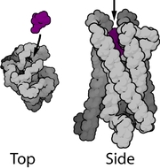
GPCRs are integral membrane protein
Integral membrane protein

An Integral Membrane Protein is a protein molecule that is permanently attached to the biological membrane. Such proteins can be separated from the biological membranes only using detergents, nonpolar solvents, or sometimes Denaturation agents....
s that possess seven membrane-spanning domains or transmembrane helices
Transmembrane helix

Transmembrane domain usually denotes a single transmembrane alpha helix of a transmembrane protein. It is called a "domain" because an alpha-helix in a membrane can be folded independently from the rest of the protein, similar to protein domain....
 (Figure 1). The extracellular parts of the receptor can be glycosylated
Glycosylation

Glycosylation is the enzymatic process that links saccharides to produce glycans, either free or attached to proteins and lipids. This enzymatic process produces one of four fundamental components of all cells and also provides a co-translational and post-translational modification mechanism that modulates the structure and function of membr...
. These extracellular loops also contain two highly-conserved cysteine
Cysteine

Cysteine is an a-amino acid with the chemical formula HO2CCHCH2SH. It is a non-essential amino acid, which means that humans can synthesize it....
 residues that form disulfide bond
Disulfide bond

In chemistry, a disulfide bond is a single covalent bond derived from the coupling of thiol groups. The linkage is also called an SS-bond or disulfide bridge....
s to stabilize the receptor structure. Some seven transmembrane helix proteins (such as channelrhodopsin
Channelrhodopsin

Channelrhodopsins are a subfamily of opsin proteins that function as light-gated ion channels. They serve as sensory photoreceptors in unicellular green algae, controlling phototaxis, i.e....
) that resemble GPCRs may contain different functional groups, such as entire ion channels, within their protein.

Early structural models for GPCRs were based on their weak analogy to bacteriorhodopsin
Bacteriorhodopsin

Bacteriorhodopsin is a protein used by archaea, most notably halobacteria. It acts as a proton pump, i.e. it captures light energy and uses it to move protons across the membrane out of the cell....
 for which a structure had been determined by both electron diffraction () and X ray-based crystallography
X-ray crystallography

X-ray crystallography is a method of determining the arrangement of atoms within a crystal, in which a beam of X-rays strikes a crystal and scatters into many different directions....
 . In 2000, the first crystal structure of a mammalian GPCR, that of bovine rhodopsin
Rhodopsin

Rhodopsin, also known as visual purple, is a pigment of the retina that is responsible for both the formation of the photoreceptor cells and the first events in the perception of light....
 , was solved. While the main feature, the seven transmembrane helices, is conserved, the relative orientation of the helices differ significantly from that of bacteriorhodopsin. In 2007, the first structure of a human GPCR was solved (). This was followed immediately by a higher resolution structure of the same receptor . This human ß2-adrenergic receptor
Beta-2 adrenergic receptor

The beta-2 adrenergic receptor , also known as ADRB2, is an beta-adrenergic receptor, and also denotes the human gene encoding it....
 GPCR structure, proved to be highly similar to the bovine rhodopsin in terms of the relative orientation of the seven transmembrane helices. However the conformation of the second extracellular loop is entirely different between the two structures. Since this loop constitutes the "lid" that covers the top of the ligand binding site, this conformational difference highlights the difficulties in constructing homology model
Homology modeling

Homology modeling, also known as comparative modeling refers to constructing an atomic-resolution model of the "target" protein from its primary structure and an experimental three-dimensional structure of a related homologous protein ....
s of other GPCRs based only on the rhodopsin structure.

Mechanism

G protein-coupled receptor are activated by an external signal in the form of a ligand or other signal mediator. This creates a conformational change in the receptor, causing activation of a G protein
G protein

G proteins, short for guanine nucleotide-binding proteins, are a family of proteins involved in second messenger cascades.G proteins are so called because they function as "molecular switches," alternating between an inactive guanosine diphosphate and active guanosine triphosphate bound state, ultimately going on to regulate down...
. Further effect depends on the type of G protein.

Ligand binding

GPCRs include receptors for sensory signal mediators (e.g., light
Light

Light, or visible light, is electromagnetic radiation of a wavelength that is Visible spectrum to the human eye , or up to 380?750 nm. In the broader field of physics, light is sometimes used to refer to electromagnetic radiation of all wavelengths, whether visible or not....
 and olfactory stimulatory molecules); adenosine
Adenosine

Adenosine is a nucleoside composed of a molecule of adenine attached to a ribose sugar molecule moiety via a ?-N9-glycosidic bond....
, bombesin
Bombesin

Bombesin is a 14 amino acid peptide originally isolated from the skin of a frog. It has two known homologs in mammals called neuromedin B and gastrin releasing peptide....
, bradykinin
Bradykinin

Bradykinin is a nonapeptide that causes blood vessels to enlarge , and therefore causes blood pressure to lower. A class of drugs called ACE inhibitors, which are used to lower blood pressure, increase bradykinin further lowering blood pressure....
, endothelin
Endothelin

Endothelins are proteins that constrict blood vessels and raise blood pressure. They are normally kept in balance by other mechanisms, but when they are over-expressed, they contribute to high blood pressure and heart disease....
, ?-aminobutyric acid (GABA
Gamma-aminobutyric acid

γ-Aminobutyric acid is the chief inhibitory neurotransmitter in the mammalian central nervous system. It plays an important role in regulating neuronal excitability throughout the nervous system....
), hepatocyte growth factor
Hepatocyte growth factor

Hepatocyte growth factor/scatter factor is a paracrine cellular growth, motility and morphogen. It is secreted by mesenchymal cells and targets and acts primarily upon epithelial cells and endothelial cells, but also acts on haematopoiesis....
, melanocortin
Melanocortin

Melanocortins are a group of pituitary peptide hormones that include adrenocorticotropin and the alpha, beta and gamma melanocyte-stimulating hormones that derive from the prohormone proopiomelanocortin....
s, neuropeptide Y
Neuropeptide Y

Neuropeptide Y is a 36 amino acid peptide neurotransmitter found in the brain and autonomic nervous system.NPY has been associated with a number of physiologic processes in the brain, including the regulation of energy balance, memory and learning, and epilepsy....
, opioid
Opioid

An opioid is a chemical substance that has a morphine-like action in the body. The main use is for analgesia. These agents work by binding to opioid receptors, which are found principally in the central nervous system and the gastrointestinal tract....
 peptides, opsin
Opsin

Opsins are a group of light-sensitive 35-55 kDa membrane-bound G protein-coupled receptors of the retinylidene protein family found in photoreceptor cells of the retina....
s, somatostatin
Somatostatin

Somatostatin is a peptide hormone that regulates the endocrine system and affects neurotransmission and cell proliferation via interaction with G-protein-coupled somatostatin receptors and inhibition of the release of numerous secondary hormones....
, tachykinins, vasoactive intestinal polypeptide family, and vasopressin
Vasopressin

Arginine vasopressin , also known as vasopressin, argipressin or antidiuretic hormone , is a hormone found in most mammals, including humans....
; biogenic amine
Biogenic amine

A biogenic amine is a biogenic substance with an amine group....
s (e.g., dopamine
Dopamine

Dopamine is a neurotransmitter occurring in a wide variety of animals, including both vertebrates and invertebrates. In the human brain, this phenethylamine functions as a neurotransmitter, activating the five types of dopamine receptors ? D1, D2, D3, D4 and D5, and their variants....
, epinephrine
Epinephrine

Epinephrine is a hormone and neurotransmitter.Epinephrine increases the "fight or flight" response of the Sympathetic nervous system of the autonomic nervous system....
, norepinephrine
Norepinephrine

Norepinephrine or noradrenaline is a catecholamine with dual roles as a hormone and a neurotransmitter.As a stress hormone, norepinephrine affects parts of the brain where attention and responding actions are controlled....
, histamine
Histamine

Histamine is a biogenic amine involved in local immune system as well as regulating physiological function in the gut and acting as a neurotransmitter....
, glutamate (metabotropic effect), glucagon
Glucagon

Glucagon is an important hormone involved in carbohydrate metabolism. Produced by the pancreas, it is released when the glucose level in the blood is low , causing the liver to convert stored glycogen into glucose and release it into the bloodstream....
, acetylcholine
Acetylcholine

The chemical compound acetylcholine is a neurotransmitter in both the peripheral nervous system and central nervous system in many organisms including homo sapiens....
 (muscarinic effect), and serotonin
Serotonin

Serotonin is a monoamine neurotransmitter synthesized in serotonergic neurons in the central nervous system and enterochromaffin cells in the gastrointestinal tract of animals including humans....
); chemokines; lipid
Lipid

Lipids are broadly defined as any fat-soluble , naturally-occurring molecule, such as fats, oils, waxes, cholesterol, sterols, fat-soluble vitamins , monoglycerides, diglycerides, phospholipids, and others....
 mediators of inflammation
Inflammation

Inflammation is the complex biological response of Blood vessel tissues to harmful stimuli, such as pathogens, damaged cells, or irritants. It is a protective attempt by the organism to remove the injurious stimuli as well as initiate the healing process for the tissue....
 (e.g., prostaglandins, prostanoid
Prostanoid

Prostanoid is the term used to describe a subclass of eicosanoids consisting of: the prostaglandins , the thromboxanes and the prostacyclins...
s, platelet-activating factor
Platelet-activating factor

Platelet-activating factor, also known as a PAF, PAF-acether or AGEPC is a potent phospholipid activator and mediator of many leukocyte functions, including platelet aggregation, inflammation, and anaphylaxis....
, and leukotrienes); and peptide hormones (e.g., calcitonin
Calcitonin

Calcitonin is a 32-amino acid linear polypeptide hormone that is producedin humans primarily by the Parafollicular cell cells of the thyroid, and in many other animals in the ultimobranchial body....
, C5a anaphylatoxin
Anaphylatoxin

Anaphylatoxins, or anaphylotoxins, are fragments that are produced as part of the activation of the complement system....
, follicle-stimulating hormone (FSH
FSH

FSH may refer to:* Follicle-stimulating hormone* Fox Sports Houston, a regional Fox Sports Net affiliate station for the Houston, Texas area* Facioscapulohumeral muscular dystrophy...
), gonadotropic-releasing hormone (GnRH), neurokinin, thyrotropin-releasing hormone (TRH), and oxytocin
Oxytocin

Oxytocin is a mammalian hormone that also acts as a neurotransmitter in the brain.It is best known for its roles in female reproduction: it is released in large amounts after distension of the cervix and vagina during labor, and after stimulation of the nipples, facilitating childbirth and breastfeeding, respectively....
). GPCRs that act as receptors for stimuli that have not yet been identified are known as orphan receptor
Orphan receptor

An orphan receptor is an apparent receptor that has a similar structure to other identified receptors but whose endogenous ligand has not yet been identified....
s.

Whereas, in other types of receptors that have been studied, ligands bind externally to the membrane, the ligand
Ligand (biochemistry)

In biochemistry, a ligand is a Chemical substance that is able to bind to and form a Complex with a biomolecule to serve a biological purpose....
s of GPCRs typically bind within the transmembrane domain.

Conformational change

The transduction of the signal
Signal transduction

In biology, 'signal transduction' refers to any process by which a cell converts one kind of signal or stimulus into another. Most processes of signal transduction involve ordered sequences of biochemistry chemical reaction inside the cell, which are carried out by enzymes, activated by Second messenger systems, resulting in a signal tran...
 through the membrane by the receptor is not completely understood. It is known that the inactive G protein
G protein

G proteins, short for guanine nucleotide-binding proteins, are a family of proteins involved in second messenger cascades.G proteins are so called because they function as "molecular switches," alternating between an inactive guanosine diphosphate and active guanosine triphosphate bound state, ultimately going on to regulate down...
 is bound to the receptor in its inactive state. Once the ligand is recognized, the receptor shifts conformation
Protein structure

Proteins are an important class of biological macromolecules present in all biological organisms, made up of such chemical element as carbon,hydrogen, nitrogen, oxygen, and sulphur....
 and thus mechanically activates the G protein, which detaches from the receptor. The receptor can now either activate another G protein or switch back to its inactive state. This is an overly simplistic explanation, but suffices to convey the overall set of events.

It is believed that a receptor molecule exists in a conformational equilibrium between active and inactive biophysical states. The binding of ligands to the receptor may shift the equilibrium toward the active receptor states. Three types of ligands exist: agonists are ligands that shift the equilibrium in favour of active states; inverse agonist
Inverse agonist

In pharmacology, an inverse agonist is an agent which binds to the same receptor binding-site as an agonist for that receptor and reverses Receptor #Constitutive activity of receptors....
s are ligands that shift the equilibrium in favour of inactive states; and neutral antagonists are ligands that do not affect the equilibrium. It is not yet known how exactly the active and inactive states differ from each other.

Activation of G protein

If a receptor in an active state encounters a G protein
G protein

G proteins, short for guanine nucleotide-binding proteins, are a family of proteins involved in second messenger cascades.G proteins are so called because they function as "molecular switches," alternating between an inactive guanosine diphosphate and active guanosine triphosphate bound state, ultimately going on to regulate down...
, it may activate it (Figure 2, blue protein in part B). Some evidence suggests that receptors and G proteins are actually pre-coupled. For example, binding of G proteins to receptors affects the receptor's affinity for ligands. Activated G proteins are bound to GTP
Guanosine triphosphate

Guanosine-5'-triphosphate is a purine nucleotide. One role is as substrate for the synthesis of RNA during transcription . Its structure is similar to that of the guanine nucleoside, the only difference being that there are three phosphate groups attached to the 5' carbon....
.

Further signal transduction depends on the type of G protein. The enzyme adenylate cyclase
Adenylate cyclase

Adenylate cyclase is a lyase enzyme....
 (Figure 2, green protein in panel C) is an example of a cellular protein that can be regulated by a G protein, in this case the G protein Gs
Gs alpha subunit

The Gs alpha subunit is a heterotrimeric G protein subunit which activates adenylate cyclase. Researchers have discovered that a change in the location of this protein in the brain could serve as a biomarker for depression, allowing a simple, rapid, laboratory test to identify patients with depression....
. Adenylate cyclase activity is activated when it binds to a subunit of the activated G protein (Figure 2, Panel D). Activation of adenylate cyclase ends when the G protein returns to the GDP
Guanosine diphosphate

Guanosine diphosphate, abbreviated GDP, is a nucleotide. It is an ester of pyrophosphoric acid with the nucleoside guanosine. GDP consists of the pyrophosphate Functional group, the pentose sugar ribose, and the nucleobase guanine....
-bound state (Figure 2, panels E and A).

GPCR signaling without G proteins

In the late 1990s, evidence began accumulating to suggest that some GPCRs are able to signal without G proteins. The ERK2
MAPK1

Mitogen-activated protein kinase 1, also known as MAPK1, is a human gene.ReferencesFurther reading...
 mitogen-activated protein kinase, a key signal transduction mediator downstream of receptor activation in many pathways, has been shown to be activated in response to cAMP-mediated receptor activation in the slime mold D. discoideum despite the absence of the associated G protein a- and ß-subunits.

In mammalian cells, the much-studied ß2-adrenoceptor has been demonstrated to activate the ERK2 pathway after arrestin-mediated uncoupling of G-protein-mediated signaling. It therefore seems likely that some mechanisms previously believed to be purely related to receptor desensitisation are actually examples of receptors switching their signaling pathway rather than simply being switched off.

In kidney cells, the bradykinin receptor B2
Bradykinin receptor B2

Bradykinin receptor B2 is a g-protein coupled receptor for bradykinin, encoded by the BDKRB2 gene in humans....
 has been shown to interact directly with a protein tyrosine phosphatase. The presence of a tyrosine-phosphorylated ITIM
Immunoreceptor tyrosine-based inhibitory motif

An immunoreceptor tyrosine-based inhibition motif , is a conserved sequence of amino acids that is found in the cytoplasmic tails of many inhibitory immune receptor of the immune system....
 (immunoreceptor tyrosine-based inhibitory motif) sequence in the B2 receptor is necessary to mediate this interaction and subsequently the antiproliferative effect of bradykinin.

Receptor regulation

GPCRs become desensitized when exposed to their ligand for a prolonged period of time. There are two recognized forms of desensitization: 1) homologous desensitization
Homologous desensitization

Desensitisation of Receptor is a process wherby after prolonged agonist exposure, the receptor is uncoupled from its signalling cascade, and thus the biological effect of receptor activation is attenuated....
, in which the activated GPCR is downregulated; and 2) heterologous desensitization, wherein the activated GPCR causes downregulation of a different GPCR. The key reaction of this downregulation is the phosphorylation
Phosphorylation

Phosphorylation is the addition of a phosphate group to a protein or other organic molecule. Protein phosphorylation in particular plays a significant role in a wide range of cellular processes....
 of the intracellular (or cytoplasm
Cytoplasm

The cytoplasm is the part of a Cell that is enclosed within the plasma membrane. In eukaryote cells the cytoplasm contains organelles, such as mitochondrion, that are filled with liquid kept separate from the rest of the cytoplasm by biological membranes....
ic) receptor domain by protein kinase
Protein kinase

A protein kinase is a kinase enzyme that modifies other proteins by chemically adding phosphate groups to them . Phosphorylation usually results in a functional change of the target protein by changing enzyme catalysis, cellular location, or association with other proteins....
s.

Phosphorylation by cAMP-dependent protein kinases

Cyclic AMP-dependent protein kinases (protein kinase A) are activated by the signal chain coming from the G protein (that was activated by the receptor) via adenylate cyclase
Adenylate cyclase

Adenylate cyclase is a lyase enzyme....
 and cyclic AMP (cAMP). In a feedback mechanism, these activated kinases phosphorylate the receptor. The longer the receptor remains active, the more kinases are activated, the more receptors are phosphorylated. In ß2-adrenoceptor
Beta-2 adrenergic receptor

The beta-2 adrenergic receptor , also known as ADRB2, is an beta-adrenergic receptor, and also denotes the human gene encoding it....
s, this phosphorylation results in the switching of the coupling from the Go class of G-protein to the Gi
Gi alpha subunit

Gi alpha subunit is a heterotrimeric G protein subunit which inhibits the production of Cyclic_adenosine_monophosphate from Adenosine triphosphate....
 class. cAMP-dependent PKA mediated phosphorylation is also known as heterologous desensitisation, because it is not specific to ligand bound receptor. In fact any receptor causing an increase in PKA activity will cause increased amounts of this type of desensitisation of other receptors coupled to Go (e.g., dopamine receptor D2
Dopamine receptor D2

Dopamine receptor D2, also known as DRD2, is a protein that is a receptor.The human protein is coded by the DRD2 gene.This gene encodes the D2 subtype of the dopamine receptor....
 activation may lead to ß2-adrenoceptor desensitisation of this type).

Phosphorylation by GRKs

The G protein-coupled receptor kinases (GRKs) are protein kinases that phosphorylate only active GPCRs.

Phosphorylation of the receptor can have two consequences:

  1. Translocation: The receptor is, along with the part of the membrane it is embedded in, brought to the inside of the cell, where it is dephosphorylated within the acidic vesicular environment and then brought back. This mechanism is used to regulate long-term exposure, for example, to a hormone, by allowing resensitisation to follow desensitisation. Alternatively, the receptor may undergo lysozomal degradation, or remain internalised, where it is thought to participate in the initiation of signalling events, the nature of which depend on the internalised vesicle's subcellular localisation.
  2. Arrestin
    Arrestin

    Arrestins are a small family of proteins important for regulating signal transduction....
     linking
    : The phosphorylated receptor can be linked to arrestin molecules that prevent it from binding (and activating) G proteins, effectively switching it off for a short period of time. This mechanism is used, for example, with rhodopsin
    Rhodopsin

    Rhodopsin, also known as visual purple, is a pigment of the retina that is responsible for both the formation of the photoreceptor cells and the first events in the perception of light....
     in retina
    Retina

    The vertebrate retina is a light sensitive tissue lining the inner surface of the eye. The optics of the eye create an image of the visual world on the retina, which serves much the same function as the film in a camera....
     cells to compensate for exposure to bright light. In many cases, arrestin binding to the receptor is a prerequisite for translocation. For example, beta-arrestin bound to ß2-adrenoreceptors acts as an adaptor for binding with clathrin, and with the beta-subunit of AP2 (clathrin adaptor molecules); thus the arrestin here acts as a scaffold assembling the componenets needed for clathrin-mediated endocytosis of ß2-adrenoreceptors.


Receptor oligomerization

It is generally accepted that G-protein-coupled receptors can form homo- and/or heterodimers and possibly more complex oligomeric structures, and indeed heterodimerization has been shown to be essential for the function of receptors such as the metabotropic GABA(B) receptors. However, it is presently unproven that true heterodimers exist. Present biochemical and physical techniques lack the resolution to differentiate between distinct homodimers assembled into an oligomer or true 1:1 heterodimers. It is also unclear what the functional significance of oligomerization might be, although it is thought that the phenomenon may contribute to the pharmacological heterogeneity of GPCRs in a manner not previously anticipated. This is an actively-studied area in GPCR research.

The best studied example of receptor oligomerisation are the metabotropic GABAB receptors. These receptors are formed by heterodimerization of GABABR1
GABBR1

Gamma-aminobutyric acid B receptor, 1 , is a G-protein coupled receptor subunit encoded by the GABBR1 gene....
 and GABABR2
GABBR2

Gamma-aminobutyric acid B receptor, 2 is a G-protein coupled receptor subunit encoded by the GABBR2 gene in humans....
 subunits. Expression of the GABABR1 without the GABABR2 in heterologous systems leads to retention of the subunit in the endoplasmic reticulum
Endoplasmic reticulum

The endoplasmic reticulum is a eukaryote organelle that forms an interconnected network of tubules, vesicle , and cisternae within cell . The lacey membranes of the endoplasmic reticulum were first seen by Keith R....
. Expression of the GABABR2 subunit alone, meanwhile, leads to surface expression of the subunit, although with no functional activity (i.e., the receptor does not bind agonist and cannot initiate a response following exposure to agonist). Expression of the two subunits together leads to plasma membrane expression of functional receptor. It has been shown that GABABR2 binding to GABABR1 causes masking of a retention signal of functional receptors.

Plants


GCR2 is a G-protein-coupled receptor for the plant hormone
Plant hormone

Plant hormones are chemicals that regulate plant growth. Plant hormones are signal molecules produced within the plant, and occur in extremely low concentrations....
 abscisic acid
Abscisic acid

Abscisic acid , also known as abscisin II and dormin, is a plant hormone. It functions in many plant developmental processes, including bud dormancy....
 that has been identified in Arabidopsis thaliana
Arabidopsis thaliana

Arabidopsis thaliana , is a small flowering plant native to Europe, Asia, and northwestern Africa. A spring annual with a relatively short life cycle, Arabidopsis is popular as a model organism in plant biology and genetics....
. Another putative receptor is GCR1 for which no ligand has been identified yet.

Dictyostelium


A novel GPCR containing a lipid kinase domain has recently been identified in Dictyostelium that regulates cell density sensing.

See also


  • Orphan receptor
    Orphan receptor

    An orphan receptor is an apparent receptor that has a similar structure to other identified receptors but whose endogenous ligand has not yet been identified....


External links

  • Wikipedia:MeSH D12.776#MeSH D12.776.543.750.100 --- receptors.2C g-protein-coupled


| publisher = | pages = | language = | archiveurl = | archivedate = | quote = | accessdate = 2008-08-11}}