


Irish Confederate Wars

Encyclopedia
This article is concerned with the military history of Ireland from 1641-53. For the political context of this conflict, see Confederate Ireland
.
The Irish Confederate Wars, also called the Eleven Years War (derived from the Irish language
name Cogadh na hAon-déag mBliana), took place in Ireland
between 1641 and 1653. It was the Irish theatre of the Wars of the Three Kingdoms
– a series of civil wars in the kingdoms of Ireland, England and Scotland (all ruled by Charles I
). The conflict in Ireland essentially pitted the native Irish Catholics
against English
and Scottish
Protestant
colonists and their supporters. It was both a religious and ethnic conflict – fought over who would govern Ireland, whether it would be governed from England, which ethnic and religious group would own most of the land and which religion would predominate in the country.
of the Irish
of Ulster
in October 1641, during which thousands of Scots
and English
Protestant settlers
were killed. The rebellion spread throughout the country and at Kilkenny
in 1642 the association of The Confederate Catholics of Ireland
was formed to organise the Irish Catholic war effort. The Confederation was essentially an independent state and was a coalition of all shades of Irish Catholic society, both Gaelic
and Old English
. The Irish Confederates professed to side with the English Royalists during the ensuing civil wars, but mostly fought their own war in defence of the Irish Catholic landed class's interests.
The Confederates ruled much of Ireland
as a de facto sovereign state until 1649, and proclaimed their loyalty to Charles I
. From 1641 to 1649, the Confederates fought against Scottish Covenanter
and English Parliamentarian armies in Ireland. The Confederates, in the context of civil war in England, were loosely allied with the English Royalists
, but were divided over whether to send military help to them in the English Civil War
. Ultimately, they never sent troops to England, but did send an expedition to help the Scottish Royalists, sparking the Scottish Civil War.
The wars produced an extremely fractured array of forces in Ireland. The Protestant forces were split into three main factions (English Royalist, English Parliamentarian and Scottish Covenanter) as a result of the civil wars in England and Scotland. The Catholic Confederates themselves split on more than one occasion over the issue of whether their first loyalty was to the Catholic religion or to King Charles I (See The principal factions in the war).
The wars ended in the defeat of the Confederates. They and their English Royalist allies were defeated during the Cromwellian conquest of Ireland
by the New Model Army
under Oliver Cromwell
in 1649-53. The wars following the 1641 revolt caused massive loss of life in Ireland, comparable in the country's history only with the Great Famine of the 1840s. The ultimate winner, the English parliament, arranged for the mass confiscation of land owned by Irish Catholics as punishment for the rebellion and to pay for the war. Although some of this land was returned after 1660 on the Restoration of the monarchy in England, the period marked the effective end of the old Catholic landed class.
. Small bands of the plotter’s kin and dependents were mobilised in Dublin, Wicklow
and Ulster
, to take strategic buildings like Dublin Castle
. Since there were only a small number of English soldiers stationed in Ireland, this had a reasonable chance of succeeding. Had it done so, the remaining English garrisons could well have surrendered, leaving Irish Catholics in a position of strength to negotiate their demands for civil reform, religious toleration and Irish self-government. However, the plot was betrayed at the last minute and as a result, the rebellion degenerated into anarchic violence. Following the outbreak of hostilities, the festering hatred of the native Irish Catholic population for the Protestant settlers exploded into violence.
. Initially, the Irish Catholic gentry raised militia forces to try and contain the violence but afterward, when it was clear that the government in Dublin intended to punish all Catholics for the rebellion participated in the attacks on Protestants and fought English troops sent to put down the rebellion. In areas where British settlers were concentrated, around Cork
, Dublin, Carrickfergus
and Derry
, they raised their own militia in self-defence and managed to hold off the rebel forces. All sides displayed extreme cruelty in this phase of the war. Around 4,000 Protestants were massacred and a further 12,000 may have died of privation after being driven from their homes. In one notorious incident, the Protestant inhabitants of Portadown
were taken captive and then massacred on the bridge in the town. The settlers responded in kind, as did the Government in Dublin, with attacks on the Irish civilian population. Massacres of Catholic civilians occurred at Rathlin Island
and elsewhere. The rebels from Ulster defeated a government force at Julianstown
, but failed to take nearby Drogheda
and were scattered when they advanced on Dublin.
By early 1642, there were four main concentrations of rebel forces; in Ulster under Phelim O'Neill, in the Pale
around Dublin led by Viscount Gormanstown, in the south east, led by the Butler family - in particular Lord Mountgarret and in the south west, led by Donagh MacCarthy, Viscount Muskerry
.
 King Charles I
sent a large army to Ireland in 1642 to put down the rebellion, as did the Scottish Covenanters. The Scottish army quickly drove the Irish rebels out of Ulster and the English force drove them back from around Dublin. In self-defence, Irish Catholics formed their own government, the Catholic Confederation, with its capital at Kilkenny
and raised their own armies. The Confederates also held important port towns at Waterford
and Wexford
through which they could receive aid from Catholic powers in Europe.
The Confederates controlled two thirds of Ireland and commanded the allegiance of most Irish Catholics, with the enthusiastic support of the Catholic clergy. However, their support was weakest among the Catholic upper classes, who were often reluctant to disobey Royal authority and who feared losing their own lands if the plantation settlements were overturned. Some of them fought against the Confederation, while others like the Earl of Clanricarde
, stayed neutral.
For armed forces, the Confederates had available to them only the militia
s and lords' private levies, commanded by aristocratic amateurs like Lord Mountgarret
. These were defeated in a series of encounters with English and Scottish troops at Liscarroll
, Kilrush
, New Ross
and Glenmaquinn
.
However, they were saved from defeat by the outbreak of the English Civil War
. Most of the English troops in Ireland were recalled to fight on the Royalist
side in the civil war.
In mid-1642 Charles signed the Adventurers Act
s into law, whereby loans raised in London would eventually be paid off by the sale of Irish rebels' lands. This gave an extra impetus for the Confederate armies to succeed, but the Confederates also took advantage of Charles' weakening position in England after 1643 to try to negotiate with him.
The Irish Confederates mopped up the remaining garrisons within their territory, leaving only Ulster, Dublin and Cork in Scottish and English hands. Garret Barry
, a returned Irish mercenary soldier, took Limerick in 1642, while the townspeople of Galway forced the surrender of the English garrison there in 1643. The remaining British forces were disunited by the events in England. The garrison of Cork, commanded by Murrough O'Brien, 1st Earl of Inchiquin
, sided with the English Parliament
, as did the Protestant settler army around Derry, whereas the troops on Ireland’s east coast, commanded by Earl of Ormonde
, sided with the King. The Scottish Covenanter
army, based around Carrickfergus, pursued the agenda of the Edinburgh
based Scottish government, allied with the English Parliament up to 1647.
. They also received modest subsidies of arms and money from France
, Spain
and the Papacy. The Confederate armies were commanded mainly by professional Irish soldiers such as Thomas Preston
and Owen Roe O'Neill
, who had served in the Spanish army in the Eighty Years' War and Thirty Years' War
. In total, the Confederates managed to put around 60,000 men into the field in different armies in the course of the war.
Arguably, the Confederates squandered the military opportunity presented to them by the English Civil War
to re-conquer and reorganise all of Ireland. They signed a truce with the Royalists in 1643 and spent the next three years in abortive negotiations with them. It was not until 1646 that they launched a determined offensive on the Protestant enclaves in Ireland. Between 1642 and 1646, the war in Ireland was dominated by raids and skirmishes. All sides tried to starve their enemies by burning the crops and supplies in their territory. This fighting caused great loss of life, particularly among the civilian population, but saw no significant battles between 1643 and 1646. The Confederates mounted an expedition against the Scots in Ulster in 1644, but failed to capture any significant territory.
In the south of the country, the Confederates took some territory around Cork in 1644-45, for example the town of Bandon
, constricting the territory held by the English Parliamentarian force there, but failed to eliminate Inchiquin's garrison. Their major success of this period was Thomas Preston’s siege of Duncannon
in January 1645, which took the town (on Ireland's southern coast) from its Parliamentarian garrison. However, an attempt by a combined Munster and Leinster force, commanded by Preston and Castlehaven, to follow up this success by besieging Youghal
ended in failure. Youghal was held by a much stronger Parliamentarian force than Duncannon and problems of supply and money meant that the Confederates' siege broke up in March 1645.
. In the initial phase of the rebellion in 1641, the vulnerable Protestant settler population fled to walled towns such as Dublin, Cork
and Derry
for protection. Others fled to England. When Ulster was occupied by Scottish Covenanter troops in 1642, they retaliated for the attacks on settlers by attacks on the Irish Catholic civilian population. As a result, it has been estimated that up to 30,000 people fled Ulster in 1642, to live in Confederate held territory. Many of them became camp followers of Owen Roe O'Neill
's Ulster Army, living in clan-based groupings called "creaghts" and driving their herds of cattle around with the army. Outside of Ulster, the treatment of civilians was less harsh, although the "no-mans-land" in between Confederate and British held territory in Leinster and Munster was repeatedly raided and burned, with the result that it too became de-populated.
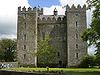 However, this stalemate was broken in 1646, with the end of the first English Civil War
. The Confederates abandoned negotiations with the defeated Royalists and tried to re-take all of Ireland before the English Parliament could launch an invasion of the country. They were bolstered by the arrival in Ireland of the Papal Nuncio, Rinuccini
, who brought with him large amounts of money and arms. They managed to capture a Parliamentarian
stronghold at Bunratty castle
in Clare
and to smash the Scottish Covenanter army at the battle of Benburb
and also take Sligo
town. Late in the year, the Ulster and Leinster Confederate armies under Owen Roe O'Neill
and Thomas Preston
(a total of 18,000 men) laid siege to Dublin, trying to take the city off Ormonde’s Royalist garrison. However Ormonde had devastated the land around the capital and the Confederates, unable to supply their troops, had to lift the siege. In hindsight, this was the high tide for the Irish Confederates. Ormonde, who said that he "preferred English rebels to Irish ones", left Dublin and handed it over to a Parliamentarian army sent from England under Michael Jones
. Further Parliamentarian reinforcements were sent to Cork in southern Ireland.
In 1647, these Parliamentarian forces inflicted a shattering series of defeats on the Confederates, ultimately forcing them to join a Royalist coalition to try to hold off a Parliamentarian invasion. Firstly, in August 1647, Thomas Preston's Leinster army was annihilated at the battle of Dungans Hill by Jones’ Parliamentarian army when it tried to march on Dublin. This was the best trained and best equipped Confederate army and the loss of its manpower and equipment was a body blow to the Confederation. Secondly, the Parliamentarians based in Cork
devastated the Confederates' territory in Munster
, provoking famine among the civilian population. In September, they stormed Cashel
, not only taking the town but also massacring its garrison and inhabitants, including several Catholic clerics. When the Irish Munster army brought them to battle at Knocknanauss in November, they too were crushed. Sligo
also changed hands again – captured by the Ulster British settlers' army. The battles in this phase of the war were exceptionally bloody: in the battles of 1646–47, the losers had up to half of those engaged killed – most commonly in the rout after the battle was decided. In the three largest engagements of 1647, no less than 1% of the Irish male population (around 7–8,000 men) were killed in battle. This string of defeats forced the Confederates to come to a deal with the Royalists
, and to put their troops under their command. Amid factional fighting within their ranks over this deal, the Confederates dissolved their association in 1648 and accepted Ormonde
as the commander in chief of the Royalist coalition in Ireland. Inchiquinn, the Parliamentarian commander in Cork, also defected to the Royalists after the arrest of King Charles I.
The Confederates were fatally divided over this compromise. Rinuccini, the Papal Nuncio, threatened to excommunicate anyone who accepted the deal. Particularly galling for him was the alliance with Inchiquinn, who had massacred Catholic civilians and clergy in Munster in 1647. There was even a brief period of civil war in 1648 between Owen Roe O'Neill
's Ulster Army, as he refused to accept the Royalist alliance, and the new Royalist–Confederate coalition. O'Neill neglected to secure adequate supplies and was unable to force a change in policy on his former comrades. During this divisive period the Confederates missed a second strategic chance to reorganise while their opponents were engaged in the Second English Civil War
(1648–49).
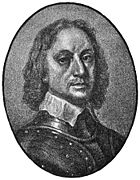 The Confederate/Royalist coalition wasted valuable months fighting with Owen Roe O'Neill
and other former Confederates instead of preparing to resist the impending Parliamentarian invasion of Ireland. O'Neill later re-joined the Confederate side. Belatedly, in August 1649, Ormonde tried to take Dublin from the Parliamentarians, but was routed by Michael Jones at the battle of Rathmines
. Oliver Cromwell
landed shortly afterward with the New Model Army
. Whereas the Confederates had failed to defeat their enemies in eight years of fighting, Cromwell was able to succeed in three years in conquering the entire island of Ireland, because his troops were well supplied, well equipped (especially with artillery), and well trained. Moreover, he had a huge supply of men, money and logistics to fund the campaign.
and Wexford
, perpetrating massacres of the defenders of both towns. He also sent a force to the north to link up with the British settler army there. Those settlers who supported the Scots and Royalists were defeated by the Parliamentarians at the battle of Lisnagarvey
.
Ormonde signally failed to mount a military defence of southern Ireland. He based his defences on walled towns, which Cromwell systematically took one after the other with his ample supply of siege artillery. However, the Irish and Royalist field armies did not hold any strategic line of defence and instead were demoralised by a constant stream of defeats and withdrawals. Only at the siege of Clonmel
did Cromwell suffer significant casualties (although disease also took a very heavy toll on his men). However, his losses were made good by the defection of the Royalist garrison of Cork, who had been Parliamentarians up to 1648, back to the Parliament side. Cromwell returned to England in 1650, passing his command to Henry Ireton
.
In the north, the Parliamentarian/settler army met the Irish Ulster army at the battle of Scarrifholis
and destroyed it. Ormonde was discredited and fled for France, to be replaced by Ulick Burke, Earl Clanricarde
. By 1651, the remaining Royalist/Irish forces were hemmed into an area west of the River Shannon
, holding only the fortified cities of Limerick
and Galway
and an enclave in County Kerry
, under Donagh MacCarthy, Viscount Muskerry
. Ireton besieged Limerick
while the northern Parliamentarian army under Charles Coote besieged Galway
. Muskerry made an attempt to relieve Limerick, marching north from Kerry, but was routed by Roger Boyle
at the battle of Knocknaclashy
. Limerick and Galway were too well defended to be taken by storm, but were blockaded until hunger and disease forced them to surrender, Limerick in 1651, Galway in 1652. Waterford
and Duncannon
also surrendered in 1651.
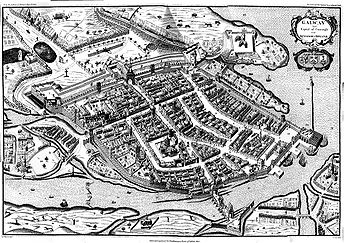
, or "tories" as they were called at the time. The tories, who were usually former Confederate soldiers, operated from rugged areas such as the Wicklow Mountains
, attacking vulnerable groups of Parliamentarian soldiers and looting their supplies. In response, the Parliamentarians forcibly evicted the civilian populations from areas which had been helping the tories and burned their crops. The result of this fighting was famine
throughout the country, which was aggravated by an outbreak of bubonic plague
. The last organised Irish troops surrendered in Cavan
in April 1653, when the Cromwellians agreed to let them be transported to serve in the French army
- the English Royalist
Court was in exile in France. However, any troops captured in this phase of the war were either executed or transported to penal colonies in the West Indies . Even after the formal surrender, Ireland was plagued with small scale violence for the remainder of the 1650s.
, a Cromwellian who conducted the first scientific land and demographic survey of Ireland in the 1650s (the Down Survey
), concluded that at least 400,000 people and maybe as many as 620,000 had died in Ireland between 1641 and 1653. The true figure may be lower, but the lowest suggested is about 200,000. And this in a country of only around 1.5 million inhabitants. It is estimated that about two thirds of the deaths were civilian. The Irish defeat led to the mass confiscation of Catholic owned land and the English Protestant domination of Ireland for over two centuries.
The wars, especially the Cromwellian conquest, were long remembered in Irish culture. Gaelic
Poetry of the post-war era laments lack of unity among Irish Catholics in the Confederation and their constant infighting, which was blamed for their failure to resist Cromwell. Other common themes include the mourning of the old Irish Catholic landed classes, which were destroyed in the wars, and the cruelty of the Parliamentarian forces. See Also Irish Poetry
loyal to King Charles, the Scottish Covenanters (sent into Ulster in 1642 to protect Protestant planters after the massacres that marked the Irish rebellion of 1641 in that region), the Parliamentarian army and the Irish Confederate army, to whom most of the inhabitants of Ireland gave their allegiance. During the wars, all of these forces came into conflict at one stage or another. To add to the turmoil, a brief civil war was fought between Irish Confederate factions in 1648.
The Royalists under Ormonde were in conflict with Irish Catholic forces from late 1641 to 1643. Their main enclave was in Dublin. A ceasefire lasted from 1643 until 1646, when the Confederates again came into conflict with them. After 1648 most of the Confederates and the Scots joined an alliance with the Royalists, this force was to face Cromwell's army in 1649. Ormonde's handling of the defence of Ireland was however rather inept so that by mid 1650 the defence of Ireland was conducted by Irish Confederate leaders.
The Irish Confederates: Formed in October 1642, the Confederation of Kilkenny was initially a rebel Irish Catholic movement, fighting against the English troops sent to put down the rebellion, though they insisted they were at war with the king's advisers and not with Charles himself. They also had to fight the Scottish army in Ulster. From 1642 to 1649, the Confederates controlled most of Ireland except for east and west Ulster, Cork and Dublin. A cessation was arranged with the Royalists in 1643 after the outbreak of civil war in England and negotiations began to bring the confederates into the English conflict on the Royalist side. After a strongly Catholic faction emerged in 1646, which opposed signing a peace treaty that did not recognise the position of the Catholic Church or return confiscated catholic land, the Confederates once again clashed with the Royalists, who abandoned most of their positions in Ireland to the Parliamentarians during 1646. However, after fresh negotiations, an alliance was arranged between the Royalists and Confederates in 1648. Some Confederates (notably the Ulster army) were however opposed to this treaty initiating a brief Irish Catholic civil war in which the Ulster army was supported by the English Parliament.
The Scottish Covenanters arrived in Ireland in early 1642 to put down the uprising and thereby protect the lives and property of the Protestant settlers in Ulster. They held most of eastern Ulster for the duration of the war, but were badly weakened by their defeat by the Confederates at the battle of Benburb in 1646. They fought the Confederates (with the support of the English Parliament) from their arrival in Ulster in 1642 until 1648. After the English Parliament and the Scottish Covenanters' alliance broke down, the Scottish forces in Ulster joined the Confederates and Royalists in an alliance against their former allies in 1649.
The Parliamentarian Army gained a major foothold in Ireland for the first time in 1644, when Inchiquin's Cork-based Protestant-led force fell out with the Royalists over the ceasefire with the Confederates. The Protestant settler forces in the north west of Ireland, known as the Lagan Army, also came over to the Parliamentarians after 1644, deeming them to be the most reliably anti-catholic of the English forces. Dublin also fell into Parliamentarian hands in 1646, when the Royalists surrendered it to an English Parliamentarian expeditionary force after the city was threatened by Confederate armies. In 1648 the Parliamentarians briefly gave support to Owen Roe O'Neill's Ulstermen after his fall out with the Confederates: Thus the extreme Catholic and Puritan
forces were allied for mutual expediency. The Ulster Catholic army however joined the Confederate-Royalist alliance after the shock of Cromwell's invasion in August 1649. The most potent Parliamentarian force was the New Model Army
, which proceeded to conquer Ireland over the next four years and to enforce the Adventurers Act
by conquering and selling Irish land to pay off its financial backers.
Soldiers: Alasdair MacColla
, Hugh Dubh O'Neill
, Henry Ireton
, George Monck, Oliver Cromwell
, Garret Barry
, Roger Boyle, 1st Earl of Orrery
, Murrough O'Brien, 1st Earl of Inchiquin
, Richard Talbot, 1st Earl of Tyrconnel
, Michael Jones
, Theobald Taaffe 1st Earl of Carlingford,
Robert Monro, Charles Coote
Political figures: Phelim O'Neill
, James Butler, 1st Duke of Ormonde
, Patrick D'Arcy
, Richard Martyn
, James Tuchet, 3rd Earl of Castlehaven
, Ulick de Burgh, 5th Earl of Clanricarde
, Richard Bellings
, Nicholas French
, Patrick O'Neill, Giovanni Battista Rinuccini
, Nicholas Plunkett
, Charles I
, Charles II
.
others: Dáibhí Ó Bruadair
and William Petty
Places associated with the period include:
Drogheda
, Wexford
, Limerick
, Dublin, Cork
, Galway
, Clonmel
, Derry
, Rathfarnham Castle
, Trim Castle
, Cahir Castle
, Narrow Water, Bunratty Castle
, Derry
, Portadown
, Ross Castle
,
Rock of Cashel
, Charlemont Fort
Confederate Ireland
Confederate Ireland refers to the period of Irish self-government between the Rebellion of 1641 and the Cromwellian conquest of Ireland in 1649. During this time, two-thirds of Ireland was governed by the Irish Catholic Confederation, also known as the "Confederation of Kilkenny"...
.
The Irish Confederate Wars, also called the Eleven Years War (derived from the Irish language
Irish language
Irish , also known as Irish Gaelic, is a Goidelic language of the Indo-European language family, originating in Ireland and historically spoken by the Irish people. Irish is now spoken as a first language by a minority of Irish people, as well as being a second language of a larger proportion of...
name Cogadh na hAon-déag mBliana), took place in Ireland
Ireland
Ireland is an island to the northwest of continental Europe. It is the third-largest island in Europe and the twentieth-largest island on Earth...
between 1641 and 1653. It was the Irish theatre of the Wars of the Three Kingdoms
Wars of the Three Kingdoms
The Wars of the Three Kingdoms formed an intertwined series of conflicts that took place in England, Ireland, and Scotland between 1639 and 1651 after these three countries had come under the "Personal Rule" of the same monarch...
– a series of civil wars in the kingdoms of Ireland, England and Scotland (all ruled by Charles I
Charles I of England
Charles I was King of England, King of Scotland, and King of Ireland from 27 March 1625 until his execution in 1649. Charles engaged in a struggle for power with the Parliament of England, attempting to obtain royal revenue whilst Parliament sought to curb his Royal prerogative which Charles...
). The conflict in Ireland essentially pitted the native Irish Catholics
Roman Catholic Church
The Catholic Church, also known as the Roman Catholic Church, is the world's largest Christian church, with over a billion members. Led by the Pope, it defines its mission as spreading the gospel of Jesus Christ, administering the sacraments and exercising charity...
against English
English people
The English are a nation and ethnic group native to England, who speak English. The English identity is of early mediaeval origin, when they were known in Old English as the Anglecynn. England is now a country of the United Kingdom, and the majority of English people in England are British Citizens...
and Scottish
Scottish people
The Scottish people , or Scots, are a nation and ethnic group native to Scotland. Historically they emerged from an amalgamation of the Picts and Gaels, incorporating neighbouring Britons to the south as well as invading Germanic peoples such as the Anglo-Saxons and the Norse.In modern use,...
Protestant
Protestantism
Protestantism is one of the three major groupings within Christianity. It is a movement that began in Germany in the early 16th century as a reaction against medieval Roman Catholic doctrines and practices, especially in regards to salvation, justification, and ecclesiology.The doctrines of the...
colonists and their supporters. It was both a religious and ethnic conflict – fought over who would govern Ireland, whether it would be governed from England, which ethnic and religious group would own most of the land and which religion would predominate in the country.
Overview
The war in Ireland began with the rebellionIrish Rebellion of 1641
The Irish Rebellion of 1641 began as an attempted coup d'état by Irish Catholic gentry, who tried to seize control of the English administration in Ireland to force concessions for the Catholics living under English rule...
of the Irish
Ireland
Ireland is an island to the northwest of continental Europe. It is the third-largest island in Europe and the twentieth-largest island on Earth...
of Ulster
Ulster
Ulster is one of the four provinces of Ireland, located in the north of the island. In ancient Ireland, it was one of the fifths ruled by a "king of over-kings" . Following the Norman invasion of Ireland, the ancient kingdoms were shired into a number of counties for administrative and judicial...
in October 1641, during which thousands of Scots
Scottish people
The Scottish people , or Scots, are a nation and ethnic group native to Scotland. Historically they emerged from an amalgamation of the Picts and Gaels, incorporating neighbouring Britons to the south as well as invading Germanic peoples such as the Anglo-Saxons and the Norse.In modern use,...
and English
England
England is a country that is part of the United Kingdom. It shares land borders with Scotland to the north and Wales to the west; the Irish Sea is to the north west, the Celtic Sea to the south west, with the North Sea to the east and the English Channel to the south separating it from continental...
Protestant settlers
Plantation of Ulster
The Plantation of Ulster was the organised colonisation of Ulster—a province of Ireland—by people from Great Britain. Private plantation by wealthy landowners began in 1606, while official plantation controlled by King James I of England and VI of Scotland began in 1609...
were killed. The rebellion spread throughout the country and at Kilkenny
Kilkenny
Kilkenny is a city and is the county town of the eponymous County Kilkenny in Ireland. It is situated on both banks of the River Nore in the province of Leinster, in the south-east of Ireland...
in 1642 the association of The Confederate Catholics of Ireland
Confederate Ireland
Confederate Ireland refers to the period of Irish self-government between the Rebellion of 1641 and the Cromwellian conquest of Ireland in 1649. During this time, two-thirds of Ireland was governed by the Irish Catholic Confederation, also known as the "Confederation of Kilkenny"...
was formed to organise the Irish Catholic war effort. The Confederation was essentially an independent state and was a coalition of all shades of Irish Catholic society, both Gaelic
Gaels
The Gaels or Goidels are speakers of one of the Goidelic Celtic languages: Irish, Scottish Gaelic, and Manx. Goidelic speech originated in Ireland and subsequently spread to western and northern Scotland and the Isle of Man....
and Old English
Old English (Ireland)
The Old English were the descendants of the settlers who came to Ireland from Wales, Normandy, and England after the Norman invasion of Ireland in 1169–71. Many of the Old English became assimilated into Irish society over the centuries...
. The Irish Confederates professed to side with the English Royalists during the ensuing civil wars, but mostly fought their own war in defence of the Irish Catholic landed class's interests.
The Confederates ruled much of Ireland
Ireland
Ireland is an island to the northwest of continental Europe. It is the third-largest island in Europe and the twentieth-largest island on Earth...
as a de facto sovereign state until 1649, and proclaimed their loyalty to Charles I
Charles I of England
Charles I was King of England, King of Scotland, and King of Ireland from 27 March 1625 until his execution in 1649. Charles engaged in a struggle for power with the Parliament of England, attempting to obtain royal revenue whilst Parliament sought to curb his Royal prerogative which Charles...
. From 1641 to 1649, the Confederates fought against Scottish Covenanter
Covenanter
The Covenanters were a Scottish Presbyterian movement that played an important part in the history of Scotland, and to a lesser extent in that of England and Ireland, during the 17th century...
and English Parliamentarian armies in Ireland. The Confederates, in the context of civil war in England, were loosely allied with the English Royalists
Cavalier
Cavalier was the name used by Parliamentarians for a Royalist supporter of King Charles I and son Charles II during the English Civil War, the Interregnum, and the Restoration...
, but were divided over whether to send military help to them in the English Civil War
English Civil War
The English Civil War was a series of armed conflicts and political machinations between Parliamentarians and Royalists...
. Ultimately, they never sent troops to England, but did send an expedition to help the Scottish Royalists, sparking the Scottish Civil War.
The wars produced an extremely fractured array of forces in Ireland. The Protestant forces were split into three main factions (English Royalist, English Parliamentarian and Scottish Covenanter) as a result of the civil wars in England and Scotland. The Catholic Confederates themselves split on more than one occasion over the issue of whether their first loyalty was to the Catholic religion or to King Charles I (See The principal factions in the war).
The wars ended in the defeat of the Confederates. They and their English Royalist allies were defeated during the Cromwellian conquest of Ireland
Cromwellian conquest of Ireland
The Cromwellian conquest of Ireland refers to the conquest of Ireland by the forces of the English Parliament, led by Oliver Cromwell during the Wars of the Three Kingdoms. Cromwell landed in Ireland with his New Model Army on behalf of England's Rump Parliament in 1649...
by the New Model Army
New Model Army
The New Model Army of England was formed in 1645 by the Parliamentarians in the English Civil War, and was disbanded in 1660 after the Restoration...
under Oliver Cromwell
Oliver Cromwell
Oliver Cromwell was an English military and political leader who overthrew the English monarchy and temporarily turned England into a republican Commonwealth, and served as Lord Protector of England, Scotland, and Ireland....
in 1649-53. The wars following the 1641 revolt caused massive loss of life in Ireland, comparable in the country's history only with the Great Famine of the 1840s. The ultimate winner, the English parliament, arranged for the mass confiscation of land owned by Irish Catholics as punishment for the rebellion and to pay for the war. Although some of this land was returned after 1660 on the Restoration of the monarchy in England, the period marked the effective end of the old Catholic landed class.
The Plot - October 1641
The Irish Rebellion of 1641 was intended to be a swift and mainly bloodless seizure of power in Ireland by a small group of conspirators led by Phelim O’NeillFelim O'Neill of Kinard
Sir Felim O'Neill of Kinard , also called Phelim MacShane O'Neill or Féilim Ó Néill , was an Irish nobleman who led the Irish Rebellion of 1641 in Ulster which began on 22 October 1641. He was a member of the Irish Catholic Confederation during the Wars of the Three Kingdoms, where he fought under...
. Small bands of the plotter’s kin and dependents were mobilised in Dublin, Wicklow
Wicklow
Wicklow) is the county town of County Wicklow in Ireland. Located south of Dublin on the east coast of the island, it has a population of 10,070 according to the 2006 census. The town is situated to the east of the N11 route between Dublin and Wexford. Wicklow is also connected to the rail...
and Ulster
Ulster
Ulster is one of the four provinces of Ireland, located in the north of the island. In ancient Ireland, it was one of the fifths ruled by a "king of over-kings" . Following the Norman invasion of Ireland, the ancient kingdoms were shired into a number of counties for administrative and judicial...
, to take strategic buildings like Dublin Castle
Dublin Castle
Dublin Castle off Dame Street, Dublin, Ireland, was until 1922 the fortified seat of British rule in Ireland, and is now a major Irish government complex. Most of it dates from the 18th century, though a castle has stood on the site since the days of King John, the first Lord of Ireland...
. Since there were only a small number of English soldiers stationed in Ireland, this had a reasonable chance of succeeding. Had it done so, the remaining English garrisons could well have surrendered, leaving Irish Catholics in a position of strength to negotiate their demands for civil reform, religious toleration and Irish self-government. However, the plot was betrayed at the last minute and as a result, the rebellion degenerated into anarchic violence. Following the outbreak of hostilities, the festering hatred of the native Irish Catholic population for the Protestant settlers exploded into violence.
The Rebellion - 1641-42
From 1641 to early 1642, the fighting in Ireland was characterised by small bands, raised by local lords or among local people, attacking civilians of opposing ethnic and religious groups. At first, Irish Catholic bands, particularly from Ulster, took the opportunity given them by the collapse of law and order to settle scores with Protestant settlers who had occupied Irish land in the plantations of IrelandPlantations of Ireland
Plantations in 16th and 17th century Ireland were the confiscation of land by the English crown and the colonisation of this land with settlers from England and the Scottish Lowlands....
. Initially, the Irish Catholic gentry raised militia forces to try and contain the violence but afterward, when it was clear that the government in Dublin intended to punish all Catholics for the rebellion participated in the attacks on Protestants and fought English troops sent to put down the rebellion. In areas where British settlers were concentrated, around Cork
Cork (city)
Cork is the second largest city in the Republic of Ireland and the island of Ireland's third most populous city. It is the principal city and administrative centre of County Cork and the largest city in the province of Munster. Cork has a population of 119,418, while the addition of the suburban...
, Dublin, Carrickfergus
Carrickfergus
Carrickfergus , known locally and colloquially as "Carrick", is a large town in County Antrim, Northern Ireland. It is located on the north shore of Belfast Lough, from Belfast. The town had a population of 27,201 at the 2001 Census and takes its name from Fergus Mór mac Eirc, the 6th century king...
and Derry
Derry
Derry or Londonderry is the second-biggest city in Northern Ireland and the fourth-biggest city on the island of Ireland. The name Derry is an anglicisation of the Irish name Doire or Doire Cholmcille meaning "oak-wood of Colmcille"...
, they raised their own militia in self-defence and managed to hold off the rebel forces. All sides displayed extreme cruelty in this phase of the war. Around 4,000 Protestants were massacred and a further 12,000 may have died of privation after being driven from their homes. In one notorious incident, the Protestant inhabitants of Portadown
Portadown Massacre
The Portadown Massacre took place in November 1641 at what is now Portadown, County Armagh. Up to 100 mostly English Protestants were killed in the River Bann by a group of armed Irishmen...
were taken captive and then massacred on the bridge in the town. The settlers responded in kind, as did the Government in Dublin, with attacks on the Irish civilian population. Massacres of Catholic civilians occurred at Rathlin Island
Rathlin Island
Rathlin Island is an island off the coast of County Antrim, and is the northernmost point of Northern Ireland. Rathlin is the only inhabited offshore island in Northern Ireland, with a rising population of now just over 100 people, and is the most northerly inhabited island off the Irish coast...
and elsewhere. The rebels from Ulster defeated a government force at Julianstown
Battle of Julianstown
The Battle of Julianstown was fought during the Irish Rebellion of 1641, at Julianstown near Drogheda in eastern Ireland, in November 1641.- Battle :...
, but failed to take nearby Drogheda
Drogheda
Drogheda is an industrial and port town in County Louth on the east coast of Ireland, 56 km north of Dublin. It is the last bridging point on the River Boyne before it enters the Irish Sea....
and were scattered when they advanced on Dublin.
By early 1642, there were four main concentrations of rebel forces; in Ulster under Phelim O'Neill, in the Pale
The Pale
The Pale or the English Pale , was the part of Ireland that was directly under the control of the English government in the late Middle Ages. It had reduced by the late 15th century to an area along the east coast stretching from Dalkey, south of Dublin, to the garrison town of Dundalk...
around Dublin led by Viscount Gormanstown, in the south east, led by the Butler family - in particular Lord Mountgarret and in the south west, led by Donagh MacCarthy, Viscount Muskerry
Donagh MacCarthy, Viscount Muskerry
Donagh [Donough] MacCarthy, 1st Earl of Clancarty, 2nd Viscount Muskerry was an Irish noble. He married Ellen Butler , who was the sister of James Butler, 1st Duke of Ormonde). The Earl served as a Munster general during the Irish Confederate Wars...
.
The Confederates' war - 1642-48
Charles I of England
Charles I was King of England, King of Scotland, and King of Ireland from 27 March 1625 until his execution in 1649. Charles engaged in a struggle for power with the Parliament of England, attempting to obtain royal revenue whilst Parliament sought to curb his Royal prerogative which Charles...
sent a large army to Ireland in 1642 to put down the rebellion, as did the Scottish Covenanters. The Scottish army quickly drove the Irish rebels out of Ulster and the English force drove them back from around Dublin. In self-defence, Irish Catholics formed their own government, the Catholic Confederation, with its capital at Kilkenny
Kilkenny
Kilkenny is a city and is the county town of the eponymous County Kilkenny in Ireland. It is situated on both banks of the River Nore in the province of Leinster, in the south-east of Ireland...
and raised their own armies. The Confederates also held important port towns at Waterford
Waterford
Waterford is a city in the South-East Region of Ireland. It is the oldest city in the country and fifth largest by population. Waterford City Council is the local government authority for the city and its immediate hinterland...
and Wexford
Wexford
Wexford is the county town of County Wexford, Ireland. It is situated near the southeastern corner of Ireland, close to Rosslare Europort. The town is connected to Dublin via the M11/N11 National Primary Route, and the national rail network...
through which they could receive aid from Catholic powers in Europe.
The Confederates controlled two thirds of Ireland and commanded the allegiance of most Irish Catholics, with the enthusiastic support of the Catholic clergy. However, their support was weakest among the Catholic upper classes, who were often reluctant to disobey Royal authority and who feared losing their own lands if the plantation settlements were overturned. Some of them fought against the Confederation, while others like the Earl of Clanricarde
Ulick Burke, 1st Marquess of Clanricarde
Ulick Burke, 1st Marquess of Clanricarde , was an Irish nobleman and figure in English Civil War....
, stayed neutral.
For armed forces, the Confederates had available to them only the militia
Militia
The term militia is commonly used today to refer to a military force composed of ordinary citizens to provide defense, emergency law enforcement, or paramilitary service, in times of emergency without being paid a regular salary or committed to a fixed term of service. It is a polyseme with...
s and lords' private levies, commanded by aristocratic amateurs like Lord Mountgarret
Richard Butler, 3rd Viscount Mountgarret
Richard Butler, 3rd Viscount Mountgarret was the son of Edmund Butler, 2nd Viscount Mountgarret and Grany or Grizzel, daughter of Barnaby Fitzpatrick, 1st Baron Upper Ossory...
. These were defeated in a series of encounters with English and Scottish troops at Liscarroll
Battle of Liscarroll
The Battle of Liscarroll was fought in County Cork in July 1642, at the start of the Eleven years war. An Irish Confederate army around 6000 strong and commanded by Garret Barry – a professional soldier - was defeated by an English force commanded by a Protestant Irishman, Murrough O'Brien, Baron...
, Kilrush
Battle of Kilrush
The Battle of Kilrush was a minor engagement at the start of the Eleven years war.It was fought in April 1642 between an English army under the Earl of Ormonde, and Richard Butler, 3rd Viscount Mountgarret, who led an untrained horde of Irish troops raised during the Irish Rebellion of 1641...
, New Ross
Battle of New Ross (1643)
The Battle of Ballinvegga or Battle of New Ross was a battle of the Irish Confederate Wars fought on 18 March 1643.In the battle, James Butler, 1st Duke of Ormonde defeated Thomas Preston, 1st Viscount Tara, and an Irish Confederate army north of the town of New Ross in the nearby townland of...
and Glenmaquinn
Battle of Glenmaquin
The Battle of Glenmaquin was a battle on 16th June 1642 during the Irish Confederate Wars, the Irish theatre of the Wars of the Three Kingdoms. It was fought between the forces of Confederate Ireland under Sir Phelim O'Neill and the Laggan Army under Sir Robert and Sir William Stewart...
.
However, they were saved from defeat by the outbreak of the English Civil War
English Civil War
The English Civil War was a series of armed conflicts and political machinations between Parliamentarians and Royalists...
. Most of the English troops in Ireland were recalled to fight on the Royalist
Cavalier
Cavalier was the name used by Parliamentarians for a Royalist supporter of King Charles I and son Charles II during the English Civil War, the Interregnum, and the Restoration...
side in the civil war.
In mid-1642 Charles signed the Adventurers Act
Adventurers Act
The Adventurers' Act is an Act of the Parliament of England, with the long title "An Act for the speedy and effectual reducing of the rebels in His Majesty's Kingdom of Ireland".-The main Act:...
s into law, whereby loans raised in London would eventually be paid off by the sale of Irish rebels' lands. This gave an extra impetus for the Confederate armies to succeed, but the Confederates also took advantage of Charles' weakening position in England after 1643 to try to negotiate with him.
The Irish Confederates mopped up the remaining garrisons within their territory, leaving only Ulster, Dublin and Cork in Scottish and English hands. Garret Barry
Garret Barry
Garret Barry was an Irish soldier of the 17th century who served in the Eighty Years' War and the Irish Confederate Wars.He came from an old landed Hiberno-Norman family, the De Barry family, in County Cork in southern Ireland. Like many Irish Catholic gentlemen of his generation, particularly...
, a returned Irish mercenary soldier, took Limerick in 1642, while the townspeople of Galway forced the surrender of the English garrison there in 1643. The remaining British forces were disunited by the events in England. The garrison of Cork, commanded by Murrough O'Brien, 1st Earl of Inchiquin
Murrough O'Brien, 1st Earl of Inchiquin
Murrough McDermod O'Brien, 1st Earl of Inchiquin and 6th Baron Inchiquin , was known as Murchadh na dTóiteán ....
, sided with the English Parliament
Long Parliament
The Long Parliament was made on 3 November 1640, following the Bishops' Wars. It received its name from the fact that through an Act of Parliament, it could only be dissolved with the agreement of the members, and those members did not agree to its dissolution until after the English Civil War and...
, as did the Protestant settler army around Derry, whereas the troops on Ireland’s east coast, commanded by Earl of Ormonde
James Butler, 1st Duke of Ormonde
James Butler, 1st Duke of Ormonde PC was an Irish statesman and soldier. He was the second of the Kilcash branch of the family to inherit the earldom. He was the friend of Thomas Wentworth, 1st Earl of Strafford, who appointeed him commander of the Cavalier forces in Ireland. From 1641 to 1647, he...
, sided with the King. The Scottish Covenanter
Covenanter
The Covenanters were a Scottish Presbyterian movement that played an important part in the history of Scotland, and to a lesser extent in that of England and Ireland, during the 17th century...
army, based around Carrickfergus, pursued the agenda of the Edinburgh
Edinburgh
Edinburgh is the capital city of Scotland, the second largest city in Scotland, and the eighth most populous in the United Kingdom. The City of Edinburgh Council governs one of Scotland's 32 local government council areas. The council area includes urban Edinburgh and a rural area...
based Scottish government, allied with the English Parliament up to 1647.
Stalemate
This gave the Confederates breathing space they needed to create regular, full time armies. They supplied these by creating an extensive system of taxation throughout the country, centred on their capital at KilkennyKilkenny
Kilkenny is a city and is the county town of the eponymous County Kilkenny in Ireland. It is situated on both banks of the River Nore in the province of Leinster, in the south-east of Ireland...
. They also received modest subsidies of arms and money from France
France
The French Republic , The French Republic , The French Republic , (commonly known as France , is a unitary semi-presidential republic in Western Europe with several overseas territories and islands located on other continents and in the Indian, Pacific, and Atlantic oceans. Metropolitan France...
, Spain
Spain
Spain , officially the Kingdom of Spain languages]] under the European Charter for Regional or Minority Languages. In each of these, Spain's official name is as follows:;;;;;;), is a country and member state of the European Union located in southwestern Europe on the Iberian Peninsula...
and the Papacy. The Confederate armies were commanded mainly by professional Irish soldiers such as Thomas Preston
Thomas Preston, 1st Viscount Tara
Thomas Preston, 1st Viscount Tara was an Irish soldier of the 17th century. He was a descendant of Sir Robert de Preston, who in 1363 purchased the lands of Gormanston, County Meath, and who was keeper of the Great Seal in Ireland some years later....
and Owen Roe O'Neill
Owen Roe O'Neill
Eoghan Ruadh Ó Néill , anglicised as Owen Roe O'Neill , was a seventeenth century soldier and one of the most famous of the O'Neill dynasty of Ulster.- In Spanish service :...
, who had served in the Spanish army in the Eighty Years' War and Thirty Years' War
Thirty Years' War
The Thirty Years' War was fought primarily in what is now Germany, and at various points involved most countries in Europe. It was one of the most destructive conflicts in European history....
. In total, the Confederates managed to put around 60,000 men into the field in different armies in the course of the war.
Arguably, the Confederates squandered the military opportunity presented to them by the English Civil War
English Civil War
The English Civil War was a series of armed conflicts and political machinations between Parliamentarians and Royalists...
to re-conquer and reorganise all of Ireland. They signed a truce with the Royalists in 1643 and spent the next three years in abortive negotiations with them. It was not until 1646 that they launched a determined offensive on the Protestant enclaves in Ireland. Between 1642 and 1646, the war in Ireland was dominated by raids and skirmishes. All sides tried to starve their enemies by burning the crops and supplies in their territory. This fighting caused great loss of life, particularly among the civilian population, but saw no significant battles between 1643 and 1646. The Confederates mounted an expedition against the Scots in Ulster in 1644, but failed to capture any significant territory.
In the south of the country, the Confederates took some territory around Cork in 1644-45, for example the town of Bandon
Bandon
Bandon is the name of several places*Bandon, County Cork, Ireland*the River Bandon in Ireland*Bandon , former constituency in Ireland*Bandon, the old name of Surat Thani in Thailand**the Bandon Bay near Surat Thani...
, constricting the territory held by the English Parliamentarian force there, but failed to eliminate Inchiquin's garrison. Their major success of this period was Thomas Preston’s siege of Duncannon
Siege of Duncannon
The Siege of Duncannon took place in 1645, during the Irish Confederate Wars. An Irish Catholic Confederate army under Thomas Preston besieged and successfully took the town of Duncannon in south eastern Ireland from its English Parliamentarian garrison...
in January 1645, which took the town (on Ireland's southern coast) from its Parliamentarian garrison. However, an attempt by a combined Munster and Leinster force, commanded by Preston and Castlehaven, to follow up this success by besieging Youghal
Youghal
Youghal is a town in County Cork, Ireland. Sitting on the estuary of the River Blackwater, in the past it was militarily and economically important. Being built on the edge of a steep riverbank, the town has a distinctive long and narrow layout...
ended in failure. Youghal was held by a much stronger Parliamentarian force than Duncannon and problems of supply and money meant that the Confederates' siege broke up in March 1645.
Refugees
The opening years of the war saw widespread displacement of civilians - both sides practising what would now be called ethnic cleansingEthnic cleansing
Ethnic cleansing is a purposeful policy designed by one ethnic or religious group to remove by violent and terror-inspiring means the civilian population of another ethnic orreligious group from certain geographic areas....
. In the initial phase of the rebellion in 1641, the vulnerable Protestant settler population fled to walled towns such as Dublin, Cork
Cork (city)
Cork is the second largest city in the Republic of Ireland and the island of Ireland's third most populous city. It is the principal city and administrative centre of County Cork and the largest city in the province of Munster. Cork has a population of 119,418, while the addition of the suburban...
and Derry
Derry
Derry or Londonderry is the second-biggest city in Northern Ireland and the fourth-biggest city on the island of Ireland. The name Derry is an anglicisation of the Irish name Doire or Doire Cholmcille meaning "oak-wood of Colmcille"...
for protection. Others fled to England. When Ulster was occupied by Scottish Covenanter troops in 1642, they retaliated for the attacks on settlers by attacks on the Irish Catholic civilian population. As a result, it has been estimated that up to 30,000 people fled Ulster in 1642, to live in Confederate held territory. Many of them became camp followers of Owen Roe O'Neill
Owen Roe O'Neill
Eoghan Ruadh Ó Néill , anglicised as Owen Roe O'Neill , was a seventeenth century soldier and one of the most famous of the O'Neill dynasty of Ulster.- In Spanish service :...
's Ulster Army, living in clan-based groupings called "creaghts" and driving their herds of cattle around with the army. Outside of Ulster, the treatment of civilians was less harsh, although the "no-mans-land" in between Confederate and British held territory in Leinster and Munster was repeatedly raided and burned, with the result that it too became de-populated.
Victory and defeat for the Confederates
English Civil War
The English Civil War was a series of armed conflicts and political machinations between Parliamentarians and Royalists...
. The Confederates abandoned negotiations with the defeated Royalists and tried to re-take all of Ireland before the English Parliament could launch an invasion of the country. They were bolstered by the arrival in Ireland of the Papal Nuncio, Rinuccini
Giovanni Battista Rinuccini
Giovanni Battista Rinuccini was a Roman Catholic archbishop in the mid seventeenth century. He was a noted legal scholar who became chamberlain to Pope Gregory XV, who made him the Archbishop of Fermo in Italy...
, who brought with him large amounts of money and arms. They managed to capture a Parliamentarian
Parliament of England
The Parliament of England was the legislature of the Kingdom of England. In 1066, William of Normandy introduced a feudal system, by which he sought the advice of a council of tenants-in-chief and ecclesiastics before making laws...
stronghold at Bunratty castle
Bunratty Castle
Bunratty Castle is a large tower house in County Clare, Ireland. It lies in the centre of Bunratty village , by the N18 road between Limerick and Ennis, near Shannon Town and its airport. The name Bunratty, Bun Raite in Irish, means the 'bottom' or end of the 'Ratty' river. This river, alongside...
in Clare
County Clare
-History:There was a Neolithic civilisation in the Clare area — the name of the peoples is unknown, but the Prehistoric peoples left evidence behind in the form of ancient dolmen; single-chamber megalithic tombs, usually consisting of three or more upright stones...
and to smash the Scottish Covenanter army at the battle of Benburb
Battle of Benburb
The Battle of Benburb took place in 1646 during the Irish Confederate Wars, the Irish theatre of the Wars of the Three Kingdoms. It was fought between the forces of Confederate Ireland under Owen Roe O'Neill and a Scottish Covenanter and Anglo-Irish army under Robert Monro...
and also take Sligo
Sligo
Sligo is the county town of County Sligo in Ireland. The town is a borough and has a charter and a town mayor. It is sometimes referred to as a city, and sometimes as a town, and is the second largest urban area in Connacht...
town. Late in the year, the Ulster and Leinster Confederate armies under Owen Roe O'Neill
Owen Roe O'Neill
Eoghan Ruadh Ó Néill , anglicised as Owen Roe O'Neill , was a seventeenth century soldier and one of the most famous of the O'Neill dynasty of Ulster.- In Spanish service :...
and Thomas Preston
Thomas Preston, 1st Viscount Tara
Thomas Preston, 1st Viscount Tara was an Irish soldier of the 17th century. He was a descendant of Sir Robert de Preston, who in 1363 purchased the lands of Gormanston, County Meath, and who was keeper of the Great Seal in Ireland some years later....
(a total of 18,000 men) laid siege to Dublin, trying to take the city off Ormonde’s Royalist garrison. However Ormonde had devastated the land around the capital and the Confederates, unable to supply their troops, had to lift the siege. In hindsight, this was the high tide for the Irish Confederates. Ormonde, who said that he "preferred English rebels to Irish ones", left Dublin and handed it over to a Parliamentarian army sent from England under Michael Jones
Michael Jones (soldier)
Lieutenant-General Michael Jones fought for King Charles I during the Irish Confederate War but joined the English Parliamentary side when the English Civil War started....
. Further Parliamentarian reinforcements were sent to Cork in southern Ireland.
In 1647, these Parliamentarian forces inflicted a shattering series of defeats on the Confederates, ultimately forcing them to join a Royalist coalition to try to hold off a Parliamentarian invasion. Firstly, in August 1647, Thomas Preston's Leinster army was annihilated at the battle of Dungans Hill by Jones’ Parliamentarian army when it tried to march on Dublin. This was the best trained and best equipped Confederate army and the loss of its manpower and equipment was a body blow to the Confederation. Secondly, the Parliamentarians based in Cork
Cork (city)
Cork is the second largest city in the Republic of Ireland and the island of Ireland's third most populous city. It is the principal city and administrative centre of County Cork and the largest city in the province of Munster. Cork has a population of 119,418, while the addition of the suburban...
devastated the Confederates' territory in Munster
Munster
Munster is one of the Provinces of Ireland situated in the south of Ireland. In Ancient Ireland, it was one of the fifths ruled by a "king of over-kings" . Following the Norman invasion of Ireland, the ancient kingdoms were shired into a number of counties for administrative and judicial purposes...
, provoking famine among the civilian population. In September, they stormed Cashel
Sack of Cashel
The Sack of Cashel was a notorious atrocity which occurred in the Irish County of Tipperary in the year 1647, during the Irish Confederate Wars, part of the Wars of the Three Kingdoms...
, not only taking the town but also massacring its garrison and inhabitants, including several Catholic clerics. When the Irish Munster army brought them to battle at Knocknanauss in November, they too were crushed. Sligo
Sligo
Sligo is the county town of County Sligo in Ireland. The town is a borough and has a charter and a town mayor. It is sometimes referred to as a city, and sometimes as a town, and is the second largest urban area in Connacht...
also changed hands again – captured by the Ulster British settlers' army. The battles in this phase of the war were exceptionally bloody: in the battles of 1646–47, the losers had up to half of those engaged killed – most commonly in the rout after the battle was decided. In the three largest engagements of 1647, no less than 1% of the Irish male population (around 7–8,000 men) were killed in battle. This string of defeats forced the Confederates to come to a deal with the Royalists
Cavalier
Cavalier was the name used by Parliamentarians for a Royalist supporter of King Charles I and son Charles II during the English Civil War, the Interregnum, and the Restoration...
, and to put their troops under their command. Amid factional fighting within their ranks over this deal, the Confederates dissolved their association in 1648 and accepted Ormonde
James Butler, 1st Duke of Ormonde
James Butler, 1st Duke of Ormonde PC was an Irish statesman and soldier. He was the second of the Kilcash branch of the family to inherit the earldom. He was the friend of Thomas Wentworth, 1st Earl of Strafford, who appointeed him commander of the Cavalier forces in Ireland. From 1641 to 1647, he...
as the commander in chief of the Royalist coalition in Ireland. Inchiquinn, the Parliamentarian commander in Cork, also defected to the Royalists after the arrest of King Charles I.
The Confederates were fatally divided over this compromise. Rinuccini, the Papal Nuncio, threatened to excommunicate anyone who accepted the deal. Particularly galling for him was the alliance with Inchiquinn, who had massacred Catholic civilians and clergy in Munster in 1647. There was even a brief period of civil war in 1648 between Owen Roe O'Neill
Owen Roe O'Neill
Eoghan Ruadh Ó Néill , anglicised as Owen Roe O'Neill , was a seventeenth century soldier and one of the most famous of the O'Neill dynasty of Ulster.- In Spanish service :...
's Ulster Army, as he refused to accept the Royalist alliance, and the new Royalist–Confederate coalition. O'Neill neglected to secure adequate supplies and was unable to force a change in policy on his former comrades. During this divisive period the Confederates missed a second strategic chance to reorganise while their opponents were engaged in the Second English Civil War
Second English Civil War
The Second English Civil War was the second of three wars known as the English Civil War which refers to the series of armed conflicts and political machinations which took place between Parliamentarians and Royalists from 1642 until 1652 and also include the First English Civil War and the...
(1648–49).
The Cromwellian War 1649-1653
Owen Roe O'Neill
Eoghan Ruadh Ó Néill , anglicised as Owen Roe O'Neill , was a seventeenth century soldier and one of the most famous of the O'Neill dynasty of Ulster.- In Spanish service :...
and other former Confederates instead of preparing to resist the impending Parliamentarian invasion of Ireland. O'Neill later re-joined the Confederate side. Belatedly, in August 1649, Ormonde tried to take Dublin from the Parliamentarians, but was routed by Michael Jones at the battle of Rathmines
Battle of Rathmines
The Battle of Rathmines was fought in and around what is now the Dublin suburb of Rathmines in August 1649, during the Irish Confederate Wars, the Irish theatre of the Wars of the Three Kingdoms...
. Oliver Cromwell
Oliver Cromwell
Oliver Cromwell was an English military and political leader who overthrew the English monarchy and temporarily turned England into a republican Commonwealth, and served as Lord Protector of England, Scotland, and Ireland....
landed shortly afterward with the New Model Army
New Model Army
The New Model Army of England was formed in 1645 by the Parliamentarians in the English Civil War, and was disbanded in 1660 after the Restoration...
. Whereas the Confederates had failed to defeat their enemies in eight years of fighting, Cromwell was able to succeed in three years in conquering the entire island of Ireland, because his troops were well supplied, well equipped (especially with artillery), and well trained. Moreover, he had a huge supply of men, money and logistics to fund the campaign.
The Cromwellian Conquest
His first action was to secure the east coast of Ireland for supplies of men and logistics from England. To this end, he took DroghedaSiege of Drogheda
The siege of Drogheda at the outset of the Cromwellian conquest of Ireland. The town of Drogheda in eastern Ireland was held by a combined English Royalist and Irish Catholic garrison when it was besieged and stormed by English Parliamentarian forces under Oliver Cromwell...
and Wexford
Sack of Wexford
The Sack of Wexford took place in October 1649, during the Cromwellian conquest of Ireland, when the New Model Army under Oliver Cromwell took Wexford town in south-eastern Ireland. The English Parliamentarian troops broke into the town while the commander of the garrison was trying to negotiate a...
, perpetrating massacres of the defenders of both towns. He also sent a force to the north to link up with the British settler army there. Those settlers who supported the Scots and Royalists were defeated by the Parliamentarians at the battle of Lisnagarvey
Battle of Lisnagarvey
The Battle of Lisnagarvey took place near Lisburn, 20 miles south of Carrickfergus, in south county Antrim, Ireland in December 1649. It was fought between the Royalists army and the Parliamentarians during the Wars of the Three Kingdoms.-Background:When the army of Oliver Cromwell landed in...
.
Ormonde signally failed to mount a military defence of southern Ireland. He based his defences on walled towns, which Cromwell systematically took one after the other with his ample supply of siege artillery. However, the Irish and Royalist field armies did not hold any strategic line of defence and instead were demoralised by a constant stream of defeats and withdrawals. Only at the siege of Clonmel
Siege of Clonmel
The Siege of Clonmel took place in April – May 1650 during the Cromwellian conquest of Ireland when the town of Clonmel in County Tipperary was besieged by Oliver Cromwell’s New Model Army. Cromwell's 8,000 men eventually took the town from its 2,000 Irish defenders, but not before they...
did Cromwell suffer significant casualties (although disease also took a very heavy toll on his men). However, his losses were made good by the defection of the Royalist garrison of Cork, who had been Parliamentarians up to 1648, back to the Parliament side. Cromwell returned to England in 1650, passing his command to Henry Ireton
Henry Ireton
Henry Ireton was an English general in the Parliamentary army during the English Civil War. He was the son-in-law of Oliver Cromwell.-Early life:...
.
In the north, the Parliamentarian/settler army met the Irish Ulster army at the battle of Scarrifholis
Battle of Scarrifholis
The Battle of Scarrifholis was fought in Donegal North-West Ireland, on the 21st of June 1650, during the Irish Confederate Wars – part of the Wars of the Three Kingdoms Cogadh ná Trí Ríocht...
and destroyed it. Ormonde was discredited and fled for France, to be replaced by Ulick Burke, Earl Clanricarde
Clanricarde
Clanricarde was a term meaning both a territory and a title in Ireland between the 13th and early 20th centuries.-Territory:The territory, in what is now County Galway, Ireland, stretched from the barony of County Clare in the north-west along the borders of County Mayo, to the River Shannon in the...
. By 1651, the remaining Royalist/Irish forces were hemmed into an area west of the River Shannon
River Shannon
The River Shannon is the longest river in Ireland at . It divides the west of Ireland from the east and south . County Clare, being west of the Shannon but part of the province of Munster, is the major exception...
, holding only the fortified cities of Limerick
Limerick
Limerick is the third largest city in the Republic of Ireland, and the principal city of County Limerick and Ireland's Mid-West Region. It is the fifth most populous city in all of Ireland. When taking the extra-municipal suburbs into account, Limerick is the third largest conurbation in the...
and Galway
Galway
Galway or City of Galway is a city in County Galway, Republic of Ireland. It is the sixth largest and the fastest-growing city in Ireland. It is also the third largest city within the Republic and the only city in the Province of Connacht. Located on the west coast of Ireland, it sits on the...
and an enclave in County Kerry
County Kerry
Kerry means the "people of Ciar" which was the name of the pre-Gaelic tribe who lived in part of the present county. The legendary founder of the tribe was Ciar, son of Fergus mac Róich. In Old Irish "Ciar" meant black or dark brown, and the word continues in use in modern Irish as an adjective...
, under Donagh MacCarthy, Viscount Muskerry
Donagh MacCarthy, Viscount Muskerry
Donagh [Donough] MacCarthy, 1st Earl of Clancarty, 2nd Viscount Muskerry was an Irish noble. He married Ellen Butler , who was the sister of James Butler, 1st Duke of Ormonde). The Earl served as a Munster general during the Irish Confederate Wars...
. Ireton besieged Limerick
Siege of Limerick (1650-51)
Limerick, in western Ireland was the scene of two sieges during the Irish Confederate Wars. The second and largest of these took place during the Cromwellian conquest of Ireland in 1650-51. Limerick was one the last fortified cities held by an alliance of Irish Confederate Catholics and English...
while the northern Parliamentarian army under Charles Coote besieged Galway
Siege of Galway
The Siege of Galway took place from August 1651 to May 1652 during the Cromwellian conquest of Ireland. Galway was the last city held by Irish Catholic forces in Ireland and its fall signalled the end to most organised resistance to the Parliamentarian conquest of the country.The English...
. Muskerry made an attempt to relieve Limerick, marching north from Kerry, but was routed by Roger Boyle
Roger Boyle, 1st Earl of Orrery
Roger Boyle redirects here. For others of this name, see Roger Boyle Roger Boyle, 1st Earl of Orrery was a British soldier, statesman and dramatist. He was the third surviving son of Richard Boyle, 1st Earl of Cork and Richard's second wife, Catherine Fenton. He was created Baron of Broghill on...
at the battle of Knocknaclashy
Battle of Knocknaclashy
The battle of Knocknaclashy, took place in county Cork in southern Ireland in 1651. In it, an Irish Confederate force led by Donagh MacCarthy, Viscount Muskerry was defeated by an English Parliamentarian force under Roger Boyle, 1st Earl of Orrery...
. Limerick and Galway were too well defended to be taken by storm, but were blockaded until hunger and disease forced them to surrender, Limerick in 1651, Galway in 1652. Waterford
Waterford
Waterford is a city in the South-East Region of Ireland. It is the oldest city in the country and fifth largest by population. Waterford City Council is the local government authority for the city and its immediate hinterland...
and Duncannon
Duncannon
Duncannon is a village in southwest County Wexford, Ireland. Bordered to the west by Waterford harbour and sitting on a rocky promontory jutting into the channel is the strategically prominent Duncannon Fort which dominates the village.Primarily a fishing village, Duncannon also relies heavily on...
also surrendered in 1651.
Guerrilla War
This was the end of organised Irish resistance, but because the Cromwellian surrender terms were so harsh, many small units of Irish troops fought on as guerrillasGuerrilla warfare
Guerrilla warfare is a form of irregular warfare and refers to conflicts in which a small group of combatants including, but not limited to, armed civilians use military tactics, such as ambushes, sabotage, raids, the element of surprise, and extraordinary mobility to harass a larger and...
, or "tories" as they were called at the time. The tories, who were usually former Confederate soldiers, operated from rugged areas such as the Wicklow Mountains
Wicklow Mountains
The Wicklow Mountains form the largest continuous upland area in Ireland. They occupy the whole centre of County Wicklow and stretch outside its borders into Counties Carlow, Wexford and Dublin. Where the mountains extend into County Dublin, they are known locally as the Dublin Mountains...
, attacking vulnerable groups of Parliamentarian soldiers and looting their supplies. In response, the Parliamentarians forcibly evicted the civilian populations from areas which had been helping the tories and burned their crops. The result of this fighting was famine
Famine
A famine is a widespread scarcity of food, caused by several factors including crop failure, overpopulation, or government policies. This phenomenon is usually accompanied or followed by regional malnutrition, starvation, epidemic, and increased mortality. Every continent in the world has...
throughout the country, which was aggravated by an outbreak of bubonic plague
Bubonic plague
Plague is a deadly infectious disease that is caused by the enterobacteria Yersinia pestis, named after the French-Swiss bacteriologist Alexandre Yersin. Primarily carried by rodents and spread to humans via fleas, the disease is notorious throughout history, due to the unrivaled scale of death...
. The last organised Irish troops surrendered in Cavan
Cavan
Cavan is the county town of County Cavan in the Republic of Ireland. The town lies in the north central part of Ireland, near the border with Northern Ireland...
in April 1653, when the Cromwellians agreed to let them be transported to serve in the French army
French Army
The French Army, officially the Armée de Terre , is the land-based and largest component of the French Armed Forces.As of 2010, the army employs 123,100 regulars, 18,350 part-time reservists and 7,700 Legionnaires. All soldiers are professionals, following the suspension of conscription, voted in...
- the English Royalist
Cavalier
Cavalier was the name used by Parliamentarians for a Royalist supporter of King Charles I and son Charles II during the English Civil War, the Interregnum, and the Restoration...
Court was in exile in France. However, any troops captured in this phase of the war were either executed or transported to penal colonies in the West Indies . Even after the formal surrender, Ireland was plagued with small scale violence for the remainder of the 1650s.
The Cost
The death toll of the conflict was huge. William PettyWilliam Petty
Sir William Petty FRS was an English economist, scientist and philosopher. He first became prominent serving Oliver Cromwell and Commonwealth in Ireland. He developed efficient methods to survey the land that was to be confiscated and given to Cromwell's soldiers...
, a Cromwellian who conducted the first scientific land and demographic survey of Ireland in the 1650s (the Down Survey
Down Survey
The Down Survey, also known as the Civil Survey, refers to the mapping of Ireland carried out by William Petty, English scientist in 1655 and 1656....
), concluded that at least 400,000 people and maybe as many as 620,000 had died in Ireland between 1641 and 1653. The true figure may be lower, but the lowest suggested is about 200,000. And this in a country of only around 1.5 million inhabitants. It is estimated that about two thirds of the deaths were civilian. The Irish defeat led to the mass confiscation of Catholic owned land and the English Protestant domination of Ireland for over two centuries.
The wars, especially the Cromwellian conquest, were long remembered in Irish culture. Gaelic
Irish language
Irish , also known as Irish Gaelic, is a Goidelic language of the Indo-European language family, originating in Ireland and historically spoken by the Irish people. Irish is now spoken as a first language by a minority of Irish people, as well as being a second language of a larger proportion of...
Poetry of the post-war era laments lack of unity among Irish Catholics in the Confederation and their constant infighting, which was blamed for their failure to resist Cromwell. Other common themes include the mourning of the old Irish Catholic landed classes, which were destroyed in the wars, and the cruelty of the Parliamentarian forces. See Also Irish Poetry
Irish poetry
The history of Irish poetry includes the poetries of two languages, one in Irish and the other in English. The complex interplay between these two traditions, and between both of them and other poetries in English, has produced a body of work that is both rich in variety and difficult to...
Appendix: Shifting Allegiances
The Irish Confederate wars was a complex conflict in which no less than four major armies fought in Ireland. These were: the RoyalistsCavalier
Cavalier was the name used by Parliamentarians for a Royalist supporter of King Charles I and son Charles II during the English Civil War, the Interregnum, and the Restoration...
loyal to King Charles, the Scottish Covenanters (sent into Ulster in 1642 to protect Protestant planters after the massacres that marked the Irish rebellion of 1641 in that region), the Parliamentarian army and the Irish Confederate army, to whom most of the inhabitants of Ireland gave their allegiance. During the wars, all of these forces came into conflict at one stage or another. To add to the turmoil, a brief civil war was fought between Irish Confederate factions in 1648.
The Royalists under Ormonde were in conflict with Irish Catholic forces from late 1641 to 1643. Their main enclave was in Dublin. A ceasefire lasted from 1643 until 1646, when the Confederates again came into conflict with them. After 1648 most of the Confederates and the Scots joined an alliance with the Royalists, this force was to face Cromwell's army in 1649. Ormonde's handling of the defence of Ireland was however rather inept so that by mid 1650 the defence of Ireland was conducted by Irish Confederate leaders.
The Irish Confederates: Formed in October 1642, the Confederation of Kilkenny was initially a rebel Irish Catholic movement, fighting against the English troops sent to put down the rebellion, though they insisted they were at war with the king's advisers and not with Charles himself. They also had to fight the Scottish army in Ulster. From 1642 to 1649, the Confederates controlled most of Ireland except for east and west Ulster, Cork and Dublin. A cessation was arranged with the Royalists in 1643 after the outbreak of civil war in England and negotiations began to bring the confederates into the English conflict on the Royalist side. After a strongly Catholic faction emerged in 1646, which opposed signing a peace treaty that did not recognise the position of the Catholic Church or return confiscated catholic land, the Confederates once again clashed with the Royalists, who abandoned most of their positions in Ireland to the Parliamentarians during 1646. However, after fresh negotiations, an alliance was arranged between the Royalists and Confederates in 1648. Some Confederates (notably the Ulster army) were however opposed to this treaty initiating a brief Irish Catholic civil war in which the Ulster army was supported by the English Parliament.
The Scottish Covenanters arrived in Ireland in early 1642 to put down the uprising and thereby protect the lives and property of the Protestant settlers in Ulster. They held most of eastern Ulster for the duration of the war, but were badly weakened by their defeat by the Confederates at the battle of Benburb in 1646. They fought the Confederates (with the support of the English Parliament) from their arrival in Ulster in 1642 until 1648. After the English Parliament and the Scottish Covenanters' alliance broke down, the Scottish forces in Ulster joined the Confederates and Royalists in an alliance against their former allies in 1649.
The Parliamentarian Army gained a major foothold in Ireland for the first time in 1644, when Inchiquin's Cork-based Protestant-led force fell out with the Royalists over the ceasefire with the Confederates. The Protestant settler forces in the north west of Ireland, known as the Lagan Army, also came over to the Parliamentarians after 1644, deeming them to be the most reliably anti-catholic of the English forces. Dublin also fell into Parliamentarian hands in 1646, when the Royalists surrendered it to an English Parliamentarian expeditionary force after the city was threatened by Confederate armies. In 1648 the Parliamentarians briefly gave support to Owen Roe O'Neill's Ulstermen after his fall out with the Confederates: Thus the extreme Catholic and Puritan
Puritan
The Puritans were a significant grouping of English Protestants in the 16th and 17th centuries. Puritanism in this sense was founded by some Marian exiles from the clergy shortly after the accession of Elizabeth I of England in 1558, as an activist movement within the Church of England...
forces were allied for mutual expediency. The Ulster Catholic army however joined the Confederate-Royalist alliance after the shock of Cromwell's invasion in August 1649. The most potent Parliamentarian force was the New Model Army
New Model Army
The New Model Army of England was formed in 1645 by the Parliamentarians in the English Civil War, and was disbanded in 1660 after the Restoration...
, which proceeded to conquer Ireland over the next four years and to enforce the Adventurers Act
Adventurers Act
The Adventurers' Act is an Act of the Parliament of England, with the long title "An Act for the speedy and effectual reducing of the rebels in His Majesty's Kingdom of Ireland".-The main Act:...
by conquering and selling Irish land to pay off its financial backers.
See also
PEOPLE associated with the period include:Soldiers: Alasdair MacColla
Alasdair MacColla
Alasdair Mac Colla was a Scottish soldier. His full name in Scottish Gaelic was Alasdair Mac Colla Chiotaich Mac Domhnuill . He is sometimes mistakenly referred to in English as "Collkitto", a nickname that properly belongs to his father. He fought in the Wars of the Three Kingdoms, most notably...
, Hugh Dubh O'Neill
Hugh Dubh O'Neill
Hugh Dubh O'Neill, 5th Earl of Tyrone was an Irish soldier of the seventeenth century. He is best known for his participation in the Irish Confederate Wars and in particular his defence of Clonmel in 1650.O'Neill was a member of the O'Neill dynasty, the leaders of which fled Ireland in the flight...
, Henry Ireton
Henry Ireton
Henry Ireton was an English general in the Parliamentary army during the English Civil War. He was the son-in-law of Oliver Cromwell.-Early life:...
, George Monck, Oliver Cromwell
Oliver Cromwell
Oliver Cromwell was an English military and political leader who overthrew the English monarchy and temporarily turned England into a republican Commonwealth, and served as Lord Protector of England, Scotland, and Ireland....
, Garret Barry
Garret Barry
Garret Barry was an Irish soldier of the 17th century who served in the Eighty Years' War and the Irish Confederate Wars.He came from an old landed Hiberno-Norman family, the De Barry family, in County Cork in southern Ireland. Like many Irish Catholic gentlemen of his generation, particularly...
, Roger Boyle, 1st Earl of Orrery
Roger Boyle, 1st Earl of Orrery
Roger Boyle redirects here. For others of this name, see Roger Boyle Roger Boyle, 1st Earl of Orrery was a British soldier, statesman and dramatist. He was the third surviving son of Richard Boyle, 1st Earl of Cork and Richard's second wife, Catherine Fenton. He was created Baron of Broghill on...
, Murrough O'Brien, 1st Earl of Inchiquin
Murrough O'Brien, 1st Earl of Inchiquin
Murrough McDermod O'Brien, 1st Earl of Inchiquin and 6th Baron Inchiquin , was known as Murchadh na dTóiteán ....
, Richard Talbot, 1st Earl of Tyrconnel
Richard Talbot, 1st Earl of Tyrconnel
Richard Talbot, 1st Earl of Tyrconnell PC was an Irish royalist and Jacobite soldier.-Life:The youngest of sixteen children of Sir William Talbot, 1st Baronet, of Carton, and his wife, Alison Netterville, he was descended from an old Norman family that had settled in Leinster in the twelfth century...
, Michael Jones
Michael Jones (soldier)
Lieutenant-General Michael Jones fought for King Charles I during the Irish Confederate War but joined the English Parliamentary side when the English Civil War started....
, Theobald Taaffe 1st Earl of Carlingford,
Robert Monro, Charles Coote
Political figures: Phelim O'Neill
Felim O'Neill of Kinard
Sir Felim O'Neill of Kinard , also called Phelim MacShane O'Neill or Féilim Ó Néill , was an Irish nobleman who led the Irish Rebellion of 1641 in Ulster which began on 22 October 1641. He was a member of the Irish Catholic Confederation during the Wars of the Three Kingdoms, where he fought under...
, James Butler, 1st Duke of Ormonde
James Butler, 1st Duke of Ormonde
James Butler, 1st Duke of Ormonde PC was an Irish statesman and soldier. He was the second of the Kilcash branch of the family to inherit the earldom. He was the friend of Thomas Wentworth, 1st Earl of Strafford, who appointeed him commander of the Cavalier forces in Ireland. From 1641 to 1647, he...
, Patrick D'Arcy
Patrick D'Arcy
Patrick D'Arcy was an Irish Catholic Confederate and lawyer who wrote the constitution of Confederate Ireland.-Background:Born in County Galway, Ireland, Darcy was the youngest son of James Riabhach Darcy by his second marriage to Elizabeth Martyn. James Riabhach was formerly Vice-President of...
, Richard Martyn
Richard Martyn
Richard Martyn was a leading figure in early New Hampshire, in business, church and government.Martyn was a merchant, and in 1671, he was one of the founders of the first church in Portsmouth. He served as Selectman, as Commissioner for the Trial of Small Causes, and as Deputy to the General...
, James Tuchet, 3rd Earl of Castlehaven
James Tuchet, 3rd Earl of Castlehaven
James Tuchet, 3rd Earl of Castlehaven was the son of Mervyn Tuchet, 2nd Earl of Castlehaven and his first wife, Elizabeth Barnham...
, Ulick de Burgh, 5th Earl of Clanricarde
Earl of Clanricarde
Earl of Clanricarde is a title that has been created twice in the Peerage of Ireland, first in 1543 and again in 1800. The former creation became extinct in 1916 while the 1800 creation is still extant and held by the Marquess of Sligo since 1916....
, Richard Bellings
Richard Bellings
Richard Bellings was a lawyer and political figure in 17th century Ireland and in the Wars of the Three Kingdoms. He is best known for his participation in Confederate Ireland, a short-lived independent Irish state, in which he served on the governing body called the Supreme Council...
, Nicholas French
Nicholas French
Nicholas French , Roman Catholic Bishop of Ferns, was an Irish political activist and pamphleteer, who was born at Wexford....
, Patrick O'Neill, Giovanni Battista Rinuccini
Giovanni Battista Rinuccini
Giovanni Battista Rinuccini was a Roman Catholic archbishop in the mid seventeenth century. He was a noted legal scholar who became chamberlain to Pope Gregory XV, who made him the Archbishop of Fermo in Italy...
, Nicholas Plunkett
Nicholas Plunkett
Sir Nicholas Plunkett was the son of Christopher Plunkett, Lord Killeen, and Jane Dillon. At the age of twenty Plunkett traveled to London to receive training as a lawyer at Gray's Inn in London, and later at King's Inn in Dublin...
, Charles I
Charles I of England
Charles I was King of England, King of Scotland, and King of Ireland from 27 March 1625 until his execution in 1649. Charles engaged in a struggle for power with the Parliament of England, attempting to obtain royal revenue whilst Parliament sought to curb his Royal prerogative which Charles...
, Charles II
Charles II of England
Charles II was monarch of the three kingdoms of England, Scotland, and Ireland.Charles II's father, King Charles I, was executed at Whitehall on 30 January 1649, at the climax of the English Civil War...
.
others: Dáibhí Ó Bruadair
Dáibhí Ó Bruadair
Dáibhí Ó Bruadair was one of the most significant Irish language poets of the 17th century. He lived through a momentous time in Irish history and his work serves as testimony to the death of the old Irish cultural and political order and the decline in respect for the once honoured and feared...
and William Petty
William Petty
Sir William Petty FRS was an English economist, scientist and philosopher. He first became prominent serving Oliver Cromwell and Commonwealth in Ireland. He developed efficient methods to survey the land that was to be confiscated and given to Cromwell's soldiers...
Places associated with the period include:
Drogheda
Drogheda
Drogheda is an industrial and port town in County Louth on the east coast of Ireland, 56 km north of Dublin. It is the last bridging point on the River Boyne before it enters the Irish Sea....
, Wexford
Wexford
Wexford is the county town of County Wexford, Ireland. It is situated near the southeastern corner of Ireland, close to Rosslare Europort. The town is connected to Dublin via the M11/N11 National Primary Route, and the national rail network...
, Limerick
Limerick
Limerick is the third largest city in the Republic of Ireland, and the principal city of County Limerick and Ireland's Mid-West Region. It is the fifth most populous city in all of Ireland. When taking the extra-municipal suburbs into account, Limerick is the third largest conurbation in the...
, Dublin, Cork
Cork (city)
Cork is the second largest city in the Republic of Ireland and the island of Ireland's third most populous city. It is the principal city and administrative centre of County Cork and the largest city in the province of Munster. Cork has a population of 119,418, while the addition of the suburban...
, Galway
Galway
Galway or City of Galway is a city in County Galway, Republic of Ireland. It is the sixth largest and the fastest-growing city in Ireland. It is also the third largest city within the Republic and the only city in the Province of Connacht. Located on the west coast of Ireland, it sits on the...
, Clonmel
Clonmel
Clonmel is the county town of South Tipperary in Ireland. It is the largest town in the county. While the borough had a population of 15,482 in 2006, another 17,008 people were in the rural hinterland. The town is noted in Irish history for its resistance to the Cromwellian army which sacked both...
, Derry
Derry
Derry or Londonderry is the second-biggest city in Northern Ireland and the fourth-biggest city on the island of Ireland. The name Derry is an anglicisation of the Irish name Doire or Doire Cholmcille meaning "oak-wood of Colmcille"...
, Rathfarnham Castle
Rathfarnham Castle
Rathfarnham Castle is a 16th century castle in Rathfarnham, South Dublin, Ireland.-Origins:The earlier Anglo-Norman castle which was replaced by the present building was built on lands which were confiscated from the Eustace family of Baltinglass because of their involvement in the Second Desmond...
, Trim Castle
Trim Castle
Trim Castle , Trim, County Meath, Ireland, on the shores of the Boyne has an area of 30,000 m². It is the remains of Ireland's largest Anglo-Norman castle...
, Cahir Castle
Cahir Castle
Cahir Castle , one of the largest castles in Ireland, is sited on an island in the river Suir. It was built in 1142 by Conor O'Brien, Prince of Thomond...
, Narrow Water, Bunratty Castle
Bunratty Castle
Bunratty Castle is a large tower house in County Clare, Ireland. It lies in the centre of Bunratty village , by the N18 road between Limerick and Ennis, near Shannon Town and its airport. The name Bunratty, Bun Raite in Irish, means the 'bottom' or end of the 'Ratty' river. This river, alongside...
, Derry
Derry
Derry or Londonderry is the second-biggest city in Northern Ireland and the fourth-biggest city on the island of Ireland. The name Derry is an anglicisation of the Irish name Doire or Doire Cholmcille meaning "oak-wood of Colmcille"...
, Portadown
Portadown
Portadown is a town in County Armagh, Northern Ireland. The town sits on the River Bann in the north of the county, about 23 miles south-west of Belfast...
, Ross Castle
Ross Castle
Ross Castle is the ancestral home of the O'Donoghue clan though it is better known for its association with the Brownes of Killarney who owned it until recently...
,
Rock of Cashel
Rock of Cashel
The Rock of Cashel , also known as Cashel of the Kings and St. Patrick's Rock, is a historic site in Ireland's province of Munster, located at Cashel, South Tipperary.-History:...
, Charlemont Fort
Charlemont Fort
Charlemont Fort was a garrison built in Charlemont, County Armagh in 1602 by Lord Mountjoy. It was destroyed in 1920 by fire and the only building remaining today is the gatehouse. The name Charlemont came from Charles Blount's Christian name...
- Chronology of the Irish Confederate WarsChronology of the Irish Confederate WarsPresented below is a chronology of the major events of the Irish Confederate Wars from 1641-1653. This conflict is also known as the Eleven years war....
- Irish Rebellion of 1641Irish Rebellion of 1641The Irish Rebellion of 1641 began as an attempted coup d'état by Irish Catholic gentry, who tried to seize control of the English administration in Ireland to force concessions for the Catholics living under English rule...
- Confederate IrelandConfederate IrelandConfederate Ireland refers to the period of Irish self-government between the Rebellion of 1641 and the Cromwellian conquest of Ireland in 1649. During this time, two-thirds of Ireland was governed by the Irish Catholic Confederation, also known as the "Confederation of Kilkenny"...
- Cromwellian conquest of IrelandCromwellian conquest of IrelandThe Cromwellian conquest of Ireland refers to the conquest of Ireland by the forces of the English Parliament, led by Oliver Cromwell during the Wars of the Three Kingdoms. Cromwell landed in Ireland with his New Model Army on behalf of England's Rump Parliament in 1649...
- List of Irish rebellions
- List of Irish battles