

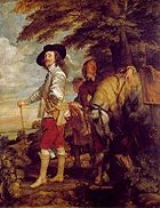
Confederate Ireland

Encyclopedia
Confederate Ireland refers to the period of Irish self-government between the Rebellion of 1641
and the Cromwellian conquest of Ireland
in 1649. During this time, two-thirds of Ireland
was governed by the Irish Catholic Confederation, also known as the "Confederation of Kilkenny" (based in the city of Kilkenny
). The remaining Protestant-controlled enclaves in Ulster
, Munster
and Leinster
were held by armies loyal to the royalist
s, parliamentarians
or Scottish
Covenanters during the Wars of the Three Kingdoms
. The Confederates failed to defeat the English armies in Ireland in 1642–49 in a conflict known as the Irish Confederate Wars
and joined a royalist alliance in 1648 against the Rump Parliament
.
The Catholic Confederation was formed in the aftermath of the 1641 rebellion
, both to control the popular uprising and to organise an Irish Catholic war effort against the remaining English and Scottish armies in Ireland. It was hoped that by doing this, the Irish Catholics could hold off an English or Scottish re-conquest of the country. The initiative for the Confederation came from a Catholic bishop, Nicholas French
and a lawyer named Nicholas Plunkett
. They put forth their proposals for a government to Irish Catholic nobles such as Viscount Gormanston
, Viscount Mountgarret
and Donagh MacCarthy, Viscount Muskerry
. These men committed their own armed forces to the Confederation and persuaded other rebels to join it. Members of the Confederation took an oath on joining to uphold the Roman Catholic religion, the King's Rights and the liberty of Ireland.
man named Patrick D'Arcy
. The parliamentary electorate was largely similar to the Irish parliament, representing only the larger landowners and merchants. The Confederate government was composed of a General Assembly, a parliament
in all but name, elected from and by Irish landowners and Catholic clergy, which in turn elected an executive
known as the Supreme Council. Initially, the Supreme Council had twenty-five members, six from each of the four Irish provinces (the twenty-fifth member was the Earl of Castlehaven
, an English Catholic aristocrat who was supposed to represent the interests of the Crown). The General Assembly and the Supreme Council both met in the city of Kilkenny
, with the Assembly being called annually to review the work of the Supreme Council. The Confederates immediately set up an extensive system of taxation to finance the war, and sent envoys to the Catholic powers in continental Europe.
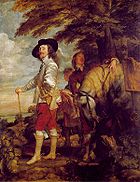
James Tuchet, 3rd Earl of Castlehaven
, representing the Crown, was the final member of the Supreme Council.
) they professed to be Royalists
, loyal to Charles I
. Since only the King could legally call a Parliament, the Confederate General Assembly never claimed to be a Parliament either, although it acted like one. In negotiations with the Royalists, the Confederates demanded that all concessions made to them would be ratified in post war Irish Parliament, which would have resembled the Confederate General Assembly including some Protestant Royalists.
The Confederate's stated objective was to reach an agreement with the King. The ambitions were: full rights for Catholics in Ireland, toleration of the Catholic religion, and self-government for Ireland. Their campaign for religious equality
in 1628-34 had been promised but then shelved by Charles. The motto of the Confederation was Pro Deo, Rege et Patria, Hibernia
Unanimis (For God, King and Fatherland, Ireland is United).
The members of the Supreme Council were predominantly of Old English
descent and were distrusted by many of the Gaelic
Irish, who felt they were too moderate in their demands. The more radical Confederates pressed for a reversal of the plantations
and the establishment of Catholicism as state religion
in Ireland.
The Confederates believed that their aspirations were best served by alliance with the royalist cause and therefore made supporting the King a central part of their strategy. This was because the English Parliament and Scottish Covenanters had threatened before the war to invade Ireland and destroy the Catholic religion and Irish land-owning class. The King, by contrast, had repeatedly promised them some concessions. The difficulty for Charles was that he was horrified at the 1641 rebellion and had signed the Adventurers Act
into law in 1642, which proposed confiscating all rebel held lands in Ireland. A new policy of refusing pardon to any Irish rebels had also been agreed in London and Dublin (issuing pardons had been a common method to end Irish conflicts in the previous century). Therefore his forces remained hostile to the Confederates until 1643, when his military position in England started to weaken. Many of the Confederate gentry stood to lose their land under the Adventurers Act
; it galvanized their efforts and they realized that it could only be repealed by taking a loyal stance.
However, while the moderate Confederates were anxious to come to an agreement with Charles I and did not press for radical political and religious reforms, others wished to force the King to accept a self-governing Catholic Ireland before they came to terms with him. Failing that, they advocated an independent alliance with France
or Spain
.
), with the royalists in Ireland and opened negotiations with James Butler, 1st Duke of Ormonde
, the King's representative in Ireland. This meant that hostilities ceased between the Confederates and Ormonde's royalist army in Dublin. However, the English garrison in Cork
(which was commanded by Murrough O'Brien, 1st Earl of Inchiquin
, a rare Gaelic Irish Protestant) objecting to the ceasefire, mutinied and declared allegiance to the English Parliament. The Scottish Covenanters had also landed an army in Ulster in 1642, which remained hostile to the Confederates and to the king — as did the forces of the British settlers living in Ulster.
In 1644, the Confederates sent around 1,500 men under Alasdair MacColla
to Scotland
to support the royalists there under James Graham, 1st Marquess of Montrose
against the Covenanters, sparking a Civil War — their only intervention on the Royalist side in the civil wars in Great Britain.
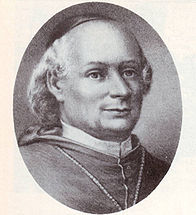 The Confederates received modest subsidies from the monarchies of France and Spain, who wanted to recruit troops in Ireland but their main continental support came from the Papacy. Pope Urban VIII
sent Pierfrancesco Scarampi
to liaise with and help the Confederates' Supreme Council in 1643. Pope Innocent X
strongly supported Confederate Ireland, over the objections of Cardinal Mazarin and the Queen, Henrietta Maria, who had moved to Paris in 1644. Innocent received the Confederation's envoy in February 1645 and resolved to send a nuncio extraordinary to Ireland, Giovanni Battista Rinuccini
, archbishop of Fermo, who embarked from La Rochelle
with the Confederacy's secretary, Richard Bellings
. He took with him a large quantity of arms and military supplies and a very large sum of money. These supplies meant that Rinuccini had a big influence on the Confederates' internal politics and he was backed by the more militant Confederates such as Owen Roe O'Neill
. At Kilkenny Rinuccini was received with great honours, asserting that the object of his mission was to sustain the King, but above all to help the Catholic people of Ireland in securing the free and public exercise of the Catholic religion, and the restoration of the churches and church property, but not any former monastic property.
However, there was no reversal of Poynings' Law, which meant that any legislation due to be presented to the Irish Parliament
must first be approved by the English Privy Council, no reversal of the Protestant domination of Parliament and no reversal of the main plantations, or colonisation
, in Ulster and Munster. Moreover, regarding the religious articles of the treaty, all churches taken over by Catholics in the war would have to be returned to Protestant hands and public practice of Catholicism was not guaranteed.
In return for the concessions that were made Irish troops would be sent to England to fight for the royalists in the English Civil War
. However, the terms agreed were not acceptable to either the Catholic clergy, the Irish military commanders — notably Owen Roe O'Neill
and Thomas Preston
— or the majority of the General Assembly. Nor was Rinuccini the papal nuncio party to the treaty, which left untouched the objects of his mission; he had induced nine of the Irish bishops to sign a protest against any arrangement with Ormonde
or the king that would not guarantee the maintenance of the Catholic religion.
Many believed the Supreme Council were unreliable, since many of them were related to Ormonde or otherwise bound to him. Besides, it was pointed out that the English Civil War had already been decided in the English Parliament’s favour and that sending Irish troops to the royalists would be a futile sacrifice. On the other hand, many felt after O’Neill’s
Ulster army defeated the Scots at the battle of Benburb
in June 1646 that the Confederates were in a position to re-conquer all of Ireland. Furthermore, those who opposed the peace were backed, both spiritually and financially, by Rinuccini, who threatened to excommunicate the "peace party". The Supreme Council were arrested and the General Assembly voted to reject the deal.
. The Confederates now tried to eliminate the remaining parliamentarian outposts in Dublin and Cork
, but in 1647 suffered a series of military disasters. First, Thomas Preston’s Leinster
army was destroyed by Jones’s parliamentarians at the Battle of Dungan's Hill
in County Meath
. Then, less than than three months later, the Confederates' Munster army met a similar fate at the hands of Inchiquin’s parliamentarian forces at the battle of Knocknanauss.
These setbacks made most Confederates much more eager to come to reach an agreement with the royalists and negotiations were re-opened. The Supreme Council received generous terms from Charles I and Ormonde, including toleration of the Catholic religion, a commitment to repealing Poyning's Law (and therefore to Irish self-government), recognition of lands taken by Irish Catholics during the war, and a commitment to a partial reversal of the Plantation of Ulster
. In addition, there was to be an Act of Oblivion, or amnesty for all acts committed during the 1641 rebellion and Confederate wars
— in particular the killings of British Protestant settlers in 1641 — combined with no disbanding of the Confederate armies.
However Charles granted these terms only out of desperation and later repudiated them. Under the terms of the agreement, the Confederation was to dissolve itself, place its troops under royalist commanders and accept English royalist troops. Inchiquin also defected from the Parliament and rejoined the royalists in Ireland.
refused to join the new royalist alliance and fought a brief internal civil war with the royalists and Confederates in the summer of 1648. So alienated was O'Neill by what he considered to be a betrayal of Catholic war aims that he tried to make a separate peace with the English Parliament and was for a short time effectively an ally of the English parliamentary armies in Ireland. This was disastrous for the wider aims of the Confederacy, as it coincided with the outbreak of the second civil war in England. The Papal Nuncio, Rinuccini, endeavored to uphold Owen Roe O'Neill by excommunicating
all who in May 1648 took part in the Inchiquin Truce with the Royalists; but he could not get the Irish Catholic Bishops to agree on the matter. On February 23, 1649, he embarked at Galway, in his own frigate, to return to Rome.
It is often argued that this split within the Confederate ranks represented a split between Gaelic Irish and Old English
. It is suggested that a particular reason for this was that Gaelic Irish had lost much land and power since the English conquest of Ireland and hence had become radical in their demands. However, there were members of both ethnicities on either side. For example, Phelim O’Neill
, the Gaelic Irish instigator of the Rebellion of 1641, sided with the moderates, whereas the predominantly Old English south Wexford area rejected the peace. The Catholic clergy were also split over the issue.
The real significance of the split was between those landed gentry who were prepared to compromise with the royalists as long as their lands and civil rights were guaranteed, and those, such as Owen Roe O'Neill, who wanted to completely overturn the English presence in Ireland. They wanted an independent, Catholic Ireland, with the English and Scottish settlers expelled permanently. Many of the militants were most concerned with recovering ancestral lands their families had lost in the plantations. After inconclusive skirmishing with the Confederates, Owen Roe O'Neill retreated to Ulster and did not rejoin his former comrades until Cromwell
’s invasion of 1649. This infighting fatally hampered the preparations of the Confederate-royalist alliance to repel the invasion of parliamentarian New Model Army
.
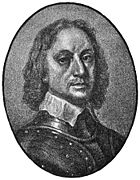 Oliver Cromwell
invaded Ireland in 1649 to crush the new alliance of Irish Confederates and royalists. The Cromwellian conquest of Ireland
was the bloodiest warfare that had ever occurred in the country and was accompanied by plague
and famine
. It ended in total defeat for the Irish Catholics and royalists. The pre-war Irish Catholic land-owning class was all but totally destroyed in this period, as were the institutions of the Roman Catholic Church. Most of the senior members of the Confederation spent the Cromwellian period in exile in France, with the English Royalist Court. After the Restoration
, those Confederates who had promoted alliance with the Royalists found themselves in favour and on average recovered about a third of their lands. However, those who remained in Ireland throughout the Interregnum generally had their land confiscated, with prisoners of war executed or transported to penal colonies.
in 1922. Its style of parliament was similar to the landed oligarchy Irish parliament established by the Normans in 1297, but it was not based on a democratic vote. Given their large notional power base, the Confederates ultimately failed to manage and reorganize Ireland so as to defend the interests of Irish Catholics. The Irish Confederate Wars
and the ensuing Cromwellian conquest of Ireland (1649-53) caused massive loss of life and ended with the confiscation of almost all Irish Catholic owned land in the 1650s, though much was re-granted in the 1660s. The end of the period cemented the English colonisation of Ireland in the so-called Cromwellian Settlement.
Irish Rebellion of 1641
The Irish Rebellion of 1641 began as an attempted coup d'état by Irish Catholic gentry, who tried to seize control of the English administration in Ireland to force concessions for the Catholics living under English rule...
and the Cromwellian conquest of Ireland
Cromwellian conquest of Ireland
The Cromwellian conquest of Ireland refers to the conquest of Ireland by the forces of the English Parliament, led by Oliver Cromwell during the Wars of the Three Kingdoms. Cromwell landed in Ireland with his New Model Army on behalf of England's Rump Parliament in 1649...
in 1649. During this time, two-thirds of Ireland
Ireland
Ireland is an island to the northwest of continental Europe. It is the third-largest island in Europe and the twentieth-largest island on Earth...
was governed by the Irish Catholic Confederation, also known as the "Confederation of Kilkenny" (based in the city of Kilkenny
Kilkenny
Kilkenny is a city and is the county town of the eponymous County Kilkenny in Ireland. It is situated on both banks of the River Nore in the province of Leinster, in the south-east of Ireland...
). The remaining Protestant-controlled enclaves in Ulster
Ulster
Ulster is one of the four provinces of Ireland, located in the north of the island. In ancient Ireland, it was one of the fifths ruled by a "king of over-kings" . Following the Norman invasion of Ireland, the ancient kingdoms were shired into a number of counties for administrative and judicial...
, Munster
Munster
Munster is one of the Provinces of Ireland situated in the south of Ireland. In Ancient Ireland, it was one of the fifths ruled by a "king of over-kings" . Following the Norman invasion of Ireland, the ancient kingdoms were shired into a number of counties for administrative and judicial purposes...
and Leinster
Leinster
Leinster is one of the Provinces of Ireland situated in the east of Ireland. It comprises the ancient Kingdoms of Mide, Osraige and Leinster. Following the Norman invasion of Ireland, the historic fifths of Leinster and Mide gradually merged, mainly due to the impact of the Pale, which straddled...
were held by armies loyal to the royalist
Cavalier
Cavalier was the name used by Parliamentarians for a Royalist supporter of King Charles I and son Charles II during the English Civil War, the Interregnum, and the Restoration...
s, parliamentarians
Parliament of England
The Parliament of England was the legislature of the Kingdom of England. In 1066, William of Normandy introduced a feudal system, by which he sought the advice of a council of tenants-in-chief and ecclesiastics before making laws...
or Scottish
Scotland
Scotland is a country that is part of the United Kingdom. Occupying the northern third of the island of Great Britain, it shares a border with England to the south and is bounded by the North Sea to the east, the Atlantic Ocean to the north and west, and the North Channel and Irish Sea to the...
Covenanters during the Wars of the Three Kingdoms
Wars of the Three Kingdoms
The Wars of the Three Kingdoms formed an intertwined series of conflicts that took place in England, Ireland, and Scotland between 1639 and 1651 after these three countries had come under the "Personal Rule" of the same monarch...
. The Confederates failed to defeat the English armies in Ireland in 1642–49 in a conflict known as the Irish Confederate Wars
Irish Confederate Wars
This article is concerned with the military history of Ireland from 1641-53. For the political context of this conflict, see Confederate Ireland....
and joined a royalist alliance in 1648 against the Rump Parliament
Rump Parliament
The Rump Parliament is the name of the English Parliament after Colonel Pride purged the Long Parliament on 6 December 1648 of those members hostile to the Grandees' intention to try King Charles I for high treason....
.
Rebellion and the formation of the Confederation
- This is a political history, for a military history of the period, see Irish Confederate WarsIrish Confederate WarsThis article is concerned with the military history of Ireland from 1641-53. For the political context of this conflict, see Confederate Ireland....
The Catholic Confederation was formed in the aftermath of the 1641 rebellion
Irish Rebellion of 1641
The Irish Rebellion of 1641 began as an attempted coup d'état by Irish Catholic gentry, who tried to seize control of the English administration in Ireland to force concessions for the Catholics living under English rule...
, both to control the popular uprising and to organise an Irish Catholic war effort against the remaining English and Scottish armies in Ireland. It was hoped that by doing this, the Irish Catholics could hold off an English or Scottish re-conquest of the country. The initiative for the Confederation came from a Catholic bishop, Nicholas French
Nicholas French
Nicholas French , Roman Catholic Bishop of Ferns, was an Irish political activist and pamphleteer, who was born at Wexford....
and a lawyer named Nicholas Plunkett
Nicholas Plunkett
Sir Nicholas Plunkett was the son of Christopher Plunkett, Lord Killeen, and Jane Dillon. At the age of twenty Plunkett traveled to London to receive training as a lawyer at Gray's Inn in London, and later at King's Inn in Dublin...
. They put forth their proposals for a government to Irish Catholic nobles such as Viscount Gormanston
Viscount Gormanston
Viscount Gormanston is a title in the Peerage of Ireland held by the head of the Preston family. It was created in 1478. The holder is the senior Viscount of Ireland, as well as the bearer of the oldest vicomital title in either Britain or Ireland. The Preston family descends from Sir Robert...
, Viscount Mountgarret
Richard Butler, 3rd Viscount Mountgarret
Richard Butler, 3rd Viscount Mountgarret was the son of Edmund Butler, 2nd Viscount Mountgarret and Grany or Grizzel, daughter of Barnaby Fitzpatrick, 1st Baron Upper Ossory...
and Donagh MacCarthy, Viscount Muskerry
Donagh MacCarthy, Viscount Muskerry
Donagh [Donough] MacCarthy, 1st Earl of Clancarty, 2nd Viscount Muskerry was an Irish noble. He married Ellen Butler , who was the sister of James Butler, 1st Duke of Ormonde). The Earl served as a Munster general during the Irish Confederate Wars...
. These men committed their own armed forces to the Confederation and persuaded other rebels to join it. Members of the Confederation took an oath on joining to uphold the Roman Catholic religion, the King's Rights and the liberty of Ireland.
Constitution
The Confederate's constitution was written by another lawyer, a GalwayGalway
Galway or City of Galway is a city in County Galway, Republic of Ireland. It is the sixth largest and the fastest-growing city in Ireland. It is also the third largest city within the Republic and the only city in the Province of Connacht. Located on the west coast of Ireland, it sits on the...
man named Patrick D'Arcy
Patrick D'Arcy
Patrick D'Arcy was an Irish Catholic Confederate and lawyer who wrote the constitution of Confederate Ireland.-Background:Born in County Galway, Ireland, Darcy was the youngest son of James Riabhach Darcy by his second marriage to Elizabeth Martyn. James Riabhach was formerly Vice-President of...
. The parliamentary electorate was largely similar to the Irish parliament, representing only the larger landowners and merchants. The Confederate government was composed of a General Assembly, a parliament
Parliament
A parliament is a legislature, especially in those countries whose system of government is based on the Westminster system modeled after that of the United Kingdom. The name is derived from the French , the action of parler : a parlement is a discussion. The term came to mean a meeting at which...
in all but name, elected from and by Irish landowners and Catholic clergy, which in turn elected an executive
Executive (government)
Executive branch of Government is the part of government that has sole authority and responsibility for the daily administration of the state bureaucracy. The division of power into separate branches of government is central to the idea of the separation of powers.In many countries, the term...
known as the Supreme Council. Initially, the Supreme Council had twenty-five members, six from each of the four Irish provinces (the twenty-fifth member was the Earl of Castlehaven
James Tuchet, 3rd Earl of Castlehaven
James Tuchet, 3rd Earl of Castlehaven was the son of Mervyn Tuchet, 2nd Earl of Castlehaven and his first wife, Elizabeth Barnham...
, an English Catholic aristocrat who was supposed to represent the interests of the Crown). The General Assembly and the Supreme Council both met in the city of Kilkenny
Kilkenny
Kilkenny is a city and is the county town of the eponymous County Kilkenny in Ireland. It is situated on both banks of the River Nore in the province of Leinster, in the south-east of Ireland...
, with the Assembly being called annually to review the work of the Supreme Council. The Confederates immediately set up an extensive system of taxation to finance the war, and sent envoys to the Catholic powers in continental Europe.
Members of the Supreme Council of the Confederation of Kilkenny, November 1642
| Leinster | Ulster | Connaught | Munster |
|---|---|---|---|
| Thomas Fleming Thomas Fleming (archbishop) Thomas Fleming was an Irish Franciscan and Roman Catholic Archbishop of Dublin.He was son of the Baron of Slane. He studied at the Franciscan College of Leuven, became a priest of the Franciscan Order, and after finishing his studies continued at the Catholic University of Leuven for a number of... |
Hugh O'Reilly Hugh O'Reilly Hugh O'Reilly, , was an Irish leader. He was consecrated as Bishop of Kilmore in July 1625 and translated to Armagh on 5 May 1628.... |
Malachias O'Queely | Maurice de Roche, Viscount Roche of Fermoy |
| Viscount Gormanston Viscount Gormanston Viscount Gormanston is a title in the Peerage of Ireland held by the head of the Preston family. It was created in 1478. The holder is the senior Viscount of Ireland, as well as the bearer of the oldest vicomital title in either Britain or Ireland. The Preston family descends from Sir Robert... |
Arthur Magennis, Viscount Magennis of Iveagh | Viscount Mayo Earl of Mayo Earl of the County of Mayo, usually known simply as Earl of Mayo, is a title in the Peerage of Ireland. It was created in 1785 for John Bourke, 1st Viscount Mayo, for many years First Commissioner of Revenue in Ireland... |
Daniel O'Brien, 1st Viscount Clare Daniel O'Brien, 1st Viscount Clare Daniel O'Brien, 1st Viscount Clare was the younger son of Connor O'Brien, 3rd Earl of Thomond and Una O'Brien.... |
| Nicholas Plunkett Nicholas Plunkett Sir Nicholas Plunkett was the son of Christopher Plunkett, Lord Killeen, and Jane Dillon. At the age of twenty Plunkett traveled to London to receive training as a lawyer at Gray's Inn in London, and later at King's Inn in Dublin... |
Philip O'Reilly Philip O'Reilly Colonel Philip O’Reilly was a Member of Parliament for County Cavan, Ireland in the Irish Parliament from 1639 to 1641.-Ancestry:His Gaelic name was Phillip mac Aodh mac Sean mac Aodh Conallach O’Raghallaigh and by the English he was named Philip McHugh McShane O'Rely. His father, grandfather and... |
John de Burgh, Bishop of Clonfert | Edmund FitzMaurice |
| Richard Bellings Richard Bellings Richard Bellings was a lawyer and political figure in 17th century Ireland and in the Wars of the Three Kingdoms. He is best known for his participation in Confederate Ireland, a short-lived independent Irish state, in which he served on the governing body called the Supreme Council... |
Col. Brian MacMahon | Viscount Dillon | Dr Fennel |
| James Cusack | Heber Magennis | Geoffrey Browne (MP) | Robert Lambert |
| Viscount Mountgarret Richard Butler, 3rd Viscount Mountgarret Richard Butler, 3rd Viscount Mountgarret was the son of Edmund Butler, 2nd Viscount Mountgarret and Grany or Grizzel, daughter of Barnaby Fitzpatrick, 1st Baron Upper Ossory... |
Turlogh O'Neill | Patrick D'Arcy Patrick D'Arcy Patrick D'Arcy was an Irish Catholic Confederate and lawyer who wrote the constitution of Confederate Ireland.-Background:Born in County Galway, Ireland, Darcy was the youngest son of James Riabhach Darcy by his second marriage to Elizabeth Martyn. James Riabhach was formerly Vice-President of... |
George Comyn |
James Tuchet, 3rd Earl of Castlehaven
James Tuchet, 3rd Earl of Castlehaven
James Tuchet, 3rd Earl of Castlehaven was the son of Mervyn Tuchet, 2nd Earl of Castlehaven and his first wife, Elizabeth Barnham...
, representing the Crown, was the final member of the Supreme Council.
Policies
However, the Confederate Catholic Association of Ireland never actually claimed to be an independent government, because (in the context of the Wars of the Three KingdomsWars of the Three Kingdoms
The Wars of the Three Kingdoms formed an intertwined series of conflicts that took place in England, Ireland, and Scotland between 1639 and 1651 after these three countries had come under the "Personal Rule" of the same monarch...
) they professed to be Royalists
Cavalier
Cavalier was the name used by Parliamentarians for a Royalist supporter of King Charles I and son Charles II during the English Civil War, the Interregnum, and the Restoration...
, loyal to Charles I
Charles I of England
Charles I was King of England, King of Scotland, and King of Ireland from 27 March 1625 until his execution in 1649. Charles engaged in a struggle for power with the Parliament of England, attempting to obtain royal revenue whilst Parliament sought to curb his Royal prerogative which Charles...
. Since only the King could legally call a Parliament, the Confederate General Assembly never claimed to be a Parliament either, although it acted like one. In negotiations with the Royalists, the Confederates demanded that all concessions made to them would be ratified in post war Irish Parliament, which would have resembled the Confederate General Assembly including some Protestant Royalists.
The Confederate's stated objective was to reach an agreement with the King. The ambitions were: full rights for Catholics in Ireland, toleration of the Catholic religion, and self-government for Ireland. Their campaign for religious equality
The Graces (Ireland)
The Graces were a proposed series of reforms sought by Roman Catholics in Ireland in 1628-1634.-Background:From 1570 to 1625 most people in the Kingdom of Ireland had remained Roman Catholic despite legislation that was increasingly excluding them from the political and official worlds...
in 1628-34 had been promised but then shelved by Charles. The motto of the Confederation was Pro Deo, Rege et Patria, Hibernia
Hibernia
Hibernia is the Classical Latin name for the island of Ireland. The name Hibernia was taken from Greek geographical accounts. During his exploration of northwest Europe , Pytheas of Massilia called the island Ierne . In his book Geographia Hibernia is the Classical Latin name for the island of...
Unanimis (For God, King and Fatherland, Ireland is United).
The members of the Supreme Council were predominantly of Old English
Old English (Ireland)
The Old English were the descendants of the settlers who came to Ireland from Wales, Normandy, and England after the Norman invasion of Ireland in 1169–71. Many of the Old English became assimilated into Irish society over the centuries...
descent and were distrusted by many of the Gaelic
Gaels
The Gaels or Goidels are speakers of one of the Goidelic Celtic languages: Irish, Scottish Gaelic, and Manx. Goidelic speech originated in Ireland and subsequently spread to western and northern Scotland and the Isle of Man....
Irish, who felt they were too moderate in their demands. The more radical Confederates pressed for a reversal of the plantations
Plantations of Ireland
Plantations in 16th and 17th century Ireland were the confiscation of land by the English crown and the colonisation of this land with settlers from England and the Scottish Lowlands....
and the establishment of Catholicism as state religion
State religion
A state religion is a religious body or creed officially endorsed by the state...
in Ireland.
The Confederates believed that their aspirations were best served by alliance with the royalist cause and therefore made supporting the King a central part of their strategy. This was because the English Parliament and Scottish Covenanters had threatened before the war to invade Ireland and destroy the Catholic religion and Irish land-owning class. The King, by contrast, had repeatedly promised them some concessions. The difficulty for Charles was that he was horrified at the 1641 rebellion and had signed the Adventurers Act
Adventurers Act
The Adventurers' Act is an Act of the Parliament of England, with the long title "An Act for the speedy and effectual reducing of the rebels in His Majesty's Kingdom of Ireland".-The main Act:...
into law in 1642, which proposed confiscating all rebel held lands in Ireland. A new policy of refusing pardon to any Irish rebels had also been agreed in London and Dublin (issuing pardons had been a common method to end Irish conflicts in the previous century). Therefore his forces remained hostile to the Confederates until 1643, when his military position in England started to weaken. Many of the Confederate gentry stood to lose their land under the Adventurers Act
Adventurers Act
The Adventurers' Act is an Act of the Parliament of England, with the long title "An Act for the speedy and effectual reducing of the rebels in His Majesty's Kingdom of Ireland".-The main Act:...
; it galvanized their efforts and they realized that it could only be repealed by taking a loyal stance.
However, while the moderate Confederates were anxious to come to an agreement with Charles I and did not press for radical political and religious reforms, others wished to force the King to accept a self-governing Catholic Ireland before they came to terms with him. Failing that, they advocated an independent alliance with France
France
The French Republic , The French Republic , The French Republic , (commonly known as France , is a unitary semi-presidential republic in Western Europe with several overseas territories and islands located on other continents and in the Indian, Pacific, and Atlantic oceans. Metropolitan France...
or Spain
Spain
Spain , officially the Kingdom of Spain languages]] under the European Charter for Regional or Minority Languages. In each of these, Spain's official name is as follows:;;;;;;), is a country and member state of the European Union located in southwestern Europe on the Iberian Peninsula...
.
Cessation with the royalists
In 1643, the Confederates negotiated a "cessation of arms" (or ceasefireCeasefire
A ceasefire is a temporary stoppage of a war in which each side agrees with the other to suspend aggressive actions. Ceasefires may be declared as part of a formal treaty, but they have also been called as part of an informal understanding between opposing forces...
), with the royalists in Ireland and opened negotiations with James Butler, 1st Duke of Ormonde
James Butler, 1st Duke of Ormonde
James Butler, 1st Duke of Ormonde PC was an Irish statesman and soldier. He was the second of the Kilcash branch of the family to inherit the earldom. He was the friend of Thomas Wentworth, 1st Earl of Strafford, who appointeed him commander of the Cavalier forces in Ireland. From 1641 to 1647, he...
, the King's representative in Ireland. This meant that hostilities ceased between the Confederates and Ormonde's royalist army in Dublin. However, the English garrison in Cork
Cork (city)
Cork is the second largest city in the Republic of Ireland and the island of Ireland's third most populous city. It is the principal city and administrative centre of County Cork and the largest city in the province of Munster. Cork has a population of 119,418, while the addition of the suburban...
(which was commanded by Murrough O'Brien, 1st Earl of Inchiquin
Murrough O'Brien, 1st Earl of Inchiquin
Murrough McDermod O'Brien, 1st Earl of Inchiquin and 6th Baron Inchiquin , was known as Murchadh na dTóiteán ....
, a rare Gaelic Irish Protestant) objecting to the ceasefire, mutinied and declared allegiance to the English Parliament. The Scottish Covenanters had also landed an army in Ulster in 1642, which remained hostile to the Confederates and to the king — as did the forces of the British settlers living in Ulster.
In 1644, the Confederates sent around 1,500 men under Alasdair MacColla
Alasdair MacColla
Alasdair Mac Colla was a Scottish soldier. His full name in Scottish Gaelic was Alasdair Mac Colla Chiotaich Mac Domhnuill . He is sometimes mistakenly referred to in English as "Collkitto", a nickname that properly belongs to his father. He fought in the Wars of the Three Kingdoms, most notably...
to Scotland
Scotland
Scotland is a country that is part of the United Kingdom. Occupying the northern third of the island of Great Britain, it shares a border with England to the south and is bounded by the North Sea to the east, the Atlantic Ocean to the north and west, and the North Channel and Irish Sea to the...
to support the royalists there under James Graham, 1st Marquess of Montrose
James Graham, 1st Marquess of Montrose
James Graham, 1st Marquess of Montrose was a Scottish nobleman and soldier, who initially joined the Covenanters in the Wars of the Three Kingdoms, but subsequently supported King Charles I as the English Civil War developed...
against the Covenanters, sparking a Civil War — their only intervention on the Royalist side in the civil wars in Great Britain.
The Papal Nuncio's arrival
Pope Urban VIII
Pope Urban VIII , born Maffeo Barberini, was pope from 1623 to 1644. He was the last pope to expand the papal territory by force of arms, and was a prominent patron of the arts and reformer of Church missions...
sent Pierfrancesco Scarampi
Pierfrancesco Scarampi
Pierfrancesco Scarampi was a Roman Catholic oratorian and Papal envoy.-Early life and ordination:Scarampi was born into the noble Scarampi family in the Marquisate of Montferrat, today a part of Piedmont, in 1596. He was destined by his parents for the military career, but during a visit to the...
to liaise with and help the Confederates' Supreme Council in 1643. Pope Innocent X
Pope Innocent X
Pope Innocent X , born Giovanni Battista Pamphilj , was Pope from 1644 to 1655. Born in Rome of a family from Gubbio in Umbria who had come to Rome during the pontificate of Pope Innocent IX, he graduated from the Collegio Romano and followed a conventional cursus honorum, following his uncle...
strongly supported Confederate Ireland, over the objections of Cardinal Mazarin and the Queen, Henrietta Maria, who had moved to Paris in 1644. Innocent received the Confederation's envoy in February 1645 and resolved to send a nuncio extraordinary to Ireland, Giovanni Battista Rinuccini
Giovanni Battista Rinuccini
Giovanni Battista Rinuccini was a Roman Catholic archbishop in the mid seventeenth century. He was a noted legal scholar who became chamberlain to Pope Gregory XV, who made him the Archbishop of Fermo in Italy...
, archbishop of Fermo, who embarked from La Rochelle
La Rochelle
La Rochelle is a city in western France and a seaport on the Bay of Biscay, a part of the Atlantic Ocean. It is the capital of the Charente-Maritime department.The city is connected to the Île de Ré by a bridge completed on 19 May 1988...
with the Confederacy's secretary, Richard Bellings
Richard Bellings
Richard Bellings was a lawyer and political figure in 17th century Ireland and in the Wars of the Three Kingdoms. He is best known for his participation in Confederate Ireland, a short-lived independent Irish state, in which he served on the governing body called the Supreme Council...
. He took with him a large quantity of arms and military supplies and a very large sum of money. These supplies meant that Rinuccini had a big influence on the Confederates' internal politics and he was backed by the more militant Confederates such as Owen Roe O'Neill
Owen Roe O'Neill
Eoghan Ruadh Ó Néill , anglicised as Owen Roe O'Neill , was a seventeenth century soldier and one of the most famous of the O'Neill dynasty of Ulster.- In Spanish service :...
. At Kilkenny Rinuccini was received with great honours, asserting that the object of his mission was to sustain the King, but above all to help the Catholic people of Ireland in securing the free and public exercise of the Catholic religion, and the restoration of the churches and church property, but not any former monastic property.
The first "Ormonde Peace"
The nuncio considered himself the virtual head of the Confederate Catholic party in Ireland. By March 1646, however, the Supreme Council of the Confederates had come to an agreement with Ormonde, signed March 28, 1646. Under its terms Catholics would be allowed to serve in public office and found schools; there were also verbal promises of future concessions on religious toleration. There was an amnesty for acts committed in the Rebellion of 1641 and a guarantee against further seizure of Irish Catholic land. The Supreme Council also put great hope in a secret treaty they had concluded with the Earl of Glamorgan on the King's behalf, which promised further concessions to Irish Catholics in the future.However, there was no reversal of Poynings' Law, which meant that any legislation due to be presented to the Irish Parliament
Parliament of Ireland
The Parliament of Ireland was a legislature that existed in Dublin from 1297 until 1800. In its early mediaeval period during the Lordship of Ireland it consisted of either two or three chambers: the House of Commons, elected by a very restricted suffrage, the House of Lords in which the lords...
must first be approved by the English Privy Council, no reversal of the Protestant domination of Parliament and no reversal of the main plantations, or colonisation
Colonisation
Colonization occurs whenever any one or more species populate an area. The term, which is derived from the Latin colere, "to inhabit, cultivate, frequent, practice, tend, guard, respect", originally related to humans. However, 19th century biogeographers dominated the term to describe the...
, in Ulster and Munster. Moreover, regarding the religious articles of the treaty, all churches taken over by Catholics in the war would have to be returned to Protestant hands and public practice of Catholicism was not guaranteed.
In return for the concessions that were made Irish troops would be sent to England to fight for the royalists in the English Civil War
English Civil War
The English Civil War was a series of armed conflicts and political machinations between Parliamentarians and Royalists...
. However, the terms agreed were not acceptable to either the Catholic clergy, the Irish military commanders — notably Owen Roe O'Neill
Owen Roe O'Neill
Eoghan Ruadh Ó Néill , anglicised as Owen Roe O'Neill , was a seventeenth century soldier and one of the most famous of the O'Neill dynasty of Ulster.- In Spanish service :...
and Thomas Preston
Thomas Preston, 1st Viscount Tara
Thomas Preston, 1st Viscount Tara was an Irish soldier of the 17th century. He was a descendant of Sir Robert de Preston, who in 1363 purchased the lands of Gormanston, County Meath, and who was keeper of the Great Seal in Ireland some years later....
— or the majority of the General Assembly. Nor was Rinuccini the papal nuncio party to the treaty, which left untouched the objects of his mission; he had induced nine of the Irish bishops to sign a protest against any arrangement with Ormonde
James Butler, 1st Duke of Ormonde
James Butler, 1st Duke of Ormonde PC was an Irish statesman and soldier. He was the second of the Kilcash branch of the family to inherit the earldom. He was the friend of Thomas Wentworth, 1st Earl of Strafford, who appointeed him commander of the Cavalier forces in Ireland. From 1641 to 1647, he...
or the king that would not guarantee the maintenance of the Catholic religion.
Many believed the Supreme Council were unreliable, since many of them were related to Ormonde or otherwise bound to him. Besides, it was pointed out that the English Civil War had already been decided in the English Parliament’s favour and that sending Irish troops to the royalists would be a futile sacrifice. On the other hand, many felt after O’Neill’s
Owen Roe O'Neill
Eoghan Ruadh Ó Néill , anglicised as Owen Roe O'Neill , was a seventeenth century soldier and one of the most famous of the O'Neill dynasty of Ulster.- In Spanish service :...
Ulster army defeated the Scots at the battle of Benburb
Battle of Benburb
The Battle of Benburb took place in 1646 during the Irish Confederate Wars, the Irish theatre of the Wars of the Three Kingdoms. It was fought between the forces of Confederate Ireland under Owen Roe O'Neill and a Scottish Covenanter and Anglo-Irish army under Robert Monro...
in June 1646 that the Confederates were in a position to re-conquer all of Ireland. Furthermore, those who opposed the peace were backed, both spiritually and financially, by Rinuccini, who threatened to excommunicate the "peace party". The Supreme Council were arrested and the General Assembly voted to reject the deal.
Military defeat and a new Ormonde peace
After the Confederates rejected the peace deal, Ormonde handed Dublin over to a parliamentarian army under Michael JonesMichael Jones (soldier)
Lieutenant-General Michael Jones fought for King Charles I during the Irish Confederate War but joined the English Parliamentary side when the English Civil War started....
. The Confederates now tried to eliminate the remaining parliamentarian outposts in Dublin and Cork
Cork (city)
Cork is the second largest city in the Republic of Ireland and the island of Ireland's third most populous city. It is the principal city and administrative centre of County Cork and the largest city in the province of Munster. Cork has a population of 119,418, while the addition of the suburban...
, but in 1647 suffered a series of military disasters. First, Thomas Preston’s Leinster
Leinster
Leinster is one of the Provinces of Ireland situated in the east of Ireland. It comprises the ancient Kingdoms of Mide, Osraige and Leinster. Following the Norman invasion of Ireland, the historic fifths of Leinster and Mide gradually merged, mainly due to the impact of the Pale, which straddled...
army was destroyed by Jones’s parliamentarians at the Battle of Dungan's Hill
Battle of Dungan's Hill
The Battle of Dungan's Hill took place in County Meath, in eastern Ireland in August 1647. It was fought between the armies of Confederate Ireland and the English Parliament during the Wars of the Three Kingdoms. The Irish army was intercepted on a march towards Dublin and destroyed...
in County Meath
County Meath
County Meath is a county in Ireland. It is part of the Mid-East Region and is also located in the province of Leinster. It is named after the ancient Kingdom of Mide . Meath County Council is the local authority for the county...
. Then, less than than three months later, the Confederates' Munster army met a similar fate at the hands of Inchiquin’s parliamentarian forces at the battle of Knocknanauss.
These setbacks made most Confederates much more eager to come to reach an agreement with the royalists and negotiations were re-opened. The Supreme Council received generous terms from Charles I and Ormonde, including toleration of the Catholic religion, a commitment to repealing Poyning's Law (and therefore to Irish self-government), recognition of lands taken by Irish Catholics during the war, and a commitment to a partial reversal of the Plantation of Ulster
Plantation of Ulster
The Plantation of Ulster was the organised colonisation of Ulster—a province of Ireland—by people from Great Britain. Private plantation by wealthy landowners began in 1606, while official plantation controlled by King James I of England and VI of Scotland began in 1609...
. In addition, there was to be an Act of Oblivion, or amnesty for all acts committed during the 1641 rebellion and Confederate wars
Irish Confederate Wars
This article is concerned with the military history of Ireland from 1641-53. For the political context of this conflict, see Confederate Ireland....
— in particular the killings of British Protestant settlers in 1641 — combined with no disbanding of the Confederate armies.
However Charles granted these terms only out of desperation and later repudiated them. Under the terms of the agreement, the Confederation was to dissolve itself, place its troops under royalist commanders and accept English royalist troops. Inchiquin also defected from the Parliament and rejoined the royalists in Ireland.
Civil War within the Confederation
However, many of the Irish Catholics continued to reject a deal with the royalists. Owen Roe O'NeillOwen Roe O'Neill
Eoghan Ruadh Ó Néill , anglicised as Owen Roe O'Neill , was a seventeenth century soldier and one of the most famous of the O'Neill dynasty of Ulster.- In Spanish service :...
refused to join the new royalist alliance and fought a brief internal civil war with the royalists and Confederates in the summer of 1648. So alienated was O'Neill by what he considered to be a betrayal of Catholic war aims that he tried to make a separate peace with the English Parliament and was for a short time effectively an ally of the English parliamentary armies in Ireland. This was disastrous for the wider aims of the Confederacy, as it coincided with the outbreak of the second civil war in England. The Papal Nuncio, Rinuccini, endeavored to uphold Owen Roe O'Neill by excommunicating
Excommunication
Excommunication is a religious censure used to deprive, suspend or limit membership in a religious community. The word means putting [someone] out of communion. In some religions, excommunication includes spiritual condemnation of the member or group...
all who in May 1648 took part in the Inchiquin Truce with the Royalists; but he could not get the Irish Catholic Bishops to agree on the matter. On February 23, 1649, he embarked at Galway, in his own frigate, to return to Rome.
It is often argued that this split within the Confederate ranks represented a split between Gaelic Irish and Old English
Old English (Ireland)
The Old English were the descendants of the settlers who came to Ireland from Wales, Normandy, and England after the Norman invasion of Ireland in 1169–71. Many of the Old English became assimilated into Irish society over the centuries...
. It is suggested that a particular reason for this was that Gaelic Irish had lost much land and power since the English conquest of Ireland and hence had become radical in their demands. However, there were members of both ethnicities on either side. For example, Phelim O’Neill
Felim O'Neill of Kinard
Sir Felim O'Neill of Kinard , also called Phelim MacShane O'Neill or Féilim Ó Néill , was an Irish nobleman who led the Irish Rebellion of 1641 in Ulster which began on 22 October 1641. He was a member of the Irish Catholic Confederation during the Wars of the Three Kingdoms, where he fought under...
, the Gaelic Irish instigator of the Rebellion of 1641, sided with the moderates, whereas the predominantly Old English south Wexford area rejected the peace. The Catholic clergy were also split over the issue.
The real significance of the split was between those landed gentry who were prepared to compromise with the royalists as long as their lands and civil rights were guaranteed, and those, such as Owen Roe O'Neill, who wanted to completely overturn the English presence in Ireland. They wanted an independent, Catholic Ireland, with the English and Scottish settlers expelled permanently. Many of the militants were most concerned with recovering ancestral lands their families had lost in the plantations. After inconclusive skirmishing with the Confederates, Owen Roe O'Neill retreated to Ulster and did not rejoin his former comrades until Cromwell
Oliver Cromwell
Oliver Cromwell was an English military and political leader who overthrew the English monarchy and temporarily turned England into a republican Commonwealth, and served as Lord Protector of England, Scotland, and Ireland....
’s invasion of 1649. This infighting fatally hampered the preparations of the Confederate-royalist alliance to repel the invasion of parliamentarian New Model Army
New Model Army
The New Model Army of England was formed in 1645 by the Parliamentarians in the English Civil War, and was disbanded in 1660 after the Restoration...
.
Cromwell's invasion
Oliver Cromwell
Oliver Cromwell was an English military and political leader who overthrew the English monarchy and temporarily turned England into a republican Commonwealth, and served as Lord Protector of England, Scotland, and Ireland....
invaded Ireland in 1649 to crush the new alliance of Irish Confederates and royalists. The Cromwellian conquest of Ireland
Cromwellian conquest of Ireland
The Cromwellian conquest of Ireland refers to the conquest of Ireland by the forces of the English Parliament, led by Oliver Cromwell during the Wars of the Three Kingdoms. Cromwell landed in Ireland with his New Model Army on behalf of England's Rump Parliament in 1649...
was the bloodiest warfare that had ever occurred in the country and was accompanied by plague
Pandemic
A pandemic is an epidemic of infectious disease that is spreading through human populations across a large region; for instance multiple continents, or even worldwide. A widespread endemic disease that is stable in terms of how many people are getting sick from it is not a pandemic...
and famine
Famine
A famine is a widespread scarcity of food, caused by several factors including crop failure, overpopulation, or government policies. This phenomenon is usually accompanied or followed by regional malnutrition, starvation, epidemic, and increased mortality. Every continent in the world has...
. It ended in total defeat for the Irish Catholics and royalists. The pre-war Irish Catholic land-owning class was all but totally destroyed in this period, as were the institutions of the Roman Catholic Church. Most of the senior members of the Confederation spent the Cromwellian period in exile in France, with the English Royalist Court. After the Restoration
English Restoration
The Restoration of the English monarchy began in 1660 when the English, Scottish and Irish monarchies were all restored under Charles II after the Interregnum that followed the Wars of the Three Kingdoms...
, those Confederates who had promoted alliance with the Royalists found themselves in favour and on average recovered about a third of their lands. However, those who remained in Ireland throughout the Interregnum generally had their land confiscated, with prisoners of war executed or transported to penal colonies.
Significance
Confederate Ireland was arguably the only sustained attempt at Catholic Irish self-government between 1558 and the foundation of Irish Free StateIrish Free State
The Irish Free State was the state established as a Dominion on 6 December 1922 under the Anglo-Irish Treaty, signed by the British government and Irish representatives exactly twelve months beforehand...
in 1922. Its style of parliament was similar to the landed oligarchy Irish parliament established by the Normans in 1297, but it was not based on a democratic vote. Given their large notional power base, the Confederates ultimately failed to manage and reorganize Ireland so as to defend the interests of Irish Catholics. The Irish Confederate Wars
Irish Confederate Wars
This article is concerned with the military history of Ireland from 1641-53. For the political context of this conflict, see Confederate Ireland....
and the ensuing Cromwellian conquest of Ireland (1649-53) caused massive loss of life and ended with the confiscation of almost all Irish Catholic owned land in the 1650s, though much was re-granted in the 1660s. The end of the period cemented the English colonisation of Ireland in the so-called Cromwellian Settlement.
See also
- History of IrelandHistory of IrelandThe first known settlement in Ireland began around 8000 BC, when hunter-gatherers arrived from continental Europe, probably via a land bridge. Few archaeological traces remain of this group, but their descendants and later Neolithic arrivals, particularly from the Iberian Peninsula, were...
- Early Modern Ireland 1536–1691
- ConfederationConfederationA confederation in modern political terms is a permanent union of political units for common action in relation to other units. Usually created by treaty but often later adopting a common constitution, confederations tend to be established for dealing with critical issues such as defense, foreign...
Sources
- Ó Siochrú, Mícheál, Confederate Ireland 1642-49, Four Courts Press Dublin 1999.
- Lenihan, Pádraig, Confederate Catholics at War 1641-49, Cork University Press, Cork 2001.
- Ohlmeyer, Jane and Kenyon, John (ed.s), The Civil Wars, Oxford University Press, Oxford 1998.
- Canny, Nicholas, Making Ireland British 1580-1650, Oxford University Press, Oxford 2001.
- Meehan, C. P., Confederation of Kilkenny
External links
- The Confederate Assembly of Kilkenny, British Civil Wars, Commonwealth and Protectorate, 1638–1660