


House of Orleans

Encyclopedia
Orléans
is the name used by several branches of the Royal House
of France, all descended in the legitimate male line from the dynasty
's founder, Hugh Capet. It became a tradition during France's ancien régime for the duchy of Orléans to be granted as an appanage
to a younger (usually the second surviving) son of the king. While each of the Orléans branches thus descended from a junior prince, they were always among the king's nearest relations in the male line, sometimes aspiring and sometimes succeeding to the throne itself.
The last cadet branch
to hold the ducal
title descended from Henri de Bourbon, duc de Vendôme
(Henry IV of France), who became king (nominally) in 1589, and is sometimes known as the "House of Bourbon-Orléans" (Maison de Bourbon-Orléans). From 1709 until the French Revolution
the Orléans dukes were next in the order of succession
to the French throne after members of the seniormost branch of the House of Bourbon
, descended from Louis XIV
. Louis XIII
's younger brother and younger son were granted the dukedom successively in 1626 and 1660, and since they had contemporaneous living descendants, there were actually two Bourbon-Orléans branches at court
during the reign of Louis XIV.
The elder of these branches consisted of Gaston, duc d'Orléans, younger son of Henry IV, and the four daughters of his two marriages. The junior and final House of Orléans descended from Philippe I, Duke of Orléans
, Louis XIV's younger brother (who, as such, was known at court simply as Monsieur
). Although Louis XIV's direct descendants retained the throne, his brother Philippe's descendants flourished until the end of the French monarchy, held the crown from 1830 to 1848, and are still extant as pretender
s.
of Orléans
reverted back to the crown. The appanage was given to Philippe
, the brother of Louis XIV of France
.
It was Philippe and his second wife, the famous court writer Elizabeth Charlotte of the Palatinate
, who founded the modern House of Orléans - their surviving son being the regent
of France for the young Louis XV
.
As a fils de France
, Philippe's surname
was "de France". Upon his death, his son inherited the Orléans dukedom, but as only a petit-fils de France his surname (and that of his descendants) was taken from his father's main title, and was thus d'Orléans. The first two dukes, as son and patrilineal
grandson, respectively, of a French king, were entitled to be addressed as Royal Highness
. But Philippe I was primarily known as Monsieur
, the style
reserved for the king's eldest brother at the French court. Philippe II was succeeded as duke by his son Louis d'Orléans, who was entitled to the style of Serene Highness
as a prince du sang
. After 1709, the heads of the Orléans branch of the House of Bourbon ranked as the premier princes du sang - this meant that the dukes could be addressed as Monsieur le Prince (a style they did not, however, use) and that, should there be no heir to the crown of France in the king's immediate family, then the Orléans family would ascend the throne by right.
Other Dukes
Members of the House of Orléans
became the Duke of Orléans in 1626, and held that title until his death in 1660. His nephew, Louis XIV, then gave Gaston's appanages to his younger brother, who thus became Philippe I, Duke of Orléans
. At court, Gaston was known as Le Grand Monsieur, and Philippe was called Le Petit Monsieur while both princes were alive.
Before then, Philippe had been known as the duc d'Anjou. Besides receiving the appanage of Orléans
, he also received the duchies of Valois and Chartres
: Duc de Chartres became the courtesy title by which the heirs apparent of the Dukes of Orléans were known during their fathers' lifetimes. Until the birth of the king's son, the Dauphin Louis, the Duke of Orléans was the heir presumptive
to the crown. He was to maintain a high position at court till his death in 1701.
died. He was the premier prince du sang and head of the House of Bourbon-Condé. As a result of this death, the title of premier prince passed to the House of Orléans, as they were closer in blood to the throne of France. But since the two senior males of that line held higher rank as, respectively, fils de France and petit-fils de France, they did not make use of the title and had no need of its attached prerogative; a household and retinue
maintained at the expense of the Crown.
The Orléans household was already large, as it held the staff of Philippe II d'Orléans and of his wife, as well as the staff of his widowed mother, the dowager Duchess
. This combined household, though not fully functional until 1723, contained almost 250 members including officers, courtiers, footmen, gardeners, and even barbers.
, was but five years old. The country was then governed by the new king's older relative Philippe II d'Orléans as the regent
of France. This period in French history is known as the Regency (La Régence), and gave the House of Orléans the pre-eminent position and political role in France during the king's minority
. The regent ruled France from his family residence in Paris, the Palais-Royal. He installed the young Louis XV in the Palais du Louvre
which was opposite the Palais-Royal.
In January 1723 Louis XV gained his majority and began to govern the country on his own. The young king moved the court back to Versailles
and in December, Philippe II died and his son, Louis d'Orléans succeeded him as 3rd duke and, more importantly, as France's heir presumptive. Nonetheless, since his rank by birth (as a great-grandson of a French king) was prince du sang, that of premier prince du sang constituted a higher style, of which he and his descendants henceforth made use.
death, and is not known to have ever taken a mistress. He died in the Monastery of St. Geneviève
in Paris.
His son, Louis Philippe I, Duke of Orléans
, was the fourth of his line to hold that title. After having a distinguished military career, he decided to live quietly with his mistress (later, his morganatic
wife), the marquise de Montesson
, at the Château de Sainte-Assise.
, known to history as Philippe Egalité, and Bathilde d'Orléans
. As the duc de Chartres, Louis Philippe II, Duke of Orléans
married one of his cousins, Louise Marie Adélaïde de Bourbon
. She was the sole heiress of the House of Bourbon-Penthièvre
, which had accumulated vast wealth bestowed, despite their bar sinister, on the princes légitimés by their father, Louis XIV. The duchesse de Chartres had a dowry of six million livres, the modern equivalent of almost £20 million, and an annual allowance of over 500,000 livres, the modern equivalent of almost £1.7 million per year. Upon the death of her father she inherited the remainder of the Bourbon-Penthièvre revenues and château
x.
Louis Philippe II was given the surname Egalité ("Equality") when French titles of nobility were abolished in 1790. His wife outlived him by almost thirty years.
Louise Marie Thérèse Bathilde d'Orléans married Louis Henry II, Prince of Condé
the last of his house, and was the mother of the duc d'Enghien, who was executed by Napoleon
. She died in 1822, the same year as her sister-in-law the duchesse d'Orléans
. They were both buried in the Chapelle royale de Dreux
.
, Philippe Egalité, was the only person of royal blood to actively support the revolution.
He went so far as to vote for the execution of his cousin, King Louis XVI
, an act which earned him popularity among the revolutionaries, and the undying hostility of many French monarchists. He remained in prison until October, the beginning of the Reign of Terror
. He was shortlisted for a trial on October 3, and effectively tried and guillotine
d in the space of one day, on the orders of Maximilien Robespierre
.
Most of the Orléans family were forced to flee. The new duc d'Orléans had fled to Austria several months previously, triggering the arrest of his father. His brother, the duc de Montpensier, would die in England, and his sister fled to Switzerland after being imprisoned for awhile. The youngest brother, Louis-Charles, Count of Beaujolais, was thrown into a prison in the south of France (Fort-Saint-Jean in Marseille
) in 1793, but later escaped to the United States. He too died in exile. Of the Orléans, only the widow of Philippe Egalité was able to remain in France unhindered until, in 1797 she, too, was banished to Spain along with the few remaining Bourbons who still lived in France.
In 1814 during the Bourbon Restoration
, the three remaining members of the family, the duc d'Orléans, his mother and sister, returned to Paris. The family's properties and titles were returned to them by Louis XVIII
.
, the House of Orléans became the ruling house when the monarch of the elder restored Bourbon line, Charles X
, was replaced by the 6th duke, Louis Philippe III d'Orléans, son of Philippe Egalité. Louis Philippe ruled as a constitutional monarch
, and as such was called King of the French, rather than "of France". His reign lasted until the Revolution of 1848, when he abdicated and fled to England.
Even after his ouster, an Orléanist
faction remained active, supporting a return of the House of Orléans to power. Legitimist monarchists however continued to uphold the rights of the elder line of Bourbons, who came close to regaining the throne after the fall of the Third Republic
. In the early 1870s, a majority of deputies in the National Assembly were monarchists, as was the nation's president, MacMahon. Thus, it was widely expected that the old dynasty would be invited to re-mount the throne, in the person of either the Bourbon or the Orléans claimant.
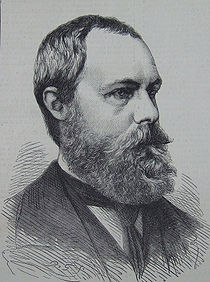 To seize this opportunity the Orléanists offered a so-called fusion, whereby King Louis Philippe's grandson and heir, Philippe, comte de Paris
, accepted the childless Legitimist pretender's right to the throne, thereby potentially uniting French royalists in support of a single candidate. But the refusal of the last male of Louis XIV's direct line, the comte de Chambord
, to accept the tricolore
as France's flag under a restored monarchy proved an insurmountable obstacle to his candidacy.
Although the Orléans had reign
ed under the tricolor without objection, this time the Orléans princes did not abandon the cause of the head of their dynasty by seeking to offer themselves as alternative candidates; by the time Chambord died and the Orléans felt free to re-assert their claim to the throne, the political moment had passed, and France had become resolutely republican. France has had neither a Bourbon nor Orléans monarch since 1848.
Louis-Philippe and his family lived in England until his death in Claremont
, Surrey
. Like his mother, he and his wife, Amelia (1782–1866), were buried at the Chapelle royale de Dreux. In 1883, the comte de Chambord died without children. As a result, some Legitimists recognized the House of Orléans as the heirs to the throne of France.
However, a portion of the Legitimists, still resentful of the revolutionary credentials of the House of Orléans, transferred their loyalties to the Carlist heirs of the Spanish Bourbons, who represented the most senior branch of the Capetians
even though they had renounced their claim to the French throne to obtain Spain in 1713.
Thus to their supporters, not only are the heads of the House of Orléans the rightful heirs to the constitutionalist title of "King of the French", but also to the Legitimist title of "King of France and Navarre".
(born June 14, 1933). He is a claimant
to the French throne. If he were king, he would be Henry VII. For the Orléanists, he is the heir of King Louis Philippe of the French; for Legitimists
, the heir of Henri, comte de Chambord
, and so of Charles X of France
.
Present family
On July 5, 1957, he married Duchess Marie-Thérèse of Württemberg
(born 1934), a descendant of King Louis Philippe. He received the title comte de Clermont. Five children were born from this union, before the marriage ended in divorce.
Under the regent, Philippe II, d'Orléans:
Under Louis d'Orléans:
Under Louis Philippe I d'Orléans:
Because the Dukes of Orléans were also the premier princes du sang, the kingdom's treasury paid for their personal household of 265 staff and officers. Along with towns and buildings, the family derived income from its forests on the ducal lands at Orléans, Beaugency, Montargis, Romorantin, Dourdan, Bruadan, Villers-Cotterêts (at which they had a château), Laigne, Coucy, La Fère, Marle, and Saint-Gobin.
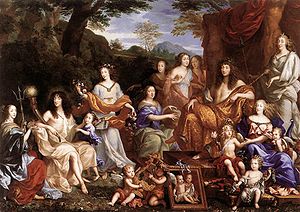
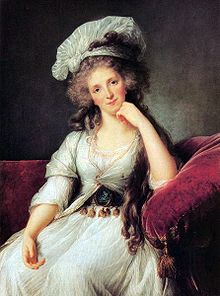 Upon the death of the Duc d'Orléans's father-in-law in 1793 (the hugely wealthy duc de Penthièvre
), the House of Orléans became the richest in France. They received vast rents on lands all over France and owned various châteaux. Along with their government and because the family were known as the Premier Princes du Sang, they often received fortunes and titles from inheritances:
Châteaux
The family also later acquired many other châteaux around the country. Among these were the:
During the July Monarchy
, the family acquired the:
and his wife had apartments at the Palace of Versailles
as did all other members of the House of Bourbon
.
Before the court was officially moved to Versailles, and before the birth of his nephew, the king's son, the Dauphin Louis de France, in 1661, the Duc d'Orléans' apartments were where the Dauphin's now are located. The apartments looked over the Parterres du Midi of the south and were directly under the Grand Appartement de la reine.
After the dauphin's birth, the Orléans had to move to the north wing and occupied large quarters there. These looked out onto the Parterres du Midi of the south. The family also had apartments where the modern day Galerie des batailles are. This area was used by the duc himself, his second wife, Elizabeth Charlotte of the Palatinate
, his son, Philippe II
and daughter-in-law, Françoise-Marie de Bourbon
.
The apartments of the family were later moved to the bottom floor of the north wing, opposite the Chapelle Royal de Versailles
this time looking over the Parterres du Midi of the north. The family had been moved in order to accommodate three of Louis XV's daughters, Madame Adélaïde, Madame Victoire and Madame Élisabeth. The family remained there till the French Revolution
.
the eldest son
of Louis Charles Philippe Raphael d'Orléans
(son of Louis Philippe of France) married Isabel, Princess Imperial of Brazil
, eldest daughter and heiress (Princess Imperial) of Emperor
Dom
Pedro II of Brazil
.
The Royal house of Braganza
was the ruling house of Portugal. It was from that marriage the royal house of Orléans-Braganza was formed. Today they are the present claimants to the extinct throne of the old Empire of Brazil.
Orléans
-Prehistory and Roman:Cenabum was a Gallic stronghold, one of the principal towns of the Carnutes tribe where the Druids held their annual assembly. It was conquered and destroyed by Julius Caesar in 52 BC, then rebuilt under the Roman Empire...
is the name used by several branches of the Royal House
Royal House
A royal house or royal dynasty consists of at least one, but usually more monarchs who are related to one another, as well as their non-reigning descendants and spouses. Monarchs of the same realm who are not related to one another are usually deemed to belong to different houses, and each house is...
of France, all descended in the legitimate male line from the dynasty
Dynasty
A dynasty is a sequence of rulers considered members of the same family. Historians traditionally consider many sovereign states' history within a framework of successive dynasties, e.g., China, Ancient Egypt and the Persian Empire...
's founder, Hugh Capet. It became a tradition during France's ancien régime for the duchy of Orléans to be granted as an appanage
Appanage
An apanage or appanage or is the grant of an estate, titles, offices, or other things of value to the younger male children of a sovereign, who would otherwise have no inheritance under the system of primogeniture...
to a younger (usually the second surviving) son of the king. While each of the Orléans branches thus descended from a junior prince, they were always among the king's nearest relations in the male line, sometimes aspiring and sometimes succeeding to the throne itself.
The last cadet branch
Cadet branch
Cadet branch is a term in genealogy to describe the lineage of the descendants of the younger sons of a monarch or patriarch. In the ruling dynasties and noble families of much of Europe and Asia, the family's major assets – titles, realms, fiefs, property and income – have...
to hold the ducal
Duke
A duke or duchess is a member of the nobility, historically of highest rank below the monarch, and historically controlling a duchy...
title descended from Henri de Bourbon, duc de Vendôme
Henry IV of France
Henry IV , Henri-Quatre, was King of France from 1589 to 1610 and King of Navarre from 1572 to 1610. He was the first monarch of the Bourbon branch of the Capetian dynasty in France....
(Henry IV of France), who became king (nominally) in 1589, and is sometimes known as the "House of Bourbon-Orléans" (Maison de Bourbon-Orléans). From 1709 until the French Revolution
French Revolution
The French Revolution , sometimes distinguished as the 'Great French Revolution' , was a period of radical social and political upheaval in France and Europe. The absolute monarchy that had ruled France for centuries collapsed in three years...
the Orléans dukes were next in the order of succession
Order of succession
An order of succession is a formula or algorithm that determines who inherits an office upon the death, resignation, or removal of its current occupant.-Monarchies and nobility:...
to the French throne after members of the seniormost branch of the House of Bourbon
House of Bourbon
The House of Bourbon is a European royal house, a branch of the Capetian dynasty . Bourbon kings first ruled Navarre and France in the 16th century. By the 18th century, members of the Bourbon dynasty also held thrones in Spain, Naples, Sicily, and Parma...
, descended from Louis XIV
Louis XIV of France
Louis XIV , known as Louis the Great or the Sun King , was a Bourbon monarch who ruled as King of France and Navarre. His reign, from 1643 to his death in 1715, began at the age of four and lasted seventy-two years, three months, and eighteen days...
. Louis XIII
Louis XIII of France
Louis XIII was a Bourbon monarch who ruled as King of France and of Navarre from 1610 to 1643.Louis was only eight years old when he succeeded his father. His mother, Marie de Medici, acted as regent during Louis' minority...
's younger brother and younger son were granted the dukedom successively in 1626 and 1660, and since they had contemporaneous living descendants, there were actually two Bourbon-Orléans branches at court
Court
A court is a form of tribunal, often a governmental institution, with the authority to adjudicate legal disputes between parties and carry out the administration of justice in civil, criminal, and administrative matters in accordance with the rule of law...
during the reign of Louis XIV.
The elder of these branches consisted of Gaston, duc d'Orléans, younger son of Henry IV, and the four daughters of his two marriages. The junior and final House of Orléans descended from Philippe I, Duke of Orléans
Philippe I, Duke of Orléans
Philippe of France was the youngest son of Louis XIII of France and his queen consort Anne of Austria. His older brother was the famous Louis XIV, le roi soleil. Styled Duke of Anjou from birth, Philippe became Duke of Orléans upon the death of his uncle Gaston, Duke of Orléans...
, Louis XIV's younger brother (who, as such, was known at court simply as Monsieur
Prince du Sang
A prince of the blood was a person who was legitimately descended in the male line from the monarch of a country. In France, the rank of prince du sang was the highest held at court after the immediate family of the king during the ancien régime and the Bourbon Restoration...
). Although Louis XIV's direct descendants retained the throne, his brother Philippe's descendants flourished until the end of the French monarchy, held the crown from 1830 to 1848, and are still extant as pretender
Pretender
A pretender is one who claims entitlement to an unavailable position of honour or rank. Most often it refers to a former monarch, or descendant thereof, whose throne is occupied or claimed by a rival, or has been abolished....
s.
The dukes
Upon the death of Gaston of Orléans, the appanage of the DuchyDuchy
A duchy is a territory, fief, or domain ruled by a duke or duchess.Some duchies were sovereign in areas that would become unified realms only during the Modern era . In contrast, others were subordinate districts of those kingdoms that unified either partially or completely during the Medieval era...
of Orléans
Orléans
-Prehistory and Roman:Cenabum was a Gallic stronghold, one of the principal towns of the Carnutes tribe where the Druids held their annual assembly. It was conquered and destroyed by Julius Caesar in 52 BC, then rebuilt under the Roman Empire...
reverted back to the crown. The appanage was given to Philippe
Philippe I, Duke of Orléans
Philippe of France was the youngest son of Louis XIII of France and his queen consort Anne of Austria. His older brother was the famous Louis XIV, le roi soleil. Styled Duke of Anjou from birth, Philippe became Duke of Orléans upon the death of his uncle Gaston, Duke of Orléans...
, the brother of Louis XIV of France
Louis XIV of France
Louis XIV , known as Louis the Great or the Sun King , was a Bourbon monarch who ruled as King of France and Navarre. His reign, from 1643 to his death in 1715, began at the age of four and lasted seventy-two years, three months, and eighteen days...
.
It was Philippe and his second wife, the famous court writer Elizabeth Charlotte of the Palatinate
Elizabeth Charlotte of the Palatinate
Elizabeth Charlotte, Princess Palatine was a German princess and the wife of Philippe I, Duke of Orléans, younger brother of Louis XIV of France. Her vast correspondence provides a detailed account of the personalities and activities at the court of her brother-in-law, Louis XIV...
, who founded the modern House of Orléans - their surviving son being the regent
Regent
A regent, from the Latin regens "one who reigns", is a person selected to act as head of state because the ruler is a minor, not present, or debilitated. Currently there are only two ruling Regencies in the world, sovereign Liechtenstein and the Malaysian constitutive state of Terengganu...
of France for the young Louis XV
Louis XV of France
Louis XV was a Bourbon monarch who ruled as King of France and of Navarre from 1 September 1715 until his death. He succeeded his great-grandfather at the age of five, his first cousin Philippe II, Duke of Orléans, served as Regent of the kingdom until Louis's majority in 1723...
.
As a fils de France
Fils de France
Fils de France was the style and rank held by the sons of the kings and dauphins of France. A daughter was known as a fille de France .The children of the dauphin, who was the king's heir apparent, were accorded the same style and status as if they were the king's children instead of his...
, Philippe's surname
Surname
A surname is a name added to a given name and is part of a personal name. In many cases, a surname is a family name. Many dictionaries define "surname" as a synonym of "family name"...
was "de France". Upon his death, his son inherited the Orléans dukedom, but as only a petit-fils de France his surname (and that of his descendants) was taken from his father's main title, and was thus d'Orléans. The first two dukes, as son and patrilineal
Patrilineality
Patrilineality is a system in which one belongs to one's father's lineage. It generally involves the inheritance of property, names or titles through the male line as well....
grandson, respectively, of a French king, were entitled to be addressed as Royal Highness
Royal Highness
Royal Highness is a style ; plural Royal Highnesses...
. But Philippe I was primarily known as Monsieur
Prince du Sang
A prince of the blood was a person who was legitimately descended in the male line from the monarch of a country. In France, the rank of prince du sang was the highest held at court after the immediate family of the king during the ancien régime and the Bourbon Restoration...
, the style
Style (manner of address)
A style of office, or honorific, is a legal, official, or recognized title. A style, by tradition or law, precedes a reference to a person who holds a post or political office, and is sometimes used to refer to the office itself. An honorific can also be awarded to an individual in a personal...
reserved for the king's eldest brother at the French court. Philippe II was succeeded as duke by his son Louis d'Orléans, who was entitled to the style of Serene Highness
Serene Highness
His/Her Serene Highness is a style used today by the reigning families of Liechtenstein and Monaco. It also preceded the princely titles of members of some German ruling and mediatised dynasties as well as some non-ruling but princely German noble families until 1918...
as a prince du sang
Prince du Sang
A prince of the blood was a person who was legitimately descended in the male line from the monarch of a country. In France, the rank of prince du sang was the highest held at court after the immediate family of the king during the ancien régime and the Bourbon Restoration...
. After 1709, the heads of the Orléans branch of the House of Bourbon ranked as the premier princes du sang - this meant that the dukes could be addressed as Monsieur le Prince (a style they did not, however, use) and that, should there be no heir to the crown of France in the king's immediate family, then the Orléans family would ascend the throne by right.
| Name | | Portrait | Lifespan | | Parents |
|---|---|---|---|
| Philippe I Philippe I, Duke of Orléans Philippe of France was the youngest son of Louis XIII of France and his queen consort Anne of Austria. His older brother was the famous Louis XIV, le roi soleil. Styled Duke of Anjou from birth, Philippe became Duke of Orléans upon the death of his uncle Gaston, Duke of Orléans... 1660–1701 |
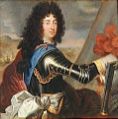 |
September 21, 1640 – June 8, 1701 |
Louis XIII of France Louis XIII of France Louis XIII was a Bourbon monarch who ruled as King of France and of Navarre from 1610 to 1643.Louis was only eight years old when he succeeded his father. His mother, Marie de Medici, acted as regent during Louis' minority... Anne of Austria Anne of Austria Anne of Austria was Queen consort of France and Navarre, regent for her son, Louis XIV of France, and a Spanish Infanta by birth... |
| Philippe II Philippe II, Duke of Orléans Philippe d'Orléans was a member of the royal family of France and served as Regent of the Kingdom from 1715 to 1723. Born at his father's palace at Saint-Cloud, he was known from birth under the title of Duke of Chartres... 1701–1723 |
.jpg) |
August 2, 1674 – December 2, 1723 |
Philippe I, Duke of Orléans Philippe I, Duke of Orléans Philippe of France was the youngest son of Louis XIII of France and his queen consort Anne of Austria. His older brother was the famous Louis XIV, le roi soleil. Styled Duke of Anjou from birth, Philippe became Duke of Orléans upon the death of his uncle Gaston, Duke of Orléans... Elizabeth Charlotte of the Palatinate Elizabeth Charlotte of the Palatinate Elizabeth Charlotte, Princess Palatine was a German princess and the wife of Philippe I, Duke of Orléans, younger brother of Louis XIV of France. Her vast correspondence provides a detailed account of the personalities and activities at the court of her brother-in-law, Louis XIV... |
| Louis 1723–1752 |
 |
August 4, 1703 – February 4, 1752 |
Philippe II, Duke of Orléans Philippe II, Duke of Orléans Philippe d'Orléans was a member of the royal family of France and served as Regent of the Kingdom from 1715 to 1723. Born at his father's palace at Saint-Cloud, he was known from birth under the title of Duke of Chartres... Françoise-Marie de Bourbon Françoise-Marie de Bourbon Françoise Marie de Bourbon, Légitimée de France was the youngest legitimised daughter of Louis XIV of France and his maîtresse-en-titre, Françoise-Athénaïs, marquise de Montespan. Originally known as the second Mademoiselle de Blois, that style eventually gave way to the name Françoise Marie de... |
| Louis Philippe I Louis Philippe I, Duke of Orléans Louis Philippe d'Orléans known as le Gros , was a French nobleman, a member of a cadet branch of the House of Bourbon, the dynasty then ruling France. The First Prince of the Blood after 1752, he was the most senior male at the French court after the immediate royal family. He was the father of... 1752–1785 |
 |
May 12, 1725 – November 18, 1785 |
Louis, Duke of Orléans Margravine Auguste Marie Johanna of Baden-Baden Margravine Auguste Marie Johanna of Baden-Baden Johanna of Baden-Baden was born a Margravine of Baden-Baden, she was the Duchess of Orléans by marriage to Louis d'Orléans, Duke of Orléans. Her husband was a grandson of her father's former enemy Louis XIV of France. Known in France as Jeanne de Bade, she died in childbirth... |
| Louis Philippe II Louis Philippe II, Duke of Orléans Louis Philippe Joseph d'Orléans commonly known as Philippe, was a member of a cadet branch of the House of Bourbon, the ruling dynasty of France. He actively supported the French Revolution and adopted the name Philippe Égalité, but was nonetheless guillotined during the Reign of Terror... 1785–1793 |
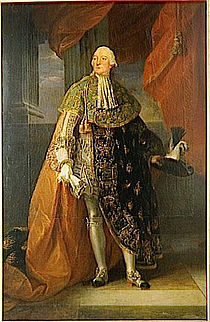 |
April 13, 1747 – November 6, 1793 |
Louis Philippe I, Duke of Orléans Louis Philippe I, Duke of Orléans Louis Philippe d'Orléans known as le Gros , was a French nobleman, a member of a cadet branch of the House of Bourbon, the dynasty then ruling France. The First Prince of the Blood after 1752, he was the most senior male at the French court after the immediate royal family. He was the father of... Louise Henriette de Bourbon |
| Louis Philippe III Louis-Philippe of France Louis Philippe I was King of the French from 1830 to 1848 in what was known as the July Monarchy. His father was a duke who supported the French Revolution but was nevertheless guillotined. Louis Philippe fled France as a young man and spent 21 years in exile, including considerable time in the... 1793–1830 |
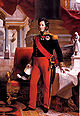 |
6 October 1773 – August 26, 1850 |
Louis Philippe II, Duke of Orléans Louis Philippe II, Duke of Orléans Louis Philippe Joseph d'Orléans commonly known as Philippe, was a member of a cadet branch of the House of Bourbon, the ruling dynasty of France. He actively supported the French Revolution and adopted the name Philippe Égalité, but was nonetheless guillotined during the Reign of Terror... Louise Marie Adélaïde of Bourbon |
| Ferdinand Philippe 1830–1842 |
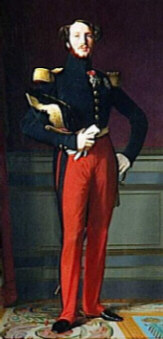 |
September 3, 1810 – July 13, 1842 |
Louis Philippe III, Duke of Orléans Louis-Philippe of France Louis Philippe I was King of the French from 1830 to 1848 in what was known as the July Monarchy. His father was a duke who supported the French Revolution but was nevertheless guillotined. Louis Philippe fled France as a young man and spent 21 years in exile, including considerable time in the... Maria Amalia Teresa of the Two Sicilies Maria Amalia of the Two Sicilies Maria Amalia of Naples and Sicily sometimes known as Maria Amalia of the Two Sicilies was a Princess of Naples and Sicily and later the Queen of the French from 1830–1848, consort to Louis Philippe I.... |
| Philippe Philippe, Comte de Paris Philippe d'Orléans, Count of Paris was the grandson of Louis Philippe I, King of the French. He was a claimant to the French throne from 1848 until his death.-Early life:... 1842–1869 (did not use the title) |
|
24 August 1838 – 8 September 1894 |
Ferdinand Philippe, Duke of Orléans Helen of Mecklenburg-Schwerin Helen of Mecklenburg-Schwerin Helene of Mecklenburg-Schwerin was a French Crown Princess after her marriage in 1837 to the eldest son of Louis Philippe I, Ferdinand Philippe of Orléans.... |
| Philippe 1869–1926 |
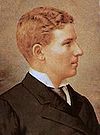 |
August 24, 1869 – March 28, 1926 |
Philippe, Count of Paris Philippe, Comte de Paris Philippe d'Orléans, Count of Paris was the grandson of Louis Philippe I, King of the French. He was a claimant to the French throne from 1848 until his death.-Early life:... Marie Isabelle of Orléans Princess Marie Isabelle of Orléans Marie Isabelle of Orléans was born an infanta of Spain and Princess of Orléans and was a Princess of Orléans and Countess of Paris by marriage.-Biography:She was born in Seville to Antoine d'Orléans and Infanta... |
Other Dukes
Members of the House of Orléans
- François Gaston Michel Marie of Orléans, Duke of Orléans (1935–1960) second son of Henri, comte de ParisHenri, comte de ParisHenri of Orléans, Count of Paris , was the Orléanist claimant to the throne of France from 1940 until his death.-Early life:...
(posthumous creation) - Jacques Jean Jaroslav Marie of Orléans, Duke of Orléans (b. 1941) fourth son of Henri, comte de ParisHenri, comte de ParisHenri of Orléans, Count of Paris , was the Orléanist claimant to the throne of France from 1940 until his death.-Early life:...
Under Louis XIV
Gaston de FranceGaston, Duke of Orléans
Gaston of France, , also known as Gaston d'Orléans, was the third son of King Henry IV of France and his wife Marie de Medici. As a son of the king, he was born a Fils de France. He later acquired the title Duke of Orléans, by which he was generally known during his adulthood...
became the Duke of Orléans in 1626, and held that title until his death in 1660. His nephew, Louis XIV, then gave Gaston's appanages to his younger brother, who thus became Philippe I, Duke of Orléans
Philippe I, Duke of Orléans
Philippe of France was the youngest son of Louis XIII of France and his queen consort Anne of Austria. His older brother was the famous Louis XIV, le roi soleil. Styled Duke of Anjou from birth, Philippe became Duke of Orléans upon the death of his uncle Gaston, Duke of Orléans...
. At court, Gaston was known as Le Grand Monsieur, and Philippe was called Le Petit Monsieur while both princes were alive.
Before then, Philippe had been known as the duc d'Anjou. Besides receiving the appanage of Orléans
Orléans
-Prehistory and Roman:Cenabum was a Gallic stronghold, one of the principal towns of the Carnutes tribe where the Druids held their annual assembly. It was conquered and destroyed by Julius Caesar in 52 BC, then rebuilt under the Roman Empire...
, he also received the duchies of Valois and Chartres
Chartres
Chartres is a commune and capital of the Eure-et-Loir department in northern France. It is located southwest of Paris.-Geography:Chartres is built on the left bank of the Eure River, on a hill crowned by its famous cathedral, the spires of which are a landmark in the surrounding country...
: Duc de Chartres became the courtesy title by which the heirs apparent of the Dukes of Orléans were known during their fathers' lifetimes. Until the birth of the king's son, the Dauphin Louis, the Duke of Orléans was the heir presumptive
Heir Presumptive
An heir presumptive or heiress presumptive is the person provisionally scheduled to inherit a throne, peerage, or other hereditary honour, but whose position can be displaced by the birth of an heir or heiress apparent or of a new heir presumptive with a better claim to the position in question...
to the crown. He was to maintain a high position at court till his death in 1701.
Prince du sang
In 1709, the 5th prince de CondéHenry III Jules de Bourbon, prince de Condé
Henri Jules de Bourbon, Prince of Condé was prince de Condé, from 1686 to his death. At the end of his life he suffered from clinical lycanthropy and was considered insane.-Biography:...
died. He was the premier prince du sang and head of the House of Bourbon-Condé. As a result of this death, the title of premier prince passed to the House of Orléans, as they were closer in blood to the throne of France. But since the two senior males of that line held higher rank as, respectively, fils de France and petit-fils de France, they did not make use of the title and had no need of its attached prerogative; a household and retinue
Retinue
A retinue is a body of persons "retained" in the service of a noble or royal personage, a suite of "retainers".-Etymology:...
maintained at the expense of the Crown.
The Orléans household was already large, as it held the staff of Philippe II d'Orléans and of his wife, as well as the staff of his widowed mother, the dowager Duchess
Elizabeth Charlotte of the Palatinate
Elizabeth Charlotte, Princess Palatine was a German princess and the wife of Philippe I, Duke of Orléans, younger brother of Louis XIV of France. Her vast correspondence provides a detailed account of the personalities and activities at the court of her brother-in-law, Louis XIV...
. This combined household, though not fully functional until 1723, contained almost 250 members including officers, courtiers, footmen, gardeners, and even barbers.
The Regency
On the death of Louis XIV in September 1715, the new king, Louis XVLouis XV of France
Louis XV was a Bourbon monarch who ruled as King of France and of Navarre from 1 September 1715 until his death. He succeeded his great-grandfather at the age of five, his first cousin Philippe II, Duke of Orléans, served as Regent of the kingdom until Louis's majority in 1723...
, was but five years old. The country was then governed by the new king's older relative Philippe II d'Orléans as the regent
Regent
A regent, from the Latin regens "one who reigns", is a person selected to act as head of state because the ruler is a minor, not present, or debilitated. Currently there are only two ruling Regencies in the world, sovereign Liechtenstein and the Malaysian constitutive state of Terengganu...
of France. This period in French history is known as the Regency (La Régence), and gave the House of Orléans the pre-eminent position and political role in France during the king's minority
Minor (law)
In law, a minor is a person under a certain age — the age of majority — which legally demarcates childhood from adulthood; the age depends upon jurisdiction and application, but is typically 18...
. The regent ruled France from his family residence in Paris, the Palais-Royal. He installed the young Louis XV in the Palais du Louvre
Palais du Louvre
The Louvre Palace , on the Right Bank of the Seine in Paris, is a former royal palace situated between the Tuileries Gardens and the church of Saint-Germain l'Auxerrois...
which was opposite the Palais-Royal.
In January 1723 Louis XV gained his majority and began to govern the country on his own. The young king moved the court back to Versailles
Versailles
Versailles , a city renowned for its château, the Palace of Versailles, was the de facto capital of the kingdom of France for over a century, from 1682 to 1789. It is now a wealthy suburb of Paris and remains an important administrative and judicial centre...
and in December, Philippe II died and his son, Louis d'Orléans succeeded him as 3rd duke and, more importantly, as France's heir presumptive. Nonetheless, since his rank by birth (as a great-grandson of a French king) was prince du sang, that of premier prince du sang constituted a higher style, of which he and his descendants henceforth made use.
Under Louis XV
Louis d'Orléans was in several ways his father's opposite, being retiring by nature and extremely devout. Although still in his twenties when widowed, he did not re-marry after his wife'sMargravine Auguste Marie Johanna of Baden-Baden
Johanna of Baden-Baden was born a Margravine of Baden-Baden, she was the Duchess of Orléans by marriage to Louis d'Orléans, Duke of Orléans. Her husband was a grandson of her father's former enemy Louis XIV of France. Known in France as Jeanne de Bade, she died in childbirth...
death, and is not known to have ever taken a mistress. He died in the Monastery of St. Geneviève
Sainte-Geneviève Abbey
The Abbey of St Genevieve was a French monastery in Paris, suppressed at the time of the French Revolution.-History:...
in Paris.
His son, Louis Philippe I, Duke of Orléans
Louis Philippe I, Duke of Orléans
Louis Philippe d'Orléans known as le Gros , was a French nobleman, a member of a cadet branch of the House of Bourbon, the dynasty then ruling France. The First Prince of the Blood after 1752, he was the most senior male at the French court after the immediate royal family. He was the father of...
, was the fourth of his line to hold that title. After having a distinguished military career, he decided to live quietly with his mistress (later, his morganatic
Morganatic marriage
In the context of European royalty, a morganatic marriage is a marriage between people of unequal social rank, which prevents the passage of the husband's titles and privileges to the wife and any children born of the marriage...
wife), the marquise de Montesson
Charlotte-Jeanne Béraud de la Haye de Riou, marquise de Montesson
Charlotte-Jeanne Béraud de La Haye de Riou was a mistress to Louis Philippe d'Orléans, duc d'Orléans, and ultimately, his wife; however, Louis XV would not allow her to become the duchesse. She wrote and acted in several plays...
, at the Château de Sainte-Assise.
Louis XVI
Louis Philippe I d'Orléans and his wife Louise Henriette de Bourbon had two children: the fifth duke, Louis Philippe II d'OrléansLouis Philippe II, Duke of Orléans
Louis Philippe Joseph d'Orléans commonly known as Philippe, was a member of a cadet branch of the House of Bourbon, the ruling dynasty of France. He actively supported the French Revolution and adopted the name Philippe Égalité, but was nonetheless guillotined during the Reign of Terror...
, known to history as Philippe Egalité, and Bathilde d'Orléans
Bathilde d'Orléans
Louise Marie Thérèse Bathilde d'Orléans, Princess of Condé , was a French princess. She was sister of Philippe Égalité, the mother of the executed duc d'Enghien and aunt of Louis-Philippe King of the French...
. As the duc de Chartres, Louis Philippe II, Duke of Orléans
Louis Philippe II, Duke of Orléans
Louis Philippe Joseph d'Orléans commonly known as Philippe, was a member of a cadet branch of the House of Bourbon, the ruling dynasty of France. He actively supported the French Revolution and adopted the name Philippe Égalité, but was nonetheless guillotined during the Reign of Terror...
married one of his cousins, Louise Marie Adélaïde de Bourbon
Louise Marie Adélaïde de Bourbon
Louise Marie Adélaïde de Bourbon, Duchess of Orléans, , was the daughter of Louis Jean Marie de Bourbon, Duke of Penthièvre and of Princess Maria Theresa Felicitas of Modena. At the death of her brother, Louis Alexandre de Bourbon, prince de Lamballe, she became the wealthiest heiress in France...
. She was the sole heiress of the House of Bourbon-Penthièvre
Bourbon-Penthièvre
The House of Bourbon-Penthièvre was an illegitimate branch of the House of Bourbon, thus descending from the Capetian dynasty. It was founded by the duc de Penthièvre , the only child and heir of the comte de Toulouse, the youngest illegitimate son of Louis XIV of France and the marquise de...
, which had accumulated vast wealth bestowed, despite their bar sinister, on the princes légitimés by their father, Louis XIV. The duchesse de Chartres had a dowry of six million livres, the modern equivalent of almost £20 million, and an annual allowance of over 500,000 livres, the modern equivalent of almost £1.7 million per year. Upon the death of her father she inherited the remainder of the Bourbon-Penthièvre revenues and château
Château
A château is a manor house or residence of the lord of the manor or a country house of nobility or gentry, with or without fortifications, originally—and still most frequently—in French-speaking regions...
x.
Louis Philippe II was given the surname Egalité ("Equality") when French titles of nobility were abolished in 1790. His wife outlived him by almost thirty years.
Louise Marie Thérèse Bathilde d'Orléans married Louis Henry II, Prince of Condé
Louis Henry II, Prince of Condé
Louis Henri de Bourbon was the Prince of Condé from 1818 to his death.-Life:He was the only son of Louis Joseph, Prince of Condé and his wife, Charlotte de Rohan....
the last of his house, and was the mother of the duc d'Enghien, who was executed by Napoleon
Napoleon I of France
Napoleon Bonaparte was a French military and political leader during the latter stages of the French Revolution.As Napoleon I, he was Emperor of the French from 1804 to 1815...
. She died in 1822, the same year as her sister-in-law the duchesse d'Orléans
Louise Marie Adélaïde de Bourbon
Louise Marie Adélaïde de Bourbon, Duchess of Orléans, , was the daughter of Louis Jean Marie de Bourbon, Duke of Penthièvre and of Princess Maria Theresa Felicitas of Modena. At the death of her brother, Louis Alexandre de Bourbon, prince de Lamballe, she became the wealthiest heiress in France...
. They were both buried in the Chapelle royale de Dreux
Chapelle royale de Dreux
The Chapelle royale de Dreux, situated in Dreux, France, is a Chapel and burial site of the Royal House of Orléans. The House of Orléans was founded by Philippe de France, duc d'Orléans - the younger brother of Louis XIV of France...
.
Revolution
At the time of the French RevolutionFrench Revolution
The French Revolution , sometimes distinguished as the 'Great French Revolution' , was a period of radical social and political upheaval in France and Europe. The absolute monarchy that had ruled France for centuries collapsed in three years...
, Philippe Egalité, was the only person of royal blood to actively support the revolution.
He went so far as to vote for the execution of his cousin, King Louis XVI
Louis XVI of France
Louis XVI was a Bourbon monarch who ruled as King of France and Navarre until 1791, and then as King of the French from 1791 to 1792, before being executed in 1793....
, an act which earned him popularity among the revolutionaries, and the undying hostility of many French monarchists. He remained in prison until October, the beginning of the Reign of Terror
Reign of Terror
The Reign of Terror , also known simply as The Terror , was a period of violence that occurred after the onset of the French Revolution, incited by conflict between rival political factions, the Girondins and the Jacobins, and marked by mass executions of "enemies of...
. He was shortlisted for a trial on October 3, and effectively tried and guillotine
Guillotine
The guillotine is a device used for carrying out :executions by decapitation. It consists of a tall upright frame from which an angled blade is suspended. This blade is raised with a rope and then allowed to drop, severing the head from the body...
d in the space of one day, on the orders of Maximilien Robespierre
Maximilien Robespierre
Maximilien François Marie Isidore de Robespierre is one of the best-known and most influential figures of the French Revolution. He largely dominated the Committee of Public Safety and was instrumental in the period of the Revolution commonly known as the Reign of Terror, which ended with his...
.
Most of the Orléans family were forced to flee. The new duc d'Orléans had fled to Austria several months previously, triggering the arrest of his father. His brother, the duc de Montpensier, would die in England, and his sister fled to Switzerland after being imprisoned for awhile. The youngest brother, Louis-Charles, Count of Beaujolais, was thrown into a prison in the south of France (Fort-Saint-Jean in Marseille
Marseille
Marseille , known in antiquity as Massalia , is the second largest city in France, after Paris, with a population of 852,395 within its administrative limits on a land area of . The urban area of Marseille extends beyond the city limits with a population of over 1,420,000 on an area of...
) in 1793, but later escaped to the United States. He too died in exile. Of the Orléans, only the widow of Philippe Egalité was able to remain in France unhindered until, in 1797 she, too, was banished to Spain along with the few remaining Bourbons who still lived in France.
In 1814 during the Bourbon Restoration
Bourbon Restoration
The Bourbon Restoration is the name given to the period following the successive events of the French Revolution , the end of the First Republic , and then the forcible end of the First French Empire under Napoleon – when a coalition of European powers restored by arms the monarchy to the...
, the three remaining members of the family, the duc d'Orléans, his mother and sister, returned to Paris. The family's properties and titles were returned to them by Louis XVIII
Louis XVIII of France
Louis XVIII , known as "the Unavoidable", was King of France and of Navarre from 1814 to 1824, omitting the Hundred Days in 1815...
.
July Monarchy
In 1830, following the French July RevolutionJuly Revolution
The French Revolution of 1830, also known as the July Revolution or in French, saw the overthrow of King Charles X of France, the French Bourbon monarch, and the ascent of his cousin Louis-Philippe, Duke of Orléans, who himself, after 18 precarious years on the throne, would in turn be overthrown...
, the House of Orléans became the ruling house when the monarch of the elder restored Bourbon line, Charles X
Charles X of France
Charles X was known for most of his life as the Comte d'Artois before he reigned as King of France and of Navarre from 16 September 1824 until 2 August 1830. A younger brother to Kings Louis XVI and Louis XVIII, he supported the latter in exile and eventually succeeded him...
, was replaced by the 6th duke, Louis Philippe III d'Orléans, son of Philippe Egalité. Louis Philippe ruled as a constitutional monarch
Constitutional monarchy
Constitutional monarchy is a form of government in which a monarch acts as head of state within the parameters of a constitution, whether it be a written, uncodified or blended constitution...
, and as such was called King of the French, rather than "of France". His reign lasted until the Revolution of 1848, when he abdicated and fled to England.
Even after his ouster, an Orléanist
Orléanist
The Orléanists were a French right-wing/center-right party which arose out of the French Revolution. It governed France 1830-1848 in the "July Monarchy" of king Louis Philippe. It is generally seen as a transitional period dominated by the bourgeoisie and the conservative Orleanist doctrine in...
faction remained active, supporting a return of the House of Orléans to power. Legitimist monarchists however continued to uphold the rights of the elder line of Bourbons, who came close to regaining the throne after the fall of the Third Republic
French Third Republic
The French Third Republic was the republican government of France from 1870, when the Second French Empire collapsed due to the French defeat in the Franco-Prussian War, to 1940, when France was overrun by Nazi Germany during World War II, resulting in the German and Italian occupations of France...
. In the early 1870s, a majority of deputies in the National Assembly were monarchists, as was the nation's president, MacMahon. Thus, it was widely expected that the old dynasty would be invited to re-mount the throne, in the person of either the Bourbon or the Orléans claimant.
Philippe, Comte de Paris
Philippe d'Orléans, Count of Paris was the grandson of Louis Philippe I, King of the French. He was a claimant to the French throne from 1848 until his death.-Early life:...
, accepted the childless Legitimist pretender's right to the throne, thereby potentially uniting French royalists in support of a single candidate. But the refusal of the last male of Louis XIV's direct line, the comte de Chambord
Henri, comte de Chambord
Henri, comte de Chambord was disputedly King of France from 2 to 9 August 1830 as Henry V, although he was never officially proclaimed as such...
, to accept the tricolore
Flag of France
The national flag of France is a tricolour featuring three vertical bands coloured royal blue , white, and red...
as France's flag under a restored monarchy proved an insurmountable obstacle to his candidacy.
Although the Orléans had reign
Reign
A reign is the term used to describe the period of a person's or dynasty's occupation of the office of monarch of a nation or of a people . In most hereditary monarchies and some elective monarchies A reign is the term used to describe the period of a person's or dynasty's occupation of the office...
ed under the tricolor without objection, this time the Orléans princes did not abandon the cause of the head of their dynasty by seeking to offer themselves as alternative candidates; by the time Chambord died and the Orléans felt free to re-assert their claim to the throne, the political moment had passed, and France had become resolutely republican. France has had neither a Bourbon nor Orléans monarch since 1848.
Louis-Philippe and his family lived in England until his death in Claremont
Claremont (country house)
Claremont, also known historically as 'Clermont', is an 18th-century Palladian mansion situated less than a mile south of Esher in Surrey, England...
, Surrey
Surrey
Surrey is a county in the South East of England and is one of the Home Counties. The county borders Greater London, Kent, East Sussex, West Sussex, Hampshire and Berkshire. The historic county town is Guildford. Surrey County Council sits at Kingston upon Thames, although this has been part of...
. Like his mother, he and his wife, Amelia (1782–1866), were buried at the Chapelle royale de Dreux. In 1883, the comte de Chambord died without children. As a result, some Legitimists recognized the House of Orléans as the heirs to the throne of France.
However, a portion of the Legitimists, still resentful of the revolutionary credentials of the House of Orléans, transferred their loyalties to the Carlist heirs of the Spanish Bourbons, who represented the most senior branch of the Capetians
House of Capet
The House of Capet, or The Direct Capetian Dynasty, , also called The House of France , or simply the Capets, which ruled the Kingdom of France from 987 to 1328, was the most senior line of the Capetian dynasty – itself a derivative dynasty from the Robertians. As rulers of France, the dynasty...
even though they had renounced their claim to the French throne to obtain Spain in 1713.
Thus to their supporters, not only are the heads of the House of Orléans the rightful heirs to the constitutionalist title of "King of the French", but also to the Legitimist title of "King of France and Navarre".
Contemporary family
The head of the house today is Henri, comte de Paris, duc de FranceHenri, comte de Paris, duc de France
Henri d'Orléans is a member of the former French ruling dynasty of the House of Bourbon, and one of the current pretenders to the defunct French crown. A descendant of King Louis-Philippe , he is the current head of the Orléans line of the Bourbon dynasty...
(born June 14, 1933). He is a claimant
Pretender
A pretender is one who claims entitlement to an unavailable position of honour or rank. Most often it refers to a former monarch, or descendant thereof, whose throne is occupied or claimed by a rival, or has been abolished....
to the French throne. If he were king, he would be Henry VII. For the Orléanists, he is the heir of King Louis Philippe of the French; for Legitimists
Legitimists
Legitimists are royalists in France who adhere to the rights of dynastic succession of the descendants of the elder branch of the Bourbon dynasty, which was overthrown in the 1830 July Revolution. They reject the claim of the July Monarchy of 1830–1848, whose kings were members of the junior...
, the heir of Henri, comte de Chambord
Henri, comte de Chambord
Henri, comte de Chambord was disputedly King of France from 2 to 9 August 1830 as Henry V, although he was never officially proclaimed as such...
, and so of Charles X of France
Charles X of France
Charles X was known for most of his life as the Comte d'Artois before he reigned as King of France and of Navarre from 16 September 1824 until 2 August 1830. A younger brother to Kings Louis XVI and Louis XVIII, he supported the latter in exile and eventually succeeded him...
.
Present family
On July 5, 1957, he married Duchess Marie-Thérèse of Württemberg
Württemberg
Württemberg , formerly known as Wirtemberg or Wurtemberg, is an area and a former state in southwestern Germany, including parts of the regions Swabia and Franconia....
(born 1934), a descendant of King Louis Philippe. He received the title comte de Clermont. Five children were born from this union, before the marriage ended in divorce.
- Princess Marie Isabelle Marguerite Anne Geneviève (born January 3, 1959, Boulogne sur Seine) married civilly at Dreux, July 22, 1989 and religiously in FriedrichshafenFriedrichshafenThis article is about a German town. For the Danish town, see Frederikshavn, and for the Finnish town, see Fredrikshamn .Friedrichshafen is a university city on the northern side of Lake Constance in Southern Germany, near the borders with Switzerland and Austria.It is the district capital of the...
, July 29, 1989 to Prince Gundakar of LiechtensteinPrince Alfred of LiechtensteinPrince Alfred Louis of Liechtenstein was the son of Prince Franz de Paula of Liechtenstein and Countess Julie Potocka , uncle and brother in law of Franz I of Liechtenstein.He was the 1,143rd Knight of the Order of the Golden Fleece in Austria in 1903.-Marriage and issue:On 26...
(born April 1, 1949, ViennaViennaVienna is the capital and largest city of the Republic of Austria and one of the nine states of Austria. Vienna is Austria's primary city, with a population of about 1.723 million , and is by far the largest city in Austria, as well as its cultural, economic, and political centre...
), and has issue - Prince François, comte de ClermontFrançois, comte de Clermont-References:* Philippe de Montjouvent, Le comte de Paris et sa descendance, Du Chaney Eds, Paris, 1998, ISBN 2913211003.* Georges Poisson, Les Orléans, une famille en quête d'un trône, Perrin, Paris, 1999 ISBN 226201583X....
(born February 7, 1961, Boulogne sur Seine), Count of Clermont, severely disabled (due to mother's toxoplasmosisToxoplasmosisToxoplasmosis is a parasitic disease caused by the protozoan Toxoplasma gondii. The parasite infects most genera of warm-blooded animals, including humans, but the primary host is the felid family. Animals are infected by eating infected meat, by ingestion of feces of a cat that has itself...
during pregnancy). - Princess Blanche Elisabeth Rose Marie of Orléans (born September 10, 1962, RavensburgRavensburgRavensburg is a town in Upper Swabia in Southern Germany, capital of the district of Ravensburg, Baden-Württemberg.Ravensburg was first mentioned in 1088. In the Middle Ages, it was an Imperial Free City and an important trading centre...
), severely disabled (due to the same cause as her elder brother). - Prince Jean, duc de VendômeJean, duc de VendômePrince Jean of Orléans, Dauphin of France, Duke of Vendôme , also named as Jean d’Orléans, is the second son of Prince Henri, Count of Paris, Duke of France, the Head of the House of Orléans, and Duchess Marie Therese of Württemberg...
(born May 19, 1965, Boulogne sur Seine), Duke of Vendôme and Dauphin de ViennoisDauphin de ViennoisThe Counts of Albon were minor French nobles in south-eastern France, in the Rhône Alps region.Under Guigues IV, Count of Albon, who was nicknamed le Dauphin or the Dolphin from the dolphin on his coat of arms, they took a new hereditary title, Dauphin of Viennois , named for the region around...
. - Prince Eudes, duc d'AngoulêmeEudes, duc d'AngoulêmePrince Eudes Thibaut Joseph Marie d'Orléans, Duke of Angoulême is the youngest son of Henri, Count of Paris, Duke of France, Orleanist claimant to the throne of France, and of Duchess Marie Therese of Württemberg.-Biography:...
(born March 18, 1968, Paris), Duke of Angoulême, married civilly at Dreux, June 19, 1999 and religiously in AntrainAntrainAntrain is a commune in the Ille-et-Vilaine department of Brittany in north-western France.-Demographics:Inhabitants of Antrain are called in French Antrenais....
, July 10, 1999 to Marie-Liesse Claude Anne Rolande de Rohan-Chabot (born June 29, 1969, Paris), with whom he has two children
-
-
- Princess Thérèse Isabelle Marie Eléonore (born April 23, 2001, CannesCannesCannes is one of the best-known cities of the French Riviera, a busy tourist destination and host of the annual Cannes Film Festival. It is a Commune of France in the Alpes-Maritimes department....
) - Prince Pierre of Orléans (born August 6, 2003, Cannes)
- Princess Thérèse Isabelle Marie Eléonore (born April 23, 2001, Cannes
-
Appanages
Throughout the years of the ancien régime, the Orléans household received vast riches in terms of wealth and property. Philippe de France obtained for the House of Bourbon-Orléans, during the rule of his brother Louis XIV, the following:- The ducal titles of OrléansOrléans-Prehistory and Roman:Cenabum was a Gallic stronghold, one of the principal towns of the Carnutes tribe where the Druids held their annual assembly. It was conquered and destroyed by Julius Caesar in 52 BC, then rebuilt under the Roman Empire...
, Valois, ChartresChartresChartres is a commune and capital of the Eure-et-Loir department in northern France. It is located southwest of Paris.-Geography:Chartres is built on the left bank of the Eure River, on a hill crowned by its famous cathedral, the spires of which are a landmark in the surrounding country...
and the lordship of Montargis. This occurred in 1660, shortly after the death of Gaston, Duke of OrléansGaston, Duke of OrléansGaston of France, , also known as Gaston d'Orléans, was the third son of King Henry IV of France and his wife Marie de Medici. As a son of the king, he was born a Fils de France. He later acquired the title Duke of Orléans, by which he was generally known during his adulthood...
, who had no male descendants. The family might also have obtained the county of BloisBloisBlois is the capital of Loir-et-Cher department in central France, situated on the banks of the lower river Loire between Orléans and Tours.-History:...
and with it the Château de BloisChâteau de BloisThe Royal Château de Blois is located in the Loir-et-Cher département in the Loire Valley, in France, in the center of the city of Blois. The residence of several French kings, it is also the place where Joan of Arc went in 1429 to be blessed by the Archbishop of Reims before departing with her...
, Château de ChambordChâteau de ChambordThe royal Château de Chambord at Chambord, Loir-et-Cher, France is one of the most recognizable châteaux in the world because of its very distinct French Renaissance architecture which blends traditional French medieval forms with classical Renaissance structures.The building, which was never...
and also the governorship of LanguedocLanguedocLanguedoc is a former province of France, now continued in the modern-day régions of Languedoc-Roussillon and Midi-Pyrénées in the south of France, and whose capital city was Toulouse, now in Midi-Pyrénées. It had an area of approximately 42,700 km² .-Geographical Extent:The traditional...
but Philippe de France was refused these by his brother. - In 1672 Louis XIV added the duchy of Nemours, the countships of Dourdan and Romorantin, and the marquisates of Coucy and Folembray.
- In 1692, Philippe's son and heir, Philippe II, married Françoise-Marie de BourbonFrançoise-Marie de BourbonFrançoise Marie de Bourbon, Légitimée de France was the youngest legitimised daughter of Louis XIV of France and his maîtresse-en-titre, Françoise-Athénaïs, marquise de Montespan. Originally known as the second Mademoiselle de Blois, that style eventually gave way to the name Françoise Marie de...
, a legitimatedLegitimacy (law)At common law, legitimacy is the status of a child who is born to parents who are legally married to one another; and of a child who is born shortly after the parents' divorce. In canon and in civil law, the offspring of putative marriages have been considered legitimate children...
daughter of Louis XIV by his liaison with Madame de MontespanFrançoise-Athénaïs, marquise de MontespanFrançoise Athénaïs de Rochechouart de Mortemart, marquise of Montespan , better known as Madame de Montespan, was the most celebrated maîtresse en titre of King Louis XIV of France, by whom she had seven children....
. In order to convince his brother to allow his son to marry one of his illegitimate daughters, the king gave him the Palais-Royal and promised him a dowry of two million livres. This palace became the Paris residence of the Dukes of Orléans until 1792. - The Orléans canal, built by Philippe de France, was used by the family to transport their timber from the Orléans forest to the capital where it was sold. The canal was nationalised during the revolution.
Under the regent, Philippe II, d'Orléans:
- He quietly increased his wife's annual allowance to 400,000 livres while he was in power. He also bought many buildings around Paris, although many were sold by his grandson. It was also he who bought the Regent diamondRegent DiamondThe Regent Diamond is a diamond which is on display in the Louvre. In 1698, a slave found the 410 carat uncut diamond in a Golkonda mine, more specifically Paritala-Kollur Mine in the state of Andhra Pradesh, India and concealed it inside of a large wound in his leg. An English sea captain stole...
(also known as Le Régent), which was kept at the LouvreLouvreThe Musée du Louvre – in English, the Louvre Museum or simply the Louvre – is one of the world's largest museums, the most visited art museum in the world and a historic monument. A central landmark of Paris, it is located on the Right Bank of the Seine in the 1st arrondissement...
in Paris.
Under Louis d'Orléans:
- In 1740, Louis XV added the Hôtel de Grand-Ferrare at FontainebleauFontainebleauFontainebleau is a commune in the metropolitan area of Paris, France. It is located south-southeast of the centre of Paris. Fontainebleau is a sub-prefecture of the Seine-et-Marne department, and it is the seat of the arrondissement of Fontainebleau...
- The king added the countship of SoissonsSoissonsSoissons is a commune in the Aisne department in Picardy in northern France, located on the Aisne River, about northeast of Paris. It is one of the most ancient towns of France, and is probably the ancient capital of the Suessiones...
in 1751 and the lordships of Laon, Crépy and Noyon. - By 1734, the family's income exceeded one million livres annually in rents due from the ducal domains of Orléans, Valois, Chartres, and the lordship of Montargis. Sales of timber from such vast tracts as the OrléansOrléans-Prehistory and Roman:Cenabum was a Gallic stronghold, one of the principal towns of the Carnutes tribe where the Druids held their annual assembly. It was conquered and destroyed by Julius Caesar in 52 BC, then rebuilt under the Roman Empire...
forest, added 500,000 livres.
Under Louis Philippe I d'Orléans:
- Rents came in from the towns of La Fère, Marle, Ham, Saint-Gobain, the Hôtel Duplessis-Châtillon and from the Ourcq canal.
Because the Dukes of Orléans were also the premier princes du sang, the kingdom's treasury paid for their personal household of 265 staff and officers. Along with towns and buildings, the family derived income from its forests on the ducal lands at Orléans, Beaugency, Montargis, Romorantin, Dourdan, Bruadan, Villers-Cotterêts (at which they had a château), Laigne, Coucy, La Fère, Marle, and Saint-Gobin.
- The original apanage was returned to the Orléans family in May, 1814 by Louis XVIII. It was united with the domain of the Crown upon Louis-Philippe d'Orléans' accession to the throne in 1830, at which time it was worth about 2.5 million francFrancThe franc is the name of several currency units, most notably the Swiss franc, still a major world currency today due to the prominence of Swiss financial institutions and the former currency of France, the French franc until the Euro was adopted in 1999...
s in annual income.
Finances and inheritances
Louis Jean Marie de Bourbon, duc de Penthièvre
Louis Jean Marie de Bourbon was the son of Louis Alexandre de Bourbon and his wife Marie Victoire de Noailles. He was also a grandson of Louis XIV of France and his mistress, Madame de Montespan. From birth he was known as the Duke of Penthièvre...
), the House of Orléans became the richest in France. They received vast rents on lands all over France and owned various châteaux. Along with their government and because the family were known as the Premier Princes du Sang, they often received fortunes and titles from inheritances:
- In 1693 after the death of Philippe's older cousin, La Grande Mademoiselle.
- From this the family received the ducal titles of Montpensier, Châtellerault, the marquessate of Mézières-en-Brenne, the counties of Mortain, of Bar-sur-Seine, the viscountcies of Auge and of Domfront.
- In addition, he also received the barony of Beaujolais, which was later raised to the rank of county, and the principality of Joinville.
- In 1769, Louise Marie Adélaïde de BourbonLouise Marie Adélaïde de BourbonLouise Marie Adélaïde de Bourbon, Duchess of Orléans, , was the daughter of Louis Jean Marie de Bourbon, Duke of Penthièvre and of Princess Maria Theresa Felicitas of Modena. At the death of her brother, Louis Alexandre de Bourbon, prince de Lamballe, she became the wealthiest heiress in France...
,the greatest heiress of her time as the sole surviving child of her father, the famously wealthy duc de Penthièvre, married her cousin, Louis Philippe II d'OrléansLouis Philippe II, Duke of OrléansLouis Philippe Joseph d'Orléans commonly known as Philippe, was a member of a cadet branch of the House of Bourbon, the ruling dynasty of France. He actively supported the French Revolution and adopted the name Philippe Égalité, but was nonetheless guillotined during the Reign of Terror...
, then duc de Chatres and later called Philippe Égalité.- After the wedding, the Duke of Orléans received his wife's dowryDowryA dowry is the money, goods, or estate that a woman brings forth to the marriage. It contrasts with bride price, which is paid to the bride's parents, and dower, which is property settled on the bride herself by the groom at the time of marriage. The same culture may simultaneously practice both...
of six million livres, the equivalent of around £20,000,000 today. - The Orléans couple then obtained an annual income of 240,000 livres. This later increased to 400,000 livres. The couple also received furniture as part of the marriage settlement.
- After the wedding, the Duke of Orléans received his wife's dowry
- The death of the duc de Penthièvre.
- In 1793 the wealthy duc de Penthièvre died and left his whole fortune and lands to his daughter Louise Marie Adélaïde. His previous heir had been his son, the prince de LamballeLouis-Alexandre de Bourbon, prince de LamballeLouis Alexandre de Bourbon was the son and heir of Louis Jean Marie de Bourbon, grandson of Louis XIV by the king's legitimised son, Louis Alexandre de Bourbon. He was known as the Prince of Lamballe from birth...
, who died young in 1768.
- In 1793 the wealthy duc de Penthièvre died and left his whole fortune and lands to his daughter Louise Marie Adélaïde. His previous heir had been his son, the prince de Lamballe
Châteaux
The family also later acquired many other châteaux around the country. Among these were the:
- Château de Bagnolet in Paris. This was bought in 1719 by the "Regent", Philippe II, Duke of Orléans but was sold in 1769 by his grandson.
- Château du RaincyChâteau du RaincyThe Château du Raincy was constructed between 1643 and 1650 by Jacques Bordier, indendant des finances, on the site of a Benedectine priory on the road from Paris to Meaux, in the present-day commune of Le Raincy in the Seine-Saint-Denis department of France.-The Château:Louis Le Vau was put in...
- bought in 1769 by the father of Philippe Égalité. - Château de Maison-Rouge at Gagny - bought in 1771 from the Marquis de Montfermeil, it was confiscated during the revolution.
- Château de Saint-Leu, in the Val-d'OiseVal-d'OiseVal-d'Oise is a French department, created in 1968 after the split of the Seine-et-Oise department and located in the Île-de-France region. In local slang, it is known as "quatre-vingt quinze" or "neuf cinq"...
area of France. This would later be bought by Louis BonaparteLouis BonaparteLouis Napoléon Bonaparte, Prince Français, Comte de Saint-Leu , King of Holland , was the fifth surviving child and the fourth surviving son of Carlo Buonaparte and Letizia Ramolino...
and his wife. - Louis Philippe II, Duke of OrléansLouis Philippe II, Duke of OrléansLouis Philippe Joseph d'Orléans commonly known as Philippe, was a member of a cadet branch of the House of Bourbon, the ruling dynasty of France. He actively supported the French Revolution and adopted the name Philippe Égalité, but was nonetheless guillotined during the Reign of Terror...
also acquired the land in the north east of Paris that became the Parc MonceauParc MonceauParc Monceau is a semi-public park situated in the 8th arrondissement of Paris, France, at the junction of Boulevard de Courcelles, Rue de Prony and Rue Georges Berger. At the main entrance is a rotunda. The park covers an area of 8.2 hectares ....
.
During the July Monarchy
July Monarchy
The July Monarchy , officially the Kingdom of France , was a period of liberal constitutional monarchy in France under King Louis-Philippe starting with the July Revolution of 1830 and ending with the Revolution of 1848...
, the family acquired the:
- Château de NeuillyChâteau de NeuillyThe château de Neuilly is a former château in Neuilly-sur-Seine, France. Its estate covered a vast 170 hectare park called "parc de Neuilly" which comprised all of Neuilly that is today to be found between avenue du Roule and the town of Levallois-Perret. The castle was built in 1751, and was...
- on the borders of 18th century Paris. - Château de Maison-Rouge in Gagny - this was given back to the family whilst the Bourbon-Orléans were on the throne of France.
- Château de la Ferté Vidame - this had also been confiscated during the French RevolutionFrench RevolutionThe French Revolution , sometimes distinguished as the 'Great French Revolution' , was a period of radical social and political upheaval in France and Europe. The absolute monarchy that had ruled France for centuries collapsed in three years...
and was the property of Louise Marie Adélaïde de Bourbon-Penthièvre. She had inherited it from her father. On her death it passed to her son, the future King Louis-Philippe of the FrenchLouis-Philippe of FranceLouis Philippe I was King of the French from 1830 to 1848 in what was known as the July Monarchy. His father was a duke who supported the French Revolution but was nevertheless guillotined. Louis Philippe fled France as a young man and spent 21 years in exile, including considerable time in the...
.
At Versailles
Also, along with these various residences around France, Philippe de FrancePhilippe I, Duke of Orléans
Philippe of France was the youngest son of Louis XIII of France and his queen consort Anne of Austria. His older brother was the famous Louis XIV, le roi soleil. Styled Duke of Anjou from birth, Philippe became Duke of Orléans upon the death of his uncle Gaston, Duke of Orléans...
and his wife had apartments at the Palace of Versailles
Palace of Versailles
The Palace of Versailles , or simply Versailles, is a royal château in Versailles in the Île-de-France region of France. In French it is the Château de Versailles....
as did all other members of the House of Bourbon
House of Bourbon
The House of Bourbon is a European royal house, a branch of the Capetian dynasty . Bourbon kings first ruled Navarre and France in the 16th century. By the 18th century, members of the Bourbon dynasty also held thrones in Spain, Naples, Sicily, and Parma...
.
Before the court was officially moved to Versailles, and before the birth of his nephew, the king's son, the Dauphin Louis de France, in 1661, the Duc d'Orléans' apartments were where the Dauphin's now are located. The apartments looked over the Parterres du Midi of the south and were directly under the Grand Appartement de la reine.
After the dauphin's birth, the Orléans had to move to the north wing and occupied large quarters there. These looked out onto the Parterres du Midi of the south. The family also had apartments where the modern day Galerie des batailles are. This area was used by the duc himself, his second wife, Elizabeth Charlotte of the Palatinate
Elizabeth Charlotte of the Palatinate
Elizabeth Charlotte, Princess Palatine was a German princess and the wife of Philippe I, Duke of Orléans, younger brother of Louis XIV of France. Her vast correspondence provides a detailed account of the personalities and activities at the court of her brother-in-law, Louis XIV...
, his son, Philippe II
Philippe II, Duke of Orléans
Philippe d'Orléans was a member of the royal family of France and served as Regent of the Kingdom from 1715 to 1723. Born at his father's palace at Saint-Cloud, he was known from birth under the title of Duke of Chartres...
and daughter-in-law, Françoise-Marie de Bourbon
Françoise-Marie de Bourbon
Françoise Marie de Bourbon, Légitimée de France was the youngest legitimised daughter of Louis XIV of France and his maîtresse-en-titre, Françoise-Athénaïs, marquise de Montespan. Originally known as the second Mademoiselle de Blois, that style eventually gave way to the name Françoise Marie de...
.
The apartments of the family were later moved to the bottom floor of the north wing, opposite the Chapelle Royal de Versailles
Chapels of Versailles
The present chapel of the Palace of Versailles is the fifth in the history of the palace. These chapels evolved with the expansion of the château and formed the focal point of the daily life of the court during the Ancien Régime .-First chapel:The château's first chapel dated from the time of...
this time looking over the Parterres du Midi of the north. The family had been moved in order to accommodate three of Louis XV's daughters, Madame Adélaïde, Madame Victoire and Madame Élisabeth. The family remained there till the French Revolution
French Revolution
The French Revolution , sometimes distinguished as the 'Great French Revolution' , was a period of radical social and political upheaval in France and Europe. The absolute monarchy that had ruled France for centuries collapsed in three years...
.
House of Orléans-Braganza
The House of Orléans was a cadet branch in its own right but did not fail to create one of its own. On October 15, 1864, at Rio de JaneiroRio de Janeiro
Rio de Janeiro , commonly referred to simply as Rio, is the capital city of the State of Rio de Janeiro, the second largest city of Brazil, and the third largest metropolitan area and agglomeration in South America, boasting approximately 6.3 million people within the city proper, making it the 6th...
the eldest son
Gaston, comte d'Eu
Gaston d'Orléans , the first son of Louis, the Duke of Nemours and Princess Victoria of Saxe-Coburg-Kohary. His full name was Louis Philippe Marie Ferdinand Gaston d'Orléans; Portuguese: Luís Filipe Maria Fernando Gastão de Orleães...
of Louis Charles Philippe Raphael d'Orléans
Louis, Duke of Nemours
Prince Louis of Orléans was the second son of the future King Louis-Philippe I of France, and his wife Maria Amalia of Naples and Sicily. Under the reign of his father from 1830–1848, he was styled as Prince Louis, Duke of Nemours.-Childhood:He was born at the Palais Royal, in Paris...
(son of Louis Philippe of France) married Isabel, Princess Imperial of Brazil
Isabel, Princess Imperial of Brazil
Dona Isabel , nicknamed "the Redemptress", was the heiress presumptive to the throne of the Empire of Brazil, bearing the title of Princess Imperial....
, eldest daughter and heiress (Princess Imperial) of Emperor
Emperor
An emperor is a monarch, usually the sovereign ruler of an empire or another type of imperial realm. Empress, the female equivalent, may indicate an emperor's wife or a woman who rules in her own right...
Dom
Don (honorific)
Don, from Latin dominus, is an honorific in Spanish , Portuguese , and Italian . The female equivalent is Doña , Dona , and Donna , abbreviated "Dª" or simply "D."-Usage:...
Pedro II of Brazil
Pedro II of Brazil
Dom Pedro II , nicknamed "the Magnanimous", was the second and last ruler of the Empire of Brazil, reigning for over 58 years. Born in Rio de Janeiro, he was the seventh child of Emperor Dom Pedro I of Brazil and Empress Dona Maria Leopoldina and thus a member of the Brazilian branch of...
.
The Royal house of Braganza
House of Braganza
The Most Serene House of Braganza , an important Portuguese noble family, ruled the Kingdom of Portugal and its colonial Empire, from 1640 to 1910...
was the ruling house of Portugal. It was from that marriage the royal house of Orléans-Braganza was formed. Today they are the present claimants to the extinct throne of the old Empire of Brazil.