
Home      Discussion      Topics      Dictionary      Almanac
Signup       Login
Erythromycin

Erythromycin

Overview
Erythromycin is a macrolide
Macrolide
The macrolides are a group of drugs whose activity stems from the presence of a macrolide ring, a large macrocyclic lactone ring to which one or more deoxy sugars, usually cladinose and desosamine, may be attached. The lactone rings are usually 14-, 15-, or 16-membered...

 antibiotic
Antibiotic
An antibacterial is a compound or substance that kills or slows down the growth of bacteria.The term is often used synonymously with the term antibiotic; today, however, with increased knowledge of the causative agents of various infectious diseases, antibiotic has come to denote a broader range of...

 that has an antimicrobial spectrum similar to or slightly wider than that of penicillin
Penicillin
Penicillin is a group of antibiotics derived from Penicillium fungi. They include penicillin G, procaine penicillin, benzathine penicillin, and penicillin V....

, and is often used for people who have an allergy
Allergy
An Allergy is a hypersensitivity disorder of the immune system. Allergic reactions occur when a person's immune system reacts to normally harmless substances in the environment. A substance that causes a reaction is called an allergen. These reactions are acquired, predictable, and rapid...

 to penicillins. For respiratory tract infections, it has better coverage of atypical organisms, including mycoplasma
Mycoplasma
Mycoplasma refers to a genus of bacteria that lack a cell wall. Without a cell wall, they are unaffected by many common antibiotics such as penicillin or other beta-lactam antibiotics that target cell wall synthesis. They can be parasitic or saprotrophic. Several species are pathogenic in humans,...

 and Legionellosis
Legionellosis
Legionellosis is a potentially fatal infectious disease caused by gram negative, aerobic bacteria belonging to the genus Legionella. Over 90% of legionellosis cases are caused by Legionella pneumophila, a ubiquitous aquatic organism that thrives in temperatures between , with an optimum temperature...

. It was first marketed by Eli Lilly and Company
Eli Lilly and Company
Eli Lilly and Company is a global pharmaceutical company. Eli Lilly's global headquarters is located in Indianapolis, Indiana, in the United States...

, and it is today commonly known as EES (erythromycin ethylsuccinate, an ester prodrug
Prodrug
A prodrug is a pharmacological substance administered in an inactive form. Once administered, the prodrug is metabolised in vivo into an active metabolite, a process termed bioactivation. The rationale behind the use of a prodrug is generally for absorption, distribution, metabolism, and...

 that is commonly administered).
Discussion
Ask a question about 'Erythromycin'
Start a new discussion about 'Erythromycin'
Answer questions from other users
Full Discussion Forum
 
Unanswered Questions
Recent Discussions
Encyclopedia
Erythromycin is a macrolide
Macrolide
The macrolides are a group of drugs whose activity stems from the presence of a macrolide ring, a large macrocyclic lactone ring to which one or more deoxy sugars, usually cladinose and desosamine, may be attached. The lactone rings are usually 14-, 15-, or 16-membered...

 antibiotic
Antibiotic
An antibacterial is a compound or substance that kills or slows down the growth of bacteria.The term is often used synonymously with the term antibiotic; today, however, with increased knowledge of the causative agents of various infectious diseases, antibiotic has come to denote a broader range of...

 that has an antimicrobial spectrum similar to or slightly wider than that of penicillin
Penicillin
Penicillin is a group of antibiotics derived from Penicillium fungi. They include penicillin G, procaine penicillin, benzathine penicillin, and penicillin V....

, and is often used for people who have an allergy
Allergy
An Allergy is a hypersensitivity disorder of the immune system. Allergic reactions occur when a person's immune system reacts to normally harmless substances in the environment. A substance that causes a reaction is called an allergen. These reactions are acquired, predictable, and rapid...

 to penicillins. For respiratory tract infections, it has better coverage of atypical organisms, including mycoplasma
Mycoplasma
Mycoplasma refers to a genus of bacteria that lack a cell wall. Without a cell wall, they are unaffected by many common antibiotics such as penicillin or other beta-lactam antibiotics that target cell wall synthesis. They can be parasitic or saprotrophic. Several species are pathogenic in humans,...

 and Legionellosis
Legionellosis
Legionellosis is a potentially fatal infectious disease caused by gram negative, aerobic bacteria belonging to the genus Legionella. Over 90% of legionellosis cases are caused by Legionella pneumophila, a ubiquitous aquatic organism that thrives in temperatures between , with an optimum temperature...

. It was first marketed by Eli Lilly and Company
Eli Lilly and Company
Eli Lilly and Company is a global pharmaceutical company. Eli Lilly's global headquarters is located in Indianapolis, Indiana, in the United States...

, and it is today commonly known as EES (erythromycin ethylsuccinate, an ester prodrug
Prodrug
A prodrug is a pharmacological substance administered in an inactive form. Once administered, the prodrug is metabolised in vivo into an active metabolite, a process termed bioactivation. The rationale behind the use of a prodrug is generally for absorption, distribution, metabolism, and...

 that is commonly administered).

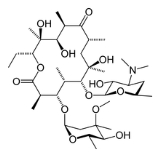
In structure, this macrocyclic compound contains a 14-membered lactone
Lactone
In chemistry, a lactone is a cyclic ester which can be seen as the condensation product of an alcohol group -OH and a carboxylic acid group -COOH in the same molecule...

 ring with ten asymmetric centers and two sugars (L-cladinose
Cladinose
Cladinose is a hexose deoxy sugar that in several antibiotics is attached to the macrolide ring.In ketolides, a relatively new class of antibiotics, the cladinose is replaced with a keto group.-External links:* *...

 and D-desosamine
Desosamine
Desosamine is a 3--3,4,6-trideoxyhexose found in certain macrolide antibiotics such as the commonly prescribed erythromycin.-Biosynthesis:Six enzymes are required for its biosynthesis from TDP-glucose in Streptomyces venezuelae....

), making it a compound very difficult to produce via synthetic methods.

Erythromycin is produced from a strain of the actinomycete Saccharopolyspora erythraea
Saccharopolyspora erythraea
Saccharopolyspora erythraea, formerly known as Streptomyces erythraeus, is a species of actinomycete bacteria within the genus Saccharopolyspora.Saccharopolyspora erythraea is known for the production of the macrolide antibiotic erythromycin...

.

History


Abelardo Aguilar, a Filipino scientist, sent some soil samples to his employer Eli Lilly
Eli Lilly and Company
Eli Lilly and Company is a global pharmaceutical company. Eli Lilly's global headquarters is located in Indianapolis, Indiana, in the United States...

 in 1949. Eli Lilly’s research team, led by J. M. McGuire, managed to isolate Erythromycin from the metabolic products of a strain of Streptomyces erythreus
Saccharopolyspora erythraea
Saccharopolyspora erythraea, formerly known as Streptomyces erythraeus, is a species of actinomycete bacteria within the genus Saccharopolyspora.Saccharopolyspora erythraea is known for the production of the macrolide antibiotic erythromycin...

 (designation changed to "Saccharopolyspora erythraea") found in the samples.

Lilly filed for patent protection of the compound and U.S. patent 2,653,899 was granted in 1953. The product was launched commercially in 1952 under the brand name Ilosone (after the Philippine
Philippines
The Philippines , officially known as the Republic of the Philippines , is a country in Southeast Asia in the western Pacific Ocean. To its north across the Luzon Strait lies Taiwan. West across the South China Sea sits Vietnam...

 region of Iloilo where it was originally collected from). Erythromycin was formerly also called Ilotycin.

In 1981, Nobel laureate (1965 in chemistry) and Professor of Chemistry at Harvard University
Harvard University
Harvard University is a private Ivy League university located in Cambridge, Massachusetts, United States, established in 1636 by the Massachusetts legislature. Harvard is the oldest institution of higher learning in the United States and the first corporation chartered in the country...

 (Cambridge, MA) Robert B. Woodward
Robert Burns Woodward
Robert Burns Woodward was an American organic chemist, considered by many to be the preeminent organic chemist of the twentieth century...

, along with a large number of members from his research group, posthumously reported the first stereocontrolled asymmetric chemical synthesis of Erythromycin A.

The antibiotic clarithromycin
Clarithromycin
Clarithromycin is a macrolide antibiotic used to treat pharyngitis, tonsillitis, acute maxillary sinusitis, acute bacterial exacerbation of chronic bronchitis, pneumonia , skin and skin structure infections...

 was invented by scientists at the Japanese drug company Taisho Pharmaceutical
Taisho Pharmaceutical
is a Japanese pharmaceutical company based in Tokyo.-History:Taisho was established in 1912 to produce over-the-counter drugs. The company moved into prescription drug R&D in 1955.-Products:...

 in the 1970s as a result of their efforts to overcome the acid instability of erythromycin.

Scientists at Chugai Pharmaceuticals discovered an erythromycin-derived motilin
Motilin
Motilin is a 22-amino acid polypeptide hormone in the motilin family that, in humans, is encoded by the MLN gene.Motilin is secreted by endocrine M cells that are numerous in crypts of the small intestine, especially in the duodenum and jejunum. Based on amino acid sequence, motilin is unrelated...

 agonist called Mitemcinal
Mitemcinal
Mitemcinal is a motilin agonist derived from the macrolide antibiotic, erythromycin. It was discovered in the labs of Chugai Pharma. Mitemcinal is orally administered and it is believed to have strong promotility effects...

 that is believed to have strong prokinetic properties (similar to erythromycin,) but lacking antibiotic properties. At the present time, erythromycin is commonly used off-label for gastric motility indications such as gastroparesis
Gastroparesis
Gastroparesis, also called delayed gastric emptying, is a medical condition consisting of a paresis of the stomach, resulting in food remaining in the stomach for a longer period of time than normal. Normally, the stomach contracts to move food down into the small intestine for digestion. The...

. If Mitemcinal can be shown to be as effective a prokinetic agent, it would represent a significant advance in the GI field as treatment with this drug would not carry the risk of unintentional selection for antibiotic-resistant bacteria.

Synthesis


Over the years since the discovery of erythromycin A and its activity as an antimicrobial, many attempts have been made to synthesize it in the laboratory. However, the presence of ten stereospecific carbons and several points of distinct substitution has made the total synthesis of erythromycin A a formidable task. Complete syntheses of erythromycins’ related structures and precursors such as 6- deoxyerythronolide B have been accomplished, giving way to possible syntheses of different erythromycins and other macrolide antimicrobials. However, Woodward did successfully complete the synthesis of erythromycin A. This total synthesis begins with (7) and (8). After being coupled, the resulting structure is subjected to a series of reactions, including hydrolysis and stereospecific aldolization. The resulting pure enone is then converted to the desired dithiadecalin product (9) through a series of reduction and oxidation reactions. (9) is then converted to both a ketone (10) and an aldehyde (11).
Figure 1 a)

NaH, THF, Me2SO; b)AcOH, H2O; c)MsCL, Py; d)alumina, EtOAc; e)NaBH4, MeOH; f)MeOCH2I, KH, THF; g)OsO4, ether; NaHSO3, Py(aq); h)Me2C(OMe)2, TsOH, CH2Cl2; i)CF3COOH, CH2Cl2; j)(CF3CO)2O, Me2SO, CH2Cl2; (i-Pr)2NEt; k)Ra(Ni)-(W-2), EtOH, reflux; l)o-NO2C6H4SeCN, P(n-Bu)3, THF; m)O3, MeOH, CH2Cl2; Me2S, NaHCO3.

With these two species, each of which resembling key segments of the erythronolide A seco acid, an aldol condensation is carried out to yield (12). (12) is put through several reactions, including the addition of benzyl thiol, the coupling of enolates, and stereospecific reduction to yield (13), which contains the carbon skeleton and stereocenters of the erythronolide A seco acid.
Figure 2 a)

Mesityllithium, THF; b)(CF3CO)2O, Me2SO, CH2Cl2; (i-Pr)2NEt; c), KH, HMPA, THF; AcCl; d)NaBH4, MeOH, CH2Cl2; e)MsCl, Py; DMAP, Py, MeOH; f)PhCH2SH, n-BuLi, THF; g)LAH, ether; h)Ac2O, DMAP, CH2Cl2; i)Ra(Ni)-(W-2), EtOH, DMF, reflux; j)o-NO2C6H4SeCN, P(n- Bu)3, THF; 30% H2O2, THF; k)O3, MeOH, CH2Cl2; Me2S, NaHCO3; l)EtCOSCMe3, LDA, THF; m)t-BuLi, (CH2NMe2)2, THF; AcOH.

(13) is then subjected to a series of reactions including successive deprotections and acetylization to yield (14), a compound that is more likely to yield a lactone. Acetalization of (14) yields a precursor to the desired thioester (15), which was achieved by replacing the terminal methoxy group with the required thio group. (15) is then lactonized in 70% yield to give (16).
Figure 3 a)

Na2CO3, MeOH; b)(PhOCH2CO)2O, Py, DMAP, CH2Cl2; c)MsCl, Py; d)LiOH, 30% H2O2, THF; e)LiN3, HMPA(aq); f)H2(1 atm), PtO2, THF; g)ClCOOC6H4-p-NO2, CH2Cl2, NaHCO3(aq); h)NH2OH⋅HCl, KH2PO4, MeOH(aq), reflux; i)Et3N, CH2Cl2; j)mesitaldehyde dimethyl acetal, CF3COOH, CH2Cl2; k)EtSLi, HMPA; l)ClCOS-2-Py, Et3N, CH2Cl2.

To complete the synthesis of erythromycin A, (16) is acylated with p-phenylbenzoyl chloride, undergoes hydrolysis, and is deprotected at its hydroxyl groups at carbons 3 and 5 to yield (17). After a series of glycosidation reactions, (17) is converted to (18). (18) is then subjected to a number of reactions, eventually converting carbon 9 from an amine to the ketone, yielding the final erythromycin A product (1).
Figure 4 a)

BPCOCl, Et3N, DMAP, CH2Cl2; b)NaOH(aq), THF, i-PrOH; c)SiO2, CF3COOH(aq), CH2Cl2; d)Na- Hg/MeOH; e)N-chlorosuccinimide, Py; f)AgF, HMPA; g)- H2O.

Total yield for Woodward’s complete synthesis of erythromycin A was approximately 0.02%, leaving future scientists with a clear goal for improvement.

Available forms


Erythromycin is available in enteric-coated tablets, slow-release capsules, oral suspensions, ophthalmic solutions, ointments, gels, and injections.

The following erythromycin combinations are available for oral dosage:
  • erythromycin base (capsules, tablets)
  • erythromycin estolate (capsules, oral suspension, tablets). This form is contraindicated during pregnancy.
  • erythromycin ethylsuccinate (oral suspension, tablets)
  • erythromycin stearate (oral suspension, tablets)

For injection the available combinations are:
  • erythromycin gluceptate
  • erythromycin lactobionate.


Brand names include Robimycin, E-Mycin, E.E.S. Granules, E.E.S.-200, E.E.S.-400, E.E.S.-400 Filmtab, Erymax, Ery-Tab, Eryc, Ranbaxy, Erypar, EryPed, Eryped 200, Eryped 400, Erythrocin Stearate Filmtab, Erythrocot, E-Base, Erythroped, Ilosone, MY-E, Pediamycin, Zineryt, Abboticin, Abboticin-ES, Erycin, PCE Dispertab, Stiemycine, Acnasol and Tiloryth.

Adverse effects


Gastrointestinal disturbances, such as diarrhea
Diarrhea
Diarrhea , also spelled diarrhoea, is the condition of having three or more loose or liquid bowel movements per day. It is a common cause of death in developing countries and the second most common cause of infant deaths worldwide. The loss of fluids through diarrhea can cause dehydration and...

, nausea
Nausea
Nausea , is a sensation of unease and discomfort in the upper stomach with an involuntary urge to vomit. It often, but not always, precedes vomiting...

, abdominal pain
Abdominal pain
Abdominal pain can be one of the symptoms associated with transient disorders or serious disease. Making a definitive diagnosis of the cause of abdominal pain can be difficult, because many diseases can result in this symptom. Abdominal pain is a common problem...

, and vomiting
Vomiting
Vomiting is the forceful expulsion of the contents of one's stomach through the mouth and sometimes the nose...

, are very common because erythromycin is a motilin
Motilin
Motilin is a 22-amino acid polypeptide hormone in the motilin family that, in humans, is encoded by the MLN gene.Motilin is secreted by endocrine M cells that are numerous in crypts of the small intestine, especially in the duodenum and jejunum. Based on amino acid sequence, motilin is unrelated...

 agonist. Because of this, erythromycin tends not to be prescribed as a first-line drug. However, erythromycin may be useful in treating gastroparesis
Gastroparesis
Gastroparesis, also called delayed gastric emptying, is a medical condition consisting of a paresis of the stomach, resulting in food remaining in the stomach for a longer period of time than normal. Normally, the stomach contracts to move food down into the small intestine for digestion. The...

 due to this pro-motility effect. Intravenous erythromycin may also be used in endoscopy
Esophagogastroduodenoscopy
For other expansions of the initialism "OGD", see the disambiguation page.In medicine , esophagogastroduodenoscopy is a diagnostic endoscopic procedure that visualizes the upper part of the gastrointestinal tract up to the duodenum...

 as an adjunct to clear gastric
Stomach
The stomach is a muscular, hollow, dilated part of the alimentary canal which functions as an important organ of the digestive tract in some animals, including vertebrates, echinoderms, insects , and molluscs. It is involved in the second phase of digestion, following mastication .The stomach is...

 contents.

More serious side-effects include arrhythmia with prolonged QTc intervals including Torsades-de-Pointe and reversible deafness. Allergic reactions range from urticaria
Urticaria
Urticaria is a kind of skin rash notable for pale red, raised, itchy bumps. Hives is frequently caused by allergic reactions; however, there are many non-allergic causes...

 to anaphylaxis
Anaphylaxis
Anaphylaxis is defined as "a serious allergic reaction that is rapid in onset and may cause death". It typically results in a number of symptoms including throat swelling, an itchy rash, and low blood pressure...

. Cholestasis
Cholestasis
In medicine, cholestasis is a condition where bile cannot flow from the liver to the duodenum. The two basic distinctions are an obstructive type of cholestasis where there is a mechanical blockage in the duct system such as can occur from a gallstone or malignancy and metabolic types of...

, Stevens–Johnson syndrome, and toxic epidermal necrolysis
Toxic epidermal necrolysis
Toxic epidermal necrolysis is a rare, life-threatening dermatological condition that is usually induced by a reaction to medications...

 are some other rare side-effects that may occur.

Exposure to erythromycin (especially long courses at antimicrobial doses, and also through breastfeeding
Breastfeeding
Breastfeeding is the feeding of an infant or young child with breast milk directly from female human breasts rather than from a baby bottle or other container. Babies have a sucking reflex that enables them to suck and swallow milk. It is recommended that mothers breastfeed for six months or...

) has been linked to an increased probability of pyloric stenosis
Pyloric stenosis
Pyloric stenosis is a condition that causes severe vomiting in the first few months of life. There is narrowing of the opening from the stomach to the intestines, due to enlargement of the muscle surrounding this opening , which spasms when the stomach empties...

 in young infants. Erythromycin used for feeding intolerance in young infants has not been associated with hypertrophic pyloric stenosis.

Erythromycin estolate has been associated with reversible hepatotoxicity in pregnant women in the form of elevated serum glutamic-oxaloacetic transaminase and is not recommended during pregnancy. Some evidence suggests similar hepatotoxicity in other populations.

It can also affect the central nervous system, causing psychotic reactions, nightmares and night sweats.

It may also alter the effectiveness of combined oral contraceptive pills because of its effect on the gut flora. Erythromycin is an inhibitor of the cytochrome P450 system, which means that it can have a rapid effect on levels of other drugs metabolised by this system, e.g., warfarin.

Mechanism of action


Erythromycin displays bacteriocidal activity, especially at higher concentrations, but the mechanism is not fully understood. By binding to the 50s subunit of the bacterial 70s rRNA complex, protein synthesis and subsequent structure and function processes critical for life or replication are inhibited. Erythromycin interferes with aminoacyl translocation, preventing the transfer of the tRNA bound at the A site of the rRNA complex to the P site of the rRNA complex. Without this translocation, the A site remains occupied and, thus, the addition of an incoming tRNA and its attached amino acid
Amino acid
Amino acids are molecules containing an amine group, a carboxylic acid group and a side-chain that varies between different amino acids. The key elements of an amino acid are carbon, hydrogen, oxygen, and nitrogen...

 to the nascent polypeptide chain is inhibited. This interferes with the production of functionally useful proteins, which is the basis of this antimicrobial action.

Pharmacokinetics


Erythromycin is easily inactivated by gastric acid; therefore, all orally-administered formulations are given as either enteric-coated or more-stable salts or ester
Ester
Esters are chemical compounds derived by reacting an oxoacid with a hydroxyl compound such as an alcohol or phenol. Esters are usually derived from an inorganic acid or organic acid in which at least one -OH group is replaced by an -O-alkyl group, and most commonly from carboxylic acids and...

s, such as erythromycin ethylsuccinate. Erythromycin is very rapidly absorbed, and diffuses into most tissues and phagocyte
Phagocyte
Phagocytes are the white blood cells that protect the body by ingesting harmful foreign particles, bacteria, and dead or dying cells. Their name comes from the Greek phagein, "to eat" or "devour", and "-cyte", the suffix in biology denoting "cell", from the Greek kutos, "hollow vessel". They are...

s. Due to the high concentration in phagocytes, erythromycin is actively transported to the site of infection, where, during active phagocytosis, large concentrations of erythromycin are released.

Metabolism


Most of erythromycin is metabolised by demethylation
Demethylation
Demethylation is the chemical process resulting in the removal a of methyl group from a molecule.A common way of demethylation is the replacement of a methyl group by a hydrogen atom, resulting in a net loss of one carbon and two hydrogen atoms....

 in the liver
Liver
The liver is a vital organ present in vertebrates and some other animals. It has a wide range of functions, including detoxification, protein synthesis, and production of biochemicals necessary for digestion...

. Its main elimination route is in the bile
Bile
Bile or gall is a bitter-tasting, dark green to yellowish brown fluid, produced by the liver of most vertebrates, that aids the process of digestion of lipids in the small intestine. In many species, bile is stored in the gallbladder and upon eating is discharged into the duodenum...

. There is little renal excretion. Erythromycin's elimination half-life is 1.5 hours.

Interactions


Erythromycin is metabolized by enzymes of the cytochrome P450 system, in particular, by isozymes of the CYP3A
CYP3A
Cytochrome P450, family 3, subfamily A, also known as CYP3A, is a human gene.The CYP3A locus includes all the known members of the 3A subfamily of the cytochrome P450 superfamily of genes. These genes encode monooxygenases which catalyze many reactions involved in drug metabolism and synthesis of...

 superfamily, CYP3A (Hunt et al., 1992). The activity of the CYP3A enzymes can be induced or inhibited by certain drugs (e.g. dexomethasone) which can cause it to affect the metabolism
Metabolism
Metabolism is the set of chemical reactions that happen in the cells of living organisms to sustain life. These processes allow organisms to grow and reproduce, maintain their structures, and respond to their environments. Metabolism is usually divided into two categories...

 of many different drugs, e.g. erythromycin. If other CYP3A substrates — drugs that are broken down by CYP3A - such as simvastatin
Simvastatin
Simvastatin is a hypolipidemic drug used to control elevated cholesterol, or hypercholesterolemia. Simvastatin is a member of the statin class of pharmaceuticals, is a synthetic derivate of a fermentation product of Aspergillus terreus.-Medical uses:The primary uses of simvastatin is for the...

 (Zocor), lovastatin
Lovastatin
Lovastatin is a member of the drug class of statins, used for lowering cholesterol in those with hypercholesterolemia and so preventing cardiovascular disease...

 (Mevacor), or atorvastatin
Atorvastatin
Atorvastatin , sold by Pfizer under the trade name Lipitor, is a member of the drug class known as statins, used for lowering blood cholesterol. It also stabilizes plaque and prevents strokes through anti-inflammatory and other mechanisms...

 (Lipitor)—are taken concomitantly with erythromycin, levels of the substrates will increase, often causing adverse effects. A noted drug interaction involves erythromycin and simvastatin, resulting in increased simvastatin levels and the potential for rhabdomyolysis
Rhabdomyolysis
Rhabdomyolysis is a condition in which damaged skeletal muscle tissue breaks down rapidly. Breakdown products of damaged muscle cells are released into the bloodstream; some of these, such as the protein myoglobin, are harmful to the kidneys and may lead to kidney failure...

. Another group of CYP3A4 substrates are drugs used for migraine
Migraine
Migraine is a chronic neurological disorder characterized by moderate to severe headaches, and nausea...

 such as ergotamine and dihydroergotamine
Dihydroergotamine
Dihydroergotamine is an ergot alkaloid used to treat migraines. It is a derivative of ergotamine. It is administered as a nasal spray or injection and has an efficacy similar to that of sumatriptan...

; their adverse effects may be more pronounced if erythromycin is associated.
Earlier case reports on sudden death prompted a study on a large cohort that confirmed a link between erythromycin, ventricular tachycardia
Ventricular tachycardia
Ventricular tachycardia is a tachycardia, or fast heart rhythm, that originates in one of the ventricles of the heart...

, and sudden cardiac death in patients also taking drugs that prolong the metabolism of erythromycin (like verapamil
Verapamil
Verapamil is an L-type calcium channel blocker of the phenylalkylamine class. It has been used in the treatment of hypertension, angina pectoris, cardiac arrhythmia, and most recently, cluster headaches. It is also an effective preventive medication for migraine...

 or diltiazem
Diltiazem
Diltiazem is a non-dihydropyridine member of the class of drugs known as calcium channel blockers, used in the treatment of hypertension, angina pectoris, and some types of arrhythmia....

) by interfering with CYP3A4. Hence, erythromycin should not be administered to people using these drugs, or drugs that also prolong the QT interval
QT interval
In cardiology, the QT interval is a measure of the time between the start of the Q wave and the end of the T wave in the heart's electrical cycle. In general, the QT interval represents electrical depolarization and repolarization of the left and right ventricles...

. Other examples include terfenadine
Terfenadine
Terfenadine is an antihistamine formerly used for the treatment of allergic conditions. It was brought to market by Hoechst Marion Roussel and marketed under various brand names including Seldane in the United States, Triludan in the United Kingdom, and Teldane in Australia...

 (Seldane, Seldane-D), astemizole
Astemizole
Astemizole was a second generation antihistamine drug which has a long duration of action. Astemizole was discovered by Janssen Pharmaceutica in 1977...

 (Hismanal), cisapride
Cisapride
Cisapride is a gastroprokinetic agent, a drug which increases motility in the upper gastrointestinal tract. It acts directly as a serotonin 5-HT4 receptor agonist and indirectly as a parasympathomimetic. Stimulation of the serotonin receptors increases acetylcholine release in the enteric nervous...

 (Propulsid, withdrawn in many countries for prolonging the QT time) and pimozide
Pimozide
Pimozide is an antipsychotic drug of the diphenylbutylpiperidine class. It was discovered at Janssen Pharmaceutica in 1963. It has a high potency compared to chlorpromazine . On a weight basis it is even more potent than haloperidol. It also has special neurologic indications for Tourette syndrome...

 (Orap). Theophylline
Theophylline
Theophylline, also known as dimethylxanthine, is a methylxanthine drug used in therapy for respiratory diseases such as COPD and asthma under a variety of brand names. Because of its numerous side-effects, the drug is now rarely administered for clinical use. As a member of the xanthine family, it...

, which is used mostly in asthma, is also contraindicated.

Erythromycin is not recommended when using clindamycin
Clindamycin
Clindamycin rINN is a lincosamide antibiotic. It is usually used to treat infections with anaerobic bacteria but can also be used to treat some protozoal diseases, such as malaria...

-containing products, even topical products such as Duac
Duac
The drug combination benzoyl peroxide/clindamycin is a topical gel used for the treatment of acne. It is sold under the trade names Duac and BenzaClin...

 or BenzaClin. In general, the simultaneous use two different erythromycin derivatives (such as clindamycin and Mitemcinal
Mitemcinal
Mitemcinal is a motilin agonist derived from the macrolide antibiotic, erythromycin. It was discovered in the labs of Chugai Pharma. Mitemcinal is orally administered and it is believed to have strong promotility effects...

) should be avoided as drugs in this macrolide
Macrolide
The macrolides are a group of drugs whose activity stems from the presence of a macrolide ring, a large macrocyclic lactone ring to which one or more deoxy sugars, usually cladinose and desosamine, may be attached. The lactone rings are usually 14-, 15-, or 16-membered...

 family possess a common mechanism of action.

Erythromycin-derived compounds

  • Mitemcinal
    Mitemcinal
    Mitemcinal is a motilin agonist derived from the macrolide antibiotic, erythromycin. It was discovered in the labs of Chugai Pharma. Mitemcinal is orally administered and it is believed to have strong promotility effects...

  • Azithromycin
    Azithromycin
    Azithromycin is an azalide, a subclass of macrolide antibiotics. Azithromycin is one of the world's best-selling antibiotics...

     / Zithromax / Zitromax / Sumamed
  • Clarithromycin
    Clarithromycin
    Clarithromycin is a macrolide antibiotic used to treat pharyngitis, tonsillitis, acute maxillary sinusitis, acute bacterial exacerbation of chronic bronchitis, pneumonia , skin and skin structure infections...

     / Biaxin
  • Roxithromycin
    Roxithromycin
    Roxithromycin is a semi-synthetic macrolide antibiotic. It is used to treat respiratory tract, urinary and soft tissue infections. Roxithromycin is derived from erythromycin, containing the same 14-membered lactone ring. However, an N-oxime side chain is attached to the lactone ring...

     / Rulid / Surlid / Roxid
  • Telithromycin
    Telithromycin
    Telithromycin is the first ketolide antibiotic to enter clinical use. It is used to treat mild to moderate respiratory infections. Telithromycin is sold under the brand name of Ketek....

  • Dirithromycin
    Dirithromycin
    Dirithromycin is a macrolide glycopeptide antibiotic.Dirithromycin is a more lipid-soluble prodrug derivative of 9S-erythromycyclamine prepared by condensation of the latter with 2-acetaldehyde...

     / Dynabac
  • Cethromycin
    Cethromycin
    Cethromycin is a ketolide antibiotic undergoing research for the treatment of community acquired pneumonia and for the prevention of post-exposure inhalational anthrax, and was given an "orphan drug" status for this indication. Originally discovered and developed by Abbott, it was acquired by...

  • Spiramycin
    Spiramycin
    Spiramycin is a macrolide antibiotic. It is used to treat toxoplasmosis. Although used in Europe, Canada and Mexico, spiramycin is still considered an experimental drug in the United States, but can sometimes be obtained by special permission from the FDA for toxoplasmosis in the first trimester of...

  • Ansamycin
    Ansamycin
    Ansamycins is a family of secondary metabolites that show antimicrobial activity against many gram-positive and some gram-negative bacteria and includes various compounds, among which: streptovaricins and rifamycins...

  • Oleandomycin
    Oleandomycin
    Oleandomycin is a macrolide antibiotic. It is synthesized from strains of Streptomyces antibioticus. It is weaker than erythromycin.It used to be sold under the brand name Sigmamycine, combined with Tetracycline, and made by the company Rosa-Phytopharma in France....

  • Carbomycin
  • Tylocine

External links