


Film director

Encyclopedia
A film director is a person who directs the actors and film crew
in filmmaking
. They control a film's art
istic and drama
tic nathan roach, while guiding the technical crew
and actor
s.
. They often develop the vision for a film and carry the vision out, deciding how the film should look, in other words they make their vision come to life.
They are responsible for turning the script into a sequence of shots. They also direct what tone
it should have and what an audience
should gain from the cinematic experience. Film directors are responsible for deciding camera angle
s, lens effects
and lighting
with the help of the cinematographer
, and set design with the production designer
. They will often take part in hiring key crew members
. They coordinate the actors' moves, or blocking
, and also may be involved in the writing
, financing
, and editing
of a film.
The director works closely with the cast
and crew
to shape the film. Some like to conduct rigorous rehearsal
s in preproduction while others do so before each scene
. In either case, this process is essential as it tells the director as well as other key members of the crew (director of photography, stunt
choreographer, hair stylist
, etc.), how the actors are going to play the scene, which enables them to make any necessary adjustments. Directors often use storyboards to illustrate sequences and concepts, and a director's viewfinder
to set up camera angles.
The director also plays a key role in post-production
. He or she works with the editor to ensure that the emotions of the scene and the close up
s, mid shots and wide or long shot
s appropriately reflect which character is driving the narrative. The director also advises on the (color) grading
of the final images, adding warmth or frigidity to the composition of the shots to reflect the emotional subtext of the character or environment. The director will sometimes participate in the sound mix and musical composition of the film.
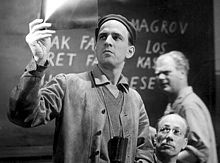
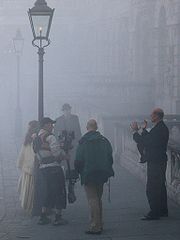 Directors have different methods of filming. Some styles include:
. The Canadian equivalent is the Directors Guild of Canada
. In the UK, directors usually belong to Directors Guild of Great Britain.
In Europe, FERA, the Federation of European Film Directors, represents 37 national directors' guilds in 30 countries.
A new director working on feature films might earn as much as $200,000 a year, while the most successful can earn over $500,000 or even millions per film in some cases.
Film crew
Television crew positions are derived from those of film crew positions.A film crew is a group of people hired by a production company for the purpose of producing a film or motion picture. Crew are distinguished from cast, the Actors who appear in front of the camera or provide voices for...
in filmmaking
Filmmaking
Filmmaking is the process of making a film, from an initial story, idea, or commission, through scriptwriting, casting, shooting, directing, editing, and screening the finished product before an audience that may result in a theatrical release or television program...
. They control a film's art
Art
Art is the product or process of deliberately arranging items in a way that influences and affects one or more of the senses, emotions, and intellect....
istic and drama
Drama
Drama is the specific mode of fiction represented in performance. The term comes from a Greek word meaning "action" , which is derived from "to do","to act" . The enactment of drama in theatre, performed by actors on a stage before an audience, presupposes collaborative modes of production and a...
tic nathan roach, while guiding the technical crew
Technical crew
The Technical crew, often abbreviated to "tech crew" or "technicians", are the individuals employed behind the scenes who control all the technical aspects of creating a concert, play, musical, opera or other live performance...
and actor
Actor
An actor is a person who acts in a dramatic production and who works in film, television, theatre, or radio in that capacity...
s.
Responsibilities
Directors are responsible for overseeing creative aspects of a film under the film producerFilm producer
A film producer oversees and delivers a film project to all relevant parties while preserving the integrity, voice and vision of the film. They will also often take on some financial risk by using their own money, especially during the pre-production period, before a film is fully financed.The...
. They often develop the vision for a film and carry the vision out, deciding how the film should look, in other words they make their vision come to life.
They are responsible for turning the script into a sequence of shots. They also direct what tone
Tone (literature)
Tone is a literary technique that is a part of composition, which encompasses the attitudes toward the subject and toward the audience implied in a literary work. Tone may be formal, informal, intimate, solemn, somber, playful, serious, ironic, guilty, condescending, or many other possible attitudes...
it should have and what an audience
Audience
An audience is a group of people who participate in a show or encounter a work of art, literature , theatre, music or academics in any medium...
should gain from the cinematic experience. Film directors are responsible for deciding camera angle
Camera angle
The camera angle marks the specific location at which a camera is placed to take a shot. A scene may be shot from several camera angles. This will give different experience and sometimes emotion. the different camera angles will have different effects on the viewer and how they perceive the scene...
s, lens effects
Cinematography
Cinematography is the making of lighting and camera choices when recording photographic images for cinema. It is closely related to the art of still photography...
and lighting
Lighting
Lighting or illumination is the deliberate application of light to achieve some practical or aesthetic effect. Lighting includes the use of both artificial light sources such as lamps and light fixtures, as well as natural illumination by capturing daylight...
with the help of the cinematographer
Cinematographer
A cinematographer is one photographing with a motion picture camera . The title is generally equivalent to director of photography , used to designate a chief over the camera and lighting crews working on a film, responsible for achieving artistic and technical decisions related to the image...
, and set design with the production designer
Production designer
In film and television, a production designer is the person responsible for the overall look of a filmed event such as films, TV programs, music videos or adverts. Production designers have one of the key creative roles in the creation of motion pictures and television. Working directly with the...
. They will often take part in hiring key crew members
Film crew
Television crew positions are derived from those of film crew positions.A film crew is a group of people hired by a production company for the purpose of producing a film or motion picture. Crew are distinguished from cast, the Actors who appear in front of the camera or provide voices for...
. They coordinate the actors' moves, or blocking
Blocking (stage)
Blocking is a theatre term which refers to the precise movement and positioning of actors on a stage in order to facilitate the performance of a play, ballet, film or opera. The term derives from the practice of 19th century theatre directors such as Sir W. S...
, and also may be involved in the writing
Screenwriting
Screenwriting is the art and craft of writing scripts for mass media such as feature films, television productions or video games. It is a freelance profession....
, financing
Film finance
Film finance is an aspect of film production that occurs during the development stage prior to pre-production, and is concerned with determining the potential value of a proposed film...
, and editing
Film editing
Film editing is part of the creative post-production process of filmmaking. It involves the selection and combining of shots into sequences, and ultimately creating a finished motion picture. It is an art of storytelling...
of a film.
The director works closely with the cast
Casting (performing arts)
In the performing arts, casting is a pre-production process for selecting a cast of actors, dancers, singers, models and other talent for a live or recorded performance.-Casting process:...
and crew
Film crew
Television crew positions are derived from those of film crew positions.A film crew is a group of people hired by a production company for the purpose of producing a film or motion picture. Crew are distinguished from cast, the Actors who appear in front of the camera or provide voices for...
to shape the film. Some like to conduct rigorous rehearsal
Rehearsal
For other uses, see Rehearsal or Dress rehearsal A rehearsal is a preparatory event in music and theatre that is performed before the official public performance, as a form of practice, and to ensure that all details of the performance are adequately prepared and coordinated for professional...
s in preproduction while others do so before each scene
Scene (film)
In TV and movies, a scene is generally thought of as the action in a single location and continuous time. Due to the ability to edit recorded visual works, it is typically much shorter than a stage play scene....
. In either case, this process is essential as it tells the director as well as other key members of the crew (director of photography, stunt
Stunt
A stunt is an unusual and difficult physical feat, or any act requiring a special skill, performed for artistic purposes in TV, theatre, or cinema...
choreographer, hair stylist
Hairstyle
A hairstyle, hairdo, or haircut refers to the styling of hair, usually on the human head. The fashioning of hair can be considered an aspect of personal grooming, fashion, and cosmetics, although practical, cultural, and popular considerations also influence some hairstyles.-History of...
, etc.), how the actors are going to play the scene, which enables them to make any necessary adjustments. Directors often use storyboards to illustrate sequences and concepts, and a director's viewfinder
Directors viewfinder
A director's viewfinder or director's finder is a viewfinder used by film directors to see the scene as seen by the camera lens. In appearance it is like a monocular telescope that usually hangs around the neck....
to set up camera angles.
The director also plays a key role in post-production
Post-production
Post-production is part of filmmaking and the video production process. It occurs in the making of motion pictures, television programs, radio programs, advertising, audio recordings, photography, and digital art...
. He or she works with the editor to ensure that the emotions of the scene and the close up
Close up
A close-up is tightly framed image of a person or an object.Close-Up or Close Up may refer to:- Film and television :*Close Up, two different New Zealand current affairs programmes...
s, mid shots and wide or long shot
Long shot
In photography, filmmaking and video production, a long shot typically shows the entire object or human figure and is usually intended to place it in some relation to its surroundings...
s appropriately reflect which character is driving the narrative. The director also advises on the (color) grading
Color grading
Color grading or colour painting, is the process of altering and enhancing the color of a motion picture, video image, or still image either electronically, photo-chemically or digitally. The photo-chemical process is also referred to as color timing and is typically performed at a photographic...
of the final images, adding warmth or frigidity to the composition of the shots to reflect the emotional subtext of the character or environment. The director will sometimes participate in the sound mix and musical composition of the film.
Methods of film directing
- Outline a general plotline and let the actors improviseImprovisationImprovisation is the practice of acting, singing, talking and reacting, of making and creating, in the moment and in response to the stimulus of one's immediate environment and inner feelings. This can result in the invention of new thought patterns, new practices, new structures or symbols, and/or...
dialogue. Notable examples include Christopher GuestChristopher GuestChristopher Haden-Guest, 5th Baron Haden-Guest , better known as Christopher Guest, is an American screenwriter, composer, musician, director, actor and comedian. He is most widely known in Hollywood for having written, directed and starred in several improvisational "mockumentary" films that...
, Wong Kar-waiWong Kar-waiWong Kar-wai BBS is a Hong Kong Second Wave filmmaker, internationally renowned as an auteur for his visually unique, highly stylized, emotionally resonant work, including Days of Being Wild , Ashes of Time , Chungking Express , Fallen Angels , Happy Together and 2046...
, Spike LeeSpike LeeShelton Jackson "Spike" Lee is an American film director, producer, writer, and actor. His production company, 40 Acres & A Mule Filmworks, has produced over 35 films since 1983....
, Jim WongJames Wong (producer)James 'Jim' Wong is a Cantonese-American television producer, writer, and film director notable for his screen works of The X-Files, Space: Above and Beyond, Millennium, Final Destination 1 & 3, The One, and the remakes of Willard and Black Christmas along with writing partner Glen...
, Wim WendersWim WendersErnst Wilhelm "Wim" Wenders is a German film director, playwright, author, photographer and producer.-Early life:Wenders was born in Düsseldorf. He graduated from high school in Oberhausen in the Ruhr area. He then studied medicine and philosophy in Freiburg and Düsseldorf...
, Mike LeighMike LeighMichael "Mike" Leigh, OBE is a British writer and director of film and theatre. He studied theatre at the Royal Academy of Dramatic Art, and studied further at the Camberwell School of Art and the Central School of Art and Design. He began as a theatre director and playwright in the mid 1960s...
, Jean-Luc GodardJean-Luc GodardJean-Luc Godard is a French-Swiss film director, screenwriter and film critic. He is often identified with the 1960s French film movement, French Nouvelle Vague, or "New Wave"....
, Miklós JancsóMiklós JancsóMiklós Jancsó is a Hungarian film director and screenwriter.Jancsó achieved international prominence from the mid-1960s onwards, with works including The Round Up , The Red and the White and Red Psalm .Jancsó's films are characterized by visual stylization,...
, Gus Van SantGus Van SantGus Green Van Sant, Jr. is an American director, screenwriter, painter, photographer, musician, and author. He is a two time nominee of the Academy Award for Best Director for his 1997 film Good Will Hunting and his 2008 film Milk, both of which were also nominated for Best Picture, and won the...
, Judd ApatowJudd ApatowJudd Apatow is an American film producer, director, and screenwriter. He is well known for his work in comedy films, especially for films he has been involved with throughout the latter half of the 2000s. He is the founder of Apatow Productions, a film production company that also developed the...
, David CronenbergDavid CronenbergDavid Paul Cronenberg, OC, FRSC is a Canadian filmmaker, screenwriter and actor. He is one of the principal originators of what is commonly known as the body horror or venereal horror genre. This style of filmmaking explores people's fears of bodily transformation and infection. In his films, the...
, Ben AffleckBen AffleckBenjamin Géza Affleck-Boldt , better known as Ben Affleck, is an American actor, film director, writer, and producer. He became known with his performances in Kevin Smith's films such as Mallrats and Chasing Amy...
and occasionally Robert AltmanRobert AltmanRobert Bernard Altman was an American film director and screenwriter known for making films that are highly naturalistic, but with a stylized perspective. In 2006, the Academy of Motion Picture Arts and Sciences recognized his body of work with an Academy Honorary Award.His films MASH , McCabe and...
, Sergio LeoneSergio LeoneSergio Leone was an Italian film director, producer and screenwriter most associated with the "Spaghetti Western" genre.Leone's film-making style includes juxtaposing extreme close-up shots with lengthy long shots...
and Federico FelliniFederico FelliniFederico Fellini, Cavaliere di Gran Croce OMRI , was an Italian film director and scriptwriter. Known for a distinct style that blends fantasy and baroque images, he is considered one of the most influential and widely revered filmmakers of the 20th century...
. - Control every aspect, and demand that the actors and crew follow instructions precisely. Notable examples include David LeanDavid LeanSir David Lean CBE was an English film director, producer, screenwriter, and editor best remembered for big-screen epics such as The Bridge on the River Kwai , Lawrence of Arabia ,...
, Akira KurosawaAkira Kurosawawas a Japanese film director, producer, screenwriter and editor. Regarded as one of the most important and influential filmmakers in the history of cinema, Kurosawa directed 30 filmsIn 1946, Kurosawa co-directed, with Hideo Sekigawa and Kajiro Yamamoto, the feature Those Who Make Tomorrow ;...
, Steven SpielbergSteven SpielbergSteven Allan Spielberg KBE is an American film director, screenwriter, producer, video game designer, and studio entrepreneur. In a career of more than four decades, Spielberg's films have covered many themes and genres. Spielberg's early science-fiction and adventure films were seen as an...
, Victor FlemingVictor FlemingVictor Lonzo Fleming was an American film director, cinematographer, and producer. His most popular films were The Wizard of Oz , and Gone with the Wind , for which he won an Academy Award for Best Director.-Life and career:Fleming was born in La Canada, California, the son of Elizabeth Evaleen ...
, James CameronJames CameronJames Francis Cameron is a Canadian-American film director, film producer, screenwriter, editor, environmentalist and inventor...
, Michael BayMichael BayMichael Benjamin Bay is an American film director and producer. He is known for directing high-budget action films characterized by their fast edits, stylistic visuals and substantial practical special effects...
, George LucasGeorge LucasGeorge Walton Lucas, Jr. is an American film producer, screenwriter, and director, and entrepreneur. He is the founder, chairman and chief executive of Lucasfilm. He is best known as the creator of the space opera franchise Star Wars and the archaeologist-adventurer character Indiana Jones...
, Francis Ford CoppolaFrancis Ford CoppolaFrancis Ford Coppola is an American film director, producer and screenwriter. He is widely acclaimed as one of Hollywood's most innovative and influential film directors...
, Stanley KubrickStanley KubrickStanley Kubrick was an American film director, writer, producer, and photographer who lived in England during most of the last four decades of his career...
, Marcus DillistoneMarcus DillistoneMarcus Dillistone is an award-winning and Royal Premiered British film director. A close friend of Sir John Mills, he directed the film of Sir John's life Sir John Mills' Moving Memories. Dillistone and Sir John first collaborated on Dillistone's film "The Troop", which was first screened at BAFTA...
, Christopher NolanChristopher NolanChristopher Jonathan James Nolan is a British-American film director, screenwriter and producer.He received serious notice after his second feature Memento , which he wrote and directed based on a story idea by his brother, Jonathan Nolan. Jonathan went to co-write later scripts with him,...
, David FincherDavid FincherDavid Andrew Leo Fincher is an American film and music video director. Known for his dark and stylish thrillers, such as Seven , The Game , Fight Club , Panic Room , and Zodiac , Fincher received Academy Award nominations for Best Director for his 2008 film The Curious Case of Benjamin Button and...
, Guillermo del ToroGuillermo del ToroGuillermo del Toro is a Mexican director, producer, screenwriter, novelist and designer. He is mostly known for his acclaimed films, Blade II, Pan's Labyrinth and the Hellboy film franchise. He is a frequent collaborator with Ron Perlman, Federico Luppi and Doug Jones...
, Roy AnderssonRoy AnderssonRoy Andersson is a Swedish film director, best known for his films A Swedish Love Story and Songs from the Second Floor. More than any other, Songs from the Second Floor succeeded in cementing his personal style — a style characterized by long takes, absurdist comedy, stiff caricaturing of...
, and Alfred HitchcockAlfred HitchcockSir Alfred Joseph Hitchcock, KBE was a British film director and producer. He pioneered many techniques in the suspense and psychological thriller genres. After a successful career in British cinema in both silent films and early talkies, Hitchcock moved to Hollywood...
. T-D - WriteScreenwriterScreenwriters or scriptwriters or scenario writers are people who write/create the short or feature-length screenplays from which mass media such as films, television programs, Comics or video games are based.-Profession:...
and/or produceFilm producerA film producer oversees and delivers a film project to all relevant parties while preserving the integrity, voice and vision of the film. They will also often take on some financial risk by using their own money, especially during the pre-production period, before a film is fully financed.The...
their own films. Notable examples include Woody AllenWoody AllenWoody Allen is an American screenwriter, director, actor, comedian, jazz musician, author, and playwright. Allen's films draw heavily on literature, sexuality, philosophy, psychology, Jewish identity, and the history of cinema...
, Werner HerzogWerner HerzogWerner Herzog Stipetić , known as Werner Herzog, is a German film director, producer, screenwriter, actor, and opera director.He is often considered as one of the greatest figures of the New German Cinema, along with Rainer Werner Fassbinder, Margarethe von Trotta, Volker Schlöndorff, Werner...
, Alejandro JodorowskyAlejandro JodorowskyAlejandro Jodorowsky Prullansky, known as Alejandro Jodorowsky, is a Chilean filmmaker, playwright, actor, author, comic book writer and spiritual guru...
, John CassavetesJohn CassavetesJohn Nicholas Cassavetes was an American actor, screenwriter and filmmaker. He acted in many Hollywood films, notably Rosemary's Baby and The Dirty Dozen...
, Ingmar BergmanIngmar BergmanErnst Ingmar Bergman was a Swedish director, writer and producer for film, stage and television. Described by Woody Allen as "probably the greatest film artist, all things considered, since the invention of the motion picture camera", he is recognized as one of the most accomplished and...
, Stanley KubrickStanley KubrickStanley Kubrick was an American film director, writer, producer, and photographer who lived in England during most of the last four decades of his career...
, Quentin TarantinoQuentin TarantinoQuentin Jerome Tarantino is an American film director, screenwriter, producer, cinematographer and actor. In the early 1990s, he began his career as an independent filmmaker with films employing nonlinear storylines and the aestheticization of violence...
, Giuseppe Cavallaro, James CameronJames CameronJames Francis Cameron is a Canadian-American film director, film producer, screenwriter, editor, environmentalist and inventor...
, Albert Magnoli, George LucasGeorge LucasGeorge Walton Lucas, Jr. is an American film producer, screenwriter, and director, and entrepreneur. He is the founder, chairman and chief executive of Lucasfilm. He is best known as the creator of the space opera franchise Star Wars and the archaeologist-adventurer character Indiana Jones...
, J. F. LawtonJ. F. LawtonJonathan Frederick Lawton , born on August 11, 1960 in Riverside, California, is an American screenwriter, film producer and film director...
, David CronenbergDavid CronenbergDavid Paul Cronenberg, OC, FRSC is a Canadian filmmaker, screenwriter and actor. He is one of the principal originators of what is commonly known as the body horror or venereal horror genre. This style of filmmaking explores people's fears of bodily transformation and infection. In his films, the...
, Charlie ChaplinCharlie ChaplinSir Charles Spencer "Charlie" Chaplin, KBE was an English comic actor, film director and composer best known for his work during the silent film era. He became the most famous film star in the world before the end of World War I...
, Billy WilderBilly WilderBilly Wilder was an Austro-Hungarian born American filmmaker, screenwriter, producer, artist, and journalist, whose career spanned more than 50 years and 60 films. He is regarded as one of the most brilliant and versatile filmmakers of Hollywood's golden age...
, Ed Wood, David LynchDavid LynchDavid Keith Lynch is an American filmmaker, television director, visual artist, musician and occasional actor. Known for his surrealist films, he has developed his own unique cinematic style, which has been dubbed "Lynchian", and which is characterized by its dream imagery and meticulous sound...
, the Coen brothersCoen BrothersJoel David Coen and Ethan Jesse Coen known together professionally as the Coen brothers, are American filmmakers...
, Jeremy Viele, Francis Ford CoppolaFrancis Ford CoppolaFrancis Ford Coppola is an American film director, producer and screenwriter. He is widely acclaimed as one of Hollywood's most innovative and influential film directors...
, Sofia CoppolaSofia CoppolaSofia Carmina Coppola is an American screenwriter, film director, actress, and producer.In 2003 she received the Academy Award for Best Original Screenplay for Lost in Translation, and became the third woman to be nominated for an Academy Award for Directing...
, Pedro AlmodóvarPedro AlmodóvarPedro Almodóvar Caballero is a Spanish film director, screenwriter and producer.Almodóvar is arguably the most successful and internationally known Spanish filmmaker of his generation. His films, marked by complex narratives, employ the codes of melodrama and use elements of pop culture, popular...
, John Hughes, Nick ParkNick ParkNicholas Wulstan "Nick" Park, CBE is an English filmmaker of stop motion animation best known as the creator of Wallace and Gromit and Shaun the Sheep....
, Kevin SmithKevin SmithKevin Patrick Smith is an American screenwriter, actor, film producer, and director, as well as a popular comic book writer, author, comedian/raconteur, and internet radio personality best recognized by viewers as Silent Bob...
, Todd FieldTodd FieldWilliam Todd Field, known professionally as Todd Field is an American actor and writer/director. He has received three Academy Award nominations.-Background and personal life:...
, Cameron CroweCameron CroweCameron Bruce Crowe is an American screenwriter and film director. Before moving into the film industry, Crowe was a contributing editor at Rolling Stone magazine, for which he still frequently writes....
, Oren PeliOren PeliOren Peli is an Israeli-born American film director, producer and screenwriter, best known as the director/creator of Paranormal Activity. He is also a video game programmer.-Biography:...
, Eli RothEli RothEli Raphael Roth is an American film director, producer, writer and actor. He is known for his role as Donny "The Bear Jew" Donowitz in Quentin Tarantino's Inglourious Basterds for which he won both a SAG Award and a BFCA Critic's Choice Award...
, Paul Thomas AndersonPaul Thomas AndersonPaul Thomas Anderson is an American film director, screenwriter, and producer. He has written and directed five feature films: Hard Eight , Boogie Nights , Magnolia , Punch-Drunk Love and There Will Be Blood...
, Guillermo del ToroGuillermo del ToroGuillermo del Toro is a Mexican director, producer, screenwriter, novelist and designer. He is mostly known for his acclaimed films, Blade II, Pan's Labyrinth and the Hellboy film franchise. He is a frequent collaborator with Ron Perlman, Federico Luppi and Doug Jones...
, Rainer Werner FassbinderRainer Werner FassbinderRainer Werner Maria Fassbinder was a German movie director, screenwriter and actor. He is considered one of the most important representatives of the New German Cinema.He maintained a frenetic pace in film-making...
, Roy AnderssonRoy AnderssonRoy Andersson is a Swedish film director, best known for his films A Swedish Love Story and Songs from the Second Floor. More than any other, Songs from the Second Floor succeeded in cementing his personal style — a style characterized by long takes, absurdist comedy, stiff caricaturing of...
, Oliver StoneOliver StoneWilliam Oliver Stone is an American film director, producer and screenwriter. Stone became well known in the late 1980s and the early 1990s for directing a series of films about the Vietnam War, for which he had previously participated as an infantry soldier. His work frequently focuses on...
, Terrence MalickTerrence MalickTerrence Frederick Malick is a U.S. film director, screenwriter, and producer. In a career spanning almost four decades, Malick has directed five feature films....
, Brendan MoriartyBrendan MoriartyBrendan Moriarty is a United States film director and producer. After making his first full feature film at the age of 20 years old called The Road to Freedom in 2009 in Cambodia, Moriarty and his partners, including Mei Savuth and Tom Proctor, have been in development on feature such as "Red Fish...
, John Singleton, Spike LeeSpike LeeShelton Jackson "Spike" Lee is an American film director, producer, writer, and actor. His production company, 40 Acres & A Mule Filmworks, has produced over 35 films since 1983....
, Orson WellesOrson WellesGeorge Orson Welles , best known as Orson Welles, was an American film director, actor, theatre director, screenwriter, and producer, who worked extensively in film, theatre, television and radio...
, Akira KurosawaAkira Kurosawawas a Japanese film director, producer, screenwriter and editor. Regarded as one of the most important and influential filmmakers in the history of cinema, Kurosawa directed 30 filmsIn 1946, Kurosawa co-directed, with Hideo Sekigawa and Kajiro Yamamoto, the feature Those Who Make Tomorrow ;...
, Hayao MiyazakiHayao Miyazakiis a Japanese manga artist and prominent film director and animator of many popular anime feature films. Through a career that has spanned nearly fifty years, Miyazaki has attained international acclaim as a maker of animated feature films and, along with Isao Takahata, co-founded Studio Ghibli,...
, M. Night ShyamalanM. Night ShyamalanManoj Nelliyattu Shyamalan,known professionally as M. Night Shyamalan, is an Indian-born American screenwriter, film director, and producer known for making movies with contemporary supernatural plots that climax with a twist ending. He is also known for filming his movies in and around...
, Paul HaggisPaul HaggisPaul Edward Haggis is a Canadian screenwriter, producer, and director. He spent his early career producing and directing various American and Canadian television network series.-Early life and education:...
, Billy Bob ThorntonBilly Bob ThorntonBilly Bob Thornton is an American actor, screenwriter, director and musician. Thornton gained early recognition as a cast member on the CBS sitcom Hearts Afire and in several early 1990s films including On Deadly Ground and Tombstone...
, James WongJames Wong (producer)James 'Jim' Wong is a Cantonese-American television producer, writer, and film director notable for his screen works of The X-Files, Space: Above and Beyond, Millennium, Final Destination 1 & 3, The One, and the remakes of Willard and Black Christmas along with writing partner Glen...
, Tyler PerryTyler PerryTyler Perry is an American actor, director, playwright, entrepreneur, screenwriter, producer, author, and songwriter. Perry wrote and produced many stage plays during the 1990s and early 2000s. In 2005, he released his first film, Diary of a Mad Black Woman...
, Robert RodriguezRobert RodriguezRobert Anthony Rodríguez is an American film director, screenwriter, producer, cinematographer, editor and musician. He shoots and produces many of his films in his native Texas and Mexico. He has directed such films as Desperado, From Dusk till Dawn, The Faculty, Spy Kids, Sin City, Planet...
, Christopher NolanChristopher NolanChristopher Jonathan James Nolan is a British-American film director, screenwriter and producer.He received serious notice after his second feature Memento , which he wrote and directed based on a story idea by his brother, Jonathan Nolan. Jonathan went to co-write later scripts with him,...
, George A. RomeroGeorge A. RomeroGeorge Andrew Romero is a Canadian-American film director, screenwriter and editor, best known for his gruesome and satirical horror films about a hypothetical zombie apocalypse. He is nicknamed "Godfather of all Zombies." -Life and career:...
, Sergio LeoneSergio LeoneSergio Leone was an Italian film director, producer and screenwriter most associated with the "Spaghetti Western" genre.Leone's film-making style includes juxtaposing extreme close-up shots with lengthy long shots...
, Satyajit RaySatyajit RaySatyajit Ray was an Indian Bengali filmmaker. He is regarded as one of the greatest auteurs of 20th century cinema. Ray was born in the city of Kolkata into a Bengali family prominent in the world of arts and literature...
DJ PoohDJ PoohDJ Pooh is an American record producer, rapper, screenwriter and film director.-Biography:...
and Stuart BeattieStuart BeattieStuart Beattie is an Australian screenwriter and film director. He attended Knox Grammar School, in Sydney, Australia, where his mother, Sandra, was a languages teacher, and later Charles Sturt University in Bathurst.-Filmography:...
. Steven SpielbergSteven SpielbergSteven Allan Spielberg KBE is an American film director, screenwriter, producer, video game designer, and studio entrepreneur. In a career of more than four decades, Spielberg's films have covered many themes and genres. Spielberg's early science-fiction and adventure films were seen as an...
, Scott SpiegelScott SpiegelScott Spiegel is an American screenwriter, film director, producer and actor. He is best known for co-writing the screenplay for the movie Evil Dead II with longtime friend, film director Sam Raimi, with whom he attended Wylie E. Groves High School in Birmingham, Michigan...
, Jack NeoJack NeoJack Neo Chee Keong , PBM, credited as Jack Neo on screen, is a Chinese Singaporean film and television actor, host and director...
, Sidney J. FurieSidney J. FurieSidney J. Furie is a Canadian film director. Furie is perhaps best known for directing American Soldiers, The IPCRESS File, The Entity, Superman IV: The Quest for Peace, Lady Sings the Blues, The Boys, Gable and Lombard, Sheila Levine Is Dead and Living in New York and the Iron Eagle films.Also...
and Tim BurtonTim BurtonTimothy William "Tim" Burton is an American film director, film producer, writer and artist. He is famous for dark, quirky-themed movies such as Beetlejuice, Edward Scissorhands, The Nightmare Before Christmas, Ed Wood, Sleepy Hollow, Corpse Bride and Sweeney Todd: The Demon Barber of Fleet...
have written screenplays for a small number of their films. - CollaborateCollaborationCollaboration is working together to achieve a goal. It is a recursive process where two or more people or organizations work together to realize shared goals, — for example, an intriguing endeavor that is creative in nature—by sharing...
on screenplays with long-standing writing partners. Notable examples include Alejandro González IñárrituAlejandro González IñárrituAlejandro González Iñárritu is a Mexican film director.González Iñárritu is the first Mexican director to be nominated for the Academy Award for Best Director and by the DGA of America for Best Director. He is also the first and only Mexican born director to have won the Prix de la mise en scene...
and Guillermo ArriagaGuillermo ArriagaGuillermo Arriaga Jordán is a Mexican author, screenwriter, director and producer. Self-defined as “a hunter who works as a writer,” he authored Amores Perros, received a BAFTA Best Screenplay nomination for 21 Grams, and received the 2005 Cannes Best Screenplay Award for The Three Burials of...
, Elia KazanElia KazanElia Kazan was an American director and actor, described by the New York Times as "one of the most honored and influential directors in Broadway and Hollywood history". Born in Istanbul, the capital of the Ottoman Empire, to Greek parents originally from Kayseri in Anatolia, the family emigrated...
and Tennessee WilliamsTennessee WilliamsThomas Lanier "Tennessee" Williams III was an American writer who worked principally as a playwright in the American theater. He also wrote short stories, novels, poetry, essays, screenplays and a volume of memoirs...
, Terry GilliamTerry GilliamTerrence Vance "Terry" Gilliam is an American-born British screenwriter, film director, animator, actor and member of the Monty Python comedy troupe. Gilliam is also known for directing several films, including Brazil , The Adventures of Baron Munchausen , The Fisher King , and 12 Monkeys...
and Charles McKeownCharles McKeownCharles McKeown is a British actor and writer, perhaps best known for his collaborations with Terry Gilliam. The two met while shooting Monty Python's Life of Brian, while McKeown was doing bit parts in the film.-Screenwriting career:...
/Tony GrisoniTony Grisoni-Biography:He has co-written several of director Terry Gilliam's films, including Fear and Loathing in Las Vegas and Tideland.Tony Grisoni worked in many different areas of film making before turning to screenwriting. QUEEN OF HEARTS, 1989 was his award winning first feature directed by Jon Amiel...
, Wes AndersonWes AndersonWesley Wales Anderson is an American film director, screenwriter, actor, and producer of features, short films and commercials....
and Owen WilsonOwen WilsonOwen Cunningham Wilson is an American actor and writer, known for his roles in the films The Haunting, The Royal Tenenbaums, Zoolander, Meet the Parents, Wedding Crashers, You, Me and Dupree, Bottle Rocket, the Cars series, The Darjeeling Limited, Marley & Me, Midnight in Paris, Shanghai Noon,...
/Noah BaumbachNoah BaumbachNoah Baumbach is an American writer, director and independent filmmaker.-Background and education:Baumbach was born in Brooklyn, New York City, the son of novelist/film critic Jonathan Baumbach and Village Voice critic Georgia Brown. He graduated from Brooklyn's Midwood High School in 1987 and ...
, Edgar WrightEdgar WrightEdgar Howard Wright is an English film and television director and writer. He is most famous for his work with Simon Pegg and Nick Frost on the films Shaun of the Dead and Hot Fuzz, the TV series Spaced, and for directing the film Scott Pilgrim vs...
and Simon PeggSimon PeggSimon Pegg is an English actor, comedian, writer, film producer, and director. He is best known for having co-written and stared in various Edgar Wright features, mainly Shaun of the Dead, Hot Fuzz, and the comedy series Spaced.He also portrayed Montgomery "Scotty" Scott in the 2009 Star Trek film...
, Martin ScorseseMartin ScorseseMartin Charles Scorsese is an American film director, screenwriter, producer, actor, and film historian. In 1990 he founded The Film Foundation, a nonprofit organization dedicated to film preservation, and in 2007 he founded the World Cinema Foundation...
and Nicholas PileggiNicholas PileggiNicholas Pileggi is an Italian-American author and screenwriter.-Career:Pileggi is best known for writing the book Wiseguy, which he adapted into the movie Goodfellas, and for writing the book and screenplay Casino. The movie versions of both were co-written and directed by Martin Scorsese...
/Paul SchraderPaul SchraderPaul Joseph Schrader is an American screenwriter, film director, and former film critic. Apart from his credentials as a director, Schrader is most notably known for his screenplays for Martin Scorsese’s Taxi Driver and Raging Bull....
/Jay CocksJay CocksJay Cocks is a film critic and motion picture screenwriter.He is a graduate of Kenyon College. He was a critic for Time, Newsweek, and Rolling Stone, among other magazines, before moving into film writing....
, Yasujirō OzuYasujiro Ozuwas a prominent Japanese film director and script writer. He is known for his distinctive technical style, developed during the silent era. Marriage and family, especially the relationships between the generations, are among the most persistent themes in his body of work...
and Kôgo NodaKogo Nodawas a Japanese screenwriter most famous for collaborating with Yasujirō Ozu on many of the director's films.Born in Hakodate, Noda was the son of the head of the local tax bureau and younger brother to Kyūho, a Nihonga painter. He moved to Nagoya after completing elementary school and later went to...
, Peter JacksonPeter JacksonSir Peter Robert Jackson, KNZM is a New Zealand film director, producer, actor, and screenwriter, known for his The Lord of the Rings film trilogy , adapted from the novel by J. R. R...
and Fran WalshFran WalshFrances "Fran" Walsh, Lady Jackson, MNZM is a screenwriter, film producer and occasional musician. She is the spouse of filmmaker Peter Jackson. They have two children: Billy and Katie....
, or Robert ZemeckisRobert ZemeckisRobert Lee Zemeckis is an American film director, producer and screenwriter. Zemeckis first came to public attention in the 1980s as the director of the comedic time-travel Back to the Future film series, as well as the Academy Award-winning live-action/animation epic Who Framed Roger Rabbit ,...
and Bob GaleBob GaleMichael Robert "Bob" Gale is an American screenwriter who co-wrote the science fiction film Back to the Future with writing partner Robert Zemeckis, and the screenplays for the film's two sequels. Gale also co-produced all three films....
, Luis BuñuelLuis BuñuelLuis Buñuel Portolés was a Spanish-born filmmaker — later a naturalized citizen of Mexico — who worked in Spain, Mexico, France and the US..-Early years:...
and Jean-Claude CarrièreJean-Claude CarrièreJean-Claude Carrière is a screenwriter and actor. Alumnus of the École normale supérieure de Saint-Cloud, he was a frequent collaborator with Luis Buñuel...
/Luis AlcorizaLuis AlcorizaLuis Alcoriza de la Vega was a respected Mexican screenwriter, film director, and actor. His 1962 film Tlayucan was nominated for the Academy Award for Best Foreign Language Film.- Screenwriter :...
, Krzysztof KieślowskiKrzysztof KieslowskiKrzysztof Kieślowski was an Academy Award nominated influential Polish film director and screenwriter, known internationally for The Double Life of Veronique and his film cycles The Decalogue and Three Colors.-Early life:...
/Krzysztof PiesiewiczKrzysztof PiesiewiczKrzysztof Marek Piesiewicz is a Polish lawyer, screenwriter, and politician, who is currently a member of the Polish Parliament and head of the Ruch Społeczny or Social Movement Party....
, Frank CapraFrank CapraFrank Russell Capra was a Sicilian-born American film director. He emigrated to the U.S. when he was six, and eventually became a creative force behind major award-winning films during the 1930s and 1940s...
/Robert RiskinRobert RiskinRobert Riskin was an American screenwriter and playwright, best known for his collaborations with director-producer Frank Capra.-Career:...
, Michelangelo AntonioniMichelangelo AntonioniMichelangelo Antonioni, Cavaliere di Gran Croce OMRI was an Italian modernist film director, screenwriter, editor and short story writer.- Personal life :...
/Tonino GuerraTonino GuerraTonino Guerra is an Italian poet, writer and screenwriter who has collaborated with some of the most prominent film directors of the world.-Biography:Guerra was born in Santarcangelo di Romagna....
, Billy WilderBilly WilderBilly Wilder was an Austro-Hungarian born American filmmaker, screenwriter, producer, artist, and journalist, whose career spanned more than 50 years and 60 films. He is regarded as one of the most brilliant and versatile filmmakers of Hollywood's golden age...
/I.A.L. Diamond, Sergio LeoneSergio LeoneSergio Leone was an Italian film director, producer and screenwriter most associated with the "Spaghetti Western" genre.Leone's film-making style includes juxtaposing extreme close-up shots with lengthy long shots...
and Sergio DonatiSergio DonatiSergio Donati is an Italian screenwriter. He has written for over 70 films since 1952. He was born in Rome, Italy.-Selected filmography:* The Big Gundown * Mission Stardust * Faccia a faccia ...
and Christopher NolanChristopher NolanChristopher Jonathan James Nolan is a British-American film director, screenwriter and producer.He received serious notice after his second feature Memento , which he wrote and directed based on a story idea by his brother, Jonathan Nolan. Jonathan went to co-write later scripts with him,...
/Jonathan NolanJonathan NolanJonathan "Jonah" Nolan is a British-American author and screenwriter. His short story "Memento Mori" was used by his brother, director Christopher Nolan, as the basis for the screenplay for the critically acclaimed film Memento. He has also co-written the screenplays for The Prestige and The Dark...
/David S. GoyerDavid S. GoyerDavid Samuel Goyer is an American screenwriter, film director and comic book writer.-Early life:Goyer was born and raised in Ann Arbor, Michigan. He attended Hebrew school and has described himself as "half Jewish"...
. - Be the cinematographerCinematographerA cinematographer is one photographing with a motion picture camera . The title is generally equivalent to director of photography , used to designate a chief over the camera and lighting crews working on a film, responsible for achieving artistic and technical decisions related to the image...
and/or editor. Notable examples include Nicolas RoegNicolas RoegNicolas Jack Roeg, CBE, BSC is an English film director and cinematographer.-Life and career:Roeg was born in London, the son of Mabel Gertrude and Jack Nicolas Roeg...
, Akira KurosawaAkira Kurosawawas a Japanese film director, producer, screenwriter and editor. Regarded as one of the most important and influential filmmakers in the history of cinema, Kurosawa directed 30 filmsIn 1946, Kurosawa co-directed, with Hideo Sekigawa and Kajiro Yamamoto, the feature Those Who Make Tomorrow ;...
, Peter HyamsPeter HyamsPeter Hyams is an American screenwriter, director and cinematographer, probably best known for directing the 1984 science fiction adventure 2010 , Capricorn One, the comic book adaptation Timecop and the Arnold Schwarzenegger horror/action film End of Days.-Family:Hyams was born in New York...
, Steven SoderberghSteven SoderberghSteven Andrew Soderbergh is an American film producer, screenwriter, cinematographer, editor, and an Academy Award-winning film director. He is best known for directing commercial Hollywood films like Erin Brockovich, Traffic, and the remake of Ocean's Eleven, but he has also directed smaller less...
, Josef von SternbergJosef von SternbergJosef von Sternberg — born Jonas Sternberg — was an Austrian-American film director. He is particularly noted for his distinctive mise en scène, use of lighting and soft lens, and seven-film collaboration with actress Marlene Dietrich.-Youth:Von Sternberg was born Jonas Sternberg to a Jewish...
, David LeanDavid LeanSir David Lean CBE was an English film director, producer, screenwriter, and editor best remembered for big-screen epics such as The Bridge on the River Kwai , Lawrence of Arabia ,...
, Albert Magnoli, Don CoscarelliDon CoscarelliDon Coscarelli is an American film director, producer and screenwriter best known for horror films. His credits include the Phantasm series, The Beastmaster, and Bubba Ho-Tep.-Biography:...
, Robert RodriguezRobert RodriguezRobert Anthony Rodríguez is an American film director, screenwriter, producer, cinematographer, editor and musician. He shoots and produces many of his films in his native Texas and Mexico. He has directed such films as Desperado, From Dusk till Dawn, The Faculty, Spy Kids, Sin City, Planet...
, James CameronJames CameronJames Francis Cameron is a Canadian-American film director, film producer, screenwriter, editor, environmentalist and inventor...
, Ed Wood, Gaspar NoeGaspar NoéGaspar Noé is an Argentine filmmaker and the son of Argentine painter and intellectual Luis Felipe Noé. He graduated from Louis Lumière College and is the visiting professor of film at the European Graduate School in Saas-Fee, Switzerland...
, Raja GosnellRaja GosnellRaja Raymond Gosnell is an American film director and editor best known for directing films like Never Been Kissed, Big Momma's House, Scooby-Doo, Scooby-Doo 2: Monsters Unleashed, Beverly Hills Chihuahua, and most recently, The Smurfs...
, Tony KayeTony Kaye (director)Tony Kaye is a director of films, music videos, advertisements and documentaries.Kaye has made several well-known music videos, including the video for "Runaway Train" by Soul Asylum, which won a Grammy Award; "Dani California" by Red Hot Chili Peppers; "What God Wants" by Roger Waters; and "Help...
, Takeshi KitanoTakeshi Kitanois a Japanese filmmaker, comedian, singer, actor, film editor, presenter, screenwriter, author, poet, painter, and one-time video game designer who has received critical acclaim, both in his native Japan and abroad, for his highly idiosyncratic cinematic work. The famed Japanese film critic...
, Andy WarholAndy WarholAndrew Warhola , known as Andy Warhol, was an American painter, printmaker, and filmmaker who was a leading figure in the visual art movement known as pop art...
, Shinya TsukamotoShinya Tsukamotois a Japanese film director and actor with a considerable cult following both domestically and abroad.-Biography:Tsukamoto started making movies at the age of 14, when his father gave him a Super 8 camera. He made a number of films, ranging...
, Kenneth AngerKenneth AngerKenneth Anger is an American underground experimental filmmaker, occasional actor and author...
, the Coen brothersCoen BrothersJoel David Coen and Ethan Jesse Coen known together professionally as the Coen brothers, are American filmmakers...
. - Appear in their films. Notable examples include Clint EastwoodClint EastwoodClinton "Clint" Eastwood, Jr. is an American film actor, director, producer, composer and politician. Eastwood first came to prominence as a supporting cast member in the TV series Rawhide...
, Orson WellesOrson WellesGeorge Orson Welles , best known as Orson Welles, was an American film director, actor, theatre director, screenwriter, and producer, who worked extensively in film, theatre, television and radio...
, Mel GibsonMel GibsonMel Colm-Cille Gerard Gibson, AO is an American actor, film director, producer and screenwriter. Born in Peekskill, New York, Gibson moved with his parents to Sydney, Australia when he was 12 years old and later studied acting at the Australian National Institute of Dramatic Art.After appearing in...
, Martin ScorseseMartin ScorseseMartin Charles Scorsese is an American film director, screenwriter, producer, actor, and film historian. In 1990 he founded The Film Foundation, a nonprofit organization dedicated to film preservation, and in 2007 he founded the World Cinema Foundation...
, Peter JacksonPeter JacksonSir Peter Robert Jackson, KNZM is a New Zealand film director, producer, actor, and screenwriter, known for his The Lord of the Rings film trilogy , adapted from the novel by J. R. R...
, John WatersJohn Waters (filmmaker)John Samuel Waters, Jr. is an American filmmaker, actor, stand-up comedian, writer, journalist, visual artist, and art collector, who rose to fame in the early 1970s for his transgressive cult films...
, John CarpenterJohn CarpenterJohn Howard Carpenter is an American film director, screenwriter, producer, editor, composer, and occasional actor. Although Carpenter has worked in numerous film genres in his four-decade career, his name is most commonly associated with horror and science fiction.- Early life :Carpenter was born...
, Spike LeeSpike LeeShelton Jackson "Spike" Lee is an American film director, producer, writer, and actor. His production company, 40 Acres & A Mule Filmworks, has produced over 35 films since 1983....
, Tyler PerryTyler PerryTyler Perry is an American actor, director, playwright, entrepreneur, screenwriter, producer, author, and songwriter. Perry wrote and produced many stage plays during the 1990s and early 2000s. In 2005, he released his first film, Diary of a Mad Black Woman...
, Rainer Werner FassbinderRainer Werner FassbinderRainer Werner Maria Fassbinder was a German movie director, screenwriter and actor. He is considered one of the most important representatives of the New German Cinema.He maintained a frenetic pace in film-making...
, Kevin CostnerKevin CostnerKevin Michael Costner is an American actor, singer, musician, producer, director, and businessman. He has been nominated for three BAFTA Awards, won two Academy Awards, and two Golden Globe Awards. Costner's roles include Lt. John J...
, Kenneth AngerKenneth AngerKenneth Anger is an American underground experimental filmmaker, occasional actor and author...
, Woody AllenWoody AllenWoody Allen is an American screenwriter, director, actor, comedian, jazz musician, author, and playwright. Allen's films draw heavily on literature, sexuality, philosophy, psychology, Jewish identity, and the history of cinema...
, Jon FavreauJon FavreauJonathan Kolia "Jon" Favreau is an American actor, screenwriter, film director and comedian. As an actor, he is best known for his roles in Rudy, Swingers , Very Bad Things, and The Break-Up. His notable directorial efforts include Elf, Iron Man and its sequel, and Cowboys & Aliens...
, Quentin TarantinoQuentin TarantinoQuentin Jerome Tarantino is an American film director, screenwriter, producer, cinematographer and actor. In the early 1990s, he began his career as an independent filmmaker with films employing nonlinear storylines and the aestheticization of violence...
, Eli RothEli RothEli Raphael Roth is an American film director, producer, writer and actor. He is known for his role as Donny "The Bear Jew" Donowitz in Quentin Tarantino's Inglourious Basterds for which he won both a SAG Award and a BFCA Critic's Choice Award...
, Michael BayMichael BayMichael Benjamin Bay is an American film director and producer. He is known for directing high-budget action films characterized by their fast edits, stylistic visuals and substantial practical special effects...
, Mel BrooksMel BrooksMel Brooks is an American film director, screenwriter, composer, lyricist, comedian, actor and producer. He is best known as a creator of broad film farces and comic parodies. He began his career as a stand-up comic and as a writer for the early TV variety show Your Show of Shows...
, Ben StillerBen StillerBenjamin Edward "Ben" Stiller is an American comedian, actor, writer, film director, and producer. He is the son of veteran comedians and actors Jerry Stiller and Anne Meara....
, Alejandro JodorowskyAlejandro JodorowskyAlejandro Jodorowsky Prullansky, known as Alejandro Jodorowsky, is a Chilean filmmaker, playwright, actor, author, comic book writer and spiritual guru...
, Charlie ChaplinCharlie ChaplinSir Charles Spencer "Charlie" Chaplin, KBE was an English comic actor, film director and composer best known for his work during the silent film era. He became the most famous film star in the world before the end of World War I...
, Terry JonesTerry JonesTerence Graham Parry Jones is a Welsh comedian, screenwriter, actor, film director, children's author, popular historian, political commentator, and TV documentary host. He is best known as a member of the Monty Python comedy team....
, Sam RaimiSam RaimiSamuel Marshall "Sam" Raimi is an American film director, producer, actor and writer. He is best known for directing cult horror films like the Evil Dead series, Darkman and Drag Me to Hell, as well as the blockbuster Spider-Man films and the producer of the successful TV series Hercules: The...
, Roman PolanskiRoman PolanskiRoman Polanski is a French-Polish film director, producer, writer and actor. Having made films in Poland, Britain, France and the USA, he is considered one of the few "truly international filmmakers."...
, Billy Bob ThorntonBilly Bob ThorntonBilly Bob Thornton is an American actor, screenwriter, director and musician. Thornton gained early recognition as a cast member on the CBS sitcom Hearts Afire and in several early 1990s films including On Deadly Ground and Tombstone...
, Sylvester StalloneSylvester StalloneMichael Sylvester Gardenzio Stallone , commonly known as Sylvester Stallone, and nicknamed Sly Stallone, is an American actor, filmmaker, screenwriter, film director and occasional painter. Stallone is known for his machismo and Hollywood action roles. Two of the notable characters he has portrayed...
, M. Night ShyamalanM. Night ShyamalanManoj Nelliyattu Shyamalan,known professionally as M. Night Shyamalan, is an Indian-born American screenwriter, film director, and producer known for making movies with contemporary supernatural plots that climax with a twist ending. He is also known for filming his movies in and around...
, Will HayWill HayWilliam Thomson "Will" Hay was an English comedian, actor, film director and amateur astronomer.-Early life:He was born in Stockton-on-Tees, in north east England, to William R...
, Harold RamisHarold RamisHarold Allen Ramis is an American actor, director, and writer, specializing in comedy. His best-known film acting roles are as Egon Spengler in Ghostbusters and Russell Ziskey in Stripes , both of which he also co-wrote...
, Robert De NiroRobert De NiroRobert De Niro, Jr. is an American actor, director and producer. His first major film roles were in Bang the Drum Slowly and Mean Streets, both in 1973...
, John WooJohn WooJohn Woo Yu-Sen SBS is a Hong Kong-based film director and producer. Recognized for his stylised films of highly choreographed action sequences, Mexican standoffs, and use of slow-motion, Woo has directed several notable Hong Kong action films, among them, A Better Tomorrow, The Killer, Hard...
, Kevin SmithKevin SmithKevin Patrick Smith is an American screenwriter, actor, film producer, and director, as well as a popular comic book writer, author, comedian/raconteur, and internet radio personality best recognized by viewers as Silent Bob...
, Ed Wood, Warren BeattyWarren BeattyWarren Beatty born March 30, 1937) is an American actor, producer, screenwriter and director. He has received a total of fourteen Academy Award nominations, winning one for Best Director in 1982. He has also won four Golden Globe Awards including the Cecil B. DeMille Award.-Early life and...
, DJ PoohDJ PoohDJ Pooh is an American record producer, rapper, screenwriter and film director.-Biography:...
and Edgar WrightEdgar WrightEdgar Howard Wright is an English film and television director and writer. He is most famous for his work with Simon Pegg and Nick Frost on the films Shaun of the Dead and Hot Fuzz, the TV series Spaced, and for directing the film Scott Pilgrim vs...
. Kenneth BranaghKenneth BranaghKenneth Charles Branagh is an actor and film director from Northern Ireland. He is best known for directing and starring in several film adaptations of William Shakespeare's plays including Henry V , Much Ado About Nothing , Hamlet Kenneth Charles Branagh is an actor and film director from...
, Alfred HitchcockAlfred HitchcockSir Alfred Joseph Hitchcock, KBE was a British film director and producer. He pioneered many techniques in the suspense and psychological thriller genres. After a successful career in British cinema in both silent films and early talkies, Hitchcock moved to Hollywood...
, Scott SpiegelScott SpiegelScott Spiegel is an American screenwriter, film director, producer and actor. He is best known for co-writing the screenplay for the movie Evil Dead II with longtime friend, film director Sam Raimi, with whom he attended Wylie E. Groves High School in Birmingham, Michigan...
, Shawn LevyShawn LevyShawn Adam Levy is a Canadian-American actor, director and producer who directed the comedy films Big Fat Liar, Just Married, Cheaper by the Dozen, The Pink Panther, Night at the Museum, Date Night, and the sci-fi movie Real Steel...
and Spike JonzeSpike JonzeSpike Jonze is an American director, producer and actor, whose work includes music videos, commercials, film and television...
made cameo appearanceCameo appearanceA cameo role or cameo appearance is a brief appearance of a known person in a work of the performing arts, such as plays, films, video games and television...
s in their films. In Bollywood Subhash GhaiSubhash GhaiSubhash Ghai is an Indian film director, producer and screenwriter. His most notable films include Kalicharan ,Karz , Hero , Meri Jung , Karma ,Ram Lakhan ,Saudagar , Khalnayak , Pardes and Taal...
is famous for appearing in one of the songs of his film. - Compose a music score for their films. Notable examples include Charlie ChaplinCharlie ChaplinSir Charles Spencer "Charlie" Chaplin, KBE was an English comic actor, film director and composer best known for his work during the silent film era. He became the most famous film star in the world before the end of World War I...
, Clint EastwoodClint EastwoodClinton "Clint" Eastwood, Jr. is an American film actor, director, producer, composer and politician. Eastwood first came to prominence as a supporting cast member in the TV series Rawhide...
, David LynchDavid LynchDavid Keith Lynch is an American filmmaker, television director, visual artist, musician and occasional actor. Known for his surrealist films, he has developed his own unique cinematic style, which has been dubbed "Lynchian", and which is characterized by its dream imagery and meticulous sound...
, Alejandro JodorowskyAlejandro JodorowskyAlejandro Jodorowsky Prullansky, known as Alejandro Jodorowsky, is a Chilean filmmaker, playwright, actor, author, comic book writer and spiritual guru...
, John CarpenterJohn CarpenterJohn Howard Carpenter is an American film director, screenwriter, producer, editor, composer, and occasional actor. Although Carpenter has worked in numerous film genres in his four-decade career, his name is most commonly associated with horror and science fiction.- Early life :Carpenter was born...
, Alejandro AmenábarAlejandro AmenábarAlejandro Fernando Amenábar Cantos is a Spanish- Chilean film director. Amenábar was born in Santiago, Chile to a Spanish mother and Chilean father, but the family moved to Spain just one year after his birth...
, Satyajit RaySatyajit RaySatyajit Ray was an Indian Bengali filmmaker. He is regarded as one of the greatest auteurs of 20th century cinema. Ray was born in the city of Kolkata into a Bengali family prominent in the world of arts and literature...
and Robert RodriguezRobert RodriguezRobert Anthony Rodríguez is an American film director, screenwriter, producer, cinematographer, editor and musician. He shoots and produces many of his films in his native Texas and Mexico. He has directed such films as Desperado, From Dusk till Dawn, The Faculty, Spy Kids, Sin City, Planet...
. - Cast a certain actor in more than one of their films. Notable examples include Mel BrooksMel BrooksMel Brooks is an American film director, screenwriter, composer, lyricist, comedian, actor and producer. He is best known as a creator of broad film farces and comic parodies. He began his career as a stand-up comic and as a writer for the early TV variety show Your Show of Shows...
, Tim BurtonTim BurtonTimothy William "Tim" Burton is an American film director, film producer, writer and artist. He is famous for dark, quirky-themed movies such as Beetlejuice, Edward Scissorhands, The Nightmare Before Christmas, Ed Wood, Sleepy Hollow, Corpse Bride and Sweeney Todd: The Demon Barber of Fleet...
, the Coen brothersCoen BrothersJoel David Coen and Ethan Jesse Coen known together professionally as the Coen brothers, are American filmmakers...
, Guillermo Del ToroGuillermo del ToroGuillermo del Toro is a Mexican director, producer, screenwriter, novelist and designer. He is mostly known for his acclaimed films, Blade II, Pan's Labyrinth and the Hellboy film franchise. He is a frequent collaborator with Ron Perlman, Federico Luppi and Doug Jones...
, Emilio FernándezEmilio FernándezEmilio "El Indio" Fernández was an actor, screenwriter and director of the cinema of Mexico. He is best known for his work as director of the film Maria Candelaria which won the Grand Prix at the 1946 Cannes Film Festival.-Early life:Fernández was born in Mineral del Hondo, Coahuila...
, David LynchDavid LynchDavid Keith Lynch is an American filmmaker, television director, visual artist, musician and occasional actor. Known for his surrealist films, he has developed his own unique cinematic style, which has been dubbed "Lynchian", and which is characterized by its dream imagery and meticulous sound...
, Ed Wood, Robert RodriguezRobert RodriguezRobert Anthony Rodríguez is an American film director, screenwriter, producer, cinematographer, editor and musician. He shoots and produces many of his films in his native Texas and Mexico. He has directed such films as Desperado, From Dusk till Dawn, The Faculty, Spy Kids, Sin City, Planet...
, Wolfgang ReithermanWolfgang ReithermanWolfgang Reitherman , also known and sometimes credited as Woolie Reitherman, was a famed Disney animator and one of Disney's Nine Old Men.-Personal life:...
, Don BluthDon BluthDonald Virgil "Don" Bluth is an American animator and independent studio owner. He is best known for his departure from The Walt Disney Company in 1979 and his subsequent directing of animated films such as The Secret of NIMH , An American Tail ,The Land Before Time , and All Dogs Go to Heaven ,...
, Shawn LevyShawn LevyShawn Adam Levy is a Canadian-American actor, director and producer who directed the comedy films Big Fat Liar, Just Married, Cheaper by the Dozen, The Pink Panther, Night at the Museum, Date Night, and the sci-fi movie Real Steel...
, Terry JonesTerry JonesTerence Graham Parry Jones is a Welsh comedian, screenwriter, actor, film director, children's author, popular historian, political commentator, and TV documentary host. He is best known as a member of the Monty Python comedy team....
, Quentin TarantinoQuentin TarantinoQuentin Jerome Tarantino is an American film director, screenwriter, producer, cinematographer and actor. In the early 1990s, he began his career as an independent filmmaker with films employing nonlinear storylines and the aestheticization of violence...
, Martin ScorseseMartin ScorseseMartin Charles Scorsese is an American film director, screenwriter, producer, actor, and film historian. In 1990 he founded The Film Foundation, a nonprofit organization dedicated to film preservation, and in 2007 he founded the World Cinema Foundation...
, Rob ZombieRob ZombieRob Zombie is an American musician, film director, screenwriter and film producer. He founded the heavy metal band White Zombie and has been nominated three times as a solo artist for the Grammy Award for Best Metal Performance.Zombie has also established a career as a film director, creating the...
, Sam RaimiSam RaimiSamuel Marshall "Sam" Raimi is an American film director, producer, actor and writer. He is best known for directing cult horror films like the Evil Dead series, Darkman and Drag Me to Hell, as well as the blockbuster Spider-Man films and the producer of the successful TV series Hercules: The...
, James CameronJames CameronJames Francis Cameron is a Canadian-American film director, film producer, screenwriter, editor, environmentalist and inventor...
, Spike LeeSpike LeeShelton Jackson "Spike" Lee is an American film director, producer, writer, and actor. His production company, 40 Acres & A Mule Filmworks, has produced over 35 films since 1983....
, Jean-Pierre JeunetJean-Pierre Jeunet-Life and career:Jean-Pierre Jeunet was born in Roanne, Loire, France. He bought his first camera at the age of 17 and made short films while studying animation at Cinémation Studios. He befriended Marc Caro, a designer and comic book artist who became his longtime collaborator and...
, David FincherDavid FincherDavid Andrew Leo Fincher is an American film and music video director. Known for his dark and stylish thrillers, such as Seven , The Game , Fight Club , Panic Room , and Zodiac , Fincher received Academy Award nominations for Best Director for his 2008 film The Curious Case of Benjamin Button and...
, John MuskerJohn MuskerJohn Musker is an American animation director. Along with Ron Clements, he makes up the duo of one of the Disney animation studio's leading director teams.-Life and career:...
, Ron ClementsRon ClementsRonald Francis "Ron" Clements is an American animation director and producer. He is one half of America's leading contemporary animation team with John Musker.-Life and career:...
, Edgar WrightEdgar WrightEdgar Howard Wright is an English film and television director and writer. He is most famous for his work with Simon Pegg and Nick Frost on the films Shaun of the Dead and Hot Fuzz, the TV series Spaced, and for directing the film Scott Pilgrim vs...
, M. Night ShyamalanM. Night ShyamalanManoj Nelliyattu Shyamalan,known professionally as M. Night Shyamalan, is an Indian-born American screenwriter, film director, and producer known for making movies with contemporary supernatural plots that climax with a twist ending. He is also known for filming his movies in and around...
, Vincenzo NataliVincenzo NataliVincenzo Natali is an American-Canadian film director and screenwriter, best known for writing and directing science fiction films such as Cube, Nothing and Splice.-Early life:...
, Baz LuhrmannBaz LuhrmannMark Anthony "Baz" Luhrmann is an Australian film director, screenwriter, and producer best known for The Red Curtain Trilogy, which includes his films Strictly Ballroom, William Shakespeare's Romeo + Juliet and Moulin Rouge!...
, Alfred HitchcockAlfred HitchcockSir Alfred Joseph Hitchcock, KBE was a British film director and producer. He pioneered many techniques in the suspense and psychological thriller genres. After a successful career in British cinema in both silent films and early talkies, Hitchcock moved to Hollywood...
, Terry GilliamTerry GilliamTerrence Vance "Terry" Gilliam is an American-born British screenwriter, film director, animator, actor and member of the Monty Python comedy troupe. Gilliam is also known for directing several films, including Brazil , The Adventures of Baron Munchausen , The Fisher King , and 12 Monkeys...
, Spike JonzeSpike JonzeSpike Jonze is an American director, producer and actor, whose work includes music videos, commercials, film and television...
, Eli RothEli RothEli Raphael Roth is an American film director, producer, writer and actor. He is known for his role as Donny "The Bear Jew" Donowitz in Quentin Tarantino's Inglourious Basterds for which he won both a SAG Award and a BFCA Critic's Choice Award...
, Christopher NolanChristopher NolanChristopher Jonathan James Nolan is a British-American film director, screenwriter and producer.He received serious notice after his second feature Memento , which he wrote and directed based on a story idea by his brother, Jonathan Nolan. Jonathan went to co-write later scripts with him,...
, Woody AllenWoody AllenWoody Allen is an American screenwriter, director, actor, comedian, jazz musician, author, and playwright. Allen's films draw heavily on literature, sexuality, philosophy, psychology, Jewish identity, and the history of cinema...
, Justin LinJustin LinJustin Lin is a Taiwanese American film director, best known for his work on Better Luck Tomorrow, The Fast and the Furious franchise and the television show, Community.-Life and career:...
, Jack NeoJack NeoJack Neo Chee Keong , PBM, credited as Jack Neo on screen, is a Chinese Singaporean film and television actor, host and director...
, Kevin SmithKevin SmithKevin Patrick Smith is an American screenwriter, actor, film producer, and director, as well as a popular comic book writer, author, comedian/raconteur, and internet radio personality best recognized by viewers as Silent Bob...
, Ivan ReitmanIvan ReitmanIvan Reitman, OC is a Canadian film producer and director. He is known for the comedies he has directed and produced, especially in the 1980s and 1990s.He is the owner of The Montecito Picture Company, founded in 2000.-Early life:...
, Manirathnam, Robert ZemeckisRobert ZemeckisRobert Lee Zemeckis is an American film director, producer and screenwriter. Zemeckis first came to public attention in the 1980s as the director of the comedic time-travel Back to the Future film series, as well as the Academy Award-winning live-action/animation epic Who Framed Roger Rabbit ,...
, Akira KurosawaAkira Kurosawawas a Japanese film director, producer, screenwriter and editor. Regarded as one of the most important and influential filmmakers in the history of cinema, Kurosawa directed 30 filmsIn 1946, Kurosawa co-directed, with Hideo Sekigawa and Kajiro Yamamoto, the feature Those Who Make Tomorrow ;...
, Ridley ScottRidley ScottSir Ridley Scott is an English film director and producer. His most famous films include The Duellists , Alien , Blade Runner , Legend , Thelma & Louise , G. I...
, John WatersJohn Waters (filmmaker)John Samuel Waters, Jr. is an American filmmaker, actor, stand-up comedian, writer, journalist, visual artist, and art collector, who rose to fame in the early 1970s for his transgressive cult films...
, Wes AndersonWes AndersonWesley Wales Anderson is an American film director, screenwriter, actor, and producer of features, short films and commercials....
, Jason Friedberg and Aaron Seltzer. Stanley KubrickStanley KubrickStanley Kubrick was an American film director, writer, producer, and photographer who lived in England during most of the last four decades of his career...
and Scott SpiegelScott SpiegelScott Spiegel is an American screenwriter, film director, producer and actor. He is best known for co-writing the screenplay for the movie Evil Dead II with longtime friend, film director Sam Raimi, with whom he attended Wylie E. Groves High School in Birmingham, Michigan...
had recast a small number of actors in their films. - Be a single-person film crew (collaborating on cinematography, editing and music as well). Notable examples include Josh BeckerJosh BeckerJosh Becker is a writer and director, of films and television, whose credits include episodes of Xena: Warrior Princess and his collaborations with Bruce Campbell and Sam Raimi.-Writing:...
, Robert RodriguezRobert RodriguezRobert Anthony Rodríguez is an American film director, screenwriter, producer, cinematographer, editor and musician. He shoots and produces many of his films in his native Texas and Mexico. He has directed such films as Desperado, From Dusk till Dawn, The Faculty, Spy Kids, Sin City, Planet...
, William EubankWilliam EubankWilliam Eubank is an American film director, cinematographer and director of photography. For his 2011 feature film Love, in addition to directorial and director of photography duties, Eubank also served as production designer, a combination of skillsets noted in the film's review in...
and John WatersJohn Waters (filmmaker)John Samuel Waters, Jr. is an American filmmaker, actor, stand-up comedian, writer, journalist, visual artist, and art collector, who rose to fame in the early 1970s for his transgressive cult films...
. - Begin their careers in other parts of the media before crossing to direction. Notable examples include Jan de BontJan de BontJan de Bont is a Dutch cinematographer, producer, and film director.-Early life and career:De Bont was born, one of 17 children, to a Roman Catholic family in Eindhoven, Netherlands. His earliest work after studying at the Amsterdam Film Academy was with the Dutch avant garde director Adriaan...
, Mark GoldblattMark GoldblattMark Goldblatt is an Academy Award nominated, American film editor, and director. A graduate of the London Film School, he is a member, and a former president, of the American Cinema Editors, or ACE society, as well as, a member of the Board of Governors of the Academy of Motion Picture Arts and...
, Clint EastwoodClint EastwoodClinton "Clint" Eastwood, Jr. is an American film actor, director, producer, composer and politician. Eastwood first came to prominence as a supporting cast member in the TV series Rawhide...
, Ron HowardRon HowardRonald William "Ron" Howard is an American actor, director, and producer. He came to prominence as a child actor, playing Opie Taylor in the sitcom The Andy Griffith Show for eight years, and later the teenaged Richie Cunningham in the sitcom Happy Days for six years...
and Frank Marshall.
Professional organizations
In the United States, directors usually belong to the Directors Guild of AmericaDirectors Guild of America
Directors Guild of America is an entertainment labor union which represents the interests of film and television directors in the United States motion picture industry...
. The Canadian equivalent is the Directors Guild of Canada
Directors Guild of Canada
The Directors Guild of Canada is a Canadian labour union, founded in 1962, which represents more than 3,700 professionals from 48 different occupations in the Canadian film and television industry. The DGC represents directors, assistant directors, location managers, production assistants and...
. In the UK, directors usually belong to Directors Guild of Great Britain.
In Europe, FERA, the Federation of European Film Directors, represents 37 national directors' guilds in 30 countries.
A new director working on feature films might earn as much as $200,000 a year, while the most successful can earn over $500,000 or even millions per film in some cases.
Notable film directors
See also
- Alan SmitheeAlan SmitheeAlan Smithee was an official pseudonym used by film directors who wish to disown a project, coined in 1968. Until its use was formally discontinued in 2000, it was the sole pseudonym used by members of the Directors Guild of America when a director dissatisfied with the final product proved to...
(pseudonym for anonymous directors) - List of prolific film directors
- FilmmakingFilmmakingFilmmaking is the process of making a film, from an initial story, idea, or commission, through scriptwriting, casting, shooting, directing, editing, and screening the finished product before an audience that may result in a theatrical release or television program...
- Auteur theoryAuteur theoryIn film criticism, auteur theory holds that a director's film reflects the director's personal creative vision, as if they were the primary "auteur"...
- English Film DirectorsEnglish film directorsThis is a list of film directors and television directors who were born in the United Kingdom, or lived and/or worked in the UK for a significant part of their career...
- Federation of European Film Directors
- List of film and television directors
- List of female directors
- List of Austrian film directors
- List of Belgian film directors
- List of Brazilian directors
- List of Burmese film directors
- List of Chinese film directors
- List of Danish film directors
- List of Directorial Debuts
- List of film director and actor collaborations
- List of film directors from Italy
- List of French film directors
- List of Hungarian film directors
- List of Indian film directors
- List of Iranian film directors
- List of Irish film directors
- List of Japanese film directors
- List of Khmer film directors
- List of Korean film directors
- List of Mexican film directors
- List of New Zealand film directors
- List of Portuguese film directors
- List of Quebec film directors
- List of Romanian film directors
- List of Slovenian film directors
- List of Sri Lankan film directors
- List of Swedish film directors
- List of Thai film directors
- List of Egyptian film directors
- List of Turkish film directors
- List of Welsh film directors
- Hurry up and waitHurry up and wait"Hurry up and wait" is defined as any scenario where part of the time you are rushing and working very hard and part of the time you are waiting around and prepared to work on demand and as needed....
External links
- Federation of European Film Directors
- Directors Guild of America
- Directors Guild of Canada
- Directors Guild of Great Britain
- A comprehensive collection of interviews with a century's worth of European film directors
- Films101 The best directors picked by critics and filmmakers
- Senses of Cinema - Great Directors