
All Topics  
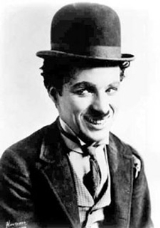
Charlie Chaplin

 
Charlie Chaplin

   Email Print
   Bookmark   Link


Charlie Chaplin


Sir Charles Spencer Chaplin, Jr. KBE
Order of the British Empire

The Most Excellent Order of the British Empire is a United Kingdom order of chivalry established on 4 June 1917 by George V of the United Kingdom....
 (16 April 1889 – 25 December 1977), better known as Charlie Chaplin, was an Academy Award-winning English
England

native_name =|conventional_long_name = England|common_name = England|image_flag = Flag of England.svg|image_coat = England COA.svg|symbol_type = Royal Coat of Arms...
 comedic
Comedy film

Comedy film is a genre of film in which the main emphasis is on Humour. Also, films in this style typically have a happy ending . One of the oldest genres in film, some of the very first silent movies were comedies....
 actor
Actor

An actor or actress is a person who acting in a dramatic production and who works in film, television, theatre, or radio programming in that capacity....
 and filmmaker. Chaplin became one of the most famous actors as well as a notable filmmaker
Film director

A film director, or filmmaker, is a person who directs the making of a film. A film director visualizes the Screenplay, controlling a film's artistic and dramatic aspects, while guiding the technical crew and actors in the fulfillment of his or her vision....
, composer and musician
Musician

A musician is a person who plays or writes music. Musicians can be classified by their roles in creating or performing music:* An instrumentalist plays a musical instrument....
 in the early
Cinema of the United States

United States cinema has had a profound effect on cinema across the world since the early 20th century. Its history is sometimes separated into four main periods: the silent film era, Classical Hollywood cinema, New Hollywood, and the contemporary period ....
 to mid
Classical Hollywood cinema

Classical Hollywood cinema or the classical Hollywood narrative, are terms used in history of film which designates both a visual and sound style for making motion pictures and a mode of production used in the Cinema of the United States between roughly the 1910s and the 1960s....
 "Classical Hollywood" era of American cinema
Cinema of the United States

United States cinema has had a profound effect on cinema across the world since the early 20th century. Its history is sometimes separated into four main periods: the silent film era, Classical Hollywood cinema, New Hollywood, and the contemporary period ....
.

Chaplin acted in, directed, scripted, produced and eventually scored his own films as one of the most creative and influential personalities of the silent-film era.


Discussion
Ask a question about 'Charlie Chaplin'
Start a new discussion about 'Charlie Chaplin'
Answer questions from other users
Full Discussion Forum


Recent Posts


Quotations


All I need to make a comedy is a park, a policeman and a pretty girl.

My Autobiography (1964)

Youll never find rainbows if youre looking down.

Swing High Little Girl (opening song sung by Charlie Chaplin for The Circus.)

I had no idea of the character. But the moment I was dressed, the clothes and the make-up made me feel the person he was. I began to know him, and by the time I walked onto the stage he was fully born.

My Autobiography (1964)

...I am what I am: an individual, unique and different, with a lineal history of an ancestral promptings and urgings, a history of dreams, desires, and of special experiences, of all of which I am the sum total.

My Autobiography (p. 271 Simon and Schuster 1964 edition)

I hope we shall abolish war and settle all differences at the conference table... I hope we shall abolish all hydrogen and atom bombs before they abolish us first.

In response to journalist for his views on the future of mankind at his 70th birthday, 1959-04-16


Encyclopedia


Sir Charles Spencer Chaplin, Jr. KBE
Order of the British Empire

The Most Excellent Order of the British Empire is a United Kingdom order of chivalry established on 4 June 1917 by George V of the United Kingdom....
 (16 April 1889 – 25 December 1977), better known as Charlie Chaplin, was an Academy Award-winning English
England

native_name =|conventional_long_name = England|common_name = England|image_flag = Flag of England.svg|image_coat = England COA.svg|symbol_type = Royal Coat of Arms...
 comedic
Comedy film

Comedy film is a genre of film in which the main emphasis is on Humour. Also, films in this style typically have a happy ending . One of the oldest genres in film, some of the very first silent movies were comedies....
 actor
Actor

An actor or actress is a person who acting in a dramatic production and who works in film, television, theatre, or radio programming in that capacity....
 and filmmaker. Chaplin became one of the most famous actors as well as a notable filmmaker
Film director

A film director, or filmmaker, is a person who directs the making of a film. A film director visualizes the Screenplay, controlling a film's artistic and dramatic aspects, while guiding the technical crew and actors in the fulfillment of his or her vision....
, composer and musician
Musician

A musician is a person who plays or writes music. Musicians can be classified by their roles in creating or performing music:* An instrumentalist plays a musical instrument....
 in the early
Cinema of the United States

United States cinema has had a profound effect on cinema across the world since the early 20th century. Its history is sometimes separated into four main periods: the silent film era, Classical Hollywood cinema, New Hollywood, and the contemporary period ....
 to mid
Classical Hollywood cinema

Classical Hollywood cinema or the classical Hollywood narrative, are terms used in history of film which designates both a visual and sound style for making motion pictures and a mode of production used in the Cinema of the United States between roughly the 1910s and the 1960s....
 "Classical Hollywood" era of American cinema
Cinema of the United States

United States cinema has had a profound effect on cinema across the world since the early 20th century. Its history is sometimes separated into four main periods: the silent film era, Classical Hollywood cinema, New Hollywood, and the contemporary period ....
.

Chaplin acted in, directed, scripted, produced and eventually scored his own films as one of the most creative and influential personalities of the silent-film era. His working life in entertainment spanned over 65 years, from the Victorian
Victorian era

The Victorian Era of the United Kingdom of Great Britain and Ireland was the period of Victoria of the United Kingdom reign from June 1837 to January 1901....
 stage and the Music Hall
Music hall

Music hall is a form of British theatrical entertainment which was popular between 1850 and 1960. The term can refer to# A particular form of variety show entertainment involving a mixture of popular song, comedy and #Speciality Acts....
 in the United Kingdom as a child performer almost until his death at the age of 88. His high-profile public and private life encompassed both adulation and controversy. With Mary Pickford
Mary Pickford

Mary Pickford was an Academy Award-winning Canada film actor, as well as a co-founder of the film studio United Artists and one of the original 36 founders of the Academy of Motion Picture Arts and Sciences....
, Douglas Fairbanks
Douglas Fairbanks

Douglas Fairbanks, Sr., was an United States actor, screenwriter, film director and film producer, who was best known for his Swashbuckler films roles in Silent film films such as The Thief of Bagdad , Robin Hood , and The Mark of Zorro ....
 and D. W. Griffith
D. W. Griffith

David Llewelyn Wark "D. W." Griffith was a premier pioneering Academy Award-winning American film director. He is best known as the director of the groundbreaking 1915 film The Birth of a Nation and the subsequent film Intolerance ....
, Chaplin co-founded United Artists
United Artists

United Artists Entertainment LLC is an United States film studio. The current United Artists was formed in November 2006 under a partnership between producer/actor Tom Cruise and his production partner, Paula Wagner, and Metro-Goldwyn-Mayer Studios Inc., an MGM company....
 in 1919.

In a review of the book Chaplin: A Life (2008), Martin Sieff writes: "Chaplin was not just 'big', he was gigantic. In 1915, he burst onto a war-torn world bringing it the gift of comedy, laughter and relief while it was tearing itself apart through World War I
World War I

World War I, or the First World War , was a global military conflict which involved the Great powers, organized into two opposing military alliances: the Allies of World War I and the Central Powers....
. Over the next 25 years, through the Great Depression
Great Depression

File:International depression.pngThe Great Depression was a worldwide economic Recession starting in most places in 1929 and ending at different times in the 1930s or early 1940s for different countries....
 and the rise of Hitler
Adolf Hitler

Adolf Hitler was an Austrian-born Germany politician and the leader of the National Socialist German Workers Party , popularly known as the Nazi Party....
, he stayed on the job. He was bigger than anybody. It is doubtful any individual has ever given more entertainment, pleasure and relief to so many human beings when they needed it the most."

Early life

Chaplin was born on 16 April 1889, in East Street
East Street Market

East Street Market is a busy street market in Walworth, London in south London. It is large and vibrant and is good for African and Caribbean fruit and vegetables, material and household goods....
, Walworth
Walworth, London

Walworth is an inner-city district in the London Borough of Southwark. Walworth probably derives its name from the old English "Wealhworth" which meant Welsh farm....
, London. His parents were both entertainers in the music hall
Music hall

Music hall is a form of British theatrical entertainment which was popular between 1850 and 1960. The term can refer to# A particular form of variety show entertainment involving a mixture of popular song, comedy and #Speciality Acts....
 tradition; his father being a vocalist and an actor and his mother, a singer and an actress. They separated before Charlie was three. He learned singing from his parents. The 1891 census
Census

A census is the procedure of systematically acquiring and recording information about the members of a given population. It is a regularly occurring and official count of a particular population....
 shows that his mother, the actress Hannah Hill
Hannah Chaplin

Hannah Chaplin was the mother of Charlie Chaplin. She was born Hannah Harriett Hill in Camden Street, Walworth, London. She became a Music Hall entertainer and used the stage name 'Lily Harley'....
, lived with Charlie and his older half-brother Sydney on Barlow Street, Walworth. As a child, Charlie also lived with his mother in various addresses in and around Kennington Road
Kennington Road

Kennington Road is a long straight road, approximately a mile in length, in the London Borough of Lambeth, London SE1 running south from Westminster Bridge Road to Kennington Park Road....
 in Lambeth
Lambeth

Lambeth is a place in the London Borough of Lambeth, although the area is now more commonly known as Waterloo, after the railway station whose viaduct separates the former centre of the village from the River Thames....
, including 3 Pownall Terrace, Chester Street and 39 Methley Street. His maternal grandmother was half-Gypsy, a fact of which his father was extremely proud, but which Chaplin described as "the skeleton in our family cupboard". Chaplin's father, Charles Chaplin, Sr., was an alcoholic and had little contact with his son, though Chaplin and his half-brother briefly lived with their father and his mistress, Louise, at 287 Kennington Road where a plaque now commemorates the fact. The half-brothers lived there while their mentally ill mother resided at Cane Hill
Cane Hill

Cane Hill was a psychiatric hospital in Coulsdon in the London Borough of Croydon. Built to handle patients unable to attend the Springfield and Brookwood Hospitals, both of which were filled to capacity, it opened in 1882 as the Third Surrey County Lunatic Asylum....
 Asylum at Coulsdon
Coulsdon

The modern town of Coulsdon, once known as Colesdone, has a received pronunciation of "Cools-don" . It enjoys a strategic urban and rural location....
. Chaplin's father's mistress sent the boy to Kennington Road School. His father died of alcoholism when Charlie was twelve in 1901. As of the 1901 Census, Charles resided at 94 Ferndale Road, Lambeth
Lambeth

Lambeth is a place in the London Borough of Lambeth, although the area is now more commonly known as Waterloo, after the railway station whose viaduct separates the former centre of the village from the River Thames....
, with The Eight Lancashire Lads
The Eight Lancashire Lads

The Eight Lancashire Lads was a troupe of young male dancers who toured the music halls of Great Britain in the late 1800s and early 1900s. Their main type of dance was Tap dance....
, led by John William Jackson (the 17 year old son of one of the founders).

A larynx
Larynx

The larynx , colloquially known as the voicebox, is an organ in the neck of mammals involved in protection of the vertebrate trachea and sound production....
 condition ended the singing career of Chaplin's mother. Hannah's first crisis came in 1894 when she was performing at The Canteen, a theatre in Aldershot
Aldershot

Aldershot is a town in the England county of Hampshire, located on heathland about 60 km southwest of London. The town is administered by Rushmoor Borough Council....
. The theatre was mainly frequented by rioters and soldiers. Hannah was badly injured by the objects the audience threw at her and she was booed off the stage. Backstage, she cried and argued with her manager. Meanwhile, the five-year old Chaplin went on stage alone and sang a well-known tune at that time, "Jack Jones".

After Chaplin's mother (who went by the stage name Lilly Harley) was again admitted to the Cane Hill Asylum, her son was left in the workhouse
Workhouse

A workhouse, was a place where people who were unable to support themselves could go to live and work. The Oxford Dictionary's earliest reference to a workhouse dates to 1652 in Exeter....
 at Lambeth in south London, moving after several weeks to the Central London District School for paupers in Hanwell
Hanwell

Hanwell is a town situated in the London Borough of Ealing in West London, between Ealing and Southall.The local motto is: The Nec Aspera Terrent ...
. The young Chaplin brothers forged a close relationship in order to survive. They gravitated to the Music Hall while still very young, and both of them proved to have considerable natural stage talent. Chaplin's early years of desperate poverty were a great influence on his characters. Themes in his films in later years would re-visit the scenes of his childhood deprivation in Lambeth.

Chaplin's mother died in 1928 in Hollywood, seven years after having been brought to the U.S. by her sons. Unknown to Charlie and Sydney until years later, they had a half-brother through their mother. The boy, Wheeler Dryden
Wheeler Dryden

George Wheeler Dryden was an England actor and film director, the son of Hannah Chaplin and music hall entertainer Leo Dryden and thus the half brother of Charles Chaplin and Sydney Chaplin....
, was raised abroad by his father but later connected with the rest of the family and went to work for Chaplin at his Hollywood studio.

America

Chaplinmakinaliving
Chaplin first toured America
United States

The United States of America is a Federal government constitutional republic comprising U.S. state and a federal district. The country is situated mostly in central North America, where its Contiguous United States and Washington, D.C., the Capital districts and territories, lie between the Pacific Ocean and Atlantic Oceans, Borders of the U...
 with the Fred Karno
Fred Karno

Frederick John Westcott , best known by the stage name Fred Karno, was a theatre impresario of the British music hall.Karno was born in Exeter, Devon, England, in 1866....
 troupe from 1910 to 1912. After five months back in England, he returned to the U.S. for a second tour, arriving with the Karno Troupe on 2 October 1912. In the Karno Company was Arthur Stanley Jefferson, who would later become known as Stan Laurel
Stan Laurel

Stan Laurel was an English comic actor, writer and director, famous as the first half of the comedy double-act Laurel and Hardy, whose career stretched from the silent films of the early 20th century until post-World War II....
. Chaplin and Laurel shared a room in a boarding house. Stan Laurel returned to England but Chaplin remained in the United States. In late 1913, Chaplin's act with the Karno Troupe was seen by film producer Mack Sennett
Mack Sennett

Mack Sennett was a Canadian -born Academy Award-winning director and was known as the innovator of slapstick comedy in film. During his lifetime he was known at times as the "King of Comedy."...
, who hired him for his studio, the Keystone Film Company
Keystone Studios

Keystone Studios was an early movie studio founded in Edendale, Los Angeles, California in 1912 as the Keystone Pictures Studio by Mack Sennett with backing from Adam Kessel and Charles O....
. Chaplin's first film appearance was in Making a Living
Making a Living

Making a Living is the first film featuring Charlie Chaplin. It premiered on February 2, 1914. Chaplin plays Edgar English, a lady-charming swindler who runs afoul of the Keystone Cops....
,
a one-reel comedy released on February 2, 1914. At Keystone Studios, Chaplin became an instant success.

Pioneering film artist


Chaplin's earliest films were made for Mack Sennett
Mack Sennett

Mack Sennett was a Canadian -born Academy Award-winning director and was known as the innovator of slapstick comedy in film. During his lifetime he was known at times as the "King of Comedy."...
's Keystone Studios
Keystone Studios

Keystone Studios was an early movie studio founded in Edendale, Los Angeles, California in 1912 as the Keystone Pictures Studio by Mack Sennett with backing from Adam Kessel and Charles O....
, where he developed his tramp character and very quickly learned the art and craft of film making. The tramp was first presented to the public when Chaplin was age 24 in his second film Kid Auto Races at Venice
Kid Auto Races at Venice

Kid Auto Races At Venice is a 1914 in film United States-made motion picture starring Charlie Chaplin in which his "The Tramp" character makes a first appearance ....
 (released 7 February 1914) though Mabel's Strange Predicament
Mabel's Strange Predicament

Mabel's Strange Predicament is a 1914 in film United States-made motion picture starring Mabel Normand and Charles Chaplin. The Tramp was first presented to the public in Chaplin's second film Kid Auto Races at Venice though Mabel's Strange Predicament, his third film in order of release, was produced a few days before....
, his third film, (released 9 February 1914) was produced a few days before. It was for this film that Chaplin first conceived of the tramp. The character would immediately gain huge popularity among theater audiences. As Chaplin recalled in his autobiography
My Autobiography (Chaplin)

My Autobiography is the title of a book by screen legend Charlie Chaplin, first published by Simon and Schuster in 1964. Along with Chaplin: His Life and Art, it provided the source material for the 1992 feature film Chaplin ....
:

"I had no idea what makeup to put on. I did not like my get-up as the press reporter [in Making a Living]. However on the way to the wardrobe I thought I would dress in baggy pants, big shoes, a cane and a derby hat. I wanted everything to be a contradiction: the pants baggy, the coat tight, the hat small and the shoes large. I was undecided whether to look old or young, but remembering Sennett had expected me to be a much older man, I added a small moustache, which I reasoned, would add age without hiding my expression. I had no idea of the character. But the moment I was dressed, the clothes and the makeup made me feel the person he was. I began to know him, and by the time I walked on stage he was fully born."


Chaplin's early Keystones use the standard Mack Sennett formula of extreme physical comedy
Physical comedy

Physical comedy, also known as slapstick is a comedic performance relying mostly on the use of the body to convey humour.Whether a pratfall , a silly face, or by walking into walls, physical comedy is a common and rarely subtle form of comedy....
 and exaggerated gestures. Chaplin's pantomime was subtler, more suitable to romantic and domestic farces than to the usual Keystone chases and mob scenes. The visual gags were pure Keystone, however; the tramp character would aggressively assault his enemies with kicks and bricks. Moviegoers loved this cheerfully earthy new comedian, even though critics warned that his antics bordered on vulgarity. Chaplin was soon entrusted with directing and editing his own films. He made 34 shorts for Sennett during his first year in pictures, as well as the landmark comedy feature Tillie's Punctured Romance.

Chaplin's principal character was "The Tramp
The Tramp

The Tramp, also known as The Little Tramp was Charlie Chaplin's most memorable on-screen character, a recognized icon of world cinema most dominant during the silent film era....
" (known as "Charlot" in France, and the French-speaking world, Italy
Italy

Italy , officially the Italian Republic , is a country located on the Italian Peninsula in Southern Europe and on the two largest islands in the Mediterranean Sea, Sicily and Sardinia....
, Spain
Spain

Spain or the Kingdom of Spain , is a country located in Southern Europe on the Iberian Peninsula.The Spanish constitution does not establish any official denomination of the country, even though Espa?a , Estado espa?ol and Naci?n espa?ola are used interchangeably....
, Andorra
Andorra

Andorra , officially the Principality of Andorra , also called the Principality of the Valleys of Andorra, is a small landlocked country in western Europe, located in the eastern Pyrenees mountains and bordered by Spain and France....
, Portugal
Portugal

Portugal , officially the Portuguese Republic , is a country on the Iberian Peninsula. Located in southwestern Europe, Portugal is the westernmost country of mainland Europe and is bordered by the Atlantic Ocean to the west and south and by Spain to the north and east....
, Greece
Greece

Greece , officially the Hellenic Republic , is a country in southeastern Europe, situated on the southern end of the Balkans. It has borders with Albania, Bulgaria and the former Yugoslav Republic of Macedonia to the north, and Turkey to the east....
, Romania
Romania

Romania is a country located in Southeastern Europe Central Europe, North of the Balkan Peninsula, on the Lower Danube, within and outside the Carpathian Mountains, bordering on the Black Sea....
 and Turkey
Turkey

Turkey , known officially as the Republic of Turkey , is a Eurasian country that stretches across the Anatolian peninsula in southwest Asia and Thrace in the Balkans region of Southern Europe....
, "Carlitos" in Brazil
Brazil

Brazil , officially the Federative Republic of Brazil , is a country in South America. It is the List of countries and outlying territories by total area country by geographical area, occupying nearly half of South America, the List of countries by population country, and the fourth most populous democracy in the world....
 and Argentina
Argentina

Argentina, officially the Argentine Republic , is a country in South America, constituted as a federation of 23 provinces and an autonomous city....
, and "Vagabund" in Germany). "The Tramp" is a vagrant
Vagrancy (people)

A vagrant is a person in a situation of poverty, who wanders from place to place without a home or regular employment or income. Many towns in the Developed World have Homeless shelter for vagrants....
 with the refined manners and dignity of a gentleman
Gentleman

The term gentleman , in its original and strict signification, denoted a man of good family, analogous to the Latin generosus . In this sense the word equates with the French gentilhomme , which latter term was in Great Britain long confined to the peerage....
. The character wears a tight coat, oversized trousers and shoes, and a derby
Bowler hat

File:Olga Petrova with Knox Riding Hat,1915.jpgThe bowler hat, also known as a coke hat, derby or billycock, is a hard felt hat with a rounded crown originally created in 1849 for Edward Coke, the younger brother of the Thomas Coke, 2nd Earl of Leicester....
; carries a bamboo
Bamboo

The bamboos are a group of woody perennial plant evergreen plants in the true grass family Poaceae, subfamily Bambusoideae, tribe Bambuseae....
 cane; and has a signature toothbrush moustache
Toothbrush moustache

The Toothbrush moustache is a bushy moustache, shaved at the edges, except for three to five centimetres above the centre of the lip. The sides of the moustache are vertical rather than tapered....
. The Tramp character was featured in the first movie trailer to be exhibited in a U.S. movie theater, a slide promotion developed by Nils Granlund
Nils Granlund

Nils T. Granlund was an United States Broadway show producer, radio industry pioneer, a publicist for Marcus Loew who formed Loews Theatres and Metro-Goldwyn-Mayer ....
, advertising manager for the Marcus Loew
Marcus Loew

Marcus Loew was an United States business magnate and a pioneer of the motion picture industry who formed Loews Theatres and Metro-Goldwyn-Mayer ....
 theater chain, and shown at the Loew's Seventh Avenue Theatre in Harlem in 1914.

In 1915, Chaplin signed a much more favorable contract with Essanay Studios
Essanay Studios

The Essanay Film Manufacturing Company was an American film studio founded on August 10, 1907 in the neighborhood of Uptown, Chicago, Illinois by George K....
, and further developed his cinematic skills, adding new levels of depth and pathos to the Keystone-style slapstick. Most of the Essanay films were more ambitious, running twice as long as the average Keystone comedy. Chaplin also developed his own stock company, including ingenue Edna Purviance
Edna Purviance

Edna Purviance was an United States movie actress during the silent movie era. She was the leading lady in many Charlie Chaplin movies. In a span of eight years, she appeared in over 30 films with Chaplin....
 and comic villains Leo White
Leo White

Leo White was a stage performer and appeared as a character actor in many Charlie Chaplin films. He started his film career in 1911 and in 1913 moved to the Essanay Studios....
 and Bud Jamison.

In 1916, the Mutual Film Corporation paid Chaplin US$670,000 to produce a dozen two-reel comedies. He was given near complete artistic control, and produced twelve films over an eighteen-month period that rank among the most influential comedy films in cinema. Practically every Mutual comedy is a classic: Easy Street, One AM, The Pawnshop, and The Adventurer are perhaps the best known. Edna Purviance remained the leading lady, and Chaplin added Eric Campbell
Eric Campbell (actor)

Alfred Eric Campbell was a Scotland actor.A silent film era movie star, he was featured in 11 film starring Charlie Chaplin where he typically played the intimidating large villain of the story....
, Henry Bergman, and Albert Austin to his stock company; Campbell, a Gilbert and Sullivan
Gilbert and Sullivan

'Gilbert and Sullivan' refers to the Victorian era partnership of librettist W. S. Gilbert and composer Arthur Sullivan . Together, they wrote fourteen comic operas between 1871 and 1896, of which H.M.S....
 veteran, provided superb villainy, and second bananas Bergman and Austin would remain with Chaplin for decades. Chaplin regarded the Mutual period as the happiest of his career, although he also had concerns that the films during that time were becoming formulaic owing to the stringent production schedule his contract required. Upon the U.S. entering World War I, Chaplin became a spokesman for Liberty Bonds with his close friend Douglas Fairbanks and Mary Pickford.

Most of the Chaplin films in circulation date from his Keystone, Essanay, and Mutual periods. After Chaplin assumed control of his productions in 1918 (and kept exhibitors and audiences waiting for them), entrepreneurs serviced the demand for Chaplin by bringing back his older comedies. The films were recut, retitled, and reissued again and again, first for theatres, then for the home-movie market, and in recent years, for home video. Even Essanay was guilty of this practice, fashioning "new" Chaplin comedies from old film clips and out-takes. The twelve Mutual comedies were revamped as sound movies in 1933, when producer Amadee J. Van Beuren added new orchestral scores
Film score

A film score is a broad term referring to the music in a film, which is generally categorically separated from songs used within a film. The term Soundtrack is often confused with film score, though a soundtrack may also include songs featured in the film as well as previously released music by other artists, while the score does...
 and sound effects. A listing of the dozens of Chaplin films and alternate versions can be found in the Ted Okuda
Ted Okuda

Ted Okuda is an American non-fiction author in film, television, and entertainment subjects. He has many books and magazine features to his credit, under his own name and in collaboration with others....
-David Maska book Charlie Chaplin at Keystone and Essanay: Dawn of the Tramp. Efforts to produce definitive versions of Chaplin's pre-1918 short films have been underway in recent years; all twelve Mutual films were restored in 1975 by archivist David Shepard
David Shepard

David Shepard is a film preservation whose company, Film Preservation Associates, is responsible for many high quality video versions of silent films....
 and Blackhawk Films
Blackhawk Films

Blackhawk Films, from the 1950s through the early 1980s, marketed motion pictures on 16mm, 8mm and Super 8 film. Most were vintage one- or two-reel short subjects, usually comedies starring Laurel and Hardy, Our Gang, Charlie Chaplin, Buster Keaton, and other famous comedy series of the past....
, and new restorations with even more footage were released on DVD in 2006.


Filmmaking techniques

Chaplin never spoke more than cursorily about his filmmaking methods, claiming such a thing would be tantamount to a magician spoiling his own illusion. In fact, until he began making spoken dialogue films with The Great Dictator
The Great Dictator

The Great Dictator is a comedy film Film director by and starring Charlie Chaplin. First released in October 1940 in film, it was Chaplin's first true talking picture, and more importantly was the only major film of its period to bitterly satirise Nazism and Adolf Hitler, culminating in an overt political plea to defy fascism....
, Chaplin never shot from a completed script. The method he developed, once his Essanay contract gave him the freedom to write for and direct himself, was to start from a vague premise - e.g., "Charlie enters a health spa" or "Charlie works in a pawn shop." Chaplin then had sets constructed and worked with his stock company to improvise gags and "business" around them, almost always working the ideas out on film. As ideas were accepted and discarded, a narrative structure would emerge, frequently requiring Chaplin to reshoot an already-completed scene that might have otherwise contradicted the story. Chaplin's unique filmaking techniques became known only after his death, when his rare surviving outakes and cut sequences were carefully examined in the 1983 British documentary Unknown Chaplin
Unknown Chaplin

Unknown Chaplin is an acclaimed three-part 1983 United Kingdom television documentary about the career and the methods of the film luminary Charles Chaplin using previously unseen film for illustration....
.

This is one reason why Chaplin took so much longer to complete his films than did his rivals. In addition, Chaplin was an incredibly exacting director, showing his actors exactly how he wanted them to perform and shooting scores of takes until he had the shot he wanted. (Animator Chuck Jones, who lived near Charlie Chaplin's Lone Star studio as a boy, remembered his father saying he watched Chaplin shoot a scene more than a hundred times until he was satisfied with it.) This combination of story improvisation and relentless perfectionism - which resulted in days of effort and thousands of feet of film being wasted, all at enormous expense - often proved very taxing for Chaplin, who in frustration would often lash out at his actors and crew, keep them waiting idly for hours or, in extreme cases, shutting down production altogether.

Chaplin was known by his actors for doing numerous takes to get a perfect scene. During the Gold Rush scene wherein the Lone Prospector was eating his shoelaces (made entirely of licorice) Chaplin was not satisfied with the scene so he did take after take of eating the shoelaces. From the great amount of sugar Chaplin had consumed he was taken to the hospital because he suffered from a sugar shock.

Creative control

At the conclusion of the Mutual contract in 1917, Chaplin signed a contract with First National
First National

First National was an association of independent theater owners in the United States that expanded from exhibiting movies to distributing them, and eventually to producing them as a movie studio....
 to produce eight two-reel films. First National financed and distributed these pictures (1918-23) but otherwise gave him complete creative control over production which he could perform at a more relaxed pace that allowed him to focus on quality. Chaplin built his own Hollywood studio and using his independence, created a remarkable, timeless body of work that remains entertaining and influential. Although First National expected Chaplin to deliver short comedies like the celebrated Mutuals, Chaplin ambitiously expanded most of his personal projects into longer, feature-length films, including Shoulder Arms
Shoulder Arms

Shoulder Arms is Charlie Chaplin's second film for First National. Released in 1918 in film, it is a silent comedy set in France during World War I....
 (1918), The Pilgrim
The Pilgrim

The Pilgrim is a 1923 in film United States silent film made by Charlie Chaplin for the First National, starring Chaplin and Edna Purviance....
 (1923) and the feature-length classic The Kid
The Kid (1921 film)

The Kid is a 1921 silent film dramedy film by Charlie Chaplin that featured Jackie Coogan, as his adopted son and sidekick . It was a huge success, and was the second-highest grossing film in 1921, behind The Four Horsemen of the Apocalypse ....
 (1921).

In 1919, Chaplin co-founded the United Artists
United Artists

United Artists Entertainment LLC is an United States film studio. The current United Artists was formed in November 2006 under a partnership between producer/actor Tom Cruise and his production partner, Paula Wagner, and Metro-Goldwyn-Mayer Studios Inc., an MGM company....
 film distribution company with Mary Pickford
Mary Pickford

Mary Pickford was an Academy Award-winning Canada film actor, as well as a co-founder of the film studio United Artists and one of the original 36 founders of the Academy of Motion Picture Arts and Sciences....
, Douglas Fairbanks
Douglas Fairbanks

Douglas Fairbanks, Sr., was an United States actor, screenwriter, film director and film producer, who was best known for his Swashbuckler films roles in Silent film films such as The Thief of Bagdad , Robin Hood , and The Mark of Zorro ....
 and D.W. Griffith, all of whom were seeking to escape the growing power consolidation of film distributors and financiers in the developing Hollywood studio system. This move, along with complete control of his film production through his studio, assured Chaplin's independence as a film-maker. He served on the board of UA until the early 1950s.

All Chaplin's United Artists pictures were of feature length, beginning with the atypical drama in which Chaplin had only a brief cameo role, A Woman of Paris
A Woman of Paris

A Woman of Paris is a feature-length silent film that debuted in 1923 in film. The film, an atypical drama film for its creator, was written, directed, produced and scored by Charlie Chaplin....
 (1923). This was followed by the classic comedies The Gold Rush
The Gold Rush

The Gold Rush is a silent film Comedy film written, produced, directed by, and starring Charlie Chaplin in his The Tramp role. The film also stars Georgia Hale, Mack Swain, Tom Murray , Henry Bergman, Malcolm Waite....
 (1925) and The Circus (1928).

After the arrival of sound films, Chaplin made City Lights
City Lights

City Lights is a Cinema of the United States silent film romantic comedy film written and directed by Charlie Chaplin, and starring Chaplin alongside Virginia Cherrill and Harry Myers....
 (1931), as well as Modern Times
Modern Times (film)

Modern Times is a 1936 in film comedy film by Charles Chaplin that has his iconic The Tramp character, in his final silent-film appearance, struggling to survive in the modern, industrialized world....
 (1936) before he committed to sound. These were essentially silent films scored with his own music and sound effects. City Lights contained arguably his most perfect balance of comedy and sentimentality. Of the final scene, critic James Agee
James Agee

James Rufus Agee was an United States author, journalist, poet, screenwriter and film critic. In the 1940s, he was one of the most influential film critics in the U.S....
 wrote in Life magazine in 1949 that it was the "greatest single piece of acting ever committed to celluloid
Celluloid

Celluloid is the name of a class of Chemical compound created from nitrocellulose and camphor, plus dyes and other agents. Generally regarded to be the first thermoplastic, it was first created as Parkesine in 1856 and as Xylonite in 1869 before being registered as Celluloid in 1870....
".

Chaplin's dialogue films made in Hollywood were The Great Dictator
The Great Dictator

The Great Dictator is a comedy film Film director by and starring Charlie Chaplin. First released in October 1940 in film, it was Chaplin's first true talking picture, and more importantly was the only major film of its period to bitterly satirise Nazism and Adolf Hitler, culminating in an overt political plea to defy fascism....
 (1940), Monsieur Verdoux
Monsieur Verdoux

Monsieur Verdoux is a 1947 black comedy film directed by and starring Charlie Chaplin....
 (1947) and Limelight
Limelight (film)

Limelight is a 1952 in film comedy film-drama film film written, directed by and starring Charlie Chaplin, co-starring Claire Bloom, with an appearance by Buster Keaton....
 (1952).

While Modern Times (1936) is a non-talkie, it does contain talk — usually coming from inanimate objects such as a radio or a TV monitor. This was done to help 1930s audiences, who were out of the habit of watching silent films, adjust to not hearing dialogue. Modern Times was the first film where Chaplin's voice is heard (in the nonsense song
Modern Times (film)

Modern Times is a 1936 in film comedy film by Charles Chaplin that has his iconic The Tramp character, in his final silent-film appearance, struggling to survive in the modern, industrialized world....
 at the end, being both written and performed by Chaplin). However, for most viewers it is still considered a silent film — and the end of an era.

Although "talkies" became the dominant mode of movie making soon after they were introduced in 1927, Chaplin resisted making such a film all through the 1930s. He considered cinema essentially a pantomimic art. He said: "Action is more generally understood than words. Like Chinese symbolism, it will mean different things according to its scenic connotation. Listen to a description of some unfamiliar object — an African warthog, for example; then look at a picture of the animal and see how surprised you are".

It is a tribute to Chaplin's versatility that he also has one film credit for choreography
Choreography

Choreography , is the art of making structures in which movement occurs. The term dance composition may also refer to the navigation or connection of these movement structures....
 for the 1952 film Limelight, and another as a singer for the title music of The Circus (1928). The best known of several songs he composed are "Smile", composed for the film Modern Times and given lyrics to help promote a 1950s revival of the film, famously covered by Nat King Cole
Nat King Cole

Nathaniel Adams Coles , known professionally as Nat King Cole, was an United States musician who first came to prominence as a leading jazz pianist....
. "This Is My Song" from Chaplin's last film, "A Countess From Hong Kong," was a number one hit in several different languages in the 1960s (most notably the version by Petula Clark
Petula Clark

Petula Clark, Order of the British Empire , is an English singer, actress, and composer whose career has spanned seven decades.Clark's professional career began as an entertainer on BBC Radio during World War II....
 and discovery of an unreleased version in the 1990s recorded in 1967 by Judith Durham
Judith Durham

Judith Durham, Order of Australia is an Australian jazz singing who became the lead vocalist for the Australian popular folk music group The Seekers in 1963....
 of The Seekers
The Seekers

The Seekers were a group of Australian folk music-influenced pop music musicians that was formed in Melbourne in 1962. They were the first Australian popular music group to achieve significant chart and sales success in the United Kingdom and the United States....
), and Chaplin's theme from Limelight was a hit in the 1950s under the title "Eternally." Chaplin's score to Limelight won an Academy Award in 1972; a delay in the film premiering in Los Angeles made it eligible decades after it was filmed. Chaplin also wrote scores for his earlier silent films when they were re-released in the sound era, notably The Kid for its 1971 re-release.


The Great Dictator

Chaplin's first dialogue picture, The Great Dictator
The Great Dictator

The Great Dictator is a comedy film Film director by and starring Charlie Chaplin. First released in October 1940 in film, it was Chaplin's first true talking picture, and more importantly was the only major film of its period to bitterly satirise Nazism and Adolf Hitler, culminating in an overt political plea to defy fascism....
 (1940), was an act of defiance against German dictator Adolf Hitler
Adolf Hitler

Adolf Hitler was an Austrian-born Germany politician and the leader of the National Socialist German Workers Party , popularly known as the Nazi Party....
 and Nazism
Nazism

Nazism, officially National Socialism , refers to the ideology and practices of the National Socialist German Workers? Party under Adolf Hitler, and the policies adopted by the dictatorial government of Nazi Germany from 1933 to 1945....
, filmed and released in the United States one year before the U.S. abandoned its policy of isolationism
Isolationism

Isolationism is a foreign policy which combines a non-interventionism military policy and a political policy of economic nationalism . In other words, it asserts both of the following:...
 to enter World War II. Chaplin played the role of "Adenoid Hynkel", Dictator of Tomania, clearly modeled on Hitler. The film also showcased comedian Jack Oakie
Jack Oakie

Jack Oakie was an United States actor, starring mostly in films, but also working on Theatre, radio and television....
 as "Benzino Napaloni", dictator of Bacteria. The Napaloni character was clearly a jab at Italian dictator Benito Mussolini
Benito Mussolini

Benito Amilcare Andrea Mussolini, Order of the Bath Sovereign Military Order of Malta Order of the Tower and Sword was an Italy politician who led the National Fascist Party and is credited with being one of the key figures in the creation of Fascism....
 and Fascism
Fascism

Fascism is a Political radicalism, Authoritarianism Nationalism ideology that aims to create a single-party state with a government led by a dictator who seeks national unity and development by requiring individuals to subordinate self-interest to the collective interest of the nation or Race ....
.

Paulette Goddard
Paulette Goddard

Paulette Goddard was an American film and theatre actress. A former child Model and in several Broadway theatre productions as Ziegfeld Follies, she was a major star of the Paramount Studio in the 1940s....
 filmed with Chaplin again, depicting a woman in the ghetto. The film was seen as an act of courage in the political environment of the time, both for its ridicule of Nazism and for the portrayal of overt Jewish characters and the depiction of their persecution. Chaplin played both the role of Adenoid Hynkel and also that of a look-alike Jewish barber persecuted by the Nazis
Nazism

Nazism, officially National Socialism , refers to the ideology and practices of the National Socialist German Workers? Party under Adolf Hitler, and the policies adopted by the dictatorial government of Nazi Germany from 1933 to 1945....
. The barber physically resembles Chaplin's Tramp character, but is not considered to be the Tramp. At the conclusion, the two characters Chaplin portrayed swapped positions through a complex plot, and he dropped out of his comic character to address the audience directly in a speech.

Politics

Chaplin's political sympathies always lay with the left
Left-wing politics

In politics, left-wing, leftist, and the Left are terms applied to Social progressivism and Egalitarianism positions. Originally, during the French Revolution, left-wing referred to seating arrangements in parliament; those who sat on the left opposed the monarchy and supported Political radicalism reform....
. His politics seem moderate by some contemporary standards, but in the 1940s his views (in conjunction with his influence, fame, and status in the United States as a resident foreigner) were seen by many as communistic. His silent films made prior to the Great Depression
Great Depression

File:International depression.pngThe Great Depression was a worldwide economic Recession starting in most places in 1929 and ending at different times in the 1930s or early 1940s for different countries....
 typically did not contain overt political themes or messages, apart from the Tramp's plight in poverty
Poverty

Poverty is the shortage of common things such as food, clothing, shelter and safe drinking water, all of which determine our quality of life. It may also include the lack of access to opportunities such as education and employment which aid the escape from poverty and/or allow one to enjoy the respect of fellow citizens....
 and his run-ins with the law, but his 1930s films were more openly political. Modern Times depicts workers and poor people in dismal conditions. The final dramatic speech in The Great Dictator, which was critical of following patriotic nationalism without question, and his vocal public support for the opening of a second European front in 1942 to assist the Soviet Union
Soviet Union

The Union of Soviet Socialist Republics was a Constitution of the Soviet Union socialist state that existed in Eurasia from 1922 to 1991.The name is a translation of the , romanization of Russian Soyuz Sovetskikh Sotsialisticheskikh Respublik, abbreviated ????, SSSR....
 in World War II
World War II

World War II, or the Second World War , was a global military conflict which involved a Participants in World War II, including all of the great powers, organised into two opposing military alliances: the Allies of World War II and the Axis powers....
 were controversial. In at least one of those speeches, according to a contemporary account in the Daily Worker, he intimated that Communism might sweep the world after World War II
World War II

World War II, or the Second World War , was a global military conflict which involved a Participants in World War II, including all of the great powers, organised into two opposing military alliances: the Allies of World War II and the Axis powers....
 and equated it with human progress.

Apart from the controversial 1942 speeches, Chaplin declined to support the war effort as he had done for the First World War which led to public anger, although his two sons saw service in the Army in Europe. For most of World War II he was fighting serious criminal and civil charges related to his involvement with actress Joan Barry (see below). After the war, the critical view towards what he regarded as capitalism
Capitalism

Capitalism is an economic system in which wealth, and the means of producing wealth, are private property and controlled rather than commonly, publicly, or state-owned and controlled....
 in his 1947 black comedy
Black comedy

file:Hopscotch to oblivion.jpgBlack comedy is a sub-genre of comedy and satire in which topics and events that are usually regarded as taboo are treated in a satirical or humorous manner while retaining its seriousness....
, Monsieur Verdoux
Monsieur Verdoux

Monsieur Verdoux is a 1947 black comedy film directed by and starring Charlie Chaplin....
 led to increased hostility, with the film being the subject of protests in many U.S. cities. As a result, Chaplin's final American film, Limelight, was less political and more autobiographical in nature. His following European-made film, A King in New York
A King in New York

A King in New York is a 1957 in film film directed by and starring Charles Chaplin in his last leading role, which presents a satirical view of certain aspects of United States politics and society....
 (1957), satirized the political persecution and paranoia that had forced him to leave the U.S. five years earlier. After this film, Chaplin lost interest in making overt political statements, later saying that comedians and clowns should be "above politics".

McCarthy era

Although Chaplin had his major successes in the United States and was a resident from 1914 to 1953, he always maintained a neutral nationalistic stance. During the era of McCarthyism
McCarthyism

McCarthyism is the politically motivated practice of making accusations of disloyalty, subversion, or treason without proper regard for evidence....
, Chaplin was accused of "un-American activities" as a suspected communist
Communism

Communism is a socioeconomic structure and political ideology that promotes the establishment of an egalitarianism, classlessness, stateless society based on common ownership and control of the means of production and property in general....
 sympathizer and J. Edgar Hoover
J. Edgar Hoover

John Edgar Hoover , generally known as J. Edgar Hoover, was the first Director of the Federal Bureau of Investigation of the Federal Bureau of Investigation of the United States....
, who had instructed the FBI to keep extensive secret files on him, tried to end his United States residency. FBI pressure on Chaplin grew after his 1942 campaign for a second European front in the war and reached a critical level in the late 1940s, when Congressional figures threatened to call him as a witness in hearings. This was never done, probably from fear of Chaplin's ability to lampoon the investigators. This was probably a wise decision, as Chaplin later stated that, if called, he wanted to appear dressed in his Tramp costume.

In 1952, Chaplin left the US for what was intended as a brief trip home to the United Kingdom for the London premiere of Limelight. Hoover learned of the trip and negotiated with the Immigration and Naturalization Service
Immigration and Naturalization Service

The United States Immigration and Naturalization Service was a part of the United States Department of Justice and handled legal and illegal immigration and naturalization....
 to revoke Chaplin's re-entry permit. Chaplin decided not to re-enter the United States, writing; ".....Since the end of the last world war, I have been the object of lies and propaganda
Propaganda

Propaganda is the dissemination of information aimed at influencing the opinions or behaviors of large numbers of people. As opposed to Objectivity providing information, propaganda in its most basic sense presents information in order to influence its audience....
 by powerful reactionary groups who, by their influence and by the aid of America's yellow press
Yellow journalism

Yellow journalism is a type of journalism that downplays legitimate news in favor of eye-catching headlines that sell more newspapers. It may feature exaggerations of news events, Scandal, sensationalism, or unprofessional practices by news media organizations or journalists....
, have created an unhealthy atmosphere in which liberal-minded individuals can be singled out and persecuted. Under these conditions I find it virtually impossible to continue my motion-picture work, and I have therefore given up my residence in the United States."

Chaplin then made his home in Vevey
Vevey

File:Picswiss VD-43-28.jpgVevey is a town in Switzerland in the canton Vaud, on the north shore of Lake Geneva., not far from Lausanne. It was historically known as Viviscus or Vibiscum....
, Switzerland
Switzerland

Switzerland is a landlocked Swiss Alps country of roughly 7.7 million people in Western Europe with an area of 41,285 km?. Switzerland is a federal republic consisting of 26 states called Cantons of Switzerland....
. He briefly and triumphantly returned to the United States in April 1972, with his wife, to receive an Honorary Oscar
Academy Honorary Award

The Academy Honorary Award, instituted in 1948 in film for the 21st Academy Awards , is given by the discretion of the Academy of Motion Picture Arts and Sciences#Current administration of the Academy of the Academy of Motion Picture Arts and Sciences to celebrate motion picture achievements that are not covered by existing Academy Awards....
, and also to discuss how his films would be re-released and marketed. He was welcomed warmly.
Chaplin the Kid

Academy Awards

Chaplin won one Oscar
Academy Awards

The Academy Awards, popularly known as the Oscars, are presented annually by the Academy of Motion Picture Arts and Sciences to recognize excellence of professionals in the film industry, including directors, actors, and writers....
 in a competitive category, and was given three honorary Academy Awards.

Competitive awards

In 1972, Chaplin won an Oscar for the Best Music in an Original Dramatic Score
Academy Award for Original Music Score

The Academy Award for Original Music Score is presented to the best substantial body of music in the form of Film score written specifically for the film by the submitting composer....
 for the 1952 film Limelight, which co-starred Claire Bloom
Claire Bloom

Claire Bloom is an England film and stage actress....
. The film also features an appearance with Buster Keaton
Buster Keaton

Joseph Frank "Buster" Keaton was an Academy Award-winning United States comic actor and filmmaker. Best known for his silent films, his trademark was physical comedy with a stoicism, deadpan expression on his face, earning him the nickname "The Great Stone Face" ....
, which was the only time the two great comedians ever appeared together. Due to Chaplin's political difficulties, the film did not play a one-week theatrical engagement in Los Angeles when it was first produced. This criterion for nomination was unfulfilled until 1972.

Chaplin was also nominated for Best Comedy Director for The Circus in 1929, for Best Picture, Best Actor, Best Original Screenplay (although the Academy no longer lists these nominations in their official records because he received a Special Award instead of being included in the final voting for the competitive ones), Best Original Screenplay and Best Actor for The Great Dictator in 1940, and again for Best Original Screenplay for Monsieur Verdoux in 1948. During his active years as a filmmaker, Chaplin expressed disdain for the Academy Awards; his son Charles Jr wrote that Chaplin invoked the ire of the Academy in the 1930s by jokingly using his 1929 Oscar as a doorstop. This may help explain why City Lights
City Lights

City Lights is a Cinema of the United States silent film romantic comedy film written and directed by Charlie Chaplin, and starring Chaplin alongside Virginia Cherrill and Harry Myers....
 and Modern Times
Modern Times (film)

Modern Times is a 1936 in film comedy film by Charles Chaplin that has his iconic The Tramp character, in his final silent-film appearance, struggling to survive in the modern, industrialized world....
,
considered by several polls to be two of the greatest of all motion pictures, were not nominated for a single Academy Award.

Honorary awards

When the first Oscars were awarded on 16 May 1929, the voting audit procedures that now exist had not yet been put into place, and the categories were still very fluid. Chaplin had originally been nominated for both Best Actor and Best Comedy Directing for his movie The Circus, but his name was withdrawn and the Academy decided to give him a special award "for versatility and genius in acting, writing, directing and producing The Circus" instead. The other film to receive a special award that year was The Jazz Singer
The Jazz Singer (1927 film)

The Jazz Singer is a American musical film. The first feature film motion picture with synchronization dialogue sequences, its release heralded the commercial ascendance of the "sound film" and the decline of the silent film era....
.

Chaplin's second honorary award came forty-four years later in 1972, and was for "the incalculable effect he has had in making motion pictures the art form of this century". He came out of his exile to accept his award, and received the longest standing ovation
Standing ovation

A standing ovation is a form of applause where members of a seated audience stand up while applauding. This is done on special occasions by an audience to show their approval and is done after extraordinary performances of particularly high acclaim....
 in Academy Award history, lasting a full five minutes.

Final works

Chaplin's final two films were made in London: A King in New York
A King in New York

A King in New York is a 1957 in film film directed by and starring Charles Chaplin in his last leading role, which presents a satirical view of certain aspects of United States politics and society....
 (1957) in which he starred, wrote, directed and produced; and A Countess from Hong Kong
A Countess from Hong Kong

A Countess from Hong Kong is a 1967 in film comedy film and the last film directed by Charlie Chaplin. It was one of two films Chaplin directed in which he did not play a major role , and his only color film....
 (1967), which he directed, produced, and wrote. The latter film stars Sophia Loren
Sophia Loren

Sophia Loren is an Academy Award-winning Italian people film actress. She is widely considered to be the most popular Italian actress of her time and is also famous for being a major international sex symbol....
 and Marlon Brando
Marlon Brando

Marlon Brando, Jr. was an Academy Award-winning American actor whose body of work spanned over half a century. He is widely considered one of the greatest actors of all time, and was named the fourth AFI's 100 Years......
, and Chaplin made his final on-screen appearance in a brief cameo role as a seasick steward. He also composed the music for both films with the theme song from A Countess From Hong Kong, "This is My Song
This Is My Song

"This Is My Song" may refer to:*At least four popular songs:**This Is My Song , a song written by Lloyd Stone in 1934 to the tune of Jean Sibelius' Finlandia....
," reaching number one in England as sung by Petula Clark
Petula Clark

Petula Clark, Order of the British Empire , is an English singer, actress, and composer whose career has spanned seven decades.Clark's professional career began as an entertainer on BBC Radio during World War II....
. Chaplin also compiled a film The Chaplin Revue
The Chaplin Revue

The Chaplin Revue is a 1959 film comprising three silent movies made by Charlie Chaplin. The three shorts included are A Dog's Life, Shoulder Arms and The Pilgrim....
 from three First National films A Dog's Life
A Dog's Life

A Dog's Life is a silent film written, produced and directed by Charlie Chaplin. This was Chaplin's first film for First National.Chaplin plays opposite an animal as "co-star"....
 (1918), Shoulder Arms
Shoulder Arms

Shoulder Arms is Charlie Chaplin's second film for First National. Released in 1918 in film, it is a silent comedy set in France during World War I....
 (1918) and The Pilgrim
The Pilgrim

The Pilgrim is a 1923 in film United States silent film made by Charlie Chaplin for the First National, starring Chaplin and Edna Purviance....
 (1923) for which he composed the music and recorded an introductary narration. As well as directing these final films, Chaplin also wrote My Autobiography, between 1959 and 1963, which was published in 1964.

In his pictorial autobiography My Life In Pictures, published in 1974, Chaplin indicated that he had written a screenplay for his daughter, Victoria; entitled The Freak
The Freak

The Freak was an unfinished dramatic comedy from Charles Chaplin. The story revolved around a young South American girl who unexpectedly sprouts a pair of wings....
, the film would have cast her as an angel. According to Chaplin, a script was completed and pre-production rehearsals had begun on the film (the book includes a photograph of Victoria in costume), but were halted when Victoria married. "I mean to make it some day," Chaplin wrote. However, his health declined steadily in the 1970s which hampered all hopes of the film ever being produced.

From 1969 until 1976, Chaplin wrote original music compositions and scores for his silent pictures and re-released them. He composed the scores of all his First National shorts: The Idle Class
The Idle Class

The Idle Class is a 1921 in film United States silent film made by First National Pictures. It was written and directed by Charlie Chaplin....
 in 1971 (paired with The Kid for re-release in 1972), A Day's Pleasure
A Day's Pleasure

A Day's Pleasure is Charlie Chaplin's fourth film for First National. It was created at the Chaplin Studio. It was a quickly made two-reeler to help fill a gap while working on his first feature The Kid ....
 in 1973, Pay Day
Pay Day

Payday is an informal term for the date an employee is imbursed by his employer for a contracted period of employment.Pay Day or payday can also refer to:...
 in 1972, Sunnyside
Sunnyside

Sunnyside may refer to the following:...
 in 1974, and of his feature length films firstly The Circus in 1969 and The Kid
The Kid (1921 film)

The Kid is a 1921 silent film dramedy film by Charlie Chaplin that featured Jackie Coogan, as his adopted son and sidekick . It was a huge success, and was the second-highest grossing film in 1921, behind The Four Horsemen of the Apocalypse ....
 in 1971. Chaplin worked with music associate Eric James whilst composing all his scores.

Chaplin's last completed work was the score for his 1923 film A Woman of Paris
A Woman of Paris

A Woman of Paris is a feature-length silent film that debuted in 1923 in film. The film, an atypical drama film for its creator, was written, directed, produced and scored by Charlie Chaplin....
, which was completed in 1976, by which time Chaplin was extremely frail, even finding communication difficult.

Relationships with women, marriages and children


Hetty Kelly

Hetty Kelly was Chaplin's "true" first love, a dancer with whom he "instantly" fell in love when she was fifteen and almost married when he was nineteen, in 1908. At the time Kelly was performing before him in a London music hall and Chaplin asked if she would meet him the following weekend; she agreed. It is said Chaplin fell madly in love with her and asked her to marry him. When she refused, Chaplin suggested it would be best if they did not see each other again; he was reportedly crushed when she agreed. Years later, her memory would remain a fetish
Fetishism

A fetish is an object believed to have supernatural powers, or in particular, a man-made object that has power over others. Essentially, fetishism is the attribution of inherent value or powers to an object....
 with Chaplin. He was devastated in 1921 when he learned that she had died of influenza
Influenza

Influenza, commonly known as the flu, is an infectious disease that affects birds and mammals caused by RNA viruses of the biological family Orthomyxoviridae ....
 during the Great Flu Pandemic
Spanish flu

The 1918 flu pandemic was an influenza pandemic that spread to nearly every part of the world. It was caused by an unusually severe and deadly Influenza A virus Strain of subtype H1N1....
 of 1918. There is a small controversy over whether or not Chaplin and Kelly had a child; if so, the child has yet to be brought to light.

Edna Purviance

Chaplin and his first major leading lady after Mabel Normand, Edna Purviance
Edna Purviance

Edna Purviance was an United States movie actress during the silent movie era. She was the leading lady in many Charlie Chaplin movies. In a span of eight years, she appeared in over 30 films with Chaplin....
, were involved in a close romantic relationship during the production of his Essanay and Mutual films in 1916–1917. The romance seems to have ended by 1918, and Chaplin's marriage to Mildred Harris
Mildred Harris

Mildred Harris was an United States actress of the silent film era....
 in late 1918 ended any possibility of reconciliation. Purviance would continue as leading lady in Chaplin's films until 1923, and would remain on Chaplin's payroll until her death in 1958. She and Chaplin spoke warmly of one another for the rest of their lives.

Mildred Harris


On 23 October 1918, Chaplin, age 29, married the popular child-actress, Mildred Harris, who was 16. They had one son, Norman Spencer Chaplin (also known as "The Little Mouse") on 7 July 1919, who died three days later. Chaplin separated from Harris by late 1919, moving back into the Los Angeles Athletic Club
Los Angeles Athletic Club

Los Angeles Athletic Club is an athletic club in Los Angeles, California, USA. It awards the John R. Wooden Award to the outstanding men's and women's college basketball player of each year....
. The couple divorced in November, 1920, with Harris getting some of their community property and a US$100,000 settlement. Chaplin admitted that he "was not in love, now that [he] was married [he] wanted to be and wanted the marriage to be a success." During the divorce, Chaplin claimed Harris had an affair with noted actress of the time Alla Nazimova
Alla Nazimova

Alla Nazimova , born Mariam Edez Adelaida Leventon was a Russian/United States theatre and film actress, scriptwriter, and Film producer....
, rumoured to be fond of seducing young actresses.

Pola Negri

Chaplin was involved in a very public relationship and engagement to the Polish actress Pola Negri
Pola Negri

Pola Negri was a Poland film actress who achieved notoriety as a femme fatale in silent films between 1910s and 1930s.Personal life...
 in 1922–23, after she arrived in Hollywood to star in films. The stormy on-off engagement was halted after about nine months, but in many ways it foreshadowed the modern stereotypes of Hollywood star relationships. Chaplin's public involvement with Negri was unique in his public life. By comparison he strove to keep his other romances and relationships very discreet and private (usually without success). Many biographers have concluded the affair with Negri was largely for publicity purposes.

Marion Davies

In 1924, during the time he was involved with the underage Lita Grey, Chaplin was rumored to have had a fling with actress Marion Davies
Marion Davies

Marion Davies was an United States film actress.Davies is best remembered for her relationship with newspaper tycoon William Randolph Hearst....
, companion of William Randolph Hearst
William Randolph Hearst

William Randolph Hearst I was an United States History of American newspapers Business magnate and leading newspaper publisher. The son of self-made millionaire George Hearst, he became aware that his father received a northern California newspaper, The San Francisco Examiner, as payment of a gambling debt....
. Davies and Chaplin were both present on Hearst's yacht the weekend preceding the mysterious death of Thomas Harper Ince. Charlie allegedly tried to persuade Marion to leave Hearst and remain with him, but she refused and stayed by Hearst's side until his death in 1951. Chaplin made a rare cameo appearance in Davies' 1928 film Show People
Show People

Show People is a comedy silent film directed by King Vidor. The movie was a starring vehicle for actress Marion Davies and actor William Haines and included notable cameo appearances by many of the great film stars of the day, including Charles Chaplin, Douglas Fairbanks, William S....
, and by some accounts supposedly continued an affair with her until 1931.

Lita Grey

Chaplin first met Lita Grey
Lita Grey

Lita Grey was an United States actress and the second wife of Charles Chaplin. She was born in Hollywood, California in 1908, to a Mexican-born mother and a father of Irish people heritage and christened Lillita Louise MacMurray....
 during the filming of The Kid. Three years later, at age 35, he became involved with the then 16-year-old Grey during preparations for The Gold Rush in which she was to star as the female lead. They married on 26 November 1924, after she became pregnant (a development that resulted in her being removed from the cast of the film). They had two sons, the actors Charles Chaplin, Jr.
Charles Chaplin, Jr.

Charles Spencer Chaplin Jr. was an United States actor....
 (1925–1968) and Sydney Earle Chaplin
Sydney Earle Chaplin

Sydney Earle Chaplin was an award winning film and theatre actor. The third son of Charlie Chaplin and the second by his second wife, actress Lita Grey, Sydney Chaplin was named after his half-uncle Sydney Chaplin ....
 (1926–2009). The marriage was a disaster, with the couple hopelessly mismatched. The couple divorced on 22 August 1927. Their extraordinarily bitter divorce had Chaplin paying Grey a then-record-breaking US$825,000 settlement, on top of almost one million dollars in legal costs. The stress of the sensational divorce, compounded by a federal tax dispute, allegedly turned his hair white. The Chaplin biographer Joyce Milton asserted in Tramp: The Life of Charlie Chaplin that the Grey-Chaplin marriage was the inspiration for Vladimir Nabokov's 1950s novel Lolita
LOLITA

LOLITA is a natural language processing system developed by Durham University between 1986 and 2000. The name is an acronym for "Large-scale, Object-based, Linguistics Interactor, Machine translation and Analyzer"....
. This allegation runs contrary to recent scholarship on Nabokov literature, namely the discovery of the 1916 Lolita novel by Heinz von Eschwege.

Georgia Hale

Grey's replacement on The Gold Rush was Georgia Hale
Georgia Hale

Georgia Hale was an actress of the silent movie era....
. In the documentary series, Unknown Chaplin
Unknown Chaplin

Unknown Chaplin is an acclaimed three-part 1983 United Kingdom television documentary about the career and the methods of the film luminary Charles Chaplin using previously unseen film for illustration....
, (directed and written by film historians Kevin Brownlow
Kevin Brownlow

Kevin Brownlow is a filmmaker, History of film, television documentary-maker, and author. Brownlow is best known for his work documenting the history of the silent era....
 and David Gill), Hale, in a 1980s interview states that she had idolized Chaplin since childhood and that the then-19-year-old actress and Chaplin began an affair that continued for several years, which she details in her memoir, Charlie Chaplin: Intimate Close-Ups. During production of Chaplin's film City Lights
City Lights

City Lights is a Cinema of the United States silent film romantic comedy film written and directed by Charlie Chaplin, and starring Chaplin alongside Virginia Cherrill and Harry Myers....
 in 1929-30, Hale, who by then was Chaplin's closest companion, was called in to replace Virginia Cherrill
Virginia Cherrill

Virginia Cherrill was an United States actress best known for her role as the blind flower girl in Charlie Chaplin's City Lights . Due to marrying an English earl in the 1940s, she is also known as Virginia Child-Villiers, Countess of Jersey....
 as the flower girl. Seven minutes of test footage survives from this recasting, and is included on the 2003 DVD release of the film, but economics forced Chaplin to rehire Cherrill. In discussing the situation in Unknown Chaplin, Hale states that her relationship with Chaplin was as strong as ever during filming. Their romance apparently ended sometime after Chaplin's return from his world tour in 1933.

Louise Brooks

A specialty dancer in Florenz Ziegfeld
Florenz Ziegfeld

Florenz Ziegfeld, Jr. , called Flo Ziegfeld, was an American Broadway theatre impresario. He is best known for his series of theatrical revues, the Ziegfeld Follies , inspired by the Folies Berg?res of Paris....
's Follies, Louise Brooks
Louise Brooks

Mary Louise Brooks , generally known by her stage name Louise Brooks, was an Cinema of the United States dancer, model, showgirl, and silent film actress, famous for her fashionable bob cut haircut....
, met Chaplin when he came to New York for the opening there of The Gold Rush. For two months in the summer of 1925, they cavorted together at the Ritz, and with film financier A.C. Blumenthal and Follies dancer Peggy Fears
Peggy Fears

Peggy Fears was an United Statesn actress, who appeared in Broadway theatre musical comedy during the 1920s and 1930s before becoming a Broadway producer....
 in Blumenthal's penthouse suite at the Ambassador Hotel. Brooks was with Chaplin when he spent four hours watching a musician torture a violin in a Lower East Side restaurant, an act he would recreate in Limelight.

May Reeves

May Reeves was originally hired to be Chaplin's secretary on his 1931-1932 extended trip to Europe, dealing mostly with reading his personal correspondence. She worked only one morning, and then was introduced to Chaplin, who was instantly infatuated with her. May became his constant companion and lover on the trip, much to the disgust of Chaplin's brother, Syd. After Reeves also became involved with Syd, Chaplin ended the relationship and she left his entourage. Reeves chronicled her short time with Chaplin in her book, "The Intimate Charlie Chaplin".

Paulette Juliet Goddard

Chaplin and actress Paulette Goddard
Paulette Goddard

Paulette Goddard was an American film and theatre actress. A former child Model and in several Broadway theatre productions as Ziegfeld Follies, she was a major star of the Paramount Studio in the 1940s....
 were involved in a romantic and professional relationship between 1932 and 1940, with Goddard living with Chaplin in his Beverly Hills home for most of this time.

Chaplin "discovered" Goddard and gave her starring roles in Modern Times and The Great Dictator. Refusal to clarify their marital status is often claimed to have eliminated Goddard from final consideration for the role of Scarlett O'Hara in Gone with the Wind
Gone with the Wind (film)

Gone with the Wind is a 1939 in film Cinema of the United States drama film-romance film-film adapted from Margaret Mitchell's 1936 in literature Gone with the Wind and directed by Victor Fleming ....
. After the relationship ended in 1940, Chaplin and Goddard made public statements that they had been secretly married in 1936; but these claims were likely a mutual effort to prevent any lasting damage to Goddard's career. In any case, their relationship ended amicably in 1942, with Goddard being granted a settlement. Goddard went on to a major career in films at Paramount in the 1940s, working several times with Cecil B. DeMille
Cecil B. DeMille

Cecil Blount DeMille was an Academy Award-winning United States film director. He was renowned for the flamboyance and showmanship of his movies....
. Like Chaplin, she lived her later life in Switzerland, dying in 1990.

Joan Barry

In 1942 Chaplin had a brief affair with Joan Barry (1920-1996), whom he was considering for a starring role in a proposed film, but the relationship ended when she began harassing him and displaying signs of severe mental illness (not unlike his mother). Chaplin's brief involvement with Barry proved to be a nightmare for him. After having a child, she filed a paternity suit against him in 1943. Although blood tests proved Chaplin was not the father of Barry's child, Barry's attorney, Joseph Scott
Joseph Scott (attorney)

Joseph Scott was a prominent United Kingdom-born Lawyer and community leader in Los Angeles, California. His service to the community was so varied and important that he earned the nickname "Mr....
, convinced the court that the tests were inadmissible as evidence, and Chaplin was ordered to support the child. The injustice of the ruling later led to a change in California law to allow blood tests as evidence. Federal prosecutors also brought Mann Act
Mann Act

The United States White-Slave Traffic Act of 1910 prohibited Sexual slavery#White Slavery. It also banned the interstate transport of females for ?immoral purposes.? Its primary stated intent was to address prostitution, immorality, and human trafficking....
 charges against Chaplin related to Barry in 1944, of which he was acquitted. Chaplin's public image in America was gravely damaged by these sensational trials. Barry was institutionalized in 1953 after she was found walking the streets barefoot, carrying a pair of baby sandals and a child's ring, and murmuring: "This is magic".

Oona O'Neill

During Chaplin's legal trouble over the Barry affair, he met Oona O'Neill
Oona O'Neill

Oona, Lady Chaplin was the daughter of Nobel Prize and Pulitzer Prize-winning playwright Eugene O'Neill and writer Agnes Boulton, and the wife of British actor, director and producer Charlie Chaplin....
, daughter of Eugene O'Neill
Eugene O'Neill

Eugene Gladstone O'Neill was an American playwright, and Nobel laureate in Nobel Prize in Literature. His plays are among the first to introduce into American drama the techniques of Realism , associated with Russian playwright Anton Chekhov, Norwegian playwright Henrik Ibsen, and Swedish playwright August Strindberg....
, and married her on 16 June 1943. He was fifty-four; she had just turned eighteen. The elder O'Neill refused all contact with Oona after the marriage, up until his death in 1953. The marriage was a long and happy one, with eight children. They had three sons: Christopher
Christopher Chaplin

Christopher James Chaplin is an actor who appeared in the film Total Eclipse as the character Charles Cros, as well as in other roles. However, he is best known for being the youngest son of Hollywood legend Charlie Chaplin and Oona O'Neill....
, Eugene and Michael Chaplin
Michael Chaplin

Michael Chaplin is an United Kingdom-United States actor born in Santa Monica, California. He is the eldest son from Charlie Chaplin's final marriage to Oona O'Neill....
 and five daughters: Geraldine
Geraldine Chaplin

Geraldine Leigh Chaplin is a Golden Globe and BAFTA Award-nominated actor and the daughter of Charlie Chaplin....
, Josephine
Josephine Chaplin

Josephine Hannah Chaplin is an actress and the daughter of actor/comedian/director Charlie Chaplin and his last wife, Oona O'Neill. Her siblings include Geraldine Chaplin, Christopher Chaplin and Michael Chaplin....
, Jane, Victoria
Victoria Chaplin

Victoria Chaplin is an United States actress, the daughter of actor/comedian Charlie Chaplin and Oona O'Neill, the granddaughter of Eugene O'Neill....
 and Annette-Emilie Chaplin. Oona survived Chaplin by fourteen years, but her final years were unhappy, with grief over Chaplin's death eventually leading to alcoholism. She died from pancreatic cancer
Pancreatic cancer

Pancreatic cancer is a cancer of the pancreas. Each year in the United States, about 37,680 individuals are diagnosed with this condition and 34,290 die from the disease each year....
 in 1991.

Knighthood

Chaplin was named in the New Year's Honours List in 1975. On 4 March, he was knighted
British honours system

The United Kingdom honours system is a means of rewarding individuals' personal bravery, achievement, or service to the United Kingdom. The system consists of three types of award: honours, decorations and medals:...
 at age eighty-five as a Knight Commander of the British Empire
Order of the British Empire

The Most Excellent Order of the British Empire is a United Kingdom order of chivalry established on 4 June 1917 by George V of the United Kingdom....
 (KBE) by Queen Elizabeth II
Elizabeth II of the United Kingdom

Elizabeth II is the queen regnant of sixteen independent states known as the Commonwealth realms: Monarchy of the United Kingdom, Monarchy of Canada, Monarchy of Australia, Monarchy of New Zealand, Monarchy of Jamaica, Monarchy of Barbados, the Bahamas, Grenada, Papua New Guinea, the Monarchy of the Solomon Islands, Tuvalu, Saint Lucia, Sain...
. The honour was first proposed in 1931, but was not carried through due to lingering controversy over Chaplin's failure to serve in the First World War. Knighthood was proposed again in 1956, but was vetoed by the then Conservative government for fears of damage to relations with the United States at the height of the Cold War
Cold War

The Cold War was the continuing state of conflict, tension and competition that existed between a number of world powers, including the United States, the Soviet Union, People's Republic of China, France, United Kingdom and those countries' respective allies from the mid-1940s to the early 1990s....
 and planned invasion of Suez
Suez Crisis

The Suez Crisis, also referred to as the Tripartite Aggression, was a military attack on Egypt by United Kingdom, France, and Israel beginning on 29 October 1956....
 of that year.

Death

Chaplin's robust health began to slowly fail in the late 1960s, after the completion of his final film A Countess from Hong Kong
A Countess from Hong Kong

A Countess from Hong Kong is a 1967 in film comedy film and the last film directed by Charlie Chaplin. It was one of two films Chaplin directed in which he did not play a major role , and his only color film....
, and more rapidly after he received his Academy Award in 1972. By 1977 he could no longer communicate and was confined to a wheelchair. He died in his sleep in Vevey
Vevey

File:Picswiss VD-43-28.jpgVevey is a town in Switzerland in the canton Vaud, on the north shore of Lake Geneva., not far from Lausanne. It was historically known as Viviscus or Vibiscum....
, Switzerland
Switzerland

Switzerland is a landlocked Swiss Alps country of roughly 7.7 million people in Western Europe with an area of 41,285 km?. Switzerland is a federal republic consisting of 26 states called Cantons of Switzerland....
. He was interred
Burial

Burial, also called interment and inhumation, is the act of placing a person or object into the ground. This is accomplished by excavating a pit or trench, placing an object in it, and covering it over....
 in Corsier-Sur-Vevey
Vevey

File:Picswiss VD-43-28.jpgVevey is a town in Switzerland in the canton Vaud, on the north shore of Lake Geneva., not far from Lausanne. It was historically known as Viviscus or Vibiscum....
 Cemetery, Vaud
Vaud

The cantons of Switzerland of Vaud is one of the 26 cantons of Switzerland and is located in Romandy, the southwestern part of the country. The capital is Lausanne....
, Switzerland
Switzerland

Switzerland is a landlocked Swiss Alps country of roughly 7.7 million people in Western Europe with an area of 41,285 km?. Switzerland is a federal republic consisting of 26 states called Cantons of Switzerland....
. On 1 March 1978, his corpse was stolen by a small group of Swiss mechanics in an attempt to extort money from his family. The plot failed, the robbers were captured, and the corpse was recovered eleven weeks later near Lake Geneva
Lake Geneva

Lake Geneva or Lake L?man is the second largest freshwater lake in Central Europe in terms of surface area . 60% of it comes under the jurisdiction of Switzerland , and 40% under France ....
. His body was reburied under two meters of concrete to prevent further attempts.

Other controversies

During World War I
World War I

World War I, or the First World War , was a global military conflict which involved the Great powers, organized into two opposing military alliances: the Allies of World War I and the Central Powers....
, Chaplin was criticised in the British press for not joining the Army. He had in fact presented himself for service, but was denied for being too small and underweight. Chaplin raised substantial funds for the war effort during War bond
War bond

War bonds are a type of savings bond used by combatant nations to help fund a war effort and as a monetary policy for controlling inflation from an economy Overheating by a war....
 drives not only with public speaking at rallies but also by making, at his own expense, The Bond
The Bond

The Bond is a propaganda film created by Charlie Chaplin at his own expense for the Liberty Load Committee for theatrical release to help sell U.S....
, a comedic propaganda film
Propaganda film

A propaganda film is a film, either a documentary film-style production or a fictional screenplay, that is produced to convince the viewer of a certain political point or influence the opinions or behavior of people, often by providing deliberately misleading, propaganda content....
 used in 1918. The lingering controversy reportedly is thought to have prevented Chaplin from receiving a knighthood in the 1930s.

For Chaplin's entire career, some level of controversy existed over claims of Jewish ancestry. Nazi propaganda in the 1930s prominently portrayed him as Jewish (named Karl Tonstein) relying on articles published in the U.S. press before, and FBI investigations of Chaplin in the late 1940s also focused on Chaplin's ethnic origins. There is no documentary evidence of Jewish ancestry for Chaplin himself. For his entire public life, he fiercely refused to challenge or refute claims that he was Jewish, saying that to do so would always "play directly into the hands of anti-semites." Although baptised
Baptism

In Christianity, baptism is the ritual act, with the use of water, by which one is admitted as a full member of the Christian Church and, in the view of some, as a member of the particular Church in which the baptism is administered....
 in the Church of England
Church of England

The Church of England is the State religion Christianity Ecclesia in England, the Mother Church of the worldwide Anglican Communion and the oldest among the communion's thirty-eight independent national and regional churches....
, Chaplin was thought to be an agnostic for most of his life.

Chaplin has also figured in the mysterious events surrounding the death of producer Thomas Ince aboard the yacht of William Randolph Hearst
William Randolph Hearst

William Randolph Hearst I was an United States History of American newspapers Business magnate and leading newspaper publisher. The son of self-made millionaire George Hearst, he became aware that his father received a northern California newspaper, The San Francisco Examiner, as payment of a gambling debt....
 in 1924, one of Hollywood's greatest mysteries. A fictionalized version of these events is depicted in Peter Bogdanovich
Peter Bogdanovich

Peter Bogdanovich is an American film historian, director, writer, actor, producer, and critic. He was part of the wave of "New Hollywood" directors, which included William Friedkin, Brian DePalma, George Lucas, Martin Scorsese, Steven Spielberg, Michael Cimino, and Francis Ford Coppola....
's 2001 film The Cat's Meow
The Cat's Meow

The Cat's Meow is a drama film directed by Peter Bogdanovich. The screenplay by Steven Peros is based on his play of the same title, which was inspired by the mysterious death of film mogul Thomas H....
. The precise circumstances of Ince's death are still not known.

Chaplin's lifelong attraction to younger women
Ephebophilia

File:Kiss Briseis Painter Louvre G278 n3.jpgEphebophilia is a word indicating sexual preference for mid to late adolescents. In research environments, specific terms are used for chronophilias: ephebophilia to refer to the sexual preference for mid to late adolescents, hebephilia to refer the sexual preference for pubescent persons, and ped...
 remains another enduring source of interest to some. His biographers have attributed this to a teenage infatuation with Hetty Kelly, whom he met in Britain while performing in the music hall, and which possibly defined his feminine ideal. Chaplin clearly relished the role of discovering and closely guiding young female stars; with the exception of Mildred Harris, all of his marriages and most of his major relationships began in this manner.

Legacy

  • A minor planet
    Minor planet

    An asteroid group or minor planet group is a population of minor planets that have a share broadly similar orbits. Members are generally unrelated to each other, unlike in an asteroid family, which often results from the break-up of a single asteroid....
    , 3623 Chaplin
    3623 Chaplin

    3623 Chaplin is a Main-belt Asteroid discovered on October 04, 1981 by Karachkina, L. G. at Nauchnyj. The asteroid is named in honor of actor and director Charlie Chaplin....
    , discovered by Soviet
    Soviet Union

    The Union of Soviet Socialist Republics was a Constitution of the Soviet Union socialist state that existed in Eurasia from 1922 to 1991.The name is a translation of the , romanization of Russian Soyuz Sovetskikh Sotsialisticheskikh Respublik, abbreviated ????, SSSR....
     astronomer Lyudmila Georgievna Karachkina
    Lyudmila Georgievna Karachkina

    Lyudmila Georgievna Karachkina is a Soviet Union Russian or Ukrainian astronomer.Working at the Crimean Astrophysical Observatory, she has discovered a number of asteroids, including the Amor asteroid 5324 Lyapunov and the Trojan asteroid 3063 Makhaon....
     in 1981, is named after Chaplin.
  • In 1915, Chaplin joined the Los Angeles Athletic Club
    Los Angeles Athletic Club

    Los Angeles Athletic Club is an athletic club in Los Angeles, California, USA. It awards the John R. Wooden Award to the outstanding men's and women's college basketball player of each year....
    , and lived there periodically until 1922. A mural of him in his "Tramp" costume adorns one large panel on the north wall of the seventh floor, alongside the running track.
  • The third of composer Karl Amadeus Hartmann
    Karl Amadeus Hartmann

    Karl Amadeus Hartmann was a Germany composer. Some have lauded him as the greatest German symphony of the 20th century, although he is now largely overlooked, particularly in English-speaking countries....
    's 1929-30 composition Wachsfigurenkabinett: Funf kleine Opern (Waxworks: Five Little Operas) is entitled 'Chaplin-Ford-Trot', and features the character of Charlie Chaplin (in a speaking rather than operatic role).
  • Among his many honours, Chaplin has a star on the Hollywood Walk of Fame
    Hollywood Walk of Fame

    The Hollywood Walk of Fame is a sidewalk along Hollywood Boulevard and Vine Street in Hollywood, Los Angeles, California, USA, that serves as an entertainment hall of fame....
     (Chaplin's star was not dedicated until the 1970s, due to controversies over his politics in the 1950s and 1960s). In 1985 he was honoured with his image on a postage stamp of the United Kingdom, and in 1994 he appeared on a United States postage stamp
    List of people on stamps of the United States

    This article lists people who have been featured on United States postage stamps.Since the United States Post Office issued its first stamp in 1847, over 4,000 stamps have been issued and over 800 people featured....
     designed by caricaturist Al Hirschfeld
    Al Hirschfeld

    Albert Hirschfeld was a Jewish American caricaturist best known for his simple black and white satirical portraits of celebrities and Broadway theatre stars....
    .
  • From 1917 to 1918, silent film actor Billy West
    Billy West (silent film actor)

    Billy West was an United States film actor and film director of the silent film era.Born Roy B. Weissburg in Russia, West adopted his professional name some time after emigrating to America....
     made more than 20 films as a comedian precisely imitating Chaplin's tramp character, makeup and costume.
  • In 1992, a film was made about Chaplin's life entitled Chaplin, directed by Oscar-winner Richard Attenborough
    Richard Attenborough

    Richard Samuel Attenborough, Baron Attenborough, Order of the British Empire, is an English people actor, film director, film producer, and entrepreneur....
    , and starring Robert Downey Jr.
    Robert Downey Jr.

    Robert John Downey Jr., is an United States Golden Globe-winning and two-time Academy Award-nominated actor and musician. Downey made his screen debut at the age of five when he started to appear in Robert Downey, Sr.'s films....
    , Dan Aykroyd
    Dan Aykroyd

    Daniel Edward "Dan" Aykroyd, Order of Canada is an Academy Awards-nominated and Emmy Award-winning Canadian comedian, actor, screenwriter, musician, winemaker and ufologist....
    , and Geraldine Chaplin
    Geraldine Chaplin

    Geraldine Leigh Chaplin is a Golden Globe and BAFTA Award-nominated actor and the daughter of Charlie Chaplin....
     (Charlie's daughter, portraying Charlie's mother, her own grandmother), for which Downey was nominated for the Best Actor Oscar in 1993.
  • In 2001, British comedian Eddie Izzard
    Eddie Izzard

    Edward John "Eddie" Izzard is an Emmy Award-winning British stand-up comedy and dramatic actor. He is also known for his transvestitism. His comedy style is expressed in rambling, whimsical monologue and self-referential pantomime....
     played Chaplin in the film, The Cat's Meow
    The Cat's Meow

    The Cat's Meow is a drama film directed by Peter Bogdanovich. The screenplay by Steven Peros is based on his play of the same title, which was inspired by the mysterious death of film mogul Thomas H....
    , which speculated about the still-unsolved death of producer Thomas Ince aboard William Randolph Hearst
    William Randolph Hearst

    William Randolph Hearst I was an United States History of American newspapers Business magnate and leading newspaper publisher. The son of self-made millionaire George Hearst, he became aware that his father received a northern California newspaper, The San Francisco Examiner, as payment of a gambling debt....
    's yacht, on which Chaplin was a guest.
  • Chaplin's Tramp character was portrayed by, amongst others, musician and artist Steve Fairnie
    Steve Fairnie

    Steve Fairnie was a British musician, painter, sculptor, actor, board game designer and chicken hypnotism, best known as the frontman of the post-punk band Writz, and as one half - with his wife Bev Sage - of the 1980s pop outfit Techno Twins ....
     in a famous 1980s advertising campaign for the IBM PC
    IBM PC

    The IBM Personal Computer, commonly known as the IBM PC, is the original version and progenitor of the IBM PC compatible hardware platform ....
     personal computer
    Personal computer

    A personal computer is any general-purpose computer whose original sales price, size, and capabilities make it useful for individuals, and which is intended to be operated directly by an end user, with no intervening computer operator....
     and later IBM PCjr
    IBM PCjr

    The IBM PCjr was International Business Machines's first attempt to enter the markets for relatively inexpensive educational and home-use home computers....
    .
  • Raj Kapoor
    Raj Kapoor

    Raj Kapoor or Ranbirraj Kapoor , also known as 'the show-man', was a legendary Cinema of India actor, Film producer and Film director of Bollywood....
     modeled his character on Chaplin in Hindi films like Shri 420
    Shri 420

    Shree 420 is a 1955 Bollywood film directed, produced by and starring Raj Kapoor. The film centers on Raj, a poor, but educated orphan who comes to Bombay with dreams of success....
     and Mera Naam Joker
    Mera Naam Joker

    Mera Naam Joker is a 1970 Hindi film directed by Raj Kapoor. The screenplay was written by Khwaja Ahmad Abbas. This film was the debut of Rishi Kapoor....
  • Kamal Haasan
    Kamal Haasan

    Kamal Haasan is a legendary Indian film actor, script writer, and filmmaker, considered one of the leading method acting of Cinema of India. Hassan is known for winning several Indian film awards, including National Film Awards and Filmfare Awards, and has the distinction of being the actor with the most number of films submitted List of Ind...
     moulded his character "Chaplin Chellappa" in the Tamil film Punnagai Mannan
    Punnagai Mannan

    Punnagai Mannan is a Tamil language film starring Kamal Haasan in the lead role of the protagonist. The film was directed by K. Balachander.The film opens with lead actor Kamal Hassan and his love interest Rekha,attempting suicide from a cliff....
  • Tenacious D
    Tenacious D

    Tenacious D is a Satire rock band formed in Los Angeles, California. The band consists of musicians and actors Jack Black and Kyle Gass .Tenacious D formed in 1994 when the members performed as an acoustic duo....
     bassist, John Spiker
    John Spiker

    Current Happenings- John Spiker is featured in the January 2009 edition of Bass Player , on stands now.- Spiker will play with Tenacious D on The Tonight Show with Jay Leno, November 2008....
     portrayed Chaplin as part of the band's last world tour.


Comparison with other silent comics

Since the 1960s, Chaplin's films have been compared to those of Buster Keaton
Buster Keaton

Joseph Frank "Buster" Keaton was an Academy Award-winning United States comic actor and filmmaker. Best known for his silent films, his trademark was physical comedy with a stoicism, deadpan expression on his face, earning him the nickname "The Great Stone Face" ....
 and Harold Lloyd
Harold Lloyd

Harold Clayton Lloyd, Sr. was an United States film actor and film producer, most famous for his silent film comedies.Harold Lloyd ranks alongside Charlie Chaplin and Buster Keaton as one of the most popular and influential film comedians of the silent film era....
 (the other two great silent film comedians alongside Charlie Chaplin), especially among the loyal fans of each comic.

The three had very different styles: Chaplin had a strong affinity for sentimentality and pathos (which was popular in the 1920s), Lloyd was renowned for his everyman persona and 1920s optimism, and Keaton adhered to onscreen stoicism with a cynical tone more suited to modern audiences. On a historical level, Chaplin was behind the pioneering generation of film comedians, and both the younger Keaton and Harold Lloyd built upon his groundwork (in fact, Lloyd's early characters "Willie Work" and "Lonesome Luke" were obvious Chaplin ripoffs, something that Lloyd acknowledged and tried hard to move away from - eventually succeeding). Chaplin's period of film experimentation ended after the Mutual period (1916-1917), just before Keaton entered films.

Commercially, Chaplin made some of the highest-grossing films in the silent era
Silent film

A silent film is a film with no synchronized recorded sound, especially spoken dialogue. The idea of combining motion pictures with recorded sound is nearly as old as film itself, but because of the technical challenges involved, synchronized dialogue was only made possible in the late 1920s with the introduction of the Vitaphone system....
; The Gold Rush
The Gold Rush

The Gold Rush is a silent film Comedy film written, produced, directed by, and starring Charlie Chaplin in his The Tramp role. The film also stars Georgia Hale, Mack Swain, Tom Murray , Henry Bergman, Malcolm Waite....
 is the fifth with US$4.25 million and The Circus
The Circus (silent film)

The Circus is a 1928 in film silent film film which finds Charlie Chaplin's Little Tramp character being chased by a police officer at a circus....
 is the seventh with US$3.8 million. However, Chaplin's films combined made about US$10.5 million while Harold Lloyd's grossed US$15.7 million (Lloyd was far more prolific, releasing twelve feature films in the 1920s while Chaplin released just three). Buster Keaton's films were not nearly as commercially successful as Chaplin's or Lloyd's even at the height of his popularity, and only received belated critical acclaim in the late 1950s and 1960s.

Beyond a healthy professional rivalry, former vaudevillians Chaplin and Keaton thought highly of one another. Keaton stated in his autobiography that Chaplin was the greatest comedian that ever lived, and the greatest comedy director. Chaplin also greatly admired Keaton: he welcomed him to United Artists
United Artists

United Artists Entertainment LLC is an United States film studio. The current United Artists was formed in November 2006 under a partnership between producer/actor Tom Cruise and his production partner, Paula Wagner, and Metro-Goldwyn-Mayer Studios Inc., an MGM company....
 in 1925, advised him against his disastrous move to MGM in 1928, and for his last American film, Limelight, wrote a part specifically for Keaton as his first on-screen comedy partner since 1915.

Chaplin was an admirer of his predecessor, the French silent movie comedian Max Linder
Max Linder

Max Linder was an influential French pioneer of silent film....
, to whom he dedicated one of his films.

Media


Filmography


Awards

|- |-

See also

  • Chaplin family
    Chaplin family

    The Chaplin family is an England/United States/Switzerland acting family. There are the descendents of Hannah Chaplin, chiefly known as the mother of Charlie Chaplin, the Academy Award-winning English comedic actor and filmmaker....
  • Chaplin (1992 film)
    Chaplin (1992 film)

    Chaplin is a 1992 UK biographical film about the life of English comedian Charlie Chaplin. It stars Robert Downey Jr., Dan Aykroyd, Geraldine Chaplin, Kevin Kline, and Anthony Hopkins....
  • My Autobiography
    My Autobiography (Chaplin)

    My Autobiography is the title of a book by screen legend Charlie Chaplin, first published by Simon and Schuster in 1964. Along with Chaplin: His Life and Art, it provided the source material for the 1992 feature film Chaplin ....
  • Chaplin: His Life and Art
    Chaplin: His Life and Art

    Chaplin: His Life and Art is a 1985 book by film critic David Robinson which examines the life and works of film legend Charlie Chaplin. Along with My Autobiography , it was used as source material for the 1992 film Chaplin ....
  • Edna Purviance
    Edna Purviance

    Edna Purviance was an United States movie actress during the silent movie era. She was the leading lady in many Charlie Chaplin movies. In a span of eight years, she appeared in over 30 films with Chaplin....
  • Albert Austin
    Albert Austin

    Albert Austin was an actor, film star, Film director and script writer, noted mainly for his work in Charlie Chaplin films. He was the brother of actor William Austin....
  • Henry Bergman
    Henry Bergman

    Henry Bergman was an United States actor of theatre and film, known for his long association with Charlie Chaplin.Born in San Francisco, California, he acted in live theatre, making his Broadway theatre debut in 1899....
  • Eric Campbell (actor)
    Eric Campbell (actor)

    Alfred Eric Campbell was a Scotland actor.A silent film era movie star, he was featured in 11 film starring Charlie Chaplin where he typically played the intimidating large villain of the story....
  • List of United States comedy films
    List of United States comedy films

    This is a list of United States comedy films.It is separated into two categories: short films and feature films. Any film over 40 minutes long is considered to be of feature-length ....


Further reading

  • Charlie Chaplin works listed in Worldcat.org:
  • Charles Chaplin: My Autobiography
    My Autobiography (Chaplin)

    My Autobiography is the title of a book by screen legend Charlie Chaplin, first published by Simon and Schuster in 1964. Along with Chaplin: His Life and Art, it provided the source material for the 1992 feature film Chaplin ....
    . Simon & Schuster, 1964.
  • Charles Chaplin: Die Geschichte meines Lebens. Fischer-Verlag, 1964. (germ.)
  • Charlie Chaplin Die Wurzeln meiner Komik in: Jüdische Allgemeine Wochenzeitung, 3.3.67, gekürzt: wieder ebd. 12.4. 2006, S. 54 (germ.)
  • Charles Chaplin: My Life in Pictures. Bodley Head, 1974.
  • Alistair Cooke
    Alistair Cooke

    Alistair Cooke Order of the British Empire was a United Kingdom/ United States journalist and Presenter.Born in North West England and educated at Jesus College, Cambridge, he became a naturalized United States citizen in later life, and lived in New York City with his family, reporting mainly for the BBC....
    : Six Men. Harmondsworth, 1978.
  • S. Frind: Die Sprache als Propagandainstrument des Nationalsozialismus, in: Muttersprache, 76. Jg., 1966, S. 129-135. (germ.)
  • Georgia Hale
    Georgia Hale

    Georgia Hale was an actress of the silent movie era....
    , Charlie Chaplin: Intimate Close-Ups
    Charlie Chaplin: Intimate Close-Ups

    Charlie Chaplin: Intimate Close-Ups is a memoir by the United States actress Georgia Hale which was written in the 1960s. Ten years after Hale's 1985 death, Heather Kiernan edited the manuscript and it was published in 1995 by The Scarecrow Press with a second edition published in 1999....
    , edited by Heather Kiernan. Lanham
    Lanham, Maryland

    Lanham is an unincorporated area in Prince George's County, Maryland in the U.S. state of Maryland in the United States. Because it is not formally incorporated, it has no official boundaries, but the United States Census Bureau has defined a census-designated place consisting of Lanham and the adjacent community of Seabrook, Maryland, design...
    : Scarecrow Press, 1995 and 1999. ISBN 157-886-0040 (1999 edition).
  • Victor Klemperer
    Victor Klemperer

    Victor Klemperer was a businessman, journalist and eventually a Professor of Literature, specialising in the French Age of Enlightenment at the Technische Universit?t Dresden....
    : LTI - Notizbuch eines Philologen. Leipzig: Reclam, 1990. ISBN 337-900-1252; Frankfurt am Main (19. A.) 2004 (germ.)
  • Charlie Chaplin at Keystone and Essanay: Dawn of the Tramp, Ted Okuda
    Ted Okuda

    Ted Okuda is an American non-fiction author in film, television, and entertainment subjects. He has many books and magazine features to his credit, under his own name and in collaboration with others....
     & David Maska. iUniverse, New York, 2005.
  • Chaplin: His Life and Art
    Chaplin: His Life and Art

    Chaplin: His Life and Art is a 1985 book by film critic David Robinson which examines the life and works of film legend Charlie Chaplin. Along with My Autobiography , it was used as source material for the 1992 film Chaplin ....
    , David Robinson. McGraw-Hill, second edition 2001.
  • Chaplin: Genius of the Cinema, Jeffrey Vance. Abrams, New York, 2003.
  • Charlie Chaplin: A Photo Diary, Michel Comte & Sam Stourdze. Steidl, first edition, hardcover, 359pp, ISBN 388-243-7928, 2002.
  • Double Exposure: Charlie Chaplin as Author and Celebrity, Jonathan E. Goldman. M/C Journal 7.5.


External links

  • Official sites
  • Biography
    • at Internet Archive
      Internet Archive

      The Internet Archive is a nonprofit organization dedicated to building and maintaining a free and openly accessible online digital library, including an archive site of the World Wide Web....
       (scanned books original editions color illustrated)
  • Filmography
        • at Internet Archive
          Internet Archive

          The Internet Archive is a nonprofit organization dedicated to building and maintaining a free and openly accessible online digital library, including an archive site of the World Wide Web....
           (video)
  • Music
  • Others