


Rolls-Royce Limited

Encyclopedia
- For the present day companies see Rolls-Royce plcRolls-Royce plcRolls-Royce Group plc is a global power systems company headquartered in the City of Westminster, London, United Kingdom. It is the world’s second-largest maker of aircraft engines , and also has major businesses in the marine propulsion and energy sectors. Through its defence-related activities...
(Aero Engines etc) and Rolls-Royce Motor CarsRolls-Royce Motor CarsRolls-Royce Motor Cars is a British manufacturer of luxury automobiles based at the Goodwood plant in West Sussex, England. It is the current producer of Rolls-Royce branded automobiles, whose historical production dates back to 1904. The factory is located across from the historic Goodwood Circuit...
. For other uses, see Rolls-Royce (disambiguation).
Rolls-Royce Limited was a renowned British car and, from 1914 on, aero-engine manufacturing company founded by Charles Stewart Rolls and Henry Royce
Henry Royce
Sir Frederick Henry Royce, 1st Baronet, OBE was a pioneering car manufacturer, who with Charles Stewart Rolls founded the Rolls-Royce company.-Early life:...
on 15 March 1906 as the result of a partnership formed in 1904.
In 1971, Rolls-Royce was crippled by the costs of developing the advanced RB211
Rolls-Royce RB211
The Rolls-Royce RB211 is a family of high-bypass turbofan engines made by Rolls-Royce plc and capable of generating 37,400 to 60,600 pounds-force thrust. Originally developed for the Lockheed L-1011 , it entered service in 1972 and was the only engine to power this aircraft type...
jet engine, resulting in the nationalisation of the company as Rolls-Royce (1971) Limited. In 1973, the car division was separated from the parent company as Rolls-Royce Motors
Rolls-Royce Motors
Rolls-Royce Motors was created from the de-merger of the Rolls-Royce car business from Rolls-Royce Limited in 1973. The original Rolls-Royce Limited had been nationalised in 1971 due to the financial collapse of the company, caused in part by the development of the RB211 jet engine...
. Rolls-Royce (1971) Limited continued as a nationalised company until it was privatised in 1987 as Rolls-Royce plc
Rolls-Royce plc
Rolls-Royce Group plc is a global power systems company headquartered in the City of Westminster, London, United Kingdom. It is the world’s second-largest maker of aircraft engines , and also has major businesses in the marine propulsion and energy sectors. Through its defence-related activities...
.
History
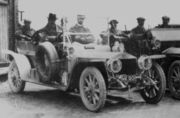
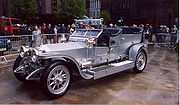
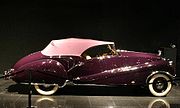
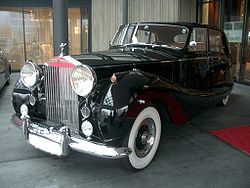
Henry Royce
Sir Frederick Henry Royce, 1st Baronet, OBE was a pioneering car manufacturer, who with Charles Stewart Rolls founded the Rolls-Royce company.-Early life:...
started an electrical and mechanical business. He made his first car, a two-cylinder Royce 10, in his Manchester
Manchester
Manchester is a city and metropolitan borough in Greater Manchester, England. According to the Office for National Statistics, the 2010 mid-year population estimate for Manchester was 498,800. Manchester lies within one of the UK's largest metropolitan areas, the metropolitan county of Greater...
factory in 1904, and was introduced to Charles Rolls
Charles Rolls
Charles Stewart Rolls was a motoring and aviation pioneer. Together with Frederick Henry Royce he co-founded the Rolls-Royce car manufacturing firm. He was the first Briton to be killed in a flying accident, when the tail of his Wright Flyer broke off during a flying display near Bournemouth,...
at the Midland Hotel
Midland Hotel (Manchester)
The Midland is a 312 bedroom grand hotel situated in Manchester city centre, in North West England. Opened in September 1903, it was built by the Midland Railway to serve the adjacent Manchester Central railway station...
in Manchester on 4 May of that year. Rolls was proprietor of an early motor car dealership, C.S.Rolls & Co. in Fulham
Fulham
Fulham is an area of southwest London in the London Borough of Hammersmith and Fulham, SW6 located south west of Charing Cross. It lies on the left bank of the Thames, between Putney and Chelsea. The area is identified in the London Plan as one of 35 major centres in Greater London...
.
In spite of his preference for three or four cylinder cars, Rolls was impressed with the Royce 10, and in a subsequent agreement of 23 December 1904 agreed to take all the cars Royce could make. There would be four models:
- a 10 hp, two-cylinder model selling at £395 (£ as of ),
- a 15 hp three-cylinder at £500 (£ as of ),
- a 20 hp four-cylinder at £650 (£ as of ),
- a 30 hp six-cylinder model priced at £890 (£ as of ),
All would be badged as Rolls-Royces, and be sold exclusively by Rolls. The first Rolls-Royce car, the Rolls-Royce 10 hp
Rolls-Royce 10 hp
The Rolls-Royce 10 hp was the first car to be produced as a result of an agreement of 23 December 1904 between Charles Rolls and Henry Royce, and badged as a Rolls-Royce. The 10 hp was produced by Royce's company, Royce Ltd., at its factory in Trafford Park, Manchester, and was sold...
, was unveiled at the Paris Salon in December 1904.
Rolls-Royce Limited was formed on 15 March 1906, by which time it was apparent that new premises were required for production of cars. After considering sites in Manchester, Coventry
Coventry
Coventry is a city and metropolitan borough in the county of West Midlands in England. Coventry is the 9th largest city in England and the 11th largest in the United Kingdom. It is also the second largest city in the English Midlands, after Birmingham, with a population of 300,848, although...
, Bradford
Bradford
Bradford lies at the heart of the City of Bradford, a metropolitan borough of West Yorkshire, in Northern England. It is situated in the foothills of the Pennines, west of Leeds, and northwest of Wakefield. Bradford became a municipal borough in 1847, and received its charter as a city in 1897...
and Leicester
Leicester
Leicester is a city and unitary authority in the East Midlands of England, and the county town of Leicestershire. The city lies on the River Soar and at the edge of the National Forest...
, it was an offer from Derby
Derby
Derby , is a city and unitary authority in the East Midlands region of England. It lies upon the banks of the River Derwent and is located in the south of the ceremonial county of Derbyshire. In the 2001 census, the population of the city was 233,700, whilst that of the Derby Urban Area was 229,407...
's council of cheap electricity that resulted in the decision to acquire a 12.7 acres (51,395.1 m²) site on the southern edge of that city. The new factory was largely designed by Royce, and production began in early 1908, with a formal opening on 9 July 1908 by Sir John Montagu
John Douglas-Scott-Montagu, 2nd Baron Montagu of Beaulieu
John Walter Edward Douglas-Scott-Montagu, 2nd Baron Montagu of Beaulieu , was a British Conservative politician and promoter of motoring....
. The investment in the new company required further capital to be raised, and on 6 December 1906 GBP 100,000 (£ as of ), of new shares were offered to the public
Initial public offering
An initial public offering or stock market launch, is the first sale of stock by a private company to the public. It can be used by either small or large companies to raise expansion capital and become publicly traded enterprises...
. In 1907, Rolls-Royce bought out C.S. Rolls & Co. (The non-motor car interests of Royce Ltd. continued to operate separately.)
During 1906 Royce had been developing an improved six cylinder
Straight-6
The straight-six engine or inline-six engine is a six-cylinder internal combustion engine with all six cylinders mounted in a straight line along the crankcase...
model with more power than the 30hp
Rolls-Royce 30 hp
The Rolls-Royce 30 hp was one of four cars to be produced as a result of an agreement of 23 December 1904 between Charles Rolls and Henry Royce. Badged as a Rolls-Royce, the 30 hp was produced during 1905 and 1906 by Royce's company, Royce Ltd. at its factory in Trafford Park, Manchester. It...
. Initially designated the 40/50 hp, this was the company's first all-new model. In March 1908 Claude Johnson, Commercial Managing Director and sometimes described as the hyphen in Rolls-Royce, succeeded in persuading Royce and the other directors that Rolls-Royce should concentrate exclusively on the new model, and all the earlier models were duly discontinued. After the introduction of the Phantom model in 1925 this 40/50 model was referred to as the Silver Ghost
Rolls-Royce Silver Ghost
The Rolls-Royce Silver Ghost refers both to a car model and to one specific car from that series.Originally named the "40/50 h.p." the chassis was originally produced at Royce's Manchester works, before moving to Derby in July 1908 and also, between 1921 and 1926, in Springfield, Massachusetts....
. The new 40/50 was responsible for the company's early reputation with over 6,000 built. In 1921, the company opened a second factory in Springfield, Massachusetts
Springfield, Massachusetts
Springfield is the most populous city in Western New England, and the seat of Hampden County, Massachusetts, United States. Springfield sits on the eastern bank of the Connecticut River near its confluence with three rivers; the western Westfield River, the eastern Chicopee River, and the eastern...
in the United States (to help meet demand), where a further 1,701 "Springfield Ghosts" were built. This factory operated for 10 years, closing in 1931. Its chassis was used as a basis for the first British armoured car
Rolls-Royce Armoured Car
The Rolls-Royce armoured car was a British armoured car developed in 1914 and used in World War I and in the early part of World War II.-Production history:...
used in both world war
World war
A world war is a war affecting the majority of the world's most powerful and populous nations. World wars span multiple countries on multiple continents, with battles fought in multiple theaters....
s.
After the First World War, Rolls-Royce successfully avoided attempts to encourage the British car manufacturers to merge. Faced with falling sales of the 40/50 (later known as Silver Ghost) the company introduced the smaller, cheaper Twenty
Rolls-Royce Twenty
The Rolls-Royce Twenty built between 1922 and 1929 was Rolls-Royce's "small car" for the 1920s and was produced alongside the 40/50 Silver Ghost and Phantom...
in 1922, effectively ending the one-model policy followed since 1908.
In 1931 Rolls-Royce acquired the much smaller rival car maker Bentley after its finances failed to weather the onset of the Great Depression
Great Depression
The Great Depression was a severe worldwide economic depression in the decade preceding World War II. The timing of the Great Depression varied across nations, but in most countries it started in about 1929 and lasted until the late 1930s or early 1940s...
. From soon after World War II until 2002 standard Bentley and Rolls-Royce cars were often identical apart from the radiator grille and minor details.
In 1933, the colour of the Rolls-Royce radiator monogram was changed from red to black because the red sometimes clashed with the coachwork colour selected by clients, and not as a mark of respect for the passing of Royce as is commonly stated.
Rolls-Royce and Bentley car production moved to Crewe
Crewe
Crewe is a railway town within the unitary authority area of Cheshire East and the ceremonial county of Cheshire, England. According to the 2001 census the urban area had a population of 67,683...
in 1946 where they began to assemble complete cars (the new standard steel models) for the first time. Previously they had built only the chassis, leaving the bodies to specialist coachbuilders.
Cars
- chassisChassisA chassis consists of an internal framework that supports a man-made object. It is analogous to an animal's skeleton. An example of a chassis is the underpart of a motor vehicle, consisting of the frame with the wheels and machinery.- Vehicles :In the case of vehicles, the term chassis means the...
-only, no R-R built body until Silver Dawn- 1904–06 10 hpRolls-Royce 10 hpThe Rolls-Royce 10 hp was the first car to be produced as a result of an agreement of 23 December 1904 between Charles Rolls and Henry Royce, and badged as a Rolls-Royce. The 10 hp was produced by Royce's company, Royce Ltd., at its factory in Trafford Park, Manchester, and was sold...
- 1905–05 15 hpRolls-Royce 15 hpThe Rolls-Royce 15 hp was one of four cars to be produced as a result of an agreement of 23 December 1904 between Charles Rolls and Henry Royce. Badged as a Rolls-Royce, the 15 hp was produced by Royce's company, Royce Ltd., at its factory in Trafford Park, Manchester. It was sold exclusively...
- 1905–08 20 hpRolls-Royce 20 hp (1905)The Rolls-Royce 20 hp was one of four cars to be produced as a result of an agreement of 23 December 1904 between Charles Rolls and Henry Royce. Badged as a Rolls-Royce, the 20 hp was produced during 1905 and 1906 by Royce's company, Royce Ltd. at its factory in Trafford Park, Manchester. It...
- 1905–06 30 hpRolls-Royce 30 hpThe Rolls-Royce 30 hp was one of four cars to be produced as a result of an agreement of 23 December 1904 between Charles Rolls and Henry Royce. Badged as a Rolls-Royce, the 30 hp was produced during 1905 and 1906 by Royce's company, Royce Ltd. at its factory in Trafford Park, Manchester. It...
- 1905–06 V-8Rolls-Royce V-8 (1905)The Rolls-Royce V-8 was a car produced by Rolls-Royce in 1905 intended to compete with the then popular electric cars used in towns.Claude Johnson, business partner of C. S. Rolls suggested there would be a market for an internal combustion engined car that could take on the electric car market. To...
- 1906–25 40/50 Silver GhostRolls-Royce Silver GhostThe Rolls-Royce Silver Ghost refers both to a car model and to one specific car from that series.Originally named the "40/50 h.p." the chassis was originally produced at Royce's Manchester works, before moving to Derby in July 1908 and also, between 1921 and 1926, in Springfield, Massachusetts....
- 1922–29 TwentyRolls-Royce TwentyThe Rolls-Royce Twenty built between 1922 and 1929 was Rolls-Royce's "small car" for the 1920s and was produced alongside the 40/50 Silver Ghost and Phantom...
- 1925–29 40/50 PhantomRolls-Royce Phantom IThe Phantom was Rolls-Royce's replacement for the original Silver Ghost.-Description:The Phantom I is the second model in the Rolls-Royce 40/50 hp line. It was originally and even now correctly referred to as New Phantom...
- 1929–36 20/25Rolls-Royce 20/25The Rolls-Royce 20/25 built between 1929 and 1936 succeeded the 20hp as Rolls-Royce's "small car". It was intended to appeal to owner drivers but many were sold to customers with chauffeurs.-Engineering:...
- 1929–35 Phantom IIRolls-Royce Phantom IIThe Phantom II replaced the New Phantom in Rolls-Royce's offerings in 1929.-Description:It shared the 7.7 L pushrod-OHV straight-6 engine from its predecessor, being the last large six-cylinder Rolls. The engine was unitary with a 4-speed manual transmission...
- 1936–38 25/30Rolls-Royce 25/30The Rolls-Royce 25/30 built between 1936 and 1938 is an updated version of the 20/25 with larger engine to provide more power, as often, over-large bodies had been fitted to the earlier model leading to complaints about its performance.-Engineering:...
- 1936–39 Phantom IIIRolls-Royce Phantom IIIThe Rolls-Royce Phantom III was the final large pre-war Rolls-Royce. Introduced in 1936, it replaced the Phantom II and it was the only V12 Rolls-Royce until the 1998 introduction of the Silver Seraph....
- 1938–39 WraithRolls-Royce WraithThe Rolls-Royce Wraith was built by Rolls-Royce at their Derby factory from 1938 to 1939 and supplied to independent coachbuilders as a running chassis....
- 1946–59 Silver WraithRolls-Royce Silver WraithFor information on the Silver Wraith II, see Rolls-Royce Silver Shadow.The Silver Wraith was the first post-war Rolls-Royce model and was made at the Crewe factory from 1946 to 1959....
- 1949–55 Silver DawnRolls-Royce Silver DawnThe Rolls-Royce Silver Dawn is a car that was produced by Rolls-Royce at their Crewe works between 1949 and 1955. It was the first Rolls-Royce car to be offered with a factory built body which it shared, along with its chassis, with the Bentley Mark VI until 1952 and then the Bentley R Type until...
standard saloon, first totally R-R built Rolls-Royce car - 1950–56 Phantom IVRolls-Royce Phantom IVThe Phantom IV is the most exclusive Rolls-Royce model ever built.Only 18 were made between 1950 and 1956, exclusively for royalty and heads of state...
- 1955–65 Silver CloudRolls-Royce Silver CloudThe Rolls-Royce Silver Cloud was the core model of the Rolls-Royce Motor Cars range from April 1955 until March 1966. It replaced the Silver Dawn and was, in turn, replaced by the Silver Shadow.The J. P...
standard saloon, totally R-R built car - 1959–68 Phantom VRolls-Royce Phantom VThe Phantom V was a large, ultra-exclusive four-door saloon made by Rolls-Royce from 1959 to 1968.Based on the Silver Cloud II, it shared a V8 engine and General Motors Hydramatic automatic gearbox with its smaller sibling. Rolls-Royce assembled the cars' chassis and drivetrains with bodies made to...
- 1968–92 Phantom VIRolls-Royce Phantom VIThe Phantom VI was an ultra-exclusive Rolls-Royce model made from 1968-1991.Based on the Phantom V, the Phantom VI had a re-styled facia and was powered by an engine derived from the current Rolls-Royce Silver Shadow...
- 1904–06 10 hp
- the following cars use unitary constructionMonocoqueMonocoque is a construction technique that supports structural load by using an object's external skin, as opposed to using an internal frame or truss that is then covered with a non-load-bearing skin or coachwork...
and have no separate chassis- 1965–80 Silver ShadowRolls-Royce Silver ShadowThe Rolls-Royce Silver Shadow is a luxury car that was produced in Great Britain in various forms from 1965 to 1980. It was the first Rolls-Royce to use a monocoque chassis, a response to concerns that the company was falling behind in automotive innovation....
standard saloon, totally R-R built car - 1980–98 Silver SpiritRolls-Royce Silver SpiritFor the cruise ship see MS Silver SpiritThe Silver Spirit is a British saloon automobile made by Rolls-Royce Motor Cars, in England. It was launched in 1980.The Silver Spur was a long-wheelbase version of the Silver Spirit, produced at the same time....
standard saloon, totally R-R built car - 1998–2002 Silver SeraphRolls-Royce Silver SeraphThe Rolls-Royce Silver Seraph, produced from 1998 to 2002, was first unveiled on March 3, 1998 at the Geneva Motor Show. The Silver Seraph replaced the Silver Spur, which ended production in 1997....
standard saloon, totally R-R built car
- 1965–80 Silver Shadow
The next Rolls-Royce model, the Rolls-Royce Phantom
Rolls-Royce Phantom
Rolls-Royce has used the Phantom name on luxury cars over the past century:* Rolls-Royce Phantom I, 1925–1931* Rolls-Royce Phantom II, 1929–1936* Rolls-Royce Phantom III, 1936–1939* Rolls-Royce Phantom IV, 1950–1959...
was built by Rolls-Royce Motor Cars
Rolls-Royce Motor Cars
Rolls-Royce Motor Cars is a British manufacturer of luxury automobiles based at the Goodwood plant in West Sussex, England. It is the current producer of Rolls-Royce branded automobiles, whose historical production dates back to 1904. The factory is located across from the historic Goodwood Circuit...
.
Bentley Models (from 1933) - chassis only
- 1933–37 Bentley 3½ LBentley 3.5 LitreThe 3½ Litre was presented to the public in September 1933, shortly after the death of Henry Royce, and was the first new Bentley model following Rolls-Royce's acquisition of the Bentley brand in 1931...
- 1936–39 Bentley 4¼ LBentley 3.5 LitreThe 3½ Litre was presented to the public in September 1933, shortly after the death of Henry Royce, and was the first new Bentley model following Rolls-Royce's acquisition of the Bentley brand in 1931...
- 1939–41 Bentley Mark VBentley Mark VThe Bentley Mark V was Rolls-Royce's second Bentley model. Released in 1939, it had little in common to any other model. Incorporating a new-generation straight-6 engine...
Aero engines
In 1907 Charles Rolls, whose interests had turned increasingly to flying, tried unsuccessfully to persuade Royce and the other directors to design an aero engine. When World War IWorld War I
World War I , which was predominantly called the World War or the Great War from its occurrence until 1939, and the First World War or World War I thereafter, was a major war centred in Europe that began on 28 July 1914 and lasted until 11 November 1918...
broke out in August 1914 Rolls-Royce (and many others) were taken by surprise. As a manufacturer of luxury cars, the company was immediately vulnerable, and Claude Johnson thought the bank would withdraw its overdraft facility on which Rolls-Royce depended at that time. Nevertheless, believing that war was likely to be short-lived the directors initially decided not to seek government work making aero engines. However, this position was quickly reversed and the company was persuaded by the War Office
War Office
The War Office was a department of the British Government, responsible for the administration of the British Army between the 17th century and 1964, when its functions were transferred to the Ministry of Defence...
to manufacture fifty air-cooled V8 engine
V8 engine
A V8 engine is a V engine with eight cylinders mounted on the crankcase in two banks of four cylinders, in most cases set at a right angle to each other but sometimes at a narrower angle, with all eight pistons driving a common crankshaft....
s under licence from Renault
Renault
Renault S.A. is a French automaker producing cars, vans, and in the past, autorail vehicles, trucks, tractors, vans and also buses/coaches. Its alliance with Nissan makes it the world's third largest automaker...
. Meanwhile, the Royal Aircraft Factory
Royal Aircraft Establishment
The Royal Aircraft Establishment , was a British research establishment, known by several different names during its history, that eventually came under the aegis of the UK Ministry of Defence , before finally losing its identity in mergers with other institutions.The first site was at Farnborough...
asked Rolls-Royce to design a new 200 hp engine. Despite initial reluctance they agreed, and during 1915 developed the company's first aero engine, the twelve-cylinder Eagle. This was quickly followed by the smaller six-cylinder Hawk
Rolls-Royce Hawk
|-See also:-Bibliography:*Flight 7 May 1954**Lumsden, Alec. British Piston Engines and their Aircraft. Marlborough, Wiltshire: Airlife Publishing, 2003. ISBN 1-85310-294-6....
, the 190 hp Falcon and, just before the end of the war, the larger 675 hp Condor
Rolls-Royce Condor
|-See also:-Bibliography:* Lumsden, Alec. British Piston Engines and their Aircraft. Marlborough, Wiltshire: Airlife Publishing, 2003. ISBN 1-85310-294-6.-External links:*...
.
Throughout World War I, Rolls-Royce struggled to build aero engines in the quantities required by the War Office
War Office
The War Office was a department of the British Government, responsible for the administration of the British Army between the 17th century and 1964, when its functions were transferred to the Ministry of Defence...
. However, with the exception of Brazil Straker
Straker-Squire
Straker-Squire was a British automobile manufacturer based in Bristol, and later Edmonton in North London....
in Bristol the company resisted pressure to licence production to other manufacturers, fearing that the engines' much admired quality and reliability would risk being compromised. Instead the Derby factory was extended to enable Rolls-Royce to increase its own production rates.
Around half the aircraft engines used by the Allies in World War I
World War I
World War I , which was predominantly called the World War or the Great War from its occurrence until 1939, and the First World War or World War I thereafter, was a major war centred in Europe that began on 28 July 1914 and lasted until 11 November 1918...
were made by Rolls-Royce. By the late 1920s, aero engines made up most of Rolls-Royce's business.
Henry Royce's last design was the Merlin
Rolls-Royce Merlin
The Rolls-Royce Merlin is a British liquid-cooled, V-12, piston aero engine, of 27-litre capacity. Rolls-Royce Limited designed and built the engine which was initially known as the PV-12: the PV-12 became known as the Merlin following the company convention of naming its piston aero engines after...
aero engine, which came out in 1935, although he had died in 1933. This was developed from the R
Rolls-Royce R
The Rolls-Royce R was a British aero engine designed and built specifically for air racing purposes by Rolls-Royce Limited. Nineteen R engines were assembled in a limited production run between 1929 and 1931...
engine, which had powered a record-breaking Supermarine
Supermarine
Supermarine was a British aircraft manufacturer that became famous for producing a range of sea planes and the Supermarine Spitfire fighter. The name now belongs to an English motorboat manufacturer.-History:...
S.6B seaplane
Supermarine S.6B
|-See also:-References:NotesBibliography* Andrews, C.F. and E.B. Morgan. Supermarine Aircraft since 1914, 2nd edition. London: Putnam, 1987. ISBN 0-85177-800-3....
to almost 400 mi/h in the 1931 Schneider Trophy
Schneider Trophy
The Coupe d'Aviation Maritime Jacques Schneider was a prize competition for seaplanes. Announced by Jacques Schneider, a financier, balloonist and aircraft enthusiast, in 1911, it offered a prize of roughly £1,000. The race was held eleven times between 1913 and 1931...
. The Merlin was a powerful supercharged V12 engine and was fitted into many World War II
World War II
World War II, or the Second World War , was a global conflict lasting from 1939 to 1945, involving most of the world's nations—including all of the great powers—eventually forming two opposing military alliances: the Allies and the Axis...
aircraft: the British Hawker Hurricane
Hawker Hurricane
The Hawker Hurricane is a British single-seat fighter aircraft that was designed and predominantly built by Hawker Aircraft Ltd for the Royal Air Force...
, Supermarine Spitfire
Supermarine Spitfire
The Supermarine Spitfire is a British single-seat fighter aircraft that was used by the Royal Air Force and many other Allied countries throughout the Second World War. The Spitfire continued to be used as a front line fighter and in secondary roles into the 1950s...
, de Havilland Mosquito
De Havilland Mosquito
The de Havilland DH.98 Mosquito was a British multi-role combat aircraft that served during the Second World War and the postwar era. It was known affectionately as the "Mossie" to its crews and was also nicknamed "The Wooden Wonder"...
(twin-engine), Avro Lancaster
Avro Lancaster
The Avro Lancaster is a British four-engined Second World War heavy bomber made initially by Avro for the Royal Air Force . It first saw active service in 1942, and together with the Handley Page Halifax it was one of the main heavy bombers of the RAF, the RCAF, and squadrons from other...
(four-engine) (developed from the Avro Manchester (twin)), Vickers Wellington
Vickers Wellington
The Vickers Wellington was a British twin-engine, long range medium bomber designed in the mid-1930s at Brooklands in Weybridge, Surrey, by Vickers-Armstrongs' Chief Designer, R. K. Pierson. It was widely used as a night bomber in the early years of the Second World War, before being displaced as a...
(twin-engine); it also transformed the American P-51 Mustang
P-51 Mustang
The North American Aviation P-51 Mustang was an American long-range, single-seat fighter and fighter-bomber used during World War II, the Korean War and in several other conflicts...
into a competitor for the best fighter of its time, its engine a Merlin engine built by Packard
Packard
Packard was an American luxury-type automobile marque built by the Packard Motor Car Company of Detroit, Michigan, and later by the Studebaker-Packard Corporation of South Bend, Indiana...
under licence. Over 160,000 Merlin engines were produced, including over 30,000 by the Ford Motor Company
Ford Motor Company
Ford Motor Company is an American multinational automaker based in Dearborn, Michigan, a suburb of Detroit. The automaker was founded by Henry Ford and incorporated on June 16, 1903. In addition to the Ford and Lincoln brands, Ford also owns a small stake in Mazda in Japan and Aston Martin in the UK...
at Trafford Park, Manchester. The Merlin crossed over into military land vehicle use as the Meteor powering the Centurion tank
Centurion tank
The Centurion, introduced in 1945, was the primary British main battle tank of the post-World War II period. It was a successful tank design, with upgrades, for many decades...
among others. Many Meteor engines used engine blocks and parts that failed requirements for high performance engines, but were suitable for use in the derated 650hp Meteor
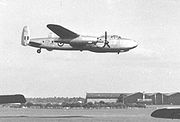
World War II
World War II, or the Second World War , was a global conflict lasting from 1939 to 1945, involving most of the world's nations—including all of the great powers—eventually forming two opposing military alliances: the Allies and the Axis...
period Rolls-Royce made significant advances in gas turbine
Gas turbine
A gas turbine, also called a combustion turbine, is a type of internal combustion engine. It has an upstream rotating compressor coupled to a downstream turbine, and a combustion chamber in-between....
engine design and manufacture. The Dart
Rolls-Royce Dart
|-See also:-Bibliography:* Gunston, Bill. World Encyclopedia of Aero Engines. Cambridge, England. Patrick Stephens Limited, 1989. ISBN 1-85260-163-9-External links:*...
and Tyne
Rolls-Royce Tyne
|-See also:...
turboprop
Turboprop
A turboprop engine is a type of turbine engine which drives an aircraft propeller using a reduction gear.The gas turbine is designed specifically for this application, with almost all of its output being used to drive the propeller...
engines were particularly important, enabling airlines to cut times for shorter journeys whilst jet
Jet aircraft
A jet aircraft is an aircraft propelled by jet engines. Jet aircraft generally fly much faster than propeller-powered aircraft and at higher altitudes – as high as . At these altitudes, jet engines achieve maximum efficiency over long distances. The engines in propeller-powered aircraft...
airliner
Airliner
An airliner is a large fixed-wing aircraft for transporting passengers and cargo. Such aircraft are operated by airlines. Although the definition of an airliner can vary from country to country, an airliner is typically defined as an aircraft intended for carrying multiple passengers in commercial...
s were introduced on longer services. The Dart engine was used in Argosy
Armstrong Whitworth AW.660 Argosy
The Armstrong Whitworth Argosy was a British post-war military transport/cargo aircraft and was the last aircraft produced by Armstrong Whitworth Aircraft...
, Avro 748
Avro 748
The Hawker Siddeley HS 748 is a medium-sized turboprop airliner originally designed by the British firm Avro in the late 1950s as a replacement for the now-aged DC-3s then in widespread service as feederliners. Avro concentrated on performance, notably for STOL operations, and found a dedicated...
, Friendship
Fokker F27
The Fokker F27 Friendship is a turboprop airliner designed and built by the Dutch aircraft manufacturer Fokker.-Design and development:Design of the Fokker F27 started in the 1950s as a replacement to the successful Douglas DC-3 airliner...
, Herald and Viscount
Vickers Viscount
The Vickers Viscount was a British medium-range turboprop airliner first flown in 1948 by Vickers-Armstrongs, making it the first such aircraft to enter service in the world...
aircraft, whilst the more powerful Tyne powered the Atlantique
Breguet Atlantique
The Breguet Br.1150 Atlantic is a long-range reconnaissance aircraft, primarily designed for use over the sea. It is used in several NATO countries as a reconnaissance and patrol aircraft as well as anti-submarine aircraft. The Atlantic is also capable of carrying air-to-ground missiles...
, C-160
Transall C-160
|-See also:-References:* Taylor, John W. R. Jane's All The World's Aircraft 1982-83. London:Jane's Yearbooks, 1982. ISBN 0-7106-0748-2.-External links:*...
and Vanguard
Vickers Vanguard
The Vickers Type 950 Vanguard was a British short/medium-range turboprop airliner introduced in 1959 by Vickers-Armstrongs, a development of their successful Viscount design with considerably more internal room. The Vanguard was introduced just before the first of the large jet-powered airliners,...
, and the SR.N4 hovercraft
Hovercraft
A hovercraft is a craft capable of traveling over surfaces while supported by a cushion of slow moving, high-pressure air which is ejected against the surface below and contained within a "skirt." Although supported by air, a hovercraft is not considered an aircraft.Hovercraft are used throughout...
. Many of these turboprops are still in service.
Amongst the jet engine
Jet engine
A jet engine is a reaction engine that discharges a fast moving jet to generate thrust by jet propulsion and in accordance with Newton's laws of motion. This broad definition of jet engines includes turbojets, turbofans, rockets, ramjets, pulse jets...
s of this period was the RB163 Spey, which powers the Hawker Siddeley Trident
Hawker Siddeley Trident
The Hawker Siddeley HS 121 Trident was a British short/medium-range three-engined jet airliner designed by de Havilland and built by Hawker Siddeley in the 1960s and 1970s...
, BAC One-Eleven
BAC One-Eleven
The British Aircraft Corporation One-Eleven, also known as the BAC-111, BAC-1-11 or BAC 1-11, was a British short-range jet airliner of the 1960s and 1970s...
, Grumman Gulfstream II
Grumman Gulfstream II
The Gulfstream II is an American twin engine business jet designed and built by Grumman and then in succession, Grumman American and finally Gulfstream American. Its Grumman model number is G-1159 and its US military designation is C-11 Gulfstream II. It has been succeeded by the Gulfstream III...
and Fokker F28
Fokker F28
The Fokker F28 Fellowship is a short range jet airliner designed and built by defunct Dutch aircraft manufacturer Fokker.-Design and development:...
.
During the late 1950s and 1960s there was a significant rationalisation of all aspects of British aerospace and this included aero-engine manufacturers. In 1966 Rolls-Royce acquired Bristol Siddeley
Bristol Siddeley
Bristol Siddeley Engines Ltd was a British aero engine manufacturer. The company was formed in 1959 by a merger of Bristol Aero-Engines Limited and Armstrong Siddeley Motors Limited. In 1961 the company was expanded by the purchase of the de Havilland Engine Company and the engine division of...
(which had resulted from the merger of Armstrong Siddeley
Armstrong Siddeley
Armstrong Siddeley was a British engineering group that operated during the first half of the 20th century. It was formed in 1919 and is best known for the production of luxury motor cars and aircraft engines.-Siddeley Autocars:...
and Bristol Aero Engines
Bristol Aeroplane Company
The Bristol Aeroplane Company, originally the British and Colonial Aeroplane Company, was both one of the first and one of the most important British aviation companies, designing and manufacturing both airframes and aero engines...
in 1959) and incorporated it as the Bristol Siddeley division. Bristol Siddeley, with its principal factory at Filton
Filton
Filton is a town in South Gloucestershire, England, situated on the northern outskirts of the city of Bristol, about from the city centre. Filton lies in Bristol postcode areas BS7 and BS34. The town centres upon Filton Church, which dates back to the 12th century and is a grade II listed building...
, near Bristol
Bristol
Bristol is a city, unitary authority area and ceremonial county in South West England, with an estimated population of 433,100 for the unitary authority in 2009, and a surrounding Larger Urban Zone with an estimated 1,070,000 residents in 2007...
, had a strong base in military engines, including the Olympus, Viper, Pegasus
Rolls-Royce Pegasus
The Rolls-Royce Pegasus is a turbofan engine originally designed by Bristol Siddeley, and now manufactured by Rolls-Royce plc. This engine is able to direct thrust downwards which can then be swivelled to power a jet aircraft forward. Lightly loaded, it can also manoeuvre like a helicopter,...
and Orpheus. They were also manufacturing the Olympus 593 Mk610 to be used in Concorde
Concorde
Aérospatiale-BAC Concorde was a turbojet-powered supersonic passenger airliner, a supersonic transport . It was a product of an Anglo-French government treaty, combining the manufacturing efforts of Aérospatiale and the British Aircraft Corporation...
in collaboration with SNECMA. They also had a turbofan project with SNECMA
Leavesden Aerodrome Watford was originally owned by the Ministry of Defence and used during World War II for the manufacture of Mosquito and Halifax aircraft. For a number of years, Rolls-Royce used the site for the manufacture of helicopter engines until the site closed in June 1993. The former Rolls-Royce factory at Watford is now known as the Leavesden Film Studios and has produced world famous films such as James Bond, Star Wars and Harry Potter.
Diesel engines
Rolls-Royce started to produce diesel engineDiesel engine
A diesel engine is an internal combustion engine that uses the heat of compression to initiate ignition to burn the fuel, which is injected into the combustion chamber...
s in 1951. Initially, these were intended for heavy tractors and earth-movers but, later, they were installed in lorries (e.g. Scammell), railcar
Railcar
A railcar, in British English and Australian English, is a self-propelled railway vehicle designed to transport passengers. The term "railcar" is usually used in reference to a train consisting of a single coach , with a driver's cab at one or both ends. Some railways, e.g., the Great Western...
s, diesel multiple unit
Diesel multiple unit
A diesel multiple unit or DMU is a multiple unit train consisting of multiple carriages powered by one or more on-board diesel engines. They may also be referred to as a railcar or railmotor, depending on country.-Design:...
s and Sentinel
Sentinel Waggon Works
Sentinel Waggon Works Ltd was a British company based in Shrewsbury, Shropshire that made steam-powered lorries, railway locomotives, and later, diesel engined lorries and locomotives.-Alley & MacLellan, Sentinel Works, Jessie Street Glasgow:...
shunting locomotives. Rolls-Royce took over Sentinel's Shrewsbury
Shrewsbury
Shrewsbury is the county town of Shropshire, in the West Midlands region of England. Lying on the River Severn, it is a civil parish home to some 70,000 inhabitants, and is the primary settlement and headquarters of Shropshire Council...
factory for diesel engine production in 1956. The Rolls-Royce diesel business was acquired by Perkins in the 1980s.
Torque converters
The railcar engines were often used with Twin Disc torque converterTorque converter
In modern usage, a torque converter is generally a type of hydrodynamic fluid coupling that is used to transfer rotating power from a prime mover, such as an internal combustion engine or electric motor, to a rotating driven load...
s which were built by Rolls-Royce under licence from Twin Disc
Twin Disc
Twin Disc, Inc. designs, manufactures and distributes power transmission equipment for a wide range of applications, including marine, off-road vehicle and industrial. The company was founded in the 1920s to manufacture clutches for farm tractors...
of the USA. "Twin Disc" is the name of the company (which originally manufactured friction clutch
Clutch
A clutch is a mechanical device which provides for the transmission of power from one component to another...
es) and does not describe the construction of the torque converter.
Nationalisation
Financial problems caused largely by development of the new RB211Rolls-Royce RB211
The Rolls-Royce RB211 is a family of high-bypass turbofan engines made by Rolls-Royce plc and capable of generating 37,400 to 60,600 pounds-force thrust. Originally developed for the Lockheed L-1011 , it entered service in 1972 and was the only engine to power this aircraft type...
turbofan
Turbofan
The turbofan is a type of airbreathing jet engine that is widely used for aircraft propulsion. A turbofan combines two types of engines, the turbo portion which is a conventional gas turbine engine, and the fan, a propeller-like ducted fan...
engine led – after several cash subsidies – to the company being nationalised by the Heath
Edward Heath
Sir Edward Richard George "Ted" Heath, KG, MBE, PC was a British Conservative politician who served as Prime Minister of the United Kingdom and as Leader of the Conservative Party ....
government in 1971. (Delay in production of the RB211 engine has been blamed for the failure of the technically advanced Lockheed
Lockheed Corporation
The Lockheed Corporation was an American aerospace company. Lockheed was founded in 1912 and later merged with Martin Marietta to form Lockheed Martin in 1995.-Origins:...
TriStar
Lockheed L-1011
The Lockheed L-1011 TriStar, commonly referred to as the L-1011 or TriStar, is a medium-to-long range, widebody passenger trijet airliner. It was the third widebody airliner to enter commercial operations, following the Boeing 747 and the McDonnell Douglas DC-10. Between 1968 and 1984, Lockheed...
, which was beaten to launch by its chief competitor, the Douglas
Douglas Aircraft Company
The Douglas Aircraft Company was an American aerospace manufacturer, based in Long Beach, California. It was founded in 1921 by Donald Wills Douglas, Sr. and later merged with McDonnell Aircraft in 1967 to form McDonnell Douglas...
DC-10.)
In 1973 the motor car business was spun off as a separate entity, Rolls-Royce Motors
Rolls-Royce Motors
Rolls-Royce Motors was created from the de-merger of the Rolls-Royce car business from Rolls-Royce Limited in 1973. The original Rolls-Royce Limited had been nationalised in 1971 due to the financial collapse of the company, caused in part by the development of the RB211 jet engine...
. The main business of aircraft and marine engines remained in public ownership until 1987, when it was privatised as Rolls-Royce plc
Rolls-Royce plc
Rolls-Royce Group plc is a global power systems company headquartered in the City of Westminster, London, United Kingdom. It is the world’s second-largest maker of aircraft engines , and also has major businesses in the marine propulsion and energy sectors. Through its defence-related activities...
, one of many privatisations of the Thatcher
Margaret Thatcher
Margaret Hilda Thatcher, Baroness Thatcher, was Prime Minister of the United Kingdom from 1979 to 1990...
government.
Rolls-Royce of America
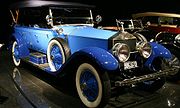
Rolls-Royce Limited
Rolls-Royce Limited was a renowned British car and, from 1914 on, aero-engine manufacturing company founded by Charles Stewart Rolls and Henry Royce on 15 March 1906 as the result of a partnership formed in 1904....
to meet the massive and growing U.S. car market by building a plant in Springfield, Massachusetts
Springfield, Massachusetts
Springfield is the most populous city in Western New England, and the seat of Hampden County, Massachusetts, United States. Springfield sits on the eastern bank of the Connecticut River near its confluence with three rivers; the western Westfield River, the eastern Chicopee River, and the eastern...
. Their first chassis was completed in 1921.
- The Phantom IRolls-Royce Phantom IThe Phantom was Rolls-Royce's replacement for the original Silver Ghost.-Description:The Phantom I is the second model in the Rolls-Royce 40/50 hp line. It was originally and even now correctly referred to as New Phantom...
produced by the Springfield plant was superior in regards to its more elegantly proportioned and well-engineered coachwork. This was most likely because the coachbuilding was provided by Rolls-Royce Custom Coachwork, and later by Brewster & Co.Brewster & Co.Brewster & Company was an American coachbuilder, active from 1810-1937. Their first known bodywork on an automobile was in 1896, on an electric car, and a gasoline powered car in 1905, on a Delaunay-Belleville chassis. Eventually they would use chassis from a variety of makers...
at the Brewster BuildingBrewster Building (Long Island City)The Brewster Building is a building at 27-01 Queens Plaza North in Long Island City, New York that was once an assembly plant for Rolls Royce cars and Brewster cars and Brewster Buffalo airplanes and is now the corporate headquarters for JetBlue....
in Long Island City, New York.
- The Silver Spur Springfield Edition was made to commemorate the original Rolls-Royce of America plant's 75th anniversary.