
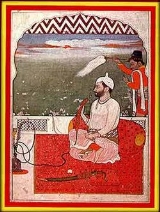
Himachal Pradesh is a state in Northern India. It is spread over 21495 sq mi (55,671.8 km²), and is bordered by the Indian states of
Jammu and KashmirJammu and Kashmir is the northernmost state of India. It is situated mostly in the Himalayan mountains. Jammu and Kashmir shares a border with the states of Himachal Pradesh and Punjab to the south and internationally with the People's Republic of China to the north and east and the...
on the north,
PunjabPunjab ) is a state in the northwest of the Republic of India, forming part of the larger Punjab region. The state is bordered by the Indian states of Himachal Pradesh to the east, Haryana to the south and southeast and Rajasthan to the southwest as well as the Pakistani province of Punjab to the...
on the west and south-west,
HaryanaHaryana is a state in India. Historically, it has been a part of the Kuru region in North India. The name Haryana is found mentioned in the 12th century AD by the apabhramsha writer Vibudh Shridhar . It is bordered by Punjab and Himachal Pradesh to the north, and by Rajasthan to the west and south...
and
Uttar PradeshUttar Pradesh abbreviation U.P. , is a state located in the northern part of India. With a population of over 200 million people, it is India's most populous state, as well as the world's most populous sub-national entity...
on the south,
UttarakhandUttarakhand , formerly Uttaranchal, is a state in the northern part of India. It is often referred to as the Land of Gods due to the many holy Hindu temples and cities found throughout the state, some of which are among Hinduism's most spiritual and auspicious places of pilgrimage and worship...
on the south-east and by the
Tibet Autonomous RegionThe Tibet Autonomous Region , Tibet or Xizang for short, also called the Xizang Autonomous Region is a province-level autonomous region of the People's Republic of China , created in 1965....
on the east. The literal meaning of Himachal Pradesh is In the lap of Himalayas.
Himachal Pradesh is known to be abundant in natural beauty After the
Anglo Gorkha WarThe Gurkha War , sometimes called the Gorkha War or the Anglo–Nepalese War, was fought between the Kingdom of Nepal and the British East India Company as a result of border tensions and ambitious expansionism...
, the British colonial government came into power.In 1950 Himachal was declared as a
union territoryA Union Territory is a sub-national administrative division of India, in the federal framework of governance. Unlike the states of India, which have their own elected governments, union territories are ruled directly by the federal government; the President of India appoints an Administrator or...
but after the State of Himachal Pradesh Act 1971, Himachal emerged as the 18th state of the Republic of India. Himachal has many prestigious boarding schools. Hima means snow in
SanskritSanskrit , is a historical Indo-Aryan language and the primary liturgical language of Hinduism, Jainism and Buddhism.Buddhism: besides Pali, see Buddhist Hybrid Sanskrit Today, it is listed as one of the 22 scheduled languages of India and is an official language of the state of Uttarakhand...
. It was named by one of the great Sanskrit scholars of Himachal Pradesh, Acharya Diwakar Datt Sharma.
Himachal Pradesh has one of the highest per capita incomes of any state in India. Due to the abundance of perennial rivers, Himachal also sells hydro electricity to other states such as
DelhiDelhi , officially National Capital Territory of Delhi , is the largest metropolis by area and the second-largest by population in India, next to Mumbai. It is the eighth largest metropolis in the world by population with 16,753,265 inhabitants in the Territory at the 2011 Census...
,
PunjabPunjab ) is a state in the northwest of the Republic of India, forming part of the larger Punjab region. The state is bordered by the Indian states of Himachal Pradesh to the east, Haryana to the south and southeast and Rajasthan to the southwest as well as the Pakistani province of Punjab to the...
and
RajasthanRājasthān the land of Rajasthanis, , is the largest state of the Republic of India by area. It is located in the northwest of India. It encompasses most of the area of the large, inhospitable Great Indian Desert , which has an edge paralleling the Sutlej-Indus river valley along its border with...
. The economy of the state is highly dependent on three sources: hydroelectric power, tourism and agriculture.
Hindus make up 95% of the state population, making it the most Hindu state (proportionally), in India. According to a 2005
Transparency InternationalTransparency International is a non-governmental organization that monitors and publicizes corporate and political corruption in international development. It publishes an annual Corruption Perceptions Index, a comparative listing of corruption worldwide...
survey, Himachal Pradesh is ranked the second-least corrupt state in the country after
Keralaor Keralam is an Indian state located on the Malabar coast of south-west India. It was created on 1 November 1956 by the States Reorganisation Act by combining various Malayalam speaking regions....
.
History
The history of the area that now constitutes Himachal Pradesh dates back to the time when the Indus valley civilisation flourished between 2250 and 1750 BCE. Tribes such as the Koilis, Halis, Dagis, Dhaugris, Dasa, Khasas, Kinnars and Kirats inhabited the region from pre-historic era. During the
Vedic periodThe Vedic period was a period in history during which the Vedas, the oldest scriptures of Hinduism, were composed. The time span of the period is uncertain. Philological and linguistic evidence indicates that the Rigveda, the oldest of the Vedas, was composed roughly between 1700–1100 BCE, also...
, several small republics known as "Janapada" existed which were later conquered by the
Gupta EmpireThe Gupta Empire was an ancient Indian empire which existed approximately from 320 to 550 CE and covered much of the Indian Subcontinent. Founded by Maharaja Sri-Gupta, the dynasty was the model of a classical civilization. The peace and prosperity created under leadership of Guptas enabled the...
. After a brief period of supremacy by king Harshavardhana, the region was once again divided into several local powers headed by chieftains, including some
RajputA Rajput is a member of one of the patrilineal clans of western, central, northern India and in some parts of Pakistan. Rajputs are descendants of one of the major ruling warrior classes in the Indian subcontinent, particularly North India...
principalities. These kingdoms that enjoyed a large degree of independence were devastated by Muslim invaders a number of times. Mahmud Ghaznavi conquered Kangra at the beginning of the 10th century.
TimurTimur , historically known as Tamerlane in English , was a 14th-century conqueror of West, South and Central Asia, and the founder of the Timurid dynasty in Central Asia, and great-great-grandfather of Babur, the founder of the Mughal Dynasty, which survived as the Mughal Empire in India until...
and Sikander Lodi also marched through the lower hills of the state and captured a number of forts and fought many battles. Several hill states acknowledged
MughalThe Mughal Empire , or Mogul Empire in traditional English usage, was an imperial power from the Indian Subcontinent. The Mughal emperors were descendants of the Timurids...
suzerainty and paid regular tribute to the Mughals.
The
GurkhaGurkha are people from Nepal who take their name from the Gorkha District. Gurkhas are best known for their history in the Indian Army's Gorkha regiments, the British Army's Brigade of Gurkhas and the Nepalese Army. Gurkha units are closely associated with the kukri, a forward-curving Nepalese knife...
s, a
martialMarcus Valerius Martialis , was a Latin poet from Hispania best known for his twelve books of Epigrams, published in Rome between AD 86 and 103, during the reigns of the emperors Domitian, Nerva and Trajan...
tribeA tribe, viewed historically or developmentally, consists of a social group existing before the development of, or outside of, states.Many anthropologists use the term tribal society to refer to societies organized largely on the basis of kinship, especially corporate descent groups .Some theorists...
came to power in
NepalNepal , officially the Federal Democratic Republic of Nepal, is a landlocked sovereign state located in South Asia. It is located in the Himalayas and bordered to the north by the People's Republic of China, and to the south, east, and west by the Republic of India...
in the year 1768. They consolidated their military power and began to expand their territory. Gradually the Gorkhas annexed Sirmour and
ShimlaShimla , formerly known as Simla, is the capital city of Himachal Pradesh. In 1864, Shimla was declared the summer capital of the British Raj in India. A popular tourist destination, Shimla is often referred to as the "Queen of Hills," a term coined by the British...
. With the leadership of
Amar Singh ThapaAmar Singh Thapa, also known as "Living lion of Nepal", was the General of the Nepalese forces of western front in the Anglo–Nepalese War. He is regarded as one of the National heroes of Nepal....
, Gorkhas laid siege to Kangra. They managed to defeat Sansar Chand
KatochKatoch is the name of a Rajput clan belonging to the Chandervanshi kshatriya lineage. Their traditional areas of residence was Trigarta Kingdom, Jalandhar, Multan i.e...
, the ruler of
KangraKangra is a city and a municipal council in Kangra district in the Indian state of Himachal Pradesh. Historically it was known as Nagarkot.-Demographics:...
, in 1806 with the help of many provincial chiefs. However Gorkhas could not capture Kangra fort which came under Maharaja Ranjeet Singh in 1809. After the defeat the Gorkhas began to expand towards the south of the state. However, Raja Ram Singh, Raja of Siba State managed to capture the fort of Siba from the remnants of Lahore Darbar in Samvat 1846, during the
First Anglo-Sikh WarThe First Anglo-Sikh War was fought between the Sikh Empire and the British East India Company between 1845 and 1846. It resulted in partial subjugation of the Sikh kingdom.-Background and causes of the war:...
. They came into direct conflict with the British along the tarai belt after which the British expelled them from the provinces of the Satluj. Thus the British gradually emerged as the paramount powers. The revolt of 1857 or first
Indian war of independenceThe Indian Rebellion of 1857 began as a mutiny of sepoys of the British East India Company's army on 10 May 1857, in the town of Meerut, and soon escalated into other mutinies and civilian rebellions largely in the upper Gangetic plain and central India, with the major hostilities confined to...
resulted due to the building up of political, social, economic, religious and military grievances against the British government. People of the hill states were not as politically active as the people in other parts of the country. They remained more or less inactive and so did their rulers, with the exception of Bushahr. Some of them even rendered help to the British government during the revolt. Among them were the rulers of
ChambaChamba is an ancient town in the Chamba district in the state of Himachal Pradesh, in northern India. According to the 2001 Indian census, Chamba has a population of 20,312 people...
,
BilaspurBilaspur is a city and a municipal council in Bilaspur district in the state of Himachal Pradesh, India.-Geography:Bilaspur is located at . It has an average elevation of 673 metres . It is hot in summer and cold in winters. It rains mostly in July to august .It lies near the reservoir of...
, Bhagal and Dhami. The rulers of Bushars rather acted in a manner hostile to the interests of British.
The British territories in the hill came under British Crown after Queen Victoria's proclamation of 1858. The states of
ChambaChamba is an ancient town in the Chamba district in the state of Himachal Pradesh, in northern India. According to the 2001 Indian census, Chamba has a population of 20,312 people...
, Mandi and
BilaspurBilaspur is a city and a municipal council in Bilaspur district in the state of Himachal Pradesh, India.-Geography:Bilaspur is located at . It has an average elevation of 673 metres . It is hot in summer and cold in winters. It rains mostly in July to august .It lies near the reservoir of...
made good progress in many fields during the British rule. During World War I, virtually all rulers of the hill states remained loyal and contributed to the British war effort both in the form of men and materials. Amongst these were the states of Kangra, Jaswan, Datarpur, Guler, Nurpur,
ChambaChamba is an ancient town in the Chamba district in the state of Himachal Pradesh, in northern India. According to the 2001 Indian census, Chamba has a population of 20,312 people...
, Suket, Mandi and
BilaspurBilaspur is a city and a municipal council in Bilaspur district in the state of Himachal Pradesh, India.-Geography:Bilaspur is located at . It has an average elevation of 673 metres . It is hot in summer and cold in winters. It rains mostly in July to august .It lies near the reservoir of...
.
After independence the Chief Commissioner's Province of H.P. came into being on 15 April 1948 as a result of integration of 28 petty princely states (including feudatory princes and zaildars) in the promontories of the western Himalaya, known in full as the Simla Hills States & four Punjab southern hill States by issue of the Himachal Pradesh (Administration) Order, 1948 under Sections 3 & 4 of the Extra-Provincial Jurisdiction Act, 1947 (later renamed as the Foreign Jurisdiction Act, 1947 vide A.O. of 1950). The State of Bilaspur was merged in the Himachal Pradesh on 1 April 1954 by the Himachal Pradesh and Bilaspur (New State) Act, 1954. Himachal became a part C state on 26 January 1950 with the implementation of the
Constitution of IndiaThe Constitution of India is the supreme law of India. It lays down the framework defining fundamental political principles, establishes the structure, procedures, powers, and duties of government institutions, and sets out fundamental rights, directive principles, and the duties of citizens...
and the Lt. Governor was appointed. Legislative Assembly was elected in 1952. Himachal Pradesh became a
Union TerritoryA Union Territory is a sub-national administrative division of India, in the federal framework of governance. Unlike the states of India, which have their own elected governments, union territories are ruled directly by the federal government; the President of India appoints an Administrator or...
on 1 November 1956. Following area of Punjab State namely Simla, Kangra, Kulu and Lahul and Spiti Districts, Nalagarh tehsil of Ambala District, Lohara, Amb and Una kanungo circles, some area of Santokhgarh kanungo circle and some other specified area of Una tehsil of Hoshiarpur District besides some parts of Dhar Kalan Kanungo circle of Pathankot tehsil of Gurdaspur District; were merged with Himachal Pradesh on 1 November 1966 on enactment of Punjab Reorganisation Act, 1966 by the Parliament. On 18 December 1970, the State of Himachal Pradesh Act was passed by Parliament and the new state came into being on 25 January 1971. Thus Himachal emerged as the eighteenth state of the Indian Union.
Geography and climate
Himachal is situated in the western
HimalayasThe Himalaya Range or Himalaya Mountains Sanskrit: Devanagari: हिमालय, literally "abode of snow"), usually called the Himalayas or Himalaya for short, is a mountain range in Asia, separating the Indian subcontinent from the Tibetan Plateau...
. Covering an area of 55673 kilometres (34,594 mi), Himachal Pradesh is a mountainous state with elevation ranging from about 350 metres (1,148 ft) to 7000 metres (22,966 ft) above the
sea levelMean sea level is a measure of the average height of the ocean's surface ; used as a standard in reckoning land elevation...
.
The
drainageDrainage is the natural or artificial removal of surface and sub-surface water from an area. Many agricultural soils need drainage to improve production or to manage water supplies.-Early history:...
system of Himachal is composed both of rivers and
glacierA glacier is a large persistent body of ice that forms where the accumulation of snow exceeds its ablation over many years, often centuries. At least 0.1 km² in area and 50 m thick, but often much larger, a glacier slowly deforms and flows due to stresses induced by its weight...
s. Himalayan rivers criss-cross the entire mountain chain. In fact the rivers are older than the mountain system.
Himachal Pradesh provides water to both the Indus and Ganges
basinsA drainage basin is an extent or an area of land where surface water from rain and melting snow or ice converges to a single point, usually the exit of the basin, where the waters join another waterbody, such as a river, lake, reservoir, estuary, wetland, sea, or ocean...
. The drainage systems of the region are the Chandra Bhaga or the Chenab, the
RaviThe Ravi is a trans-boundary river flowing through Northwestern India and eastern Pakistan. It is one of the six rivers of the Indus System in Punjab region ....
, the
BeasThe Beas River is a river in the northern part of India. The river rises in the Himalayas in central Himachal Pradesh, India, and flows for some 470 km to the Sutlej River in the Indian state of Punjab....
, the
SutlejThe Sutlej River is the longest of the five rivers that flow through the historic crossroad region of Punjab in northern India and Pakistan. It is located north of the Vindhya Range, south of the Hindu Kush segment of the Himalayas, and east of the Central Sulaiman Range in Pakistan.The Sutlej...
and the
YamunaThe Yamuna is the largest tributary river of the Ganges in northern India...
. These rivers are
perennialA perennial stream or perennial river is a stream or river that has continuous flow in parts of its bed all year round during years of normal rainfall. "Perennial" streams are contrasted with "intermittent" streams which normally cease flowing for weeks or months each year, and with "ephemeral"...
and are fed by snow and rainfall. They are protected by an extensive cover of natural vegetation.
There is great variation in the climatic conditions of Himachal due to extreme variation in elevation. The climate varies from hot and sub-humid tropical in the southern tracts to cold, alpine and glacial in the northern and eastern mountain ranges with more elevation. The state has areas like
DharamsalaDharamshala or Dharamsala is a city in northern India. It was formerly known as Bhagsu; it is the winter seat of government of the state of Himachal Pradesh and the district headquarters of the Kangra district....
that receive very heavy rainfall, as well as those like Lahaul and Spiti that are cold and almost rainless. Broadly Himachal experience three seasons; hot weather season, cold weather season and rainy season. Summer lasts from mid April till the end of June and most parts become very hot (except in
alpineAlpine climate is the average weather for a region above the tree line. This climate is also referred to as mountain climate or highland climate....
zone which experience mild summer) with the average
temperatureTemperature is a physical property of matter that quantitatively expresses the common notions of hot and cold. Objects of low temperature are cold, while various degrees of higher temperatures are referred to as warm or hot...
ranging from 28 °C (82 °F) to 32 °C (90 °F). Winter lasts from late November till mid March. Snowfall is common in alpine tracts (generally above 2200 metres (7,218 ft) i.e. in the Higher and Trans-Himalayan region).
Flora and fauna
According to 2003
Forest Survey of IndiaForest Survey of India is a government organization in India under the union Ministry of Environment and Forests for conducting forest surveys and studies. The organization came into being in June, 1981....
report, legally defined forest areas constitute 66.52% of the area of Himachal Pradesh, although area under tree cover is only 25.78%. Vegetation in the state is dictated by
elevationThe elevation of a geographic location is its height above a fixed reference point, most commonly a reference geoid, a mathematical model of the Earth's sea level as an equipotential gravitational surface ....
and
precipitationIn meteorology, precipitation In meteorology, precipitation In meteorology, precipitation (also known as one of the classes of hydrometeors, which are atmospheric water phenomena is any product of the condensation of atmospheric water vapor that falls under gravity. The main forms of precipitation...
.
The southern part of the state, which is at the lowest elevations, has both
tropical and subtropical dry broadleaf forestsThe tropical and subtropical dry broadleaf forest biome, also known as tropical dry forest, is located at tropical and subtropical latitudes. Though these forests occur in climates that are warm year-round, and may receive several hundred centimeters of rain per year, they have long dry seasons...
and
tropical and subtropical moist broadleaf forestsTropical and subtropical moist broadleaf forests , also known as tropical moist forests, are a tropical and subtropical forest biome....
. These are represented by
northwestern thorn scrub forestsThe Northwestern thorn scrub forests are a xeric shrubland ecoregion of Pakistan and northwestern India, a region of extreme temperatures and a very climate that was once covered in deciduous forest.-Location and description:...
along the border with Haryana and Uttar Pradesh and by
Upper Gangetic Plains moist deciduous forestsThe Upper Gangetic Plains moist deciduous forests is a tropical moist broadleaf forest ecoregion of northern India. It lies on the alluvial plain of the Ganges and Yamuna rivers, with an area of , covering most of the state of Uttar Pradesh and adjacent portions of Uttarakhand, Haryana, Madhya...
in the far southeast. Sal and shisham are found here.
Rising into the hills, we find a mosaic of
western Himalayan broadleaf forestsThe Western Himalayan broadleaf forests is a temperate broadleaf and mixed forest ecoregion which is found in the middle elevations of the western Himalayas, including parts of Nepal, India, and Pakistan.-Setting:...
and
Himalayan subtropical pine forestsThe Himalayan subtropical pine forests are a large subtropical coniferous forest ecoregion covering portions of Bhutan, India, Nepal, and Pakistan....
. Various
deciduousDeciduous means "falling off at maturity" or "tending to fall off", and is typically used in reference to trees or shrubs that lose their leaves seasonally, and to the shedding of other plant structures such as petals after flowering or fruit when ripe...
and
evergreenIn botany, an evergreen plant is a plant that has leaves in all seasons. This contrasts with deciduous plants, which completely lose their foliage during the winter or dry season.There are many different kinds of evergreen plants, both trees and shrubs...
oakAn oak is a tree or shrub in the genus Quercus , of which about 600 species exist. "Oak" may also appear in the names of species in related genera, notably Lithocarpus...
s live in the broadleaf forests, while
Chir pineThe Chir Pine, Pinus roxburghii, named after William Roxburgh, is a pine native to the Himalaya.The range extends from northern Pakistan , across northern India and Nepal to Bhutan.It generally occurs at lower altitudes than other pines in the Himalaya, from...
dominates the pine forests.
Western Himalayan subalpine conifer forestsThe Western Himalayan subalpine conifer forests is a temperate coniferous forests ecoregion of the middle and upper elevations of the western Middle Himalayas of Nepal, India, and Pakistan.-Setting:...
grow near treeline, with species that include East Himalayan Fir, West Himalayan Spruce, Deodar (State tree), and Blue pine.
In the uppermost elevations we find
western Himalayan alpine shrub and meadowsThe Western Himalayan alpine shrub and meadows is an montane grasslands and shrublands ecoregion of Nepal, India, and Tibet, which lies between the tree line and snow line in the western portion of the Himalaya Range.-Setting:...
in the northeast and
northwestern Himalayan alpine shrub and meadowsThe Northwestern Himalayan alpine shrub and meadows is a montane grasslands and shrublands ecoregion of the elevations of the northwestern Himalaya of China, India, and Pakistan.-Setting:...
in the northwest. Trees are sturdy with a vast network of roots. Alders, birches, rhododendrons and moist alpine shrubs are there as the regional
vegetationVegetation is a general term for the plant life of a region; it refers to the ground cover provided by plants. It is a general term, without specific reference to particular taxa, life forms, structure, spatial extent, or any other specific botanical or geographic characteristics. It is broader...
. The rhododendrons can be seen along the hillsides around
ShimlaShimla , formerly known as Simla, is the capital city of Himachal Pradesh. In 1864, Shimla was declared the summer capital of the British Raj in India. A popular tourist destination, Shimla is often referred to as the "Queen of Hills," a term coined by the British...
from March to May. The shrublands and meadows give way to rock and ice around the highest peaks.
Himachal is also said to be the fruit bowl of the country with orchards scattered all over the place. Meadows and pastures are also seen clinging to steep slopes. After the winter season, the hillsides and orchards bloom with wild flowers, while gladiolas, carnations,
marigoldsTagetes is a genus of 56 species of annual and perennial mostly herbaceous plants in the sunflower family . The genus is native to North and South America, but some species have become naturalized around the world. One species, T...
,
roseA rose is a woody perennial of the genus Rosa, within the family Rosaceae. There are over 100 species. They form a group of erect shrubs, and climbing or trailing plants, with stems that are often armed with sharp prickles. Flowers are large and showy, in colours ranging from white through yellows...
s, chrysanthemums, tulips and lilies are carefully cultivated. The state government is gearing up to make Himachal Pradesh as the flower basket of the world.
Himachal Pradesh is a well known habitat to a variety of animals. There are around 1200 bird and 359 animal species in the state.
This includes the
LeopardThe leopard , Panthera pardus, is a member of the Felidae family and the smallest of the four "big cats" in the genus Panthera, the other three being the tiger, lion, and jaguar. The leopard was once distributed across eastern and southern Asia and Africa, from Siberia to South Africa, but its...
,
Snow leopardThe snow leopard is a moderately large cat native to the mountain ranges of South Asia and Central Asia...
(State animal), ghoral, musk deer and
Western TragopanThe Western Tragopan or Western Horned Tragopan is a medium-sized brightly plumaged pheasant found along the Himalayas from Hazara in northern Pakistan in the west to Uttarakhand within India to the east...
. It has 12 major national parks and sanctuaries — the largest number in the Himalayan region. The
Great Himalayan National ParkGreat Himalayan National Park is the newest addition to India's national parks, located in Kullu region in the state of Himachal Pradesh. The park was...
in
KulluKullu, once known as Kul-anti-peetha - "the end of the habitable world", is the capital town of the Kullu District, in the state of Himachal Pradesh, India. It is located on the banks of the Beas River in the Kullu Valley about ten kilometres north of the airport at Bhuntar.Kullu is a broad open...
district was created to conserve the flora and fauna of the main Himalayan range, while the
Pin Valley National ParkPin Valley National Park is a national park located in Spiti region of the Indian state of Himachal Pradesh. The park is located in the cold desert area of the Spiti valley, in the Lahul and Spiti district within the Indian state of Himachal Pradesh...
to conserve the flora and fauna of the
cold desertCold Desert is included as 16th biosphere reserves of India in 2009 under UNESCO's MAB program. It includes in itself Pin Valley National Park and surroundings;Chandratal and Sarchu & Kibber Wildlife Sancturary in Himachal Pradesh,India.Area:- 7770 Sqr Km....
.
Subdivisions
Himachal Pradesh is divided into 12 districts namely,
KangraKangra is the most populous district of the state of Himachal Pradesh, India. Dharamsala is the administrative headquarters of the district.-Geography:Kangra district of Himachal Pradesh is situated in Western Himalayas between 31°2 to...
,
HamirpurHamirpur district is one of the 12 districts of the state of Himachal Pradesh, India. The headquarters of the district is in the Hamirpur town...
,
MandiMandi district is one of the central districts of Himachal Pradesh state in northern India. Mandi town is the headquarters of Mandi district Mandi. The town has both mythological and historical significance and boasts of a unique temple architecture...
,
BilaspurBilaspur is a district of Himachal Pradesh state, India. It contains the manmade Govind Sagar Lake on the Sutlej River which acts as the reservoir for the Bhakra and Nangal Dam project. The road bridge on this lake at Kandraur is highest of its kind in Asia. Its headquarters are in the town of...
,
UnaUna is one of the districts of Himachal Pradesh, India, and shares its border with the Hoshiarpur District of Punjab. The terrain is generally a plain with low hills...
,
ChambaChamba is the northwestern district of Himachal Pradesh, in India, with its headquarters in Chamba town. The towns of Dalhousie and Khajjhiar are popular hill stations and vacation spots for the people from the plains of northern India....
,
Lahul and SpitiThe district of Lahaul-Spiti in the Indian state of Himachal Pradesh consists of the two formerly separate districts of Lahaul and Spiti. The present administrative centre is Keylong in Lahaul...
,
SirmaurSirmour is the most south-eastern district of Himachal Pradesh, India. It is largely mountainous and rural, with 90% of its population living in villages...
,
KinnaurKinnaur is one of twelve administrative districts of Himachal Pradesh, India. The district is itself divided into three administrative areas – Pooh, Kalpa, and Nichar – and has five Tehsils or counties. The administrative headquarter for Kinnaur district is at Reckong Peo. Due to the...
,
KulluKullu is a district in Himachal Pradesh, India. The district stretches from the village of Rampur in the south to the Rohtang Pass in the North....
,
SolanSolan district is one of the twelve districts of Himachal Pradesh state in northern India. Solan town is the administrative headquarters of the district...
and
ShimlaShimla district of Himachal Pradesh, lies between the longitude 77.00" and 78.19" east and latitude 30.45" and 31.44" north, has its headquarters at Shimla city. It is surrounded by Mandi and Kullu in the north, Kinnaur in the east, Uttarakhand in the south, Sirmaur in the west...
. The state capital is
ShimlaShimla , formerly known as Simla, is the capital city of Himachal Pradesh. In 1864, Shimla was declared the summer capital of the British Raj in India. A popular tourist destination, Shimla is often referred to as the "Queen of Hills," a term coined by the British...
which was formerly British India's summer capital under the name Simla.
A district of Himachal Pradesh is an administrative geographical unit, headed by a
Deputy CommissionerThe deputy commissioner or district magistrate or district collector or district magistrate and collector is the head of the revenue administration of an Indian district. The DC is required to be an Indian Administrative Service officer who is in charge of governmental assets in his district of...
or District Magistrate, an officer belonging to the
Indian Administrative ServiceThe Indian Administrative Service is the administrative civil service of the Government of India. It is one of the three All India Services....
. The district magistrate or the deputy commissioner is assisted by a number of officers belonging to Himachal Administrative Service and other Himachal state services. Each district is subdivided into Sub-Divisions, governed by a
sub-divisional magistrateA Sub-Divisional Magistrate is a title sometimes given to the head official of a country subdivision, an administrative unit that is sometimes below the level of district, depending on a country's government structure....
, and again into Blocks. Blocks consists of panchayats (village councils) and town
municipalitiesA municipality is essentially an urban administrative division having corporate status and usually powers of self-government. It can also be used to mean the governing body of a municipality. A municipality is a general-purpose administrative subdivision, as opposed to a special-purpose district...
. A
Superintendent of Police, an officer belonging to the
Indian Police ServiceThe Indian Police Service , simply known as Indian Police or IPS, is one of the three All India Services of the Government of India...
is entrusted with the responsibility of maintaining law and order and related issues of the district. He is assisted by the officers of the Himachal Police Service and other Himachal Police officials.
Government
The
Legislative Assembly of Himachal PradeshThe Himachal Pradesh Vidhan Sabha or the Himachal Pradesh Legislative Assembly is the unicameral legislature of the Indian state of Himachal Pradesh. The present strength of the Vidhan Sabha is 68...
has no pre-
ConstitutionA constitution is a set of fundamental principles or established precedents according to which a state or other organization is governed. These rules together make up, i.e. constitute, what the entity is...
history. The State itself is a post-Independence creation. It came into being as a centrally administered territory on 15 April 1948 from the integration of thirty erstwhile princely states.
Himachal Pradesh is governed through a
parliamentary systemA parliamentary system is a system of government in which the ministers of the executive branch get their democratic legitimacy from the legislature and are accountable to that body, such that the executive and legislative branches are intertwined....
of
representative democracyRepresentative democracy is a form of government founded on the principle of elected individuals representing the people, as opposed to autocracy and direct democracy...
, a feature the state shares with other Indian states.
Universal suffrageUniversal suffrage consists of the extension of the right to vote to adult citizens as a whole, though it may also mean extending said right to minors and non-citizens...
is granted to residents. The
legislatureA legislature is a kind of deliberative assembly with the power to pass, amend, and repeal laws. The law created by a legislature is called legislation or statutory law. In addition to enacting laws, legislatures usually have exclusive authority to raise or lower taxes and adopt the budget and...
consists of elected members and special office bearers such as the Speaker and the Deputy Speaker who are elected by the members. Assembly meetings are presided over by the Speaker or the Deputy Speaker in the Speaker's absence. The
judiciaryThe judiciary is the system of courts that interprets and applies the law in the name of the state. The judiciary also provides a mechanism for the resolution of disputes...
is composed of the
Himachal Pradesh High CourtThe Himachal Pradesh High Court is the High Court of the state of Himachal Pradesh. It was established in 1971 under the State of Himachal Pradesh Act, 1970.The seat of the court is Shimla, the administrative capital of the state...
and a system of lower courts.
Executive authorityExecutive branch of Government is the part of government that has sole authority and responsibility for the daily administration of the state bureaucracy. The division of power into separate branches of government is central to the idea of the separation of powers.In many countries, the term...
is vested in the Council of Ministers headed by the Chief Minister, although the titular head of government is the
Governor-Lieutenant Governors of Himachal Pradesh:-Governors of Himachal Pradesh:-See also:* Himachal Pradesh* Governors of India* Government of Himachal Pradesh-External links:* http://hpvidhansabha.nic.in/pgov.asp...
. The Governor is the
head of stateA head of state is the individual that serves as the chief public representative of a monarchy, republic, federation, commonwealth or other kind of state. His or her role generally includes legitimizing the state and exercising the political powers, functions, and duties granted to the head of...
appointed by the
President of IndiaThe President of India is the head of state and first citizen of India, as well as the Supreme Commander of the Indian Armed Forces. President of India is also the formal head of all the three branches of Indian Democracy - Legislature, Executive and Judiciary...
. The leader of the party or coalition with a majority in the Legislative Assembly is appointed as the Chief Minister by the Governor, and the Council of Ministers are appointed by the Governor on the advice of the Chief Minister. The Council of Ministers reports to the Legislative Assembly. The Assembly is unicameral with 68
Members of the Legislative AssemblyA Member of the Legislative Assembly or a Member of the Legislature , is a representative elected by the voters of a constituency to the legislature or legislative assembly of a sub-national jurisdiction....
(MLA). Terms of office run for 5 years, unless the Assembly is dissolved prior to the completion of the term. Auxiliary authorities known as panchayats, for which local body elections are regularly held, govern local affairs.
Governments have seen alternates between
Bharatiya Janata PartyThe Bharatiya Janata Party ,; translation: Indian People's Party) is one of the two major political parties in India, the other being the Indian National Congress. Established in 1980, it is India's second largest political party in terms of representation in the parliament...
(BJP) and
Indian National CongressThe Indian National Congress is one of the two major political parties in India, the other being the Bharatiya Janata Party. It is the largest and one of the oldest democratic political parties in the world. The party's modern liberal platform is largely considered center-left in the Indian...
(INC), no third front ever has become significant. In 2003, the state legislative assembly was won by the Indian National Congress and
Virbhadra SinghVirbhadra Singh is the current Minister of Micro, Small and Medium Enterprises of the Republic of India. He became the Union Minister of MSME of the United Progressive Alliance government, led by the Prime Minister Manmohan Singh, on June 21, 2010 .His portfolio was changed from Ministry of Steeel...
was elected as the chief minister of the state. In the assembly elections held in December 2007, the BJP secured a landslide victory. The BJP won 41 of the 68 seats while the Congress won only 23 of the 68 seats. BJP's
Prem Kumar DhumalPrem Kumar Dhumal is an Indian politician who was Chief Minister of Himachal Pradesh from March 1998 to March 2003 and has been Chief Minister again since 1 January 2008.-Electoral career:...
was sworn in as Chief Minister of Himachal Pradesh on 30 December 2007.
Chief Ministers of Himachal Pradesh
- Yashwant Singh Parmar
Dr.Yashwant Singh Parmar was an Indian politician. He was a leader of the Indian National Congress and the first Chief Minister of Himachal Pradesh state. He was born at Chanhalag village near Bagthan in the erstwhile princely state of Sirmour. He studied in the Christian College in Lahore and...
- Thakur Ram Lal
Thakur Ram Lal was an Indian politician and a leader of the Indian National Congress in Himachal Pradesh. He was elected to the Himachal Pradesh Vidhan Sabha from Jubbal Kotkhai constituency in 1957. Later, he was re-elected to the Himachal Pradesh Vidhan Sabha from the same constituency in 1962,...
- Shanta Kumar
Shanta Kumar is a former Chief Minister of Himachal Pradesh and a former minister in Government of India. He is a leader of Bharatiya Janata Party. He was elected to the 9th Lok Sabha from Kangra constituency in 1989. He was re-elected to the Lok Sabha in 1998 and 1999 from the same constituency...
- Virbhadra Singh
Virbhadra Singh is the current Minister of Micro, Small and Medium Enterprises of the Republic of India. He became the Union Minister of MSME of the United Progressive Alliance government, led by the Prime Minister Manmohan Singh, on June 21, 2010 .His portfolio was changed from Ministry of Steeel...
- Prem Kumar Dhumal
Prem Kumar Dhumal is an Indian politician who was Chief Minister of Himachal Pradesh from March 1998 to March 2003 and has been Chief Minister again since 1 January 2008.-Electoral career:...
Economy
Gross State Domestic Product at Current Prices
figures in millionOne million or one thousand thousand, is the natural number following 999,999 and preceding 1,000,001. The word is derived from the early Italian millione , from mille, "thousand", plus the augmentative suffix -one.In scientific notation, it is written as or just 106...
s of Indian RupeesThe Indian rupee is the official currency of the Republic of India. The issuance of the currency is controlled by the Reserve Bank of India....
| Year |
Gross State Domestic Product |
| 1980 |
7,940 |
| 1985 |
13,720 |
| 1990 |
28,150 |
| 1995 |
66,980 |
| 2000 |
135,900 |
| 2005 |
230,240 |
| 2007 |
254,350 |
The era of planning started in Himachal in 1948 along with the rest of India. The first
five year planThe economy of India is based in part on planning through its five-year plans, which are developed, executed and monitored by the Planning Commission. The tenth plan completed its term in March 2007 and the eleventh plan is currently underway...
allocated .5.27
croreA crore is a unit in the Indian number system equal to ten million , or 100 lakhs. It is widely used in India, Bangladesh, Nepal, and Pakistan....
to Himachal. More than 50% of this expenditure was incurred on road construction since it was felt that without proper transport facilities, the process of planning and development could not be carried to the people, who mostly lived an isolated existence in far away areas. Himachal now ranks fourth in respect of per capita income among the states of the Indian Union.
Agriculture contributes over 45% to the net state domestic product. It is the main source of income and employment in Himachal. Over 93% of the population in Himachal depend directly upon agriculture which provides direct employment to 71% of its people.
The main cereals grown are wheat, maize, rice and
barleyBarley is a major cereal grain, a member of the grass family. It serves as a major animal fodder, as a base malt for beer and certain distilled beverages, and as a component of various health foods...
.
Himachal has a rich heritage of handicrafts. These include woolen and
pashminaPashmina refers to a type of fine cashmere wool and the textiles made from it. The name comes from Pashmineh , made from Persian pashm . The wool comes from changthangi or pashmina goat, which is a special breed of goat indigenous to high altitudes of the Himalayas in Nepal, Pakistan and northern...
shawls, carpets,
silverSilver is a metallic chemical element with the chemical symbol Ag and atomic number 47. A soft, white, lustrous transition metal, it has the highest electrical conductivity of any element and the highest thermal conductivity of any metal...
and metal ware, embroidered chappals, grass shoes, Kangra and Gompa style paintings, wood work, horse-hair bangles, wooden and metal utensils and various other house hold items. These aesthetic and tasteful handicrafts declined under competition from machine made goods and also because of lack of marketing facilities. But now the demand for handicrafts has increased within and outside the country.
Himachal is extremely rich in hydro electric resources. The state has about 25% of the national potential in this respect. It has been estimated that about 20,300MW of hydro electric power can be generated in the State by constructing various major, medium, small and mini/micro hydel projects on the five river basins. The state is also the first state in India to achieve the goal of having a bank account for every family.
As per the current prices, the total GDP was estimated at 25,435
croreA crore is a unit in the Indian number system equal to ten million , or 100 lakhs. It is widely used in India, Bangladesh, Nepal, and Pakistan....
( 254,350,000,000), as against 23,024
croreA crore is a unit in the Indian number system equal to ten million , or 100 lakhs. It is widely used in India, Bangladesh, Nepal, and Pakistan....
( 230,240,000,000) in the year 2004–05, showing an increase of 10.5%.
Transport
Roads are the major mode of transport in the hilly terrains of Himachal Pradesh. The state has road network of 28208 km (17,528 mi), including eight
national highwaysThe National Highways Network of India, is a network of highways that is managed and maintained by agencies of the Government of India. These highways measured over as of 2010, including over of limited-access Expressways....
(NH) that constitute 1234 km (766.8 mi) and 19
state highways with total length of 1,625 km. Some roads get closed during winter and
monsoonMonsoon is traditionally defined as a seasonal reversing wind accompanied by corresponding changes in precipitation, but is now used to describe seasonal changes in atmospheric circulation and precipitation associated with the asymmetric heating of land and sea...
seasons due to snowfall and landslides. Regular bus services connect
ShimlaShimla , formerly known as Simla, is the capital city of Himachal Pradesh. In 1864, Shimla was declared the summer capital of the British Raj in India. A popular tourist destination, Shimla is often referred to as the "Queen of Hills," a term coined by the British...
with
ChandigarhChandigarh is a union territory of India that serves as the capital of two states, Haryana and Punjab. The name Chandigarh translates as "The Fort of Chandi". The name is from an ancient temple called Chandi Mandir, devoted to the Hindu goddess Chandi, in the city...
,
KulluKullu, once known as Kul-anti-peetha - "the end of the habitable world", is the capital town of the Kullu District, in the state of Himachal Pradesh, India. It is located on the banks of the Beas River in the Kullu Valley about ten kilometres north of the airport at Bhuntar.Kullu is a broad open...
, Manali,
DelhiDelhi , officially National Capital Territory of Delhi , is the largest metropolis by area and the second-largest by population in India, next to Mumbai. It is the eighth largest metropolis in the world by population with 16,753,265 inhabitants in the Territory at the 2011 Census...
, Mandi,
PathankotPathankot became 22nd district on 28th July 2011 and a municipal corporation in the Indian state of Punjab. It was a part of the Nurpur princely state ruled by the Rajputs prior to 1849 AD. It is a meeting point of the three northern states of Punjab, Himachal Pradesh and Jammu and Kashmir...
,
AmbalaAmbala is a city and a municipal corporation in Ambala district in the state of Haryana, India, located on the border of the states of Haryana and Punjab in India. Politically; Ambala has two sub-areas: Ambala Cantt and Ambala City, approximately 3 kilometers apart from each other...
, Chail and
Dehradun- Geography :The Dehradun district has various types of physical geography from Himalayan mountains to Plains. Raiwala is the lowest point at 315 meters above sea level, and the highest points are within the Tiuni hills, rising to 3700 m above sea level...
. Local taxis are the major local transport here. District
HamirpurHamirpur is a town and the district headquarters of Hamirpur district in the Himalayan state of Himachal Pradesh, India. Hamirpur is located in a relatively colder region in western Himachal Pradesh with a lower altitude as compared to the other districts of the state...
has got the highest road density in the country.
Railway track is accessible only to a few places in Himachal Pradesh. The
PathankotPathankot became 22nd district on 28th July 2011 and a municipal corporation in the Indian state of Punjab. It was a part of the Nurpur princely state ruled by the Rajputs prior to 1849 AD. It is a meeting point of the three northern states of Punjab, Himachal Pradesh and Jammu and Kashmir...
–
JogindernagarJoginder Nagar or Jogindar Nagar is a town and a nagar panchayat in Mandi district in the Indian state of Himachal Pradesh. Named after Raja Joginder Sen, Joginder Nagar is terminal point of 163 km long Kangra Valley Narrow gauge railhead...
line connects
PunjabPunjab ) is a state in the northwest of the Republic of India, forming part of the larger Punjab region. The state is bordered by the Indian states of Himachal Pradesh to the east, Haryana to the south and southeast and Rajasthan to the southwest as well as the Pakistani province of Punjab to the...
with Himachal Pradesh. The other railway tracks pass through
ShimlaShimla , formerly known as Simla, is the capital city of Himachal Pradesh. In 1864, Shimla was declared the summer capital of the British Raj in India. A popular tourist destination, Shimla is often referred to as the "Queen of Hills," a term coined by the British...
,
SolanSolan is a town and a municipal council in Solan district in the Indian state of Himachal Pradesh. It is located south of state capital Shimla. The place is named after the Hindu goddess Shoolini devi. Solan was the capital of erstwhile princely state, Bhagat...
and
UnaUna is a city and a municipal council in Una district in the Indian state of Himachal Pradesh.-Geography:Una is located at . It has an average elevation of 369 metres .-Demographics:...
.
ShimlaShimla , formerly known as Simla, is the capital city of Himachal Pradesh. In 1864, Shimla was declared the summer capital of the British Raj in India. A popular tourist destination, Shimla is often referred to as the "Queen of Hills," a term coined by the British...
is connected with
KalkaKalka is a town in the Panchkula district of Haryana, India. The name of the town is derived from the goddess Kali. The town is situated in the foothills of the Himalayas and is a gateway to the neighbouring state of Himachal Pradesh. It is on the National Highway 22 between Chandigarh and Shimla,...
by a narrow gauge railway line, which in turn is connected with the major cities in India. Himachal has two narrow gauge rail tracks. The
Kalka-Shimla RailwayThe Kalka–Shimla Railway is a narrow gauge railway in North-West India travelling along a mostly mountainous route from Kalka to Shimla. It is known for breathtaking views of the hills and surrounding villages.- History :...
track has a length of 96 kilometres. It passes through 102 tunnels and crosses 864 bridges.
There are three
domestic airportA domestic airport is an airport which handles only domestic flights or flights within the same country. Domestic airports don't have customs and immigration facilities and are therefore incapable of handling flights to or from a foreign airport....
s in the state—
Shimla Airport- External links :* at Airports Authority of India web site...
,
Bhuntar Airport-External links:* at Airports Authority of India web site...
serving
KulluKullu, once known as Kul-anti-peetha - "the end of the habitable world", is the capital town of the Kullu District, in the state of Himachal Pradesh, India. It is located on the banks of the Beas River in the Kullu Valley about ten kilometres north of the airport at Bhuntar.Kullu is a broad open...
and Manali, and
Gaggal Airport-External links:* at Airports Authority of India web site...
serving Kangra and
DharamsalaDharamshala or Dharamsala is a city in northern India. It was formerly known as Bhagsu; it is the winter seat of government of the state of Himachal Pradesh and the district headquarters of the Kangra district....
. The air routes connect the state with
DelhiDelhi , officially National Capital Territory of Delhi , is the largest metropolis by area and the second-largest by population in India, next to Mumbai. It is the eighth largest metropolis in the world by population with 16,753,265 inhabitants in the Territory at the 2011 Census...
and
ChandigarhChandigarh is a union territory of India that serves as the capital of two states, Haryana and Punjab. The name Chandigarh translates as "The Fort of Chandi". The name is from an ancient temple called Chandi Mandir, devoted to the Hindu goddess Chandi, in the city...
. There are no international airports in Himachal Pradesh. Deccan, Air India, MDLR has flights from Delhi, Chandigarh to Kullu and back.
Jagson AirlinesJagson Airlines is an airline based in Delhi, India. It operates scheduled and charter services within India and to Bhutan and Nepal.- History :...
has flights from
DelhiDelhi , officially National Capital Territory of Delhi , is the largest metropolis by area and the second-largest by population in India, next to Mumbai. It is the eighth largest metropolis in the world by population with 16,753,265 inhabitants in the Territory at the 2011 Census...
to
ShimlaShimla , formerly known as Simla, is the capital city of Himachal Pradesh. In 1864, Shimla was declared the summer capital of the British Raj in India. A popular tourist destination, Shimla is often referred to as the "Queen of Hills," a term coined by the British...
Best hill station manali volvo bus service contact 9318567000. rk travels. manali- delhi.
Demographics
Himachal Pradesh has a total population of 6,856,509 including 3,473,892 males and 3,382,617 females as per the provisional results of the Census of India 2011, which is only 0.57 per cent of India's total population, placing the state at 21st position and recording a growth of 12.81 per cent.
Himachal Pradesh has a literacy rate of 83.78 per cent and gender ratio at 974/1000, according to the 2011 Census figures.
Census wise, the state is placed 21st on the population chart followed by
TripuraTripura is a state in North-East India, with an area of . It is the third smallest state of India, according to area. Tripura is surrounded by Bangladesh on the north, south, and west. The Indian states of Assam and Mizoram lie to the east. The capital is Agartala and the main languages spoken are...
at 22nd place.
Kangra districtKangra is the most populous district of the state of Himachal Pradesh, India. Dharamsala is the administrative headquarters of the district.-Geography:Kangra district of Himachal Pradesh is situated in Western Himalayas between 31°2 to...
was top ranked with a population strength of 1,507,223 (21.98 %),
Mandi districtMandi district is one of the central districts of Himachal Pradesh state in northern India. Mandi town is the headquarters of Mandi district Mandi. The town has both mythological and historical significance and boasts of a unique temple architecture...
999,518 (14.58 %),
Shimla districtShimla district of Himachal Pradesh, lies between the longitude 77.00" and 78.19" east and latitude 30.45" and 31.44" north, has its headquarters at Shimla city. It is surrounded by Mandi and Kullu in the north, Kinnaur in the east, Uttarakhand in the south, Sirmaur in the west...
813,384 (11.86 %),
Solan districtSolan district is one of the twelve districts of Himachal Pradesh state in northern India. Solan town is the administrative headquarters of the district...
576,670 (8.41 %),
Sirmaur districtSirmour is the most south-eastern district of Himachal Pradesh, India. It is largely mountainous and rural, with 90% of its population living in villages...
530,164 (7.73 %),
Una districtUna is one of the districts of Himachal Pradesh, India, and shares its border with the Hoshiarpur District of Punjab. The terrain is generally a plain with low hills...
521,057 (7.60 %),
Chamba districtChamba is the northwestern district of Himachal Pradesh, in India, with its headquarters in Chamba town. The towns of Dalhousie and Khajjhiar are popular hill stations and vacation spots for the people from the plains of northern India....
518,844 (7.57 %),
Hamirpur districtHamirpur district is one of the 12 districts of the state of Himachal Pradesh, India. The headquarters of the district is in the Hamirpur town...
454, 293 (6.63 %),
Kullu districtKullu is a district in Himachal Pradesh, India. The district stretches from the village of Rampur in the south to the Rohtang Pass in the North....
437,474 (6.38 %),
Bilaspur districtBilaspur is a district of Himachal Pradesh state, India. It contains the manmade Govind Sagar Lake on the Sutlej River which acts as the reservoir for the Bhakra and Nangal Dam project. The road bridge on this lake at Kandraur is highest of its kind in Asia. Its headquarters are in the town of...
382,056 (5.57 %),
Kinnaur districtKinnaur is one of twelve administrative districts of Himachal Pradesh, India. The district is itself divided into three administrative areas – Pooh, Kalpa, and Nichar – and has five Tehsils or counties. The administrative headquarter for Kinnaur district is at Reckong Peo. Due to the...
84,298 (1.23 %) and Lahaul Spiti 31,528 (0.46 %).
The main communities are Brahmins,
GujjarThe Gurjar are an ethnic group in India, Pakistan and Afghanistan. Alternative spellings include Gurjara, Gujar, Gurjjara and Gūrjara. The spelling Gurjara or Gurjar is preferable to the rest....
s,
RathiRathi, Rathee or Rath is a gotra of mainly Gujjars, Jats, Yaduvanshi Ahirs and Rajputs found in Jammu, Himachal Pradesh, Rajasthan, Haryana, Uttar Pradesh and parts of Madhya Pradesh, India and in Pakistan, Lahore, Sialkot, Gujranwala, Gujarat, Kasur, Shakr Garh, Narowal. In earlier times Rathis...
s, Jats, Rajputs Gaddis,
GhirthThe Ghirth also known as Bahti/Changh in Punjab are a Hindu agricultural caste found in the state of Himachal Pradesh in North India. They are also known as the Chaudhary. In customs and manners, they are similar to the Kanet, another Hindu cultivating caste found in the same region.-History and...
(choudhary),
Kanet-History and origin:The word Kanet is said to be derived from the Sanskrit word kunit, which means indifference to caste rules, and the community is said to be descended from Rajputs who abandoned their caste customs...
s, and Kolis. The
GhirthThe Ghirth also known as Bahti/Changh in Punjab are a Hindu agricultural caste found in the state of Himachal Pradesh in North India. They are also known as the Chaudhary. In customs and manners, they are similar to the Kanet, another Hindu cultivating caste found in the same region.-History and...
(choudhary) community is found mainly in Kangra District. Himachal also has a sizeable population of Tibetans Himachal Pradesh has the highest proportion of Hindu population in India (95%). Other religions that form a small percentage are
BuddhismBuddhism is a religion and philosophy encompassing a variety of traditions, beliefs and practices, largely based on teachings attributed to Siddhartha Gautama, commonly known as the Buddha . The Buddha lived and taught in the northeastern Indian subcontinent some time between the 6th and 4th...
and
SikhismSikhism is a monotheistic religion founded during the 15th century in the Punjab region, by Guru Nanak Dev and continued to progress with ten successive Sikh Gurus . It is the fifth-largest organized religion in the world and one of the fastest-growing...
. The Lahaulis of Lahaul and Spiti region are mainly Buddhists. Sikhs mostly live in towns and cities. For example they form 10% of the total population in
Una DistrictUna is one of the districts of Himachal Pradesh, India, and shares its border with the Hoshiarpur District of Punjab. The terrain is generally a plain with low hills...
adjoining the state of
PunjabPunjab ) is a state in the northwest of the Republic of India, forming part of the larger Punjab region. The state is bordered by the Indian states of Himachal Pradesh to the east, Haryana to the south and southeast and Rajasthan to the southwest as well as the Pakistani province of Punjab to the...
and 17% in
ShimlaShimla , formerly known as Simla, is the capital city of Himachal Pradesh. In 1864, Shimla was declared the summer capital of the British Raj in India. A popular tourist destination, Shimla is often referred to as the "Queen of Hills," a term coined by the British...
, the state capital. The Buddhists are mainly natives and tribals from Lahaul and Spiti, where they form majority of 60% and Kinnaur where they form 40%, however the bulk are refugees from
TibetTibet is a plateau region in Asia, north-east of the Himalayas. It is the traditional homeland of the Tibetan people as well as some other ethnic groups such as Monpas, Qiang, and Lhobas, and is now also inhabited by considerable numbers of Han and Hui people...
.
The
life expectancyLife expectancy is the expected number of years of life remaining at a given age. It is denoted by ex, which means the average number of subsequent years of life for someone now aged x, according to a particular mortality experience...
at birth in Himachal Pradesh is 62.8 years (higher than the national average of 57.7 years) for the period 1986–1990. The Infant mortality rate stood at 62 in 1999 and crude
birth rateCrude birth rate is the nativity or childbirths per 1,000 people per year . Another word used interchangeably with "birth rate" is "natality". When the crude birth rate is subtracted from the crude death rate, it reveals the rate of natural increase...
has declined from 37.3 in 1971 to 22.6 in 1998, below the national average of 26.5 in 1998. The crude death rate was 7.7 in 1998. Himachal Pradesh's literacy rate grew by 34.65% between the period 1981 and 2001.
The major spoken languages include Hindi,
PunjabiPunjabi is an Indo-Aryan language spoken by inhabitants of the historical Punjab region . For Sikhs, the Punjabi language stands as the official language in which all ceremonies take place. In Pakistan, Punjabi is the most widely spoken language...
, Mahasui, Kulluyi, Lahauli, Kinnauri, Chambyali, Sirmauri,
GojriGojri, also known as Gujari is a variety of Rajasthani spoken by the Gujjars of Northern-Pakistan, India and Afghanistan.Rajasthani, Marwari and Gujarati are evolved from Gujari. The language was known as Gujjar bhakha or Gurjar Apabhramsha lately. It was used as literary language as early as 12th...
(by Gujjars), Bilaspuri,
PahariThe Pahari languages are a geographic group of Indic languages spoken in the lower ranges of the Himalayas, from Nepal in the east to the Indian states of Uttarakhand, Himachal Pradesh and Jammu and Kashmir in the west.-Classification:The Pahari languages fall into three groups:*Eastern, consisting...
, Dogri,
KangriKangri is a dialect spoken in northern India, predominantly in the Kangra district of Himachal Pradesh, by the people of the Kangra Valley. It is an Indo-Aryan dialect, related to Dogri and classified as one of the Western Pahari group of languages, with deep vocabulary impact from Punjabi, which...
. Languages of the
Sino-Tibetan languagesThe Sino-Tibetan languages are a language family comprising, at least, the Chinese and the Tibeto-Burman languages, including some 250 languages of East Asia, Southeast Asia and parts of South Asia. They are second only to the Indo-European languages in terms of the number of native speakers...
spoken in Himachal Pradesh are the
Sunam languageThe Sunam dialect of Kinnauri, sometimes considered a separate language, and also known as Sungam, Sungnam, Thebor, Thebör Skadd, Thebarshad, Central Kinnauri, or Sangnaur, is spoken in the Kinnaur district of the Indian state of Himachal Pradesh...
558 (1998),
Gahri languageGahri, also known as Ghara, Lahuli of Bunan, Boonan, Punan, Poonan, Erankad, Keylong Boli or Bunan is a Tibeto-Burman language spoken in the Indian state of Himachal Pradesh...
4,000 (1997), Jangshung language 1,990 (1998), Kanashi language 1,400 (2002 Chauhan),
Kinnauri languageKinnauri, also known as Kanauri, Kanor, Koonawur, or Kunawar is a Tibeto-Burman language spoken in the Kinnaur district of the Indian state of Himachal Pradesh.-Consonants:...
48,778, Kinnauri Bhoti language 6,000 (1998),
Chitkuli language 1,060 (1998),
Pattani languagePattani, also known as Manchati, Manchad, Patni, Chamba, Chamba Lahuli, Lahuli, Swangla, Changsapa Boli is a Tibeto-Burman language spoken in the Indian state of Himachal Pradesh. The language is spoken in the Lahul Valley, Pattan, Chamba-Lahul, and lower Mayar valleys...
11,000 (1997), Shumcho language 2,174 (1998) and the Tukpa language 723 (1998).
Culture
Himachal was one of the few states that had remained largely untouched by external customs, largely due to its difficult terrain. With the technological advancements the state has changed very rapidly.
It is a multireligional, multicultural as well as multilingual state like other Indian states. Some of the most commonly spoken languages includes Hindi,
PahariThe Pahari languages are a geographic group of Indic languages spoken in the lower ranges of the Himalayas, from Nepal in the east to the Indian states of Uttarakhand, Himachal Pradesh and Jammu and Kashmir in the west.-Classification:The Pahari languages fall into three groups:*Eastern, consisting...
, Dogri, Mandeali
KangriKangri is a dialect spoken in northern India, predominantly in the Kangra district of Himachal Pradesh, by the people of the Kangra Valley. It is an Indo-Aryan dialect, related to Dogri and classified as one of the Western Pahari group of languages, with deep vocabulary impact from Punjabi, which...
,
GojriGojri, also known as Gujari is a variety of Rajasthani spoken by the Gujjars of Northern-Pakistan, India and Afghanistan.Rajasthani, Marwari and Gujarati are evolved from Gujari. The language was known as Gujjar bhakha or Gurjar Apabhramsha lately. It was used as literary language as early as 12th...
, Punjabi and
KinnauriKinnauri, also known as Kanauri, Kanor, Koonawur, or Kunawar is a Tibeto-Burman language spoken in the Kinnaur district of the Indian state of Himachal Pradesh.-Consonants:...
. The caste communities residing in Himachal include the Brahmins, Rajputs, Gujjars, Gaddis, "Grith (choudhary)," Kannets (come under RAJPUTS), Rathis and Kolis. There are also tribal population in the state which mainly comprise, Kinnars, Pangawals,
SulehriaThe Suleria are a clan of Chandravanshi Rajputs. The Sikh and Hindu Sulehria live in India. The Muslim Sulehria are considered a clan of Muslim Rajputs and nearly all live in Pakistan...
, and Lahaulis.
The state is well known for its handicrafts. The carpets, leather works, shawls, metalware, woodwork and paintings are worth appreciating. Pashmina shawl is one of the product which is highly in demand not only in Himachal but all over the country. Himachali caps are also famous art work of the people. Extreme cold winters of Himachal necessitated wool weaving. Nearly every household in Himachal owns a pit-loom. Wool is also considered as pure and is used as a ritual cloth. The well known woven object is the shawl, ranging from fine pashmina to the coarse desar. Kullu is famous for its shawls with striking patterns and vibrant colours. Kangra and Dharamshala are famous for Kangra miniature paintings.
Local musicThe music of Himachal Pradesh a state of India located in the northwest corner of the country, includes many kinds of folk songs from the area, many of which are sung without accompaniment....
and
danceHimachali dance forms are highly varied and quite complicated. These dances are very vital part of the tribal life. It reflects the culture and the tradition of Himachal. Hardly any festivity here is celebrated without dancing...
reflects the cultural identity of the state. Through their dance and music, they entreat their gods during local festivals and other special occasions.
Apart from the fairs and festivals that are celebrated all over India, there are number of other fairs and festivals also that are of great significance to Himachal Pradesh.
ShimlaShimla , formerly known as Simla, is the capital city of Himachal Pradesh. In 1864, Shimla was declared the summer capital of the British Raj in India. A popular tourist destination, Shimla is often referred to as the "Queen of Hills," a term coined by the British...
, the state capital is home to Asia's only natural
ice skatingIce skating is moving on ice by using ice skates. It can be done for a variety of reasons, including leisure, traveling, and various sports. Ice skating occurs both on specially prepared indoor and outdoor tracks, as well as on naturally occurring bodies of frozen water, such as lakes and...
rink.
Food
The day to day food of Himachalis is very similar to the rest of the north India. They too have
lentilThe lentil is an edible pulse. It is a bushy annual plant of the legume family, grown for its lens-shaped seeds...
,
brothBroth is a liquid food preparation, typically consisting of either water or an already flavored stock, in which bones, meat, fish, cereal grains, or vegetables have been simmered. Broth is used as a basis for other edible liquids such as soup, gravy, or sauce. It can be eaten alone or with garnish...
, rice, vegetables and
breadBread is a staple food prepared by cooking a dough of flour and water and often additional ingredients. Doughs are usually baked, but in some cuisines breads are steamed , fried , or baked on an unoiled frying pan . It may be leavened or unleavened...
. Some of the specialities of Himachal include Pateer, Chouck, Bhagjery, jhoul, Patrode, Sidku, Beduan, Chutney, Madra, Khatti Dal, Mahni, Khatta and Ambua, Madra, Pahari Aloo and Pahari Murgh.
Famous people
Prominent people associated with Himachal include: The Great Khali,
Anupam KherAnupam Kher is an Indian actor who has appeared in nearly 400 films and 100 plays. Though mainly appearing in Bollywood films, he has had roles in some films from other nations as well...
,
Amrish PuriAmrish Singh Puri , ; 22 June 1932 – 12 January 2005 was an iconic theater and film actor from India, who was a key player in the Indian theater movement that picked up steam in the 1960s. He worked with notable playwrights of the time, such as Satyadev Dubey and Girish Karnad...
(who studied here),
Prem ChopraPrem Chopra is an actor in Hindi and Punjabi films. He has acted in over 400 films. He is famous for his soft spoken diction despite being a villain in most films.-Personal life and education:...
(brought up here),
Mohit ChauhanMohit Chauhan is an Indian pop and playback singer, most known for his romantic ballads. He started his career singing Indian pop songs with the band Silk Route, which released two albums, Boondein and Pehchan. The song "Dooba Dooba" became a rave in the Indipop music scene. However, the band...
,
Anand SharmaAnand Sharma is the present Union Cabinet Minister for Commerce and Industry of the Government of India. He took charge after outgoing Minister Priyaranjan Dasmunsi fell into a critical condition due to a cardiac arrest. He was also given the portfolio for Ministry of Textiles on July 12 2011...
(Member of
Rajya SabhaThe Rajya Sabha or Council of States is the upper house of the Parliament of India. Rajya means "state," and Sabha means "assembly hall" in Sanskrit. Membership is limited to 250 members, 12 of whom are chosen by the President of India for their expertise in specific fields of art, literature,...
and Union Cabinet Minister for Commerce and Industry of the Government of
IndiaIndia , officially the Republic of India , is a country in South Asia. It is the seventh-largest country by geographical area, the second-most populous country with over 1.2 billion people, and the most populous democracy in the world...
), Third Supreme Court Chief-Justice and former Prime Minister of Kashmir in 1947
Mehr Chand MahajanMehr Chand Mahajan was the third Chief Justice of the Supreme Court of India. Prior to that he was the Prime Minister of Jammu and Kashmir during the reign of Maharaja Hari Singh and played a key role in the accession of J&K to India...
, economist and former vice-president of
World BankThe World Bank is an international financial institution that provides loans to developing countries for capital programmes.The World Bank's official goal is the reduction of poverty...
Shahid Javed BurkiShahid Javed Burki is a professional economist who has served as a Vice President of the World Bank and as a caretaker Finance Minister of Pakistan...
, NSG Commando,
Pritam SinghDr Pritam Singh, current Director of IMI , New Delhi, is a professor of eminence in the field of management studies and has been awarded the Padma Shri for his outstanding contribution in the field of management education.In 2003, he became the second Padam Shri recipient in the field of management...
,
BollywoodBollywood is the informal term popularly used for the Hindi-language film industry based in Mumbai , Maharashtra, India. The term is often incorrectly used to refer to the whole of Indian cinema; it is only a part of the total Indian film industry, which includes other production centers producing...
actresses
Preity ZintaPreity Zinta is an Indian film actress. She has appeared in Hindi films of Bollywood, as well as Telugu, Punjabi and English language films. After graduating with a degree in criminal psychology, Zinta made her acting debut in Dil Se in 1998 followed by a role in Soldier the same year...
,
Kangna RanautKangna Ranaut is an Indian actress who appears mostly in Hindi films. She made her acting debut in 2006 with a leading role in Gangster. She won both a Filmfare and a National Film Award for Best Supporting Actress for her performance as a troubled model in Fashion .-Early life:Ranaut was born to...
, Hollywood actress
Namrata Singh GujralNamrata Singh Gujral born 26 February 1976 is an American actress.She is of Sikh faith and Indian as well as Tibetan descent. She was born in Dharamsala, Himachal Pradesh and is a 1998 graduate from the University of West Florida.-Roles:...
,
Satyananda StokesSatyananda Stokes was an American who moved to India and adopted it as his own country. Stokes' given name was Samuel Evans Stokes, Jr., and belonging to a prominent family and was the son of a successful businessman who pioneered elevators in America he came to India in 1904 to work at a leper...
who introduced apple in the region, writer
Idries ShahIdries Shah , also known as Idris Shah, né Sayed Idries el-Hashimi , was an author and teacher in the Sufi tradition who wrote over three dozen critically acclaimed books on topics ranging from psychology and spirituality to travelogues and culture studies.Born in India, the descendant of a...
,
ornithologistOrnithology is a branch of zoology that concerns the study of birds. Several aspects of ornithology differ from related disciplines, due partly to the high visibility and the aesthetic appeal of birds...
Allan Octavian HumeAllan Octavian Hume was a civil servant, political reformer and amateur ornithologist in British India. He was one of the founders of the Indian National Congress, a political party that was later to lead the Indian independence movement...
(had his home here), former general of
PakistanPakistan , officially the Islamic Republic of Pakistan is a sovereign state in South Asia. It has a coastline along the Arabian Sea and the Gulf of Oman in the south and is bordered by Afghanistan and Iran in the west, India in the east and China in the far northeast. In the north, Tajikistan...
Muhammad Zia-ul-HaqGeneral Muhammad Zia-ul-Haq , was the 4th Chief Martial Law Administrator and the sixth President of Pakistan from July 1977 to his death in August 1988...
and current President of
AfghanistanAfghanistan , officially the Islamic Republic of Afghanistan, is a landlocked country located in the centre of Asia, forming South Asia, Central Asia and the Middle East. With a population of about 29 million, it has an area of , making it the 42nd most populous and 41st largest nation in the world...
Hamid KarzaiHamid Karzai, GCMG is the 12th and current President of Afghanistan, taking office on 7 December 2004. He became a dominant political figure after the removal of the Taliban regime in late 2001...
who both studied here.
Education
Himachal Pradesh has one of the highest literacy rates in India next to
Keralaor Keralam is an Indian state located on the Malabar coast of south-west India. It was created on 1 November 1956 by the States Reorganisation Act by combining various Malayalam speaking regions....
.
HamirpurHamirpur is a town and the district headquarters of Hamirpur district in the Himalayan state of Himachal Pradesh, India. Hamirpur is located in a relatively colder region in western Himachal Pradesh with a lower altitude as compared to the other districts of the state...
District is among the top districts in the country for literacy. Education rates among women are quite encouraging in the state.
The standard of education in the state has reached to a considerably high level as compared to other states in India. The state has several reputed educational institutes for higher studies.
The
Indian Institute of Technology MandiIndian Institute of Technology Mandi is an autonomous university located in Mandi. It is the youngest Indian Institute of Technology in India, established by the Ministry of Human Resource Development, Government of India, in 2009. It is mentored by IIT Roorkee, which hosted the first batch of...
, Himachal Pradesh University
ShimlaShimla , formerly known as Simla, is the capital city of Himachal Pradesh. In 1864, Shimla was declared the summer capital of the British Raj in India. A popular tourist destination, Shimla is often referred to as the "Queen of Hills," a term coined by the British...
, Institute of Himalayan Bioresource Technology (IHBT, CSIR Lab), Palampur, the
National Institute of Technology, HamirpurThe National Institute of Technology, Hamirpur is a university located in Hamirpur, Himachal Pradesh, India and is wholly funded by Government of India. It is one of the thirty National Institutes of Technology established and administered by Government of India...
, the
Central UniversityCentral University may mean:*National Central University, Taiwan*Nanjing University, former name*Central University , one of 22 government-designated central universities in India*Central University of Ecuador, the oldest university in Ecuador...
Dharamshala, the
Jaypee University of Information TechnologyJaypee University of Information Technology is a State University in Waknaghat, Solan, Himachal Pradesh, India...
Waknaghat,The jngec college in sundernagar city,the technical capital of himachal is also emerging but extremely important college, The
Chitkara UniversityChitkara University is a private university located at Barotiwala, Himachal Pradesh, India. The university curriculum focuses on undergraduate and postgraduate engineering and business management studies.-History:...
Solan are some of the pioneer Universities located in the state.
CSK Himachal Pradesh Krishi Vishwavidyalya PalampurChaudhary Sarwan Kumar Himachal Pradesh Krishi Vishvavidyalaya or CSK Himachal Pradesh Agricultural University is an agricultural university at Palampur in the Indian state of Himachal Pradesh. It was established in November 1978 as an expansion of the existing College of Agriculture established...
is one of the most renowned hill Agriculture Institutes in world.
Dr. Yashwant Singh Parmar University of Horticulture and ForestryDr. Yashwant Singh Parmar University of Horticulture and Forestry in district Solan, Himachal Pradesh, India is the first university of its kind in Asia with an exclusive mandate of education, research and extension in horticulture and forestry. People usually use the short form of the university...
has earned a unique distinction in India for imparting teaching, research and extension education in horticulture, forestry and allied disciplines.
The government is working constantly to prepare various plans and projects in order to strengthen the education system of the state. Recently, the State Government has decided to start three nursing colleges to develop the health system in the state.
There are over 10,000 primary schools, 1,000 secondary schools and more than 1,300 high schools in Himachal.
The state government has decided to start up with 3 major nursing colleges to develop the health system in the state.
In meeting the constitutional obligation to make primary education compulsory, Himachal has now became the first state in India to make elementary education accessible to every child in the state.
The State has got Indira Gandhi Medical College and Hospital, Homoeopathic Medical College & Hospital, Kumarhatti. Besides that there is Himachal Dental College which is the first recognised Dental Institute in the State.
Himachal also has institutions to revive fading traditional skills such as those in art. The
Chitera School of Art teaches the delicate style of Kangra Miniature Paintings.
Universities
| Name |
Type |
Location |
| Indian Institute of Technology Mandi Indian Institute of Technology Mandi is an autonomous university located in Mandi. It is the youngest Indian Institute of Technology in India, established by the Ministry of Human Resource Development, Government of India, in 2009. It is mentored by IIT Roorkee, which hosted the first batch of...
|
Institute of National Importance An Institute of National Importance, in India is defined as one which serves as a pivotal player in developing highly skilled personnel within the specified region of the country/state. Institutes on the list are usually supported by the Government of India...
|
Mandi City |
National Institute of Technology, HamirpurThe National Institute of Technology, Hamirpur is a university located in Hamirpur, Himachal Pradesh, India and is wholly funded by Government of India. It is one of the thirty National Institutes of Technology established and administered by Government of India...
|
Institute of National Importance An Institute of National Importance, in India is defined as one which serves as a pivotal player in developing highly skilled personnel within the specified region of the country/state. Institutes on the list are usually supported by the Government of India...
|
Hamirpur Hamirpur district is one of the 12 districts of the state of Himachal Pradesh, India. The headquarters of the district is in the Hamirpur town...
|
| University Institute of Information Technology University Institute of Information Technology, Center of Excellence For e-governance,Himachal Pradesh Government situated in the Himachal Pradesh University campus at Summerhill, Shimla, started functioning on the 11th of September, 2000.-About the Institute:...
|
State University In the United States, a state college or state university is one of the public colleges or universities funded by or associated with the state government. In some cases, these institutions of higher learning are part of a state university system, while in other cases they are not. Several U.S....
|
ShimlaShimla , formerly known as Simla, is the capital city of Himachal Pradesh. In 1864, Shimla was declared the summer capital of the British Raj in India. A popular tourist destination, Shimla is often referred to as the "Queen of Hills," a term coined by the British...
|
| Central University of Himachal Pradesh The Central University of Himachal Pradesh has two campuses located in Dharamsala and Dera Gopipur, Himachal Pradesh, India. The university was founded in 2009 as a result of the government's policy to establish Central Universities in each of the states that do not already have a central...
|
Central University |
Dehra Gopipur and Dharamshala |
| Himachal Pradesh University |
State University |
ShimlaShimla , formerly known as Simla, is the capital city of Himachal Pradesh. In 1864, Shimla was declared the summer capital of the British Raj in India. A popular tourist destination, Shimla is often referred to as the "Queen of Hills," a term coined by the British...
|
| Dr. Yashwant Singh Parmar University of Horticulture and Forestry Dr. Yashwant Singh Parmar University of Horticulture and Forestry in district Solan, Himachal Pradesh, India is the first university of its kind in Asia with an exclusive mandate of education, research and extension in horticulture and forestry. People usually use the short form of the university...
|
State University |
Nauni |
CSK Himachal Pradesh Krishi VishwavidyalyaChaudhary Sarwan Kumar Himachal Pradesh Krishi Vishvavidyalaya or CSK Himachal Pradesh Agricultural University is an agricultural university at Palampur in the Indian state of Himachal Pradesh. It was established in November 1978 as an expansion of the existing College of Agriculture established...
|
State University |
Palampur Palampur is a green hill station and a municipal council in the Kangra Valley in the Indian state of Himachal Pradesh, surrounded on all sides by tea gardens and pine forests before they merge with the Dhauladhar ranges. Palampur is the tea capital of northwest India but tea is just one aspect that...
|
Jaypee University of Information TechnologyJaypee University of Information Technology is a State University in Waknaghat, Solan, Himachal Pradesh, India...
|
State (Private) University |
Waknaghat, Solan |
| Eternal University is the second private university of Himachal Pradesh established by an Act of the state legislature of Himachal. It functions on a "no profit-no loss" basis...
|
Private University |
Baru Sahib Baru Sahib also known as the Valley of Divine Peace is located in Himachal Pradesh, India.Baru Sahib, the land of meditation , is the realization of vision of Sant Attar Singh Ji, Mastuane Wale , who, in the early twentieth century envisaged a place in the Himalayas from where young souls equipped...
|
Chitkara UniversityChitkara University is a private university located at Barotiwala, Himachal Pradesh, India. The university curriculum focuses on undergraduate and postgraduate engineering and business management studies.-History:...
|
Private University |
Barotiwala |
| Arni University |
Private University |
Indora |
| Shoolini University of Biotechnology and Management Sciences |
Private University |
SolanSolan is a town and a municipal council in Solan district in the Indian state of Himachal Pradesh. It is located south of state capital Shimla. The place is named after the Hindu goddess Shoolini devi. Solan was the capital of erstwhile princely state, Bhagat...
|
| Baddi University of Emerging Sciences and Technology |
Private University |
Baddi Baddi is an industrial town and a Nagar panchayat in the Southwestern Solan district of Himachal Pradesh, a hill state of northern India. The town lies on the border of Himachal Pradesh and Haryana states in the Shivalik Hills, around 35 kilometres west of Solan...
|
| Sri Sai University |
Private University |
Palampur Palampur is a green hill station and a municipal council in the Kangra Valley in the Indian state of Himachal Pradesh, surrounded on all sides by tea gardens and pine forests before they merge with the Dhauladhar ranges. Palampur is the tea capital of northwest India but tea is just one aspect that...
|
| Indus International University |
Private University |
Una Una is a city and a municipal council in Una district in the Indian state of Himachal Pradesh.-Geography:Una is located at . It has an average elevation of 369 metres .-Demographics:...
|
| Manav Bharti University |
Private University |
Kumarhatti |
| Bahara University |
Private University |
SolanSolan is a town and a municipal council in Solan district in the Indian state of Himachal Pradesh. It is located south of state capital Shimla. The place is named after the Hindu goddess Shoolini devi. Solan was the capital of erstwhile princely state, Bhagat...
|
| Institute of Hotel Management Catering & Nutrition |
Government University |
Kufri |
W.R.S. College Dehri (Nurpur) is an ancient college of Himachal |Pradesh.
Media and communication
Though situated in a remote part of the country, Himachal Pradesh has an active community of journalists and publishers. Several newspapers and magazines are published in more than one language, and their reach extends to almost all the
HindiStandard Hindi, or more precisely Modern Standard Hindi, also known as Manak Hindi , High Hindi, Nagari Hindi, and Literary Hindi, is a standardized and sanskritized register of the Hindustani language derived from the Khariboli dialect of Delhi...
speaking states. Radio and TV have permeated significantly. Judging by the number of people writing to these media, there is a very large media-aware population in the state.
The TelegraphThe Telegraph is an Indian daily newspaper founded and continuously published in Kolkata since 1982. It is published by the ABP Group and the newspaper vies with the Times of India for the position of having the widest widest circulation of any newspaper in Eastern India.According to the Audit...
,
The StatesmanThe Statesman is an Indian English-language broadsheet daily newspaper founded in 1875 and published simultaneously in Kolkata, New Delhi, Siliguri and Bhubaneswar. The Statesman is owned by The Statesman Ltd., its headquarters at Statesman House, Chowringhee Square, Calcutta and its national...
,
Asian AgeThe Asian Age is an Indian daily newspaper with editions in four major cities in India and one in London. The newspaper was launched in February 1994, simultaneously in Delhi, Mumbai and London. At present, it has editions in Delhi, Mumbai, Kolkata, Bangalore and London. The Asian Age brings out...
,
Hindustan TimesHindustan Times is an Indian English-language daily newspaper founded in 1924 with roots in the Indian independence movement of the period ....
, Punjab Kesari, Amar Ujala, Divya Himachal and
The Times of IndiaThe Times of India is an Indian English-language daily newspaper. TOI has the largest circulation among all English-language newspaper in the world, across all formats . It is owned and managed by Bennett, Coleman & Co. Ltd...
are the newspapers published here. Vernacular newspapers such as those in
HindiStandard Hindi, or more precisely Modern Standard Hindi, also known as Manak Hindi , High Hindi, Nagari Hindi, and Literary Hindi, is a standardized and sanskritized register of the Hindustani language derived from the Khariboli dialect of Delhi...
,
PunjabiPunjabi is an Indo-Aryan language spoken by inhabitants of the historical Punjab region . For Sikhs, the Punjabi language stands as the official language in which all ceremonies take place. In Pakistan, Punjabi is the most widely spoken language...
and
NepaliNepali or Nepalese is a language in the Indo-Aryan branch of the Indo-European language family.It is the official language and de facto lingua franca of Nepal and is also spoken in Bhutan, parts of India and parts of Myanmar...
VOICE of PRESS (www.voiceofpress.com) are also read by selected readership. A leading print electronic web and digital media Himachal's 1st PR and Promotion agency PRAGATI MEDIA SERVICES, a joint venture of 'Pen' (Print Electronic Network) running No.1 among the Hindi Monthly Magazine PEN NEWS (www.crimewing.com).
DoordarshanDoordarshan is an Indian public service broadcaster, a division of Prasar Bharati. It is one of the largest broadcasting organizations in India in terms of the infrastructure of studios and transmitters. Recently, it has also started Digital Terrestrial Transmitters. On September 15, 2009,...
is the state-owned television broadcaster.
Multi system operatorA Multiple System Operator or Multi System Operator is an operator of multiple cable television systems. A cable system in the United States, by Federal Communications Commission definition, is a facility serving a single community or a distinct governmental entity, each with its own franchise...
s provide a mix of Nepali, Hindi, English, and international channels via
cableCable television is a system of providing television programs to consumers via radio frequency signals transmitted to televisions through coaxial cables or digital light pulses through fixed optical fibers located on the subscriber's property, much like the over-the-air method used in traditional...
.
All India RadioAll India Radio , officially known since 1956 as Akashvani , is the radio broadcaster of India and a division of Prasar Bharati. Established in 1936, it is the sister service of Prasar Bharati's Doordarshan, the national television broadcaster. All India Radio is one of the largest radio networks...
is a public radio station. Private
FMIn telecommunications and signal processing, frequency modulation conveys information over a carrier wave by varying its instantaneous frequency. This contrasts with amplitude modulation, in which the amplitude of the carrier is varied while its frequency remains constant...
stations are also available in few cities like
ShimlaShimla , formerly known as Simla, is the capital city of Himachal Pradesh. In 1864, Shimla was declared the summer capital of the British Raj in India. A popular tourist destination, Shimla is often referred to as the "Queen of Hills," a term coined by the British...
. BSNL, Reliance Infocomm,
Tata IndicomTata Teleservices Limited is a Indian broadband and telecommunications provider based in Mumbai, India. It is a subsidiary of the Tata Group, an Indian conglomerate...
,
Tata DocomoTATA DoCoMo, referred to as DoCoMo , is a Tata Teleservices Limited owned cellular service provider on the GSM and CDMA platform-arising out of the Tata Group's strategic joint venture with Japanese telecom giant NTT Docomo in November 2008...
,
AircelAircel group is a mobile phone service provider in India. It offers both prepaid and postpaid GSM cellular phone coverage throughout India. The Aircel group is a joint venture between Maxis Communications Berhad of Malaysia and Sindya Securities & Investments Private Limited, whose current...
,
S TelS Tel Private Limited is a GSM based cellular operator in India. It has a unified services access license in Orissa, Bihar, Himachal Pradesh, North East, Assam and Jammu & Kashmir...
,
VodafoneVodafone Group Plc is a global telecommunications company headquartered in London, United Kingdom. It is the world's largest mobile telecommunications company measured by revenues and the world's second-largest measured by subscribers , with around 341 million proportionate subscribers as of...
,
Idea CellularIdea Cellular, usually referred to as Idea, is an Indian wireless telecom company based in Mumbai, India. Idea is the 3rd largest mobile services operator in India, in revenue terms, and recorded of over 98.4 million customers as of August 2011....
and Airtel are available cellular phone operators.
BroadbandThe term broadband refers to a telecommunications signal or device of greater bandwidth, in some sense, than another standard or usual signal or device . Different criteria for "broad" have been applied in different contexts and at different times...
internet is available in select towns and cities and is provided by the state-run BSNL and by other private companies.
Dial-up accessDial-up Internet access is a form of Internet access that uses the facilities of the public switched telephone network to establish a dialled connection to an Internet service provider via telephone lines...
is provided throughout the state by BSNL and other providers.
CITY CHANNEL is one of the leaders in the production and broadcasting of comprehensive news and entertainment programs in Himachal Pradesh. It is a Hindi news channel that covers an entire gamut of news and beyond news encompassing recipes, travel, entertainment, shopping, books, health, gadgets and special features. It delivers information across all platforms: TV, Internet and Mobile, offering round-the-clock coverage of latest news and has a mix of news bulletins, current affairs, talk shows, and general interest and entertainment programs.
State Profile
State Symbols
| State animal |
Snow leopardThe snow leopard is a moderately large cat native to the mountain ranges of South Asia and Central Asia...
|
| State bird |
JujuranaThe Western Tragopan or Western Horned Tragopan is a medium-sized brightly plumaged pheasant found along the Himalayas from Hazara in northern Pakistan in the west to Uttarakhand within India to the east...
|
| State tree |
Deodar |
| State flower |
RhododendronRhododendron is a genus of over 1 000 species of woody plants in the heath family, most with showy flowers...
|
Source: Department of Information and Public Relations.
| Area |
55673 km2 |
| Total Population |
68,56,509 |
| Males |
34,73,892 |
| Females |
33,82,617 |
| Population Density |
109 |
| Sex Ratio |
974 |
| Rural Population |
61,67,805 |
| Urban Population |
6,88,704 |
| Scheduled Caste Population |
1,502,171 |
| Scheduled Tribe Population |
244,587 |
| Literacy Rate |
83.78% |
| Male Literacy |
90.83% |
| Female Literacy |
76.60% |
| Districts |
12 |
| Sub-Division |
52 |
| Tehsils |
75 |
| Sub-Tehsils |
34 |
| Developmental Block |
75 |
| Towns |
59 |
| Panchayats |
3,243 |
| Panchayat Smities |
75 |
| Zila Parishad |
12 |
| Urban Local Bodies |
53 |
| Nagar Nigam |
1 |
| Nagar Parishad |
20 |
| Nagar Panchayats |
32 |
| Census Villages |
20,690 |
| Inhabited Villages |
17,495 |
| Health Institutions |
3,835 |
| Educational Institutions |
17,000 |
| Motorable Roads |
30,000 km |
| National Highways |
8 |
| Identified Hydroelectric Potential |
20,787 MW in five rivers basins i.e. (Yamuna, Satluj, Beas, Ravi, Chenab and Himurja) |
| Potential harnessed |
6353.12MW |
| Food grain production |
16.69 lakh tonnes |
| Vegetable production |
9 lakh tonnes |
| Fruit Production |
6.95 lakh tonnes |
| Per Capita Income |
. 36,783 (2006–2007) Expected |
| Social security Pension |
237,250 Persons, Annual Expenditure: Over . 60 Crore |
| Investment in Industrial Area |
. 27,380/- crore, Employment Opportunities: Over 337,391 |
| Employment generated in Government Sector |
80,000 |
See also
External links