


Ogham

Encyclopedia
Ogham (ˈoʊ.əm or ˈɒɡəm; , ˈɔɣamˠ, Modern Irish
ˈoːmˠ or ˈoːəmˠ) is an Early Medieval alphabet
used primarily to write the Old Irish language, and occasionally the Brythonic language. Ogham is sometimes called the "Celtic Tree Alphabet", based on a High Medieval Bríatharogam
tradition ascribing names of trees to the individual letters.
There are roughly 400 surviving ogham inscriptions
on stone monuments throughout Ireland and western Britain, the bulk of them are in the south of Ireland, in Counties Kerry
, Cork
and Waterford
. The largest number outside of Ireland is in Pembrokeshire
in Wales. The remainder are mostly in south-eastern Ireland, Scotland, the Isle of Man
, and England around the Devon
/Cornwall
border. The vast majority of the inscriptions consist of personal names.
The etymology of the word ogam or ogham remains unclear. One possible origin is from the Irish og-úaim 'point-seam', referring to the seam made by the point of a sharp weapon.
, from the phonological evidence it is clear that the alphabet predates the 5th century. A period of writing on wood or other perishable material prior to the preserved monumental inscriptions needs to be assumed, sufficient for the loss of the phonemes represented by úath
("H") and straif
("Z"), as well as the velar nasal, gétal, all of which are clearly part of the system, but unattested in inscriptions.
It appears that the ogham alphabet was modelled on another script, and some even consider it a mere cipher of its template script (Düwel 1968: points out similarity with ciphers of Germanic runes
). The largest number of scholars favours the Latin alphabet
as this template, although the Elder Futhark
and even the Greek alphabet
have their supporters. Runic origin would elegantly explain the presence of "H" and "Z" letters unused in Irish, as well as the presence of vocalic and consonantal variants "U" vs. "W" unknown to Latin or Greek writing. The Latin alphabet is the primary contender mainly because its influence at the required period (4th century) is most easily established, viz., via Britannia, while the runes in the 4th century were not very widespread even in continental Europe
.
In Ireland and in Wales, the language of the monumental stone inscriptions is termed Primitive Irish. The transition to Old Irish, the language of the earliest sources in the Latin alphabet, takes place in about the 6th century. Since ogham inscriptions consist almost exclusively of personal names and marks possibly indicating land ownership, linguistic information that may be glimpsed from the Primitive Irish period is mostly restricted to phonological
developments.
The second main school of thought, put forward by scholars such as McManus, is that ogham was invented by the first Christian communities in early Ireland, out of a desire to have a unique alphabet for writing short messages and inscriptions in the Irish language. The argument is that the sounds of Primitive Irish were regarded as difficult to transcribe into the Latin alphabet, so the invention of a separate alphabet was deemed appropriate. A possible such origin, as suggested by McManus (1991:41), is the early Christian community known to have existed in Ireland from around AD 400 at the latest, the existence of which is attested by the mission of Palladius
by Pope Celestine I
in AD 431. Palladius died and was buried at Auchenblae
in the Mearns
in eastern Scotland
. These events may be associated with a Christian community there propagating ogham to the otherwise anomalous cluster of inscriptions in eastern Scotland.
A variation on both theories is that the alphabet was first invented, for whatever reason, in 4th century Irish settlements in west Wales
after contact and intermarriage with Romanized Britons with a knowledge of the Latin alphabet. In fact, several ogham stones in Wales are bilingual, containing both Irish and Brythonic-Latin (an ancestor of contemporary Welsh), testifying to the Celtic contact that led to the existence of some of these stones.
A third theory put forward by the noted ogham scholar R.A.S. Macalister was influential at one time, but finds little favour with scholars today. Macalister believed that ogham was first invented in Cisalpine Gaul around 600 B.C. by Gaulish druids as a secret system of hand signals, and was inspired by a form of the Greek alphabet current in Northern Italy at the time. According to this theory, the alphabet was transmitted in oral form or on wood only, until it was finally put into a written form on stone inscriptions in early Christian Ireland. Later scholars are largely united in rejecting this theory however, primarily because a detailed study of the letters show that they were created specifically for the Primitive Irish of the early centuries AD. The supposed links with the form of the Greek alphabet that Macalister proposed can also be disproved.
Macalister's theory of hand or finger signals as a source for ogham is a reflection of the fact that the signary consists of four groups of five letters, with a sequence of strokes from one to five. A theory popular among modern scholars is that the forms of the letters derive from the various numerical tally-mark
systems in existence at the time. This theory was first suggested by the scholars Thurneysen and Vendryes, who proposed that the ogham script was inspired by a pre-existing system of counting based around the numbers five and twenty, which was then adapted to an alphabet form by the first ogamists.
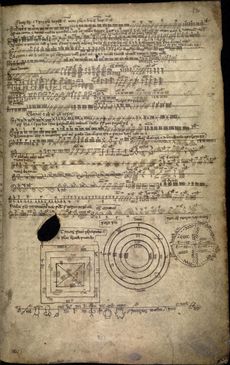
, the 14th c. Auraicept na n-Éces
, and other Medieval Irish folklore, ogham was first invented soon after the fall of the Tower of Babel
, along with the Gaelic language, by the legendary Scythian king, Fenius Farsa
. According to the Auraicept, Fenius journeyed from Scythia
together with Goídel mac Ethéoir, Íar mac Nema and a retinue
of 72 scholars. They came to the plain of Shinar
to study the confused languages
at Nimrod
's tower (the Tower of Babel
). Finding that they had already been dispersed, Fenius sent his scholars to study them, staying at the tower, coordinating the effort. After ten years, the investigations were complete, and Fenius created in Bérla tóbaide "the selected language", taking the best of each of the confused tongues, which he called Goídelc, Goidelic, after Goídel mac Ethéoir. He also created extensions of Goídelc, called Bérla Féne, after himself, Íarmberla, after Íar mac Nema, and others, and the Beithe-luis-nuin (the ogham) as a perfected writing system
for his languages. The names he gave to the letters were those of his 25 best scholars.
Alternatively, the Ogam Tract
credits Ogma mac Elathan
(Ogmios
) with the script's invention. Ogma was skilled in speech and poetry, and created the system for the learned, to the exclusion of rustics and fools. The first message written in Ogam were seven bs on a birch, sent as a warning to Lug mac Elathan
, meaning: "your wife will be carried away seven times to the otherworld unless the birch protects her". For this reason, the letter b is said to be named after the birch, and In Lebor Ogaim goes on to tell the tradition that all letters were named after trees, a claim also referred to by the Auraicept as an alternative to the naming after Fenius' disciples.
The ogham alphabet originally consisted of twenty distinct characters (feda), arranged in four series aicmí (plural of aicme "family"; compare aett). Each aicme was named after its first character (Aicme Beithe, Aicme hÚatha, Aicme Muine, Aicme Ailme, "the B Group", "the H Group", "the M Group", "the A Group"). Five additional letters were later introduced (mainly in the manuscript tradition), the so-called forfeda
.
 The Ogam Tract also gives a variety of some 100 variant or secret modes of writing ogham (92 in the Book of Ballymote
), for example the "shield ogham" (ogam airenach, nr. 73). Even the Younger Futhark
are introduced as a kind of "Viking ogham" (nrs. 91, 92).
The four primary aicmí are, with their transcriptions in manuscript tradition and their names according to manuscript tradition in normalized Old Irish, followed by the their Primitive Irish sound values, and their presumed original name in Primitive Irish in cases where the name's etymology is known:
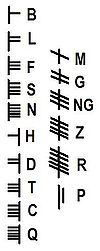

A letter for p is conspicuously absent, since the phoneme
was lost in Proto-Celtic, and the gap was not filled in Q-Celtic, and no sign was needed before loanwords from Latin
containing p appeared in Irish (e.g., Patrick). Conversely, there is a letter for the labiovelar q (ᚊ ceirt), a phoneme lost in Old Irish. The base alphabet is therefore, as it were, designed for Proto-Q-Celtic.
Of the five forfeda
or supplementary letters, only the first, ébad, regularly appears in inscriptions, but mostly with the value K (McManus, § 5.3, 1991). The others, except for emancholl, have at most only one certain 'orthodox' (see below) inscription each. Due to their limited practical use, later ogamists turned the supplementary letters into a series of diphthongs, changing completely the values for pín and emancholl. This meant that the alphabet was once again without a letter for the P sound, forcing the invention of the letter peithboc (soft 'B'), which appears in the manuscripts only.
('The Scholars' Primer') and In Lebor Ogaim
('The Ogam Tract'). They were first discussed in modern times by Roderic O'Flaherty (1685), who took them at face value. The Auraicept itself is aware that not all names are known tree names, saying "Now all these are wood names such as are found in the Ogham Book of Woods, and are not derived from men", admitting that "some of these trees are not known today". The Auraicept gives a short phrase or kenning
for each letter, known as a Bríatharogam, that traditionally accompanied each letter name, and a further gloss explaining their meanings and identifying the tree or plant linked to each letter. Only five of the twenty primary letters have tree names that the Auraicept considers comprehensible without further glosses, namely beith "birch", fearn "alder", saille "willow" , duir "oak" and coll "hazel". All the other names have to be glossed or "translated" with a plant name.
According to the leading modern ogham scholar, Damian McManus the "Tree Alphabet" idea dates to the Old Irish period (say, 10th century), but it post-dates the Primitive Irish period, or at least the time when the letters were originally named. Its origin is probably due to the letters themselves being called feda "trees", or nin "forking branches" due to their shape. Since a few of the letters were, in fact, named after trees, the interpretation arose that they were called feda because of that. Some of the other letter names had fallen out of use as independent words, and were thus free to be claimed as "Old Gaelic" tree names, while others (such as ruis, úath or gort) were more or less forcefully re-interpreted as epitheta of trees by the medieval glossators.
McManus (1991, §3.15) discusses possible etymologies of all the letter names, and as well as the five mentioned above, he adds one other definite tree name: onn "ash" (the Auraicept wrongly has furze). McManus (1988, p164) also believes that the name Idad is probably an artificial form of Iubhar or yew, as the kennings support that meaning, and concedes that Ailm may possibly mean "pine tree" as it appears to be used to mean that in an eighth century poem. Thus out of twenty letter names, only eight at most are the names of trees. The other names have a variety of meanings, which are set out in the list below.
Of the forfeda
, four are glossed by the Auraicept:
The fifth letter is Emancholl which means 'twin of hazel'
 Monumental ogham inscriptions are found in Ireland
and Wales
, with a few additional specimens found in England
(Devon
& Cornwall
), the Isle of Man
, and Scotland
, including Shetland. They were mainly employed as territorial markers and memorials (grave stones). The stone commemorating Vortiporius
, a 6th century king of Dyfed
(originally located in Clynderwen
), is the only ogham stone inscription that bears the name of an identifiable individual. The language of the inscriptions is predominantly Primitive Irish, apart from the few examples in Scotland, such as the Lunnasting stone
, which record fragments of what is probably the Pictish language.
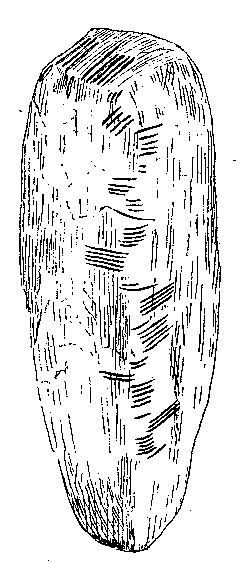
The more ancient examples are standing stone
s, where the script was carved into the edge (droim or faobhar) of the stone, which formed the stemline against which individual characters are cut. The text of these "Orthodox Ogham" inscriptions is read beginning from the bottom left-hand side of a stone, continuing upward along the edge, across the top and down the right-hand side (in the case of long inscriptions). Roughly 380 inscriptions are known in total (a number, incidentally, very close to the number of known inscriptions in the contemporary Elder Futhark
), of which the highest concentration by far is found in the southwestern Irish province of Munster
. Over one third of the total are found in Co Kerry alone, most densely in the former kingdom of the Corcu Duibne
.
Later inscriptions are known as "scholastic", and are post 6th century in date. The term 'scholastic' derives from the fact that the inscriptions are believed to have been inspired by the manuscript sources, instead of being continuations of the original monument tradition. Unlike orthodox ogham, some mediæval inscriptions feature all five Forfeda
. Scholastic inscriptions are written on stemlines cut into the face of the stone, instead of along its edge. Ogham was also occasionally used for notes in manuscripts down to the 16th century. A modern ogham inscription is found on a gravestone dating to 1802 in Ahenny, County Tipperary
.
In Scotland, a number of inscriptions using the ogham writing system are known, but their language is still the subject of debate.
It has been argued by Richard Cox in The Language of Ogham Inscriptions in Scotland (1999) that the language of these is Old Norse, but others remain unconvinced by this analysis, and regard the stones as being Pict
ish in origin. However due to the lack of knowledge about the Picts, the inscriptions remain undeciphered, their language possibly being non-Indo-European
. The Pictish inscriptions are scholastic, and are believed to have been inspired by the manuscript tradition brought into Scotland by Gaelic settlers.
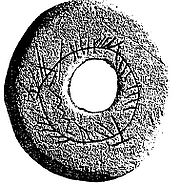
, or the Ogham Tract, that ogham may have been used to keep records or lists, such as genealogies and numerical tallies of property and business transactions. There is also evidence that ogham may have been used as a system of finger or hand signals.
In later centuries when ogham ceased to be used as a practical alphabet, it retained its place in the learning of Gaelic scholars and poets as the basis of grammar and the rules of poetry. Indeed, until modern times the Latin alphabet in Gaelic continued to be taught using letter names borrowed from the Beith-Luis-Nin, along with the Medieval association of each letter with a different tree.
Standard in September, 1999 with the release of version 3.0.
The spelling of the names given is a standardization dating to 1997, used in Unicode Standard and in Irish Standard 434:1999.
The Unicode block for ogham is U+1680–U+169F.
and Neopagan approaches to ogham largely derive from the theories of Robert Graves
in his book The White Goddess
. In this work Graves took his inspiration from the theories of the ogham scholar R.A.S Macalister (see above) and elaborated on them much further. Graves proposed that the ogham alphabet encoded a set of beliefs originating in the Middle-east in Stone Age
times, concerning the ceremonies surrounding the worship of the Moon-goddess in her various forms. Graves' argument is extremely complex, but in essence he argues that the Hebrews, Greeks and Celts were all influenced by a people originating in the Aegean, called 'the people of the sea' by the Egyptians, who spread out around Europe in the 2nd Millennium BC, taking their religious beliefs with them. At some early stage these teachings were encoded in alphabet form by poets in order to pass on their worship of the goddess (as the muse and inspiration of all poets) in a secret fashion, understandable only to initiates. Eventually, via the druids of Gaul, this knowledge was passed on to the poets of early Ireland and Wales. Graves therefore looked at the Tree Alphabet tradition surrounding ogham and explored the tree folklore of each of the letter names, proposing that the order of the letters formed an ancient "seasonal calendar of tree magic". Although his theories have been disregarded by modern scholars (including Macalister himself, with whom Graves corresponded ), they have been taken up with enthusiasm by the neopagan movement. In addition, Graves followed the BLNFS order of ogham letters put forward by Macalister (see above), with the result that this has been taken up by New Age and Neopagan writers as the 'correct' order of the letters, despite its rejection by scholars.
The main use of ogham by modern Druids
, Neo-Pagans
is for the purpose of divination. Divination by using ogham symbols is mentioned in Tochmarc Étaíne
, a tale in the Irish Mythological Cycle
. In the story, druid
Dalan takes four wands of yew, and writes ogham letters upon them. Then he uses the tools for divination
. The tale doesn't explain further how the sticks are handled or interpreted.
Some Neopagans and other interested people use ogham as a divination system, in a manner reminiscent of the incomplete description in Tochmarc Étaíne. They create a series of sticks, one for each letter. The sticks may be used in a fashion similar to runic divination. Another method requires a cloth marked out with Finn's Window
. A person selects some sticks randomly, throws them on the cloth, and then looks both at the symbols and where they fell.
The divinatory meanings are usually based on the tree ogham, rather than the kennings of the Bríatharogam
. Each letter is associated with a tree or other plant, and meanings are derived from them. Robert Graves
' book The White Goddess
has been a major influence on assigning divinatory meanings for ogham. Some reconstructionists of Druidic ways use Briatharogam kennings as a basis for divinatory meanings in ogham divination. The three sets of kennings can be separated into Past-Present-Future or Land-Sea-Sky groupings in such systems, but other organizing structures are used, as well.
Irish language
Irish , also known as Irish Gaelic, is a Goidelic language of the Indo-European language family, originating in Ireland and historically spoken by the Irish people. Irish is now spoken as a first language by a minority of Irish people, as well as being a second language of a larger proportion of...
ˈoːmˠ or ˈoːəmˠ) is an Early Medieval alphabet
Alphabet
An alphabet is a standard set of letters—basic written symbols or graphemes—each of which represents a phoneme in a spoken language, either as it exists now or as it was in the past. There are other systems, such as logographies, in which each character represents a word, morpheme, or semantic...
used primarily to write the Old Irish language, and occasionally the Brythonic language. Ogham is sometimes called the "Celtic Tree Alphabet", based on a High Medieval Bríatharogam
Bríatharogam
In Early Irish literature a Bríatharogam is a two word kenning which explains the meanings of the names of the letters of the Ogham alphabet. Three variant lists of bríatharogaim or 'word-oghams' have been preserved, dating to the Old Irish period...
tradition ascribing names of trees to the individual letters.
There are roughly 400 surviving ogham inscriptions
Ogham inscriptions
]There are roughly 400 known ogham inscriptions on stone monuments scattered around the Irish Sea, the bulk of them dating to the 5th and 6th centuries. Their language is predominantly Primitive Irish, but a few examples record fragments of the Pictish language...
on stone monuments throughout Ireland and western Britain, the bulk of them are in the south of Ireland, in Counties Kerry
County Kerry
Kerry means the "people of Ciar" which was the name of the pre-Gaelic tribe who lived in part of the present county. The legendary founder of the tribe was Ciar, son of Fergus mac Róich. In Old Irish "Ciar" meant black or dark brown, and the word continues in use in modern Irish as an adjective...
, Cork
County Cork
County Cork is a county in Ireland. It is located in the South-West Region and is also part of the province of Munster. It is named after the city of Cork . Cork County Council is the local authority for the county...
and Waterford
County Waterford
*Abbeyside, Affane, Aglish, Annestown, An Rinn, Ardmore*Ballinacourty, Ballinameela, Ballinamult, Ballinroad, Ballybeg, Ballybricken, Ballyduff Lower, Ballyduff Upper, Ballydurn, Ballygunner, Ballylaneen, Ballymacarbry, Ballymacart, Ballynaneashagh, Ballysaggart, Ballytruckle, Bilberry, Bunmahon,...
. The largest number outside of Ireland is in Pembrokeshire
Pembrokeshire
Pembrokeshire is a county in the south west of Wales. It borders Carmarthenshire to the east and Ceredigion to the north east. The county town is Haverfordwest where Pembrokeshire County Council is headquartered....
in Wales. The remainder are mostly in south-eastern Ireland, Scotland, the Isle of Man
Isle of Man
The Isle of Man , otherwise known simply as Mann , is a self-governing British Crown Dependency, located in the Irish Sea between the islands of Great Britain and Ireland, within the British Isles. The head of state is Queen Elizabeth II, who holds the title of Lord of Mann. The Lord of Mann is...
, and England around the Devon
Devon
Devon is a large county in southwestern England. The county is sometimes referred to as Devonshire, although the term is rarely used inside the county itself as the county has never been officially "shired", it often indicates a traditional or historical context.The county shares borders with...
/Cornwall
Cornwall
Cornwall is a unitary authority and ceremonial county of England, within the United Kingdom. It is bordered to the north and west by the Celtic Sea, to the south by the English Channel, and to the east by the county of Devon, over the River Tamar. Cornwall has a population of , and covers an area of...
border. The vast majority of the inscriptions consist of personal names.
The etymology of the word ogam or ogham remains unclear. One possible origin is from the Irish og-úaim 'point-seam', referring to the seam made by the point of a sharp weapon.
Origins
The earliest inscriptions in ogham date to about the 4th century AD, but James Carney believes its invention is rather within the 1st century BC. Although the use of "classical" ogham in stone inscriptions seems to have flowered in the 5th–6th centuries around the Irish SeaIrish Sea
The Irish Sea separates the islands of Ireland and Great Britain. It is connected to the Celtic Sea in the south by St George's Channel, and to the Atlantic Ocean in the north by the North Channel. Anglesey is the largest island within the Irish Sea, followed by the Isle of Man...
, from the phonological evidence it is clear that the alphabet predates the 5th century. A period of writing on wood or other perishable material prior to the preserved monumental inscriptions needs to be assumed, sufficient for the loss of the phonemes represented by úath
Uath
Uath, Old Irish Úath, hÚath , is the sixth letter of the Ogham alphabet, , transcribed ⟨⟩ in manuscript tradition, but unattested in actual inscriptions. The kenning "a meet of hounds is huath" identifies the name as úath "horror, fear", although the Auraicept glosses "white-thorn":The original...
("H") and straif
Straif
Straif is the Irish name of the fourteenth letter of the Ogham alphabet, . Old Irish spelling variants are straif, straiph, zraif, sraif, sraiph, sraib.The Bríatharogam kennings for the letter are:...
("Z"), as well as the velar nasal, gétal, all of which are clearly part of the system, but unattested in inscriptions.
It appears that the ogham alphabet was modelled on another script, and some even consider it a mere cipher of its template script (Düwel 1968: points out similarity with ciphers of Germanic runes
Cipher runes
Cipher runes, or cryptic runes, are the cryptographical replacement of the letters of the runic alphabet.-Preservation:The knowledge of cipher runes was best preserved in Iceland, and during the 17th and the 18th centuries, Icelandic scholars produced several treatises on the subject...
). The largest number of scholars favours the Latin alphabet
Latin alphabet
The Latin alphabet, also called the Roman alphabet, is the most recognized alphabet used in the world today. It evolved from a western variety of the Greek alphabet called the Cumaean alphabet, which was adopted and modified by the Etruscans who ruled early Rome...
as this template, although the Elder Futhark
Elder Futhark
The Elder Futhark is the oldest form of the runic alphabet, used by Germanic tribes for Northwest Germanic and Migration period Germanic dialects of the 2nd to 8th centuries for inscriptions on artifacts such as jewellery, amulets, tools, weapons and runestones...
and even the Greek alphabet
Greek alphabet
The Greek alphabet is the script that has been used to write the Greek language since at least 730 BC . The alphabet in its classical and modern form consists of 24 letters ordered in sequence from alpha to omega...
have their supporters. Runic origin would elegantly explain the presence of "H" and "Z" letters unused in Irish, as well as the presence of vocalic and consonantal variants "U" vs. "W" unknown to Latin or Greek writing. The Latin alphabet is the primary contender mainly because its influence at the required period (4th century) is most easily established, viz., via Britannia, while the runes in the 4th century were not very widespread even in continental Europe
Continental Europe
Continental Europe, also referred to as mainland Europe or simply the Continent, is the continent of Europe, explicitly excluding European islands....
.
In Ireland and in Wales, the language of the monumental stone inscriptions is termed Primitive Irish. The transition to Old Irish, the language of the earliest sources in the Latin alphabet, takes place in about the 6th century. Since ogham inscriptions consist almost exclusively of personal names and marks possibly indicating land ownership, linguistic information that may be glimpsed from the Primitive Irish period is mostly restricted to phonological
Phonology
Phonology is, broadly speaking, the subdiscipline of linguistics concerned with the sounds of language. That is, it is the systematic use of sound to encode meaning in any spoken human language, or the field of linguistics studying this use...
developments.
Theories of origin
There are two main schools of thought among scholars as to the motivation for the creation of ogham. Scholars such as Carney and MacNeill have suggested that ogham was first created as a cryptic alphabet, designed by the Irish so as not to be understood by those with a knowledge of the Latin alphabet. With this school of thought, it is asserted that the alphabet was created by Irish scholars or druids for political, military or religious reasons to provide a secret means of communication in opposition to the authorities of Roman Britain. The Roman Empire, which then ruled over neighbouring southern Britain, represented a very real threat of invasion to Ireland, which may have acted as a spur to the creation of the alphabet. Alternatively, in later centuries when the threat of invasion had receded and the Irish were themselves invading the western parts of Britain, the desire to keep communications secret from Romans or Romanised Britons would still have provided an incentive.. With bilingual ogham and Latin inscriptions in Wales, however, one would suppose that the ogham could easily be decoded by anyone in the Post-Roman world.The second main school of thought, put forward by scholars such as McManus, is that ogham was invented by the first Christian communities in early Ireland, out of a desire to have a unique alphabet for writing short messages and inscriptions in the Irish language. The argument is that the sounds of Primitive Irish were regarded as difficult to transcribe into the Latin alphabet, so the invention of a separate alphabet was deemed appropriate. A possible such origin, as suggested by McManus (1991:41), is the early Christian community known to have existed in Ireland from around AD 400 at the latest, the existence of which is attested by the mission of Palladius
Palladius
Palladius was the first Bishop of the Christians of Ireland, preceding Saint Patrick. The Roman Catholic Church and the Anglican Communion consider Palladius a saint.-Armorica:...
by Pope Celestine I
Pope Celestine I
Pope Saint Celestine I was elevated to the papacy in the year 422, on November 3 according to the Liber Pontificalis, but on April 10 according to Tillemont....
in AD 431. Palladius died and was buried at Auchenblae
Auchenblae
Auchenblae is a village in the Kincardine and Mearns area of Aberdeenshire, formerly in Kincardineshire, Scotland. It is featured in Lewis Grassic Gibbon's novel, Sunset Song. The name is a derivation from the Gaelic for "Field of Flowers" possibly due to the growing of flax in bygone times. The...
in the Mearns
Mearns
Mearns can refer to*Mearns Academy* Mearns, Alberta* Mearns Castle*Mearns Castle High School* Mearns FM* Mearns Primary School* Kincardineshire, the County of Kincardine, The Mearns in Scotland* Newton Mearnsin biology:...
in eastern Scotland
Scotland
Scotland is a country that is part of the United Kingdom. Occupying the northern third of the island of Great Britain, it shares a border with England to the south and is bounded by the North Sea to the east, the Atlantic Ocean to the north and west, and the North Channel and Irish Sea to the...
. These events may be associated with a Christian community there propagating ogham to the otherwise anomalous cluster of inscriptions in eastern Scotland.
A variation on both theories is that the alphabet was first invented, for whatever reason, in 4th century Irish settlements in west Wales
History of Wales
The history of Wales begins with the arrival of human beings in the region thousands of years ago. Neanderthals lived in what is now Wales, or Cymru in Welsh, at least 230,000 years ago, while Homo sapiens arrived by about 29,000 years ago...
after contact and intermarriage with Romanized Britons with a knowledge of the Latin alphabet. In fact, several ogham stones in Wales are bilingual, containing both Irish and Brythonic-Latin (an ancestor of contemporary Welsh), testifying to the Celtic contact that led to the existence of some of these stones.
A third theory put forward by the noted ogham scholar R.A.S. Macalister was influential at one time, but finds little favour with scholars today. Macalister believed that ogham was first invented in Cisalpine Gaul around 600 B.C. by Gaulish druids as a secret system of hand signals, and was inspired by a form of the Greek alphabet current in Northern Italy at the time. According to this theory, the alphabet was transmitted in oral form or on wood only, until it was finally put into a written form on stone inscriptions in early Christian Ireland. Later scholars are largely united in rejecting this theory however, primarily because a detailed study of the letters show that they were created specifically for the Primitive Irish of the early centuries AD. The supposed links with the form of the Greek alphabet that Macalister proposed can also be disproved.
Macalister's theory of hand or finger signals as a source for ogham is a reflection of the fact that the signary consists of four groups of five letters, with a sequence of strokes from one to five. A theory popular among modern scholars is that the forms of the letters derive from the various numerical tally-mark
Tally marks
Tally marks, or hash marks, are a unary numeral system. They are a form of numeral used for counting. They allow updating written intermediate results without erasing or discarding anything written down...
systems in existence at the time. This theory was first suggested by the scholars Thurneysen and Vendryes, who proposed that the ogham script was inspired by a pre-existing system of counting based around the numbers five and twenty, which was then adapted to an alphabet form by the first ogamists.
Legendary accounts
According to the 11th c. Lebor Gabála ÉrennLebor Gabála Érenn
Lebor Gabála Érenn is the Middle Irish title of a loose collection of poems and prose narratives recounting the mythical origins and history of the Irish from the creation of the world down to the Middle Ages...
, the 14th c. Auraicept na n-Éces
Auraicept na n-Éces
Auraicept na n-Éces is claimed as a 7th century work of Irish grammarians, written by a scholar named Longarad....
, and other Medieval Irish folklore, ogham was first invented soon after the fall of the Tower of Babel
Tower of Babel
The Tower of Babel , according to the Book of Genesis, was an enormous tower built in the plain of Shinar .According to the biblical account, a united humanity of the generations following the Great Flood, speaking a single language and migrating from the east, came to the land of Shinar, where...
, along with the Gaelic language, by the legendary Scythian king, Fenius Farsa
Fenius Farsa
Fénius Farsaid is a legendary king of Scythia who shows up in different versions of Irish folklore. He was the son of Bathath who was a son of Magog...
. According to the Auraicept, Fenius journeyed from Scythia
Scythia
In antiquity, Scythian or Scyths were terms used by the Greeks to refer to certain Iranian groups of horse-riding nomadic pastoralists who dwelt on the Pontic-Caspian steppe...
together with Goídel mac Ethéoir, Íar mac Nema and a retinue
Retinue
A retinue is a body of persons "retained" in the service of a noble or royal personage, a suite of "retainers".-Etymology:...
of 72 scholars. They came to the plain of Shinar
Shinar
Shinar was a geographical locale of uncertain boundaries in Mesopotamia. The name may be a corruption of Shene nahar , Shene or , or Sumer .It has been suggested that Shinar must have been confined to the northern part of Mesopotamia Shinar (Hebrew Šin`ar, Septuagint Σεννααρ Sennaar) was a...
to study the confused languages
Confusion of tongues
The confusion of tongues is the initial fragmentation of human languages described in the Book of Genesis 11:1–9, as a result of the construction of the Tower of Babel....
at Nimrod
Nimrod (king)
Nimrod is, according to the Book of Genesis and Books of Chronicles, the son of Cush and great-grandson of Noah and the king of Shinar. He is depicted in the Tanakh as a man of power in the earth, and a mighty hunter. Extra-Biblical traditions associating him with the Tower of Babel led to his...
's tower (the Tower of Babel
Tower of Babel
The Tower of Babel , according to the Book of Genesis, was an enormous tower built in the plain of Shinar .According to the biblical account, a united humanity of the generations following the Great Flood, speaking a single language and migrating from the east, came to the land of Shinar, where...
). Finding that they had already been dispersed, Fenius sent his scholars to study them, staying at the tower, coordinating the effort. After ten years, the investigations were complete, and Fenius created in Bérla tóbaide "the selected language", taking the best of each of the confused tongues, which he called Goídelc, Goidelic, after Goídel mac Ethéoir. He also created extensions of Goídelc, called Bérla Féne, after himself, Íarmberla, after Íar mac Nema, and others, and the Beithe-luis-nuin (the ogham) as a perfected writing system
Writing system
A writing system is a symbolic system used to represent elements or statements expressible in language.-General properties:Writing systems are distinguished from other possible symbolic communication systems in that the reader must usually understand something of the associated spoken language to...
for his languages. The names he gave to the letters were those of his 25 best scholars.
Alternatively, the Ogam Tract
In Lebor Ogaim
In Lebor Ogaim , also known as the Ogam Tract, is an Old Irish treatise on the ogham alphabet. It is preserved in R.I.A. MS 23 P 12 308-314 , T.C.D. H.3.18, 26.1-35.28 and National Library of Ireland MS G53 1-22 , and fragments in British Library Add. 4783...
credits Ogma mac Elathan
Ogma
Ogma is a character from Irish mythology and Scottish mythology. A member of the Tuatha Dé Danann, he is often considered a deity and may be related to the Gallic god Ogmios....
(Ogmios
Ogmios
Ogmios was the Celtic deity of eloquence. He looked like an older version of Heracles. He was also a binding god who would use his powers of persuasion to bind men onto himself and then lead them into the underworld....
) with the script's invention. Ogma was skilled in speech and poetry, and created the system for the learned, to the exclusion of rustics and fools. The first message written in Ogam were seven bs on a birch, sent as a warning to Lug mac Elathan
Lugh
Lug or Lugh is an Irish deity represented in mythological texts as a hero and High King of the distant past. He is known by the epithets Lámhfhada , for his skill with a spear or sling, Ildánach , Samhildánach , Lonnbeimnech and Macnia , and by the...
, meaning: "your wife will be carried away seven times to the otherworld unless the birch protects her". For this reason, the letter b is said to be named after the birch, and In Lebor Ogaim goes on to tell the tradition that all letters were named after trees, a claim also referred to by the Auraicept as an alternative to the naming after Fenius' disciples.
Alphabet: the Beith-Luis-Nin
Strictly speaking, the word ogham refers only to the form of letters or script, while the letters themselves are known collectively as the Beith-luis-nin after the letter names of the first letters (in the same manner as the Greek Alpha and Beta). The fact that the order of the letters is in fact BLFSN led the scholar Macalister to propose that the letter order was originally BLNFS. This was to fit into his own theories which linked the Beith-luis-nin to a form of the Greek alphabet current in Northern Italy in the 5th and 6th centuries BC. However, there is no evidence for Macalister's theories and they have since been discounted by later scholars. There are in fact other explanations for the name Beith-luis-nin. One explanation is that the word nin which literally means 'a forked branch' was also regularly used to mean a written letter in general. Beith-luis-nin could therefore mean simply 'Beith-luis letters'. The other explanation is that Beith-luis-nin is a convenient contraction of the first five letters thus: Beith-LVS-nin.The ogham alphabet originally consisted of twenty distinct characters (feda), arranged in four series aicmí (plural of aicme "family"; compare aett). Each aicme was named after its first character (Aicme Beithe, Aicme hÚatha, Aicme Muine, Aicme Ailme, "the B Group", "the H Group", "the M Group", "the A Group"). Five additional letters were later introduced (mainly in the manuscript tradition), the so-called forfeda
Forfeda
The Forfeda are the "additional" letters of the Ogham alphabet, beyond the basic inventory of twenty signs. The most important of these are five forfeda which were arranged in their own aicme or class, and were clearly invented in the Old Irish period, several centuries after the peak of Ogham usage...
.
Book of Ballymote
The Book of Ballymote , named for the parish of Ballymote, County Sligo, was written in 1390 or 1391....
), for example the "shield ogham" (ogam airenach, nr. 73). Even the Younger Futhark
Younger Futhark
The Younger Futhark, also called Scandinavian runes, is a runic alphabet, a reduced form of the Elder Futhark, consisting of only 16 characters, in use from ca. 800 CE...
are introduced as a kind of "Viking ogham" (nrs. 91, 92).
The four primary aicmí are, with their transcriptions in manuscript tradition and their names according to manuscript tradition in normalized Old Irish, followed by the their Primitive Irish sound values, and their presumed original name in Primitive Irish in cases where the name's etymology is known:
- Right side/downward strokes
- B beith [b] (*betwias)
- L luis [l]
- F fearn [w] (*wernā)
- S saille [s] (*salis)
- N nuin [n]
- Left side/upward strokes
- H úath [j]?
- D duir [d] (*daris)
- T tinne [t]
- C coll [k] (*coslas)
- Q ceirt [kʷ] (*kʷertā)
- Across/pendicular strokes
- M muin [m]
- G gort [ɡ] (*gortas)
- NG gétal [ɡʷ] (*gʷēddlan)
- Z straif [sw] or [ts]?
- R ruis [r]
- notches (vowels)
- A ailm [a]
- O onn [o] (*osen)
- U úr [u]
- E edad [e]
- I idad [i]
A letter for p is conspicuously absent, since the phoneme
Phoneme
In a language or dialect, a phoneme is the smallest segmental unit of sound employed to form meaningful contrasts between utterances....
was lost in Proto-Celtic, and the gap was not filled in Q-Celtic, and no sign was needed before loanwords from Latin
Latin
Latin is an Italic language originally spoken in Latium and Ancient Rome. It, along with most European languages, is a descendant of the ancient Proto-Indo-European language. Although it is considered a dead language, a number of scholars and members of the Christian clergy speak it fluently, and...
containing p appeared in Irish (e.g., Patrick). Conversely, there is a letter for the labiovelar q (ᚊ ceirt), a phoneme lost in Old Irish. The base alphabet is therefore, as it were, designed for Proto-Q-Celtic.
Of the five forfeda
Forfeda
The Forfeda are the "additional" letters of the Ogham alphabet, beyond the basic inventory of twenty signs. The most important of these are five forfeda which were arranged in their own aicme or class, and were clearly invented in the Old Irish period, several centuries after the peak of Ogham usage...
or supplementary letters, only the first, ébad, regularly appears in inscriptions, but mostly with the value K (McManus, § 5.3, 1991). The others, except for emancholl, have at most only one certain 'orthodox' (see below) inscription each. Due to their limited practical use, later ogamists turned the supplementary letters into a series of diphthongs, changing completely the values for pín and emancholl. This meant that the alphabet was once again without a letter for the P sound, forcing the invention of the letter peithboc (soft 'B'), which appears in the manuscripts only.
- EA ébad
- OI óir
- UI uillenn
- P , later IO pín (later iphín)
- X or Ch (as in loch), later AE emancholl
Letter names
The letter names are interpreted as names of trees or shrubs in manuscript tradition, both in Auraicept na n-ÉcesAuraicept na n-Éces
Auraicept na n-Éces is claimed as a 7th century work of Irish grammarians, written by a scholar named Longarad....
('The Scholars' Primer') and In Lebor Ogaim
In Lebor Ogaim
In Lebor Ogaim , also known as the Ogam Tract, is an Old Irish treatise on the ogham alphabet. It is preserved in R.I.A. MS 23 P 12 308-314 , T.C.D. H.3.18, 26.1-35.28 and National Library of Ireland MS G53 1-22 , and fragments in British Library Add. 4783...
('The Ogam Tract'). They were first discussed in modern times by Roderic O'Flaherty (1685), who took them at face value. The Auraicept itself is aware that not all names are known tree names, saying "Now all these are wood names such as are found in the Ogham Book of Woods, and are not derived from men", admitting that "some of these trees are not known today". The Auraicept gives a short phrase or kenning
Kenning
A kenning is a type of literary trope, specifically circumlocution, in the form of a compound that employs figurative language in place of a more concrete single-word noun. Kennings are strongly associated with Old Norse and later Icelandic and Anglo-Saxon poetry...
for each letter, known as a Bríatharogam, that traditionally accompanied each letter name, and a further gloss explaining their meanings and identifying the tree or plant linked to each letter. Only five of the twenty primary letters have tree names that the Auraicept considers comprehensible without further glosses, namely beith "birch", fearn "alder", saille "willow" , duir "oak" and coll "hazel". All the other names have to be glossed or "translated" with a plant name.
According to the leading modern ogham scholar, Damian McManus the "Tree Alphabet" idea dates to the Old Irish period (say, 10th century), but it post-dates the Primitive Irish period, or at least the time when the letters were originally named. Its origin is probably due to the letters themselves being called feda "trees", or nin "forking branches" due to their shape. Since a few of the letters were, in fact, named after trees, the interpretation arose that they were called feda because of that. Some of the other letter names had fallen out of use as independent words, and were thus free to be claimed as "Old Gaelic" tree names, while others (such as ruis, úath or gort) were more or less forcefully re-interpreted as epitheta of trees by the medieval glossators.
McManus (1991, §3.15) discusses possible etymologies of all the letter names, and as well as the five mentioned above, he adds one other definite tree name: onn "ash" (the Auraicept wrongly has furze). McManus (1988, p164) also believes that the name Idad is probably an artificial form of Iubhar or yew, as the kennings support that meaning, and concedes that Ailm may possibly mean "pine tree" as it appears to be used to mean that in an eighth century poem. Thus out of twenty letter names, only eight at most are the names of trees. The other names have a variety of meanings, which are set out in the list below.
- Beith, Old Irish Beithe means "birchBirchBirch is a tree or shrub of the genus Betula , in the family Betulaceae, closely related to the beech/oak family, Fagaceae. The Betula genus contains 30–60 known taxa...
-tree", cognate to Latin betula. - Luis, Old Irish Luis is either related to luise "blaze" or lus "herb". The arboreal tradition has caertheand "rowanRowanThe rowans or mountain-ashes are shrubs or small trees in genus Sorbus of family Rosaceae. They are native throughout the cool temperate regions of the Northern Hemisphere, with the highest species diversity in the mountains of western China and the Himalaya, where numerous apomictic microspecies...
". - Fearn, Old Irish Fern means "alderAlderAlder is the common name of a genus of flowering plants belonging to the birch family . The genus comprises about 30 species of monoecious trees and shrubs, few reaching large size, distributed throughout the North Temperate Zone and in the Americas along the Andes southwards to...
-tree", Primitive Irish *wernā, so that the original value of the letter was [w]. - Sail, Old Irish Sail means "willowWillowWillows, sallows, and osiers form the genus Salix, around 400 species of deciduous trees and shrubs, found primarily on moist soils in cold and temperate regions of the Northern Hemisphere...
-tree", cognate to Latin salix. - Nion, Old Irish Nin means either "fork" or "loft". The arboreal tradition has uinnius "ash-treeEuropean AshFraxinus excelsior , is a species of Fraxinus native to most of Europe with the exception of northern Scandinavia and southern Iberia, and also southwestern Asia from northern Turkey east to the Caucasus and Alborz mountains...
". - Uath, Old Irish Úath means úath "horror, fear", the arboreal tradition has "white-thornCommon HawthornCrataegus monogyna, known as common hawthorn or single-seeded hawthorn, is a species of hawthorn native to Europe, northwest Africa and western Asia. It has been introduced in many other parts of the world where it is an invasive weed...
". The original etymology of the name, and the letter's value, are however unclear. McManus (1986) suggested a value [y]. Peter Schrijver (see McManus 1991:37) suggested that if úath "fear" is cognate with Latin pavere, a trace of PIE *p might have survived into Primitive Irish, but there is no independent evidence for this. - Dair, Old Irish Dair means "oakOakAn oak is a tree or shrub in the genus Quercus , of which about 600 species exist. "Oak" may also appear in the names of species in related genera, notably Lithocarpus...
" (PIE *doru-). - Tinne, Old Irish Tinne from the evidence of the kenningKenningA kenning is a type of literary trope, specifically circumlocution, in the form of a compound that employs figurative language in place of a more concrete single-word noun. Kennings are strongly associated with Old Norse and later Icelandic and Anglo-Saxon poetry...
s means "bar of metal, ingotIngotAn ingot is a material, usually metal, that is cast into a shape suitable for further processing. Non-metallic and semiconductor materials prepared in bulk form may also be referred to as ingots, particularly when cast by mold based methods.-Uses:...
". The arboreal tradition has cuileand "hollyHollyIlex) is a genus of 400 to 600 species of flowering plants in the family Aquifoliaceae, and the only living genus in that family. The species are evergreen and deciduous trees, shrubs, and climbers from tropics to temperate zones world wide....
". - Coll, Old Irish Coll meant "hazelHazelThe hazels are a genus of deciduous trees and large shrubs native to the temperate northern hemisphere. The genus is usually placed in the birch family Betulaceae, though some botanists split the hazels into a separate family Corylaceae.They have simple, rounded leaves with double-serrate margins...
-tree", cognate with Welsh collen, correctly glossed as cainfidh "fair-wood" ("hazel") by the arboreal interpretation. The Latin corylus is a possible cognate. - Ceirt, Old Irish Cert is cognate with Welsh pert "bush" , Latin quercus "oak" (PIE *perkwos). It was confused with Old Irish ceirt "rag", reflected in the kennings. The Auraicept glosses aball "appleAppleThe apple is the pomaceous fruit of the apple tree, species Malus domestica in the rose family . It is one of the most widely cultivated tree fruits, and the most widely known of the many members of genus Malus that are used by humans. Apple grow on small, deciduous trees that blossom in the spring...
". - Muin, Old Irish Muin: the kennings connect this name to three different words, muin "neck, upper part of the back", muin "wile, ruse", and muin "love, esteem". The arboreal tradition has finemhain "vineVineA vine in the narrowest sense is the grapevine , but more generally it can refer to any plant with a growth habit of trailing or scandent, that is to say climbing, stems or runners...
". - Gort, Old Irish Gort means "field" (cognate to garden). The arboreal tradition has edind "ivyIvyIvy, plural ivies is a genus of 12–15 species of evergreen climbing or ground-creeping woody plants in the family Araliaceae, native to western, central and southern Europe, Macaronesia, northwestern Africa and across central-southern Asia east to Japan and Taiwan.-Description:On level ground they...
". - nGéadal, Old Irish Gétal from the kennings has a meaning of "killing", maybe cognate to gonid "slays", from PIE . The value of the letter in Primitive Irish, then, was a voiced labiovelar, [ɡʷ]. The arboreal tradition glosses cilcach, "broom" or "fernFernA fern is any one of a group of about 12,000 species of plants belonging to the botanical group known as Pteridophyta. Unlike mosses, they have xylem and phloem . They have stems, leaves, and roots like other vascular plants...
". - Straif, Old Irish Straiph means "sulphur". The Primitive Irish letter value is uncertain, it may have been a sibilant different from s, which is taken by sail, maybe a reflex of /st/ or /sw/. The arboreal tradition glosses draighin "blackthornBlackthornPrunus spinosa is a species of Prunus native to Europe, western Asia, and locally in northwest Africa. It is also locally naturalised in New Zealand and eastern North America....
". - Ruis, Old Irish Ruis means "red" or "redness", glossed as trom "elderElderberrySambucus is a genus of between 5 and 30 species of shrubs or small trees in the moschatel family, Adoxaceae. It was formerly placed in the honeysuckle family, Caprifoliaceae, but was reclassified due to genetic evidence...
". - Ailm, Old Irish Ailm is of uncertain meaning, possibly "pine-tree". The Auraicept has crand giuis .i. ochtach, "firFirFirs are a genus of 48–55 species of evergreen conifers in the family Pinaceae. They are found through much of North and Central America, Europe, Asia, and North Africa, occurring in mountains over most of the range...
-tree" or "pinePinePines are trees in the genus Pinus ,in the family Pinaceae. They make up the monotypic subfamily Pinoideae. There are about 115 species of pine, although different authorities accept between 105 and 125 species.-Etymology:...
tree". - Onn, Old Irish Onn means "ash-tree", although the Auraicept glosses aiten "furze".
- Úr, Old Irish Úr, based on the kennings, means "earth, clay, soil". The Auraicept glosses fraech "heathEricaErica ,the heaths or heathers, is a genus of approximately 860 species of flowering plants in the family Ericaceae. The English common names "heath" and "heather" are shared by some closely related genera of similar appearance....
". - Eadhadh, Old Irish Edad of unknown meaning. The Auraicept glosses crand fir no crithach "test-tree or aspenAspenPopulus section Populus, of the Populus genus, includes the aspen trees and the white poplar Populus alba. The five typical aspens are all native to cold regions with cool summers, in the north of the Northern Hemisphere, extending south at high altitudes in the mountains. The White Poplar, by...
" - Iodhadh, Old Irish Idad is of uncertain meaning, but is probably a form of ibhar "yewTaxus baccataTaxus baccata is a conifer native to western, central and southern Europe, northwest Africa, northern Iran and southwest Asia. It is the tree originally known as yew, though with other related trees becoming known, it may be now known as the English yew, or European yew.-Description:It is a small-...
", which is the meaning given to it in the arboreal tradition.
Of the forfeda
Forfeda
The Forfeda are the "additional" letters of the Ogham alphabet, beyond the basic inventory of twenty signs. The most important of these are five forfeda which were arranged in their own aicme or class, and were clearly invented in the Old Irish period, several centuries after the peak of Ogham usage...
, four are glossed by the Auraicept:
- Eabhadh, Old Irish Ebhadh with crithach "aspen";
- Ór, "gold" (from Latin aurum); the arboreal tradition has feorus no edind, "spindle tree or ivy"
- Uilleann, Old Irish Uilleand "elbow"; the arboreal tradition has edleand "honeysuckleHoneysuckleHoneysuckles are arching shrubs or twining vines in the family Caprifoliaceae, native to the Northern Hemisphere. There are about 180 species of honeysuckle, 100 of which occur in China; Europe, India and North America have only about 20 native species each...
" - Pín, later Ifín, Old Irish Iphin with spinan no ispin "gooseberryGooseberryThe gooseberry or ; Ribes uva-crispa, syn. R. grossularia) is a species of Ribes, native to Europe, northwestern Africa and southwestern Asia...
or thorn".
The fifth letter is Emancholl which means 'twin of hazel'
Corpus
Ireland
Ireland is an island to the northwest of continental Europe. It is the third-largest island in Europe and the twentieth-largest island on Earth...
and Wales
Wales
Wales is a country that is part of the United Kingdom and the island of Great Britain, bordered by England to its east and the Atlantic Ocean and Irish Sea to its west. It has a population of three million, and a total area of 20,779 km²...
, with a few additional specimens found in England
England
England is a country that is part of the United Kingdom. It shares land borders with Scotland to the north and Wales to the west; the Irish Sea is to the north west, the Celtic Sea to the south west, with the North Sea to the east and the English Channel to the south separating it from continental...
(Devon
Devon
Devon is a large county in southwestern England. The county is sometimes referred to as Devonshire, although the term is rarely used inside the county itself as the county has never been officially "shired", it often indicates a traditional or historical context.The county shares borders with...
& Cornwall
Cornwall
Cornwall is a unitary authority and ceremonial county of England, within the United Kingdom. It is bordered to the north and west by the Celtic Sea, to the south by the English Channel, and to the east by the county of Devon, over the River Tamar. Cornwall has a population of , and covers an area of...
), the Isle of Man
Isle of Man
The Isle of Man , otherwise known simply as Mann , is a self-governing British Crown Dependency, located in the Irish Sea between the islands of Great Britain and Ireland, within the British Isles. The head of state is Queen Elizabeth II, who holds the title of Lord of Mann. The Lord of Mann is...
, and Scotland
Scotland
Scotland is a country that is part of the United Kingdom. Occupying the northern third of the island of Great Britain, it shares a border with England to the south and is bounded by the North Sea to the east, the Atlantic Ocean to the north and west, and the North Channel and Irish Sea to the...
, including Shetland. They were mainly employed as territorial markers and memorials (grave stones). The stone commemorating Vortiporius
Vortiporius
Vortiporius was a king of Dyfed in the early to mid-6th century. He ruled over an area approximately corresponding to the modern Pembrokeshire. As a mythical king in Geoffrey of Monmouth's treatment of the Matter of Britain, he was the successor of Aurelius Conanus and was succeeded by...
, a 6th century king of Dyfed
Dyfed
Dyfed is a preserved county of Wales. It was created on 1 April 1974 under the terms of the Local Government Act 1972, and covered approximately the same geographic extent as the ancient Principality of Deheubarth, although excluding the Gower Peninsula and the area west of the River Tawe...
(originally located in Clynderwen
Clynderwen
Clynderwen is a rural village in Pembrokeshire, Wales. The village is known as a camping destination and is popular for self-catering holidays...
), is the only ogham stone inscription that bears the name of an identifiable individual. The language of the inscriptions is predominantly Primitive Irish, apart from the few examples in Scotland, such as the Lunnasting stone
Lunnasting stone
The Lunnasting stone is a stone bearing an ogham inscription, found at Lunnasting, Shetland and donated to the National Museum of Antiquities of Scotland in 1876.-Discovery:...
, which record fragments of what is probably the Pictish language.
The more ancient examples are standing stone
Standing stone
Standing stones, orthostats, liths, or more commonly megaliths are solitary stones set vertically in the ground and come in many different varieties....
s, where the script was carved into the edge (droim or faobhar) of the stone, which formed the stemline against which individual characters are cut. The text of these "Orthodox Ogham" inscriptions is read beginning from the bottom left-hand side of a stone, continuing upward along the edge, across the top and down the right-hand side (in the case of long inscriptions). Roughly 380 inscriptions are known in total (a number, incidentally, very close to the number of known inscriptions in the contemporary Elder Futhark
Elder Futhark
The Elder Futhark is the oldest form of the runic alphabet, used by Germanic tribes for Northwest Germanic and Migration period Germanic dialects of the 2nd to 8th centuries for inscriptions on artifacts such as jewellery, amulets, tools, weapons and runestones...
), of which the highest concentration by far is found in the southwestern Irish province of Munster
Munster
Munster is one of the Provinces of Ireland situated in the south of Ireland. In Ancient Ireland, it was one of the fifths ruled by a "king of over-kings" . Following the Norman invasion of Ireland, the ancient kingdoms were shired into a number of counties for administrative and judicial purposes...
. Over one third of the total are found in Co Kerry alone, most densely in the former kingdom of the Corcu Duibne
Corcu Duibne
The Corcu Duibne was a notable kingdom in prehistoric and medieval County Kerry, Ireland which included the Dingle Peninsula, the Iveragh Peninsula and connecting lands...
.
Later inscriptions are known as "scholastic", and are post 6th century in date. The term 'scholastic' derives from the fact that the inscriptions are believed to have been inspired by the manuscript sources, instead of being continuations of the original monument tradition. Unlike orthodox ogham, some mediæval inscriptions feature all five Forfeda
Forfeda
The Forfeda are the "additional" letters of the Ogham alphabet, beyond the basic inventory of twenty signs. The most important of these are five forfeda which were arranged in their own aicme or class, and were clearly invented in the Old Irish period, several centuries after the peak of Ogham usage...
. Scholastic inscriptions are written on stemlines cut into the face of the stone, instead of along its edge. Ogham was also occasionally used for notes in manuscripts down to the 16th century. A modern ogham inscription is found on a gravestone dating to 1802 in Ahenny, County Tipperary
County Tipperary
County Tipperary is a county of Ireland. It is located in the province of Munster and is named after the town of Tipperary. The area of the county does not have a single local authority; local government is split between two authorities. In North Tipperary, part of the Mid-West Region, local...
.
In Scotland, a number of inscriptions using the ogham writing system are known, but their language is still the subject of debate.
It has been argued by Richard Cox in The Language of Ogham Inscriptions in Scotland (1999) that the language of these is Old Norse, but others remain unconvinced by this analysis, and regard the stones as being Pict
PICT
PICT is a graphics file format introduced on the original Apple Macintosh computer as its standard metafile format. It allows the interchange of graphics , and some limited text support, between Mac applications, and was the native graphics format of QuickDraw.The original version, PICT 1, was...
ish in origin. However due to the lack of knowledge about the Picts, the inscriptions remain undeciphered, their language possibly being non-Indo-European
Indo-European languages
The Indo-European languages are a family of several hundred related languages and dialects, including most major current languages of Europe, the Iranian plateau, and South Asia and also historically predominant in Anatolia...
. The Pictish inscriptions are scholastic, and are believed to have been inspired by the manuscript tradition brought into Scotland by Gaelic settlers.
Non-monumental uses
As well as its use for monumental inscriptions, the evidence from early Irish sagas and legends indicates that ogham was used for short messages on wood or metal, either to relay messages or to denote ownership of the object inscribed. Some of these messages seem to have been cryptic in nature and some were also for magical purposes. In addition, there is evidence from sources such as In Lebor OgaimIn Lebor Ogaim
In Lebor Ogaim , also known as the Ogam Tract, is an Old Irish treatise on the ogham alphabet. It is preserved in R.I.A. MS 23 P 12 308-314 , T.C.D. H.3.18, 26.1-35.28 and National Library of Ireland MS G53 1-22 , and fragments in British Library Add. 4783...
, or the Ogham Tract, that ogham may have been used to keep records or lists, such as genealogies and numerical tallies of property and business transactions. There is also evidence that ogham may have been used as a system of finger or hand signals.
In later centuries when ogham ceased to be used as a practical alphabet, it retained its place in the learning of Gaelic scholars and poets as the basis of grammar and the rules of poetry. Indeed, until modern times the Latin alphabet in Gaelic continued to be taught using letter names borrowed from the Beith-Luis-Nin, along with the Medieval association of each letter with a different tree.
Unicode
Ogham was added to the UnicodeUnicode
Unicode is a computing industry standard for the consistent encoding, representation and handling of text expressed in most of the world's writing systems...
Standard in September, 1999 with the release of version 3.0.
The spelling of the names given is a standardization dating to 1997, used in Unicode Standard and in Irish Standard 434:1999.
The Unicode block for ogham is U+1680–U+169F.
Neopaganism
Modern New AgeNew Age
The New Age movement is a Western spiritual movement that developed in the second half of the 20th century. Its central precepts have been described as "drawing on both Eastern and Western spiritual and metaphysical traditions and then infusing them with influences from self-help and motivational...
and Neopagan approaches to ogham largely derive from the theories of Robert Graves
Robert Graves
Robert von Ranke Graves 24 July 1895 – 7 December 1985 was an English poet, translator and novelist. During his long life he produced more than 140 works...
in his book The White Goddess
The White Goddess
The White Goddess: a Historical Grammar of Poetic Myth is a book-length essay on the nature of poetic myth-making by author and poet Robert Graves. First published in 1948, based on earlier articles published in Wales magazine, corrected, revised and enlarged editions appeared in 1948, 1952 and 1961...
. In this work Graves took his inspiration from the theories of the ogham scholar R.A.S Macalister (see above) and elaborated on them much further. Graves proposed that the ogham alphabet encoded a set of beliefs originating in the Middle-east in Stone Age
Stone Age
The Stone Age is a broad prehistoric period, lasting about 2.5 million years , during which humans and their predecessor species in the genus Homo, as well as the earlier partly contemporary genera Australopithecus and Paranthropus, widely used exclusively stone as their hard material in the...
times, concerning the ceremonies surrounding the worship of the Moon-goddess in her various forms. Graves' argument is extremely complex, but in essence he argues that the Hebrews, Greeks and Celts were all influenced by a people originating in the Aegean, called 'the people of the sea' by the Egyptians, who spread out around Europe in the 2nd Millennium BC, taking their religious beliefs with them. At some early stage these teachings were encoded in alphabet form by poets in order to pass on their worship of the goddess (as the muse and inspiration of all poets) in a secret fashion, understandable only to initiates. Eventually, via the druids of Gaul, this knowledge was passed on to the poets of early Ireland and Wales. Graves therefore looked at the Tree Alphabet tradition surrounding ogham and explored the tree folklore of each of the letter names, proposing that the order of the letters formed an ancient "seasonal calendar of tree magic". Although his theories have been disregarded by modern scholars (including Macalister himself, with whom Graves corresponded ), they have been taken up with enthusiasm by the neopagan movement. In addition, Graves followed the BLNFS order of ogham letters put forward by Macalister (see above), with the result that this has been taken up by New Age and Neopagan writers as the 'correct' order of the letters, despite its rejection by scholars.
The main use of ogham by modern Druids
Neo-Druidism
Neo-Druidism or Neo-Druidry, commonly referred to as Druidism or Druidry by its adherents, is a form of modern spirituality or religion that generally promotes harmony and worship of nature, and respect for all beings, including the environment...
, Neo-Pagans
Neopaganism
Neopaganism is an umbrella term used to identify a wide variety of modern religious movements, particularly those influenced by or claiming to be derived from the various pagan beliefs of pre-modern Europe...
is for the purpose of divination. Divination by using ogham symbols is mentioned in Tochmarc Étaíne
Tochmarc Étaíne
Tochmarc Étaíne , meaning "The Wooing of Étaín", is an early text of the Irish Mythological Cycle, and also features characters from the Ulster Cycle and the Cycles of the Kings. It is partially preserved in the manuscript known as the Lebor na hUidre , and completely preserved in the Yellow Book...
, a tale in the Irish Mythological Cycle
Mythological Cycle
The Mythological Cycle is one of the four major cycles of Irish mythology, and is so called because it represents the remains of the pagan mythology of pre-Christian Ireland, although the gods and supernatural beings have been euhemerised into historical kings and heroes.The cycle consists of...
. In the story, druid
Druid
A druid was a member of the priestly class in Britain, Ireland, and Gaul, and possibly other parts of Celtic western Europe, during the Iron Age....
Dalan takes four wands of yew, and writes ogham letters upon them. Then he uses the tools for divination
Divination
Divination is the attempt to gain insight into a question or situation by way of an occultic standardized process or ritual...
. The tale doesn't explain further how the sticks are handled or interpreted.
Some Neopagans and other interested people use ogham as a divination system, in a manner reminiscent of the incomplete description in Tochmarc Étaíne. They create a series of sticks, one for each letter. The sticks may be used in a fashion similar to runic divination. Another method requires a cloth marked out with Finn's Window
Auraicept na n-Éces
Auraicept na n-Éces is claimed as a 7th century work of Irish grammarians, written by a scholar named Longarad....
. A person selects some sticks randomly, throws them on the cloth, and then looks both at the symbols and where they fell.
The divinatory meanings are usually based on the tree ogham, rather than the kennings of the Bríatharogam
Bríatharogam
In Early Irish literature a Bríatharogam is a two word kenning which explains the meanings of the names of the letters of the Ogham alphabet. Three variant lists of bríatharogaim or 'word-oghams' have been preserved, dating to the Old Irish period...
. Each letter is associated with a tree or other plant, and meanings are derived from them. Robert Graves
Robert Graves
Robert von Ranke Graves 24 July 1895 – 7 December 1985 was an English poet, translator and novelist. During his long life he produced more than 140 works...
' book The White Goddess
The White Goddess
The White Goddess: a Historical Grammar of Poetic Myth is a book-length essay on the nature of poetic myth-making by author and poet Robert Graves. First published in 1948, based on earlier articles published in Wales magazine, corrected, revised and enlarged editions appeared in 1948, 1952 and 1961...
has been a major influence on assigning divinatory meanings for ogham. Some reconstructionists of Druidic ways use Briatharogam kennings as a basis for divinatory meanings in ogham divination. The three sets of kennings can be separated into Past-Present-Future or Land-Sea-Sky groupings in such systems, but other organizing structures are used, as well.
See also
- Auraicept na n-ÉcesAuraicept na n-ÉcesAuraicept na n-Éces is claimed as a 7th century work of Irish grammarians, written by a scholar named Longarad....
- Ogham inscriptionsOgham inscriptions]There are roughly 400 known ogham inscriptions on stone monuments scattered around the Irish Sea, the bulk of them dating to the 5th and 6th centuries. Their language is predominantly Primitive Irish, but a few examples record fragments of the Pictish language...
- Primitive IrishPrimitive Irish languagePrimitive Irish or Archaic Irish is the oldest known form of the Goidelic languages. It is known only from fragments, mostly personal names, inscribed on stone in the ogham alphabet in Ireland and western Great Britain from around the 4th century to 7th or 8th century.-Characteristics:Transcribed...
- Runic alphabetRunic alphabetThe runic alphabets are a set of related alphabets using letters known as runes to write various Germanic languages before the adoption of the Latin alphabet and for specialized purposes thereafter...
- Scottish Gaelic alphabetScottish Gaelic alphabetThe Scottish Gaelic alphabet contains 18 letters, five of which are vowels. The letters are :The five vowels also appear with grave accents, the absence or presence of which can change the meaning of a word drastically as in bàta versus bata :The acute accent is also used on some vowels:Since the...