
All Topics  
Aspen

 
Aspen

   Email Print
   Bookmark   Link


Aspen


Aspens are tree
TREE

TREE was a Boston hardcore punk band formed in the summer of 1990. They were active in the Boston music scene until disbanding in 2002....
s of the willow
Salicaceae

Salicaceae is a family of flowering plants. Recent genetics studies by the Angiosperm Phylogeny Group has greatly expanded the circumscription of the family to contain 57 genera....
 family and comprise a section of the poplar
Poplar

Populus is a genus of between 25?35 species of deciduous flowering plants in the family Salicaceae, native to most of the Northern Hemisphere....
 genus, Populus sect. Populus. There are six species in the section, one of them atypical, and one hybrid:

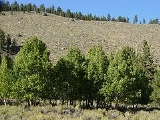
Quaking Aspen of North America is known for its leaves turning spectacular tints of red and yellow in the autumn of the year (and usually in the early autumn at the altitudes where it lives).


Discussion
Ask a question about 'Aspen'
Start a new discussion about 'Aspen'
Answer questions from other users
Full Discussion Forum


Encyclopedia


Aspens are tree
TREE

TREE was a Boston hardcore punk band formed in the summer of 1990. They were active in the Boston music scene until disbanding in 2002....
s of the willow
Salicaceae

Salicaceae is a family of flowering plants. Recent genetics studies by the Angiosperm Phylogeny Group has greatly expanded the circumscription of the family to contain 57 genera....
 family and comprise a section of the poplar
Poplar

Populus is a genus of between 25?35 species of deciduous flowering plants in the family Salicaceae, native to most of the Northern Hemisphere....
 genus, Populus sect. Populus. There are six species in the section, one of them atypical, and one hybrid:
  • Populus adenopoda: Chinese Aspen (China, south of P. tremula)
  • Populus sieboldii: Japanese Aspen (Japan)
  • Populus alba
    White Poplar

    Populus alba is a species of poplar, most closely related to the aspens . It is native from Spain and Morocco through central Europe to central Asia....
    : White Poplar (northwest Africa, southern Europe, east to central Asia)
  • Populus × canescens
    White Poplar

    Populus alba is a species of poplar, most closely related to the aspens . It is native from Spain and Morocco through central Europe to central Asia....
    : Grey Poplar (hybrid P. alba × P. tremula)
  • Populus tremula
    Populus tremula

    Populus tremula is a species of poplar native to cool temperate regions of Europe and Asia, from the British Isles east to Kamchatka, north to inside the Arctic Circle in Scandinavia and northern Russia, and south to central Spain, Turkey, the Tian Shan, North Korea, and northern Japan....
    : Common, Swedish, Trembling or Eurasian Aspen (northern Europe & Asia)
  • Populus tremuloides
    Populus tremuloides

    Populus tremuloides, also known as American Aspen, Quaking Aspen, Trembling Aspen, Quakies, Quakers, Popple, Golden Aspen, Mountain Aspen, Poplar, Trembling Poplar, ?lamo Blanco, and ?lamo Tembl?n, is a deciduous tree native to cooler areas of North America....
    : Quaking, Trembling or American Aspen (northern & western North America)
  • Populus grandidentata
    Populus grandidentata

    Populus grandidentata, also known as Big-tooth Aspen is a deciduous tree native to eastern North America....
    : Bigtooth Aspen (eastern North America, south of P. tremuloides)


Leaves

The Quaking Aspen of North America is known for its leaves turning spectacular tints of red and yellow in the autumn of the year (and usually in the early autumn at the altitudes where it lives). This causes forests of aspen trees to be noted tourist attractions for viewing them in the fall. These aspens are found as far south as the San Bernardino Mountains of Southern California, though they are most famous for growing in Colorado.

Aspens, apart from the aberrant White Poplar, are distinguished by their nearly round leaves on mature trees, 9–16 centimeters in diameter with irregular rounded teeth. They are carried on strongly flattened leaf stems, that cause the leaves to twist and flutter in slight breezes. The juvenile leaves on young seedlings and root sprouts differ markedly from the adult leaves, being nearly triangular, showing here the typical leaf shape of most other poplar
Poplar

Populus is a genus of between 25?35 species of deciduous flowering plants in the family Salicaceae, native to most of the Northern Hemisphere....
s; they are also often much larger, 13–26 cm long. The five typical aspens are distinguished from each other by leaf size and the size and spacing of the teeth on the adult leaves. White Poplar leaves differ in being deeply five-lobed, covered in thick white down, and having only a slightly flattened leaf stem.

Habitat and longevity

The five typical aspens are all native to cold regions with cool summers, in the north of the Northern Hemisphere, extending south at high altitudes in the mountains. The White Poplar, by contrast, is native to warmer regions, with hot, dry summers. These trees are all medium-sized deciduous
Deciduous

Deciduous means falling off at maturity or tending to fall off and is typically used in reference to trees or shrubs that lose their leaves seasonally and to the shedding of other plant structures such as petals after flowering or fruit when ripe....
 trees ranging 15–30 meters tall.

All of the aspens (including the White Poplar) typically grow in large clonal colonies
Clonal colony

A clonal colony or genet is a group of genetically identical individuals that have grown in a given location, all originating vegetative reproduction from a single ancestor....
 derived from a single seedling, and spreading by means of root suckers; new stems in the colony may appear at up to 30–40 meters from the parent tree. Each individual tree can live for 40–150 years above ground, but the root system of the colony is long-lived. In some cases, this is for thousands of years, sending up new trunks as the older trunks die off above ground. For this reason it is considered to be an indicator of ancient woodlands. One such colony in Utah, given the nickname of "Pando", is claimed to be 80,000 years old, making it possibly the oldest living colony
List of long-living organisms

This is a list of the eldest living organisms. This is usually defined as:* having a longer lifespan than other organisms of similar species ...
 of aspens. Some aspen colonies become very large with time, spreading about a meter per year, eventually covering many hectares. They are able to survive forest fires
Wildfire

A wildfire is any uncontrolled, non-structure fire that occurs in the wilderness, wildland, or The Bush. Synonyms such as wildland fire, forest fire, brush fire, vegetation fire, grass fire, Peat#Fires, bushfire , and hill fire are commonly used....
, since the roots are below the heat of the fire, with new sprouts growing after the fire burns out.

However, aspens do not thrive very well in the shade, and it is difficult for aspen seedlings to grow in an already mature aspen stand. Fire indirectly benefits aspen trees, since it allows the saplings to flourish in open sunlight in the burned landscape. Lately, aspens have an increased popularity in forestry, mostly because of their fast growth rate and ability to regenerate from sprouts, making the regeneration of the forest after harvesting much cheaper, since no planting or sowing is required.

In contrast with many trees, aspen bark is base-rich, meaning that aspens are important hosts for bryophytes and act as food plants for the larva
Larva

A larva is a young form of animal with indirect developmental biology, going through or undergoing metamorphosis .The larva can look completely different from the adult form, for example, a caterpillar differs from a butterfly....
s of butterfly (Lepidoptera
Lepidoptera

Lepidoptera is an order of insect that includes moths and butterfly. It is one of the most speciose orders in the class Insecta, encompassing moths and the three superfamilies of butterfly, skipper , and Hedylidae....
) species—see List of Lepidoptera that feed on poplars.

Quaking leaves

The unusual ability of the leaves of Populus to twist and bend due to the flattened petioles may not be fully understood. It is thought to help protect the trees from severe winds, perhaps by helping dissipate energy more uniformly throughout the canopy. It is also thought to improve the rate of photosynthesis throughout the tree by reducing the exposure of the outer leaves to extreme sunlight (thus reducing photoinhibition
Photoinhibition

Photoinhibition is a reduction in a plant's capacity for photosynthesis caused by exposure to strong light . Photoinhibition is not caused by high light per se, but rather absorption of too much light energy compared with the photosynthetic capacity, i.e....
) by presenting the leaves at an oblique angle to the sun throughout the day, while at the same time allowing more light through to the lower leaves which are generally overshaded. This would enable leaves throughout the tree to photosynthesize more efficiently.

Uses


Basque
Basque people

The Basques are a people who inhabit a region spanning over parts of north-central Spain and southwestern France.The name Basque derives from the ancient tribe of the Vascones, described by Ancient Greece historian Strabo as living south of the western Pyrenees and north of the Ebro River, in modern day Navarre and northern Aragon....
 shepherds in 19th and 20th-century America were said to carve texts and figures on aspens of the American Southwest to express their loneliness.

Aspen wood
Wood

Wood is an organic material; in the strict sense wood is produced as secondary xylem in the stems of woody plants, notably trees but also shrubs, etc....
 is white and soft, but fairly strong, and has low flammability. It has a number of uses, notably for making match
Match

A match is a consumable tool for lighting a fire in controlled circumstances on demand. Matches are readily available, being sold by tobacconists and many other kinds of shops....
es, where its low flammability makes it safer to use than most other woods. Shredded aspen wood is used for packing and stuffing, sometimes called excelsior (wood wool)
Excelsior (wood wool)

File:Palha de madeira2.jpgWood wool, known primarily as excelsior in North America, is a product made of wood slivers, cut from logs, mainly used in packaging, for the cooling pads in home evaporative cooling systems known as swamp coolers, for erosion mats, or as a raw material for the production of other products such as bonded wo...
. It is also a popular animal bedding, since it lacks the phenol
Phenol

Phenol, also known as carbolic acid, is a toxic, white crystalline solid with a sweet tarry odor, commonly referred to as a "hospital smell"....
s associated with pine
Pine

Pines are Pinophyta trees in the genus Pinus, in the family Pinaceae. They make up the monotypic subfamily Pinoideae. There are about 115 species of pine, although different authorities accept between 105 and 125 species....
 and juniper
Juniper

Junipers are coniferous plants in the genus Juniperus of the cypress family Cupressaceae. Depending on taxonomic viewpoint, there are between 50-67 species of juniper, widely distributed throughout the northern hemisphere, from the Arctic, south to tropical Africa in the Old World, and to the mountains of Central America....
, which are thought to cause respiratory ailments in some animals. Heat-treated aspen is a popular material for the interiors of a sauna
Sauna

A sauna is a small room or house designed as a place to experience dry or wet heat sessions, or an establishment with one or more of these and auxiliary facilities....
.

All of the Populus contain some salicin and populin, relatives and precursors of aspirin. Leaves and leaf buds were used to treat burns, irritations, aches, and swollen joints. Bitter tea from bark and leaves treated mild urinary tract inflammations. The Ojibwe used the inner bark of the trunk as a poultice; the Cree ate the inner bark in the spring, as a mild purgative.

Gallery