


Nortel

Encyclopedia
Nortel Networks Corporation, formerly known as Northern Telecom Limited and sometimes known simply as Nortel, was a multinational
telecommunications equipment manufacturer
headquartered in Mississauga, Ontario
, Canada
. On January 14, 2009, Nortel filed for protection from creditors in the United States, Canada, and the United Kingdom, in order to restructure its debt and financial obligations. The period of bankruptcy protection has been extended to December 14, 2011.
In June 2009, the company announced it would cease operations and sell off all of its business units.
due to restrictions on importing telephone equipment from the United States. In addition to phones, four years later, the department started manufacturing its first switchboard, a 50 line Standard Magneto Switchboard. The small manufacturing department expanded yearly with the growth and popularity of the telephone to 50 employees in 1888. By 1890 it transformed into its own branch of operations with 200 employees and a new factory was under construction.
As the manufacturing branch expanded, its production ability increased beyond the demand for phones, and faced closure for several months a year without manufacturing other products. This was a problem because the Bell Telephone Company of Canada charter would not allow them to build other products. So in 1895, Bell Telephone Company of Canada
was required to spin off its manufacturing arm to build phones for sale to other companies as well as other devices such as fire alarm boxes, police street call boxes
, and fire department call equipment
. This company was incorporated as the Northern Electric and Manufacturing Company Limited.
, President of Bell Telephone Company of Canada – Provisional Director; Robert Mackay, merchant – Provisional Director; Hugh Paton, manager of the Shedden Company - Provisional Director; The Hon. Joseph Rosaire Thibaudeau
, Senator - Provisional Director; Robert Archer, gentleman - Provisional Director; Charles P. Sclater, secretary - Provisional Director; Lewis B. McFarlane, manager, all of the city and district of Montreal, Que.
The initial stock capital was $50,000 at $100 per share, with 93 percent held by Bell Telephone Company of Canada and the remainder held by the seven corporate members above. The first general stock holders meeting was held on March 24, 1896.
In December 1899, The Bell Telephone Company of Canada bought a cabling company for $500,000 and a Canadian charter named it The Wire and Cable Company. Northern Electric and Manufacturing further expanded its product line in 1900, manufacturing the first Canadian wind-up gramophone
s that played flat discs
. In 1911 the Wire and Cable company changed its name to the Imperial Wire and Cable Company.
, Canada, as preparations began for the integration of the two manufacturing companies. Then, in January 1914, the Northern Electric and Manufacturing Company and the Imperial Wire and Cable Company merged into the Northern Electric Company, and the new company opened the doors on a new manufacturing plant on January 1915. This facility at Shearer Street was the primary manufacturing center until the mid 1950s. Edward Fleetford Sise
was the president and his brother Paul Fleetford Sise
was the vice-president and general manager.
During the First World War Northern Electric manufactured the Portable Commutator
a one-wire telegraphic switchboard for military operations in the field. In 1922, Northern started to produce, for $5, the "Peanut" vacuum tube, which required only a single dry-cell battery. The use of alternating current was still under development during this time. The "Northern Electric Peanut tube was the smallest tube made, and drew only one-tenth of an ampere and was the most remarkable radio frequency amplifier ever made." During the 1920s Northern Electric was making kettle
s, toasters, cigar
lighters, electric stoves, and washing machines. In January 1923, Northern Electric started to operate an AM radio station with call letters CHYC, in the Shearer Street plant, and much of the programming was religious services for the Northern Electric employees and families in the community. In July 1923, CHYC AM was the first radio station to provide entertainment to the riders of the transcontinental train
in a parlor car fitted with a radio set to receive the broadcast as it left Montreal and traveled west. Later in the 1920s, Northern created the first talking movie sound system
in the British Empire
for a theater in Montreal.
During the Great Depression
of the 1930s, Northern Electric was affected, like most other companies. From the beginning of 1930 through the end of 1933, sales dropped from $34 million to $8.2 million, and the number of employees dropped from 6,100 to 2,400.
suit in the U.S. forced AT&T
/Western Electric
to sell its stake in Northern Electric to Bell Canada. Deprived of its Western Electric tie, Northern began developing its own products. In 1953, Northern Electric produced its first television sets using tubes
made by RCA
.
Bell Canada acquired 100 percent of Northern Electric in 1964; through public stock offerings starting in 1973, Bell's ownership of Northern Electric and its successors would be reduced, though it continued to have majority control.
In 1966, the Northern Electric research lab, Northern Electric Laboratories (the predecessor to Bell-Northern Research
), started looking into the possibilities of fiber optic cable
, and in 1969, began work on digitizing telephone communications. Also in 1969, Northern began making inroads into the U.S. market with its switching systems. In 1972, it opened its first factory in the U.S. in Michigan
. In 1975, Northern began shipping its first digital
switching systems, one of the earliest such systems to be sold.
Northern Telecom was, with Bell-Northern Research
, in the early 70's, a part owner of MicroSystems International
a semiconductor manufacturer based in Kanata, outside Ottawa.
"Digital World" was Northern Telecom’s daring declaration, made public by a three-page advertisement that appeared in major trade publications in 1976, that digital technology was the key to the future. It was the first to announce, and to deliver, one year ahead of schedule, a complete line of fully digital telecommunications products under the Digital World brand. The most well-known of the Digital World product family, the DMS-100
, a fully digital central office switch serving as many as 100,000 lines, was a key contributor to the company’s revenue for close to 15 years.
In 1977, Nortel introduced its DMS line of digital central office telephone switches, providing explosive growth for the company, especially after the AT&T
breakup in 1984. Northern Telecom became the first non-Japanese supplier to Nippon Telegraph and Telephone
, and the company took advantage of opportunities in Europe and China.
was jointly owned 50-50 by Bell Canada and Northern Telecom. The combined three companies were referred to as the tricorporate.
As Nortel, the streamlined identity it adopted for its 100th anniversary in 1995, the company set out to dominate the burgeoning global market
for public
and private networks.
In 1998, with the acquisition of Bay Networks
, the company's name was changed to Nortel Networks to emphasize its ability to provide complete solutions for multiprotocol, multiservice, global networking over the Internet
and other communications networks. As a consequence of the stock transaction used to purchase Bay Networks, BCE ceased to be the majority shareholder of Nortel.
In 2000, BCE spun-out Nortel, distributing its holdings of Nortel to its shareholders. Bell-Northern Research was gradually absorbed into Nortel, as it first acquired a majority share in BNR, and eventually acquired the entire company.
In the late 1990s, stock market speculators
, hoping that Nortel would reap increasingly lucrative profits from the sale of fibre optic network gear, began pushing up the price of the company's shares to unheard-of levels despite the company's repeated failure to turn a profit. Under the leadership of CEO John Roth, sales of optical equipment had been robust in the late 1990s, but the market was soon saturated. When the speculative telecom bubble of the late 1990s
reached its pinnacle late in the year 2000, Nortel was to become one of the most spectacular casualties.
At its height, Nortel accounted for more than a third of the total valuation of all the companies listed on the Toronto Stock Exchange
(TSX), employing 94,500 worldwide, with 25,900 in Canada alone. Nortel's market capitalization fell from C$
398 billion in September 2000 to less than C$5 billion in August 2002. Nortel's stock price plunged from C$124 to C$0.47. When Nortel's stock crashed
, it took with it a wide swath of Canadian investors and pension
funds, and left 60,000 Nortel employees unemployed. Roth was criticized after it was revealed that he cashed in his own stock options for a personal gain of C$135 million in 2000 alone.
. Dunn presided over a dramatic restructuring of Nortel, which included laying off two-thirds of its workforce (60,000 staff) and writedowns of nearly US$16 billion in 2001 alone. This had some initial perceived success in turning the company around, with an unexpected return to profitability reported in the first quarter of 2003. The black ink triggered a total of US$19 million in bonuses to the top 43 managers, with US$5 million alone going to Dunn, chief financial officer Douglas Beatty, and controller Michael Gollogly. Independent auditor Deloitte & Touche advised audit committee chairman John Cleghorn
and board chairman "Red" Wilson to look into the suspicious results, who promptly hired the law firm WilmerHale to vet the financial statements. In late October 2003, Nortel announced that it intended to restate approximately $900M of liabilities carried on its previously reported balance sheet as of June 30, 2003, following a comprehensive internal review of these liabilities. The Company stated that the principal effects of the restatement would be a reduction in previously reported net losses for 2000, 2001, and 2002 and an increase in shareholders’ equity and net assets previously reported on its balance sheet. A dozen of the company's most senior executives returned $8.6 million dollars of bonuses they were paid based on the erroneous accounting. Investigators ultimately found about $3 billion in revenue had been booked improperly in 1998, 1999, and 2000. More than $2 billion was moved into later years, about $750 million was pushed forward beyond 2003 and about $250 million was wiped away completely. The accounting scandal hurt both Nortel's reputation and finances, as Nortel spent an estimated US$400 million on outside auditors and management consultants to retrain staff.
To improve Nortel's liquidity in support of its operations, Nortel reached an agreement in 2003 with Export Development Canada
for it to provide Nortel with a credit support facility of up to US$750 million.
Walter Robinson of the Canadian Taxpayers Federation
denounced the line of credit, calling it "corporate welfare at its worst."
Dunn, Beatty, and Gollogly were fired on April 28, 2004 for financial mismanagement
, and were later charged with fraud by the RCMP
, with a trial date scheduled on January 16, 2012.
The SEC
also filed charges against them, as well as four vice-presidents, for civil fraud.
, at the time a member of the board of directors, was appointed interim CEO. Nortel Networks subsequently returned to using the Nortel name for branding purposes only (the official company name was not changed). Nortel acquired PEC Solutions, a provider of information technology and telecommunications services to various government agencies and departments, in June 2005, renaming it Nortel Government Solutions
Incorporated (NGS). LG Electronics
and Nortel formed a joint venture
in August, with Nortel owning 50% plus one share, to offer telecom and networking solutions in the wireline, optical, wireless and enterprise areas for South Korean and global customers.
Peter W. Currie, previously the Chief Financial Officer (CFO) of the Royal Bank of Canada
, was named CFO of Nortel in 2005, having previously served as Northern Telecom's CFO in the 1990s. Gary Daichendt, the former Chief Operating Officer of Cisco Systems
, was hired as President and COO, and was expected to succeed Owens as CEO. Shortly afterward, Daichendt appointed ex-Cisco Chief Science Officer Gary Kunis as Chief Technology Officer (CTO). Both Garys were concerned about the overall direction of Nortel, especially when compared to Cisco, their previous employer. Just three months later, Daichendt resigned after both his restructuring plan and his suggestion that Owens and Currie leave the company immediately were rejected by the board of directors. Kunis quit shortly thereafter. At the end of the year, directors "Red" Wilson and John Cleghorn
retired from the board.
Mike S. Zafirovski
, who had served as President and CEO of GE Lighting
and then as Motorola
President and COO, succeeded Owens as president and CEO on November 15, 2005. Motorola filed a suit against Zafirovski's hiring, alleging that his new position would break the terms of the non-disclosure agreement
he had signed. Nortel agreed to pay $11.5 million on his behalf to settle the lawsuit. Nortel also paid out US$575 million and 629 million common shares in 2006 to settle a class-action lawsuit that accused the company of misleading investors about the health of the company.
Peter W. Currie stepped down as Executive Vice President and CFO in early 2007. In February, 2007, Nortel announced its plans to reduce its workforce by 2,000 employees, and to transfer an additional 1,000 jobs to lower-cost job sites. The Securities and Exchange Commission filed civil fraud charges against Nortel for accounting fraud from 2000 to 2003 to close gaps between its true performance, its internal targets and Wall Street expectations. Nortel settled the case, paying $35 million, which the Commission distributed to affected shareholders, and reporting periodically to the Commission on remedial measures to improve its financial accounting. Dunn, Beatty, and Gollogly were charged in June 2008 by the RCMP
for criminal fraud related to their activities in 2002–2003.
Nortel announced plans in February 2008 to eliminate 2,100 jobs, and to transfer another 1,000 jobs to lower-cost centres.
As part of the reductions, Nortel shut down its Calgary campus in 2009.
During its reporting of third quarter 2008 results, Nortel announced it would restructure into three vertically-integrated business units: Enterprise, Carrier Networks, and Metro Ethernet Networks. As part of the decentralization of its organization, four executive positions were eliminated, effective January 1, 2009: Chief Marketing Officer Lauren Flaherty, Chief Technology Officer John Roese, Global Services President Dietmar Wendt, and Executive Vice President Global Sales Bill Nelson. A net reduction of 1,300 jobs was also announced. As its stock price dropped below $1, the New York Stock Exchange
notified Nortel that it would be delisted if its common shares failed to rise above $1 per share within 6 months. Rumours continued to persist of Nortel's poor financial health, amid the late 2000s recession
, and its bids for government funds were turned down.
, in Canada under the Companies' Creditors Arrangement Act
, and in the United Kingdom under the Insolvency Act 1986
.
Nortel was the first major technology company to seek bankruptcy protection in this global downturn.
Nortel had an interest payment of $107 million due the next day, approximately 4.6% of its cash reserves of approximately $2.3 billion.
After the announcement, the share price fell more than 79% on the Toronto Stock Exchange. Export Development Canada
agreed to provide up to C$30 million in short-term financing through its existing credit support facility with Nortel. The Canadian government resisted characterizing its position on Nortel as a bailout.
Nortel initially hoped to re-emerge from bankruptcy. It paid out retention bonuses to almost 1,000 top executives, totalling up to US$45 million.
This drew criticism due to the fact severance payments to employees laid-off prior to the creditor protection filing were withheld.
At the end of January 2009, Nortel announced that it would be discontinuing its WiMAX
business and its joint agreement with Alvarion
. Nortel subsequently sold its Layer 4-7 application delivery business to Israeli technology firm Radware
for $18 million, after Radware had initially placed a stalking horse bid. Nortel had acquired the application switch product line in October 2000 when it purchased Alteon WebSystems.
deterring potential companies from bidding for Nortel's assets, and many of Nortel's major customers reconsidering their relationships with the restructuring company, in June Nortel announced that it no longer planned to emerge from bankruptcy protection, and would seek buyers for all of its business units.
After announcing it planned to sell off all of its assets, Nortel shares were delisted from the Toronto Stock Exchange on June 26, 2009 at a price of $0.185 per share, down from its high in 2000 when it comprised a third of the S&P/TSX composite index.
Mike Zafirovski subsequently resigned in August, and Nortel's board of directors was reorganized with three members instead of nine.
Nortel handed out $14.2 million in cash compensation to seven executives in 2009. Nortel also paid out $1.4 million to 10 former and current directors, and paid $140 million to lawyers, pension, human resources and financial experts helping to oversee the company’s bankruptcy proceedings.
Nokia Siemens Networks
made a stalking horse bid to purchase Nortel's CDMA
and LTE
assets for $650 million. By the July 21 deadline for additional bids, MatlinPatterson and Ericsson
had made offers,
and Ericsson emerged as the victor in the following auction, with a purchase price of $1.13 billion.
Avaya
won an auction for Nortel's Enterprise Solutions business, including Nortel's stake in Nortel Government Solutions and DiamondWare, for $900 million,
after having placed a stalking horse bid of $475 million.
In November, Nortel sold its MEN (Metro Ethernet Networks) unit to Ciena Corporation
for US$530 million in cash and US$239 million in convertible notes,
and its GSM business at auction to Ericsson
and Kapsch
for US$103 million.
Hitachi
purchased the Next Generation Packet Core assets.
As insurance against judgments in class action lawsuits filed by former employees, John Roth filed in December 2009 for a US$1 billion indemnification from Nortel, joining the list of U.S. creditors.
In February 2010, Ernst & Young, the court-appointed monitor of Nortel's Canadian bankruptcy proceedings, reported that the assets of Nortel's Health and Welfare Trust had a shortfall of $37 million in its net assets as of December 31, 2008. The trust supports pensioners' medical, dental and life insurance benefits, as well as income support for some groups such as long-term disability recipients. Also in February, Nortel negotiated a $57-million deal to wind up the health care and other benefits provided to former Canadian employees. Shortly afterwards, Nortel proposed spending $92.3M on retention bonuses for 1,475 employees in its Nortel Business Services and Corporate groups, with $2.5 million in incentives going to Christopher Ricaute, president of Nortel Business Services; $27 million allocated for Canadian employees; and $55 million allocated for U.S. employees.
The proposed plan was later extended by an additional $27 million.
Claiming that the retention bonuses proposal is extraordinary, acting US trustee, Roberta DeAngelis, objected to the payment of $55.6 million to 866 employees. However, court appointed representatives for Nortel former employees, who are creditors in the Ontario bankruptcy court, have signed an agreement to not oppose any employee incentive program.
Genband
purchased the Carrier VoIP and Application Solutions (CVAS) unit in May 2010, as Nortel accepted its stalking horse bid of $282 million, with adjustments that decreased the net sale price to about $100 million, without a formal bidding process.
Ericsson purchased Nortel's share in its joint venture with LG Electronics
for US$242 million, forming LG-Ericsson
, in June 2010.
Ericsson also purchased Nortel's final operating unit, the Multi-Service Switch division, in September 2010 for US$65 million.
Nortel's Ottawa campus on Carling Avenue was purchased by Public Works and Government Services Canada
(PWGSC) in October 2010, for a cash purchase price of CDN$208 million.
The last major asset of Nortel, approximately 6,000 patents and patent applications encompassing technologies such as wireless, wireless 4G, data networking, optical, voice, Internet, and semiconductors, was sold for $4.5 billion to a consortium including Apple, EMC, Ericsson, Microsoft, Research In Motion, and Sony, pending American and Canadian court approval.
(Google had placed the initial stalking horse bid of $900 million and later upped the bid to $1,902,160,540, then $2,614,972,128, and eventually $3.14159 billion, which are references to Brun's constant, Meissel–Mertens constant, and pi
.)
Bankruptcy filings state that Nortel owes former Canadian engineers $285,000 for patent awards that were not paid.
In October 2011, the administrators of Nortel's British subsidiary lost their appeal to overturn a court order requiring them to pay £2.1 billion into Nortel's underfunded pension plan.
Nortel made telecommunications and computer network
equipment and software
. It served both general businesses and communications carriers (landline telephone
, mobile phone
, and cable TV
carriers). Technologies included telephony
(voice) equipment of all kinds, optical fiber
, local wireless
, and multimedia
.
Past products included:
published an article criticising the Canadian Federal government for propping up “mega-loser Nortel” through Export Development Canada
(EDC). The article interviewed Walter Robinson of the Canadian Taxpayers Federation
who termed this EDC support as "corporate welfare at its worst." Mr Robinson was appalled that Canadians who already lost billions on Nortel on the stock market would be asked for even more money through their taxes to support Nortel.
, a financial analyst, testified before a parliamentary committee that $100 million is missing from the HWT and that a $37 million loan to the corporation has not been paid back. The HWT was an unregistered trust maintained by Nortel to provide medical, dental, life insurance, long-term disability and survivor income and pension transition benefits.
Until 2005 Nortel fully funded the disability insurance in its HWT. However, it is alleged that since then, the HWT Governance Committees and third party trustee, Northern Trust
, breached their fiduciary duties to protect Nortel's disabled employees and survivors of deceased employees by allowing Nortel to misdirect over $100 million from the HWT for purposes inconsistent with the terms of the HWT.
Nortel.
The "return to profitability" was a fabrication achieved by the release of $490 million in reserves to boost earnings.
drawing criticism as the company withheld severance payments to employees laid-off prior to the creditor protection filing. Nortel proceeded with thousands of additional layoffs without severance, and the pension fund remained underfunded, while Nortel paid $14.2 million in cash to seven executives. Nortel also paid $1.4 million to ten former and current directors, and paid $140 million to lawyers, pension, human resources and financial experts helping to oversee the company’s bankruptcy proceedings.
In 2009 Mr. Roth filed a claim for $1 billion, aiming to become a creditor to the assets of Nortel along with all other Nortel employees, in case the class action lawsuits against him succeeded.
(sold to Rogers Communications
in 2006 and now known as Rogers Park, Brampton
), and at 195 The West Mall (now used by SNC-Lavalin
) in Toronto.
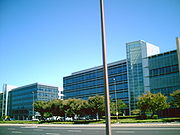 Nortel expanded into the U.S. in 1971. The company eventually had employees in over 100 locations in the U.S. with R&D
, software engineering
, and sales centers in many states including California
, Florida
, Georgia
, Illinois
, Maryland
, Massachusetts
, North Carolina
, Texas
, and Virginia
. Nortel's full service R&D centres were located in Ottawa
(its R&D headquarters), Beijing, and Guangzhou
. In Canada, Nortel also has R&D sites in Montreal
, Belleville
, and Calgary
. In the United States, Nortel's major R&D sites were in Research Triangle Park
(North Carolina
), Richardson
(Texas
), Billerica
(Massachusetts
), and Santa Clara
.
Nortel had a significant presence in Europe, Middle East, Africa, the Caribbean
, and Latin America
. Nortel delivers network infrastructure and communication services to customers across Asia in Mainland China
, Hong Kong, Taiwan
, South Korea, Japan, Singapore
, Thailand
, Malaysia, India, Pakistan
, Australia, New Zealand, and Turkey
(Nortel owned 53.17% of Nortel Netaş, originally established as a joint venture with Turkish PTT in 1967).
In addition, the company had three joint ventures in the People's Republic of China, including Guangdong Nortel Telecommunications Equipment (GDNT), who operates Nortel's full service R&D centres in China.
In February 2008, Nortel employed approximately 32,550 people worldwide, including 6,800 employees in Canada and 11,900 in the United States. Nortel operations are divided into the following segments:
:
Former members of the board of directors
:
Past Leaders:
Multinational corporation
A multi national corporation or enterprise , is a corporation or an enterprise that manages production or delivers services in more than one country. It can also be referred to as an international corporation...
telecommunications equipment manufacturer
Manufacturing
Manufacturing is the use of machines, tools and labor to produce goods for use or sale. The term may refer to a range of human activity, from handicraft to high tech, but is most commonly applied to industrial production, in which raw materials are transformed into finished goods on a large scale...
headquartered in Mississauga, Ontario
Ontario
Ontario is a province of Canada, located in east-central Canada. It is Canada's most populous province and second largest in total area. It is home to the nation's most populous city, Toronto, and the nation's capital, Ottawa....
, Canada
Canada
Canada is a North American country consisting of ten provinces and three territories. Located in the northern part of the continent, it extends from the Atlantic Ocean in the east to the Pacific Ocean in the west, and northward into the Arctic Ocean...
. On January 14, 2009, Nortel filed for protection from creditors in the United States, Canada, and the United Kingdom, in order to restructure its debt and financial obligations. The period of bankruptcy protection has been extended to December 14, 2011.
In June 2009, the company announced it would cease operations and sell off all of its business units.
Origins
In 1882, a mechanical department was created within Bell Telephone Company of Canada to manufacture telephones and telephone equipment for Canada,due to restrictions on importing telephone equipment from the United States. In addition to phones, four years later, the department started manufacturing its first switchboard, a 50 line Standard Magneto Switchboard. The small manufacturing department expanded yearly with the growth and popularity of the telephone to 50 employees in 1888. By 1890 it transformed into its own branch of operations with 200 employees and a new factory was under construction.
As the manufacturing branch expanded, its production ability increased beyond the demand for phones, and faced closure for several months a year without manufacturing other products. This was a problem because the Bell Telephone Company of Canada charter would not allow them to build other products. So in 1895, Bell Telephone Company of Canada
Bell Canada
Bell Canada is a major Canadian telecommunications company. Including its subsidiaries such as Bell Aliant, Northwestel, Télébec, and NorthernTel, it is the incumbent local exchange carrier for telephone and DSL Internet services in most of Canada east of Manitoba and in the northern territories,...
was required to spin off its manufacturing arm to build phones for sale to other companies as well as other devices such as fire alarm boxes, police street call boxes
Police box
A police box is a British telephone kiosk or callbox located in a public place for the use of members of the police, or for members of the public to contact the police...
, and fire department call equipment
Firefighter
Firefighters are rescuers extensively trained primarily to put out hazardous fires that threaten civilian populations and property, to rescue people from car incidents, collapsed and burning buildings and other such situations...
. This company was incorporated as the Northern Electric and Manufacturing Company Limited.
Northern Electric and Manufacturing Company
"The Northern Electric and Manufacturing Company" Limited, was incorporated on 7 December 1895, by the following Corporate Members/Board of Directors: Charles Fleetford Sise Sr.Charles Fleetford Sise
Charles Fleetford Sise Sr. was an American-Canadian businessman and the founding president of the Bell Telephone Company of Canada. First Board of directors, The Northern Electric and Manufacturing Company .-See also:* Charles Fleetford Sise Jr...
, President of Bell Telephone Company of Canada – Provisional Director; Robert Mackay, merchant – Provisional Director; Hugh Paton, manager of the Shedden Company - Provisional Director; The Hon. Joseph Rosaire Thibaudeau
Joseph-Rosaire Thibaudeau
Joseph-Rosaire Thibaudeau was a Quebec businessman and political figure. He was a Liberal member of the Senate of Canada for Rigaud division from 1878 to 1909....
, Senator - Provisional Director; Robert Archer, gentleman - Provisional Director; Charles P. Sclater, secretary - Provisional Director; Lewis B. McFarlane, manager, all of the city and district of Montreal, Que.
The initial stock capital was $50,000 at $100 per share, with 93 percent held by Bell Telephone Company of Canada and the remainder held by the seven corporate members above. The first general stock holders meeting was held on March 24, 1896.
In December 1899, The Bell Telephone Company of Canada bought a cabling company for $500,000 and a Canadian charter named it The Wire and Cable Company. Northern Electric and Manufacturing further expanded its product line in 1900, manufacturing the first Canadian wind-up gramophone
Phonograph
The phonograph record player, or gramophone is a device introduced in 1877 that has had continued common use for reproducing sound recordings, although when first developed, the phonograph was used to both record and reproduce sounds...
s that played flat discs
Gramophone record
A gramophone record, commonly known as a phonograph record , vinyl record , or colloquially, a record, is an analog sound storage medium consisting of a flat disc with an inscribed, modulated spiral groove...
. In 1911 the Wire and Cable company changed its name to the Imperial Wire and Cable Company.
Northern Electric Company
The construction of a new manufacturing plant started in 1913 at Shearer Street in MontrealMontreal
Montreal is a city in Canada. It is the largest city in the province of Quebec, the second-largest city in Canada and the seventh largest in North America...
, Canada, as preparations began for the integration of the two manufacturing companies. Then, in January 1914, the Northern Electric and Manufacturing Company and the Imperial Wire and Cable Company merged into the Northern Electric Company, and the new company opened the doors on a new manufacturing plant on January 1915. This facility at Shearer Street was the primary manufacturing center until the mid 1950s. Edward Fleetford Sise
Edward Fleetford Sise
Edward Fleetford Sise Canadian business man, First President of Northern Electric Company 1914 - 1919).-See also:* Charles Fleetford Sise Sr.* Charles Fleetford Sise Jr.* Paul Fleetford Sise-External links:*...
was the president and his brother Paul Fleetford Sise
Paul Fleetford Sise
Paul Fleetford Sise Canadian businessman, President of Northern Electric . graduated from McGill University in 1901 and was an adjutant to the 148th Battalion, from Montreal.-See also:...
was the vice-president and general manager.
During the First World War Northern Electric manufactured the Portable Commutator
Portable Commutator
The Portable commutator was a telecommuncations device that was used by the military during World War I. This device was manufactured by Northern Electric....
a one-wire telegraphic switchboard for military operations in the field. In 1922, Northern started to produce, for $5, the "Peanut" vacuum tube, which required only a single dry-cell battery. The use of alternating current was still under development during this time. The "Northern Electric Peanut tube was the smallest tube made, and drew only one-tenth of an ampere and was the most remarkable radio frequency amplifier ever made." During the 1920s Northern Electric was making kettle
Kettle
A kettle, sometimes called a tea kettle or teakettle, is a small kitchen appliance used for boiling water. Kettles can be heated either by placing on a stove, or by their own electric heating element.- Stovetop kettles :...
s, toasters, cigar
Cigar
A cigar is a tightly-rolled bundle of dried and fermented tobacco that is ignited so that its smoke may be drawn into the mouth. Cigar tobacco is grown in significant quantities in Brazil, Cameroon, Cuba, the Dominican Republic, Honduras, Indonesia, Mexico, Nicaragua, Philippines, and the Eastern...
lighters, electric stoves, and washing machines. In January 1923, Northern Electric started to operate an AM radio station with call letters CHYC, in the Shearer Street plant, and much of the programming was religious services for the Northern Electric employees and families in the community. In July 1923, CHYC AM was the first radio station to provide entertainment to the riders of the transcontinental train
Transcontinental railroad
A transcontinental railroad is a contiguous network of railroad trackage that crosses a continental land mass with terminals at different oceans or continental borders. Such networks can be via the tracks of either a single railroad, or over those owned or controlled by multiple railway companies...
in a parlor car fitted with a radio set to receive the broadcast as it left Montreal and traveled west. Later in the 1920s, Northern created the first talking movie sound system
Sound film
A sound film is a motion picture with synchronized sound, or sound technologically coupled to image, as opposed to a silent film. The first known public exhibition of projected sound films took place in Paris in 1900, but decades would pass before sound motion pictures were made commercially...
in the British Empire
British Empire
The British Empire comprised the dominions, colonies, protectorates, mandates and other territories ruled or administered by the United Kingdom. It originated with the overseas colonies and trading posts established by England in the late 16th and early 17th centuries. At its height, it was the...
for a theater in Montreal.
During the Great Depression
Great Depression
The Great Depression was a severe worldwide economic depression in the decade preceding World War II. The timing of the Great Depression varied across nations, but in most countries it started in about 1929 and lasted until the late 1930s or early 1940s...
of the 1930s, Northern Electric was affected, like most other companies. From the beginning of 1930 through the end of 1933, sales dropped from $34 million to $8.2 million, and the number of employees dropped from 6,100 to 2,400.
Independence from Western Electric
In 1949, an antitrustAntitrust
The United States antitrust law is a body of laws that prohibits anti-competitive behavior and unfair business practices. Antitrust laws are intended to encourage competition in the marketplace. These competition laws make illegal certain practices deemed to hurt businesses or consumers or both,...
suit in the U.S. forced AT&T
AT&T
AT&T Inc. is an American multinational telecommunications corporation headquartered in Whitacre Tower, Dallas, Texas, United States. It is the largest provider of mobile telephony and fixed telephony in the United States, and is also a provider of broadband and subscription television services...
/Western Electric
Western Electric
Western Electric Company was an American electrical engineering company, the manufacturing arm of AT&T from 1881 to 1995. It was the scene of a number of technological innovations and also some seminal developments in industrial management...
to sell its stake in Northern Electric to Bell Canada. Deprived of its Western Electric tie, Northern began developing its own products. In 1953, Northern Electric produced its first television sets using tubes
Cathode ray tube
The cathode ray tube is a vacuum tube containing an electron gun and a fluorescent screen used to view images. It has a means to accelerate and deflect the electron beam onto the fluorescent screen to create the images. The image may represent electrical waveforms , pictures , radar targets and...
made by RCA
RCA
RCA Corporation, founded as the Radio Corporation of America, was an American electronics company in existence from 1919 to 1986. The RCA trademark is currently owned by the French conglomerate Technicolor SA through RCA Trademark Management S.A., a company owned by Technicolor...
.
Bell Canada acquired 100 percent of Northern Electric in 1964; through public stock offerings starting in 1973, Bell's ownership of Northern Electric and its successors would be reduced, though it continued to have majority control.
In 1966, the Northern Electric research lab, Northern Electric Laboratories (the predecessor to Bell-Northern Research
Bell-Northern Research
Bell-Northern Research was a telecommunications research and development organizations jointly owned by Bell Canada and Northern Telecom...
), started looking into the possibilities of fiber optic cable
Optical fiber
An optical fiber is a flexible, transparent fiber made of a pure glass not much wider than a human hair. It functions as a waveguide, or "light pipe", to transmit light between the two ends of the fiber. The field of applied science and engineering concerned with the design and application of...
, and in 1969, began work on digitizing telephone communications. Also in 1969, Northern began making inroads into the U.S. market with its switching systems. In 1972, it opened its first factory in the U.S. in Michigan
Michigan
Michigan is a U.S. state located in the Great Lakes Region of the United States of America. The name Michigan is the French form of the Ojibwa word mishigamaa, meaning "large water" or "large lake"....
. In 1975, Northern began shipping its first digital
Digital
A digital system is a data technology that uses discrete values. By contrast, non-digital systems use a continuous range of values to represent information...
switching systems, one of the earliest such systems to be sold.
Northern Telecom was, with Bell-Northern Research
Bell-Northern Research
Bell-Northern Research was a telecommunications research and development organizations jointly owned by Bell Canada and Northern Telecom...
, in the early 70's, a part owner of MicroSystems International
MicroSystems International
Microsystems International Limited was a telecommunications microelectronics company based in Ottawa, founded in 1969. MIL was an early attempt to create a merchant semiconductor house by Nortel Networks...
a semiconductor manufacturer based in Kanata, outside Ottawa.
Northern Telecom and "Digital World"
In 1976, the company name was changed to Northern Telecom Limited, and management announced its intention to concentrate the company's efforts on digital technology."Digital World" was Northern Telecom’s daring declaration, made public by a three-page advertisement that appeared in major trade publications in 1976, that digital technology was the key to the future. It was the first to announce, and to deliver, one year ahead of schedule, a complete line of fully digital telecommunications products under the Digital World brand. The most well-known of the Digital World product family, the DMS-100
DMS-100
The DMS-100 Switch is a line of Digital Multiplex System telephone exchange switches manufactured by Nortel Networks.The purpose of the DMS-100 Switch is to provide local service and connections to the PSTN public telephone network. It is designed to deliver services over subscribers' telephone...
, a fully digital central office switch serving as many as 100,000 lines, was a key contributor to the company’s revenue for close to 15 years.
In 1977, Nortel introduced its DMS line of digital central office telephone switches, providing explosive growth for the company, especially after the AT&T
American Telephone & Telegraph
AT&T Corp., originally American Telephone and Telegraph Company, is an American telecommunications company that provides voice, video, data, and Internet telecommunications and professional services to businesses, consumers, and government agencies. AT&T is the oldest telecommunications company...
breakup in 1984. Northern Telecom became the first non-Japanese supplier to Nippon Telegraph and Telephone
Nippon Telegraph and Telephone
, commonly known as NTT, is a Japanese telecommunications company headquartered in Tokyo, Japan. Ranked the 31st in Fortune Global 500, NTT is the largest telecommunications company in Asia, and the second-largest in the world in terms of revenue....
, and the company took advantage of opportunities in Europe and China.
Deregulation and the optical boom
In 1983, due to deregulation, Bell Canada Enterprises (later shortened to BCE) was formed as the parent company to Bell Canada and Northern Telecom. Bell-Northern ResearchBell-Northern Research
Bell-Northern Research was a telecommunications research and development organizations jointly owned by Bell Canada and Northern Telecom...
was jointly owned 50-50 by Bell Canada and Northern Telecom. The combined three companies were referred to as the tricorporate.
As Nortel, the streamlined identity it adopted for its 100th anniversary in 1995, the company set out to dominate the burgeoning global market
Globalization
Globalization refers to the increasingly global relationships of culture, people and economic activity. Most often, it refers to economics: the global distribution of the production of goods and services, through reduction of barriers to international trade such as tariffs, export fees, and import...
for public
Public switched telephone network
The public switched telephone network is the network of the world's public circuit-switched telephone networks. It consists of telephone lines, fiber optic cables, microwave transmission links, cellular networks, communications satellites, and undersea telephone cables, all inter-connected by...
and private networks.
In 1998, with the acquisition of Bay Networks
Bay Networks
Bay Networks was a network hardware vendor formed through the merger of Santa Clara, California based SynOptics Communications and Billerica, Massachusetts based Wellfleet Communications on July 6, 1994...
, the company's name was changed to Nortel Networks to emphasize its ability to provide complete solutions for multiprotocol, multiservice, global networking over the Internet
Internet
The Internet is a global system of interconnected computer networks that use the standard Internet protocol suite to serve billions of users worldwide...
and other communications networks. As a consequence of the stock transaction used to purchase Bay Networks, BCE ceased to be the majority shareholder of Nortel.
In 2000, BCE spun-out Nortel, distributing its holdings of Nortel to its shareholders. Bell-Northern Research was gradually absorbed into Nortel, as it first acquired a majority share in BNR, and eventually acquired the entire company.
In the late 1990s, stock market speculators
Speculation
In finance, speculation is a financial action that does not promise safety of the initial investment along with the return on the principal sum...
, hoping that Nortel would reap increasingly lucrative profits from the sale of fibre optic network gear, began pushing up the price of the company's shares to unheard-of levels despite the company's repeated failure to turn a profit. Under the leadership of CEO John Roth, sales of optical equipment had been robust in the late 1990s, but the market was soon saturated. When the speculative telecom bubble of the late 1990s
Dot-com bubble
The dot-com bubble was a speculative bubble covering roughly 1995–2000 during which stock markets in industrialized nations saw their equity value rise rapidly from growth in the more...
reached its pinnacle late in the year 2000, Nortel was to become one of the most spectacular casualties.
At its height, Nortel accounted for more than a third of the total valuation of all the companies listed on the Toronto Stock Exchange
Toronto Stock Exchange
Toronto Stock Exchange is the largest stock exchange in Canada, the third largest in North America and the seventh largest in the world by market capitalisation. Based in Canada's largest city, Toronto, it is owned by and operated as a subsidiary of the TMX Group for the trading of senior equities...
(TSX), employing 94,500 worldwide, with 25,900 in Canada alone. Nortel's market capitalization fell from C$
Canadian dollar
The Canadian dollar is the currency of Canada. As of 2007, the Canadian dollar is the 7th most traded currency in the world. It is abbreviated with the dollar sign $, or C$ to distinguish it from other dollar-denominated currencies...
398 billion in September 2000 to less than C$5 billion in August 2002. Nortel's stock price plunged from C$124 to C$0.47. When Nortel's stock crashed
Stock market crash
A stock market crash is a sudden dramatic decline of stock prices across a significant cross-section of a stock market, resulting in a significant loss of paper wealth. Crashes are driven by panic as much as by underlying economic factors...
, it took with it a wide swath of Canadian investors and pension
Pension
In general, a pension is an arrangement to provide people with an income when they are no longer earning a regular income from employment. Pensions should not be confused with severance pay; the former is paid in regular installments, while the latter is paid in one lump sum.The terms retirement...
funds, and left 60,000 Nortel employees unemployed. Roth was criticized after it was revealed that he cashed in his own stock options for a personal gain of C$135 million in 2000 alone.
Accounting restatements
CEO John Roth retired under controversy in 2001 and was succeeded by CFO Frank DunnFrank Dunn
Frank A. Dunn is a Canadian business executive who was the Chief Executive Officer of Nortel Networks. In 2007, the U.S. Securities and Exchange Commission filed civil fraud charges against him, and three former senior executives, in a wide-ranging financial fraud scheme.Dunn joined Nortel Networks...
. Dunn presided over a dramatic restructuring of Nortel, which included laying off two-thirds of its workforce (60,000 staff) and writedowns of nearly US$16 billion in 2001 alone. This had some initial perceived success in turning the company around, with an unexpected return to profitability reported in the first quarter of 2003. The black ink triggered a total of US$19 million in bonuses to the top 43 managers, with US$5 million alone going to Dunn, chief financial officer Douglas Beatty, and controller Michael Gollogly. Independent auditor Deloitte & Touche advised audit committee chairman John Cleghorn
John Cleghorn
John Edward Cleghorn, is a Canadian businessman and former Chairman and Chief Executive Officer of the Royal Bank of Canada from 1994 until 2001. He is currently Chairman of the Board of Canadian Pacific Railway....
and board chairman "Red" Wilson to look into the suspicious results, who promptly hired the law firm WilmerHale to vet the financial statements. In late October 2003, Nortel announced that it intended to restate approximately $900M of liabilities carried on its previously reported balance sheet as of June 30, 2003, following a comprehensive internal review of these liabilities. The Company stated that the principal effects of the restatement would be a reduction in previously reported net losses for 2000, 2001, and 2002 and an increase in shareholders’ equity and net assets previously reported on its balance sheet. A dozen of the company's most senior executives returned $8.6 million dollars of bonuses they were paid based on the erroneous accounting. Investigators ultimately found about $3 billion in revenue had been booked improperly in 1998, 1999, and 2000. More than $2 billion was moved into later years, about $750 million was pushed forward beyond 2003 and about $250 million was wiped away completely. The accounting scandal hurt both Nortel's reputation and finances, as Nortel spent an estimated US$400 million on outside auditors and management consultants to retrain staff.
To improve Nortel's liquidity in support of its operations, Nortel reached an agreement in 2003 with Export Development Canada
Export Development Canada
Export Development Canada is Canada's export credit agency. It is a Crown corporation wholly owned by the Government of Canada, which provides financing and risk management services to Canadian exporters and investors in up to 200 markets worldwide, with spread across all provinces in Canada, and...
for it to provide Nortel with a credit support facility of up to US$750 million.
Walter Robinson of the Canadian Taxpayers Federation
Canadian Taxpayers Federation
The Canadian Taxpayers Federation is a Canadian federally incorporated, non-profit organization and taxpayers union that claims to have over 70,000 supporters across Canada. The organization advocates lower taxes, and a reduction of what it considers to be waste in government...
denounced the line of credit, calling it "corporate welfare at its worst."
Dunn, Beatty, and Gollogly were fired on April 28, 2004 for financial mismanagement
Financial mismanagement
Financial mismanagement is management that, deliberately or not, is handled in a way that can be characterized as "wrong, bad, careless, inefficient or incompetent" and that will reflect negatively upon the financial standing of a business or individual....
, and were later charged with fraud by the RCMP
Royal Canadian Mounted Police
The Royal Canadian Mounted Police , literally ‘Royal Gendarmerie of Canada’; colloquially known as The Mounties, and internally as ‘The Force’) is the national police force of Canada, and one of the most recognized of its kind in the world. It is unique in the world as a national, federal,...
, with a trial date scheduled on January 16, 2012.
The SEC
United States Securities and Exchange Commission
The U.S. Securities and Exchange Commission is a federal agency which holds primary responsibility for enforcing the federal securities laws and regulating the securities industry, the nation's stock and options exchanges, and other electronic securities markets in the United States...
also filed charges against them, as well as four vice-presidents, for civil fraud.
Owens and Zafirovski
After Dunn's firing, retired United States Admiral Bill OwensWilliam Owens (Admiral)
William A. "Bill" Owens was an admiral in the United States Navy and later Vice Chairman of the Joint Chiefs of Staff. Since leaving the military in 1996, he served as an executive or as a member of the board of directors of various companies, including Nortel Networks Corporation.-Early...
, at the time a member of the board of directors, was appointed interim CEO. Nortel Networks subsequently returned to using the Nortel name for branding purposes only (the official company name was not changed). Nortel acquired PEC Solutions, a provider of information technology and telecommunications services to various government agencies and departments, in June 2005, renaming it Nortel Government Solutions
Nortel Government Solutions
Avaya Government Solutions Inc. is an American corporation based in Fairfax, Virginia. Avaya Government Solutions is a wholly owned subsidiary of Avaya Inc., created by the merger of Avaya Federal Solutions and Nortel Government Solutions in 2009...
Incorporated (NGS). LG Electronics
LG Electronics
LG Electronics is a global electronics and telecommunications company headquartered in Yeouido, Seoul, South Korea. The company operates its business through five divisions: mobile communications, home entertainment, home appliance, air conditioning and business solution...
and Nortel formed a joint venture
Joint venture
A joint venture is a business agreement in which parties agree to develop, for a finite time, a new entity and new assets by contributing equity. They exercise control over the enterprise and consequently share revenues, expenses and assets...
in August, with Nortel owning 50% plus one share, to offer telecom and networking solutions in the wireline, optical, wireless and enterprise areas for South Korean and global customers.
Peter W. Currie, previously the Chief Financial Officer (CFO) of the Royal Bank of Canada
Royal Bank of Canada
The Royal Bank of Canada or RBC Financial Group is the largest financial institution in Canada, as measured by deposits, revenues, and market capitalization. The bank serves seventeen million clients and has 80,100 employees worldwide. The company corporate headquarters are located in Toronto,...
, was named CFO of Nortel in 2005, having previously served as Northern Telecom's CFO in the 1990s. Gary Daichendt, the former Chief Operating Officer of Cisco Systems
Cisco Systems
Cisco Systems, Inc. is an American multinational corporation headquartered in San Jose, California, United States, that designs and sells consumer electronics, networking, voice, and communications technology and services. Cisco has more than 70,000 employees and annual revenue of US$...
, was hired as President and COO, and was expected to succeed Owens as CEO. Shortly afterward, Daichendt appointed ex-Cisco Chief Science Officer Gary Kunis as Chief Technology Officer (CTO). Both Garys were concerned about the overall direction of Nortel, especially when compared to Cisco, their previous employer. Just three months later, Daichendt resigned after both his restructuring plan and his suggestion that Owens and Currie leave the company immediately were rejected by the board of directors. Kunis quit shortly thereafter. At the end of the year, directors "Red" Wilson and John Cleghorn
John Cleghorn
John Edward Cleghorn, is a Canadian businessman and former Chairman and Chief Executive Officer of the Royal Bank of Canada from 1994 until 2001. He is currently Chairman of the Board of Canadian Pacific Railway....
retired from the board.
Mike S. Zafirovski
Mike S. Zafirovski
Mike S. Zafirovski is a Macedonian American businessman. Mike S. Zafirovski Most Recent Occupation:CEO of Nortel Networks Known Organizational Involvements...
, who had served as President and CEO of GE Lighting
General Electric
General Electric Company , or GE, is an American multinational conglomerate corporation incorporated in Schenectady, New York and headquartered in Fairfield, Connecticut, United States...
and then as Motorola
Motorola
Motorola, Inc. was an American multinational telecommunications company based in Schaumburg, Illinois, which was eventually divided into two independent public companies, Motorola Mobility and Motorola Solutions on January 4, 2011, after losing $4.3 billion from 2007 to 2009...
President and COO, succeeded Owens as president and CEO on November 15, 2005. Motorola filed a suit against Zafirovski's hiring, alleging that his new position would break the terms of the non-disclosure agreement
Non-disclosure agreement
A non-disclosure agreement , also known as a confidentiality agreement , confidential disclosure agreement , proprietary information agreement , or secrecy agreement, is a legal contract between at least two parties that outlines confidential material, knowledge, or information that the parties...
he had signed. Nortel agreed to pay $11.5 million on his behalf to settle the lawsuit. Nortel also paid out US$575 million and 629 million common shares in 2006 to settle a class-action lawsuit that accused the company of misleading investors about the health of the company.
Peter W. Currie stepped down as Executive Vice President and CFO in early 2007. In February, 2007, Nortel announced its plans to reduce its workforce by 2,000 employees, and to transfer an additional 1,000 jobs to lower-cost job sites. The Securities and Exchange Commission filed civil fraud charges against Nortel for accounting fraud from 2000 to 2003 to close gaps between its true performance, its internal targets and Wall Street expectations. Nortel settled the case, paying $35 million, which the Commission distributed to affected shareholders, and reporting periodically to the Commission on remedial measures to improve its financial accounting. Dunn, Beatty, and Gollogly were charged in June 2008 by the RCMP
Royal Canadian Mounted Police
The Royal Canadian Mounted Police , literally ‘Royal Gendarmerie of Canada’; colloquially known as The Mounties, and internally as ‘The Force’) is the national police force of Canada, and one of the most recognized of its kind in the world. It is unique in the world as a national, federal,...
for criminal fraud related to their activities in 2002–2003.
Nortel announced plans in February 2008 to eliminate 2,100 jobs, and to transfer another 1,000 jobs to lower-cost centres.
As part of the reductions, Nortel shut down its Calgary campus in 2009.
During its reporting of third quarter 2008 results, Nortel announced it would restructure into three vertically-integrated business units: Enterprise, Carrier Networks, and Metro Ethernet Networks. As part of the decentralization of its organization, four executive positions were eliminated, effective January 1, 2009: Chief Marketing Officer Lauren Flaherty, Chief Technology Officer John Roese, Global Services President Dietmar Wendt, and Executive Vice President Global Sales Bill Nelson. A net reduction of 1,300 jobs was also announced. As its stock price dropped below $1, the New York Stock Exchange
New York Stock Exchange
The New York Stock Exchange is a stock exchange located at 11 Wall Street in Lower Manhattan, New York City, USA. It is by far the world's largest stock exchange by market capitalization of its listed companies at 13.39 trillion as of Dec 2010...
notified Nortel that it would be delisted if its common shares failed to rise above $1 per share within 6 months. Rumours continued to persist of Nortel's poor financial health, amid the late 2000s recession
Late 2000s recession
The late-2000s recession, sometimes referred to as the Great Recession or Lesser Depression or Long Recession, is a severe ongoing global economic problem that began in December 2007 and took a particularly sharp downward turn in September 2008. The Great Recession has affected the entire world...
, and its bids for government funds were turned down.
Protection from creditors
On January 14, 2009, Nortel filed for protection from creditors, in the United States under Chapter 11 of the United States Bankruptcy CodeChapter 11, Title 11, United States Code
Chapter 11 is a chapter of the United States Bankruptcy Code, which permits reorganization under the bankruptcy laws of the United States. Chapter 11 bankruptcy is available to every business, whether organized as a corporation or sole proprietorship, and to individuals, although it is most...
, in Canada under the Companies' Creditors Arrangement Act
Companies' Creditors Arrangement Act
The Companies' Creditors Arrangement Act is a statute of the Parliament of Canada that allows insolvent corporations owing their creditors in excess of $5 million to restructure their business and financial affairs.-Eligibility:...
, and in the United Kingdom under the Insolvency Act 1986
Insolvency Act 1986
The Insolvency Act 1986 is an Act of the Parliament of the United Kingdom that provides the legal platform for all matters relating to personal and corporate insolvency in the UK.-History:...
.
Nortel was the first major technology company to seek bankruptcy protection in this global downturn.
Nortel had an interest payment of $107 million due the next day, approximately 4.6% of its cash reserves of approximately $2.3 billion.
After the announcement, the share price fell more than 79% on the Toronto Stock Exchange. Export Development Canada
Export Development Canada
Export Development Canada is Canada's export credit agency. It is a Crown corporation wholly owned by the Government of Canada, which provides financing and risk management services to Canadian exporters and investors in up to 200 markets worldwide, with spread across all provinces in Canada, and...
agreed to provide up to C$30 million in short-term financing through its existing credit support facility with Nortel. The Canadian government resisted characterizing its position on Nortel as a bailout.
Nortel initially hoped to re-emerge from bankruptcy. It paid out retention bonuses to almost 1,000 top executives, totalling up to US$45 million.
This drew criticism due to the fact severance payments to employees laid-off prior to the creditor protection filing were withheld.
At the end of January 2009, Nortel announced that it would be discontinuing its WiMAX
WiMAX
WiMAX is a communication technology for wirelessly delivering high-speed Internet service to large geographical areas. The 2005 WiMAX revision provided bit rates up to 40 Mbit/s with the 2011 update up to 1 Gbit/s for fixed stations...
business and its joint agreement with Alvarion
Alvarion
Alvarion Ltd. , is a 4G communications company. The company manufactures and exports a range of network solutions, including WiMAX, IEEE, PtMP, TD-LTE and WiFi to service providers and enterprises covering a variety of industries such as mobile broadband, residential and business broadband,...
. Nortel subsequently sold its Layer 4-7 application delivery business to Israeli technology firm Radware
Radware
Radware , is a provider of integrated Application delivery, Network Security and Load balancing solutions based in Tel Aviv, Israel. Radware, which is a member of the Rad Group of companies, is a public company and its shares are traded on NASDAQ.- History :...
for $18 million, after Radware had initially placed a stalking horse bid. Nortel had acquired the application switch product line in October 2000 when it purchased Alteon WebSystems.
Wind-up
With the worsening recession and drop in stock marketsLate 2000s recession
The late-2000s recession, sometimes referred to as the Great Recession or Lesser Depression or Long Recession, is a severe ongoing global economic problem that began in December 2007 and took a particularly sharp downward turn in September 2008. The Great Recession has affected the entire world...
deterring potential companies from bidding for Nortel's assets, and many of Nortel's major customers reconsidering their relationships with the restructuring company, in June Nortel announced that it no longer planned to emerge from bankruptcy protection, and would seek buyers for all of its business units.
After announcing it planned to sell off all of its assets, Nortel shares were delisted from the Toronto Stock Exchange on June 26, 2009 at a price of $0.185 per share, down from its high in 2000 when it comprised a third of the S&P/TSX composite index.
Mike Zafirovski subsequently resigned in August, and Nortel's board of directors was reorganized with three members instead of nine.
Nortel handed out $14.2 million in cash compensation to seven executives in 2009. Nortel also paid out $1.4 million to 10 former and current directors, and paid $140 million to lawyers, pension, human resources and financial experts helping to oversee the company’s bankruptcy proceedings.
Nokia Siemens Networks
Nokia Siemens Networks
Nokia Siemens Networks is a global data networking and telecommunications equipment company headquartered in Espoo, Finland. It is a joint venture between Nokia of Finland and Siemens of Germany...
made a stalking horse bid to purchase Nortel's CDMA
Code division multiple access
Code division multiple access is a channel access method used by various radio communication technologies. It should not be confused with the mobile phone standards called cdmaOne, CDMA2000 and WCDMA , which are often referred to as simply CDMA, and use CDMA as an underlying channel access...
and LTE
3GPP Long Term Evolution
3GPP Long Term Evolution, usually referred to as LTE, is a standard for wireless communication of high-speed data for mobile phones and data terminals. It is based on the GSM/EDGE and UMTS/HSPA network technologies, increasing the capacity and speed using new modulation techniques...
assets for $650 million. By the July 21 deadline for additional bids, MatlinPatterson and Ericsson
Ericsson
Ericsson , one of Sweden's largest companies, is a provider of telecommunication and data communication systems, and related services, covering a range of technologies, including especially mobile networks...
had made offers,
and Ericsson emerged as the victor in the following auction, with a purchase price of $1.13 billion.
Avaya
Avaya
Avaya Inc. is a privately held computer networking, information technology and telecommunications company that is a global provider of business communications systems. The international head quarters is in Basking Ridge, New Jersey, United States...
won an auction for Nortel's Enterprise Solutions business, including Nortel's stake in Nortel Government Solutions and DiamondWare, for $900 million,
after having placed a stalking horse bid of $475 million.
In November, Nortel sold its MEN (Metro Ethernet Networks) unit to Ciena Corporation
Ciena Corporation
Ciena Corporation is a United States-based global supplier of telecommunications networking equipment, software and services that support the delivery and transport of voice, video and data services. Its products are used in telecommunications networks operated by telecommunications service...
for US$530 million in cash and US$239 million in convertible notes,
and its GSM business at auction to Ericsson
Ericsson
Ericsson , one of Sweden's largest companies, is a provider of telecommunication and data communication systems, and related services, covering a range of technologies, including especially mobile networks...
and Kapsch
Kapsch
The Kapsch Group, headquartered in Vienna, Austria, is an international Road Telematics, Information Technology and Telecommunications Company. The corporate group, with more than 4,000 employees worldwide generated total revenue of € 829.9 Million as of March 2011 and has invested € 55.8 Million ...
for US$103 million.
Hitachi
Hitachi
Hitachi is a multinational corporation specializing in high-technology.Hitachi may also refer to:*Hitachi, Ibaraki, Japan*Hitachi province, former province of Japan*Prince Hitachi and Princess Hitachi, members of the Japanese imperial family...
purchased the Next Generation Packet Core assets.
As insurance against judgments in class action lawsuits filed by former employees, John Roth filed in December 2009 for a US$1 billion indemnification from Nortel, joining the list of U.S. creditors.
In February 2010, Ernst & Young, the court-appointed monitor of Nortel's Canadian bankruptcy proceedings, reported that the assets of Nortel's Health and Welfare Trust had a shortfall of $37 million in its net assets as of December 31, 2008. The trust supports pensioners' medical, dental and life insurance benefits, as well as income support for some groups such as long-term disability recipients. Also in February, Nortel negotiated a $57-million deal to wind up the health care and other benefits provided to former Canadian employees. Shortly afterwards, Nortel proposed spending $92.3M on retention bonuses for 1,475 employees in its Nortel Business Services and Corporate groups, with $2.5 million in incentives going to Christopher Ricaute, president of Nortel Business Services; $27 million allocated for Canadian employees; and $55 million allocated for U.S. employees.
The proposed plan was later extended by an additional $27 million.
Claiming that the retention bonuses proposal is extraordinary, acting US trustee, Roberta DeAngelis, objected to the payment of $55.6 million to 866 employees. However, court appointed representatives for Nortel former employees, who are creditors in the Ontario bankruptcy court, have signed an agreement to not oppose any employee incentive program.
Genband
Genband
GENBAND is a privately held company which makes IP multimedia application and infrastructure products and solutions for fixed wire line, mobile, and cable network service providers. The company was formed in 1999 as General Bandwidth and since 2010 is headquartered in Frisco, Texas.It has major...
purchased the Carrier VoIP and Application Solutions (CVAS) unit in May 2010, as Nortel accepted its stalking horse bid of $282 million, with adjustments that decreased the net sale price to about $100 million, without a formal bidding process.
Ericsson purchased Nortel's share in its joint venture with LG Electronics
LG Electronics
LG Electronics is a global electronics and telecommunications company headquartered in Yeouido, Seoul, South Korea. The company operates its business through five divisions: mobile communications, home entertainment, home appliance, air conditioning and business solution...
for US$242 million, forming LG-Ericsson
LG-Ericsson
LG-Ericsson is a joint venture company created between the Swedish group Ericsson and the South Korean group LG Electronics. Founded in November 2005, it engineers and designs telecommunications equipment, with LG providing distribution and marketing...
, in June 2010.
Ericsson also purchased Nortel's final operating unit, the Multi-Service Switch division, in September 2010 for US$65 million.
Nortel's Ottawa campus on Carling Avenue was purchased by Public Works and Government Services Canada
Public Works and Government Services Canada
Public Works and Government Services Canada is the department of the government of Canada with responsibility for the government's internal servicing and administration....
(PWGSC) in October 2010, for a cash purchase price of CDN$208 million.
The last major asset of Nortel, approximately 6,000 patents and patent applications encompassing technologies such as wireless, wireless 4G, data networking, optical, voice, Internet, and semiconductors, was sold for $4.5 billion to a consortium including Apple, EMC, Ericsson, Microsoft, Research In Motion, and Sony, pending American and Canadian court approval.
(Google had placed the initial stalking horse bid of $900 million and later upped the bid to $1,902,160,540, then $2,614,972,128, and eventually $3.14159 billion, which are references to Brun's constant, Meissel–Mertens constant, and pi
Pi
' is a mathematical constant that is the ratio of any circle's circumference to its diameter. is approximately equal to 3.14. Many formulae in mathematics, science, and engineering involve , which makes it one of the most important mathematical constants...
.)
Bankruptcy filings state that Nortel owes former Canadian engineers $285,000 for patent awards that were not paid.
In October 2011, the administrators of Nortel's British subsidiary lost their appeal to overturn a court order requiring them to pay £2.1 billion into Nortel's underfunded pension plan.
Products
Nortel made telecommunications and computer network
Computer network
A computer network, often simply referred to as a network, is a collection of hardware components and computers interconnected by communication channels that allow sharing of resources and information....
equipment and software
Computer software
Computer software, or just software, is a collection of computer programs and related data that provide the instructions for telling a computer what to do and how to do it....
. It served both general businesses and communications carriers (landline telephone
Telephone company
A telephone company is a service provider of telecommunications services such as telephony and data communications access. Many were at one time nationalized or state-regulated monopolies...
, mobile phone
Mobile phone
A mobile phone is a device which can make and receive telephone calls over a radio link whilst moving around a wide geographic area. It does so by connecting to a cellular network provided by a mobile network operator...
, and cable TV
Cable television
Cable television is a system of providing television programs to consumers via radio frequency signals transmitted to televisions through coaxial cables or digital light pulses through fixed optical fibers located on the subscriber's property, much like the over-the-air method used in traditional...
carriers). Technologies included telephony
Telephony
In telecommunications, telephony encompasses the general use of equipment to provide communication over distances, specifically by connecting telephones to each other....
(voice) equipment of all kinds, optical fiber
Optical fiber
An optical fiber is a flexible, transparent fiber made of a pure glass not much wider than a human hair. It functions as a waveguide, or "light pipe", to transmit light between the two ends of the fiber. The field of applied science and engineering concerned with the design and application of...
, local wireless
Wireless LAN
A wireless local area network links two or more devices using some wireless distribution method , and usually providing a connection through an access point to the wider internet. This gives users the mobility to move around within a local coverage area and still be connected to the network...
, and multimedia
Multimedia
Multimedia is media and content that uses a combination of different content forms. The term can be used as a noun or as an adjective describing a medium as having multiple content forms. The term is used in contrast to media which use only rudimentary computer display such as text-only, or...
.
Past products included:
| Telephone Systems | Telephone sets and terminals | LAN Local area network A local area network is a computer network that interconnects computers in a limited area such as a home, school, computer laboratory, or office building... and MAN Metropolitan area network A metropolitan area network is a computer network that usually spans a city or a large campus. A MAN usually interconnects a number of local area networks using a high-capacity backbone technology, such as fiber-optical links, and provides up-link services to wide area networks and the... equipment |
|---|---|---|
| Application Server 5200 and Application Server 5300 (AS5300) Nortel Application Server 5300 The Avaya Aura Application Server 5300 or Avaya Aura AS5300 in telecommunication and computer networking is a secure Unified Communications system designed and manufactured by Avaya... |
Nortel business phones Nortel business phones Nortel has been manufacturing phones for business users since the 1980s beginning with the Meridian series phones.A list of past and current products:* Nortel DisplayPhone - early concept business phone... , digital sets for Meridian and Norstar |
Baystack and ERS (Ethernet Routing Switch), managed network switches for Ethernet Ethernet Ethernet is a family of computer networking technologies for local area networks commercially introduced in 1980. Standardized in IEEE 802.3, Ethernet has largely replaced competing wired LAN technologies.... ; ERS-8600 Nortel ERS 8600 The Avaya Ethernet Routing Switch 8600 or ERS 8600, previously known as the Passport 8600 or the Accelar 8000, is a modular chassis combination hardware router and switch used in computer networking, designed and manufactured by Avaya... , ERS-8300, ERS-5600, ERS-5500 Nortel ERS 5500 Ethernet Routing Switch 5500 system or in computer networking are stackable layer 3 switches designed and manufactured by Avaya. capable of stacking 8 switches in a 640-Gbit/s fast stacking configuration. This switch was used as the access layer device for the 2010 Winter Olympics games... , ERS-4500, ERS-2500 |
| Digital Multiplex System Digital Multiplex System Digital Multiplex System is the name shared among several different telephony product lines from Nortel Networks for wireline and wireless operators... (DMS and SL-100 families) large-scale digital carrier phone switch |
Northern Electric home phones | Multiservice Switch (MSS) Multiservice Switch Multiservice Switch or MSS is originally a Nortel line of routers, historically called Passport, designed for carrier core and edge routing. They run the Passport Carrier Release operating system... (formerly Passport); MSS20000, MSS15000, MSS7400, MSS6400 |
| Meridian 1 (SL-1) medium-to-large-scale PBX | Northern Telecom home phones Northern Telecom home phones Northern Telecom home phones were manufactured by Nortel's phone unit from 1976 to the 1990s. Phones made after the 1980s were touch tone.* Northern Telecom push button Series 500* Athena 2000, 3000* Contempra* Doodle* Maestro... |
Metro Ethernet Routing Switch 8600 Metro Ethernet Routing Switch 8600 Metro Ethernet Routing Switch 8600 or MERS 8600 is a modular chassis router and/or switch manufactured by Nortel now acquired by Avaya. The MERS 8600 supports the Provider Backbone Bridges , Provider Backbone Transport technologies and carrier class Operations Administration & Maintenance ... |
| Meridian Norstar Meridian Norstar The Meridian Norstar, later called Nortel Norstar was a small-office digital PBX introduced by Northern Telecom . It is based on the same internal design and instruction set as Nortel's earlier SL-1 and DMS systems, allowing it to support features such as integrated voice messaging, automatic call... small-to-medium-scale digital key telephone system Key telephone system A business telephone system is any of a range of a multiline telephone systems typically used in business environments, encompassing systems ranging from small key systems to large scale private branch.... |
Nortel payphones Nortel payphones Nortel payphones are the type of Payphones used in Canada.Nortel has manufactured several types in Canada:-Series 200/ QSD-3A:Northern Electric, Nortel's previous name made chrome payphones in the 1950s. The same phone was also made by Western Electric.... |
Nortel Secure Network Access Nortel Secure Network Access Avaya Secure Network Access in computer network is a Network Access Control system designed by Nortel to provide endpoint security policy compliance and remediation Avaya Secure Network Access (originally Nortel Secure Network Access or Nortel-SNA or NSNA) in computer network is a Network Access... (switch and software) |
| Nortel Communication Servers Nortel Communication Servers The Nortel Communication Servers is a series of products that Nortel manufactures for telephony communications. The equipment can support TDM and VoIP services for 150 users to 200,000 users or more... , medium-to-large-scale VoIP Voice over IP Voice over Internet Protocol is a family of technologies, methodologies, communication protocols, and transmission techniques for the delivery of voice communications and multimedia sessions over Internet Protocol networks, such as the Internet... PBX Systems; CS2100, CS2000, CS1500, CS1000 |
Nortel IP Phone 1120E | |
| DV-1 minicomputer digital voice and data system | Nortel IP Phone 1140E Nortel IP Phone 1140E Avaya IP Phone 1140E in telecommunications is a desktop IP client manufactured by Avaya for unified communications. The phone can operate on the SIP or UNIStim protocols. The SIP firmware supports presence selection and notification along with secure instant messaging... |
|
| SG-1 analog stored program control PBX | ||
| SP-1 analog stored program control carrier switch | ||
| Routers | Software | Other WAN equipment |
| Secure Router 1000 Systems; SR1004, SR1002, SR1001S, SR1001 | Visualization Performance & Fault Manager (VPFM) | 1 Mbit/s modem |
| Secure Router 3120 | Nortel Enterprise Switch Manager Nortel Enterprise Switch Manager Enterprise Switch Manager in computer networking is the name of a GUI software program created by Avaya for configuration and management of Avaya enterprise products. The older versions of the software was named Optivity Switch Manager... |
|
| Secure Router 4134 Nortel Secure Router 4134 The Avaya Secure Router 4134 in telecommunications and computer networking technologies is a device manufactured by Avaya that combines the functions of WAN Routing, stateful firewall security, Ethernet switching, IP telephony, and Microsoft mediation into one device... |
Nortel File and Inventory Manager | |
| Secure Router 8000 Systems; SR8002, SR8004, SR8008, SR8012 | Nortel Multi-link Trunking Manager | |
| VPN Routers; 1750, 2700, 2750, 5000 | Nortel Multicast Manager | |
| Nortel Speech Server Nortel Speech Server The Nortel Speech Server in telecommunications is a speech processing system that was developed by Nortel and is now sold by Avaya... |
||
| Passport Carrier Release Passport Carrier Release Passport Carrier Release is a version of the Passport Switch software designed to run in telecommunications carrier environments. It was formerly developed by Nortel... |
||
| Nortel Routing Manager | ||
| Nortel Security Manager | ||
| Nortel VLAN manager | ||
| Unified Communications Management Nortel Unified Communications Management Avaya Unified Communications Management in computer networking is the name of a collection of GUI software programs from Avaya utilizing a Service-oriented architecture that serves as a foundation for unifying configuration and monitoring of Avaya Unified Communications Servers and data... |
||
| Agile Communication Environment Agile Communication Environment Agile Communication Environment is a Avaya software solution that leverages a Service Oriented Architecture and web services to integrate Unified Communications capabilities with business applications and processes.-Development History:In the autumn of 2005 a small team of engineers from... |
Criticism and controversy
The criticisms and controversies outlined below revolve around government bailouts, illegal breach of trust in Nortel's Health and Welfare Trust, bookkeeping irregularities, excessive compensation for Nortel executives, the treatment of company pensioners and the creditor claim made by Nortel's ex-CEO2003
On Feb 16, 2003 the Winnipeg SunWinnipeg Sun
The Winnipeg Sun is a daily tabloid-sized newspaper in Winnipeg, Manitoba, Canada.It is owned by Sun Media, a subsidiary of Quebecor Media, and shares many characteristics typical of Sun Media tabloids, including an emphasis on local news stories, extensive sports coverage, a Canadian conservatism...
published an article criticising the Canadian Federal government for propping up “mega-loser Nortel” through Export Development Canada
Export Development Canada
Export Development Canada is Canada's export credit agency. It is a Crown corporation wholly owned by the Government of Canada, which provides financing and risk management services to Canadian exporters and investors in up to 200 markets worldwide, with spread across all provinces in Canada, and...
(EDC). The article interviewed Walter Robinson of the Canadian Taxpayers Federation
Canadian Taxpayers Federation
The Canadian Taxpayers Federation is a Canadian federally incorporated, non-profit organization and taxpayers union that claims to have over 70,000 supporters across Canada. The organization advocates lower taxes, and a reduction of what it considers to be waste in government...
who termed this EDC support as "corporate welfare at its worst." Mr Robinson was appalled that Canadians who already lost billions on Nortel on the stock market would be asked for even more money through their taxes to support Nortel.
2009
EDC had agreed to provide up to $30 million in short-term financing through an existing bonding facility. The Canadian government resisted characterizing its position on Nortel as a bailout.Illegal breach of trust in Nortel's Health and Welfare Trust
There have been reports of financial irregularities at Nortel's Health and Welfare Trust. Diane UrquhartDiane Urquhart
Diane Urquhart is an independent financial analyst and former senior securities industry executive. She is a major critic of the financial system in Canada...
, a financial analyst, testified before a parliamentary committee that $100 million is missing from the HWT and that a $37 million loan to the corporation has not been paid back. The HWT was an unregistered trust maintained by Nortel to provide medical, dental, life insurance, long-term disability and survivor income and pension transition benefits.
Until 2005 Nortel fully funded the disability insurance in its HWT. However, it is alleged that since then, the HWT Governance Committees and third party trustee, Northern Trust
Northern Trust
Northern Trust Corporation is an international financial services company headquartered in Chicago, Illinois, USA. It provides investment management, asset and fund administration, fiduciary and banking services through a network of 85 offices in 18 U.S. states and 12 international offices in North...
, breached their fiduciary duties to protect Nortel's disabled employees and survivors of deceased employees by allowing Nortel to misdirect over $100 million from the HWT for purposes inconsistent with the terms of the HWT.
Bookkeeping irregularities
In 2007 the Ontario Securities Commission laid charges against former senior financial officials fromNortel.
2003
In 2003 Nortel paid tens of millions of dollars in so-called "return to profitability" bonuses, largely to a select group of senior managers.The "return to profitability" was a fabrication achieved by the release of $490 million in reserves to boost earnings.
2008
In 2008, despite continuing losses, layoffs and declining share prices at the struggling telecom-gear maker, Nortel Networks CEO Mike Zafirovski is awarded a 21.5 percent pay increase to $10.1 million.2009
As Nortel entered protection from creditors proceedings, it paid out retention bonuses to almost 1,000 top executives, totalling up to US$45 million,drawing criticism as the company withheld severance payments to employees laid-off prior to the creditor protection filing. Nortel proceeded with thousands of additional layoffs without severance, and the pension fund remained underfunded, while Nortel paid $14.2 million in cash to seven executives. Nortel also paid $1.4 million to ten former and current directors, and paid $140 million to lawyers, pension, human resources and financial experts helping to oversee the company’s bankruptcy proceedings.
2010
In a U.S. court filing on February 11, 2010, Nortel proposed to spend $92.3M on retention bonuses for 1,475 employees in its Nortel Business Services and Corporate groups. According to the plan, Christopher Ricaurte, president of Nortel Business Services, will receive $2.5 million in incentives. In all, Canadian employees are eligible for $27 million, U.S. employees $55 million, and about $10 million will go to others. This proposed plan came the same week Nortel negotiated a $57-million deal to wind up health care and other benefits for former Canadian employees. Claiming that the retention bonuses proposal is extraordinary, acting US trustee, Roberta DeAngelis, objected to the payment of $55.6 million to 866 employees. However, court appointed representatives for Nortel former employees, who are creditors in the Ontario bankruptcy court, have signed an agreement to not oppose any employee incentive program.Treatment of Nortel pensioners
On June 23, 2010 the newsobserver published a story critical of the treatment pensioners have been receiving from their former employer, Nortel. According to the article Nortel has asked a federal court to terminate medical coverage, prescription drug coverage, long-term disability and life insurance of 4,000 retirees and dependents, claiming the benefits are costing the company $2 million per month. Nortel blamed the company's creditors for this decision.Nortel ex-CEO files as a creditor seeking $1 billion from the proceeds of bankruptcy
In the middle of the decade several class-action lawsuits were filed against John Roth and others, by former employees who felt that their 401K company plans were depleted due to misrepresentation by the defendants. They claimed they were duped into investing in Nortel stock, when those who encouraged them to do so allegedly knew that the company was ailing. John Roth left Nortel in 2001 with more than $130 million.In 2009 Mr. Roth filed a claim for $1 billion, aiming to become a creditor to the assets of Nortel along with all other Nortel employees, in case the class action lawsuits against him succeeded.
Headquarters
Nortel's current headquarters is located at 5945 Airport Road in Mississauga, Ontario. Previous locations of its head offices include Brampton, OntarioBrampton
Brampton is the third-largest city in the Greater Toronto Area of Ontario, Canada.Brampton may also refer to:- Canada :* Brampton, a city in Ontario** Brampton GO Station, a station in the GO Transit network located in the city- United Kingdom :...
(sold to Rogers Communications
Rogers Communications
Rogers Communications Inc. is one of Canada's largest communications companies, particularly in the field of wireless communications, cable television, home phone and internet with additional telecommunications and mass media assets...
in 2006 and now known as Rogers Park, Brampton
Rogers Park, Brampton
Rogers Park, Brampton is a business complex and the corporate offices of Rogers Communications in Brampton, Ontario...
), and at 195 The West Mall (now used by SNC-Lavalin
SNC-Lavalin
SNC-Lavalin Group Inc. is a large Canadian engineering firm. It is one of the ten largest engineering firms in the world and is based in Montreal, Quebec. It formed in 1991 from the merger of SNC and the failing Lavalin, another Quebec based engineering firm....
) in Toronto.
Global worksites, partners, and customers
Research and development
The phrase research and development , according to the Organization for Economic Co-operation and Development, refers to "creative work undertaken on a systematic basis in order to increase the stock of knowledge, including knowledge of man, culture and society, and the use of this stock of...
, software engineering
Software engineering
Software Engineering is the application of a systematic, disciplined, quantifiable approach to the development, operation, and maintenance of software, and the study of these approaches; that is, the application of engineering to software...
, and sales centers in many states including California
California
California is a state located on the West Coast of the United States. It is by far the most populous U.S. state, and the third-largest by land area...
, Florida
Florida
Florida is a state in the southeastern United States, located on the nation's Atlantic and Gulf coasts. It is bordered to the west by the Gulf of Mexico, to the north by Alabama and Georgia and to the east by the Atlantic Ocean. With a population of 18,801,310 as measured by the 2010 census, it...
, Georgia
Georgia (U.S. state)
Georgia is a state located in the southeastern United States. It was established in 1732, the last of the original Thirteen Colonies. The state is named after King George II of Great Britain. Georgia was the fourth state to ratify the United States Constitution, on January 2, 1788...
, Illinois
Illinois
Illinois is the fifth-most populous state of the United States of America, and is often noted for being a microcosm of the entire country. With Chicago in the northeast, small industrial cities and great agricultural productivity in central and northern Illinois, and natural resources like coal,...
, Maryland
Maryland
Maryland is a U.S. state located in the Mid Atlantic region of the United States, bordering Virginia, West Virginia, and the District of Columbia to its south and west; Pennsylvania to its north; and Delaware to its east...
, Massachusetts
Massachusetts
The Commonwealth of Massachusetts is a state in the New England region of the northeastern United States of America. It is bordered by Rhode Island and Connecticut to the south, New York to the west, and Vermont and New Hampshire to the north; at its east lies the Atlantic Ocean. As of the 2010...
, North Carolina
North Carolina
North Carolina is a state located in the southeastern United States. The state borders South Carolina and Georgia to the south, Tennessee to the west and Virginia to the north. North Carolina contains 100 counties. Its capital is Raleigh, and its largest city is Charlotte...
, Texas
Texas
Texas is the second largest U.S. state by both area and population, and the largest state by area in the contiguous United States.The name, based on the Caddo word "Tejas" meaning "friends" or "allies", was applied by the Spanish to the Caddo themselves and to the region of their settlement in...
, and Virginia
Virginia
The Commonwealth of Virginia , is a U.S. state on the Atlantic Coast of the Southern United States. Virginia is nicknamed the "Old Dominion" and sometimes the "Mother of Presidents" after the eight U.S. presidents born there...
. Nortel's full service R&D centres were located in Ottawa
Ottawa
Ottawa is the capital of Canada, the second largest city in the Province of Ontario, and the fourth largest city in the country. The city is located on the south bank of the Ottawa River in the eastern portion of Southern Ontario...
(its R&D headquarters), Beijing, and Guangzhou
Guangzhou
Guangzhou , known historically as Canton or Kwangchow, is the capital and largest city of the Guangdong province in the People's Republic of China. Located in southern China on the Pearl River, about north-northwest of Hong Kong, Guangzhou is a key national transportation hub and trading port...
. In Canada, Nortel also has R&D sites in Montreal
Montreal
Montreal is a city in Canada. It is the largest city in the province of Quebec, the second-largest city in Canada and the seventh largest in North America...
, Belleville
Belleville, Ontario
Belleville is a city located at the mouth of the Moira River on the Bay of Quinte in Southern Ontario, Canada, in the Quebec City-Windsor Corridor. It is the seat of Hastings County, but is politically independent of it. and the centre of the Bay of Quinte Region...
, and Calgary
Calgary
Calgary is a city in the Province of Alberta, Canada. It is located in the south of the province, in an area of foothills and prairie, approximately east of the front ranges of the Canadian Rockies...
. In the United States, Nortel's major R&D sites were in Research Triangle Park
Research Triangle Park
The Research Triangle Park is a research park in the United States. It is located near Durham, Raleigh, and Chapel Hill, in the Research Triangle region of North Carolina...
(North Carolina
North Carolina
North Carolina is a state located in the southeastern United States. The state borders South Carolina and Georgia to the south, Tennessee to the west and Virginia to the north. North Carolina contains 100 counties. Its capital is Raleigh, and its largest city is Charlotte...
), Richardson
Richardson, Texas
Richardson is a city in Dallas and Collin Counties in the U.S. state of Texas. As of the 2010 census, the city had a total population of 99,223. In 2011 the population was estimated to be 107,684. Richardson is an affluent inner suburb of Dallas and home of the Telecom Corridor with a high...
(Texas
Texas
Texas is the second largest U.S. state by both area and population, and the largest state by area in the contiguous United States.The name, based on the Caddo word "Tejas" meaning "friends" or "allies", was applied by the Spanish to the Caddo themselves and to the region of their settlement in...
), Billerica
Billerica, Massachusetts
Billerica is a town in Middlesex County, Massachusetts, United States. The population was 40,243 at the 2010 census. It is the only town named Billerica in the United States and borrows its name from the town of Billericay in Essex, England.- History :...
(Massachusetts
Massachusetts
The Commonwealth of Massachusetts is a state in the New England region of the northeastern United States of America. It is bordered by Rhode Island and Connecticut to the south, New York to the west, and Vermont and New Hampshire to the north; at its east lies the Atlantic Ocean. As of the 2010...
), and Santa Clara
Santa Clara, California
Santa Clara , founded in 1777 and incorporated in 1852, is a city in Santa Clara County, in the U.S. state of California. The city is the site of the eighth of 21 California missions, Mission Santa Clara de Asís, and was named after the mission. The Mission and Mission Gardens are located on the...
.
Nortel had a significant presence in Europe, Middle East, Africa, the Caribbean
Caribbean
The Caribbean is a crescent-shaped group of islands more than 2,000 miles long separating the Gulf of Mexico and the Caribbean Sea, to the west and south, from the Atlantic Ocean, to the east and north...
, and Latin America
Latin America
Latin America is a region of the Americas where Romance languages – particularly Spanish and Portuguese, and variably French – are primarily spoken. Latin America has an area of approximately 21,069,500 km² , almost 3.9% of the Earth's surface or 14.1% of its land surface area...
. Nortel delivers network infrastructure and communication services to customers across Asia in Mainland China
Mainland China
Mainland China, the Chinese mainland or simply the mainland, is a geopolitical term that refers to the area under the jurisdiction of the People's Republic of China . According to the Taipei-based Mainland Affairs Council, the term excludes the PRC Special Administrative Regions of Hong Kong and...
, Hong Kong, Taiwan
Taiwan
Taiwan , also known, especially in the past, as Formosa , is the largest island of the same-named island group of East Asia in the western Pacific Ocean and located off the southeastern coast of mainland China. The island forms over 99% of the current territory of the Republic of China following...
, South Korea, Japan, Singapore
Singapore
Singapore , officially the Republic of Singapore, is a Southeast Asian city-state off the southern tip of the Malay Peninsula, north of the equator. An island country made up of 63 islands, it is separated from Malaysia by the Straits of Johor to its north and from Indonesia's Riau Islands by the...
, Thailand
Thailand
Thailand , officially the Kingdom of Thailand , formerly known as Siam , is a country located at the centre of the Indochina peninsula and Southeast Asia. It is bordered to the north by Burma and Laos, to the east by Laos and Cambodia, to the south by the Gulf of Thailand and Malaysia, and to the...
, Malaysia, India, Pakistan
Pakistan
Pakistan , officially the Islamic Republic of Pakistan is a sovereign state in South Asia. It has a coastline along the Arabian Sea and the Gulf of Oman in the south and is bordered by Afghanistan and Iran in the west, India in the east and China in the far northeast. In the north, Tajikistan...
, Australia, New Zealand, and Turkey
Turkey
Turkey , known officially as the Republic of Turkey , is a Eurasian country located in Western Asia and in East Thrace in Southeastern Europe...
(Nortel owned 53.17% of Nortel Netaş, originally established as a joint venture with Turkish PTT in 1967).
In addition, the company had three joint ventures in the People's Republic of China, including Guangdong Nortel Telecommunications Equipment (GDNT), who operates Nortel's full service R&D centres in China.
Business structure
At the start of 2010, based on membership in Nortel's benefit plan, there were 1,637 employees working for Nortel Networks and 982 working for Nortel Technology in Canada.In February 2008, Nortel employed approximately 32,550 people worldwide, including 6,800 employees in Canada and 11,900 in the United States. Nortel operations are divided into the following segments:
- Carrier Networks (CN): Mobility networking solutions, including CDMA, GSMGlobal System for Mobile CommunicationsGSM , is a standard set developed by the European Telecommunications Standards Institute to describe technologies for second generation digital cellular networks...
, and UMTS, and carrier networking solutions, both circuit and packet based. - Enterprise Solutions (ES): Enterprise networking solutions, including circuit and packet based voice, data, security, multimedia messaging and conferencing, and call centres.
- Metro Ethernet Networks (MEN): Optical and metropolitan area networking solutions, for carrier and enterprise customers.
- Global Services (GS): Services in four areas: network implementation, network support, network management, and network applications (including web services).
Corporate governance
Current members of the board of directorsBoard of directors
A board of directors is a body of elected or appointed members who jointly oversee the activities of a company or organization. Other names include board of governors, board of managers, board of regents, board of trustees, and board of visitors...
:
- David Richardson, chairperson
- John Alan MacNaughton
- Jalynn H. BennettJalynn BennettJalynn H. Bennett, CM is a Canadian consultant and corporate director.She is or has been a member of the Board of Directors of Canadian Imperial Bank of Commerce, Nortel Networks, Teck Cominco, Sears Canada, Cadillac Fairview, Bombardier, Rexel Canada Electrical, CanWest Global Communications...
, CM
Former members of the board of directors
Board of directors
A board of directors is a body of elected or appointed members who jointly oversee the activities of a company or organization. Other names include board of governors, board of managers, board of regents, board of trustees, and board of visitors...
:
- John Roth
- Robert Ellis Brown
- John CleghornJohn CleghornJohn Edward Cleghorn, is a Canadian businessman and former Chairman and Chief Executive Officer of the Royal Bank of Canada from 1994 until 2001. He is currently Chairman of the Board of Canadian Pacific Railway....
- Robert Alexander Ingram
- James BlanchardJames BlanchardJames Johnston "Jim" Blanchard is a politician from the US state of Michigan. A Democrat, Blanchard has served in the United States House of Representatives, as the 45th Governor of Michigan, and as United States Ambassador to Canada....
- Yves Fortier
- Guylaine Saucier
- Sherwood Smith
- Lynton "Red" Wilson, former chairman of the board
- Frank C. Carlucci, former chairman of the board
- Harry Jonathan Pearce, former chairman of the board
- Dr. Manfred Bischoff
- Hon. James B. Hunt, Jr.
- Kristina M. JohnsonKristina M. JohnsonKristina M. Johnson was the undersecretary for Energy at the United States Department of Energy until she stepped down Nov. 5, 2010. She has previously been the provost and senior vice president for academic affairs at Johns Hopkins University since September 1, 2007. Previously, she had been the...
- Hon. John P. ManleyJohn ManleyJohn Manley may refer to:* John Manley , English soldier, MP and Postmaster General* John Manley, Canadian politician* John Manley , British archaeologist* John H. Manley, American nuclear physicist...
- Richard David McCormick
- Claude Mongeau
- John D. Watson
- Mike Zafirovski, former president and CEO
Past Leaders:
- Walter LightWalter Frederick LightWalter Frederick Light was a Canadian business executive.Born in Cobalt, Ontario, Light served in the Royal Canadian Air Force during World War II. After the war, he received a degree in Electrical Engineering from Queen's University in 1949...
- John Roth
- Frank DunnFrank DunnFrank A. Dunn is a Canadian business executive who was the Chief Executive Officer of Nortel Networks. In 2007, the U.S. Securities and Exchange Commission filed civil fraud charges against him, and three former senior executives, in a wide-ranging financial fraud scheme.Dunn joined Nortel Networks...
- Bill OwensWilliam Owens (Admiral)William A. "Bill" Owens was an admiral in the United States Navy and later Vice Chairman of the Joint Chiefs of Staff. Since leaving the military in 1996, he served as an executive or as a member of the board of directors of various companies, including Nortel Networks Corporation.-Early...
- Mike ZafirovskiMike S. ZafirovskiMike S. Zafirovski is a Macedonian American businessman. Mike S. Zafirovski Most Recent Occupation:CEO of Nortel Networks Known Organizational Involvements...
See also
- 1-Meg Modem1-Meg ModemThe 1-Meg Modem in telecommunications was a DSL modem created by Nortel which conforms to the ADSL Lite standard. The 1-Meg Modem was the first xDSL modem to gain approval and registration under FCC Part 68 Rules.-Technical details:...
- AvayaAvayaAvaya Inc. is a privately held computer networking, information technology and telecommunications company that is a global provider of business communications systems. The international head quarters is in Basking Ridge, New Jersey, United States...
- Bell-Northern ResearchBell-Northern ResearchBell-Northern Research was a telecommunications research and development organizations jointly owned by Bell Canada and Northern Telecom...
- Busy OverrideBusy OverrideBusy override is a function of the private branch exchange that allows the calling party to override the busy signal on the called party in order to break into the ongoing conversation....
- Canadian Industrial Research and Development OrganizationsCanadian industrial research and development organizationsExpenditures by Canadian corporations on research and development accounted for about 50% of all spending on scientific research and development in Canada in 2007....
- Multiservice SwitchMultiservice SwitchMultiservice Switch or MSS is originally a Nortel line of routers, historically called Passport, designed for carrier core and edge routing. They run the Passport Carrier Release operating system...
- Nortel Baystack
- Nortel Government SolutionsNortel Government SolutionsAvaya Government Solutions Inc. is an American corporation based in Fairfax, Virginia. Avaya Government Solutions is a wholly owned subsidiary of Avaya Inc., created by the merger of Avaya Federal Solutions and Nortel Government Solutions in 2009...
- Passport Carrier ReleasePassport Carrier ReleasePassport Carrier Release is a version of the Passport Switch software designed to run in telecommunications carrier environments. It was formerly developed by Nortel...
- Nortel Retirees and former employees Protection Canada (NRPC)
External links
- Nortel – Company website.
- Northern Electric - A Brief History
- Western Electric/Northern Electric History Chart
- Nortel Pension self-help group for employees, ex-employees, retirees and family members
- Nortel News – Corporate news from Nortel.
- Nortel background article by the CBC
- Digital World - Canada's Telecommunications Hall of Fame honours Nortel for its Digital World initiative. Background, photos and video.