

Lviv Oblast

Encyclopedia
Lviv Oblast is an oblast
(province) in western Ukraine
. The administrative center
of the oblast is the city of Lviv
.
was incorporated into the Lviv Oblast in 1959.
The oblast's strategic position at the heart of central Europe and as the gateway to the Carpathians
has caused it to change hands many times over the centuries. It was ruled variously by Great Moravia
, Kievan Rus'
, Poland and by one of Kievan Rus' successors, the state of Galicia-Volhynia (circa 1200 to 1340), then by the Polish-Lithuanian Commonwealth
(1340 to 1772), the Austro-Hungarian Empire
(1772 to 1918), and Poland
(1918 to 1939), when it was part of the Lwów Voivodship of the Second Republic of Poland. The region's historically dominant Ukrainian population declared the area to be a part of an independent West Ukrainian National Republic
in 1918, but this endured only briefly. Local autonomy was provided in international treaties but later on those were not honoured by the Polish government and the area experienced much ethnic tension between the Polish
and Ukrainian
population.
The region and its capital city take their name from the time of Galicia-Volhynia, when Daniel of Galicia, the King of Rus' founded Lviv
, naming the city after his son, Leo
. During this time, the general region around Lviv was known as Red Ruthenia
(Cherven' Rus').
The region only became part of the Soviet Union
under the terms of the Molotov-Ribbentrop Pact
in 1939, when it was annexed to the Ukrainian SSR. It was occupied by Nazi Germany
from 1941 to 1944 and remained in Soviet hands after World War II
as was arranged during the Teheran and Yalta
conferences. Given its historical development, Lviv Oblast is one of the least Russified
and Sovietized
parts of Ukraine, with much of its Habsburg
heritage still visible today.
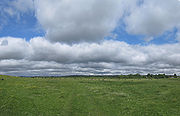 The terrain of Lviv Oblast is highly varied. The southern part is occupied by the low Beskyd (ukr: Бескиди) mountain chains running parallel to each other from northwest to southeast and covered with secondary coniferous
forests as part of the Eastern Carpathians; the highest point is Pikuy (1408 m). North from there are the wide upper Dniester
river valley and much smaller upper San River
valley. These rivers have flat bottoms covered with alluvial deposits, and are susceptible to flood
s. Between these valleys and Beskyd lies the Precarpathian upland covered with deciduous forests, with well-known mineral spa
resorts (see Truskavets
, Morshyn
). It's also the area of one of the earliest industrial petroleum
and gas extraction. These deposits are all but depleted by now.
In the central part of the region lie Roztocze
, Opillia, and part of the Podolia
uplands. Rich sulphur deposits were mined here during the Soviet era. Roztocze is densely forested, while Opillia and Podolia (being covered with loess
on which fertile soils develop) are densely populated and mostly covered by arable land. In the central-north part of the region lies the Small Polesia lowland, geographically isolated from the rest of Polesia
but with similar terrain and landscapes (flat plains with sandy fluvioglacial
deposits and pine
forests). The far North of the region lies on the Volhynia
upland, which is also covered with loess
; coal is mined
in this area.
and San River
valleys while in July the average temperatures are from 14–15 °C (57.2–59 F) in the Carpathians to 16–17 °C (60.8–62.6 F) in Roztocze
and 19 °C (66 °F) in the lower part of the Dniester
valley. The average annual precipitation is 600–650 mm (23.6–25.6 ) in the lowlands, 650 – in the highlands and up to 1000 mm (39.37 in) in the Carpathians, with the majority of precipitation occurring in summer. Prolonged drought
s are uncommon, while strong rainfalls can cause flood
s in river valleys. Severe winds during storms can also cause damage, especially in the highlands. The climate is favourable for the cultivation of sugar beet
s, winter wheat
, flax
, rye
, cabbage
, apple
s, and for dairy farming
. It is still too cold to successfully cultivate maize
, sunflower
, grape
s, melon
, watermelon
or peach
es in Lviv Oblast. In the Carpathians conditions are favourable for Alpine skiing
3–4 months a year.
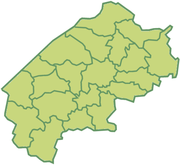 The Lviv Oblast is administratively subdivided into 20 raions (district
s), as well as 9 city (municipalities
) which are directly subordinate to the oblast government: Boryslav
, Chervonohrad
, Drohobych
, Morshyn
, Novyi Rozdil
, Sambir
, Stryi
, Truskavets
, and the administrative center of the oblast, Lviv
.
. The Ukrainian Autocephalous Orthodox Church
is the second largest religious body. The followers of the Roman Catholic Church
and the Ukrainian Orthodox Church (Moscow Patriarchate)
are mostly from the Polish, and Russian or non-Galician Ukrainian minorities respectively.
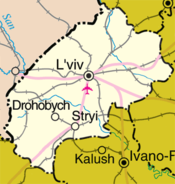 The city of Lviv contains a well-preserved main square (Rynok) and numerous historical and beautiful churches. Other sites of interest are the historic Lychakivskiy Cemetery
, the local museum of folklore, and the ruins of the famous Vysokyi Zamok
. The name of the castle is tightly tied with the name of the city. There is also a museum of military artifacts, the "Arsenal".
Well-preserved local wooden churches, castles, and monasteries can be found throughout the Oblast. One of them is the Olesko Castle
which is first remembered in 1327. Another castle that was built at the end of the 15th century is Svirzh Castle
in the village of Svirzh, Peremeshliany Raion. One more and no less famous castle is the Pidhirtsi Castle
. Its architectural complex consists of the three-story palace, Kostel, and small park. In Roztochia is also located the Krekhivsky monastery in the buch-pine grove at the foot of the Pobiyna mount. The whole complex consists of the Saint Nikola Church, the bell tower, numerous service structures, and defensive walls with towers. Another site worth of mentioning is the Tustan city-fortress which is built in the rock. The site was nominated as the historical and as the natural wonder of Ukraine. There also a nature complex in the valley of the Kamianka river in Skoliv Raion. Another natural wonder of the region is the Kamin-Veleten (Rock-Giant in English) which is located near city of Pidkamin
in Brodivskyi Raion
. The name of the local city means Under the Rock. A local museum of Ukrainian art and an institution of higher learning (Ivan Franko State University) are also present.
oblasnyi tsentr). The name of each oblast is a relative
adjective
, formed by adding a feminine suffix
to the name of respective center city: L'viv is the center of the L'vivs'ka oblast (Lviv Oblast). Most oblasts are also sometimes referred to in a feminine noun form, following the convention of traditional regional place names, ending with the suffix "-shchyna", as is the case with the Lviv Oblast, Lvivshchyna.
Administrative divisions of Ukraine
Ukraine is subdivided into 24 oblasts , one autonomous republic, and two "cities with special status".- Overview :...
(province) in western Ukraine
Ukraine
Ukraine is a country in Eastern Europe. It has an area of 603,628 km², making it the second largest contiguous country on the European continent, after Russia...
. The administrative center
Capital City
Capital City was a television show produced by Euston Films which focused on the lives of investment bankers in London living and working on the corporate trading floor for the fictional international bank Shane-Longman....
of the oblast is the city of Lviv
Lviv
Lviv is a city in western Ukraine. The city is regarded as one of the main cultural centres of today's Ukraine and historically has also been a major Polish and Jewish cultural center, as Poles and Jews were the two main ethnicities of the city until the outbreak of World War II and the following...
.
History
The oblast was created as part of the Ukrainian Soviet Socialist Republic on December 4, 1939. The territory of the former Drohobych OblastDrohobych Oblast
Drohobych Oblast , was an oblast in the Ukrainian SSR. It had a territory of 9.6 thousands of km³, and population of 853 thousand .-History:...
was incorporated into the Lviv Oblast in 1959.
The oblast's strategic position at the heart of central Europe and as the gateway to the Carpathians
Carpathian Mountains
The Carpathian Mountains or Carpathians are a range of mountains forming an arc roughly long across Central and Eastern Europe, making them the second-longest mountain range in Europe...
has caused it to change hands many times over the centuries. It was ruled variously by Great Moravia
Great Moravia
Great Moravia was a Slavic state that existed in Central Europe and lasted for nearly seventy years in the 9th century whose creators were the ancestors of the Czechs and Slovaks. It was a vassal state of the Germanic Frankish kingdom and paid an annual tribute to it. There is some controversy as...
, Kievan Rus'
Kievan Rus'
Kievan Rus was a medieval polity in Eastern Europe, from the late 9th to the mid 13th century, when it disintegrated under the pressure of the Mongol invasion of 1237–1240....
, Poland and by one of Kievan Rus' successors, the state of Galicia-Volhynia (circa 1200 to 1340), then by the Polish-Lithuanian Commonwealth
Polish-Lithuanian Commonwealth
The Polish–Lithuanian Commonwealth was a dualistic state of Poland and Lithuania ruled by a common monarch. It was the largest and one of the most populous countries of 16th- and 17th‑century Europe with some and a multi-ethnic population of 11 million at its peak in the early 17th century...
(1340 to 1772), the Austro-Hungarian Empire
Austria-Hungary
Austria-Hungary , more formally known as the Kingdoms and Lands Represented in the Imperial Council and the Lands of the Holy Hungarian Crown of Saint Stephen, was a constitutional monarchic union between the crowns of the Austrian Empire and the Kingdom of Hungary in...
(1772 to 1918), and Poland
Second Polish Republic
The Second Polish Republic, Second Commonwealth of Poland or interwar Poland refers to Poland between the two world wars; a period in Polish history in which Poland was restored as an independent state. Officially known as the Republic of Poland or the Commonwealth of Poland , the Polish state was...
(1918 to 1939), when it was part of the Lwów Voivodship of the Second Republic of Poland. The region's historically dominant Ukrainian population declared the area to be a part of an independent West Ukrainian National Republic
West Ukrainian National Republic
The West Ukrainian People's Republic was a short-lived republic that existed in late 1918 and early 1919 in eastern Galicia, that claimed parts of Bukovina and Carpathian Ruthenia and included the cities of Lviv , Przemyśl , Kolomyia , and Stanislaviv...
in 1918, but this endured only briefly. Local autonomy was provided in international treaties but later on those were not honoured by the Polish government and the area experienced much ethnic tension between the Polish
Poles
thumb|right|180px|The state flag of [[Poland]] as used by Polish government and diplomatic authoritiesThe Polish people, or Poles , are a nation indigenous to Poland. They are united by the Polish language, which belongs to the historical Lechitic subgroup of West Slavic languages of Central Europe...
and Ukrainian
Ukrainians
Ukrainians are an East Slavic ethnic group native to Ukraine, which is the sixth-largest nation in Europe. The Constitution of Ukraine applies the term 'Ukrainians' to all its citizens...
population.
The region and its capital city take their name from the time of Galicia-Volhynia, when Daniel of Galicia, the King of Rus' founded Lviv
Lviv
Lviv is a city in western Ukraine. The city is regarded as one of the main cultural centres of today's Ukraine and historically has also been a major Polish and Jewish cultural center, as Poles and Jews were the two main ethnicities of the city until the outbreak of World War II and the following...
, naming the city after his son, Leo
Leo I of Halych
Lev I of Galicia became in turn Knyaz of Belz , Knyaz of Peremyshl, king of Halych and King of Rus' , Grand Prince of Kiev .-Family:...
. During this time, the general region around Lviv was known as Red Ruthenia
Red Ruthenia
Red Ruthenia is the name used since medieval times to refer to the area known as Eastern Galicia prior to World War I; first mentioned in Polish historic chronicles in the 1321, as Ruthenia Rubra or Ruthenian Voivodeship .Ethnographers explain that the term was applied from the...
(Cherven' Rus').
The region only became part of the Soviet Union
Soviet Union
The Soviet Union , officially the Union of Soviet Socialist Republics , was a constitutionally socialist state that existed in Eurasia between 1922 and 1991....
under the terms of the Molotov-Ribbentrop Pact
Molotov-Ribbentrop Pact
The Molotov–Ribbentrop Pact, named after the Soviet foreign minister Vyacheslav Molotov and the German foreign minister Joachim von Ribbentrop, was an agreement officially titled the Treaty of Non-Aggression between Germany and the Soviet Union and signed in Moscow in the late hours of 23 August 1939...
in 1939, when it was annexed to the Ukrainian SSR. It was occupied by Nazi Germany
Nazi Germany
Nazi Germany , also known as the Third Reich , but officially called German Reich from 1933 to 1943 and Greater German Reich from 26 June 1943 onward, is the name commonly used to refer to the state of Germany from 1933 to 1945, when it was a totalitarian dictatorship ruled by...
from 1941 to 1944 and remained in Soviet hands after World War II
World War II
World War II, or the Second World War , was a global conflict lasting from 1939 to 1945, involving most of the world's nations—including all of the great powers—eventually forming two opposing military alliances: the Allies and the Axis...
as was arranged during the Teheran and Yalta
Yalta Conference
The Yalta Conference, sometimes called the Crimea Conference and codenamed the Argonaut Conference, held February 4–11, 1945, was the wartime meeting of the heads of government of the United States, the United Kingdom, and the Soviet Union, represented by President Franklin D...
conferences. Given its historical development, Lviv Oblast is one of the least Russified
Russification
Russification is an adoption of the Russian language or some other Russian attributes by non-Russian communities...
and Sovietized
Sovietization
Sovietization is term that may be used with two distinct meanings:*the adoption of a political system based on the model of soviets .*the adoption of a way of life and mentality modelled after the Soviet Union....
parts of Ukraine, with much of its Habsburg
Habsburg
The House of Habsburg , also found as Hapsburg, and also known as House of Austria is one of the most important royal houses of Europe and is best known for being an origin of all of the formally elected Holy Roman Emperors between 1438 and 1740, as well as rulers of the Austrian Empire and...
heritage still visible today.
Geography
Pinophyta
The conifers, division Pinophyta, also known as division Coniferophyta or Coniferae, are one of 13 or 14 division level taxa within the Kingdom Plantae. Pinophytes are gymnosperms. They are cone-bearing seed plants with vascular tissue; all extant conifers are woody plants, the great majority being...
forests as part of the Eastern Carpathians; the highest point is Pikuy (1408 m). North from there are the wide upper Dniester
Dniester
The Dniester is a river in Eastern Europe. It runs through Ukraine and Moldova and separates most of Moldova's territory from the breakaway de facto state of Transnistria.-Names:...
river valley and much smaller upper San River
San River
The San is a river in southeastern Poland and western Ukraine, a tributary of the Vistula River, with a length of 433 km and a basin area of 16,861 km2...
valley. These rivers have flat bottoms covered with alluvial deposits, and are susceptible to flood
Flood
A flood is an overflow of an expanse of water that submerges land. The EU Floods directive defines a flood as a temporary covering by water of land not normally covered by water...
s. Between these valleys and Beskyd lies the Precarpathian upland covered with deciduous forests, with well-known mineral spa
Mineral spa
Mineral spas are resorts developed around naturally occurring mineral spring locales.- Origins :Spas grew in reputation in the nineteenth century on into the late middle-twentieth century for their purported healing or healthful benefits to those wealthy enough to partake of their waters...
resorts (see Truskavets
Truskavets
Truskavets is a city in western Ukraine's Lviv Oblast , near the border with Poland. The city is designated as a separate raion within the oblast....
, Morshyn
Morshyn
Morshyn is a city in Ukraine's Lviv Oblast . Population is 6,482 .- Quick overview :In 1918-1939 Morshyn was in Polish territory and, as "Morszyn-Zdrój," was a popular spa. The spa belonged to the Medical Association from Lwow, in late 1920s almost 1000 guests came there yearly...
). It's also the area of one of the earliest industrial petroleum
Extraction of petroleum
The extraction of petroleum is the process by which usable petroleum is extracted and removed from the earth.-Locating the oil field:Geologists use seismic surveys to search for geological structures that may form oil reservoirs...
and gas extraction. These deposits are all but depleted by now.
In the central part of the region lie Roztocze
Roztocze
Roztocze is a range of hills in east-central Poland and western Ukraine which rises from the Lublin Upland and extends southeastward through Solska Wilderness and across the border into Ukrainian Podolia. Low and rolling, the range is approximately 180 km long and 14 km wide...
, Opillia, and part of the Podolia
Podolia
The region of Podolia is an historical region in the west-central and south-west portions of present-day Ukraine, corresponding to Khmelnytskyi Oblast and Vinnytsia Oblast. Northern Transnistria, in Moldova, is also a part of Podolia...
uplands. Rich sulphur deposits were mined here during the Soviet era. Roztocze is densely forested, while Opillia and Podolia (being covered with loess
Loess
Loess is an aeolian sediment formed by the accumulation of wind-blown silt, typically in the 20–50 micrometre size range, twenty percent or less clay and the balance equal parts sand and silt that are loosely cemented by calcium carbonate...
on which fertile soils develop) are densely populated and mostly covered by arable land. In the central-north part of the region lies the Small Polesia lowland, geographically isolated from the rest of Polesia
Polesia
Polesia is one of the largest European swampy areas, located in the south-western part of the Eastern-European Lowland, mainly within Belarus and Ukraine but also partly within Poland and Russia...
but with similar terrain and landscapes (flat plains with sandy fluvioglacial
Fluvioglacial landform
Fluvioglacial landforms are landforms molded by glacial meltwater. This discharge of glacial streams, both over the surface and beneath the ice sheet , is higher in the warmer summer months. As subglacial water often flows under pressure, it has a high velocity and is very turbulent...
deposits and pine
Pine
Pines are trees in the genus Pinus ,in the family Pinaceae. They make up the monotypic subfamily Pinoideae. There are about 115 species of pine, although different authorities accept between 105 and 125 species.-Etymology:...
forests). The far North of the region lies on the Volhynia
Volhynia
Volhynia, Volynia, or Volyn is a historic region in western Ukraine located between the rivers Prypiat and Southern Bug River, to the north of Galicia and Podolia; the region is named for the former city of Volyn or Velyn, said to have been located on the Southern Bug River, whose name may come...
upland, which is also covered with loess
Loess
Loess is an aeolian sediment formed by the accumulation of wind-blown silt, typically in the 20–50 micrometre size range, twenty percent or less clay and the balance equal parts sand and silt that are loosely cemented by calcium carbonate...
; coal is mined
Coal mining
The goal of coal mining is to obtain coal from the ground. Coal is valued for its energy content, and since the 1880s has been widely used to generate electricity. Steel and cement industries use coal as a fuel for extraction of iron from iron ore and for cement production. In the United States,...
in this area.
Climate
The climate of Lviv Oblast is moderately cool and humid. The average January temperatures range from -7 °C in the Carpathians to -3 C in the DniesterDniester
The Dniester is a river in Eastern Europe. It runs through Ukraine and Moldova and separates most of Moldova's territory from the breakaway de facto state of Transnistria.-Names:...
and San River
San River
The San is a river in southeastern Poland and western Ukraine, a tributary of the Vistula River, with a length of 433 km and a basin area of 16,861 km2...
valleys while in July the average temperatures are from 14–15 °C (57.2–59 F) in the Carpathians to 16–17 °C (60.8–62.6 F) in Roztocze
Roztocze
Roztocze is a range of hills in east-central Poland and western Ukraine which rises from the Lublin Upland and extends southeastward through Solska Wilderness and across the border into Ukrainian Podolia. Low and rolling, the range is approximately 180 km long and 14 km wide...
and 19 °C (66 °F) in the lower part of the Dniester
Dniester
The Dniester is a river in Eastern Europe. It runs through Ukraine and Moldova and separates most of Moldova's territory from the breakaway de facto state of Transnistria.-Names:...
valley. The average annual precipitation is 600–650 mm (23.6–25.6 ) in the lowlands, 650 – in the highlands and up to 1000 mm (39.37 in) in the Carpathians, with the majority of precipitation occurring in summer. Prolonged drought
Drought
A drought is an extended period of months or years when a region notes a deficiency in its water supply. Generally, this occurs when a region receives consistently below average precipitation. It can have a substantial impact on the ecosystem and agriculture of the affected region...
s are uncommon, while strong rainfalls can cause flood
Flood
A flood is an overflow of an expanse of water that submerges land. The EU Floods directive defines a flood as a temporary covering by water of land not normally covered by water...
s in river valleys. Severe winds during storms can also cause damage, especially in the highlands. The climate is favourable for the cultivation of sugar beet
Sugar beet
Sugar beet, a cultivated plant of Beta vulgaris, is a plant whose tuber contains a high concentration of sucrose. It is grown commercially for sugar production. Sugar beets and other B...
s, winter wheat
Winter wheat
Winter wheat is a type of wheat that is planted from September to December in the Northern Hemisphere. Winter wheat sprouts before freezing occurs, then becomes dormant until the soil warms in the spring. Winter wheat needs a few weeks of cold before being able to flower, however persistent snow...
, flax
Flax
Flax is a member of the genus Linum in the family Linaceae. It is native to the region extending from the eastern Mediterranean to India and was probably first domesticated in the Fertile Crescent...
, rye
Rye
Rye is a grass grown extensively as a grain and as a forage crop. It is a member of the wheat tribe and is closely related to barley and wheat. Rye grain is used for flour, rye bread, rye beer, some whiskeys, some vodkas, and animal fodder...
, cabbage
Cabbage
Cabbage is a popular cultivar of the species Brassica oleracea Linne of the Family Brassicaceae and is a leafy green vegetable...
, apple
Apple
The apple is the pomaceous fruit of the apple tree, species Malus domestica in the rose family . It is one of the most widely cultivated tree fruits, and the most widely known of the many members of genus Malus that are used by humans. Apple grow on small, deciduous trees that blossom in the spring...
s, and for dairy farming
Dairy farming
Dairy farming is a class of agricultural, or an animal husbandry, enterprise, for long-term production of milk, usually from dairy cows but also from goats and sheep, which may be either processed on-site or transported to a dairy factory for processing and eventual retail sale.Most dairy farms...
. It is still too cold to successfully cultivate maize
Maize
Maize known in many English-speaking countries as corn or mielie/mealie, is a grain domesticated by indigenous peoples in Mesoamerica in prehistoric times. The leafy stalk produces ears which contain seeds called kernels. Though technically a grain, maize kernels are used in cooking as a vegetable...
, sunflower
Sunflower
Sunflower is an annual plant native to the Americas. It possesses a large inflorescence . The sunflower got its name from its huge, fiery blooms, whose shape and image is often used to depict the sun. The sunflower has a rough, hairy stem, broad, coarsely toothed, rough leaves and circular heads...
, grape
Grape
A grape is a non-climacteric fruit, specifically a berry, that grows on the perennial and deciduous woody vines of the genus Vitis. Grapes can be eaten raw or they can be used for making jam, juice, jelly, vinegar, wine, grape seed extracts, raisins, molasses and grape seed oil. Grapes are also...
s, melon
Melon
thumb|200px|Various types of melonsThis list of melons includes members of the plant family Cucurbitaceae with edible, fleshy fruit e.g. gourds or cucurbits. The word "melon" can refer to either the plant or specifically to the fruit...
, watermelon
Watermelon
Watermelon is a vine-like flowering plant originally from southern Africa. Its fruit, which is also called watermelon, is a special kind referred to by botanists as a pepo, a berry which has a thick rind and fleshy center...
or peach
Peach
The peach tree is a deciduous tree growing to tall and 6 in. in diameter, belonging to the subfamily Prunoideae of the family Rosaceae. It bears an edible juicy fruit called a peach...
es in Lviv Oblast. In the Carpathians conditions are favourable for Alpine skiing
Alpine skiing
Alpine skiing is the sport of sliding down snow-covered hills on skis with fixed-heel bindings. Alpine skiing can be contrasted with skiing using free-heel bindings: Ski mountaineering and nordic skiing – such as cross-country; ski jumping; and Telemark. In competitive alpine skiing races four...
3–4 months a year.
Governors
- Chairmen of the Executive Committee
Term start Term end Name Year of birth Year of death March 1991 6 April 1992 Vyacheslav Chornovil Vyacheslav ChornovilViacheslav Chornovil was a Ukrainian politician. A prominent Ukrainian dissident to the Soviet policies, he was arrested multiple times in the 1960s and 1970s for his political views...b. 1937 d. 1999 June 1994 July 1995 Mykola Horyn b. 1945
- Representative of the President
Term start Term end Name Year of birth 20 March 1992 June 1994 Stepan Davymuka (s.a.)
- Heads of the Administration
Term start Term end Name Year of birth Year of death 7 July 1995 6 Feb. 1997 Mykola Horyn (s.a.) 6 Feb. 1997 14 Jan. 1999 Mykhailo Hladiy b. 1952 15 Jan. 1999 19 March 2001 Stepan Senchuk Stepan SenchukStepan Romanovich Senchuk was born in the city of Prokofevsk in the Kemerovo area of Ukraine. He was part of a family that was subjected to repression. Senchuk studied at the Lviv agricultural institute , specializing in engineering and mechanics. From 1977 to 1993, Senchuk was on engineering and...b. 1955 d. 2005 26 March 2001 26 April 2002 Mykhailo Hladiy b. 1952 26 April 2002 4 June 2003 Myron Yankiv b. 1951 9 June 2003 20 Dec. 2004 Oleksandr Sendeha b. 1953 20 Dec. 2004 4 Feb. 2005 Bohdan Matolych (acting) b. 1955 4 Feb. 2005 20 Feb. 2008 Petro Oliynyk b. 1957 20 Feb. 2008 27 Feb. 2008 Valery Pyatak (acting) b. 1959 27 Feb. 2008 20 April 2010? Kmit Mykola
(acting to 1 Sep 2008)b. 1966 20 April 2010 21 December 2010 Vasyl Horbal (s.a.) 21 December 2010 2 November 2011 Mykhailo Tsymbaliuk (s.a.) 2 November 2011 Current Mykhailo Kostiuk (s.a.)
Subdivisions
District
Districts are a type of administrative division, in some countries managed by a local government. They vary greatly in size, spanning entire regions or counties, several municipalities, or subdivisions of municipalities.-Austria:...
s), as well as 9 city (municipalities
Municipality
A municipality is essentially an urban administrative division having corporate status and usually powers of self-government. It can also be used to mean the governing body of a municipality. A municipality is a general-purpose administrative subdivision, as opposed to a special-purpose district...
) which are directly subordinate to the oblast government: Boryslav
Boryslav
Boryslav is a city located on the Tysmenytsia River , in the Lviv Oblast of western Ukraine. The city is designated as a separate raion within the oblast....
, Chervonohrad
Chervonohrad
Chervonohrad is a city located in the Lviv Oblast of western Ukraine. The city is designated as a separate raion within the oblast. It about 62 km north of Lviv and 7 km from Sokal. The population numbers 68,300 inhabitants....
, Drohobych
Drohobych
Drohobych is a city located at the confluence of the Tysmenytsia River and Seret, a tributary of the former, in the Lviv Oblast , in western Ukraine...
, Morshyn
Morshyn
Morshyn is a city in Ukraine's Lviv Oblast . Population is 6,482 .- Quick overview :In 1918-1939 Morshyn was in Polish territory and, as "Morszyn-Zdrój," was a popular spa. The spa belonged to the Medical Association from Lwow, in late 1920s almost 1000 guests came there yearly...
, Novyi Rozdil
Novyi Rozdil
Novyi Rozdil is a city in Lviv Oblast of Ukraine. Population is 28,227 .-Twin towns — Sister cities:Novyi Rozdil is twinned with: Police, Poland...
, Sambir
Sambir
Sambir is a city in the Lviv Oblast, Ukraine. Serving as the administrative center of the Sambir Raion , the city itself is also designated as a separate raion within the oblast. It is located at around , close to the border with Poland.-History:...
, Stryi
Stryi
Stryi is a city located on the left bank of the river Stryi in the Lviv Oblast of western Ukraine . Serving as the administrative center of the Stryi Raion , the city itself is also designated as a separate raion within the oblast. Thus, the city has two administrations - the city and the raion...
, Truskavets
Truskavets
Truskavets is a city in western Ukraine's Lviv Oblast , near the border with Poland. The city is designated as a separate raion within the oblast....
, and the administrative center of the oblast, Lviv
Lviv
Lviv is a city in western Ukraine. The city is regarded as one of the main cultural centres of today's Ukraine and historically has also been a major Polish and Jewish cultural center, as Poles and Jews were the two main ethnicities of the city until the outbreak of World War II and the following...
.
| In English | In Ukrainian | Administrative Center | |
|---|---|---|---|
| Brody Raion | Бродівський район Brodivs'kyi raion |
Brody Brody Brody is a city in the Lviv Oblast of western Ukraine. It is the administrative center of the Brody Raion , and is located in the valley of the upper Styr River, approximately 90 kilometres northeast of the oblast capital, Lviv... (City City A city is a relatively large and permanent settlement. Although there is no agreement on how a city is distinguished from a town within general English language meanings, many cities have a particular administrative, legal, or historical status based on local law.For example, in the U.S... ) |
|
| Busk Raion Busk Raion Busk Raion is a raion in Lviv Oblast in western Ukraine. Its administrative center is Busk. It has a population of 50 871.It was establishes in 1966.-External links:*... |
Буський район Bus'kyi raion |
Busk Busk, Ukraine Busk is a city located in Busk Raion in Lviv Oblast of western Ukraine. The city's population was 8,896 as of the 2006 Ukrainian Census.It is administrative center of the Busk Raion.... (City City A city is a relatively large and permanent settlement. Although there is no agreement on how a city is distinguished from a town within general English language meanings, many cities have a particular administrative, legal, or historical status based on local law.For example, in the U.S... ) |
|
| Drohobych Raion | Дрогобицький район Drohobyts'kyi raion |
Drohobych Drohobych Drohobych is a city located at the confluence of the Tysmenytsia River and Seret, a tributary of the former, in the Lviv Oblast , in western Ukraine... (City City A city is a relatively large and permanent settlement. Although there is no agreement on how a city is distinguished from a town within general English language meanings, many cities have a particular administrative, legal, or historical status based on local law.For example, in the U.S... ) |
|
| Horodok Raion Horodok Raion Horodok Raion is a raion in Lviv Oblast in western Ukraine. Its administrative center is Horodok. It has a population of 73,974.It was established in 1939.-External links:*... |
Городоцький район Horodots'kyi raion |
Horodok Horodok, Lviv Oblast Horodok is a city in Lviv Oblast of Ukraine. It is administrative center of the Horodok Raion. Population is 16,082 .This is the place where King of Poland and Grand Duke of Lithuania Jogaila died on 1 June 1434.... (City City A city is a relatively large and permanent settlement. Although there is no agreement on how a city is distinguished from a town within general English language meanings, many cities have a particular administrative, legal, or historical status based on local law.For example, in the U.S... ) |
|
| Kamianka-Buzka Raion Kamianka-Buzka Raion Kamianka-Buzka Raion is a raion in Lviv Oblast in western Ukraine. Its administrative center is Kamianka-Buzka. It has a population of 61 832.It was established in 1940.-See also:* Subdivisions of Ukraine* Lviv Oblast... |
Кам'янка-Бузький район Kamyanka-Buz'kyi raion |
Kamianka-Buzka Kamianka-Buzka Kamianka-Buzka is a city in the Lviv Oblast, of western Ukraine. It is the administrative center of the Kamianka-Buzkyi Raion . The city was previously known as Kamianka Strumilowa, and was a district city in Galicia... (City City A city is a relatively large and permanent settlement. Although there is no agreement on how a city is distinguished from a town within general English language meanings, many cities have a particular administrative, legal, or historical status based on local law.For example, in the U.S... ) |
|
| Mostyska Raion Mostyska Raion Mostyska Raion is a raion in Lviv Oblast in western Ukraine. Its administrative center is Mostyska. It has a population of 61 919.It was established in 1939.-External links:*... |
Мостиський район Mostys'kyi raion |
Mostyska Mostyska Mostyska is a city in Lviv Oblast of Ukraine. It is administrative center of the Mostyska Raion. Population is 9,150 . There is a break of gauge where the railway systems of the two countries meet... (City City A city is a relatively large and permanent settlement. Although there is no agreement on how a city is distinguished from a town within general English language meanings, many cities have a particular administrative, legal, or historical status based on local law.For example, in the U.S... ) |
|
| Mykolaiv Raion Mykolaiv Raion Mykolaiv Raion is a raion in Lviv Oblast in western Ukraine. Its administrative center is Mykolaiv. It has a population of 94 506.It was established in 1939.-External links:*... |
Миколаївський район Mykolayivs'kyi raion |
Mykolaiv Mykolaiv, Lviv Oblast Mykolaiv is a city located in the Lviv Oblast in western Ukraine. It is the administrative center of the Mykolaiv Raion .The current estimated population is 14,800 .... (City City A city is a relatively large and permanent settlement. Although there is no agreement on how a city is distinguished from a town within general English language meanings, many cities have a particular administrative, legal, or historical status based on local law.For example, in the U.S... ) |
|
| Peremyshliany Raion Peremyshliany Raion Peremyshliany Raion is a raion in Lviv Oblast in western Ukraine. Its administrative center is Peremyshliany. It has a population of 47 763.It was established in 1939.-See also:* Subdivisions of Ukraine* Lviv Oblast... |
Перемишлянський район Peremyshlians'kyi raion |
Peremyshliany Peremyshliany Peremyshliany is a town in Lviv Oblast of Ukraine. It is administrative center of the Peremyshliany Raion. Population is 7,565 .It had a Jewish population of 2,934 in 1900.-Famous natives:* Naftule Brandwein, klezmer musician* bl... (City City A city is a relatively large and permanent settlement. Although there is no agreement on how a city is distinguished from a town within general English language meanings, many cities have a particular administrative, legal, or historical status based on local law.For example, in the U.S... ) |
|
| Pustomyty Raion Pustomyty Raion Pustomyty Raion is a raion in Lviv Oblast in western Ukraine. Its administrative center is Pustomyty. It has a population of 112 009.It was established in 1959.-External links:*... |
Пустомитівський район Pustomytivs'kyi raion |
Pustomyty Pustomyty Pustomyty is a city in Lviv Oblast of Ukraine. It is administrative center of the Pustomyty Raion. Population is 9,798 .... (City City A city is a relatively large and permanent settlement. Although there is no agreement on how a city is distinguished from a town within general English language meanings, many cities have a particular administrative, legal, or historical status based on local law.For example, in the U.S... ) |
|
| Radekhiv Raion Radekhiv Raion Radekhiv Raion is a raion in Lviv Oblast in western Ukraine. Its administrative center is Radekhiv. It has a population of 52 439.It was established in 1965.-External links:* *... |
Радехівський район Radekhivs'kyi raion |
Radekhiv Radekhiv Radekhiv is a city in Lviv Oblast of Ukraine. It is administrative center of the Radekhiv Raion. Population is 9,230 .Ed Stelmach, the current premier of the Canadian province of Alberta, is descended from immigrants who arrived in Canada from Radekhiv.... (City City A city is a relatively large and permanent settlement. Although there is no agreement on how a city is distinguished from a town within general English language meanings, many cities have a particular administrative, legal, or historical status based on local law.For example, in the U.S... ) |
|
| Sambir Raion Sambir Raion Sambir Raion is a raion in Lviv Oblast in western Ukraine. Its administrative center is Sambir. It has a population of 74 598.It was established in 1965.-See also:* Subdivisions of Ukraine* Lviv Oblast... |
Самбірський район Sambirs'kyi raion |
Sambir Sambir Sambir is a city in the Lviv Oblast, Ukraine. Serving as the administrative center of the Sambir Raion , the city itself is also designated as a separate raion within the oblast. It is located at around , close to the border with Poland.-History:... (City City A city is a relatively large and permanent settlement. Although there is no agreement on how a city is distinguished from a town within general English language meanings, many cities have a particular administrative, legal, or historical status based on local law.For example, in the U.S... ) |
|
| Skole Raion Skole Raion Skole Raion is a raion in Lviv Oblast in western Ukraine. Its administrative center is Skole. It has a population of 50 310.It was established in 1940.-External links:*... |
Сколівський район Skolivs'kyi raion |
Skole Skole thumb|right|200px|A church in SkoleSkole is a city in the Lviv Oblast of Ukraine. It is administrative center of the Skole Raion. As of 2001, the population is 6,742.- History :... (City City A city is a relatively large and permanent settlement. Although there is no agreement on how a city is distinguished from a town within general English language meanings, many cities have a particular administrative, legal, or historical status based on local law.For example, in the U.S... ) |
|
| Sokal Raion Sokal Raion Sokal Raion is a raion in Lviv Oblast in western Ukraine. Its administrative center is Sokal. It has a population of 94 500.It was established in 1939.-External links:*... |
Сокальський район Sokal's'kyi raion |
Sokal Sokal Sokal is a town located on the banks of the Bug River in the Lviv Oblast of western Ukraine. Serving as the administrative center of the Sokal Raion , the city itself also ranks as a separate raion within the oblast.- History :... (City City A city is a relatively large and permanent settlement. Although there is no agreement on how a city is distinguished from a town within general English language meanings, many cities have a particular administrative, legal, or historical status based on local law.For example, in the U.S... ) |
|
| Starosambirskyi Raion | Старосамбірський район Starosambirs'kyi raion |
Staryi Sambir Staryi Sambir Staryi Sambir is a city in the Lviv Oblast of western Ukraine, close to the border with Poland. It is the administrative center of the Starosambirskyi Raion , and is located at around .The current estimated population is around 5,700 .... (City City A city is a relatively large and permanent settlement. Although there is no agreement on how a city is distinguished from a town within general English language meanings, many cities have a particular administrative, legal, or historical status based on local law.For example, in the U.S... ) |
|
| Stryiskyi Raion | Стрийський район Stryis'kyi raion |
Stryi Stryi Stryi is a city located on the left bank of the river Stryi in the Lviv Oblast of western Ukraine . Serving as the administrative center of the Stryi Raion , the city itself is also designated as a separate raion within the oblast. Thus, the city has two administrations - the city and the raion... (City City A city is a relatively large and permanent settlement. Although there is no agreement on how a city is distinguished from a town within general English language meanings, many cities have a particular administrative, legal, or historical status based on local law.For example, in the U.S... ) |
|
| Turkivskyi Raion | Турківський район Turkivs'kyi raion |
Turka (City City A city is a relatively large and permanent settlement. Although there is no agreement on how a city is distinguished from a town within general English language meanings, many cities have a particular administrative, legal, or historical status based on local law.For example, in the U.S... ) |
|
| Yavorivskyi Raion | Яворівський район Yavorivs'kyi raion |
Yavoriv Yavoriv Yavoriv is a city located in the Lviv Oblast of western Ukraine. It is the administrative center of the Yavoriv Raion and rests approximately 50 km west of the oblast capital, Lviv.... (City City A city is a relatively large and permanent settlement. Although there is no agreement on how a city is distinguished from a town within general English language meanings, many cities have a particular administrative, legal, or historical status based on local law.For example, in the U.S... ) |
|
| Zhovkivskyi Raion | Жовківський район Zhovkivs'kyi raion |
Zhovkva Zhovkva Zhovkva is a city in the Lviv Oblast of western Ukraine, north of Lviv. It is the administrative center of the Zhovkivskyi Raion . The current estimated population is 13,500.-History:... (City City A city is a relatively large and permanent settlement. Although there is no agreement on how a city is distinguished from a town within general English language meanings, many cities have a particular administrative, legal, or historical status based on local law.For example, in the U.S... ) |
|
| Zhydachivskyi Raion | Жидачівський район Zhydachivs'kyi raion |
Zhydachiv Zhydachiv Zhydachiv is a city in Lviv Oblast in western Ukraine. It is the administrative center of the Zhydachivskyi Raion , and is located at around .... (City City A city is a relatively large and permanent settlement. Although there is no agreement on how a city is distinguished from a town within general English language meanings, many cities have a particular administrative, legal, or historical status based on local law.For example, in the U.S... ) |
|
| Zolochivskyi Raion | Золочівський район Zolochivs'kyi raion |
Zolochiv Zolochiv Zolochiv is a town located in the Lviv Oblast of western Ukraine. It is the administrative center of the Zolochiv Raion .... (City City A city is a relatively large and permanent settlement. Although there is no agreement on how a city is distinguished from a town within general English language meanings, many cities have a particular administrative, legal, or historical status based on local law.For example, in the U.S... ) |
Demographics
- Male/female ratio: 48%/52%
- Nationalities: 94.8% of region's population are UkrainiansUkrainiansUkrainians are an East Slavic ethnic group native to Ukraine, which is the sixth-largest nation in Europe. The Constitution of Ukraine applies the term 'Ukrainians' to all its citizens...
; 92,600 people are RussiaRussiaRussia or , officially known as both Russia and the Russian Federation , is a country in northern Eurasia. It is a federal semi-presidential republic, comprising 83 federal subjects...
ns (3.6%); PolesPolesthumb|right|180px|The state flag of [[Poland]] as used by Polish government and diplomatic authoritiesThe Polish people, or Poles , are a nation indigenous to Poland. They are united by the Polish language, which belongs to the historical Lechitic subgroup of West Slavic languages of Central Europe...
account for 0.7%; there are also smaller GermanEthnic GermanEthnic Germans historically also ), also collectively referred to as the German diaspora, refers to people who are of German ethnicity. Many are not born in Europe or in the modern-day state of Germany or hold German citizenship...
, Jewish, and Gypsy minorities.http://ukrcensus.gov.ua/results/general/nationality/lviv/
Religion
Fifty-six percent of the religious organisations active in the Lviv Oblast adhere to the Ukrainian Greek Catholic ChurchUkrainian Greek Catholic Church
The Ukrainian Greek Catholic Church , Ukrainska Hreko-Katolytska Tserkva), is the largest Eastern Rite Catholic sui juris particular church in full communion with the Holy See, and is directly subject to the Pope...
. The Ukrainian Autocephalous Orthodox Church
Ukrainian Autocephalous Orthodox Church
The Ukrainian Autocephalous Orthodox Church is one of the three major Orthodox Churches in Ukraine. Close to ten percent of the Christian population claim to be members of the UAOC. The other Churches are the Ukrainian Orthodox Church-Kiev Patriarchate and the Ukrainian Russophile Orthodox...
is the second largest religious body. The followers of the Roman Catholic Church
Roman Catholic Church
The Catholic Church, also known as the Roman Catholic Church, is the world's largest Christian church, with over a billion members. Led by the Pope, it defines its mission as spreading the gospel of Jesus Christ, administering the sacraments and exercising charity...
and the Ukrainian Orthodox Church (Moscow Patriarchate)
Ukrainian Orthodox Church (Moscow Patriarchate)
The Ukrainian Orthodox Church is an autonomous Church of Eastern Orthodoxy in Ukraine, under the ecclesiastic jurisdiction of the Moscow Patriarchate...
are mostly from the Polish, and Russian or non-Galician Ukrainian minorities respectively.
Historical and Cultural Sites
Lychakivskiy Cemetery
-History:Since its creation in 1787 as Łyczakowski Cemetery, it has been the main necropolis of the city's inteligentsia, middle and upper classes. Initially the cemetery was located on several hills in the borough of Lychakiv, following the imperial Austro-Hungarian edict ordering that all...
, the local museum of folklore, and the ruins of the famous Vysokyi Zamok
Lviv High Castle
The Lviv High Castle or Lviv Castle Hill is a historic castle located on one of the hills of the Western Ukrainian city of Lviv. It is currently the highest point in the city, 413 metres above sea level....
. The name of the castle is tightly tied with the name of the city. There is also a museum of military artifacts, the "Arsenal".
Well-preserved local wooden churches, castles, and monasteries can be found throughout the Oblast. One of them is the Olesko Castle
Olesko Castle
The Olesko Castle is currently located within the borders of the present-day Busk Raion in Ukraine. The first historical records of the castle are in a document dated 1390, when Pope Boniface IX gave Halych, a Catholic bishop, this castle as a gift...
which is first remembered in 1327. Another castle that was built at the end of the 15th century is Svirzh Castle
Svirzh Castle
Svirz Castle is a fortified aristocratic residence in Svirzh, Lviv Oblast, Ukraine. It was originally built by the Świrzski noble family in the 15th century. Inside the castle is a small church dating from 1546....
in the village of Svirzh, Peremeshliany Raion. One more and no less famous castle is the Pidhirtsi Castle
Pidhirtsi Castle
Pidhirtsi Castle is a residential castle-fortress located in the village of Pidhirtsi in Lviv Oblast western Ukraine, located eighty kilometers east of Lviv. It was constructed by Guillaume Le Vasseur de Beauplan between 1635–1640 by order of the Polish-Lithuanian Commonwealth's Grand Crown...
. Its architectural complex consists of the three-story palace, Kostel, and small park. In Roztochia is also located the Krekhivsky monastery in the buch-pine grove at the foot of the Pobiyna mount. The whole complex consists of the Saint Nikola Church, the bell tower, numerous service structures, and defensive walls with towers. Another site worth of mentioning is the Tustan city-fortress which is built in the rock. The site was nominated as the historical and as the natural wonder of Ukraine. There also a nature complex in the valley of the Kamianka river in Skoliv Raion. Another natural wonder of the region is the Kamin-Veleten (Rock-Giant in English) which is located near city of Pidkamin
Pidkamin
Pidkamin is a town in the Brody district, Lviv oblast in Ukraine. It has a population of about 2,500 and is located around SE of Brody, SW of Kremenets and NE of Zolochiv....
in Brodivskyi Raion
Brodivskyi Raion
Brody Raion is a raion of the Lviv Oblast of western Ukraine. Its administrative center is Brody. It has a population of 23,239....
. The name of the local city means Under the Rock. A local museum of Ukrainian art and an institution of higher learning (Ivan Franko State University) are also present.
Nomenclature
Most of Ukraine's oblasts are named after their capital cities, officially referred to as "oblast centers" ' onMouseout='HidePop("88290")' href="/topics/Romanization_of_Ukrainian">translit.Romanization of Ukrainian
The romanization or Latinization of Ukrainian is the representation of the Ukrainian language using Latin letters. Ukrainian is natively written in its own Ukrainian alphabet, a variation of Cyrillic....
oblasnyi tsentr). The name of each oblast is a relative
Relative clause
A relative clause is a subordinate clause that modifies a noun phrase, most commonly a noun. For example, the phrase "the man who wasn't there" contains the noun man, which is modified by the relative clause who wasn't there...
adjective
Adjective
In grammar, an adjective is a 'describing' word; the main syntactic role of which is to qualify a noun or noun phrase, giving more information about the object signified....
, formed by adding a feminine suffix
Suffix
In linguistics, a suffix is an affix which is placed after the stem of a word. Common examples are case endings, which indicate the grammatical case of nouns or adjectives, and verb endings, which form the conjugation of verbs...
to the name of respective center city: L'viv is the center of the L'vivs'ka oblast (Lviv Oblast). Most oblasts are also sometimes referred to in a feminine noun form, following the convention of traditional regional place names, ending with the suffix "-shchyna", as is the case with the Lviv Oblast, Lvivshchyna.
See also
- List of Canadian place names of Ukrainian origin – Ukrainian immigrants to CanadaUkrainian CanadianA Ukrainian Canadian is a person of Ukrainian descent or origin who was born in or immigrated to Canada. In 2006, there were an estimated 1,209,085 persons residing in Canada of Ukrainian origin, making them Canada's ninth largest ethnic group; and giving Canada the world's third-largest...
brought place names from this oblast with them to AlbertaAlbertaAlberta is a province of Canada. It had an estimated population of 3.7 million in 2010 making it the most populous of Canada's three prairie provinces...
and SaskatchewanSaskatchewanSaskatchewan is a prairie province in Canada, which has an area of . Saskatchewan is bordered on the west by Alberta, on the north by the Northwest Territories, on the east by Manitoba, and on the south by the U.S. states of Montana and North Dakota....
. - PolandSecond Polish RepublicThe Second Polish Republic, Second Commonwealth of Poland or interwar Poland refers to Poland between the two world wars; a period in Polish history in which Poland was restored as an independent state. Officially known as the Republic of Poland or the Commonwealth of Poland , the Polish state was...
’s Lwów VoivodeshipLwów VoivodeshipLwów Voivodeship was an administrative unit of interwar Poland . According to Nazis and Soviets it ceased to exist in September 1939, following German and Soviet aggression on Poland . The Polish underground administration existed till August 1944.-Population:Its capital, biggest and most...
(1921Peace of RigaThe Peace of Riga, also known as the Treaty of Riga; was signed in Riga on 18 March 1921, between Poland, Soviet Russia and Soviet Ukraine. The treaty ended the Polish-Soviet War....
–1939Soviet invasion of Poland (1939)The 1939 Soviet invasion of Poland was a Soviet military operation that started without a formal declaration of war on 17 September 1939, during the early stages of World War II. Sixteen days after Nazi Germany invaded Poland from the west, the Soviet Union did so from the east...
) - Subdivisions of Ukraine