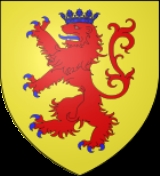
In Depth
See Also

Habsburg

Habsburg was an important ruling house of Europe Europe

Europe is one of the seven traditional continent [i]s of the Earth [i]. ... 

 and is best known as the ruling House of Austria for over six centuries. Their principal roles were as: * Kings of Germany Germany

Germany , officially the Federal Republic of Germany , is a country [i] in central Europe [i]. ... 

, , mostly also crowned as * Holy Roman Emperors Holy Roman Empire

The Holy Roman Empire was a mainly Central Europe [i]an conglomeration of lands [i] in the Middle Ages [i] ... 

, and * Rulers of Austria , * Kings of Croatia Croatia

Croatia , officially the Republic of Croatia , is a country in Europe [i], at the crossroads of th ... 

 , * Kings of Hungary Hungary

Hungary , officially the Republic of Hungary , is a landlocked [i] country in Central Europe [i], ... 

 , * Kings of Spain Spain

Spain, officially the Kingdom of Spain , is a Europe [i]an parliamentary monarchy [i]. ... 

 , * Kings of Portugal Portugal

Portugal, officially the Portuguese Republic is located in southwestern Europe [i] on the Iberian Peninsula [i] ... 

 , * Kings of Bohemia Bohemia

Bohemia is a historical region in central Europe [i], occupying th ... 

 , * Kings of Galizia and Lodomeria , and * Grand Princes of Transylvania Transylvania

Transylvania is a historical region [i] in the center of Romania [i]. ... 

 . Other crowns held briefly by the House included: * Emperor of Mexico Mexico

The United Mexican States, generally known as Mexico is a country [i] located in North America [i] ... 


Discussions

  Discussion Features

   Ask a question about 'Habsburg'

   Start a new discussion about 'Habsburg'

   Answer questions about 'Habsburg'

   'Habsburg' discussion forum

Timeline

1250   Frederick II, Holy Roman Emperor Frederick II, Holy Roman Emperor

[i] to the title of [[King of the Romans]... 

, dies, beginning a 23-year-long interregnum known as the '''great interregnum'''. Frederick II is the last Holy Roman Emperor of the Hohenstaufen Hohenstaufen

The Hohenstaufen were a dynasty of Kings of Germany [i], many of whom ... 

 dynasty; after the interregnum, the empire passes to the Habsburgs.

1273   Rudolph I of Germany Rudolph I of Germany

King Rudolph I, also well known as Rudolph of Habsburg was a king of the Holy Roman Empire [i] ... 

 is elected King of Germany over rival candidate King Otakar II of Bohemia, ending the Interregnum; Otakar refuses to acknowledge Rudolph as the new king, leading to the outbreak of war in 1276. Rudolph is the first of many Habsburgs to hold the throne.

1278   Kings Rudolph I of Germany Rudolph I of Germany

King Rudolph I, also well known as Rudolph of Habsburg was a king of the Holy Roman Empire [i] ... 

 and Ladislaus IV of Hungary defeat King Otakar II of Bohemia in the Battle of Marchfield, a match of over 80,000 men and the largest battle of knight Knight

Knight is the English term for a social position originating in the Middle Ages [i]. ... 

s in the Middle Ages Middle Ages

The Middle Ages formed the middle period in a traditional schematic division of European history [i] ... 

. The battle ends a power struggle between Rudolph and Otakar over the fate of central Europe Europe

Europe is one of the seven traditional continent [i]s of the Earth [i]. ... 

, and Rudolph's Habsburg family will continue to rule Austria Austria

Austria is a landlocked [i] country in central Europe [i]. ... 

 and other captured territories until the end of World War I World War I

World War I, also known as the First World War, the Great War and "The War to End All War... 

 in 1918.

1282   Holy Roman Emperor Holy Roman Empire

The Holy Roman Empire was a mainly Central Europe [i]an conglomeration of lands [i] in the Middle Ages [i] ... 

 Rudolph I of Germany Rudolph I of Germany

King Rudolph I, also well known as Rudolph of Habsburg was a king of the Holy Roman Empire [i] ... 

 invests his sons Albert I of Germany Albert I of Germany

Albert I of Habsburg was King of Germany [i] and Rex Romanorum [i], Duke [i] of ... 

 and Rudolph II of Austria as co-rulers of the duchies of Austria Austria

Austria is a landlocked [i] country in central Europe [i]. ... 

 and Styria Duchy of Styria

[i] and northern [[Slovenia]... 

, thus founding the Habsburg dynasty in those territories.

1335   Charles I of Hungary Charles I of Hungary

Charles I of Hungary, also called Charles Robert, Carobert and Charles I Robert, was t... 

 allies with Poland Poland

Poland , officially the Republic of Poland , is a country located in Central Europe [i]. ... 

 against the Habsburgs and Bohemia Bohemia

Bohemia is a historical region in central Europe [i], occupying th ... 

ns

1335   Carinthia Duchy of Carinthia

[i] and parts of northern [[Slovenia]... 

 and Carniola Carniola

Carniola is a traditional and historical region of Slovenia [i]. ... 

 come under Habsburg rule. After the death of Duke Henry, the duchies are bestowed by Louis the Bavarian Louis IV, Holy Roman Emperor

Louis IV of Bavaria of the House of Wittelsbach [i] was duke of Bavaria [i] from 1294 [i]/1301 [i] tog ... 

 on the dukes of Austria Austria

Austria is a landlocked [i] country in central Europe [i]. ... 

. From that time onwards, what is today Slovenia Slovenia

Slovenia, officially the Republic of Slovenia , is a coastal Alpine country [i] i ... 

 was ruled jointly with Austria Austria

Austria is a landlocked [i] country in central Europe [i]. ... 

 until 1918.

1379   Treaty of Neuberg, splitting the Austria Austria

Austria is a landlocked [i] country in central Europe [i]. ... 

n Habsburg lands between the Habsburg Dukes Albert III and Leopold III

1379   Treaty of Neuberg, splitting the Austria Austria

Austria is a landlocked [i] country in central Europe [i]. ... 

n Habsburg lands between the Habsburg Dukes Albert III and Leopold III

1382   September, 30: Trieste Trieste

Trieste is a city and port in northeastern Italy [i] right on the border with Slovenia [i]. ... 

 being donated by his inhabitants to Leopold III von Habsburg Habsburg

Habsburg was an important ruling house [i] of Europe [i] and is best known as the ruling Ho ... 

.

1386   Battle of Sempach: Swiss Switzerland

Switzerland , officially the Swiss Confederation, is a landlocked [i] Alpine country [i] in Central Europe [i] ... 

 safeguard independence from Habsburg rule.

   More Events >>


Encyclopedia


Habsburg was an important ruling house of Europe Europe

Europe is one of the seven traditional continent [i]s of the Earth [i]. ... 

 and is best known as the ruling House of Austria for over six centuries.

Their principal roles were as:
  • Kings of Germany Germany

    Germany , officially the Federal Republic of Germany , is a country [i] in central Europe [i]. ... 

    , , mostly also crowned as
  • Holy Roman Emperors Holy Roman Empire

    The Holy Roman Empire was a mainly Central Europe [i]an conglomeration of lands [i] in the Middle Ages [i] ... 

    , and
  • Rulers of Austria ,
  • Kings of Croatia Croatia

    Croatia , officially the Republic of Croatia , is a country in Europe [i], at the crossroads of th ... 

     ,
  • Kings of Hungary Hungary

    Hungary , officially the Republic of Hungary , is a landlocked [i] country in Central Europe [i], ... 

     ,
  • Kings of Spain Spain

    Spain, officially the Kingdom of Spain , is a Europe [i]an parliamentary monarchy [i].... 

     ,
  • Kings of Portugal Portugal

    Portugal, officially the Portuguese Republic is located in southwestern Europe [i] on the Iberian Peninsula [i] ... 

     ,
  • Kings of Bohemia Bohemia

    Bohemia is a historical region in central Europe [i], occupying th ... 

     ,
  • Kings of Galizia and Lodomeria , and
  • Grand Princes of Transylvania Transylvania

    Transylvania is a historical region [i] in the center of Romania [i]. ... 

     .


Other crowns held briefly by the House included:

  • Emperor of Mexico Mexico

    The United Mexican States, generally known as Mexico is a country [i] located in North America [i] ... 

  • Grand Dukes of Tuscany Tuscany

    Tuscany is a region in central Italy [i], bordering on Latium [i] to the south, Umbria [i] and Marche [i]... 

  • Dukes of Parma Parma

    Parma is a medieval [i] city [i] in the Italian [i] region of Emilia-Romagna [i], famo... 

  • Dukes of Modena Modena

    Modena is a city and a province [i] on the south side of the Po [i] valley, in Emilia-Romagna [i] ... 


Numerous other titles were attached to the crowns listed above.

A brief history of the House of Habsburg


From Counts of Habsburg to Roman Emperors


The name is derived from the Swiss Habichtsburg , the family seat in the 11th 11th century

As a means of recording the passage of time [i], the 11th century was that century [i] which lasted from ... 

, 12th 12th century

As a means of recording the passage of time [i], the 12th century was that century [i] which lasted from ... 

 and 13th centuries 13th century

As a means of recording the passage of time [i], the 13th century was that century [i] which lasted from ... 

 at Habsburg Habsburg, Switzerland

Habsburg is a municipality [i] in the canton of Aargau [i], Switzerland [i], above the Aar [i] valley. ... 

 in the former duchy of Swabia Swabia

Swabia is both a historic and linguistic [i] region in Germany [i]. ... 

 in present-day Switzerland Switzerland

Switzerland , officially the Swiss Confederation, is a landlocked [i] Alpine country [i] in Central Europe [i] ... 

 . From southwestern Germany the family extended its influence and holdings to the southeastern reaches of the Holy Roman Empire Holy Roman Empire

The Holy Roman Empire was a mainly Central Europe [i]an conglomeration of lands [i] in the Middle Ages [i] ... 

, roughly today's Austria Austria

Austria is a landlocked [i] country in central Europe [i]. ... 

 . Within only two or three generations, the Habsburgs had managed to secure an initially intermittent grasp on the imperial throne that would last for centuries .

After the marriage of Maximilian I Maximilian I, Holy Roman Emperor

Maximilian I of Habsburg [i] was Holy Roman Emperor [i]. ... 

 with Mary Mary of Burgundy

Mary, duchess of Burgundy [i], was the only child of Charles the Bold [i], Duke of Burgundy, and his wif ... 

, heiress of Burgundy Burgundy

Burgundy is a historic region of France [i], inhabited in turn by Pre-Indo-European [i] people, Celts [i]... 

  and the marriage of his son Philipp the Handsome Philip I of Castile

Philip the Handsome, (Felipe el Hermoso - Philipp der Schne) was the son of the Holy Roman Emperor [i] ... 

 with Juana Joanna of Castile

Joanna, called Joanna the Mad, Queen regnant of Castile [i] and mother of the Holy Roman Emperor [i] ... 

, heiress of Spain Spain

Spain, officially the Kingdom of Spain , is a Europe [i]an parliamentary monarchy [i].... 

 and its newly-founded empire, Charles V Charles V, Holy Roman Emperor

Charles V was ruler of the Burgundian territories [i], King of Castile [i], King of Aragon [i] ... 

 inherited Spain, Southern Italy Italy

Italy, officially the Italian Republic , is a Southern European [i] country. ... 

, Austria Austria

Austria is a landlocked [i] country in central Europe [i]. ... 

 and the Low Countries Low Countries

The Low Countries, the historical region of de Nederlanden, are the countries [i] on low-lyi ... 

. In 1580 his son Philip II inherited Portugal Portugal

Portugal, officially the Portuguese Republic is located in southwestern Europe [i] on the Iberian Peninsula [i] ... 

 and its colonies, thus ruling over an empire where "the sun does not set".

Under Maximilian II Maximilian II, Holy Roman Emperor

Maximilian II of the Habsburg [i] dynasty was king of Bohemia [i] from 1562, king of Hungary [i] from 1 ... 

, the Habsburgs first acquired the land upon which would later be erected the Schönbrunn Palace Schönbrunn Palace

Schnbrunn Palace in Vienna [i] is one of the most important cultural monuments in Austria [i] and since ... 

: the Habsburgs' summer palace in Vienna Vienna

Vienna is the capital [i] of Austria [i], and also one of the nine States of Austria [i]. ... 

 and one of the most enduring symbols of the dynasty.

Division of the House: Austrian and Spanish Habsburgs


After the April 21, 1521 assignment of the Austrian lands to Ferdinand I Ferdinand I, Holy Roman Emperor

Ferdinand I, Holy Roman Emperor [i], was born in Madrid [i], the son of Juana the Mad, Queen of Castile [i] ... 

 from his brother Emperor Charles V Charles V, Holy Roman Emperor

Charles V was ruler of the Burgundian territories [i], King of Castile [i], King of Aragon [i] ... 

  , the dynasty split into one Austrian Habsburg Monarchy

The Habsburg Monarchy included the territories ruled by the Austria [i]n branch of the House of Habsburg [i] ... 

 and one Spanish branch Habsburg Spain

During the reign of Emperor Charles V [i], who ascended the thrones of the kingdoms of Spai ... 

. The Austrian Habsburgs held the title of Holy Roman Emperor Holy Roman Emperor

The Holy Roman Emperor was ruler of the Holy Roman Empire [i], a predecessor of numerous countries mainl ... 

, as well as the Habsburg Hereditary Lands and the Kingdoms of Bohemia and Hungary, while the Spanish Habsburgs ruled over the Spanish kingdoms, the Netherlands, the Habsburgs' Italian possessions, and, for a time, Portugal. Hungary Kingdom of Hungary

[i] to [[1918]... 

, nominally under Habsburg kingship from 1526 but mostly under Ottoman Ottoman Empire

The Ottoman Empire , is also sometimes known in the West [i] as the Turkish Empire. ... 

 Turkish occupation for 150 years, was reconquered in 1683 - 1699.

The Spanish Habsburgs died out in 1700 , as did the Austrian Habsburgs in 1740 . However, the heiress of the last Austrian Habsburg had married Francis Stephan Francis I, Holy Roman Emperor

Francis I was Holy Roman Emperor [i] and Grand Duke of Tuscany [i]. ... 

, Duke of Lorraine Duchy of Lorraine

The Duchy of Lorraine or Duchy of Lotharingia was an independent duchy from around 925 [i] to its ... 

, and their descendants carried on the Habsburg tradition from Vienna Vienna

Vienna is the capital [i] of Austria [i], and also one of the nine States of Austria [i]. ... 

 under the dynastic name Habsburg-Lorraine.

House of Habsburg-Lorraine: the Austrian Empire

On August 6 1806 the Holy Roman Empire was dissolved under the French Emperor Napoleon I Napoleon I of France

Napoleon I Bonaparte, Emperor of the French, King of Italy, Mediator of the Swiss Confederation and Prot... 

's reorganisation of Germany Germany

Germany , officially the Federal Republic of Germany , is a country [i] in central Europe [i]. ... 

. However, in anticipation of the loss of his title of Holy Roman Emperor, Francis II declared himself hereditary Emperor of Austria  on August 11, 1804, three months after Napoleon had declared himself Emperor of France on May 18, 1804.

Emperor Francis I Francis II, Holy Roman Emperor

Francis II, Holy Roman Emperor also referred to as Franz I, Emperor of Austria was the last Holy Roman [i] ... 

 of Austria used the official great title: "We, Francis the First, by the grace of God Emperor of Austria; King of Jerusalem, Hungary Hungary

Hungary , officially the Republic of Hungary , is a landlocked [i] country in Central Europe [i], ... 

, Bohemia Bohemia

Bohemia is a historical region in central Europe [i], occupying th ... 

, Dalmatia Dalmatia

Dalmatia is a region on the eastern coast of the Adriatic Sea [i], in modern Croatia [i], spreading be... 

, Croatia Croatia

Croatia , officially the Republic of Croatia , is a country in Europe [i], at the crossroads of th ... 

, Slavonia Slavonia

Slavonia is a geographical and historical region in eastern Croatia [i]. ... 

, Galicia, and Lodomeria Lodomeria

Lodomeria is the Latin [i]ized name of Volodymyr [i]-Volhynia [i], a medieval Ruthenia [i] ... 

; Archduke of Austria Austria

Austria is a landlocked [i] country in central Europe [i]. ... 

; Duke of Lorraine, Salzburg Salzburg

Salzburg is a city [i] in western Austria [i] and the capital [i] ... 

, Würzburg Würzburg

Wrzburg is a city in the region of Franconia [i] which lies in the northern tip of Bavaria [i], Germany [i] ... 

, Franconia Franconia

Franconia is a historic region in Germany [i], which today forms three administrative regions of the German federal state [i] ... 

, Styria, Carinthia Carinthia

Carinthia may refer to:
... 

, and Carniola Carniola

Carniola is a traditional and historical region of Slovenia [i]. ... 

; Grand Duke of Kraków Kraków

Krakw see also Names of European cities in different languages [i]) is one of the oldest and larges ... 

; Grand Prince of Transylvania Transylvania

Transylvania is a historical region [i] in the center of Romania [i]. ... 

; Margrave of Moravia Moravia

Moravia is a historical region in the east of the Czech Republic [i]. ... 

; Duke of Sandomir Sandomierz

Sandomierz is a city in south-eastern Poland [i] with 25,714 inhabitants.
... 

, Masovia Masovia

Masovia is a geographical and historical region [i] situated in ea ... 

, Lublin Lublin

Lublin is the biggest city in eastern Poland [i] and the capital of Lublin Voivodeship [i] with a popula ... 

, Upper and Lower Silesia Silesia

Silesia is a historical region in central Europe [i]. ... 

, Auschwitz Oswiecim

Oswiecim is a town in southern Poland [i] with about 43,000 inhabitants, situated some 50 km [i] ... 

 and Zator Zator

Zator is a historic town in southern Poland [i], in Lesser Poland Voivodeship [i], previously in Bielsko-Biala Voivodeship [i] ... 

, Teschen, and Friule Friuli-Venezia Giulia

Friuli-Venezia Giulia is one of the twenty Regions of Italy [i], and one of five with administrative autonomy [i] ... 

; Prince of Berchtesgaden Berchtesgaden

Berchtesgaden is a town in the German [i] Bavarian Alps [i]. ... 

 and Mergentheim Bad Mergentheim

Bad Mergentheim (Mergentheim until 1926) is a town in the Main-Tauber [i] district in ... 

; Princely Count of Habsburg, Gorizia Gorizia

Gorizia is a small town at the foot of the Alps [i], in northeastern Italy [i], on the border with Slovenia [i] ... 

, and Gradisca and of the Tyrol Tyrol

The Tyrol is a historical region in Western Central Europe [i], which includes the Austrian state [i] ... 

; and Margrave of Upper and Lower Lusatia Lusatia

align="center" style="background:#efefef;" colspan="2" style="border-bottom:3px solid gray;" | Lusatia
... 

 and Istria Istria

Istria is the largest peninsula [i] in the Adriatic Sea [i].... 

".

In 1867 effective autonomy was given to Hungary under the terms of the Ausgleich or "compromise" until the Habsburgs' deposition from both Austria and Hungary in 1918 following defeat in World War I World War I

World War I, also known as the First World War, the Great War and "The War to End All War... 

.

The current head of the Habsburg family is Otto von Habsburg Otto von Habsburg

Otto von Habsburg, born 20 November [i], 1912 [i] as Archduke Franz Joseph Otto Robert Maria Anton Kar ... 

, Emperor Karl's Karl I of Austria

Charles I,, was the last Emperor [i] of Austria [i], the last King [i] of Hungary [i] and Bohemia [i] ... 

 eldest son.

Main Line

Before Rudolph Rudolph I of Germany

King Rudolph I, also well known as Rudolph of Habsburg was a king of the Holy Roman Empire [i] ... 

 rose to German king Holy Roman Emperor

The Holy Roman Emperor was ruler of the Holy Roman Empire [i], a predecessor of numerous countries mainl ... 

, the Habsburgs were Counts in what is today southwestern Germany Germany

Germany , officially the Federal Republic of Germany , is a country [i] in central Europe [i]. ... 

 and Switzerland Switzerland

Switzerland , officially the Swiss Confederation, is a landlocked [i] Alpine country [i] in Central Europe [i] ... 

.

Ancestors

  • Guntram the Rich  Father of:
  • Lanzelin of Altenburg Altenburg

    Altenburg [listen] is a town in the German federal state [i] of Thuringia [i], 45 ... 

     . Besides Radbot, he had sons named Rudolph I, Wernher, and Landolf.

Counts of Habsburg

  • Radbot of Klettgau, built the Habsburg castle Habsburg castle

    Habsburg Castle it is located in Habsburg, Switzerland [i] in the canton of Aargau [i], near the Aare River [i] ... 

     . Besides Werner I, he had two other sons: Otto I, who would become Count of Sundgau Sundgau

    Sundgau, pronounced Soungo, is a territory situated in the south of the Alsace [i] region. ... 

     in the Alsace Alsace

    Alsace is one of 26 french rgions [i], located on the eastern border of France [i], on the west ban ... 

    , and Albrecht I.
  • Werner I, Count of Habsburg . Besides Otto II, there was another son, Albert II, who was reeve of Muri from 1111 - 1141 after the death of Otto II.
  • Otto II of Habsburg; first to name himself as "of Habsburg" Father of:
  • Werner II of Habsburg Father of:
  • Albrecht III of Habsburg , d. 1199. Under him, the Habsburg territories expanded to cover most of what is today the German-speaking German language

    German is a West Germanic language [i]. ... 

     part of Switzerland Switzerland

    Switzerland , officially the Swiss Confederation, is a landlocked [i] Alpine country [i] in Central Europe [i] ... 

    . Father of:
  • Rudolph II of Habsburg Father of:
  • Albrecht IV of Habsburg, ; father of Rudolph IV of Habsburg, who would later become king Rudolph I of Germany Rudolph I of Germany

    King Rudolph I, also well known as Rudolph of Habsburg was a king of the Holy Roman Empire [i] ... 

    . Between Albrecht IV and his brother Rudolph III, the Habsburg properties were split, with Albrecht keeping the Aargau and the western parts, the eastern parts going to Rudolph III.

Kings of Germany

  • Rudolph I Rudolph I of Germany

    King Rudolph I, also well known as Rudolph of Habsburg was a king of the Holy Roman Empire [i] ... 

     was king of Germany from 1273 - 1291.

Dukes of Austria

In the late Middle Ages Middle Ages

The Middle Ages formed the middle period in a traditional schematic division of European history [i] ... 

, when the Habsburgs expanded their territories in the east, they often ruled as dukes of the Duchy of Austria Archduchy of Austria

The Archduchy of Austria was one of the most important states within Holy Roman Empire [i], the center o ... 

 which covered only what is today Lower Austria Lower Austria

Lower Austria is one of the nine states [i] or Bundeslnder in Austria [i].... 

 and the eastern part of Upper Austria Upper Austria

Upper Austria is one of the nine states [i] or Bundeslnder of Austria [i].... 

. The Habsburg possessions also included Styria Duchy of Styria

[i] and northern [[Slovenia]... 

, and then expanded west to include Carinthia Duchy of Carinthia

[i] and parts of northern [[Slovenia]... 

 and Carniola Carniola

Carniola is a traditional and historical region of Slovenia [i]. ... 

 in 1335 and Tyrol Tyrol

The Tyrol is a historical region in Western Central Europe [i], which includes the Austrian state [i] ... 

 in 1363. Their original scattered possessions in the southern Alsace Alsace

Alsace is one of 26 french rgions [i], located on the eastern border of France [i], on the west ban ... 

, south-western Germany and Vorarlberg Vorarlberg

Vorarlberg is the westernmost state [i] of Austria [i].... 

 were collectively known as Further Austria Further Austria

Further Austria was the collective name for the old possessions of the Habsburg [i]s in south-western Ge ... 

. The Habsburg dukes gradually lost their homelands south of the Rhine Rhine

The Rhine River is one of the longest and most important river [i]s in Europe [i] at 1,320 kilometres [i] ... 

 and Lake Constance Lake Constance

Lake Constance or Lake of Constance is a large lake [i] on the Rhine [i] between Germany [i], Switzerland [i] ... 

 to the expanding Old Swiss Confederacy Old Swiss Confederacy

The Old Swiss Confederacy was the precursor of modern-day Switzerland [i]. ... 

. Unless mentioned explicitly, the dukes of Austria also ruled over Further Austria until 1379, after that year, Further Austria was ruled by the Princely Count of Tyrol. Names in italics designate dukes who never actually ruled.

  • Rudolph II, son of Rudolph I Rudolph I of Germany

    King Rudolph I, also well known as Rudolph of Habsburg was a king of the Holy Roman Empire [i] ... 

    , duke of Austria and Styria together with his brother 1282 - 1283, was dispossessed by his brother, who eventually would be murdered by one of Rudolph's sons.
  • Albert I Albert I of Germany

    Albert I of Habsburg was King of Germany [i] and Rex Romanorum [i], Duke [i] of... 

     , son of Rudolph I Rudolph I of Germany

    King Rudolph I, also well known as Rudolph of Habsburg was a king of the Holy Roman Empire [i] ... 

     and brother of the above, duke from 1282 - 1308; was Holy Roman Emperor Holy Roman Emperor

    The Holy Roman Emperor was ruler of the Holy Roman Empire [i], a predecessor of numerous countries mainl ... 

     from 1298 - 1308. See also below.
  • Rudolph III Rudolph I of Bohemia

    Rudolf I of Habsburg was a king of Bohemia [i] and Duke of Austria [i], titular King of ... 

    , oldest son of Albert I, designated duke of Austria and Styria 1298 - 1307
  • Frederick the Handsome , brother of Rudolph III. Duke of Austria and Styria from 1308 - 1330; officially co-regent of emperor Louis IV Louis IV, Holy Roman Emperor

    Louis IV of Bavaria of the House of Wittelsbach [i] was duke of Bavaria [i] from 1294 [i]/1301 [i] tog ... 

     since 1325, but never ruled.
  • Leopold I, brother of the above, duke of Austria and Styria from 1308 - 1326.
  • Albert II , brother of the above, duke of Vorderösterreich from 1326 - 1358, duke of Austria and Styria 1330 - 1358, duke of Carinthia after 1335.
  • Otto the Jolly , brother of the above, duke of Austria and Styria 1330 - 1339 , duke of Carinthia after 1335.
  • Rudolph IV the Founder Rudolf IV, Duke of Austria

    [i] and [[Duke of Austria|Duke]... 

     , oldest son of Albert II. Duke of Austria and Styria 1358 - 1365, Duke of Tyrol Tyrol

    The Tyrol is a historical region in Western Central Europe [i], which includes the Austrian state [i] ... 

     after 1363.


After the death of Rudolph IV, his brothers Albert III and Leopold III ruled the Habsburg possessions together from 1365 until 1379, when they split the territories in the Treaty of Neuberg, Albert keeping the Duchy of Austria Archduchy of Austria

The Archduchy of Austria was one of the most important states within Holy Roman Empire [i], the center o ... 

 and Leopold ruling over Styria Duchy of Styria

[i] and northern [[Slovenia]... 

, Carinthia Duchy of Carinthia

[i] and parts of northern [[Slovenia]... 

, Carniola Carniola

Carniola is a traditional and historical region of Slovenia [i]. ... 

, the Windish March, Tyrol Tyrol

The Tyrol is a historical region in Western Central Europe [i], which includes the Austrian state [i] ... 

, and Further Austria Further Austria

Further Austria was the collective name for the old possessions of the Habsburg [i]s in south-western Ge ... 

.

Albertine line: Dukes of Austria

  • Albert III , duke of Austria until 1395, from 1386 until 1395 also ruled over the latter's possessions.
  • Albert IV , duke of Austria 1395 - 1404, in conflict with Leopold IV.
  • Albert V Albert II of Germany

    Albert II of Habsburg [i] , German ruler, King of Bohemia [i] and Hungary [i], and Duke of Austria [i] ... 

     , duke of Austria 1404 - 1439, Holy Roman Emperor Holy Roman Emperor

    The Holy Roman Emperor was ruler of the Holy Roman Empire [i], a predecessor of numerous countries mainl ... 

     from 1438 - 1439 as Albert II Albert II of Germany

    Albert II of Habsburg [i] , German ruler, King of Bohemia [i] and Hungary [i], and Duke of Austria [i] ... 

    . See also below.
  • Ladislaus Posthumus Ladislas the Posthumous

    Ladislaus the Posthumous ruled Bohemia [i] as Ladislav I, Hungary [i] as Lszl V, and Austria [i] ... 

    , son of the above, duke of Austria 1440 - 1457.

Leopoldine line: Dukes of Styria, Carinthia, Tyrol

  • Leopold III, duke of Styria, Carinthia, Tyrol, and Further Austria until 1386, when he was killed in the Battle of Sempach.
  • William , son of the above, 1386 - 1406 duke in Inner Austria
  • Leopold IV, son of Leopold III, 1391 regent of Further Austria, 1395 - 1402 duke of Tyrol, after 1404 also duke of Austria, 1406 - 1411 duke of Inner Austria

Leopoldine-Inner Austrian sub-line
  • Ernest the Iron , 1406 - 1424 duke of Inner Austria, until 1411 together and competing with his brother Leopold IV.
  • Frederick V Frederick III, Holy Roman Emperor

    Frederick III of Habsburg [i] was elected as German King [i] as the successor of Albert II [i]... 

     , son of Ernst, became emperor Holy Roman Emperor

    The Holy Roman Emperor was ruler of the Holy Roman Empire [i], a predecessor of numerous countries mainl ... 

     Frederick III Frederick III, Holy Roman Emperor

    Frederick III of Habsburg [i] was elected as German King [i] as the successor of Albert II [i]... 

     in 1440. He was duke of Inner Austria from 1424 on. Guardian of Sigismund Sigismund, Archduke of Austria

    ----


Sigismund of Austria, Duke [i], then Archduke [i] of Further Austria [i] was a Habsburg [i] archdu ... 

 1439 - 1446 and of Ladislaus Posthumus Ladislas the Posthumous

Ladislaus the Posthumous ruled Bohemia [i] as Ladislav I, Hungary [i] as Lszl V, and Austria [i] ... 

 1440 - 1452. See also below.
  • Albert VI , brother of the above, 1446 - 1463 regent of Further Austria, duke of Austria 1458 - 1463

Leopoldine-Tyrol sub-line
  • Frederick IV Frederick IV, Duke of Austria

    Frederick IV, Duke of Further of Austria was a Habsburg [i] duke [i], ruler of Tirol [i], etc, younger s ... 

     , brother of Ernst, 1402 - 1439 duke of Tyrol and Further Austria
  • Sigismund Sigismund, Archduke of Austria

    ----


Sigismund of Austria, Duke [i], then Archduke [i] of Further Austria [i] was a Habsburg [i] archdu ... 

, also spelled Siegmund or Sigmund, 1439 - 1446 under the tutelage of the Frederick V above, then duke of Tyrol, and after the death of Albrecht VI in 1463 also duke of Further Austria.

Reuniting of Habsburg possessions

Sigismund had no children and adopted Maximilian I Maximilian I, Holy Roman Emperor

Maximilian I of Habsburg [i] was Holy Roman Emperor [i]. ... 

, son of duke Frederick V . Under Maximilian, the possessions of the Habsburgs would be united again under one ruler, after he had re-conquered the Duchy of Austria Archduchy of Austria

The Archduchy of Austria was one of the most important states within Holy Roman Empire [i], the center o ... 

 after the death of Matthias Corvinus Matthias Corvinus of Hungary

Matthias Corvinus was King [i] of Hungary [i], ruling between 1458 [i]... 

, who resided in Vienna Vienna

Vienna is the capital [i] of Austria [i], and also one of the nine States of Austria [i]. ... 

 and styled himself duke of Austria from 1485 - 1490.
German Kings and Holy Roman Emperors previous to the reunion of the Habsburg possessions
  • Rudolph I Rudolph I of Germany

    King Rudolph I, also well known as Rudolph of Habsburg was a king of the Holy Roman Empire [i] ... 

    , emperor 1273 - 1291
  • Albert I Albert I of Germany

    Albert I of Habsburg was King of Germany [i] and Rex Romanorum [i], Duke [i] of... 

    , emperor 1298 - 1308
  • Albert II Albert II of Germany

    Albert II of Habsburg [i] , German ruler, King of Bohemia [i] and Hungary [i], and Duke of Austria [i] ... 

    , emperor 1438 - 1439
  • Frederick III Frederick III, Holy Roman Emperor

    Frederick III of Habsburg [i] was elected as German King [i] as the successor of Albert II [i]... 

    , emperor 1440 - 1493

Kings of Hungary previous to the reunion of the Habsburg possessions
  • Albert Albert II of Germany

    Albert II of Habsburg [i] , German ruler, King of Bohemia [i] and Hungary [i], and Duke of Austria [i] ... 

    , king of Hungary 1437 - 1439
  • Ladislaus V Posthumus Ladislas the Posthumous

    Ladislaus the Posthumous ruled Bohemia [i] as Ladislav I, Hungary [i] as Lszl V, and Austria [i] ... 

    , king of Hungary 1444 - 1457

Main Line: Holy Roman Emperors, Archdukes of Austria

  • Maximilian I Maximilian I, Holy Roman Emperor

    Maximilian I of Habsburg [i] was Holy Roman Emperor [i]. ... 

    , emperor 1493 - 1519
  • Charles V Charles V, Holy Roman Emperor

    Charles V was ruler of the Burgundian territories [i], King of Castile [i], King of Aragon [i] ... 

    , emperor 1519 - 1556

Spanish Habsburgs Habsburg Spain

During the reign of Emperor Charles V [i], who ascended the thrones of the kingdoms of Spai ... 

: Kings of Spain, Kings of Portugal

See also: Portuguese House of Habsburg
  • Philip I of Castile Philip I of Castile

    Philip the Handsome, (Felipe el Hermoso - Philipp der Schne) was the son of the Holy Roman Emperor [i] ... 

    , second son of Maximilian I Maximilian I, Holy Roman Emperor

    Maximilian I of Habsburg [i] was Holy Roman Emperor [i]. ... 

    , founded the Spanish Habsburgs in 1506 by marrying Joanna the Mad Joanna of Castile

    Joanna, called Joanna the Mad, Queen regnant of Castile [i] and mother of the Holy Roman Emperor [i] ... 

    , daughter of Ferdinand and Isabella. Philip promptly died, leaving the thrones of Castile and Aragon to be inherited and united into the nation of Spain by his son:
  • Charles I Charles V, Holy Roman Emperor

    Charles V was ruler of the Burgundian territories [i], King of Castile [i], King of Aragon [i] ... 

     1516-1556, aka Charles V, Holy Roman Emperor; converdivided the House into Austrian and Spanish lines
  • Philip II Philip II of Spain

    Philip II was the first official King of Spain [i] from 1556 [i] until 1598 [i], king of Naples and Sicily [i] ... 

     of Spain 1556-1598, also Philip I Philip II of Spain

    Philip II was the first official King of Spain [i] from 1556 [i] until 1598 [i], king of Naples and Sicily [i] ... 

     of Portugal 1580-1598
  • Philip III Philip III of Spain

    Philip III was the king [i] of Spain [i] and Portugal and Algarves [i], from 1598 [i] u ... 

    , also Philip II Philip III of Spain

    Philip III was the king [i] of Spain [i] and Portugal and Algarves [i], from 1598 [i] u ... 

     of Portugal 1598-1621
  • Philip IV Philip IV of Spain

    Philip IV,. King of Spain [i] in 1621–1665 and until 1640 [i], king of Portugal [i] ... 

     1621-1665, also Philip III Philip IV of Spain

    Philip IV,. King of Spain [i] in 1621–1665 and until 1640 [i], king of Portugal [i] ... 

     of Portugal 1621-1640
  • Charles II Charles II of Spain

    Charles II of Spain was king of Spain [i], Naples [i], and Sicily [i], nearly all of Italy [i], and Spain's overseas Empire [i] ... 

     1665-1700


The War of the Spanish Succession War of the Spanish Succession

The War of the Spanish Succession was a major Europe [i]an conflict that arose in 1701 [i] after the de ... 

 took place after the extinction of the Spanish Habsburg line, to determine the inheritance of Charles II.

Austrian Habsburgs: Holy Roman Emperors, Archdukes of Austria

  • Ferdinand I Ferdinand I, Holy Roman Emperor

    Ferdinand I, Holy Roman Emperor [i], was born in Madrid [i], the son of Juana the Mad, Queen of Castile [i] ... 

    , emperor 1556 - 1564
  • Maximilian II Maximilian II, Holy Roman Emperor

    Maximilian II of the Habsburg [i] dynasty was king of Bohemia [i] from 1562, king of Hungary [i] from 1 ... 

    , emperor 1564 - 1576
  • Rudolph II Rudolf II, Holy Roman Emperor

    Rudolf II von Habsburg [i] was an emperor of the Holy Roman Empire [i], King of Bohemia [i], and King o ... 

    , emperor 1576 - 1612
  • Matthias Matthias, Holy Roman Emperor

    Matthias of the House of Habsburg [i] reigned as Holy Roman Emperor [i] from 1612-1619, as King of Hungary [i] ... 

    , emperor 1612 - 1619
  • Ferdinand II Ferdinand II, Holy Roman Emperor

    Ferdinand II, of the House of Habsburg [i], reigned as Holy Roman Emperor [i] from 1620-1637.... 

    , emperor 1619 - 1637
  • Ferdinand III Ferdinand III, Holy Roman Emperor

    Ferdinand III, Holy Roman Emperor, ruled February 15 [i], 1637 [i] – 1657 [i]. ... 

    , emperor 1637 - 1657
  • Leopold I Leopold I, Holy Roman Emperor

    Leopold I Habsburg [i], Holy Roman emperor [i], was the second son of the emperor Ferdinand III [i] ... 

    , emperor 1658 - 1705
  • Josef I Joseph I, Holy Roman Emperor

    Joseph I, Holy R