
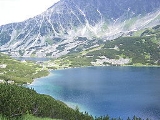
The Carpathian Mountains or Carpathians are a range of mountains forming an arc roughly 1500 km (932 mi) long across
CentralCentral Europe or alternatively Middle Europe is a region of the European continent lying between the variously defined areas of Eastern and Western Europe...
and
Eastern EuropeEastern Europe is the eastern part of Europe. The term has widely disparate geopolitical, geographical, cultural and socioeconomic readings, which makes it highly context-dependent and even volatile, and there are "almost as many definitions of Eastern Europe as there are scholars of the region"...
, making them the second-longest mountain range in
EuropeEurope is, by convention, one of the world's seven continents. Comprising the westernmost peninsula of Eurasia, Europe is generally 'divided' from Asia to its east by the watershed divides of the Ural and Caucasus Mountains, the Ural River, the Caspian and Black Seas, and the waterways connecting...
(after the
Scandinavian MountainsThe Scandinavian Mountains or the Scandes, in Swedish Skanderna, Fjällen or Kölen , in Finnish Köli and in Norwegian Kjølen, with the three latter meaning The Keel, are a mountain range that runs through the Scandinavian Peninsula...
, 1700 km (1,056 mi)). They provide the habitat for the largest European populations of
brown bearThe brown bear is a large bear distributed across much of northern Eurasia and North America. It can weigh from and its largest subspecies, the Kodiak Bear, rivals the polar bear as the largest member of the bear family and as the largest land-based predator.There are several recognized...
s, wolves,
chamoisThe chamois, Rupicapra rupicapra, is a goat-antelope species native to mountains in Europe, including the Carpathian Mountains of Romania, the European Alps, the Tatra Mountains, the Balkans, parts of Turkey, and the Caucasus. The chamois has also been introduced to the South Island of New Zealand...
and
lynxA lynx is any of the four Lynx genus species of medium-sized wildcats. The name "lynx" originated in Middle English via Latin from Greek word "λύγξ", derived from the Indo-European root "*leuk-", meaning "light, brightness", in reference to the luminescence of its reflective eyes...
es, with the highest concentration in
RomaniaRomania is a country located at the crossroads of Central and Southeastern Europe, on the Lower Danube, within and outside the Carpathian arch, bordering on the Black Sea...
, as well as over one third of all European plant species. The Carpathians and their
piedmontFoothills are geographically defined as gradual increases in elevation at the base of a mountain range. They are a transition zone between plains and low relief hills to the adjacent topographically high mountains.-Examples:...
also concentrate many
thermalA hot spring is a spring that is produced by the emergence of geothermally heated groundwater from the Earth's crust. There are geothermal hot springs in many locations all over the crust of the earth.-Definitions:...
and
mineral waterMineral water is water containing minerals or other dissolved substances that alter its taste or give it therapeutic value, generally obtained from a naturally occurring mineral spring or source. Dissolved substances in the water may include various salts and sulfur compounds...
s, with Romania home to over one-third of the European total. Romania is likewise home to the largest surface of
virgin forestVirgin Forest is a self-described B-movie starring Sarsi Emmanuel, who plays a barrio lass of Chinese ancestry; the late Miguel Rodriguez, as a Filipino-Spanish illustrado; and, Abel Jurado, who plays the lover of Sarsi's character.-Synopsis:...
s in Europe (except Russia), totaling 250,000 hectares (65%), most of them in the Carpathians, with the
Southern CarpathiansThe Southern Carpathians or the Transylvanian Alps are a group of mountain ranges which divide central and southern Romania, on one side, and Serbia, on the other side. They cover part of the Carpathian Mountains that is located between the Prahova River in the east and the Timiș and Cerna Rivers...
constituting Europe’s largest unfragmented forested area.
The Carpathians consist of a chain of mountain ranges that stretch in an arc from the
Czech RepublicThe Czech Republic is a landlocked country in Central Europe. The country is bordered by Poland to the northeast, Slovakia to the east, Austria to the south, and Germany to the west and northwest....
(3%) in the northwest through
SlovakiaThe Slovak Republic is a landlocked state in Central Europe. It has a population of over five million and an area of about . Slovakia is bordered by the Czech Republic and Austria to the west, Poland to the north, Ukraine to the east and Hungary to the south...
(17%),
PolandPoland , officially the Republic of Poland , is a country in Central Europe bordered by Germany to the west; the Czech Republic and Slovakia to the south; Ukraine, Belarus and Lithuania to the east; and the Baltic Sea and Kaliningrad Oblast, a Russian exclave, to the north...
(10%),
HungaryHungary , officially the Republic of Hungary , is a landlocked country in Central Europe. It is situated in the Carpathian Basin and is bordered by Slovakia to the north, Ukraine and Romania to the east, Serbia and Croatia to the south, Slovenia to the southwest and Austria to the west. The...
(4%) and
UkraineUkraine is a country in Eastern Europe. It has an area of 603,628 km², making it the second largest contiguous country on the European continent, after Russia...
(11%) to
RomaniaRomania is a country located at the crossroads of Central and Southeastern Europe, on the Lower Danube, within and outside the Carpathian arch, bordering on the Black Sea...
(53%) in the east and on to the
Iron GatesThe Iron Gates The gorge lies between Romania in the north and Serbia in the south. At this point, the river separates the southern Carpathian Mountains from the northwestern foothills of the Balkan Mountains. The Romanian, Hungarian, Slovakian, Turkish, German and Bulgarian names literally mean...
on the River Danube between
RomaniaRomania is a country located at the crossroads of Central and Southeastern Europe, on the Lower Danube, within and outside the Carpathian arch, bordering on the Black Sea...
and
SerbiaSerbia , officially the Republic of Serbia , is a landlocked country located at the crossroads of Central and Southeast Europe, covering the southern part of the Carpathian basin and the central part of the Balkans...
(2%) in the south. The highest range within the Carpathians is the
TatrasThe Tatra Mountains, Tatras or Tatra , are a mountain range which forms a natural border between Slovakia and Poland, and are the highest mountain range in the Carpathian Mountains...
, on the border of
PolandPoland , officially the Republic of Poland , is a country in Central Europe bordered by Germany to the west; the Czech Republic and Slovakia to the south; Ukraine, Belarus and Lithuania to the east; and the Baltic Sea and Kaliningrad Oblast, a Russian exclave, to the north...
and
SlovakiaThe Slovak Republic is a landlocked state in Central Europe. It has a population of over five million and an area of about . Slovakia is bordered by the Czech Republic and Austria to the west, Poland to the north, Ukraine to the east and Hungary to the south...
, where the highest peaks exceed 2600 m (8,530 ft). The second-highest range is the Eastern Carpathians in Romania, where the highest peaks exceed 2500 m (8,202 ft).
The Carpathians are usually
divided into three major partsDivisions of the Carpathians is categorization of the Carpathian mountains system.Below is a detailed overview of the major subdivisions and ranges of the Carpathian Mountains. The Carpathians are a "subsystem" of a bigger Alps-Himalaya System that stretches from the western Europe all the way to...
: the
Western CarpathiansThe Western Carpathians are a mountain range and geomorphological province that forms the western part of the Carpathian Mountains.The mountain belt stretches from the Low Beskids range of the Eastern Carpathians along the border of Poland with Slovakia toward the Moravian region of the Czech...
(Czech Republic, Poland, Slovakia), the Central Carpathians (southeastern Poland, eastern Slovakia, Ukraine, Romania), and the Eastern Carpathians (Romania, Serbia).
The most important cities in or near the Carpathians are:
BratislavaBratislava is the capital of Slovakia and, with a population of about 431,000, also the country's largest city. Bratislava is in southwestern Slovakia on both banks of the Danube River. Bordering Austria and Hungary, it is the only national capital that borders two independent countries.Bratislava...
and
KošiceKošice is a city in eastern Slovakia. It is situated on the river Hornád at the eastern reaches of the Slovak Ore Mountains, near the border with Hungary...
in Slovakia;
KrakówKraków also Krakow, or Cracow , is the second largest and one of the oldest cities in Poland. Situated on the Vistula River in the Lesser Poland region, the city dates back to the 7th century. Kraków has traditionally been one of the leading centres of Polish academic, cultural, and artistic life...
in Poland;
Cluj-NapocaCluj-Napoca , commonly known as Cluj, is the fourth most populous city in Romania and the seat of Cluj County in the northwestern part of the country. Geographically, it is roughly equidistant from Bucharest , Budapest and Belgrade...
,
SibiuSibiu is a city in Transylvania, Romania with a population of 154,548. Located some 282 km north-west of Bucharest, the city straddles the Cibin River, a tributary of the river Olt...
and
BraşovBrașov is a city in Romania and the capital of Brașov County.According to the last Romanian census, from 2002, there were 284,596 people living within the city of Brașov, making it the 8th most populated city in Romania....
in Romania; and
MiskolcMiskolc is a city in northeastern Hungary, mainly with heavy industrial background. With a population close to 170,000 Miskolc is the fourth largest city of Hungary It is also the county capital of Borsod-Abaúj-Zemplén and the regional centre of Northern Hungary.- Geography :Miskolc is located...
in Hungary.
Name
The word "Carpathian" is derived from Thracian Greek Καρπάτῆς όρος (Karpates oros), meaning "rocky mountain", probably via
GermanGerman is a West Germanic language, related to and classified alongside English and Dutch. With an estimated 90 – 98 million native speakers, German is one of the world's major languages and is the most widely-spoken first language in the European Union....
Karpathen and
LatinLatin is an Italic language originally spoken in Latium and Ancient Rome. It, along with most European languages, is a descendant of the ancient Proto-Indo-European language. Although it is considered a dead language, a number of scholars and members of the Christian clergy speak it fluently, and...
Carpatus. Its earlier origins are unclear.
The range is called Karpaty in
CzechCzech is a West Slavic language with about 12 million native speakers; it is the majority language in the Czech Republic and spoken by Czechs worldwide. The language was known as Bohemian in English until the late 19th century...
,
PolishPolish is a language of the Lechitic subgroup of West Slavic languages, used throughout Poland and by Polish minorities in other countries...
,
RussianRussian is a Slavic language used primarily in Russia, Belarus, Uzbekistan, Kazakhstan, Tajikistan and Kyrgyzstan. It is an unofficial but widely spoken language in Ukraine, Moldova, Latvia, Turkmenistan and Estonia and, to a lesser extent, the other countries that were once constituent republics...
,
SlovakSlovak , is an Indo-European language that belongs to the West Slavic languages .Slovak is the official language of Slovakia, where it is spoken by 5 million people...
and
UkrainianUkrainian is a language of the East Slavic subgroup of the Slavic languages. It is the official state language of Ukraine. Written Ukrainian uses a variant of the Cyrillic alphabet....
, Karpaten in German and
DutchDutch is a West Germanic language and the native language of the majority of the population of the Netherlands, Belgium, and Suriname, the three member states of the Dutch Language Union. Most speakers live in the European Union, where it is a first language for about 23 million and a second...
, Kárpátok in
HungarianHungarian is a Uralic language, part of the Ugric group. With some 14 million speakers, it is one of the most widely spoken non-Indo-European languages in Europe....
, Carpați karˈpat͡sʲ in
RomanianRomanian Romanian Romanian (or Daco-Romanian; obsolete spellings Rumanian, Roumanian; self-designation: română, limba română ("the Romanian language") or românește (lit. "in Romanian") is a Romance language spoken by around 24 to 28 million people, primarily in Romania and Moldova...
, and Karpati (Карпати) in
SerbianSerbian is a form of Serbo-Croatian, a South Slavic language, spoken by Serbs in Serbia, Bosnia and Herzegovina, Montenegro, Croatia and neighbouring countries....
.
The name Karpates may ultimately be from the
Proto Indo-EuropeanThe Proto-Indo-European language is the reconstructed common ancestor of the Indo-European languages, spoken by the Proto-Indo-Europeans...
root *sker-/*ker-, from which comes the
AlbanianAlbanian is an Indo-European language spoken by approximately 7.6 million people, primarily in Albania and Kosovo but also in other areas of the Balkans in which there is an Albanian population, including western Macedonia, southern Montenegro, southern Serbia and northwestern Greece...
word karpë (rock), and the
SlavicThe Slavic languages , a group of closely related languages of the Slavic peoples and a subgroup of Indo-European languages, have speakers in most of Eastern Europe, in much of the Balkans, in parts of Central Europe, and in the northern part of Asia.-Branches:Scholars traditionally divide Slavic...
word skála (rock, cliff), perhaps via a
DacianThe extinct Dacian language may have developed from proto-Indo-European in the Carpathian region around 2,500 BC and probably died out by AD 600. In the 1st century AD, it was the predominant language of the ancient regions of Dacia and Moesia and, possibly, of some surrounding regions.It belonged...
cognate which meant mountain, rock, or rugged (cf. Germanic root *skerp-, Old Norse harfr "harrow", Middle Low German scharf "potsherd" and Modern High German Scherbe "shard", Old English scearp and English sharp, Lithuanian kar~pas "cut, hack, notch", Latvian cìrpt "to shear, clip"). The archaic Polish word karpa meant "rugged irregularities, underwater obstacles/rocks, rugged roots or trunks". The more common word skarpa means a sharp cliff or other vertical terrain. Otherwise, the name may instead come from Indo-European *kwerp "to turn", akin to Old English hweorfan "to turn, change" (English warp) and Greek καρπός karpós "wrist", perhaps referring to the way the mountain range bends or veers in an L-shape. Also car means "king" and pati "road" so carpati is possibly the king's way.
In late
RomanThe Roman Empire was the post-Republican period of the ancient Roman civilization, characterised by an autocratic form of government and large territorial holdings in Europe and around the Mediterranean....
documents, the Eastern Carpathian Mountains were referred to as Montes Sarmatici. The Western Carpathians were called Carpates, a name that is first recorded in
PtolemyClaudius Ptolemy , was a Roman citizen of Egypt who wrote in Greek. He was a mathematician, astronomer, geographer, astrologer, and poet of a single epigram in the Greek Anthology. He lived in Egypt under Roman rule, and is believed to have been born in the town of Ptolemais Hermiou in the...
's 2nd century book Geographia.
The name of the
CarpiThe Carpi or Carpiani were an ancient people that resided, between not later than ca. AD 140 and until at least AD 318, in the former Principality of Moldavia ....
, a
DaciaIn ancient geography, especially in Roman sources, Dacia was the land inhabited by the Dacians or Getae as they were known by the Greeks—the branch of the Thracians north of the Haemus range...
n tribe, may have been derived from the name of the Carpathian Mountains. According to
ZosimusZosimus was a Byzantine historian, who lived in Constantinople during the reign of the Byzantine Emperor Anastasius I . According to Photius, he was a comes, and held the office of "advocate" of the imperial treasury.- Historia Nova :...
, this tribe lived until 381 on the eastern Carpathian slopes. Alternatively the mountain range's name may be derived from the Dacian tribe.
13th-15th century Hungarian documents named the mountains Thorchal, Tarczal or less frequently Montes Nivium.
In the Scandinavian
Hervarar sagaHervarar saga ok Heiðreks is a legendary saga from the 13th century combining matter from several older sagas. It is a valuable saga for several different reasons beside its literary qualities. It contains traditions of wars between Goths and Huns, from the 4th century, and the last part is used as...
, which describes ancient Germanic legends about battles between
GothsThe Goths were an East Germanic tribe of Scandinavian origin whose two branches, the Visigoths and the Ostrogoths, played an important role in the fall of the Roman Empire and the emergence of Medieval Europe....
and
HunsThe Huns were a group of nomadic people who, appearing from east of the Volga River, migrated into Europe c. AD 370 and established the vast Hunnic Empire there. Since de Guignes linked them with the Xiongnu, who had been northern neighbours of China 300 years prior to the emergence of the Huns,...
, the name Karpates appears in the predictable Germanic form as Harvaða fjöllum (see
Grimm's lawGrimm's law , named for Jacob Grimm, is a set of statements describing the inherited Proto-Indo-European stops as they developed in Proto-Germanic in the 1st millennium BC...
).
Geography
The Carpathians begin on the
DanubeThe Danube is a river in the Central Europe and the Europe's second longest river after the Volga. It is classified as an international waterway....
near
BratislavaBratislava is the capital of Slovakia and, with a population of about 431,000, also the country's largest city. Bratislava is in southwestern Slovakia on both banks of the Danube River. Bordering Austria and Hungary, it is the only national capital that borders two independent countries.Bratislava...
. They surround
TranscarpathiaCarpathian Ruthenia is a region in Eastern Europe, mostly located in western Ukraine's Zakarpattia Oblast , with smaller parts in easternmost Slovakia , Poland's Lemkovyna and Romanian Maramureş.It is...
and
TransylvaniaTransylvania is a historical region in the central part of Romania. Bounded on the east and south by the Carpathian mountain range, historical Transylvania extended in the west to the Apuseni Mountains; however, the term sometimes encompasses not only Transylvania proper, but also the historical...
in a large semicircle, sweeping towards the southeast, and end on the Danube near
OrşovaOrșova is a port city on the Danube river in southwestern Romania's Mehedinți County. It is one of four localities in the county located in the Banat historical region. It is situated just above the Iron Gates, on the spot where the Cerna River meets the Danube.- History :The first documented...
in Romania. The total length of the Carpathians is over 1500 km (932 mi) and the mountain chain's width varies between 12 and 500 km (7.5 and 310.7 mi). The highest altitudes of the Carpathians occur where they are widest. The system attains its greatest breadth in the Transylvanian plateau and in the meridian of the
TatraThe Tatra Mountains, Tatras or Tatra , are a mountain range which forms a natural border between Slovakia and Poland, and are the highest mountain range in the Carpathian Mountains...
group – the highest range, in which Gerlachovský štít in Slovakia is the highest peak at 2655 m (8,711 ft) above sea level. The Carpathians cover an area of 190000 km² (73,359 sq mi) and, after the
AlpsThe Alps is one of the great mountain range systems of Europe, stretching from Austria and Slovenia in the east through Italy, Switzerland, Liechtenstein and Germany to France in the west....
, form the next most extensive mountain system in Europe.
Although commonly referred to as a mountain chain, the Carpathians do not actually form an uninterrupted chain of mountains. Rather, they consist of several
orographicallyOrography is the study of the formation and relief of mountains, and can more broadly include hills, and any part of a region's elevated terrain...
and geologically distinctive groups, presenting as great a structural variety as the Alps. The Carpathians, which attain an altitude of over 2500 m (8,202 ft) in only a few places, lack the bold peaks, extensive snowfields, large glaciers, high waterfalls, and numerous large lakes that are common in the Alps. No area of the Carpathian range is covered in snow all year round and there are no glaciers. The Carpathians at their highest altitude are only as high as the middle region of the Alps, with which they share a common appearance, climate, and flora.
The Carpathians are separated from the Alps by the Danube. The two ranges meet at only one point: the
Leitha MountainsThe Leitha Mountains are a range of low mountains in Austria lying on the boundary between Lower Austria and Burgenland.The range is an offshoot of the Alps and forms a connection to the Carpathians to the north...
at Bratislava. The river also separates them from the
Balkan MountainsThe Balkan mountain range is a mountain range in the eastern part of the Balkan Peninsula. The Balkan range runs 560 km from the Vrashka Chuka Peak on the border between Bulgaria and eastern Serbia eastward through central Bulgaria to Cape Emine on the Black Sea...
at Orşova in Romania. The valley of the March and
OderThe Oder is a river in Central Europe. It rises in the Czech Republic and flows through western Poland, later forming of the border between Poland and Germany, part of the Oder-Neisse line...
separates the Carpathians from the
SilesiaSilesia is a historical region of Central Europe located mostly in Poland, with smaller parts also in the Czech Republic, and Germany.Silesia is rich in mineral and natural resources, and includes several important industrial areas. Silesia's largest city and historical capital is Wrocław...
n and
MoraviaMoravia is a historical region in Central Europe in the east of the Czech Republic, and one of the former Czech lands, together with Bohemia and Silesia. It takes its name from the Morava River which rises in the northwest of the region...
n chains, which belong to the middle wing of the great Central Mountain System of Europe. Unlike the other wings of the system, the Carpathians, which form the watershed between the northern seas and the
Black SeaThe Black Sea is bounded by Europe, Anatolia and the Caucasus and is ultimately connected to the Atlantic Ocean via the Mediterranean and the Aegean seas and various straits. The Bosphorus strait connects it to the Sea of Marmara, and the strait of the Dardanelles connects that sea to the Aegean...
, are surrounded on all sides by plains, namely the Pannonian plain to the southwest, the plain of the Lower Danube (Romania) to the south, and the
Galician plain to the northeast.
Cities and towns
Important cities and towns in or near the Carpathians are, in approximate descending order of population:
BratislavaBratislava is the capital of Slovakia and, with a population of about 431,000, also the country's largest city. Bratislava is in southwestern Slovakia on both banks of the Danube River. Bordering Austria and Hungary, it is the only national capital that borders two independent countries.Bratislava...
(Slovakia),
Cluj-NapocaCluj-Napoca , commonly known as Cluj, is the fourth most populous city in Romania and the seat of Cluj County in the northwestern part of the country. Geographically, it is roughly equidistant from Bucharest , Budapest and Belgrade...
(Romania),
BraşovBrașov is a city in Romania and the capital of Brașov County.According to the last Romanian census, from 2002, there were 284,596 people living within the city of Brașov, making it the 8th most populated city in Romania....
(Romania),
KošiceKošice is a city in eastern Slovakia. It is situated on the river Hornád at the eastern reaches of the Slovak Ore Mountains, near the border with Hungary...
(Slovakia),
OradeaOradea is the capital city of Bihor County, in the Crișana region of north-western Romania. The city has a population of 204,477, according to the 2009 estimates. The wider Oradea metropolitan area has a total population of 245,832.-Geography:...
(Romania),
MiskolcMiskolc is a city in northeastern Hungary, mainly with heavy industrial background. With a population close to 170,000 Miskolc is the fourth largest city of Hungary It is also the county capital of Borsod-Abaúj-Zemplén and the regional centre of Northern Hungary.- Geography :Miskolc is located...
(Hungary),
SibiuSibiu is a city in Transylvania, Romania with a population of 154,548. Located some 282 km north-west of Bucharest, the city straddles the Cibin River, a tributary of the river Olt...
(Romania),
Târgu Mureş (Romania),
Baia MareBaia Mare is a municipality in northwestern Romania and the capital of Maramureş County. The city is situated about 600 kilometres from Bucharest, the capital of Romania, 70 kilometres from the border with Hungary and 50 kilometres from the border with Ukraine...
(Romania),
TarnówTarnów is a city in southeastern Poland with 115,341 inhabitants as of June 2009. The city has been situated in the Lesser Poland Voivodeship since 1999, but from 1975 to 1998 it was the capital of the Tarnów Voivodeship. It is a major rail junction, located on the strategic east-west connection...
(Poland),
Râmnicu VâlceaRâmnicu Vâlcea is the capital city of Vâlcea County, Romania .-Geography and climate:Râmnicu Vâlcea is situated in the central-south area of Romania...
(Romania),
UzhhorodUzhhorod or Uzhgorod is a city located in western Ukraine, at the border with Slovakia and near the border with Hungary. It is the administrative center of the Zakarpattia Oblast , as well as the administrative center of the surrounding Uzhhorodskyi Raion within the oblast...
(Ukraine),
Ivano-FrankivskIvano-Frankivsk is a historic city located in the western Ukraine. It is the administrative centre of the Ivano-Frankivsk Oblast , and is designated as its own separate raion within the oblast, municipality....
(Ukraine),
Piatra NeamţPiatra Neamț , , ; is the capital city of Neamţ County, in the historical region of Moldavia, eastern Romania. Because of its privileged location in the Eastern Carpathian mountains, it is considered one of the most picturesque cities in Romania...
(Romania),
SuceavaSuceava is the Suceava County seat in Bukovina, Moldavia region, in north-eastern Romania. The city was the capital of the Principality of Moldavia from 1388 to 1565.-History:...
(Romania),
Drobeta-Turnu SeverinDrobeta-Turnu Severin is a city in Mehedinţi County, Oltenia, Romania, on the left bank of the Danube, below the Iron Gates.The city administers three villages: Dudaşu Schelei, Gura Văii, and Schela Cladovei...
(Romania),
Reşiţa' is a city in western Romania and the capital of Caraş-Severin County, in the Banat region. Its 2004 population was 83,985.- Etymology :The name of Reşiţa, might comes from the Latin recitia, meaning "cold spring", as the great historian Nicolae Iorga once suggested, presuming that the Romans...
(Romania),
ŽilinaŽilina is a city in north-western Slovakia, around from the capital Bratislava, close to both the Czech and Polish borders. It is the fourth largest city of Slovakia with a population of approximately 85,000, an important industrial center, the largest city on the Váh river, and the seat of a...
(Slovakia),
BistriţaBistrița is the capital city of Bistriţa-Năsăud County, Transylvania, Romania. It is situated on the Bistriţa River. The city has a population of approximately 80,000 inhabitants, and it administers six villages: Ghinda, Sărata, Sigmir, Slătiniţa, Unirea and Viişoara.-History:The earliest sign of...
(Romania),
Banská BystricaBanská Bystrica is a key city in central Slovakia located on the Hron River in a long and wide valley encircled by the mountain chains of the Low Tatras, the Veľká Fatra, and the Kremnica Mountains. With 81,281 inhabitants, Banská Bystrica is the sixth most populous municipality in Slovakia...
(Slovakia),
DevaDeva is a city in Romania, in the historical region of Transylvania, on the left bank of the Mureș River. It is the capital of Hunedoara County.-Name:...
(Romania),
ZlínZlín , from 1949 to 1989 Gottwaldov , is a city in the Zlín Region, southeastern Moravia, Czech Republic, on the Dřevnice River. The development of the modern city is closely connected to the Bata Shoes company...
(Czech Republic),
HunedoaraHunedoara is a city in Hunedoara County, Transylvania, Romania. It is located in southeastern Transylvania near the Poiana Ruscă Mountains, and administers five villages: Boş, Groş, Hăşdat, Peştişu Mare and Răcăştia....
(Romania),
ZalăuZalău is the seat of Sălaj County, Transylvania, Romania. In 2004, its estimated population was 62,900.- Ancient times :Zalău is situated in the area inhabited by "Free Dacians", 8 kilometers away from the historical landmark of Porolissum, a well-preserved Roman Castrum with an imposing fortress,...
(Romania),
PrzemyślPrzemyśl is a city in south-eastern Poland with 66,756 inhabitants, as of June 2009. In 1999, it became part of the Podkarpackie Voivodeship; it was previously the capital of Przemyśl Voivodeship....
(Poland),
Alba IuliaAlba Iulia is a city in Alba County, Transylvania, Romania with a population of 66,747, located on the Mureş River. Since the High Middle Ages, the city has been the seat of Transylvania's Roman Catholic diocese. Between 1541 and 1690 it was the capital of the Principality of Transylvania...
(Romania),
ZaječarZaječar is a city and municipality in the eastern part of Serbia. According to the 2011 census the town has a population of 36,830, and its coordinates are 43.91° North, 22.30° East...
(Serbia),
Sfântu GheorgheSfântu Gheorghe is the capital city of Covasna County, Romania. Located in the central part of the country and in the historical region of Transylvania, it lies on the Olt River in a valley between the Baraolt Mountains and Bodoc Mountains...
(Romania),
TurdaTurda is a city and Municipality in Cluj County, Romania, situated on the Arieş River.- Ancient times :The city was founded by Dacians under the name Patavissa or Potaissa...
(Romania),
BorBor is a town and municipality located in eastern Serbia, with one of the largest copper mines in Europe and it has been a mining centre since 1904, when a French company began operations there. It is the administrative center of the Bor District of Serbia...
(Serbia),
MediaşMediaș is the second largest city in Sibiu County, Transylvania, Romania.-Geographic location:Mediaș is located in the middle basin of Târnava Mare River, at 39 km from Sighișoara and 41 km from Blaj. The health resort Bazna, officially recognized for the first time in 1302, is...
(Romania),
PopradPoprad is a city in northern Slovakia at the foot of the High Tatra Mountains famous for its picturesque historic centre and as a holiday resort. It is the biggest town of the Spiš region and the tenth largest city in Slovakia with a population of approximately 55,000.The Poprad-Tatry Airport is...
(Slovakia),
PetroşaniPetroşani is a city in Hunedoara County, Romania, with a population of 45,447 .-History:The city of Petroşani was founded in the 17th century...
(Romania),
NegotinNegotin is a town and municipality in the Bor District of north-eastern Central Serbia. It is situated near the borders between Serbia, Romania and Bulgaria. It is the judicial center of the Bor District. The population of the town is 16,716 while municipality has 36,879.-Name:The etymology of the...
(Serbia), Miercurea Ciuc (Romania),
FăgăraşFăgăraș is a city in central Romania, located in Braşov County . Another source of the name is alleged to derive from the Hungarian language word for "partridge" . A more plausible explanation is that the name is given by Fogaras river coming from the Pecheneg "Fagar šu", which means ash water...
(Romania),
Odorheiu SecuiescOdorheiu Secuiesc is the second-largest city in Harghita County, Transylvania, Romania. In its short form, it is also known as Odorhei in Romanian and Udvarhely in Hungarian...
(Romania),
PetrilaPetrila is a town in the Jiu Valley, Hunedoara County, Romania. It is located near the junction of the East Jiu with Taia and Jieţ Creeks.The town administers four villages: Cimpa, Jieţ, Răscoala and Tirici.-History:...
(Romania),
SighişoaraSighişoara is a city and municipality on the Târnava Mare River in Mureş County, Romania. Located in the historic region Transylvania, Sighişoara has a population of 27,706 ....
(Romania),
ZakopaneZakopane , is a town in southern Poland. It lies in the southern part of the Podhale region at the foot of the Tatra Mountains. From 1975 to 1998 it was in of Nowy Sącz Province, but since 1999 it has been in Lesser Poland Province. It had a population of about 28,000 as of 2004. Zakopane is a...
(Poland),
Câmpulung MoldovenescCâmpulung Moldovenesc is a city located in Suceava County, which is in the historical Bukovina region of Moldavia in North Eastern Romania...
(Romania),
GheorgheniGheorgheni is a city in Harghita County, Romania.It lies in the Székely Land, an ethno-cultural region in eastern Transylvania. The city administers four villages:*Covacipeter / Kovácspéter*Lacu Roşu / Gyilkostó*Vargatac / Vargatag*Visafolio / Visszafolyó...
(Romania),
Vatra DorneiVatra Dornei is a city and a spa and ski resort in the north of Romania, in Suceava County. The city administers three villages: Argestru, Roşu and Todireni.Until the 1950s it had a mixed population of Romanians, Ukrainians, Jews and Germans...
(Romania) and
RakhivRakhiv is a city located in the Zakarpattia Oblast in western Ukraine. It is the administrative center of the Rakhiv Raion .- Demographics :As of 2001, the city population was 15,241 inhabitants which included: * 83.8% Ukrainians...
(Ukraine).
Highest peaks
This is an (incomplete) list of the highest peaks of the Carpathians (limited to summits over 2,500 m), their heights, geologic divisions, and locations.
| Peak |
Geologic divisions |
Nation (Nations) |
County (Counties) |
Height (m) |
| Gerlachovský štít |
Fatra-Tatra AreaThe Fatra-Tatra Area or the Tatra-Fatra Belt of core mountains is a part of the Inner Western Carpathians, a subprovince of the Western Carpathians. Most of the area lies in Slovakia with small parts reaching into Austria and Poland...
|
SlovakiaThe Slovak Republic is a landlocked state in Central Europe. It has a population of over five million and an area of about . Slovakia is bordered by the Czech Republic and Austria to the west, Poland to the north, Ukraine to the east and Hungary to the south...
|
Prešov Region The Prešov Region is one of the eight Slovak administrative regions. It consists of 13 districts.-Geography:It is located in north-eastern Slovakia and has an area of 8,975 km². The region has diverse types of landscapes occurring in Slovakia, but mostly highlands and hilly lands dominate the...
|
2,655 |
| Gerlachovská veža |
Fatra-Tatra AreaThe Fatra-Tatra Area or the Tatra-Fatra Belt of core mountains is a part of the Inner Western Carpathians, a subprovince of the Western Carpathians. Most of the area lies in Slovakia with small parts reaching into Austria and Poland...
|
SlovakiaThe Slovak Republic is a landlocked state in Central Europe. It has a population of over five million and an area of about . Slovakia is bordered by the Czech Republic and Austria to the west, Poland to the north, Ukraine to the east and Hungary to the south...
|
Prešov Region The Prešov Region is one of the eight Slovak administrative regions. It consists of 13 districts.-Geography:It is located in north-eastern Slovakia and has an area of 8,975 km². The region has diverse types of landscapes occurring in Slovakia, but mostly highlands and hilly lands dominate the...
|
2,642 |
Lomnický štítLomnický štít is one of the highest and most visited mountain peaks in the High Tatras mountains of Slovakia. Connected by cable car to Tatranská Lomnica, its summit is 2634 metres above sea level, making it the second highest peak in the High Tatras after Gerlachovský štít.The first ascent was...
|
Fatra-Tatra AreaThe Fatra-Tatra Area or the Tatra-Fatra Belt of core mountains is a part of the Inner Western Carpathians, a subprovince of the Western Carpathians. Most of the area lies in Slovakia with small parts reaching into Austria and Poland...
|
SlovakiaThe Slovak Republic is a landlocked state in Central Europe. It has a population of over five million and an area of about . Slovakia is bordered by the Czech Republic and Austria to the west, Poland to the north, Ukraine to the east and Hungary to the south...
|
Prešov Region The Prešov Region is one of the eight Slovak administrative regions. It consists of 13 districts.-Geography:It is located in north-eastern Slovakia and has an area of 8,975 km². The region has diverse types of landscapes occurring in Slovakia, but mostly highlands and hilly lands dominate the...
|
2,633 |
| Ľadový štít |
Fatra-Tatra AreaThe Fatra-Tatra Area or the Tatra-Fatra Belt of core mountains is a part of the Inner Western Carpathians, a subprovince of the Western Carpathians. Most of the area lies in Slovakia with small parts reaching into Austria and Poland...
|
SlovakiaThe Slovak Republic is a landlocked state in Central Europe. It has a population of over five million and an area of about . Slovakia is bordered by the Czech Republic and Austria to the west, Poland to the north, Ukraine to the east and Hungary to the south...
|
Prešov Region The Prešov Region is one of the eight Slovak administrative regions. It consists of 13 districts.-Geography:It is located in north-eastern Slovakia and has an area of 8,975 km². The region has diverse types of landscapes occurring in Slovakia, but mostly highlands and hilly lands dominate the...
|
2,627 |
| Pyšný štít |
Fatra-Tatra AreaThe Fatra-Tatra Area or the Tatra-Fatra Belt of core mountains is a part of the Inner Western Carpathians, a subprovince of the Western Carpathians. Most of the area lies in Slovakia with small parts reaching into Austria and Poland...
|
SlovakiaThe Slovak Republic is a landlocked state in Central Europe. It has a population of over five million and an area of about . Slovakia is bordered by the Czech Republic and Austria to the west, Poland to the north, Ukraine to the east and Hungary to the south...
|
Prešov Region The Prešov Region is one of the eight Slovak administrative regions. It consists of 13 districts.-Geography:It is located in north-eastern Slovakia and has an area of 8,975 km². The region has diverse types of landscapes occurring in Slovakia, but mostly highlands and hilly lands dominate the...
|
2,623 |
| Zadný Gerlach |
Fatra-Tatra AreaThe Fatra-Tatra Area or the Tatra-Fatra Belt of core mountains is a part of the Inner Western Carpathians, a subprovince of the Western Carpathians. Most of the area lies in Slovakia with small parts reaching into Austria and Poland...
|
SlovakiaThe Slovak Republic is a landlocked state in Central Europe. It has a population of over five million and an area of about . Slovakia is bordered by the Czech Republic and Austria to the west, Poland to the north, Ukraine to the east and Hungary to the south...
|
Prešov Region The Prešov Region is one of the eight Slovak administrative regions. It consists of 13 districts.-Geography:It is located in north-eastern Slovakia and has an area of 8,975 km². The region has diverse types of landscapes occurring in Slovakia, but mostly highlands and hilly lands dominate the...
|
2,616 |
| Lavínový štít |
Fatra-Tatra AreaThe Fatra-Tatra Area or the Tatra-Fatra Belt of core mountains is a part of the Inner Western Carpathians, a subprovince of the Western Carpathians. Most of the area lies in Slovakia with small parts reaching into Austria and Poland...
|
SlovakiaThe Slovak Republic is a landlocked state in Central Europe. It has a population of over five million and an area of about . Slovakia is bordered by the Czech Republic and Austria to the west, Poland to the north, Ukraine to the east and Hungary to the south...
|
Prešov Region The Prešov Region is one of the eight Slovak administrative regions. It consists of 13 districts.-Geography:It is located in north-eastern Slovakia and has an area of 8,975 km². The region has diverse types of landscapes occurring in Slovakia, but mostly highlands and hilly lands dominate the...
|
2,606 |
| Malý Ľadový štít |
Fatra-Tatra AreaThe Fatra-Tatra Area or the Tatra-Fatra Belt of core mountains is a part of the Inner Western Carpathians, a subprovince of the Western Carpathians. Most of the area lies in Slovakia with small parts reaching into Austria and Poland...
|
SlovakiaThe Slovak Republic is a landlocked state in Central Europe. It has a population of over five million and an area of about . Slovakia is bordered by the Czech Republic and Austria to the west, Poland to the north, Ukraine to the east and Hungary to the south...
|
Prešov Region The Prešov Region is one of the eight Slovak administrative regions. It consists of 13 districts.-Geography:It is located in north-eastern Slovakia and has an area of 8,975 km². The region has diverse types of landscapes occurring in Slovakia, but mostly highlands and hilly lands dominate the...
|
2,602 |
| Kotlový štít |
Fatra-Tatra AreaThe Fatra-Tatra Area or the Tatra-Fatra Belt of core mountains is a part of the Inner Western Carpathians, a subprovince of the Western Carpathians. Most of the area lies in Slovakia with small parts reaching into Austria and Poland...
|
SlovakiaThe Slovak Republic is a landlocked state in Central Europe. It has a population of over five million and an area of about . Slovakia is bordered by the Czech Republic and Austria to the west, Poland to the north, Ukraine to the east and Hungary to the south...
|
Prešov Region The Prešov Region is one of the eight Slovak administrative regions. It consists of 13 districts.-Geography:It is located in north-eastern Slovakia and has an area of 8,975 km². The region has diverse types of landscapes occurring in Slovakia, but mostly highlands and hilly lands dominate the...
|
2,601 |
| Lavínová veža |
Fatra-Tatra AreaThe Fatra-Tatra Area or the Tatra-Fatra Belt of core mountains is a part of the Inner Western Carpathians, a subprovince of the Western Carpathians. Most of the area lies in Slovakia with small parts reaching into Austria and Poland...
|
SlovakiaThe Slovak Republic is a landlocked state in Central Europe. It has a population of over five million and an area of about . Slovakia is bordered by the Czech Republic and Austria to the west, Poland to the north, Ukraine to the east and Hungary to the south...
|
Prešov Region The Prešov Region is one of the eight Slovak administrative regions. It consists of 13 districts.-Geography:It is located in north-eastern Slovakia and has an area of 8,975 km². The region has diverse types of landscapes occurring in Slovakia, but mostly highlands and hilly lands dominate the...
|
2,600 |
| Malý Pyšný štít |
Fatra-Tatra AreaThe Fatra-Tatra Area or the Tatra-Fatra Belt of core mountains is a part of the Inner Western Carpathians, a subprovince of the Western Carpathians. Most of the area lies in Slovakia with small parts reaching into Austria and Poland...
|
SlovakiaThe Slovak Republic is a landlocked state in Central Europe. It has a population of over five million and an area of about . Slovakia is bordered by the Czech Republic and Austria to the west, Poland to the north, Ukraine to the east and Hungary to the south...
|
Prešov Region The Prešov Region is one of the eight Slovak administrative regions. It consists of 13 districts.-Geography:It is located in north-eastern Slovakia and has an area of 8,975 km². The region has diverse types of landscapes occurring in Slovakia, but mostly highlands and hilly lands dominate the...
|
2,591 |
| Veľká Litvorová veža |
Fatra-Tatra AreaThe Fatra-Tatra Area or the Tatra-Fatra Belt of core mountains is a part of the Inner Western Carpathians, a subprovince of the Western Carpathians. Most of the area lies in Slovakia with small parts reaching into Austria and Poland...
|
SlovakiaThe Slovak Republic is a landlocked state in Central Europe. It has a population of over five million and an area of about . Slovakia is bordered by the Czech Republic and Austria to the west, Poland to the north, Ukraine to the east and Hungary to the south...
|
Prešov Region The Prešov Region is one of the eight Slovak administrative regions. It consists of 13 districts.-Geography:It is located in north-eastern Slovakia and has an area of 8,975 km². The region has diverse types of landscapes occurring in Slovakia, but mostly highlands and hilly lands dominate the...
|
2,581 |
| Strapatá veža |
Fatra-Tatra AreaThe Fatra-Tatra Area or the Tatra-Fatra Belt of core mountains is a part of the Inner Western Carpathians, a subprovince of the Western Carpathians. Most of the area lies in Slovakia with small parts reaching into Austria and Poland...
|
SlovakiaThe Slovak Republic is a landlocked state in Central Europe. It has a population of over five million and an area of about . Slovakia is bordered by the Czech Republic and Austria to the west, Poland to the north, Ukraine to the east and Hungary to the south...
|
Prešov Region The Prešov Region is one of the eight Slovak administrative regions. It consists of 13 districts.-Geography:It is located in north-eastern Slovakia and has an area of 8,975 km². The region has diverse types of landscapes occurring in Slovakia, but mostly highlands and hilly lands dominate the...
|
2,565 |
| Kežmarský štít |
Fatra-Tatra AreaThe Fatra-Tatra Area or the Tatra-Fatra Belt of core mountains is a part of the Inner Western Carpathians, a subprovince of the Western Carpathians. Most of the area lies in Slovakia with small parts reaching into Austria and Poland...
|
SlovakiaThe Slovak Republic is a landlocked state in Central Europe. It has a population of over five million and an area of about . Slovakia is bordered by the Czech Republic and Austria to the west, Poland to the north, Ukraine to the east and Hungary to the south...
|
Prešov Region The Prešov Region is one of the eight Slovak administrative regions. It consists of 13 districts.-Geography:It is located in north-eastern Slovakia and has an area of 8,975 km². The region has diverse types of landscapes occurring in Slovakia, but mostly highlands and hilly lands dominate the...
|
2,556 |
| Vysoká |
Fatra-Tatra AreaThe Fatra-Tatra Area or the Tatra-Fatra Belt of core mountains is a part of the Inner Western Carpathians, a subprovince of the Western Carpathians. Most of the area lies in Slovakia with small parts reaching into Austria and Poland...
|
SlovakiaThe Slovak Republic is a landlocked state in Central Europe. It has a population of over five million and an area of about . Slovakia is bordered by the Czech Republic and Austria to the west, Poland to the north, Ukraine to the east and Hungary to the south...
|
Prešov Region The Prešov Region is one of the eight Slovak administrative regions. It consists of 13 districts.-Geography:It is located in north-eastern Slovakia and has an area of 8,975 km². The region has diverse types of landscapes occurring in Slovakia, but mostly highlands and hilly lands dominate the...
|
2,547 |
| Moldoveanu |
Făgăraş MountainsFăgăraș Mountains , are the highest mountains of the Southern Carpathians, in Romania. The highest peaks are Moldoveanu , Negoiu , Viștea Mare , Lespezi , Vânătoarea lui Buteanu , and Dara .They are bordered in the north by the Făgăraș Depression, through which the Olt river flows, and in the west...
|
RomaniaRomania is a country located at the crossroads of Central and Southeastern Europe, on the Lower Danube, within and outside the Carpathian arch, bordering on the Black Sea...
|
ArgeşSibiu is a county of Romania, in the historical region Transylvania, with the capital city Sibiu.-Demographics:In 2002, it had a population of 421,724 and the population density was 78/km²....
|
2,544 |
| Negoiu Negoiu Peak is a mountain peak in the Făgăraş Mountains of the Southern Carpathians, being located in Argeş County, Romania, with an altitude of . It is the second highest peak in Romania after Moldoveanu Peak .-External links:*...
|
Făgăraş MountainsFăgăraș Mountains , are the highest mountains of the Southern Carpathians, in Romania. The highest peaks are Moldoveanu , Negoiu , Viștea Mare , Lespezi , Vânătoarea lui Buteanu , and Dara .They are bordered in the north by the Făgăraș Depression, through which the Olt river flows, and in the west...
|
RomaniaRomania is a country located at the crossroads of Central and Southeastern Europe, on the Lower Danube, within and outside the Carpathian arch, bordering on the Black Sea...
|
SibiuSibiu is a county of Romania, in the historical region Transylvania, with the capital city Sibiu.-Demographics:In 2002, it had a population of 421,724 and the population density was 78/km²....
|
2,535 |
| Viştea Mare Viştea Mare is a mountain peak in the Făgăraş Mountains of the Southern Carpathians of Braşov County in Romania, with an altitude of . It is the third highest peak in Romania afterMoldoveanu Peak and Negoiu Peak .-External links:*...
|
Făgăraş MountainsFăgăraș Mountains , are the highest mountains of the Southern Carpathians, in Romania. The highest peaks are Moldoveanu , Negoiu , Viștea Mare , Lespezi , Vânătoarea lui Buteanu , and Dara .They are bordered in the north by the Făgăraș Depression, through which the Olt river flows, and in the west...
|
RomaniaRomania is a country located at the crossroads of Central and Southeastern Europe, on the Lower Danube, within and outside the Carpathian arch, bordering on the Black Sea...
|
Braşov Brașov ; ) is a county of Romania, in Transylvania, with the capital city at Brașov. The county incorporates within its boundaries most of the Medieval "lands" Burzenland and Făgăraș Land.-Demographics:...
|
2,527 |
| Lespezi Lespezi is a commune in Iaşi County, Romania. It is composed of six villages: Buda, Bursuc-Deal, Bursuc-Vale, Dumbrava, Heci and Lespezi.-References:...
|
Făgăraş MountainsFăgăraș Mountains , are the highest mountains of the Southern Carpathians, in Romania. The highest peaks are Moldoveanu , Negoiu , Viștea Mare , Lespezi , Vânătoarea lui Buteanu , and Dara .They are bordered in the north by the Făgăraș Depression, through which the Olt river flows, and in the west...
|
RomaniaRomania is a country located at the crossroads of Central and Southeastern Europe, on the Lower Danube, within and outside the Carpathian arch, bordering on the Black Sea...
|
SibiuSibiu is a county of Romania, in the historical region Transylvania, with the capital city Sibiu.-Demographics:In 2002, it had a population of 421,724 and the population density was 78/km²....
|
2,522 |
Parângu MareParângu Mare is a peak located in Parâng Mountains at 2,519 m altitude and belongs to the Parâng Mountains group.-Mountains:* Parâng Mountains * Şureanu Mountains...
|
Parâng MountainsParâng Mountains are one of the highest mountain ridges in Romania and Southern Carpathians, with its highest peak Parângu Mare reaching 2,519 m.-Description:The Parâng mountains are located in the south-western part of the Central-Meridional Carpathians...
|
RomaniaRomania is a country located at the crossroads of Central and Southeastern Europe, on the Lower Danube, within and outside the Carpathian arch, bordering on the Black Sea...
|
Alba Alba is a county of Romania, in Transylvania, its capital city being Alba-Iulia with a population of 66,406.- Demographics :In 2002, it had a population of 382,747 and the population density was 61/km².* Romanians - 90.4%* Hungarians - 5.4%... , GorjGorj is a county of Romania, in Oltenia, with its capital city at Târgu Jiu.- Demographics :In 2002, it had a population of 387,308 and its population density was 69/km².* Romanians – over 98%* Rromas, others.- Geography :... , HunedoaraHunedoara is a county of Romania, in Transylvania, with its capital city at Deva.-Demographics:In 2002, it had a population of 485,712 and the population density was 69/km².*Romanians - 92%*Hungarians - 5%*Romas - 2%*Germans under 1%....
|
2,519 |
PeleagaThe Retezat Mountains are some of the highest massifs in Romania, being part of the Southern Carpathians. The highest peak is Peleaga , at an altitude of 2,509 metres...
|
Retezat Mountains The Retezat Mountains are one of the highest massifs in Romania, being part of the Southern Carpathians. The highest peak is Peleaga , at an altitude of 2509 metres...
|
RomaniaRomania is a country located at the crossroads of Central and Southeastern Europe, on the Lower Danube, within and outside the Carpathian arch, bordering on the Black Sea...
|
HunedoaraHunedoara is a county of Romania, in Transylvania, with its capital city at Deva.-Demographics:In 2002, it had a population of 485,712 and the population density was 69/km².*Romanians - 92%*Hungarians - 5%*Romas - 2%*Germans under 1%....
|
2,509 |
PăpuşaThe Retezat Mountains are some of the highest massifs in Romania, being part of the Southern Carpathians. One of the important peaks is Păpuşa , with a height of ....
|
Retezat Mountains The Retezat Mountains are one of the highest massifs in Romania, being part of the Southern Carpathians. The highest peak is Peleaga , at an altitude of 2509 metres...
|
RomaniaRomania is a country located at the crossroads of Central and Southeastern Europe, on the Lower Danube, within and outside the Carpathian arch, bordering on the Black Sea...
|
HunedoaraHunedoara is a county of Romania, in Transylvania, with its capital city at Deva.-Demographics:In 2002, it had a population of 485,712 and the population density was 69/km².*Romanians - 92%*Hungarians - 5%*Romas - 2%*Germans under 1%....
|
2,508 |
| Vânătoarea lui Buteanu Vânătoarea lui Buteanu is the eighth highest peak of Romania and the fifth highest peak from Făgăraş Mountains, after Moldoveanu , Negoiu , Viştea Mare and Lespezi .-External links:*...
|
Făgăraş MountainsFăgăraș Mountains , are the highest mountains of the Southern Carpathians, in Romania. The highest peaks are Moldoveanu , Negoiu , Viștea Mare , Lespezi , Vânătoarea lui Buteanu , and Dara .They are bordered in the north by the Făgăraș Depression, through which the Olt river flows, and in the west...
|
RomaniaRomania is a country located at the crossroads of Central and Southeastern Europe, on the Lower Danube, within and outside the Carpathian arch, bordering on the Black Sea...
|
SibiuSibiu is a county of Romania, in the historical region Transylvania, with the capital city Sibiu.-Demographics:In 2002, it had a population of 421,724 and the population density was 78/km²....
|
2,507 |
| Omu (mountain) |
Bucegi Mountains The Bucegi Mountains are located in central Romania, south of the city Braşov. They are part of the Southern Carpathians group of the Carpathian Mountains....
|
RomaniaRomania is a country located at the crossroads of Central and Southeastern Europe, on the Lower Danube, within and outside the Carpathian arch, bordering on the Black Sea...
|
PrahovaPrahova is a county of Romania, in the historical region Muntenia, with the capital city at Ploieşti.-Demographics:In 2002, it had a population of 829,945 and the population density was 176/km². It is Romania's most populated county, having a population density double than the country's mean... , BraşovBrașov ; ) is a county of Romania, in Transylvania, with the capital city at Brașov. The county incorporates within its boundaries most of the Medieval "lands" Burzenland and Făgăraș Land.-Demographics:... , DâmboviţaDâmbovița ; also spelt Dîmbovița is a county of Romania, in Muntenia, with the capital city at Târgoviște.-Demographics:In 2002, it had a population of 541,763 and the population density was 134/km²...
|
2,505 |
| Cornul Călţunului |
Făgăraş MountainsFăgăraș Mountains , are the highest mountains of the Southern Carpathians, in Romania. The highest peaks are Moldoveanu , Negoiu , Viștea Mare , Lespezi , Vânătoarea lui Buteanu , and Dara .They are bordered in the north by the Făgăraș Depression, through which the Olt river flows, and in the west...
|
RomaniaRomania is a country located at the crossroads of Central and Southeastern Europe, on the Lower Danube, within and outside the Carpathian arch, bordering on the Black Sea...
|
SibiuSibiu is a county of Romania, in the historical region Transylvania, with the capital city Sibiu.-Demographics:In 2002, it had a population of 421,724 and the population density was 78/km²....
|
2,505 |
| Bucura Dumbravă |
Bucegi Mountains The Bucegi Mountains are located in central Romania, south of the city Braşov. They are part of the Southern Carpathians group of the Carpathian Mountains....
|
RomaniaRomania is a country located at the crossroads of Central and Southeastern Europe, on the Lower Danube, within and outside the Carpathian arch, bordering on the Black Sea...
|
PrahovaPrahova is a county of Romania, in the historical region Muntenia, with the capital city at Ploieşti.-Demographics:In 2002, it had a population of 829,945 and the population density was 176/km². It is Romania's most populated county, having a population density double than the country's mean... , BraşovBrașov ; ) is a county of Romania, in Transylvania, with the capital city at Brașov. The county incorporates within its boundaries most of the Medieval "lands" Burzenland and Făgăraș Land.-Demographics:... , DâmboviţaDâmbovița ; also spelt Dîmbovița is a county of Romania, in Muntenia, with the capital city at Târgoviște.-Demographics:In 2002, it had a population of 541,763 and the population density was 134/km²...
|
2,503 |
RysyRysy is a mountain in the crest of the High Tatras, lying on the border between Poland and Slovakia. Rysy has three peaks: the middle at ; the north-western at ; and the south-eastern at...
|
Fatra-Tatra AreaThe Fatra-Tatra Area or the Tatra-Fatra Belt of core mountains is a part of the Inner Western Carpathians, a subprovince of the Western Carpathians. Most of the area lies in Slovakia with small parts reaching into Austria and Poland...
|
SlovakiaThe Slovak Republic is a landlocked state in Central Europe. It has a population of over five million and an area of about . Slovakia is bordered by the Czech Republic and Austria to the west, Poland to the north, Ukraine to the east and Hungary to the south... , PolandPoland , officially the Republic of Poland , is a country in Central Europe bordered by Germany to the west; the Czech Republic and Slovakia to the south; Ukraine, Belarus and Lithuania to the east; and the Baltic Sea and Kaliningrad Oblast, a Russian exclave, to the north...
|
tbd |
2,503 |
| Dara -2011 uprising:The city of Daraa was the starting point of the 2011 uprising against the regime lead by Bashar Al-Assad. It all started when 15 children from the same family were arrested in early March 2011 for writing an anti regime slogan on the wall of their school. The children's ages ranged...
|
Făgăraş MountainsFăgăraș Mountains , are the highest mountains of the Southern Carpathians, in Romania. The highest peaks are Moldoveanu , Negoiu , Viștea Mare , Lespezi , Vânătoarea lui Buteanu , and Dara .They are bordered in the north by the Făgăraș Depression, through which the Olt river flows, and in the west...
|
RomaniaRomania is a country located at the crossroads of Central and Southeastern Europe, on the Lower Danube, within and outside the Carpathian arch, bordering on the Black Sea...
|
SibiuSibiu is a county of Romania, in the historical region Transylvania, with the capital city Sibiu.-Demographics:In 2002, it had a population of 421,724 and the population density was 78/km²....
|
2,500 |
Mountain passes
In the Romanian part of the main chain of the Carpathians, the most important
mountain passA mountain pass is a route through a mountain range or over a ridge. If following the lowest possible route, a pass is locally the highest point on that route...
es are (starting from the Ukrainian border): the
Prislop PassPrislop Pass is a mountain pass in northern Romania, connecting the historical regions of Maramureş and Bukovina over the Rodna Mountains, in the Eastern Carpathians.The Prislop Pass is situated at an altitude of 1,416 meters. The nearest city is Borşa....
, Rodna Pass,
Tihuţa PassTihuţa Pass is a high mountain pass in the Romanian Bârgău Mountains connecting Bistriţa with Vatra Dornei ....
(also known as Borgo Pass), Tulgheş Pass,
Bicaz CanyonThe Bicaz Canyon is a canyon in Romania, located in the north-east part of the country, in Neamţ and Harghita counties....
, Ghimeş Pass, Uz Pass and Oituz Pass,
Buzău PassBuzău Pass is a mountain pass that follows the Buzău River and connects Braşov with Buzău over the Buzău Mountains, in the Eastern Carpathians in Romania.This was one of the passes used by invaders, such as Turks and Tatars, to attack Transylvania...
, Predeal Pass (crossed by the railway from Braşov to
BucharestBucharest is the capital municipality, cultural, industrial, and financial centre of Romania. It is the largest city in Romania, located in the southeast of the country, at , and lies on the banks of the Dâmbovița River....
),
Turnu Roşu PassTurnu Roşu Pass is a mountain pass in the Romanian Carpathians, connecting Vâlcea county and Sibiu county . It is formed by the Olt River flowing southwards from Transylvania to Wallachia through the Southern Carpathians....
(1,115 ft., running through the narrow gorge of the
Olt RiverThe Olt River is a river in Romania. It is the longest river flowing exclusively through Romania. Its source is in the Hăşmaş Mountains of the eastern Carpathian Mountains, near the village Bălan. It flows through the Romanian counties Harghita, Covasna, Braşov, Sibiu, Vâlcea and Olt...
and crossed by the railway from Sibiu to Bucharest),
Vulcan PassVulcan Pass is a mountain pass in the Hunedoara county of Romania, on the Jiu valley. The nearby city of Vulcan is named after the pass....
, Teregova Pass and the
Iron GateThe Iron Gates The gorge lies between Romania in the north and Serbia in the south. At this point, the river separates the southern Carpathian Mountains from the northwestern foothills of the Balkan Mountains. The Romanian, Hungarian, Slovakian, Turkish, German and Bulgarian names literally mean...
(both crossed by the railway from
TimişoaraTimișoara is the capital city of Timiș County, in western Romania. One of the largest Romanian cities, with an estimated population of 311,586 inhabitants , and considered the informal capital city of the historical region of Banat, Timișoara is the main social, economic and cultural center in the...
to
CraiovaCraiova , Romania's 6th largest city and capital of Dolj County, is situated near the east bank of the river Jiu in central Oltenia. It is a longstanding political center, and is located at approximately equal distances from the Southern Carpathians and the River Danube . Craiova is the chief...
).
Geology
The area now occupied by the Carpathians was once occupied by smaller ocean basins. The Carpathian mountains were formed during the
Alpine orogenyThe Alpine orogeny is an orogenic phase in the Late Mesozoic and Tertiary that formed the mountain ranges of the Alpide belt...
in the
MesozoicThe Mesozoic era is an interval of geological time from about 250 million years ago to about 65 million years ago. It is often referred to as the age of reptiles because reptiles, namely dinosaurs, were the dominant terrestrial and marine vertebrates of the time...
and
TertiaryThe Tertiary is a deprecated term for a geologic period 65 million to 2.6 million years ago. The Tertiary covered the time span between the superseded Secondary period and the Quaternary...
by moving the ALCAPA,
TiszaTisza unit is a tectonic block, microplate. The two major crustal blocks of the Pannonian Basin, Pelso and Tisza, underwent a complex process of rotation and extension of variable magnitude during the Tertiary. The northward push of the Adriatic Block initiated the eastward displacement and...
and Dacia plates over
subductingIn geology, subduction is the process that takes place at convergent boundaries by which one tectonic plate moves under another tectonic plate, sinking into the Earth's mantle, as the plates converge. These 3D regions of mantle downwellings are known as "Subduction Zones"...
oceanic crustOceanic crust is the part of Earth's lithosphere that surfaces in the ocean basins. Oceanic crust is primarily composed of mafic rocks, or sima, which is rich in iron and magnesium...
(
see maps).
The mountains take the form of a fold and thrust belt with generally north
vergenceIn structural geology, the vergence of a fold is the direction in which an antiform is inclined or overturned. The term vergence comes from the German vergenz, which means "overturn"....
in the western segment, northeast to east vergence in the eastern portion and southeast vergence in the southern portion.
The external, generally northern, portion of the orogenic belt is a Tertiary accretionary prism of a so called
Flysch beltFlysch is a sequence of sedimentary rocks that is deposited in a deep marine facies in the foreland basin of a developing orogen. Flysch is typically deposited during an early stage of the orogenesis. When the orogen evolves the foreland basin becomes shallower and molasse is deposited on top of...
created by rocks scraped off the sea bottom and thrust over the North-European plate. The Carpathian
accretionary wedgeAn accretionary wedge or accretionary prism is formed from sediments that are accreted onto the non-subducting tectonic plate at a convergent plate boundary...
is made of several thin skinned
nappeIn geology, a nappe is a large sheetlike body of rock that has been moved more than or 5 km from its original position. Nappes form during continental plate collisions, when folds are sheared so much that they fold back over on themselves and break apart. The resulting structure is a...
s composed of Cretaceous to Paleogene
turbiditeTurbidite geological formations have their origins in turbidity current deposits, which are deposits from a form of underwater avalanche that are responsible for distributing vast amounts of clastic sediment into the deep ocean.-The ideal turbidite sequence:...
s. Thrusting of the Flysch nappes over the Carpathian foreland caused the formation of the Carpathian foreland basin. The boundary between the Flysch belt and internal zones of the orogenic belt in the western segment of the mountain range is marked by the
Pieniny Klippen BeltThe Pieniny Klippen Belt is in geology a tectonically and orographically remarkable zone in the Western Carpathians, with a very complex geological structure...
, a narrow complicated zone of polyphase compressional deformation, later involved in a supposed strike-slip zone. Internal zones in western and eastern segments contain older Variscan igneous massifs reworked in Mesozoic
thickThick-skinned deformation is a geological term which refers to crustal shortening that involves basement rocks and deep-seated faults. Crustal shortening occurs when the region is undergoing horizontal compression. This occurs in orogenesis, or mountain building, during which the crust is shortened...
and thin-skinned nappes. During the Middle
MioceneThe Miocene is a geological epoch of the Neogene Period and extends from about . The Miocene was named by Sir Charles Lyell. Its name comes from the Greek words and and means "less recent" because it has 18% fewer modern sea invertebrates than the Pliocene. The Miocene follows the Oligocene...
this zone was affected by intensive
calc-alkalineThe calc-alkaline magma series is one of two main magma series in igneous rocks, the other magma series being the tholeiitic. A magma series is a series of compositions that describes the evolution of a mafic magma, which is high in magnesium and iron and produces basalt or gabbro, as it...
arc volcanism that developed over the subduction zone of the flysch basins. At the same time, the internal zones of the orogenic belt were affected by large extensional structure of the back-arc
Pannonian BasinThe Pannonian Basin or Carpathian Basin is a large basin in East-Central Europe.The geomorphological term Pannonian Plain is more widely used for roughly the same region though with a somewhat different sense - meaning only the lowlands, the plain that remained when the Pliocene Pannonian Sea dried...
.
Iron, gold and silver were found in great quantities in the
Western CarpathiansThe Western Carpathians are a mountain range and geomorphological province that forms the western part of the Carpathian Mountains.The mountain belt stretches from the Low Beskids range of the Eastern Carpathians along the border of Poland with Slovakia toward the Moravian region of the Czech...
. After the Roman emperor
TrajanTrajan , was Roman Emperor from 98 to 117 AD. Born into a non-patrician family in the province of Hispania Baetica, in Spain Trajan rose to prominence during the reign of emperor Domitian. Serving as a legatus legionis in Hispania Tarraconensis, in Spain, in 89 Trajan supported the emperor against...
's conquest of Dacia, he brought back to Rome over 165 tons of gold and 330 tons of silver.
Divisions of the Carpathians
The largest range is the
TatrasThe Tatra Mountains, Tatras or Tatra , are a mountain range which forms a natural border between Slovakia and Poland, and are the highest mountain range in the Carpathian Mountains...
.
A major part of the western and northeastern Outer Carpathians in Poland, Ukraine and Slovakia is traditionally called the
BeskidsThe Beskids , ) is a traditional name for a series of Eastern European mountain ranges.- Definition :The Beskids are approximately 600 km in length and 50–70 km in width...
.
The geological border between the Western and Eastern Carpathians runs approximately along the line (south to north) between the towns of
MichalovceMichalovce is a town on the Laborec river in eastern Slovakia, with a population around 40,000. It is the biggest town of the Michalovce District in the Košice Region.-Geography:...
,
BardejovBardejov is a town in North-Eastern Slovakia. It is situated in the Šariš region and has about 33,000 inhabitants. The spa town, mentioned for the first time in 1241, exhibits numerous cultural monuments in its completely intact medieval town center...
,
Nowy SączNowy Sącz is a town in the Lesser Poland Voivodeship in southern Poland. It is the district capital of Nowy Sącz County, but is not included within the powiat.-Names:...
and
TarnówTarnów is a city in southeastern Poland with 115,341 inhabitants as of June 2009. The city has been situated in the Lesser Poland Voivodeship since 1999, but from 1975 to 1998 it was the capital of the Tarnów Voivodeship. It is a major rail junction, located on the strategic east-west connection...
. In older systems the border runs more in the east, along the line (north to south) along the rivers
SanThe San is a river in southeastern Poland and western Ukraine, a tributary of the Vistula River, with a length of 433 km and a basin area of 16,861 km2...
and Osława (Poland), the town of
SninaSnina is a town in Slovakia located at the confluence of the Cirocha river and the small river Pčolinka in the valley between the Beskydy foothills and the mountain of Vihorlat. It is the closest town with rail and bus connections to the Poloniny National Park.-History:The oldest written records...
(Slovakia) and river Tur'ia (Ukraine). Biologists, however, shift the border even further to the east.
The border between the eastern and southern Carpathians is formed by the
PredealPredeal is a town in Braşov County, Romania. It is the highest town and one of the most important mountain resorts in Romania, being located on the Prahova Valley at over...
Pass, south of Braşov and the
Prahova ValleyPrahova Valley is the valley where the Prahova river makes its way between the Bucegi and the Baiu Mountains, in the Carpathian Mountains, Romania. It is a tourist region, situated about 100 km north of the capital city of Bucharest.Geographically, the Prahova river separates the Eastern...
.
Ukrainians sometimes denote as "Eastern Carpathians" only the Ukrainian Carpathians (or Wooded Carpathians), meaning the part situated largely on their territory (i.e., to the north of the
Prislop PassPrislop Pass is a mountain pass in northern Romania, connecting the historical regions of Maramureş and Bukovina over the Rodna Mountains, in the Eastern Carpathians.The Prislop Pass is situated at an altitude of 1,416 meters. The nearest city is Borşa....
), while Romanians sometimes denote as "Eastern Carpathians" only the part which lies on their territory (i.e., from the Ukrainian border or from the Prislop Pass to the south), which they subdivide into three simplified geographical groups (north, center, south), instead of Outer and Inner Eastern Carpathians. These are:
- Carpathians of Maramureş and Bukovina (Romanian: Carpaţii Maramureşului şi ai Bucovinei)
- Moldavian-Transylvanian Carpathians (Romanian: Carpaţii Moldo-Transilvani)
- Curvature Carpathians (Romanian: Carpaţii Curburii, Carpaţii de Curbură)
Notable people
- Ludwig Greiner
Ludwig Greiner was an influential 19th-century forest and lumber industry management expert who improved the effectiveness of woodland valuation methods in the Austrian Empire and trained a whole new generation of foresters in a comprehensive approach to the management of natural resources...
, identified Gerlachovský Peak as the highest mountain in the Carpathians.
External links