
All Topics  
Peach

 
Peach

   Email Print
   Bookmark   Link


Peach


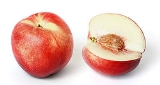
The peach (? in Chinese) (Prunus persica) is known as a species of Prunus
Prunus

Prunus is a genus of trees and shrubs, including the plums, cherry, peaches, apricots and almonds. It is traditionally placed within the rose family Rosaceae as a subfamily, the Prunoideae , but sometimes placed in its own family, the Prunaceae ....
 native to China
China

China is a Culture of China, an ancient civilization, and, depending on perspective, a national or multinational entity extending over a large area in East Asia....
 that bears an edible juicy fruit also called a peach. It is a deciduous
Deciduous

Deciduous means falling off at maturity or tending to fall off and is typically used in reference to trees or shrubs that lose their leaves seasonally and to the shedding of other plant structures such as petals after flowering or fruit when ripe....
 tree
TREE

TREE was a Boston hardcore punk band formed in the summer of 1990. They were active in the Boston music scene until disbanding in 2002....
 growing to 5–10 m tall, belonging to the subfamily Prunoideae
Prunoideae

Prunoideae, also called Amygdaloideae, is the flowering plant subfamily containing the genera Prunus and Prinsepia. This subfamily is placed within the Family Rosaceae or by some in its own family, the Prunaceae....
 of the family Rosaceae
Rosaceae

The Rosaceae or rose family is a large family of plants, with about 3,000-4,000 species in 100-160 genera. Traditionally it has been divided into four subfamilies: Rosoideae, Spiraeoideae, Maloideae, and Amygdaloideae....
. It is classified with the almond
Almond

The Almond is a species of tree of the genus Prunus, belonging to the subfamily Prunoideae of the family Rosaceae and native to the Middle East....
 in the subgenus Amygdalus within the genus Prunus, distinguished from the other subgenera by the corrugated seed shell.

The leaves
Leaf

In botany, a leaf is an above-ground plant Organ specialized for photosynthesis. For this purpose, a leaf is typically flat and thin, to expose the cells containing chloroplast to light over a broad area, and to allow light to penetrate fully into the tissues....
 are lanceolate, 7–15 cm long (3-6 in), 2–3 cm broad, pinnate
Pinnate

Pinnate is a term used to describe feather-like or multi-divided features arising from both sides of a common axis in plant or animal structures, and comes from the Latin word pinna for "feather"....
ly veined.


Nutrition Facts


Discussion
Ask a question about 'Peach'
Start a new discussion about 'Peach'
Answer questions from other users
Full Discussion Forum


Encyclopedia


The peach (? in Chinese) (Prunus persica) is known as a species of Prunus
Prunus

Prunus is a genus of trees and shrubs, including the plums, cherry, peaches, apricots and almonds. It is traditionally placed within the rose family Rosaceae as a subfamily, the Prunoideae , but sometimes placed in its own family, the Prunaceae ....
 native to China
China

China is a Culture of China, an ancient civilization, and, depending on perspective, a national or multinational entity extending over a large area in East Asia....
 that bears an edible juicy fruit also called a peach. It is a deciduous
Deciduous

Deciduous means falling off at maturity or tending to fall off and is typically used in reference to trees or shrubs that lose their leaves seasonally and to the shedding of other plant structures such as petals after flowering or fruit when ripe....
 tree
TREE

TREE was a Boston hardcore punk band formed in the summer of 1990. They were active in the Boston music scene until disbanding in 2002....
 growing to 5–10 m tall, belonging to the subfamily Prunoideae
Prunoideae

Prunoideae, also called Amygdaloideae, is the flowering plant subfamily containing the genera Prunus and Prinsepia. This subfamily is placed within the Family Rosaceae or by some in its own family, the Prunaceae....
 of the family Rosaceae
Rosaceae

The Rosaceae or rose family is a large family of plants, with about 3,000-4,000 species in 100-160 genera. Traditionally it has been divided into four subfamilies: Rosoideae, Spiraeoideae, Maloideae, and Amygdaloideae....
. It is classified with the almond
Almond

The Almond is a species of tree of the genus Prunus, belonging to the subfamily Prunoideae of the family Rosaceae and native to the Middle East....
 in the subgenus Amygdalus within the genus Prunus, distinguished from the other subgenera by the corrugated seed shell.

The leaves
Leaf

In botany, a leaf is an above-ground plant Organ specialized for photosynthesis. For this purpose, a leaf is typically flat and thin, to expose the cells containing chloroplast to light over a broad area, and to allow light to penetrate fully into the tissues....
 are lanceolate, 7–15 cm long (3-6 in), 2–3 cm broad, pinnate
Pinnate

Pinnate is a term used to describe feather-like or multi-divided features arising from both sides of a common axis in plant or animal structures, and comes from the Latin word pinna for "feather"....
ly veined. The flower
Flower

A flower, sometimes known as a bloom or blossom, is the reproduction structure found in flowering plants . The biological function of a flower is to mediate the union of male sperm with female ovum in order to produce seeds....
s are produced in early spring before the leaves; they are solitary or paired, 2.5–3 cm diameter, pink, with five petals. The fruit
Fruit

The term fruit has different meanings dependent on context, and the term is not synonymous in food preparation and biology. In botany, which is the scientific study of plants, fruits are the ripened Ovary of flowering plants....
 is a drupe
Drupe

In botany, a drupe is a fruit in which an outer fleshy part surrounds a shell of hardened endocarp with a seed inside. These fruits develop from a single carpel, and mostly from flowers with superior ovary....
, with a single large seed encased in what appears to be wood, but isn't (called the "stone" or "pit"), yellow or whitish flesh, a delicate aroma, and a skin that is either velvety (peaches) or smooth (nectarines) in different cultivar
Cultivar

A cultivar is a cultivated plant that has been selected and given a unique name because of its decorative or useful characteristics; it is usually distinct from similar plants and when Plant propagation it retains those characteristics....
s. The flesh is very delicate and easily bruised in some cultivars, but is fairly firm in some commercial cultivars, especially when green. The seed is red-brown, oval shaped and approximately 1.3-2 cm long. Peaches, along with cherries
Cherry

The word cherry refers to a fleshy fruit that contains a single stony seed. The cherry belongs to the family Rosaceae, genus Prunus, along with almonds, peaches, plums, apricots and bird cherry ....
, plum
Plum

A plum or gage is a drupe tree in the genus Prunus, subgenus Prunus. The subgenus is distinguished from other subgenera in the shoots having a terminal bud and the side buds solitary , the flowers being grouped 1-5 together on short stems, and the fruit having a groove running down one side, and a smooth stone....
s and apricot
Apricot

The Apricot is a species of Prunus, classified with the plum in the subgenus Prunus. The native range is somewhat uncertain due to its extensive prehistoric cultivation, but most likely in northern and western China and Central Asia, possibly also Korea and Japan....
s, are stone fruits (drupe
Drupe

In botany, a drupe is a fruit in which an outer fleshy part surrounds a shell of hardened endocarp with a seed inside. These fruits develop from a single carpel, and mostly from flowers with superior ovary....
s). The tree is small, and up to 15 ft tall.

The scientific name
persica, along with the word "peach" itself and its cognates in many European languages, derives from an early European belief that peaches were native to Persia
Persian Empire

The 'Persian Empire' was a series of successive Iranian or Persianization empires that ruled over the Iranian plateau, the original Persian homeland, and beyond in Southwest Asia, South Asia, Central Asia and the Caucasus....
 (now Iran
Iran

Iran , officially the Islamic Republic of Iran and formerly known internationally as Persian Empire until 1935, is a country in Central Eurasia, located on the northeastern shore of the Persian Gulf and the southern shore of the Caspian Sea....
). The modern botanical consensus is that they originate in China, and were introduced to Persia and the Mediterranean region along the Silk Road
Silk Road

The Silk Road is an extensive interconnected network of trade routes across the Asian continent connecting East, South, and Western Asia with the Mediterranean world, including North Africa and Europe....
 before Christian times. Cultivated peaches are divided into clingstone
Drupe

In botany, a drupe is a fruit in which an outer fleshy part surrounds a shell of hardened endocarp with a seed inside. These fruits develop from a single carpel, and mostly from flowers with superior ovary....
s and freestone
Drupe

In botany, a drupe is a fruit in which an outer fleshy part surrounds a shell of hardened endocarp with a seed inside. These fruits develop from a single carpel, and mostly from flowers with superior ovary....
s, depending on whether the flesh sticks to the stone or not; both can have either white or yellow flesh. Peaches with white flesh typically are very sweet with little acid
Acid

An acid is traditionally considered any chemical compound that, when dissolved in water, gives a solution with a hydrogen ion Activity greater than in pure water, i.e....
ity, while yellow-fleshed peaches typically have an acidic tang coupled with sweetness, though this also varies greatly. Both colours often have some red on their skin. Low-acid white-fleshed peaches are the most popular kinds in China
China

China is a Culture of China, an ancient civilization, and, depending on perspective, a national or multinational entity extending over a large area in East Asia....
, Japan
Japan

Japan is an island country in East Asia. Located in the Pacific Ocean, it lies to the east of the Sea of Japan, People's Republic of China, North Korea, South Korea and Russia, stretching from the Sea of Okhotsk in the north to the East China Sea and Taiwan in the south....
, and neighbouring Asia
Asia

Asia is the world's largest and most populous continent. It covers 8.6% of the Earth's total surface area and, with over 4 billion people, it contains more than 60% of the world's current human population....
n countries, while Europe
Europe

Europe is, conventionally, one of the world's seven continents. Comprising the westernmost peninsula of Eurasia, Europe is generally divided from Asia to its east by the water divide of the Ural Mountains, the Ural , the Caspian Sea, and by the Caucasus Mountains to the southeast....
ans and North America
North America

North America is the northern continent of the Americas, situated in the Earth's northern hemisphere and almost totally in the western hemisphere....
ns have historically favoured the acidic, yellow-fleshed kinds, though some prefer the other fruits.

History of peaches

Although its botanical name
Prunus persica suggests the peach is native to Persia, it actually originated in China where it has been cultivated since the early days of Chinese culture. Peaches were mentioned in Chinese writings as far back as the tenth century BC and were a favored fruit of emperors.

Its English name derives from the Latin plural of
persicum malum, meaning Persian apple. In Middle English, it melded into peche, much closer to what we call it today.

The Persians brought the peach from China and passed it on to the Romans. The peach was brought to America by Spanish explorers in the sixteenth century and eventually made it to England and France in the seventeenth century, where it was a prized albeit rare treat.

A horticultist by the name of supposedly brought the first peaches from England to the USA in the early seventeenth century, planting them at his Estate of Buckland in Virginia.

Various American Indian tribes are credited with spreading the peach tree across the United States, taking seeds along with them and planting as they roved the country.

Although Thomas Jefferson
Thomas Jefferson

Thomas Jefferson was the List of Presidents of the United States President of the United States , the principal author of the United States Declaration of Independence , and one of the most influential Founding Fathers of the United States for his promotion of the ideals of republicanism in the United States....
 had peach trees at Monticello, United States farmers did not begin commercial production until the nineteenth century in Maryland, Delaware, Georgia and finally Virginia. California grows 65% of peaches grown for commercial production in the United States, but the northern states, Colorado, Michigan, and Washington also grow a significant amount.

Today, peaches are the second largest commercial fruit crop in the States, second only to apples. Italy, China and Greece are major producers of peaches outside of the United States.

Cultivation

Peach trees grow very well in a fairly limited range, since they have a chilling requirement
Chilling requirement

The chilling requirement of a fruit is the minimum period of cold weather after which a fruit-bearing tree will blossom. It is often expressed in chill hours, which can be calculated in different ways, all of which essentially involve adding up the total amount of time in a winter spent at certain temperatures....
 that subtropical areas cannot satisfy, and they are not very cold-hardy. The trees themselves can usually tolerate temperatures to around −26 °C to −30 °C, although the following season's flower buds are usually killed at these temperatures, leading to no crop that summer. Flower bud kill begins to occur at temperatures between −15 °C and −25 °C depending on the cultivar
Cultivar

A cultivar is a cultivated plant that has been selected and given a unique name because of its decorative or useful characteristics; it is usually distinct from similar plants and when Plant propagation it retains those characteristics....
 (some are more cold-tolerant than others) and the timing of the cold, with the buds becoming less cold tolerant in late winter. Certain cultivars are more tender and others can tolerate a few degrees colder. In addition, a lot of summer heat is required to mature the crop, with mean temperatures of the hottest month between 20 °C and 30 °C. Another problematic issue in many peach-growing areas is spring frost. The trees tend to flower fairly early in spring. The flowers can often be damaged or killed by freezes; typically, if temperatures drop below about −4 °C, most flowers will be killed. However, if the flowers are not fully open, they can tolerate a couple of degrees colder.

Important historical peach-producing areas are China
China

China is a Culture of China, an ancient civilization, and, depending on perspective, a national or multinational entity extending over a large area in East Asia....
, Iran
Iran

Iran , officially the Islamic Republic of Iran and formerly known internationally as Persian Empire until 1935, is a country in Central Eurasia, located on the northeastern shore of the Persian Gulf and the southern shore of the Caspian Sea....
, France
France

France , officially the French Republic , is a country whose Metropolitan France is located in Western Europe and that also comprises various Overseas departments and territories of France....
, and the Mediterranean countries like Italy
Italy

Italy , officially the Italian Republic , is a country located on the Italian Peninsula in Southern Europe and on the two largest islands in the Mediterranean Sea, Sicily and Sardinia....
, Spain
Spain

Spain or the Kingdom of Spain , is a country located in Southern Europe on the Iberian Peninsula.The Spanish constitution does not establish any official denomination of the country, even though Espa?a , Estado espa?ol and Naci?n espa?ola are used interchangeably....
 and Greece
Greece

Greece , officially the Hellenic Republic , is a country in southeastern Europe, situated on the southern end of the Balkans. It has borders with Albania, Bulgaria and the former Yugoslav Republic of Macedonia to the north, and Turkey to the east....
. More recently, the United States
United States

The United States of America is a Federal government constitutional republic comprising U.S. state and a federal district. The country is situated mostly in central North America, where its Contiguous United States and Washington, D.C., the Capital districts and territories, lie between the Pacific Ocean and Atlantic Oceans, Borders of the U...
 (where the three largest producing states are California
California

California is a U.S. state on the West Coast of the United States of the United States, along the Pacific Ocean. It is bordered by Oregon to the north, Nevada to the east, Arizona to the southeast, and to the south the Mexico state of Baja California....
, South Carolina
South Carolina

South Carolina is a U.S. state in the Southern United States of the United States. It borders Georgia to the south and North Carolina to the north....
, and Georgia
Georgia (U.S. state)

Georgia is a U.S. state in the United States and was one of the original Thirteen Colonies that revolted against United Kingdom rule in the American Revolution....
), Canada
Canada

Canada is a country occupying most of northern North America, extending from the Atlantic Ocean in the east to the Pacific Ocean in the west and northward into the Arctic Ocean....
 (British Columbia
British Columbia

British Columbia is the westernmost of Canada's Provinces and territories of Canada and is famed for its natural beauty, as reflected in its Latin motto, Splendor sine occasu ....
), and Australia
Australia

Australia, officially the Commonwealth of Australia, is a country in the southern hemisphere comprising the Australia of the world's smallest continent, the major island of Tasmania, and numerous list of islands of Australia in the Indian Ocean and Pacific Oceans....
 (the Riverland
Riverland

The Riverland, also known as Big River Country, is a region of South Australia. It covers the area near the River Murray from where it flows into South Australia downstream to Blanchetown, South Australia....
 region) have also become important; peach growing in the Niagara Peninsula of Ontario, Canada, was formerly intensive but ended in 2008 when the last fruit cannery in Canada was closed by the proprietors. Oceanic climate
Oceanic climate

An oceanic climate is the climate typically found along the west coasts at the middle latitudes of all the world's continents, and in southeastern Australia....
 areas like the Pacific Northwest
Pacific Northwest

The Pacific Northwest is a region in the northwest of North America . There are several partially overlapping definitions but the term Pacific Northwest should not be confused with the Northwest Territory or the Northwest Territories of Canada....
 and coastline of North Western Europe
Europe

Europe is, conventionally, one of the world's seven continents. Comprising the westernmost peninsula of Eurasia, Europe is generally divided from Asia to its east by the water divide of the Ural Mountains, the Ural , the Caspian Sea, and by the Caucasus Mountains to the southeast....
 are generally not satisfactory for peach-growing due to inadequate summer heat, though they are sometimes grown trained against south-facing walls to catch extra heat from the sun. Trees grown in a sheltered and south-facing position in the southeast of England are capable of producing both flowers and a large crop of fruit.

Nectarines

Nectarines Summer 2006
The nectarine is a cultivar group
Cultivar group

Under the botanical nomenclature of the International Code of Nomenclature for Cultivated Plants , a cultivar group is any gathering of cultivars designated by common traits....
 of peach that has a smooth, fuzzless skin. Though fuzzy peaches and nectarines are commercially regarded as different fruits, with nectarines often erroneously believed to be a crossbreed between peaches and plum
Plum

A plum or gage is a drupe tree in the genus Prunus, subgenus Prunus. The subgenus is distinguished from other subgenera in the shoots having a terminal bud and the side buds solitary , the flowers being grouped 1-5 together on short stems, and the fruit having a groove running down one side, and a smooth stone....
s, or a "peach with a plum skin", they belong to the same species as peaches. Several genetic studies have concluded in fact that nectarines are created due to a recessive gene, whereas a fuzzy peach skin is dominant. Nectarines have arisen many times from peach trees, often as bud sport
Bud sport

A bud sport is a part of a plant or tree, for example, a leaf, shoot or flower, which due to a genetic mutation clearly differs from the rest of the plant, and which can also be grafting to grow new plants which retain this genetics difference as a new cultivar....
s.

As with peaches, nectarines can be white or yellow, and clingstone or freestone. On average, nectarines are slightly smaller and sweeter than peaches, but with much overlap. The lack of skin fuzz can make nectarine skins appear more reddish than those of peaches, contributing to the fruit's plum-like appearance. The lack of down on nectarines' skin also means their skin is more easily bruised than peaches.

The history of the nectarine is unclear; the first recorded mention in English is from 1616, but they had probably been grown much earlier within the native range of the Peach in central and eastern Asia.

Diseases

The trees are prone to a disease called leaf curl
Leaf curl

Leaf curl is a plant disease caused by a fungus or virus and characterized by curling of leaves. One of the most notable types is peach leaf curl, caused by the fungus Taphrina deformans....
, which usually does not directly affect the fruit but does reduce the crop yield by partially defoliating the tree. The fruit is very susceptible to brown rot
Brown rot

Brown rot is a fungal condition that attacks stone fruit, commonly affecting peaches, pears, apples and plums. The fruit develops small brown squishy circles, which gradually spread over the surface of the fruit....
.

Planting

Most peach trees sold by nurseries are named cultivars grafted
Grafting

Grafting is a method of asexual plant propagation widely used in agriculture and horticulture where the tissues of one plant are encouraged to fuse with those of another....
 onto a suitable rootstock. It is also possible to grow a tree from either a peach or nectarine seed, but the fruit quality of the resulting tree will be very unpredictable.

Peaches should be located in full sun, and with good air flow. This allows cold air to flow away on frosty nights and keeps the area cool in summer. Peaches are best planted in early winter, as this allows time for the roots to establish and be able to sustain the new spring growth. When planting in rows, plant north-south.

For optimum growth, peach trees require a constant supply of water. This should be increased shortly before the harvest. The best tasting fruit is produced when the peach is watered throughout the season. Drip irrigation
Drip irrigation

Drip irrigation, also known as trickle irrigation or microirrigation is an irrigation method which minimizes the use of water and fertilizer by allowing water to drip slowly to the roots of plants, either onto the soil surface or directly onto the rhizosphere, through a network of valves, Pipe , tubing, and emitters....
 is ideal, at least one dripper per tree. Although it is better to use multiple drippers around the tree, this is not necessary. A quarter of the root being watered is sufficient.

Peaches have a high nutrient requirement, needing more nitrogen
Nitrogen

Nitrogen is a chemical element that has the symbol N and atomic number 7 and atomic mass 14.00674?. Elemental nitrogen is a colorless, odorless, tasteless and mostly inert diatomic gas at standard conditions, constituting 78% by volume of Earth's atmosphere....
 than most other fruit trees. An NPK fertiliser can be applied regularly, and an additional mulch of poultry manure in autumn soon after the harvest will benefit the tree. If the leaves of the peach are yellow or small, the tree needs more nitrogen. Blood meal
Blood meal

Blood meal is dried, powdered blood used as a high-nitrogen fertilizer. It is one of the highest non-synthetic sources of nitrogen and if over-applied it can burn plants with excessive ammonia....
 and bone meal
Bone meal

Bone meal is a mixture of crushed and coarsely ground bones that is used as an organic fertilizer for plants and formerly in animal feed. As a slow-release fertilizer, bone meal is primarily used as a source of phosphorus....
, 3–5 kg per mature tree, or calcium ammonium nitrate, 0.5–1 kg, are suitable fertilisers. This also applies if the tree is putting forth little growth.

If the full amount of peaches is left, they will be under-sized and lacking in sugar and flavour. In dry conditions, extra watering is important. The fruit should be thinned when they have reached 2 cm in diameter, usually about 2 months after flowering. Fresh fruit are best consumed on the day of picking, and do not keep well. They are best eaten when the fruit is slightly soft, having aroma, and heated by the sun.

Storage

Hard fruit can be softened at home at room temperature, though it may not get any sweeter. The process is facilitated by ethylene
Ethylene

Ethylene is the chemical compound with the formula C2H4. It is the simplest alkene. Because it contains a carbon-carbon double bond, ethylene is called an unsaturated hydrocarbon or an olefin....
, similar to the ripening of bananas. Storage in a paper bag concentrates this gas and hastens the process. When the fruit is soft, it can be stored in the refrigerator for a few days to slow further changes.

In the August 13, 2004 edition of the
Journal of Experimental Botany, researchers found that peaches stored around became mealy and discolored.

After slicing, peaches exhibit enzymatic browning
Enzymatic browning

Browning is the process of becoming brown, especially referring to food. Browning foods may be desirable, as in caramelization, or undesirable, as in an apple turning brown after being cut....
; ascorbic acid, usually in the form of lemon juice, is added to delay the process, and the flavors are complementary. Peaches also can be frozen, and can be blanched to inhibit enzymatic changes in texture. Peaches often are canned, both commercially and at home; added sugars and acids reduce the retort or pressure cooking
Pressure cooking

Pressure cooking is a method of cooking in a sealed vessel that does not permit air or liquids to escape below a preset pressure. Because the boiling point of water increases as the pressure increases, the pressure built up inside the cooker allows the liquid in the pot to rise to a higher temperature before boiling....
 time which reduces excessive softening.

Peaches in Asian tradition

Peaches are known in China, Japan, Korea, Laos, and Vietnam not only as a popular fruit but for the many folktales and traditions associated with it. Momotaro
Momotaro

is a popular hero from Japanese folklore. His name literally means Peach Taro; as Taro is a common Japanese boy's name, it is often translated as Peach Boy....
, one of Japan's most noble and semi-historical heroes, was born from within an enormous peach floating down a stream. Momotaro or "Peach Boy" went on to fight evil oni and face many adventures. Peach flowers are admired by the Japanese but not as much as the sakura
Sakura

Sakura is the Japanese language name for cherry trees, and their blossoms. In English, the word "sakura" is equivalent to the Japanese flowering cherry, and their blossoms are commonly called cherry blossoms....
 (cherry).

In China, the peach was said to be consumed by the immortals due to its mystic virtue of conferring longevity on all who ate them. The divinity Yu Huang, also called the Jade Emperor
Jade Emperor

The Jade Emperor , is the Taoist ruler of Heaven and all realms of existence below including that of Man and Hell according to a version of Chinese mythology....
, and his mother called Xi Wangmu
Xi Wangmu

The Queen Mother of the West is an ancient Chinese goddess whose origin can be traced back to oracle bone inscriptions of the fifteenth century BCE that record sacrifices to a "western mother"....
 also known as Queen Mother of the West, ensured the gods' everlasting existence by feeding them the peaches of immortality. The immortals residing in the palace of Xi Wangmu were said to celebrate an extravagant banquet called the
Pantao Hui or "The Feast of Peaches". The immortals waited six thousand years before gathering for this magnificent feast; the peach tree put forth leaves once every thousand years and it required another three thousand years for the fruit to ripen. Ivory statues depicting Xi Wangmu's attendants often held three peaches.

The peach often plays an important part in Chinese tradition and is symbolic of long life. One example is in the peach-gathering story of Zhang Daoling
Zhang Daoling

Zhang Daoling , also commonly called Zhang Ling, was an Han Dynasty Taoist hermit who founded the Way of the Celestial Master sect of Taoism, also known as the "Tianshi Dao" sect or the "Wudou Mi Dao" sect....
, who many say is the true founder of Taoism
Taoism

Taoism refers to a variety of related philosophical and religious traditions and concepts. These traditions have influenced East Asia for over two thousand years and some have spread to the West....
. Elder Zhang Guo
Elder Zhang Guo

"Elder Zhang Guo" or "Zhang Guo Lao" is one of the Eight Immortals. Of the Eight Immortals he, along with Chung-li Ch'uan and Lu Yen, was a real historical figure; the rest exist only in legend....
, one of the Chinese Eight Immortals
Eight Immortals

The Eight Immortals are a group of legendary Xian in Chinese mythology. Each Immortal's power can be transferred to a tool of power that can give life or destroy evil....
, is often depicted carrying a Peach of Immortality. The peach blossoms are highly prized in Chinese culture.

It was in an orchard of flowering peach trees that Liu Bei
Liu Bei

Liu Bei , Chinese style name Xu?nd? , was a general, warlord, and later the founding emperor of Shu Han during the Three Kingdoms era of China....
, Guan Yu
Guan Yu

Guan Yu was a general under the warlord Liu Bei during the late Eastern Han Dynasty and Three Kingdoms era of China. He played a significant role in the civil war that led to the collapse of the Han Dynasty and the establishment of the Shu Han, of which Liu Bei was the first emperor....
, and Zhang Fei took an oath of brotherhood in the opening chapter of the classic Chinese novel
Romance of the Three Kingdoms

Romance of the Three Kingdoms , written by Luo Guanzhong in the 14th century, is a Chinese historical novel based upon events in the turbulent years near the end of the Han Dynasty and the Three Kingdoms era of China, starting in 169 and ending with the reunification of the land in 280....
.

Due to its delicious taste and soft texture, in ancient China "peach" was also a slang word for "young bride", and it has remained in many cultures as a way to define young women or a general state of goodness (as in English, with
peach or peachy keen).

A Vietnamese mythic history states that, in the spring of the year 1789, after marching to Ng?c H?i and then winning a great victory against invaders from the Qing Dynasty
Qing Dynasty

The Qing Dynasty , also known as the Manchu Dynasty, followed the Ming Dynasty in History of China, and was the last ruling Chinese Dynasties of China, ruling from 1644 to 1912 ....
 of China
China

China is a Culture of China, an ancient civilization, and, depending on perspective, a national or multinational entity extending over a large area in East Asia....
, the King Quang Trung ordered a messenger to gallop to Phú Xuân citadel (Hu?
Hu?

is the capital city of Thua Thien-Hue Province, Vietnam. Between 1802 and 1945, it was the imperial capital of the Nguy?n Dynasty. As such, it is well known for its monuments and architecture....
 nowadays) and deliver a flowering peach branch to the Princess Ng?c Hân. This took place on the 5th day of the first lunar month, 2 days before the predicted end of the battle. The branch of peach flowers that was sent from the North to the Center of Vietnam was not only a message of victory from the King to his wife, but also the start of a new spring of peace and happiness for all the Vietnamese people. In addition to that, since the land of Nh?t Tân had freely given that very branch of peach flowers to the King, it became the loyal garden of his dynasty.

A peach tree is also the context in which Kim Tr?ng and Thuý Ki?u fell in love in The Tale of Kieu
The Tale of Kieu

The Tale of Ki?u is an epic poem in Vietnamese language written by Nguyen Du , and is widely regarded as the most significant work of Vietnamese literature....
. And in Vietnam
Vietnam

Vietnam , officially the Socialist Republic of Vietnam , is the easternmost country on the Indochina Peninsula in Southeast Asia. It is bordered by People's Republic of China to the north, Laos to the northwest, Cambodia to the southwest, and the South China Sea to the east....
, the blossoming peach flower is the signal of spring. Finally, peach bonsai trees are used as decoration during Vietnamese New Year — T?t
T?t

T?t Nguy?n ??n , more commonly known by its shortened name T?t, is the most important and popular Holidays in Vietnam and festival in Vietnam....
 in Northern Vietnam.

Nutrition


A medium peach (75g), has 30 Cal, 7g of carbohydrate (6g sugars and 1g fiber), 1g of protein, 140mg of potassium, and 8% of the daily value (DV) for vitamin C.

Gallery


External links

  • Huxley, A., ed. (1992). New RHS Dictionary of Gardening. Macmillan ISBN 0-333-47494-5.