
All Topics  
Ukrainians

 
Ukrainians

   Email Print
   Bookmark   Link


Ukrainians


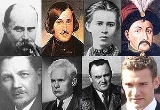
Ukrainians (Ukrayintsi, ) are an East Slavic
East Slavs

The East Slavs are a Slavs, the speakers of East Slavic languages. Formerly the main population of the medieval state of Kievan Rus, by the seventeenth century they evolved into the Russians, Ukrainians, Belarusians and Rusyns peoples....
 ethnic group
Ethnic group

An ethnic group is a group of humans whose members identify with each other, through a common heritage that is real or presumed.Ethnic identity is further marked by the recognition from others of a group's distinctiveness and the recognition of common culture, linguistic, religion, human behaviour or Race traits, real or presumed, as indic...
 primarily living in Ukraine
Ukraine

Ukraine is a country in Eastern Europe. It is bordered by Russia to the east; Belarus to the north; Poland, Slovakia, and Hungary to the west; Romania and Moldova to the southwest; and the Black Sea and Sea of Azov to the south....
, or more broadly—citizens of Ukraine
Ukraine

Ukraine is a country in Eastern Europe. It is bordered by Russia to the east; Belarus to the north; Poland, Slovakia, and Hungary to the west; Romania and Moldova to the southwest; and the Black Sea and Sea of Azov to the south....
 (who may or may not be ethnic Ukrainians). Some 200 years ago and times prior to that, Ukrainians were usually referred to and known as Rusyny (commonly translated as Ruthenians
Ruthenians

The term Ruthenians is a culturally loaded term and has different meanings according to the context in which it is used. Initially it was the ethnonym used for the Ukrainians people....
).

ethnic Ukrainians, about 37 million in total, live in Ukraine
Ukraine

Ukraine is a country in Eastern Europe. It is bordered by Russia to the east; Belarus to the north; Poland, Slovakia, and Hungary to the west; Romania and Moldova to the southwest; and the Black Sea and Sea of Azov to the south....
 where they make up over three-quarters of the population.


Discussion
Ask a question about 'Ukrainians'
Start a new discussion about 'Ukrainians'
Answer questions from other users
Full Discussion Forum


Recent Posts


Encyclopedia


Ukrainians (Ukrayintsi, ) are an East Slavic
East Slavs

The East Slavs are a Slavs, the speakers of East Slavic languages. Formerly the main population of the medieval state of Kievan Rus, by the seventeenth century they evolved into the Russians, Ukrainians, Belarusians and Rusyns peoples....
 ethnic group
Ethnic group

An ethnic group is a group of humans whose members identify with each other, through a common heritage that is real or presumed.Ethnic identity is further marked by the recognition from others of a group's distinctiveness and the recognition of common culture, linguistic, religion, human behaviour or Race traits, real or presumed, as indic...
 primarily living in Ukraine
Ukraine

Ukraine is a country in Eastern Europe. It is bordered by Russia to the east; Belarus to the north; Poland, Slovakia, and Hungary to the west; Romania and Moldova to the southwest; and the Black Sea and Sea of Azov to the south....
, or more broadly—citizens of Ukraine
Ukraine

Ukraine is a country in Eastern Europe. It is bordered by Russia to the east; Belarus to the north; Poland, Slovakia, and Hungary to the west; Romania and Moldova to the southwest; and the Black Sea and Sea of Azov to the south....
 (who may or may not be ethnic Ukrainians). Some 200 years ago and times prior to that, Ukrainians were usually referred to and known as Rusyny (commonly translated as Ruthenians
Ruthenians

The term Ruthenians is a culturally loaded term and has different meanings according to the context in which it is used. Initially it was the ethnonym used for the Ukrainians people....
).

Locations

Most ethnic Ukrainians, about 37 million in total, live in Ukraine
Ukraine

Ukraine is a country in Eastern Europe. It is bordered by Russia to the east; Belarus to the north; Poland, Slovakia, and Hungary to the west; Romania and Moldova to the southwest; and the Black Sea and Sea of Azov to the south....
 where they make up over three-quarters of the population. The largest Ukrainian community outside of Ukraine is in Russia
Russia

Russia , or the Russian Federation , is a list of countries spanning more than one continent country extending over much of northern Eurasia....
, about 3 million Russian citizens consider themselves ethnic Ukrainians, while millions of others (primarily in southern Russia
Southern Federal District

Southern Federal District is one of the seven Federal districts of Russia of Russia. It is located in the extreme southwest, between Ukraine and Kazakhstan....
 and Siberia
Siberia

Siberia , is the name given to the vast region constituting almost all of North Asia and for the most part currently serving as the massive central and eastern portion of the Russian Federation, having served in the same capacity previously for the Soviet Union from its beginning, and the Russian Empire beginning in the 16th century....
) have some Ukrainian ancestry.

There are also almost 2.1 million Ukrainians in North America (1.2 million in Canada
Canada

Canada is a country occupying most of northern North America, extending from the Atlantic Ocean in the east to the Pacific Ocean in the west and northward into the Arctic Ocean....
 and 890,000 in the United States
United States

The United States of America is a Federal government constitutional republic comprising U.S. state and a federal district. The country is situated mostly in central North America, where its Contiguous United States and Washington, D.C., the Capital districts and territories, lie between the Pacific Ocean and Atlantic Oceans, Borders of the U...
). Large numbers of Ukrainians live in Brazil
Brazil

Brazil , officially the Federative Republic of Brazil , is a country in South America. It is the List of countries and outlying territories by total area country by geographical area, occupying nearly half of South America, the List of countries by population country, and the fourth most populous democracy in the world....
 (400,000), Kazakhstan
Kazakhstan

Kazakhstan, also Kazakstan , officially the Republic of Kazakhstan, is a large Eurasian country in Central Asia and Eastern Europe. Ranked as the List of countries by area as well as the world's largest landlocked country, it has a territory of 2,727,300 km? ....
 (about 500,000), Moldova
Moldova

Moldova , officially the Republic of Moldova is a landlocked country in Eastern Europe, located between Romania to the west and Ukraine to the north, east and south....
 (450,000), Poland
Poland

Poland , officially the Republic of Poland , is a country in Central Europe. Poland is bordered by Germany to the west; the Czech Republic and Slovakia to the south; Ukraine, Belarus and Lithuania to the east; and the Baltic Sea and Kaliningrad Oblast, a Russian Enclave and exclave, to the north....
 (estimates from 300,000 to 400,000), Argentina
Argentina

Argentina, officially the Argentine Republic , is a country in South America, constituted as a federation of 23 provinces and an autonomous city....
 (305,000), Belarus
Belarus

Belarus is a landlocked country in Eastern Europe, bordered by Russia to the north and east, Ukraine to the south, Poland to the west, and Lithuania and Latvia to the north....
 (estimates from 250,000 to 300,000), Portugal
Portugal

Portugal , officially the Portuguese Republic , is a country on the Iberian Peninsula. Located in southwestern Europe, Portugal is the westernmost country of mainland Europe and is bordered by the Atlantic Ocean to the west and south and by Spain to the north and east....
 (100,000), and Slovakia
Slovakia

Slovakia . It was amended in September 1998 to allow direct election of the president and again in February 2001 due to EU admission requirements....
 (55,000). There are also Ukrainian diasporas in the UK
United Kingdom

The United Kingdom of Great Britain and Northern Ireland, commonly known as the United Kingdom , the UK or Britain,is a sovereign state located off the northwestern coast of continental Europe....
, Australia
Australia

Australia, officially the Commonwealth of Australia, is a country in the southern hemisphere comprising the Australia of the world's smallest continent, the major island of Tasmania, and numerous list of islands of Australia in the Indian Ocean and Pacific Oceans....
, Germany
Germany

Germany , officially the Federal Republic of Germany , is a country in Central Europe. It is bordered to the north by the North Sea, Denmark, and the Baltic Sea; to the east by Poland and the Czech Republic; to the south by Austria and Switzerland; and to the west by France, Luxembourg, Belgium, and the Netherlands....
, Romania
Romania

Romania is a country located in Southeastern Europe Central Europe, North of the Balkan Peninsula, on the Lower Danube, within and outside the Carpathian Mountains, bordering on the Black Sea....
, Latvia
Latvia

Latvia The Latvians are a Baltic peoples culturally related to the Estonians and Lithuanians, with the Latvian language having many similarities with Lithuanian language, but not with the Estonian language....
, Switzerland
Switzerland

Switzerland is a landlocked Swiss Alps country of roughly 7.7 million people in Western Europe with an area of 41,285 km?. Switzerland is a federal republic consisting of 26 states called Cantons of Switzerland....
, Italy
Italy

Italy , officially the Italian Republic , is a country located on the Italian Peninsula in Southern Europe and on the two largest islands in the Mediterranean Sea, Sicily and Sardinia....
, Ireland
Ireland

Ireland is the List of islands by area in Europe, and the twentieth-largest island in the world. It lies to the north-west of continental Europe and is surrounded by hundreds of islands and islet....
, Sweden
Sweden

Sweden , officially the Kingdom of Sweden , is a Nordic countries on the Scandinavian Peninsula in Northern Europe. Sweden has land borders with Norway to the west and Finland to the northeast, and it is connected to Denmark by the ?resund Bridge in the south....
 and former Yugoslavia
Yugoslavia

File:LocationYugoslavia2.pngYugoslavia is a term that describes three political entities that existed successively on the Balkan Peninsula in Europe, during most of the 20th century....
.

Origins

In antiquity, numerous nomadic tribes inhabited the territory of modern Ukraine
Ukraine

Ukraine is a country in Eastern Europe. It is bordered by Russia to the east; Belarus to the north; Poland, Slovakia, and Hungary to the west; Romania and Moldova to the southwest; and the Black Sea and Sea of Azov to the south....
. They included Iranic
Iranian languages

The Iranian languages are a branch of the Indo-European languages and its subfamily, Indo-Iranian languages. These languages are mainly spoken by the Iranian Peoples....
-speaking Scythians and Sarmatians
Sarmatians

The Sarmatians, Sarmat? or Sauromat? were a people of Ancient Iranian peoples origin. Mentioned by Classics authors, they migrated from Central Asia to the Ural Mountains around fifth century B.C....
, Greeks
Greeks

The Greeks , also known as Hellenes, are a nation and ethnic group native to Greece, Cyprus and neighbouring regions, who can also be found in Greek diaspora communities around the world....
 from the Black Sea colonies
Colonies in antiquity

Colonies in antiquity were city-states founded from a mother-city, not from a territory-at-large. Bonds between a colony and its metropolis remained close, and took specific forms....
, Thracians
Thracians

The ancient Thracians were a group of Indo-European peoples who spoke the Thracian language - a scarcely attested branch of the Indo-European language family....
 from modern-day Bulgaria
Bulgaria

The state of Bulgaria , Scientific transliteration Balgarija, officially the Republic of Bulgaria has played a significant role in the Balkans in south-eastern Europe for over fourteen centuries....
, Illyrians
Illyrians

Illyrians has come to refer to a broad, ill-defined "Indo-European languages" group of peoples who inhabited the western Balkans and even possibly Messapia in Southern Italy ....
, Germanic-speaking Goths
Goths

The Goths were East Germanic tribes who, in the 3rd and 4th centuries, invasion the Roman Empire and later adopted Arian Christianity. In the 5th and 6th centuries, divided as the Visigoths and the Ostrogoths, they established powerful successor-states of the Roman Empire in the Iberian peninsula and Italy....
 and Varangians
Varangians

The Varangians or Varyags , sometimes referred to as Variagians, were Vikings, Norsemen, who went eastwards and southwards through what is now Russia, Belarus and Ukraine mainly in the 9th and 10th centuries....
, Turkic
Turkic peoples

The Turkic peoples are Eurasian peoples residing in northern, central and western Eurasia, and who mostly speak languages belonging to the Turkic languages....
-speaking Bulgars
Bulgars

The Bulgars were a seminomadic people, probably of Turkic peoples descent, originally from Southern Central Asia, who from the 2nd century onwards dwelled in the steppes north of the Caucasus and around the banks of river Volga ....
, Khazars
Khazars

The Khazars were a semi-nomadic Turkic people who dominated the Pontic steppe and the North Caucasus from the 7th to the 10th century CE. The name 'Khazar' seems to be tied to a Turkic languages verb form meaning "wandering"....
, Pechenegs
Pechenegs

The Pechenegs or Patzinaks were a nomad Turkic peoples people of the Central Asian steppes speaking the Pecheneg language which belonged to the Turkic languages....
 and Cumans
Cumans

Cumans were a nomadic Turkic peoples people who inhabited a shifting area north of the Black Sea known as Cumania along the Volga River. They eventually settled to the west of the Black Sea, influencing the politics of Bulgaria, Serbia, Hungary, Moldavia, and Wallachia....
, and the Crimea
Crimea

Crimea or the Autonomous Republic of Crimea is an autonomous republic of Ukraine located on the northern coast of the Black Sea, occupying a peninsula of the same name....
n Armenians
Armenians

The Armenians are a nation and ethnic group originating in the Caucasus and in the Armenian Highlands. A large concentration of them has remained there, especially in Armenia, but many of them are also scattered elsewhere throughout the world ....
 in the early second millennium AD. However, Ukrainian origins are predominantly Slavic
Slavic peoples

The Slavic Peoples are a linguistic branch of Indo-European peoples, living mainly in eastern Europe. From the early 6th century they spread from their original homeland to inhabit most of eastern Central Europe, Eastern Europe and the Balkans....
, while non-Slavic nomads who lived in the steppes of southern Ukraine had little influence on the ancestry of modern Ukrainians. (For alternative views, see Proto-Ukrainians
Proto-Ukrainians

In Ukrainian Romantic nationalism, the ancient Ukrs or Proto-Ukrs are a mythical people, putative ancestors of the Ukrainian people. The term was introduced by Tadeusz Czacki in his monograph "O nazwisku Ukrainy i poczatku kozak?w" ....
.)

Gothic
Goths

The Goths were East Germanic tribes who, in the 3rd and 4th centuries, invasion the Roman Empire and later adopted Arian Christianity. In the 5th and 6th centuries, divided as the Visigoths and the Ostrogoths, they established powerful successor-states of the Roman Empire in the Iberian peninsula and Italy....
 historian Jordanes
Jordanes

Jordanes , was a 6th century Roman bureaucrat , who turned his hand to history later in life.Though he also wrote Romana , a book about the history of Rome, his most known work is his Getica, written in Constantinople about AD 551 ....
 and sixth-century Byzantine
Byzantine

The word Byzantine may refer to:Topics directly related to the Byzantine Empire* A citizen of Byzantine Empire, or native Greeks during the Middle Ages ....
 authors named two groups that lived in the south of Europe: Sclavins (western Slavs) and Antes
Antes (people)

The Antes were an ancient tribal union in Eastern Europe who lived north of the lower Danube river and the Black Sea in the 6th and 7th century AD and who are associated with the archaeological Pen'kovo culture....
. The Antes are normally identified with proto-Ukrainians. The name Antes is of Iranic origin and means people living on the borderland. The state of Antes existed from the end of 4th to early seventh century. In the fourth century. the Antes fought against the Goths
Goths

The Goths were East Germanic tribes who, in the 3rd and 4th centuries, invasion the Roman Empire and later adopted Arian Christianity. In the 5th and 6th centuries, divided as the Visigoths and the Ostrogoths, they established powerful successor-states of the Roman Empire in the Iberian peninsula and Italy....
. In 375, the Gothic king Vinitar, facing the Antes, at first experienced defeat but later captured the king of Antes, Bozh, whom he executed together with his sons and 70 aristocrats. The Goths did not manage to subdue the Antes, since in the same year the Gothic union fell from the attack of the Huns
Huns

The Huns were a confederation of Central Asian Eurasian nomads or semi-nomads, who had established an empire in Eurasia. The Huns may have stimulated the Migration Period, a contributing factor in the collapse of the Roman Empire....
. From the sixth century the Antes fought Byzantium
Byzantium

Byzantium was an Ancient Greece city, which was founded by Greeks colonists from Megara in 667 BC and named after their king Byzas or Byzantas ....
 and in the sixth and seventh centuries colonised the Balkan peninsula. From the end of sixth century they fought against the Avars
Eurasian Avars

The 'Avars' were a highly organized and powerful Turkic confederation. They were ruled by a khagan, who was surrounded by a tight-knit retinue of nomad warriors, an organization characteristic of Turkic peoples groups....
. The Antes included of several East Slavic tribes who lived on the territory of today's Ukraine, including the Polans
Polans (eastern)

The Polans were a tribe of Early East Slavs between the 6th and the 9th century, which inhabited both sides of the Dnieper river from Liubech to Rodnia and also down the lower streams of the rivers Ros' River, Sula River, Stuhna, Teteriv River, Irpin' River, Desna and Pripyat River....
, Drevlyans
Drevlyans

The Drevlians were a tribe of Early East Slavs between the 6th and the 10th century, which inhabited the territories of Polesia, Right-bank Ukraine west of Polans , down the stream of the rivers Teteriv River, Uzh, Ubort, and Stviga....
, Severians
Severians

The Severians or Severyans or Siverians were a tribe or tribal union of Early East Slavs occupying areas to the east of the middle Dnieper river around the rivers Desna , Seym River and Sula River on the territory of the archaeological Romny culture....
, Dulebes
Dulebes

The Dulebs , or Dulebi were one of the tribe unions of Early East Slavs between the 6th and the 10th centuries. Dulebi were among the twelve East Slavic tribes mentioned in the Primary Chronicle....
 (which later likely became Volhynians
Volhynians

Volhynians were a tribe or tribal union of early East Slavs. They are mentioned in the Primary Chronicle as well as by the Bavarian Geographer....
 and Buzhans
Buzhans

The Buzhans or Buzhane were one of the tribe unions of Early East Slavs. They are mentioned as Buzhane in the Primary Chronicle. It appears that the name of the tribe derives from the Bug River, where they chose to settle down....
), Tiverians, and Ulichs
Ulichs

The Ulichs were a tribe of Early East Slavs who between the eighth and the tenth century inhabited the territories along the Lower Dnieper, Bug River and the Black Sea littoral....
. The Ukrainian language
Ukrainian language

Ukrainian is a language of the East Slavic languages of the Slavic languages. It is the official language of Ukraine. In some areas of Russia there are dialects, Balachka or Surzhyk, which are the Ukrainianized versions of the Russian language....
 is an East Slavic language, and Ukrainian people belong to the same branch of the Slavs as Rusyns
Rusyns

Rusyns are an Eastern Slavic ethnic group which speak Rusyn language. The group is descended from the minority of Ruthenians who did not adopt the ethnonym Ukrainians to describe their ethnic identity in the nineteenth and early twentieth centuries....
, Russians
Russians

The Russian people are an East Slavs ethnic group, primarily living in Russia and neighboring countries.The English language term Russians is used to refer to the citizens of Russia, regardless of their ethnicity ; in Russian language, the demonym Russian is translated as Rossiyanin ....
 (which emerged as vernacular from Church-Slavic
Church Slavic language

Church Slavonic is the liturgical language of the Bulgarian Orthodox Church, Macedonian Orthodox Church, Russian Orthodox Church, Serbian Orthodox Church and other Slavic Orthodox and Slavic Greek Catholic Churches, as well as the liturgical language of Croatian and Czech Church Slavonic Roman Catholic traditions....
) and Belarusians
Belarusians

Belarusians or Belorussians are an East Slavs ethnic group who populate the majority of the Belarus and form minorities in neighboring Poland , Russia, Lithuania and Ukraine....
.

Slavic tribes inhabited modern-day lands of Ukraine from ancient times, and were dominant by the fifth century AD, founding the city of Kiev
Kiev

Kiev, also known as Kyiv , is the Capital and the largest city of Ukraine, located in the north central part of the country on the Dnieper River....
—later capital of a powerful state known as Kievan Rus'
Kievan Rus'

Kievan Rus' , also written as Kyivan Rus', was a medieval state which existed from approximately 880 to the middle of the 12th century. Founded by the Scandinavian traders called "Rus' " and centered in the city of Kiev , Rus' polity is considered an early predecessor of three modern East Slavs nations: Belarusians, Russians, and Ukrai...
. Kniaz Volodymyr I of Kiev
Vladimir I of Kiev

Vladimir Svyatoslavich the Great, also sometimes spelled Volodymyr Old East Slavic: ?????????? ???????????? was the grand prince of Kiev who converted to Christianity in 987, and proceeded to baptism of Kiev....
 adopted Christianity
Christianity

Christianity is a Monotheistic religion #Christian view religion centered on the life and teachings of Jesus as New Testament view on Jesus' life....
 in 988 and proceeded to baptise the whole Kievan Rus. Polans
Polans (eastern)

The Polans were a tribe of Early East Slavs between the 6th and the 9th century, which inhabited both sides of the Dnieper river from Liubech to Rodnia and also down the lower streams of the rivers Ros' River, Sula River, Stuhna, Teteriv River, Irpin' River, Desna and Pripyat River....
 played the key role in the formation of the Kievan Rus' state.

Among the native Ukrainian population of the Carpathians, there are several distinct groups, namely the Hutsuls
Hutsuls

Hutsuls are an ethnic group of Ukrainians highlanders who for centuries have inhabited the Carpathian mountains, mainly in Ukraine, but also in the northern extremity of Romania , as well as in Slovakia and Poland....
, Volhynia
Volhynia

File:Luchesk.JPGVolhynia, Volynia, or Volyn is a historic region in western Ukraine located between the rivers Pripyat River and Western Bug, to the north of Galicia and Podolia....
ns, Lemkos
Lemkos

Lemkos , one of several quantitatively and territorially small nationalities who also traditionally call themselves Rusyns , are one of the four major groups inhabiting the Eastern Carpathian Carpathian Mountains....
 and Boyko
Boyko

The Boykos or Boikos are a distinctive group of Ukraine Carpathian Mountains "montagnards" or mountain-dwelllers of the Carpathian Mountains highlands....
s, each with peculiar area of settlement, dialect, dress, anthropological type and folk traditions. There are a number of theories as for origins each of these groups, the Volhynians with Romanians
Romanians

], 26 Nov 2004. Reprinted at , retrieved 18 Dec 2005.External links *...
 or shared a Romance-Latin culture in the 10th century AD, the Lemko with Baltic Finno-Ugric
Finno-Ugric

Finno-Ugric can refer to:* Finno-Ugric languages* Finno-Ugric peoplesExcess long comment to prevent listing on...
 peoples, some even connecting Boykos with the Celtic tribe of Boii
Boii

Boii is the Ancient Rome name of an ancient Celtic tribes, attested at various times in Transalpine Gaul and Cisalpine Gaul , as well as in Pannonia , Bohemia, Moravia and western Slovakia....
 and Hutsuls with Uz
Oghuz Turks

The Oghuz were a group of loosely linked nomadic Turkic peoples. In the ninth century the Oghuz Turks from the Aral steppes drove the Pechenegs of the Emba region and the Ural River toward the west....
 people of Turkic stock.

It is argued that the oldest known population of Ukraine - Scythians and Sarmatians
Sarmatians

The Sarmatians, Sarmat? or Sauromat? were a people of Ancient Iranian peoples origin. Mentioned by Classics authors, they migrated from Central Asia to the Ural Mountains around fifth century B.C....
 were of Iranian stock. They inhabited Ukraine in 7 b.c. — 3 a.d. Rarity of hard g sound (use of guttural gh instead) and absence f in some dialects (often rendered as khv in the countryside) in Ukrainian along with some folk traditions (as greeting with bread and salt, houses with straw-roof, popular through history self-designations Roxolany, Roxolana, Sava or Sevae, and Savromaty among Ukrainians) is attributed to ancient Scythian language and culture.

Several other minor non-Slavic ethnic groups undoubtedly partially contributed to formation of Central Ukrainian ethnic type. These include a row of Turkic tribes, such as Chorni Klobuky, Berendei
Berendei

The Berendei were a Turkic peoples tribe of the Middle Ages, possibly of Kipchak or Oghuz origin. The Berendei were one of the tribes who formed the Cherniye Klobuki , semi-nomadic tribes who fought as border guards for various Rus' princes....
 and Torks, who were settled along the river Ros and Rusava and eventually all being absorbed by Ukrainians. Many Turkic place names in Ukraine as Karabachyn, Torets, Torky, Berdychiv
Berdychiv

Berdychiv is a historic city in the Zhytomyr Oblast of northern Ukraine. Serving as the Capital city of the Berdychivskyi Raion , the city itself is of direct oblast subordinance, and is located south of the oblast capital, Zhytomyr, at around ....
 (lit. "of Berendychi", or Berendei
Berendei

The Berendei were a Turkic peoples tribe of the Middle Ages, possibly of Kipchak or Oghuz origin. The Berendei were one of the tribes who formed the Cherniye Klobuki , semi-nomadic tribes who fought as border guards for various Rus' princes....
) remain in these areas.

In Western Ukraine
Western Ukraine

Western Ukraine may refer to:* Generally, the territories in the West of Ukraine* West Ukrainian National Republic...
, ancient Dacian
Dacians

The Dacians were an Indo-European people, the ancient inhabitants of Dacia , present-day Romania and Moldova, parts of Sarmatia and Scythia Minor in southeastern Europe ....
 influences can be traced. From the middle of the first century (the peak period of Dacian society) until early 3 century, the left bank of the upper Dniester
Dniester

The Dniester is a river in Eastern Europe....
 was populated by the Dacian tribe of Costoboci Transmontani
Costoboci

The Costoboci were a Dacian tribe, which lived in the areas known today as Maramures and south-western Ukraine. Archeologically speaking, they are identified with the Lipita culture....
 (mentioned in Geography of Ptolomeus), who were the carriers of Lipica culture (of Verkhnya Lypytsya, Maydan Holohirskyy, Remezivtsi, Voronyaky etc.) The Dacian roots of Lipica culture is evidenced by findings of ceramic types, burning burials, houses analogous to those of Dacians in Romania
Romania

Romania is a country located in Southeastern Europe Central Europe, North of the Balkan Peninsula, on the Lower Danube, within and outside the Carpathian Mountains, bordering on the Black Sea....
. Costoboci
Costoboci

The Costoboci were a Dacian tribe, which lived in the areas known today as Maramures and south-western Ukraine. Archeologically speaking, they are identified with the Lipita culture....
 were the most northernmost branch of Thracodacians and bordered with the carriers of Przeworsk culture
Przeworsk culture

The Przeworsk culture is part of an Iron Age archaeological complex that dates from the 2nd century BC to the 4th century. It was located in what is now central and southern Poland and parts of eastern Slovakia and Carpathian Ruthenia ranging between the Oder and the middle and upper Vistula Rivers into the headwaters of the Dniester and...
 to the north-west (i.e. Przeworsk culture
Przeworsk culture

The Przeworsk culture is part of an Iron Age archaeological complex that dates from the 2nd century BC to the 4th century. It was located in what is now central and southern Poland and parts of eastern Slovakia and Carpathian Ruthenia ranging between the Oder and the middle and upper Vistula Rivers into the headwaters of the Dniester and...
 settlement in Pidberiztsi near Lviv
Lviv

Lviv is a major city in western Ukraine.It is regarded as one of the main Ukrainian culture. In 2001, it had 725,000 inhabitants, of whom 88 per cent were Ukrainians, 9 per cent Russians and 1 per cent Poles....
), Zarubintsy culture
Zarubintsy culture

The Zarubintsy culture was one of the major archaeological cultures which flourished in the area north of the Black Sea along the upper Dnieper and Pripyat Rivers, stretching west towards the Western Bug from the 3rd century BC or 2nd century BC BC until the 2nd century AD....
 to the north who were all succeeded by Chernyakhov culture
Chernyakhov culture

The Chernyakhiv culture was found in Ukraine, Moldova and parts of Belarus. The eponymous site is the village of Cherniakhiv in Ukraine's Kiev Oblast ....
. It is with Costoboci
Costoboci

The Costoboci were a Dacian tribe, which lived in the areas known today as Maramures and south-western Ukraine. Archeologically speaking, they are identified with the Lipita culture....
 was the fight of Romans
Roman Empire

The Roman Empire was the Roman Republic phase of the Ancient Rome, characterised by an autocracy form of government and large territorial holdings in Europe and around the Mediterranean....
 against the Free Dacians
Free Dacians

The Free Dacians were the Dacians whose territory was not conquered by the Roman Empire, in the regions of Eastern Wallachia, Moldavia, Crisana and Northern Transylvania....
 in the 2nd century mentioned in different written sources. In the beginning of 3rd century Dacian archeological elements in Upper Dniester
Dniester

The Dniester is a river in Eastern Europe....
 disappear.

So Roman chronicles of the 1st century report that in the Carpathians there was a Dacian tribe of Karpi. Karp-At meant mountains of Karpi. From possible Dacian meaning "mountains" may derive the name of people karpi—those who live in the mountains. At any case, the area of inhabitation of Free Dacians
Free Dacians

The Free Dacians were the Dacians whose territory was not conquered by the Roman Empire, in the regions of Eastern Wallachia, Moldavia, Crisana and Northern Transylvania....
 covered western Ukraine, and besides Costoboci, to the northern Dacians belonged are the Anarti
Anarti

Anarti, or Anartophracti - was a Celt most probably living in Dacia, or in today's Slovakia and southern-east side of Poland.They were probably identical or constituted a significant part of the archaeological P?chov culture, with the center in Zempl?n , B?kkszentl?szl? and Galish-Lovacka....
 and Teurisci. Ukrainian mountaineers Hutsuls
Hutsuls

Hutsuls are an ethnic group of Ukrainians highlanders who for centuries have inhabited the Carpathian mountains, mainly in Ukraine, but also in the northern extremity of Romania , as well as in Slovakia and Poland....
, inhabiting the areas of old land of Free Dacians are often stated as being of Dacian stock. Archeologists also discovered several Celt
Celt

Celts , is a modern term used to describe any of the European peoples who spoke, or speak, a Celtic languages. The term is also used in a wider sense to describe the Modern Celts of those peoples, notably those who participate in a Celtic culture....
ic settlements in Zakarpattia Oblast
Zakarpattia Oblast

Zakarpattia Oblast is an administrative administrative divisions of Ukraine located in southwestern Ukraine. Its Capital is the city of Uzhhorod....
 of south-western Ukraine. There were numerous cases of Jewish conversion to Eastern Orthodox or Catholic faith in Ukraine in medieval and early modern eras, whether forced (during the Deluge or Koliyivshchyna) or voluntary. Several Cossack surnames are traced to such converts (see Jewish Cossacks
Jewish Cossacks

BackgroundOf the different branches of Cossacks, the only one that would allow Jews into their society were the Cossacks of Ukraine....
). Though non-Slavic elements did have some impacts on the Ukrainians, as mentioned above, they are predominantly Slavs.

DNA
DNA

Deoxyribonucleic acid is a nucleic acid that contains the genetics instructions used in the development and functioning of all known living organisms and some viruses....
 tests of Y chromosomes from representative sample of Ukrainians were analyzed for composition and frequencies of haplogroups. In the Ukrainian gene, pool six haplogroups were revealed: E, F (including G and I), J, N3, P, and R1a1. The major haplogroup in the Ukrainian gene pool, Haplogroup R1a is thought to mark the migration patterns of the early Indo-Europeans and is associated with the distribution of the Kurgan
Kurgan

Kurgan is the Russian language word for a tumulus, a type of burial mound or barrow, heaped over a burial chamber, often of wood.The distribution of such tumuli in Eastern Europe corresponds closely to the area of the Pit Grave or Kurgan culture in South-Eastern Europe....
 archaeological culture. The second major haplogroup is haplogroup F
Haplogroup F

Haplogroup F may refer to:* Haplogroup F , a human mitochondrial DNA haplogroup* Haplogroup F* , a human Y-chromosome haplogroup...
, which is a combination of the lineages differing by the time of appearance. Haplogroup P found represents the genetic contribution of the population originating from the ancient autochthonous population of Europe. Haplogroup J
Haplogroup J

Haplogroup J may refer to:* Haplogroup J , a human mitochondrial DNA haplogroup* Haplogroup J , a human Y-chromosome haplogroup...
 and Haplogroup E mark the migration patterns of the Middle-Eastern agriculturists during the Neolithic
Neolithic

The Neolithic period was a period in the development of human technology, beginning about 9500 Before the Christian Era in the Middle East that is traditionally considered the last part of the Stone Age....
. The presence of the N3 lineage is likely explained by a contribution of the assimilated Finno Ugric tribes. A recent study (Rebala et al. 2007) studied several Slavic populations with the aim of localizing the Proto-Slavic homeland. A significant finding of this study is that according to the authors most Slavic populations have similar Y chromosome
Y chromosome

The Y chromosome is the Sex-determination system chromosome in most mammals, including humans. In mammals, it contains the gene SRY, which triggers testicle development, thus determining sex....
 pools, and this similarity can be traced to an origin in middle Dnieper basin of the Ukraine
Ukraine

Ukraine is a country in Eastern Europe. It is bordered by Russia to the east; Belarus to the north; Poland, Slovakia, and Hungary to the west; Romania and Moldova to the southwest; and the Black Sea and Sea of Azov to the south....
.

History


Ukraine
Ukraine

Ukraine is a country in Eastern Europe. It is bordered by Russia to the east; Belarus to the north; Poland, Slovakia, and Hungary to the west; Romania and Moldova to the southwest; and the Black Sea and Sea of Azov to the south....
 had a very turbulent history, a fact explained by its geographical position. Up to the fifteenth century, Ukrainians were part of the Old East Slavic stock which also gave rise to the Belarusians
Belarusians

Belarusians or Belorussians are an East Slavs ethnic group who populate the majority of the Belarus and form minorities in neighboring Poland , Russia, Lithuania and Ukraine....
 and Russians
Russians

The Russian people are an East Slavs ethnic group, primarily living in Russia and neighboring countries.The English language term Russians is used to refer to the citizens of Russia, regardless of their ethnicity ; in Russian language, the demonym Russian is translated as Rossiyanin ....
. However, long history of separation and foreign influences have perceptibly reshaped their ethnolinguistic identity splitting them from the rest of East Slavs.

The history of independent statehood in Ukraine is started with the Cossacks. The Cossacks of Zaporizhia since the late fifteenth century controlled the lower bends of the river Dnieper, between Russia, Poland and the Tatars of Crimea
Crimean Khanate

The Crimean Khanate or the Khanate of Crimea was a Crimean Tatars state from 1441 to 1783. Its native name was Crimean Yurt . The khanate was by far the longest-lived of the Turkic peoples khanates that succeeded the empire of the Golden Horde....
, with the fortified capital, Zaporizhian Sich
Zaporizhian Sich

Zaporizhian Sich original Ukrainian language name "Zaporizhska Sich'" was the center of the Zaporozhian Cossacks which was located on the Dnieper River in the Zaporizhia region of present-day Ukraine....
. They were formally recognized as a state, the Zaporozhian Host
Zaporozhian Host

The Zaporozhian Cossacks were Cossacks who lived in Zaporizhia , in Central Ukraine. The Zaporozhian Host grew rapidly in the 15th century by serfs fleeing the Polish Lithuanian Commonwealth....
, by treaty with Poland in 1649.

Repin Cossacks
Modern day Ukraine encompasses the seats of six of the original twelve principalities of the ancient Kievan Rus empire which flourished from 882 to 1245 AD. Those principalities were Halych, Volodymyr-Volhynia, Kyiv, Pereyaslavl, Chernihiv, and Novhorod-Serverskyi and comprised the major centers of power of Kyivan Rus in its heyday. The thirteenth century Mongol invasion devastated Kievan Rus'. Kiev
Kiev

Kiev, also known as Kyiv , is the Capital and the largest city of Ukraine, located in the north central part of the country on the Dnieper River....
 was totally destroyed in 1240. Subsequent to the fall of a united Halych-Volodymr-Volhynia in 1342, Ukraine/Ruthenia became the Grand Duchy of Lithuania
Grand Duchy of Lithuania

The Grand Duchy of Lithuania was an Eastern and Central European state from the 12th /13th century until the 18th century. It was founded by Lithuanians, at the time one of the Lithuanian mythology Baltic tribes, whose initial lands covered Auk?taitija, the eastern part of present day Lithuania....
 and later of the Polish-Lithuanian Commonwealth
Polish-Lithuanian Commonwealth

The Polish?Lithuanian Commonwealth was one of the largest and most populous countries in 16th and 17th-century Europe, formed by a Union of Lublin of Kingdom of Poland and Grand Duchy of Lithuania in 1569....
, and still later of the Russian
Russian Empire

File:Russian Emperor Flag.jpgFile:Romanov Flag.svgThe Russian Empire was a state that existed from 1721 until the Russian Revolution of 1917....
, Ottoman
Ottoman Empire

The Ottoman Empire , also known by its contemporaries as the Turkish Empire or Turkey , was an empire that lasted from 1299?1923. It was Treaty of Lausanne by the Republic of Turkey, which was officially proclaimed on October 29, 1923....
 and Austo-Hungarian empires, Poland
Second Polish Republic

The Second Polish Republic, Second Commonwealth of Poland or interwar Poland is the Republic of Poland between World War I and World War II....
 and the Soviet Union
Soviet Union

The Union of Soviet Socialist Republics was a Constitution of the Soviet Union socialist state that existed in Eurasia from 1922 to 1991.The name is a translation of the , romanization of Russian Soyuz Sovetskikh Sotsialisticheskikh Respublik, abbreviated ????, SSSR....
, finally gaining its independence on August 24, 1991.

Modern Ukrainian national identity continued to develop, especially in opposition to foreign rule in the nineteenth century. In Imperial Russia
Russian Empire

File:Russian Emperor Flag.jpgFile:Romanov Flag.svgThe Russian Empire was a state that existed from 1721 until the Russian Revolution of 1917....
 the use of the Ukrainian language was discouraged and banned at different times in history; however, as many were illiterate, persecutions had little effect. During the Soviet era, the Ukrainian language was at times suppressed at others tolerated or even encouraged.

From 1932-1933 millions of Ukrainians starved to death in a famine, known as the Holodomor
Holodomor

The Holodomor refers to the famine of 1932?1933 in the Ukrainian SSR during which millions of people were starved to death because of the Soviet policies that forced farmers into Collectivization in the Soviet Unions....
. Modern scholarly estimates of the direct loss of human life due to the famine
Famine

A famine is a widespread shortage of food that may apply to any faunal species, which phenomenon is usually accompanied by regional malnutrition, starvation, epidemic, and increased death....
 range between 2.6 million and 3-3.5 million although much higher numbers are sometimes published in the media and cited in political debates. As of March 2008, the parliament of Ukraine
Verkhovna Rada

The Verkhovna Rada of Ukraine is Ukraine's parliament. The Verkhovna Rada is a unicameral parliament composed of 450 deputies, which is presided over by a Chairman of the Verkhovna Rada ....
 and the governments of several countries have recognized the Holodomor as an act of genocide
Genocide

Genocide is the deliberate and systematic destruction, in whole or in part, of an ethnic, racial, religious, or national group.While precise genocide definitions, a legal definition is found in the 1948 United Nations Convention on the Prevention and Punishment of the Crime of Genocide ....
.

Culture


Language


Ukrainian (?????´????? ??´??, ukrayins'ka mova, ) is a language of the East Slavic subgroup
East Slavic languages

The East Slavic languages constitute one of three regional subgroups of Slavic languages, currently spoken in Eastern Europe. It is the group with the largest numbers of speakers, far out-numbering the West Slavic languages and South Slavic languages groups....
 of the Slavic languages
Slavic languages

File:Slavic europe.svgThe Slavic languages , a group of closely related languages of the Slavic peoples and a subgroup of Indo-European languages, have speakers in most of Eastern Europe, in much of the Balkans, in parts of Central Europe, and in the northern part of Asia....
. It is the only official state language
Official language

An official language is a language that is given a special legal status in a particular country, state, or other territory. Typically a nation's official language will be the one used in that nation's courts, parliament and administration....
 of Ukraine
Ukraine

Ukraine is a country in Eastern Europe. It is bordered by Russia to the east; Belarus to the north; Poland, Slovakia, and Hungary to the west; Romania and Moldova to the southwest; and the Black Sea and Sea of Azov to the south....
. Written Ukrainian uses a Cyrillic alphabet
Cyrillic alphabet

The Cyrillic alphabet is a family of alphabets, subsets of which are used by five Slavic languages national languages as well as non-Slavic . It is also used by many other languages of Eastern Europe, the Caucasus, Siberia and other languages in the past....
. The language shares some vocabulary with the languages of the neighboring Slavic nations, most notably with Belarusian
Belarusian language

The Belarusian language, or Belorussian is the language of the Belarusians and is spoken in Belarus and abroad, chiefly in Russia, Ukraine, and Poland....
, Polish
Polish language

Polish , an official language of Poland, has the largest number of speakers of any West Slavic languages. Polish-speakers use the language in a uniform manner through most of Poland, and it has a regular orthography....
, Russian
Russian language

Russian is the most geographically widespread language of Eurasia, the most widely spoken of the Slavic languages, and the largest native language in Europe....
 and Slovak
Slovak language

The Slovak language , sometimes incorrectly called ?Slovakian?, is an Indo-European languages that belongs to the West Slavic languages .The Czech and Slovak languages are Mutual intelligibility which means that even after the dissolution of Czechoslovakia Czech may be used in all official proceedings and documents in Slovakia, and vice ver...
.

The Ukrainian language traces its origins to the Old East Slavic language
Old East Slavic language

Old East Slavic, also known as Old Russian or Old Ruthenian, was a vernacular literary language used from the tenth to the fourteenth centuries by East Slavs in Kievan Rus' and states which formed after its collapse....
 of the medieval state of Kievan Rus'
Kievan Rus'

Kievan Rus' , also written as Kyivan Rus', was a medieval state which existed from approximately 880 to the middle of the 12th century. Founded by the Scandinavian traders called "Rus' " and centered in the city of Kiev , Rus' polity is considered an early predecessor of three modern East Slavs nations: Belarusians, Russians, and Ukrai...
. In its earlier stages it was called Ruthenian
Ruthenian

Ruthenian may refer to:*Ruthenia, a name applied to various parts of Eastern Europe/Ukrainians*Ruthenians, a historic ethnic group/Ukrainians...
 or Little Russia
Little Russia

Little Russia, sometimes Little or Lesser Etymology of Rus and derivatives , was the name for a part of the historically settled territory of modern-day Ukraine before the twentieth century, at the time of the Russian Empire and earlier....
n. Ukrainian, along with other East Slavic languages, is a lineal descendant of the colloquial language used in Kievan Rus' (10th–thirteenth century).

The language has persisted despite several periods of bans and/or discouragement throughout centuries as it has always nevertheless maintained a sufficient base among the people of Ukraine, its folklore songs, itinerant musicians
Kobzar

A Kobzar was a itinerant Ukrainian bard. Kobzars were often blind, and became predominantly so by the 1800's. Kobzar literally means ?kobza player?, a Ukrainian stringed instrument of the lute family, and more broadly ? a performer of the musical material associated with the kobzar tradition....
, and prominent authors.

Religion


Ukrainians are predominantly Eastern Orthodox Christians. In the eastern and southern areas of Ukraine the Ukrainian Orthodox Church under the jurisdiction of the Moscow Patriarchate is the most common. In central and western Ukraine there is support for the Ukrainian Orthodox Church - Kiev Patriarchate
Ukrainian Orthodox Church - Kiev Patriarchate

Ukrainian Orthodox Church - Kiev Patriarchate is one of the three major Eastern Orthodoxy church es in Ukraine. The church is, however, unrecognized by other canonical Eastern Orthodox churches, including the canonical Ukrainian Orthodox Church , the other major Orthodox church in Ukraine....
 headed by Patriarch Filaret
Patriarch Filaret (Mykhailo Denysenko)

Patriarch Filaret is the head of the Ukrainian Orthodox Church - Kiev Patriarchate , former Metropolitan bishop of Russian Orthodox Church ....
 and also in the western areas of Ukraine and with smaller support throughout the country there is support for the Ukrainian Autocephalous Orthodox Church
Ukrainian Autocephalous Orthodox Church

The Ukrainian Autocephalous Orthodox Church is one of the three major Orthodox Churches in Ukraine. The others include the Ukrainian Orthodox Church-Kyiv Patriarchate and the Ukrainian Russophilia Orthodox Church-Moscow Patriarchate ....
 headed by Metropolitan Mefodiy
Metropolitan Mefodiy (Kudryakov)

Metropolitan Mefodiy in the city of Kopychentsy, Gusyatinskogo in the district of the Ternopol region.He graduated from the Moscow Theological Academy and Seminary in Zagorsk....
. In the Western region known as Galicia
Galicia (Central Europe)

Galicia is a historical region in East Central Europe, currently divided between Poland and Ukraine, named after Ukra?ni?n city of Halych.The nucleus of historic Galicia is formed of three regions of western Ukraine: Lvivska oblast, Ternopilska oblast and Ivano-Frankivsk Oblast....
 the Ukrainian Greek Catholic Church
Ukrainian Greek Catholic Church

The Ukrainian Greek Catholic Church , also known as the Ukrainian Catholic Church, is one of the successor Church body to the Baptism of Kiev by Grand Prince Vladimir the Great of Kiev , in 988....
, one of the Eastern Rite Catholic churches
Eastern Rite Catholic Churches

The Eastern Catholic Churches are autonomous particular Churches in full communion Communion with the Bishop of Rome ? the Pope. They preserve the liturgical, theological and devotional traditions of the various Eastern Christianity with which they are associated, and between which doctrinal differences exist, in particular between the East...
 has a strong membership. Various Protestant churches have a growing presence among the Ukrainian population. There are also ethnic minorities who practice Judaism
Judaism

Judaism is a set of beliefs and practices originating in the Hebrew Bible , as later further explored and explained in the Talmud and other texts....
 and Islam
Islam

Islam is a Monotheism, Abrahamic religion originating with the teachings of the Prophets of Islam Muhammad, a 7th century Arab religious and political figure....
.

Music


Dance

Virsky Vstup
Ukrainian dance refers to the traditional folk dance
Folk dance

File:Mugham Festival 2008.jpgFolk dance is a term used to describe a large number of dances, mostly of European origin, that tend to share the following attributes:...
s of the peoples of Ukraine. Today, Ukrainian dance is primarily represented by what ethnographers
Ethnography

Ethnography is a genre of writing that uses fieldwork to provide a descriptive study of human societies. Ethnography presents the results of a holism research method founded on the idea that a system's properties cannot necessarily be accurately understood independently of each other....
, folklorists
Folklore

Folklore is the body of expressive culture, including tales, music, dance, legends, oral history, proverbs, jokes, superstitions, customs, and so forth within a particular population comprising the traditions of that culture, subculture, or group ....
 and dance historians refer to as "Ukrainian Folk-Stage Dances", which are stylized representations of traditional dances and their characteristic movements that have been choreographed for concert dance
Concert dance

Concert dance , is performed for an audience and is not participative. Concert dance is not exclusively in a concert or theatre setting. By contrast, Social dance and Participation dance may be done without an audience....
 performances. This stylized art form has so permeated the culture of Ukraine
Culture of Ukraine

The Culture of Ukraine is a result of influence over millennia from the West and East, with an assortment of strong culturally-identified ethnic groups....
, that very few purely traditional forms of Ukrainian dance remain today.

Ukrainian Dance is often described as energetic, fast-paced, and entertaining, and along with traditional Easter eggs (pysanky), it is a characteristic example of Ukrainian culture instantly recognized and highly appreciated throughout the world.

Symbols

Flag of Ukraine
The national symbols of the Ukrainians are the Flag of Ukraine
Flag of Ukraine

The Flag of Ukraine is the national flag of Ukraine. The national flag was officially adopted for the first time in 1918 by a short-lived Ukrainian People's Republic....
 and the Coat of arms of Ukraine
Coat of arms of Ukraine

The Coat of Arms of Ukraine features the same colours found on the Flag of Ukraine: a blue shield with yellow trident, called tryzub ....
.

The national flag of Ukraine is a blue and yellow bicolor rectangle. The color fields are of same form and equal size. The colors of the flag represent a blue sky above yellow fields of wheat. The flag was designed for the convention of the Supreme Ruthenian Council, meeting in Lviv
Lviv

Lviv is a major city in western Ukraine.It is regarded as one of the main Ukrainian culture. In 2001, it had 725,000 inhabitants, of whom 88 per cent were Ukrainians, 9 per cent Russians and 1 per cent Poles....
 in October 1848. Its colors vere based on the coat-of-arms of the Galicia-Volhynia Principality .

Another apocryphal theory states that colours of Ukrainian flag stem from the Swedish flag . This theory goes back to the Battle of Poltava
Battle of Poltava

The Battle of Poltava on 27 June 1709 was the decisive victory of Peter I of Russia over Charles XII of Sweden in the most famous of the battles of the Great Northern War....
 of 1709 when some Ukrainian cossack
Cossack

The term Cossacks is applied to specific militaristic communities of various ethnicities living in the southern steppe regions of Ukraine and Russia....
 regiments changed sides and joined Swedes. In order to distinguish themselves in battle from cossacks loyal to Russian tzar Peter I
Peter I of Russia

Peter I the Great or Pyotr Alexeyevich Romanov ruled Russia and later the Russian Empire from until his death, jointly ruling before 1696 with his weak and sickly half-brother, Ivan V of Russia....
 they put on scarfs of Swedish soldiers. From that time the blue-and-yellow colours of Swedish flag became a symbol of independence from Russia. The theory also goes even farther back to the times when the Rus was established. The Rurik dynasty that came from the northern lands of Scandinavia
Scandinavia

Scandinavia is a historical and geographical subregion in northern Europe that includes the Scandinavian Peninsula. It consists of the kingdoms of Norway, Sweden, and Denmark; some authorities also include Finland and some might even include Iceland....
 has established the glorious Slavic
Slavic

Slavic and Slavonic are used interchangeably in English, with the former preferred in U.S. English, and the latter in UK English. The Oxford English Dictionary gives citations of Slavonic back to the mid-17th century, whereas it seems that Slavic only appeared in the 19th century....
 state of Kyivan Rus. The colour and the symbols of the family were accepted by Ukrainians
Ukrainians

Ukrainians are an East Slavs ethnic group primarily living in Ukraine, or more broadly?citizens of Ukraine . Some 200 years ago and times prior to that, Ukrainians were usually referred to and known as Rusyny ....
 as their national.

The Coat of arms of Ukraine
Coat of arms of Ukraine

The Coat of Arms of Ukraine features the same colours found on the Flag of Ukraine: a blue shield with yellow trident, called tryzub ....
 features the same colours found on the Ukrainian flag
Flag of Ukraine

The Flag of Ukraine is the national flag of Ukraine. The national flag was officially adopted for the first time in 1918 by a short-lived Ukrainian People's Republic....
: a blue shield
Shield

A shield is a protective device, meant to intercept attacks. The term often refers to a device that is held in the hand, as opposed to armour or a bullet proof vest....
 with yellow trident
Trident

A trident , also called a leister or gig, is a three-tine spear. It is used for spear fishing and was formerly also a military weapon....
—the symbol of ancient Slavic tribes that once lived in Ukraine, later adopted by Ruthenian
Ruthenians

The term Ruthenians is a culturally loaded term and has different meanings according to the context in which it is used. Initially it was the ethnonym used for the Ukrainians people....
 and Kievan Rus rulers. Others say that the coat represents also the importance of the Holy Trinity, although coincidently prior to Christianity
Christianity

Christianity is a Monotheistic religion #Christian view religion centered on the life and teachings of Jesus as New Testament view on Jesus' life....
 the people of today's Ukraine
Ukraine

Ukraine is a country in Eastern Europe. It is bordered by Russia to the east; Belarus to the north; Poland, Slovakia, and Hungary to the west; Romania and Moldova to the southwest; and the Black Sea and Sea of Azov to the south....
 believed in Triglav
Triglav (mythology)

Triglav also sometimes called troglav is a god or complex of gods in Slavic mythology, similar in nature to the Trinity in Christianity or Trimurti in Hinduism....
, with the similiar concept of three.

See also

  • List of Ukrainians
    List of Ukrainians

    Presented below are lists of famous or notable Ukrainians people....
  • List of Ukrainian rulers
    List of Ukrainian rulers

    This list encompasses all rulers and leaders of Ukraine and Ukrainian territory. These rulers contributed to the development of the Ukrainian cultural and political identity....
  • Lemkos
    Lemkos

    Lemkos , one of several quantitatively and territorially small nationalities who also traditionally call themselves Rusyns , are one of the four major groups inhabiting the Eastern Carpathian Carpathian Mountains....
  • Rusyns
    Rusyns

    Rusyns are an Eastern Slavic ethnic group which speak Rusyn language. The group is descended from the minority of Ruthenians who did not adopt the ethnonym Ukrainians to describe their ethnic identity in the nineteenth and early twentieth centuries....
  • Ruthenians
    Ruthenians

    The term Ruthenians is a culturally loaded term and has different meanings according to the context in which it is used. Initially it was the ethnonym used for the Ukrainians people....
  • Ukrainians in Russia
    Ukrainians in Russia

    The Ukrainians in Russia make up the largest single Ukrainian diaspora of the Ukrainians. Officially there are 2,942,961 Ukrainians living in Russia or just over 2% of the total population making them the third largest ethnic group after ethnic Russians and Tatars in the Russian Federation....
  • Green Ukraine
    Green Ukraine

    The Green Ukraine , was an area of land settled by Ukrainians in the Russian Far East area between the Amur river and the Pacific ocean.After the Russian Revolution of 1917, The Ukrainian Republic of the Far East or Green Ukraine was a projected country in the Russian Far East....
  • Soviet population transfers


Footnotes


Sources


Online sources

  • "How Rusyns Became Ukrainians", Zerkalo Nedeli
    Zerkalo Nedeli

    Zerkalo Nedeli , usually referred to in English as the Mirror Weekly, is one of Ukraine?s most influential analytical newspapers published weekly in Kiev, the nation's capital....
     (the Mirror Weekly), July, 2005. Available online and .
  • "When Was the Ukrainian Nation Born", Zerkalo Nedeli
    Zerkalo Nedeli

    Zerkalo Nedeli , usually referred to in English as the Mirror Weekly, is one of Ukraine?s most influential analytical newspapers published weekly in Kiev, the nation's capital....
     (the Mirror Weekly), April 23 - May 6, 2005. Available online and .
  • 'We are more "Russian" then them', the History of Myths and Sensations, Zerkalo Nedeli
    Zerkalo Nedeli

    Zerkalo Nedeli , usually referred to in English as the Mirror Weekly, is one of Ukraine?s most influential analytical newspapers published weekly in Kiev, the nation's capital....
     (the Mirror Weekly), January 27 - February 2, 2001. Available online and .
  • External Migration - the Main Cause of Ethnically non-Ukrainian Population in Modern Ukraine. Zerkalo Nedeli
    Zerkalo Nedeli

    Zerkalo Nedeli , usually referred to in English as the Mirror Weekly, is one of Ukraine?s most influential analytical newspapers published weekly in Kiev, the nation's capital....
     (the Mirror Weekly), January 26 - February 1, 2002. Available online and .
  • Halyna Lozko, "Ukrainian ethnology. Ethnographic division of Ukraine" (in Ukrainian). Available .


External links

  • (English)
  • (English) "National Alumni" 1920, vol.7
  • (German)
  • (English)
  • (German)
  • (English)