


Lawrence Livermore National Laboratory

Encyclopedia
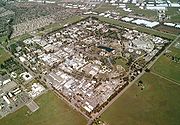
The Lawrence Livermore National Laboratory (LLNL), just outside Livermore, California
, is a Federally Funded Research and Development Center
(FFRDC) founded by the University of California in 1952. It is primarily funded by the United States Department of Energy
(DOE) and managed and operated by Lawrence Livermore National Security, LLC (LLNS), a partnership of the University of California
, Bechtel
, Babcock & Wilcox, URS, and Battelle Memorial Institute
in affiliation with the Texas A&M University System
. On October 1, 2007 LLNS assumed management of LLNL from the University of California, which had exclusively managed and operated the Laboratory since its inception 55 years before.
 LLNL is self-described as "a premier research and development
institution for science and technology applied to national security
." Its principal responsibility is ensuring the safety, security and reliability of the nation’s nuclear weapon
s through the application of advanced science, engineering and technology. The Laboratory also applies its special expertise and multidisciplinary capabilities to preventing the proliferation and use of weapons of mass destruction
, bolstering homeland security
and solving other nationally important problems, including energy
and environmental security
, basic science and economic competitiveness.
LLNL is home to many unique facilities and a number of the most powerful computer systems
in the world, according to the TOP500
list, including Blue Gene/L, the world's fastest computer from 2004 until Los Alamos National Laboratory
's IBM Roadrunner supercomputer surpassed it in 2008. The Lab is a leader in technical innovation: since 1978, LLNL has received a total of 118 prestigious R&D 100 Awards, including five in 2007. The awards are given annually by the editors of R&D Magazine to the most innovative ideas of the year.
The Laboratory is located on a one-square-mile (2.6 km2) site at the eastern edge of Livermore, California. It also operates a 7000 acres (2,832.8 ha) remote experimental test site, called Site 300, situated about 15 miles (24.1 km) southeast of the main Lab site. LLNL has an annual budget of about US$1.5 billion and a staff of roughly 7,000 employees.
. It was intended to spur innovation and provide competition to the nuclear weapon design laboratory at Los Alamos
, New Mexico, home of the Manhattan Project
that developed the first atomic weapons. Edward Teller
and Ernest O. Lawrence, director of the Radiation Laboratory at Berkeley, are regarded as the co-founders of the Livermore Laboratory.
The new laboratory was sited at a former Naval Air Base and training station in Livermore, California. The site was already home to several University of California Radiation Laboratory projects that were too large for its location in the hills above the Berkeley campus, including one of the first experiments in the magnetic approach to confined thermonuclear reactions (i.e. fusion).
E.O. Lawrence tapped 32-year-old Herbert York
, a former graduate student of his, to run the Livermore Laboratory. Under York, the Lab had four main programs: Project Sherwood
(the Magnetic Fusion Program), Project Whitney (the weapons design program), diagnostic weapon experiments (both for the Los Alamos and Livermore laboratories) and a basic physics program. York also saw to it that the new lab embraced the E.O. Lawrence “big science” approach, tackling challenging projects with physicists, chemists, engineers, and computational scientists working together in multidisciplinary teams.
Historically, the Berkeley and Livermore laboratories have had very close relationships on research projects, business operations and staff. The Livermore Lab was established initially as a branch of the Berkeley Laboratory. Both labs are named after E.O. Lawrence, and the Livermore Lab was not officially severed administratively from the Berkeley Lab until the early 1970s. To this day, in official planning documents and records, Lawrence Berkeley National Laboratory
is designated as Site 100, Lawrence Livermore National Lab as Site 200, and LLNL's remote test location as Site 300.
The laboratory became known as the Lawrence Livermore Laboratory in 1971.
On March 14, 2011, the City of Livermore officially expanded the city's boundaries to annex LLNL and move it within the city limits. The unanimous vote by the Livermore City Council expanded Livermore’s southeastern boundaries to cover 15 land parcels covering 1057 acres (4.3 km²) that comprise the LLNL site. Prior to this, the site was in an unincorporated area of Alameda County. The LLNL campus continues to be owned by the federal government.
During the decades of the Cold War
, scores of Livermore-designed warhead
s entered the nation's nuclear stockpile. These were used in missiles ranging in size from the Lance surface-to-surface tactical missile to the megaton-class Spartan antiballistic missile
. Over the years, LLNL designed the following warheads: W27 (Regulus cruise missile; 1955; joint with Los Alamos), W38 (Atlas/Titan ICBM; 1959), B41 (B52 bomb; 1957), W45 (Little John/Terrier missiles; 1956), W47
(Polaris SLBM; 1957), W48 (155-mm howitzer; 1957), W55 (submarine rocket; 1959), W56 (Minuteman ICBM; 1960), W58 (Polaris SLBM; 1960), W62 (Minuteman ICBM; 1964), W68 (Poseidon SLBM; 1966), W70
(Lance missile; 1969), W71 (Spartan missile; 1968), W79 (8-in. artillery gun; 1975), W82 (155-mm howitzer; 1978), B83 (modern strategic bomb; 1979), W87 (Peacekeeper/MX ICBM; 1982), and W80 (Tomahawk GLCM; 1978). The W80, W87, and the B83 are the only LLNL designs still in the U.S. nuclear stockpile.
With the collapse of the Soviet Union
and the end of the Cold War
, the United States began a moratorium on nuclear testing and development of new nuclear weapon designs. To sustain existing warheads for the indefinite future, a science-based Stockpile Stewardship
Program (SSP) was defined that emphasized the development and application of greatly improved technical capabilities to assess the safety, security, and reliability of existing nuclear warheads without the use of nuclear testing. Confidence in the performance of weapons, without nuclear testing, is maintained through an ongoing process of stockpile surveillance, assessment and certification, and refurbishment or weapon replacement.
With no new designs of nuclear weapons, the warheads in the U.S. stockpile must continue to function far past their original expected lifetimes. As components and materials age, problems can arise. Stockpile Life Extension Programs can extend system lifetimes, but they also can introduce performance uncertainties and require maintenance of outdated technologies and materials. Because there is concern that it will become increasingly difficult to maintain high confidence in the current warheads for the long term, the Department of Energy/National Nuclear Security Administration initiated the Reliable Replacement Warhead (RRW) Program. RRW designs could reduce uncertainties, ease maintenance demands, and enhance safety and security. In March 2007, the LLNL design was chosen for the Reliable Replacement Warhead
. Since that time, however, Congress has not allocated funding for any further development of the RRW.
The Livermore Action Group organized many mass protests, from 1981 to 1984, against nuclear weapons which were being produced by the Lawrence Livermore National Laboratory. Peace activists Ken Nightingale and Eldred Schneider were involved. On June 22, 1982, more than 1,300 anti-nuclear
protesters were arrested in a nonviolent demonstration. More recently, there has been an annual protest against nuclear weapons research at Lawrence Livermore. In the 2007 protest, 64 people were arrested. More than 80 people were arrested in March 2008 while protesting at the gates.
to learn how plutonium performs as it ages and how it behaves under high pressure (e.g., with the impact of high explosives). Plutonium has seven temperature-dependent solid allotropes
. Each possesses a different density and crystal structure
. Alloys of plutonium are even more complex; multiple phases can be present in a sample at any given time. Experiments are being conducted at LLNL and elsewhere to measure the structural, electrical and chemical properties of plutonium and its alloys and to determine how these materials change over time. Such measurements will enable scientists to better model and predict plutonium's long-term behavior in the aging stockpile.
The Lab’s plutonium research is conducted in a specially designed, ultra-safe, and highly secure facility called the SuperBlock. Work with highly enriched uranium is also conducted here. In March 2008, the National Nuclear Security Administration
(NNSA) presented its preferred alternative for the transformation of the nation’s nuclear weapons complex. Under this plan, LLNL would be a center of excellence for nuclear design and engineering, a center of excellence for high explosive research and development, and a science magnet in high-energy-density (i.e., laser) physics
. In addition, most of its special nuclear material would be removed and consolidated at a more central, yet-to-be-named site.
On September 30, 2009, the NNSA announced that about two thirds of the special nuclear material (e.g., plutonium) at LLNL requiring the highest level of security protection had been removed from LLNL. The move was part of NNSA's efforts initiated in October 2006 to consolidate special nuclear material at five sites by 2012, with significantly reduced square footage at those sites by 2017. The federally mandated project intends to improve security and reduce security costs, and is part of NNSA's overall effort to transform the Cold War era "nuclear weapons" enterprise into a 21st century "nuclear security" enterprise. The original date to remove all high-security nuclear material from LLNL, based on equipment capability and capacity, was 2014. NNSA and LLNL developed a timeline to remove this material as early as possible, accelerating the target completion date to 2012.
Today, Livermore researchers address the full spectrum of threats – radiological/nuclear, chemical, biological, explosives, and cyber. They combine physical and life sciences, engineering, computations, and analysis to develop technologies that solve real-world problems. Activities are grouped into five programs:
Lawrence Livermore National Laboratory has worked out several energy technologies in the field of coal gasification
, shale oil extraction, geothermal energy, advanced battery research
, solar energy, and fusion energy. Main oil shale
processing technologies worked out by the Lawrence Livermore National Laboratory are LLNL HRS
(hot-recycled-solid), LLNL RISE
(in situ
extraction technology) and LLNL radiofrequency technologies.
On July 17, 2009 LLNL announced that the Laboratory had captured eight R&D 100 Awards – more than it had ever received in the annual competition. The previous LLNL record of seven awards was reached five times – in 1987, 1988, 1997, 1998 and 2006.
Also known as the “Oscars of invention”, the awards are given each year for the development of cutting-edge scientific and engineering technologies with commercial potential.
The awards raises LLNL’s total to 129 since 1978. The winning technologies were:
The November 2007 release of the 30th TOP500
list of the 500 most powerful computer systems in the world, has LLNL’s Blue Gene/L computer in first place for the seventh consecutive time. Five other LLNL computers are in the top 100. However, the November 2008 release of the TOP500 list places the Blue Gene/L supercomputer behind the Pleiades
supercomputer in NASA/Ames Research Center, the Jaguar supercomputer in Oak Ridge National Laboratory, and the IBM Roadrunner supercomputer in Los Alamos National Laboratory. Currently, the Blue Gene/L computer can sustain 478.2 trillion operations per second, with a peak of 596.4 trillion operations per second.
On June 22, 2006, researchers at LLNL announced that they had devised a scientific software application that sustained 207.3 trillion operations per second. The record performance was made at LLNL on Blue Gene/L, the world's fastest supercomputer with 131,072 processors. The record was a milestone in the evolution of predictive science, a field in which researchers use supercomputers to answer questions about such subjects as: materials science simulations, global warming
, and reactions to natural disasters.
LLNL has a long history of developing computing software and systems. Initially, there was no commercially available software, and computer manufacturers considered it the customer’s responsibility to develop their own. Users of the early computers had to write not only the codes to solve their technical problems, but also the routines to run the machines themselves. Today, LLNL computer scientists focus on creating the highly complex physics models, visualization codes, and other unique applications tailored to specific research requirements. A great deal of software also has been written by LLNL personnel to optimize the operation and management of the computer systems, including operating system extensions such as CHAOS (Linux Clustering)
and resource management packages such as SLURM
. The Peloton
procurements in late 2006 (Atlas and other computers) were the first in which a commercial resource management package, Moab, was used to manage the clusters.
/California campus and LLNL to promote greater collaboration between the world-class scientists at these labs and their partners in industry and academia. Open access to the LVOC by the international science community would directly support the advancement of innovation and research, increase the profile of the labs in the region, expand the high-tech “footprint” of the San Francisco Bay Area and establish the Livermore Valley as the high-tech anchor of the East Bay of San Francisco. The LVOC, which would create a shared space between the two adjacent labs in Livermore and initially occupying approximately one quarter of the LLNL site.
The LVOC concept:
LLNL and Sandia National Laboratories are moving forward on the conceptual development of design alternatives required to reconfigure the existing laboratories into a more open layout with unrestricted public access.
/National Nuclear Security Administration
(DOE/NNSA) Office of Defense Programs, which supports its stockpile stewardship
and advanced scientific computing programs. Funding to support LLNL's global security and homeland security
work comes from the DOE/NNSA Office of Defense Nuclear Nonproliferation as well as the Department of Homeland Security. LLNL also receives funding from DOE’s Office of Science
, Office of Civilian Radioactive Waste Management, and Office of Nuclear Energy
. In addition, LLNL conducts work-for-others research and development for various Defense Department sponsors, other federal agencies, including NASA
, Nuclear Regulatory Commission
(NRC), National Institutes of Health
, and Environmental Protection Agency
, a number of California State agencies, and private industry.
Research/Science Budget:
Site Management/Operations Budget:
The Directors Office is organized into these functional areas/offices:
The Laboratory is organized into four principal directorates, each headed by a Principal Associate Director:
Three other directorates are each headed by an Associate Director who reports to the LLNL Director:
(LLNS) Board of Governors, a group of key scientific, academic, national security and business leaders from the LLNS partner companies that jointly own and control LLNS. The LLNS Board of Governors has a total of 16 positions, with six of these Governors constituting an Executive Committee. All decisions of the Board are made by the Governors on the Executive Committee. The other Governors are advisory to the Executive Committee and do not have voting rights.
The University of California is entitled to appoint three Governors to the Executive Committee, including the Chair. Bechtel is also entitled to appoint three Governors to the Executive Committee, including the Vice Chair. However, one of the Bechtel Governors must be a representative of Babcock and Wilcox (B&W) or the Washington Division of URS Corporation (URS), who is nominated jointly by B&W and URS each year, and who must be approved and appointed by Bechtel. The Executive Committee actually has a seventh Governor who is appointed by Battelle, however they are non-voting and merely advisory to the Executive Committee. The remaining Board positions are known as Independent Governors (also referred to as Outside Governors), and are selected from among individuals, preferably of national stature, and can not be employees or officers of the partner companies.
The University of California-appointed Chair has tie-breaking authority over most decisions of the Executive Committee. The Board of Governors is the ultimate governing body of LLNS and is charged with overseeing the affairs of LLNS in its operations and management of LLNL.
LLNS managers and employees who work at LLNL, up to and including the President/Laboratory Director, are generally referred to as Laboratory Employees. All Laboratory Employees report directly or indirectly to the LLNS President. While most of the work performed by LLNL is funded by the federal government, Laboratory employees are paid by LLNS which is responsible for all aspects of their employment including providing health care benefits and retirement programs.
Within the Board of Governors, authority resides in the Executive Committee to exercise all rights, powers, and authorities of LLNS, excepting only certain decisions that are reserved to the parent companies. The LLNS Executive Committee is free to appoint officers or other managers of LLNS and LLNL, and may delegate its authorities as it deems appropriate to such officers, employees, or other representatives of LLNS/LLNL. The Executive Committee may also retain auditors, attorneys, or other professionals as necessary. For the most part the Executive Committee has appointed senior managers at LLNL as the primary officers of LLNS. As a practical matter most operational decisions are delegated to the President of LLNS, who is also the Laboratory Director. The positions of President/Laboratory Director and Deputy Laboratory Director are filled by joint action of the Chair and Vice Chair of the Executive Committee, with the University of California nominating the President/Laboratory Director and Bechtel nominating the Deputy Laboratory Director.
The current LLNS Chairman is Norman J. Pattiz
- founder and chairman of Westwood One
, America's largest radio network, and he also currently serves on the Board of Regent of the University of California. The Vice Chairman is J. Scott Ogilvie - president of Bechtel Systems & Infrastructure, Inc., he serves on the Board of Directors of Bechtel Group, Inc. (BGI) and on the BGI Audit Committee.
The Board of Governors uses the following committees to oversee the management and operations of LLNL by LLNS:
Livermore, California
Livermore is a city in Alameda County. The population as of 2010 was 80,968. Livermore is located on the eastern edge of California's San Francisco Bay Area....
, is a Federally Funded Research and Development Center
Federally funded research and development center
Federally Funded Research and Development Centers conduct research for the United States Government. They are administered in accordance with U.S Code of Federal Regulations, Title 48, Part 35, Section 35.017 by universities and corporations....
(FFRDC) founded by the University of California in 1952. It is primarily funded by the United States Department of Energy
United States Department of Energy
The United States Department of Energy is a Cabinet-level department of the United States government concerned with the United States' policies regarding energy and safety in handling nuclear material...
(DOE) and managed and operated by Lawrence Livermore National Security, LLC (LLNS), a partnership of the University of California
University of California
The University of California is a public university system in the U.S. state of California. Under the California Master Plan for Higher Education, the University of California is a part of the state's three-tier public higher education system, which also includes the California State University...
, Bechtel
Bechtel
Bechtel Corporation is the largest engineering company in the United States, ranking as the 5th-largest privately owned company in the U.S...
, Babcock & Wilcox, URS, and Battelle Memorial Institute
Battelle Memorial Institute
Battelle Memorial Institute is a private nonprofit applied science and technology development company headquartered in Columbus, Ohio. Battelle is a charitable trust organized as a nonprofit corporation under the laws of the State of Ohio and is exempt from taxation under Section 501 of the...
in affiliation with the Texas A&M University System
Texas A&M University System
The Texas A&M University System is one of the largest systems of higher education in the United States. Through a statewide network of eleven universities, eight state agencies and a comprehensive health science center, the Texas A&M System educates over 100,000 students, conducts more than $600...
. On October 1, 2007 LLNS assumed management of LLNL from the University of California, which had exclusively managed and operated the Laboratory since its inception 55 years before.
Background
Research and development
The phrase research and development , according to the Organization for Economic Co-operation and Development, refers to "creative work undertaken on a systematic basis in order to increase the stock of knowledge, including knowledge of man, culture and society, and the use of this stock of...
institution for science and technology applied to national security
National security
National security is the requirement to maintain the survival of the state through the use of economic, diplomacy, power projection and political power. The concept developed mostly in the United States of America after World War II...
." Its principal responsibility is ensuring the safety, security and reliability of the nation’s nuclear weapon
Nuclear weapon
A nuclear weapon is an explosive device that derives its destructive force from nuclear reactions, either fission or a combination of fission and fusion. Both reactions release vast quantities of energy from relatively small amounts of matter. The first fission bomb test released the same amount...
s through the application of advanced science, engineering and technology. The Laboratory also applies its special expertise and multidisciplinary capabilities to preventing the proliferation and use of weapons of mass destruction
Weapons of mass destruction
A weapon of mass destruction is a weapon that can kill and bring significant harm to a large number of humans and/or cause great damage to man-made structures , natural structures , or the biosphere in general...
, bolstering homeland security
Homeland security
Homeland security is an umbrella term for security efforts to protect states against terrorist activity. Specifically, is a concerted national effort to prevent terrorist attacks within the U.S., reduce America’s vulnerability to terrorism, and minimize the damage and recover from attacks that do...
and solving other nationally important problems, including energy
Energy
In physics, energy is an indirectly observed quantity. It is often understood as the ability a physical system has to do work on other physical systems...
and environmental security
Environmental security
Environmental security examines the threat posed by environmental events and trends to national power, as well as the impact of human conflict and international relations on the environment....
, basic science and economic competitiveness.
LLNL is home to many unique facilities and a number of the most powerful computer systems
Supercomputer
A supercomputer is a computer at the frontline of current processing capacity, particularly speed of calculation.Supercomputers are used for highly calculation-intensive tasks such as problems including quantum physics, weather forecasting, climate research, molecular modeling A supercomputer is a...
in the world, according to the TOP500
TOP500
The TOP500 project ranks and details the 500 most powerful known computer systems in the world. The project was started in 1993 and publishes an updated list of the supercomputers twice a year...
list, including Blue Gene/L, the world's fastest computer from 2004 until Los Alamos National Laboratory
Los Alamos National Laboratory
Los Alamos National Laboratory is a United States Department of Energy national laboratory, managed and operated by Los Alamos National Security , located in Los Alamos, New Mexico...
's IBM Roadrunner supercomputer surpassed it in 2008. The Lab is a leader in technical innovation: since 1978, LLNL has received a total of 118 prestigious R&D 100 Awards, including five in 2007. The awards are given annually by the editors of R&D Magazine to the most innovative ideas of the year.
The Laboratory is located on a one-square-mile (2.6 km2) site at the eastern edge of Livermore, California. It also operates a 7000 acres (2,832.8 ha) remote experimental test site, called Site 300, situated about 15 miles (24.1 km) southeast of the main Lab site. LLNL has an annual budget of about US$1.5 billion and a staff of roughly 7,000 employees.
Origins
LLNL was established in 1952 as the Lawrence Radiation Laboratory at Livermore as an offshoot of the existing University of California Radiation Laboratory at BerkeleyLawrence Berkeley National Laboratory
The Lawrence Berkeley National Laboratory , is a U.S. Department of Energy national laboratory conducting unclassified scientific research. It is located on the grounds of the University of California, Berkeley, in the Berkeley Hills above the central campus...
. It was intended to spur innovation and provide competition to the nuclear weapon design laboratory at Los Alamos
Los Alamos National Laboratory
Los Alamos National Laboratory is a United States Department of Energy national laboratory, managed and operated by Los Alamos National Security , located in Los Alamos, New Mexico...
, New Mexico, home of the Manhattan Project
Manhattan Project
The Manhattan Project was a research and development program, led by the United States with participation from the United Kingdom and Canada, that produced the first atomic bomb during World War II. From 1942 to 1946, the project was under the direction of Major General Leslie Groves of the US Army...
that developed the first atomic weapons. Edward Teller
Edward Teller
Edward Teller was a Hungarian-American theoretical physicist, known colloquially as "the father of the hydrogen bomb," even though he did not care for the title. Teller made numerous contributions to nuclear and molecular physics, spectroscopy , and surface physics...
and Ernest O. Lawrence, director of the Radiation Laboratory at Berkeley, are regarded as the co-founders of the Livermore Laboratory.
The new laboratory was sited at a former Naval Air Base and training station in Livermore, California. The site was already home to several University of California Radiation Laboratory projects that were too large for its location in the hills above the Berkeley campus, including one of the first experiments in the magnetic approach to confined thermonuclear reactions (i.e. fusion).
E.O. Lawrence tapped 32-year-old Herbert York
Herbert York
Herbert Frank York was an American nuclear physicist. He held numerous research and administrative positions at various United States government and educational institutes.-Biography:...
, a former graduate student of his, to run the Livermore Laboratory. Under York, the Lab had four main programs: Project Sherwood
Project Sherwood
Project Sherwood was the codename for a United States program in controlled nuclear fusion. It was funded under the Atoms for Peace initiative during the administration of President Dwight D. Eisenhower...
(the Magnetic Fusion Program), Project Whitney (the weapons design program), diagnostic weapon experiments (both for the Los Alamos and Livermore laboratories) and a basic physics program. York also saw to it that the new lab embraced the E.O. Lawrence “big science” approach, tackling challenging projects with physicists, chemists, engineers, and computational scientists working together in multidisciplinary teams.
Historically, the Berkeley and Livermore laboratories have had very close relationships on research projects, business operations and staff. The Livermore Lab was established initially as a branch of the Berkeley Laboratory. Both labs are named after E.O. Lawrence, and the Livermore Lab was not officially severed administratively from the Berkeley Lab until the early 1970s. To this day, in official planning documents and records, Lawrence Berkeley National Laboratory
Lawrence Berkeley National Laboratory
The Lawrence Berkeley National Laboratory , is a U.S. Department of Energy national laboratory conducting unclassified scientific research. It is located on the grounds of the University of California, Berkeley, in the Berkeley Hills above the central campus...
is designated as Site 100, Lawrence Livermore National Lab as Site 200, and LLNL's remote test location as Site 300.
The laboratory became known as the Lawrence Livermore Laboratory in 1971.
On March 14, 2011, the City of Livermore officially expanded the city's boundaries to annex LLNL and move it within the city limits. The unanimous vote by the Livermore City Council expanded Livermore’s southeastern boundaries to cover 15 land parcels covering 1057 acres (4.3 km²) that comprise the LLNL site. Prior to this, the site was in an unincorporated area of Alameda County. The LLNL campus continues to be owned by the federal government.
Weapons projects
From its inception, Livermore focused on innovative weapon design concepts; as a result, its first three nuclear tests were unsuccessful. However, the Lab persevered and its subsequent designs proved increasingly successful. In 1957, the Livermore Lab was selected to develop the warhead for the Navy's Polaris missile. This warhead required numerous innovations to fit a nuclear warhead into the relatively small confines of the missile nosecone.During the decades of the Cold War
Cold War
The Cold War was the continuing state from roughly 1946 to 1991 of political conflict, military tension, proxy wars, and economic competition between the Communist World—primarily the Soviet Union and its satellite states and allies—and the powers of the Western world, primarily the United States...
, scores of Livermore-designed warhead
Warhead
The term warhead refers to the explosive material and detonator that is delivered by a missile, rocket, or torpedo.- Etymology :During the early development of naval torpedoes, they could be equipped with an inert payload that was intended for use during training, test firing and exercises. This...
s entered the nation's nuclear stockpile. These were used in missiles ranging in size from the Lance surface-to-surface tactical missile to the megaton-class Spartan antiballistic missile
LIM-49A Spartan
The LIM-49A Spartan was a United States Army anti-ballistic missile, whose warheads were developed at Lawrence Livermore National Laboratory. It was a three-stage, solid-fuel surface-to-air missile that carried a W71 thermonuclear warhead with a lethal radius of up to 30 miles to intercept...
. Over the years, LLNL designed the following warheads: W27 (Regulus cruise missile; 1955; joint with Los Alamos), W38 (Atlas/Titan ICBM; 1959), B41 (B52 bomb; 1957), W45 (Little John/Terrier missiles; 1956), W47
W47
The W47 was an American thermonuclear warhead used on the Polaris A-1 sub-launched ballistic missile system. Various models were in service from 1960 through the end of 1974...
(Polaris SLBM; 1957), W48 (155-mm howitzer; 1957), W55 (submarine rocket; 1959), W56 (Minuteman ICBM; 1960), W58 (Polaris SLBM; 1960), W62 (Minuteman ICBM; 1964), W68 (Poseidon SLBM; 1966), W70
W70
W70 is the designation for a tactical nuclear warhead developed by the United States in the early 1970s. The Lawrence Livermore National Laboratory designed W70 was used on the MGM-52 Lance. About 1250 were built in total. The warhead had a variable yield of between 1 and 100 kilotons, selectable...
(Lance missile; 1969), W71 (Spartan missile; 1968), W79 (8-in. artillery gun; 1975), W82 (155-mm howitzer; 1978), B83 (modern strategic bomb; 1979), W87 (Peacekeeper/MX ICBM; 1982), and W80 (Tomahawk GLCM; 1978). The W80, W87, and the B83 are the only LLNL designs still in the U.S. nuclear stockpile.
With the collapse of the Soviet Union
Soviet Union
The Soviet Union , officially the Union of Soviet Socialist Republics , was a constitutionally socialist state that existed in Eurasia between 1922 and 1991....
and the end of the Cold War
Cold War
The Cold War was the continuing state from roughly 1946 to 1991 of political conflict, military tension, proxy wars, and economic competition between the Communist World—primarily the Soviet Union and its satellite states and allies—and the powers of the Western world, primarily the United States...
, the United States began a moratorium on nuclear testing and development of new nuclear weapon designs. To sustain existing warheads for the indefinite future, a science-based Stockpile Stewardship
Stockpile stewardship
Stockpile stewardship refers to the United States program of reliability testing and maintenance of its nuclear weapons without the use of nuclear testing....
Program (SSP) was defined that emphasized the development and application of greatly improved technical capabilities to assess the safety, security, and reliability of existing nuclear warheads without the use of nuclear testing. Confidence in the performance of weapons, without nuclear testing, is maintained through an ongoing process of stockpile surveillance, assessment and certification, and refurbishment or weapon replacement.
With no new designs of nuclear weapons, the warheads in the U.S. stockpile must continue to function far past their original expected lifetimes. As components and materials age, problems can arise. Stockpile Life Extension Programs can extend system lifetimes, but they also can introduce performance uncertainties and require maintenance of outdated technologies and materials. Because there is concern that it will become increasingly difficult to maintain high confidence in the current warheads for the long term, the Department of Energy/National Nuclear Security Administration initiated the Reliable Replacement Warhead (RRW) Program. RRW designs could reduce uncertainties, ease maintenance demands, and enhance safety and security. In March 2007, the LLNL design was chosen for the Reliable Replacement Warhead
Reliable Replacement Warhead
The Reliable Replacement Warhead was a proposed new American nuclear warhead design and bomb family that was intended to be simple, reliable and to provide a long-lasting, low maintenance future nuclear force for the United States...
. Since that time, however, Congress has not allocated funding for any further development of the RRW.
The Livermore Action Group organized many mass protests, from 1981 to 1984, against nuclear weapons which were being produced by the Lawrence Livermore National Laboratory. Peace activists Ken Nightingale and Eldred Schneider were involved. On June 22, 1982, more than 1,300 anti-nuclear
Anti-nuclear
The anti-nuclear movement is a social movement that opposes the use of nuclear technologies. Many direct action groups, environmental groups, and professional organisations have identified themselves with the movement at the local, national, and international level...
protesters were arrested in a nonviolent demonstration. More recently, there has been an annual protest against nuclear weapons research at Lawrence Livermore. In the 2007 protest, 64 people were arrested. More than 80 people were arrested in March 2008 while protesting at the gates.
Plutonium research
LLNL conducts research into the properties and behavior of plutoniumPlutonium
Plutonium is a transuranic radioactive chemical element with the chemical symbol Pu and atomic number 94. It is an actinide metal of silvery-gray appearance that tarnishes when exposed to air, forming a dull coating when oxidized. The element normally exhibits six allotropes and four oxidation...
to learn how plutonium performs as it ages and how it behaves under high pressure (e.g., with the impact of high explosives). Plutonium has seven temperature-dependent solid allotropes
Allotropy
Allotropy or allotropism is the property of some chemical elements to exist in two or more different forms, known as allotropes of these elements...
. Each possesses a different density and crystal structure
Crystal structure
In mineralogy and crystallography, crystal structure is a unique arrangement of atoms or molecules in a crystalline liquid or solid. A crystal structure is composed of a pattern, a set of atoms arranged in a particular way, and a lattice exhibiting long-range order and symmetry...
. Alloys of plutonium are even more complex; multiple phases can be present in a sample at any given time. Experiments are being conducted at LLNL and elsewhere to measure the structural, electrical and chemical properties of plutonium and its alloys and to determine how these materials change over time. Such measurements will enable scientists to better model and predict plutonium's long-term behavior in the aging stockpile.
The Lab’s plutonium research is conducted in a specially designed, ultra-safe, and highly secure facility called the SuperBlock. Work with highly enriched uranium is also conducted here. In March 2008, the National Nuclear Security Administration
National Nuclear Security Administration
The United States National Nuclear Security Administration is part of the United States Department of Energy. It works to improve national security through the military application of nuclear energy...
(NNSA) presented its preferred alternative for the transformation of the nation’s nuclear weapons complex. Under this plan, LLNL would be a center of excellence for nuclear design and engineering, a center of excellence for high explosive research and development, and a science magnet in high-energy-density (i.e., laser) physics
Physics
Physics is a natural science that involves the study of matter and its motion through spacetime, along with related concepts such as energy and force. More broadly, it is the general analysis of nature, conducted in order to understand how the universe behaves.Physics is one of the oldest academic...
. In addition, most of its special nuclear material would be removed and consolidated at a more central, yet-to-be-named site.
On September 30, 2009, the NNSA announced that about two thirds of the special nuclear material (e.g., plutonium) at LLNL requiring the highest level of security protection had been removed from LLNL. The move was part of NNSA's efforts initiated in October 2006 to consolidate special nuclear material at five sites by 2012, with significantly reduced square footage at those sites by 2017. The federally mandated project intends to improve security and reduce security costs, and is part of NNSA's overall effort to transform the Cold War era "nuclear weapons" enterprise into a 21st century "nuclear security" enterprise. The original date to remove all high-security nuclear material from LLNL, based on equipment capability and capacity, was 2014. NNSA and LLNL developed a timeline to remove this material as early as possible, accelerating the target completion date to 2012.
Global security program
The Lab’s work in global security aims to reduce and mitigate the dangers posed by the spread or use of weapons of mass destruction and by threats to energy and environmental security. Livermore has been working on global security and homeland security for decades, predating both the collapse of the Soviet Union in 1991 and the September 11, 2001, terrorist attacks. LLNL staff have been heavily involved in the cooperative nonproliferation programs with Russia to secure at-risk weapons materials and assist former weapons workers in developing peaceful applications and self-sustaining job opportunities for their expertise and technologies. In the mid-1990s, Lab scientists began efforts to devise improved biodetection capabilities, leading to miniaturized and autonomous instruments that can detect biothreat agents in a few minutes instead of the days to weeks previously required for DNA analysis.Today, Livermore researchers address the full spectrum of threats – radiological/nuclear, chemical, biological, explosives, and cyber. They combine physical and life sciences, engineering, computations, and analysis to develop technologies that solve real-world problems. Activities are grouped into five programs:
- Nonproliferation. Preventing the spread of materials, technology and expertise related to weapons of mass destruction (WMD) and detecting WMD proliferation activities worldwide.
- Domestic security: Anticipating, innovating and delivering technological solutions to prevent and mitigate devastating high-leverage attacks on U.S. soil.
- Defense: Developing and demonstrating new concepts and capabilities to help the Department of Defense prevent and deter harm to the nation, its citizens and its military forces.
- Intelligence: Working at the intersection of science, technology and analysis to provide insight into the threats to national security posed by foreign entities.
- Energy and environmental security: Furnishing scientific understanding and technological expertise to devise energy and environmental solutions at global, regional and local scales.
Other programs
LLNL supports capabilities in a broad range of scientific and technical disciplines, applying current capabilities to existing programs and developing new science and technologies to meet future national needs.- The LLNL chemistry, materials, and life science research focuses on chemical engineering, nuclear chemistry, materials science, and biology and bio-nanotechnology.
- Physics thrust areas include condensed matterCondensed MatterCondensed matter may refer to several things*Condensed matter physics, the study of the physical properties of condensed phases of matter*European Physical Journal B: Condensed Matter and Complex Systems, a scientific journal published by EDP sciences...
and high-pressure physicsPhysicsPhysics is a natural science that involves the study of matter and its motion through spacetime, along with related concepts such as energy and force. More broadly, it is the general analysis of nature, conducted in order to understand how the universe behaves.Physics is one of the oldest academic...
, optical science and high-energy-density physics, medical physics and biophysicsBiophysicsBiophysics is an interdisciplinary science that uses the methods of physical science to study biological systems. Studies included under the branches of biophysics span all levels of biological organization, from the molecular scale to whole organisms and ecosystems...
, and nuclear particle and accelerator physics. - In the area of energy and environmental science, Livermore’s emphasis is on carbon and climate, energy, water and the environment, and the national nuclear waste repository.
- The LLNL engineering activities include micro- and nanotechnologyNanotechnologyNanotechnology is the study of manipulating matter on an atomic and molecular scale. Generally, nanotechnology deals with developing materials, devices, or other structures possessing at least one dimension sized from 1 to 100 nanometres...
, laserLaserA laser is a device that emits light through a process of optical amplification based on the stimulated emission of photons. The term "laser" originated as an acronym for Light Amplification by Stimulated Emission of Radiation...
s and opticsOpticsOptics is the branch of physics which involves the behavior and properties of light, including its interactions with matter and the construction of instruments that use or detect it. Optics usually describes the behavior of visible, ultraviolet, and infrared light...
, biotechnologyBiotechnologyBiotechnology is a field of applied biology that involves the use of living organisms and bioprocesses in engineering, technology, medicine and other fields requiring bioproducts. Biotechnology also utilizes these products for manufacturing purpose...
, precision engineering, nondestructive characterization, modeling and simulation, systems and decision science, and sensors, imaging and communications. - The LLNL is very strong in computer science, with thrust areas in computing applications and research, integrated computing and communications systems, and cyber security.
Lawrence Livermore National Laboratory has worked out several energy technologies in the field of coal gasification
Coal gasification
Coal gasification is the process of producing coal gas, a type of syngas–a mixture of carbon monoxide , hydrogen , carbon dioxide and water vapour –from coal...
, shale oil extraction, geothermal energy, advanced battery research
Rechargeable battery
A rechargeable battery or storage battery is a group of one or more electrochemical cells. They are known as secondary cells because their electrochemical reactions are electrically reversible. Rechargeable batteries come in many different shapes and sizes, ranging anything from a button cell to...
, solar energy, and fusion energy. Main oil shale
Oil shale
Oil shale, an organic-rich fine-grained sedimentary rock, contains significant amounts of kerogen from which liquid hydrocarbons called shale oil can be produced...
processing technologies worked out by the Lawrence Livermore National Laboratory are LLNL HRS
LLNL HRS process
LLNL HRS process is an above-ground shale oil extraction technology. It is classified as a hot recycled solids technology.-History:The process was developed by the Lawrence Livermore National Laboratory...
(hot-recycled-solid), LLNL RISE
LLNL RISE process
The LLNL RISE process was an experimental shale oil extraction technology developed by the Lawrence Livermore National Laboratory. The name comes from the abbreviation of the Lawrence Livermore National Laboratory and words 'rubble in situ extraction'....
(in situ
In situ
In situ is a Latin phrase which translated literally as 'In position'. It is used in many different contexts.-Aerospace:In the aerospace industry, equipment on board aircraft must be tested in situ, or in place, to confirm everything functions properly as a system. Individually, each piece may...
extraction technology) and LLNL radiofrequency technologies.
Key accomplishments
Over its 55-year history, Lawrence Livermore has made many scientific and technological achievements, including:- Critical contributions to the U.S. nuclear deterrence through the design of nuclear weapons to meet military requirements and, since the mid-1990s, through the Stockpile Stewardship Program, by which the safety and reliability of the enduring stockpile is ensured without underground nuclear testing.
- Design, construction, and operation of a series of ever larger, more powerful, and more capable laser systems, culminating in the 192-beam National Ignition FacilityNational Ignition FacilityThe National Ignition Facility, or NIF is a large, laser-based inertial confinement fusion research device located at the Lawrence Livermore National Laboratory in Livermore, California. NIF uses powerful lasers to heat and compress a small amount of hydrogen fuel to the point where nuclear fusion...
(NIF), completed in 2009. - Advances in particle acceleratorParticle acceleratorA particle accelerator is a device that uses electromagnetic fields to propel charged particles to high speeds and to contain them in well-defined beams. An ordinary CRT television set is a simple form of accelerator. There are two basic types: electrostatic and oscillating field accelerators.In...
and fusionNuclear fusionNuclear fusion is the process by which two or more atomic nuclei join together, or "fuse", to form a single heavier nucleus. This is usually accompanied by the release or absorption of large quantities of energy...
technology, including magnetic fusionMagnetic confinement fusionMagnetic confinement fusion is an approach to generating fusion power that uses magnetic fields to confine the hot fusion fuel in the form of a plasma. Magnetic confinement is one of two major branches of fusion energy research, the other being inertial confinement fusion. The magnetic approach is...
, free-electron laserLaserA laser is a device that emits light through a process of optical amplification based on the stimulated emission of photons. The term "laser" originated as an acronym for Light Amplification by Stimulated Emission of Radiation...
s, accelerator mass spectrometryAccelerator mass spectrometryAccelerator mass spectrometry differs from other forms of mass spectrometry in that it accelerates ions to extraordinarily high kinetic energies before mass analysis. The special strength of AMS among the mass spectrometric methods is its power to separate a rare isotope from an abundant...
, and inertial confinement fusionInertial confinement fusionInertial confinement fusion is a process where nuclear fusion reactions are initiated by heating and compressing a fuel target, typically in the form of a pellet that most often contains a mixture of deuterium and tritium....
. - Breakthroughs in high-performance computingHigh-performance computingHigh-performance computing uses supercomputers and computer clusters to solve advanced computation problems. Today, computer systems approaching the teraflops-region are counted as HPC-computers.-Overview:...
, including the development of novel concepts for massively parallel computingParallel computingParallel computing is a form of computation in which many calculations are carried out simultaneously, operating on the principle that large problems can often be divided into smaller ones, which are then solved concurrently . There are several different forms of parallel computing: bit-level,...
and the design and application of computers that can carry out hundreds of trillions of operations per second. - Development of technologies and systems for detecting nuclear, radiological, chemical, biological, and explosive threats to prevent and mitigate WMD proliferation and terrorismTerrorismTerrorism is the systematic use of terror, especially as a means of coercion. In the international community, however, terrorism has no universally agreed, legally binding, criminal law definition...
. - Development of extreme ultraviolet lithographyExtreme ultraviolet lithographyExtreme ultraviolet lithography is a next-generation lithography technology using an extreme ultraviolet wavelength, currently expected to be 13.5 nm.-EUVL light source:...
(EUVL) for fabricating next-generation computer chips. - First-ever detection of massive compact halo objectMassive compact halo objectMassive astrophysical compact halo object, or MACHO, is a general name for any kind of astronomical body that might explain the apparent presence of dark matter in galaxy halos. A MACHO is a body composed of normal baryonic matter, which emits little or no radiation and drifts through interstellar...
s (MACHOs), a suspected but previously undetected component of dark matterDark matterIn astronomy and cosmology, dark matter is matter that neither emits nor scatters light or other electromagnetic radiation, and so cannot be directly detected via optical or radio astronomy...
. - Advances in genomicsGenomicsGenomics is a discipline in genetics concerning the study of the genomes of organisms. The field includes intensive efforts to determine the entire DNA sequence of organisms and fine-scale genetic mapping efforts. The field also includes studies of intragenomic phenomena such as heterosis,...
, biotechnologyBiotechnologyBiotechnology is a field of applied biology that involves the use of living organisms and bioprocesses in engineering, technology, medicine and other fields requiring bioproducts. Biotechnology also utilizes these products for manufacturing purpose...
, and biodetection, including major contributions to the complete sequencing of the human genomeGenomeIn modern molecular biology and genetics, the genome is the entirety of an organism's hereditary information. It is encoded either in DNA or, for many types of virus, in RNA. The genome includes both the genes and the non-coding sequences of the DNA/RNA....
though the Joint Genome InstituteJoint Genome InstituteThe U.S. Department of Energy Joint Genome Institute was created in 1997 to unite the expertise and resources in genome mapping, DNA sequencing, technology development, and information sciences pioneered at the DOE genome centers at Lawrence Berkeley National Laboratory , Lawrence Livermore...
and the development of rapid PCR (polymerase chain reaction) technology that lies at the heart of today’s most advanced DNA detection instruments. - Development and operation of the National Atmospheric Release Advisory Center (NARAC), which provides real-time, multi-scale (global, regional, local, urban) modeling of hazardous materials released into the atmosphereAtmosphereAn atmosphere is a layer of gases that may surround a material body of sufficient mass, and that is held in place by the gravity of the body. An atmosphere may be retained for a longer duration, if the gravity is high and the atmosphere's temperature is low...
. - Development of highest resolution global climate modelClimate modelClimate models use quantitative methods to simulate the interactions of the atmosphere, oceans, land surface, and ice. They are used for a variety of purposes from study of the dynamics of the climate system to projections of future climate...
s and contributions to the International Panel on Climate Change which, together with former vice president Al GoreAl GoreAlbert Arnold "Al" Gore, Jr. served as the 45th Vice President of the United States , under President Bill Clinton. He was the Democratic Party's nominee for President in the 2000 U.S. presidential election....
, was awarded the 2007 Nobel Peace PrizeNobel Peace PrizeThe Nobel Peace Prize is one of the five Nobel Prizes bequeathed by the Swedish industrialist and inventor Alfred Nobel.-Background:According to Nobel's will, the Peace Prize shall be awarded to the person who...
. - Co-discoverers of new superheavy elementsTransuranium elementIn chemistry, transuranium elements are the chemical elements with atomic numbers greater than 92...
113UnuntriumUnuntrium is the temporary name of a synthetic element with the temporary symbol Uut and atomic number 113.It is placed as the heaviest member of the group 13 elements although a sufficiently stable isotope is not known at this time that would allow chemical experiments to confirm its position...
, 114UnunquadiumUnunquadium is the temporary name of a radioactive chemical element with the temporary symbol Uuq and atomic number 114. There is no proposed name yet, although flerovium has been discussed in the media.About 80 decays of atoms of...
, 115UnunpentiumUnunpentium is the temporary name of a synthetic superheavy element in the periodic table that has the temporary symbol Uup and has the atomic number 115....
, 116UnunhexiumUnunhexium is the temporary name of a synthetic superheavy element with the temporary symbol Uuh and atomic number 116. There is no proposed name yet although moscovium has been discussed in the media.It is placed as the heaviest member of group 16 although a sufficiently stable isotope is...
, 117UnunseptiumUnunseptium is the temporary name of a superheavy artificial chemical element with temporary symbol Uus and atomic number 117. Six atoms were detected by a joint Russia–US collaboration at Dubna, Moscow Oblast, Russia, in 2009–10...
, and 118UnunoctiumUnunoctium is the temporary IUPAC name for the transactinide element having the atomic number 118 and temporary element symbol Uuo. It is also known as eka-radon or element 118, and on the periodic table of the elements it is a p-block element and the last one of the 7th period. Ununoctium is...
. - Invention of new healthcare technologies, including a microelectrode array for construction of an artificial retinaRetinaThe vertebrate retina is a light-sensitive tissue lining the inner surface of the eye. The optics of the eye create an image of the visual world on the retina, which serves much the same function as the film in a camera. Light striking the retina initiates a cascade of chemical and electrical...
, a miniature glucose sensor for the treatment of diabetes, and a compact proton therapy system for radiation therapyRadiation therapyRadiation therapy , radiation oncology, or radiotherapy , sometimes abbreviated to XRT or DXT, is the medical use of ionizing radiation, generally as part of cancer treatment to control malignant cells.Radiation therapy is commonly applied to the cancerous tumor because of its ability to control...
.
On July 17, 2009 LLNL announced that the Laboratory had captured eight R&D 100 Awards – more than it had ever received in the annual competition. The previous LLNL record of seven awards was reached five times – in 1987, 1988, 1997, 1998 and 2006.
Also known as the “Oscars of invention”, the awards are given each year for the development of cutting-edge scientific and engineering technologies with commercial potential.
The awards raises LLNL’s total to 129 since 1978. The winning technologies were:
- GeMini Spectrometer
- Artificial Retina — Restoring Sight to the Blind
- The ROSE compiler frameworkROSE compiler frameworkThe ROSE compiler framework, developed at Lawrence Livermore National Laboratory , is an open source compiler infrastructure to generate source-to-source analyzers and translators for multiple source languages including C, C++, and Fortran. It also supports OpenMP, UPC and certain binary files...
- The FemtoScope: A Time Microscope
- ROSE: Making Compiler Technology Accessible to all Programmers
- Land Mine Locator: Eradicating the Aftermath of War
- Laser Beam Centering and Pointing System
- Spectral Sentry — Protecting High-Intensity Lasers from Bandwidth-Related Damage
- Precision Robotic Assembly Machine — for Building Nuclear Fusion Ignition Targets
Unique facilities
- Biosecurity and Nanoscience Laboratory. Researchers apply advances in nanoscience to develop novel technologies for the detection, identification, and characterization of harmful biological pathogens (viruses, spores, and bacteria) and chemical toxins.
- Center for Accelerator Mass Spectrometry: LLNL’s Center for Accelerator Mass Spectrometry (CAMS) develops and applies a wide range of isotopicIsotopeIsotopes are variants of atoms of a particular chemical element, which have differing numbers of neutrons. Atoms of a particular element by definition must contain the same number of protons but may have a distinct number of neutrons which differs from atom to atom, without changing the designation...
and ion-beam analytical tools used in basic research and technology development, addressing a spectrum of scientific needs important to the Laboratory, the university community, and the nation. CAMS is the world’s most versatile and productive accelerator mass spectrometry facility, performing more than 25,000 AMS measurement operations per year.
- High Explosives Applications Center and Energetic Materials Center: At HEAF, teams of scientists, engineers, and technicians address nearly all aspects of high explosives: research, development and testing, material characterization, and performance and safety tests. HEAF activities support the Laboratory’s Energetic Materials Center, a national resource for research and development of explosives, pyrotechnicsPyrotechnicsPyrotechnics is the science of using materials capable of undergoing self-contained and self-sustained exothermic chemical reactions for the production of heat, light, gas, smoke and/or sound...
, and propellants.
- National Atmospheric Release Advisory Center: NARAC is a national support and resource center for planning, real-time assessment, emergency response, and detailed studies of incidents involving a wide variety of hazards, including nuclear, radiological, chemical, biological, and natural atmospheric emissions.
- National Ignition FacilityNational Ignition FacilityThe National Ignition Facility, or NIF is a large, laser-based inertial confinement fusion research device located at the Lawrence Livermore National Laboratory in Livermore, California. NIF uses powerful lasers to heat and compress a small amount of hydrogen fuel to the point where nuclear fusion...
: This 192-beam, stadium-size laser system will be used to compress fusion targets to conditions required for thermonuclear burn. Experiments at NIF will study physical processes at conditions that exist only in the interior of stars and in exploding nuclear weapons (see National Ignition Facility and photon science).
- Superblock: This unique high-security facility houses modern equipment for research and engineering testing of nuclear materialNuclear materialNuclear material refers to the metals uranium, plutonium, and thorium, in any form, according to the IAEA. This is differentiated further into "source material", consisting of natural and depleted uranium, and "special fissionable material", consisting of enriched uranium , uranium-233, and...
s and is the place where plutoniumPlutoniumPlutonium is a transuranic radioactive chemical element with the chemical symbol Pu and atomic number 94. It is an actinide metal of silvery-gray appearance that tarnishes when exposed to air, forming a dull coating when oxidized. The element normally exhibits six allotropes and four oxidation...
expertise is developed, nurtured, and applied. Research on highly enriched uraniumUraniumUranium is a silvery-white metallic chemical element in the actinide series of the periodic table, with atomic number 92. It is assigned the chemical symbol U. A uranium atom has 92 protons and 92 electrons, of which 6 are valence electrons...
also is performed here.
- Terascale Simulation Facility: LLNL’s Terascale Simulation Facility houses one of the world’s most powerful computers, Blue Gene/L. Blue Gene/L occupied the No. 1 position on the Top500 list in June 2007; the current system achieves a Linpack benchmark performance of 478.2 TFlop/s (teraflops, or trillions of calculations per second). A 20 PFlop/s (petaflops, or quadrillions of calculations per second) system named Sequoia is scheduled to be sited in the TSF machine room in late 2011 and be fully operational in 2012. Another Blue Gene class machine, Dawn, has already been installed to act as a developmental testbed for multi-petaflop computing.
- Titan Laser: Titan is a combined nanosecond-long pulse and ultrashort-pulse (subpicosecond) laser, with hundreds of joules of energy in each beam. This petawatt-class laser is used for a range of high-energy-density physics experiments, including the science of fast ignition for inertial confinement fusion energy.
Largest computers
Throughout its history, LLNL has been a leader in computers and scientific computing. Even before the Livermore Lab opened its doors, E.O. Lawrence and Edward Teller recognized the importance of computing and the potential of computational simulation. Their purchase of one of the first UNIVAC computers, set the precedent for LLNL’s history of acquiring and exploiting the fastest and most capable supercomputers in the world. A succession of increasingly powerful and fast computers have been used at the Lab over the years:- 1953 Remington-Rand UNIVACUNIVACUNIVAC is the name of a business unit and division of the Remington Rand company formed by the 1950 purchase of the Eckert-Mauchly Computer Corporation, founded four years earlier by ENIAC inventors J. Presper Eckert and John Mauchly, and the associated line of computers which continues to this day...
1 (Universal Automatic Computer) - 1954 IBM 701IBM 701The IBM 701, known as the Defense Calculator while in development, was announced to the public on April 29, 1952, and was IBM’s first commercial scientific computer...
- 1956 IBM 704IBM 704The IBM 704, the first mass-produced computer with floating point arithmetic hardware, was introduced by IBM in 1954. The 704 was significantly improved over the IBM 701 in terms of architecture as well as implementations which were not compatible with its predecessor.Changes from the 701 included...
- 1958 IBM 709IBM 709The IBM 709 was an early computer system introduced by IBM in August, 1958. It was an improved version of the IBM 704 and the second member of the IBM 700/7000 series of scientific computers....
- 1960 IBM 7090
- 1960 Remington-Rand LARCLARCThe UNIVAC LARC was Remington Rand's first attempt at building a supercomputer. It was designed for multiprocessing with 2 CPUs and an Input/output Processor ....
(Livermore Advanced Research Computer) - 1961 IBM 7030IBM 7030The IBM 7030, also known as Stretch, was IBM's first transistorized supercomputer. The first one was delivered to Los Alamos National Laboratory in 1961....
(Stretch) - 1963 IBM 7094
- 1963 CDC 1604CDC 1604The CDC 1604 was a 48-bit computer designed and manufactured by Seymour Cray and his team at the Control Data Corporation. The 1604 is known as the first commercially successful transistorized computer. Legend has it that the 1604 designation was chosen by adding CDC's first street address to...
- 1963 CDC 3600
- 1964 CDC 6600CDC 6600The CDC 6600 was a mainframe computer from Control Data Corporation, first delivered in 1964. It is generally considered to be the first successful supercomputer, outperforming its fastest predecessor, IBM 7030 Stretch, by about three times...
- 1969 CDC 7600CDC 7600The CDC 7600 was the Seymour Cray-designed successor to the CDC 6600, extending Control Data's dominance of the supercomputer field into the 1970s. The 7600 ran at 36.4 MHz and had a 65 Kword primary memory using core and variable-size secondary memory...
- 1974 CDC STAR 100
- 1978 Cray-1Cray-1The Cray-1 was a supercomputer designed, manufactured, and marketed by Cray Research. The first Cray-1 system was installed at Los Alamos National Laboratory in 1976, and it went on to become one of the best known and most successful supercomputers in history...
- 1984 Cray X-MPCray X-MPThe Cray X-MP was a supercomputer designed, built and sold by Cray Research. It was announced in 1982 as the "cleaned up" successor to the 1975 Cray-1, and was the world's fastest computer from 1983 to 1985...
- 1985 Cray-2Cray-2The Cray-2 was a four-processor ECL vector supercomputer made by Cray Research starting in 1985. It was the fastest machine in the world when it was released, replacing the Cray Research X-MP designed by Steve Chen in that spot...
- 1989 Cray Y-MPCray Y-MPThe Cray Y-MP was a supercomputer sold by Cray Research from 1988, and the successor to the company's X-MP. The Y-MP retained software compatibility with the X-MP, but extended the address registers from 24 to 32 bits. High-density VLSI ECL technology was used and a new liquid cooling system was...
- 1992 BBN Butterfly
- 1994 Meiko CS-2
- 1995 Cray C90Cray C90The Cray C90 series was a vector processor supercomputer launched by Cray Research in 1991. The C90 was a development of the Cray Y-MP architecture. Compared to the Y-MP, the C90 processor had a dual vector pipeline and a faster 4.1 ns clock cycle , which together gave three times the...
- 1995 Cray T3DCray T3DThe T3D was Cray Research's first attempt at a massively parallel supercomputer architecture. Launched in 1993, it also marked Cray's first use of another company's microprocessor. The T3D consisted of between 32 and 2048 Processing Elements , each comprising a 150 MHz DEC Alpha 21064 ...
- 1998 IBM ASCI Blue Pacific
- 2000 IBM ASCI White
- 2004 Thunder
- 2005 IBM Blue Gene/L
- 2005 ASC PurpleASC PurpleASC Purple was a supercomputer installed at the Lawrence Livermore National Laboratory in Livermore, CA. The computer was a collaboration between IBM Corporation and Lawrence Livermore Lab. Announced November 19th, 2002, it was installed in July 2005 and decommissioned on November 10th, 2010...
- 2006 Zeus
- 2006 Rhea
- 2006 Atlas
- 2007 Minos
The November 2007 release of the 30th TOP500
TOP500
The TOP500 project ranks and details the 500 most powerful known computer systems in the world. The project was started in 1993 and publishes an updated list of the supercomputers twice a year...
list of the 500 most powerful computer systems in the world, has LLNL’s Blue Gene/L computer in first place for the seventh consecutive time. Five other LLNL computers are in the top 100. However, the November 2008 release of the TOP500 list places the Blue Gene/L supercomputer behind the Pleiades
Pleiades (supercomputer)
Pleiades is a petascale supercomputer built by SGI at NASA Ames Research Center in Mountain View, California. , it was the world's seventh fastest computer with a peak performance of more than 970 teraflops. After further extensions, Pleiades is scheduled to reach 10 petaflops in 2012.-See...
supercomputer in NASA/Ames Research Center, the Jaguar supercomputer in Oak Ridge National Laboratory, and the IBM Roadrunner supercomputer in Los Alamos National Laboratory. Currently, the Blue Gene/L computer can sustain 478.2 trillion operations per second, with a peak of 596.4 trillion operations per second.
On June 22, 2006, researchers at LLNL announced that they had devised a scientific software application that sustained 207.3 trillion operations per second. The record performance was made at LLNL on Blue Gene/L, the world's fastest supercomputer with 131,072 processors. The record was a milestone in the evolution of predictive science, a field in which researchers use supercomputers to answer questions about such subjects as: materials science simulations, global warming
Global warming
Global warming refers to the rising average temperature of Earth's atmosphere and oceans and its projected continuation. In the last 100 years, Earth's average surface temperature increased by about with about two thirds of the increase occurring over just the last three decades...
, and reactions to natural disasters.
LLNL has a long history of developing computing software and systems. Initially, there was no commercially available software, and computer manufacturers considered it the customer’s responsibility to develop their own. Users of the early computers had to write not only the codes to solve their technical problems, but also the routines to run the machines themselves. Today, LLNL computer scientists focus on creating the highly complex physics models, visualization codes, and other unique applications tailored to specific research requirements. A great deal of software also has been written by LLNL personnel to optimize the operation and management of the computer systems, including operating system extensions such as CHAOS (Linux Clustering)
CHAOS (Linux Clustering)
CHAOS is a Linux distribution produced within the Livermore Computing center at the Lawrence Livermore National Laboratory. It augments the standard Red Hat Enterprise Linux distribution with kernel modifications and user-space tools to support HPC clustering...
and resource management packages such as SLURM
Slurm
Slurm commonly refers to:* Slurm, fictional soft drink in the Futurama universe.* Simple Linux Utility for Resource Management...
. The Peloton
Peloton
The peloton , field, bunch or pack is the large main group of riders in a road bicycle race. Riders in a group save energy by riding close near other riders...
procurements in late 2006 (Atlas and other computers) were the first in which a commercial resource management package, Moab, was used to manage the clusters.
Livermore Valley Open Campus (LVOC)
In August 2009 it was announced that a joint venture known as the Livermore Valley Open Campus (LVOC) would be created between Sandia National LaboratoriesSandia National Laboratories
The Sandia National Laboratories, managed and operated by the Sandia Corporation , are two major United States Department of Energy research and development national laboratories....
/California campus and LLNL to promote greater collaboration between the world-class scientists at these labs and their partners in industry and academia. Open access to the LVOC by the international science community would directly support the advancement of innovation and research, increase the profile of the labs in the region, expand the high-tech “footprint” of the San Francisco Bay Area and establish the Livermore Valley as the high-tech anchor of the East Bay of San Francisco. The LVOC, which would create a shared space between the two adjacent labs in Livermore and initially occupying approximately one quarter of the LLNL site.
The LVOC concept:
- Promotes great collaboration between world-class scientists at the laboratories and their partners in industry and academia.
- Strengthens the United States by increasing competitiveness in the global marketplace through innovation, helping to expand business and create new high-quality jobs.
- Incentivizes private companies to invest in collaboration with the national laboratories by allowing them to work in closer proximity to the ground-breaking innovations occurring at the labs.
- Helps to attract and retain the next generation of scientific and engineering talent by concentrating lab-industry collaboration near prominent universities and community colleges.
LLNL and Sandia National Laboratories are moving forward on the conceptual development of design alternatives required to reconfigure the existing laboratories into a more open layout with unrestricted public access.
Sponsors
LLNL's principal sponsor is the Department of EnergyUnited States Department of Energy
The United States Department of Energy is a Cabinet-level department of the United States government concerned with the United States' policies regarding energy and safety in handling nuclear material...
/National Nuclear Security Administration
National Nuclear Security Administration
The United States National Nuclear Security Administration is part of the United States Department of Energy. It works to improve national security through the military application of nuclear energy...
(DOE/NNSA) Office of Defense Programs, which supports its stockpile stewardship
Stockpile stewardship
Stockpile stewardship refers to the United States program of reliability testing and maintenance of its nuclear weapons without the use of nuclear testing....
and advanced scientific computing programs. Funding to support LLNL's global security and homeland security
Homeland security
Homeland security is an umbrella term for security efforts to protect states against terrorist activity. Specifically, is a concerted national effort to prevent terrorist attacks within the U.S., reduce America’s vulnerability to terrorism, and minimize the damage and recover from attacks that do...
work comes from the DOE/NNSA Office of Defense Nuclear Nonproliferation as well as the Department of Homeland Security. LLNL also receives funding from DOE’s Office of Science
Office of Science
The Office of Science is a component of the United States Department of Energy . The Office of Science is the lead federal agency supporting fundamental scientific research for energy and the Nation’s largest supporter of basic research in the physical sciences...
, Office of Civilian Radioactive Waste Management, and Office of Nuclear Energy
Office of Nuclear Energy
The Office of Nuclear Energy promotes nuclear power as a resource capable of meeting the Nation's energy, environmental and national security needs by resolving technical and regulatory barriers through research, development and demonstration....
. In addition, LLNL conducts work-for-others research and development for various Defense Department sponsors, other federal agencies, including NASA
NASA
The National Aeronautics and Space Administration is the agency of the United States government that is responsible for the nation's civilian space program and for aeronautics and aerospace research...
, Nuclear Regulatory Commission
Nuclear Regulatory Commission
The Nuclear Regulatory Commission is an independent agency of the United States government that was established by the Energy Reorganization Act of 1974 from the United States Atomic Energy Commission, and was first opened January 19, 1975...
(NRC), National Institutes of Health
National Institutes of Health
The National Institutes of Health are an agency of the United States Department of Health and Human Services and are the primary agency of the United States government responsible for biomedical and health-related research. Its science and engineering counterpart is the National Science Foundation...
, and Environmental Protection Agency
United States Environmental Protection Agency
The U.S. Environmental Protection Agency is an agency of the federal government of the United States charged with protecting human health and the environment, by writing and enforcing regulations based on laws passed by Congress...
, a number of California State agencies, and private industry.
Budget
For Fiscal Year 2009 LLNL spent $1.497 billion on research and laboratory operations activities:Research/Science Budget:
- National Ignition FacilityNational Ignition FacilityThe National Ignition Facility, or NIF is a large, laser-based inertial confinement fusion research device located at the Lawrence Livermore National Laboratory in Livermore, California. NIF uses powerful lasers to heat and compress a small amount of hydrogen fuel to the point where nuclear fusion...
- $301.1 million - Nuclear Weapon Deterrent (Safety/Security/Reliability) - $227.2 million
- Advance Simulation and Computing - $221.9 million
- Nonproliferation - $152.2 million
- Department of Defense - $125.9 million
- Basic and Applied Science - $86.6 million
- Homeland Security - $83.9 million
- Energy - $22.4 million
Site Management/Operations Budget:
- Safeguards/Security - $126.5 million
- Facility Operations - $118.2 million
- Environmental Restoration - $27.3 million
Directors
The LLNL Director is appointed by the Board of Governors of Lawrence Livermore National Security, LLC (LLNS) and reports to the board. The Laboratory Director also serves as the President of LLNS. Over the course of its 55 year history, ten eminent scientists have served as LLNL Director:- 1952-1958 Herbert YorkHerbert YorkHerbert Frank York was an American nuclear physicist. He held numerous research and administrative positions at various United States government and educational institutes.-Biography:...
- 1958-1960 Edward TellerEdward TellerEdward Teller was a Hungarian-American theoretical physicist, known colloquially as "the father of the hydrogen bomb," even though he did not care for the title. Teller made numerous contributions to nuclear and molecular physics, spectroscopy , and surface physics...
- 1960-1961 Harold BrownHarold Brown (Secretary of Defense)Harold Brown , American scientist, was U.S. Secretary of Defense from 1977 to 1981 in the cabinet of President Jimmy Carter. He had previously served in the Lyndon Johnson administration as Director of Defense Research and Engineering and Secretary of the Air Force.While Secretary of Defense, he...
- 1961-1965 John S. Foster
- 1965-1971 Michael M. May
- 1971-1988 Roger E. Batzel
- 1988-1994 John H. Nuckolls
- 1994-2002 C. Bruce TarterC. Bruce TarterDr. C. Bruce Tarter was director of the Lawrence Livermore National Laboratory from 1994 to 2002.He received his bachelor's degree in physics from the Massachusetts Institute of Technology and a Ph.D...
- 2002-2006 Michael R. AnastasioMichael R. AnastasioMichael Anastasio was the director of the Los Alamos National Laboratory and president of the Los Alamos National Security LLC, the company that operates the laboratory. He is the former director of Lawrence Livermore National Laboratory . The University of California Board of Regents appointed...
- 2006-2011 George H. MillerGeorge H. MillerGeorge H. Miller Ph.D. was appointed the interim director of the Lawrence Livermore National Laboratory by the University of California on March 15, 2006. Dr. Miller, an employee of the university for 34 years, replaced Michael Anastasio, who left LLNL to head Los Alamos National Security LLC,...
- 2011- Present Penrose C. Albright
Organization
The LLNL Director is supported by a senior executive team consisting of the Deputy Director, the Deputy Director for Science and Technology, Principal Associate Directors, and other senior executives who manage areas/functions directly reporting to the Laboratory Director.The Directors Office is organized into these functional areas/offices:
- Chief Information Office
- Contractor Assurance and Continuous Improvement
- Environment, Safety and Health
- Government and External Relations
- Independent Audit and Oversight
- Office of General Counsel
- Prime Contract Management Office
- Quality Assurance Office
- Security Organization
- LLNS, LLC Parent Oversight Office
The Laboratory is organized into four principal directorates, each headed by a Principal Associate Director:
- Global Security
- Weapons and Complex Integration
- National Ignition Facility and Photon Science
- Operations and Business
- Business
- Facilities & Infrastructure
- Institutional Facilities Management
- Integrated Safety Management System Project Office
- Nuclear Operations
- Planning and Financial Management
- Staff Relations
- Strategic Human Resources Management
Three other directorates are each headed by an Associate Director who reports to the LLNL Director:
- Computation
- Engineering
- Physical & Life Sciences
Corporate Management
The LLNL Director reports to the Lawrence Livermore National Security, LLCLimited liability company
A limited liability company is a flexible form of enterprise that blends elements of partnership and corporate structures. It is a legal form of company that provides limited liability to its owners in the vast majority of United States jurisdictions...
(LLNS) Board of Governors, a group of key scientific, academic, national security and business leaders from the LLNS partner companies that jointly own and control LLNS. The LLNS Board of Governors has a total of 16 positions, with six of these Governors constituting an Executive Committee. All decisions of the Board are made by the Governors on the Executive Committee. The other Governors are advisory to the Executive Committee and do not have voting rights.
The University of California is entitled to appoint three Governors to the Executive Committee, including the Chair. Bechtel is also entitled to appoint three Governors to the Executive Committee, including the Vice Chair. However, one of the Bechtel Governors must be a representative of Babcock and Wilcox (B&W) or the Washington Division of URS Corporation (URS), who is nominated jointly by B&W and URS each year, and who must be approved and appointed by Bechtel. The Executive Committee actually has a seventh Governor who is appointed by Battelle, however they are non-voting and merely advisory to the Executive Committee. The remaining Board positions are known as Independent Governors (also referred to as Outside Governors), and are selected from among individuals, preferably of national stature, and can not be employees or officers of the partner companies.
The University of California-appointed Chair has tie-breaking authority over most decisions of the Executive Committee. The Board of Governors is the ultimate governing body of LLNS and is charged with overseeing the affairs of LLNS in its operations and management of LLNL.
LLNS managers and employees who work at LLNL, up to and including the President/Laboratory Director, are generally referred to as Laboratory Employees. All Laboratory Employees report directly or indirectly to the LLNS President. While most of the work performed by LLNL is funded by the federal government, Laboratory employees are paid by LLNS which is responsible for all aspects of their employment including providing health care benefits and retirement programs.
Within the Board of Governors, authority resides in the Executive Committee to exercise all rights, powers, and authorities of LLNS, excepting only certain decisions that are reserved to the parent companies. The LLNS Executive Committee is free to appoint officers or other managers of LLNS and LLNL, and may delegate its authorities as it deems appropriate to such officers, employees, or other representatives of LLNS/LLNL. The Executive Committee may also retain auditors, attorneys, or other professionals as necessary. For the most part the Executive Committee has appointed senior managers at LLNL as the primary officers of LLNS. As a practical matter most operational decisions are delegated to the President of LLNS, who is also the Laboratory Director. The positions of President/Laboratory Director and Deputy Laboratory Director are filled by joint action of the Chair and Vice Chair of the Executive Committee, with the University of California nominating the President/Laboratory Director and Bechtel nominating the Deputy Laboratory Director.
The current LLNS Chairman is Norman J. Pattiz
Norman J. Pattiz
Norman J. Pattiz is an American broadcasting executive. He is a founder and former chairman of radio industry giant Westwood One.He is also a member of the University of California Board of Regents and used to sit on the board of the Broadcasting Board of Governors...
- founder and chairman of Westwood One
Westwood One
Westwood One was an American radio network and was based in New York City. At one time, it was managed by CBS Radio, the radio arm of CBS Corporation, and Viacom and was later purchased by the private equity firm The Gores Group...
, America's largest radio network, and he also currently serves on the Board of Regent of the University of California. The Vice Chairman is J. Scott Ogilvie - president of Bechtel Systems & Infrastructure, Inc., he serves on the Board of Directors of Bechtel Group, Inc. (BGI) and on the BGI Audit Committee.
The Board of Governors uses the following committees to oversee the management and operations of LLNL by LLNS:
- Business and Operations
- Ethics and Audit
- Mission
- Nominations and Compensation
- Nuclear Weapons Complex Integration
- Safeguards and Security
- Science and Technology
External links and sources
- Lawrence Livermore National Laboratory (official website)
- Lawrence Livermore National Security, a Limited Liability Corporation (official website)
- Laboratory History (official website)
- LLNL Industrial Partnerships and Commercialization (IPAC) (official website)
- University of California Office of Laboratory Management (official website)
- Society of Professionals, Scientists and Engineers (Union representing UC Scientists and Engineers at LLNL)
- University of California LLNL Retiree Group (Legal Defense Fund for UC Retirees from LLNL)
- Annotated bibliography for Livermore from the Alsos Digital Library for Nuclear Issues