
See Also

Thomas Browne

Sir Thomas Browne was an English England

England is the largest and most populous constituent country [i] of the United Kingdom [i]. ... 

 author of varied works that disclose his wide learning in diverse fields including medicine Medicine

Medicine is the branch of health science [i] and the sector of public life concerned with maintaining or ... 

, religion Religion

Religion is a system of social coherence based on a common group of belief [i]s or attitudes concerning ... 

, science Science

Science in the broadest sense refers to any system of knowledge attained by verifiable means.... 

 and the esoteric. Browne's writings display a deep curiosity towards the natural world, influenced by the Scientific revolution of Baconian Francis Bacon

Francis Bacon, 1st Viscount St Alban, KC [i] was an English [i] philosopher [i], ... 

 enquiry. In counterbalance his Christian Christianity

Christianity is a monotheistic [i] religion [i] centered on Jesus of Nazareth [i] ... 

 faith exuded tolerance and goodwill towards humanity in an often intolerant era. A consummate literary craftsman, Browne's works are permeated by frequent reference to Classical Classics

Classics, particularly within the Western [i] university [i] tradition, when used as a sin ... 

 and Biblical Bible

The Bible , is the name used by Jews [i] and Christians [i] for their differing canons [i] ... 

 sources and to his own highly idiosyncratic personality.

Discussions

  Discussion Features

   Ask a question about 'Thomas Browne'

   Start a new discussion about 'Thomas Browne'

   Answer questions about 'Thomas Browne'

   'Thomas Browne' discussion forum

Timeline

1605   Born

1658   Publication of ''Hydriotaphia, Urn Burial'' and ''The Garden of Cyrus'' by Thomas Browne.

1682   Died


Quotations

A little water makes a sea, a small puff of wind a Tempest.

All things are artificial, for nature is the Art of God.

Pt. I, Sec. 16

Be substantially great in thyself, and more than thou appearest unto others.

Part I, Section XIX

Burden not the back of Aries, Leo, or Taurus, with thy faults, nor make Saturn, Mars, or Venus, guilty of thy Follies.

Part III, Section VII

But the Quincunx of Heaven runs low, and 'tis time to close the five ports of knowledge.

Ch. 5

For the world, I count it not an Inn, but a Hospital, and a place, not to live, but to die in.

Pt. II, Sec. 11

       More Quotes >>


Encyclopedia

Sir Thomas Browne was an English England

England is the largest and most populous constituent country [i] of the United Kingdom [i]. ... 

 author of varied works that disclose his wide learning in diverse fields including medicine Medicine

Medicine is the branch of health science [i] and the sector of public life concerned with maintaining or ... 

, religion Religion

Religion is a system of social coherence based on a common group of belief [i]s or attitudes concerning ... 

, science Science

Science in the broadest sense refers to any system of knowledge attained by verifiable means.... 

 and the esoteric.

Browne's writings display a deep curiosity towards the natural world, influenced by the Scientific revolution of Baconian Francis Bacon

Francis Bacon, 1st Viscount St Alban, KC [i] was an English [i] philosopher [i], ... 

 enquiry. In counterbalance his Christian Christianity

Christianity is a monotheistic [i] religion [i] centered on Jesus of Nazareth [i] ... 

 faith exuded tolerance and goodwill towards humanity in an often intolerant era. A consummate literary craftsman, Browne's works are permeated by frequent reference to Classical Classics

Classics, particularly within the Western [i] university [i] tradition, when used as a sin ... 

 and Biblical Bible

The Bible , is the name used by Jews [i] and Christians [i] for their differing canons [i]... 

 sources and to his own highly idiosyncratic personality. His literary style varies according to genre resulting in a rich, unusual prose  ranging from rough note-book observations to the highest baroque eloquence.

Biography

The son of a silk merchant from Upton, Cheshire Cheshire

Cheshire is a county [i] in North West [i] England [i]. ... 

, he was born in the parish of St Michael, Cheapside Cheapside

Cheapside is a street in the City of London [i], which links Newgate Street [i] with the junctio ... 

, in London on October 19, 1605. His father died while he was still young and he was sent to school at Winchester College Winchester College

Winchester College is a boys' public school [i] in the city of Winchester [i] ... 

. In 1623 Browne went up to Oxford University University of Oxford

The University of Oxford, located in the city of Oxford [i], England [i], is the oldest university [i]... 

. He graduated from Pembroke College, Oxford Pembroke College, Oxford

Pembroke College is one of the constituent colleges of the University of Oxford [i] in the United Kingdom [i] ... 

 in 1626 after which he studied medicine at various Continental universities, including Leiden Leiden University

Leiden University, located in the city of Leiden [i], is the oldest [i] ... 

, where he received an MD in 1633. He settled in Norwich Norwich

Norwich is a city [i] in East Anglia [i], in Eastern England [i], and ... 

 in 1637 where he practiced medicine and lived until his death in 1682.

His first well-known work bore the Latin title Religio Medici . This work was circulated in manuscript among his friends, and it caused Browne some surprise and embarrassment when an unauthorised edition appeared in 1642, since the work contained a number of religious speculations that might be considered unorthodox. An authorised text with some of the controversial matter removed appeared in 1643. The expurgation did not end the controversy; in 1645, Alexander Ross attacked Religio Medici in his Medicus Medicatus and in fact the book was placed upon the Papal index of forbidden reading for Catholics in the same year.

In 1646, Browne published Pseudodoxia Epidemica, or, Enquiries into Very many Received Tenets, and commonly Presumed Truths, whose title refers to the prevalence of false beliefs and "vulgar errors." A sceptical work that debunks a number of legends circulating at the time in a paradoxical Paradox

A paradox is an apparently true [i] statement [i] or group of statements that leads t... 

 and witty manner, it displays the Baconian Francis Bacon

Francis Bacon, 1st Viscount St Alban, KC [i] was an English [i] philosopher [i], ... 

 side of Browne—the side that was unafraid of what at the time was still called "the new learning." The book is significant in the history of science.

In 1658 Browne published together two Discourses which are intimately related to each other, the first Hydriotaphia, Urn Burial or a Brief Discourse of the Sepulchral Urns lately found in Norfolk, occasioned by the discovery of some Bronze Age Bronze Age

... 

 burials in earthenware vessels found in Norfolk Norfolk

Norfolk is a low-lying county [i] in East Anglia [i] in the east of southern England [i] ... 

. These inspired Browne to meditate upon the funerary Funeral

A funeral is a ceremony [i] marking a person's death [i].... 

 customs of the world and the fleetingness of earthly fame and reputation.

Urn-Burial's 'twin' Discourse is The Garden of Cyrus, or, The Quincunciall Lozenge, or Network Plantations of the Ancients, Artificially, Naturally, and Mystically Considered, whose slight subject is the quincunx Quincunx

A quincunx is the arrangement of five units in the pattern corresponding to the five-spot on dice [i], playing cards [i] ... 

, the arrangement of five units like the five-spot in dice Dice

A die is a small polyhedral [i] object, usually cubical, used for generating random number [i] ... 

, which Browne uses to demonstrate that the Platonic forms exist throughout Nature.


1671 Knighthood to death

In 1671 King Charles II, accompanied by the Royal Court, visited Norwich Norwich

Norwich is a city [i] in East Anglia [i], in Eastern England [i], and ... 

. The courtier John Evelyn John Evelyn

John Evelyn was an English [i] writer, gardener and diarist.
... 

, who had occasionally corresponded with Browne, took good use of the Royal visit to call upon the learned doctor of European fame and wrote of his visit:
His whole house & garden is a paradise and Cabinet of rarieties & that of the best collection, amongst Medails, books, Plants, natural things.

During his visit to Norwich, King Charles II visited Browne's home. A banquet was held in the Civic Hall St. Andrews for the Royal visit. Obliged to honour a notable local, the name of the Mayor of Norwich was proposed to the King for knighthood. The Mayor, however, declined the honour and proposed the name of Browne instead.

Sir Thomas Browne died on 19 October 1682, his 77th birthday. His skull became the subject of dispute when in 1840 his lead coffin was accidentally re-opened by workmen. It was not re-interred until 4 July 1922 when it was registered in the church of Saint Peter Mancroft as aged 316 years.

Literary works

  • Religio Medici
  • Pseudodoxia Epidemica
  • Hydriotaphia, Urn Burial
  • The Garden of Cyrus
  • A Letter to a Friend
  • Christian Morals
  • Musaeum Clausum Tract 13 from Miscellaneous Tracts first pub. post. 1684
  • See also Library of Sir Thomas Browne

Literary influence


The literary critic Robert Sencourt succinctly assessed Browne as -

"an instance of scientific reason lit up by mysticism in the Church of England Church of England

The Church of England is the officially established [i] Christian [i] church [i] ... 

."

Indeed, Browne's paradox Paradox

A paradox is an apparently true [i] statement [i] or group of statements that leads t... 

ical place in the history of ideas, as both a promoter of the new inductive science, as an adherent of ancient esoteric learning as well as devout Christian greatly contributes to his ambiguity in the history of ideas. Add to this the complexity of his labyrinthine thought and his ornate language, along with his many allusions to the Bible Bible

The Bible , is the name used by Jews [i] and Christians [i] for their differing canons [i]... 

, Classical learning and to a variety of esoteric authors. These combined factors account for why Browne remains little-read and much-misunderstood. However, the influence of his literary style spans four centuries.

In the eighteenth century, Doctor Johnson Samuel Johnson

Samuel Johnson, LL.D. [i] , often referred to simply as Dr. ... 

, who shared Browne's love of the Latinate Latin

Latin is an ancient Indo-European language [i] originally spoken in Latium [i], ... 

, wrote a brief Life in which he praised Browne as a faithful Christian.

In the nineteenth century Browne's reputation was revived by the Romantics Romanticism

Romanticism was an artistic and intellectual movement that originated in late 18th century [i] Western Europe [i] ... 

. Thomas De Quincey Thomas de Quincey

Thomas de Quincey was an English [i] author and intellectual, famous for his book Confessions of an English Opium-Eater [i] ... 

, Samuel Taylor Coleridge Samuel Taylor Coleridge

Samuel Taylor Coleridge was an English poet [i], critic [i], and philosopher [i] who was, along with h ... 

, and Charles Lamb Charles Lamb

Charles Lamb was an English [i] essayist [i], best known for his Essays of Elia [i] and for ... 

  were all admirers. The seminal American novelist Herman Melville Herman Melville

Herman Melville was an American [i] novelist [i], essayist [i] and poet [i]. ... 

, heavily influenced by his style, deemed him "a cracked archangel Archangel

An Archangel is a superior or higher-ranking angel [i]. ... 

."

The English author Virginia Woolf Virginia Woolf

Virginia Woolf is by reputation one of the foremost modernist [i] literary [i] ... 

 however wrote of him in 1923,

"Few people love the writings of Sir Thomas Browne, but those that do are the salt of the earth."

In the twentieth century those who have admired the English man of letters include-

  • The American natural historian and paleontologist Paleontology

    Paleontology or palaeontology is the study of the developing history of life [i] on Earth [i], in... 

     Stephen Jay Gould Stephen Jay Gould

    Stephen Jay Gould was an American [i] paleontologist [i], evolutionary biologist [i] ... 


  • The Theosophist Theosophy

    Theosophy, literally "knowledge of the divine", is a body of ideas which holds that all religion [i]s ar ... 

     Madame Blavatsky Madame Blavatsky

    Helena Petrovna Hahn - May 8 [i], 1891 [i] London [i]), better known as Helena Blavatsky or Mad ... 


  • The Scottish Scotland

    Scotland is a nation [i] in northwest Europe [i] and one of the constituent [i] countries [i] ... 

     psychologist R. D. Laing Ronald David Laing

    Ronald David Laing, was a Scottish [i] psychiatrist [i] who wrote extensively on mental illness [i] ... 

    , who opens his work The Politics of Experience with a quotation by him.


  • The composer William Alwyn wrote a symphony In 1973 based upon the rhythmical cadences of Browne's literary work Hydriotaphia, Urn Burial.


  • The American author Tony Kushner in 1987 wrote a play upon Browne whose title is Hydriotaphia.


  • The Canadian physician William Osler William Osler

    Sir William Osler, 1st Baronet was a Canadian [i] physician [i].

... 

  the "founding father of modern medicine" .

  • The German Germany

    Germany , officially the Federal Republic of Germany , is a country [i] in central Europe [i]. ... 

     author W.G. Sebald W. G. Sebald

    W. G. Sebald was a writer [i] and academic. ... 

     wrote of Browne in his semi-autobiographical novel The Rings of Saturn .


  • The Argentinian Argentina

    Argentina is a country in southern South America [i]. ... 

     writer Jorge Luis Borges Jorge Luis Borges

    Jorge Luis Borges , was an Argentine [i] writer [i] who is considered one of the foremost lite ... 

     alluded to Browne throughout his literary writings, from his first publication, Fervor de Buenos Aires until his last years. Such was Borges' admiration of Browne as a literary stylist and thinker that late in his life he stated of himself alluding to his self-portrait in "Tlön, Uqbar, Orbis Tertius Tlön, Uqbar, Orbis Tertius

    "Tln, Uqbar, Orbis Tertius" is a short story [i] by the 20th century Argentine [i] writer Jorge Luis Borges [i] ... 

    " :


"I am merely a word for Chesterton G. K. Chesterton

Gilbert Keith Chesterton was an influential English [i] writer of the early 20th century. ... 

, for Kafka Franz Kafka

Franz Kafka was one of the major German-language [i] novelists [i] and short story [i] writers o ... 

, and Sir Thomas Browne—I love him. I translated him into seventeenth century Spanish Spanish language

Spanish or Castilian is an Iberian Romance language [i]. ... 

 and it worked very well. We took a chapter out of
Urne Buriall and we did that into Quevedo Francisco de Quevedo

Francisco Gmez de Quevedo y Villegas was a Spanish writer during the .... 

's Spanish and it went very well."


  • In his short story The Celestial Omnibus, published in 1911, E. M. Forster E. M. Forster

    Edward Morgan Forster was an English [i] novelist [i], short story [i] writer, and essayist [i] ... 

     makes Browne the first "driver" that the young protagonist encounters on the magical omnibus line that transports its passengers to a place of direct experience of the aesthetic sublime reserved for those who internalize the experience of poetry.

On America


Each of Sir Thomas Browne Sir Thomas Browne

Sorry, no overview for this topic 

's major writings makes significant mention of America. As a keen geographer, botanist and zoologist Browne wrote on America in his encyclopedia Encyclopedia

An encyclopedia, encyclopaedia or encyclopdia, is a comprehensive written compendium [i] th ... 

 Pseudodoxia Epidemica. He also employed the proper-place name of America as a symbol of the new, the unknown and the exotic.

Browne's study of nature led him to raise the query in Religio Medici  the zoological puzzle-

How America abounded with beasts of prey, and noxious Animals, yet contained not in it that necessary creature, a Horse, is very strange


In Pseudodoxia Epidemica frequent references to America can be found. Indeed its opening address entitled To the Reader describes his efforts to determine truth in compiling an encyclopaedia-

but oft-times fain to wander in the America and untravelled parts of truth.


Throughout his encyclopaedia Browne includes speculations and reports from America including mention of the giant phalanges spider, speculation as to why American natives skin-pigmentation differs from African natives, makes a geographical comparison of the proportions of the Gulf of California to the Red Sea and collated sundry notes upon its vegetation. He also noted that the Swiss alchemist-physician Paracelsus Paracelsus

Paracelsus was an alchemist [i], physician [i], astrologer [i], and general occultist [i]. ... 

 equated America as representing the rear of the world stating -

... of the Geography of Paracelsus, who according to the Cardinal points of the World, divideth the body of man; and therefore working upon humane ordure, and by long preparation rendring it odiferous, he terms it Zibeta Occidentalis, Western Civet; making the face the East, but the posteriours the America or Western part of his Microcosm.

The dedicatory epistle of the Discourse The Garden of Cyrus  humorously makes light of the great volume of printed information available upon the botany of America thus-

who know that three full Folio's are yet too little, and how New Herballs fly from America upon us, from persevering enquirers.


The concluding lines of the Discourse drowsily contemplates the fact that the world consists of time-zones thus-

The Huntsmen are up in America, and they are already past their first sleep in Persia.


As a medical man Browne was appreciative of William Harvey William Harvey

William Harvey was a medical doctor [i] who is credited with first correctly describing, in exact det... 

's discovery of the circulation of the blood . In correspondence he advised

be sure you make yourself master of Dr Harvey's piece De Circul. Sang; which discovery I prefer to that of Columbus, .

The opening lines of his Discourse, Hydriotaphia, Urn Burial  compares the 'discovery' of America to that of a significant archaeological find.

That great antiquity America lay buried for a thousand years ; and a large part of the earth is still in the Urn unto us.


When introduced to the prophecies of Nostradamus Nostradamus

Nostradamus , Latinized name of Michel de Nostredame, was one of the world's most famous publisher... 

  sometime in the 1670's Browne wrote a pastiche of the Lyons physician's verses. His miscellaneous tract,'A prophecy concerning the future State of Several Nations' makes several remarkable 'predictions' based upon reason of America's future. In quasi-oracular style Browne challenges the wisdom of the Slave-trade.

When Africa shall no longer sell out its Blacks to be Slaves and drudges to the American Tracts.

Browne 'predicted' that sometime in the distant future America would protect its wealth and be a land pursuing happiness, employing the highly-original phrase, American Pleasure.

When America shall cease to send out its treasure but employ it instead in American Pleasure.

adding the explanatory note-

That is when America shall be better civilized, new policied and divided between great Princes, it may come to pass that they will no longer suffer their Treasure of Gold and Silver to be sent out to maintain the Luxury of Europe and other parts: but rather employ it to their own advantages, in great Exploits and Undertakings, magnificent Structure, Wars, or Expeditions of their own.


He also prognosticated America to become the economic equal of Europe-

When the New World shall the old invade nor count them their Lords but their Fellows in Trade.

adding the explanatory note-

That is, When America shall be so well peopled, civilized and divided into Kingdoms, they are likely to have so little regard of their Originals, as to acknowledge no subjection unto them: they may also have a distinct commerce between themselves, or but independentlt with those of Europe, and may hostilely and pyratically assault them, even as the Greek and Roman Colonies after a long time dealt with their Original Countries.


These examples of reports upon America's botany, zoology and geography are remarkable for their very earliness in American history for in Browne's day America was a fledging colony; in literary terms his usage of the proper place-name of America as a symbol must also be noted; however, more importantly, it was from reports of the superabundance of America's natural resources, its geographical size and the determination of its founding settlers led one seventeenth century European thinker to perceive America as an exotic continent with great future potential.

Portraits of Sir Thomas Browne


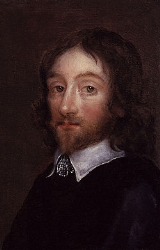
The National Portrait Gallery in London has a fine contemporary portrait of Sir Thomas Browne and his wife Lady Dorothy Browne . More recent sculptural portraits include Pegram’s statue of Sir Thomas contemplating with urn. This statue occupies the central position in the Haymarket beside St. Peter Mancroft, not far from the site of his house. It was erected in 1905 and moved from its original position in 1973. In 2005 Robert Mileham’s small standing figure in silver and bronze was commissioned for the 400th anniversary of Browne's birth.

External links

  • - Life, works, essays
  • at the University of Chicago University of Chicago

    The University of Chicago is a private university [i] located principally in the Hyde Park [i]... 

    , a comprehensive site with the complete works — all the works mentioned above, plus the minor works; Samuel Johnson Samuel Johnson

    Samuel Johnson, LL.D. [i] , often referred to simply as Dr. ... 

    's Life of Browne, Kenelme Digby's Observations on Religio Medici, and Alexander Ross's Medicus Medicatus; and background material, such as many of Browne's ancient sources.
  • Spiritual and literary affinity between Julian of Norwich and Sir Thomas Browne.

http://www.umilta.net/browne.html

  • Prayer and Prophecy in Browne's life and writings.

http://www.umilta.net/thosbrowne.html