

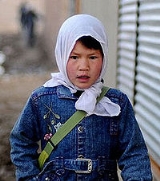
Hazara

Encyclopedia
The Hazāra are a Persian-speaking
people
who mainly live in central Afghanistan
. They are overwhelmingly Shia Muslim
s and comprise the third largest ethnic group of Afghanistan, forming about 18% of the total population. Over half a million Hazaras live in neighboring Pakistan
(especially in the city of Quetta
) and a similar number in Iran
.
military unit of 1,000 but was later applied to a distinct group of people.
, the youngest son of Genghis Khan. Theories of Mongol or partially Mongol descent are plausible, given that the Il-Khanate Mongol rulers, beginning with Oljeitu, embraced Shia Islam. Today, the majority of the Hazaras adhere to Shi'ism, whereas Afghanistan's other major ethnic groups are mostly Sunni. However, the population of the Sunni and Ismaili
Hazaras against the Shi'ite Hazaras is not discussed extensively enough by the scholarship.
Another theory proposes that Hazaras are descendants of the Kushans
, the ancient dwellers of Afghanistan famous for constructing the Buddhas of Bamiyan
. Its proponents find the location of the Hazara homeland, and the similarity in facial features of Hazaras with those on frescoes and Buddha's statues in Bamiyan, suggestive. However, this belief is contrary not only to the fact that the Kushans were Indo-European
Tocharians
, but also to historical records which mention that in a particularly bloody battle around Bamiyan
, Genghis Khan's grandson, Mutugen, was killed, and he ordered Bamiyan to be burnt to the ground in retribution.
A third theory, and the one accepted by most scholars, maintains that Hazaras are a very mixed race. This is not entirely inconsistent with descent from Mongol military forces. For example, Nikudari Mongols settled in eastern Persia and mixed with native populations who spoke Persian
. A second wave of mostly Chagatai Mongols
came from Central Asia and were followed by other Turko-Mongols, associated with the Ilkhanate
(driven out of Persia) and the Timurids, all of whom settled in Hazarajat
and mixed with the local Persian
population, forming a distinct group.
with western Eurasian genetic mixtures. Genetic research suggests that they are related to neighboring peoples, while there also seems to be a patrimonial relation to Mongol peoples of Mongolia
. Mongol male ancestry is supported by studies in genetic genealogy
as well, which have identified a particular lineage of the Y-chromosome characteristic of people of Mongolian descent ("the Y-chromosome of Genghis Khan
"). This chromosome
is virtually absent outside the limits of the Mongol Empire
except among the Hazara, where it reaches its highest frequency anywhere.
R1b1a1 (2011 name)
is defined by the presence of SNP
marker M73. It has been found at generally low frequencies throughout central Eurasia
, but has been found with relatively high frequency among particular populations there including Hazaras in Pakistan
(8/25 = 32%).
of the Safavid dynasty
and by Babur
(Emperor of the Mughal Empire
) in his Baburnama
, referring to the people living from west of Kabul
to Ghor, and south to Ghazni
. Babur noted that the Hazara (or Qaraunas) spoke Mongolian
but not Turkic in his day.
basin of Kandahar
. During Dost Mohammad Khan
's rule, Hazaras in Bamiyan and the Hazarajat area were heavily taxed. However, for the most part they still managed to keep their regional autonomy in Hazarajat. This would soon change as the new Emir, Abdur Rahman Khan
, was brought to power.
. Abdur Rahman waged war against Hazaras who rejected his policies and rule.
In 1856 Abdur Rahman arrested Syed Jafar, chief of Sheikh Ali
Hazara, and jailed him in Mazar-e-Sharif. The first Hazara uprising took place during 1888–90. When Abdur Rahman's cousin, Mohammad Eshaq, revolted against him, the Sheikh Ali Hazaras joined the revolt. The revolt was short lived and crushed as the Emir extended his control over large parts of Hazarajat. Sheikh Ali Hazaras had allies in two different groups, Shia and Sunni. Abdur Rahman took advantage of the situation, pitting Sunni Hazaras against Shia Hazaras, and made pacts among Hazaras.
After all of Sheikh Ali Hazara chiefs were sent to Kabul
, opposition within the leadership of Sawar Khan and Syed Jafar Khan continued against government troops, but at last were defeated. Heavy tax
es were imposed and Pashtun administrators were sent to occupied places, where they subjugated the people with many abuses. The people were disarmed, villages were looted, local tribal chiefs were imprisoned or executed, and the best lands were confiscated and given to Pashtun nomad
s (Kuchis
).
of the wife of a Hazara chief by 33 Afghan
soldiers. The soldiers had entered their house under the pretext of searching for weapons and raped the chief's wife in front of him. The families of the Hazara chief and his wife retaliated against the humiliation, killed the soldiers and attacked the local garrison, where they took back their weapons. Several other tribal chiefs who supported Abdur Rahman now turned against him and joined the rebellion which rapidly spread through the entire Hazarajat. In response to the rebellion, the Emir declared a "jihad
" against the Shiites and raised an army of 40, 000 soldiers, 10, 000 mounted troops, and 100,000 armed civilians (most of which were Pashtun nomads). He also brought in British
military advisers to assist his army.
The large army defeated the rebellion at its center, in Oruzgan, by 1892 and the local population was severely massacre
d. According to S. A. Mousavi:
Abdur Rahman's subjugation of the Hazaras due to fierce rebellion against the Afghan king gave birth to strong hatred between the Pashtuns and Hazaras for years to come. Massive forced displacements, especially in Oruzgan and Daychopan, continued as lands were confiscated and populations were expelled or fled. Some 35,000 families fled to northern Afghanistan, Mashhad
(Iran), Quetta
(Pakistan), and even as far as Central Asia
. It is estimated that more than 60% of the Hazara population were massacred or displaced during Abdur Rahman's campaign against them. Hazara farmers were often forced to give up their property to Pashtuns and as a result many Hazara families had to leave seasonally to the major cities in Afghanistan, Iran, or Pakistan in order to find jobs and a source of income. Pakistan is now home to one of the largest settlements of Hazara, particularly in and around the city of Quetta
. Pashtun–Hazara conflicts were and are based solely on Shi'a–Sunni relations, thus the conflict was continued by the Taliban.
through most of the 20th century.
Mistrust of the central government by the Hazaras and local uprisings continued. In particular, in the 1940s, during Zahir Shah's rule, a revolt took place against new taxes that were exclusively imposed on the Hazaras. The Pashtun nomads meanwhile not only were exempted from taxes, but also received allowances from the Afghan government. The angry rebels began capturing and killing government officials. In response, the central government sent a force to subdue the region and later removed the taxes.
, the Hazarajat region did not see as much heavy fighting like other regions of Afghanistan. However, rival Hazara political factions fought. The division was between the Tanzáim-e nasl-e naw-e Hazara, a party based in Quetta, of Hazara nationalists and secular intellectuals, and the pro-Khomeini Islamist parties backed by the new Islamic Republic of Iran. By 1979, the Iran-backed Islamist groups liberated Hazarajat from the central Soviet-backed Afghan government
and later took entire control of Hazarajat away from the secularists. By 1984, after severe fighting, the secularist groups lost all their power to the Islamists.
As the Soviets withdrew in 1989, the Islamist groups felt the need to broaden their political appeal and turned their focus to Hazara ethnic nationalism
. This led to establishment of the Hezb-e Wahdat, an alliance of all the Hazara resistance groups (except the Harakat-e Islami). In 1992, with the fall of Kabul
, the Harakat-e Islami took sides with Burhanuddin Rabbani
's government while the Hezb-e Wahdat took sides with the opposition. The Hezb-e Wahdat was eventually forced out of Kabul in 1995 when the Pashtun Taliban movement captured and killed their leader Abdul Ali Mazari
. With the Taliban's capture of Kabul in 1996, all the Hazara groups united with the new Northern Alliance
against the common new enemy. However, it was too late and despite the fierce resistance Hazarajat fell to the Taliban by 1998. The Taliban had Hazarajat totally isolated from the rest of the world going as far as not allowing the United Nations
to deliver food to the provinces of Bamiyan
, Ghor, Wardak
, and Daykundi.
During the years that followed, Hazaras suffered severe oppression and many large ethnic massacres were carried out by the predominately ethnic Pashtun Taliban and are documented by such groups as the Human Rights Watch
. These human rights abuses not only occurred in Hazarajat, but across all areas controlled by the Taliban. Particularly after their capture of Mazar-e Sharif
in 1998, where after a massive killing of some 8000 civilians, the Taliban openly declared that the Hazaras would be targeted. Mullah Niazi
, the commander of the attack and governor of Mazar after the attack, similar to Abdur Rahman Khan over 100 years ago, declared the Shia Hazara as infidels:
in the United States
, British and American forces invaded Afghanistan. Since then, the situation for Afghans in Afghanistan has changed drastically in Kabul but the country largely remain lawless at the hands of equally brutal afghan police forces. Hazaras have pursued higher education, enrolled in the army, and have top government positions. For example, Mohammad Mohaqiq, a Hazara from the Hezb-e Wahdat party, was able to run in the 2004 presidential election in Afghanistan, and Karim Khalili
became the Vice President of Afghanistan
. A number of ministers and governors are Hazaras, including Sima Samar
, Habiba Sarabi
, Ramazan Bashardost
, Sarwar Danish
, Sayed Hussein Anwari
, Abdul Haq Shafaq
, Sayed Anwar Rahmati
, Qurban Ali Oruzgani
and many others. The mayor of Nili
in Daykundi Province is Azra Jafari
, who became the first female mayor in Afghanistan. The National Assembly of Afghanistan
(Parliament) is 25% made up of ethnic Hazaras, which represents 61 members. However, discrimination still lingers, and even accusations of genocide
. An indication of discrimination is the policy of allocating international help by the Afghan government. Hazarajat historically has been kept from any improvement by past governments. Since ousting the Taliban, several billion dollars have poured into Afghanistan for reconstruction and numerous mega-scale reconstruction projects took place in Afghanistan. But effectively a very small portion of international aid was allocated in the central regions of Afghanistan, the Hazarajat area.
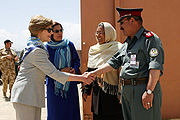 For example, there have been more than 5000 kilometers of road pavement and construction in Afghanistan, of which almost none happened in central Afghanistan Hazarajat. Another indication of such discrimination is that Kochis (Afghan nomads from western Pakistan and eastern Afghanistan) are allowed now to use Hazarajat pastures in summer time. This practice started during the rule of Amir Abdurahman Khan for punishing Hazaras.
Living in mountainous Hazarajat where little farm land exists, Hazara people rely on these pasture lands for their livelihood and survival during long and harsh winters. In 2007 heavily armed Kochis moved into Hazarajat to graze their livestock, and when the local people resisted, it is reported that they clashed and several people died on both sides, Kochis and Hazara. Such a practice happened in 2008, and the government appears to approve this practice. Kochis belong to the Pashtun ethnic group, as do the Taliban.
In 2010, the drive by President Hamid Karzai
after the Peace Jirga
to strike a deal with Taliban leaders caused deep unease in Afghanistan’s minority communities, who fought the Taliban the longest and suffered the most during their rule. The leaders of the Tajik, Uzbek and Hazara communities, which together make up close to half of the country's population, vowed to resist any return of the Taliban to power, referring to the large-scale massacres of Hazara civilians during the Taliban period.
is the traditional way of life of the Hazara people, referring to the seasonal and historical migrations which have never ceased and do not seem to be dictated only by emergency situations such as war
.
Besides the major populations of Hazaras in Quetta (Pakistan
)—where many have achieved considerably high positions within the government and police force—and Iran
, there are significant communities in Australia
, New Zealand
, Canada
, the United States
, the United Kingdom
and particularly the Northern Europe
an countries such as Sweden
and Denmark
. Many young Hazara are studying in developed countries
such as Australia, legally through education or work visas
. There are many Afghan
Hazara who have migrated to developed countries especially in Australia as refugees. The notable case was the Tampa affair
in which a shipload of refugees, mostly Hazaras, was rescued by the Norwegian
freighter MV Tampa
and subsequently sent to Nauru
. New Zealand agreed to take some of the refugees and all but one of those were approved.
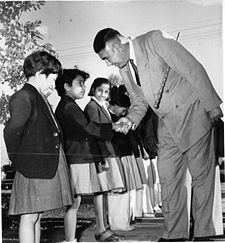 Hazara refugees from Afghanistan in Pakistan, along with their native Pakistani Hazara (3rd and 4th generation) brethren, have set up a remittance economy which has led to the opening of foreign money exchange places to handle the currency coming in. In Pakistan, most of the Hazaras live in and around Quetta
, the capital of Pakistan's southwest Balochistan province, Karachi, Hyderabad and Sanghard etc. Hazaras are living in different areas of Karachi like Mughal Hazara Goth, Gulistan-e-Jauher, Hussain Hazara Goth, Gulshan-e-Iqbal, Yaqoob Shah Basti, Manghopir, Qasba Colony, defence, Gizri etce. localities in Quetta with prominent Hazara populations include Hazara Town
and Mehr Abad. They are a fairly prospering community who have contributed to local trade, have held high positions in the Government of Balochistan as well as the federal government, and are also represented in local police agencies. However, there have been some recurrent instances of discrimination and sectarian violence perpetrated against them (see Sectarian violence in Pakistan
). 600 members of the Pakistani Hazara community have been killed since 1999 according to local Hazara leaders.
Hazara historians and politicians played a prominent role in the identification of Hazara people in Pakistan regarding their historical background where Haider Ali Karmal Jaghori was one of the prominent political thinker of Hazara people in Pakistan who contributed all his life in the research and writing about the Political history of Hazara people. The main contribution which could be considered as the manuscript of Hazara history is book Hazaraha wa Hazarajat Bastan Dar Aiyna-e-Tarikh published in Quetta in 1992, and another book with the martyr Aziz Tughyan Hazara Tarikh Milli Hazara published in 1984 in the city of Quetta. Another contribution of Haider A. Karmal was the member of Tanzeem-e-nasle nau hazara mughal in 1972 and appointed as the first junior Secretary of the Organisation and he was the founder of Hazara town.
A Hazara girl named Saira Batool
became the first woman pilot in the Pakistan Air Force
. In Pakistan, Hazaras are mostly in business and have high education levels. They are integrated into the local social dynamics of the respective areas they have settled into and operated several successful trades and business. Hazaras are also politically active in Quetta and have a political party known as the Hazara Democratic Party
. Other notable Hazara settlements can be found in Karachi
, Lahore
and more recently in Multan
. Jan Ali Changezi
, the current Minister of Quality Education & Clean Drinking Water in Balochistan
is a Hazara and Syed Abbass Shah is the Member of National Assembly from PB1 Quetta city is also a Hazara. The most notable Hazara in Pakistan was General Muhammad Musa, who served as Commander in Chief of the Pakistani Army between 1958 to 1966. Another notable Pakistani
Hazara was Agha abbas who was the owner of the Agha Juice from Karachi very well known fruit juice outlet in Pakistan pioneer of fruit juice business in Karachi. Another notable Pakistan
i Hazara was Hussain Ali Yousafi
who was the chairman of the Hazara Democratic Party
.
Hazara in Quetta are facing a very difficult time, mainly living in Mariabad and Berewery. The Hazara in Quetta hold a very respectful position. They are very hard working, but in a few decades their lives have become miserable due to the target killing, which is a very serious issue going on in Quetta. Moreover, all these serious issues need government's consideration and assassination.
than to Iran. For instance, many Hazara musicians are widely hailed as being skilled in playing the dambura, a regional and native instrument, a lute instrument similarly found in other Central Asian nations such as Tajikistan
, Uzbekistan
and Mongolia
.
of the Persian language
with a significant number of Turkic
and some Mongolian
loan words.
Many of the urban Hazaras in the larger cities such as Kabul
and Mazari Sharif no longer speak Hazaragi but speak standard literary Persian (usually the Kābolī dialect) or regional varieties of Persian (for example the Khorāsānī dialect in the western region of Herat
).
Until recently, a very small number of Hazaras near Herat
still spoke the Moghol language
, a Mongolic language once spoken by rebels against the Mongolian armies of the Il-Khanat.
s, mostly of the Twelver sect and some Ismaili
. Since the majority of Afghans practice Sunni Islam
, this probably contributed to the discrimination against the Hazaras. Hazaras probably converted from Sunnism to Shi'aism during the reign of the Il-Khanate ruler Oljeitu (1304–1316), or during the first part of the 16th century, in the early days of the Safavid Dynasty
. Nonetheless, a small number of Hazaras are Sunni. Sunni Hazaras have been attached to non-Hazara tribes while the Ismaili Hazaras have always been kept separate from the rest of the Hazaras on account of religious beliefs and political purposes.
s. The daizangi
are the largest tribe, representing 57.2% of the Hazara population. However, more recently and since the inclusion of the Hazaras into the "Afghan state", tribal affiliations have been disappearing and former tribal names Turkmani, Sheikh Ali, Jaghori, Ghaznichi, Behsoodi, Uruzgani, and Daiznagi. The different Hazara tribes come from regions such as Parwan, Bamyan, and Ghazni.
, an ethnic Hazara, won a bronze medal in taekwondo
in the Beijing Olympics 2008, beating world champion Juan Antonio Ramos
of Spain 4–1 in a play-off final. It was Afghanistan's first-ever Olympic medal. Afghanistan's first female Olympic athlete Friba Razayee
competed in judo at the 2004 Athens Olympics
, but was eliminated in the first round of competition. Other famous Hazara athletes are Syed Abdul Jalil Waiz (Badminton
) and Ali Hazara (Football). Syed Abdul Jalil Waiz is the first Hazara badminton player who represented the country in Asian Junior Championships in 2005 where he produced the first win for the country against Iraq, winning 15–13, 15–1. He participated in several international championships since 2005 and achieved victories against Australia
, Philippines, and Mongolia
. Syed Abrar Hussain Shah, a boxer
, competed in the Los Angeles Olympics
in 1984, the Seoul Olympics 1988, and the New Zealand Commonwealth Games
in 1990. In Pakistan
, Hazaras have excelled in sports and have received numerous awards particularly in boxing
, football and in field hockey
.Khudadad Azizi a retired member of the National Iranian Football team is a an Iranian Hazara who played in the 1998 FIFA world cup in France.
Persian language
Persian is an Iranian language within the Indo-Iranian branch of the Indo-European languages. It is primarily spoken in Iran, Afghanistan, Tajikistan and countries which historically came under Persian influence...
people
Persian people
The Persian people are part of the Iranian peoples who speak the modern Persian language and closely akin Iranian dialects and languages. The origin of the ethnic Iranian/Persian peoples are traced to the Ancient Iranian peoples, who were part of the ancient Indo-Iranians and themselves part of...
who mainly live in central Afghanistan
Afghanistan
Afghanistan , officially the Islamic Republic of Afghanistan, is a landlocked country located in the centre of Asia, forming South Asia, Central Asia and the Middle East. With a population of about 29 million, it has an area of , making it the 42nd most populous and 41st largest nation in the world...
. They are overwhelmingly Shia Muslim
Muslim
A Muslim, also spelled Moslem, is an adherent of Islam, a monotheistic, Abrahamic religion based on the Quran, which Muslims consider the verbatim word of God as revealed to prophet Muhammad. "Muslim" is the Arabic term for "submitter" .Muslims believe that God is one and incomparable...
s and comprise the third largest ethnic group of Afghanistan, forming about 18% of the total population. Over half a million Hazaras live in neighboring Pakistan
Pakistan
Pakistan , officially the Islamic Republic of Pakistan is a sovereign state in South Asia. It has a coastline along the Arabian Sea and the Gulf of Oman in the south and is bordered by Afghanistan and Iran in the west, India in the east and China in the far northeast. In the north, Tajikistan...
(especially in the city of Quetta
Quetta
is the largest city and the provincial capital of the Balochistan Province of Pakistan. Known as the "Fruit Garden of Pakistan" due to the diversity of its plant and animal wildlife, Quetta is home to the Hazarganji Chiltan National Park, which contains some of the rarest species of wildlife in the...
) and a similar number in Iran
Iran
Iran , officially the Islamic Republic of Iran , is a country in Southern and Western Asia. The name "Iran" has been in use natively since the Sassanian era and came into use internationally in 1935, before which the country was known to the Western world as Persia...
.
Etymology
The name Hazara, probably, comes from the Persian word hazār, which means "thousand". According to scholars, the term was first used to refer to a MongolMongol Empire
The Mongol Empire , initially named as Greater Mongol State was a great empire during the 13th and 14th centuries...
military unit of 1,000 but was later applied to a distinct group of people.
Origin theories
The origins of the Hazaras have not been fully reconstructed. At least partial Mongol descent is difficult to rule out, because the Hazaras' physical attributes and parts of their culture and language resemble those of Mongolians. Thus, it is widely accepted that Hazaras have Mongolian ancestry, especially after genetic testing showed Hazaras carried the highest frequency of the Y chromosome attributed to Genghis Khan anywhere. Some Hazara tribes are named after famous Mongol generals, for example the Tulai Khan Hazara who are named after ToluiTolui
Tolui, was the youngest son of Genghis Khan by his chief khatun Börte...
, the youngest son of Genghis Khan. Theories of Mongol or partially Mongol descent are plausible, given that the Il-Khanate Mongol rulers, beginning with Oljeitu, embraced Shia Islam. Today, the majority of the Hazaras adhere to Shi'ism, whereas Afghanistan's other major ethnic groups are mostly Sunni. However, the population of the Sunni and Ismaili
Ismaili
' is a branch of Shia Islam. It is the second largest branch of Shia Islam, after the Twelvers...
Hazaras against the Shi'ite Hazaras is not discussed extensively enough by the scholarship.
Another theory proposes that Hazaras are descendants of the Kushans
Kushan Empire
The Kushan Empire originally formed in the early 1st century AD under Kujula Kadphises in the territories of ancient Bactria on either side of the middle course of the Oxus in what is now northern Afghanistan, Pakistan, and southern Tajikistan and Uzbekistan.During the 1st and early 2nd centuries...
, the ancient dwellers of Afghanistan famous for constructing the Buddhas of Bamiyan
Buddhas of Bamiyan
The Buddhas of Bamiyan were two 6th century monumental statues of standing buddhas carved into the side of a cliff in the Bamyan valley in the Hazarajat region of central Afghanistan, situated northwest of Kabul at an altitude of 2,500 meters...
. Its proponents find the location of the Hazara homeland, and the similarity in facial features of Hazaras with those on frescoes and Buddha's statues in Bamiyan, suggestive. However, this belief is contrary not only to the fact that the Kushans were Indo-European
Indo-European
Indo-European may refer to:* Indo-European languages** Aryan race, a 19th century and early 20th century term for those peoples who are the native speakers of Indo-European languages...
Tocharians
Tocharians
The Tocharians were the Tocharian-speaking inhabitants of the Tarim Basin, making them the easternmost speakers of Indo-European languages in antiquity. They were known as, or at least closely related to, the Yuezhi of Chinese sources...
, but also to historical records which mention that in a particularly bloody battle around Bamiyan
Bamiyan
Bamyan , also spelt Bamiyan and Bamian, at an altitude of about 9,200 feet and with a population of about 61,863, is the largest town in the region of Hazarajat in central Afghanistan and the capital of Bamyan Province. It lies approximately 240 kilometres north-west of Kabul, the national capital...
, Genghis Khan's grandson, Mutugen, was killed, and he ordered Bamiyan to be burnt to the ground in retribution.
A third theory, and the one accepted by most scholars, maintains that Hazaras are a very mixed race. This is not entirely inconsistent with descent from Mongol military forces. For example, Nikudari Mongols settled in eastern Persia and mixed with native populations who spoke Persian
Persian language
Persian is an Iranian language within the Indo-Iranian branch of the Indo-European languages. It is primarily spoken in Iran, Afghanistan, Tajikistan and countries which historically came under Persian influence...
. A second wave of mostly Chagatai Mongols
Chagatai Khanate
The Chagatai Khanate was a Turko-Mongol khanate that comprised the lands ruled by Chagatai Khan , second son of the Great Khan Genghis Khan, and his descendents and successors...
came from Central Asia and were followed by other Turko-Mongols, associated with the Ilkhanate
Ilkhanate
The Ilkhanate, also spelled Il-khanate , was a Mongol khanate established in Azerbaijan and Persia in the 13th century, considered a part of the Mongol Empire...
(driven out of Persia) and the Timurids, all of whom settled in Hazarajat
Hazarajat
The Hazarajat is the original homeland of the Hazara people, and lies in the central highlands of Afghanistan, among the Koh-i-Baba mountains and the western extremities of the Hindu Kush. Its physical boundaries, however, are roughly marked by the Bamiyan Basin to the north, the headwaters of...
and mixed with the local Persian
Persian people
The Persian people are part of the Iranian peoples who speak the modern Persian language and closely akin Iranian dialects and languages. The origin of the ethnic Iranian/Persian peoples are traced to the Ancient Iranian peoples, who were part of the ancient Indo-Iranians and themselves part of...
population, forming a distinct group.
Genetics
Genetically, the Hazara are primarily eastern EurasianMongoloid race
Mongoloid is a term sometimes used by forensic anthropologists and physical anthropologists to refer to populations that share certain phenotypic traits such as epicanthic fold and shovel-shaped incisors and other physical traits common in East Asia, the Americas and the Arctic...
with western Eurasian genetic mixtures. Genetic research suggests that they are related to neighboring peoples, while there also seems to be a patrimonial relation to Mongol peoples of Mongolia
Mongolia
Mongolia is a landlocked country in East and Central Asia. It is bordered by Russia to the north and China to the south, east and west. Although Mongolia does not share a border with Kazakhstan, its western-most point is only from Kazakhstan's eastern tip. Ulan Bator, the capital and largest...
. Mongol male ancestry is supported by studies in genetic genealogy
Genetic genealogy
Genetic genealogy is the application of genetics to traditional genealogy. Genetic genealogy involves the use of genealogical DNA testing to determine the level of genetic relationship between individuals.-History:...
as well, which have identified a particular lineage of the Y-chromosome characteristic of people of Mongolian descent ("the Y-chromosome of Genghis Khan
Descent from Genghis Khan
Descent from Genghis Khan is traceable primarily in Central Asia. His four sons and other immediate descendants are famous by names and by deeds. Later Asian potentates attempted to claim descent from the House of Borjigin even on flimsy grounds. In the 14th century, valid sources all but dried...
"). This chromosome
Chromosome
A chromosome is an organized structure of DNA and protein found in cells. It is a single piece of coiled DNA containing many genes, regulatory elements and other nucleotide sequences. Chromosomes also contain DNA-bound proteins, which serve to package the DNA and control its functions.Chromosomes...
is virtually absent outside the limits of the Mongol Empire
Mongol Empire
The Mongol Empire , initially named as Greater Mongol State was a great empire during the 13th and 14th centuries...
except among the Hazara, where it reaches its highest frequency anywhere.
R1b1a1 (2011 name)
Haplogroup R1b (Y-DNA)
The point of origin of R1b is thought to lie in Eurasia, most likely in Western Asia. T. Karafet et al. estimated the age of R1, the parent of R1b, as 18,500 years before present....
is defined by the presence of SNP
SNP
-Companies:* Standard & Poor's, a financial ratings company* Sinopec's , New York Stock Exchange ticker symbol-Science:* Single-nucleotide polymorphism, a DNA sequence variation...
marker M73. It has been found at generally low frequencies throughout central Eurasia
Eurasia
Eurasia is a continent or supercontinent comprising the traditional continents of Europe and Asia ; covering about 52,990,000 km2 or about 10.6% of the Earth's surface located primarily in the eastern and northern hemispheres...
, but has been found with relatively high frequency among particular populations there including Hazaras in Pakistan
Pakistan
Pakistan , officially the Islamic Republic of Pakistan is a sovereign state in South Asia. It has a coastline along the Arabian Sea and the Gulf of Oman in the south and is bordered by Afghanistan and Iran in the west, India in the east and China in the far northeast. In the north, Tajikistan...
(8/25 = 32%).
Emergence of the Hazara
In the late 16th century, the first mention of Hazaras are made by the court historians of Shah AbbasAbbas I of Persia
Shāh ‘Abbās the Great was Shah of Iran, and generally considered the greatest ruler of the Safavid dynasty. He was the third son of Shah Mohammad....
of the Safavid dynasty
Safavid dynasty
The Safavid dynasty was one of the most significant ruling dynasties of Iran. They ruled one of the greatest Persian empires since the Muslim conquest of Persia and established the Twelver school of Shi'a Islam as the official religion of their empire, marking one of the most important turning...
and by Babur
Babur
Babur was a Muslim conqueror from Central Asia who, following a series of setbacks, finally succeeded in laying the basis for the Mughal dynasty of South Asia. He was a direct descendant of Timur through his father, and a descendant also of Genghis Khan through his mother...
(Emperor of the Mughal Empire
Mughal Empire
The Mughal Empire , or Mogul Empire in traditional English usage, was an imperial power from the Indian Subcontinent. The Mughal emperors were descendants of the Timurids...
) in his Baburnama
Baburnama
Bāburnāma is the name given to the memoirs of Ẓahīr ud-Dīn Muḥammad Bābur , founder of the Mughal Empire and a great-great-great-grandson of Timur...
, referring to the people living from west of Kabul
Kabul
Kabul , spelt Caubul in some classic literatures, is the capital and largest city of Afghanistan. It is also the capital of the Kabul Province, located in the eastern section of Afghanistan...
to Ghor, and south to Ghazni
Ghazni
For the Province of Ghazni see Ghazni ProvinceGhazni is a city in central-east Afghanistan with a population of about 141,000 people...
. Babur noted that the Hazara (or Qaraunas) spoke Mongolian
Mongolian language
The Mongolian language is the official language of Mongolia and the best-known member of the Mongolic language family. The number of speakers across all its dialects may be 5.2 million, including the vast majority of the residents of Mongolia and many of the Mongolian residents of the Inner...
but not Turkic in his day.
18th century
In their modern history, Hazaras have faced several wars and forced displacements. Since the beginnings of modern Afghanistan in the mid 18th century, Hazaras have faced persecution from the Pashtuns and have been forced to flee from many parts of today's Afghanistan to Hazarajat. In the mid 18th century they were forced out of Helmand and the ArghandabArghandab District
Arghandab is a district in the central part of Kandahar Province, Afghanistan. It borders Panjwai and Khakrez districts to the west, Shah Wali Kot District to the north and east and Kandahar District to the east and south....
basin of Kandahar
Kandahar Province
Kandahar or Qandahar is one of the largest of the thirty-four provinces of Afghanistan. It is located in southern Afghanistan, between Helmand, Oruzgan and Zabul provinces. Its capital is the city of Kandahar, which is located on the Arghandab River. The province has a population of nearly...
. During Dost Mohammad Khan
Dost Mohammad Khan
Dost Mohammad Khan was the Emir of Afghanistan between 1826 and 1863. He first ruled from 1826 to 1839 and then from 1843 to 1863. He was the 11th son of Sardar Pāyendah Khan who was killed by Zaman Shah Durrani in 1799...
's rule, Hazaras in Bamiyan and the Hazarajat area were heavily taxed. However, for the most part they still managed to keep their regional autonomy in Hazarajat. This would soon change as the new Emir, Abdur Rahman Khan
Abdur Rahman Khan
Abdur Rahman Khan was Emir of Afghanistan from 1880 to 1901.The third son of Mohammad Afzal Khan, and grandson of Dost Mohammad Khan, Abdur Rahman Khan was considered a strong ruler who re-established the writ of the Afghan government in Kabul after the disarray that followed the second...
, was brought to power.
Subjugation by Abdur Rahman Khan
As the new Emir, Abdur Rahman set out a goal to bring Hazarajat under his control. After facing resistance from the Hazaras, he launched several campaigns in Hazarajat with many atrocities and ethnic polarization. The southern part of Hazarajat was spared as they accepted Abdur Rahman's rule, while the other parts of Hazarajat rejected Abdur Rahman and supported his uncle, Sher Ali KhanSher Ali Khan
Sher Ali Khan was Amir of Afghanistan from 1863 to 1866 and from 1868 until his death in 1879. He was the third son of Dost Mohammed Khan, founder of the Barakzai Dynasty in Afghanistan....
. Abdur Rahman waged war against Hazaras who rejected his policies and rule.
In 1856 Abdur Rahman arrested Syed Jafar, chief of Sheikh Ali
Sheikh Ali
The Sheikh Ali, also known as Dai Kalan, are a major tribe of Hazaras. They live in Afghanistan's Bamiyan, Parwan , Kunduz and Baghlan provinces, inhabiting the road from Kabul to Mazar-i-Sharif.-History:...
Hazara, and jailed him in Mazar-e-Sharif. The first Hazara uprising took place during 1888–90. When Abdur Rahman's cousin, Mohammad Eshaq, revolted against him, the Sheikh Ali Hazaras joined the revolt. The revolt was short lived and crushed as the Emir extended his control over large parts of Hazarajat. Sheikh Ali Hazaras had allies in two different groups, Shia and Sunni. Abdur Rahman took advantage of the situation, pitting Sunni Hazaras against Shia Hazaras, and made pacts among Hazaras.
After all of Sheikh Ali Hazara chiefs were sent to Kabul
Kabul
Kabul , spelt Caubul in some classic literatures, is the capital and largest city of Afghanistan. It is also the capital of the Kabul Province, located in the eastern section of Afghanistan...
, opposition within the leadership of Sawar Khan and Syed Jafar Khan continued against government troops, but at last were defeated. Heavy tax
Tax
To tax is to impose a financial charge or other levy upon a taxpayer by a state or the functional equivalent of a state such that failure to pay is punishable by law. Taxes are also imposed by many subnational entities...
es were imposed and Pashtun administrators were sent to occupied places, where they subjugated the people with many abuses. The people were disarmed, villages were looted, local tribal chiefs were imprisoned or executed, and the best lands were confiscated and given to Pashtun nomad
Nomad
Nomadic people , commonly known as itinerants in modern-day contexts, are communities of people who move from one place to another, rather than settling permanently in one location. There are an estimated 30-40 million nomads in the world. Many cultures have traditionally been nomadic, but...
s (Kuchis
Kuchis
Kuchis , are Afghan Pashtun nomads, primarily from the Ghilzai, Kakar, Lodi, Ahmadzai as well as some Durrani tribes, but occasionally there may also be some Baloch people among them that live a nomadic life travelling between pastoral lands in Afghanistan and in Pakistan...
).
Second uprising
The second uprising occurred in 1890–93. The cause of the uprising was the rapeRape
Rape is a type of sexual assault usually involving sexual intercourse, which is initiated by one or more persons against another person without that person's consent. The act may be carried out by physical force, coercion, abuse of authority or with a person who is incapable of valid consent. The...
of the wife of a Hazara chief by 33 Afghan
Afghanistan
Afghanistan , officially the Islamic Republic of Afghanistan, is a landlocked country located in the centre of Asia, forming South Asia, Central Asia and the Middle East. With a population of about 29 million, it has an area of , making it the 42nd most populous and 41st largest nation in the world...
soldiers. The soldiers had entered their house under the pretext of searching for weapons and raped the chief's wife in front of him. The families of the Hazara chief and his wife retaliated against the humiliation, killed the soldiers and attacked the local garrison, where they took back their weapons. Several other tribal chiefs who supported Abdur Rahman now turned against him and joined the rebellion which rapidly spread through the entire Hazarajat. In response to the rebellion, the Emir declared a "jihad
Jihad
Jihad , an Islamic term, is a religious duty of Muslims. In Arabic, the word jihād translates as a noun meaning "struggle". Jihad appears 41 times in the Quran and frequently in the idiomatic expression "striving in the way of God ". A person engaged in jihad is called a mujahid; the plural is...
" against the Shiites and raised an army of 40, 000 soldiers, 10, 000 mounted troops, and 100,000 armed civilians (most of which were Pashtun nomads). He also brought in British
British Empire
The British Empire comprised the dominions, colonies, protectorates, mandates and other territories ruled or administered by the United Kingdom. It originated with the overseas colonies and trading posts established by England in the late 16th and early 17th centuries. At its height, it was the...
military advisers to assist his army.
The large army defeated the rebellion at its center, in Oruzgan, by 1892 and the local population was severely massacre
Massacre
A massacre is an event with a heavy death toll.Massacre may also refer to:-Entertainment:*Massacre , a DC Comics villain*Massacre , a 1932 drama film starring Richard Barthelmess*Massacre, a 1956 Western starring Dane Clark...
d. According to S. A. Mousavi:
Third upraising
The third upraising of Hazaras was in response to the harsh repression, the Hazaras revolted again by early 1893s. This revolt took the government forces by surprise and the Hazaras managed to take most of Hazarajat back. However, after months of fighting, they were eventually defeated due to a shortage of food. Small pockets of resistance continued to the end of the year as government troops committed atrocities against civilians and deported entire villages.Abdur Rahman's subjugation of the Hazaras due to fierce rebellion against the Afghan king gave birth to strong hatred between the Pashtuns and Hazaras for years to come. Massive forced displacements, especially in Oruzgan and Daychopan, continued as lands were confiscated and populations were expelled or fled. Some 35,000 families fled to northern Afghanistan, Mashhad
Mashhad
Mashhad , is the second largest city in Iran and one of the holiest cities in the Shia Muslim world. It is also the only major Iranian city with an Arabic name. It is located east of Tehran, at the center of the Razavi Khorasan Province close to the borders of Afghanistan and Turkmenistan. Its...
(Iran), Quetta
Quetta
is the largest city and the provincial capital of the Balochistan Province of Pakistan. Known as the "Fruit Garden of Pakistan" due to the diversity of its plant and animal wildlife, Quetta is home to the Hazarganji Chiltan National Park, which contains some of the rarest species of wildlife in the...
(Pakistan), and even as far as Central Asia
Central Asia
Central Asia is a core region of the Asian continent from the Caspian Sea in the west, China in the east, Afghanistan in the south, and Russia in the north...
. It is estimated that more than 60% of the Hazara population were massacred or displaced during Abdur Rahman's campaign against them. Hazara farmers were often forced to give up their property to Pashtuns and as a result many Hazara families had to leave seasonally to the major cities in Afghanistan, Iran, or Pakistan in order to find jobs and a source of income. Pakistan is now home to one of the largest settlements of Hazara, particularly in and around the city of Quetta
Quetta
is the largest city and the provincial capital of the Balochistan Province of Pakistan. Known as the "Fruit Garden of Pakistan" due to the diversity of its plant and animal wildlife, Quetta is home to the Hazarganji Chiltan National Park, which contains some of the rarest species of wildlife in the...
. Pashtun–Hazara conflicts were and are based solely on Shi'a–Sunni relations, thus the conflict was continued by the Taliban.
Hazaras in the 20th century
In 1901, Habibullah Khan, Abdur Rahman's successor, granted amnesty to all people who were exiled by his predecessor. However, the division between the Afghan government and the Hazara people was already made too deep under Abdur Rahman. Hazaras continued to face severe social, economic and political discriminationDiscrimination
Discrimination is the prejudicial treatment of an individual based on their membership in a certain group or category. It involves the actual behaviors towards groups such as excluding or restricting members of one group from opportunities that are available to another group. The term began to be...
through most of the 20th century.
Mistrust of the central government by the Hazaras and local uprisings continued. In particular, in the 1940s, during Zahir Shah's rule, a revolt took place against new taxes that were exclusively imposed on the Hazaras. The Pashtun nomads meanwhile not only were exempted from taxes, but also received allowances from the Afghan government. The angry rebels began capturing and killing government officials. In response, the central government sent a force to subdue the region and later removed the taxes.
Soviet invasion to the Taliban era
During the Soviet war in AfghanistanSoviet war in Afghanistan
The Soviet war in Afghanistan was a nine-year conflict involving the Soviet Union, supporting the Marxist-Leninist government of the Democratic Republic of Afghanistan against the Afghan Mujahideen and foreign "Arab–Afghan" volunteers...
, the Hazarajat region did not see as much heavy fighting like other regions of Afghanistan. However, rival Hazara political factions fought. The division was between the Tanzáim-e nasl-e naw-e Hazara, a party based in Quetta, of Hazara nationalists and secular intellectuals, and the pro-Khomeini Islamist parties backed by the new Islamic Republic of Iran. By 1979, the Iran-backed Islamist groups liberated Hazarajat from the central Soviet-backed Afghan government
Democratic Republic of Afghanistan
The Democratic Republic of Afghanistan was a government of Afghanistan between 1978 and 1992. It was both ideologically close to and economically dependent on the Soviet Union, and was a major belligerent of the Afghan Civil War.- Saur Revolution :...
and later took entire control of Hazarajat away from the secularists. By 1984, after severe fighting, the secularist groups lost all their power to the Islamists.
As the Soviets withdrew in 1989, the Islamist groups felt the need to broaden their political appeal and turned their focus to Hazara ethnic nationalism
Ethnic nationalism
Ethnic nationalism is a form of nationalism wherein the "nation" is defined in terms of ethnicity. Whatever specific ethnicity is involved, ethnic nationalism always includes some element of descent from previous generations and the implied claim of ethnic essentialism, i.e...
. This led to establishment of the Hezb-e Wahdat, an alliance of all the Hazara resistance groups (except the Harakat-e Islami). In 1992, with the fall of Kabul
Kabul
Kabul , spelt Caubul in some classic literatures, is the capital and largest city of Afghanistan. It is also the capital of the Kabul Province, located in the eastern section of Afghanistan...
, the Harakat-e Islami took sides with Burhanuddin Rabbani
Burhanuddin Rabbani
Professor Burhanuddin Rabbani was President of the Islamic State of Afghanistan from 1992 to 1996. After the Taliban government was toppled during Operation Enduring Freedom, Rabbani returned to Kabul and served as a temporary President from November to December 20, 2001, when Hamid Karzai was...
's government while the Hezb-e Wahdat took sides with the opposition. The Hezb-e Wahdat was eventually forced out of Kabul in 1995 when the Pashtun Taliban movement captured and killed their leader Abdul Ali Mazari
Abdul Ali Mazari
Abdul Ali Mazari was a political leader of the Hezbe Wahdat during and following the Soviet invasion of Afghanistan. Mazari was an ethnic Hazara, and believed the solution to the divisiveness in Afghanistan was in federalism, where every ethnic group would have specific constitutional...
. With the Taliban's capture of Kabul in 1996, all the Hazara groups united with the new Northern Alliance
United Islamic Front for the Salvation of Afghanistan
The United Islamic Front , known in the West and Pakistan as the Northern Alliance, was a military-political umbrella organization created by the Islamic State of Afghanistan in 1996 under the leadership of Defense Minister Ahmad Shah Massoud...
against the common new enemy. However, it was too late and despite the fierce resistance Hazarajat fell to the Taliban by 1998. The Taliban had Hazarajat totally isolated from the rest of the world going as far as not allowing the United Nations
United Nations
The United Nations is an international organization whose stated aims are facilitating cooperation in international law, international security, economic development, social progress, human rights, and achievement of world peace...
to deliver food to the provinces of Bamiyan
Bamiyan Province
Bamyan Province is one of the thirty-four provinces of Afghanistan. It is in the centre of the country. Its capital is also called Bamyan. The majority of the population are Hazaras, with 16% Sadat, 15% Tajiks, and Pashtuns and Tatars in smaller numbers...
, Ghor, Wardak
Wardak Province
Maidan Wardak Province is one of thirty four provinces of Afghanistan located in the central east region of Afghanistan. It has a population of approximately 540,100. The capital of the province is Maidan Shar...
, and Daykundi.
During the years that followed, Hazaras suffered severe oppression and many large ethnic massacres were carried out by the predominately ethnic Pashtun Taliban and are documented by such groups as the Human Rights Watch
Human Rights Watch
Human Rights Watch is an international non-governmental organization that conducts research and advocacy on human rights. Its headquarters are in New York City and it has offices in Berlin, Beirut, Brussels, Chicago, Geneva, Johannesburg, London, Los Angeles, Moscow, Paris, San Francisco, Tokyo,...
. These human rights abuses not only occurred in Hazarajat, but across all areas controlled by the Taliban. Particularly after their capture of Mazar-e Sharif
Mazar-e Sharif
Mazār-i-Sharīf or Mazār-e Sharīf is the fourth largest city of Afghanistan, with a population of about 375,000 as of 2006. It is the capital of Balkh province and is linked by roads to Kunduz in the east, Kabul in the south-east, Herat to the west and Uzbekistan to the north...
in 1998, where after a massive killing of some 8000 civilians, the Taliban openly declared that the Hazaras would be targeted. Mullah Niazi
Niazi
The Niazi are a tribe of Ghilzai Pashtun people in Afghanistan, Pakistan, and Turkey. The name Niazi is derived from Niazai, like the other forms of Pashtun tribes, such as Yusufzai and Orakzai...
, the commander of the attack and governor of Mazar after the attack, similar to Abdur Rahman Khan over 100 years ago, declared the Shia Hazara as infidels:
Hazaras in post-Taliban Afghanistan
Following the 11 September 2001 attacksSeptember 11, 2001 attacks
The September 11 attacks The September 11 attacks The September 11 attacks (also referred to as September 11, September 11th or 9/119/11 is pronounced "nine eleven". The slash is not part of the pronunciation...
in the United States
United States
The United States of America is a federal constitutional republic comprising fifty states and a federal district...
, British and American forces invaded Afghanistan. Since then, the situation for Afghans in Afghanistan has changed drastically in Kabul but the country largely remain lawless at the hands of equally brutal afghan police forces. Hazaras have pursued higher education, enrolled in the army, and have top government positions. For example, Mohammad Mohaqiq, a Hazara from the Hezb-e Wahdat party, was able to run in the 2004 presidential election in Afghanistan, and Karim Khalili
Karim Khalili
Abdul Karim Khalili is the current second Vice President of Afghanistan in the administration of President Hamid Karzai. Khalili was appointed first time as Vice President in 2002 and was elected as running mate of Hamid Karzai in 2004...
became the Vice President of Afghanistan
Vice President of Afghanistan
The Vice President of Afghanistan is the second highest political position obtainable in Afghanistan. Vice Presidents are elected in the same ticket as the President. The current Vice Presidents are Mohammad Qasim Fahim and Karim Khalili .-External links:** *List of current Vice Presidents...
. A number of ministers and governors are Hazaras, including Sima Samar
Sima Samar
Dr. Sima Samar OC is a politician in Afghanistan, who served as Minister of Women's Affairs of Afghanistan from December 2001 to 2003...
, Habiba Sarabi
Habiba Sarabi
Dr. Habiba Sarabi is a hematologist, politician, and reformer of the post-Taliban reconstruction of Afghanistan. In 2005, she was appointed as governor of Bamyan Province by President Hamid Karzai, becoming the first woman to ever be a governor of any province in the country...
, Ramazan Bashardost
Ramazan Bashardost
Ramazan Bashardost is Afghanistan's former Planning Minister, a current member of the National Assembly of Afghanistan and was an independent candidate in the Afghan presidential election, 2009.- Early years :...
, Sarwar Danish
Sarwar Danish
Sarwar Danish is the current Afghan Minister of Justice since 2004. He was born in Ashtarlay village of Afghan Province Daykundi in year 1961 to Mohammad Ali-See also:*Hazara people*Cabinet of Afghanistan*Afghan Ministry of Justice...
, Sayed Hussein Anwari
Sayed Hussein Anwari
Sayed Hussein Anwari is a politician in Afghanistan. He is a Shi'ite Hazara and comes from Mohammed Asef Mohseni's Harakat-e Islami ....
, Abdul Haq Shafaq
Abdul Haq Shafaq
Abdul Haq Shafaq is the current governor of Faryab Province in Afghanistan. Before he has ben governor of Sar-e Pol Province and governor of Samangan Province....
, Sayed Anwar Rahmati
Sayed Anwar Rahmati
Sayed Anwar Rahmati is a politician in Afghanistan, serving as Governor of Sar-e Pol Province since January 17, 2011. He was previously Chief of staff to Karim Khalili between 2004 and 2010. He is an ethnic Hazara...
, Qurban Ali Oruzgani
Qurban Ali Oruzgani
Qurban Ali Oruzgani was appointed as the Governor of Daykundi Province, Afghanistan on 15 April 2010.Brief Biography :This is Haji Qurban Ali Oruzgani son of Mirza Muhammad Eisa, born in a religious family in 1/1/1337 in a village named Bagh Char in environs of Oruzgan Province. While being a child...
and many others. The mayor of Nili
Nili, Afghanistan
Nili is the capital city of Nili District, Daykundi Province, Afghanistan. The town of Nili is at 2,022 m altitude and has a small airport with a gravel runway and a commercial radio station...
in Daykundi Province is Azra Jafari
Azra Jafari
Azra Jafari was named by President Hamid Karzai as mayor of Nili, the capital of Daykundi Province in December 2008, thus becoming Afghanistan's first female city mayor. She was a refugee in Iran for several years under the Taliban...
, who became the first female mayor in Afghanistan. The National Assembly of Afghanistan
National Assembly of Afghanistan
The National Assembly is Afghanistan's national legislature. It is a bicameral body, comprising two chambers:*Wolesi Jirga or the House of the People: the 250-member lower house.*Meshrano Jirga ) or the House of Elders: an upper house with 102 seats....
(Parliament) is 25% made up of ethnic Hazaras, which represents 61 members. However, discrimination still lingers, and even accusations of genocide
Genocide
Genocide is defined as "the deliberate and systematic destruction, in whole or in part, of an ethnic, racial, religious, or national group", though what constitutes enough of a "part" to qualify as genocide has been subject to much debate by legal scholars...
. An indication of discrimination is the policy of allocating international help by the Afghan government. Hazarajat historically has been kept from any improvement by past governments. Since ousting the Taliban, several billion dollars have poured into Afghanistan for reconstruction and numerous mega-scale reconstruction projects took place in Afghanistan. But effectively a very small portion of international aid was allocated in the central regions of Afghanistan, the Hazarajat area.
Living in mountainous Hazarajat where little farm land exists, Hazara people rely on these pasture lands for their livelihood and survival during long and harsh winters. In 2007 heavily armed Kochis moved into Hazarajat to graze their livestock, and when the local people resisted, it is reported that they clashed and several people died on both sides, Kochis and Hazara. Such a practice happened in 2008, and the government appears to approve this practice. Kochis belong to the Pashtun ethnic group, as do the Taliban.
In 2010, the drive by President Hamid Karzai
Hamid Karzai
Hamid Karzai, GCMG is the 12th and current President of Afghanistan, taking office on 7 December 2004. He became a dominant political figure after the removal of the Taliban regime in late 2001...
after the Peace Jirga
Afghan Peace Jirga 2010
The Afghan President Hamid Karzai announced the holding of a consultative grand council called the Afghanistan's National Consultative Peace Jirga or shortly Peace Jirga in his inauguration speech on 19 November 2009, after winning elections for a second term, to end the ongoing Taliban insurgency...
to strike a deal with Taliban leaders caused deep unease in Afghanistan’s minority communities, who fought the Taliban the longest and suffered the most during their rule. The leaders of the Tajik, Uzbek and Hazara communities, which together make up close to half of the country's population, vowed to resist any return of the Taliban to power, referring to the large-scale massacres of Hazara civilians during the Taliban period.
Diaspora
Alessandro Monsutti argues, in his recent anthropological book, that migrationHuman migration
Human migration is physical movement by humans from one area to another, sometimes over long distances or in large groups. Historically this movement was nomadic, often causing significant conflict with the indigenous population and their displacement or cultural assimilation. Only a few nomadic...
is the traditional way of life of the Hazara people, referring to the seasonal and historical migrations which have never ceased and do not seem to be dictated only by emergency situations such as war
War
War is a state of organized, armed, and often prolonged conflict carried on between states, nations, or other parties typified by extreme aggression, social disruption, and usually high mortality. War should be understood as an actual, intentional and widespread armed conflict between political...
.
Besides the major populations of Hazaras in Quetta (Pakistan
Pakistan
Pakistan , officially the Islamic Republic of Pakistan is a sovereign state in South Asia. It has a coastline along the Arabian Sea and the Gulf of Oman in the south and is bordered by Afghanistan and Iran in the west, India in the east and China in the far northeast. In the north, Tajikistan...
)—where many have achieved considerably high positions within the government and police force—and Iran
Iran
Iran , officially the Islamic Republic of Iran , is a country in Southern and Western Asia. The name "Iran" has been in use natively since the Sassanian era and came into use internationally in 1935, before which the country was known to the Western world as Persia...
, there are significant communities in Australia
Australia
Australia , officially the Commonwealth of Australia, is a country in the Southern Hemisphere comprising the mainland of the Australian continent, the island of Tasmania, and numerous smaller islands in the Indian and Pacific Oceans. It is the world's sixth-largest country by total area...
, New Zealand
New Zealand
New Zealand is an island country in the south-western Pacific Ocean comprising two main landmasses and numerous smaller islands. The country is situated some east of Australia across the Tasman Sea, and roughly south of the Pacific island nations of New Caledonia, Fiji, and Tonga...
, Canada
Canada
Canada is a North American country consisting of ten provinces and three territories. Located in the northern part of the continent, it extends from the Atlantic Ocean in the east to the Pacific Ocean in the west, and northward into the Arctic Ocean...
, the United States
United States
The United States of America is a federal constitutional republic comprising fifty states and a federal district...
, the United Kingdom
United Kingdom
The United Kingdom of Great Britain and Northern IrelandIn the United Kingdom and Dependencies, other languages have been officially recognised as legitimate autochthonous languages under the European Charter for Regional or Minority Languages...
and particularly the Northern Europe
Northern Europe
Northern Europe is the northern part or region of Europe. Northern Europe typically refers to the seven countries in the northern part of the European subcontinent which includes Denmark, Estonia, Latvia, Lithuania, Norway, Finland and Sweden...
an countries such as Sweden
Sweden
Sweden , officially the Kingdom of Sweden , is a Nordic country on the Scandinavian Peninsula in Northern Europe. Sweden borders with Norway and Finland and is connected to Denmark by a bridge-tunnel across the Öresund....
and Denmark
Denmark
Denmark is a Scandinavian country in Northern Europe. The countries of Denmark and Greenland, as well as the Faroe Islands, constitute the Kingdom of Denmark . It is the southernmost of the Nordic countries, southwest of Sweden and south of Norway, and bordered to the south by Germany. Denmark...
. Many young Hazara are studying in developed countries
Developed country
A developed country is a country that has a high level of development according to some criteria. Which criteria, and which countries are classified as being developed, is a contentious issue...
such as Australia, legally through education or work visas
Visa (document)
A visa is a document showing that a person is authorized to enter the territory for which it was issued, subject to permission of an immigration official at the time of actual entry. The authorization may be a document, but more commonly it is a stamp endorsed in the applicant's passport...
. There are many Afghan
Afghanistan
Afghanistan , officially the Islamic Republic of Afghanistan, is a landlocked country located in the centre of Asia, forming South Asia, Central Asia and the Middle East. With a population of about 29 million, it has an area of , making it the 42nd most populous and 41st largest nation in the world...
Hazara who have migrated to developed countries especially in Australia as refugees. The notable case was the Tampa affair
Tampa affair
In August 2001, the Howard Government of Australia refused permission for the Norwegian freighter MV Tampa, carrying 438 rescued Afghans from a distressed fishing vessel in international waters, to enter Australian waters...
in which a shipload of refugees, mostly Hazaras, was rescued by the Norwegian
Norway
Norway , officially the Kingdom of Norway, is a Nordic unitary constitutional monarchy whose territory comprises the western portion of the Scandinavian Peninsula, Jan Mayen, and the Arctic archipelago of Svalbard and Bouvet Island. Norway has a total area of and a population of about 4.9 million...
freighter MV Tampa
MV Tampa
MV Tampa is a roll-on/roll-off container ship completed in 1984 by Hyundai Heavy Industries Co., Ltd. in South Korea for the Norway based firm, Wilhelmsen Lines Shipowning.-Tampa affair:...
and subsequently sent to Nauru
Nauru
Nauru , officially the Republic of Nauru and formerly known as Pleasant Island, is an island country in Micronesia in the South Pacific. Its nearest neighbour is Banaba Island in Kiribati, to the east. Nauru is the world's smallest republic, covering just...
. New Zealand agreed to take some of the refugees and all but one of those were approved.
Hazaras in Pakistan
Quetta
is the largest city and the provincial capital of the Balochistan Province of Pakistan. Known as the "Fruit Garden of Pakistan" due to the diversity of its plant and animal wildlife, Quetta is home to the Hazarganji Chiltan National Park, which contains some of the rarest species of wildlife in the...
, the capital of Pakistan's southwest Balochistan province, Karachi, Hyderabad and Sanghard etc. Hazaras are living in different areas of Karachi like Mughal Hazara Goth, Gulistan-e-Jauher, Hussain Hazara Goth, Gulshan-e-Iqbal, Yaqoob Shah Basti, Manghopir, Qasba Colony, defence, Gizri etce. localities in Quetta with prominent Hazara populations include Hazara Town
Hazara town
Hazara Town is a lower- to middle-income area on the west of Quetta city with a population of up to 70,000, of which an approximately one-third are Hazara with minority Baloch and Pathan tribe on south of Hazara town. Hazara Town begins from Brewery Road near Bolan Medical College and continue to...
and Mehr Abad. They are a fairly prospering community who have contributed to local trade, have held high positions in the Government of Balochistan as well as the federal government, and are also represented in local police agencies. However, there have been some recurrent instances of discrimination and sectarian violence perpetrated against them (see Sectarian violence in Pakistan
Sectarian violence in Pakistan
Sectarian violence in Pakistan spark up occasionally between the predominant Sunnis and minority Shias. According to Library of Congress, Pew Research Center, Oxford University, the CIA Factbook and other experts, Shi'a Islam in Pakistan make up 5-20% of the total Muslim population, while the...
). 600 members of the Pakistani Hazara community have been killed since 1999 according to local Hazara leaders.
Hazara historians and politicians played a prominent role in the identification of Hazara people in Pakistan regarding their historical background where Haider Ali Karmal Jaghori was one of the prominent political thinker of Hazara people in Pakistan who contributed all his life in the research and writing about the Political history of Hazara people. The main contribution which could be considered as the manuscript of Hazara history is book Hazaraha wa Hazarajat Bastan Dar Aiyna-e-Tarikh published in Quetta in 1992, and another book with the martyr Aziz Tughyan Hazara Tarikh Milli Hazara published in 1984 in the city of Quetta. Another contribution of Haider A. Karmal was the member of Tanzeem-e-nasle nau hazara mughal in 1972 and appointed as the first junior Secretary of the Organisation and he was the founder of Hazara town.
A Hazara girl named Saira Batool
Saira Batool
Saira Batool is one of the first female pilots of the Pakistan Air Force. She is an ethnic Hazara.-References:...
became the first woman pilot in the Pakistan Air Force
Pakistan Air Force
The Pakistan Air Force is the leading air arm of the Pakistan Armed Forces and is primarily tasked with the aerial defence of Pakistan with a secondary role of providing air support to the Pakistan Army and the Pakistan Navy. The PAF also has a tertiary role of providing strategic air transport...
. In Pakistan, Hazaras are mostly in business and have high education levels. They are integrated into the local social dynamics of the respective areas they have settled into and operated several successful trades and business. Hazaras are also politically active in Quetta and have a political party known as the Hazara Democratic Party
Hazara Democratic Party
The Hazara Democratic Party |The Hazara Democratic Party (HDP) |The Hazara Democratic Party (HDP) |(: is a political party of Hazara tribe in Pakistan. It is the largest political party of Hazaras. They are an active Political Party in Quetta city where Hazaras make 1/3 of population.- History and...
. Other notable Hazara settlements can be found in Karachi
Karachi
Karachi is the largest city, main seaport and the main financial centre of Pakistan, as well as the capital of the province of Sindh. The city has an estimated population of 13 to 15 million, while the total metropolitan area has a population of over 18 million...
, Lahore
Lahore
Lahore is the capital of the Pakistani province of Punjab and the second largest city in the country. With a rich and fabulous history dating back to over a thousand years ago, Lahore is no doubt Pakistan's cultural capital. One of the most densely populated cities in the world, Lahore remains a...
and more recently in Multan
Multan
Multan , is a city in the Punjab Province of Pakistan and capital of Multan District. It is located in the southern part of the province on the east bank of the Chenab River, more or less in the geographic centre of the country and about from Islamabad, from Lahore and from Karachi...
. Jan Ali Changezi
Jan Ali Changezi
Jan Ali Changezi an ethnic Hazara who is the current Minister for Quality Education in Balochistan, Pakistan.-Reference:...
, the current Minister of Quality Education & Clean Drinking Water in Balochistan
Balochistan
Balochistan or Baluchistan is a region which covers parts of Afghanistan, Iran and Pakistan. It can also refer to one of several modern and historical territories within that region:...
is a Hazara and Syed Abbass Shah is the Member of National Assembly from PB1 Quetta city is also a Hazara. The most notable Hazara in Pakistan was General Muhammad Musa, who served as Commander in Chief of the Pakistani Army between 1958 to 1966. Another notable Pakistani
Pakistan
Pakistan , officially the Islamic Republic of Pakistan is a sovereign state in South Asia. It has a coastline along the Arabian Sea and the Gulf of Oman in the south and is bordered by Afghanistan and Iran in the west, India in the east and China in the far northeast. In the north, Tajikistan...
Hazara was Agha abbas who was the owner of the Agha Juice from Karachi very well known fruit juice outlet in Pakistan pioneer of fruit juice business in Karachi. Another notable Pakistan
Pakistan
Pakistan , officially the Islamic Republic of Pakistan is a sovereign state in South Asia. It has a coastline along the Arabian Sea and the Gulf of Oman in the south and is bordered by Afghanistan and Iran in the west, India in the east and China in the far northeast. In the north, Tajikistan...
i Hazara was Hussain Ali Yousafi
Hussain Ali Yousafi
Hussain Ali Yousafi was an ethnic Hazara politician in Balochistan, Pakistan. Yousafi was chairman of the Hazara Democratic Party and a member of the Quetta city council...
who was the chairman of the Hazara Democratic Party
Hazara Democratic Party
The Hazara Democratic Party |The Hazara Democratic Party (HDP) |The Hazara Democratic Party (HDP) |(: is a political party of Hazara tribe in Pakistan. It is the largest political party of Hazaras. They are an active Political Party in Quetta city where Hazaras make 1/3 of population.- History and...
.
Hazara in Quetta are facing a very difficult time, mainly living in Mariabad and Berewery. The Hazara in Quetta hold a very respectful position. They are very hard working, but in a few decades their lives have become miserable due to the target killing, which is a very serious issue going on in Quetta. Moreover, all these serious issues need government's consideration and assassination.
Hazaras in Iran
Over the many years as a result of political unrest in Afghanistan many Hazaras have migrated to Iran. They have complained of maltreatments in Iran. In March 2011, Eurasia Daily Monitor reported that representatives of Hazaras community in Iran have asked Mongolia to intervene in supporting their case with Iranian government and prevent Iranian forced repatriation to Afghanistan.Culture
The Hazara, outside of Hazarajat, have adopted the cultures of the cities where they dwell, and in many cases are quite Persianized. Traditionally the Hazara are highland farmers and although sedentary like the Tajiks, in the Hazarajat, they have retained many of their own customs and traditions, some of which are more closely related to those of Central AsiaCentral Asia
Central Asia is a core region of the Asian continent from the Caspian Sea in the west, China in the east, Afghanistan in the south, and Russia in the north...
than to Iran. For instance, many Hazara musicians are widely hailed as being skilled in playing the dambura, a regional and native instrument, a lute instrument similarly found in other Central Asian nations such as Tajikistan
Tajikistan
Tajikistan , officially the Republic of Tajikistan , is a mountainous landlocked country in Central Asia. Afghanistan borders it to the south, Uzbekistan to the west, Kyrgyzstan to the north, and China to the east....
, Uzbekistan
Uzbekistan
Uzbekistan , officially the Republic of Uzbekistan is a doubly landlocked country in Central Asia and one of the six independent Turkic states. It shares borders with Kazakhstan to the west and to the north, Kyrgyzstan and Tajikistan to the east, and Afghanistan and Turkmenistan to the south....
and Mongolia
Mongolia
Mongolia is a landlocked country in East and Central Asia. It is bordered by Russia to the north and China to the south, east and west. Although Mongolia does not share a border with Kazakhstan, its western-most point is only from Kazakhstan's eastern tip. Ulan Bator, the capital and largest...
.
Language
Hazaras living in rural areas speak Hazaragi, an eastern dialectDari (Eastern Persian)
Dari or Fārsī-ye Darī in historical terms refers to the Persian court language of the Sassanids. In contemporary usage, the term refers to the dialects of modern Persian language spoken in Afghanistan, and hence known as Afghan Persian in some Western sources. It is the term officially recognized...
of the Persian language
Persian language
Persian is an Iranian language within the Indo-Iranian branch of the Indo-European languages. It is primarily spoken in Iran, Afghanistan, Tajikistan and countries which historically came under Persian influence...
with a significant number of Turkic
Turkic languages
The Turkic languages constitute a language family of at least thirty five languages, spoken by Turkic peoples across a vast area from Eastern Europe and the Mediterranean to Siberia and Western China, and are considered to be part of the proposed Altaic language family.Turkic languages are spoken...
and some Mongolian
Mongolian language
The Mongolian language is the official language of Mongolia and the best-known member of the Mongolic language family. The number of speakers across all its dialects may be 5.2 million, including the vast majority of the residents of Mongolia and many of the Mongolian residents of the Inner...
loan words.
Many of the urban Hazaras in the larger cities such as Kabul
Kabul
Kabul , spelt Caubul in some classic literatures, is the capital and largest city of Afghanistan. It is also the capital of the Kabul Province, located in the eastern section of Afghanistan...
and Mazari Sharif no longer speak Hazaragi but speak standard literary Persian (usually the Kābolī dialect) or regional varieties of Persian (for example the Khorāsānī dialect in the western region of Herat
Herat
Herāt is the capital of Herat province in Afghanistan. It is the third largest city of Afghanistan, with a population of about 397,456 as of 2006. It is situated in the valley of the Hari River, which flows from the mountains of central Afghanistan to the Karakum Desert in Turkmenistan...
).
Until recently, a very small number of Hazaras near Herat
Herat
Herāt is the capital of Herat province in Afghanistan. It is the third largest city of Afghanistan, with a population of about 397,456 as of 2006. It is situated in the valley of the Hari River, which flows from the mountains of central Afghanistan to the Karakum Desert in Turkmenistan...
still spoke the Moghol language
Moghol language
Moghol is a Mongolic language spoken in the region of Herat, Afghanistan, by a few members of the Hazara community. In the 1970s, when the German scholar Michael Weiers did fieldwork on the language, few people spoke the language, most knew it passively and most were older than 40...
, a Mongolic language once spoken by rebels against the Mongolian armies of the Il-Khanat.
Religion
Hazaras are predominantly Shi'a MuslimMuslim
A Muslim, also spelled Moslem, is an adherent of Islam, a monotheistic, Abrahamic religion based on the Quran, which Muslims consider the verbatim word of God as revealed to prophet Muhammad. "Muslim" is the Arabic term for "submitter" .Muslims believe that God is one and incomparable...
s, mostly of the Twelver sect and some Ismaili
Ismaili
' is a branch of Shia Islam. It is the second largest branch of Shia Islam, after the Twelvers...
. Since the majority of Afghans practice Sunni Islam
Sunni Islam
Sunni Islam is the largest branch of Islam. Sunni Muslims are referred to in Arabic as ʾAhl ūs-Sunnah wa āl-Ǧamāʿah or ʾAhl ūs-Sunnah for short; in English, they are known as Sunni Muslims, Sunnis or Sunnites....
, this probably contributed to the discrimination against the Hazaras. Hazaras probably converted from Sunnism to Shi'aism during the reign of the Il-Khanate ruler Oljeitu (1304–1316), or during the first part of the 16th century, in the early days of the Safavid Dynasty
Safavid dynasty
The Safavid dynasty was one of the most significant ruling dynasties of Iran. They ruled one of the greatest Persian empires since the Muslim conquest of Persia and established the Twelver school of Shi'a Islam as the official religion of their empire, marking one of the most important turning...
. Nonetheless, a small number of Hazaras are Sunni. Sunni Hazaras have been attached to non-Hazara tribes while the Ismaili Hazaras have always been kept separate from the rest of the Hazaras on account of religious beliefs and political purposes.
Hazara tribes
The Hazara people have been organized by various tribeTribe
A tribe, viewed historically or developmentally, consists of a social group existing before the development of, or outside of, states.Many anthropologists use the term tribal society to refer to societies organized largely on the basis of kinship, especially corporate descent groups .Some theorists...
s. The daizangi
Daizangi
Daizangi is one of the major tribes of the Hazaras of Hazarajat in central Afghanistan. They inhabit the Bamian, Uruzgan, Panjao and Waras districts of Bamyan Province, Sahristan District in Daikundi Province and the Gizab District in Urozgan Province...
are the largest tribe, representing 57.2% of the Hazara population. However, more recently and since the inclusion of the Hazaras into the "Afghan state", tribal affiliations have been disappearing and former tribal names Turkmani, Sheikh Ali, Jaghori, Ghaznichi, Behsoodi, Uruzgani, and Daiznagi. The different Hazara tribes come from regions such as Parwan, Bamyan, and Ghazni.
Sports
Twenty-one-year-old Rohullah NikpaiRohullah Nikpai
Rohullah Nikpai is an Afghani taekwondo practitioner.-Career:Of Hazara origin, Nikpai started his training in Kabul, Afghanistan, at the age of 10. During the bloody conflict over the capital city, his family left the city and settled in one of Iran's many Afghan refugee camps. He soon became a...
, an ethnic Hazara, won a bronze medal in taekwondo
Taekwondo
Taekwondo is a Korean martial art and the national sport of South Korea. In Korean, tae means "to strike or break with foot"; kwon means "to strike or break with fist"; and do means "way", "method", or "path"...
in the Beijing Olympics 2008, beating world champion Juan Antonio Ramos
Juan Antonio Ramos
Juan Antonio Ramos Sánchez is a Spanish taekwondo practitioner.He is a two-time world champion, winning the finweight title in 1997 and the flyweight title in 2007. He also competed for Spain at the 2004 and 2008 Olympic Games, finishing fourth and equal fifth respectively.-References:...
of Spain 4–1 in a play-off final. It was Afghanistan's first-ever Olympic medal. Afghanistan's first female Olympic athlete Friba Razayee
Friba Razayee
Friba Rezayee is an Afghan judoka. In 2004, along with Robina Muqimyar, she was the first Afghan woman to participate in the Olympic Games....
competed in judo at the 2004 Athens Olympics
2004 Summer Olympics
The 2004 Summer Olympic Games, officially known as the Games of the XXVIII Olympiad, was a premier international multi-sport event held in Athens, Greece from August 13 to August 29, 2004 with the motto Welcome Home. 10,625 athletes competed, some 600 more than expected, accompanied by 5,501 team...
, but was eliminated in the first round of competition. Other famous Hazara athletes are Syed Abdul Jalil Waiz (Badminton
Badminton
Badminton is a racquet sport played by either two opposing players or two opposing pairs , who take positions on opposite halves of a rectangular court that is divided by a net. Players score points by striking a shuttlecock with their racquet so that it passes over the net and lands in their...
) and Ali Hazara (Football). Syed Abdul Jalil Waiz is the first Hazara badminton player who represented the country in Asian Junior Championships in 2005 where he produced the first win for the country against Iraq, winning 15–13, 15–1. He participated in several international championships since 2005 and achieved victories against Australia
Australia
Australia , officially the Commonwealth of Australia, is a country in the Southern Hemisphere comprising the mainland of the Australian continent, the island of Tasmania, and numerous smaller islands in the Indian and Pacific Oceans. It is the world's sixth-largest country by total area...
, Philippines, and Mongolia
Mongolia
Mongolia is a landlocked country in East and Central Asia. It is bordered by Russia to the north and China to the south, east and west. Although Mongolia does not share a border with Kazakhstan, its western-most point is only from Kazakhstan's eastern tip. Ulan Bator, the capital and largest...
. Syed Abrar Hussain Shah, a boxer
Boxing
Boxing, also called pugilism, is a combat sport in which two people fight each other using their fists. Boxing is supervised by a referee over a series of between one to three minute intervals called rounds...
, competed in the Los Angeles Olympics
Los Ángeles
Los Ángeles is the capital of the province of Biobío, in the commune of the same name, in Region VIII , in the center-south of Chile. It is located between the Laja and Biobío rivers. The population is 123,445 inhabitants...
in 1984, the Seoul Olympics 1988, and the New Zealand Commonwealth Games
Commonwealth Games
The Commonwealth Games is an international, multi-sport event involving athletes from the Commonwealth of Nations. The event was first held in 1930 and takes place every four years....
in 1990. In Pakistan
Pakistan
Pakistan , officially the Islamic Republic of Pakistan is a sovereign state in South Asia. It has a coastline along the Arabian Sea and the Gulf of Oman in the south and is bordered by Afghanistan and Iran in the west, India in the east and China in the far northeast. In the north, Tajikistan...
, Hazaras have excelled in sports and have received numerous awards particularly in boxing
Boxing
Boxing, also called pugilism, is a combat sport in which two people fight each other using their fists. Boxing is supervised by a referee over a series of between one to three minute intervals called rounds...
, football and in field hockey
Field hockey
Field Hockey, or Hockey, is a team sport in which a team of players attempts to score goals by hitting, pushing or flicking a ball into an opposing team's goal using sticks...
.Khudadad Azizi a retired member of the National Iranian Football team is a an Iranian Hazara who played in the 1998 FIFA world cup in France.
See also
- Demography of AfghanistanDemography of AfghanistanThe population of Afghanistan is around 29,835,392 as of the year 2011, which is unclear if the refugees living outside the country are included or not. The nation is composed of a multi-ethnic and multi-lingual society, reflecting its location astride historic trade and invasion routes between...
- Hezbe Wahdat Islami AfghanistanHezbe WahdatHizb-e Wahdat-e Islami Afghanistan has been an important political and military player in Afghanistan since its founding in 1989. Like most contemporary major political parties in Afghanistan, Hizb-e Wahdat is rooted in the turbulent period of the anti-Soviet resistance movements in Afghanistan in...
- Persian-speaking peoplePersian peopleThe Persian people are part of the Iranian peoples who speak the modern Persian language and closely akin Iranian dialects and languages. The origin of the ethnic Iranian/Persian peoples are traced to the Ancient Iranian peoples, who were part of the ancient Indo-Iranians and themselves part of...
- Iranian peoplesIranian peoplesThe Iranian peoples are an Indo-European ethnic-linguistic group, consisting of the speakers of Iranian languages, a major branch of the Indo-European language family, as such forming a branch of Indo-European-speaking peoples...
- HazarajatHazarajatThe Hazarajat is the original homeland of the Hazara people, and lies in the central highlands of Afghanistan, among the Koh-i-Baba mountains and the western extremities of the Hindu Kush. Its physical boundaries, however, are roughly marked by the Bamiyan Basin to the north, the headwaters of...
- Nikudari
- Hazara TownHazara townHazara Town is a lower- to middle-income area on the west of Quetta city with a population of up to 70,000, of which an approximately one-third are Hazara with minority Baloch and Pathan tribe on south of Hazara town. Hazara Town begins from Brewery Road near Bolan Medical College and continue to...
- Mehrabad Alamdar RoadMehrabad Alamdar RoadMehr Abad is an inner eastern suburb of Quetta, Balochistan, located next to City. The majority of the population is Hazara people...
External links
- Hazara People
- Afghanistan - Brief History
- Hazara tribal structure, Program for Culture and Conflict Studies, US Naval Postgraduate School
- "The Outsiders: Afghanistan's Hazaras"—National Geographic
- Hazaragiradio.net
- Hazara.org
- World of Hazaras—a blog that focuses on the Hazara people (in Persian)
- Ethnologue.com's entry on Hazaragi
- Google Groups: Azaranica
- Hazara Babe Khanaie network