

Antihistamine

Encyclopedia
An H1 antagonist is a histamine antagonist
of the H1 receptor that serves to reduce or eliminate effects mediated by histamine
, an endogenous chemical mediator released during allergic reactions
. Agents where the main therapeutic effect is mediated by negative modulation of histamine receptors are termed antihistamines; other agents may have antihistaminergic action but are not true antihistamines.
In common use, the term "antihistamine" refers only to H1 antagonists, also known as H1-receptor antagonists and H1-antihistamines. It has been discovered that these H1-antihistamines are actually inverse agonist
s at the histamine H1-receptor rather than antagonists
per se.
(a type of antigen
) interacts with and cross-links surface IgE antibodies
on mast cell
s and basophils. Once the mast cell-antibody-antigen complex is formed, a complex series of events that eventually leads to cell degranulation
and the release of histamine (and other chemical mediators) from the mast cell or basophil occurs. Once released, histamine can react with local or widespread tissues through histamine receptor
s.
Histamine, acting on H1-receptors, produces pruritus
, vasodilation
, hypotension
, flushing
, headache
, tachycardia
, bronchoconstriction
, increase in vascular permeability
, potentiation of pain
, and more.
While H1-antihistamines help against these effects, they work only if taken before contact with the allergen. In severe allergies, such as anaphylaxis
or angioedema
, these effects may be so severe as to be life-threatening. Additional administration of epinephrine
, often in the form of an autoinjector (Epi-pen), is required by people with such hypersensitivities.
H1-antihistamines can be administered topically (through the skin
, nose
, or eye
s) or systemically, based on the nature of the allergic condition.
The authors of the American College of Chest Physicians Updates on Cough Guidelines (2006) recommend that, for cough associated with the common cold, first-generation antihistamine-decongestants are more effective than newer, non-sedating antihistamines. First-generation antihistamines include diphenhydramine
(Benadryl), carbinoxamine (Clistin), clemastine (Tavist), chlorpheniramine (Chlor-Trimeton), and
brompheniramine (Dimetane). However, it is important to note that a 1955 study of "antihistaminic drugs for colds," carried out by the U.S. Army Medical Corps, reported that "there was no significant difference in the proportion of cures reported by patients receiving oral antihistaminic drugs and those receiving oral placebos. Furthermore, essentially the same proportion of patients reported no benefit from either type of treatment."
s are most commonly associated with the first-generation H1-antihistamines. This is due to their relative lack of selectivity for the H1-receptor.
The most common adverse effect is sedation; this "side-effect" is utilized in many OTC sleeping-aid preparations. Other common adverse effects in first-generation H1-antihistamines include dizziness, tinnitus
, blurred vision, euphoria
, uncoordination, anxiety
, insomnia
, tremor, nausea
and vomiting, constipation
, diarrhea
, dry mouth, and dry cough. Infrequent adverse effects include urinary retention, palpitation
s, hypotension
, headache
, hallucination
, and psychosis
.
The newer, second-generation H1-antihistamines are far more selective for peripheral histamine H1-receptors and have a far better tolerability profile compared to the first-generation agents. The most common adverse effects noted for second-generation agents include drowsiness, fatigue, headache, nausea and dry mouth.
(anticholinergic
) antagonists as well. These agents also commonly have action at α-adrenergic receptor
s and/or 5-HT receptor
s. This lack of receptor selectivity is the basis of the poor tolerability profile of some of these agents, especially compared with the second-generation H1-antihistamines. Patient response and occurrence of adverse drug reactions vary greatly between classes and between agents within classes.
, by Ernest Fourneau
and Daniel Bovet
(1933) in their efforts to develop a guinea pig
animal model for anaphylaxis
at the Pasteur Institute
in Paris
. Bovet went on to win the 1957 Nobel Prize in Physiology or Medicine
for his contribution. Following their discovery, the first-generation H1-antihistamines were developed in the following decades. They can be classified on the basis of chemical structure, and agents within these groups have similar properties.

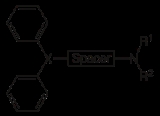
X = N, R1 = R2 = small alkyl groups
X = C
X = CO
histaminergic and cholinergic receptors. This selectivity significantly reduces the occurrence of adverse drug reactions, such as sedation, while still providing effective relief of allergic conditions.
The reason for their peripheral selectivity is that most of these compounds are zwitterionic at physiological pH (around pH 7.4). As such, they are very polar, meaning that they do not cross the blood-brain barrier
and act mainly outside the central nervous system.
Systemic:
Topical:
(levocetirizine) or metabolite
(desloratadine & fexofenadine) derivatives of second-generation drugs intended to have increased efficacy
with fewer adverse drug reaction
s. Indeed, fexofenadine is associated with a decreased risk of cardiac arrhythmia compared to terfenadine. However, there is little evidence for any advantage of levocetirizine or desloratadine, compared to cetirizine
or loratadine
, respectively.
There is some controversy associated with the use of this term.
Systemic:
Histamine antagonist
A histamine antagonist, commonly referred to as antihistamine, is a pharmaceutical drug that inhibits action of histamine by blocking it from attaching to histamine receptors.- Clinical effects :...
of the H1 receptor that serves to reduce or eliminate effects mediated by histamine
Histamine
Histamine is an organic nitrogen compound involved in local immune responses as well as regulating physiological function in the gut and acting as a neurotransmitter. Histamine triggers the inflammatory response. As part of an immune response to foreign pathogens, histamine is produced by...
, an endogenous chemical mediator released during allergic reactions
Allergy
An Allergy is a hypersensitivity disorder of the immune system. Allergic reactions occur when a person's immune system reacts to normally harmless substances in the environment. A substance that causes a reaction is called an allergen. These reactions are acquired, predictable, and rapid...
. Agents where the main therapeutic effect is mediated by negative modulation of histamine receptors are termed antihistamines; other agents may have antihistaminergic action but are not true antihistamines.
In common use, the term "antihistamine" refers only to H1 antagonists, also known as H1-receptor antagonists and H1-antihistamines. It has been discovered that these H1-antihistamines are actually inverse agonist
Inverse agonist
In the field of pharmacology, an inverse agonist is an agent that binds to the same receptor as an agonist but induces a pharmacological response opposite to that agonist....
s at the histamine H1-receptor rather than antagonists
Receptor antagonist
A receptor antagonist is a type of receptor ligand or drug that does not provoke a biological response itself upon binding to a receptor, but blocks or dampens agonist-mediated responses...
per se.
Pharmacology
In type I hypersensitivity allergic reactions, an allergenAllergen
An allergen is any substance that can cause an allergy. In technical terms, an allergen is a non-parasitic antigen capable of stimulating a type-I hypersensitivity reaction in atopic individuals....
(a type of antigen
Antigen
An antigen is a foreign molecule that, when introduced into the body, triggers the production of an antibody by the immune system. The immune system will then kill or neutralize the antigen that is recognized as a foreign and potentially harmful invader. These invaders can be molecules such as...
) interacts with and cross-links surface IgE antibodies
Antibody
An antibody, also known as an immunoglobulin, is a large Y-shaped protein used by the immune system to identify and neutralize foreign objects such as bacteria and viruses. The antibody recognizes a unique part of the foreign target, termed an antigen...
on mast cell
Mast cell
A mast cell is a resident cell of several types of tissues and contains many granules rich in histamine and heparin...
s and basophils. Once the mast cell-antibody-antigen complex is formed, a complex series of events that eventually leads to cell degranulation
Degranulation
Degranulation is a cellular process that releases antimicrobial cytotoxic molecules from secretory vesicles called granules found inside some cells...
and the release of histamine (and other chemical mediators) from the mast cell or basophil occurs. Once released, histamine can react with local or widespread tissues through histamine receptor
Histamine receptor
The histamine receptors are a class of G protein-coupled receptors with histamine as their endogenous ligand.There are four known histamine receptors:*H1 receptor*H2 receptor*H3 receptor*H4 receptor-Comparison:...
s.
Histamine, acting on H1-receptors, produces pruritus
Itch
Itch is a sensation that causes the desire or reflex to scratch. Itch has resisted many attempts to classify it as any one type of sensory experience. Modern science has shown that itch has many similarities to pain, and while both are unpleasant sensory experiences, their behavioral response...
, vasodilation
Vasodilation
Vasodilation refers to the widening of blood vessels resulting from relaxation of smooth muscle cells within the vessel walls, particularly in the large arteries, smaller arterioles and large veins. The process is essentially the opposite of vasoconstriction, or the narrowing of blood vessels. When...
, hypotension
Hypotension
In physiology and medicine, hypotension is abnormally low blood pressure, especially in the arteries of the systemic circulation. It is best understood as a physiologic state, rather than a disease. It is often associated with shock, though not necessarily indicative of it. Hypotension is the...
, flushing
Flushing (physiology)
For a person to flush is to become markedly red in the face and often other areas of the skin, from various physiological conditions. Flushing is generally distinguished, despite a close physiological relation between them, from blushing, which is milder, generally restricted to the face, cheeks or...
, headache
Headache
A headache or cephalalgia is pain anywhere in the region of the head or neck. It can be a symptom of a number of different conditions of the head and neck. The brain tissue itself is not sensitive to pain because it lacks pain receptors. Rather, the pain is caused by disturbance of the...
, tachycardia
Tachycardia
Tachycardia comes from the Greek words tachys and kardia . Tachycardia typically refers to a heart rate that exceeds the normal range for a resting heart rate...
, bronchoconstriction
Bronchoconstriction
Bronchoconstriction is the constriction of the airways in the lungs due to the tightening of surrounding smooth muscle, with consequent coughing, wheezing, and shortness of breath. Bronchoconstriction can also be due to an accumulation of thick mucus....
, increase in vascular permeability
Vascular permeability
Vascular permeability, often in the form of capillary permeability, characterizes the capacity of a blood vessel wall to allow for the flow of small molecules or even whole cells in and out of the vessel. Blood vessel walls are lined by a single layer of endothelial cells...
, potentiation of pain
Pain
Pain is an unpleasant sensation often caused by intense or damaging stimuli such as stubbing a toe, burning a finger, putting iodine on a cut, and bumping the "funny bone."...
, and more.
While H1-antihistamines help against these effects, they work only if taken before contact with the allergen. In severe allergies, such as anaphylaxis
Anaphylaxis
Anaphylaxis is defined as "a serious allergic reaction that is rapid in onset and may cause death". It typically results in a number of symptoms including throat swelling, an itchy rash, and low blood pressure...
or angioedema
Angioedema
Angioedema or Quincke's edema is the rapid swelling of the dermis, subcutaneous tissue, mucosa and submucosal tissues. It is very similar to urticaria, but urticaria, commonly known as hives, occurs in the upper dermis...
, these effects may be so severe as to be life-threatening. Additional administration of epinephrine
Epinephrine
Epinephrine is a hormone and a neurotransmitter. It increases heart rate, constricts blood vessels, dilates air passages and participates in the fight-or-flight response of the sympathetic nervous system. In chemical terms, adrenaline is one of a group of monoamines called the catecholamines...
, often in the form of an autoinjector (Epi-pen), is required by people with such hypersensitivities.
Indications
H1-antihistamines are clinically used in the treatment of histamine-mediated allergic conditions. To be specific, these indications may include:- Allergic rhinitisRhinitisRhinitis , commonly known as a stuffy nose, is the medical term describing irritation and inflammation of some internal areas of the nose. The primary symptom of rhinitis is nasal dripping. It is caused by chronic or acute inflammation of the mucous membrane of the nose due to viruses, bacteria or...
- Allergic conjunctivitisConjunctivitisConjunctivitis refers to inflammation of the conjunctiva...
- Allergic dermatologicalSkin-Dermis:The dermis is the layer of skin beneath the epidermis that consists of connective tissue and cushions the body from stress and strain. The dermis is tightly connected to the epidermis by a basement membrane. It also harbors many Mechanoreceptors that provide the sense of touch and heat...
conditions (contact dermatitisContact dermatitisContact dermatitis is a term for a skin reaction resulting from exposure to allergens or irritants . Phototoxic dermatitis occurs when the allergen or irritant is activated by sunlight....
) - UrticariaUrticariaUrticaria is a kind of skin rash notable for pale red, raised, itchy bumps. Hives is frequently caused by allergic reactions; however, there are many non-allergic causes...
- AngioedemaAngioedemaAngioedema or Quincke's edema is the rapid swelling of the dermis, subcutaneous tissue, mucosa and submucosal tissues. It is very similar to urticaria, but urticaria, commonly known as hives, occurs in the upper dermis...
- Diarrhea
- Pruritus (atopic dermatitisAtopic dermatitisAtopic dermatitis is an inflammatory, chronically relapsing, non-contagious and pruritic skin disorder...
, insect bites) - AnaphylacticAnaphylaxisAnaphylaxis is defined as "a serious allergic reaction that is rapid in onset and may cause death". It typically results in a number of symptoms including throat swelling, an itchy rash, and low blood pressure...
or anaphylactoid reactions—adjunct only - Nausea and vomiting (first-generation H1-antihistamines)
- Sedation (first-generation H1-antihistamines)
H1-antihistamines can be administered topically (through the skin
Human skin
The human skin is the outer covering of the body. In humans, it is the largest organ of the integumentary system. The skin has multiple layers of ectodermal tissue and guards the underlying muscles, bones, ligaments and internal organs. Human skin is similar to that of most other mammals,...
, nose
Human nose
The visible part of the human nose is the protruding part of the face that bears the nostrils. The shape of the nose is determined by the ethmoid bone and the nasal septum, which consists mostly of cartilage and which separates the nostrils...
, or eye
Human eye
The human eye is an organ which reacts to light for several purposes. As a conscious sense organ, the eye allows vision. Rod and cone cells in the retina allow conscious light perception and vision including color differentiation and the perception of depth...
s) or systemically, based on the nature of the allergic condition.
The authors of the American College of Chest Physicians Updates on Cough Guidelines (2006) recommend that, for cough associated with the common cold, first-generation antihistamine-decongestants are more effective than newer, non-sedating antihistamines. First-generation antihistamines include diphenhydramine
Diphenhydramine
Diphenhydramine hydrochloride is a first-generation antihistamine possessing anticholinergic, antitussive, antiemetic, and sedative properties which is mainly used to treat allergies. Like most other first-generation antihistamines, the drug also has a powerful hypnotic effect, and for this reason...
(Benadryl), carbinoxamine (Clistin), clemastine (Tavist), chlorpheniramine (Chlor-Trimeton), and
brompheniramine (Dimetane). However, it is important to note that a 1955 study of "antihistaminic drugs for colds," carried out by the U.S. Army Medical Corps, reported that "there was no significant difference in the proportion of cures reported by patients receiving oral antihistaminic drugs and those receiving oral placebos. Furthermore, essentially the same proportion of patients reported no benefit from either type of treatment."
Adverse drug reactions
Adverse drug reactionAdverse drug reaction
An adverse drug reaction is an expression that describes harm associated with the use of given medications at a normal dosage. ADRs may occur following a single dose or prolonged administration of a drug or result from the combination of two or more drugs...
s are most commonly associated with the first-generation H1-antihistamines. This is due to their relative lack of selectivity for the H1-receptor.
The most common adverse effect is sedation; this "side-effect" is utilized in many OTC sleeping-aid preparations. Other common adverse effects in first-generation H1-antihistamines include dizziness, tinnitus
Tinnitus
Tinnitus |ringing]]") is the perception of sound within the human ear in the absence of corresponding external sound.Tinnitus is not a disease, but a symptom that can result from a wide range of underlying causes: abnormally loud sounds in the ear canal for even the briefest period , ear...
, blurred vision, euphoria
Euphoria (emotion)
Euphoria is medically recognized as a mental and emotional condition in which a person experiences intense feelings of well-being, elation, happiness, ecstasy, excitement and joy...
, uncoordination, anxiety
Anxiety
Anxiety is a psychological and physiological state characterized by somatic, emotional, cognitive, and behavioral components. The root meaning of the word anxiety is 'to vex or trouble'; in either presence or absence of psychological stress, anxiety can create feelings of fear, worry, uneasiness,...
, insomnia
Insomnia
Insomnia is most often defined by an individual's report of sleeping difficulties. While the term is sometimes used in sleep literature to describe a disorder demonstrated by polysomnographic evidence of disturbed sleep, insomnia is often defined as a positive response to either of two questions:...
, tremor, nausea
Nausea
Nausea , is a sensation of unease and discomfort in the upper stomach with an involuntary urge to vomit. It often, but not always, precedes vomiting...
and vomiting, constipation
Constipation
Constipation refers to bowel movements that are infrequent or hard to pass. Constipation is a common cause of painful defecation...
, diarrhea
Diarrhea
Diarrhea , also spelled diarrhoea, is the condition of having three or more loose or liquid bowel movements per day. It is a common cause of death in developing countries and the second most common cause of infant deaths worldwide. The loss of fluids through diarrhea can cause dehydration and...
, dry mouth, and dry cough. Infrequent adverse effects include urinary retention, palpitation
Palpitation
A palpitation is an abnormality of heartbeat that causes a conscious awareness of its beating, whether it is too slow, too fast, irregular, or at its normal frequency. The word may also refer to this sensation itself...
s, hypotension
Hypotension
In physiology and medicine, hypotension is abnormally low blood pressure, especially in the arteries of the systemic circulation. It is best understood as a physiologic state, rather than a disease. It is often associated with shock, though not necessarily indicative of it. Hypotension is the...
, headache
Headache
A headache or cephalalgia is pain anywhere in the region of the head or neck. It can be a symptom of a number of different conditions of the head and neck. The brain tissue itself is not sensitive to pain because it lacks pain receptors. Rather, the pain is caused by disturbance of the...
, hallucination
Hallucination
A hallucination, in the broadest sense of the word, is a perception in the absence of a stimulus. In a stricter sense, hallucinations are defined as perceptions in a conscious and awake state in the absence of external stimuli which have qualities of real perception, in that they are vivid,...
, and psychosis
Psychosis
Psychosis means abnormal condition of the mind, and is a generic psychiatric term for a mental state often described as involving a "loss of contact with reality"...
.
The newer, second-generation H1-antihistamines are far more selective for peripheral histamine H1-receptors and have a far better tolerability profile compared to the first-generation agents. The most common adverse effects noted for second-generation agents include drowsiness, fatigue, headache, nausea and dry mouth.
First-generation (non-selective, classical)
These are the oldest H1-antihistaminergic drugs and are relatively inexpensive and widely available. They are effective in the relief of allergic symptoms, but are typically moderately to highly potent muscarinic acetylcholine receptorAcetylcholine receptor
An acetylcholine receptor is an integral membrane protein that responds to the binding of acetylcholine, a neurotransmitter.-Classification:...
(anticholinergic
Anticholinergic
An anticholinergic agent is a substance that blocks the neurotransmitter acetylcholine in the central and the peripheral nervous system. An example of an anticholinergic is dicycloverine, and the classic example is atropine....
) antagonists as well. These agents also commonly have action at α-adrenergic receptor
Adrenergic receptor
The adrenergic receptors are a class of metabotropic G protein-coupled receptors that are targets of the catecholamines, especially noradrenaline and adrenaline ....
s and/or 5-HT receptor
5-HT receptor
The serotonin receptors, also known as 5-hydroxytryptamine receptors or 5-HT receptors, are a group of G protein-coupled receptors and ligand-gated ion channels found in the central and peripheral nervous systems. They mediate both excitatory and inhibitory neurotransmission...
s. This lack of receptor selectivity is the basis of the poor tolerability profile of some of these agents, especially compared with the second-generation H1-antihistamines. Patient response and occurrence of adverse drug reactions vary greatly between classes and between agents within classes.
Classes
The first H1-antihistamine discovered was piperoxanPiperoxan
Piperoxan, also known as benodaine or benzodioxane, is a drug which was the very first antihistamine ever to be discovered. It was prepared in the early 1930s by Daniel Bovet and Ernest Fourneau at the Pasteur Institute in France...
, by Ernest Fourneau
Ernest Fourneau
Ernest Fourneau was a French medicinal chemist, who played a major role in the discovery of synthetic local anesthetics, as well as in the synthesis of suramin...
and Daniel Bovet
Daniel Bovet
Daniel Bovet was a Swiss-born Italian pharmacologist who won the 1957 Nobel Prize in Physiology or Medicine for his discovery of drugs that block the actions of specific neurotransmitters. He is best known for his discovery in 1937 of antihistamines, which block the neurotransmitter histamine and...
(1933) in their efforts to develop a guinea pig
Guinea pig
The guinea pig , also called the cavy, is a species of rodent belonging to the family Caviidae and the genus Cavia. Despite their common name, these animals are not in the pig family, nor are they from Guinea...
animal model for anaphylaxis
Anaphylaxis
Anaphylaxis is defined as "a serious allergic reaction that is rapid in onset and may cause death". It typically results in a number of symptoms including throat swelling, an itchy rash, and low blood pressure...
at the Pasteur Institute
Pasteur Institute
The Pasteur Institute is a French non-profit private foundation dedicated to the study of biology, micro-organisms, diseases, and vaccines. It is named after Louis Pasteur, who made some of the greatest breakthroughs in modern medicine at the time, including pasteurization and vaccines for anthrax...
in Paris
Paris
Paris is the capital and largest city in France, situated on the river Seine, in northern France, at the heart of the Île-de-France region...
. Bovet went on to win the 1957 Nobel Prize in Physiology or Medicine
Nobel Prize in Physiology or Medicine
The Nobel Prize in Physiology or Medicine administered by the Nobel Foundation, is awarded once a year for outstanding discoveries in the field of life science and medicine. It is one of five Nobel Prizes established in 1895 by Swedish chemist Alfred Nobel, the inventor of dynamite, in his will...
for his contribution. Following their discovery, the first-generation H1-antihistamines were developed in the following decades. They can be classified on the basis of chemical structure, and agents within these groups have similar properties.
| Class | Description | Examples >- | Ethylenediamines |
Ethylenediamines were the first group of clinically effective H1-antihistamines developed. |
Mepyramine Mepyramine, also known as pyrilamine, is a first generation antihistamine, targeting the H1 receptor. However, it rapidly permeates the brain often causing drowsiness. It also has anticholinergic properties. It is used in over-the-counter combination products to treat the common cold and menstrual... (pyrilamine) Antazoline Antazoline is a 1st generation antihistamine that also anticholinergic properties used to relieve nasal congestion and in eye drops, usually in combination with naphazoline, to relieve the symptoms of allergic conjunctivitis.... >- | Ethanolamines |
Diphenhydramine was the prototypical agent in this group. Significant anticholinergic Anticholinergic An anticholinergic agent is a substance that blocks the neurotransmitter acetylcholine in the central and the peripheral nervous system. An example of an anticholinergic is dicycloverine, and the classic example is atropine.... adverse effects, as well as sedation, are observed in this group but the incidence of gastrointestinal adverse effects is relatively low. |
Diphenhydramine Diphenhydramine hydrochloride is a first-generation antihistamine possessing anticholinergic, antitussive, antiemetic, and sedative properties which is mainly used to treat allergies. Like most other first-generation antihistamines, the drug also has a powerful hypnotic effect, and for this reason... Carbinoxamine Carbinoxamine antihistamine and anticholinergic. It was first launched in the United States by the McNeil Corporation under the brand name Clistin. It is now available under the brand name Palgic as 4 mg tablets or 4 mg/5 mL liquid. It is approved by the U.S. Food and Drug Administration for hay... Doxylamine Doxylamine is one of the many sedating antihistamines used by itself as a short-term sedative, and in combination with other drugs as a night-time cold and allergy relief drug... Clemastine Clemastine, also known as meclastin, is an antihistamine and anticholinergic. Unlike loratadine or fexofenadine, clemastine is a sedating antihistamine, however it exhibits fewer other side effects than most of the widely used antihistamines. Clemastine is also classified as an antipruritic... Dimenhydrinate Dimenhydrinate is an over-the-counter drug used to prevent nausea and motion sickness... >- | Alkylamines |
The isomer Isomer In chemistry, isomers are compounds with the same molecular formula but different structural formulas. Isomers do not necessarily share similar properties, unless they also have the same functional groups. There are many different classes of isomers, like stereoisomers, enantiomers, geometrical... ism is a significant factor in the activity of the agents in this group. E-triprolidine, for example, is 1000-fold more potent than Z-triprolidine. This difference relates to the positioning and fit of the molecules in the histamine H1-receptor binding site. Alkylamines are considered to have relatively fewer sedative and gastrointestinal adverse effects, but relatively greater incidence of paradoxical central nervous system Central nervous system The central nervous system is the part of the nervous system that integrates the information that it receives from, and coordinates the activity of, all parts of the bodies of bilaterian animals—that is, all multicellular animals except sponges and radially symmetric animals such as jellyfish... (CNS) stimulation. |
Pheniramine Pheniramine is an antihistamine with anticholinergic properties used to treat allergic conditions such as hay fever or urticaria. It has relatively strong sedative effects, and may sometimes be used off-label as an over-the-counter sleeping pill in a similar manner to other sedating antihistamines... Chlorphenamine Chlorphenamine or chlorpheniramine , commonly marketed in the form of chlorpheniramine maleate , is a first-generation alkylamine antihistamine used in the prevention of the symptoms of allergic conditions such as rhinitis and urticaria. Its sedative effects are relatively weak compared to other... (chlorpheniramine) Dexchlorpheniramine Dexchlorpheniramine is an antihistamine with anticholinergic properties used to treat allergic conditions such as hay fever or urticaria... Brompheniramine Brompheniramine , commonly marketed as its salt brompheniramine maleate is an antihistamine drug of the propylamine class... Triprolidine Triprolidine is an over-the-counter antihistamine with anticholinergic properties. It is used to combat the symptoms associated with allergies and is sometimes combined with other cold medications designed to provide general relief for flu-like symptoms. Like many over-the-counter antihistamines,... Dimetindene Dimetindene is an antihistamine/anticholinergic used orally and locally as an antipruritic.... >- | Piperazines |
These compounds are structurally-related to the ethylenediamines and the ethanolamines, and produce significant anticholinergic Anticholinergic An anticholinergic agent is a substance that blocks the neurotransmitter acetylcholine in the central and the peripheral nervous system. An example of an anticholinergic is dicycloverine, and the classic example is atropine.... adverse effects. Compounds from this group are often used for motion sickness, vertigo, nausea, and vomiting. The second-generation H1-antihistamine cetirizine Cetirizine Cetirizine , a second-generation antihistamine, is a major metabolite of hydroxyzine, and a racemic selective H1 receptor inverse agonist used in the treatment of allergies, hay fever, angioedema, and urticaria.-Availability:... also belongs to this chemical group. |
Cyclizine Cyclizine is an antihistamine drug used to treat nausea, vomiting and dizziness associated with motion sickness, vertigo and post-operatively following administration of general anaesthesia and opioids.-Indications:... Chlorcyclizine Chlorcyclizine is a first-generation antihistamine of the phenylpiperazine class marketed in the United States and certain other countries. It is used primarily to treat allergy symptoms such as rhinitis, urticaria, and pruritus, and may also be used as an antiemetic... Hydroxyzine Hydroxyzine is a first-generation antihistamine of the diphenylmethane and piperazine classes. It was first synthesized by Union Chimique Belge in 1956 and was marketed by Pfizer in the United States later the same year, and is still in widespread use today.... >- | Tricyclics and Tetracyclics |
These compounds differ from the phenothiazine Phenothiazine Phenothiazine is an organic compound that occurs in various antipsychotic and antihistaminic drugs. It has the formula S2NH. This yellow tricyclic compound is soluble in acetic acid, benzene, and ether. The compound is related to the thiazine-class of heterocyclic compounds... antipsychotic Antipsychotic An antipsychotic is a tranquilizing psychiatric medication primarily used to manage psychosis , particularly in schizophrenia and bipolar disorder. A first generation of antipsychotics, known as typical antipsychotics, was discovered in the 1950s... s in the ring-substitution and chain characteristics. They are also structurally-related to the tricyclic antidepressant Tricyclic antidepressant Tricyclic antidepressants are heterocyclic chemical compounds used primarily as antidepressants. The TCAs were first discovered in the early 1950s and were subsequently introduced later in the decade; they are named after their chemical structure, which contains three rings of atoms... s (and tetracyclics Tetracyclic antidepressant Tetracyclic antidepressants are a class of drugs used primarily as antidepressants that were first introduced in the 1970s. They are named after their chemical structure which contains four rings of atoms and are closely related to the tricyclic antidepressants which contain three rings of... ), explaining the H1-antihistaminergic adverse effects of those three drug classes and also the poor tolerability profile of tricyclic H1-antihistamines. The second-generation H1-antihistamine loratadine was derived from compounds in this group. |
|
Common structural features
- Two aromatic rings, connected to a central carbon, nitrogen or CO
- Spacer between the central X and the amine, usually 2-3 carbons in length, linear, ring, branched, saturated or unsaturated
- Amine is substituted with small alkyl groups, e.g., CH3
X = N, R1 = R2 = small alkyl groups
X = C
X = CO
- Chirality at X can increase both the potency and selectivity for H1-receptors
- For maximum potency, the two aromatic rings should be orientated in different planes
- for example, tricyclic ring system is slightly puckered and the two aromatic rings lie in different geometrical planes, giving the drug a very high potency.
Second-generation
Second-generation H1-antihistamines are newer drugs that are much more selective for peripheral H1 receptors in preference to the central nervous systemCentral nervous system
The central nervous system is the part of the nervous system that integrates the information that it receives from, and coordinates the activity of, all parts of the bodies of bilaterian animals—that is, all multicellular animals except sponges and radially symmetric animals such as jellyfish...
histaminergic and cholinergic receptors. This selectivity significantly reduces the occurrence of adverse drug reactions, such as sedation, while still providing effective relief of allergic conditions.
The reason for their peripheral selectivity is that most of these compounds are zwitterionic at physiological pH (around pH 7.4). As such, they are very polar, meaning that they do not cross the blood-brain barrier
Blood-brain barrier
The blood–brain barrier is a separation of circulating blood and the brain extracellular fluid in the central nervous system . It occurs along all capillaries and consists of tight junctions around the capillaries that do not exist in normal circulation. Endothelial cells restrict the diffusion...
and act mainly outside the central nervous system.
Systemic:
- AstemizoleAstemizoleAstemizole was a second generation antihistamine drug which has a long duration of action. Astemizole was discovered by Janssen Pharmaceutica in 1977...
- KetotifenKetotifenKetotifen is a second-generation H1-antihistamine and mast cell stabilizer. It is most commonly sold in as a salt of Fumaric Acid, Ketotifen fumarate, and is available in two forms. In its ophthalmic form, it is used to treat allergic conjunctivitis, or the itchy red eyes caused by allergies. In...
- CetirizineCetirizineCetirizine , a second-generation antihistamine, is a major metabolite of hydroxyzine, and a racemic selective H1 receptor inverse agonist used in the treatment of allergies, hay fever, angioedema, and urticaria.-Availability:...
- LoratadineLoratadineLoratadine is a second-generation H1 histamine antagonist drug used to treat allergies. Structurally, it is closely related to tricyclic antidepressants such as imipramine, and distantly related to the atypical antipsychotic quetiapine. It is marketed by Schering-Plough under several trade names...
- RupatadineRupatadineRupatadine is a second generation antihistamine and PAF antagonist used to treat allergies. It was discovered and developed by J. Uriach y Cia, S. A...
- MizolastineMizolastineMizolastine is a once daily, non-sedating antihistamine. It blocks H1 receptors and is commonly fast-acting. It does not prevent the actual release of histamine from mast cells, just prevents it binding to receptors. Side effects can include dry mouth and throat....
- AcrivastineAcrivastineAcrivastine is a medication used for the treatment of allergies and hay fever. It is a second-generation H1-receptor antagonist antihistamine and works by blocking Histamine H1 receptors.It is sold under the brand name Benadryl Allergy Relief in the U.K...
- EbastineEbastineEbastine is a non-sedating H1 antihistamine.It does not penetrate the blood-brain barrier and thus allows an effective block of the H1 receptor in peripheral tissue without a central side effect, i.e not causing sedation or drowsiness.The basic patent for ebastine in Europe is EP-B-134124...
- Bilastine
- BepotastineBepotastineBepotastine is an antihistamine. It was approved in Japan for use in the treatment of allergic rhinitis and urticaria/pruritus in July 2000 and January 2002, respectively, and is marketed by Tanabe Seiyaku Co., Ltd. under the brand name TALION. TALION was co-developed by Tanabe Seiyaku and Ube...
- TerfenadineTerfenadineTerfenadine is an antihistamine formerly used for the treatment of allergic conditions. It was brought to market by Hoechst Marion Roussel and marketed under various brand names including Seldane in the United States, Triludan in the United Kingdom, and Teldane in Australia...
- Quifenadine
Topical:
- AzelastineAzelastineAzelastine is a potent, second-generation, selective, histamine antagonist manufactured by MedaPharma. According to the Allergic Rhinitis and its Impact on Asthma treatment guidelines, intranasal anti-histamines are recommended for the first line therapy of mild intermittent, moderate/severe...
- LevocabastineLevocabastineLevocabastine is a selective second-generation H1-receptor antagonist which was discovered at Janssen Pharmaceutica in 1979. It is used for allergic conjunctivitis....
- OlopatadineOlopatadineOlopatadine hydrochloride is an antihistamine and mast cell stabilizer, sold as a prescription eye drop . It is used to treat itching associated with allergic conjunctivitis...
Third-generation
Third-generation H1-antihistamines are the active enantiomerEnantiomer
In chemistry, an enantiomer is one of two stereoisomers that are mirror images of each other that are non-superposable , much as one's left and right hands are the same except for opposite orientation. It can be clearly understood if you try to place your hands one over the other without...
(levocetirizine) or metabolite
Metabolite
Metabolites are the intermediates and products of metabolism. The term metabolite is usually restricted to small molecules. A primary metabolite is directly involved in normal growth, development, and reproduction. Alcohol is an example of a primary metabolite produced in large-scale by industrial...
(desloratadine & fexofenadine) derivatives of second-generation drugs intended to have increased efficacy
Efficacy
Efficacy is the capacity to produce an effect. It has different specific meanings in different fields. In medicine, it is the ability of an intervention or drug to reproduce a desired effect in expert hands and under ideal circumstances.- Healthcare :...
with fewer adverse drug reaction
Adverse drug reaction
An adverse drug reaction is an expression that describes harm associated with the use of given medications at a normal dosage. ADRs may occur following a single dose or prolonged administration of a drug or result from the combination of two or more drugs...
s. Indeed, fexofenadine is associated with a decreased risk of cardiac arrhythmia compared to terfenadine. However, there is little evidence for any advantage of levocetirizine or desloratadine, compared to cetirizine
Cetirizine
Cetirizine , a second-generation antihistamine, is a major metabolite of hydroxyzine, and a racemic selective H1 receptor inverse agonist used in the treatment of allergies, hay fever, angioedema, and urticaria.-Availability:...
or loratadine
Loratadine
Loratadine is a second-generation H1 histamine antagonist drug used to treat allergies. Structurally, it is closely related to tricyclic antidepressants such as imipramine, and distantly related to the atypical antipsychotic quetiapine. It is marketed by Schering-Plough under several trade names...
, respectively.
There is some controversy associated with the use of this term.
Systemic:
- LevocetirizineLevocetirizineLevocetirizine is a third-generation non-sedative antihistamine, developed from the second-generation antihistamine cetirizine. Chemically, levocetirizine is the active enantiomer of cetirizine. It is the L-enantiomer of the cetirizine racemate. Levocetirizine works by blocking histamine receptors...
- DesloratadineDesloratadineDesloratadine is a drug used to treat allergies. It is marketed under several trade names such as NeoClarityn, Claramax, Clarinex, Larinex, Aerius, Dazit, Azomyr and Delot...
- FexofenadineFexofenadineFexofenadine is an antihistamine drug used in the treatment of hayfever and similar allergy symptoms...