
All Topics  
Vinegar

 
Vinegar

   Email Print
   Bookmark   Link


Vinegar


Vinegar is an acidic liquid processed from the fermentation
Fermentation

Fermentation may refer to:* Fermentation , the process of energy production in a cell under anaerobic conditions * Ethanol fermentation, a form of anaerobic respiration used primarily by yeasts when oxygen is not present in sufficient quantity for normal cellular respiration...
 of ethanol
Ethanol

Ethanol, also called ethyl alcohol, pure alcohol, grain alcohol, or drinking alcohol, is a volatility , flammable, colorless liquid....
 in a process that yields its key ingredient, acetic acid
Acetic acid

Acetic acid, CH3COOH, also known as ethanoic acid, is an organic acid which gives vinegar its sour taste and pungent smell. Pure, water-free acetic acid is a colourless liquid that absorbs water from the environment , and freezes at 16.7 Celsius to a colourless crystalline solid....
 (also called ethanoic acid). It also may come in a diluted form. The acetic acid concentration typically ranges from 4 to 8 percent by volume for table vinegar (typically 5%) and higher concentrations for pickling (up to 18%).


Nutrition Facts


Discussion
Ask a question about 'Vinegar'
Start a new discussion about 'Vinegar'
Answer questions from other users
Full Discussion Forum


Recent Posts


Encyclopedia


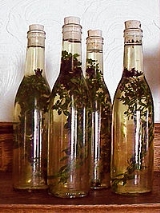
Vinegar Infused With Oregano
Vinegar is an acidic liquid processed from the fermentation
Fermentation

Fermentation may refer to:* Fermentation , the process of energy production in a cell under anaerobic conditions * Ethanol fermentation, a form of anaerobic respiration used primarily by yeasts when oxygen is not present in sufficient quantity for normal cellular respiration...
 of ethanol
Ethanol

Ethanol, also called ethyl alcohol, pure alcohol, grain alcohol, or drinking alcohol, is a volatility , flammable, colorless liquid....
 in a process that yields its key ingredient, acetic acid
Acetic acid

Acetic acid, CH3COOH, also known as ethanoic acid, is an organic acid which gives vinegar its sour taste and pungent smell. Pure, water-free acetic acid is a colourless liquid that absorbs water from the environment , and freezes at 16.7 Celsius to a colourless crystalline solid....
 (also called ethanoic acid). It also may come in a diluted form. The acetic acid concentration typically ranges from 4 to 8 percent by volume for table vinegar (typically 5%) and higher concentrations for pickling (up to 18%). Natural vinegars also contain small amounts of tartaric acid
Tartaric acid

Tartaric acid is a white crystalline organic acid. It occurs naturally in many plants, particularly grapes, bananas, and tamarinds, and is one of the main acids found in wine....
, citric acid
Citric acid

Citric acid is a weak organic chemistry acid, and it is a natural preservative and is also used to add an acidic, or sour, taste to foods and soft drinks....
, and other acids. Vinegar has been used since ancient times and is an important element in European
European cuisine

European cuisine, or alternatively Western cuisine is a generalized term collectively referring to the cuisines of Europe and other Western world....
, Asian
Asian cuisine

Asian cuisine styles can be broken down into several regional styles that have roots in the peoples and cultures of those regions. The major types can be roughly defined as East Asian with its origins in Imperial era of Chinese history and now encompassing modern Japan and the Korean peninsula; Southeast Asian which encompasses th...
, and other traditional cuisines of the world.

The word "vinegar" derives from the Old French
Old French

Old French was the Romance languages dialect continuum spoken in territories which span roughly the northern half of modern France and parts of modern Belgium and Switzerland from around 1000 to 1300....
 vin aigre, meaning "sour wine". It is also known as acidity regulator E260.

Chemical and physical properties


Density

Vinegar has a density
Density

The density of a material is defined as its mass per unit volume. The symbol of density is ....
 of approximately 0.96 g
G

G is the seventh letter in the Latin alphabet. Its name in English language is spelled gee....
/mL. The density level depends on the acidity of the vinegar. Household vinegar used for cooking is 1.05 g
G

G is the seventh letter in the Latin alphabet. Its name in English language is spelled gee....
/mL.

History

Vinegar has been made and used by people for thousands of years. Traces of it have been found in Egyptian urns dating from around 3000 BC. According to Chinese classic Shennong
Shennong

Shennong , also known as the Yan Emperor or the Emperor of the Five Grains , is a legendary Emperor of China and culture hero of Chinese mythology who is believed to have lived some 5,000 years ago, and taught ancient China the practices of agriculture....
's Herb Classic, Chinese vinegar was invented at the time of Xia Dynasty
Xia Dynasty

The Xia Dynasty of China is the first dynasty to be described in ancient historical records such as Records of the Grand Historian and Bamboo Annals....
, around 2000BC.

In the Bible
Bible

The Bible is the central religious text of Judaism and Christianity. The exact Books of the Bible is dependent on the religious traditions of specific denominations....
, it is mentioned as something not very pleasant (Ps.
Psalms

Psalms is a book of the Hebrew Bible , included in the collected works known as the "Writings" or Ketuvim....
 69:21, Prov.
Proverbs

Proverbs may refer to:*The plural of the word proverb*The Book of Proverbs, one of the books of the Hebrew Tanakh and the Old Testament...
 25:20), but Boaz
Boaz

Boaz is a major figure in The Book of Ruth in the Bible. The term is found 24 times on the Scriptures, being two in Greek .The Semitic root ???, just used on the Bible in relation to "Boaz", perhaps expresses 'quick' ....
 allows Ruth to "dip her piece of bread in the vinegar" (Ruth
Book of Ruth

The Book of Ruth is one of the books of the Ketuvim of the Tanakh and of the Historical Books of the Old Testament. It is a rather short book, in both Judaism and Christianity scripture, consisting of only four chapters....
 2:14). Jesus
Jesus

Jesus of Nazareth , also known as Jesus Christ, is the central figure of Christianity and is revered by most Christian churches as the Son of God and the Incarnation ....
 was offered vinegar or sour wine while on the cross (Matthew 27:48; Mark 15:36). In Islam
Islam

Islam is a Monotheism, Abrahamic religion originating with the teachings of the Prophets of Islam Muhammad, a 7th century Arab religious and political figure....
ic traditions, vinegar is one of the four favored condiments of the Prophet Muhammad
Muhammad

Muhammad Patronymic#Arabic Abd Allah ibn Abd al Muttalib , is the founder of the Major religious groups of Islam and is regarded by Muslims as a Rasul and prophet of , the last and the greatest law-bearer in a series of prophets....
, who called it a "blessed seasoning".

Louis Pasteur
Louis Pasteur

Louis Pasteur was a France chemist and microbiologist best known for his remarkable breakthroughs in the causes and prevention of disease. His experiments supported the germ theory of disease, also reducing mortality from puerperal fever , and he created the first vaccine for rabies....
 showed in 1864, that vinegar results from a natural fermentation
Fermentation (food)

Fermentation in food processing typically refers to the conversion of sugar to alcohol using yeast under anaerobic conditions. A more general definition of fermentation is the chemical conversion of carbohydrates into alcohols or acids....
 process.

Production


Vinegar is made from the oxidation by acetic acid bacteria
Acetic acid bacteria

Acetic acid bacteria are bacterium that derive their energy from the oxidation of ethanol to acetic acid during Cellular respiration. They are Gram-negative, Obligate aerobe, rod-shaped bacterium....
 of ethanol
Ethanol

Ethanol, also called ethyl alcohol, pure alcohol, grain alcohol, or drinking alcohol, is a volatility , flammable, colorless liquid....
 in wine
Wine

Wine is an alcoholic beverage often made of fermentation grape juice. The natural chemical balance of grapes is such that they can ferment without the addition of sugars, acids, enzymes or other nutrients....
, cider
Cider

Cider is an alcoholic beverage usually made from the fermentation juice of apples, although pears are also used.While any variety of apple may be used, certain cultivars are preferred in some regions, and these may be known as cider apples....
, beer
Beer

Beer is the world's oldest and most widely consumed alcoholic beverage and the third most popular drink overall after water and tea. It is produced by the brewing and Fermentation of starches, mainly derived from cereal?the most common of which is malted barley, although wheat, maize , and rice are widely used....
, fermented fruit juice, or nearly any other liquid containing alcohol.

Commercial vinegar is produced either by fast or slow fermentation
Fermentation

Fermentation may refer to:* Fermentation , the process of energy production in a cell under anaerobic conditions * Ethanol fermentation, a form of anaerobic respiration used primarily by yeasts when oxygen is not present in sufficient quantity for normal cellular respiration...
 processes. Slow methods generally are used with traditional vinegars and fermentation proceeds slowly over the course of weeks or months. The longer fermentation period allows for the accumulation of a nontoxic slime composed of acetic acid bacteria and soluble cellulose
Cellulose

File:Cellulose Sessel.svgCellulose is an organic compound with the chemical formula , a polysaccharide consisting of a linear chain of several hundred to over ten thousand ? linked D-glucose units....
, known as the mother of vinegar
Mother of vinegar

Mother of vinegar is a substance composed of a form of cellulose and acetic acid bacteria that develops on fermentation ing alcoholic liquids, which turns alcohol into acetic acid with the help of oxygen from the air....
.

Fast methods add mother of vinegar (i.e. bacterial culture) to the source liquid before adding air using a Venturi pump system or a turbine
Turbine

A turbine is a rotary engine that extracts energy from a fluid flow. Claude Burdin coined the term from the Latin turbo, or vortex, during an 1828 engineering competition....
 to promote oxygenation to obtain the fastest fermentation. In fast production processes, vinegar may be produced in a period ranging from 20 hours to three days.

Vinegar eels (Turbatrix aceti), a form of nematode
Nematode

The "roundworms" or "nematodes" are the most diverse phylum of body cavity, and one of the most diverse of all animals. Nematode species are very difficult to distinguish; over 80,000 have been described, of which over 15,000 are parasite....
 that has cells that are air-borne, may occur in some forms of vinegar unless the vinegar is kept covered. These feed on the mother of vinegar and can occur in naturally fermenting vinegar. This is the reason vinegar condiment jars have tightly-fitting stoppers. Most manufacturers filter and pasteurize their product before bottling to eliminate any potential adulteration, although they are harmless when ingested.

Malt

Malt vinegar is made by malt
Malt

Malting is a process applied to cereal grains, in which the grains are made to germinate by soaking in water and are then quickly halted from germinating further by drying/heating with hot air....
ing barley
Barley

Barley is an annual plant cereal grain derived from the grass Hordeum vulgare. It serves as a major animal feed crop, with smaller amounts used for malting and in health food, as well as the making of alcoholic beverages beer and whisky....
, causing the starch
Starch

File:Amylose2.svgFile:Amylopektin Sessel.svgStarch or amylum is a polysaccharide carbohydrate consisting of a large number of glucose units joined together by glycosidic bonds....
 in the grain to turn to maltose
Maltose

Maltose, or malt sugar, is a disaccharide formed from two units of glucose joined with an a linkage. It is the second member of an important biochemical series of glucose chains....
. Then an ale
Ale

Ale is a type of beer brewed from malted barley using a top-fermenting yeast brewers' yeast. This yeast Fermentation the beer quickly, giving it a sweet, full bodied and fruity taste....
 is brewed
Brewing

Brewing is the production of alcoholic beverages and alcohol fuel through fermentation . The term is used for the production of beer, although the word "brewing" is also used to describe the fermentation process used to create wine and mead....
 from the maltose and allowed to turn into vinegar, which is then aged. It typically is light brown in color.

Wine

Wine
Wine

Wine is an alcoholic beverage often made of fermentation grape juice. The natural chemical balance of grapes is such that they can ferment without the addition of sugars, acids, enzymes or other nutrients....
 vinegar is made from red or white wine and is the most commonly used vinegar in Mediterranean countries and Central Europe
Central Europe

Central Europe is the region lying between the variously and vaguely defined areas of Eastern Europe and Western Europe Europe. In addition, Northern Europe, Southern Europe and Southeastern Europe may variously delimit or overlap into Central Europe....
. As with wine, there is a considerable range in quality. Better quality wine vinegars are matured in wood for up to two years and exhibit a complex, mellow flavor. Wine vinegar tends to have a lower acidity than that of white or cider vinegars. There are more expensive wine vinegars that are made from individual varieties of wine, such as Champagne, Sherry
Sherry Vinegar

Sherry vinegar is a gourmet wine vinegar made from Sherry. It is produced in the Spanish province of C?diz and inside the triangular area between the city of Jerez de la Frontera and towns of Sanl?car de Barrameda and El Puerto de Santa Mar?a, known as the "sherry triangle"....
, or pinot grigio
Pinot Gris

Pinot gris is white wine grape variety of the species Vitis vinifera. Thought to be a mutant clone of the Pinot noir grape, it normally has a grayish-blue fruit, accounting for its name but the grape can have a brownish pink to black and even white appearance....
.

Apple cider

Apple cider vinegar
Apple cider vinegar

Apple cider vinegar, otherwise known simply as cider vinegar, is a type of vinegar made from cider or apple must and has a pale to medium amber color....
, otherwise known simply as cider vinegar, is made from cider
Cider

Cider is an alcoholic beverage usually made from the fermentation juice of apples, although pears are also used.While any variety of apple may be used, certain cultivars are preferred in some regions, and these may be known as cider apples....
 or apple
APPLE

This article is about the satellite APPLE. For the fruit apple, see Apple. For other uses see Apple .The Ariane Passenger PayLoad Experiment , was an experimental communication satellite with a C-Band transponder launched by Indian Space Research Organisation satellite on June 19, 1981 by Ariane 1, a launch vehicle of the European Spac...
 must
Must

Must is freshly pressed fruit juice that contains the skins, seeds, and stems of the fruit. The solid portion of the must is called pomace; it typically makes up 7%?23% of the total weight of the must....
 and has a brownish-yellow color. It often is sold unfiltered and unpasteurized with the mother of vinegar
Mother of vinegar

Mother of vinegar is a substance composed of a form of cellulose and acetic acid bacteria that develops on fermentation ing alcoholic liquids, which turns alcohol into acetic acid with the help of oxygen from the air....
 present, as a natural product. It is very popular, partly due to alleged beneficial health and beauty properties. Due to its acidity, apple cider vinegar may be very harsh, even burning to the throat. If taken straight (as opposed to use in cooking), it can be diluted (e.g. with fruit juice or water) before drinking. It is also sometimes sweetened with sugar or honey. There have been reports of acid chemical burns of the throat in using the pill form.

Fruit

Fruit vinegars are made from fruit wines, usually without any additional flavoring. Common flavors of fruit vinegar include apple
APPLE

This article is about the satellite APPLE. For the fruit apple, see Apple. For other uses see Apple .The Ariane Passenger PayLoad Experiment , was an experimental communication satellite with a C-Band transponder launched by Indian Space Research Organisation satellite on June 19, 1981 by Ariane 1, a launch vehicle of the European Spac...
, black currant
Blackcurrant

The Blackcurrant is a species of Ribes berry native to central and northern Europe and northern Asia. It is also known as French "cassis".It is a small shrub growing to 1?2 m tall....
, raspberry
Raspberry

The raspberry is the edible fruit of a multitude of plant species in the subgenus Rubus#Scientific classification of the genus Rubus; the name also applies to these plants themselves....
, quince
Quince

The Quince , or Cydonia oblonga, is the sole member of the genus Cydonia and native to warm-temperate southwest Asia in the Caucasus region....
, and tomato
Tomato

The Tomato is an herbaceous, usually sprawling plant in the Solanaceae or nightshade family, as are its close cousins Nicotiana, potatoes, aubergine , chilli peppers, and the poisonous Atropa belladonna....
. Typically, the flavors of the original fruits remain in the final product.

Most fruit vinegars are produced in Europe, where there is a growing market for high-priced vinegars made solely from specific fruits (as opposed to non-fruit vinegars which are infused with fruits or fruit flavors). Several varieties, however, also are produced in Asia. Persimmon
Persimmon

A persimmon, known to the ancient Greeks as "the fruit of the gods" is the edible fruit of a number of species of trees of the genus Diospyros in the ebony wood family ....
 vinegar, called gamsik cho, is popular in South Korea
South Korea

South Korea, officially the Republic of Korea , ), often referred to as Korea and the "names of Korea#Revival of the names", is a Semi-presidential system republic in East Asia, located in the southern half of the Korean Peninsula....
. Jujube
Jujube

Ziziphus zizyphus , commonly called Jujube, Red Date , or Chinese Date, is a species of Ziziphus in the buckthorn family Rhamnaceae, used primarily for its fruits....
 vinegar (called ?? or ??? in Chinese) and wolfberry
Wolfberry

Wolfberry - commercially called goji berry - is the common name for the fruit of two very closely related species: Lycium barbarum and L....
 vinegar (called ??? in Chinese) are produced in China.

Umezu (??; often translated as "umeboshi vinegar" or "ume vinegar"), a salty, sour liquid that is a by-product
By-product

A by-product is a secondary or incidental product deriving from a manufacturing process, a chemical reaction or a biochemical pathway, and is not the primary product or service being produced....
 of umeboshi
Umeboshi

Umeboshi are Pickling ume fruits. Ume is a species of fruit-bearing tree in the genus Prunus, which is often called a plum but is actually more closely related to the apricot....
 (pickled
Tsukemono

are Japanese Pickling. They are served with rice as okazu , and sometimes with Drink as an sakana .The most common kinds are pickled in Edible salt or brine....
 ume
Ume

Prunus mume, common name as or Japanese apricot, or Chinese plum is a species of Asian Prunus in the family Rosaceae. The flower, long a beloved subject in the traditional painting of East Asia and Vietnam, is usually translated as plum blossom....
) production, is produced in Japan, but technically is not a true vinegar.

Balsamic

Balsamic vinegar
Balsamic vinegar

Balsamic vinegar is a condiment originating from Italy.The original traditional product, made from a reduction of cooked grape juice and not a vinegar in the usual sense, has been made in Modena and Reggio Emilia since the Middle Ages....
 is an aromatic, aged type of vinegar traditionally manufactured in Modena
Modena

Modena is a city and a comune on the south side of the Padan Plain, in the Province of Modena in the Emilia-Romagna region of Italy.An ancient town, it is the seat of an archbishop, but is now best known as "the capital of engines", since the factories of the famous Italian sports car makers Ferrari, De Tomaso, Lamborghini, Pagani and...
, Italy
Italy

Italy , officially the Italian Republic , is a country located on the Italian Peninsula in Southern Europe and on the two largest islands in the Mediterranean Sea, Sicily and Sardinia....
 from the concentrated juice, or must
Must

Must is freshly pressed fruit juice that contains the skins, seeds, and stems of the fruit. The solid portion of the must is called pomace; it typically makes up 7%?23% of the total weight of the must....
, of white grapes (typically of the Trebbiano
Trebbiano

Trebbiano is a grape variety that probably makes more white wine in the world than any other. It gives good yields, but makes undistinguished wine at best....
 variety). It is very dark brown in color and its flavor is rich, sweet, and complex, with the finest grades being the product of years of ageing in a successive number of casks made of various types of wood (including oak, mulberry, chestnut, cherry, juniper, ash, and acacia). Originally an artisanal product available only to the Italian upper classes, balsamic vinegar became widely known and available around the world in the late twentieth century. True balsamic vinegar is aged for between 12 and 25 years. One can sometimes find balsamic vinegars that have been aged for up to 100 years, though they usually are very expensive. The commercial balsamic sold in supermarkets typically is made with red wine vinegar or concentrated grape juice mixed with a strong vinegar, which is laced with caramel and sugar. However it is produced, balsamic must be made from a grape product.

Balsamic has a high acid level, but the sweetness covers the tart flavor, making it very mellow.

Rice

Rice vinegar
Rice vinegar

Rice vinegar is a vinegar made from fermentation rice or rice wine in China, Korea, and Japan....
 is most popular in the cuisines of East and Southeast Asia. It is available in "white" (light yellow), red, and black varieties. The Japan
Japan

Japan is an island country in East Asia. Located in the Pacific Ocean, it lies to the east of the Sea of Japan, People's Republic of China, North Korea, South Korea and Russia, stretching from the Sea of Okhotsk in the north to the East China Sea and Taiwan in the south....
ese prefer a light rice vinegar for the preparation of sushi
Sushi

In Japanese cuisine, is vinegared rice, usually topped with other ingredients, including fish dishes. In Japan, sliced raw fish alone is called sashimi and is distinct from sushi, as sashimi is the raw fish component, not the rice component....
 rice and salad dressings. Red rice vinegar traditionally is colored with red yeast rice
Red yeast rice

Red yeast rice , red fermented rice, red kojic rice, red koji rice, or ang-kak, is a bright reddish purple fermented rice, acquires its colour from being cultivated with the mold Monascus purpureus....
. Black rice vinegar (made with black glutinous rice) is most popular in China
China

China is a Culture of China, an ancient civilization, and, depending on perspective, a national or multinational entity extending over a large area in East Asia....
, and it is also widely used in other east asian countries(see East Asian black
Vinegar

Vinegar is an acidic liquid processed from the fermentation of ethanol in a process that yields its key ingredient, acetic acid . It also may come in a diluted form....
, below).

Some varieties of rice vinegar are sweetened or otherwise seasoned with spices or other added flavorings.

Coconut

Coconut vinegar, made from fermented coconut water
Coconut water

Coconut water is the clear liquid inside young coconuts , not to be confused with coconut milk. As the fruit matures, the coconut water gradually is replaced by the Coconut#The fruit and air....
, is used extensively in Southeast Asian cuisine (particularly in the Philippines, a major producer, where it is called suka ng niyog), as well as in some cuisines of India. A cloudy white liquid, it has a particularly sharp, acidic taste with a slightly yeasty note.

Palm

Palm vinegar, made from the fermented sap from flower clusters of the nipa palm
Nypa fruticans

Nypa fruticans, known as the Attap Palm , Nipa Palm , and Mangrove Palm or Nipah palm , D?a Nu?c , Gol Pata , Dani is the only Arecaceae considered a mangrove....
 (also called attap palm), is used most often in the Philippines, where it is produced, and where it is called sukang paombong.

Cane

Cane vinegar, made from sugar cane juice, is most popular in the Philippines
Philippines

The Philippines, officially known as the Republic of the Philippines, is a country in Southeast Asia with Manila as its capital city. It comprises 7,107 islands in the western Pacific Ocean....
, in particular, the Ilocos Region
Ilocos Region

The Ilocos Region or Region I of the Philippines is located in the northwestern region portion of Luzon. It is bounded by the Cordillera Administrative Region and Cagayan Valley to the east, Central Luzon to the south and by the South China Sea to the west....
 of the northern Philippines (where it is called sukang iloko), although it also is produced in France and the United States. It ranges from dark yellow to golden brown in color and has a mellow flavor, similar in some respects, to rice vinegar, though with a somewhat "fresher" taste. Contrary to expectation, containing no residual sugar, it is not sweeter than other vinegars. In the Philippines, it often is labeled as sukang maasim, although this is simply a generic term meaning "sour vinegar."

A white variation has become quite popular in Brazil
Brazil

Brazil , officially the Federative Republic of Brazil , is a country in South America. It is the List of countries and outlying territories by total area country by geographical area, occupying nearly half of South America, the List of countries by population country, and the fourth most populous democracy in the world....
 in recent years, where it is the cheapest type of vinegar sold. It is now common for other types of vinegar (made from wine, rice and apple cider) to be sold mixed with cane vinegar to lower the costs.

Raisin

Vinegar made from raisin
Raisin

Raisins are Dried fruit grapes. They are created in many regions of the world, such as the United States, Australia, Chile, Argentina, Republic of Macedonia, Mexico, Greece, Turkey, India, Iran, Pakistan, China, Afghanistan, Togo, and Jamaica, as well as South Africa and Southern Europe and Eastern Europe....
s, called khal 'anab (?? ???) in Arabic
Arabic language

Arabic is a Central Semitic language, thus related to and classified alongside other Semitic languages languages such as Hebrew language and Aramaic language....
 (literally meaning "grape vinegar") is used in cuisines of the Middle East, and is produced therein. It is cloudy and medium brown in color, with a mild flavor.

Date

Vinegar made from dates
Date Palm

Phoenix dactylifera, commonly known as the Date Palm, is a Arecaceae in the genus Phoenix , extensively cultivated for its edible sweet fruit....
 is a traditional product of the Middle East.

Beer

Vinegar made from beer
Beer

Beer is the world's oldest and most widely consumed alcoholic beverage and the third most popular drink overall after water and tea. It is produced by the brewing and Fermentation of starches, mainly derived from cereal?the most common of which is malted barley, although wheat, maize , and rice are widely used....
 is produced in Germany, Austria, and the Netherlands. Although its flavor depends on the particular type of beer from which it is made, it often is described as having a malty taste. That produced in Bavaria
Bavaria

Bavaria , with an area of and almost 12.5 million inhabitants, is a region located in the southeast of Germany and is the largest States of Germany of Germany by area....
, is a light golden color with a very sharp and not-overly-complex flavor.

Honey

Vinegar made from honey
Honey

Honey is a sweet fluid produced by honey bees , and derived from the nectar of flowers. According to the United States National Honey Board and various international food regulations, "honey stipulates a pure product that does not allow for the addition of any other substance?this includes, but is not limited to, water or other sweeteners...
 is rare, although commercially available honey vinegars are produced in Italy
Italy

Italy , officially the Italian Republic , is a country located on the Italian Peninsula in Southern Europe and on the two largest islands in the Mediterranean Sea, Sicily and Sardinia....
 and France
France

France , officially the French Republic , is a country whose Metropolitan France is located in Western Europe and that also comprises various Overseas departments and territories of France....
.

East Asian black

Chinese black vinegar
Rice vinegar

Rice vinegar is a vinegar made from fermentation rice or rice wine in China, Korea, and Japan....
 is an aged product made from rice
Rice

Rice is a staple food for a large part of the world's human population, especially in tropical Latin America, and East Asia, South Asia and Southeast Asia, making it the second-most consumed cereal grain, after maize....
, wheat
Wheat

Wheat , is a worldwide cultivated Poaceae from the Levant region of the Middle East. Globally, after maize, wheat is the second most-produced food among the cereal just above rice....
, millet
Millet

The millets are a group of small-seeded species of cereal Crop or grains, widely grown around the world for food and fodder. They do not form a scientific classification group, but rather a functional or agronomic one....
, sorghum
Sorghum

Sorghum is a genus of numerous species of Poaceae, some of which are raised for grain and many of which are used as fodder plants either cultivated or as part of pasture....
, or a combination thereof. It has an inky black color and a complex, malty flavor. There is no fixed recipe and thus some Chinese black vinegars may contain added sugar, spices, or caramel color. The most popular variety, Chinkiang vinegar, originated in the city of Zhenjiang
Zhenjiang

Zhenjiang is a prefecture-level city in the southwestern Jiangsu province of China, People's Republic of China. Sitting on the southern bank of the Yangtze River, it borders the provincial capital of Nanjing to the west, Changzhou to the east, and Yangzhou across the river to the north....
, in the eastern coastal province of Jiangsu
Jiangsu

is a Province of China of the People's Republic of China, located along the east coast of the country. The name comes from jiang, short for the city of Jiangning , and su, for the city of Suzhou....
, China and also is produced in Tianjin
Tianjin

is the third largest city of the People's Republic of China in terms of urban population. Administratively it is one of the four municipality that have Political divisions of China status, reporting directly to the central government....
 and Hong Kong
Hong Kong

Hong Kong , officially the Hong Kong Special Administrative Region, is a territory located in Southern China in East Asia, bordering the province of Guangdong to the north and facing the South China Sea to the east, west and south....
.

A somewhat lighter form of black vinegar, made from rice, also is produced in Japan, where it is called kurozu. Since 2004 it has been marketed as a healthful drink; its manufacturers claim that it contains high concentrations of amino acid
Amino acid

In chemistry, an amino acid is a molecule containing both amine and carboxyl functional groups. These molecules are particularly important in biochemistry, where this term refers to alpha-amino acids with the general formula H2NCHRCOOH, where R is an organic substituent....
s.

Flavored vinegars

Popular fruit-flavored vinegars include those infused with whole raspberries
Raspberry

The raspberry is the edible fruit of a multitude of plant species in the subgenus Rubus#Scientific classification of the genus Rubus; the name also applies to these plants themselves....
, blueberries
Blueberry

Blueberries are flowering plants in the genus Vaccinium, sect. Cyanococcus. The species are native only to North America. They are shrubs varying in size from 10 cm tall to 4 m tall; the smaller species are known as "lowbush blueberries" , and the larger species as "highbush blueberries"....
, or fig
FIG

FIG may refer to:* F?d?ration Internationale de Gymnastique* International Federation of Surveyors...
s (or else from flavorings derived from these fruits). Some of the more exotic fruit-flavored vinegars include blood orange
Blood orange

The blood orange is a variety of orange with crimson, blood-colored flesh. The fruit is smaller than an average orange; its skin is usually pitted, but can be smooth....
 and pear
Pear

The pear is an edible pome fruit produced by a tree of genus Pyrus . The pear is classified within Maloideae, a subfamily within Rosaceae. The apple , which it resembles in floral structure, is also a member of this subfamily....
.

Herb vinegars are flavored with herb
Herb

A herb is a plant that is valued for qualities such as medicinal properties, flavor, scent, or the like....
s, most commonly Mediterranean herbs such as thyme
Thyme

Thyme is a well known herb; in common usage the name may refer to* any or all members of the plant genus Thymus ,* common thyme, Thymus vulgaris, and some other species that are used as culinary herbs or for medicinal purposes....
 or oregano
Oregano

Oregano or is a species of Origanum, native to Europe, the Mediterranean region and southern and central Asia. It is a perennial plant herb, growing to 20-80 cm tall, with opposite leaf 1-4 cm long....
. Such vinegars can be prepared at home by adding sprigs of fresh or dried herbs to vinegar purchased at a grocery store; generally a light-colored, mild tasting vinegar, such as that made from white wine, is used for this purpose.

Sweetened vinegar is of Cantonese
Cantonese cuisine

Cantonese cuisine comes from Guangdong in Southern China, or specifically from Guangzhou . Of all the regional varieties of Chinese cuisine, Cantonese is the best known outside China; most "Chinese restaurants" in Western countries serve Cantonese cuisine and dishes based on it....
 origin and is made from rice wine, sugar and herbs including ginger, cloves, and other spices.

Spiced vinegar, from the Philippines (labeled as spiced sukang maasim), is flavored with chili peppers, onions, and garlic.

Job's Tears

In Japan, an aged vinegar also is made from Job's Tears
Job's Tears

Book of Job's Tears , Coixseed, adlay, or adlai, is a tall grain-bearing tropical plant of the family Poaceae native to East Asia and peninsular Malaysia but elsewhere cultivated in gardens as an Annual plant....
; it is similar in flavor to rice vinegar.

Kombucha

Kombucha vinegar is made from kombucha
Kombucha

Kombucha is the Western name for sweetened tea or tisane that has been fermentation using a macroscopic solid mass of microorganisms called a "kombucha colony"....
, a symbiotic culture of yeast and bacteria. The bacteria produce a complex array of nutrients and populate the vinegar with bacteria which some claim promotes a healthy digestive tract, although no scientific studies have confirmed this. Kombucha vinegar primarily is used to make a vinaigrette
Vinaigrette

The word vinaigrette or vinegarette can refer to:* Vinaigrette , the salad dressing or sauce.* A small container with a perforated top, used to contain an aromatic substance such as vinegar or smelling salts, especially popular for women in Victorian era to combat the aroma from the waste products common in cities....
 and is flavored by adding strawberries, blackberries, mint, or blueberries at the beginning of fermentation.

Culinary uses

Vinegar commonly is used in food
Food

Food is any substance, usually composed of carbohydrates, fats, proteins and water, that can be Eating or Drinking by an animal or human for nutrition or pleasure....
 preparation, particularly in pickling
Pickling

Pickling, also known as brining or corning, is the process of preserving food by Anaerobic organism fermentation in brine , to produce lactic acid bacteria, or marination and storing it in an acid solution, usually vinegar ....
 processes, vinaigrette
Vinaigrette

The word vinaigrette or vinegarette can refer to:* Vinaigrette , the salad dressing or sauce.* A small container with a perforated top, used to contain an aromatic substance such as vinegar or smelling salts, especially popular for women in Victorian era to combat the aroma from the waste products common in cities....
s, and other salad dressings
Salad

Salad is a mixture of cold or hot foods, usually including vegetables and/or fruits, often with a dressing, occasionally nuts or croutons, and sometimes with the addition of meat, fish, pasta, cheese, eggs, or whole grains....
. It is an ingredient in sauces such as mustard, ketchup
Ketchup

Ketchup, also known as tomato ketchup, tomato sauce, red sauce is a condiment, usually made from tomatoes. The primary ingredients in a typical modern ketchup are tomato concentrate, spirit vinegar, milk, corn syrup, or other sugar, edible salt, spice and herb extracts , spice and garlic powder....
, and mayonnaise. Vinegar sometimes is used while making chutney
Chutney

Chutney , is a term for a variety of sweet and spicy condiments, usually involving a fresh, chopped primary vegetable or fruit with added seasonings....
s. It often is used as a condiment
Condiment

In the United Kingdom, a condiment used to be confined to salt, pepper, mustard and vinegar. Use of the term condiment has broadened and now is generally considered to be any prepared edible Chemical substance or mixture, often Food preservation or Fermentation , that is added in relatively small quantities, most often at the table...
. Marinades often contain vinegar.

  • Condiment for fish and chips
    Fish and chips

    Fish and chips is a popular take-away food which originated in the United Kingdom. It consists of deep-fried fish in Batter or breadcrumbs with French fried potatoes potatoes....
     - People commonly use malt vinegar (or non-brewed condiment) on chips.


  • Flavoring for potato chips - many American, Canadian and British manufacturers of packaged potato chips and crisps feature a variety flavored with vinegar and salt.


  • Vinegar pie - is a North American dessert
    Dessert

    Dessert is a course that typically comes at the end of a meal, usually consisting of sweet food but sometimes of a strongly-flavored one, such as some cheeses....
     made with a vinegar to one's taste.


  • Pickling - any vinegar can be used to pickle
    Pickling

    Pickling, also known as brining or corning, is the process of preserving food by Anaerobic organism fermentation in brine , to produce lactic acid bacteria, or marination and storing it in an acid solution, usually vinegar ....
     foods.


  • Cider vinegar and sauces - cider vinegar usually is not suitable for use in delicate sauces.


  • Substitute for fresh lemon juice - cider vinegar can usually be substituted for fresh lemon juice in recipes and obtain a pleasing effect although it lacks the vitamin C.


  • Saucing roast lamb
    LaMB

    LaMB is an upcoming animated film produced by Animax directed by Ryosuke Tei with the original script written by Carmelo S. J. Juinio, one of the finalists of the 2007 Animax awards Pan-Asia Animation competition , that will be broadcasted across several countries in 2009 in high-definition television....
     - pouring cider vinegar over the meat when roasting lamb, especially when combined with honey or when sliced onions have been added to the roasting pan, produces a sauce.


  • Sweetened vinegar is used in the dish of Pork Knuckles and Ginger Stew which is made among Chinese people of Cantonese backgrounds to celebrate the arrival of a new child.


  • Sushi
    Sushi

    In Japanese cuisine, is vinegared rice, usually topped with other ingredients, including fish dishes. In Japan, sliced raw fish alone is called sashimi and is distinct from sushi, as sashimi is the raw fish component, not the rice component....
     rice - Japanese use rice vinegar
    Rice vinegar

    Rice vinegar is a vinegar made from fermentation rice or rice wine in China, Korea, and Japan....
     as an essential ingredient for sushi rice.


  • Red vinegar - Sometimes used in Chinese soups


  • Flavoring - used in the Southern U.S. to flavor collard greens
    Collard greens

    Collards are various loose-leafed cultivars of Brassica oleracea , the same species that produces cabbage and broccoli. The plant is grown for its large, dark-colored, greens and as a garden ornamental, mainly in Brazil, Portugal, the Southern United States, many parts of Africa, Montenegro, Spain and in Kashmir....
     and green beans to taste.


Medicinal uses

Many remedies and treatments have been ascribed to vinegar over millennia and in many different cultures, however, few have been verifiable using controlled medical trials and many that are effective to some degree have significant side effects and carries the possibility of serious health risks.

Possible cholesterol and triacylglycerol effects

A 2006 study concluded that a test group of rats fed with acetic acid
Acetic acid

Acetic acid, CH3COOH, also known as ethanoic acid, is an organic acid which gives vinegar its sour taste and pungent smell. Pure, water-free acetic acid is a colourless liquid that absorbs water from the environment , and freezes at 16.7 Celsius to a colourless crystalline solid....
 (the main component of vinegar) had "significantly lower values for serum total cholesterol
Cholesterol

Cholesterol is a lipidic, waxy alcohol found in the cell membranes and transported in the blood plasma of all animals. It is an essential component of mammalian cell membranes where it is required to establish proper membrane permeability and membrane fluidity....
 and triacylglycerol", among other health benefits. Rats fed vinegar or acetic acid have lower blood pressure than controls, although the effect has not been tested in humans. Reduced risk of fatal ischemic heart disease was observed among participants in a trial who ate vinegar and oil salad dressings frequently.

Blood glucose control and diabetic management

Prior to hypoglycemic agents, diabetics used vinegar teas to control their symptoms. Small amounts of vinegar (approximately 20 ml or two tablespoons of domestic vinegar) added to food, or taken along with a meal, have been shown by a number of medical trials to reduce the glycemic index
Glycemic index

The Glycemic index or GI is a measure of the effects of carbohydrates on blood glucose levels. Carbohydrates that break down rapidly during digestion releasing glucose rapidly into the bloodstream have a high GI; carbohydrates that break down slowly, releasing glucose gradually into the bloodstream, have a low GI....
 of carbohydrate food for people with and without diabetes. This also has been expressed as lower glycemic index ratings in the region of 30%.

Diet control

Multiple trials indicate that taking vinegar with food increases satiety (the feeling of fullness) and so, reduces the amount of food consumed. Even a single application of vinegar can lead to reduced food intake for a whole day.

Infections

Vinegar has been used to fight infections since Hippocrates, who lived between 460-377 BC, prescribed it for curing persistent coughs. Some studies have suggested vinegar may fight fungal infection, and it may also have antibacterial properties.

Other medicinal uses

Applying vinegar to common jellyfish
Jellyfish

Jellyfish are free-swimming members of the phylum Cnidaria. They have several different morphologies that represent several different cnidarian classes including the Scyphozoa , Staurozoa , Cubozoa , and Hydrozoa ....
 stings deactivates the nematocysts; however, placing the affected areas in hot water is a more effective treatment because the venom is deactivated by heat. The latter requires immersion in 45°C (113°F) water for at least four minutes for the pain to be reduced to less than what would be accomplished using vinegar. But vinegar should not be applied to Portuguese man o' war
Portuguese Man o' War

The Portuguese Man o' War , also known as the blue bubble, blue bottle, man-of-war, or the Portuguese man of war, is a jelly-like, marine invertebrate of the family: Physaliidae, order: Siphonophora, class: Hydrozoa, and Phylum: Cnidaria....
 stings, however, since their venom is different from most jellyfish and vinegar can cause their nematocysts to discharge venom, making the pain worse.

Contrary to myth, vinegar cannot be used as a detoxification agent to circumvent urinalysis
Urinalysis

File:Pyuria2.JPGA urinalysis is an array of tests performed on urine and one of the most common methods of medical diagnosis. A part of a urinalysis can be performed by using urine dipsticks, in which the test results can be read as color changes....
 testing for marijuana.

Potential hazards


Esophageal
Esophagus

The esophagus or oesophagus , sometimes known as the gullet, is an Organ in vertebrates which consists of a Muscle tube through which food passes from the pharynx to the stomach....
 injury by apple cider vinegar tablets has been reported, and because vinegar products sold for medicinal purposes are neither regulated nor standardized, they vary widely in content, pH
PH

pH is a measure of the Acid or Base of a solution. It is defined as the cologarithm of the Activity of dissolved hydrogen ions . Hydrogen ion activity coefficients cannot be measured experimentally, so they are based on theoretical calculations....
, and other respects. Long-term heavy vinegar ingestion may also cause Hypokalemia
Hypokalemia

Hypokalemia refers to the condition in which the concentration of potassium in the blood is low. The prefix hypo- means low . Kal refers to kalium, the Neo-Latin for potassium, and -emia means "in the blood."...
, Hyperreninemia, and Osteoporosis
Osteoporosis

Osteoporosis is a disease of bone that leads to an increased risk of bone fracture. In osteoporosis the bone mineral density is reduced, bone microarchitecture is disrupted, and the amount and variety of collagen proteins in bone is altered....
.

Cleaning uses

White vinegar is often used as a household cleaning agent. Because it is acidic, it can dissolve mineral deposits from glass, coffee makers, and other smooth surfaces. With most such uses dilution with water is recommended for safety and to avoid damaging the surfaces being cleaned.

Vinegar is an excellent solvent for cleaning epoxy resin and hardener, even after the epoxy has begun to harden.

Malt vinegar sprinkled onto crumpled newspaper is a traditional, and still-popular, method of cleaning grease-smeared windows and mirrors in the UK.

Agricultural and horticultural uses


Herbicide use

Vinegar can be used as an herbicide
Herbicide

A herbicide is used to kill unwanted plants. Selective herbicides kill specific targets while leaving the desired crop relatively unharmed. Some of these act by interfering with the growth of the weed and are often synthetic "imitations" of plant hormones....
. Acetic acid is not absorbed into root systems, so vinegar will kill top growth, but perennial plant
Perennial plant

A perennial plant or perennial is a plant that lives for more than two years. When used by gardeners or horticulturalists, this term applies specifically to perennial herbaceous plants....
s will reshoot. Vinegar made from natural products classifies as organic
Organic certification

Organic certification is a product certification process for producers of organic food and other organic agriculture products. In general, any business directly involved in food production can be certified, including seed suppliers, farmers, food processors, retailers and restaurants....
 and so there is interest in its being used on farms, orchards, and gardens which are certified as organic.

Commercial vinegar, available to consumers for household use, does not exceed 5% and solutions above 10% need careful handling since they are corrosive and damaging to skin. Stronger solutions (i.e., greater than 5%) that are labeled for use as herbicides are available from some retailers.

Miscellaneous


When a bottle of vinegar is opened, mother of vinegar
Mother of vinegar

Mother of vinegar is a substance composed of a form of cellulose and acetic acid bacteria that develops on fermentation ing alcoholic liquids, which turns alcohol into acetic acid with the help of oxygen from the air....
 may develop. It is considered harmless and can be removed by filtering.

When vinegar is added to sodium bicarbonate
Sodium bicarbonate

Sodium bicarbonate or sodium hydrogen carbonate is the chemical compound with the formula NaHCO3. Sodium bicarbonate is a white solid that is crystalline but often appears as a fine powder....
 (baking soda), it produces a volatile mixture of carbonic acid
Carbonic acid

Carbonic acid has the Molecular formula H2CO3. It is also a name sometimes given to solutions of carbon dioxide in water , which contain small amounts of H2CO3....
 rapidly decomposing into water, sodium acetate
Sodium acetate

Sodium acetate, is the sodium Salt of acetic acid. It is an inexpensive chemical produced in industrial quantities for a wide range of uses....
, and carbon dioxide which makes the reaction fizz
Effervescence

Effervescence might refer to one of the following:*Effervescence is the escape of gas from an aqueous solution.*Effervescence is a term used by the sociologist ?mile Durkheim, referring to the special energy that some members of a group may experience during group meetings, especially during religious rituals....
. It is often used to illustrate typical acid-base reactions in school science experiments.

Some countries prohibit the selling of vinegar over a certain percentage acidity. As an example, the government of Canada limits the acetic acid of vinegars to between 4.1% and 12.3%.

Posca
Posca

Posca is a fictional character in the Home Box Office/BBC2 original television series Rome , played by Nicholas Woodeson. He is the body slave of Gaius Julius Caesar , yet is also his friend, aide-de-camp, and confidante in most things personal and professional....
, a Roman legionaries' basic drink was vinegar mixed with water and optional honey.

According to legend, in France
France

France , officially the French Republic , is a country whose Metropolitan France is located in Western Europe and that also comprises various Overseas departments and territories of France....
 during the Black Plague, four thieves were able to rob houses of plague victims without being infected themselves. When finally caught, the Judge offered to grant the men their freedom, on the condition that they revealed how they managed to stay healthy. They claimed that a medicine woman sold them a potion, made of garlic soaked in soured red wine (vinegar). Variants of the recipe, called Four Thieves Vinegar, have been passed down for hundreds of years and are a staple of New Orleans Voodoo
Louisiana Voodoo

Louisiana Voodoo, also known as New Orleans Voodoo, originated from the traditions of the African diaspora. It is a cultural form of the Afro-American religion religions which historically developed within the French language, Spanish, and Louisiana Creole French speaking African-American population of the United States state of Louisia...
 practices.

Vinegar can be mixed with heated milk to create a casein
Casein

Casein is the predominant phosphoprotein that accounts for nearly 80% of proteins in cow milk and cheese. Milk-clotting proteases act on the soluble portion of the caseins, K-Casein, thus originating an unstable micelle state that results in clot formation....
-based plastic
Plastic

Plastic is the general common term for a wide range of synthetic or semisynthetic organic chemistry solid materials suitable for the manufacture of industrial products....
.

See also

  • Food additive
    Food additive

    Food additives are substances added to food to preserve flavour or improve its taste and appearance.Some additives have been used for centuries; for example, preserving food by pickling , edible salting, as with bacon, preserving sweets or using sulfur dioxide as in some wines....
  • Acetic acid
    Acetic acid

    Acetic acid, CH3COOH, also known as ethanoic acid, is an organic acid which gives vinegar its sour taste and pungent smell. Pure, water-free acetic acid is a colourless liquid that absorbs water from the environment , and freezes at 16.7 Celsius to a colourless crystalline solid....
  • Four Thieves Vinegar
    Four Thieves Vinegar

    Four Thieves Vinegar is a concoction of wine vinegar, herbs, and garlic that was believed to protect users from the plague. Its creation is credited to four thieves from Marseille or Toulouse, depending on the story....