


Yona

Encyclopedia
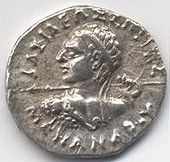
Páli
- External links :* *...
word used in ancient India to designate Greek
Greek language
Greek is an independent branch of the Indo-European family of languages. Native to the southern Balkans, it has the longest documented history of any Indo-European language, spanning 34 centuries of written records. Its writing system has been the Greek alphabet for the majority of its history;...
speakers. Its equivalent in Sanskrit
Sanskrit
Sanskrit , is a historical Indo-Aryan language and the primary liturgical language of Hinduism, Jainism and Buddhism.Buddhism: besides Pali, see Buddhist Hybrid Sanskrit Today, it is listed as one of the 22 scheduled languages of India and is an official language of the state of Uttarakhand...
, Malayalam, Kannada, Telugu
Telugu language
Telugu is a Central Dravidian language primarily spoken in the state of Andhra Pradesh, India, where it is an official language. It is also spoken in the neighbouring states of Chattisgarh, Karnataka, Maharashtra, Orissa and Tamil Nadu...
and Tamil
Tamil language
Tamil is a Dravidian language spoken predominantly by Tamil people of the Indian subcontinent. It has official status in the Indian state of Tamil Nadu and in the Indian union territory of Pondicherry. Tamil is also an official language of Sri Lanka and Singapore...
is the word "Yavana" and "Jobonan/Jubonan" in Bengali
Bengali language
Bengali or Bangla is an eastern Indo-Aryan language. It is native to the region of eastern South Asia known as Bengal, which comprises present day Bangladesh, the Indian state of West Bengal, and parts of the Indian states of Tripura and Assam. It is written with the Bengali script...
. "Yona" and Yavana are both transliterations of the Greek word for "Ionians
Ionians
The Ionians were one of the four major tribes into which the Classical Greeks considered the population of Hellenes to have been divided...
" (Homer Iāones, older *Iāwones), who were probably the first Greeks to be known in the East.
The Yavanas are mentioned in the Buddhist discourse of the Middle Length Sayings, in which the Buddha
Buddha
In Buddhism, buddhahood is the state of perfect enlightenment attained by a buddha .In Buddhism, the term buddha usually refers to one who has become enlightened...
mentions to the Brahman
Brahman
In Hinduism, Brahman is the one supreme, universal Spirit that is the origin and support of the phenomenal universe. Brahman is sometimes referred to as the Absolute or Godhead which is the Divine Ground of all being...
Assalayana the existence of the Kamboja and Yavana people who have only two castes, master or slave. The direct identification of the word "Yavana" with the Greeks at such an early time (6th-5th century) can be doubted however.
However, in the Hindu
Hindu
Hindu refers to an identity associated with the philosophical, religious and cultural systems that are indigenous to the Indian subcontinent. As used in the Constitution of India, the word "Hindu" is also attributed to all persons professing any Indian religion...
epic Mahabhatha, the word "Yavana" is used to identify the Greeks.
Direct identification of these words with the Greeks include:
- The mention of the "Yona king Antiochus" in the Edicts of AshokaEdicts of AshokaThe Edicts of Ashoka are a collection of 33 inscriptions on the Pillars of Ashoka, as well as boulders and cave walls, made by the Emperor Ashoka of the Mauryan dynasty during his reign from 269 BCE to 231 BCE. These inscriptions are dispersed throughout the areas of modern-day Bangladesh, India,...
(280 BCE) - The mention of the "Yona king AntialcidasAntialcidasAntialcidas Nikephoros "the Victorious" was a Western Indo-Greek king of the Eucratid Dynasty, who reigned from his capital at Taxila. Bopearachchi has suggested that he ruled from ca 115 to 95 BCE in the western parts of the Indo-Greek realms, whereas RC Senior places him around 130 to 120 BCE and...
" in the Heliodorus pillarHeliodorus pillarThe Heliodorus pillar is a stone column that was erected around 110 BCE in central India in Vidisha near modern Besnagar, by Heliodorus, a Greek ambassador of the Indo-Greek king Antialcidas to the court of the Sunga king Bhagabhadra...
in VidishaVidishaVidisha is a city in the state of Madhya Pradesh, India, located near the state capital Bhopal. Vidishā is the administrative headquarters of Vidisha District. The city was also known as Bhilsa during the medieval period.-Geography:...
(110 BCE) - King MenanderMenander IMenander I Soter "The Saviour" was one of the rulers of the Indo-Greek Kingdom from either 165 or 155 BC to 130 BC ....
and his bodyguard of "500 Yonas" in the Milinda PanhaMilinda PanhaThe Milinda Panha is a Buddhist text which dates from approximately 100 BCE. It is included in the Burmese edition of the Pali Canon of Theravada Buddhism as a book of the Khuddaka Nikaya, however, it does not appear in the Thai or Sri Lankan versions.It purports to record a dialogue in which the...
. - The description of Greek astrology and Greek terminology in the YavanajatakaYavanajatakaThe Yavanajātaka of Sphujidhvaja is an ancient text in Indian astrology....
("Sayings of the Yavanas") (150 CE). - The mention of "Alexandria, the city of the Yonas" in the MahavamsaMahavamsaThe Mahavamsa is a historical poem written in the Pali language, of the kings of Sri Lanka...
, Chapter 29 (4th century CE).
Old World usage
This usage was shared by many of the countries east of Greece, from the Mediterranean to India:- EgyptiansAncient EgyptAncient Egypt was an ancient civilization of Northeastern Africa, concentrated along the lower reaches of the Nile River in what is now the modern country of Egypt. Egyptian civilization coalesced around 3150 BC with the political unification of Upper and Lower Egypt under the first pharaoh...
used the word j-w-n(-n)-’ - AssyriaAssyriaAssyria was a Semitic Akkadian kingdom, extant as a nation state from the mid–23rd century BC to 608 BC centred on the Upper Tigris river, in northern Mesopotamia , that came to rule regional empires a number of times through history. It was named for its original capital, the ancient city of Assur...
ns used the word Iawanu - PersiansPersian peopleThe Persian people are part of the Iranian peoples who speak the modern Persian language and closely akin Iranian dialects and languages. The origin of the ethnic Iranian/Persian peoples are traced to the Ancient Iranian peoples, who were part of the ancient Indo-Iranians and themselves part of...
used the word Yauna or Yavanu - Indians - used the word Yavana in MahabharataMahabharataThe Mahabharata is one of the two major Sanskrit epics of ancient India and Nepal, the other being the Ramayana. The epic is part of itihasa....
and other historic texts. - Sri LankaSri LankaSri Lanka, officially the Democratic Socialist Republic of Sri Lanka is a country off the southern coast of the Indian subcontinent. Known until 1972 as Ceylon , Sri Lanka is an island surrounded by the Indian Ocean, the Gulf of Mannar and the Palk Strait, and lies in the vicinity of India and the...
ns - used the word Yona in Mahawamsa and other historic texts. - In Biblical writings, the word was Yāvān (and still is, in modern IsraelIsraelThe State of Israel is a parliamentary republic located in the Middle East, along the eastern shore of the Mediterranean Sea...
i Hebrew - יוון) - In ArabicArabic languageArabic is a name applied to the descendants of the Classical Arabic language of the 6th century AD, used most prominently in the Quran, the Islamic Holy Book...
, TurkishTurkish languageTurkish is a language spoken as a native language by over 83 million people worldwide, making it the most commonly spoken of the Turkic languages. Its speakers are located predominantly in Turkey and Northern Cyprus with smaller groups in Iraq, Greece, Bulgaria, the Republic of Macedonia, Kosovo,...
, PersianPersian languagePersian is an Iranian language within the Indo-Iranian branch of the Indo-European languages. It is primarily spoken in Iran, Afghanistan, Tajikistan and countries which historically came under Persian influence...
and Urdu it is Yunan - See Also SanskritSanskritSanskrit , is a historical Indo-Aryan language and the primary liturgical language of Hinduism, Jainism and Buddhism.Buddhism: besides Pali, see Buddhist Hybrid Sanskrit Today, it is listed as one of the 22 scheduled languages of India and is an official language of the state of Uttarakhand...
YoniYoniYoni is the Sanskrit word for the vagina. Its counterpart is the lingam as interpreted by some, the phallus.It is also the divine passage, womb or sacred temple...
Indian references
In Indian sources, the usage of the words "Yona", "Yauna", "Yonaka", "Yavana" or "Javana" etc. appears repeatedly, and particularly in relation to the Greek kingdoms which neighboured or sometimes occupied the Indian north-western territories (which is now Afghanistan or part of Pakistan) over a period of several centuries from the 4th century BC to the 1st century AD, such as the Seleucid EmpireSeleucid Empire
The Seleucid Empire was a Greek-Macedonian state that was created out of the eastern conquests of Alexander the Great. At the height of its power, it included central Anatolia, the Levant, Mesopotamia, Persia, today's Turkmenistan, Pamir and parts of Pakistan.The Seleucid Empire was a major centre...
, the Greco-Bactrian kingdom
Greco-Bactrian Kingdom
The Greco-Bactrian Kingdom was the easternmost part of the Hellenistic world, covering Bactria and Sogdiana in Central Asia from 250 to 125 BC...
and the Indo-Greek kingdom
Indo-Greek Kingdom
The Indo-Greek Kingdom or Graeco-Indian Kingdom covered various parts of the northwest regions of the Indian subcontinent during the last two centuries BC, and was ruled by more than 30 Hellenistic kings, often in conflict with each other...
. The Yavanas are mentioned in detail in Sangam literature
Sangam literature
Sangam literature refers to a body of classical Tamil literature created between the years c. 600 BCE to 300 CE. This collection contains 2381 poems composed by 473 poets, some 102 of whom remain anonymous The period during which these poems were composed is commonly referred to as the Sangam...
epics such as Paṭṭiṉappālai, describing their brisk trade with the Cholas
Early Cholas
The Early Cholas of the pre and post Sangam period were one of the three main kingdoms of the ancient Tamil country. Their early capitals were Urayur and Kaveripattinam...
in Tamilakam.
After Alexander's invasion, the Greek settlements had existed in eastern parts of Achaemenid empire, north-west of India, as neighbors to the Iranian
Iranian peoples
The Iranian peoples are an Indo-European ethnic-linguistic group, consisting of the speakers of Iranian languages, a major branch of the Indo-European language family, as such forming a branch of Indo-European-speaking peoples...
Kambojas
Kambojas
The Kambojas were a kshatriya tribe of Iron Age India, frequently mentioned in Sanskrit and Pali literature.They were an Indo-Iranian tribe situated at the boundary of the Indo-Aryans and the Iranians, and appear to have moved from the Iranian into the Indo-Aryan sphere over time.The Kambojas...
. The references to the Yonas in the early Buddhist texts may be related to the same.
Edicts of Ashoka (250 BC)
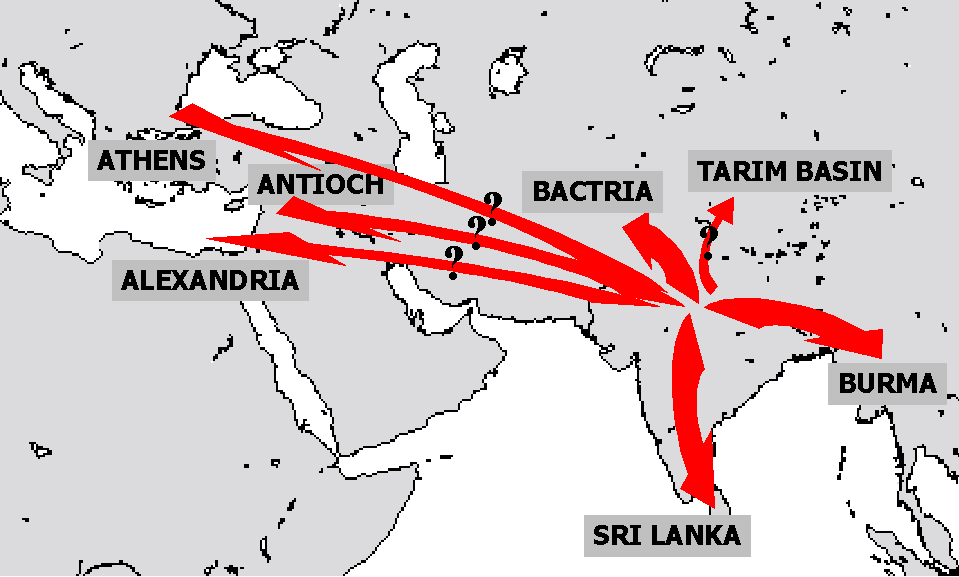
Edicts of Ashoka
The Edicts of Ashoka are a collection of 33 inscriptions on the Pillars of Ashoka, as well as boulders and cave walls, made by the Emperor Ashoka of the Mauryan dynasty during his reign from 269 BCE to 231 BCE. These inscriptions are dispersed throughout the areas of modern-day Bangladesh, India,...
(c. 250 BC), in which the Buddhist emperor Ashoka
Ashoka
Ashok Maurya or Ashoka , popularly known as Ashoka the Great, was an Indian emperor of the Maurya Dynasty who ruled almost all of the Indian subcontinent from ca. 269 BC to 232 BC. One of India's greatest emperors, Ashoka reigned over most of present-day India after a number of military conquests...
refers to the Greek populations under his rule. Rock Edicts V and XIII mention the Yonas (or the Greeks) along with the Kambojas and Gandharas as a subject people forming a frontier region of his empire and attest that he sent envoys to the Greek rulers in the West as far as the Mediterranean, faultlessly naming them one by one. In the Gandhari original of Rock XIII, the Greek kings to the West are associated unambiguously with the term "Yona": Antiochus is referred as "Amtiyoko nama Yona-raja" (lit. "The Greek king by the name of Antiochus
Antiochus II Theos
Antiochus II Theos was a king of the Hellenistic Seleucid Kingdom who reigned 261 BC – 246 BC). He succeeded his father Antiochus I Soter in the winter of 262–61 BC...
"), beyond whom live the four other kings: "param ca tena Atiyokena cature 4 rajani Turamaye nama Amtikini nama Maka nama Alikasudaro nama" (lit. "And beyond Antiochus, four kings by the name of Ptolemy, the name of Antigonos
Antigonus II Gonatas
Antigonus II Gonatas was a powerful ruler who firmly established the Antigonid dynasty in Macedonia and acquired fame for his victory over the Gauls who had invaded the Balkans.-Birth and family:...
, the name of Magas
Magas of Cyrene
Magas of Cyrene was a Greek Macedonian nobleman. Through his mother’s second marriage he was a member of the Ptolemaic dynasty. He became King of Cyrenaica and he managed to wrestle independence for Cyrenaica from the Greek Ptolemaic dynasty of Ancient Egypt.-Family Background & Early Life:Magas...
, the name Alexander
Alexander II of Epirus
Alexander II was a king of Epirus, and the son of Pyrrhus and Lanassa, the daughter of the Sicilian tyrant Agathocles.-Reign:He succeeded his father as king in 272 BC, and continued the war which his father had begun with Antigonus II Gonatas, whom he succeeded in driving from the kingdom of Macedon...
").
Dipavamsa and Sasanvamsa
Other Buddhist texts such as the DipavamsaDipavamsa
The Dipavamsa, or "Deepavamsa", is the oldest historical record of Sri Lanka.It means Chronicle of the Island. The chronicle is believe to be compiled from Atthakatha and other sources around the 3-4th century. Together with Mahavamsa, it is the source of many accounts of ancient history of Sri...
and the Sasanavamsa reveal that after the Third Buddhist Council
Buddhist councils
Lists and numbering of Buddhist councils vary between and even within schools. The numbering here is normal in Western writings.-First Buddhist council Lists and numbering of Buddhist councils vary between and even within schools. The numbering here is normal in Western writings.-First Buddhist...
, the elder (thera) Mahárakkhita was sent to the Yona country and he preached Dharma among the Yonas and the Kambojas, and that at the same time the Yona elder (thera) Dharmaraksita
Dharmaraksita
For the teacher of Atisha, see Dharmarakshita .Dharmarakṣita , or Dhammarakkhita , was one of the missionaries sent by the Mauryan emperor Ashoka to proselytize the Buddhist faith. He is described as being a Greek For the teacher of Atisha, see Dharmarakshita (Sumatran).Dharmarakṣita (Sanskrit),...
was sent to the country of Aparantaka in western India also. Ashoka's Rock Edict XIII also pairs the Yonas with the Kambojas (Yonakambojesu) and conveys that the Brahmana
Brahmana
The Brāhmaṇas are part of the Hindu śruti literature. They are commentaries on the four Vedas, detailing the proper performance of rituals....
s and Sramanas are found everywhere in his empire except in the lands of the Yonas and the Kambojas.
Mahawamsa
The Mahawamsa or Great Chronicle of Sri Lanka refers to the thera Mahárakkhita being sent to preach to the Yona country, and also to the Yona thera Dhammarakkhita, who was sent to Aparanta (the "Western Ends").It also mentions that king Pandukabhaya set aside a part of the city of Anuradhapura
Anuradhapura
Anuradhapura, , is one of the ancient capitals of Sri Lanka, famous for its well-preserved ruins of ancient Lankan civilization.The city, now a UNESCO World Heritage Site, lies 205 km north of the current capital Colombo in Sri Lanka's North Central Province, on the banks of the historic...
for the Yonas.
Another Yona thera, Mahádhammarakkhita, is mentioned as having come from Alexandria in the country of the Yonas, to be present at the building of the Ruwanweliseya.
Milindapanha
Another example is that of the Milinda PanhaMilinda Panha
The Milinda Panha is a Buddhist text which dates from approximately 100 BCE. It is included in the Burmese edition of the Pali Canon of Theravada Buddhism as a book of the Khuddaka Nikaya, however, it does not appear in the Thai or Sri Lankan versions.It purports to record a dialogue in which the...
(Chapter I), where "Yonaka" is used to refer to the great Indo-Greek king Menander
Menander I
Menander I Soter "The Saviour" was one of the rulers of the Indo-Greek Kingdom from either 165 or 155 BC to 130 BC ....
(160–135 BC
135 BC
Year 135 BC was a year of the pre-Julian Roman calendar. At the time it was known as the Year of the Consulship of Flaccus and Piso...
), and to the guard of "five hundred Greeks" that constantly accompanies him.
Invasion of India
The Vanaparava of MahabharataMahabharata
The Mahabharata is one of the two major Sanskrit epics of ancient India and Nepal, the other being the Ramayana. The epic is part of itihasa....
contains verses in the form of prophecy complaining that "......Mlechha (barbaric) kings of the Shakas, Yavanas, Kambojas, Bahlikas etc. shall rule the earth (i.e India) un-righteously in Kaliyuga..." . This reference apparently alludes to chaotic political scenario following the collapse of Mauryan and Sunga dynasties
Dynasty
A dynasty is a sequence of rulers considered members of the same family. Historians traditionally consider many sovereign states' history within a framework of successive dynasties, e.g., China, Ancient Egypt and the Persian Empire...
in northern India and its subsequent occupation by foreign horde
Horde
Horde may refer to:* Ordo * a clan or army of steppe nomads . See Orda * the Blue and White Horde, formed 1226, 1227* the Golden Horde, a Turkic-Mongol state established in the 1240s...
s of the Yavanas, Kambojas
Kambojas
The Kambojas were a kshatriya tribe of Iron Age India, frequently mentioned in Sanskrit and Pali literature.They were an Indo-Iranian tribe situated at the boundary of the Indo-Aryans and the Iranians, and appear to have moved from the Iranian into the Indo-Aryan sphere over time.The Kambojas...
, Sakas and Pahlavas etc.
There are important references to the warring Mleccha hordes of the Shakas, Yavanas, Kambojas, Pahlavas etc. in the Bala Kanda of the Valmiki
Valmiki
Valmiki is celebrated as the poet harbinger in Sanskrit literature. He is the author of the epic Ramayana, based on the attribution in the text of the epic itself. He is revered as the Adi Kavi, which means First Poet, for he discovered the first śloka i.e...
Ramayana
Ramayana
The Ramayana is an ancient Sanskrit epic. It is ascribed to the Hindu sage Valmiki and forms an important part of the Hindu canon , considered to be itihāsa. The Ramayana is one of the two great epics of India and Nepal, the other being the Mahabharata...
.
Indologists like Dr H. C. Raychadhury, Dr B. C. Law, Dr Satya Shrava and others see in these verses the clear glimpses of the struggles of the Hindus with the mixed invading hordes of the barbaric Sakas, Yavanas, Kambojas, Pahlavas etc. from north-west. The time frame for these struggles is 2nd century BCE downwards. Dr Raychadhury fixes the date of the present version of the Valmiki Ramayana around/after 2nd century CE.
The other Indian records describe the 180 BCE Yavana attacks on Saketa, Panchala
Panchala
Panchala is an ancient region of northern India, which corresponds to the geographical area around the Ganges River and Yamuna River, the upper Gangetic plain in particular. This would encompass the modern-day states of Uttarakhand and Uttar Pradesh. During the ancient times, it was home to a...
, Mathura and Pataliputra, probably against the Sunga empire
Sunga Empire
The Sunga Empire or Shunga Empire was a royal Indian dynasty from Magadha that controlled vast areas of the Indian Subcontinent from around 185 to 73 BCE. The dynasty was established by Pusyamitra Sunga, after the fall of the Maurya Empire...
, and possibly in defense of Buddhism. The main mentions of the invasion are those by Patanjali
Patañjali
Patañjali is the compiler of the Yoga Sūtras, an important collection of aphorisms on Yoga practice. According to tradition, the same Patañjali was also the author of the Mahābhāṣya, a commentary on Kātyāyana's vārttikas on Pāṇini's Aṣṭādhyāyī as well as an unspecified work of medicine .In...
around 150 BCE, and of the Yuga Purana
Yuga Purana
The Yuga Purana is an ancient Indian text, part of the larger Puranic literature. It is considered as one of the oldest Purana, written around 250 CE. The Yuga Purana consists two chapters, within the larger text of the Gargi Samhita, also called Vriddha Gargiya Jyotisha...
, which, like the Mahabharata, also describes Indian historical events in the form of a prophecy:
- "After having conquered Saketa, the country of the Panchala and the Mathuras, the Yavanas, wicked and valiant, will reach Kusumadhvaja ("The town of the flower-standard", Pataliputra). The thick mud-fortifications at Pataliputra being reached, all the provinces will be in disorder, without doubt. Ultimately, a great battle will follow, with tree-like engines (siege engines)."
- "The Yavanas (Greeks) will command, the Kings will disappear. (But ultimately) the Yavanas, intoxicated with fighting, will not stay in Madhadesa (the Middle Country); there will be undoubtedly a civil war among them, arising in their own country (Bactria), there will be a terrible and ferocious war."
The Anushasanaparava of Mahabharata affirms that the country of Mathura, the heartland of India, was under the joint military control of the Yavanas and the Kambojas.
From the references noted above, it appears certain that the Yavana invasion of Majjhimadesa (Mid India) was jointly carried out by the Yavanas and the Kambojas. The Greek Yavanas were apparently a minority foreigners in India and naturally may have obtained, in this invasion, the military
Military
A military is an organization authorized by its greater society to use lethal force, usually including use of weapons, in defending its country by combating actual or perceived threats. The military may have additional functions of use to its greater society, such as advancing a political agenda e.g...
support of their good neighbors, the warlike Kambojas. The evidence from the Mathura Lion Capital
Mathura lion capital
The Mathura lion capital is an Indo-Scythian sandstone capital from Mathura in Central India, dated to the 1st century CE.The capital is covered with Prakrit inscriptions in the kharoshthi script of northwestern India...
inscriptions of Saka great Satrap
Satrap
Satrap was the name given to the governors of the provinces of the ancient Median and Achaemenid Empires and in several of their successors, such as the Sassanid Empire and the Hellenistic empires....
(Mahakshatrapa) Rajuvula
Rajuvula
Rajuvula was an Indo-Scythian Great Satrap who ruled in the area of Mathura in northern India in the years around 10 CE. In central India, the Indo-Scythians conquered the area of Mathura over Indian kings around 60 BCE...
also lends strong credibility to this view.
The Mid India invasion was followed by almost two centuries of Yavana rule which in the light of evidence presented above, appears to have been a joint Yavana-Kamboja rule.
Scientific abilities
There is a claim by proponents of the Aryan invasion theoryAryan invasion theory
The term Aryan invasion theory may refer to*migrational scenarios of prehistorical Indo-Aryan migrations*in 19th and early 20th century racialism:** Historical definitions of races in India** Aryan race*in late 20th century:**Out of India theory...
that some Indian literature praises the knowledge of the Yavanas, or Greeks, as superior. Such claims are being re-examined by scholars with more concrete backgrounds in both spoken Sanskrit and Vedic temple rituals for greater cultural accuracy.
For example, one claim holds that a version of the Mahabharata
Mahabharata
The Mahabharata is one of the two major Sanskrit epics of ancient India and Nepal, the other being the Ramayana. The epic is part of itihasa....
describes yavanas as "sarvajnaa", or omniscient. Such superlatives, dispersed throughout the epic, were a common Sanskritic means of announcing characters, tribes, or families and paying due literary respect. For instance, the hated antagonist of the epic, Duryodhana
Duryodhana
In the Hindu epic the Mahābhārata, Duryodhana is the eldest son of the blind king Dhritarashtra by Queen Gandhari, the eldest of the one hundred Kaurava brothers, Emperor of the world at that time which means Emperor of India or Bharatvarsha as it was known at that time, cousin and the chief...
, is in many verses renamed "Suyodhana", the prefix "su" meaning good, beautiful, and excellent.
Historically, people of barbaric civilizations were termed "mlecchas", with impure knowledge. "Barbarian" itself is derived from the Sanskrit "barbarah", meaning unpolished, lowly, fool or blockhead, while "sanskrit" refers to perfect action, polished, and cultured. This is consistent with Sanskrit's reputation across even present-day India as "deva bhaasha", or divine language.
References to "mlechha" teachings having any profound effect on India's enormous body of knowledge are discarded in serious academic circles. A more accurate description of Greeks may be from the "Brihat-Samhita", where the mathematician Varahamihira
Varahamihira
Varāhamihira , also called Varaha or Mihira, was an Indian astronomer, mathematician, and astrologer who lived in Ujjain...
says: "The Greeks, though impure, must be honored since they were trained in sciences".
Other references
On the 110 BCE Heliodorus pillarHeliodorus pillar
The Heliodorus pillar is a stone column that was erected around 110 BCE in central India in Vidisha near modern Besnagar, by Heliodorus, a Greek ambassador of the Indo-Greek king Antialcidas to the court of the Sunga king Bhagabhadra...
in Vidisha
Vidisha
Vidisha is a city in the state of Madhya Pradesh, India, located near the state capital Bhopal. Vidishā is the administrative headquarters of Vidisha District. The city was also known as Bhilsa during the medieval period.-Geography:...
in Central India, the Indo-Greek king Antialcidas
Antialcidas
Antialcidas Nikephoros "the Victorious" was a Western Indo-Greek king of the Eucratid Dynasty, who reigned from his capital at Taxila. Bopearachchi has suggested that he ruled from ca 115 to 95 BCE in the western parts of the Indo-Greek realms, whereas RC Senior places him around 130 to 120 BCE and...
, who had sent an ambassador to the court of the Sunga king Bhagabhadra, was also qualified as "Yona".
The Mahavamsa
Mahavamsa
The Mahavamsa is a historical poem written in the Pali language, of the kings of Sri Lanka...
also attests Yona settlement in Anuradhapura
Anuradhapura
Anuradhapura, , is one of the ancient capitals of Sri Lanka, famous for its well-preserved ruins of ancient Lankan civilization.The city, now a UNESCO World Heritage Site, lies 205 km north of the current capital Colombo in Sri Lanka's North Central Province, on the banks of the historic...
in ancient Sri Lanka
Sri Lanka
Sri Lanka, officially the Democratic Socialist Republic of Sri Lanka is a country off the southern coast of the Indian subcontinent. Known until 1972 as Ceylon , Sri Lanka is an island surrounded by the Indian Ocean, the Gulf of Mannar and the Palk Strait, and lies in the vicinity of India and the...
, probably contributing to trade between East and West.
Buddhist texts like Sumangala Vilasini class the language of the Yavanas with the Milakkhabhasa i.e. impure language.
The Yonas and other northwestern invaders in Indian literature
The Yavanas or Yonas are frequently found listed with the KambojasKambojas
The Kambojas were a kshatriya tribe of Iron Age India, frequently mentioned in Sanskrit and Pali literature.They were an Indo-Iranian tribe situated at the boundary of the Indo-Aryans and the Iranians, and appear to have moved from the Iranian into the Indo-Aryan sphere over time.The Kambojas...
, Saka
Saka
The Saka were a Scythian tribe or group of tribes....
s, Pahlavas and other northwestern tribes in numerous ancient Indian texts.
The Mahabharata
Mahabharata
The Mahabharata is one of the two major Sanskrit epics of ancient India and Nepal, the other being the Ramayana. The epic is part of itihasa....
groups the Yavanas with the Kambojas and the Chinas and calls them "Mlechchas" (Barbarians). In the Shanti Parava section, the Yavanas are grouped with the Kambojas, Kirata
Kirata
The Kirāta is a generic term in Sanskrit literature for people who lived in the mountains, particularly in the Himalayas and North-East India and who are postulated to have been Mongoloid in origin. It has been theorized that the word Kirata- or Kirati- means people with lion nature. It is derived...
s, Saka
Saka
The Saka were a Scythian tribe or group of tribes....
s, and the Pahlavas etc. and are spoken of as living the life of Dasyus (slaves). In another chapter of the same Parava, the Yaunas, Kambojas, Gandharas etc. are spoken of as equal to the "Svapakas" and the "Grddhras".
Udyogaparava of Mahabharata says that the composite army of the Kambojas, Yavanas and Sakas had participated in the Mahabharata war under the supreme command of Kamboja king Sudakshina. The epic numerously applauds this composite army as being very fierce and wrathful.
Balakanda of Ramayana
Ramayana
The Ramayana is an ancient Sanskrit epic. It is ascribed to the Hindu sage Valmiki and forms an important part of the Hindu canon , considered to be itihāsa. The Ramayana is one of the two great epics of India and Nepal, the other being the Mahabharata...
also groups the Yavanas with the Kambojas, Sakas, Pahlavas etc. and refers to them as the military allies of sage
Wise old man
The wise old man is an archetype as described by Carl Jung, as well as a classic literary figure, and may be seen as a stock character...
Vishistha against Vedic king Vishwamitra The Kishkindha Kanda of Ramayana locates the Sakas, Kambojas, Yavanas and Paradas in the extreme north-west beyond the Himavat (i.e. Hindukush).
The Buddhist drama Mudrarakshasa
Mudrarakshasa
The Mudrarakshasa , a historical play in Sanskrit by Vishakhadatta in late 4th or early 5th century narrates the ascent of the king Chandragupta Maurya to power in Northern India.-Origin:...
by Visakhadutta as well as the Jaina works Parisishtaparvan refer to Chandragupta
Chandragupta Maurya
Chandragupta Maurya , was the founder of the Maurya Empire. Chandragupta succeeded in conquering most of the Indian subcontinent. Chandragupta is considered the first unifier of India and its first genuine emperor...
's alliance with Himalayan
Himalayas
The Himalaya Range or Himalaya Mountains Sanskrit: Devanagari: हिमालय, literally "abode of snow"), usually called the Himalayas or Himalaya for short, is a mountain range in Asia, separating the Indian subcontinent from the Tibetan Plateau...
king Parvatka. This Himalayan alliance gave Chandragupta a powerful composite army made up of the frontier martial tribes of the Shakas, Kambojas, Yavanas, Parasikas, Bahlikas etc. which he utilised to defeat the Greek
Hellenic Greece
Ancient Greece in the eighth through fourth centuries BC, between the Greek Dark Ages and the Hellenistic period, is referred to as Hellenic Greece. It is made up of two epochs:*Archaic Greece...
successors of Alexander the Great and the Nanda
Nanda Dynasty
The Nanda Empire originated from the region of Magadha in Ancient India during the 5th and 4th centuries BC. At its greatest extent, the Nanda Empire extended from Bengal in the east, to Punjab in the west and as far south as the Vindhya Range...
rulers of Magadha
Magadha
Magadha formed one of the sixteen Mahājanapadas or kingdoms in ancient India. The core of the kingdom was the area of Bihar south of the Ganga; its first capital was Rajagriha then Pataliputra...
, and thus establishing his Mauryan Empire in northern India.
Manusmriti lists the Yavanas with the Kambojas, Sakas, Pahlavas, Parada
Parada
-Portugal:* Parada , a civil parish in the municipality of Alfândega da Fé* Parada , a civil parish in the municipality of Almeida* Parada , a civil parish in the municipality of Arcos de Valdevez...
s etc. and regards them as degraded Kshatriya
Kshatriya
*For the Bollywood film of the same name see Kshatriya Kshatriya or Kashtriya, meaning warrior, is one of the four varnas in Hinduism...
s (members of the warrior cast). Anushasanaparava of Mahabharata also views the Yavanas, Kambojas, Shakas etc. in the same light. Patanjali's Mahabhasya) regards the Yavanas and Sakas as anirvasita (pure) Shudra
Shudra
Shudra is the fourth Varna, as prescribed in the Purusha Sukta of the Rig veda, which constitutes society into four varnas or Chaturvarna. The other three varnas are Brahmans - priests, Kshatriya - those with governing functions, Vaishya - agriculturalists, cattle rearers and traders...
s. Gautama-Dharmasutra regards the Yavanas or Greeks as having sprung from Shudra females and Kshatriya males.
The Assalayana Sutta of Majjhima Nikaya attests that in Yona and Kamboja nations, there were only two classes of people...Aryas and Dasa
Dasa
Dasa is a term used with the primary meaning 'enemy', especially relating to tribes identified as the enemies of the Indo-Aryan tribes in the Rigveda....
s...the masters and slaves, and that the Arya could become Dasa and vice versa. The Vishnu Purana also indicates that the "chatur-varna" or four class social system was absent in the lands of Kiratas in the East and the Yavanas and Kambojas etc. in the West.
Numerous Puranic literature groups the Yavanas with the Saka
Saka
The Saka were a Scythian tribe or group of tribes....
s, Kambojas, Pahlavas and Parada
Parada
-Portugal:* Parada , a civil parish in the municipality of Alfândega da Fé* Parada , a civil parish in the municipality of Almeida* Parada , a civil parish in the municipality of Arcos de Valdevez...
s and refers to the peculiar hair styles of these people which were different from those of the Hindu
Hindu
Hindu refers to an identity associated with the philosophical, religious and cultural systems that are indigenous to the Indian subcontinent. As used in the Constitution of India, the word "Hindu" is also attributed to all persons professing any Indian religion...
s. Ganapatha on Pāṇini attests that it was a practice among the Yavanas and the Kambojas to wear short-cropped hair (Kamboja-mundah Yavana-mundah).
Vartika of Katayayana informs us that the kings of the Shakas and the Yavanas, like those of the Kambojas, may also be addressed by their respective tribal
Tribe
A tribe, viewed historically or developmentally, consists of a social group existing before the development of, or outside of, states.Many anthropologists use the term tribal society to refer to societies organized largely on the basis of kinship, especially corporate descent groups .Some theorists...
names.
Brihat-Katha-Manjari of Kshmendra informs us that king Vikramaditya
Vikramaditya
Vikramaditya was a legendary emperor of Ujjain, India, famed for his wisdom, valour and magnanimity. The title "Vikramaditya" was later assumed by many other kings in Indian history, notably the Gupta King Chandragupta II and Samrat Hem Chandra Vikramaditya .The name King Vikramaditya is a...
had unburdened the sacred earth of the Barbarian
Barbarian
Barbarian and savage are terms used to refer to a person who is perceived to be uncivilized. The word is often used either in a general reference to a member of a nation or ethnos, typically a tribal society as seen by an urban civilization either viewed as inferior, or admired as a noble savage...
s like the Shakas, Kambojas, Yavanas, Tusharas, Parasikas, Hunas etc. by annihilating these sinners completely.
The Brahmanda Purana refers to the horses born in Yavana country.
The Mahaniddesa speaks of Yona and Parama Yona, probably referring to Arachosia
Arachosia
Arachosia is the Latinized form of the Greek name of an Achaemenid and Seleucid governorate in the eastern part of their respective empires, around modern-day southern Afghanistan. The Greek term "Arachosia" corresponds to the Iranian land of Harauti which was between Kandahar in Afghanistan and...
as the Yona and Bactria
Bactria
Bactria and also appears in the Zend Avesta as Bukhdi. It is the ancient name of a historical region located between south of the Amu Darya and west of the Indus River...
as the Parama Yona.
Later meanings
The terms "Yona", "Yonaka" or "Yavana" literally referred to the GreeksGreeks
The Greeks, also known as the Hellenes , are a nation and ethnic group native to Greece, Cyprus and neighboring regions. They also form a significant diaspora, with Greek communities established around the world....
. However were termed as "Mlechas" probably due to the barbaric behaviour as invaders. Indian languages did not address the difference based on religion early on but after the arrival of Islam
Islam
Islam . The most common are and . : Arabic pronunciation varies regionally. The first vowel ranges from ~~. The second vowel ranges from ~~~...
to the subcontinent, more than Mussalaman or Muslim
Muslim
A Muslim, also spelled Moslem, is an adherent of Islam, a monotheistic, Abrahamic religion based on the Quran, which Muslims consider the verbatim word of God as revealed to prophet Muhammad. "Muslim" is the Arabic term for "submitter" .Muslims believe that God is one and incomparable...
, appellation Yavana along with Turuka, Turuska, Tajik, and Arab came to be used for invaders professing Islam as their religion.
Contemporary usage
The word Yona, or one of its derivatives, is still used by some languages to designate contemporary Greece, such as in Arabic (يونان), in Hebrew (יוון), in Turkish ("Yunanistan"), in AssyrianAssyrian Neo-Aramaic
Assyrian Neo-Aramaic is a Neo-Aramaic dialect, spoken by an estimated 220,000 people , formerly in the area between Lake Urmia, north-western Iran, and Siirt, south-eastern Turkey, but now more widely throughout the...
(Yawnoye ܝܘ̈ܢܝܐ), or the Hindi, Urdu, Malay and Indonesian languages ("Yunani").
See also
- Yavana KingdomYavana KingdomYavana or Yona is grouped under western countries along with Sindhu, Madra, Kekeya, Gandhara and Kamboja as per the descriptions in the epic Mahabharata. In later history, this word was used to indicate the Greeks and the Arabs, leading to much confusion....
- Greco-BuddhismGreco-BuddhismGreco-Buddhism, sometimes spelled Graeco-Buddhism, refers to the cultural syncretism between Hellenistic culture and Buddhism, which developed between the 4th century BCE and the 5th century CE in the area covered by the Indian sub-continent, and modern Afghanistan, Pakistan and north-western...
- Names of the GreeksNames of the GreeksThe Greeks have been called by several names, both by themselves and by other people. The most common native ethnonym is Hellenes ; the name Greeks was used by the Romans and then in all European languages....
- History of BuddhismHistory of BuddhismThe History of Buddhism spans the 6th century BCE to the present, starting with the birth of Buddha Siddhartha Gautama on the Indian subcontinent, in what is now Lumbini, Nepal. This makes it one of the oldest religions practiced today. The religion evolved as it spread from the northeastern region...
- KambojasKambojasThe Kambojas were a kshatriya tribe of Iron Age India, frequently mentioned in Sanskrit and Pali literature.They were an Indo-Iranian tribe situated at the boundary of the Indo-Aryans and the Iranians, and appear to have moved from the Iranian into the Indo-Aryan sphere over time.The Kambojas...
External links
----
"Yona" is also a common transliteration of the Hebrew form of the given name commonly given to both men and women, Jonah
Jonah
Jonah is the name given in the Hebrew Bible to a prophet of the northern kingdom of Israel in about the 8th century BC, the eponymous central character in the Book of Jonah, famous for being swallowed by a fish or a whale, depending on translation...