
All Topics  
Himalayas

 
Himalayas

   Email Print
   Bookmark   Link


Himalayas


The Himalaya Range or Himalayas for short (Sanskrit
Sanskrit

Sanskrit is a historical Indo-Aryan language, one of the liturgical languages of Hinduism and Buddhism, and one of the 22 official languages of India....
: ??????, IPA pronunciation
International Phonetic Alphabet

The International Phonetic Alphabet "The acronym 'IPA' strictly refers [...] to the 'International Phonetic Association'. But it is now such a common practice to use the acronym also to refer to the alphabet itself that resistance seems pedantic....
: ), meaning "abode of snow" ), is a mountain range
Mountain range

A mountain range is a chain of mountains bordered by highlands or separated from other mountains by mountain pass or valleys. Individual mountains within the same mountain range do not necessarily have the same geology, though they often do; they may be a mix of different orogeny, for example volcanoes, uplifted mountains or Fold mountains...
 in Asia
Asia

Asia is the world's largest and most populous continent. It covers 8.6% of the Earth's total surface area and, with over 4 billion people, it contains more than 60% of the world's current human population....
, separating the Indian subcontinent
Indian subcontinent

The Indian subcontinent is a large section of the Asian continent consisting of the land lying substantially on the Indian Plate. The subcontinent includes parts of various countries in South Asia, including those on the continental crust , an Island#Continental islands country on the continental shelf , and an Island#Oceanic islands countr...
 from the Tibetan Plateau
Tibetan Plateau

The Tibetan Plateau , also known as the Qinghai-Tibetan Plateau is a vast, elevated plateau in Central Asia covering most of the Tibet Autonomous Region and Qinghai Province in China and Ladakh in Kashmir, India....
. By extension, it is also the name of a massive mountain system that includes the Karakoram
Karakoram

Karakoram is a large mountain range spanning the borders between Pakistan, China, and India, located in the regions of Gilgit District, Ladakh, and Baltistan....
, the Hindu Kush
Hindu Kush

The Hindu Kush is a mountain range located in eastern and central Afghanistan, northwestern Pakistan and northeastern India.The origin of the name Hindu Kush is disputed, despite its coinage apparently dating back no further than c.1330....
, and other, lesser, ranges that extend out from the Pamir Knot.

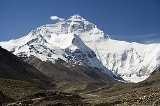
The Himalayan mountain system is the planet's highest and home to the world's highest peaks, the Eight-thousander
Eight-thousander

The eight-thousanders are the fourteen independent mountains on Earth that are more than high above sea level. They are all located in the Himalayan and Karakoram mountain ranges in Asia....
s, which include Mount Everest
Mount Everest

Mount Everest, also called Sagarmatha or Chomolungma, Qomolangma or Zhumulangma is the List of highest mountains on Earth, as measured by the height of its Topographical summit above sea level, which is ....
  and K2
K2

K2 is the second-List of highest mountains mountain on Earth . With a peak elevation of , K2 is part of the Karakoram segment of the Himalayan mountain range, and is located on the border between Pakistan's northern territories, and the Taxkorgan Tajik Autonomous County of Xinjiang, China....
.


Discussion
Ask a question about 'Himalayas'
Start a new discussion about 'Himalayas'
Answer questions from other users
Full Discussion Forum


Recent Posts


Encyclopedia


Himalayas
The Himalaya Range or Himalayas for short (Sanskrit
Sanskrit

Sanskrit is a historical Indo-Aryan language, one of the liturgical languages of Hinduism and Buddhism, and one of the 22 official languages of India....
: ??????, IPA pronunciation
International Phonetic Alphabet

The International Phonetic Alphabet "The acronym 'IPA' strictly refers [...] to the 'International Phonetic Association'. But it is now such a common practice to use the acronym also to refer to the alphabet itself that resistance seems pedantic....
: ), meaning "abode of snow" ), is a mountain range
Mountain range

A mountain range is a chain of mountains bordered by highlands or separated from other mountains by mountain pass or valleys. Individual mountains within the same mountain range do not necessarily have the same geology, though they often do; they may be a mix of different orogeny, for example volcanoes, uplifted mountains or Fold mountains...
 in Asia
Asia

Asia is the world's largest and most populous continent. It covers 8.6% of the Earth's total surface area and, with over 4 billion people, it contains more than 60% of the world's current human population....
, separating the Indian subcontinent
Indian subcontinent

The Indian subcontinent is a large section of the Asian continent consisting of the land lying substantially on the Indian Plate. The subcontinent includes parts of various countries in South Asia, including those on the continental crust , an Island#Continental islands country on the continental shelf , and an Island#Oceanic islands countr...
 from the Tibetan Plateau
Tibetan Plateau

The Tibetan Plateau , also known as the Qinghai-Tibetan Plateau is a vast, elevated plateau in Central Asia covering most of the Tibet Autonomous Region and Qinghai Province in China and Ladakh in Kashmir, India....
. By extension, it is also the name of a massive mountain system that includes the Karakoram
Karakoram

Karakoram is a large mountain range spanning the borders between Pakistan, China, and India, located in the regions of Gilgit District, Ladakh, and Baltistan....
, the Hindu Kush
Hindu Kush

The Hindu Kush is a mountain range located in eastern and central Afghanistan, northwestern Pakistan and northeastern India.The origin of the name Hindu Kush is disputed, despite its coinage apparently dating back no further than c.1330....
, and other, lesser, ranges that extend out from the Pamir Knot.

The Himalayan mountain system is the planet's highest and home to the world's highest peaks, the Eight-thousander
Eight-thousander

The eight-thousanders are the fourteen independent mountains on Earth that are more than high above sea level. They are all located in the Himalayan and Karakoram mountain ranges in Asia....
s, which include Mount Everest
Mount Everest

Mount Everest, also called Sagarmatha or Chomolungma, Qomolangma or Zhumulangma is the List of highest mountains on Earth, as measured by the height of its Topographical summit above sea level, which is ....
  and K2
K2

K2 is the second-List of highest mountains mountain on Earth . With a peak elevation of , K2 is part of the Karakoram segment of the Himalayan mountain range, and is located on the border between Pakistan's northern territories, and the Taxkorgan Tajik Autonomous County of Xinjiang, China....
. To comprehend the enormous scale of this mountain range consider that Aconcagua
Aconcagua

Cerro Aconcagua is the Extremes of Altitude in the Americas, and the highest mountain outside Asia. It is located in the Andes mountain range, in the Argentina Provinces of Argentina of Mendoza Province....
, in the Andes
Andes

The Andes form the world's longest exposed mountain range. They lie as a continuous chain of highland along the western coast of South America. The range is over 7,000 km long, 200-700 km wide , and of an average height of about 4,000 m ....
, at 6,962 m (22,841 feet), is the highest peak outside Asia, whereas the Himalayan system includes over 100 mountains
List of highest mountains

The following is a list of the world's 100+ highest mountains per height above sea level, all of which are located in Asia. Only those summits are included that, by an objective measure, may be considered individual mountains as opposed to subsidiary peaks....
 exceeding 7,200 meters (23,622 feet).

The Himalayan system, which includes outlying subranges, stretches across six countries
Himalayan states

Himalayan states is the name given collectively to all the countries/states which contain the mountain range of the Himalayas. Geographically, the Himalayan states lie in the Indian subcontinent....
: Afghanistan
Afghanistan

Afghanistan , officially the Islamic republic of Afghanistan, is a landlocked country that is located approximately in the center of Asia....
, Bhutan
Bhutan

The Kingdom of Bhutan is a landlocked nation in South Asia, located at the eastern end of the Himalaya Mountains and is bordered to the south, east and west by India and to the north by the Tibet Autonomous Region of the People's Republic of China....
, China
China

China is a Culture of China, an ancient civilization, and, depending on perspective, a national or multinational entity extending over a large area in East Asia....
, India
India

India, officially the Republic of India , is a country in South Asia. It is the List of countries and outlying territories by total area country by geographical area, the List of countries by population country, and the most populous liberal democracy in the world....
, Nepal
Nepal

Nepal , officially the Federal Democratic Republic of Nepal, is a landlocked country in South Asia and is the world's youngest republic. It is bordered to the north by the People's Republic of China, and to the south, east, and west by India....
, and Pakistan
Pakistan

Pakistan , officially the Islamic Republic of Pakistan, is a country located in South Asia and borders Central Asia and the Middle East. It has a 1,046 kilometre coastline along the Arabian Sea and Gulf of Oman in the south, and is bordered by Afghanistan and Iran in the west, India in the east and People's Republic of China in th...
. Some of the world's major river
River

A river is a natural stream of water, usually freshwater, flowing toward an ocean, a lake, or another stream. In some cases a river flows into the ground or dries up completely before reaching another body of water....
s, the Indus
Indus River

File:Indian subcontinent CIA.pngThe Indus River is the longest river in Pakistan and the twenty-first largest river in the world, in terms of annual flow, on the Indian Subcontinent....
, the Ganges
Ganges River

The 'Ganges' is one of the major rivers of the Indian subcontinent, flowing east through the Gangetic Plain of northern India into Bangladesh....
, the Brahmaputra
Brahmaputra River

The Brahmaputra, also called Tsangpo-Brahmaputra, is a trans-boundary river and one of the major rivers of Asia.From its origin in southwestern Tibet as the Yarlung Zangbo River, it flows across southern Tibet to break through the Himalayas in great gorges and into Arunachal Pradesh where it is known as Dihang....
, and the Yangtze
Yangtze River

The Yangtze River, or Chang Jiang , is the longest river in China and Asia, and the List of rivers by length in the world, after the Nile in Africa and the Amazon River in South America....
, rise in the Himalayas, and their combined drainage basin
Drainage basin

A drainage basin is an extent of land where water from rain or snow melt drains downhill into a body of water, such as a river, lake, reservoir, estuary, wetland, sea or ocean....
 is home to some 1.3 billion people. The Himalayas have profoundly shaped the cultures of South Asia
South Asia

South Asia, also known as Southern Asia, is the southern region of the Asian continent, which comprises the sub-Himalayan countries and, for some authorities , also includes the adjoining countries on the west and the east....
; many Himalayan peaks are sacred in both Hinduism
Hinduism

'Hinduism' is the predominant religion of the Indian subcontinent. Hinduism is often referred to as , a Sanskrit phrase meaning "the eternal dharma", by its practitioners....
 and Buddhism
Buddhism

Buddhism is a family of beliefs and practices considered by most to be a religionand is based on the teachings attributed to Siddhartha Gautama, commonly known as "The Buddha" , who was born in what is today Nepal....
.

The main Himalaya range runs, west to east, from the Indus river valley to the Brahmaputra river valley, forming an arc 2,400 km long (1,491 miles), which varies in width from 400 km in the western Kashmir-Xinjiang
Xinjiang

Xinjiang is an autonomous region of China of the People's Republic of China. It is a large, sparsely populated area, spanning over 1.6 million sq....
 region to 150 km in the eastern Tibet
Tibet Autonomous Region

The Tibet Autonomous Region , also called Xizang Autonomous Region , is a Province -level Autonomous regions of China of the People's Republic of China ....
-Arunachal Pradesh
Arunachal Pradesh

'Arunachal Pradesh' is the easternmost States and territories of India of India. Arunachal Pradesh borders with the state of Assam to the south and Nagaland to the southeast....
 region. The range consists of three coextensive sub-ranges, with the northern-most, and highest, known as the Great or Inner Himalayas.

Ecology

The flora and fauna of the Himalayas varies with climate, rainfall, altitude, and soils. The climate ranges from tropical at the base of the mountains to permanent ice and snow at the highest elevations. The amount of yearly rainfall increases from west to east along the front of the range. This diversity of climate, altitude, rainfall and soil conditions generates a variety of distinct plant and animal communities.

Lowland forests

On the Indo-Gangetic plain
Indo-Gangetic plain

The Indo-Gangetic Plain also known as the Northern plains and the North Indian River Plain is a large and fertiles plain encompassing most of northern and eastern India, the most populous parts of Pakistan, and virtually all of Bangladesh....
 at the base of the mountains, an alluvial plain
Alluvial plain

An alluvial plain is a relatively flat landform created by the deposition of sediment over a long period of time by one or more rivers coming from highland regions, from which Alluvium soil forms....
 drained by the Indus and Ganga-Brahmaputra river systems, vegetation varies from west to east with rainfall. The xeric
Deserts and xeric shrublands

Desert and xeric shrublands is a biome characterized by, relating to, or requiring only a small amount of moisture. Deserts and xeric shrublands receive an annual average rainfall of ten inches or less, and have an arid or hyperarid climate, characterized by a strong moisture deficit, where annual potential loss of moisture from evapotransp...
 Northwestern thorn scrub forests
Northwestern thorn scrub forests

The Northwestern thorn scrub forests are a Deserts and xeric shrublands terrestrial ecoregion of Pakistan and northwestern India. The ecoregion encircles the Thar Desert and Indus Valley Desert ecoregions....
 occupy the plains of Pakistan and the Indian Punjab. Further east lie the Upper Gangetic plains moist deciduous forests
Upper Gangetic Plains moist deciduous forests

The Upper Gangetic Plains moist deciduous forests is a tropical and subtropical moist broadleaf forests ecoregion of northern India. It lies on the alluvial plain of the Ganges River and Yamuna River rivers, with an area of 263,100 square kilometers , covering most of the state of Uttar Pradesh and adjacent portions of Uttarakhand, Haryana, M...
 of Uttarakhand
Uttarakhand

Uttarakhand , is a States and territories of India located in the northern part of India. It was carved out of Himalayan and adjoining districts of Uttar Pradesh on 9 November 2000, becoming the 27th States and territories of India of the Republic of India ....
 and Uttar Pradesh
Uttar Pradesh

Uttar Pradesh , [often referred to as U.P.] is a States and territories of India located in the northern part of India. With a population of over 190 million people,...
 and Lower Gangetic plains moist deciduous forests
Lower Gangetic plains moist deciduous forests

The Lower Gangetic plains moist deciduous forests is a tropical and subtropical moist broadleaf forests ecoregion of Bangladesh and eastern India....
 of Bihar
Bihar

Bihar is a States and territories of India in East India. Bihar is the 12th largest state in terms of geographical size 38,202 square mile and 3rd largest by population....
 and West Bengal
West Bengal

West Bengal is a States and territories of India in eastern India. With Bangladesh, which lies on its eastern border, the state forms the ethno-linguistic region of Bengal....
. These are monsoon forests, with drought-deciduous trees that lose their leaves during the dry season. The moister Brahmaputra Valley semi-evergreen forests
Brahmaputra Valley semi-evergreen forests

The Brahmaputra Valley semi-evergreen forests is a tropical and subtropical moist broadleaf forests ecoregion of eastern India. The ecoregion covers 56,700 square kilometers , which encompasses the alluvial plain of the Brahmaputra River in India's Assam state....
 occupy the plains of Assam
Assam

Assam ) is a North-East India state of India with its capital at Dispur, in the outskirts of the city Guwahati. Located south of the eastern Himalayas, Assam comprises the Brahmaputra and the Barak River river valleys and the Karbi Anglong District and the North Cachar Hills with an area of 30,285 square miles ....
.

The Terai belt

Above the alluvial plain lies the Terai
Terai

The Terai is a belt of marshy grasslands, savannas, and forests at the base of the Himalaya range in India, Nepal, and Bhutan, from the Yamuna River in the west to the Brahmaputra River in the east....
 strip, a seasonally marshy zone of sand and clay soils. The Terai has higher rainfall than the plains, and the downward-rushing rivers of the Himalaya slow down and spread out in the flatter Terai zone, depositing fertile silt during the monsoon season and receding in the dry season. The Terai has a high water table due to groundwater percolating down from the adjacent zone. The central part of the Terai belt is occupied by the Terai-Duar savanna and grasslands, a mosaic of grasslands, savannas, deciduous and evergreen forests that includes some of the world's tallest grasslands. The grasslands of the Terai belt are home to the Indian Rhinoceros
Indian Rhinoceros

The Indian Rhinoceros or the Great One-horned Rhinoceros or the Asian One-horned Rhinoceros is a large mammal found in Nepal, Bhutan, Pakistan and in Assam, India....
 (Rhinoceros unicornis).

Bhabhar belt

Above the Terai belt is an upland zone known as the Bhabhar
Bhabhar

Bhabhar is the region south of the Lower Himalayas and the Siwalik Hills where the alluvial grade merges into the Indo-Ganges Plain....
, a zone of porous and rocky soils, made up of debris washed down from the higher ranges. The Bhabhar and the lower Shiwalik ranges have a subtropical climate. The Himalayan subtropical pine forests
Himalayan subtropical pine forests

The Himalayan subtropical pine forests are a Tropical and subtropical coniferous forests ecoregion covering portions of Bhutan, India, Nepal, and Pakistan....
 occupy the western end of the subtropical belt, with forests dominated by Chir Pine
Chir Pine

The Chir Pine named after William Roxburgh, is a pine native to the Himalaya. The range extends from northern Pakistan , across northern India and Nepal to Bhutan....
 (Pinus roxburghii). The central part of the range is home to the Himalayan subtropical broadleaf forests
Himalayan subtropical broadleaf forests

The Himalayan subtropical broadleaf forests is a tropical and subtropical moist broadleaf forests terrestrial ecoregion of India, Nepal, Bhutan and Pakistan....
, dominated by sal
Sal

Shorea robusta is a species of tree native to southern Asia, ranging south of the Himalaya, from Myanmar in the east to India, Bangladesh, and Nepal....
 (Shorea robusta).

Shiwalik Hills

Also called Churia or Margalla Hills, Sivalik Hills is Intermittent outermost range of foothills extending across Himalayan region through Pakistan
Pakistan

Pakistan , officially the Islamic Republic of Pakistan, is a country located in South Asia and borders Central Asia and the Middle East. It has a 1,046 kilometre coastline along the Arabian Sea and Gulf of Oman in the south, and is bordered by Afghanistan and Iran in the west, India in the east and People's Republic of China in th...
, India
India

India, officially the Republic of India , is a country in South Asia. It is the List of countries and outlying territories by total area country by geographical area, the List of countries by population country, and the most populous liberal democracy in the world....
, Nepal
Nepal

Nepal , officially the Federal Democratic Republic of Nepal, is a landlocked country in South Asia and is the world's youngest republic. It is bordered to the north by the People's Republic of China, and to the south, east, and west by India....
 and Bhutan
Bhutan

The Kingdom of Bhutan is a landlocked nation in South Asia, located at the eastern end of the Himalaya Mountains and is bordered to the south, east and west by India and to the north by the Tibet Autonomous Region of the People's Republic of China....
. Consists of many sub-ranges. Summits generally 600 to 1,200 meters. Steeper southern slopes form along a fault zone called Main Frontal Thrust; northern slopes are gentler. Permeable conglomerates and other rocks allow rainwater to percolate downslope into the Bhabhar and Terai, supporting only scrubby forests upslope.

Inner Terai or Dun Valleys

The Inner Terai valleys
Inner Terai Valleys of Nepal

The phrase Inner Terai Valleys or Bhitri tarai refers to various elongated valleys in Nepal lying between the Himalayan foothills, the 600-900 metre high Chure or Sivalik Hills, and the 2,000-3,000 metre high Mahabharat Lekh Range further north....
 are open valleys north of Shiwalik Hills or nestled between Shiwalik subranges. Examples include Dehra Dun in India and Chitwan in Nepal.

Lesser Himalaya

Prominent range 2,000 to 3,000 meters high forming along the Main Boundary Thrust fault zone with a steep southern face and gentler northern slopes. Nearly continuous except for river gorges. Rivers gather in candelabra form to the north to break through this range in relatively few places.

Midlands

'Hilly' region averaging about 1,000 meters immediately north of the Mahabharat Range, rising over about 100 km to about 4,000 meters at the Main Frontal Thrust fault zone where the Greater Himalaya begin.

  • Montane forests - At the middle elevations of the range, the subtropical forests yield to a belt of temperate broadleaf and mixed forests
    Temperate broadleaf and mixed forests

    Temperate broadleaf and mixed forests are a temperate and humid biome. The typical structure of these forests include four layers. The upper most layer is the canopy which is composed of tall mature trees....
    , with the Western Himalayan broadleaf forests at the western end of the range, and the Eastern Himalayan broadleaf forests
    Eastern Himalayan broadleaf forests

    The Eastern Himalayan broadleaf forests is a temperate broadleaf and mixed forests terrestrial ecoregion which is found in the middle elevations of the eastern Himalayas, including parts of Nepal, India, and Bhutan....
     in Assam and Arunachal Pradesh. Above the broadleaf forests are the Western and Eastern Himalayan subalpine conifer forests. they eat monkeys


Alpine shrub and grasslands

Above the tree line are the Northwestern, Western
Western Himalayan alpine shrub and meadows

The Western Himalayan alpine shrub and meadows is an alpine ecoregion of Nepal, India, and Tibet, which lies between the tree line and snow line in the western portion of the Himalaya Range....
, and Eastern Himalayan alpine shrub and meadows
Eastern Himalayan alpine shrub and meadows

The Eastern Himalayan alpine shrub and meadows is an alpine ecoregion of Bhutan, China, India, Myanmar, and Nepal, which lies between the tree line and snow line in the eastern portion of the Himalaya Range....
, which yield to tundra
Tundra

In physical geography, tundra is an biome where the tree growth is hindered by low temperatures and short growing seasons. The term tundra comes from Kildin Sami tund?r, which means "uplands, treeless mountain tract." There are two types of tundra: Arctic tundra and alpine tundra....
 in the higher Himalayan range. The alpine meadows are the summer habitat of the endangered Snow Leopard
Snow Leopard

The snow leopard , sometimes known as "ounce," is a moderately large Felidae native to the mountain ranges of Central Asia. The classification of this species has been subject to change and its exact taxonomy position is still unclear....
 (Uncia uncia).

Origins and growth

Himalaya Formation
The Himalayas are among the youngest mountain ranges on the planet and consist mostly of uplifted sedimentary and metamorphic
Metamorphic

The term Metamorphic can be associated with a number of meanings:*Metamorphic rock: The term for rocks that have been transformed by extreme heat and pressure....
 rock. According to the modern theory of plate tectonics
Plate tectonics

Plate tectonics describes the large scale motions of Earth's lithosphere. The theory encompasses the older concepts of continental drift, developed during the first decades of the 20th century by Alfred Wegener, and seafloor spreading, understood during the 1960s....
, their formation is a result of a continental collision
Continental collision

Continental collision is a phenomenon of the plate tectonics of Earth that occurs at Convergent boundary. Continental collision is a variation on the fundamental process of subduction, whereby the subduction zone is destroyed, mountains produced, and two continents sutured together....
 or orogeny
Orogeny

Orogeny refers to natural mountain building, and may be studied as a tectonic structural event, as a geographical event, and a chronological event: orogenic events cause distinctive structural phenomena and related tectonic activity, affect certain regions of rocks and crust, and happen within a specific period of time....
 along the convergent boundary
Convergent boundary

In plate tectonics, a convergent boundary or convergent plate boundary, also known as a destructive plate boundary , is an actively deforming region where two tectonic plates or fragments of lithosphere move toward one another and collide....
 between the Indo-Australian Plate
Indo-Australian Plate

The Indo-Australian Plate is a major tectonic plate that includes the Australia and surrounding ocean, and extends northwest to include the Indian subcontinent and adjacent waters....
 and the Eurasian Plate
Eurasian Plate

The Eurasian Plate is a tectonic plate which includes most of the continent of Eurasia , with the notable exceptions of the Indian subcontinent, the Arabian subcontinent, and the area east of the Chersky Range in East Siberia....
. This is referred to as a fold mountain
Fold mountain

Fold mountains are mountains formed mainly by the effects of fold on layers within the upper part of the Earth's crust. In the time before either Plate tectonic theory developed, or the internal architecture of thrust belts became well understood, the term was used for most mountain belts, such as the Himalayas....
.

The collision began in the Upper Cretaceous
Cretaceous

The Cretaceous , usually abbreviated K for its German translation Kreide, is a geologic period from circa to million years ago . In the geologic timescale, the Cretaceous follows on the Jurassic period and is followed by the Paleogene period....
 period about 70 million years ago, when the north-moving Indo-Australian Plate
Indo-Australian Plate

The Indo-Australian Plate is a major tectonic plate that includes the Australia and surrounding ocean, and extends northwest to include the Indian subcontinent and adjacent waters....
, moving at about 15 cm per year, collided with the Eurasian Plate
Eurasian Plate

The Eurasian Plate is a tectonic plate which includes most of the continent of Eurasia , with the notable exceptions of the Indian subcontinent, the Arabian subcontinent, and the area east of the Chersky Range in East Siberia....
. About 50 million years ago, this fast moving Indo-Australian plate had completely closed the Tethys Ocean
Tethys Ocean

The Tethys Ocean was an ocean that existed between the continents of Gondwana and Laurasia during the Mesozoic era before the opening of the Indian Ocean....
, the existence of which has been determined by sedimentary rock
Sedimentary rock

Sedimentary rock is one of the three main Rock types . Sedimentary rock is formed by deposition and consolidation of mineral and organic material and from precipitation of minerals from solution....
s settled on the ocean floor and the volcano
Volcano

A volcano is an opening, or rupture, in a planet's surface or Crust , which allows hot, molten rock, ash, and gases to escape from below the surface....
es that fringed its edges. Since these sediments were light, they crumpled into mountain ranges rather than sinking to the floor. The Indo-Australian plate continues to be driven horizontally below the Tibetan plateau
Tibetan Plateau

The Tibetan Plateau , also known as the Qinghai-Tibetan Plateau is a vast, elevated plateau in Central Asia covering most of the Tibet Autonomous Region and Qinghai Province in China and Ladakh in Kashmir, India....
, which forces the plateau to move upwards. The Arakan Yoma highlands in Myanmar
Myanmar

Burma, officially the Union of Myanmar, is the largest country by geographical area in mainland Southeast Asia, or Indochina. The country is bordered by the People's Republic of China on the northeast, Laos on the east, Thailand on the southeast, Bangladesh on the west, India on the northwest, and the Bay of Bengal to the southwest with...
 and the Andaman and Nicobar Islands
Andaman and Nicobar Islands

The Andaman & Nicobar Islands is a union territory of India.Informally, the territory's name is often abbreviated to A & N Islands, or ANI....
 in the Bay of Bengal
Bay of Bengal

The Bay of Bengal is a Headlands and bays that forms the northeastern part of the Indian Ocean. It resembles a triangle in shape, and is bordered by India and Sri Lanka to the West, Bangladesh and the Indian state of West Bengal to the North , and Myanmar, southern part of Thailand and the Andaman and Nicobar Islands to the East....
 were also formed as a result of this collision.

The Indo-Australian plate is still moving at 67 mm per year, and over the next 10 million years it will travel about 1,500 km into Asia. About 20 mm per year of the India-Asia convergence is absorbed by thrusting
Thrust fault

A thrust fault is a type of Geologic fault, or break in the Earth's crust with resulting movement of each side against the other, in which a lower stratigraphic position is pushed up and over another....
 along the Himalaya southern front. This leads to the Himalayas rising by about 5 mm per year, making them geologically active. The movement of the Indian plate into the Asian plate also makes this region seismically active, leading to earthquake
Earthquake

An earthquake is the result of a sudden release of energy in the Earth's crust that creates seismic waves. Earthquakes are recorded with a seismometer, also known as a seismograph....
s from time to time.

Glaciers and river systems


The Himalayan range encompasses about 15,000 glacier
Glacier

A glacier is a large, slow-moving mass of ice, formed from compacted layers of snow, that slowly deforms and flows in response to gravity and high pressure....
s, which store about 12,000 km3 of freshwater. The 70 km long Siachen Glacier
Siachen Glacier

see Siachen conflict for the military conflict over this areaThe Siachen Glacier is located in the eastern Karakoram range in the Himalaya Mountains along the disputed India-Pakistan border at about ....
 at the India-Pakistan border is the second longest glacier in the world outside the polar region. Some of the other more famous glaciers include the Gangotri
Gangotri Glacier

Gangotri Glacier is located in Uttarkashi District, Uttarakhand, India in a region bordering China. This glacier, source of the Ganga, is one of the largest in the Himalayas with an estimated volume of over 27 cubic kilometers....
 and Yamunotri
Yamunotri

File:Yamuna at Yamunotri.JPGYamunotri, the source of the Yamuna River and the seat of the Goddess Yamuna, is one of the four sites in India's Char Dham pilgrimage....
 (Uttarakhand
Uttarakhand

Uttarakhand , is a States and territories of India located in the northern part of India. It was carved out of Himalayan and adjoining districts of Uttar Pradesh on 9 November 2000, becoming the 27th States and territories of India of the Republic of India ....
), Nubra, Biafo and Baltoro (Karakoram
Karakoram

Karakoram is a large mountain range spanning the borders between Pakistan, China, and India, located in the regions of Gilgit District, Ladakh, and Baltistan....
 region), Zemu (Sikkim
Sikkim

Sikkim is a landlocked States and territories of India nestled in the Himalayas. It is the least populous state in India, and the second-smallest in area after Goa....
) and Khumbu
Khumbu

Khumbu is one of three subregions of the main Sherpa settlement of the Himalaya, the other two being Solu and Pharak. Khumbu is part of the Solukhumbu_District located in northeastern Nepal and includes the town of Namche Bazaar as well as the villages of Thami, Khumjung, Pangboche, Pheriche and Kunde....
 glaciers (Mount Everest
Mount Everest

Mount Everest, also called Sagarmatha or Chomolungma, Qomolangma or Zhumulangma is the List of highest mountains on Earth, as measured by the height of its Topographical summit above sea level, which is ....
 region).

The higher regions of the Himalayas are snowbound throughout the year in spite of their proximity to the tropics
Tropics

The Tropics, seated in the equatorial regions of the world, are limited in latitude by the Tropic of Cancer in the northern hemisphere at approximately 23?26' N latitude, and the Tropic of Capricorn in the southern hemisphere at 23?26' S latitude....
, and they form the sources for several large perennial rivers
Perennial stream

A perennial stream or perennial river is a stream or river that has continuous flow in parts of its bed all year round during years of normal rainfall....
, most of which combine into two large river systems:

Glacial Lakes, Bhutan
*The western rivers combine into the Indus Basin, of which the Indus River
Indus River

File:Indian subcontinent CIA.pngThe Indus River is the longest river in Pakistan and the twenty-first largest river in the world, in terms of annual flow, on the Indian Subcontinent....
 is the largest. The Indus begins in Tibet at the confluence of Sengge and Gar rivers and flows southwest through Pakistan
Pakistan

Pakistan , officially the Islamic Republic of Pakistan, is a country located in South Asia and borders Central Asia and the Middle East. It has a 1,046 kilometre coastline along the Arabian Sea and Gulf of Oman in the south, and is bordered by Afghanistan and Iran in the west, India in the east and People's Republic of China in th...
 to the Arabian Sea
Arabian Sea

The Arabian Sea is a region of the Indian Ocean bounded on the east by India, on the north by Pakistan and Iran, on the west by Arabian Peninsula, on the south, approximately, by a line between Cape Guardafui, the north-east point of Somalia, Socotra, Kanyakumari in India, and the western coast of Sri Lanka....
. It is fed by the Jhelum
Jhelum River

Jehlum River or Jhelum River is a river that flows in India and Pakistan. It is the largest and most western of the five rivers of Punjab region, and passes through Jhelum District....
, the Chenab, the Ravi
Ravi River

File:Ravi river lahore.JPGThe Ravi River is a river in Pakistan and India originating in Himachal Pradesh, India. It is one of the five rivers which give Punjab region its name....
, the Beas
Beas River

The Beas River is the second easternmost of the rivers of the Punjab region. The river rises in the Himalayas in central Himachal Pradesh, India, and flows for some 290 miles to the Sutlej River in western Punjab state....
, and the Sutlej
Sutlej

The Sutlej River is the longest of the five rivers that flow through the historic crossroad region of Punjab region in northern India and Pakistan....
 rivers, among others.

  • Most of the other Himalayan rivers drain the Ganga-Brahmaputra Basin. Its two main rivers are the Ganga
    Ganges River

    The 'Ganges' is one of the major rivers of the Indian subcontinent, flowing east through the Gangetic Plain of northern India into Bangladesh....
     and the Brahma
    Brahma

    Brahma is the Hinduism god of creation and one of the Trimurti, the others being Vishnu and Shiva. He is not to be confused with the Supreme Cosmic Spirit in Hindu Vedanta philosophy known as Brahman....
     and the Yamuna
    Yamuna

    The Yamuna is a major tributary river of the Ganges in northern India. With a total length of around , it is the largest tributary of the Ganges....
     among other tributaries. The Brahmaputra originates as the Yarlung Tsangpo River in western Tibet, and flows east through Tibet
    Tibet

    Tibet is a Tibetan Plateau in Asia, north of the Himalayas, and the home to the indigenous Tibetan people and its related ethnic groups. With an average elevation of 4,900 metres , it is the highest region on Earth and has in recent decades increasingly been referred to as the "Roof of the World"....
     and west through the plains of Assam
    Assam

    Assam ) is a North-East India state of India with its capital at Dispur, in the outskirts of the city Guwahati. Located south of the eastern Himalayas, Assam comprises the Brahmaputra and the Barak River river valleys and the Karbi Anglong District and the North Cachar Hills with an area of 30,285 square miles ....
    . The Ganga and the Brahmaputra meet in Bangladesh
    Bangladesh

    , officially the People's Republic of Bangladesh is a country in South Asia. It is bordered by India on all sides except for a small border with Burma to the far southeast and by the Bay of Bengal to the south....
    , and drain into the Bay of Bengal
    Bay of Bengal

    The Bay of Bengal is a Headlands and bays that forms the northeastern part of the Indian Ocean. It resembles a triangle in shape, and is bordered by India and Sri Lanka to the West, Bangladesh and the Indian state of West Bengal to the North , and Myanmar, southern part of Thailand and the Andaman and Nicobar Islands to the East....
     through the world's largest river delta
    River delta

    A delta is a landform that is created at the mouth of a river where that river flows into an ocean, sea, estuary, lake, reservoir, flat arid area, or another river....
    .


The eastern-most Himalayan rivers feed the Ayeyarwady River
Ayeyarwady River

The Ayeyarwady River or Irrawaddy River is a river that flows from north to south of Burma . It is the country's largest river and its most important commercial waterway, with a drainage area of about 158,700 square miles ....
, which originates in eastern Tibet and flows south through Myanmar
Myanmar

Burma, officially the Union of Myanmar, is the largest country by geographical area in mainland Southeast Asia, or Indochina. The country is bordered by the People's Republic of China on the northeast, Laos on the east, Thailand on the southeast, Bangladesh on the west, India on the northwest, and the Bay of Bengal to the southwest with...
 to drain into the Andaman Sea
Andaman Sea

The Andaman Sea is a body of water to the southeast of the Bay of Bengal, south of Myanmar, west of Thailand and east of the Andaman Islands; it is part of the Indian Ocean....
.

The Salween, Mekong
Mekong

The Mekong River is one of the world?s major rivers. It is the 12th-longest river in the world, and 7th longest in Asia. . Its estimated length is , and it drains an area of ....
, the Yangtze
Yangtze River

The Yangtze River, or Chang Jiang , is the longest river in China and Asia, and the List of rivers by length in the world, after the Nile in Africa and the Amazon River in South America....
 and the Huang He (Yellow River) all originate from parts of the Tibetan plateau
Tibetan Plateau

The Tibetan Plateau , also known as the Qinghai-Tibetan Plateau is a vast, elevated plateau in Central Asia covering most of the Tibet Autonomous Region and Qinghai Province in China and Ladakh in Kashmir, India....
 that are geologically distinct from the Himalaya mountains, and are therefore not considered true Himalayan rivers. Some geologists refer to all the rivers collectively as the circum-Himalayan rivers. In recent years scientists have monitored a notable increase in the rate of glacier retreat
Retreat of glaciers since 1850

The retreat of glaciers since 1850, worldwide and rapid, affects the availability of fresh water for irrigation and domestic use, mountain recreation, animals and plants that depend on glacier-melt, and in the longer term, the level of the oceans....
 across the region as a result of global climate change
Climate change

Climate change is any long-term significant change in the expected patterns of average weather of a specific region over an appropriately significant period of time....
. Although the effect of this won't be known for many years it potentially could mean disaster for the hundreds of millions of people who rely on the glacier
Glacier

A glacier is a large, slow-moving mass of ice, formed from compacted layers of snow, that slowly deforms and flows in response to gravity and high pressure....
s to feed the rivers of northern India
India

India, officially the Republic of India , is a country in South Asia. It is the List of countries and outlying territories by total area country by geographical area, the List of countries by population country, and the most populous liberal democracy in the world....
 during the dry seasons.

According to a UN climate report, the Himalayan glaciers that are the sources of Asia's biggest rivers could disappear by 2035 as temperatures rise and India
India

India, officially the Republic of India , is a country in South Asia. It is the List of countries and outlying territories by total area country by geographical area, the List of countries by population country, and the most populous liberal democracy in the world....
, Tibet, Pakistan, Bangladesh
Bangladesh

, officially the People's Republic of Bangladesh is a country in South Asia. It is bordered by India on all sides except for a small border with Burma to the far southeast and by the Bay of Bengal to the south....
, Nepal and Myanmar
Myanmar

Burma, officially the Union of Myanmar, is the largest country by geographical area in mainland Southeast Asia, or Indochina. The country is bordered by the People's Republic of China on the northeast, Laos on the east, Thailand on the southeast, Bangladesh on the west, India on the northwest, and the Bay of Bengal to the southwest with...
 could experience floods followed by drought
Drought

A drought is an extended period of months or years when a region notes a deficiency in its water supply. Generally, this occurs when a region receives consistently below average precipitation ....
s in coming decades.

Lakes


The Himalaya region is dotted with hundreds of lakes. Most lakes are found at altitudes of less than 5,000 m, with the size of the lakes diminishing with altitude. The largest lake is the Pangong Tso
Pangong Tso

Pangong Tso is a lake in the Himalayas situated at a height of about 4,250 m . It is 134 km long and extends from India to China. Two thirds of the length of this lake lies in China....
, which is spread across the border between India and Tibet. It is situated at an altitude of 4,600 m, and is 8 km wide and nearly 134 km long. A notable high (but not the highest) lake is the Gurudogmar in North Sikkim
North Sikkim

North Sikkim is a list of Indian districts of the Indian states and territories of India of Sikkim. Its capital is Mangan. It is the largest of the four districts of Sikkim....
 at an altitude of 5,148 m (16,890 ft) (altitude source: SRTM). Other major lakes include the Tsongmo lake, near the Indo-Tibet border in Sikkim, and Tilicho lake
Tilicho lake

Tilicho lake is one of the highest lakes in the world. It is 4,949 m high in the Annapurna range of the Himalayas in Nepal.Another source lists Lake Tilicho as being 4,919 meters high ....
 in Nepal in the Annapurna massif, a large lake in an area that was closed to tourists until recently.

The mountain lakes are known to geographers as tarns
Tarn (lake)

File:Velke Hincovo pleso.jpgA tarn is a mountain lake or pool, formed in a cirque excavated by a glacier. A moraine may form a natural dam below a tarn....
 if they are caused by glacial activity. Tarns are found mostly in the upper reaches of the Himalaya, above 5,500 metres. For more information about these, see .

Impact on climate

The Himalayas have a profound effect on the climate
Climate

Climate encompasses the temperatures, humidity, atmospheric pressure, winds, rainfall, atmospheric particle count and numerous other Meteorology elements in a given region over long periods of time, as opposed to the term weather, which refers to current activity of these same elements....
 of the Indian subcontinent
Indian subcontinent

The Indian subcontinent is a large section of the Asian continent consisting of the land lying substantially on the Indian Plate. The subcontinent includes parts of various countries in South Asia, including those on the continental crust , an Island#Continental islands country on the continental shelf , and an Island#Oceanic islands countr...
 and the Tibetan plateau
Tibetan Plateau

The Tibetan Plateau , also known as the Qinghai-Tibetan Plateau is a vast, elevated plateau in Central Asia covering most of the Tibet Autonomous Region and Qinghai Province in China and Ladakh in Kashmir, India....
. They prevent frigid, dry Arctic
Arctic

The Arctic is the region around the Earth's North Pole, opposite the Antarctica region around the South Pole. The Arctic includes the Arctic Ocean and parts of Canada, Greenland , Russia, the United States , Iceland, Norway, Sweden and Finland....
 winds blowing south into the subcontinent, which keeps South Asia
South Asia

South Asia, also known as Southern Asia, is the southern region of the Asian continent, which comprises the sub-Himalayan countries and, for some authorities , also includes the adjoining countries on the west and the east....
 much warmer than corresponding temperate
Temperate

In geography, temperate or tepid latitudes of the globe lie between the tropics and the polar circles. The changes in these regions between summer and winter are generally mild, rather than extreme hot or cold....
 regions in the other continents. It also forms a barrier for the monsoon
Monsoon

A monsoon is a seasonal prevailing wind that lasts for several months. The term was first used in English in India, Bangladesh, Pakistan, and neighboring countries to refer to the big seasonal winds blowing from the Indian Ocean and Arabian Sea in the southwest bringing heavy rainfall to the region....
 winds, keeping them from traveling northwards, and causing heavy rainfall in the Terai
Terai

The Terai is a belt of marshy grasslands, savannas, and forests at the base of the Himalaya range in India, Nepal, and Bhutan, from the Yamuna River in the west to the Brahmaputra River in the east....
 region. The Himalayas are also believed to play an important part in the formation of Central Asia
Central Asia

Central Asia is a region of Asia from the Caspian Sea in the west to central China in the east, and from southern Russia in the north to northern India in the south....
n deserts such as the Taklamakan
Taklamakan

For the novelette by Bruce Sterling see Taklamakan .The Taklamakan Desert , also known as Taklimakan, is a desert in Central Asia, in the Xinjiang Uyghur people Autonomous Region of the People's Republic of China....
 and Gobi desert
Désert

?D?sert? is ?milie Simon's debut single, released in October 2002. The song was a huge success both critically and commercially in her homeland....
s.

The mountain ranges also prevent western winter disturbances from Iran
Iran

Iran , officially the Islamic Republic of Iran and formerly known internationally as Persian Empire until 1935, is a country in Central Eurasia, located on the northeastern shore of the Persian Gulf and the southern shore of the Caspian Sea....
 from traveling further, resulting in snow in Kashmir
Kashmir

Kashmir is the northwestern region of the Indian subcontinent. Until the mid-19th century, the term "Kashmir" referred only to the valley lying between the Great Himalayas and the Pir Panjal range; since then, it has been used for a larger area that today includes the Indian administerd state of Jammu and Kashmir consisting of the Kashmir...
 and rainfall for parts of Punjab
Punjab region

Punjab , also Panjab , is a region straddling the border between India and Pakistan. The "Five Rivers" are Beas River, Ravi River, Sutlej, Chenab and Jhelum River; all these are tributaries of the Indus river, Jhelum being the biggest one....
 and northern India. Despite being a barrier to the cold northernly winter winds, the Brahmaputra valley receives part of the frigid winds, thus lowering the temperature in the northeast Indian states and Bangladesh
Bangladesh

, officially the People's Republic of Bangladesh is a country in South Asia. It is bordered by India on all sides except for a small border with Burma to the far southeast and by the Bay of Bengal to the south....
. These winds also cause the North East monsoon during this season for these parts.

In turn, the jet stream
Jet stream

Jet streams are fast flowing, narrow thermal winds found at the tropopause, the transition between the troposphere and the stratosphere ,and are located at 10-15 kilometers above the surface of the Earth....
 affects the image of Himalayan peaks. The strong stream of winds from the west pass through Everest, creating a familiar plume of snows blowing from the summit, and visible from a great distance.

Mountain passes

Yumthangnorth
The rugged terrain of the Himalaya makes few routes through the mountains possible. Some of these routes include:
  • Zoji La
    Zoji La

    Zoji La is a high mountain pass in India, located on the National Highway 1D between Srinagar and Leh in the western section of the Himalayan mountain range....
     lies between the vale of Kashmir and the Kargil district and is the only Western entrance to the highlands of Ladakh
    Ladakh

    Ladakh is a region in the Indian Indian state of Jammu and Kashmir between the Kunlun Mountains mountain range in the north and the main Great Himalayas to the south, inhabited by people of Indo-Aryans and Tibetan people descent....
    .
  • Banihal
    Banihal

    Banihal is a town and a notified area committee in Doda District in Jammu & Kashmir.Banihal is located at . It has an average elevation of 1666 metres ....
     is an important pass connecting the hill areas of Jammu to the Kashmir Valley.
  • Gangtok
    Gangtok

    Gangtok is the capital and largest town of the Indian state of Sikkim. Gangtok is located in the Shivalik Hills of the eastern Himalayan range, at an altitude of ....
     in Sikkim
    Sikkim

    Sikkim is a landlocked States and territories of India nestled in the Himalayas. It is the least populous state in India, and the second-smallest in area after Goa....
     to Lhasa
    Lhasa

    Lhasa, sometimes spelled Lasa, is the administrative capital of the Tibet Autonomous Region in the People's Republic of China. Lhasa is located at the foot of Mount Gephel....
     in Tibet, via the Nathula Pass and Jelepla Passes (offshoots of the ancient Silk Road
    Silk Road

    The Silk Road is an extensive interconnected network of trade routes across the Asian continent connecting East, South, and Western Asia with the Mediterranean world, including North Africa and Europe....
    ).
  • Bhadgaon in Nepal to Nyalam
    Nyalam

    Nyalam is a small Tibetan town near the Nepal border. It is the county seat of Nyalam County in Xigaze Prefecture . It is 35 km from Zhangmu town in the same county, which is the point of entry of Nepal....
     in Tibet.
  • Rohtang Pass
    Rohtang Pass

    Rohtang Pass , 51 KM from Manali, is a high mountain pass that connects the Kullu district with the Lahul and Spiti valleys of Himachal Pradesh....
     in Himachal Pradesh
    Himachal Pradesh

    Himachal Pradesh is a state in the Punjab region in north-west India. Himachal Pradesh is spread over 21,629 square mile , and is bordered by the Indian states of Jammu and Kashmir on north, Punjab on west and south-west, Haryana and Uttar Pradesh on south, Uttarakhand on south-east and by Tibet on the east....
    , India.
  • Mohan Pass
    Mohan Pass

    Mohan Pass is a principal pass in the Siwalik Hills, the southernmost and geologically youngest foothills running parallel to the main Himalayas in Sikkim....
     is the principal pass in the Siwalik Hills
    Siwalik Hills

    The Sivalik Hills or Shiwalik Range, also known as the Sivalik mountains and sometimes called Churia or Chure Hills or Outer Himalaya are the southernmost and geologically youngest east-west mountain chain of the Himalayas....
    , the southern most and geologically youngest foothills running parallel to the main Himalayas in Sikkim.


Impact on politics and culture

Yumthanghimalayas
It should be noted that almost half of the humans and livestock
Livestock

Livestock is the term used to refer to a domesticated animal intentionally reared in an agricultural setting to produce things such as food or fibre, or for its labour....
 of India live on one-third of the landscape within 500km of the Himalayan range.()

The Himalayas, due to their large size and expanse, have been a natural barrier to the movement of people for tens of thousands of years. In particular, this has prevented intermingling of people from the Indian subcontinent
Indian subcontinent

The Indian subcontinent is a large section of the Asian continent consisting of the land lying substantially on the Indian Plate. The subcontinent includes parts of various countries in South Asia, including those on the continental crust , an Island#Continental islands country on the continental shelf , and an Island#Oceanic islands countr...
 with people from China and Mongolia
Mongolia

Mongolia is a landlocked country in East Asia and Central Asia. It borders Russia to the north and People's Republic of China to the south, east and west....
, causing significantly different languages and customs between these regions. The Himalayas have also hindered trade routes and prevented military expeditions across its expanse. For instance, Genghis Khan
Genghis Khan

Genghis Khan , born , was the founder, Khan and Khagan of the Mongol Empire, the World's largest empires contiguous empire in history....
 could not expand his empire south of the Himalayas into the subcontinent.

Himalaya

In Nepalese, him means "snow-covered mountain" and is used to name the various mountains of the Himalayas. In Nepal, these are as follows:
  • Sagarmatha Himal
  • Annapurna Himal
  • Ganesh Himal
  • Langtang Himal
  • Manaslu Himal
  • Rolwaling Himal
    Rolwaling Himal

    Rolwaling Himal is a sub-range of the Himalaya, located in north central Nepal and extending into south central Tibet. The highest mountain in the range is Melungtse , located on the Tibetan side....
  • Jugal Himal
  • Gauri Sankar Himal
  • Kanjirowa Himal
  • Khumbu Himal
  • Dhaulagiri Himal


As words, the expression "Himalaya Range" is similar to the expression Sierra Nevada
Sierra Nevada

Sierra Nevada in Spanish means "snow-covered mountain range" .It may refer to any of the following:* mountain ranges:** Sierra Nevada ** Sierra Nevada de Lagunas Bravas, a volcanic complex in Chile and Argentina...
.

Notable Peaks of the Himalayan System (includes outlying ranges)


Peak Name Other names and meaning Elevation (m) Elevation (ft) First ascent Notes
Everest
Mount Everest

Mount Everest, also called Sagarmatha or Chomolungma, Qomolangma or Zhumulangma is the List of highest mountains on Earth, as measured by the height of its Topographical summit above sea level, which is ....
Sagarmatha, "Forehead of the Sea",
Chomolangma, "Mother of the Universe"
8,848 29,035 1953 World's highest mountain, situated in Nepal.
K2
K2

K2 is the second-List of highest mountains mountain on Earth . With a peak elevation of , K2 is part of the Karakoram segment of the Himalayan mountain range, and is located on the border between Pakistan's northern territories, and the Taxkorgan Tajik Autonomous County of Xinjiang, China....
Chogo Gangri 8,611 28,251 1954 World's 2nd highest. Located in the Karakoram
Karakoram

Karakoram is a large mountain range spanning the borders between Pakistan, China, and India, located in the regions of Gilgit District, Ladakh, and Baltistan....
 of Pakistan and the Trans-Karakoram tract.
Kangchenjunga
Kangchenjunga

Kangchenjunga SewaLungma is the third highest mountain in the world , with an elevation of 8,586 metres . Kangchenjunga translated means "The Five Treasures of Snows", as it contains five peaks, four of them over 8,450 metres....
 
Kangchen Dzö-nga, "Five Treasures of the Great Snow" 8,586 28,169 1955 World's 3rd highest . Located in Nepal/India.
Lhotse
Lhotse

Lhotse is the fourth highest mountain on Earth and is connected to Everest via the South Col. In addition to the main summit at 8,516 metres above sea level, Lhotse Middle is 8,414 metres and Lhotse Shar is 8,383 metres....
"South Peak" 8,516 27,940 1956 World's 4th highest. Situated between Nepal & Tibet, in the shadow of Everest.
Makalu
Makalu

Makalu is the fifth highest mountain in the world and is located east of Mount Everest, on the border between Nepal and China. One of the eight-thousanders, Makalu is an isolated peak whose shape is a four-sided pyramid....
"The Great Black" 8,462 27,765 1955 World's 5th highest. Situated in Nepal.
Cho Oyu
Cho Oyu

Cho Oyu is the sixth highest mountain in the world. Cho Oyu lies in the Himalayas and is 20 km west of Mount Everest, at the border between China and Nepal....
Qowowuyag, "Turquoise Goddess" 8,201 26,905 1954 World's 6th highest. Situated in Nepal.
Dhaulagiri
Dhaulagiri

Dhaulagiri is the seventh highest mountain in the world. It forms the eastern anchor of the Dhaulagiri Himal, a mountain range of the Himalaya in the Dhawalagiri Zone of north central Nepal....
"White Mountain" 8,167 26,764 1960 World's 7th highest. Situated in Nepal.
Manaslu
Manaslu

Manaslu is the eighth highest mountain in the world, located in the Mansiri Himal, part of the Nepalese Himalayas. Manaslu is derived from the Sanskrit word Manasa and is translated as "Mountain of the Spirit"....
Kutang, "Mountain of the Spirit" 8,156 26,758 1956 World's 8th highest. Located in the Gurkha Himal, Nepal.
Nanga Parbat
Nanga Parbat

Nanga Parbat is the List of highest mountains mountain on Earth. Nanga Parbat means "Naked Mountain" in Urdu, parbat deriving from the Sanskrit word parvata meaning "mountain, rock", and nanga from the Sanskrit word nagna meaning "naked, bare"....
Diamir, "Naked Mountain" 8,126 26,660 1953 World's 9th highest . Located in Northern Areas
Northern Areas

The Northern Areas is officially referred to by the government of Pakistan as the Federally Administered Northern Areas . The Northern Areas is the northernmost political entity within the Pakistani-controlled part of the former princely state of Jammu and Kashmir....
 of Pakistan
Pakistan

Pakistan , officially the Islamic Republic of Pakistan, is a country located in South Asia and borders Central Asia and the Middle East. It has a 1,046 kilometre coastline along the Arabian Sea and Gulf of Oman in the south, and is bordered by Afghanistan and Iran in the west, India in the east and People's Republic of China in th...
.
Annapurna
Annapurna

Annapurna is a series of mountain in the Himalayas, a -long massif of which the highest point, Annapurna I, stands at 8091m, making it the 10th-highest summit in the world and one of the 14 "eight-thousanders"....
"Goddess of the Harvests" 8,091 26,545 1950 World's 10th highest. Deadliest mountain on Earth. Situated in Nepal.
Gasherbrum I
Gasherbrum I

Gasherbrum I is the List of highest mountains mountain on Earth, located on the border of China-Pakistan . Gasherbrum I is part of the Gasherbrum massif, located in the Karakoram region of the Himalaya....
"Beautiful Mountain" 8,080 26,509 1958 11th highest mountain on Earth. Located in the Karakoram
Karakoram

Karakoram is a large mountain range spanning the borders between Pakistan, China, and India, located in the regions of Gilgit District, Ladakh, and Baltistan....
 Pakistan
Pakistan

Pakistan , officially the Islamic Republic of Pakistan, is a country located in South Asia and borders Central Asia and the Middle East. It has a 1,046 kilometre coastline along the Arabian Sea and Gulf of Oman in the south, and is bordered by Afghanistan and Iran in the west, India in the east and People's Republic of China in th...
Broad Peak
Broad Peak

Broad Peak , known locally as Faichan Kangri, is the List of highest mountains mountain on Earth. The literal translation of "Broad Peak" to Phalchan Kangri is not accepted among the Baltis....
Faichan Kangri 8,047 26,401 1957 12th highest mountain on Earth. Located in the Karakoram
Karakoram

Karakoram is a large mountain range spanning the borders between Pakistan, China, and India, located in the regions of Gilgit District, Ladakh, and Baltistan....
 Pakistan
Pakistan

Pakistan , officially the Islamic Republic of Pakistan, is a country located in South Asia and borders Central Asia and the Middle East. It has a 1,046 kilometre coastline along the Arabian Sea and Gulf of Oman in the south, and is bordered by Afghanistan and Iran in the west, India in the east and People's Republic of China in th...
.
Gasherbrum II
Gasherbrum II

Gasherbrum II is the List of highest mountains mountain on Earth, located on the border of Pakistan-China. Gasherbrum II is the third highest peak of the Gasherbrum massif, located in the Karakoram mountain range of the Himalaya....
- 8,035 26,362 1956 13th highest mountain on Earth. Located in the Karakoram
Karakoram

Karakoram is a large mountain range spanning the borders between Pakistan, China, and India, located in the regions of Gilgit District, Ladakh, and Baltistan....
 Pakistan
Pakistan

Pakistan , officially the Islamic Republic of Pakistan, is a country located in South Asia and borders Central Asia and the Middle East. It has a 1,046 kilometre coastline along the Arabian Sea and Gulf of Oman in the south, and is bordered by Afghanistan and Iran in the west, India in the east and People's Republic of China in th...
.
Shishapangma
Shishapangma

Shishapangma is the fourteenth highest mountain in the world and the lowest of the eight-thousanders. It was the last 8,000 metre peak to be climbed, due to its location entirely within China and the restrictions on outside visitation to the region imposed by the Chinese during the 1950s and later....
Xixiabangma, "Crest Above The Grassy Plains" 8,013 26,289 1964 14th highest mountain on Earth. Located in Tibet.
Gyachung Kang
Gyachung Kang

Gyachung Kang is a mountain in the Mahalangur Himal, a subrange of the Himalaya, and is the highest peak between Cho Oyu and Mount Everest . It lies on the border between Nepal and Tibet....
unknown 7,952 26,089 1964 15th highest mountain on Earth. Located in Nepal/Tibet.
Gasherbrum IV
Gasherbrum IV

Gasherbrum IV is the List of highest mountains mountain on Earth and the List of mountains in Pakistan in Pakistan. It is one of the peaks in the Gasherbrum massif....
- 7,925 26,001 1958 17th highest on Earth and an extremely technical climb. Located in the Karakoram
Karakoram

Karakoram is a large mountain range spanning the borders between Pakistan, China, and India, located in the regions of Gilgit District, Ladakh, and Baltistan....
 Pakistan
Pakistan

Pakistan , officially the Islamic Republic of Pakistan, is a country located in South Asia and borders Central Asia and the Middle East. It has a 1,046 kilometre coastline along the Arabian Sea and Gulf of Oman in the south, and is bordered by Afghanistan and Iran in the west, India in the east and People's Republic of China in th...
.
Masherbrum
Masherbrum

Masherbrum located in the Northern Areas of Pakistan is the List of highest mountains mountain in the world and the List of mountains in Pakistan in Pakistan....
unknown 7,821 25,660 1960 22nd highest on Earth. Located in the Karakoram
Karakoram

Karakoram is a large mountain range spanning the borders between Pakistan, China, and India, located in the regions of Gilgit District, Ladakh, and Baltistan....
 Pakistan
Pakistan

Pakistan , officially the Islamic Republic of Pakistan, is a country located in South Asia and borders Central Asia and the Middle East. It has a 1,046 kilometre coastline along the Arabian Sea and Gulf of Oman in the south, and is bordered by Afghanistan and Iran in the west, India in the east and People's Republic of China in th...
.
Nanda Devi
Nanda Devi

Nanda Devi is the second highest mountain in India and the highest entirely within the country ; owing to this geography it was List of past presumed highest mountains until computations on Dhaulagiri by western surveyors in 1808....
"Bliss-Giving Goddess" 7,817 25,645 1936 23rd highest on Earth. Located in Uttarakhand
Uttarakhand

Uttarakhand , is a States and territories of India located in the northern part of India. It was carved out of Himalayan and adjoining districts of Uttar Pradesh on 9 November 2000, becoming the 27th States and territories of India of the Republic of India ....
, India.
Rakaposhi
Rakaposhi

Rakaposhi is a mountain in the Karakoram mountain range in Pakistan. It is situated in the Nagar Valley approximately 100 km north of the city of Gilgit, Pakistan....
"Shining Wall" 7,788 25,551 1958 A massive peak that towers above local terrain. Located in the Pakistans Karakoram
Karakoram

Karakoram is a large mountain range spanning the borders between Pakistan, China, and India, located in the regions of Gilgit District, Ladakh, and Baltistan....
.
Gangkhar Puensum
Gangkhar Puensum

Gangkhar Puensum is the highest mountain in Bhutan and a strong candidate for the highest unclimbed mountain in the world with an elevation of 7570 metres and a Topographic prominence of over 2990 metres....
Gankar Punzum, "Three Mountain Siblings" 7,570 24,836 Unclimbed World's highest unclimbed peak remains off-limits to mountaineers. Located in the Kingdom of Bhutan.
Ama Dablam
Ama Dablam

Ama Dablam is a mountain in the Himalaya range of eastern Nepal. The main peak is , the lower western peak is . Ama Dablam means "Mother and Pearl Necklace" ....
"Mother And Her Necklace" 6,848 22,467 1961 Considered by some to be the most beautiful peak in the world. Located in the Khumbu
Khumbu

Khumbu is one of three subregions of the main Sherpa settlement of the Himalaya, the other two being Solu and Pharak. Khumbu is part of the Solukhumbu_District located in northeastern Nepal and includes the town of Namche Bazaar as well as the villages of Thami, Khumjung, Pangboche, Pheriche and Kunde....
, Nepal.


Panorama


Notable Himalayan mountaineers


  • George Mallory
    George Mallory

    George Herbert Leigh Mallory was an England mountaineer who took part in the first three British expeditions to Mount Everest in the early 1920s....
     (1886–1924) Attempt at first ascent
    First ascent

    In climbing, a first ascent is the first successful, documented attainment of the top of a mountain, or the first to follow a particular climbing route....
     of Mount Everest
    Mount Everest

    Mount Everest, also called Sagarmatha or Chomolungma, Qomolangma or Zhumulangma is the List of highest mountains on Earth, as measured by the height of its Topographical summit above sea level, which is ....
    ; died on North Face.
  • Noel Odell
    Noel Odell

    Noel Ewart Odell was an England geologist and mountaineer. In 1924 he was an oxygen officer on the Mount Everest expedition in which George Mallory and Andrew Irvine famously perished during their summit attempt....
     (1890–1987) British. First ascent, in 1936, of Nanda Devi
    Nanda Devi

    Nanda Devi is the second highest mountain in India and the highest entirely within the country ; owing to this geography it was List of past presumed highest mountains until computations on Dhaulagiri by western surveyors in 1808....
    , which remained the highest summited peak until 1950.
  • Bill Tilman
    Bill Tilman

    Major Harold William "Bill" Tilman, Order of the British Empire, Distinguished Service Order, Military Cross was an England mountaineering and explorer, renowned for his Himalayan climbs and sailing voyages....
     (1898–1977) British. First ascent of Nanda Devi in 1936. In 1934, first person to penetrate Nanda Devi
    Nanda Devi

    Nanda Devi is the second highest mountain in India and the highest entirely within the country ; owing to this geography it was List of past presumed highest mountains until computations on Dhaulagiri by western surveyors in 1808....
     sanctuary
  • Frank Smythe
    Frank Smythe

    Francis Sydney Smythe, also known as Frank Smythe was a United Kingdom mountaineer, author, photographer and botanist in the early years of high altitude mountaineering....
     (1900–1949) British. Mount Blank, Kamet, and early attempt on Kangchenjunga.
  • Eric Shipton
    Eric Shipton

    Eric Earle Shipton Order of the British Empire was a distinguished British people Himalayan mountaineer....
     (1907–1977) British. With Bill Tillman, first to penetrate Nanda Devi sanctuary. Discovered route to Everest over Khumbu Glacier
    Khumbu Glacier

    The Khumbu Glacier is located in the Khumbu region of northeastern Nepal and flows down from the Khumbu Icefall on the southern slopes of Mount Everest....
    .
  • John Hunt
    John Hunt, Baron Hunt

    Brigadier Henry Cecil John Hunt, Baron Hunt Knight of the Garter, Her Majesty's Most Honourable Privy Council, Order of British Empire, Distinguished Service Order, was a United Kingdom British Army officer who is best known as the leader of the Timeline of climbing Mount Everest#1953: Tenzing and Hillary to Mount Everest....
     (1910–1998) British. Leader of 1953 expedition of Mount Everest.
  • Tenzing Norgay
    Tenzing Norgay

    Tenzing Norgay George Medal , born Namgyal Wangdi, often referred to as Sherpa Tenzing, was a Nepalese / Tibetan mountaineering, who later settled in India....
     (1914–1986) Nepalese Sherpa mountaineer. First man on Everest's summit along with Edmund Hillary.
  • Maurice Herzog
    Maurice Herzog

    Maurice Herzog is a French mountaineer and sports administrator, born on 15 January 1919 at Lyon, France....
     (b. 1919) First person to summit an Eight-thousander, Annapurna
    Annapurna

    Annapurna is a series of mountain in the Himalayas, a -long massif of which the highest point, Annapurna I, stands at 8091m, making it the 10th-highest summit in the world and one of the 14 "eight-thousanders"....
    , in 1950. Lost all toes and most fingers due to frostbite. Peak not climbed again until 1970.
  • Sir Edmund Hillary
    Edmund Hillary

    Sir Edmund Percival Hillary Order of the Garter, Order of New Zealand, Order of the British Empire was a New Zealand mountaineering and explorer....
     (1919–2008) New Zealand mountaineer and explorer, the first man on Everest's summit along with Tenzing Norgay.
  • Tom Bourdillon
    Tom Bourdillon

    Thomas Duncan Bourdillon in Bernese Oberland, Switzerland) was an England mountaineer, a member of the team which made the first ascent of Mount Everest in 1953....
     (1924–1956) member of British Everest expeditions 1951, 1952, and 1953, reached from summit of Everest
    Mount Everest

    Mount Everest, also called Sagarmatha or Chomolungma, Qomolangma or Zhumulangma is the List of highest mountains on Earth, as measured by the height of its Topographical summit above sea level, which is ....
     three days before Edmund Hillary
    Edmund Hillary

    Sir Edmund Percival Hillary Order of the Garter, Order of New Zealand, Order of the British Empire was a New Zealand mountaineering and explorer....
     and Tenzing Norgay
    Tenzing Norgay

    Tenzing Norgay George Medal , born Namgyal Wangdi, often referred to as Sherpa Tenzing, was a Nepalese / Tibetan mountaineering, who later settled in India....
     finally conquered it.
  • Hermann Buhl
    Hermann Buhl

    Hermann Buhl is considered one of the best post-World War II Austrian climbing and one of the best climbers of all time. He was particularly innovative in applying alpine style to Himalayas climbing....
     (1924–1957) First ascent of Nanga Parbat
    Nanga Parbat

    Nanga Parbat is the List of highest mountains mountain on Earth. Nanga Parbat means "Naked Mountain" in Urdu, parbat deriving from the Sanskrit word parvata meaning "mountain, rock", and nanga from the Sanskrit word nagna meaning "naked, bare"....
     in 1953 (feat accomplished solo and without oxygen). First ascent of Broad Peak
    Broad Peak

    Broad Peak , known locally as Faichan Kangri, is the List of highest mountains mountain on Earth. The literal translation of "Broad Peak" to Phalchan Kangri is not accepted among the Baltis....
    . Died in fall on Chogolisa
    Chogolisa

    Chogolisa is a mountain in the Karakoram region of Pakistan. It lies near the Baltoro Glacier in the Concordia which is home to some of the highest peaks of the world....
    , body never found.
  • Willi Unsoeld
    Willi Unsoeld

    Willi Unsoeld was an United States climber who, along with Tom Hornbein, were members of the first American expedition to summit Mount Everest on May 22, 1963....
     (1926–1979) United States. First ascent of Everest from West Face and first major traverse of a Himalayan peak, 1963. Daughter Nanda Devi Unsoeld killed during Nanda Devi
    Nanda Devi

    Nanda Devi is the second highest mountain in India and the highest entirely within the country ; owing to this geography it was List of past presumed highest mountains until computations on Dhaulagiri by western surveyors in 1808....
     expedition 1976. Died during avalanche on Mount Rainier
    Mount Rainier

    Mount Rainier is an activestratovolcano in Pierce County, Washington, located southeast of Seattle, Washington, Washington, in the United States....
    , 1979.
  • Chris Bonington
    Chris Bonington

    Sir Christian John Storey Bonington, Order of the British Empire is an United Kingdom Mountaineering.His career has included nineteen expeditions to the Himalayas, including four to Mount Everest and the first ascent of the south face of Annapurna....
     (b. 1934) First ascent of Annapurna
    Annapurna

    Annapurna is a series of mountain in the Himalayas, a -long massif of which the highest point, Annapurna I, stands at 8091m, making it the 10th-highest summit in the world and one of the 14 "eight-thousanders"....
     (South Face), 4 ascents of Everest.
  • Nawang Gombu
    Nawang Gombu

    Nawang Gombu , who as a 13 year old escaped a demanding life in Tibet's Rongbuk Monastery and hiked for four days crossing a 18,000 ft. pass to return home to Nepal went on to become a world famous mountaineer....
     (b. 1936) Indian mountaineer. First person to climb Everest twice: 1963 and 1965.
  • Jim Whittaker
    Jim Whittaker

    James W. Whittaker, also known as Jim Whittaker is an United States mountaineer.As a member of the American Mount Everest Expedition 1963 led by Norman Dyhrenfurth, he was the first American to reach the summit of Mount Everest....
     (b. 1936) United States. First American to summit Everest.
  • Reinhold Messner
    Reinhold Messner

    Reinhold Messner is an Italy mountaineer and explorer from South Tyrol, often cited as the greatest mountain climbing of all time. He is renowned for making the first solo ascents of Mount Everest without supplemental oxygen and for being the first climber to ascend all fourteen "eight-thousanders" ....
     (born 1944) Italian mountaineer. First man to climb all fourteen mountains over 8000 meters (collectively known as the eight-thousanders).
  • Jerzy Kukuczka
    Jerzy Kukuczka

    Jerzy Kukuczka , born in Katowice, Poland, was a Polish alpine and high-altitude climber. On 18 September 1987, he became the second man, after Reinhold Messner, to climb all fourteen eight-thousanders in the world....
     (1948–1989) Polish mountaineer. Ascended all fourteen eight-thousanders faster than anybody else, establishing ten new routes.
  • Nazir Sabir
    Nazir Sabir

    Nazir Sabir is a Pakistani Climbing. He was born in Ramanji a small hamlet in Chiporsun, upper Hunza known as Gojal. He is the only Pakistani to have climbed Mount Everest and four of the five 8000m peaks in Pakistan, including the world?s second highest peak K2 in 1981, Gasherbrum II and Broad Peak in 1982, Gahserbrum 1 in 1992 and he becam...
     Pakistani mountaineer. First ascent of two eight thousanders (Broad Peak & Gasherbrum II) in a single attempt.
  • Swami Sundaranand
    Swami Sundaranand

    Swami Sundaranand is a Yogi, photographer, and mountaineer who lectures widely in India on threats to the Ganges river and the loss of Himalayan glacers due to global warming....
     (b. 1926 India) Climbed 25 mountains with little or no equipment from 1950-1990 to experience open eyed Samadhi
    Samadhi

    Samadhi is a Hinduism and Buddhism technical term that usually denotes higher levels of concentrated meditation, or dhyana, in Yogic schools. Nirvana of Buddhism is a step towards Samadhi ....
     using the ancient techniques of the Himalayan Yogis. Noted also for his extensive photography of the Indian Himalayas. Land has been secured in Gangotri
    Gangotri

    Gangotri is a town and a nagar panchayat in Uttarkashi District in the state of Uttarakhand, India. It is a Hinduism pilgrim town on the banks of the river Bhagirathi River....
    , India, for a museum dedicated to his rare Himalayan photos and documentation of the Himalayan Glaciers with a special emphasis on environmental protection of the region.
  • Jaime Viñals
    Jaime Viñals

    Jaime Vi?als Mazanet is a Guatemalan mountaineer, the first Central American ever to climb the earth's highest peak, Mount Everest, and the only person from that region to have reached the Seven Summits, the highest mountains of each of the seven continents....
     First Central American person to climb Mount Everest.
  • Casey Mackins An English mountaineer who climbed Mt Everest by a new route without oxygen from Tibet in 1984 and then again from Nepal in 1990 during his famous Sea to Summit expedition where he became the first person to climb Everest starting from sea level
  • José Antonio Delgado Sucre(1965–2006) was the first Venezuelan mountaineer to reach the summit of five eight-thousanders. He was one of the most experienced climbers in Latin America. He was born in Caracas, Venezuela.
  • Ed Viesturs
    Ed Viesturs

    Ed Viesturs is one of the world's premier high-altitude mountaineers. He is the first United States, and 12th person overall, to summit all fourteen mountains over 8000 meters , and the sixth climber to do it without bottled oxygen....
     (b. June 22, 1959) is the first American, and 12th person overall, to summit all fourteen eight-thousanders, and the sixth climber to do it without bottled oxygen.
  • Pemba Dorjie
    Pemba Dorjie

    Pemba Dorjie is a Sherpa who currently holds the world record for the quickest climb up Mount Everest. On May 23, 2003 he reached the peak in 12 hours and 46 minutes....
     (born c. 1977) a Sherpa who currently holds the world record for the quickest climb to the summit of Mount Everest from camp. On May 21, 2004 Dorjie set that record, with a total time of 8 hours and 10 minutes.
  • Appa Sherpa
    Appa Sherpa

    Appa is a Nepalese Sherpa mountain climber who has summited Mt. Everest 18 times, more than any other person. He was born in the village of Thame, Nepal, Nepal....
     (born c. 1960) On May 16, 2007, successfully summited Mt. Everest for the 18th time, breaking his own record for most successful ascents.
  • Krzysztof Wielicki
    Krzysztof Wielicki

    Krzysztof Wielicki - Polish alpine and high-altitude climber. One of the most outstanding himalaists of the world. He is the fifth man to climb all fourteen eight-thousanders....
     (born 1950) Polish mountaineer, the fifth man to climb all fourteen eight-thousanders. Three of them (Mount Everest, Kangchenjunga and Lhotse) he ascended as the first man ever to do it in winter.
  • Gaurav Sharma (Born - 1983) A boy from town of Thar Desert, Churu (India)has many Mountaineering expeditions to his credit including: Kamet, Kedardome, Stok Kangri, DKD-2 & many Unnamed peaks in Himalayas.


Religion


Several places in the Himalaya are of religious significance in Hinduism
Hinduism

'Hinduism' is the predominant religion of the Indian subcontinent. Hinduism is often referred to as , a Sanskrit phrase meaning "the eternal dharma", by its practitioners....
 and Buddhism
Buddhism

Buddhism is a family of beliefs and practices considered by most to be a religionand is based on the teachings attributed to Siddhartha Gautama, commonly known as "The Buddha" , who was born in what is today Nepal....
. In Hinduism, the Himalaya have also been personified as the god Himavat, the father of Shiva
Shiva

Shiva: is a major Hinduism god, and one aspect of Trimurti. In the Shaiva tradition of Hinduism, Shiva is seen as the supreme God. In the Smarta tradition, he is one of panchadeva....
's consort, Parvati
Parvati

Parvati , sometimes spelled Parvathi or Parvathy, is a Hinduism Devi. Parvati is also regarded as a representation of Shakti, albeit the gentle aspect of that goddess because she is a mother goddess....
.

Some of the important religious places in the Himalayas are:-
  • Haridwar
    Haridwar

    Haridwar ) is a holy city and municipal board in the Haridwar District of Uttarakhand, India. In Hindi, Haridwar stands for Dwar of Hari or Gateway to God, 'Hari' meaning god and 'dwar' meaning gate....
    , the place where the river Ganga enters the plain
    Plain

    In geography, a plain is an area of landscape with relatively high relief, as well as flat. Prairies and steppes are types of plains, and the archetype for a plain is often thought of as a grassland, but plains in their natural state may also be covered in shrublands, woodland and forest, or vegetation may be absent in the case of sandy or...
    s.
  • Badrinath
    Badrinath

    Badrinath is a Hinduism holy town and a nagar panchayat in Chamoli district in the state of Uttarakhand, India. It is the most important of the four sites in India's Char Dham pilgrimage....
    , a temple dedicated to Vishnu
    Vishnu

    Vishnu , , is the Supreme God in Vaishnavite tradition of Hinduism. Smarta followers of Adi Shankara, among others, venerate Vishnu as one of panchadeva, and his supreme status is declared in the Hindu sacred texts like Yajurveda, the Rigveda and the Bhagavad Gita....
    .
  • Kedarnath
    Kedarnath

    Kedarnath is a Hinduism holy town located in the Indian States and territories of India of Uttarakhand. It is a nagar panchayat in Rudraprayag district....
    , where one of the 12 Jyotirlinga
    Jyotirlinga

    A Jyotirlinga or Jyotirling or Jyotirlingam is a shrine where Lord Shiva, an aspect of God in Hinduism is worshipped in the form of a Jyotirlingam or "Lingam of light." There are twelve traditional Jyotirlinga shrines in India....
    s is located.
  • Gaumukh, the source of the Bhagirathi (and hence, by extension, the Ganga), located a few miles above the town of Gangotri
    Gangotri

    Gangotri is a town and a nagar panchayat in Uttarkashi District in the state of Uttarakhand, India. It is a Hinduism pilgrim town on the banks of the river Bhagirathi River....
    .
  • Deoprayag, where the Alaknanda and Bhagirathi merge to form the Ganga.
  • Rishikesh, has a temple of Lakshmana
    Lakshmana

    Lakshmana was the brother and close companion of Rama, and himself a hero in the famous epic Ramayana. Within a number of Hinduism traditions Lakshmana is considered to be an avatara, in a secondary form to Rama's main appearance....
    .
  • Mount Kailash
    Mount Kailash

    Mount Kailash is a peak in the Gangdis? mountains which is part of the Himalayas in Tibet, the Source of some of the longest rivers in Asia?the Indus River, the Sutlej River , the Brahmaputra River, and the Karnali River ?and is considered as a sacred place in four religions?Hinduism, Buddhism, Jainism and B?n faith....
    , a 6,638 m high peak which is the abode of the Hindu Gods Shiva
    Shiva

    Shiva: is a major Hinduism god, and one aspect of Trimurti. In the Shaiva tradition of Hinduism, Shiva is seen as the supreme God. In the Smarta tradition, he is one of panchadeva....
     and Uma and is also venerated by Buddhists. The peak is forbidden to climb, it is so sacred it is circled at its base. Lake Manasarowar
    Lake Manasarovar

    Lake Manasarovar or Lake Manasa Sarovar Hindi: ???????? ???; Bengali language: ???? ?????, Tibetan: ?????????????, Mapham Yutso; ) is a fresh-water lake in Tibet Autonomous Region of China from Lhasa....
     lies at the base of Mount Kailash, and is the source of the Brahmaputra.
  • Amarnath
    Amarnath

    Amarnath caves are one of the most famous shrines in Hinduism, dedicated to the god Shiva, located in the Indian state of Jammu and Kashmir. The shrine is claimed to be over 5,000 years old and forms an important part of ancient Hindu mythology....
    , has a natural Shiva
    Shiva

    Shiva: is a major Hinduism god, and one aspect of Trimurti. In the Shaiva tradition of Hinduism, Shiva is seen as the supreme God. In the Smarta tradition, he is one of panchadeva....
     linga of ice which forms for a few weeks each year. Thousands of people visit this cave during these few weeks.
  • The Vaishno Devi
    Vaishno Devi

    Vaishno Devi Mandir is one of the holiest Hindu temples dedicated to Shakti, located in the hill of Vaishno Devi, Jammu and Kashmir, India. In Hinduism, Vaishno Devi, also known as Mata Rani and Vaishnavi, is a manifestation of the Devi....
     is a popular shrine among Durga
    Durga

    In Hinduism, the goddess Durga or Maa Durga "one who can redeem in situations of utmost distress". Durga is a form of Devi, the supremely radiant goddess, depicted as having ten arms, riding a lion or a tiger, carrying weapons , maintaining a meditative smile, and practicing mudras, or symbolic hand gestures....
     devotees.
  • Sri Hemkund Sahib
    Hemkund

    Hemkund or Hemkunt Sahib , with a setting of a glacial lake surrounded by seven peaks, is a popular site for Sikhs for its claimed historical connection....
     - Sikh gurudwara where Guru Gobind Singh is claimed to have meditated and achieved enlightenment in a previous incarnation.


In addition, to the above, a number of Tibetan Buddhist
Tibetan Buddhism

Tibetan Buddhism is the body of Buddhism religious doctrine and institutions characteristic of Tibet and certain regions of the Himalayas, including northern Nepal, Bhutan, and India ....
 sites are situated in the Himalaya, including the residence of the Dalai Lama
Dalai Lama

The Dalai Lama is a lineage of religious leader of the Gelug school of Tibetan Buddhism and was the political leader of Lhasa-based Tibetan government between the 17th century and 1959....
. There were over 6,000 monasteries
List of Tibetan monasteries

The List of Tibetan monasteries is a listing of historical and contemporary monasteries in Tibet sorted according to the five principal orders of the Tibetan spiritual traditions that have been recognized by the present Dalai Lama, including monasteries that were within Tibetan borders when extant, or were culturally included within the Ti...
 in Tibet. The Tibetan Muslims
Tibetan Muslims

The Tibetan Muslims, also known as the Kachee , form a small minority in Tibet. Despite being Muslim, they are classified as Tibetan people, unlike the Hui Muslims, who are also known as the Kyangsha or Gya Kachee ....
 had their own mosques in Lhasa
Lhasa

Lhasa, sometimes spelled Lasa, is the administrative capital of the Tibet Autonomous Region in the People's Republic of China. Lhasa is located at the foot of Mount Gephel....
 and Shigatse
Shigatse

Shigatse or Rikaze , , is a county-level city and the second largest city in Tibet Autonomous Region, People's Republic of China, with a population of 80,000 about 250 km southwest of Lhasa and 90 km northwest of Gyantse....
.

The following mystic entities are associated with the Himalayas:
  • The Yeti
    Yeti

    The Yeti or Abominable Snowman is an ape-like cryptid said to inhabit the Himalayasn region of Nepal and Tibet. The names Yeti and Meh-Teh are commonly used by the people indigenous to the region, and are part of their history and mythology....
     is one of the most famous creatures in cryptozoology
    Cryptozoology

    Cryptozoology is a pseudoscience focused on the search for animals which are considered to be fictional or otherwise nonexistent by mainstream biology....
    . It is a large primate
    Primate

    A primate is a member of the biological order Primates , the group that contains lemurs, the Aye-aye, Lorisidaes, galagos, tarsiers, monkeys, and apes, with the last category including humans....
    -like creature that is supposed to live in the Himalaya. Most mainstream scientists and experts consider current evidence of the Yeti's existence unpersuasive, and the result of hoaxes, legend or misidentification of mundane creatures.
  • Shambhala
    Shambhala

    In Tibetan Buddhism tradition, Shambhala is a mythical monarchy hidden somewhere in Tibet. It is mentioned in various ancient texts, including the Kalachakra and the ancient texts of the Zhang Zhung culture which predated Tibetan Buddhism in western Tibet....
     is a mystical city with various legends associated with it, it is one of twenty-four Himalayan hidden realms, or beyul, in Vajrayana
    Vajrayana

    Vajrayana Buddhism is also known as Tantric Buddhism, Tantrayana, Mantranaya, Mantrayana, Secret Mantra, Esoteric Buddhism and the Diamond Vehicle ....
     Buddhism. While some legends consider it to be a real city where secret Buddhist doctrines are being preserved, other legends believe that the city does not physically exist and can only be reached in the mental realm.


The Himalayas in fiction

  • Kim
    Kim (novel)

    Kim is a novel by Rudyard Kipling. It was first published serially in McClure's from December 1900 to October 1901 as well as in Cassell's Magazine from January to November 1901, and first published in book form by Macmillan Publishers in October 1901....
    , by Rudyard Kipling
    Rudyard Kipling

    Joseph Rudyard Kipling was an English author and poet. Born in Mumbai, British India , he is best known for his works of fiction The Jungle Book , Kim , many short stories, including The Man Who Would Be King ; and his poems, including Mandalay , Gunga Din , and If? ....
    , is the signature account of life in nineteenth century India
    India

    India, officially the Republic of India , is a country in South Asia. It is the List of countries and outlying territories by total area country by geographical area, the List of countries by population country, and the most populous liberal democracy in the world....
     as seen through British eyes and is based on the exploits of a young boy in the Himalayas and plains of India while engaged in the Great Game.
  • Shangri-La
    Shangri-La

    Shangri-La is a fictional place described in the 1933 novel Lost Horizon by British author James Hilton. In the book, "Shangri-La" is a mystical, harmonious valley, gently guided from a lamasery, enclosed in the western end of the Kunlun Mountains....
     is a fictional utopia
    Utopia

    Utopia is a name for an ideal community or society, taken from the Utopia written in 1516 by Sir Thomas More describing a fictional island in the Atlantic Ocean, possessing a seemingly perfect social system-politics-legal system....
     situated somewhere in the Himalayas, based on the legendary Shambhala
    Shambhala

    In Tibetan Buddhism tradition, Shambhala is a mythical monarchy hidden somewhere in Tibet. It is mentioned in various ancient texts, including the Kalachakra and the ancient texts of the Zhang Zhung culture which predated Tibetan Buddhism in western Tibet....
    . It is described in the novel Lost Horizon
    Lost Horizon (novel)

    Lost Horizon is a 1933 novel by English writer James Hilton. It is best remembered as the origin of Shangri-La, a fictional utopian lamasery high in the mountains of Tibet....
    , written by the British
    United Kingdom

    The United Kingdom of Great Britain and Northern Ireland, commonly known as the United Kingdom , the UK or Britain,is a sovereign state located off the northwestern coast of continental Europe....
     writer James Hilton
    James Hilton

    James Hilton was an Academy Award-winning England novelist, and author of several best-sellers including Lost Horizon and Goodbye Mr. Chips....
     in 1933.
  • Tintin in Tibet
    Tintin in Tibet

    Tintin in Tibet is one of The Adventures of Tintin, a series of classic comic-strip albums, written and illustrated by Belgian writer and illustrator Herg?, featuring the young reporter Tintin and Snowy as the hero....
     is one of the series of classic comic-strip albums, written and illustrated by Belgian
    Demographics of Belgium

    This article is about the demographics features of the population of Belgium, including population density, Ethnic group, education level, health of the populace, economic status, religious affiliations and other aspects of the population....
     writer and illustrator Hergé
    Hergé

    Georges Prosper Remi , better known by the pen name Herg?, was a Belgian comics writer and artist. "Herg?" is the French pronunciation of "RG", his initials reversed....
    , featuring the young reporter Tintin investigating a plane crash in the Gosain Than massif in the Himalayas. (1960)
  • The Hollywood movie Vertical Limit
    Vertical Limit

    Vertical Limit is an action movie/Thriller directed by New Zealander Martin Campbell starring, among others, Chris O'Donnell, Bill Paxton, Robin Tunney and Scott Glenn....
     (2000), is set in the K2
    K2

    K2 is the second-List of highest mountains mountain on Earth . With a peak elevation of , K2 is part of the Karakoram segment of the Himalayan mountain range, and is located on the border between Pakistan's northern territories, and the Taxkorgan Tajik Autonomous County of Xinjiang, China....
     peak of the Himalayas, in Pakistan
    Pakistan

    Pakistan , officially the Islamic Republic of Pakistan, is a country located in South Asia and borders Central Asia and the Middle East. It has a 1,046 kilometre coastline along the Arabian Sea and Gulf of Oman in the south, and is bordered by Afghanistan and Iran in the west, India in the east and People's Republic of China in th...
    .
  • Several levels of Tomb Raider 2 and one level in Tomb Raider: Legend of the Tomb Raider series are situated in the Himalayas.
  • The Inheritance of Loss written by Kiran Desai
    Kiran Desai

    Kiran Desai is an Indian author who is a citizen of India and a permanent resident of the United States. Her novel The Inheritance of Loss won the 2006 in literature Man Booker Prize and the National Book Critics Circle Fiction Award....
     is partly set in the Himalaya Mountains. It won the Man Booker Prize
    Man Booker Prize

    The Man Booker Prize for Fiction, also known in short as the Booker Prize, is a literary award awarded each year for the best original full-length novel, written in the English language, by a citizen of either the Commonwealth of Nations or Republic of Ireland....
     in 2006.
  • Rumer Godden
    Rumer Godden

    Margaret Rumer Godden, OBE , was an England author of over 60 fiction and nonfiction books under the pen name of Rumer Godden. Several of her works were co-written by her sister, Jon Godden, who wrote several novels on her own....
    's novel "Black Narcissus
    Black Narcissus

    Black Narcissus is a film by the United Kingdom director-writer team of Powell and Pressburger, based on the novel of the same name by Rumer Godden....
    " (1939) is about an order of nuns who set up a convent in the Himalayas. The film, released in 1947 by Powell and Pressburger
    Powell and Pressburger

    The Cinema of the United Kingdom film-making partnership of Michael Powell and Emeric Pressburger, also known as The Archers, made a series of influential films in the 1940s and 1950s, and in were recognized for their contributions to Cinema of the United Kingdom with the BAFTA Academy Fellowship Award, the most prestigious award...
     and starring Deborah Kerr
    Deborah Kerr

    Deborah Kerr, born Deborah Jane Kerr-Trimmer, Commander of the British Empire was a Scottish people stage, television and film actress. She won the Sarah Siddons Award for her Chicago performance in Tea and Sympathy, which she appeared in on Broadway , a Golden Globe Award for the motion picture, The King and I , and she was al...
    , was not actually shot in the Himalayas and relied primarily on matte paintings to evoke the mountains.
  • Isabel Allende
    Isabel Allende

    Isabel Allende Llona, , is a Chilean-United States novelist. Allende, whose works sometimes contain aspects of the "magic realism" tradition, is one of the first successful women novelists in Latin America....
    's novel, Kingdom of the Golden Dragon
    Kingdom of the Golden Dragon

    Kingdom of the Golden Dragon is a book published in 2004 by Isabel Allende. This novel's prequel has the title City of the Beasts and its sequel is called Forest of the Pygmies....
     takes place mostly in the Forbidden Kingdom, a fictional country in the Himalayas.
  • "Dragon Rider (novel)" is authored by Cornelia Funke
    Cornelia Funke

    Cornelia Caroline Funke was born December 10, 1958, in Dorsten, North Rhine-Westphalia. She is a multiple award-winning Germans author of children's fiction....
     and tells the story of an epic journey that a small boy, a brownie
    Brownie

    Brownie may refer to:* Brownie , a type of fairy, elf or tomte* The Brownies, a series of books by Palmer Cox featuring the mythical creatures...
    , and a dragon take to the "Rim of Heaven," a place in the Himalayas where dragons reside.


See also


Further reading

  • Swami Sundaranand
    Swami Sundaranand

    Swami Sundaranand is a Yogi, photographer, and mountaineer who lectures widely in India on threats to the Ganges river and the loss of Himalayan glacers due to global warming....
     Himalaya: Through the Lens of a Sudu Published by Tapovan Kuti Prakashan (August 2001). ISBN 81-901326-0-1
  • Michael Palin
    Michael Palin

    Michael Edward Palin, Order of the British Empire is an English comedian, actor, writer and television presenter best known for being one of the members of the comedy group Monty Python and for his Travel documentary....
    , Himalaya
    Himalaya: Michael Palin

    Himalaya with Michael Palin was a 2004 BBC television series presented by comedian and travel presenter Michael Palin. It records his six-month trip around the Himalaya mountain range area....
    , Weidenfeld Nicolson Illustrated (2004). ISBN 0-297-84371-0
  • Augusto Gansser, Andreas Gruschke
    Andreas Gruschke

    Andreas Gruschke Since 1987, Gruschke works as a free-lance writer and picture-journalist with the main topics Tibet, Himalayas, Silk Road and East Asia, holds lectures and seminars at his hometown Freiburg and other places....
    , Blanche C. Olschak: Himalayas. Growing Mountains, Living Myths, Migrating Peoples, New York, Oxford: Facts On File 1987. ISBN 0816019940 and New Delhi: Bookwise 1987.
  • John Hunt
    John Hunt

    John Hunt may refer to:*John Hunt , Irish antiquarian and collector*John Hunt , Australian politician*John Hunt , British politician* John Horbury Hunt , Canadian-born Australian architect...
    , Ascent of Everest, Hodder & Stoughton (1956). ISBN 0-89886-361-9
  • Everest, the IMAX
    IMAX

    IMAX is a film film format and projection standard created by Canada's IMAX Corporation. The traditional version of IMAX has the capacity to record and display images of far greater size and than conventional film display systems....
     movie (1998). ISBN 0-7888-1493-1
  • Swami Tapovan Maharaj
    Tapovan Maharaj

    Swami Tapovan Maharaj was a Hindu Sannyasi and Vedanta scholar who taught both Swami Chinmayananda, the founder of the Chinmaya Mission Movement and Swami Sundaranand....
     Wanderings in the Himalayas, English Edition, Pulished by Chinmaya Publication Trust, Madras-3 (1960) translated by T.N. Kesava Pillai, M.A.
  • Nandy, S.N., Dhyani, P.P. and Samal, P.K., , GBPIHED, Almora (2006)
  • Maurice Isserman
    Maurice Isserman

    Maurice Isserman is a professor of history at Hamilton College and an important contributor to the ?new history of American communism? which reinterpreted the role of the Communist Party USA during the Popular Front period of the 1930s and 1940s....
     and Stewart Weaver, Fallen Giants: The History of Himalayan Mountaineering from the Age of Empire to the Age of Extremes (Yale University Press, 2008). ISBN 978-0300115017


External links


Image Gallery