

Scottish Episcopal Church

Encyclopedia
The Scottish Episcopal Church is a Christian
church in Scotland
, consisting of seven dioceses. Since the 17th century, it has had an identity distinct from the presbyterian Church of Scotland
.
The SEC is a member church of the Anglican Communion
: it recognises the position of the Archbishop of Canterbury
as president of the Anglican Instruments of Communion, but the archbishop has no jurisdiction in Scotland. The current Primus
is the Most Reverend David Chillingworth
.
and sees itself in continuity with the church established by St. Ninian, St. Columba, St. Kentigern and other Celtic saints.
The church is sometimes pejorative
ly referred to in Scotland as the "English Kirk", but this is misleading and can cause offence.
conducted the first Christian mission to what is now southern Scotland.
In 563 St Columba travelled to Scotland with twelve companions, where according to legend he first landed at the southern tip of the Kintyre
peninsula, near Southend
. However, being still in sight of his native land he moved further north along the west coast of Scotland. He was granted land on the island of Iona
off the Isle of Mull
which became the centre of his evangelising
mission to the Picts
. However, there is a sense in which he did not leave his native people, as the Irish Gaels
had been colonising the west coast of Scotland for some time. Aside from the services he provided guiding the only centre of literacy
in the region, his reputation as a holy man led to his role as a diplomat
among the tribes; there are also many stories of miracles which he performed during his work to convert
the Picts. He visited the pagan king Bridei
, king of Fortriu
, at his base in Inverness
, winning the king's respect and Columba subsequently played a major role in the politics of that country. He was also very energetic in his evangelical work; in addition to founding several churches in the Hebrides
, he worked to turn his monastery at Iona into a school for missionaries. He was a renowned man of letters, having written several hymns and being credited with having transcribe
d 300 books personally. He died on Iona and was buried in the abbey he established.
The Scottish church would continue to grow in the centuries that followed, and in the 11th century, Saint Margaret of Scotland
(Queen Consort of Malcolm III of Scotland
) strengthened the church's ties with the Holy See
as did successive monarchs such as Margaret's son, David, who invited several religious orders to establish monasteries.
was formalised in 1560, when the church in Scotland broke with the Holy See
, during a process of Protestant reform led, among others, by John Knox
. It reformed its doctrines and government, drawing on the principles of John Calvin
which Knox had been exposed to while living in Switzerland
. In 1560, the Scottish Parliament abolished papal jurisdiction and approved Calvin's Confession of Faith, but did not accept many of the principles laid out in Knox's First Book of Discipline, which argued, amongst other things, that all of the assets of the old church should pass to the new. The 1560 Reformation Settlement was not ratified by the crown for some years, and the question of church government
also remained unresolved. In 1572 the acts of 1560 were finally approved by the young James VI, but under pressure from many of the nobles the Concordat of Leith also allowed the crown to appoint bishops with the church's approval. John Knox himself had no clear views on the office of bishop, preferring to see them renamed as 'superintendents'; but in response to the new Concordat a Presbyterian party emerged headed by Andrew Melville
, the author of the Second Book of Discipline.
The Scottish Episcopal Church began as a distinct church in 1582, when the Church of Scotland
rejected episcopal government (by bishops) and adopted a presbyterian government by elders as well as reformed theology. Scottish monarchs made repeated efforts to introduce bishops and two ecclesiastical traditions competed.
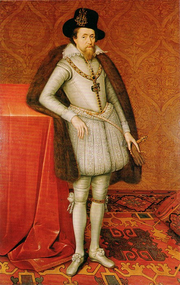 In 1584 James VI of Scotland had the Parliament of Scotland
pass the Black Acts, appointing two bishops and bringing the Church of Scotland under royal control. This met vigorous opposition and he was forced to concede that the General Assembly should continue to run the church. Calvinists who reacted against the more formal style of liturgy were opposed by an Episcopalian faction. After ascending to the English throne in 1603 James stopped the General Assembly from meeting, increased the number of Scottish bishops and in 1618 held a General Assembly which pushed through Five Articles of Episcopalian practices which were widely boycotted.
James' son Charles I
was crowned in Holyrood Abbey
, Edinburgh
, in 1633 with full Anglican rites. Subsequently, in 1637, Charles attempted to introduce a version of the Book of Common Prayer
, written by a group of Scottish prelates, most notably the Archbishop of St Andrews
, John Spottiswood, and the Bishop of Ross
, John Maxwell
, and edited for printing by the Archbishop of Canterbury
, William Laud
; it was a combination of Knox's Book of Common Order, which was in use before 1637, and English liturgy in hopes of further unifying the Anglican Church of England and the (presbyterian) Church of Scotland. When the revised Book of Common Prayer was used for the first time during worship on 23 July 1637 in St Giles' Edinburgh, it set off a revolt which became so uncontainable that it led to the Wars of the Three Kingdoms
, beginning with the Bishops Wars and developing into the English Civil War
.
With the 1689 refusal of the Scottish bishops to swear allegiance to William of Orange
while King James VII (James II of England) lived and had not abdicated, the Presbyterian polity was finally re-established in the Church of Scotland. However, the Comprehension Act of 1690 allowed Episcopalian incumbents, on taking the Oath of Allegiance
, to retain their benefices, though excluding them from any share in the government of the Church of Scotland without a further declaration of presbyterian principles. Many 'non-jurors
' also succeeded for a time in retaining the use of the parish churches.
The excluded Scottish bishops were slow to organise the Episcopalian remnant under a jurisdiction independent of the state, regarding the then arrangements as provisional, and looking forward to a reconstituted national Episcopal Church under a sovereign they regarded as legitimate (see Jacobitism
). A few prelates, known as college bishops, were consecrated without sees, to preserve the succession rather than to exercise a defined authority. At length the hopelessness of the Stuart cause and the growth of congregations outside of the establishment forced the bishops to dissociate canonical jurisdiction from royal prerogative and to reconstitute for themselves a territorial episcopate.
The Scottish Book of Common Prayer
came into general use at start of the reign of William and Mary. The Scottish Communion Office, compiled by the non-jurors in accordance with primitive models, has had a varying co-ordinate authority, and the modifications of the English liturgy that would be adopted by the American Church were mainly determined by its influence.
Among the clergy of post-Revolution days the most eminent are Bishop Sage, a well-known patristic scholar; Bishop Rattray, liturgiologist; John Skinner, of Longside, author of Tullochgorum; Bishop Gleig
, editor of the 3rd edition of the Encyclopædia Britannica; Dean Ramsay, author of Reminiscences of Scottish Life and Character; Bishop AP Forbes
; GH Forbes, liturgiologist; and Bishop Charles Wordsworth
.
 The Scottish Episcopalians Act of 1711
protected the Episcopal Communion, which marked its virtual incorporation as a distinct society. However, matters were still complicated by a considerable, though declining, number of Episcopalian incumbents holding parish churches. Moreover, the Jacobitism
of the non-jurors provoked a state policy of repression in 1715 and 1745, and fostered the growth of new Hanoverian congregations (served by clergy who had been ordained by a bishop but amenable to none) who qualified themselves under the Act of 1712. This Act was further modified in 1746 and 1748 to exclude clergymen ordained in Scotland.
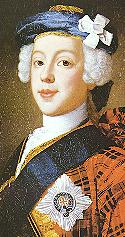
These causes reduced the Episcopalians who, in 1689, were a large section of the population, to a minority save in a few corners of the west and north-east of Scotland. The official recognition of George III on the death of Charles Edward Stuart
in 1788, removed the chief bar to progress. The qualified congregations were gradually absorbed, though traces of this ecclesiastical solecism still linger. In 1792 the penal laws were repealed, but clerical disabilities were only finally removed in 1864.
After the independence of the 13 Colonies, the Scottish Episcopal church also took the step of consecrating Samuel Seabury at Aberdeen, in 1784. He became the first bishop of the American Episcopal Church, and had been refused consecration by Church of England clergy. In this way, it can be said that the Episcopal Church in the USA owes as much of its origins to the Scottish church as the English one.
The Theological College was founded in 1810, incorporated with Trinity College, Glenalmond, in 1848, and re-established at Edinburgh in 1876. Theological training is now provided by the various dioceses and is supervised by the Theological Institute of the Scottish Episcopal Church (TISEC).
In 1900 the Church had 356 congregations, with a total membership of 124,335, and 324 working clergy. Membership did not grow in the following decades as it was believed it would.
In 1989 there were approximately 200 stipendiary and 80 non-stipendiary clergy. Membership was 65,000, with 31,000 communicants.
In the past 30 years the Scottish Episcopal Church has taken a stand on various issues including economic justice, ordination of women, and inclusion.
In 1995, the Scottish Episcopal Church began working through a process known as Mission 21. Canon Alice Mann of the Alban Institute was invited to begin developing a missionary emphasis within the congregations of the church throughout Scotland. This led to the development of the Making Your Church More Inviting programme which has now been completed by many congregations. In addition to working on making churches more inviting, Mission 21 emphasises reaching out to new populations which have previously not been contacted by the church. As Mission 21 has developed, changing patterns of ministry have become part of its remit.
which is presbyterian and governed by elders. However, unlike the Church of England, the bishops of the Scottish Episcopal Church are elected in a procedure involving clergy and laity of the vacant diocese voting at an electoral synod
.
The church is composed of seven diocese
s, each with its own bishop:
All sees
except Edinburgh (founded by Charles I
) stem from sees of the Catholic Church in Scotland. The bishops of the Episcopal Church are direct successors of the prelates consecrated to Scottish sees at the Restoration. The bishops are addressed Right Reverend
.
The College of Bishops constitutes the episcopal synod, the supreme court of appeal.
This synod elects from among its own members a presiding Bishop who has the title of Primus (the title originates from the Latin phrase Primus inter pares
— 'First among equals').
The Primus of the Scottish Episcopal Church
, the presiding bishop
of the Scottish Episcopal Church, is elected by the episcopal synod from among its members. His duties are:
The current incumbent is David Chillingworth
, who took this office on 13 June 2009.
The Primus does not have any metropolitan
jurisdiction - the last to hold such jurisdiction was Archbishop Arthur Rose
(of St Andrews) up to his death in 1704. The Primus is addressed Most Reverend
.
. This consists of the House of Bishops, the House of Clergy and the House of Laity. The General Synod makes canon law
, administers finance and monitors the work of the boards and committees of the Church. Most decisions are arrived at by a simple majority of members of the General Synod voting together. More complex legislation, such as changes to the Code of Canons requires each of the Houses to agree and to vote in favour by a two-thirds majority.
Each diocese has its synod of the clergy and laity. Its dean
(similar to an archdeacon
in the Church of England) is appointed by the bishop, and, on the voidance of the see
, summons the diocesan synod, at the instance of the primus, to choose a bishop. Each diocese has one or more (in the case of some united dioceses) cathedral
s. The senior priest
of a Scottish Episcopal cathedral is styled as provost (as the title of 'dean' is given to the senior priest of the diocese as a whole, see above). The only exception in Scotland is the Cathedral of the Isles
on the island of Great Cumbrae
which has been led by a member of the clergy styled as Precentor
. Diocesan deans and cathedral provosts are both addressed as Very Reverend
.
available to it. In recent years, revised Funeral Rites have appeared, along with liturgies for Christian Initiation (e.g. Baptism
and Affirmation) and Marriage
. The modern Eucharist
ic rite (Scottish Liturgy 1982) includes Eucharistic prayer
s for the various seasons in the Liturgical Year
and is commonly known as "The Blue Book" - a reference to the colour of its covers. A further Eucharistic prayer is provided in the Marriage liturgy.
, includes:
The threefold sources of authority in Anglicanism are scripture, tradition, and reason. These three sources uphold and critique each other in a dynamic way.
This balance of scripture, tradition and reason is traced to the work of Richard Hooker
, a sixteenth century apologist. In Hooker's model, scripture is the primary means of arriving at doctrine and things stated plainly in scripture are accepted as true. Issues that are ambiguous are determined by tradition, which is checked by reason.
, it was one of the parties involved in the Scottish Constitutional Convention
, which resulted in the setting up of the Scottish Parliament
in 1999. The Church actively supports the work of the Scottish Churches Parliamentary Office
in Edinburgh and the Society, Religion and Technology Project
.
In some areas, such as human sexuality, the church has faced a struggle. All orders of ministry are open to both male and female candidates. As yet, no women have been elected to the Episcopate and thus there are no bishops who are women. Debate continues in the church as to the propriety of fully affirming the presence of lesbian and gay church members.
with the Old Catholics
. The Scottish Episcopal Church is also a member of the Porvoo Communion
and is a member of several ecumenical bodies, including Action of Churches Together in Scotland
and the World Council of Churches
.
In December 2009, there were reports that certain High Church
traditionalists within the Scottish Episcopal Church were in favour of joining the Catholic Church.
Christian
A Christian is a person who adheres to Christianity, an Abrahamic, monotheistic religion based on the life and teachings of Jesus of Nazareth as recorded in the Canonical gospels and the letters of the New Testament...
church in Scotland
Scotland
Scotland is a country that is part of the United Kingdom. Occupying the northern third of the island of Great Britain, it shares a border with England to the south and is bounded by the North Sea to the east, the Atlantic Ocean to the north and west, and the North Channel and Irish Sea to the...
, consisting of seven dioceses. Since the 17th century, it has had an identity distinct from the presbyterian Church of Scotland
Church of Scotland
The Church of Scotland, known informally by its Scots language name, the Kirk, is a Presbyterian church, decisively shaped by the Scottish Reformation....
.
The SEC is a member church of the Anglican Communion
Anglican Communion
The Anglican Communion is an international association of national and regional Anglican churches in full communion with the Church of England and specifically with its principal primate, the Archbishop of Canterbury...
: it recognises the position of the Archbishop of Canterbury
Archbishop of Canterbury
The Archbishop of Canterbury is the senior bishop and principal leader of the Church of England, the symbolic head of the worldwide Anglican Communion, and the diocesan bishop of the Diocese of Canterbury. In his role as head of the Anglican Communion, the archbishop leads the third largest group...
as president of the Anglican Instruments of Communion, but the archbishop has no jurisdiction in Scotland. The current Primus
Primus of the Scottish Episcopal Church
The Primus, styled The Most Reverend the Primus of the Scottish Episcopal Church, is the presiding bishop of the Scottish Episcopal Church. The current Primus is the Most Revd David Chillingworth who became Primus of the Scottish Episcopal Church on 13 June 2009...
is the Most Reverend David Chillingworth
David Chillingworth
David Chillingworth is one of the seven diocesan bishops of the Scottish Episcopal Church, part of the worldwide Anglican Communion with the Archbishop of Canterbury as primus inter pares...
.
Official name
The Scottish Episcopal Church was previously called the Episcopal Church in Scotland, reflecting its role as the Scottish province of the Anglican Communion. Although not incorporated until 1712, the Scottish Episcopal Church traces its origins beyond the ReformationProtestant Reformation
The Protestant Reformation was a 16th-century split within Western Christianity initiated by Martin Luther, John Calvin and other early Protestants. The efforts of the self-described "reformers", who objected to the doctrines, rituals and ecclesiastical structure of the Roman Catholic Church, led...
and sees itself in continuity with the church established by St. Ninian, St. Columba, St. Kentigern and other Celtic saints.
The church is sometimes pejorative
Pejorative
Pejoratives , including name slurs, are words or grammatical forms that connote negativity and express contempt or distaste. A term can be regarded as pejorative in some social groups but not in others, e.g., hacker is a term used for computer criminals as well as quick and clever computer experts...
ly referred to in Scotland as the "English Kirk", but this is misleading and can cause offence.
Origins of Christianity in Scotland
Saint NinianSaint Ninian
Saint Ninian is a Christian saint first mentioned in the 8th century as being an early missionary among the Pictish peoples of what is now Scotland...
conducted the first Christian mission to what is now southern Scotland.
In 563 St Columba travelled to Scotland with twelve companions, where according to legend he first landed at the southern tip of the Kintyre
Kintyre
Kintyre is a peninsula in western Scotland, in the southwest of Argyll and Bute. The region stretches approximately 30 miles , from the Mull of Kintyre in the south, to East Loch Tarbert in the north...
peninsula, near Southend
Southend, Kintyre
Southend is the main settlement at the southern end of the Kintyre peninsula in Argyll and Bute, Scotland. It lies south of Campbeltown, the main town in the area. The civil parish of Southend comprises the village and the surrounding land, used mainly for farming and forestry...
. However, being still in sight of his native land he moved further north along the west coast of Scotland. He was granted land on the island of Iona
Iona
Iona is a small island in the Inner Hebrides off the western coast of Scotland. It was a centre of Irish monasticism for four centuries and is today renowned for its tranquility and natural beauty. It is a popular tourist destination and a place for retreats...
off the Isle of Mull
Isle of Mull
The Isle of Mull or simply Mull is the second largest island of the Inner Hebrides, off the west coast of Scotland in the council area of Argyll and Bute....
which became the centre of his evangelising
Evangelism
Evangelism refers to the practice of relaying information about a particular set of beliefs to others who do not hold those beliefs. The term is often used in reference to Christianity....
mission to the Picts
Picts
The Picts were a group of Late Iron Age and Early Mediaeval people living in what is now eastern and northern Scotland. There is an association with the distribution of brochs, place names beginning 'Pit-', for instance Pitlochry, and Pictish stones. They are recorded from before the Roman conquest...
. However, there is a sense in which he did not leave his native people, as the Irish Gaels
Gaels
The Gaels or Goidels are speakers of one of the Goidelic Celtic languages: Irish, Scottish Gaelic, and Manx. Goidelic speech originated in Ireland and subsequently spread to western and northern Scotland and the Isle of Man....
had been colonising the west coast of Scotland for some time. Aside from the services he provided guiding the only centre of literacy
Literacy
Literacy has traditionally been described as the ability to read for knowledge, write coherently and think critically about printed material.Literacy represents the lifelong, intellectual process of gaining meaning from print...
in the region, his reputation as a holy man led to his role as a diplomat
Diplomat
A diplomat is a person appointed by a state to conduct diplomacy with another state or international organization. The main functions of diplomats revolve around the representation and protection of the interests and nationals of the sending state, as well as the promotion of information and...
among the tribes; there are also many stories of miracles which he performed during his work to convert
Convert
The convert or try, in American football known as "point after", and Canadian football "Point after touchdown", is a one-scrimmage down played immediately after a touchdown during which the scoring team is allowed to attempt to score an extra one point by kicking the ball through the uprights , or...
the Picts. He visited the pagan king Bridei
Bridei I of the Picts
Bridei son of Maelchon, was king of the Picts until his death around 584 to 586.Bridei is first mentioned in Irish annals for 558–560, when the Annals of Ulster report "the migration before Máelchú's son i.e. king Bruide". The Ulster annalist does not say who fled, but the later Annals of...
, king of Fortriu
Fortriu
Fortriu or the Kingdom of Fortriu is the name given by historians for an ancient Pictish kingdom, and often used synonymously with Pictland in general...
, at his base in Inverness
Inverness
Inverness is a city in the Scottish Highlands. It is the administrative centre for the Highland council area, and is regarded as the capital of the Highlands of Scotland...
, winning the king's respect and Columba subsequently played a major role in the politics of that country. He was also very energetic in his evangelical work; in addition to founding several churches in the Hebrides
Hebrides
The Hebrides comprise a widespread and diverse archipelago off the west coast of Scotland. There are two main groups: the Inner and Outer Hebrides. These islands have a long history of occupation dating back to the Mesolithic and the culture of the residents has been affected by the successive...
, he worked to turn his monastery at Iona into a school for missionaries. He was a renowned man of letters, having written several hymns and being credited with having transcribe
Calligraphy
Calligraphy is a type of visual art. It is often called the art of fancy lettering . A contemporary definition of calligraphic practice is "the art of giving form to signs in an expressive, harmonious and skillful manner"...
d 300 books personally. He died on Iona and was buried in the abbey he established.
The Scottish church would continue to grow in the centuries that followed, and in the 11th century, Saint Margaret of Scotland
Saint Margaret of Scotland
Saint Margaret of Scotland , also known as Margaret of Wessex and Queen Margaret of Scotland, was an English princess of the House of Wessex. Born in exile in Hungary, she was the sister of Edgar Ætheling, the short-ruling and uncrowned Anglo-Saxon King of England...
(Queen Consort of Malcolm III of Scotland
Malcolm III of Scotland
Máel Coluim mac Donnchada , was King of Scots...
) strengthened the church's ties with the Holy See
Holy See
The Holy See is the episcopal jurisdiction of the Catholic Church in Rome, in which its Bishop is commonly known as the Pope. It is the preeminent episcopal see of the Catholic Church, forming the central government of the Church. As such, diplomatically, and in other spheres the Holy See acts and...
as did successive monarchs such as Margaret's son, David, who invited several religious orders to establish monasteries.
Reformation
The Scottish ReformationScottish Reformation
The Scottish Reformation was Scotland's formal break with the Papacy in 1560, and the events surrounding this. It was part of the wider European Protestant Reformation; and in Scotland's case culminated ecclesiastically in the re-establishment of the church along Reformed lines, and politically in...
was formalised in 1560, when the church in Scotland broke with the Holy See
Holy See
The Holy See is the episcopal jurisdiction of the Catholic Church in Rome, in which its Bishop is commonly known as the Pope. It is the preeminent episcopal see of the Catholic Church, forming the central government of the Church. As such, diplomatically, and in other spheres the Holy See acts and...
, during a process of Protestant reform led, among others, by John Knox
John Knox
John Knox was a Scottish clergyman and a leader of the Protestant Reformation who brought reformation to the church in Scotland. He was educated at the University of St Andrews or possibly the University of Glasgow and was ordained to the Catholic priesthood in 1536...
. It reformed its doctrines and government, drawing on the principles of John Calvin
John Calvin
John Calvin was an influential French theologian and pastor during the Protestant Reformation. He was a principal figure in the development of the system of Christian theology later called Calvinism. Originally trained as a humanist lawyer, he broke from the Roman Catholic Church around 1530...
which Knox had been exposed to while living in Switzerland
Switzerland
Switzerland name of one of the Swiss cantons. ; ; ; or ), in its full name the Swiss Confederation , is a federal republic consisting of 26 cantons, with Bern as the seat of the federal authorities. The country is situated in Western Europe,Or Central Europe depending on the definition....
. In 1560, the Scottish Parliament abolished papal jurisdiction and approved Calvin's Confession of Faith, but did not accept many of the principles laid out in Knox's First Book of Discipline, which argued, amongst other things, that all of the assets of the old church should pass to the new. The 1560 Reformation Settlement was not ratified by the crown for some years, and the question of church government
Ecclesiastical polity
Ecclesiastical polity is the operational and governance structure of a church or Christian denomination. It also denotes the ministerial structure of the church and the authority relationships between churches...
also remained unresolved. In 1572 the acts of 1560 were finally approved by the young James VI, but under pressure from many of the nobles the Concordat of Leith also allowed the crown to appoint bishops with the church's approval. John Knox himself had no clear views on the office of bishop, preferring to see them renamed as 'superintendents'; but in response to the new Concordat a Presbyterian party emerged headed by Andrew Melville
Andrew Melville
Andrew Melville was a Scottish scholar, theologian and religious reformer. His fame encouraged scholars from the European Continent to study at Glasgow and St Andrews.-Early life and early education:...
, the author of the Second Book of Discipline.
The Scottish Episcopal Church began as a distinct church in 1582, when the Church of Scotland
Church of Scotland
The Church of Scotland, known informally by its Scots language name, the Kirk, is a Presbyterian church, decisively shaped by the Scottish Reformation....
rejected episcopal government (by bishops) and adopted a presbyterian government by elders as well as reformed theology. Scottish monarchs made repeated efforts to introduce bishops and two ecclesiastical traditions competed.
Episcopal government maintained
Parliament of Scotland
The Parliament of Scotland, officially the Estates of Parliament, was the legislature of the Kingdom of Scotland. The unicameral parliament of Scotland is first found on record during the early 13th century, with the first meeting for which a primary source survives at...
pass the Black Acts, appointing two bishops and bringing the Church of Scotland under royal control. This met vigorous opposition and he was forced to concede that the General Assembly should continue to run the church. Calvinists who reacted against the more formal style of liturgy were opposed by an Episcopalian faction. After ascending to the English throne in 1603 James stopped the General Assembly from meeting, increased the number of Scottish bishops and in 1618 held a General Assembly which pushed through Five Articles of Episcopalian practices which were widely boycotted.
James' son Charles I
Charles I of England
Charles I was King of England, King of Scotland, and King of Ireland from 27 March 1625 until his execution in 1649. Charles engaged in a struggle for power with the Parliament of England, attempting to obtain royal revenue whilst Parliament sought to curb his Royal prerogative which Charles...
was crowned in Holyrood Abbey
Holyrood Abbey
Holyrood Abbey is a ruined abbey of the Canons Regular in Edinburgh, Scotland. The abbey was founded in 1128 by King David I of Scotland. During the 15th century, the abbey guesthouse was developed into a royal residence, and after the Scottish Reformation the Palace of Holyroodhouse was expanded...
, Edinburgh
Edinburgh
Edinburgh is the capital city of Scotland, the second largest city in Scotland, and the eighth most populous in the United Kingdom. The City of Edinburgh Council governs one of Scotland's 32 local government council areas. The council area includes urban Edinburgh and a rural area...
, in 1633 with full Anglican rites. Subsequently, in 1637, Charles attempted to introduce a version of the Book of Common Prayer
Book of Common Prayer
The Book of Common Prayer is the short title of a number of related prayer books used in the Anglican Communion, as well as by the Continuing Anglican, "Anglican realignment" and other Anglican churches. The original book, published in 1549 , in the reign of Edward VI, was a product of the English...
, written by a group of Scottish prelates, most notably the Archbishop of St Andrews
Archbishop of St Andrews
The Bishop of St. Andrews was the ecclesiastical head of the Diocese of St Andrews and then, as Archbishop of St Andrews , the Archdiocese of St Andrews.The name St Andrews is not the town or church's original name...
, John Spottiswood, and the Bishop of Ross
Bishop of Ross
The Bishop of Ross was the ecclesiastical head of the Diocese of Ross, one of Scotland's 13 medieval bishoprics. The first recorded bishop appears in the late 7th century as a witness to Adomnán of Iona's Cáin Adomnáin. The bishopric was based at the settlement of Rosemarkie until the mid-13th...
, John Maxwell
John Maxwell (archbishop)
John Maxwell Archbishop of Tuam, son of John Maxwell of Cavens, Kirkcudbrightshire, was born in or before 1586. He was educated at the University of St Andrews, where he was laureated M. A. on 29 July 1611.- Early career :...
, and edited for printing by the Archbishop of Canterbury
Archbishop of Canterbury
The Archbishop of Canterbury is the senior bishop and principal leader of the Church of England, the symbolic head of the worldwide Anglican Communion, and the diocesan bishop of the Diocese of Canterbury. In his role as head of the Anglican Communion, the archbishop leads the third largest group...
, William Laud
William Laud
William Laud was Archbishop of Canterbury from 1633 to 1645. One of the High Church Caroline divines, he opposed radical forms of Puritanism...
; it was a combination of Knox's Book of Common Order, which was in use before 1637, and English liturgy in hopes of further unifying the Anglican Church of England and the (presbyterian) Church of Scotland. When the revised Book of Common Prayer was used for the first time during worship on 23 July 1637 in St Giles' Edinburgh, it set off a revolt which became so uncontainable that it led to the Wars of the Three Kingdoms
Wars of the Three Kingdoms
The Wars of the Three Kingdoms formed an intertwined series of conflicts that took place in England, Ireland, and Scotland between 1639 and 1651 after these three countries had come under the "Personal Rule" of the same monarch...
, beginning with the Bishops Wars and developing into the English Civil War
English Civil War
The English Civil War was a series of armed conflicts and political machinations between Parliamentarians and Royalists...
.
With the 1689 refusal of the Scottish bishops to swear allegiance to William of Orange
William III of England
William III & II was a sovereign Prince of Orange of the House of Orange-Nassau by birth. From 1672 he governed as Stadtholder William III of Orange over Holland, Zeeland, Utrecht, Guelders, and Overijssel of the Dutch Republic. From 1689 he reigned as William III over England and Ireland...
while King James VII (James II of England) lived and had not abdicated, the Presbyterian polity was finally re-established in the Church of Scotland. However, the Comprehension Act of 1690 allowed Episcopalian incumbents, on taking the Oath of Allegiance
Oath of allegiance
An oath of allegiance is an oath whereby a subject or citizen acknowledges a duty of allegiance and swears loyalty to monarch or country. In republics, modern oaths specify allegiance to the country's constitution. For example, officials in the United States, a republic, take an oath of office that...
, to retain their benefices, though excluding them from any share in the government of the Church of Scotland without a further declaration of presbyterian principles. Many 'non-jurors
Nonjuring schism
The nonjuring schism was a split in the Church of England in the aftermath of the Glorious Revolution of 1688, over whether William of Orange and his wife Mary could legally be recognised as King and Queen of England....
' also succeeded for a time in retaining the use of the parish churches.
The excluded Scottish bishops were slow to organise the Episcopalian remnant under a jurisdiction independent of the state, regarding the then arrangements as provisional, and looking forward to a reconstituted national Episcopal Church under a sovereign they regarded as legitimate (see Jacobitism
Jacobitism
Jacobitism was the political movement in Britain dedicated to the restoration of the Stuart kings to the thrones of England, Scotland, later the Kingdom of Great Britain, and the Kingdom of Ireland...
). A few prelates, known as college bishops, were consecrated without sees, to preserve the succession rather than to exercise a defined authority. At length the hopelessness of the Stuart cause and the growth of congregations outside of the establishment forced the bishops to dissociate canonical jurisdiction from royal prerogative and to reconstitute for themselves a territorial episcopate.
The Scottish Book of Common Prayer
Book of Common Prayer
The Book of Common Prayer is the short title of a number of related prayer books used in the Anglican Communion, as well as by the Continuing Anglican, "Anglican realignment" and other Anglican churches. The original book, published in 1549 , in the reign of Edward VI, was a product of the English...
came into general use at start of the reign of William and Mary. The Scottish Communion Office, compiled by the non-jurors in accordance with primitive models, has had a varying co-ordinate authority, and the modifications of the English liturgy that would be adopted by the American Church were mainly determined by its influence.
Among the clergy of post-Revolution days the most eminent are Bishop Sage, a well-known patristic scholar; Bishop Rattray, liturgiologist; John Skinner, of Longside, author of Tullochgorum; Bishop Gleig
George Gleig
George Gleig was a Primus of the Scottish Episcopal Church.He was born at Boghall, Aberdeenshire, Scotland, the son of a farmer. At the age of thirteen he entered King's College, University of Aberdeen, where the first prize in mathematics and physical and moral sciences fell to him...
, editor of the 3rd edition of the Encyclopædia Britannica; Dean Ramsay, author of Reminiscences of Scottish Life and Character; Bishop AP Forbes
Alexander Penrose Forbes
Alexander Penrose Forbes , Scottish divine, was born at Edinburgh.He was the second son of John Hay Forbes, Lord Medwyn, a judge of the court of session, and grandson of Sir William Forbes of Pitsligo. He studied first at the Edinburgh Academy, then for two years under the Rev. Thomas Dale...
; GH Forbes, liturgiologist; and Bishop Charles Wordsworth
Charles Wordsworth
The Reverend Charles Wordsworth, M.A. was bishop of Bishop of St Andrews, Dunkeld and Dunblane in Scotland. He was a classical scholar, and taught at a public schools in England and Scotland...
.
From the birth of the United Kingdom
Scottish Episcopalians Act 1711
The Scottish Episcopalians Act 1711 is an Act of the Great Britain Parliament which is still in force today.The long title of the Act is:...
protected the Episcopal Communion, which marked its virtual incorporation as a distinct society. However, matters were still complicated by a considerable, though declining, number of Episcopalian incumbents holding parish churches. Moreover, the Jacobitism
Jacobitism
Jacobitism was the political movement in Britain dedicated to the restoration of the Stuart kings to the thrones of England, Scotland, later the Kingdom of Great Britain, and the Kingdom of Ireland...
of the non-jurors provoked a state policy of repression in 1715 and 1745, and fostered the growth of new Hanoverian congregations (served by clergy who had been ordained by a bishop but amenable to none) who qualified themselves under the Act of 1712. This Act was further modified in 1746 and 1748 to exclude clergymen ordained in Scotland.
These causes reduced the Episcopalians who, in 1689, were a large section of the population, to a minority save in a few corners of the west and north-east of Scotland. The official recognition of George III on the death of Charles Edward Stuart
Charles Edward Stuart
Prince Charles Edward Louis John Casimir Sylvester Severino Maria Stuart commonly known as Bonnie Prince Charlie or The Young Pretender was the second Jacobite pretender to the thrones of Great Britain , and Ireland...
in 1788, removed the chief bar to progress. The qualified congregations were gradually absorbed, though traces of this ecclesiastical solecism still linger. In 1792 the penal laws were repealed, but clerical disabilities were only finally removed in 1864.
After the independence of the 13 Colonies, the Scottish Episcopal church also took the step of consecrating Samuel Seabury at Aberdeen, in 1784. He became the first bishop of the American Episcopal Church, and had been refused consecration by Church of England clergy. In this way, it can be said that the Episcopal Church in the USA owes as much of its origins to the Scottish church as the English one.
The Theological College was founded in 1810, incorporated with Trinity College, Glenalmond, in 1848, and re-established at Edinburgh in 1876. Theological training is now provided by the various dioceses and is supervised by the Theological Institute of the Scottish Episcopal Church (TISEC).
In 1900 the Church had 356 congregations, with a total membership of 124,335, and 324 working clergy. Membership did not grow in the following decades as it was believed it would.
In 1989 there were approximately 200 stipendiary and 80 non-stipendiary clergy. Membership was 65,000, with 31,000 communicants.
In the past 30 years the Scottish Episcopal Church has taken a stand on various issues including economic justice, ordination of women, and inclusion.
Membership
In terms of official membership Episcopalians comprise a little over 1% of the population of Scotland, making them about 12% of the size of the Church of Scotland. As of 2010 the Church had approximately 311 congregations, with a total membership of about 54,000 members including children. Nominally about 7% of Scots or 350,000 identify themselves as Episcopalians.In 1995, the Scottish Episcopal Church began working through a process known as Mission 21. Canon Alice Mann of the Alban Institute was invited to begin developing a missionary emphasis within the congregations of the church throughout Scotland. This led to the development of the Making Your Church More Inviting programme which has now been completed by many congregations. In addition to working on making churches more inviting, Mission 21 emphasises reaching out to new populations which have previously not been contacted by the church. As Mission 21 has developed, changing patterns of ministry have become part of its remit.
Bishops and Primus
As an episcopal denomination, the church is governed by bishops, differentiating it from the national Church of ScotlandChurch of Scotland
The Church of Scotland, known informally by its Scots language name, the Kirk, is a Presbyterian church, decisively shaped by the Scottish Reformation....
which is presbyterian and governed by elders. However, unlike the Church of England, the bishops of the Scottish Episcopal Church are elected in a procedure involving clergy and laity of the vacant diocese voting at an electoral synod
Synod
A synod historically is a council of a church, usually convened to decide an issue of doctrine, administration or application. In modern usage, the word often refers to the governing body of a particular church, whether its members are meeting or not...
.
The church is composed of seven diocese
Diocese
A diocese is the district or see under the supervision of a bishop. It is divided into parishes.An archdiocese is more significant than a diocese. An archdiocese is presided over by an archbishop whose see may have or had importance due to size or historical significance...
s, each with its own bishop:
- Diocese of Aberdeen and OrkneyDiocese of Aberdeen and OrkneyThe Diocese of Aberdeen and Orkney is one of the seven dioceses of the Scottish Episcopal Church. In mainland Scotland, the diocese covers the City of Aberdeen and most of Aberdeenshire...
, Robert (Bob) Gillies (consecrated 22 September 2007) - Diocese of Argyll and The Isles, Kevin PearsonKevin Pearson (bishop)The Rt Rev Kevin Pearson is the Bishop of Argyll and The Isles in the Scottish Episcopal Church. He consecrated and installed as Bishop on Oban at Candlemas 2011...
(consecrated 4 February 2011) - Diocese of BrechinDiocese of Brechin (Episcopalian)The Diocese of Brechin is in the east of Scotland, and is the smallest of the seven dioceses of the Scottish Episcopal Church. It covers the City of Dundee, Angus and southern Aberdeenshire. It stretches from Muchalls in the north east down to Dundee in the south, and across to Glencarse in the...
, currently vacant. - Diocese of EdinburghDiocese of EdinburghThe Diocese of Edinburgh is one of the seven dioceses of the Scottish Episcopal Church. It covers the City of Edinburgh, the Lothians, the Borders and Falkirk. The diocesan centre is St Mary's Cathedral, Edinburgh...
, currently vacant. - Diocese of Glasgow and GallowayDiocese of Glasgow and GallowayThe Diocese of Glasgow and Galloway is one of the seven dioceses of the Scottish Episcopal Church. It covers Dumfries and Galloway, Ayrshire, Lanarkshire , Dunbartonshire, Renfrewshire and west Stirlingshire . The diocesan centre is St...
, Gregor Duncan (elected 16 January 2010; consecrated 23 April 2010) - Diocese of Moray, Ross and CaithnessDiocese of Moray, Ross and CaithnessThe Diocese of Moray, Ross and Caithness is one of the seven dioceses of the Scottish Episcopal Church. It covers Caithness and Sutherland , mainland Ross and Cromarty , and mainland Inverness-shire, Nairnshire, Moray and Banffshire . The diocesan centre is St. Andrew's Cathedral in Inverness...
, Mark Strange (elected 2 June 2007) - Diocese of Saint Andrews, Dunkeld and DunblaneDiocese of Saint Andrews, Dunkeld and DunblaneThe Diocese of St Andrews, Dunkeld and Dunblane is one of the seven dioceses of the Scottish Episcopal Church. It is centred on St Ninian's Cathedral in Perth, and covers Fife, Perth and Kinross, Clackmannanshire, and eastern and central Stirling...
, David ChillingworthDavid ChillingworthDavid Chillingworth is one of the seven diocesan bishops of the Scottish Episcopal Church, part of the worldwide Anglican Communion with the Archbishop of Canterbury as primus inter pares...
(consecrated 11 March 2005)
All sees
Episcopal See
An episcopal see is, in the original sense, the official seat of a bishop. This seat, which is also referred to as the bishop's cathedra, is placed in the bishop's principal church, which is therefore called the bishop's cathedral...
except Edinburgh (founded by Charles I
Charles I of England
Charles I was King of England, King of Scotland, and King of Ireland from 27 March 1625 until his execution in 1649. Charles engaged in a struggle for power with the Parliament of England, attempting to obtain royal revenue whilst Parliament sought to curb his Royal prerogative which Charles...
) stem from sees of the Catholic Church in Scotland. The bishops of the Episcopal Church are direct successors of the prelates consecrated to Scottish sees at the Restoration. The bishops are addressed Right Reverend
Right Reverend
The Right Reverend is a style applied to certain religious figures.*In the Anglican Communion and the Roman Catholic Church in Great Britain it applies to bishops except that The Most Reverend is used for archbishops .*In some churches with a...
.
The College of Bishops constitutes the episcopal synod, the supreme court of appeal.
This synod elects from among its own members a presiding Bishop who has the title of Primus (the title originates from the Latin phrase Primus inter pares
Primus inter pares
Primus inter pares is Latin phrase describing the most senior person of a group sharing the same rank or office.When not used in reference to a specific title, it may indicate that the person so described is formally equal, but looked upon as an authority of special importance by their peers...
— 'First among equals').
The Primus of the Scottish Episcopal Church
Primus of the Scottish Episcopal Church
The Primus, styled The Most Reverend the Primus of the Scottish Episcopal Church, is the presiding bishop of the Scottish Episcopal Church. The current Primus is the Most Revd David Chillingworth who became Primus of the Scottish Episcopal Church on 13 June 2009...
, the presiding bishop
Bishop
A bishop is an ordained or consecrated member of the Christian clergy who is generally entrusted with a position of authority and oversight. Within the Catholic Church, Eastern Orthodox, Oriental Orthodox Churches, in the Assyrian Church of the East, in the Independent Catholic Churches, and in the...
of the Scottish Episcopal Church, is elected by the episcopal synod from among its members. His duties are:
- to preside at all Provincial Liturgical Functions
- to preside at all meetings of the General Synod of the Scottish Episcopal Church
- to preside at all meetings of the Episcopal Synod
- to declare and carry out the resolutions of the General Synod, the Episcopal Synod and the College of Bishops
- to represent the Scottish Episcopal Church in its relation to all other Churches of the Anglican Communion and other Communions
- to perform the functions and duties of Primus as specified in the Canons of the Scottish Episcopal Church
- to correspond on behalf of the Scottish Episcopal Church with Primates, Metropolitans and the Secretary General of the Anglican Consultative CouncilAnglican Consultative CouncilThe Anglican Consultative Council or ACC is one of the four "Instruments of Communion" of the Anglican Communion. It was created by a resolution of the 1968 Lambeth Conference...
.
The current incumbent is David Chillingworth
David Chillingworth
David Chillingworth is one of the seven diocesan bishops of the Scottish Episcopal Church, part of the worldwide Anglican Communion with the Archbishop of Canterbury as primus inter pares...
, who took this office on 13 June 2009.
The Primus does not have any metropolitan
Metropolitan bishop
In Christian churches with episcopal polity, the rank of metropolitan bishop, or simply metropolitan, pertains to the diocesan bishop or archbishop of a metropolis; that is, the chief city of a historical Roman province, ecclesiastical province, or regional capital.Before the establishment of...
jurisdiction - the last to hold such jurisdiction was Archbishop Arthur Rose
Arthur Rose
Arthur Rose was a seventeenth century Scottish priest, Archbishop of St Andrews, and Episcopal Primate of Scotland.-Life:The younger son of Elizabeth Wood and her husband, John Rose, minister of Birse, he was born in 1634...
(of St Andrews) up to his death in 1704. The Primus is addressed Most Reverend
Most Reverend
The Most Reverend is a style applied to certain religious figures.*In the Roman Catholic Church , all bishops are styled "The Most Reverend", as well as monsignors of the rank of protonotary apostolic de numero.*In the Roman Catholic Church , archbishops are styled "The...
.
Representative bodies
The church is governed by the General SynodGeneral Synod
-Church of England:In the Church of England, the General Synod, which was established in 1970 , is the legislative body of the Church.-Episcopal Church of the United States:...
. This consists of the House of Bishops, the House of Clergy and the House of Laity. The General Synod makes canon law
Canon law
Canon law is the body of laws & regulations made or adopted by ecclesiastical authority, for the government of the Christian organization and its members. It is the internal ecclesiastical law governing the Catholic Church , the Eastern and Oriental Orthodox churches, and the Anglican Communion of...
, administers finance and monitors the work of the boards and committees of the Church. Most decisions are arrived at by a simple majority of members of the General Synod voting together. More complex legislation, such as changes to the Code of Canons requires each of the Houses to agree and to vote in favour by a two-thirds majority.
Each diocese has its synod of the clergy and laity. Its dean
Dean (religion)
A dean, in a church context, is a cleric holding certain positions of authority within a religious hierarchy. The title is used mainly in the Anglican Communion and the Roman Catholic Church.-Anglican Communion:...
(similar to an archdeacon
Archdeacon
An archdeacon is a senior clergy position in Anglicanism, Syrian Malabar Nasrani, Chaldean Catholic, and some other Christian denominations, above that of most clergy and below a bishop. In the High Middle Ages it was the most senior diocesan position below a bishop in the Roman Catholic Church...
in the Church of England) is appointed by the bishop, and, on the voidance of the see
Episcopal See
An episcopal see is, in the original sense, the official seat of a bishop. This seat, which is also referred to as the bishop's cathedra, is placed in the bishop's principal church, which is therefore called the bishop's cathedral...
, summons the diocesan synod, at the instance of the primus, to choose a bishop. Each diocese has one or more (in the case of some united dioceses) cathedral
Cathedral
A cathedral is a Christian church that contains the seat of a bishop...
s. The senior priest
Priest
A priest is a person authorized to perform the sacred rites of a religion, especially as a mediatory agent between humans and deities. They also have the authority or power to administer religious rites; in particular, rites of sacrifice to, and propitiation of, a deity or deities...
of a Scottish Episcopal cathedral is styled as provost (as the title of 'dean' is given to the senior priest of the diocese as a whole, see above). The only exception in Scotland is the Cathedral of the Isles
Cathedral of the Isles
The Cathedral of The Isles and Collegiate Church of the Holy Spirit is a cathedral of the Scottish Episcopal Church in the town of Millport on the Isle of Cumbrae. It is one of the two cathedrals of the Diocese of Argyll and the Isles, the other being St John's Cathedral in Oban...
on the island of Great Cumbrae
Great Cumbrae
Great Cumbrae is the larger of the two islands known as The Cumbraes in the lower Firth of Clyde in western Scotland...
which has been led by a member of the clergy styled as Precentor
Precentor
A precentor is a person who helps facilitate worship. The details vary depending on the religion, denomination, and era in question. The Latin derivation is "præcentor", from cantor, meaning "the one who sings before" ....
. Diocesan deans and cathedral provosts are both addressed as Very Reverend
Very Reverend
The Very Reverend is a style given to certain religious figures.*In the Roman Catholic Church, by custom, priests who hold positions of particular note: e.g...
.
Worship and liturgy
The Scottish Episcopal Church embraces three orders of ministry: deacon, priest (referred to in the 1929 Scottish Prayer Book as presbyter) and bishop. Increasingly, an emphasis is being placed on these orders to work collaboratively within the wider ministry of the whole people of God.Liturgies
In addition to the , the church has a number of other liturgiesLiturgy
Liturgy is either the customary public worship done by a specific religious group, according to its particular traditions or a more precise term that distinguishes between those religious groups who believe their ritual requires the "people" to do the "work" of responding to the priest, and those...
available to it. In recent years, revised Funeral Rites have appeared, along with liturgies for Christian Initiation (e.g. Baptism
Baptism
In Christianity, baptism is for the majority the rite of admission , almost invariably with the use of water, into the Christian Church generally and also membership of a particular church tradition...
and Affirmation) and Marriage
Marriage
Marriage is a social union or legal contract between people that creates kinship. It is an institution in which interpersonal relationships, usually intimate and sexual, are acknowledged in a variety of ways, depending on the culture or subculture in which it is found...
. The modern Eucharist
Eucharist
The Eucharist , also called Holy Communion, the Sacrament of the Altar, the Blessed Sacrament, the Lord's Supper, and other names, is a Christian sacrament or ordinance...
ic rite (Scottish Liturgy 1982) includes Eucharistic prayer
Prayer
Prayer is a form of religious practice that seeks to activate a volitional rapport to a deity through deliberate practice. Prayer may be either individual or communal and take place in public or in private. It may involve the use of words or song. When language is used, prayer may take the form of...
s for the various seasons in the Liturgical Year
Liturgical year
The liturgical year, also known as the church year, consists of the cycle of liturgical seasons in Christian churches which determines when feast days, including celebrations of saints, are to be observed, and which portions of Scripture are to be read. Distinct liturgical colours may appear in...
and is commonly known as "The Blue Book" - a reference to the colour of its covers. A further Eucharistic prayer is provided in the Marriage liturgy.
Doctrine and practice
The centre of teachings of the Scottish Episcopal Church is the life and resurrection of Jesus Christ. The basic teachings of the church, or catechismCatechism
A catechism , i.e. to indoctrinate) is a summary or exposition of doctrine, traditionally used in Christian religious teaching from New Testament times to the present...
, includes:
- Jesus Christ is fully human and fully God. He died and was resurrected from the dead.
- Jesus provides the way of eternal life for those who believe.
- The Old and New Testaments of the Bible were written by people "under the inspiration of the Holy Spirit". The Apocrypha are additional books that are used in Christian worship, but not for the formation of doctrine.
- The two great and necessary sacramentsAnglican sacramentsIn keeping with its prevailing self-identity as a via media or "middle path" of Western Christianity, Anglican sacramental theology expresses elements in keeping with its status as a church in the Catholic tradition and a church of the Reformation...
are Holy BaptismBaptismIn Christianity, baptism is for the majority the rite of admission , almost invariably with the use of water, into the Christian Church generally and also membership of a particular church tradition...
and Holy EucharistEucharistThe Eucharist , also called Holy Communion, the Sacrament of the Altar, the Blessed Sacrament, the Lord's Supper, and other names, is a Christian sacrament or ordinance... - Other sacramental ritesAnglican sacramentsIn keeping with its prevailing self-identity as a via media or "middle path" of Western Christianity, Anglican sacramental theology expresses elements in keeping with its status as a church in the Catholic tradition and a church of the Reformation...
are confirmation, ordinationOrdinationIn general religious use, ordination is the process by which individuals are consecrated, that is, set apart as clergy to perform various religious rites and ceremonies. The process and ceremonies of ordination itself varies by religion and denomination. One who is in preparation for, or who is...
, marriageMarriageMarriage is a social union or legal contract between people that creates kinship. It is an institution in which interpersonal relationships, usually intimate and sexual, are acknowledged in a variety of ways, depending on the culture or subculture in which it is found...
, reconciliation of a penitentConfessionThis article is for the religious practice of confessing one's sins.Confession is the acknowledgment of sin or wrongs...
, and unction. - Belief in heavenHeavenHeaven, the Heavens or Seven Heavens, is a common religious cosmological or metaphysical term for the physical or transcendent place from which heavenly beings originate, are enthroned or inhabit...
, hellHellIn many religious traditions, a hell is a place of suffering and punishment in the afterlife. Religions with a linear divine history often depict hells as endless. Religions with a cyclic history often depict a hell as an intermediary period between incarnations...
, and Jesus's return in glorySecond ComingIn Christian doctrine, the Second Coming of Christ, the Second Advent, or the Parousia, is the anticipated return of Jesus Christ from Heaven, where he sits at the Right Hand of God, to Earth. This prophecy is found in the canonical gospels and in most Christian and Islamic eschatologies...
.
The threefold sources of authority in Anglicanism are scripture, tradition, and reason. These three sources uphold and critique each other in a dynamic way.
This balance of scripture, tradition and reason is traced to the work of Richard Hooker
Richard Hooker
Richard Hooker was an Anglican priest and an influential theologian. Hooker's emphases on reason, tolerance and the value of tradition came to exert a lasting influence on the development of the Church of England...
, a sixteenth century apologist. In Hooker's model, scripture is the primary means of arriving at doctrine and things stated plainly in scripture are accepted as true. Issues that are ambiguous are determined by tradition, which is checked by reason.
Social issues
The Scottish Episcopal Church has been involved in Scottish politics. The Church is an opponent of nuclear weaponry. Supporting devolutionDevolution
Devolution is the statutory granting of powers from the central government of a sovereign state to government at a subnational level, such as a regional, local, or state level. Devolution can be mainly financial, e.g. giving areas a budget which was formerly administered by central government...
, it was one of the parties involved in the Scottish Constitutional Convention
Scottish Constitutional Convention
The Scottish Constitutional Convention was an association of Scottish political parties, churches and other civic groups, that developed a framework for a Scottish devolution. It is credited as having paved the way for the establishment of the Scottish Parliament in 1999.The Convention was...
, which resulted in the setting up of the Scottish Parliament
Scottish Parliament
The Scottish Parliament is the devolved national, unicameral legislature of Scotland, located in the Holyrood area of the capital, Edinburgh. The Parliament, informally referred to as "Holyrood", is a democratically elected body comprising 129 members known as Members of the Scottish Parliament...
in 1999. The Church actively supports the work of the Scottish Churches Parliamentary Office
Scottish Churches Parliamentary Office
The Scottish Churches Parliamentary Office was created in 1999, at the same time as the devolved Scottish Parliament was established. The office is an ecumenical one, including all the member churches of Action of Churches Together in Scotland plus some others.The office represents the interests...
in Edinburgh and the Society, Religion and Technology Project
Society, Religion and Technology Project
The Society, Religion and Technology Project - or SRT Project for short - was begun by the Church of Scotland in 1970 to address issues being raised by the impact of modern technology...
.
In some areas, such as human sexuality, the church has faced a struggle. All orders of ministry are open to both male and female candidates. As yet, no women have been elected to the Episcopate and thus there are no bishops who are women. Debate continues in the church as to the propriety of fully affirming the presence of lesbian and gay church members.
Ecumenical relations
Like many other Anglican churches, the Scottish Episcopal Church has entered into full communionFull communion
In Christian ecclesiology, full communion is a relationship between church organizations or groups that mutually recognize their sharing the essential doctrines....
with the Old Catholics
Old Catholic Church
The term Old Catholic Church is commonly used to describe a number of Ultrajectine Christian churches that originated with groups that split from the Roman Catholic Church over certain doctrines, most importantly that of Papal Infallibility...
. The Scottish Episcopal Church is also a member of the Porvoo Communion
Porvoo Communion
The Porvoo Communion is a communion of 12 mainly northern European Anglican and Lutheran churches. It was established in 1992 by an agreement entitled the Porvoo Common Statement which establishes full communion between and among the churches...
and is a member of several ecumenical bodies, including Action of Churches Together in Scotland
Action of Churches Together in Scotland
Action of Churches Together in Scotland is a national ecumenical organisation of churches in Scotland, founded in 1990. It is the successor to the former Scottish Council of Churches...
and the World Council of Churches
World Council of Churches
The World Council of Churches is a worldwide fellowship of 349 global, regional and sub-regional, national and local churches seeking unity, a common witness and Christian service. It is a Christian ecumenical organization that is based in the Ecumenical Centre in Geneva, Switzerland...
.
In December 2009, there were reports that certain High Church
High church
The term "High Church" refers to beliefs and practices of ecclesiology, liturgy and theology, generally with an emphasis on formality, and resistance to "modernization." Although used in connection with various Christian traditions, the term has traditionally been principally associated with the...
traditionalists within the Scottish Episcopal Church were in favour of joining the Catholic Church.
See also
- Bishop of Argyll and The Isles
- Old Saint Paul's, EdinburghOld Saint Paul's, EdinburghOld Saint Paul's is an historic church of the Scottish Episcopal Church in the heart of Edinburgh's Old Town in Scotland. It stands on the site of the original home of the separate Scottish Episcopal Church, part of the Anglican Communion, which evolved with the adoption of the Presbyterian...
- Religion in ScotlandReligion in ScotlandChristianity is the largest religion in Scotland. At the 2001 census 65% of the Scottish population was Christian. The Church of Scotland, often known as The Kirk, is recognised in law as the national church of Scotland. It is not an established church and is independent of state control. However,...
Further reading
- William CarstaresWilliam CarstaresWilliam Carstares , a minister of the Church of Scotland, was born at Cathcart, near Glasgow, Scotland.He was the son of the Rev John Carstares, a member of the Covenanting party of Protestors...
, State Papers - Robert KeithRobert Keith (historian)Robert Keith was a Scottish Episcopal bishop and historian.-Life:Born at Uras in Kincardineshire, Scotland, on 7 February 1681, he was the second son of Alexander Keith and Marjory Keith . He was educated at Marischal College, Aberdeen between 1695 and 1699; graduating with an A.M...
, Historical Catalogue of the Scottish Bishops (Russel's edition, 1824) - John Parker LawsonJohn Parker LawsonJohn Parker Lawson was a clergyman of the Episcopal Church of Scotland and historian.-Life:Ordained a minister in the Episcopal Church of Scotland, he was for some time a chaplain in the British Army...
, History of the Scottish Episcopal Church from the Revolution to the Present Time (1843) - Thomas Stephen, History of the Church of Scotland from the Reformation to the Present Time (4 vols, 1843)
- Thomas Lathbury, History of the Nonjurors (1845)
- George GrubGeorge GrubGeorge Grub was a Scottish church historian.He was born in Old Aberdeen, and educated at King's College there. He studied law, and was admitted in 1836 to the Society of Advocates, Aberdeen, of which he was librarian from 1841 until his death. He was appointed Lecturer on Scots Law in Marischal...
, Ecclesiastical History of Scotland (4 vols, 1861) - John DowdenJohn DowdenJohn Dowden was an Irish cleric and ecclesiastical historian.He was born in Cork in 1840 as the fifth of five children by John Wheeler Dowden and Alicia Bennett. His famous brother was the poet, professor and literary critic Edward Dowden...
, Annotated Scottish Communion Office (1884).
External links
- Scottish Episcopal Church
- Historical resources on Scottish Anglicanism from Project CanterburyProject CanterburyProject Canterbury is an online archive of material related to the history of Anglicanism. It was founded by Richard Mammana, Jr. in 1999, and is hosted by the non-profit Society of Archbishop Justus...
- Theological Institute of the Scottish Episcopal Church
- Island Retreats
- Dioceses