
All Topics  
Church of Scotland

 
Church of Scotland

   Email Print
   Bookmark   Link


Church of Scotland


The Church of Scotland , known informally by its Scots language
Scots language

Scots or Lowland Scots refers to the Germanic Variety derived from Middle English spoken in parts of Lowland Scotland, Northern Ireland and the border areas of the Republic of Ireland....
 name, The Kirk, is the national church of Scotland
Scotland

conventional_long_name = ScotlandAlba|common_name= Scotland|image_flag = Flag of Scotland.svg|flag_width = 130px...
. It is a Presbyterian
Presbyterianism

Presbyterianism is a group of Christian congregations adhering to the Calvinism theological tradition within Protestantism. Presbyterian theology typically emphasizes the sovereignty of God, the authority of the Bible and the necessity of Divine grace through faith in Christ....
 church, decisively shaped by the Scottish Reformation
Scottish Reformation

The Scottish Reformation was Scotland's formal break with the Roman Catholic Church in 1560, and the events surrounding this. It was part of the wider European Protestant Reformation; and in Scotland's case culminated ecclesiastically in the re-establishment of the church along Reformed theology lines, and politically in the triumph of Engla...
.

The Church of Scotland traces its roots back to the beginnings of Christianity in Scotland
Christianity in Medieval Scotland

Christianity in Medieval Scotland pertains to the Christianity religion in Scotland in the Middle Ages. Prior to the Scottish Reformation, in the early modern period, Scotland was a Roman Catholicism in Scotland country....
, but its identity is principally shaped by the Reformation of 1560. Its current membership is about 14% of the Scottish population
Demographics of Scotland

Scotland covers an area of 78,782km? or 30,341mi?, giving it a population density of . Around 70% of the country's population live in the Central Belt - a broad, fertile valley stretching in a northeast-southwest orientation between the cities of Edinburgh and Glasgow, and including major settlements such as Paisley, Stirling, Falkirk, Perth, Scotl...
 - though according to the 2001 national census
United Kingdom Census 2001

A nationwide census, commonly known as Census 2001, was conducted in the United Kingdom on Sunday, 29 April 2001. This was the 20th Census in the United Kingdom....
, 42% of the Scottish population claim some form of allegiance to it (see Religion in Scotland
Religion in Scotland

Christianity is the largest religion in Scotland with around 65% claiming to be Christian at the United Kingdom Census 2001. The Church of Scotland, often known as Kirk, is recognised in Scots law as the national church of Scotland....
).

Position in Scottish society

The Church of Scotland has around 984 active minister
Minister of religion

In Christian Church body, a minister is someone who is authorized by a church or religious organization to perform clergy functions such as teaching of beliefs; performing services such as weddings, baptisms or funerals; or otherwise providing spiritual guidance to the community....
s, 1,179 congregations, and its official membership at approximately 489,000 comprises about 12% of the population of Scotland.


Discussion
Ask a question about 'Church of Scotland'
Start a new discussion about 'Church of Scotland'
Answer questions from other users
Full Discussion Forum


Recent Posts


Encyclopedia


The Church of Scotland , known informally by its Scots language
Scots language

Scots or Lowland Scots refers to the Germanic Variety derived from Middle English spoken in parts of Lowland Scotland, Northern Ireland and the border areas of the Republic of Ireland....
 name, The Kirk, is the national church of Scotland
Scotland

conventional_long_name = ScotlandAlba|common_name= Scotland|image_flag = Flag of Scotland.svg|flag_width = 130px...
. It is a Presbyterian
Presbyterianism

Presbyterianism is a group of Christian congregations adhering to the Calvinism theological tradition within Protestantism. Presbyterian theology typically emphasizes the sovereignty of God, the authority of the Bible and the necessity of Divine grace through faith in Christ....
 church, decisively shaped by the Scottish Reformation
Scottish Reformation

The Scottish Reformation was Scotland's formal break with the Roman Catholic Church in 1560, and the events surrounding this. It was part of the wider European Protestant Reformation; and in Scotland's case culminated ecclesiastically in the re-establishment of the church along Reformed theology lines, and politically in the triumph of Engla...
.

The Church of Scotland traces its roots back to the beginnings of Christianity in Scotland
Christianity in Medieval Scotland

Christianity in Medieval Scotland pertains to the Christianity religion in Scotland in the Middle Ages. Prior to the Scottish Reformation, in the early modern period, Scotland was a Roman Catholicism in Scotland country....
, but its identity is principally shaped by the Reformation of 1560. Its current membership is about 14% of the Scottish population
Demographics of Scotland

Scotland covers an area of 78,782km? or 30,341mi?, giving it a population density of . Around 70% of the country's population live in the Central Belt - a broad, fertile valley stretching in a northeast-southwest orientation between the cities of Edinburgh and Glasgow, and including major settlements such as Paisley, Stirling, Falkirk, Perth, Scotl...
 - though according to the 2001 national census
United Kingdom Census 2001

A nationwide census, commonly known as Census 2001, was conducted in the United Kingdom on Sunday, 29 April 2001. This was the 20th Census in the United Kingdom....
, 42% of the Scottish population claim some form of allegiance to it (see Religion in Scotland
Religion in Scotland

Christianity is the largest religion in Scotland with around 65% claiming to be Christian at the United Kingdom Census 2001. The Church of Scotland, often known as Kirk, is recognised in Scots law as the national church of Scotland....
).

Position in Scottish society


The Church of Scotland has around 984 active minister
Minister of religion

In Christian Church body, a minister is someone who is authorized by a church or religious organization to perform clergy functions such as teaching of beliefs; performing services such as weddings, baptisms or funerals; or otherwise providing spiritual guidance to the community....
s, 1,179 congregations, and its official membership at approximately 489,000 comprises about 12% of the population of Scotland. However, in the 2001 national census, 42% of Scots identified themselves as ‘Church of Scotland’ by religion. The Church of Scotland Guild
Church of Scotland Guild

The Church of Scotland Guild or simply The Guild , is a movement within the Church of Scotland.Historically it was, and often in practice it is, an exclusively woman's movement....
, historically the Kirk's women's movement, is still the largest voluntary organisation in Scotland.

Although it is the national church, the Kirk
Kirk

Kirk can mean "church " in general or the Church of Scotland in particular. Many place names and personal names are also derived from it....
 is not a "state church
State religion

A state religion is a religion body or creed officially endorsed by the state. Practically, a state without a state religion is called a secular state....
", and in this, and other, regards is dissimilar to the Church of England
Church of England

The Church of England is the State religion Christianity Ecclesia in England, the Mother Church of the worldwide Anglican Communion and the oldest among the communion's thirty-eight independent national and regional churches....
 (the established church in England
England

native_name =|conventional_long_name = England|common_name = England|image_flag = Flag of England.svg|image_coat = England COA.svg|symbol_type = Royal Coat of Arms...
). Under its constitution, which is recognised by acts of Parliament
Parliament of the United Kingdom

The Parliament of the United Kingdom of Great Britain and Northern Ireland is the supreme legislature in the United Kingdom and British overseas territories....
, the Kirk enjoys complete independence from the state
State

A state is a political Social contract with effective sovereignty over a geographic area and representing a population. These may be nation states, State or multinational states....
 in spiritual matters.

The British monarch
British monarchy

The Monarchy of the United Kingdom is the constitutional monarchy of the United Kingdom and its British overseas territory.The present monarch, Queen Elizabeth II of the United Kingdom, has reigned since 6 February 1952....
 (when in Scotland) is simply a member of the Church (she is not, as in England, its Supreme Governor
Supreme Governor of the Church of England

The Supreme Governor of the Church of England is a title held by the British Monarch which signifies their titular leadership over the Church of England....
). The monarch’s accession oath includes a promise to "defend the security" of the Church of Scotland. She is formally represented at the annual General Assembly
General Assembly of the Church of Scotland

The General Assembly of the Church of Scotland is the Sovereignty and highest court of the Church of Scotland, and is thus the Church's governing body....
 by a Lord High Commissioner
Lord High Commissioner

Lord High Commissioner is the style of High Commissioners, i.e. direct representatives of the monarch, in three cases in the Kingdom of Scotland and the United Kingdom, two of which are no longer extant....
 (unless she chooses to attend in person). The role is purely formal.

The Church of Scotland is committed to its ‘distinctive call and duty to bring the ordinances of religion to the people in every parish of Scotland through a territorial ministry’ (Article 3 of its Articles Declaratory
Articles Declaratory of the Constitution of the Church of Scotland

The Articles Declaratory of the Constitution of the Church of Scotland ? often known as the Declaratory Articles - were drawn up early in the 20th century to facilitate the union of the Church of Scotland and the United Free Church of Scotland....
). In practice this means that the Kirk maintains a presence in every community in Scotland – and exists to serve not only its members but all Scots (the majority of funerals in Scotland are taken by its ministers). It also means that the Kirk pools its resources to ensure a continued presence in every part of Scotland.

The Church played a leading role in the provision of universal education in Scotland
Education in Scotland

Scotland has a long history of universal provision of public education, and the Scottish education system is distinctly different from other parts of the United Kingdom....
 (the first such provision in the modern world), largely due to its desire that all people should be able to read the Bible
Bible

The Bible is the central religious text of Judaism and Christianity. The exact Books of the Bible is dependent on the religious traditions of specific denominations....
. However, today it does not operate schools - these having been entrusted into the care of the state in the later half of the 19th century.

Governance and administration


The Church of Scotland is Presbyterian in polity and Reformed in theology. The most recent articulation of its legal position, the Articles Declaratory
Articles Declaratory of the Constitution of the Church of Scotland

The Articles Declaratory of the Constitution of the Church of Scotland ? often known as the Declaratory Articles - were drawn up early in the 20th century to facilitate the union of the Church of Scotland and the United Free Church of Scotland....
 (1921), spells out the key concepts.

Courts and assemblies

As a Presbyterian church, the Kirk has no bishops, but is rather governed by elders and ministers (collectively called presbyters) sitting in a series of courts. Each congregation is led by a Kirk Session. The Kirk Sessions in turn are answerable to regional presbyteries
Presbyterian polity

Presbyterian polity is a method of church governance typified by the rule of assemblies of presbyters, or elders. Each local church is governed by a body of elected elders usually called the session or consistory, though other terms, such as church board, may apply....
 (of which the Kirk currently has over 40
List of Church of Scotland synods and presbyteries

The Church of Scotland has a Presbyterian polity structure, which means it is organised under a hierarchy of courts. Traditionally there were four levels of courts: the Kirk Session , the Presbyterian polity#The presbytery , the Synod and the General Assembly of the Church of Scotland ....
). The supreme body is the annual General Assembly
General Assembly of the Church of Scotland

The General Assembly of the Church of Scotland is the Sovereignty and highest court of the Church of Scotland, and is thus the Church's governing body....
, which meets each May in Edinburgh
Edinburgh

Edinburgh ; is the Capital city of Scotland, a position it has held since 1437. It is the seventh largest city in the United Kingdom and the second largest Scottish City status in the United Kingdom after Glasgow....
.

Moderator

The chairperson of each court is known as the 'moderator
Moderators and clerks in the Church of Scotland

The Church of Scotland maintains a Presbyterianism polity and is thus governed by a hierarchy of committees known as church courts . Each of these courts has a moderator and a clerk....
' – at the local level of the Kirk Session, the moderator is always a minister, normally the parish minister who is ex officio member and Moderator of the Session; Presbyteries and the General Assembly elect a moderator each year. The Moderator of the General Assembly
Moderator of the General Assembly of the Church of Scotland

The Moderator of the General Assembly of the Church of Scotland is an honorary role, held for 12 months.Meetings of the General Assembly of the Church of Scotland of the Church of Scotland, held in May each year, are chaired by the Moderator....
 serves for the year as the public representative of the Church – but beyond that enjoys no special powers or privileges and is in no sense the leader or official spokesperson of the Kirk. At all levels, moderators may be either elders or ministers.

Councils

At a national level, the work of the Church of Scotland is chiefly carried out by "Councils", each supported by full-time staff mostly based at the Church of Scotland Offices
Church of Scotland Offices

The Church of Scotland offices are located in the centre of Edinburgh, Scotland, at 121 George Street. These imposing buildings are popularly known in Church circles as "one-two-one"....
 in Edinburgh. The Councils are:
  • Church and Society Council
    Church and Society Council

    The Church and Society Council is an agency of the General Assembly of the Church of Scotland of the Church of Scotland, which is tasked with facilitating the Church's engagement with, and comment upon, national, political and social issues....
  • Ministries Council
  • Mission and Discipleship Council
  • Social Care Council (based at Charis House, Edinburgh)
  • Support and Services Council
  • World Mission Council


The Church of Scotland’s Social Care Council (also known as "CrossReach") is the largest provider of social care
Social work

Social work is a discipline involving the application of social theory and research methods to study and improve the lives of people, groups, and societies....
 in Scotland today, running projects for various disadvantaged and vulnerable groups: including care for the elderly; help with alcoholism
Alcoholism

Alcoholism is a term with multiple and sometimes conflicting definitions to describe the detrimental effects of alcohol intake.In common and historic usage, alcoholism refers to any condition that results in the continued consumption of alcoholic beverages despite health problems and negative social consequences....
, drug, and mental health
Mental health

Mental health is a term used to describe either a level of cognition or emotional Quality of life or an absence of a mental disorder. From perspectives of the discipline of positive psychology or holism mental health may include an individual's ability to enjoy life and procure a balance between life activities and efforts to achieve psychol...
 problems; and assistance for the homeless.

The national Church has never shied from involvement in Scottish politics. In 1919, the General Assembly created a Church and Nation Committee, which in 2005 became the Church and Society Council
Church and Society Council

The Church and Society Council is an agency of the General Assembly of the Church of Scotland of the Church of Scotland, which is tasked with facilitating the Church's engagement with, and comment upon, national, political and social issues....
. The Church of Scotland was (and is) a firm opponent of nuclear weapon
Nuclear weapon

A nuclear weapon is an explosive device that derives its destructive force from nuclear reactions, either nuclear fission or a combination of fission and nuclear fusion....
ry. Supporting devolution
Devolution

Devolution is the Statute granting of powers from the central government of a state to government at a subnational level, such as a regional, local, or state level....
, it was one of the parties involved in the Scottish Constitutional Convention
Scottish Constitutional Convention

The Scottish Constitutional Convention was an association of Scotland political parties, churches and other civic groups, that developed a framework for a Scottish devolution....
, which resulted in the setting up of the Scottish Parliament
Scottish Parliament

The Scottish Parliament is the Devolution national, Unicameralism legislature of Scotland, located in the Holyrood, Edinburgh area of the capital Edinburgh....
 in 1997. Indeed, from 1999-2004 the Parliament met in the Kirk's Assembly Hall
General Assembly Hall of the Church of Scotland

The Assembly Hall is located between the Lawnmarket and The Mound in Edinburgh, Scotland. It is the meeting place of the General Assembly of the Church of Scotland....
 in Edinburgh
Edinburgh

Edinburgh ; is the Capital city of Scotland, a position it has held since 1437. It is the seventh largest city in the United Kingdom and the second largest Scottish City status in the United Kingdom after Glasgow....
, whilst its own building was being constructed. The Church of Scotland actively supports the work of the Scottish Churches Parliamentary Office
Scottish Churches Parliamentary Office

The Scottish Churches Parliamentary Office was created in 1999, at the same time as the devolved Scottish Parliament was established. The office is an ecumenical one, including all the member churches of Action of Churches Together in Scotland plus some others....
 in Edinburgh.

Other Church agencies include:
  • Assembly Arrangements Committee
  • Committee on Chaplains to HM Forces
  • Church of Scotland Guild
  • Committee on Church Art and Architecture (part of the Mission and Discipleship Council)
  • Ecumenical Relations Committee
  • General Treasurer's Department
  • General Trustees (responsible for church buildings)
  • Legal Questions Committee
  • Panel on Review and Reform
  • Principal Clerk's Department
  • Safeguarding Office (child protection)
  • Stewardship and Finance Committee


Church offices

The Church of Scotland Offices
Church of Scotland Offices

The Church of Scotland offices are located in the centre of Edinburgh, Scotland, at 121 George Street. These imposing buildings are popularly known in Church circles as "one-two-one"....
 are located at 121 George Street, Edinburgh
George Street, Edinburgh

Situated to the north of Princes Street, George Street is a major street in the centre of Edinburgh, the capital of Scotland. Laid out from 1767 as part of James Craig 's plan for the New Town, Edinburgh, George Street was named in honour of George III of the United Kingdom....
. These imposing buildings - popularly known in Church circles as "one-two-one" - were designed in a Scandinavian-influenced style by the architect Sydney Mitchell and built in 1909-1911 for the United Free Church of Scotland. Following the union of the churches in 1929 a matching extension was built in the 1930s.

The offices of the Moderator, Principal Clerk, General Treasurer, Law Department and all the Church councils are located at 121 George Street, with the exception of the Social Care Council (CrossReach). There is no "chief executive", but each Council has its own Council Secretary. The Principal Clerk to the General Assembly (since 1996) is Finlay A. J. Macdonald
Finlay Macdonald (moderator)

Finlay A. J. Macdonald is the Moderators and clerks in the Church of Scotland#Clerks to the Assembly of the Church of Scotland. In addition to his rapid rise up the ranks of the Church of Scotland, Macdonald is known for fostering co-operation between the various boards and committees which administer the Church and for steering the Church sm...
.

History

John Knox
While the Church of Scotland traces its roots back to the earliest Christians in Scotland, its identity was principally shaped by the Scottish Reformation
Scottish Reformation

The Scottish Reformation was Scotland's formal break with the Roman Catholic Church in 1560, and the events surrounding this. It was part of the wider European Protestant Reformation; and in Scotland's case culminated ecclesiastically in the re-establishment of the church along Reformed theology lines, and politically in the triumph of Engla...
 of 1560. At that point, the church in Scotland broke with Rome, in a process of Protestant reform led, among others, by John Knox
John Knox

John Knox was a Scotland clergyman and leader of the Protestant Reformation who is considered the founder of the Presbyterianism denomination....
. It reformed its doctrines and government, drawing on the principles of John Calvin
John Calvin

John Calvin was an influential French people theology and pastor during the Protestant Reformation. He was a principal figure in the development of the system of Christian theology later called Calvinism....
 which Knox had been exposed to while living in Geneva
Geneva

Geneva is the second-most-populous city in Switzerland and is the most populous city of Romandie . Situated where the Rh?ne River exits Lake Geneva , it is the capital of the Canton of Geneva....
, Switzerland. In 1560, the Scottish Parliament abolished papal jurisdiction and approved Calvin's Confession of Faith, but did not accept many of the principles laid out in Knox's First Book of Discipline, which argued, amongst other things, that all of the assets of the old church should pass to the new. The 1560 Reformation Settlement was not ratified by the crown for some years, and the question of church government
Ecclesiastical polity

Ecclesiastical polity is the operational and governance structure of a Church body or Christian denomination. It also denotes the Minister of religion structure of the church and the authority relationships between churches....
 also remained unresolved. In 1572 the acts of 1560 were finally approved by the young James VI, but the Concordat of Leith also allowed the crown to appoint bishops with the church's approval. John Knox himself had no clear views on the office of bishop, preferring to see them renamed as 'superintendents'; but in response to the new Concordat a Presbyterian party emerged headed by Andrew Melville
Andrew Melville

Andrew Melville was a Scotland scholar, theology and religious reformer....
, the author of the Second Book of Discipline.

Melville and his supporters enjoyed some temporary successes-most notably in the Golden Act of 1592, which gave parliamentary approval to presbyterian courts. However, King James
James I of England

James VI and I was List of monarchs of Scotland as James VI, and List of English monarchs and King of Ireland as James I. He ruled in Kingdom of Scotland as James VI from 24 July 1567, when he was only one year old, succeeding his mother Mary I of Scotland....
 believed that Presbyterianism was incompatible within a monarchy, declaring "No bishop, no king". and by skillful manipulation of both church and state, steadily reintroduced parliamentary and then diocesan Episcopacy. By the time he died in 1625, the Church of Scotland had a full panel of bishops and archbishops. General Assemblies, moreover, met only at times and places approved by the crown.

Charles I
Charles I of England

Charles I was List of English monarchs, List of monarchs of Scotland and King of Ireland from 27 March 1625 until his capital punishment on 30 January 1649....
 inherited a settlement in Scotland based on a balanced compromise between Calvinist doctrine and Episcopal practice. Lacking the political judgement of his father, he began to upset this by moving into more dangerous areas. Disapproving of the 'plainness' of the Scottish service he sought to introduce the kind of High Church practice in use in England. The centre piece of this new strategy was the Prayer Book of 1637. Although this was devised by a panel of Scottish bishops, and not that already in use in England, as is so often assumed, Charles' insistence that it be drawn up in secret and adopted sight unseen led to widespread discontent. When the Prayer Book was finally introduced at St Giles Cathedral in Edinburgh in the summer of 1637 it caused an outbreak of rioting, which spread across Scotland. In early 1638 the National Covenant was signed by large numbers of Scots, protesting at the introduction of the Prayer Book and other liturgical innovations that had not first been tested and approved by free Parliaments and General Assemblies of the Church. In November 1638, the General Assembly in Glasgow, the first to meet for twenty years, not only declared the Prayer Book unlawful, but went on to abolish the office of bishop itself. The Church of Scotland was then established on a Presbyterian basis. Charles' attempt at resistance to these developments led to the outbreak of the Bishops' Wars
Bishops' Wars

The Bishops? Wars ? Bella Episcoporum ? refers to two armed encounters between Charles I of England and the Scottish Covenanter in 1639 and 1640, which helped to set the stage for the English Civil War and the subsequent Wars of the Three Kingdoms...
. In the ensuing civil wars, the Scots Covenanters at one point made common cause with the English parliamentarians - resulting in the Westminster Confession of Faith
Westminster Confession of Faith

The Westminster Confession of Faith is a Reformed confession of faith, in the Calvinist theological tradition. Although drawn up by the 1646 Westminster Assembly, largely of the Church of England, it became and remains the 'subordinate standard' of doctrine in the Church of Scotland, and has been influential within Presbyterian churches world...
 being agreed by both. Ironically, this document remains the subordinate standard of the Church of Scotland, but was replaced in England after the Restoration
English Restoration

The English Restoration, or simply The Restoration began in 1660 when the English monarchy, Scottish monarchy and Irish monarchy were restored under Charles II of England after the Interregnum that followed the English Civil War....
.

Episcopacy was reintroduced to Scotland after the Restoration, the cause of considerable discontent, especially in the south-west of the country, where the Presbyterian tradition was strongest. The modern situation largely dates from 1690, when after the Glorious Revolution
Glorious Revolution

The Glorious Revolution, also called the Revolution of 1688, was the overthrow of British monarchy James II of England in 1688 by a union of Parliament of England with an invading army led by the Dutch Republic stadtholder William III of England , who as a result ascended the English throne as William III of England....
 the majority of Scottish bishops were non-jurors
Nonjuring schism

The nonjuring schism was a split in the Anglican Church in the aftermath of the Glorious Revolution of 1688, over whether William III of England and his wife Mary II of England could legally be recognized as King and Queen of England....
, and in response Presbyterian government was guaranteed by law. However, controversy still surrounded the relationship between the Church of Scotland's independence and the civil law
Civil law (legal system)

Civil law is a most prevalent legal system in the modern world and the oldest in human history. It is based on a code, or "a systematic collection of interrelated articles written in a terse, staccato style." The two other major legal systems in the world are common law and Islamic law....
 of Scotland. The interference of civil courts with Church decisions, particularly over the right to appoint ministers, led to a number of groups seceding. This began with the secession of 1733 and culminating in the Disruption of 1843
Disruption of 1843

The Disruption of 1843 was a schism within the State religion Church of Scotland, in which 450 ministers of the Church broke away, over the issue of the Church's relationship with the State, to form the Free Church of Scotland ....
, when a large portion of the Church broke away to form the Free Church of Scotland
Free Church of Scotland (1843-1900)

The Free Church of Scotland is a Scotland denomination which was formed in 1843 by a large withdrawal from the established Church of Scotland in a schism known as the Disruption of 1843....
. The seceding groups tended to divide and reunite among themselves — leading to a proliferation of Presbyterian denominations in Scotland.

However, in the 1920s, the British Parliament
Parliament of the United Kingdom

The Parliament of the United Kingdom of Great Britain and Northern Ireland is the supreme legislature in the United Kingdom and British overseas territories....
 passed the Church of Scotland Act 1921
Church of Scotland Act 1921

The Church of Scotland Act 1921 is an Act of Parliament of the British Parliament, passed in 1921. The purpose of the Act was to settle centuries of dispute between the British Parliament and the Church of Scotland over the Church's independence in spiritual matters....
, finally recognising the full independence of the Church in matters spiritual, and as a result of this, and passage of the Church of Scotland (Property and Endowments) Act, 1925, the Kirk was able to unite with the United Free Church of Scotland in 1929. The United Free Church of Scotland was itself the product of the union of the former United Presbyterian Church of Scotland
United Presbyterian Church of Scotland

The United Presbyterian Church of Scotland was a Scotland Presbyterian denomination. It was formed in 1847 by the union of the United Secession Church and the Relief Church, and in 1900 merged with the Free Church of Scotland to form the United Free Church of Scotland, which in turn united with the Church of Scotland in 1929....
 and the majority of the Free Church of Scotland in 1900.

Some independent Scottish Presbyterian denominations still remain. These include the Free Church of Scotland
Free Church of Scotland (post 1900)

The contemporary Free Church of Scotland is that part of the original Free Church of Scotland that remained outside of the union with the United Presbyterian Church of Scotland in 1900....
 (formed of those congregations which refused to unite with the United Presbyterian Church
United Presbyterian Church

United Presbyterian Church was the name of multiple Christian denominations in the world, among which are the following:*The United Presbyterian Church of Scotland , a union of the United Secession Church and the Relief Church which joined the Free Church of Scotland to form the United Free Church of Scotland...
 in 1900), the United Free Church of Scotland
United Free Church of Scotland

The United Free Church of Scotland is a Scottish Presbyterian denomination formed in 1900 by the union of the United Presbyterian Church of Scotland and the Free Church of Scotland , which in turn united with the Church of Scotland in 1929....
 (formed of congregations which refused to unite with the Church of Scotland in 1929), the Free Presbyterian Church of Scotland
Free Presbyterian Church of Scotland

The Free Presbyterian Church of Scotland was formed in 1893 and claims to be the spiritual descendant of the Scottish Reformation. It is sometimes colloquially known as the Wee Wee Frees ....
 (which broke from the Free Church of Scotland in 1893), the Associated Presbyterian Churches
Associated Presbyterian Churches

The Associated Presbyterian Churches is a small Scotland Christian denomination , formed in 1989 from part of the community of the Free Presbyterian Church of Scotland....
 (which emerged as a result of a split in the Free Presbyterian Church of Scotland in the 1980s) and the Free Church of Scotland (Continuing)
Free Church of Scotland (Continuing)

The Free Church of Scotland is a Scotland Presbyterian denomination which was formed in January 2000. It claims to be the true continuation of the Free Church of Scotland , hence its name....
 (which emerged from a split in the Free Church of Scotland in 2000).

Nectamenconsumebatur
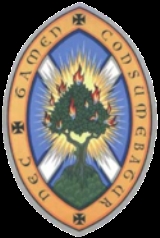
The motto of the Church of Scotland is nec tamen consumebatur (Latin) - 'Yet it was not consumed', an allusion to Exodus 3:2 and the Burning Bush
Burning bush

The Hebrew word used in the narrative, that is translated into English as bush, is seneh , which refers in particular to brambles; seneh is a biblical hapax legomenon, only appearing in two places, both of which describe the burning bush....
.

Theology and practice

The basis of faith for the Church of Scotland is the Word of God, which it views as being ‘contained in the Scriptures of the Old and New Testament’. Its principal subordinate standard is The Westminster Confession of Faith
Westminster Confession of Faith

The Westminster Confession of Faith is a Reformed confession of faith, in the Calvinist theological tradition. Although drawn up by the 1646 Westminster Assembly, largely of the Church of England, it became and remains the 'subordinate standard' of doctrine in the Church of Scotland, and has been influential within Presbyterian churches world...
 (1647), although here liberty of opinion is granted on those matters ‘which do not enter into the substance of the faith’ (Art. 2 and 5).

The Church of Scotland has no compulsory prayer book
Prayer book

A 'prayer book' is a book outlining the liturgy of religious services.In this sense, it may carry the following specific names in various religions:...
 although it does have a hymn book
Hymnbooks of the Church of Scotland

Decisions concerning the conduct of public worship in the Church of Scotland are entirely at the discretion of the ministers and elders in the Church of Scotland....
 (the 4th edition was published in 2005) and its Book of Common Order
Book of Common Order

The Book of Common Order is the name of several directories for public worship....
 contains recommendations for public worship which are usually followed fairly closely in the case of sacraments and ordinances. Preaching is the central focus of most services. Traditionally, Scots worship centred on the singing of metrical psalm
Metrical psalter

A metrical psalter is a kind of Bible translations: a paraphrase of all or part of the Book of Psalms in vernacular poetry, meant to be sung as hymns in a church ....
s and paraphrases, but for generations these have been supplemented with Christian music
Christian music

Christian music is music that has been written during the last two thousand years to express either personal or a communal belief regarding Christian life and faith....
 of all types. The typical Church of Scotland service lasts about an hour, and has been characterised jokingly as a hymn-prayer sandwich, in which everything leads up to a climax in a 15-minute sermon near the end. There is normally no sung or responsive liturgy. However, worship is the responsibility of the minister in each parish, and the style of worship can vary and be quite experimental. In recent years, a variety of modern song books have been widely used in order to appeal more to contemporary trends in music, and elements from Iona Community
Iona Community

The Iona Community, founded in 1938 by the Rev George MacLeod, is an ecumenical Christian community of men and women from different walks of life and different traditions in the Christian church that is committed to seeking new ways of living the gospel of Jesus in today's world....
 liturgies are incorporated in some congregations. Although traditionally worship is conducted by the parish minister, lay participation in services is becoming more frequent.

In common with other Protestant denominations, the Church recognises two sacraments: Baptism
Baptism

In Christianity, baptism is the ritual act, with the use of water, by which one is admitted as a full member of the Christian Church and, in the view of some, as a member of the particular Church in which the baptism is administered....
 and Holy Communion (the Lord's Supper
Eucharist

The Eucharist, also called Holy Communion or Lord's Supper and other names, is a Christianity sacrament commemorating, by consecrating bread and wine, the Last Supper, the final meal that Jesus Christ shared with his disciples before his arrest, and eventual crucifixion, when he gave them bread saying, "This is my body", and wine...
). The Church baptises both believing adults and the children of Christian families. Communion in the Church of Scotland today is open to Christians of whatever denomination, without precondition. Communion services are usually taken fairly seriously in the Church; traditionally, a congregation held only three or four per year, although practice now greatly varies between congregations. In some congregations communion is celebrated once a month.

Theologically, the Church of Scotland is Reformed (ultimately in the Calvinist tradition) and is a member of the World Alliance of Reformed Churches
World Alliance of Reformed Churches

The World Alliance of Reformed Churches is a fellowship of more than 200 churches with roots in the 16th-century Protestant Reformation, and particularly in the theology of John Calvin....
. However, its longstanding decision to respect "liberty of opinion on matters not affecting the substance of the faith", means it is relatively tolerant of a variety of theological positions, including those who would term themselves conservative and liberal in their doctrine, ethics and interpretation of Scripture. (The 19th century Scottish distinction was between 'evangelicals' and 'moderates
Moderate Party (Scotland)

Moderates, in church terms is, normally, though not exclusively, used to refer to an important party of clerics in the Church of Scotland during the 18th century....
'.) This is not quite the English concept of a ‘broad church’, but in practice it comes close to it.

The Church of Scotland is a member of ACTS (Action of Churches Together in Scotland
Action of Churches Together in Scotland

Action of Churches Together in Scotland is a national ecumenical organisation of churches in Scotland, founded in 1990. It is the successor to the former Scottish Council of Churches....
) and, through its Committee on Ecumenical Relations, works closely with other denominations in Scotland. The present inter-denominational cooperation marks a distinct change from attitudes in certain quarters of the Church in the early twentieth century and before, when opposition to Irish Roman Catholic immigration was vocal (see Catholicism in Scotland
Roman Catholicism in Scotland

Roman Catholicism in Scotland is part of the worldwide Roman Catholic Church, the Christianity Church in full communion with the Pope, currently Pope Benedict XVI....
). The Church of Scotland is a member of the World Council of Churches
World Council of Churches

The World Council of Churches is an international Christian ecumenism organization. Based in Geneva, Switzerland , it is a fellowship of about 340 churches of which 157 are members....
 and the Conference of European Churches
Conference of European Churches

The Conference of European Churches was founded in 1959 to promote reconciliation, dialogue and friendship between the churches of Europe at a time of growing Cold War political tensions and divisions....
.

Current reform

In common with many larger denominations, the Church of Scotland faces many current difficulties. Since the 1950s its membership has continued to decline, now being less than half what it was then. In 2008 the membership dropped below ½ million. The Church faces financial strains and the costly upkeep of many older ecclesiastical buildings. Recruitment of ministers was, until recently, a further concern. However, the number of candidates has increased in recent years. Today, around 1400 ministers serve about 480,000 members, and a considerably higher number of adherents.

Since the Reformation, one of the church’s tenets has been ecclesia reformata semper reformanda secundum verbum Dei – a ‘church which is reformed must always be reformed according to the Word of God’. Recently, the General Assembly produced its ‘Church without Walls’ report (2001) which embodies an ethos of change, and a focus on the grassroots life of the Church rather than its institutions.

As in most western denominations, the membership of the Church of Scotland is also aging, and it has struggled to maintain its relevance to the younger generations. The Church has made attempts to address their problems, at both a congregational and national level. The annual National Youth Assembly and the presence of youth delegates at the General Assembly have served as a visible reminder of the Church’s commitment. The Church's National Youth Assembly has grown in prominence and attendance in recent years.

Since as early as 1968, all ministries and offices in the church have been open to women and men on an equal basis. However, it was not until 2004 that a woman was chosen to be Moderator of the General Assembly. Dr Alison Elliot
Alison Elliot

Alison Elliot Order of the British Empire is the Associate Director of the Centre for Theology and Public Issues at the University of Edinburgh, Scotland....
 was also the first non-minister to be chosen since George Buchanan
George Buchanan (humanist)

George Buchanan , was a Scotland historian and Renaissance humanism scholar. He was part of the Monarchomach movement....
, four centuries before. In May 2007 the Rev Sheilagh M. Kesting
Sheilagh M. Kesting

Sheilagh Kesting is a Scotland minister and the first female minister to be elected Moderator of the General Assembly of the Church of Scotland of the Church of Scotland ....
 became the first female minister to be Moderator.

Publications

The following publications are useful sources of information about the Church of Scotland.
  • Life and Work - the monthly magazine of the Church of Scotland.
  • Church of Scotland Yearbook
    Church of Scotland Yearbook

    The Church of Scotland Yearbook is a collection of statistics published annually by the Church of Scotland.It contains contact information for every minister, as well as contact details for the church offices, clerks, and general personnel....
     (known as "the red book") - published annually with statistical data
    Statistics

    Statistics is a Mathematics pertaining to the collection, analysis, interpretation or explanation, and presentation of data. It also provides tools for prediction and forecasting based on data....
     on every parish and contact information for every minister.
  • Reports to the General Assembly (known as "the blue book") - published annually with reports on the work of the church's departments.
  • The Constitution and Laws of the Church of Scotland (known as "the green book") edited by the Very Rev Dr James L. Weatherhead, published 1997 by the Church of Scotland, ISBN 0-86153-246-5
and which has now replaced the venerable
  • Practice and Procedure in The Church of Scotland edited by the late Rev. James Taylor Cox, D.D. published by The Committee on General Administration, The Church of Scotland, 1976 (sixth edition) ISBN 0 7152 0326 6
  • Fasti Ecclesiae Scoticanae - published irregularly since 1866, contains biographies of ministers.


See also

History and concepts
  • Presbyterianism
    Presbyterianism

    Presbyterianism is a group of Christian congregations adhering to the Calvinism theological tradition within Protestantism. Presbyterian theology typically emphasizes the sovereignty of God, the authority of the Bible and the necessity of Divine grace through faith in Christ....
  • Church of Scotland Guild
    Church of Scotland Guild

    The Church of Scotland Guild or simply The Guild , is a movement within the Church of Scotland.Historically it was, and often in practice it is, an exclusively woman's movement....
  • Disruption of 1843
    Disruption of 1843

    The Disruption of 1843 was a schism within the State religion Church of Scotland, in which 450 ministers of the Church broke away, over the issue of the Church's relationship with the State, to form the Free Church of Scotland ....
  • Kirk
    Kirk

    Kirk can mean "church " in general or the Church of Scotland in particular. Many place names and personal names are also derived from it....
  • Marrow Controversy
    Marrow Controversy

    The Marrow Controversy was a Scotland ecclesiastical dispute occasioned by the republication in 1718 of The Marrow of Modern Divinity by E. F....
  • Religion in the United Kingdom
    Religion in the United Kingdom

    Religion in the United Kingdom is about the development of religion in the United Kingdom since its formation in 1707. The Treaty of Union that led to the formation of the United Kingdom ensured that there would be a protestant succession as well as a link between Separation of church and state that still remains....


Ministry and congregations
  • Gaelic-speaking congregations in the Church of Scotland
    Gaelic-speaking congregations in the Church of Scotland

    A few Church of Scotland congregations, mainly in the Western Isles, have regular Sunday services in Scottish Gaelic language. There are Gaelic-speaking congregations of other denominations too, mainly in the Western Isles....
  • List of Church of Scotland parishes
    List of Church of Scotland parishes

    The Church of Scotland, the national church of Scotland, divides the country into presbyteries, which are subdivided into parishes, each served by a parish church, usually with its own Minister of religion....
  • Presbytery of Europe
    Presbytery of Europe

    The Presbytery of Europe covers the Church of Scotland's congregations in continental Europe.As a Presbyterian church, the Church of Scotland has no bishops....
  • Scottish Churches Industrial Mission
    Scottish Churches Industrial Mission

    The Scottish Churches Industrial Mission is an ecumenical action of Scotland?s Churches engaging with working life in Scotland. It has three aims:...


Organisation
  • General Assembly of the Church of Scotland
    General Assembly of the Church of Scotland

    The General Assembly of the Church of Scotland is the Sovereignty and highest court of the Church of Scotland, and is thus the Church's governing body....
  • List of Presbyteries and (former) Synods
    List of Church of Scotland synods and presbyteries

    The Church of Scotland has a Presbyterian polity structure, which means it is organised under a hierarchy of courts. Traditionally there were four levels of courts: the Kirk Session , the Presbyterian polity#The presbytery , the Synod and the General Assembly of the Church of Scotland ....
  • Ministers and elders in the Church of Scotland
    Ministers and elders in the Church of Scotland

    A Church of Scotland congregation is led by its minister and elders. Both of these terms are also used in other Christian denominations: see Minister and Elder ....
  • Moderators and clerks in the Church of Scotland
    Moderators and clerks in the Church of Scotland

    The Church of Scotland maintains a Presbyterianism polity and is thus governed by a hierarchy of committees known as church courts . Each of these courts has a moderator and a clerk....
  • Moderator of the General Assembly
    Moderator of the General Assembly of the Church of Scotland

    The Moderator of the General Assembly of the Church of Scotland is an honorary role, held for 12 months.Meetings of the General Assembly of the Church of Scotland of the Church of Scotland, held in May each year, are chaired by the Moderator....
  • List of former Moderators
    List of Moderators of the General Assembly of the Church of Scotland

    List of Moderators of the General Assembly of the Church of Scotland is a complete list of Moderator of the General Assembly of the Church of Scotland of the Church of Scotland from the Scottish Reformation to the present day....
  • Lord High Commissioner to the General Assembly
    Lord High Commissioner to the General Assembly of the Church of Scotland

    The Lord High Commissioner to the General Assembly of the Church of Scotland is the British Sovereign personal representative to the General Assembly of the Church of Scotland of the Church of Scotland , reflecting the Church's role as the national church of Scotland, and the Sovereign's role as protector and member of that Church....


Documents and resources
  • Articles Declaratory
    Articles Declaratory of the Constitution of the Church of Scotland

    The Articles Declaratory of the Constitution of the Church of Scotland ? often known as the Declaratory Articles - were drawn up early in the 20th century to facilitate the union of the Church of Scotland and the United Free Church of Scotland....
  • Book of Common Order
    Book of Common Order

    The Book of Common Order is the name of several directories for public worship....
  • Hymnbooks of the Church of Scotland
    Hymnbooks of the Church of Scotland

    Decisions concerning the conduct of public worship in the Church of Scotland are entirely at the discretion of the ministers and elders in the Church of Scotland....
  • Life and Work
  • Westminster Confession of Faith
    Westminster Confession of Faith

    The Westminster Confession of Faith is a Reformed confession of faith, in the Calvinist theological tradition. Although drawn up by the 1646 Westminster Assembly, largely of the Church of England, it became and remains the 'subordinate standard' of doctrine in the Church of Scotland, and has been influential within Presbyterian churches world...


Issues
  • Bishops in the Church of Scotland
    Bishops in the Church of Scotland

    Like most Reformed Churches, the Church of Scotland has a Presbyterian polity which invests in a hierarchy of courts the authority which other denominations give to bishops....
  • Ordination of women in the Church of Scotland
    Ordination of women in the Church of Scotland

    The Church of Scotland was one of the first national churches to accept the Ordination of women. In Presbyterianism, ordination is understood to be an Ordinance rather than a sacrament; minister of religion and Elder are ordained; until recently deacons were "commissioned" but now they too are ordained to their office in the Church of Scotland....


Bodies to which the Church of Scotland is affiliated
  • Action of Churches Together in Scotland
    Action of Churches Together in Scotland

    Action of Churches Together in Scotland is a national ecumenical organisation of churches in Scotland, founded in 1990. It is the successor to the former Scottish Council of Churches....
  • Churches Together in Britain and Ireland
    Churches Together in Britain and Ireland

    Churches Together in Britain and Ireland is an ecumenical organisation. The members include most of the major churches in England, Scotland, Wales and Ireland....
  • Conference of European Churches
    Conference of European Churches

    The Conference of European Churches was founded in 1959 to promote reconciliation, dialogue and friendship between the churches of Europe at a time of growing Cold War political tensions and divisions....
  • Community of Protestant Churches in Europe (Leuenberg Church Fellowship)
    Community of Protestant Churches in Europe

    The Commununity of Protestant Churches in Europe is a fellowship of over 100 Protestant Churches which have signed the Leuenberg Agreement. Most are Lutheran Churches or Reformed Churches....
  • World Council of Churches
    World Council of Churches

    The World Council of Churches is an international Christian ecumenism organization. Based in Geneva, Switzerland , it is a fellowship of about 340 churches of which 157 are members....
  • World Alliance of Reformed Churches
    World Alliance of Reformed Churches

    The World Alliance of Reformed Churches is a fellowship of more than 200 churches with roots in the 16th-century Protestant Reformation, and particularly in the theology of John Calvin....


Other bodies
  • Iona Community
    Iona Community

    The Iona Community, founded in 1938 by the Rev George MacLeod, is an ecumenical Christian community of men and women from different walks of life and different traditions in the Christian church that is committed to seeking new ways of living the gospel of Jesus in today's world....
  • Scottish Churches Parliamentary Office
    Scottish Churches Parliamentary Office

    The Scottish Churches Parliamentary Office was created in 1999, at the same time as the devolved Scottish Parliament was established. The office is an ecumenical one, including all the member churches of Action of Churches Together in Scotland plus some others....
  • Society, Religion and Technology Project
    Society, Religion and Technology Project

    The Society, Religion and Technology Project - or SRT Project for short - was begun by the Church of Scotland in 1970 to address issues being raised by the impact of modern technology....


Legislation
  • Protestant Religion and Presbyterian Church Act 1707
    Protestant Religion and Presbyterian Church Act 1707

    The Protestant Religion and Presbyterian Church Act 1707 is an Act of the pre-Union Parliament of Scotland which was passed to ensure that the status of the Church of Scotland would not be affected by the Acts of Union 1707....
  • Church of Scotland Act 1921
    Church of Scotland Act 1921

    The Church of Scotland Act 1921 is an Act of Parliament of the British Parliament, passed in 1921. The purpose of the Act was to settle centuries of dispute between the British Parliament and the Church of Scotland over the Church's independence in spiritual matters....


External links

  • (accurate Census 2001 figures).