

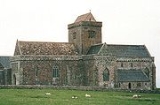
Iona

Overview
Iona is a small island in the Inner Hebrides
off the western coast of Scotland
. It was a centre of Irish monasticism
for four centuries and is today renowned for its tranquility and natural beauty. It is a popular tourist destination and a place for retreats. Its modern Gaelic name means "Iona of (Saint) Columba
" (formerly anglicised "Icolmkill").
The Hebrides
have been occupied by the speakers of several languages since the Iron Age
, and as a result many of the names of these islands have more than one possible meaning.
Inner Hebrides
The Inner Hebrides is an archipelago off the west coast of Scotland, to the south east of the Outer Hebrides. Together these two island chains form the Hebrides, which enjoy a mild oceanic climate. There are 36 inhabited islands and a further 43 uninhabited Inner Hebrides with an area greater than...
off the western coast of Scotland
Scotland
Scotland is a country that is part of the United Kingdom. Occupying the northern third of the island of Great Britain, it shares a border with England to the south and is bounded by the North Sea to the east, the Atlantic Ocean to the north and west, and the North Channel and Irish Sea to the...
. It was a centre of Irish monasticism
Hiberno-Scottish mission
The Hiberno-Scottish mission was a mission led by Irish and Scottish monks which spread Christianity and established monasteries in Great Britain and continental Europe during the Middle Ages...
for four centuries and is today renowned for its tranquility and natural beauty. It is a popular tourist destination and a place for retreats. Its modern Gaelic name means "Iona of (Saint) Columba
Columba
Saint Columba —also known as Colum Cille , Colm Cille , Calum Cille and Kolban or Kolbjørn —was a Gaelic Irish missionary monk who propagated Christianity among the Picts during the Early Medieval Period...
" (formerly anglicised "Icolmkill").
The Hebrides
Hebrides
The Hebrides comprise a widespread and diverse archipelago off the west coast of Scotland. There are two main groups: the Inner and Outer Hebrides. These islands have a long history of occupation dating back to the Mesolithic and the culture of the residents has been affected by the successive...
have been occupied by the speakers of several languages since the Iron Age
Iron Age
The Iron Age is the archaeological period generally occurring after the Bronze Age, marked by the prevalent use of iron. The early period of the age is characterized by the widespread use of iron or steel. The adoption of such material coincided with other changes in society, including differing...
, and as a result many of the names of these islands have more than one possible meaning.
Unanswered Questions
