

Confession

Encyclopedia
This article is for the religious practice of confessing one's sins.
 Confession is the acknowledgment of sin (or one's sinfulness) or wrongs. It is a religious practice in a number of faith traditions.
is the method of the Church by which individual men and women may confess sins committed after baptism and have them absolved
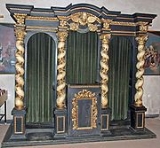
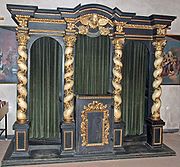
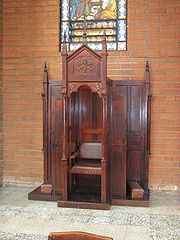
by a priest. Although it is not mandatory, the Catholic rite is traditionally conducted within a confessional
box or booth. This sacrament is known by many names, including penance, reconciliation and confession (Catechism of the Catholic Church
, Sections 1423-1442). While official Church publications always refer to the sacrament as "Penance", "Reconciliation" or "Penance and Reconciliation", many laypeople continue to use the term "Confession" in reference to the Sacrament.
For the Catholic Church, the intent of this sacrament is to provide healing for the soul as well as to regain the grace of God, lost by sin. It is the only ordinary way to receive the forgiveness of God for serious (mortal) sins. Catholics priests have been given the authority by Jesus
to exercise the forgiveness of sins here on earth and it is in Jesus' Holy Name by which the person confessing is forgiven. In theological terms, the priest acts in persona Christi
and receives from the Church the power of jurisdiction over the penitent.
Recently, several electronic applications have been introduced that can aid a penitent in making a good confession, similar to printed works known as "examinations of conscience
". Such electronic aids, according to Vatican statements, cannot replace confession direct to a priest, as only a priest can confer sacramental absolution. As of February 2011, one widely publicized example was an "app" for the iPhone
called "Confession: A Roman Catholic App
".
The Council of Trent
(Session Fourteen, Chapter I) quoted John
20:22-23 as the primary Scriptural proof for the doctrine concerning this sacrament, but Catholics also consider Matthew
9:2-8, 1 Corinthians
11:27, and to be among the Scriptural bases for the sacrament.
The Catholic Church teaches that sacramental confession requires three "acts" on the part of the penitent : contrition (sorrow of the soul for the sins committed), disclosure of the sins (the 'confession'), and satisfaction (the 'penance', i.e. doing something to make amends for the sins). The basic form of confession has not changed for centuries, although at one time confessions were made publicly.
Typically, the penitent begins sacramental confession by saying, "Bless me Father, for I have sinned. It has been [time period] since my last confession." The penitent must then confess what he/she believes to be grave and mortal sin
s, in both kind and number, in order to be reconciled with God and the Church. The sinner may also confess venial sin
s; this is especially recommended if the penitent has no mortal sins to confess. "Without being strictly necessary, confession of everyday faults (venial sins) is nevertheless strongly recommended by the Church. Indeed the regular confession of our venial sins helps us form our conscience, fight against evil tendencies, let ourselves be healed by Christ and progress in the life of the Spirit. By receiving more frequently through this sacrament the gift of the Father's Mercy, we are spurred to be merciful as He is merciful".
In general, the Orthodox Christian chooses an individual to trust as his or her spiritual guide. In most cases this is the parish priest, but may be a starets
(Elder
, a monastic who is well known for his or her advancement in the spiritual life) or any individual, male or female, who has received permission from a bishop to hear confession. This person is often referred to as one's "spiritual father" or "spiritual mother". Once chosen, the individual turns to his spiritual guide for advice on his or her spiritual development, confessing sins, and asking advice. Orthodox Christians tend to confess only to this individual and the closeness created by this bond makes the spiritual guide the most qualified in dealing with the person, so much so that no one can override what a spiritual guide tells his or her charges. What is confessed to one's spiritual guide is protected by the same seal
as would be any priest hearing a confession. While one does not have to be a priest to hear confession, only an ordained priest may pronounce the absolution
.
Confession does not take place in a confessional
, but normally in the main part of the church itself, usually before an analogion
(lectern
) set up near the iconostasion. On the analogion is placed a Gospel Book
and a blessing cross. The confession often takes place before an icon
of Jesus Christ. Orthodox understand that the confession is not made to the priest, but to Christ, and the priest stands only as witness and guide. Before confessing, the penitent venerates the Gospel Book and cross, and places the thumb and first two fingers of his right hand on the feet of Christ as he is depicted on the cross. The confessor will often read an admonition warning the penitent to make a full confession, holding nothing back.
In cases of emergency, of course, confession may be heard anywhere. For this reason, especially in the Russian Orthodox Church
, the pectoral cross
that the priest wears at all times will often have the Icon of Christ "Not Made by Hands" inscribed on it.
In general practice, after one confesses to one's spiritual guide, the parish priest (who may or may not have heard the confession) covers the head of the person with his Epitrachelion
(Stole) and reads the Prayer of Absolution, asking God to forgive the transgression of the individual (the specific prayer differs between Greek and Slavic use). It is not uncommon for a person to confesses his sins to his spiritual guide on a regular basis but only seek out the priest to read the prayer before receiving Holy Communion.
In the Eastern Churches, clergy often make their confession in the sanctuary
. A bishop, priest, or deacon will confess at the Holy Table
(Altar) where the Gospel Book and blessing cross are normally kept. He confesses in the same manner as a layman, except that when a priest hears a bishop's confession, the priest kneels.
Orthodox Christians should go to confession at least four times a year; often during one of the four fasting periods (Great Lent
, Nativity Fast
, Apostles' Fast
and Dormition Fast). Many pastors encourage frequent confession and communion. In some of the monasteries
on Mount Athos
, the monks will confess their sins daily.
Orthodox Christians will also practice a form of general confession
, referred to as the rite of "Mutual Forgiveness". The rite involves an exchange between the priest and the congregation (or, in monasteries, between the superior
and the brotherhood). The priest will make a prostration before all and ask their forgiveness for sins committed in act, word, deed, and thought. Those present ask that God may forgive him, and then they in turn all prostrate themselves and ask the priest's forgiveness. The priest then pronounces a blessing. The rite of Mutual Forgiveness does not replace the Mystery of Confession and Absolution, but is for the purpose of maintaining Christian charity and a humble and contrite spirit. This general confession is practiced in monasteries at the first service on arising (the Midnight Office
) and the last service before retiring to sleep (Compline
). Old Believers
will perform the rite regularly before the beginning of the Divine Liturgy
. The best-known asking of mutual forgiveness occurs at Vespers
on the Sunday of Forgiveness, and it is with this act that Great Lent begins
.
tradition, confession and absolution is usually a component part of corporate worship, particularly at services of the Holy Eucharist
. The form involves an exhortation to repentance by the priest, a period of silent prayer during which believers may inwardly confess their sins, a form of general confession said together by all present and the pronouncement of general absolution by the priest, often accompanied by the sign of the cross.
Private or auricular confession is also practiced by Anglicans and is especially common among Anglo-Catholics. The venue for confessions is either in the traditional confessional
, which is the common practice among Anglo-Catholics, or in a private meeting with the priest. Often a priest will sit in the sanctuary, just inside the communion rail, facing toward the altar and away from the penitent. Other times he will use a portable screen to divide himself and the penitent. Following the confession of sins and the assignment of penance, the priest makes the pronouncement of absolution. The seal of the confessional
, as with Roman Catholicism, is absolute and any confessor who divulges information revealed in confession is subject to deposition and removal from office.
Historically, the practice of auricular confession was originally a highly controversial one within Anglicanism. When priests began to hear confessions, they responded to criticisms by pointing to the fact that such is explicitly sanctioned in The Order for the Visitation of the Sick in the Book of Common Prayer
, which contains the following direction:
Private confession is also envisaged by the canon law
of the Church of England
, which contains the following, intended to safeguard the Seal of the Confessional:
There is no requirement for private confession, but a common understanding that it may be desirable depending on individual circumstances. An Anglican aphorism regarding the practice is "All may; none must; some should".
Some Protestants confess their sins in private prayer before God, believing this suffices to gain God's pardon. However confession to another is often encouraged and in some sects or denominations required when a wrong has been done to a person as well as to God. Confession is then made to the person wronged and also to God, and is part of the reconciliation process. In cases where sin has resulted in the exclusion of a person from church membership due to unrepentance, public confession is often a pre-requisite to readmission. The sinner confesses to the church his or her repentance and is received back into fellowship. In both cases there is a required manner to the confessions: for sins between God and Man and for sins between Man and Man.
s differ from other Protestants as they practice "confession and absolution" (in two forms). They, like Roman Catholics and many Anglicans, see and as biblical evidence for confession. The first form of confession and absolution is done at the Divine Service with the assembled congregation (similar to the Anglican tradition). Here, the entire congregation pauses for a moment of silent confession, recites the confiteor
, and receives God's forgiveness through the pastor as he says the following (or similar): "Upon this your confession and in the stead and by the command of my Lord Jesus Christ, I forgive you all your sins in the name of the Father and of the Son and of the Holy Spirit."
The second form of confession and absolution is known as "Holy Absolution", which is done privately to the pastor (commonly only upon request). Here the person confessing (known as the "penitent") confesses individual their sins and makes an act of contrition as the pastor, acting in persona Christi
, announces this following formula of absolution (or similar): "In the stead and by the command of my Lord Jesus Christ I forgive you all your sins in the name of the Father and of the Son and of the Holy Spirit." In the Lutheran Church, the pastor is bound by the Seal of the Confessional
(similar to the Roman Catholic tradition). Luther's Small Catechism
says "the pastor is pledged not to tell anyone else of sins to him in private confession, for those sins have been removed.
In the nineteenth and twentieth centuries, the second form of confession and absolution fell into disuse; at the present time, it is, for example, expected before partaking of the Eucharist
for the first
time.
, but does not have the authority to forgive sin. However, the confession must be held in strict confidence unless the sinner grants permission to disclose it to the disciplinary council.
, confessing one's faults to a superior is an important part of Buddhist practice. In the various sutras, followers of the Buddha confessed their wrongdoing to the Buddha. Other sections of the earliest Buddhist writings (i.e., the Vinaya
) required that monks confess their individual sins before their bi-weekly convening for the recitation of the Patimokkha
.
, confession, or declaration to be more precise, of faith is one of the five pillars of Islam
(see Shahadah) and is recited a minimum of nine times daily as part of each unit (raka'ah
) of the five daily prayers (see salat
): a minimum of seventeen raka'at are performed daily, with the shahadah recited after every two.
The act of seeking forgiveness for sins from God is called Istighfar
. As in Judaism, confession of sins is made directly to God and not through man (except in asking for forgiveness of the victim of the sin). It is taught sins are to be kept to oneself to seek individual forgiveness from God.Allah Almighty forgive those who seek his forgiveness and commit to themselves not to do the sin again. Though some sins in which some other person is involved are not forgiven unless that person forgives you so we should ask them to forgive us as well so God forgive us.
, confession is an important part of attaining forgiveness for both sins against God and another man. Confessions to God are done communally in the plural. Jews confess that "We have sinned." In matters involving offenses against a fellow man, private confession to the victim is a requirement to obtaining forgiveness from the victim, which is generally a requirement to obtaining forgiveness from God. If the victim refuses to forgive, the offender confesses publicly, before larger and larger audience. Confession (viduy) is also performed on one's deathbed, if at all possible.
Catholicism
In Catholic teaching, the Sacrament of PenanceSacrament of Penance (Catholic Church)
In the teachings of the Roman Catholic Church, the Sacrament of Penance and Reconciliation is the method by which individual men and women may be freed from sins committed after receiving the sacrament of Baptism...
is the method of the Church by which individual men and women may confess sins committed after baptism and have them absolved
Absolution
Absolution is a traditional theological term for the forgiveness experienced in the Sacrament of Reconciliation. This concept is found in the Roman Catholic Church, as well as the Eastern Orthodox churches, the Anglican churches, and most Lutheran churches....
by a priest. Although it is not mandatory, the Catholic rite is traditionally conducted within a confessional
Confessional
A confessional is a small, enclosed booth used for the Sacrament of Penance, often called confession, or Reconciliation. It is the usual venue for the sacrament in the Roman Catholic Church, but similar structures are also used in Anglican churches of an Anglo-Catholic orientation, and also in the...
box or booth. This sacrament is known by many names, including penance, reconciliation and confession (Catechism of the Catholic Church
Catechism of the Catholic Church
The Catechism of the Catholic Church is the official text of the teachings of the Catholic Church. A provisional, "reference text" was issued by Pope John Paul II on October 11, 1992 — "the thirtieth anniversary of the opening of the Second Vatican Ecumenical Council" — with his apostolic...
, Sections 1423-1442). While official Church publications always refer to the sacrament as "Penance", "Reconciliation" or "Penance and Reconciliation", many laypeople continue to use the term "Confession" in reference to the Sacrament.
For the Catholic Church, the intent of this sacrament is to provide healing for the soul as well as to regain the grace of God, lost by sin. It is the only ordinary way to receive the forgiveness of God for serious (mortal) sins. Catholics priests have been given the authority by Jesus
Jesus
Jesus of Nazareth , commonly referred to as Jesus Christ or simply as Jesus or Christ, is the central figure of Christianity...
to exercise the forgiveness of sins here on earth and it is in Jesus' Holy Name by which the person confessing is forgiven. In theological terms, the priest acts in persona Christi
In persona Christi
In persona Christi is a Latin phrase meaning “in the person of Christ,” an important concept in Roman Catholicism and, in varying degrees, to other Christian traditions...
and receives from the Church the power of jurisdiction over the penitent.
Recently, several electronic applications have been introduced that can aid a penitent in making a good confession, similar to printed works known as "examinations of conscience
Examination of conscience
Examination of conscience is a review of one's past thoughts, words, actions, and omissions for the purpose of ascertaining their conformity with, or deviation from, the moral law. Among Christians, this is generally a private review; secular intellectuals have, on occasion, published autocritiques...
". Such electronic aids, according to Vatican statements, cannot replace confession direct to a priest, as only a priest can confer sacramental absolution. As of February 2011, one widely publicized example was an "app" for the iPhone
IPhone
The iPhone is a line of Internet and multimedia-enabled smartphones marketed by Apple Inc. The first iPhone was unveiled by Steve Jobs, then CEO of Apple, on January 9, 2007, and released on June 29, 2007...
called "Confession: A Roman Catholic App
Confession: A Roman Catholic App
Confession: A Roman Catholic App is an application for the iPhone that is intended to guide members of the Catholic Church through the Sacrament of Penance, also known as confession or reconciliation...
".
The Council of Trent
Council of Trent
The Council of Trent was the 16th-century Ecumenical Council of the Roman Catholic Church. It is considered to be one of the Church's most important councils. It convened in Trent between December 13, 1545, and December 4, 1563 in twenty-five sessions for three periods...
(Session Fourteen, Chapter I) quoted John
Gospel of John
The Gospel According to John , commonly referred to as the Gospel of John or simply John, and often referred to in New Testament scholarship as the Fourth Gospel, is an account of the public ministry of Jesus...
20:22-23 as the primary Scriptural proof for the doctrine concerning this sacrament, but Catholics also consider Matthew
Gospel of Matthew
The Gospel According to Matthew is one of the four canonical gospels, one of the three synoptic gospels, and the first book of the New Testament. It tells of the life, ministry, death, and resurrection of Jesus of Nazareth...
9:2-8, 1 Corinthians
First Epistle to the Corinthians
The first epistle of Paul the apostle to the Corinthians, often referred to as First Corinthians , is the seventh book of the New Testament of the Bible...
11:27, and to be among the Scriptural bases for the sacrament.
The Catholic Church teaches that sacramental confession requires three "acts" on the part of the penitent : contrition (sorrow of the soul for the sins committed), disclosure of the sins (the 'confession'), and satisfaction (the 'penance', i.e. doing something to make amends for the sins). The basic form of confession has not changed for centuries, although at one time confessions were made publicly.
Typically, the penitent begins sacramental confession by saying, "Bless me Father, for I have sinned. It has been [time period] since my last confession." The penitent must then confess what he/she believes to be grave and mortal sin
Mortal sin
Mortal sins are in the theology of some, but not all Christian denominations wrongful acts that condemn a person to Hell after death. These sins are considered "mortal" because they constitute a rupture in a person's link to God's saving grace: the person's soul becomes "dead", not merely weakened...
s, in both kind and number, in order to be reconciled with God and the Church. The sinner may also confess venial sin
Venial sin
According to Roman Catholicism, a venial sin is a lesser sin that does not result in a complete separation from God and eternal damnation in Hell...
s; this is especially recommended if the penitent has no mortal sins to confess. "Without being strictly necessary, confession of everyday faults (venial sins) is nevertheless strongly recommended by the Church. Indeed the regular confession of our venial sins helps us form our conscience, fight against evil tendencies, let ourselves be healed by Christ and progress in the life of the Spirit. By receiving more frequently through this sacrament the gift of the Father's Mercy, we are spurred to be merciful as He is merciful".
Eastern Orthodoxy and Eastern Catholicism
Within the Eastern Orthodox and Eastern Catholic churches, it is understood that the Mystery of confession and repentance has more to do with the spiritual development of the individual and much less to do with purification. Sin is not seen as a stain on the soul, but rather a mistake that needs correction.In general, the Orthodox Christian chooses an individual to trust as his or her spiritual guide. In most cases this is the parish priest, but may be a starets
Starets
A starets is an elder of a Russian Orthodox monastery who functions as venerated adviser and teacher. Elders or spiritual fathers are charismatic spiritual leaders whose wisdom stems from God as obtained from ascetic experience...
(Elder
Elder (Christianity)
An elder in Christianity is a person valued for his wisdom who accordingly holds a particular position of responsibility in a Christian group. In some Christian traditions an elder is a clergy person who usually serves a local church or churches and who has been ordained to a ministry of Word,...
, a monastic who is well known for his or her advancement in the spiritual life) or any individual, male or female, who has received permission from a bishop to hear confession. This person is often referred to as one's "spiritual father" or "spiritual mother". Once chosen, the individual turns to his spiritual guide for advice on his or her spiritual development, confessing sins, and asking advice. Orthodox Christians tend to confess only to this individual and the closeness created by this bond makes the spiritual guide the most qualified in dealing with the person, so much so that no one can override what a spiritual guide tells his or her charges. What is confessed to one's spiritual guide is protected by the same seal
Seal of the Confessional
In the Roman Catholic Church, the Seal of Confession is the absolute duty of priests not to disclose anything that they learn from penitents during the course of the Sacrament of Penance.-History:...
as would be any priest hearing a confession. While one does not have to be a priest to hear confession, only an ordained priest may pronounce the absolution
Absolution
Absolution is a traditional theological term for the forgiveness experienced in the Sacrament of Reconciliation. This concept is found in the Roman Catholic Church, as well as the Eastern Orthodox churches, the Anglican churches, and most Lutheran churches....
.
Confession does not take place in a confessional
Confessional
A confessional is a small, enclosed booth used for the Sacrament of Penance, often called confession, or Reconciliation. It is the usual venue for the sacrament in the Roman Catholic Church, but similar structures are also used in Anglican churches of an Anglo-Catholic orientation, and also in the...
, but normally in the main part of the church itself, usually before an analogion
Analogion
An Analogion is a lectern or slanted stand on which icons or the Gospel Book are placed for veneration by the faithful in the Eastern Orthodox Church and Eastern Catholic Churches...
(lectern
Lectern
A lectern is a reading desk with a slanted top, usually placed on a stand or affixed to some other form of support, on which documents or books are placed as support for reading aloud, as in a scripture reading, lecture, or sermon...
) set up near the iconostasion. On the analogion is placed a Gospel Book
Gospel Book
The Gospel Book, Evangelion, or Book of the Gospels is a codex or bound volume containing one or more of the four Gospels of the Christian New Testament...
and a blessing cross. The confession often takes place before an icon
Icon
An icon is a religious work of art, most commonly a painting, from Eastern Christianity and in certain Eastern Catholic churches...
of Jesus Christ. Orthodox understand that the confession is not made to the priest, but to Christ, and the priest stands only as witness and guide. Before confessing, the penitent venerates the Gospel Book and cross, and places the thumb and first two fingers of his right hand on the feet of Christ as he is depicted on the cross. The confessor will often read an admonition warning the penitent to make a full confession, holding nothing back.
In cases of emergency, of course, confession may be heard anywhere. For this reason, especially in the Russian Orthodox Church
Russian Orthodox Church
The Russian Orthodox Church or, alternatively, the Moscow Patriarchate The ROC is often said to be the largest of the Eastern Orthodox churches in the world; including all the autocephalous churches under its umbrella, its adherents number over 150 million worldwide—about half of the 300 million...
, the pectoral cross
Pectoral cross
A pectoral cross or pectorale is a cross, usually relatively large, suspended from the neck by a cord or chain that reaches well down the chest. It is worn by the clergy as an indication of their position, and is different from the small crosses worn on necklaces by many Christians, which have no...
that the priest wears at all times will often have the Icon of Christ "Not Made by Hands" inscribed on it.
In general practice, after one confesses to one's spiritual guide, the parish priest (who may or may not have heard the confession) covers the head of the person with his Epitrachelion
Epitrachelion
The Epitrachil is the liturgical vestment worn by priests and bishops of the Orthodox Church and Eastern Catholic Churches as the symbol of their priesthood, corresponding to the Western stole...
(Stole) and reads the Prayer of Absolution, asking God to forgive the transgression of the individual (the specific prayer differs between Greek and Slavic use). It is not uncommon for a person to confesses his sins to his spiritual guide on a regular basis but only seek out the priest to read the prayer before receiving Holy Communion.
In the Eastern Churches, clergy often make their confession in the sanctuary
Sanctuary
A sanctuary is any place of safety. They may be categorized into human and non-human .- Religious sanctuary :A religious sanctuary can be a sacred place , or a consecrated area of a church or temple around its tabernacle or altar.- Sanctuary as a sacred place :#Sanctuary as a sacred place:#:In...
. A bishop, priest, or deacon will confess at the Holy Table
Altar
An altar is any structure upon which offerings such as sacrifices are made for religious purposes. Altars are usually found at shrines, and they can be located in temples, churches and other places of worship...
(Altar) where the Gospel Book and blessing cross are normally kept. He confesses in the same manner as a layman, except that when a priest hears a bishop's confession, the priest kneels.
Orthodox Christians should go to confession at least four times a year; often during one of the four fasting periods (Great Lent
Great Lent
Great Lent, or the Great Fast, is the most important fasting season in the church year in Eastern Christianity, which prepares Christians for the greatest feast of the church year, Pascha . In many ways Great Lent is similar to Lent in Western Christianity...
, Nativity Fast
Nativity Fast
The Nativity Fast is a period of abstinence and penance practiced by the Eastern Orthodox, Oriental Orthodox, and Eastern Catholic Churches, in preparation for the Nativity of Christ, . The fast is similar to the Western Advent, except that it runs for 40 days instead of four weeks. The fast is...
, Apostles' Fast
Apostles' Fast
The Apostles' Fast, also called the Fast of the Holy Apostles, the Fast of Peter and Paul, or sometimes St. Peter's Fast, is a fast observed by Eastern Orthodox, Oriental Orthodox and Eastern Catholic Christians...
and Dormition Fast). Many pastors encourage frequent confession and communion. In some of the monasteries
Monastery
Monastery denotes the building, or complex of buildings, that houses a room reserved for prayer as well as the domestic quarters and workplace of monastics, whether monks or nuns, and whether living in community or alone .Monasteries may vary greatly in size – a small dwelling accommodating only...
on Mount Athos
Mount Athos
Mount Athos is a mountain and peninsula in Macedonia, Greece. A World Heritage Site, it is home to 20 Eastern Orthodox monasteries and forms a self-governed monastic state within the sovereignty of the Hellenic Republic. Spiritually, Mount Athos comes under the direct jurisdiction of the...
, the monks will confess their sins daily.
Orthodox Christians will also practice a form of general confession
General Confession
A General Confession, as understood by St. Ignatius of Loyola is a form of Confession whereby one spends 3 to 10 days preparing for a confession of all one's 'sins up to that time.' The main goal of the "general confession" is to turn one's life from one of sin to a more devout one. The Spiritual...
, referred to as the rite of "Mutual Forgiveness". The rite involves an exchange between the priest and the congregation (or, in monasteries, between the superior
Abbot
The word abbot, meaning father, is a title given to the head of a monastery in various traditions, including Christianity. The office may also be given as an honorary title to a clergyman who is not actually the head of a monastery...
and the brotherhood). The priest will make a prostration before all and ask their forgiveness for sins committed in act, word, deed, and thought. Those present ask that God may forgive him, and then they in turn all prostrate themselves and ask the priest's forgiveness. The priest then pronounces a blessing. The rite of Mutual Forgiveness does not replace the Mystery of Confession and Absolution, but is for the purpose of maintaining Christian charity and a humble and contrite spirit. This general confession is practiced in monasteries at the first service on arising (the Midnight Office
Midnight Office
The Midnight Office is one of the Canonical Hours that compose the cycle of daily worship in the Eastern Orthodox Church. The office originated as a purely monastic devotion inspired by Psalm 118:62, At midnight I arose to give thanks unto Thee for the judgments of Thy righteousness , and also by...
) and the last service before retiring to sleep (Compline
Compline
Compline is the final church service of the day in the Christian tradition of canonical hours. The English word Compline is derived from the Latin completorium, as Compline is the completion of the working day. The word was first used in this sense about the beginning of the 6th century by St...
). Old Believers
Old Believers
In the context of Russian Orthodox church history, the Old Believers separated after 1666 from the official Russian Orthodox Church as a protest against church reforms introduced by Patriarch Nikon between 1652–66...
will perform the rite regularly before the beginning of the Divine Liturgy
Divine Liturgy
Divine Liturgy is the common term for the Eucharistic service of the Byzantine tradition of Christian liturgy. As such, it is used in the Eastern Orthodox and Eastern Catholic Churches. Armenian Christians, both of the Armenian Apostolic Church and of the Armenian Catholic Church, use the same term...
. The best-known asking of mutual forgiveness occurs at Vespers
Vespers
Vespers is the evening prayer service in the Western Catholic, Eastern Catholic, and Eastern Orthodox, Anglican, and Lutheran liturgies of the canonical hours...
on the Sunday of Forgiveness, and it is with this act that Great Lent begins
Clean Monday
Clean Monday , also known as Pure Monday, Ash Monday, Monday of Lent or Green Monday, is the first day of the Eastern Orthodox Christian and Eastern Catholic Great Lent...
.
Anglicanism
In the AnglicanAnglicanism
Anglicanism is a tradition within Christianity comprising churches with historical connections to the Church of England or similar beliefs, worship and church structures. The word Anglican originates in ecclesia anglicana, a medieval Latin phrase dating to at least 1246 that means the English...
tradition, confession and absolution is usually a component part of corporate worship, particularly at services of the Holy Eucharist
Eucharist
The Eucharist , also called Holy Communion, the Sacrament of the Altar, the Blessed Sacrament, the Lord's Supper, and other names, is a Christian sacrament or ordinance...
. The form involves an exhortation to repentance by the priest, a period of silent prayer during which believers may inwardly confess their sins, a form of general confession said together by all present and the pronouncement of general absolution by the priest, often accompanied by the sign of the cross.
Private or auricular confession is also practiced by Anglicans and is especially common among Anglo-Catholics. The venue for confessions is either in the traditional confessional
Confessional
A confessional is a small, enclosed booth used for the Sacrament of Penance, often called confession, or Reconciliation. It is the usual venue for the sacrament in the Roman Catholic Church, but similar structures are also used in Anglican churches of an Anglo-Catholic orientation, and also in the...
, which is the common practice among Anglo-Catholics, or in a private meeting with the priest. Often a priest will sit in the sanctuary, just inside the communion rail, facing toward the altar and away from the penitent. Other times he will use a portable screen to divide himself and the penitent. Following the confession of sins and the assignment of penance, the priest makes the pronouncement of absolution. The seal of the confessional
Seal of the Confessional and the Anglican Church
The Seal of the Confessional is a principle of the Anglican Church that protects the words spoken during confession. Confession has certain censures on disclosure as there is an understanding among the clergy that there is an inviolable confidence between the individual priest and the penitent...
, as with Roman Catholicism, is absolute and any confessor who divulges information revealed in confession is subject to deposition and removal from office.
Historically, the practice of auricular confession was originally a highly controversial one within Anglicanism. When priests began to hear confessions, they responded to criticisms by pointing to the fact that such is explicitly sanctioned in The Order for the Visitation of the Sick in the Book of Common Prayer
Book of Common Prayer
The Book of Common Prayer is the short title of a number of related prayer books used in the Anglican Communion, as well as by the Continuing Anglican, "Anglican realignment" and other Anglican churches. The original book, published in 1549 , in the reign of Edward VI, was a product of the English...
, which contains the following direction:
Auricular confession within mainstream Anglicanism became accepted in the second half of the 20th century; the 1979 Book of Common Prayer for the Episcopal Church in the USA provides two forms for it in the section "The Reconciliation of a Penitent."
Here shall the sick person be moved to make a special Confession of his sins, if he feel his conscience troubled with any weighty matter. After which Confession, the Priest shall absolve him (if he humbly and heartily desire it).
Private confession is also envisaged by the canon law
Canon law
Canon law is the body of laws & regulations made or adopted by ecclesiastical authority, for the government of the Christian organization and its members. It is the internal ecclesiastical law governing the Catholic Church , the Eastern and Oriental Orthodox churches, and the Anglican Communion of...
of the Church of England
Church of England
The Church of England is the officially established Christian church in England and the Mother Church of the worldwide Anglican Communion. The church considers itself within the tradition of Western Christianity and dates its formal establishment principally to the mission to England by St...
, which contains the following, intended to safeguard the Seal of the Confessional:
if any man confess his secret and hidden sins to the minister, for the unburdening of his conscience, and to receive spiritual consolation and ease of mind from him; we...do straitly charge and admonish him, that he does not at any time reveal and make known to any person whatsoever any crime or offence so committed to his trust and secrecy
There is no requirement for private confession, but a common understanding that it may be desirable depending on individual circumstances. An Anglican aphorism regarding the practice is "All may; none must; some should".
Protestantism
Most Protestant churches believe that no intermediary except Christ is necessary between the Christian and God in order to be absolved from sins. Many mainline Protestant Churches include corporate confession in regular worship. For instance the Presbyterian Church USA's Directory of Worship, in directing the components or worship, states, "A prayer of confession of the reality of sin in personal and common life follows. In a declaration of pardon, the gospel is proclaimed and forgiveness is declared in the name of Jesus Christ. God’s redemption and God’s claim upon human life are remembered."Some Protestants confess their sins in private prayer before God, believing this suffices to gain God's pardon. However confession to another is often encouraged and in some sects or denominations required when a wrong has been done to a person as well as to God. Confession is then made to the person wronged and also to God, and is part of the reconciliation process. In cases where sin has resulted in the exclusion of a person from church membership due to unrepentance, public confession is often a pre-requisite to readmission. The sinner confesses to the church his or her repentance and is received back into fellowship. In both cases there is a required manner to the confessions: for sins between God and Man and for sins between Man and Man.
Lutheranism
LutheranLutheranism
Lutheranism is a major branch of Western Christianity that identifies with the theology of Martin Luther, a German reformer. Luther's efforts to reform the theology and practice of the church launched the Protestant Reformation...
s differ from other Protestants as they practice "confession and absolution" (in two forms). They, like Roman Catholics and many Anglicans, see and as biblical evidence for confession. The first form of confession and absolution is done at the Divine Service with the assembled congregation (similar to the Anglican tradition). Here, the entire congregation pauses for a moment of silent confession, recites the confiteor
Confiteor
The Confiteor is one of the prayers that can be said during the Penitential Rite at the beginning of Mass of the Roman Rite in the Catholic Church. It is also said in the Lutheran Church at the beginning of their Divine Service...
, and receives God's forgiveness through the pastor as he says the following (or similar): "Upon this your confession and in the stead and by the command of my Lord Jesus Christ, I forgive you all your sins in the name of the Father and of the Son and of the Holy Spirit."
The second form of confession and absolution is known as "Holy Absolution", which is done privately to the pastor (commonly only upon request). Here the person confessing (known as the "penitent") confesses individual their sins and makes an act of contrition as the pastor, acting in persona Christi
In persona Christi
In persona Christi is a Latin phrase meaning “in the person of Christ,” an important concept in Roman Catholicism and, in varying degrees, to other Christian traditions...
, announces this following formula of absolution (or similar): "In the stead and by the command of my Lord Jesus Christ I forgive you all your sins in the name of the Father and of the Son and of the Holy Spirit." In the Lutheran Church, the pastor is bound by the Seal of the Confessional
Seal of the Confessional and the Lutheran Church
The Seal of the Confessional is a doctrine of the Catholic Church that protects the words spoken during confession. A form of this principle survives in many modern Lutheran churches....
(similar to the Roman Catholic tradition). Luther's Small Catechism
Luther's Small Catechism
Luther's Small Catechism was written by Martin Luther and published in 1529 for the training of children. Luther's Small Catechism reviews The Ten Commandments, The Apostles' Creed, The Lord's Prayer, The Sacrament of Holy Baptism, The Office of the Keys & Confession, and The Sacrament of the...
says "the pastor is pledged not to tell anyone else of sins to him in private confession, for those sins have been removed.
In the nineteenth and twentieth centuries, the second form of confession and absolution fell into disuse; at the present time, it is, for example, expected before partaking of the Eucharist
Eucharist
The Eucharist , also called Holy Communion, the Sacrament of the Altar, the Blessed Sacrament, the Lord's Supper, and other names, is a Christian sacrament or ordinance...
for the first
First Communion
The First Communion, or First Holy Communion, is a Catholic Church ceremony. It is the colloquial name for a person's first reception of the Sacrament of the Holy Eucharist. Catholics believe this event to be very important, as the Eucharist is one of the central focuses of the Catholic Church...
time.
Mormonism
The Church of Jesus Christ of Latter-day Saints teaches that "Confession is a necessary requirement for complete forgiveness." The sinner must confess both to those persons wronged by his sin and to God. Confession may also be required to an authorized Priesthood leader: "Those transgressions requiring confession to a bishop are adultery, fornication, other sexual transgressions and deviancies, and sins of a comparable seriousness." The priesthood leader may counsel the sinner to submit to the authority of a disciplinary councilDisciplinary council
In The Church of Jesus Christ of Latter-day Saints , a disciplinary council is an ecclesiastical trial during which a member of the church is tried for alleged violations of church standards. If a member of the LDS Church is found guilty of an offence by a disciplinary council, he or she may be...
, but does not have the authority to forgive sin. However, the confession must be held in strict confidence unless the sinner grants permission to disclose it to the disciplinary council.
Buddhism
In BuddhismBuddhism
Buddhism is a religion and philosophy encompassing a variety of traditions, beliefs and practices, largely based on teachings attributed to Siddhartha Gautama, commonly known as the Buddha . The Buddha lived and taught in the northeastern Indian subcontinent some time between the 6th and 4th...
, confessing one's faults to a superior is an important part of Buddhist practice. In the various sutras, followers of the Buddha confessed their wrongdoing to the Buddha. Other sections of the earliest Buddhist writings (i.e., the Vinaya
Vinaya
The Vinaya is the regulatory framework for the Buddhist monastic community, or sangha, based in the canonical texts called Vinaya Pitaka. The teachings of the Buddha, or Buddhadharma can be divided into two broad categories: 'Dharma' or doctrine, and 'Vinaya', or discipline...
) required that monks confess their individual sins before their bi-weekly convening for the recitation of the Patimokkha
Patimokkha
In Buddhism, the Patimokkha is the basic Theravada code of monastic discipline, consisting of 227 rules for fully ordained monks and 311 for nuns . It is contained in the Suttavibhanga, a division of the Vinaya Pitaka.- Parajika :...
.
Islam
In IslamIslam
Islam . The most common are and . : Arabic pronunciation varies regionally. The first vowel ranges from ~~. The second vowel ranges from ~~~...
, confession, or declaration to be more precise, of faith is one of the five pillars of Islam
Five Pillars of Islam
The Pillars of Islam are basic concepts and duties for accepting the religion for the Muslims.The Shi'i and Sunni both agree on the essential details for the performance of these acts, but the Shi'a do not refer to them by the same name .-Pillars of Shia:According to Shia Islam, the...
(see Shahadah) and is recited a minimum of nine times daily as part of each unit (raka'ah
Raka'ah
Rakaʿah are the prescribed movements and words followed by Muslims during salah .After turning to God in mind and ritual cleansing , the worshipper will stand quietly while reciting the first verses of the Qur'an. The second part of the rak'ah involves bowing low with hands on knees, as if...
) of the five daily prayers (see salat
Salat
Salah is the practice of formal prayer in Islam. Its importance for Muslims is indicated by its status as one of the Five Pillars of Sunni Islam, of the Ten Practices of the Religion of Twelver Islam and of the 7 pillars of Musta'lī Ismailis...
): a minimum of seventeen raka'at are performed daily, with the shahadah recited after every two.
The act of seeking forgiveness for sins from God is called Istighfar
Istighfar
Istighfar , is the act of seeking forgiveness from God . It is one of the essential parts of worship in Islam. This act is generally done by repeating the Arabic words astaghfirullah, meaning "I seek forgiveness from Allah"...
. As in Judaism, confession of sins is made directly to God and not through man (except in asking for forgiveness of the victim of the sin). It is taught sins are to be kept to oneself to seek individual forgiveness from God.Allah Almighty forgive those who seek his forgiveness and commit to themselves not to do the sin again. Though some sins in which some other person is involved are not forgiven unless that person forgives you so we should ask them to forgive us as well so God forgive us.
Judaism
In JudaismJudaism
Judaism ) is the "religion, philosophy, and way of life" of the Jewish people...
, confession is an important part of attaining forgiveness for both sins against God and another man. Confessions to God are done communally in the plural. Jews confess that "We have sinned." In matters involving offenses against a fellow man, private confession to the victim is a requirement to obtaining forgiveness from the victim, which is generally a requirement to obtaining forgiveness from God. If the victim refuses to forgive, the offender confesses publicly, before larger and larger audience. Confession (viduy) is also performed on one's deathbed, if at all possible.
See also
- A Confession by Leo TolstoyLeo TolstoyLev Nikolayevich Tolstoy was a Russian writer who primarily wrote novels and short stories. Later in life, he also wrote plays and essays. His two most famous works, the novels War and Peace and Anna Karenina, are acknowledged as two of the greatest novels of all time and a pinnacle of realist...
in which he describes his conversion to Christianity - AbsolutionAbsolutionAbsolution is a traditional theological term for the forgiveness experienced in the Sacrament of Reconciliation. This concept is found in the Roman Catholic Church, as well as the Eastern Orthodox churches, the Anglican churches, and most Lutheran churches....
- Augsburg ConfessionAugsburg ConfessionThe Augsburg Confession, also known as the "Augustana" from its Latin name, Confessio Augustana, is the primary confession of faith of the Lutheran Church and one of the most important documents of the Lutheran reformation...
, the central document describing the religious convictions of the Lutheran reformation - Confession inscriptions of Lydia and PhrygiaConfession inscriptions of Lydia and PhrygiaConfession inscriptions of Lydia and Phrygia are Roman-era Koine Greek religious steles from these historical regions of Anatolia , dating mostly to the 2nd and 3rd centuries...
Roman-era Greek confession steles - See ConfessionsConfessionsConfessions may refer to:*The plural of confession* Confessions , a series of books composed by St. Augustine of Hippo circa AD 397* Confessions , an autobiography by Jean-Jacques Rousseau...
for a list of books and albums of that title, most notably ConfessionsConfessions (St. Augustine)Confessions is the name of an autobiographical work, consisting of 13 books, by St. Augustine of Hippo, written between AD 397 and AD 398. Modern English translations of it are sometimes published under the title The Confessions of St...
by St. Augustine of Hippo - Confession of faithConfession of FaithA Confession of Faith is a statement of doctrine very similar to a creed, but usually longer and polemical, as well as didactic.Confessions of Faith are in the main, though not exclusively, associated with Protestantism...
, a statement of doctrine - Lay confessionLay confession-Roman Catholic view:From the Roman Catholic standpoint, lay confession is of historical interest only.It is found under two forms: first, confession without relation to the sacrament, second, confession intended to supply for the sacrament in case of necessity...
- Manifestation of ConscienceManifestation of ConscienceManifestation of Conscience is a practice, in religious orders, of making one's superior, such as an abbot or prior, aware of the state of one's conscience. This is so the superior may know them intimately, and thus further their spiritual progress....
External links
- The Catholic Encyclopedia's entries on the sacrament of reconciliation
- Catholic celebration of the Sacrament of Penance (Rite of Penance)
- Confession - Catholic Sacrament of Reconciliation - Penance
- Anglicanism and Confession
- Lutheran view on Confession
- Sacraments of Repentance and Confession in the Coptic Orthodox Church
- Confession in the Russian Orthodox Church (photo)
- Confession Eastern Orthodox Church
- Church Fathers on Confession