


Routemaster

Encyclopedia
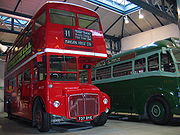
The AEC Routemaster is a model of double-decker bus
that was built by Associated Equipment Company (AEC) in 1954 (in production from 1958) and produced until 1968. Primarily front-engined, rear open-platform buses, a small number of variants were produced with doors and/or front entrances. Introduced by London Transport
in 1956, the Routemaster saw continuous service in London until 2005, and currently remains on two heritage routes in central London.
The Routemaster was developed by AEC in partnership with London Transport, the customer for nearly all new Routemasters, although small numbers were also delivered to the airline
British European Airways
(BEA) and the Northern General Transport Company
. In all, 2,876 Routemasters were built, with approximately 1,000 still in existence.
A pioneering design, the Routemaster outlasted several of its replacement types in London, survived the privatisation of the former London Transport bus operators and was used by other operators around the UK. In modern UK public transport
bus operation
, the unique features of the standard Routemaster were both praised and criticised. The open platform, while exposed to the elements, allowed boarding and alighting away from stops; the presence of a conductor
allowed minimal boarding time and optimal security, although the presence of conductors incurred greater labour costs.
The Routemaster became one of London's most famous symbols, with much tourist paraphernalia continuing to bear Routemaster imagery, and with examples still in existence around the world. Despite its fame, the earlier London bus classes that the Routemaster replaced (the RT-type AEC Regent
and Leyland Titan RTL and RTW counterparts) are often mistaken for Routemasters by the public and by the media.
Despite the retirement of the original version, the Routemaster has retained iconic status, and in the late 2000s work began on an updated version, which is set to enter service in 2012.
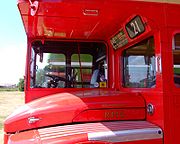 The Routemaster bus was developed during the years 1947–1956 by a team directed by A. A. M. Durrant and Colin Curtis, with vehicle styling by Douglas Scott. The design brief was to produce a vehicle that was lighter (hence more fuel efficient), easier to operate and that could be maintained by the existing maintenance practices at the recently opened Aldenham Works
. The resulting vehicle could seat 64 passengers despite being three-quarters of a ton lighter than the preceding RT, which seated only 56. The first task on delivery to service was to replace London's trolleybus
es, which had themselves replaced tram
s, and to begin to replace the older types of diesel motor bus. The Routemaster was primarily intended for London use, being designed by London Transport
and constructed at the AEC Works in Southall
, Middlesex
, with assembly at bodybuilder Park Royal Vehicles
, a subsidiary company of AEC.
 It was an innovative design and used lightweight aluminium and techniques developed in aircraft production during World War II
. As well as a novel weight-saving integral design, the Routemaster also introduced (for the first time on a bus) independent front suspension
, power steering
, a fully automatic gearbox and power-hydraulic braking
. This surprised some early drivers who found the chassis unexpectedly light and nimble compared with older designs, especially as depicted on film on tests at the Chiswick Works
"skid pan". Footage of Routemaster RM200 (VLT 200) undergoing the skid test at Chiswick was included in the 1971 film On the Buses
.
The Routemaster design was a departure from the traditional chassis/body construction method. With London Transport being the primary customer, the option to use different bodybuilders was unimportant. The design was one of the first "integral" buses, with the bus being a combination of an "A" steel sub-frame (including engine, steering and front suspension) and a rear "B" steel sub-frame (carrying rear axle and suspension), connected by the aluminium body. The gearbox was mounted on the underside of the body structure with shafts to the engine and back axle.
received four prototype Routemasters, which were placed in service between 1956 and 1958. The first two were built at the London Transport works at Chiswick, the third at Addlestone by Weymann and the fourth, an experimental Green Line
coach, at Eastern Coach Works
at Lowestoft. The third and fourth had Leyland engines. The Routemaster was first exhibited at the Earl's Court Commercial Motor Show in 1954.
In 1961, a small batch of 24 longer RMLs (30 ft compared with the standard 27 ft 6in) were built as a test, before eventually going into production from 1965.
In 1962, the front entrance RMF concept was tried, with a single bus RMF1254 based on the trial RMLs. This was exhibited and toured, leading to a small number of orders as the RMF and RMA class.
In 1964, just before mainstream production of the RML, the final front-engined Routemaster model, AEC started work on a front-entrance, rear-engined Routemaster, the FRM class. Completed in 1966, it was not produced beyond an initial prototype, FRM1. This saw regular London service, then on tour operations, before being withdrawn in 1983. This vehicle acquired the nickname "Fruitmaster".
The majority of production examples were 27 feet 6 inches (8.4 metres) long to meet the then maximum length regulations. The regulations were later relaxed and 30 feet (9.1 metres) "long" types were produced, although these were delayed by union resistance to the extra work for conductors.
The production classes were designated as follows:
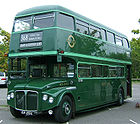 The RMC was a coach version, produced for the "Green Line" routes. RMCs had modified suspension and interiors to allow a longer range and more comfortable running, and were fitted with an electrically operated door instead of an open platform. The RCL was a long version of the RMC with a larger engine and similar coach style features.
as the RMF and, in a short version, from British European Airways
(BEA) as the RMA class.
The British Electric Traction
subsidiary, the Northern General Transport Company, introduced the RMF class in 1964/1965, with an initial batch of 18, followed by another 32 and later joined by the prototype RMF1254. This order created considerable interest and raised eyebrows within the bus industry, as Northern had been one of the biggest investors in the new rear-engined Leyland Atlantean
s. However Northern shared many routes with their Tilling brothers United
who operated the Bristol Lodekka
and the Atlantean just didn't match the performance and passenger satisfaction of United's Bristols, so Northern brought in the front-entrance Routemaster as a better match for it. The fleet were fitted with Leyland engines and a higher-ratio rear axle for operation on longer trunk routes. Other notable differences were a standard single panel front destination blind screen, sliding windows and a one-piece driver's windscreen.
They operated in various Northern red and cream liveries before surviving into the National Bus Company era receiving the poppy red corporate livery and NBC Northern fleetnames. The RMF fleet wore long standing adverts, "Shop at Binns
". Northern Routemasters where well liked by their crews, the high axle ratio meant a good turn of speed on some of the long distance routes such as the Newcastle
-Darlington
, and the advantage of power steering was well appreciated on the heavy urban services in Gateshead
and Sunderland. Their service in the north also produced the odd sight of a Routemaster with a rollsign for service "X1 to Scandinavia", by virtue of the connection to the ferry line
from North Shields
to Scandinavia
. However throughout the 1970s it became increasingly uneconomic for conductor-operated buses on inter-urban services, and despite the driver and customer satisfaction for the Routemaster in the North East, the management had little option but to replace them. Ultimately Northern placed a large order for Bristol VR
s featuring a combination of both ECW
highbridge and Willowbrook bodywork in 1977 to replace them. The last Routemasters were used until 1980, when they were disposed of in a variety of ways, some finding use in London, although none were deemed suitable for regular London service.
BEA introduced the RMA class buses built to the shorter length (with trailers) in various liveries in 1966/1967 for use on airport bus
service between the West London Air Terminal (above the London Underground
triangle between High Street Kensington
, Gloucester Road
and Earl's Court
stations) and Heathrow Airport. These were all eventually sold to London Transport after being withdrawn in stages in the 1970s, finding various roles.
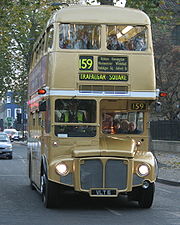 With the Routemaster's longevity, there have been Routemaster buses painted to celebrate both the Queen's Silver and Golden Jubilee, in 1977 and 2002, i.e. 25 and 50 years on the throne respectively. 25 buses were painted Silver to celebrate the Silver Jubilee, and out of 50 buses painted gold in London in 2002, 15 (12 RML, 3 RM) were Routemasters.
During privatisation in London, from 1986, several private operators won contracts to operate London bus services, some of which including Routemaster operated routes. Before an 80% red rule for liveries was reintroduced in 1997 by LT, the contract tendering authority, some of these new entrants proceeded to run Routemasters in their own non-red liveries, most notably Kentish Bus on Route 19 and Borehamwood Travel Services (BTS) (now part of London United Busways) on Route 13.
The iconic nature of the Routemaster also appealed to the many new operators outside of London that appeared post-1986 in the UK following bus deregulation
. Several operators took second hand Routemasters from London as a cheap way of expanding their fleets to stave off competition from new operators emerging after deregulation. Likewise, start up operators also chose the Routemaster as a distinctive looking bus for their own start up operations. Subsequently, Routemasters were seen around the country painted in a variety of proprietary colours, and were used in regular service in Southampton, Blackpool, Glasgow, Perth, Dundee, Hull, Carlisle, Bedford, Corby, Manchester (Stagecoach), Southend and Burnley. During this era, several Routemasters found their way through more than one company and were also often loaned between operators.
One of the earliest, if not the earliest, examples of deregulated use of Routemasters was early in the history of the Stagecoach Group
. Now one of the largest post-deregulation operators in the UK, Stagecoach combined the vintage Routemaster with their new and striking corporate livery of all-over white with red, orange and blue stripes, to start one of their first operations, Magic Bus, in Glasgow
, Scotland, in the late 1980s. This contrasted with the traditional identities still in use at the time.
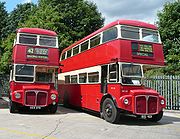 Towards the end of this period, in 1994 in Reading
, new operator Reading Mainline built up a forty five strong Routemaster fleet to compete with the established operator Reading Buses, in the process becoming the largest operator of Routemasters outside London. They used conductors to compete on speed in the town centre and, in the outskirts, took advantage of the rear platform to operate hail and ride
sections of route. After building up a network covering nearly the whole town, Reading Buses posted their first ever financial loss
to purchase the company in 1998, with Reading Buses continuing Routemaster operation for another two years albeit reduced in number, until 2000.
With the costs involved in running elderly two-man buses and with a general reduction in the number of operators, buses and services in the years following in the deregulated industry as competitors merged or sold out, these examples of use outside London declined through the 1990s. Many of these buses found their way back to London to assist with the refurbishment program or as basic spares donors or to increase the fleet size generally.
The final withdrawal from mainstream London service saw another resurgence in the use of Routemasters outside of London but, this time on a smaller scale than the post deregulation public transport fleets. Post 2000, usage was characterised by small novelty or seasonal routes.
services, and later standard bus RMLs. The RMC class were initially used on Green Line routes in outlying towns. Similarly, the RCL entered service in areas where the RMC was not introduced.
These vehicles passed to the nationalised National Bus Company's subsidiary London Country Bus Services
(known simply as London Country) in 1969, which took over outlying areas of LT bus operation resulting from the 1968 Transport Act. The transfer comprised 69 RMCs, 43 RCLs and 97 RMLs.
By the latter half of the 1970s, most of these vehicles had been re-acquired by London Transport, as London Country modernised and standardised its fleet and as increased car usage and improved commuter railways reduced suburban bus demand. Most of the RMLs found use on red London bus routes, and the RMC and RCL class were cascaded into the training fleet. As the RCL class was relatively new (in Routemaster terms) and LT was suffering from lack of parts, between 1980 and 1984 several of the RCLs were converted to standard bus use.
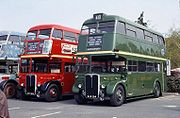 The heyday of Routemaster operation was its first 25 years of operation, until September 1982, when the type started to be withdrawn and transferred to training fleets, due to service reductions.
The RM class was placed in service from 1959 to replace trolleybus
es, which finished in May 1962. Subsequent Routemasters, the last 500 of which were the RML types, began replacing the previous generation of buses, the RT-type AEC Regent
and Leyland Titan RTL and RTW. RMLs also displaced RMs on central routes to cope with higher loadings. The last Routemaster, RML 2760, entered service in March 1968.
The original London Transport concept included the routine overhaul and refurbishment of the Routemaster fleet at London Transport's Aldenham Works
, usually every five years. Here the buses were completely stripped down and rebuilt, and left the works almost as new. As the number of Routemasters in London declined, however, and newer bus designs not suited to this practice were introduced, the overhaul routine was abandoned and Aldenham Works
closed in the mid-1980s.
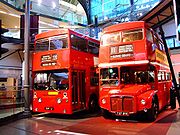 Many of London's bus routes were converted to one-person operation (then known as one-man operation, or OMO) in the 1970s, out of a desire to reduce operating costs and address staff shortages. There was also, for a time, a parts shortage for Routemasters, aggravated by the closure of AEC. With the introduction of single-deck Red Arrow services in London and successful conversion to modern rear-engined OMO buses around the country, LT was considering replacing Routemasters with modern buses. The operation of the Routemaster (very) gradually contracted to central areas only, with RMLs replacing RMs, where LT felt that the Routemaster still provided an efficient means of transporting large enough numbers of people to justifying the economics of two-man operation. The rapid acceleration and rugged construction of the Routemasters also proved to be more suited to urban conditions than some more modern designs.
The Routemaster fleet remained largely intact for around fifteen years after production ended in 1968, with withdrawals mainly due to fires. Following the defeat of the GLC
in the House of Lords
regarding their subsidised fare scheme, major service reductions followed in September 1982. Consequently, the first withdrawals commenced, with many of these early disposals being for scrap. The continued practice of route conversion to one person operation resulted in a steady trickle of withdrawals. This practice had largely halted by 1988, with comparatively few withdrawn up to 1992.
In the 1980s, several of the returned Routemasters purchased from Northern General, BEA and London Country, which had doors rather than an open platform, were put to use on London Transport's revived sightseeing operation The Original London Sightseeing Tour, alongside the RCL class (some converted to open top bus
es), the RMF class, and the RMA class.
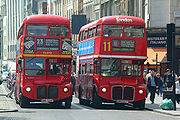 In 1984, the process of privatisation of London bus services
began and the Routemasters were transferred from London Transport operation to several different arms-length business units based on different garages, leading to minor additions to the standard red livery. Nine of the twelve new operating units inherited Routemasters, Centrewest, Leaside, London Central, London General, London United, Metroline, London Northern, South London and East London. During this time, following the failure and premature withdrawal of heralded replacement vehicle classes such as the DM/DMS class Daimler Fleetline
, the Routemasters that had not yet been disposed of saw their lives extended for use until privatisation. Where new route tenders called for Routemaster operation, these were leased from London Buses.
By 1994, all the operating units had been sold and this produced some colour livery variations and additions to some Routemasters from their previous all-over red liveries. In the new London route tendering process, all but one of the Routemaster operated routes were allowed to keep their now privately-owned Routemasters for the five-year contract period and further refurbishments resulted.
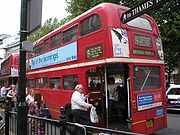 Since the ending of production at Southall and later closure of the Aldenham works, new options for extending the life of the Routemaster became necessary if they were to continue to run. This made sense as even by 1987, when some buses looked decidedly worn out, inspections by London Buses revealed the basic structure of the buses was still sound, requiring only replacement of engines and interior/exterior renewal.
From 1992 to 1994, all but two of the RML type were refurbished for ten years further service. This work, which included updating the interior to modern tastes and substituting Iveco
or Cummins
engines, was carried out by Mainline
, TB Precision, Nottingham truck & Bus and by one of the new London Buses business units, Leaside Buses. 100 RM class vehicles were also re-engined. Post-privatisation, in 1996, the Routemasters on London Central's RMs on route 36, Stagecoach London's RMLs for routes 8 and 15, and Arriva's RMs for route 159, all received new Scania engines. Between 2001 and 2004, under new mayor Ken Livingstone and Transport for London
, the replacement authority for London Buses, further refurbishment saw TfL buy back forty nine RMs from a variety of sources. Initially started by Marshall Bus
, this was continued by Arriva London
when Marshall ceased trading in 2002.
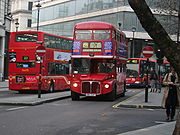
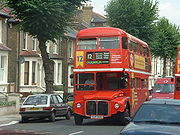 During the new millennium, debates surrounded the issue of whether to replace or retain the Routemaster in London service. Supporters cited its continued mechanical fitness, speed of boarding and tourist potential, while opponents pointed to the economics of running increasingly elderly buses when newer, larger and more modern designs were now on the market following a resurgence in the bus manufacturing
industry after recession in the 1990s. Opponents also pointed specifically to the lack of accessibility
of the Routemaster in light of impending relevant legislation, which meant all new buses now entering service in London were of a low-floor design. The emergence of off-bus ticketing technology also reduced the argument for better dwell times, whereby the Oyster card
and off-bus ticket machines would reduce the time it took to board the bus.
In 2004, following his second election campaign, Mayor of London
Ken Livingstone
announced the phasing out of the type in order to provide a bus service in the capital fully accessible to wheelchair users. Government legislation requires full accessibility by 2017 under the Disability Discrimination Act
. As a consequence, the Routemaster was officially withdrawn from general service on 9 December 2005, although it remains in regular service on two "heritage" routes (see below).
Withdrawals began on the dates below as the routes' five-year contracts expired.
The Routemaster was gradually phased out of service by the end of 2005. A television documentary shown that year revealed that Livingstone had commented in 2001 that "only some sort of ghastly dehumanised moron would want to get rid of Routemasters". By December 2005, only one route was left, the 159 (Marble Arch — Streatham). Friday, 9 December 2005 would be the last official running day. On Thursday 8th, 24 special buses, including preserved RMs and RMLs, plus a number of their predecessors from the "RT" bus family, made guest appearances on the 159 route.
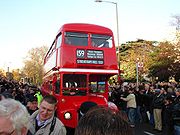 On Friday, instead of doing a normal shift, with crews ending normally at around 11pm, on police advice, the day was split into two duty shifts, a Routemaster shift, and a VLA class shift (Volvo B7TL
/Alexander ALX400
), the replacement bus for route 159, with the Routemasters due to be replaced in the middle of the day.
Towards the last runs to the garage, crowds blocked the four-lane road, bringing all traffic to a standstill. RM2217 was set to be the last official running bus, as per the timetable. Heavily delayed, RM2217 even took 10 minutes to turn the final corner into Brixton Garage.
The bus left the public highway at 14:07, accompanied by duplicates provided by preserved buses RM5 and RM6. Due to the delays, RM54 was actually the last in service, running into Streatham Station stand a few minutes later, before running dead
to Norwood Garage.
Later, RM5 and RM6, followed by RM2217 were moved to the old LCC Tramways depot at Brixton for press photographs in the quieter surroundings of the old tramways depot which, at the time, was complete with still visible tramlines.
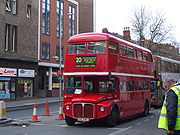
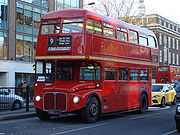 Two heritage routes were immediately introduced in London, recognising the nostalgia for the type among ordinary Londoners and their appeal to tourists. Although these buses are operated under contract to TfL and accept standard Travelcards, Oystercards or cash fares, they only operate for a limited time during the day duplicating short sections of two regular London bus routes. The Heritage routes operate around ten buses each, with five each in reserve.
The buses used were specially restored from remaining examples for this service and have clean environmental engines, modern electrics and sealed windows.
 On 7 April 2008 Routemasters were also introduced on a regular bus route in Nottingham
, England. They were operated by Bellamy's Coaches Ltd with red Routemasters branded as the Nottingham & District Omnibus, on route 20 on a 20 minute frequency from 7am to 7pm, six days a week. Bellamy's positioned the conductor and open platform features of the Routemaster as being able to compete with the incumbent operator's Nottingham City Transport
(NCT) services, on increased speed of travel through the city centre bus stop
s, and through hail and ride
operation in the suburb
s. The Routemasters were withdrawn on 28 June 2008 with the company citing low passenger demand, although to satisfy bus service registration requirements, the service continued using single-decker bus
es into August. The council, which has an 82% stake in NCT, was criticised for not doing enough to provide information about the service in public facilities, and for increasing the competition selectively on the Routemaster route.
The London and South East of England operator Metrobus had retained a green-liveried Routemaster, RML 2317 (CUV 317C), obtained from sister company London General
, which is sometimes used on regular routes as well as private and preservation appearances. This RML has however, now passed to Brighton and Hove Buses where is was painted into the livery of Thomas Tilling
Ltd. Cavendish Motor Services
operate RML 2324 in a light green and green livery, for special journeys as well as a relief bus for a number of their routes in the Eastbourne
area.
Wilson's Coaches of Greenock
operate three Routemasters (one open-top) mainly on private hire workings, but also see service on the company's routes from Greenock
to Clydebank
, Helensburgh
and on Saturdays prior to Christmas
on the company's local Greenock service.
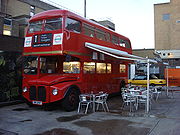 Aside from the London heritage routes, the last major operator of Routemasters in service in the UK, is in Edinburgh
, Scotland. Local operator Lothian Buses
tour operation Mac Tours uses a variety of closed and open top Routemasters on regular tour bus duties. Another tour operation, York Pullman
, currently use two Routemasters on a city tour of York
.
Several operators in the UK maintain Routemasters for private hire usage, with the majority held by the successors to the former London Bus units, Ensignbus
, London Bus Company Ltd (formerly Blue Triangle
) and Timebus Travel
.
Many cities around the world have a Routemaster or an older RT variant somewhere, often privately owned and used for many different purposes (from Preservation to Hot Dog stands, tour bus to shop). Routemasters can be found far from Britain in places such as Sri Lanka
, Australia
, New Zealand
, China
, Canada
, Southern California
, Malaysia and even Fairbanks
, Alaska
.
A number of Stagecoach-owned Routemasters have been exported to Montreal
in Canada
, where Stagecoach now provides a tourist service around the city. This is a unique case of London Routemasters being operated on a daily service in a foreign country by a former London Routemaster operator.
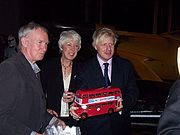 Such was the popularity of the Routemaster that many calls continued to be made for a new version of the vehicle to be produced. Conservative Mayoral candidate for London, Boris Johnson
, on 3 September 2007, announced that he was contemplating introducing a modern-day version of the Routemaster bus (and scrapping bendy bus
operation). In December 2007, UK magazine Autocar
commissioned leading bus designer Capoco, designer of the innovative Optare Solo
, to come up with detailed proposals for a new-generation Routemaster. Mayoral candidate Boris Johnson backed the Capoco design in principle and suggested that he would hold a formal design competition to develop a new Routemaster if he became London mayor in 2008. After being elected, this competition was set up and held open for general ideas and detailed designs to be submitted by companies and members of the public, with cash prizes for the winning entries. The results of the competition were published on 19 December 2008, with the winning and otherwise good proposals being passed to bus manufacturers to draw up a final design. The winners included two joint 'whole bus' designs, one submitted by Capoco and one submitted by Aston Martin
and Foster and Partners
. Transport for London expects a prototype to be on London streets by 2011.
ordered 202 new double decker buses from the Chinese bus manufacturer Yutong, two of which were cabriolet buses with removable roofs to be used by tourists (15 more buses like these were ordered in late 2011) and the rest 200 as city buses for the citizens of the capital city of Skopje
.
The ordered double decker buses were to be in a "retro" style, similar to the old Routemaster buses. Former London double-deckers were used in Skopje until the 1963 Skopje earthquake
in which 75%-80% of the city's infrastructure was destroyed.
The first prototype of the new double decker buses appeared on the streets of Skopje on 1 March 2011, under the name ZK6116HGS.
The first cabriolet double decker buses with removable roofs, as well as 65 more double decker city buses were put into service on 6 September 2011, all under the name City Master.
The rest of the double decker city buses already ordered, as well as another 15 cabriolet double decker buses with removable roofs ordered in late 2011, are expected to arrive by the end of 2013.
, the bus dealer, handled disposals by the hundreds, as they also did for other London bus types. In December 2004, Ensignbus held a raffle for 32 Routemasters, available for £2,000 to those who could prove they had the finances to store and care for them. Ensignbus has since opened a transport museum which contains several preserved examples.
caused controversy when he destroyed a Routemaster in a stunt to promote his new DVD. The chairman of the Routemaster Association compared the selection of a Routemaster when other old buses could have been used with choosing to explode an E-Type Jaguar
. In response, a spokesman for Clarkson's production company stated, "What [Clarkson] wants to blow up for his own and the viewers' entertainment, is up to him...it's a well-known fact that he isn't fond of buses."
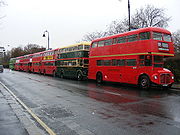
Double-decker bus
A double-decker bus is a bus that has two storeys or 'decks'. Global usage of this type of bus is more common in outer touring than in its intra-urban transportion role. Double-decker buses are also commonly found in certain parts of Europe, Asia, and former British colonies and protectorates...
that was built by Associated Equipment Company (AEC) in 1954 (in production from 1958) and produced until 1968. Primarily front-engined, rear open-platform buses, a small number of variants were produced with doors and/or front entrances. Introduced by London Transport
London Transport Executive
The London Transport Executive was the organisation responsible for public transport in the Greater London area, UK, between 1948-1962. In common with all London transport authorities from 1933 to 2000, the public name and operational brand of the organisation was London Transport.-Creation:On 1...
in 1956, the Routemaster saw continuous service in London until 2005, and currently remains on two heritage routes in central London.
The Routemaster was developed by AEC in partnership with London Transport, the customer for nearly all new Routemasters, although small numbers were also delivered to the airline
Airline
An airline provides air transport services for traveling passengers and freight. Airlines lease or own their aircraft with which to supply these services and may form partnerships or alliances with other airlines for mutual benefit...
British European Airways
British European Airways
British European Airways or British European Airways Corporation was a British airline which existed from 1946 until 1974. The airline operated European and North African routes from airports around the United Kingdom...
(BEA) and the Northern General Transport Company
Northern General Transport Company
The Northern General Transport Company was the original founding company of what is now Go-Ahead Group.It originated in the early 1900s when Gateshead and District Tramways asked Parliament's permission to extend their Tramway, which finished at Low Fell, to Chester-le-Street. Parliament denied the...
. In all, 2,876 Routemasters were built, with approximately 1,000 still in existence.
A pioneering design, the Routemaster outlasted several of its replacement types in London, survived the privatisation of the former London Transport bus operators and was used by other operators around the UK. In modern UK public transport
Public transport
Public transport is a shared passenger transportation service which is available for use by the general public, as distinct from modes such as taxicab, car pooling or hired buses which are not shared by strangers without private arrangement.Public transport modes include buses, trolleybuses, trams...
bus operation
Transit bus
A transit bus , also known as a commuter bus, city bus, or public bus, is a bus used for short-distance public transport purposes...
, the unique features of the standard Routemaster were both praised and criticised. The open platform, while exposed to the elements, allowed boarding and alighting away from stops; the presence of a conductor
Conductor (transportation)
A conductor is a member of a railway train's crew that is responsible for operational and safety duties that do not involve the actual operation of the train. The title of conductor is most associated with railway operations in North America, but the role of conductor is common to railways...
allowed minimal boarding time and optimal security, although the presence of conductors incurred greater labour costs.
The Routemaster became one of London's most famous symbols, with much tourist paraphernalia continuing to bear Routemaster imagery, and with examples still in existence around the world. Despite its fame, the earlier London bus classes that the Routemaster replaced (the RT-type AEC Regent
AEC Regent III RT
The AEC Regent III RT was a variant of the AEC Regent III. It was a double-decker bus produced jointly between AEC and London Transport. It was the standard red London bus during the 1950s.-Prototype:...
and Leyland Titan RTL and RTW counterparts) are often mistaken for Routemasters by the public and by the media.
Despite the retirement of the original version, the Routemaster has retained iconic status, and in the late 2000s work began on an updated version, which is set to enter service in 2012.
Design
Aldenham Works
The Aldenham Works, or Aldenham Bus Overhaul Works, was the main London Transport Bus overhaul works. It was located on the edge of the Hertfordshire village of Elstree and not Aldenham despite being officially called Aldenham Works. In its heyday, 50 buses a week were overhauled there, and it was...
. The resulting vehicle could seat 64 passengers despite being three-quarters of a ton lighter than the preceding RT, which seated only 56. The first task on delivery to service was to replace London's trolleybus
Trolleybus
A trolleybus is an electric bus that draws its electricity from overhead wires using spring-loaded trolley poles. Two wires and poles are required to complete the electrical circuit...
es, which had themselves replaced tram
Tram
A tram is a passenger rail vehicle which runs on tracks along public urban streets and also sometimes on separate rights of way. It may also run between cities and/or towns , and/or partially grade separated even in the cities...
s, and to begin to replace the older types of diesel motor bus. The Routemaster was primarily intended for London use, being designed by London Transport
London Transport Executive
The London Transport Executive was the organisation responsible for public transport in the Greater London area, UK, between 1948-1962. In common with all London transport authorities from 1933 to 2000, the public name and operational brand of the organisation was London Transport.-Creation:On 1...
and constructed at the AEC Works in Southall
Southall
Southall is a large suburban district of west London, England, and part of the London Borough of Ealing. It is situated west of Charing Cross. Neighbouring places include Yeading, Hayes, Hanwell, Heston, Hounslow, Greenford and Northolt...
, Middlesex
Middlesex
Middlesex is one of the historic counties of England and the second smallest by area. The low-lying county contained the wealthy and politically independent City of London on its southern boundary and was dominated by it from a very early time...
, with assembly at bodybuilder Park Royal Vehicles
Park Royal Vehicles
Dating its origins back to 1889, Park Royal Vehicles along with its Leeds-based subsidiary Charles H. Roe was one of Britain's leading coachbuilders and bus manufacturers based at Park Royal, west London, UK.-Associated Commercial Vehicles:...
, a subsidiary company of AEC.
World War II
World War II, or the Second World War , was a global conflict lasting from 1939 to 1945, involving most of the world's nations—including all of the great powers—eventually forming two opposing military alliances: the Allies and the Axis...
. As well as a novel weight-saving integral design, the Routemaster also introduced (for the first time on a bus) independent front suspension
Independent suspension
Independent suspension is a broad term for any automobile suspension system that allows each wheel on the same axle to move vertically independently of each other. This is contrasted with a beam axle, live axle or deDion axle system in which the wheels are linked – movement on one side affects...
, power steering
Power steering
Power steering helps drivers steer vehicles by augmenting steering effort of the steering wheel.Hydraulic or electric actuators add controlled energy to the steering mechanism, so the driver needs to provide only modest effort regardless of conditions. Power steering helps considerably when a...
, a fully automatic gearbox and power-hydraulic braking
Hydraulic brake
The hydraulic brake is an arrangement of braking mechanism which uses brake fluid, typically containing ethylene glycol, to transfer pressure from the controlling unit, which is usually near the operator of the vehicle, to the actual brake mechanism, which is usually at or near the wheel of the...
. This surprised some early drivers who found the chassis unexpectedly light and nimble compared with older designs, especially as depicted on film on tests at the Chiswick Works
Chiswick
Chiswick is a large suburb of west London, England and part of the London Borough of Hounslow. It is located on a meander of the River Thames, west of Charing Cross and is one of 35 major centres identified in the London Plan. It was historically an ancient parish in the county of Middlesex, with...
"skid pan". Footage of Routemaster RM200 (VLT 200) undergoing the skid test at Chiswick was included in the 1971 film On the Buses
On the Buses (film)
On the Buses is a 1971 British comedy film directed by Harry Booth and starring Reg Varney and Doris Hare. The film is the first spin-off film from the TV sitcom On the Buses and was followed by two further films Mutiny on the Buses and Holiday on the Buses...
.
The Routemaster design was a departure from the traditional chassis/body construction method. With London Transport being the primary customer, the option to use different bodybuilders was unimportant. The design was one of the first "integral" buses, with the bus being a combination of an "A" steel sub-frame (including engine, steering and front suspension) and a rear "B" steel sub-frame (carrying rear axle and suspension), connected by the aluminium body. The gearbox was mounted on the underside of the body structure with shafts to the engine and back axle.
Prototypes
London TransportLondon Transport Executive
The London Transport Executive was the organisation responsible for public transport in the Greater London area, UK, between 1948-1962. In common with all London transport authorities from 1933 to 2000, the public name and operational brand of the organisation was London Transport.-Creation:On 1...
received four prototype Routemasters, which were placed in service between 1956 and 1958. The first two were built at the London Transport works at Chiswick, the third at Addlestone by Weymann and the fourth, an experimental Green Line
Green Line Coaches
Green Line is a commuter coach brand in the Home Counties of England. It is owned by the Arriva group.Green Line has its origin in the network of coach services established by the London General Omnibus Company in the 1920s and 1930s...
coach, at Eastern Coach Works
Eastern Coach Works
Eastern Coach Works Ltd was a bus and railbus body building company based in Lowestoft, England.-History:The company can trace its roots back to 1912, when United Automobile Services was founded in the town to run bus services. United began a coach building business at the Lowestoft site in 1920...
at Lowestoft. The third and fourth had Leyland engines. The Routemaster was first exhibited at the Earl's Court Commercial Motor Show in 1954.
In 1961, a small batch of 24 longer RMLs (30 ft compared with the standard 27 ft 6in) were built as a test, before eventually going into production from 1965.
In 1962, the front entrance RMF concept was tried, with a single bus RMF1254 based on the trial RMLs. This was exhibited and toured, leading to a small number of orders as the RMF and RMA class.
In 1964, just before mainstream production of the RML, the final front-engined Routemaster model, AEC started work on a front-entrance, rear-engined Routemaster, the FRM class. Completed in 1966, it was not produced beyond an initial prototype, FRM1. This saw regular London service, then on tour operations, before being withdrawn in 1983. This vehicle acquired the nickname "Fruitmaster".
Production
Production of mechanical components was undertaken chiefly at AEC's Southall site (though a significant number had Leyland engines) throughout the life of the Routemaster, with body construction and final assembly at Park Royal. AEC itself was taken over by Leyland Motors in 1962, Routemaster production ceased in 1968.The majority of production examples were 27 feet 6 inches (8.4 metres) long to meet the then maximum length regulations. The regulations were later relaxed and 30 feet (9.1 metres) "long" types were produced, although these were delayed by union resistance to the extra work for conductors.
The production classes were designated as follows:
- RM - standard bus (27.5 feet (8.4 m))
- RML - (lengthened) bus (30 feet (9.1 m))
- RMC - coach (27.5 feet (8.4 m))
- RCL - (lengthened) coach (30 feet (9.1 m))
- RMF - front entrance bus (essentially a demonstrator to encourage sales outside London)
- RMA - front entrance bus (designated by LT when purchased from British AirwaysBritish AirwaysBritish Airways is the flag carrier airline of the United Kingdom, based in Waterside, near its main hub at London Heathrow Airport. British Airways is the largest airline in the UK based on fleet size, international flights and international destinations...
)
RM and RML class
At 2,120 RMs and 524 RMLs, these make up the majority of Routemasters. The RML class was simply a standard RM with a distinctive and seemingly out of place half-window section added in the middle giving eight extra seats. This was not a dramatic change, as it took advantage of the modular design approach of the Routemaster that would be copied in the future by other manufacturers. The RML was originally to be the "Routemaster Leyland" designation, with ER to signify "Extended Routemaster". The RM and RML featured a cubby hole beneath the rear staircase where the conductor could stand while not collecting fares without obstructing boarding/alighting passengers.RMC and RCL class
RMF and RMA class
The RMF and RMA class were production versions of a front entrance model Routemaster, primarily for non-London use. Like the coach class, they featured an electrically operated door, although the staircase was moved to the front of the bus along with the door. After being exhibited and demonstrated to other operators, the RMF attracted little interest, apart from an order from Northern General Transport CompanyNorthern General Transport Company
The Northern General Transport Company was the original founding company of what is now Go-Ahead Group.It originated in the early 1900s when Gateshead and District Tramways asked Parliament's permission to extend their Tramway, which finished at Low Fell, to Chester-le-Street. Parliament denied the...
as the RMF and, in a short version, from British European Airways
British European Airways
British European Airways or British European Airways Corporation was a British airline which existed from 1946 until 1974. The airline operated European and North African routes from airports around the United Kingdom...
(BEA) as the RMA class.
The British Electric Traction
British Electric Traction
British Electric Traction Company Limited, renamed BET plc in 1985, was a large British industrial conglomerate. It was once a constituent of the FTSE 100 Index but was acquired by Rentokil in 1996, and the merged company is now known as Rentokil Initial.- Early history :The company was founded as...
subsidiary, the Northern General Transport Company, introduced the RMF class in 1964/1965, with an initial batch of 18, followed by another 32 and later joined by the prototype RMF1254. This order created considerable interest and raised eyebrows within the bus industry, as Northern had been one of the biggest investors in the new rear-engined Leyland Atlantean
Leyland Atlantean
The Leyland Atlantean is a model of double-decker bus built by Leyland in the United Kingdom from 1958 to 1986....
s. However Northern shared many routes with their Tilling brothers United
United Automobile Services
United Automobile Services or United, as it was commonly known, was a major provider of bus services across the North East and North Yorkshire for 80 years or more...
who operated the Bristol Lodekka
Bristol Lodekka
The Bristol Lodekka was a low-height double-decker bus built by Bristol Commercial Vehicles in England.Bristol manufactured over 5,200 Lodekkas from 1949 to 1968, as a standard double-deck vehicle for the UK state-owned bus sector. With all examples bodied by Eastern Coach Works in Lowestoft, they...
and the Atlantean just didn't match the performance and passenger satisfaction of United's Bristols, so Northern brought in the front-entrance Routemaster as a better match for it. The fleet were fitted with Leyland engines and a higher-ratio rear axle for operation on longer trunk routes. Other notable differences were a standard single panel front destination blind screen, sliding windows and a one-piece driver's windscreen.
They operated in various Northern red and cream liveries before surviving into the National Bus Company era receiving the poppy red corporate livery and NBC Northern fleetnames. The RMF fleet wore long standing adverts, "Shop at Binns
House of Fraser
House of Fraser is a British department store group with over 60 stores across the United Kingdom and Ireland. It was established in Glasgow, Scotland in 1849 as Arthur and Fraser. By 1891 it was known as Fraser & Sons. The company grew steadily during the early 20th century, but after the Second...
". Northern Routemasters where well liked by their crews, the high axle ratio meant a good turn of speed on some of the long distance routes such as the Newcastle
Newcastle upon Tyne
Newcastle upon Tyne is a city and metropolitan borough of Tyne and Wear, in North East England. Historically a part of Northumberland, it is situated on the north bank of the River Tyne...
-Darlington
Darlington
Darlington is a market town in the Borough of Darlington, part of the ceremonial county of County Durham, England. It lies on the small River Skerne, a tributary of the River Tees, not far from the main river. It is the main population centre in the borough, with a population of 97,838 as of 2001...
, and the advantage of power steering was well appreciated on the heavy urban services in Gateshead
Gateshead
Gateshead is a town in Tyne and Wear, England and is the main settlement in the Metropolitan Borough of Gateshead. Historically a part of County Durham, it lies on the southern bank of the River Tyne opposite Newcastle upon Tyne and together they form the urban core of Tyneside...
and Sunderland. Their service in the north also produced the odd sight of a Routemaster with a rollsign for service "X1 to Scandinavia", by virtue of the connection to the ferry line
DFDS
DFDS is a Danish shipping company. It is one of the world's largest ferry operators. The companies name is an acronym of Det Forenede Dampskibs-Selskab DFDS is a Danish shipping company. It is one of the world's largest ferry operators. The companies name is an acronym of Det Forenede...
from North Shields
North Shields
North Shields is a town on the north bank of the River Tyne, in the metropolitan borough of North Tyneside, in North East England...
to Scandinavia
Scandinavia
Scandinavia is a cultural, historical and ethno-linguistic region in northern Europe that includes the three kingdoms of Denmark, Norway and Sweden, characterized by their common ethno-cultural heritage and language. Modern Norway and Sweden proper are situated on the Scandinavian Peninsula,...
. However throughout the 1970s it became increasingly uneconomic for conductor-operated buses on inter-urban services, and despite the driver and customer satisfaction for the Routemaster in the North East, the management had little option but to replace them. Ultimately Northern placed a large order for Bristol VR
Bristol VR
The Bristol VR was Bristol's rear-engined bus chassis, designed as a competitor to the Leyland Atlantean and Daimler Fleetline.-Development:...
s featuring a combination of both ECW
Eastern Coach Works
Eastern Coach Works Ltd was a bus and railbus body building company based in Lowestoft, England.-History:The company can trace its roots back to 1912, when United Automobile Services was founded in the town to run bus services. United began a coach building business at the Lowestoft site in 1920...
highbridge and Willowbrook bodywork in 1977 to replace them. The last Routemasters were used until 1980, when they were disposed of in a variety of ways, some finding use in London, although none were deemed suitable for regular London service.
BEA introduced the RMA class buses built to the shorter length (with trailers) in various liveries in 1966/1967 for use on airport bus
Airport bus
An airport bus, or airport shuttle bus or airport shuttle is a bus or coach used to transport people to/from, or within airports. These vehicles will usually be equipped with larger luggage space, and incorporate special branding....
service between the West London Air Terminal (above the London Underground
London Underground
The London Underground is a rapid transit system serving a large part of Greater London and some parts of Buckinghamshire, Hertfordshire and Essex in England...
triangle between High Street Kensington
High Street Kensington tube station
High Street Kensington is a London Underground station at Kensington High Street.The station is on the Circle Line between Gloucester Road and Notting Hill Gate, and the District Line between Earl's Court and Notting Hill Gate. It is in Travelcard Zone 1....
, Gloucester Road
Gloucester Road tube station
-Deep-level station:By the beginning of the 20th century, the MDR had been extended to Richmond, Ealing Broadway, Hounslow West and Wimbledon in the west and to New Cross Gate in the east...
and Earl's Court
Earl's Court tube station
Earl's Court tube station is a London Underground station in Earls Court. The station is located between Earls Court Road and Warwick Road . It is on the boundary of Travelcard Zone 1 and 2 and is in both zones....
stations) and Heathrow Airport. These were all eventually sold to London Transport after being withdrawn in stages in the 1970s, finding various roles.
Colourful Routemasters
During privatisation in London, from 1986, several private operators won contracts to operate London bus services, some of which including Routemaster operated routes. Before an 80% red rule for liveries was reintroduced in 1997 by LT, the contract tendering authority, some of these new entrants proceeded to run Routemasters in their own non-red liveries, most notably Kentish Bus on Route 19 and Borehamwood Travel Services (BTS) (now part of London United Busways) on Route 13.
The iconic nature of the Routemaster also appealed to the many new operators outside of London that appeared post-1986 in the UK following bus deregulation
Bus deregulation
Bus deregulation in Great Britain came into force on 26 October 1986, as part of the Transport Act 1985.The 'Buses' White Paper was the basis of the Transport Act 1985, which provided for the deregulation of local bus services in the whole of the United Kingdom except for Northern Ireland and...
. Several operators took second hand Routemasters from London as a cheap way of expanding their fleets to stave off competition from new operators emerging after deregulation. Likewise, start up operators also chose the Routemaster as a distinctive looking bus for their own start up operations. Subsequently, Routemasters were seen around the country painted in a variety of proprietary colours, and were used in regular service in Southampton, Blackpool, Glasgow, Perth, Dundee, Hull, Carlisle, Bedford, Corby, Manchester (Stagecoach), Southend and Burnley. During this era, several Routemasters found their way through more than one company and were also often loaned between operators.
One of the earliest, if not the earliest, examples of deregulated use of Routemasters was early in the history of the Stagecoach Group
Stagecoach Group
Stagecoach Group plc is an international transport group operating buses, trains, trams, express coaches and ferries. The group was founded in 1980 by the current chairman, Sir Brian Souter, his sister, Ann Gloag, and her former husband Robin...
. Now one of the largest post-deregulation operators in the UK, Stagecoach combined the vintage Routemaster with their new and striking corporate livery of all-over white with red, orange and blue stripes, to start one of their first operations, Magic Bus, in Glasgow
Glasgow
Glasgow is the largest city in Scotland and third most populous in the United Kingdom. The city is situated on the River Clyde in the country's west central lowlands...
, Scotland, in the late 1980s. This contrasted with the traditional identities still in use at the time.
Reading, Berkshire
Reading is a large town and unitary authority area in England. It is located in the Thames Valley at the confluence of the River Thames and River Kennet, and on both the Great Western Main Line railway and the M4 motorway, some west of London....
, new operator Reading Mainline built up a forty five strong Routemaster fleet to compete with the established operator Reading Buses, in the process becoming the largest operator of Routemasters outside London. They used conductors to compete on speed in the town centre and, in the outskirts, took advantage of the rear platform to operate hail and ride
Hail and ride
Hail and Ride is a concept in public transport in the United Kingdom. Generally, it refers to boarding or alighting a mode of public transport by signalling the driver or conductor that one wishes to board/alight, rather than the more...
sections of route. After building up a network covering nearly the whole town, Reading Buses posted their first ever financial loss
Net profit
Net profit or net revenue is a measure of the profitability of a venture after accounting for all costs. In a survey of nearly 200 senior marketing managers, 91 percent responded that they found the "net profit" metric very useful...
to purchase the company in 1998, with Reading Buses continuing Routemaster operation for another two years albeit reduced in number, until 2000.
With the costs involved in running elderly two-man buses and with a general reduction in the number of operators, buses and services in the years following in the deregulated industry as competitors merged or sold out, these examples of use outside London declined through the 1990s. Many of these buses found their way back to London to assist with the refurbishment program or as basic spares donors or to increase the fleet size generally.
The final withdrawal from mainstream London service saw another resurgence in the use of Routemasters outside of London but, this time on a smaller scale than the post deregulation public transport fleets. Post 2000, usage was characterised by small novelty or seasonal routes.
Green livery
The "green Routemasters" originally worked for LT's "country division", which took coach type RMC and RCL buses, for Green LineGreen Line Coaches
Green Line is a commuter coach brand in the Home Counties of England. It is owned by the Arriva group.Green Line has its origin in the network of coach services established by the London General Omnibus Company in the 1920s and 1930s...
services, and later standard bus RMLs. The RMC class were initially used on Green Line routes in outlying towns. Similarly, the RCL entered service in areas where the RMC was not introduced.
These vehicles passed to the nationalised National Bus Company's subsidiary London Country Bus Services
London Country Bus Services
London Country Bus Services was a bus company that operated in South East England from 1969 until split up and sold in 1986 under Margaret Thatcher's government's bus deregulation scheme.-Creation:...
(known simply as London Country) in 1969, which took over outlying areas of LT bus operation resulting from the 1968 Transport Act. The transfer comprised 69 RMCs, 43 RCLs and 97 RMLs.
By the latter half of the 1970s, most of these vehicles had been re-acquired by London Transport, as London Country modernised and standardised its fleet and as increased car usage and improved commuter railways reduced suburban bus demand. Most of the RMLs found use on red London bus routes, and the RMC and RCL class were cascaded into the training fleet. As the RCL class was relatively new (in Routemaster terms) and LT was suffering from lack of parts, between 1980 and 1984 several of the RCLs were converted to standard bus use.
Heyday at London Transport
The RM class was placed in service from 1959 to replace trolleybus
Trolleybus
A trolleybus is an electric bus that draws its electricity from overhead wires using spring-loaded trolley poles. Two wires and poles are required to complete the electrical circuit...
es, which finished in May 1962. Subsequent Routemasters, the last 500 of which were the RML types, began replacing the previous generation of buses, the RT-type AEC Regent
AEC Regent III RT
The AEC Regent III RT was a variant of the AEC Regent III. It was a double-decker bus produced jointly between AEC and London Transport. It was the standard red London bus during the 1950s.-Prototype:...
and Leyland Titan RTL and RTW. RMLs also displaced RMs on central routes to cope with higher loadings. The last Routemaster, RML 2760, entered service in March 1968.
The original London Transport concept included the routine overhaul and refurbishment of the Routemaster fleet at London Transport's Aldenham Works
Aldenham Works
The Aldenham Works, or Aldenham Bus Overhaul Works, was the main London Transport Bus overhaul works. It was located on the edge of the Hertfordshire village of Elstree and not Aldenham despite being officially called Aldenham Works. In its heyday, 50 buses a week were overhauled there, and it was...
, usually every five years. Here the buses were completely stripped down and rebuilt, and left the works almost as new. As the number of Routemasters in London declined, however, and newer bus designs not suited to this practice were introduced, the overhaul routine was abandoned and Aldenham Works
Aldenham Works
The Aldenham Works, or Aldenham Bus Overhaul Works, was the main London Transport Bus overhaul works. It was located on the edge of the Hertfordshire village of Elstree and not Aldenham despite being officially called Aldenham Works. In its heyday, 50 buses a week were overhauled there, and it was...
closed in the mid-1980s.
Decline in London
The Routemaster fleet remained largely intact for around fifteen years after production ended in 1968, with withdrawals mainly due to fires. Following the defeat of the GLC
Greater London Council
The Greater London Council was the top-tier local government administrative body for Greater London from 1965 to 1986. It replaced the earlier London County Council which had covered a much smaller area...
in the House of Lords
House of Lords
The House of Lords is the upper house of the Parliament of the United Kingdom. Like the House of Commons, it meets in the Palace of Westminster....
regarding their subsidised fare scheme, major service reductions followed in September 1982. Consequently, the first withdrawals commenced, with many of these early disposals being for scrap. The continued practice of route conversion to one person operation resulted in a steady trickle of withdrawals. This practice had largely halted by 1988, with comparatively few withdrawn up to 1992.
In the 1980s, several of the returned Routemasters purchased from Northern General, BEA and London Country, which had doors rather than an open platform, were put to use on London Transport's revived sightseeing operation The Original London Sightseeing Tour, alongside the RCL class (some converted to open top bus
Open top bus
An open top bus is a bus, usually but not exclusively a double-decker bus, where all or part of the roof has been removed to enable enjoyment of fresh air and uninterrupted views.-Usage:...
es), the RMF class, and the RMA class.
Privatisation of London buses
Privatisation of London bus services
The privatisation of London bus services was the progressive process of the transfer of operation of London Buses from public bodies to private companies....
began and the Routemasters were transferred from London Transport operation to several different arms-length business units based on different garages, leading to minor additions to the standard red livery. Nine of the twelve new operating units inherited Routemasters, Centrewest, Leaside, London Central, London General, London United, Metroline, London Northern, South London and East London. During this time, following the failure and premature withdrawal of heralded replacement vehicle classes such as the DM/DMS class Daimler Fleetline
Daimler Fleetline
The Daimler Fleetline is a rear-engined double-decker bus chassis built between 1960 and 1973 in Coventry, Warwickshire, England, and from 1973 until 1980 in Farington, Lancashire, England. However, the last complete vehicle did not enter service until 1983...
, the Routemasters that had not yet been disposed of saw their lives extended for use until privatisation. Where new route tenders called for Routemaster operation, these were leased from London Buses.
By 1994, all the operating units had been sold and this produced some colour livery variations and additions to some Routemasters from their previous all-over red liveries. In the new London route tendering process, all but one of the Routemaster operated routes were allowed to keep their now privately-owned Routemasters for the five-year contract period and further refurbishments resulted.
Life extensions
From 1992 to 1994, all but two of the RML type were refurbished for ten years further service. This work, which included updating the interior to modern tastes and substituting Iveco
Iveco
Iveco, an acronym for Industrial Vehicle Corporation, originally an alliance of European commercial vehicle manufacturers such as Fiat , Unic and Magirus. Iveco is now an Italian truck, bus, and diesel engine manufacturer, based in Turin...
or Cummins
Cummins
Cummins Inc. is a Fortune 500 corporation that designs, manufactures, distributes and services engines and related technologies, including fuel systems, controls, air handling, filtration, emission control and electrical power generation systems...
engines, was carried out by Mainline
First South Yorkshire
First South Yorkshire is the largest bus operator in South Yorkshire, England. As a division of FirstGroup the company's legal name was, for a time, Mainline which operated it between 1993 and 1998, following the sale South Yorkshire Transport to its employees.-History:SYT was eventually sold to...
, TB Precision, Nottingham truck & Bus and by one of the new London Buses business units, Leaside Buses. 100 RM class vehicles were also re-engined. Post-privatisation, in 1996, the Routemasters on London Central's RMs on route 36, Stagecoach London's RMLs for routes 8 and 15, and Arriva's RMs for route 159, all received new Scania engines. Between 2001 and 2004, under new mayor Ken Livingstone and Transport for London
Transport for London
Transport for London is the local government body responsible for most aspects of the transport system in Greater London in England. Its role is to implement the transport strategy and to manage transport services across London...
, the replacement authority for London Buses, further refurbishment saw TfL buy back forty nine RMs from a variety of sources. Initially started by Marshall Bus
Marshall Bus
Marshall Bus was a British bus manufacturer between 1992 and 2002. The company's most popular product was the Marshall Capital, which was a single-decker bus body built between 1997 and 2003...
, this was continued by Arriva London
Arriva London
Arriva London is a division of Arriva which operates bus services in London, UK. It is made up of many previous bus operators including previously independent Grey Green...
when Marshall ceased trading in 2002.
Withdrawal from London
Bus manufacturing
Bus manufacturing is a specific sector of the automotive industry, which carries out the manufacturing of buses and coaches.-History:Bus manufacturing had its earliest origins in carriage building. Other bus manufacturers had their origins in truck manufacturing...
industry after recession in the 1990s. Opponents also pointed specifically to the lack of accessibility
Accessibility
Accessibility is a general term used to describe the degree to which a product, device, service, or environment is available to as many people as possible. Accessibility can be viewed as the "ability to access" and benefit from some system or entity...
of the Routemaster in light of impending relevant legislation, which meant all new buses now entering service in London were of a low-floor design. The emergence of off-bus ticketing technology also reduced the argument for better dwell times, whereby the Oyster card
Oyster card
The Oyster card is a form of electronic ticketing used on public transport services within the Greater London area of the United Kingdom. It is promoted by Transport for London and is valid on a number of different travel systems across London including London Underground, buses, the Docklands...
and off-bus ticket machines would reduce the time it took to board the bus.
In 2004, following his second election campaign, Mayor of London
Mayor of London
The Mayor of London is an elected politician who, along with the London Assembly of 25 members, is accountable for the strategic government of Greater London. Conservative Boris Johnson has held the position since 4 May 2008...
Ken Livingstone
Ken Livingstone
Kenneth Robert "Ken" Livingstone is an English politician who is currently a member of the centrist to centre-left Labour Party...
announced the phasing out of the type in order to provide a bus service in the capital fully accessible to wheelchair users. Government legislation requires full accessibility by 2017 under the Disability Discrimination Act
Disability Discrimination Act 1995
The Disability Discrimination Act 1995 is an Act of the Parliament of the United Kingdom which has now been repealed and replaced by the Equality Act 2010 , except in Northern Ireland where the Act still applies...
. As a consequence, the Routemaster was officially withdrawn from general service on 9 December 2005, although it remains in regular service on two "heritage" routes (see below).
Withdrawals began on the dates below as the routes' five-year contracts expired.
- Route 15London Buses route 15London Buses route 15 is a Transport for London contracted bus route in London, England, United Kingdom. The regular service on route 15 is currently contracted to Stagecoach London and operated with modern double-decker buses...
: 29 August 2003 - Route 11London Buses route 11London Buses route 11 is a Transport for London contracted bus route in London, England, United Kingdom. The service is currently contracted to Go-Ahead London.-History:...
: 31 October 2003 - Route 23London Buses route 23London Buses route 23 is a Transport for London contracted bus route in London, United Kingdom. The service is currently contracted to First Centrewest....
: 14 November 2003 - Route 94London Buses route 94London Buses route 94 is a Transport for London contracted bus route in London, United Kingdom. The service is currently contracted to London United.-History:...
: 23 January 2004 - Route 6London Buses route 6London Buses route 6 is a Transport for London contracted bus route in London, United Kingdom. The service is currently contracted to Metroline.-History:...
: 26 March 2004 - Route 98: 26 March 2004
- Route 8London Buses route 8London Buses route 8 is a Transport for London contracted bus route in London, England, United Kingdom. The service is currently contracted to Stagecoach London.-History:...
: 4 June 2004 - Route 7London Buses route 7London Buses route 7 is a Transport for London contracted bus route in London, England, United Kingdom. The service is currently contracted to Metroline.-History:...
: 2 July 2004 - Route 137London Buses route 137London Buses route 137 is a Transport for London contracted bus route in London, United Kingdom. The service is contracted to Arriva London.-History:...
: 9 July 2004 - Route 9London Buses route 9London Buses route 9 is a Transport for London contracted bus route in London, England, United Kingdom. The regular service on route 9 is currently contracted to London United...
: 3 September 2004 - Route 390: 3 September 2004
- Route 73London Buses route 73London Buses route 73 is a Transport for London contracted bus route in London, United Kingdom. The service is currently contracted to Arriva London...
: 3 September 2004; replaced by bendy busesArticulated busAn articulated bus is an articulated vehicle used in public transportation. It is usually a single-deck design, and comprises two rigid sections linked by a pivoting joint... - Route 12London Buses route 12London Buses route 12 is a Transport for London contracted bus route in London, England, United Kingdom. The service is currently contracted to Go-Ahead London.-History:...
: 5 November 2004; replaced by bendy busesArticulated busAn articulated bus is an articulated vehicle used in public transportation. It is usually a single-deck design, and comprises two rigid sections linked by a pivoting joint... - Route 36London Buses route 36London Buses route 36 is a Transport for London contracted bus route in London, United Kingdom. The service is currently contracted to Go-Ahead London.-The Beginning:...
: 28 January 2005 - Route 19London Buses route 19London Buses route 19 is a Transport for London contracted bus route in London, England, United Kingdom. The service is currently contracted to Arriva London.-History:...
: 1 April 2005 - Route 14London Buses route 14London Buses route 14 is a Transport for London contracted bus route in London, England. The service is currently contracted to Go-Ahead London.-History:...
: 22 July 2005 - Route 22London Buses route 22London Buses route 22 is a Transport for London contracted bus route in London, United Kingdom. The service is currently contracted to Go-Ahead London.-History:...
: 22 July 2005 - Route 13London Buses route 13London Buses route 13 is a Transport for London contracted bus route in London, England. The service is currently contracted to London Sovereign.-History:...
: 21 October 2005 - Route 38London Buses route 38London Buses route 38 is a Transport for London contracted bus route in London, United Kingdom. The service is currently contracted to Arriva London....
: 28 October 2005; replaced by bendy busesArticulated busAn articulated bus is an articulated vehicle used in public transportation. It is usually a single-deck design, and comprises two rigid sections linked by a pivoting joint... - Route 159London Buses route 159London Buses route 159 is a Transport for London contracted bus route in London, United Kingdom. The service is currently contracted to Arriva London.-History:...
: 9 December 2005
The Routemaster was gradually phased out of service by the end of 2005. A television documentary shown that year revealed that Livingstone had commented in 2001 that "only some sort of ghastly dehumanised moron would want to get rid of Routemasters". By December 2005, only one route was left, the 159 (Marble Arch — Streatham). Friday, 9 December 2005 would be the last official running day. On Thursday 8th, 24 special buses, including preserved RMs and RMLs, plus a number of their predecessors from the "RT" bus family, made guest appearances on the 159 route.
Volvo B7TL
Volvo B7TL is a low-floor double-decker bus which was launched in 1999 and replaced the 2-axle version of Volvo Olympian...
/Alexander ALX400
Alexander ALX400
The Alexander ALX400 is a 2-axle double-decker bus body built by Walter Alexander Coachbuilders...
), the replacement bus for route 159, with the Routemasters due to be replaced in the middle of the day.
Towards the last runs to the garage, crowds blocked the four-lane road, bringing all traffic to a standstill. RM2217 was set to be the last official running bus, as per the timetable. Heavily delayed, RM2217 even took 10 minutes to turn the final corner into Brixton Garage.
The bus left the public highway at 14:07, accompanied by duplicates provided by preserved buses RM5 and RM6. Due to the delays, RM54 was actually the last in service, running into Streatham Station stand a few minutes later, before running dead
Dead mileage
Dead mileage, dead running or dead heading, in public transport, describes a practice of non-revenue running, especially in bus transport.- Causes :...
to Norwood Garage.
Later, RM5 and RM6, followed by RM2217 were moved to the old LCC Tramways depot at Brixton for press photographs in the quieter surroundings of the old tramways depot which, at the time, was complete with still visible tramlines.
London heritage routes
- Heritage route 9London Buses route 9 (Heritage)London Buses route 9 is a Transport for London contracted bus route in London, England, United Kingdom. The service is currently contracted to First Centrewest.It is a short working of the standard route 9...
: Olympia-Warwick Gardens - High Street Kensington - Royal Albert Hall — Hyde Park Corner — Piccadilly Circus — Trafalgar Square — Strand — Aldwych. - Heritage route 15London Buses route 15 (Heritage)London Buses route 15 is a Transport for London contracted bus route in London, England, United Kingdom. The service is currently contracted to Stagecoach London and is a short working of the standard route 15.-History:...
: Trafalgar Square — Strand — Aldwych — Fleet Street — Cannon Street — Monument — Tower Hill.
The buses used were specially restored from remaining examples for this service and have clean environmental engines, modern electrics and sealed windows.
Other public transport uses
Most of the post-privatisation use of Routemasters in UK public transport service has now ceased.Nottingham
Nottingham is a city and unitary authority in the East Midlands of England. It is located in the ceremonial county of Nottinghamshire and represents one of eight members of the English Core Cities Group...
, England. They were operated by Bellamy's Coaches Ltd with red Routemasters branded as the Nottingham & District Omnibus, on route 20 on a 20 minute frequency from 7am to 7pm, six days a week. Bellamy's positioned the conductor and open platform features of the Routemaster as being able to compete with the incumbent operator's Nottingham City Transport
Nottingham City Transport
Nottingham City Transport is the major bus operator of the English city of Nottingham, running a comprehensive network of services in the Greater Nottingham area, with some services continuing to Southwell, Loughborough, and East Midlands Airport. There are over 80 routes across the City, giving...
(NCT) services, on increased speed of travel through the city centre bus stop
Bus stop
A bus stop is a designated place where buses stop for passengers to board or leave a bus. These are normally positioned on the highway and are distinct from off-highway facilities such as bus stations. The construction of bus stops tends to reflect the level of usage...
s, and through hail and ride
Hail and ride
Hail and Ride is a concept in public transport in the United Kingdom. Generally, it refers to boarding or alighting a mode of public transport by signalling the driver or conductor that one wishes to board/alight, rather than the more...
operation in the suburb
Suburb
The word suburb mostly refers to a residential area, either existing as part of a city or as a separate residential community within commuting distance of a city . Some suburbs have a degree of administrative autonomy, and most have lower population density than inner city neighborhoods...
s. The Routemasters were withdrawn on 28 June 2008 with the company citing low passenger demand, although to satisfy bus service registration requirements, the service continued using single-decker bus
Single-decker bus
A single-decker bus or single-decker is a bus that has a single deck for passengers. Normally the use of the term single-decker refers to a standard two-axled rigid bus, in direct contrast to the use of the term double-decker bus, which is essentially a single decked bus with an extra deck and...
es into August. The council, which has an 82% stake in NCT, was criticised for not doing enough to provide information about the service in public facilities, and for increasing the competition selectively on the Routemaster route.
The London and South East of England operator Metrobus had retained a green-liveried Routemaster, RML 2317 (CUV 317C), obtained from sister company London General
London General
London General is a bus company operating in Surrey ang Greater London. It is owned by the Go-Ahead Group and operates most buses under contract to London Buses...
, which is sometimes used on regular routes as well as private and preservation appearances. This RML has however, now passed to Brighton and Hove Buses where is was painted into the livery of Thomas Tilling
Thomas Tilling
Thomas Tilling Ltd, later known with its subsidiary companies as the Tilling Group, was one of the two huge groups which controlled almost all the major bus operators in the United Kingdom between the wars and until nationalisation in 1948....
Ltd. Cavendish Motor Services
Cavendish Motor Services
Cavendish Motor Services was a bus operator running within the Borough of Eastbourne and the surrounding area such as Polegate and Hailsham. It was the sister company of Renown Coaches of Bexhill...
operate RML 2324 in a light green and green livery, for special journeys as well as a relief bus for a number of their routes in the Eastbourne
Eastbourne
Eastbourne is a large town and borough in East Sussex, on the south coast of England between Brighton and Hastings. The town is situated at the eastern end of the chalk South Downs alongside the high cliff at Beachy Head...
area.
Wilson's Coaches of Greenock
Greenock
Greenock is a town and administrative centre in the Inverclyde council area in United Kingdom, and a former burgh within the historic county of Renfrewshire, located in the west central Lowlands of Scotland...
operate three Routemasters (one open-top) mainly on private hire workings, but also see service on the company's routes from Greenock
Greenock
Greenock is a town and administrative centre in the Inverclyde council area in United Kingdom, and a former burgh within the historic county of Renfrewshire, located in the west central Lowlands of Scotland...
to Clydebank
Clydebank
Clydebank is a town in West Dunbartonshire, in the Central Lowlands of Scotland. Situated on the north bank of the River Clyde, Clydebank borders Dumbarton, the town with which it was combined to form West Dunbartonshire, as well as the town of Milngavie in East Dunbartonshire, and the Yoker and...
, Helensburgh
Helensburgh
Helensburgh is a town in Argyll and Bute, Scotland. It lies on the north shore of the Firth of Clyde and the eastern shore of the entrance to the Gareloch....
and on Saturdays prior to Christmas
Christmas
Christmas or Christmas Day is an annual holiday generally celebrated on December 25 by billions of people around the world. It is a Christian feast that commemorates the birth of Jesus Christ, liturgically closing the Advent season and initiating the season of Christmastide, which lasts twelve days...
on the company's local Greenock service.
Non-public service use
Edinburgh
Edinburgh is the capital city of Scotland, the second largest city in Scotland, and the eighth most populous in the United Kingdom. The City of Edinburgh Council governs one of Scotland's 32 local government council areas. The council area includes urban Edinburgh and a rural area...
, Scotland. Local operator Lothian Buses
Lothian Buses
Lothian Buses Plc is the only municipal bus company in Scotland and the largest provider of bus services in Edinburgh, Scotland. City of Edinburgh Council own 91.01% of the company with the remainder being owned by East Lothian and Midlothian councils. As well as serving Edinburgh, Lothian Buses...
tour operation Mac Tours uses a variety of closed and open top Routemasters on regular tour bus duties. Another tour operation, York Pullman
York Pullman
York Pullman is a bus operating company based in Rufforth, England. The first company to use the Pullman name was founded in 1926 by Norman Pearce and Hartas Foxton. It operated from three depots in York and used a livery of maroon and cream similar to that used on Pullman trains...
, currently use two Routemasters on a city tour of York
York
York is a walled city, situated at the confluence of the Rivers Ouse and Foss in North Yorkshire, England. The city has a rich heritage and has provided the backdrop to major political events throughout much of its two millennia of existence...
.
Several operators in the UK maintain Routemasters for private hire usage, with the majority held by the successors to the former London Bus units, Ensignbus
Ensignbus
Ensignbus is a Purfleet-based bus and coach dealer, open top bus tour operator and bus service operator. Ensignbus has amassed 20 ex-London vehicles of various ages and conditions in a ....
, London Bus Company Ltd (formerly Blue Triangle
Blue Triangle
Blue Triangle is one of many operators of London Buses, it is based in Rainham and is part of Go-Ahead London. It is the operator of the East London Transit service.-History:...
) and Timebus Travel
Timebus Travel
Timebus Travel is a bus operator based north of London, United Kingdom specialising only in heritage ex-London buses for private hire.- History :...
.
Many cities around the world have a Routemaster or an older RT variant somewhere, often privately owned and used for many different purposes (from Preservation to Hot Dog stands, tour bus to shop). Routemasters can be found far from Britain in places such as Sri Lanka
Sri Lanka
Sri Lanka, officially the Democratic Socialist Republic of Sri Lanka is a country off the southern coast of the Indian subcontinent. Known until 1972 as Ceylon , Sri Lanka is an island surrounded by the Indian Ocean, the Gulf of Mannar and the Palk Strait, and lies in the vicinity of India and the...
, Australia
Australia
Australia , officially the Commonwealth of Australia, is a country in the Southern Hemisphere comprising the mainland of the Australian continent, the island of Tasmania, and numerous smaller islands in the Indian and Pacific Oceans. It is the world's sixth-largest country by total area...
, New Zealand
New Zealand
New Zealand is an island country in the south-western Pacific Ocean comprising two main landmasses and numerous smaller islands. The country is situated some east of Australia across the Tasman Sea, and roughly south of the Pacific island nations of New Caledonia, Fiji, and Tonga...
, China
China
Chinese civilization may refer to:* China for more general discussion of the country.* Chinese culture* Greater China, the transnational community of ethnic Chinese.* History of China* Sinosphere, the area historically affected by Chinese culture...
, Canada
Canada
Canada is a North American country consisting of ten provinces and three territories. Located in the northern part of the continent, it extends from the Atlantic Ocean in the east to the Pacific Ocean in the west, and northward into the Arctic Ocean...
, Southern California
Southern California
Southern California is a megaregion, or megapolitan area, in the southern area of the U.S. state of California. Large urban areas include Greater Los Angeles and Greater San Diego. The urban area stretches along the coast from Ventura through the Southland and Inland Empire to San Diego...
, Malaysia and even Fairbanks
Fairbanks
Fairbanks may refer to:Places in the United States*Fairbanks, Alaska, city*Fairbanks, California, unincorporated community in El Dorado County*Fairbanks, Mendocino County, California, former settlement*Fairbanks, Indiana, unincorporated community...
, Alaska
Alaska
Alaska is the largest state in the United States by area. It is situated in the northwest extremity of the North American continent, with Canada to the east, the Arctic Ocean to the north, and the Pacific Ocean to the west and south, with Russia further west across the Bering Strait...
.
A number of Stagecoach-owned Routemasters have been exported to Montreal
Montreal
Montreal is a city in Canada. It is the largest city in the province of Quebec, the second-largest city in Canada and the seventh largest in North America...
in Canada
Canada
Canada is a North American country consisting of ten provinces and three territories. Located in the northern part of the continent, it extends from the Atlantic Ocean in the east to the Pacific Ocean in the west, and northward into the Arctic Ocean...
, where Stagecoach now provides a tourist service around the city. This is a unique case of London Routemasters being operated on a daily service in a foreign country by a former London Routemaster operator.
In popular culture
In the 2011 film, Cars 2, a Routemaster is set to appear as Topper Deckington III. A Routemaster has appeared in the Railway Series as Bulgy who has also appeared in the TV spin off, Thomas the Tank Engine & Friends.Future Routemaster
Boris Johnson
Alexander Boris de Pfeffel Johnson is a British journalist and Conservative Party politician, who has been the elected Mayor of London since 2008...
, on 3 September 2007, announced that he was contemplating introducing a modern-day version of the Routemaster bus (and scrapping bendy bus
Articulated bus
An articulated bus is an articulated vehicle used in public transportation. It is usually a single-deck design, and comprises two rigid sections linked by a pivoting joint...
operation). In December 2007, UK magazine Autocar
Autocar
Autocar is a weekly British automobile magazine published by Haymarket Motoring Publications Ltd. It refers to itself as "The World's oldest car magazine".-History:...
commissioned leading bus designer Capoco, designer of the innovative Optare Solo
Optare Solo
The Optare Solo is a low-floor midibus manufactured by Optare in Leeds, UK since 1997. The name "Solo" is a play on the low-floor status of the bus, the manufacturer believing its vehicle having an entrance that is "so low" from the floor, namely 200 mm with kneeling suspension.The innovative...
, to come up with detailed proposals for a new-generation Routemaster. Mayoral candidate Boris Johnson backed the Capoco design in principle and suggested that he would hold a formal design competition to develop a new Routemaster if he became London mayor in 2008. After being elected, this competition was set up and held open for general ideas and detailed designs to be submitted by companies and members of the public, with cash prizes for the winning entries. The results of the competition were published on 19 December 2008, with the winning and otherwise good proposals being passed to bus manufacturers to draw up a final design. The winners included two joint 'whole bus' designs, one submitted by Capoco and one submitted by Aston Martin
Aston Martin
Aston Martin Lagonda Limited is a British manufacturer of luxury sports cars, based in Gaydon, Warwickshire. The company name is derived from the name of one of the company's founders, Lionel Martin, and from the Aston Hill speed hillclimb near Aston Clinton in Buckinghamshire...
and Foster and Partners
Foster and Partners
Foster + Partners is an architectural firm based in London. The practice is led by its founder and Chairman, Norman Foster, and has constructed many high-profile glass-and-steel buildings....
. Transport for London expects a prototype to be on London streets by 2011.
Skopje City Master
In 2010, the government of the Republic of MacedoniaRepublic of Macedonia
Macedonia , officially the Republic of Macedonia , is a country located in the central Balkan peninsula in Southeast Europe. It is one of the successor states of the former Yugoslavia, from which it declared independence in 1991...
ordered 202 new double decker buses from the Chinese bus manufacturer Yutong, two of which were cabriolet buses with removable roofs to be used by tourists (15 more buses like these were ordered in late 2011) and the rest 200 as city buses for the citizens of the capital city of Skopje
Skopje
Skopje is the capital and largest city of the Republic of Macedonia with about a third of the total population. It is the country's political, cultural, economic, and academic centre...
.
The ordered double decker buses were to be in a "retro" style, similar to the old Routemaster buses. Former London double-deckers were used in Skopje until the 1963 Skopje earthquake
1963 Skopje earthquake
The 1963 Skopje earthquake was an 6.1 moment magnitude earthquake which occurred in Skopje, SR Macedonia then part of the SFR Yugoslavia, on July 26, 1963 which killed over 1,070 people, injured between 3,000 and 4,000 and left more than 200,000 people homeless...
in which 75%-80% of the city's infrastructure was destroyed.
The first prototype of the new double decker buses appeared on the streets of Skopje on 1 March 2011, under the name ZK6116HGS.
The first cabriolet double decker buses with removable roofs, as well as 65 more double decker city buses were put into service on 6 September 2011, all under the name City Master.
The rest of the double decker city buses already ordered, as well as another 15 cabriolet double decker buses with removable roofs ordered in late 2011, are expected to arrive by the end of 2013.
Ensign
Several disposed-of Routemasters were sold to preservation groups. EnsignbusEnsignbus
Ensignbus is a Purfleet-based bus and coach dealer, open top bus tour operator and bus service operator. Ensignbus has amassed 20 ex-London vehicles of various ages and conditions in a ....
, the bus dealer, handled disposals by the hundreds, as they also did for other London bus types. In December 2004, Ensignbus held a raffle for 32 Routemasters, available for £2,000 to those who could prove they had the finances to store and care for them. Ensignbus has since opened a transport museum which contains several preserved examples.
50th Anniversary
On 25 July 2004, in Finsbury Park, London, over 100 preserved Routemasters with various operators and museums were lined up, in celebration of the 50th anniversary of the first appearance of the Routemaster.Jeremy Clarkson
In October 2008, British television presenter and motoring enthusiast Jeremy ClarksonJeremy Clarkson
Jeremy Charles Robert Clarkson is an English broadcaster, journalist and writer who specialises in motoring. He is best known for his role on the BBC TV show Top Gear along with co-presenters Richard Hammond and James May...
caused controversy when he destroyed a Routemaster in a stunt to promote his new DVD. The chairman of the Routemaster Association compared the selection of a Routemaster when other old buses could have been used with choosing to explode an E-Type Jaguar
Jaguar E-type
The Jaguar E-Type or XK-E is a British automobile, manufactured by Jaguar between 1961 and 1975. Its combination of good looks, high performance, and competitive pricing established the marque as an icon of 1960s motoring...
. In response, a spokesman for Clarkson's production company stated, "What [Clarkson] wants to blow up for his own and the viewers' entertainment, is up to him...it's a well-known fact that he isn't fond of buses."
Notable examples
- Cobham Bus Museum (now the London bus museumLondon Bus MuseumThe London Bus Museum is a museum operated by the London Bus Preservation Trust.Based at Cobham, Surrey from its opening in 1972, the museum was relocated to Brooklands Museum during the spring and summer of 2011. The new site opened on 1 August 2011...
) has the third prototype RML3 (L in this case stood for LeylandLeyland Motors LtdLeyland Motors Limited was a British vehicle manufacturer of lorries, buses and trolleybuses. It gave its name to the British Leyland Motor Corporation formed when it merged with British Motor Holdings, later to become British Leyland after being nationalised...
). This vehicle has had a replica of its original front fitted. - The prototype coach RMC4 (originally CRL4) is preserved by Roger Wright of the London Bus Company and is being fitted with a replica of its original front.
- On April 28, 2010, Roger Wright repatriated two Routemasters (RM 1371 and RM 1620), along with seven RT buses and two RTL buses from Charlottetown, Prince Edward IslandPrince Edward IslandPrince Edward Island is a Canadian province consisting of an island of the same name, as well as other islands. The maritime province is the smallest in the nation in both land area and population...
, CanadaCanadaCanada is a North American country consisting of ten provinces and three territories. Located in the northern part of the continent, it extends from the Atlantic Ocean in the east to the Pacific Ocean in the west, and northward into the Arctic Ocean...
. London Bus Company purchased the fleet from Charlottetown-based Abegweit Tours and Travel Agency Inc. which had operated them since 1965. The buses were driven to Halifax, Nova Scotia for shipment to the United Kingdom. Some are destined for tourist operation in London while the remainder will be preserved in museums. - The first production Routemaster RM8 is preserved by the RM8 Club. This vehicle was displayed at the 1958 Commercial Vehicle Exhibition as the new bus for London. It was employed at LT Chiswick as an experimental vehicle upon which many routemaster modifications were tested. The bus finally entered public service at Sidcup (SP) garage in March 1976, being the last Routemaster to enter service and the last open-platform bus to be introduced into service in the UK. It served LT at Sidcup garage until the garage went "one-man" in 1985. It then entered preservation with the RM8 Group which subsequently became the RM8 Club. It is currently (July 2008) preserved as in her 1958 Commercial Vehicle Exhibition appearance, complete with replica posters and blinds.
- The 1000th Routemaster produced, RM1000, was handed over to London Transport with a ceremony at Southall Works on 16 October 1961, and adopted as a showbus by staff at Croydon Garage. This bus passed to the RM1000 Preservation Group for preservation in May 1987.
- The unique rear-engined, front entrance Routemaster, FRM1, was transferred to London Transport Museum for preservation in 1983. Also in the collection are prototypes RM1 and RM2. RM2 is undergoing work at the Acton Depot to fit a replica of its original front end.
- One of the last running Routemasters, RM54, was purchased from TfL in April 2006 for preservation by EnsignbusEnsignbusEnsignbus is a Purfleet-based bus and coach dealer, open top bus tour operator and bus service operator. Ensignbus has amassed 20 ex-London vehicles of various ages and conditions in a ....
.
- RM1737 was the show bus of Ash Grove Garage in the early 1980s. It eventually passed into TfL ownership and is displayed at the London Transport Museum
- RM737 was the show bus at Harrow Weald garage and, despite being in daily service on route 140, was regularly seen at preservation rallies. Purchased by the show bus team when route 140 was converted, it was the first standard example in preservation.
- RM2217, the last departure on the 159 has been retained by ArrivaArrivaArriva plc is a multinational public transport company owned by Deutsche Bahn and headquartered in Sunderland, United Kingdom. It has bus, coach, train, tram and waterbus operations in 12 countries across Europe, employs more than 47,500 people and services over 1.5 billion passenger journeys each...
in its Heritage Fleet, along with early Routemasters RM5 and RM6, and the first production RMC coach RMC1453 among others. - RML 2537: Preserved in open top form at Long Beach, CaliforniaLong Beach, CaliforniaLong Beach is a city situated in Los Angeles County in Southern California, on the Pacific coast of the United States. The city is the 36th-largest city in the nation and the seventh-largest in California. As of 2010, its population was 462,257...
and operated in connection with the RMS Queen MaryRMS Queen MaryRMS Queen Mary is a retired ocean liner that sailed primarily in the North Atlantic Ocean from 1936 to 1967 for the Cunard Line...
which is permanently berthed there as a floating hotel. - The last Routemaster built for London, RML2760 is retained by Stagecoach LondonStagecoach LondonStagecoach London , is a bus company which principally operates services in the UK capital city of London, under contract to the London Buses arm of Transport for London. It was formed in 1989 as a subsidiary of London Buses. The company privatised in 1994 and acquired by the Stagecoach Group, but...
. - The first RCL Routemaster to be built, CUV 218C/RCL2218 is now preserved in excellent condition at the Nottingham Transport Heritage CentreNottingham Transport Heritage CentreThe Nottingham Transport Heritage Centre is a heritage centre based at Ruddington, Nottinghamshire, the terminus of the northern section of the Great Central Railway . The site includes locomotive and rolling stock workshops , as well as cafeteria and shops...
.
See also
- FRM and XRM
- London Buses route 9 (Heritage)London Buses route 9 (Heritage)London Buses route 9 is a Transport for London contracted bus route in London, England, United Kingdom. The service is currently contracted to First Centrewest.It is a short working of the standard route 9...
- London Buses route 15 (Heritage)London Buses route 15 (Heritage)London Buses route 15 is a Transport for London contracted bus route in London, England, United Kingdom. The service is currently contracted to Stagecoach London and is a short working of the standard route 15.-History:...
- List of bus types used in London
External links
- Routemaster.org.uk Routemaster Association Official Website
- Routemaster UK fotopic gallery
- Variations on the Routemaster Theme
- The AEC Society
- Ian’s Bus Stop: RM
- On the Capoco Routemaster RMXL
- Steve's enthusiast site