

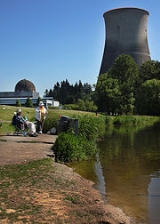
Nuclear power debate

Encyclopedia
The nuclear power debate is about the controversy which has surrounded the deployment and use of nuclear fission reactors
to generate electricity
from nuclear fuel
for civilian purposes. The debate about nuclear power peaked during the 1970s and 1980s, when it "reached an intensity unprecedented in the history of technology controversies", in some countries.
Proponents of nuclear energy argue that nuclear power is a sustainable energy
source which reduces carbon emissions and can increase energy security
if its use supplants a dependence on imported fuels. Proponents advance the notion that nuclear power produces virtually no air pollution, in contrast to the chief viable alternative of fossil fuel. Proponents also believe that nuclear power is the only viable course to achieve energy independence for most Western countries. They emphasize that the risks of storing waste are small and can be further reduced by using the latest technology in newer reactors, and the operational safety record in the Western world is excellent when compared to the other major kinds of power plants.
Opponents say that nuclear power poses many threats to people and the environment. These threats include health risks and environmental damage from uranium mining
, processing and transport, the risk of nuclear weapons proliferation
or sabotage, and the unsolved problem of radioactive nuclear waste. They also contend that reactors themselves are enormously complex machines where many things can and do go wrong, and there have been many serious nuclear accidents. Critics do not believe that these risks can be reduced through new technology
. They argue that when all the energy-intensive stages of the nuclear fuel chain are considered, from uranium mining to nuclear decommissioning
, nuclear power is not a low-carbon electricity source.
and Ian Lowe
discuss and articulate the debate about nuclear power. Brook argues that there are seven reasons why people should say "yes" to nuclear power:
Lowe argues that there are seven reasons why people should say "no" to nuclear power:
es, and uranium
is mined in countries willing to export, including Australia and Canada. However, countries now responsible for more than 30% of the world’s uranium production: Kazakhstan, Namibia, Niger, and Uzbekistan, are politically unstable.
Reserves from existing uranium mines are being rapidly depleted, and one assessment from the IAEA showed that enough high-grade ore exists to supply the needs of the current reactor fleet for only 40-50 years. Expected shortfalls in available fuel threaten future plants and contribute to volatility of uranium prices at existing plants. Uranium fuel costs have escalated in recent years, which negatively impacts on the viability of nuclear projects.
According to a Stanford study, fast breeder reactors have the potential to provide power for humans on earth for billions of years, making this source sustainable. But "because of the link between plutonium and nuclear weapons, the potential application of fast breeders has led to concerns that nuclear power expansion would bring in an era of uncontrolled weapons proliferation
".
Thorium
-fuelled thermal breeder reactors such as LFTR
also have the potential to satisfy the global energy needs for hundreds of thousands of years, while offering high proliferation resistance compared to uranium-fuelled breeders.
was 86.8%, the number of SCRAM
s per 7,000 hours critical was 0.6, and the unplanned capacity loss factor was 1.6%. Capacity factor is the net power produced divided by the maximum amount possible running at 100% all the time, thus this includes all scheduled maintenance/refueling outages as well as unplanned losses. The 7,000 hours is roughly representative of how long any given reactor will remain critical in a year, meaning that the scram rates translates into a sudden and unplanned shutdown about 0.6 times per year for any given reactor in the world. The unplanned capacity loss factor represents amount of power not produced due to unplanned scrams and postponed restarts.
The World Nuclear Association
argues that: "Obviously sun, wind, tides and waves cannot be controlled to provide directly either continuous base-load
power, or peak-load power when it is needed,..." "In practical terms non-hydro renewables are therefore able to supply up to some 15–20% of the capacity of an electricity grid, though they cannot directly be applied as economic substitutes for most coal or nuclear power, however significant they become in particular areas with favourable conditions." "If the fundamental opportunity of these renewables is their abundance and relatively widespread occurrence, the fundamental challenge, especially for electricity supply, is applying them to meet demand given their variable and diffuse nature. This means either that there must be reliable duplicate sources of electricity beyond the normal system reserve, or some means of electricity storage." "Relatively few places have scope for pumped storage
dams close to where the power is needed, and overall efficiency is less than 80%. Means of storing large amounts of electricity as such in giant batteries or by other means have not been developed."
According to Benjamin K. Sovacool
, most studies critiquing solar and wind energy look only at individual generators and not at the system wide effects of solar and wind farms. Correlations between power swings drop substantially as more solar and wind farm
s are integrated (a process known as geographical smoothing) and a wider geographic area also enables a larger pool of energy efficiency
efforts to abate intermittency.
Sovacool says that previously intermittent sources such as wind and solar can displace nuclear resources. "Nine recent studies have concluded that the variability and intermittency of wind and solar resources becomes easier to manage the more they are deployed and interconnected, not the other way around, as some utilities suggest. This is because wind and solar plants help grid operators handle major outages and contingencies elsewhere in the system, since they generate power in smaller increments that are less damaging than unexpected outages from large plants".
According to a 2011 projection by the International Energy Agency
, solar power
generators may produce most of the world’s electricity within 50 years, with wind power
, hydroelectricity
and biomass
plants supplying much of the remaining generation. "Photovoltaic and concentrated solar power together can become the major source of electricity". Renewable technologies can enhance energy security in electricity generation
, heat supply, and transportation.
Amory Lovins
explains that even large nuclear plants cannot supply continuous baseload electricity:
Lovins says that nuclear plants have an additional disadvantage: for safety, they must instantly shut down in a power failure, but for nuclear-physics reasons, they can’t be quickly restarted. For example, during the Northeast Blackout of 2003
, nine perfectly operating U.S. nuclear units had to shut down. For the first three days after restart, when they were most needed, their output was below 3% of normal.
Since nuclear power plants are fundamentally heat engine
s, waste heat disposal becomes an issue at high ambient temperature. Droughts and extended periods of high temperature can “cripple nuclear power generation, and it is often during these times when electricity demand is highest because of air-conditioning and refrigeration loads and diminished hydroelectric capacity”. In such very hot weather a power reactor may have to operate at a reduced power level or even shut down. In the 2006 European heat wave
, a number of nuclear plants had to secure exemptions from regulations in order to discharge overheated water into the environment; several European nations were forced to reduce operations at some plants and take others offline and France, normally an electricity exporter, had to buy electricity on European spot market to meet demand. In 2009 in Germany, eight nuclear reactors had to be shut down simultaneously on hot summer days for reasons relating to the overheating of equipment or of rivers. Overheated discharge water has resulted in significant fish kills in the past, impacting livelihood and raising public concern.
s typically have high capital costs for building the plant, but low direct fuel costs (with much of the costs of fuel extraction, processing, use and long term storage externalized). Therefore, comparison with other power generation methods is strongly dependent on assumptions about construction timescales and capital financing for nuclear plants. Cost estimates also need to take into account plant decommissioning
and nuclear waste storage costs. On the other hand measures to mitigate
global warming
, such as a carbon tax
or carbon emissions trading, may favor the economics of nuclear power.
In recent years there has been a slowdown of electricity demand growth and financing has become more difficult, which has an impact on large projects such as nuclear reactors, with very large upfront costs and long project cycles which carry a large variety of risks. In Eastern Europe, a number of long-established projects are struggling to find finance, notably Belene in Bulgaria and the additional reactors at Cernavoda in Romania, and some potential backers have pulled out. Where cheap gas is available and its future supply relatively secure, this also poses a major problem for nuclear projects.
Analysis of the economics of nuclear power must take into account who bears the risks of future uncertainties. To date all operating nuclear power plants were developed by state-owned or regulated
utility monopolies
where many of the risks associated with construction costs, operating performance, fuel price, and other factors were borne by consumers rather than suppliers. Many countries have now liberalized the electricity market
where these risks, and the risk of cheaper competitors emerging before capital costs are recovered, are borne by plant suppliers and operators rather than consumers, which leads to a significantly different evaluation of the economics of new nuclear power plants.
Following the 2011 Fukushima Daiichi nuclear disaster
, costs are likely to go up for currently operating and new nuclear power plants, due to increased requirements for on-site spent fuel management and elevated design basis threats.
Nuclear industry proponents argue that competing energy sources also receive subsidies. Fossil fuels receive large direct and indirect subsidies, such as tax benefits and not having to pay for the greenhouse gas
es they emit. Renewables receive proportionately large direct production subsidies and tax breaks in many nations, although in absolute terms they are often less than subsidies received by other sources.
Energy research and development (R&D) for nuclear power continues to receive large state subsidies. In the United States, nuclear receives more Federal R&D support than the renewables industry, however the impact of favorable tax incentives drives the total Federal support of the renewables industry to a level almost four times as high as that of the nuclear industry, despite all renewables (excluding hydroelectric, which receives no R&D funding) producing only 1/8 as much power as nuclear. In Europe, the FP7 research program has more subsidies for nuclear than for renewable and energy efficiency together, although over 70% of this is directed at the ITER
fusion project. In the US, public research money for nuclear fission declined from 2,179 to 35 million dollars between 1980 and 2000.
A May 12, 2008 editorial in the Wall St. Journal stated, "For electricity generation, the EIA concludes that solar energy is subsidized to the tune of $24.34 per megawatt hour, wind $23.37 and 'clean coal
' $29.81. By contrast, normal coal receives 44 cents, natural gas a mere quarter, hydroelectric about 67 cents and nuclear power $1.59." The impacts of prior subsidies, some of which may no longer be in effect, are not measured in the previous analysis. However, the Renewable Energy Policy Project stated that from 1947 to 1999, nuclear power was subsidized $145.4 billion, wind power $1.2 billion and solar $4.4 billion. From a megawatt hour basis, this translates into $12.45 per MWh produced for nuclear power, $36.47 for wind power and $511.63 for solar (1999 dollars).
that fully covered these costs. The liability of owners of nuclear power plants in the U.S. is currently limited under the Price-Anderson Act
(PAA). The Price-Anderson Act, introduced in 1957, was "an implicit admission that nuclear power provided risks that producers were unwilling to assume without federal backing". The Price-Anderson Act "shields nuclear utilities, vendors and suppliers against liability claims in the event of a catastrophic accident by imposing an upper limit on private sector liability". Without such protection, private companies were unwilling to be involved. No other technology in the history of American industry has enjoyed such continuing blanket protection.
The PAA was due to expire in 2002, and the former U.S. vice-president Dick Cheney
said in 2001 that “nobody's going to invest in nuclear power plants” if the PAA is not renewed. The U.S. Nuclear Regulatory Commission (USNRC) concluded that the liability limits placed on nuclear insurance were significant enough to constitute a subsidy, but a quantification of the amount was not attempted at that time. Shortly after this in 1990, Dubin and Rothwell were the first to estimate the value to the U.S. nuclear industry of the limitation on liability for nuclear power plants under the Price Anderson Act. Their underlying method was to extrapolate the premiums operators currently pay versus the full liability they would have to pay for full insurance in the absence of the PAA limits. The size of the estimated subsidy per reactor per year was $60 million prior to the 1982 amendments, and up to $22 million following the 1988 amendments. In a separate article in 2003, Anthony Heyes updates the 1988 estimate of $22 million per year to $33 million (2001 dollars).
In case of a nuclear accident, should claims exceed this primary liability, the PAA requires all licensees to additionally provide a maximum of $95.8 million into the accident pool - totaling roughly $10 billion if all reactors were required to pay the maximum. This is still not sufficient in the case of a serious accident, as the cost of damages could exceed $10 billion. According to the PAA, should the costs of accident damages exceed the $10 billion pool, the remainder of the costs would be fully covered by the U.S. Government. In 1982, a Sandia National Laboratories
study concluded that depending on the reactor size and 'unfavorable conditions' a serious nuclear accident could lead to property damages as high as $314 billion while fatalities could reach 50,000. A recent study found that if only this one relatively ignored indirect subsidy for nuclear power was converted to a direct subsidy and diverted to photovoltaic manufacturing, it would result in more installed power and more energy produced by mid-century compared to the nuclear case.
, radioactive effluent emissions, and waste heat
, as under normal generating conditions nuclear power does not produce greenhouse gas
emissions[ , ] directly (although the nuclear fuel cycle produces them indirectly, though at much smaller rates than fossil fuels).
Nuclear generation does not directly produce sulfur dioxide, nitrogen oxides, mercury or other pollutants associated with the combustion of fossil fuels. In 2008, The Economist stated that "nuclear reactors are the one proven way to make carbon-dioxide-free electricity in large and reliable quantities that does not depend (as hydroelectric and geothermal energy do) on the luck of the geographical draw." Many experts, some of whom consider themselves environmentalists, now believe that expanded nuclear generation is the only way to reduce green house gas emissions while providing for current and future electricity needs. However, this is disputed in the literature because of the basic thermodynamic limits to nuclear energy deployment.
While nuclear power does not directly emit greenhouse gasses, over a facility's life cycle, emissions occur through plant construction, operation, uranium mining and milling, and plant decommissioning. A meta analysis of 103 life cycle studies by Benjamin K. Sovacool
, found that nuclear power plants produce electricity with about 66 g equivalent lifecycle carbon dioxide emissions per kWh, while renewable power generators produce electricity with only 9.5-38 g carbon dioxide per kWh. This work on carbon emissions from nuclear power stations has been reviewed in Nature
. A study done at the University of Wisconsin showed all non-fossil sources are roughly equal in reducing greenhouse-gas emissions.
Nuclear plants require more, but not significantly more, cooling water than fossil-fuel power plants due to their slightly lower generation efficiencies. Uranium mining can use large amounts of water — for example, the Roxby Downs mine in South Australia uses 35 million litres of water each day and plans to increase this to 150 million litres per day.
 The world's nuclear fleet creates about 10,000 metric tons of high-level spent nuclear fuel each year. High-level radioactive waste management concerns management and disposal of highly radioactive
materials created during production of nuclear power. The technical issues in accomplishing this are daunting, due to the extremely long periods radioactive waste
s remain deadly to living organisms. Of particular concern are two long-lived fission product
s, Technetium-99
(half-life 220,000 years) and Iodine-129
(half-life 15.7 million years), which dominate spent nuclear fuel radioactivity after a few thousand years. The most troublesome transuranic element
s in spent fuel are Neptunium-237
(half-life two million years) and Plutonium-239
(half-life 24,000 years). Consequently, high-level radioactive waste requires sophisticated treatment and management to successfully isolate it from the biosphere
. This usually necessitates treatment, followed by a long-term management strategy involving permanent storage, disposal or transformation of the waste into a non-toxic form.
Governments around the world are considering a range of waste management and disposal options, usually involving deep-geologic placement, although there has been limited progress toward implementing long-term waste management solutions. This is partly because the timeframes in question when dealing with radioactive waste
range from 10,000 to millions of years, according to studies based on the effect of estimated radiation doses.
Disposal of nuclear waste is often said to be the Achilles' heel of the nuclear industry. Presently, waste is mainly stored at individual reactor sites and there are over 430 locations around the world where radioactive material continues to accumulate. Experts agree that centralized underground repositories which are well-managed, guarded, and monitored, would be a vast improvement. There is an international consensus on the advisability of storing nuclear waste in deep underground repositories, but no country in the world has yet opened such a site.
has said: "... in essence, a nuclear reactor is just a very sophisticated and dangerous way to boil water -- analogous to cutting a pound of butter with a chain saw." Much complexity is due to redundancy of systems and the defense in depth strategy of the designs. New reactors, though, will incorporate passive safety features to reduce the need for redundancy.
The nuclear power industry has improved the safety and performance of reactors, and has proposed new safer (but generally untested) reactor designs but there is no guarantee that the reactors will be designed, built and operated correctly. Mistakes do occur and the designers of reactors at Fukushima
in Japan did not anticipate that a tsunami generated by an earthquake would disable the backup systems that were supposed to stabilize the reactor after the earthquake. According to UBS AG, the Fukushima I nuclear accidents have cast doubt on whether even an advanced economy like Japan can master nuclear safety. Catastrophic scenarios involving terrorist attacks are also conceivable. An interdisciplinary team from MIT have estimated that given a three-fold increase in nuclear power from 2005 to 2055, and an unchanged accident frequency, four core damage accidents would be expected in that period
The impact of nuclear accidents has been a topic of debate practically since the first nuclear reactor
s were constructed. It has also been a key factor in public concern about nuclear facilities. Some technical measures to reduce the risk of accidents or to minimize the amount of radioactivity released to the environment have been adopted. Despite the use of such measures, "there have been many accidents with varying impacts as well near misses and incidents".
Benjamin K. Sovacool
has reported that worldwide there have been 99 accidents at nuclear power plants. Fifty-seven accidents have occurred since the Chernobyl disaster, and 57% (56 out of 99) of all nuclear-related accidents have occurred in the USA. Serious nuclear power plant
accidents include the Fukushima Daiichi nuclear disaster
(2011), Chernobyl disaster
(1986), Three Mile Island accident
(1979), and the SL-1
accident (1961). Nuclear-powered submarine mishaps include the K-19
reactor accident (1961), the K-27
reactor accident (1968), and the K-431
reactor accident (1985).
The World Nuclear Association
provides a comparison of deaths from accidents in course of different forms of energy production. In their comparison, deaths per TW-yr of electricity produced from 1970 to 1992 are quoted as 885 for hydropower, 342 for coal, 85 for natural gas, and 8 for nuclear.
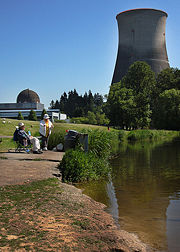 A major concern in the nuclear debate is what the long-term effects of living near or working in a nuclear power station are. These concerns typically center around the potential for increased risks of cancer. However, studies conducted by non-profit, neutral agencies have found no compelling evidence of correlation between nuclear power and risk of cancer.
There has been considerable research done on the effect of low-level radiation on humans. Debate on the applicability of Linear no-threshold model
versus Radiation hormesis
and other competing models continues, however, the predicted low rate of cancer with low dose means that large sample sizes are required in order to make meaningful conclusions. A study conducted by the National Academy of Science found that carcinogenic effects of radiation does increase with dose. The largest study on nuclear industry workers in history involved nearly a half-million individuals and concluded that a 1–2% of cancer deaths were likely due to occupational dose. This was on the high range of what theory predicted by LNT, but was "statistically compatible".
The Nuclear Regulatory Commission
(NRC) has a factsheet that outlines 6 different studies. In 1990 the United States Congress
requested the National Cancer Institute
to conduct a study of cancer mortality rates around nuclear plants and other facilities covering 1950 to 1984 focusing on the change after operation started of the respective facilities. They concluded in no link. In 2000 the University of Pittsburgh
found no link to heightened cancer deaths in people living within 5 miles of plant at the time of the Three Mile Island accident
. The same year, the Illinois Public Health Department found no statistical abnormality of childhood cancers in counties with nuclear plants. In 2001 the Connecticut Academy of Science and Engineering
confirmed that radiation emissions were negligibly low at the Connecticut Yankee Nuclear Power Plant. Also that year, the American Cancer Society
investigated cancer cluster
s around nuclear plants and concluded no link to radiation noting that cancer clusters occur regularly due to unrelated reasons. Again in 2001, the Florida Bureau of Environmental Epidemiology reviewed claims of increased cancer rates in counties with nuclear plants, however, using the same data as the claimants, they observed no abnormalities.
Scientists learned about exposure to high level radiation from studies of the effects of bombing populations at Hiroshima and Nagasaki. However, it is difficult to trace the relationship of low level radiation exposure to resulting cancers and mutations. This is because the latency period between exposure and effect can be 25 years or more for cancer and a generation or more for genetic damage. Since nuclear generating plants have a brief history, it is early to judge the effects.
Most human exposure to radiation comes from natural background radiation
. Natural sources of radiation amount to an average annual radiation dose of 295 mrem. The average person receives about 53 mrem from medical procedures and 10 mrem from consumer products. According to the National Safety Council, people living within 50 miles of a nuclear power plant receive an additional 0.01 mrem per year. Living within 50 miles of a coal plant adds 0.03 mrem per year.
Current guidelines established by the NRC, require extensive emergency planning, between nuclear power plants, Federal Emergency Management Agency
(FEMA), and the local governments. Plans call for different zones, defined by distance from the plant and prevailing weather conditions and protective actions. In the reference cited, the plans detail different categories of emergencies and the protective actions including possible evacuation.
A German study on childhood cancer in the vicinity of nuclear power plants, the KiKK study was published in December 2007. According to Ian Fairlie, it "resulted in a public outcry and media debate in Germany which has received little attention elsewhere". It has been established "partly as a result of an earlier study by Körblein and Hoffmann which had found statistically significant increases in solid cancer
s (54%), and in leukemia
(76%) in children aged less than 5 within 5 km of 15 German nuclear power plant sites. It reported a 2.2-fold increase in leukemias and a 1.6-fold increase in solid (mainly embryonal) cancers among children living within 5 km of all German nuclear power stations." In 2011 a new study of the KiKK data was incorporated into an assessment by the Committee on Medical Aspects of Radiation in the Environment
(COMARE) of the incidence of childhood leukemia around British nuclear power plants. It found that the control sample of population used for comparison in the German study may have been incorrectly selected and other possible contributory factors, such as socio-economic ranking, were not taken into consideration. The committee concluded that there is no significant evidence of an association between risk of childhood leukemia (in under 5 year olds) and living in proximity to a nuclear power plant.
. Inside China, and outside the country, the speed of the nuclear construction program has raised safety concerns. Prof He Zuoxiu
, who was involved with China's atomic bomb program, has said that plans to expand production of nuclear energy twentyfold by 2030 could be disastrous, as China was seriously underprepared on the safety front. China's fast-expanding nuclear sector is opting for cheap technology that “will be 100 years old by the time dozens of its reactors reach the end of their lifespans”, according to diplomatic cables from the US embassy in Beijing. The rush to build new nuclear power plants may “create problems for effective management, operation and regulatory oversight” with the biggest potential bottleneck being human resources – “coming up with enough trained personnel to build and operate all of these new plants, as well as regulate the industry”. The challenge for the government and nuclear companies is to "keep an eye on a growing army of contractors and subcontractors who may be tempted to cut corners". China is advised to maintain nuclear safeguards in a business culture where quality and safety are sometimes sacrificed in favor of cost-cutting, profits, and corruption. China has asked for international assistance in training more nuclear power plant inspectors.
, the growth of nuclear power has "historically increased the ability of nations to obtain or enrich uranium for nuclear weapons, and a large-scale worldwide increase in nuclear energy facilities would exacerbate this problem, putting the world at greater risk of a nuclear war or terrorism catastrophe". The historic link between energy facilities and weapons is evidenced by the secret development or attempted development of weapons capabilities in nuclear power facilities in Pakistan, India, Iraq (prior to 1981), Iran, and to some extent in North Korea.
Four AP1000 reactors, which were designed by the American Westinghouse Electric Company
are currently, as of 2011, being built in China and a further two AP1000 reactors are to be built in the USA. Hyperion Power Generation
, which is designing modular reactor assemblies that are proliferation resistant, is a privately owned US corporation, as is Terrapower
which has the financial backing of Bill Gates
.
, "The human, environmental, and economic costs from a successful attack on a nuclear power plant that results in the release of substantial quantities of radioactive material to the environment could be great." Such an attack would, however, be difficult to mount. U.S. reactors are surrounded by a double row of electronically monitored tall fences, and patrolled by a sizable force of armed guards. Modern nuclear reactor containment building
s are designed to be impervious to a September 11-style attack. If terrorists were able to gain access to a nuclear reactor, they could do little more than vandalize the equipment. The National Reconnaissance Office
's "Design Basis Threat" criteria for nuclear plant security is classified; what size attacking force the plants are able to protect against is unclear. Scram
ming a plant takes less than 5 seconds, while unimpeded restart takes several hours, severely hampering any efforts to release radioactivity into the atmosphere. Attacks on chemical industry
or petroleum industry
plants, which are much more vulnerable to terrorism, would result in similarly dangerous outcomes, sometimes more lethal than an attack on the nuclear power industry.
, colloquially known as a "dirty bomb
". There were incidents in post-Soviet Russia of nuclear plant workers attempting to sell nuclear materials for this purpose (for example, there was such an incident in Russia in 1999 where plant workers attempted to sell 5 grams of radioactive material on the open market, and an incident in 1993 where Russian workers were caught attempting to sell 4.5 kilograms of enriched uranium.), and there are additional concerns that the transportation of nuclear waste along roadways or railways opens it up for potential theft. The United Nations has since called upon world leaders to improve security in order to prevent radioactive material falling into the hands of terrorists, and such fears have been used as justifications for centralized, permanent, and secure waste repositories and increased security along transportation routes.
However, scientists agree that the spent fissile fuel is not radioactive enough to create any sort of effective nuclear weapon, in a traditional sense where the radioactive material is the means of explosion.
for Feb-Mar 2005 showed 37% in favour of nuclear energy and 55% opposed, leaving 8% undecided. The same agency ran another poll in Oct-Nov 2006 that showed 14% favoured building new nuclear plants, 34% favoured maintaining the same number, and 39% favoured reducing the number of operating plants, leaving 13% undecided. This poll showed that the approval of nuclear power rose with the education level of respondents.
The two fuel sources that attracted the highest levels of support in the 2007 MIT Energy Survey are solar power
and wind power
. Outright majorities would choose to “increase a lot” use of these two fuels, and better than three out of four Americans would like to increase these fuels in the U. S. energy portfolio. Fourteen per cent of respondents would like to see nuclear power
"increase a lot".
What had been growing acceptance of nuclear power in the United States was eroded sharply following the 2011 Japanese nuclear accidents
, with support for building nuclear power plants in the U.S. dropping slightly lower than it was immediately after the Three Mile Island accident
in 1979, according to a CBS News poll. Only 43 percent of those polled after the Fukushima nuclear emergency said they would approve building new power plants in the United States.
A 2011 poll suggests that skepticism over nuclear power is growing in Sweden following Japan's nuclear crisis. 36 percent of respondents want to phase-out nuclear power, up from 15 percent in a similar survey two years ago.
In 2011, London-based bank HSBC said: "With Three Mile Island and Fukushima as a backdrop, the US public may find it difficult to support major nuclear new build and we expect that no new plant extensions will be granted either. Thus we expect the clean energy standard under discussion in US legislative chambers will see a far greater emphasis on gas and renewables
plus efficiency
".
In 2011, Deutsche Bank
analysts concluded that "the global impact of the Fukushima accident is a fundamental shift in public perception with regard to how a nation prioritizes and values its populations health, safety, security, and natural environment when determining its current and future energy pathways". As a consequence, "renewable energy
will be a clear long-term winner in most energy systems, a conclusion supported by many voter surveys conducted over the past few weeks. At the same time, we consider natural gas
to be, at the very least, an important transition fuel, especially in those regions where it is considered secure".
An opinion poll conducted globally by GlobeScan
, commissioned by BBC News
in late 2011 showed that public support for nuclear power diminished significantly in most countries compared to 2005.
(IAEA) in recent years are as follows:
Stephanie Cooke
has argued that the cost of building new reactors is extremely high, as are the risks involved. Most utilities have said that they won't build new plants without government loan guarantees. There are also bottlenecks at factories that produce reactor pressure vessels and other equipment, and there is a shortage of qualified personnel to build and operate the reactors, although the recent acceleration in nuclear power plant construction is drawing a substantial expansion of the heavy engineering capability.
Following the Fukushima Daiichi nuclear disaster
, the International Energy Agency
halved its estimate of additional nuclear generating capacity to be built by 2035. Platts
has reported that "the crisis at Japan's Fukushima nuclear plants has prompted leading energy-consuming countries to review the safety of their existing reactors and cast doubt on the speed and scale of planned expansions around the world". In 2011, The Economist reported that nuclear power "looks dangerous, unpopular, expensive and risky", and that "it is replaceable with relative ease and could be forgone with no huge structural shifts in the way the world works".
In September 2011, German engineering giant Siemens
announced it will withdraw entirely from the nuclear industry, as a response to the Fukushima nuclear disaster in Japan. The company is to boost its work in the renewable energy
sector.
In 2011, Mycle Schneider
spoke of a global downward trend in the nuclear power industry:
Nuclear reactor
A nuclear reactor is a device to initiate and control a sustained nuclear chain reaction. Most commonly they are used for generating electricity and for the propulsion of ships. Usually heat from nuclear fission is passed to a working fluid , which runs through turbines that power either ship's...
to generate electricity
Electricity
Electricity is a general term encompassing a variety of phenomena resulting from the presence and flow of electric charge. These include many easily recognizable phenomena, such as lightning, static electricity, and the flow of electrical current in an electrical wire...
from nuclear fuel
Nuclear fuel
Nuclear fuel is a material that can be 'consumed' by fission or fusion to derive nuclear energy. Nuclear fuels are the most dense sources of energy available...
for civilian purposes. The debate about nuclear power peaked during the 1970s and 1980s, when it "reached an intensity unprecedented in the history of technology controversies", in some countries.
Proponents of nuclear energy argue that nuclear power is a sustainable energy
Sustainable energy
Sustainable energy is the provision of energy that meets the needs of the present without compromising the ability of future generations to meet their needs. Sustainable energy sources include all renewable energy sources, such as hydroelectricity, solar energy, wind energy, wave power, geothermal...
source which reduces carbon emissions and can increase energy security
Energy security
Energy security is a term for an association between national security and the availability of natural resources for energy consumption. Access to cheap energy has become essential to the functioning of modern economies. However, the uneven distribution of energy supplies among countries has led...
if its use supplants a dependence on imported fuels. Proponents advance the notion that nuclear power produces virtually no air pollution, in contrast to the chief viable alternative of fossil fuel. Proponents also believe that nuclear power is the only viable course to achieve energy independence for most Western countries. They emphasize that the risks of storing waste are small and can be further reduced by using the latest technology in newer reactors, and the operational safety record in the Western world is excellent when compared to the other major kinds of power plants.
Opponents say that nuclear power poses many threats to people and the environment. These threats include health risks and environmental damage from uranium mining
Uranium mining
Uranium mining is the process of extraction of uranium ore from the ground. The worldwide production of uranium in 2009 amounted to 50,572 tonnes, of which 27% was mined in Kazakhstan. Kazakhstan, Canada, and Australia are the top three producers and together account for 63% of world uranium...
, processing and transport, the risk of nuclear weapons proliferation
Nuclear proliferation
Nuclear proliferation is a term now used to describe the spread of nuclear weapons, fissile material, and weapons-applicable nuclear technology and information, to nations which are not recognized as "Nuclear Weapon States" by the Treaty on the Nonproliferation of Nuclear Weapons, also known as the...
or sabotage, and the unsolved problem of radioactive nuclear waste. They also contend that reactors themselves are enormously complex machines where many things can and do go wrong, and there have been many serious nuclear accidents. Critics do not believe that these risks can be reduced through new technology
Technology
Technology is the making, usage, and knowledge of tools, machines, techniques, crafts, systems or methods of organization in order to solve a problem or perform a specific function. It can also refer to the collection of such tools, machinery, and procedures. The word technology comes ;...
. They argue that when all the energy-intensive stages of the nuclear fuel chain are considered, from uranium mining to nuclear decommissioning
Nuclear decommissioning
Nuclear decommissioning is the dismantling of a nuclear power plant and decontamination of the site to a state no longer requiring protection from radiation for the general public...
, nuclear power is not a low-carbon electricity source.
Issues
In the 2010 book Why vs. Why: Nuclear Power Barry BrookBarry Brook (scientist)
Barry William Brook is an Australian scientist. He is a professor in the School of Earth and Environmental Sciences at the University of Adelaide, where he holds the Sir Hubert Wilkins Chair of Climate Change. He is also Director of Climate Science at the Environment Institute. He has a B.Sc. and...
and Ian Lowe
Ian Lowe
Ian Lowe is President of the Australian Conservation Foundation, Professor of Science, Technology and Society and former Head of the School of Science at Griffith University, as well as an adjunct professor at Sunshine Coast University and Flinders University. In 1996 he was chair-person of the...
discuss and articulate the debate about nuclear power. Brook argues that there are seven reasons why people should say "yes" to nuclear power:
- Because renewable energyRenewable energyRenewable energy is energy which comes from natural resources such as sunlight, wind, rain, tides, and geothermal heat, which are renewable . About 16% of global final energy consumption comes from renewables, with 10% coming from traditional biomass, which is mainly used for heating, and 3.4% from...
and energy efficiencyEfficient energy useEfficient energy use, sometimes simply called energy efficiency, is the goal of efforts to reduce the amount of energy required to provide products and services. For example, insulating a home allows a building to use less heating and cooling energy to achieve and maintain a comfortable temperature...
won’t solve the energy and climate crises - Because nuclear fuel is virtually unlimited and packs a huge energy punch
- Because new technology solves the "nuclear waste" problem
- Because nuclear power is the safest energy option
- Because advanced nuclear power will strengthen global security
- Because nuclear power's true costs are lower than either fossil fuels or renewables
- Because nuclear power can lead the "clean energy" revolution
Lowe argues that there are seven reasons why people should say "no" to nuclear power:
- Because it is not a fast enough response to climate changeClimate changeClimate change is a significant and lasting change in the statistical distribution of weather patterns over periods ranging from decades to millions of years. It may be a change in average weather conditions or the distribution of events around that average...
- Because it is too expensive
- Because the need for baseload electricity is exaggerated
- Because the problem of waste remains unresolved
- Because it will increase the risk of nuclear war
- Because there are safety concerns
- Because there are better alternatives
Energy supplied
Many studies have documented how nuclear power plants generate 16% of global electricity, but provide only 6.3% of energy production and 2.6% of final energy consumption. This mismatch stems mainly from the poor consumption efficiency of electricity compared to other energy carriers, and the transmission losses associated with nuclear plants which are usually situated far away from sources of demand.Energy security
For some countries, nuclear power affords energy independence. Nuclear power has been relatively unaffected by embargoEmbargo
An embargo is the partial or complete prohibition of commerce and trade with a particular country, in order to isolate it. Embargoes are considered strong diplomatic measures imposed in an effort, by the imposing country, to elicit a given national-interest result from the country on which it is...
es, and uranium
Uranium
Uranium is a silvery-white metallic chemical element in the actinide series of the periodic table, with atomic number 92. It is assigned the chemical symbol U. A uranium atom has 92 protons and 92 electrons, of which 6 are valence electrons...
is mined in countries willing to export, including Australia and Canada. However, countries now responsible for more than 30% of the world’s uranium production: Kazakhstan, Namibia, Niger, and Uzbekistan, are politically unstable.
Reserves from existing uranium mines are being rapidly depleted, and one assessment from the IAEA showed that enough high-grade ore exists to supply the needs of the current reactor fleet for only 40-50 years. Expected shortfalls in available fuel threaten future plants and contribute to volatility of uranium prices at existing plants. Uranium fuel costs have escalated in recent years, which negatively impacts on the viability of nuclear projects.
According to a Stanford study, fast breeder reactors have the potential to provide power for humans on earth for billions of years, making this source sustainable. But "because of the link between plutonium and nuclear weapons, the potential application of fast breeders has led to concerns that nuclear power expansion would bring in an era of uncontrolled weapons proliferation
Nuclear proliferation
Nuclear proliferation is a term now used to describe the spread of nuclear weapons, fissile material, and weapons-applicable nuclear technology and information, to nations which are not recognized as "Nuclear Weapon States" by the Treaty on the Nonproliferation of Nuclear Weapons, also known as the...
".
Thorium
Thorium
Thorium is a natural radioactive chemical element with the symbol Th and atomic number 90. It was discovered in 1828 and named after Thor, the Norse god of thunder....
-fuelled thermal breeder reactors such as LFTR
Liquid fluoride thorium reactor
The liquid fluoride thorium reactor is a thermal breeder reactor which uses the thorium fuel cycle in a fluoride-based molten salt fuel to achieve high operating temperatures at atmospheric pressure....
also have the potential to satisfy the global energy needs for hundreds of thousands of years, while offering high proliferation resistance compared to uranium-fuelled breeders.
Reliability
In 2005, out of all nuclear power plants in the world, the average capacity factorCapacity factor
The net capacity factor or load factor of a power plant is the ratio of the actual output of a power plant over a period of time and its potential output if it had operated at full nameplate capacity the entire time...
was 86.8%, the number of SCRAM
Scram
A scram or SCRAM is an emergency shutdown of a nuclear reactor – though the term has been extended to cover shutdowns of other complex operations, such as server farms and even large model railroads...
s per 7,000 hours critical was 0.6, and the unplanned capacity loss factor was 1.6%. Capacity factor is the net power produced divided by the maximum amount possible running at 100% all the time, thus this includes all scheduled maintenance/refueling outages as well as unplanned losses. The 7,000 hours is roughly representative of how long any given reactor will remain critical in a year, meaning that the scram rates translates into a sudden and unplanned shutdown about 0.6 times per year for any given reactor in the world. The unplanned capacity loss factor represents amount of power not produced due to unplanned scrams and postponed restarts.
The World Nuclear Association
World Nuclear Association
The World Nuclear Association , formerly the Uranium Institute, is an international organization that promotes nuclear power and supports the many companies that comprise the global nuclear industry...
argues that: "Obviously sun, wind, tides and waves cannot be controlled to provide directly either continuous base-load
Base load power plant
Baseload is the minimum amount of power that a utility or distribution company must make available to its customers, or the amount of power required to meet minimum demands based on reasonable expectations of customer requirements...
power, or peak-load power when it is needed,..." "In practical terms non-hydro renewables are therefore able to supply up to some 15–20% of the capacity of an electricity grid, though they cannot directly be applied as economic substitutes for most coal or nuclear power, however significant they become in particular areas with favourable conditions." "If the fundamental opportunity of these renewables is their abundance and relatively widespread occurrence, the fundamental challenge, especially for electricity supply, is applying them to meet demand given their variable and diffuse nature. This means either that there must be reliable duplicate sources of electricity beyond the normal system reserve, or some means of electricity storage." "Relatively few places have scope for pumped storage
Pumped-storage hydroelectricity
Pumped-storage hydroelectricity is a type of hydroelectric power generation used by some power plants for load balancing. The method stores energy in the form of water, pumped from a lower elevation reservoir to a higher elevation. Low-cost off-peak electric power is used to run the pumps...
dams close to where the power is needed, and overall efficiency is less than 80%. Means of storing large amounts of electricity as such in giant batteries or by other means have not been developed."
According to Benjamin K. Sovacool
Benjamin K. Sovacool
Benjamin K. Sovacool is a Visiting Associate Professor at Vermont Law School and founding Director of the Energy Justice Program at their Institute for Energy and Environment. He was formerly an Assistant Professor and Research Fellow at the National University of Singapore.Sovacool's research...
, most studies critiquing solar and wind energy look only at individual generators and not at the system wide effects of solar and wind farms. Correlations between power swings drop substantially as more solar and wind farm
Wind farm
A wind farm is a group of wind turbines in the same location used to produce electric power. A large wind farm may consist of several hundred individual wind turbines, and cover an extended area of hundreds of square miles, but the land between the turbines may be used for agricultural or other...
s are integrated (a process known as geographical smoothing) and a wider geographic area also enables a larger pool of energy efficiency
Efficient energy use
Efficient energy use, sometimes simply called energy efficiency, is the goal of efforts to reduce the amount of energy required to provide products and services. For example, insulating a home allows a building to use less heating and cooling energy to achieve and maintain a comfortable temperature...
efforts to abate intermittency.
Sovacool says that previously intermittent sources such as wind and solar can displace nuclear resources. "Nine recent studies have concluded that the variability and intermittency of wind and solar resources becomes easier to manage the more they are deployed and interconnected, not the other way around, as some utilities suggest. This is because wind and solar plants help grid operators handle major outages and contingencies elsewhere in the system, since they generate power in smaller increments that are less damaging than unexpected outages from large plants".
According to a 2011 projection by the International Energy Agency
International Energy Agency
The International Energy Agency is a Paris-based autonomous intergovernmental organization established in the framework of the Organisation for Economic Co-operation and Development in 1974 in the wake of the 1973 oil crisis...
, solar power
Solar power
Solar energy, radiant light and heat from the sun, has been harnessed by humans since ancient times using a range of ever-evolving technologies. Solar radiation, along with secondary solar-powered resources such as wind and wave power, hydroelectricity and biomass, account for most of the available...
generators may produce most of the world’s electricity within 50 years, with wind power
Wind power
Wind power is the conversion of wind energy into a useful form of energy, such as using wind turbines to make electricity, windmills for mechanical power, windpumps for water pumping or drainage, or sails to propel ships....
, hydroelectricity
Hydroelectricity
Hydroelectricity is the term referring to electricity generated by hydropower; the production of electrical power through the use of the gravitational force of falling or flowing water. It is the most widely used form of renewable energy...
and biomass
Biomass
Biomass, as a renewable energy source, is biological material from living, or recently living organisms. As an energy source, biomass can either be used directly, or converted into other energy products such as biofuel....
plants supplying much of the remaining generation. "Photovoltaic and concentrated solar power together can become the major source of electricity". Renewable technologies can enhance energy security in electricity generation
Electricity generation
Electricity generation is the process of generating electric energy from other forms of energy.The fundamental principles of electricity generation were discovered during the 1820s and early 1830s by the British scientist Michael Faraday...
, heat supply, and transportation.
Amory Lovins
Amory Lovins
Amory Bloch Lovins is an American environmental scientist and writer, Chairman and Chief Scientist of the Rocky Mountain Institute. He has worked in the field of energy policy and related areas for four decades...
explains that even large nuclear plants cannot supply continuous baseload electricity:
- "All sources of electricity sometimes fail, differing only in how predictably, how often, how much, for how long, and why. Even the most reliable giant power plants are intermittent: "they fail unexpectedly in billion-watt chunks, often for long periods. In the United States, 132 nuclear plants were built, and 21% were permanently and prematurely closed due to reliability or cost problems, while another 27% have at least once completely failed for a year or more. The remaining U.S. nuclear plants produce approximately 90% of their full-time full-load potential, but even they are not fully dependable. Reliably operating nuclear plants must shut down, on average, for 39 days every 17 months for refueling and maintenance.
- "To cope with such intermittence by both nuclear and centralized fossil-fuelled power plants, utilities must install a "reserve margin" of roughly 15% extra capacity, some of which must be continuously fuelled, spinning ready for instant use. Regions which depend heavily on nuclear power "are particularly at risk because drought, a serious safety problem, or a terrorist incident could close many plants simultaneously".
Lovins says that nuclear plants have an additional disadvantage: for safety, they must instantly shut down in a power failure, but for nuclear-physics reasons, they can’t be quickly restarted. For example, during the Northeast Blackout of 2003
Northeast Blackout of 2003
The Northeast blackout of 2003 was a widespread power outage that occurred throughout parts of the Northeastern and Midwestern United States and Ontario, Canada on Thursday, August 14, 2003, just before 4:10 p.m....
, nine perfectly operating U.S. nuclear units had to shut down. For the first three days after restart, when they were most needed, their output was below 3% of normal.
Since nuclear power plants are fundamentally heat engine
Heat engine
In thermodynamics, a heat engine is a system that performs the conversion of heat or thermal energy to mechanical work. It does this by bringing a working substance from a high temperature state to a lower temperature state. A heat "source" generates thermal energy that brings the working substance...
s, waste heat disposal becomes an issue at high ambient temperature. Droughts and extended periods of high temperature can “cripple nuclear power generation, and it is often during these times when electricity demand is highest because of air-conditioning and refrigeration loads and diminished hydroelectric capacity”. In such very hot weather a power reactor may have to operate at a reduced power level or even shut down. In the 2006 European heat wave
2006 European heat wave
The 2006 European heat wave was a period of exceptionally hot weather that arrived at the end of June 2006 in certain European countries. The United Kingdom, France, Belgium, Netherlands, Luxembourg, Italy, Poland, the Czech Republic, Hungary, Germany and western part of Russia were most affected....
, a number of nuclear plants had to secure exemptions from regulations in order to discharge overheated water into the environment; several European nations were forced to reduce operations at some plants and take others offline and France, normally an electricity exporter, had to buy electricity on European spot market to meet demand. In 2009 in Germany, eight nuclear reactors had to be shut down simultaneously on hot summer days for reasons relating to the overheating of equipment or of rivers. Overheated discharge water has resulted in significant fish kills in the past, impacting livelihood and raising public concern.
New nuclear plants
The economics of new nuclear power plants is a controversial subject, since there are diverging views on this topic, and multi-billion dollar investments ride on the choice of an energy source. Nuclear power plantNuclear power plant
A nuclear power plant is a thermal power station in which the heat source is one or more nuclear reactors. As in a conventional thermal power station the heat is used to generate steam which drives a steam turbine connected to a generator which produces electricity.Nuclear power plants are usually...
s typically have high capital costs for building the plant, but low direct fuel costs (with much of the costs of fuel extraction, processing, use and long term storage externalized). Therefore, comparison with other power generation methods is strongly dependent on assumptions about construction timescales and capital financing for nuclear plants. Cost estimates also need to take into account plant decommissioning
Nuclear decommissioning
Nuclear decommissioning is the dismantling of a nuclear power plant and decontamination of the site to a state no longer requiring protection from radiation for the general public...
and nuclear waste storage costs. On the other hand measures to mitigate
Mitigation of global warming
Climate change mitigation is action to decrease the intensity of radiative forcing in order to reduce the potential effects of global warming. Mitigation is distinguished from adaptation to global warming, which involves acting to tolerate the effects of global warming...
global warming
Global warming
Global warming refers to the rising average temperature of Earth's atmosphere and oceans and its projected continuation. In the last 100 years, Earth's average surface temperature increased by about with about two thirds of the increase occurring over just the last three decades...
, such as a carbon tax
Carbon tax
A carbon tax is an environmental tax levied on the carbon content of fuels. It is a form of carbon pricing. Carbon is present in every hydrocarbon fuel and is released as carbon dioxide when they are burnt. In contrast, non-combustion energy sources—wind, sunlight, hydropower, and nuclear—do not...
or carbon emissions trading, may favor the economics of nuclear power.
In recent years there has been a slowdown of electricity demand growth and financing has become more difficult, which has an impact on large projects such as nuclear reactors, with very large upfront costs and long project cycles which carry a large variety of risks. In Eastern Europe, a number of long-established projects are struggling to find finance, notably Belene in Bulgaria and the additional reactors at Cernavoda in Romania, and some potential backers have pulled out. Where cheap gas is available and its future supply relatively secure, this also poses a major problem for nuclear projects.
Analysis of the economics of nuclear power must take into account who bears the risks of future uncertainties. To date all operating nuclear power plants were developed by state-owned or regulated
Regulated market
A regulated market or controlled market, is the provision of goods or services that is regulated by a government appointed body. The regulation may cover the terms and conditions of supplying the goods and services and in particular the price allowed to be charged and/or to whom they are distributed...
utility monopolies
Electric utility
An electric utility is a company that engages in the generation, transmission, and distribution of electricity for sale generally in a regulated market. The electrical utility industry is a major provider of energy in most countries. It is indispensable to factories, commercial establishments,...
where many of the risks associated with construction costs, operating performance, fuel price, and other factors were borne by consumers rather than suppliers. Many countries have now liberalized the electricity market
Electricity market
In economic terms, electricity is a commodity capable of being bought, sold and traded. An electricity market is a system for effecting purchases, through bids to buy; sales, through offers to sell; and short-term trades, generally in the form of financial or obligation swaps. Bids and offers use...
where these risks, and the risk of cheaper competitors emerging before capital costs are recovered, are borne by plant suppliers and operators rather than consumers, which leads to a significantly different evaluation of the economics of new nuclear power plants.
Following the 2011 Fukushima Daiichi nuclear disaster
Fukushima Daiichi nuclear disaster
The is a series of equipment failures, nuclear meltdowns, and releases of radioactive materials at the Fukushima I Nuclear Power Plant, following the Tōhoku earthquake and tsunami on 11 March 2011. The plant comprises six separate boiling water reactors originally designed by General Electric ,...
, costs are likely to go up for currently operating and new nuclear power plants, due to increased requirements for on-site spent fuel management and elevated design basis threats.
Cost of decommissioning nuclear plants
Shutting down a nuclear plant is cited as an extremely expensive process by nuclear power critics, although the costs are usually covered by a component of price charged for electricity during operation. In the UK the Nuclear Decommissioning Authority has increased the overall cost for decommissioning nuclear plants from £57 billion in 2005 to £73 billion in 2008, according to the BBC, although this is heavily influenced by cleaning up the weapons development at Sellafield. However, the Parliamentary Public Accounts Committee was told in July 2008 that this cost could rise further and that it is almost impossible to come up with an accurate figure. Stabilising a plant and ensuring that it is safe is cited as an unknown cost by critics, claiming that decommissioning costs can massively increase the overall cost of nuclear energy.Subsidies
Critics of nuclear power claim that it is the beneficiary of inappropriately large economic subsidies — mainly taking the forms of research and development, and financing support for new build — and that these subsidies are often overlooked when comparing the economics of nuclear against other forms of power generation.Nuclear industry proponents argue that competing energy sources also receive subsidies. Fossil fuels receive large direct and indirect subsidies, such as tax benefits and not having to pay for the greenhouse gas
Greenhouse gas
A greenhouse gas is a gas in an atmosphere that absorbs and emits radiation within the thermal infrared range. This process is the fundamental cause of the greenhouse effect. The primary greenhouse gases in the Earth's atmosphere are water vapor, carbon dioxide, methane, nitrous oxide, and ozone...
es they emit. Renewables receive proportionately large direct production subsidies and tax breaks in many nations, although in absolute terms they are often less than subsidies received by other sources.
Energy research and development (R&D) for nuclear power continues to receive large state subsidies. In the United States, nuclear receives more Federal R&D support than the renewables industry, however the impact of favorable tax incentives drives the total Federal support of the renewables industry to a level almost four times as high as that of the nuclear industry, despite all renewables (excluding hydroelectric, which receives no R&D funding) producing only 1/8 as much power as nuclear. In Europe, the FP7 research program has more subsidies for nuclear than for renewable and energy efficiency together, although over 70% of this is directed at the ITER
ITER
ITER is an international nuclear fusion research and engineering project, which is currently building the world's largest and most advanced experimental tokamak nuclear fusion reactor at Cadarache in the south of France...
fusion project. In the US, public research money for nuclear fission declined from 2,179 to 35 million dollars between 1980 and 2000.
A May 12, 2008 editorial in the Wall St. Journal stated, "For electricity generation, the EIA concludes that solar energy is subsidized to the tune of $24.34 per megawatt hour, wind $23.37 and 'clean coal
Clean coal
Historically used to refer to technologies for reducing emissions of ash, sulfur, and heavy metals from coal combustion; the term is now commonly used to refer to carbon capture and storage technology...
' $29.81. By contrast, normal coal receives 44 cents, natural gas a mere quarter, hydroelectric about 67 cents and nuclear power $1.59." The impacts of prior subsidies, some of which may no longer be in effect, are not measured in the previous analysis. However, the Renewable Energy Policy Project stated that from 1947 to 1999, nuclear power was subsidized $145.4 billion, wind power $1.2 billion and solar $4.4 billion. From a megawatt hour basis, this translates into $12.45 per MWh produced for nuclear power, $36.47 for wind power and $511.63 for solar (1999 dollars).
Indirect nuclear insurance subsidy
The potential costs resulting from a nuclear accident (including one caused by a terrorist attack or a natural disaster) are so great that no nuclear power plant would be built if the owner had to pay for liability insuranceLiability insurance
Liability insurance is a part of the general insurance system of risk financing to protect the purchaser from the risks of liabilities imposed by lawsuits and similar claims. It protects the insured in the event he or she is sued for claims that come within the coverage of the insurance policy...
that fully covered these costs. The liability of owners of nuclear power plants in the U.S. is currently limited under the Price-Anderson Act
Price-Anderson Nuclear Industries Indemnity Act
The Price-Anderson Nuclear Industries Indemnity Act is a United States federal law, first passed in 1957 and since renewed several times, which governs liability-related issues for all non-military nuclear facilities constructed in the United States before 2026...
(PAA). The Price-Anderson Act, introduced in 1957, was "an implicit admission that nuclear power provided risks that producers were unwilling to assume without federal backing". The Price-Anderson Act "shields nuclear utilities, vendors and suppliers against liability claims in the event of a catastrophic accident by imposing an upper limit on private sector liability". Without such protection, private companies were unwilling to be involved. No other technology in the history of American industry has enjoyed such continuing blanket protection.
The PAA was due to expire in 2002, and the former U.S. vice-president Dick Cheney
Dick Cheney
Richard Bruce "Dick" Cheney served as the 46th Vice President of the United States , under George W. Bush....
said in 2001 that “nobody's going to invest in nuclear power plants” if the PAA is not renewed. The U.S. Nuclear Regulatory Commission (USNRC) concluded that the liability limits placed on nuclear insurance were significant enough to constitute a subsidy, but a quantification of the amount was not attempted at that time. Shortly after this in 1990, Dubin and Rothwell were the first to estimate the value to the U.S. nuclear industry of the limitation on liability for nuclear power plants under the Price Anderson Act. Their underlying method was to extrapolate the premiums operators currently pay versus the full liability they would have to pay for full insurance in the absence of the PAA limits. The size of the estimated subsidy per reactor per year was $60 million prior to the 1982 amendments, and up to $22 million following the 1988 amendments. In a separate article in 2003, Anthony Heyes updates the 1988 estimate of $22 million per year to $33 million (2001 dollars).
In case of a nuclear accident, should claims exceed this primary liability, the PAA requires all licensees to additionally provide a maximum of $95.8 million into the accident pool - totaling roughly $10 billion if all reactors were required to pay the maximum. This is still not sufficient in the case of a serious accident, as the cost of damages could exceed $10 billion. According to the PAA, should the costs of accident damages exceed the $10 billion pool, the remainder of the costs would be fully covered by the U.S. Government. In 1982, a Sandia National Laboratories
Sandia National Laboratories
The Sandia National Laboratories, managed and operated by the Sandia Corporation , are two major United States Department of Energy research and development national laboratories....
study concluded that depending on the reactor size and 'unfavorable conditions' a serious nuclear accident could lead to property damages as high as $314 billion while fatalities could reach 50,000. A recent study found that if only this one relatively ignored indirect subsidy for nuclear power was converted to a direct subsidy and diverted to photovoltaic manufacturing, it would result in more installed power and more energy produced by mid-century compared to the nuclear case.
Environmental effects
The primary environmental impacts of nuclear power come from uranium miningUranium mining
Uranium mining is the process of extraction of uranium ore from the ground. The worldwide production of uranium in 2009 amounted to 50,572 tonnes, of which 27% was mined in Kazakhstan. Kazakhstan, Canada, and Australia are the top three producers and together account for 63% of world uranium...
, radioactive effluent emissions, and waste heat
Waste heat
Waste heat sometimes called Secondary heat or Low-grade heat refers to heat produced by machines, electrical equipment and industrial processes for which no useful application is found. Energy is often produced by a heat engine, running on a source of high-temperature heat...
, as under normal generating conditions nuclear power does not produce greenhouse gas
Greenhouse gas
A greenhouse gas is a gas in an atmosphere that absorbs and emits radiation within the thermal infrared range. This process is the fundamental cause of the greenhouse effect. The primary greenhouse gases in the Earth's atmosphere are water vapor, carbon dioxide, methane, nitrous oxide, and ozone...
emissions
Nuclear generation does not directly produce sulfur dioxide, nitrogen oxides, mercury or other pollutants associated with the combustion of fossil fuels. In 2008, The Economist stated that "nuclear reactors are the one proven way to make carbon-dioxide-free electricity in large and reliable quantities that does not depend (as hydroelectric and geothermal energy do) on the luck of the geographical draw." Many experts, some of whom consider themselves environmentalists, now believe that expanded nuclear generation is the only way to reduce green house gas emissions while providing for current and future electricity needs. However, this is disputed in the literature because of the basic thermodynamic limits to nuclear energy deployment.
While nuclear power does not directly emit greenhouse gasses, over a facility's life cycle, emissions occur through plant construction, operation, uranium mining and milling, and plant decommissioning. A meta analysis of 103 life cycle studies by Benjamin K. Sovacool
Benjamin K. Sovacool
Benjamin K. Sovacool is a Visiting Associate Professor at Vermont Law School and founding Director of the Energy Justice Program at their Institute for Energy and Environment. He was formerly an Assistant Professor and Research Fellow at the National University of Singapore.Sovacool's research...
, found that nuclear power plants produce electricity with about 66 g equivalent lifecycle carbon dioxide emissions per kWh, while renewable power generators produce electricity with only 9.5-38 g carbon dioxide per kWh. This work on carbon emissions from nuclear power stations has been reviewed in Nature
Nature (journal)
Nature, first published on 4 November 1869, is ranked the world's most cited interdisciplinary scientific journal by the Science Edition of the 2010 Journal Citation Reports...
. A study done at the University of Wisconsin showed all non-fossil sources are roughly equal in reducing greenhouse-gas emissions.
Nuclear plants require more, but not significantly more, cooling water than fossil-fuel power plants due to their slightly lower generation efficiencies. Uranium mining can use large amounts of water — for example, the Roxby Downs mine in South Australia uses 35 million litres of water each day and plans to increase this to 150 million litres per day.
High-level radioactive waste
Radioactive decay
Radioactive decay is the process by which an atomic nucleus of an unstable atom loses energy by emitting ionizing particles . The emission is spontaneous, in that the atom decays without any physical interaction with another particle from outside the atom...
materials created during production of nuclear power. The technical issues in accomplishing this are daunting, due to the extremely long periods radioactive waste
Radioactive waste
Radioactive wastes are wastes that contain radioactive material. Radioactive wastes are usually by-products of nuclear power generation and other applications of nuclear fission or nuclear technology, such as research and medicine...
s remain deadly to living organisms. Of particular concern are two long-lived fission product
Long-lived fission product
Long-lived fission products are radioactive materials with a long half-life produced by nuclear fission.-Evolution of radioactivity in nuclear waste:...
s, Technetium-99
Technetium-99
Technetium-99 is an isotope of technetium which decays with a half-life of 211,000 years to stable ruthenium-99, emitting soft beta rays, but no gamma rays....
(half-life 220,000 years) and Iodine-129
Iodine-129
Iodine-129 is long-lived radioisotope of iodine which occurs naturally, but also is of special interest in the monitoring and effects of man-made nuclear fission decay products, where it serves as both tracer and potential radiological contaminant....
(half-life 15.7 million years), which dominate spent nuclear fuel radioactivity after a few thousand years. The most troublesome transuranic element
Transuranium element
In chemistry, transuranium elements are the chemical elements with atomic numbers greater than 92...
s in spent fuel are Neptunium-237
Isotopes of neptunium
Neptunium is an artificial element, and thus a standard atomic mass cannot be given. Like all artificial elements, it has no stable isotopes...
(half-life two million years) and Plutonium-239
Plutonium-239
Plutonium-239 is an isotope of plutonium. Plutonium-239 is the primary fissile isotope used for the production of nuclear weapons, although uranium-235 has also been used and is currently the secondary isotope. Plutonium-239 is also one of the three main isotopes demonstrated usable as fuel in...
(half-life 24,000 years). Consequently, high-level radioactive waste requires sophisticated treatment and management to successfully isolate it from the biosphere
Biosphere
The biosphere is the global sum of all ecosystems. It can also be called the zone of life on Earth, a closed and self-regulating system...
. This usually necessitates treatment, followed by a long-term management strategy involving permanent storage, disposal or transformation of the waste into a non-toxic form.
Governments around the world are considering a range of waste management and disposal options, usually involving deep-geologic placement, although there has been limited progress toward implementing long-term waste management solutions. This is partly because the timeframes in question when dealing with radioactive waste
Radioactive waste
Radioactive wastes are wastes that contain radioactive material. Radioactive wastes are usually by-products of nuclear power generation and other applications of nuclear fission or nuclear technology, such as research and medicine...
range from 10,000 to millions of years, according to studies based on the effect of estimated radiation doses.
Disposal of nuclear waste is often said to be the Achilles' heel of the nuclear industry. Presently, waste is mainly stored at individual reactor sites and there are over 430 locations around the world where radioactive material continues to accumulate. Experts agree that centralized underground repositories which are well-managed, guarded, and monitored, would be a vast improvement. There is an international consensus on the advisability of storing nuclear waste in deep underground repositories, but no country in the world has yet opened such a site.
Safety and accidents
Nuclear power plants are a complex energy system and opponents of nuclear power have criticized the sophistication and complexity of the technology. Helen CaldicottHelen Caldicott
Helen Mary Caldicott is an Australian physician, author, and anti-nuclear advocate who has founded several associations dedicated to opposing the use of nuclear power, depleted uranium munitions, nuclear weapons, nuclear weapons proliferation, war and military action in general. She hosts a...
has said: "... in essence, a nuclear reactor is just a very sophisticated and dangerous way to boil water -- analogous to cutting a pound of butter with a chain saw." Much complexity is due to redundancy of systems and the defense in depth strategy of the designs. New reactors, though, will incorporate passive safety features to reduce the need for redundancy.
The nuclear power industry has improved the safety and performance of reactors, and has proposed new safer (but generally untested) reactor designs but there is no guarantee that the reactors will be designed, built and operated correctly. Mistakes do occur and the designers of reactors at Fukushima
Timeline of the Fukushima nuclear accidents
For the timelines of the nuclear accidents at Fukushima Daiichi and Fukushima Daini after the 2011 Tohoku earthquake and tsunami, see:* Timeline of the Fukushima I nuclear accidents* Timeline of the Fukushima II nuclear accidents...
in Japan did not anticipate that a tsunami generated by an earthquake would disable the backup systems that were supposed to stabilize the reactor after the earthquake. According to UBS AG, the Fukushima I nuclear accidents have cast doubt on whether even an advanced economy like Japan can master nuclear safety. Catastrophic scenarios involving terrorist attacks are also conceivable. An interdisciplinary team from MIT have estimated that given a three-fold increase in nuclear power from 2005 to 2055, and an unchanged accident frequency, four core damage accidents would be expected in that period
The impact of nuclear accidents has been a topic of debate practically since the first nuclear reactor
Nuclear reactor
A nuclear reactor is a device to initiate and control a sustained nuclear chain reaction. Most commonly they are used for generating electricity and for the propulsion of ships. Usually heat from nuclear fission is passed to a working fluid , which runs through turbines that power either ship's...
s were constructed. It has also been a key factor in public concern about nuclear facilities. Some technical measures to reduce the risk of accidents or to minimize the amount of radioactivity released to the environment have been adopted. Despite the use of such measures, "there have been many accidents with varying impacts as well near misses and incidents".
Benjamin K. Sovacool
Benjamin K. Sovacool
Benjamin K. Sovacool is a Visiting Associate Professor at Vermont Law School and founding Director of the Energy Justice Program at their Institute for Energy and Environment. He was formerly an Assistant Professor and Research Fellow at the National University of Singapore.Sovacool's research...
has reported that worldwide there have been 99 accidents at nuclear power plants. Fifty-seven accidents have occurred since the Chernobyl disaster, and 57% (56 out of 99) of all nuclear-related accidents have occurred in the USA. Serious nuclear power plant
Nuclear power plant
A nuclear power plant is a thermal power station in which the heat source is one or more nuclear reactors. As in a conventional thermal power station the heat is used to generate steam which drives a steam turbine connected to a generator which produces electricity.Nuclear power plants are usually...
accidents include the Fukushima Daiichi nuclear disaster
Fukushima Daiichi nuclear disaster
The is a series of equipment failures, nuclear meltdowns, and releases of radioactive materials at the Fukushima I Nuclear Power Plant, following the Tōhoku earthquake and tsunami on 11 March 2011. The plant comprises six separate boiling water reactors originally designed by General Electric ,...
(2011), Chernobyl disaster
Chernobyl disaster
The Chernobyl disaster was a nuclear accident that occurred on 26 April 1986 at the Chernobyl Nuclear Power Plant in Ukraine , which was under the direct jurisdiction of the central authorities in Moscow...
(1986), Three Mile Island accident
Three Mile Island accident
The Three Mile Island accident was a core meltdown in Unit 2 of the Three Mile Island Nuclear Generating Station in Dauphin County, Pennsylvania near Harrisburg, United States in 1979....
(1979), and the SL-1
SL-1
The SL-1, or Stationary Low-Power Reactor Number One, was a United States Army experimental nuclear power reactor which underwent a steam explosion and meltdown on January 3, 1961, killing its three operators. The direct cause was the improper withdrawal of the central control rod, responsible for...
accident (1961). Nuclear-powered submarine mishaps include the K-19
Soviet submarine K-19
K-19, KS-19, BS_19 was one of the first two Soviet submarines of the 658, 658м, 658с class , the first generation nuclear submarine equipped with nuclear ballistic missiles, specifically the R-13 . Its keel was laid down on 17 October 1958, christened on 8 April 1959 and launched on 11 October 1959...
reactor accident (1961), the K-27
Soviet submarine K-27
The K-27 was the only submarine of Projekt 645 in the Soviet Navy. Project 645 did not have or need its own NATO reporting name. That project produced just one test model nuclear submarine, one which incorporated a pair of experimental VT-1 nuclear reactors that used a liquid-metal coolant ,...
reactor accident (1968), and the K-431
Soviet submarine K-431
The Soviet submarine K-431 was a Soviet nuclear-powered submarine that had a reactor accident on August 10, 1985. An explosion occurred during refueling of the submarine at Chazhma Bay, Vladivostok...
reactor accident (1985).
The World Nuclear Association
World Nuclear Association
The World Nuclear Association , formerly the Uranium Institute, is an international organization that promotes nuclear power and supports the many companies that comprise the global nuclear industry...
provides a comparison of deaths from accidents in course of different forms of energy production. In their comparison, deaths per TW-yr of electricity produced from 1970 to 1992 are quoted as 885 for hydropower, 342 for coal, 85 for natural gas, and 8 for nuclear.
Health effects on population near nuclear power plants and workers
There has been considerable research done on the effect of low-level radiation on humans. Debate on the applicability of Linear no-threshold model
Linear no-threshold model
The linear no-threshold model is a method for predicting the long term, biological damage caused by ionizing radiation and is based on the assumption that the risk is directly proportional to the dose at all dose levels....
versus Radiation hormesis
Radiation hormesis
Radiation hormesis is the hypothesis that low doses of ionizing radiation are beneficial, stimulating the activation of repair mechanisms that protect against disease, that are not activated in absence of ionizing radiation...
and other competing models continues, however, the predicted low rate of cancer with low dose means that large sample sizes are required in order to make meaningful conclusions. A study conducted by the National Academy of Science found that carcinogenic effects of radiation does increase with dose. The largest study on nuclear industry workers in history involved nearly a half-million individuals and concluded that a 1–2% of cancer deaths were likely due to occupational dose. This was on the high range of what theory predicted by LNT, but was "statistically compatible".
The Nuclear Regulatory Commission
Nuclear Regulatory Commission
The Nuclear Regulatory Commission is an independent agency of the United States government that was established by the Energy Reorganization Act of 1974 from the United States Atomic Energy Commission, and was first opened January 19, 1975...
(NRC) has a factsheet that outlines 6 different studies. In 1990 the United States Congress
United States Congress
The United States Congress is the bicameral legislature of the federal government of the United States, consisting of the Senate and the House of Representatives. The Congress meets in the United States Capitol in Washington, D.C....
requested the National Cancer Institute
National Cancer Institute
The National Cancer Institute is part of the National Institutes of Health , which is one of 11 agencies that are part of the U.S. Department of Health and Human Services. The NCI coordinates the U.S...
to conduct a study of cancer mortality rates around nuclear plants and other facilities covering 1950 to 1984 focusing on the change after operation started of the respective facilities. They concluded in no link. In 2000 the University of Pittsburgh
University of Pittsburgh
The University of Pittsburgh, commonly referred to as Pitt, is a state-related research university located in Pittsburgh, Pennsylvania, United States. Founded as Pittsburgh Academy in 1787 on what was then the American frontier, Pitt is one of the oldest continuously chartered institutions of...
found no link to heightened cancer deaths in people living within 5 miles of plant at the time of the Three Mile Island accident
Three Mile Island accident
The Three Mile Island accident was a core meltdown in Unit 2 of the Three Mile Island Nuclear Generating Station in Dauphin County, Pennsylvania near Harrisburg, United States in 1979....
. The same year, the Illinois Public Health Department found no statistical abnormality of childhood cancers in counties with nuclear plants. In 2001 the Connecticut Academy of Science and Engineering
Connecticut Academy of Science and Engineering
The Connecticut Academy of Science and Engineering is a nonprofit institution that provides unbiased, expert advice on science- and technology-related issues to Connecticut state government and other institutions....
confirmed that radiation emissions were negligibly low at the Connecticut Yankee Nuclear Power Plant. Also that year, the American Cancer Society
American Cancer Society
The American Cancer Society is the "nationwide community-based voluntary health organization" dedicated, in their own words, "to eliminating cancer as a major health problem by preventing cancer, saving lives, and diminishing suffering from cancer, through research, education, advocacy, and...
investigated cancer cluster
Cancer cluster
Cancer cluster is a term used by epidemiologists, statisticians, and public health workers to define an occurrence of a greater-than-expected number of cancer cases within a group of people in a geographic area over a period of time....
s around nuclear plants and concluded no link to radiation noting that cancer clusters occur regularly due to unrelated reasons. Again in 2001, the Florida Bureau of Environmental Epidemiology reviewed claims of increased cancer rates in counties with nuclear plants, however, using the same data as the claimants, they observed no abnormalities.
Scientists learned about exposure to high level radiation from studies of the effects of bombing populations at Hiroshima and Nagasaki. However, it is difficult to trace the relationship of low level radiation exposure to resulting cancers and mutations. This is because the latency period between exposure and effect can be 25 years or more for cancer and a generation or more for genetic damage. Since nuclear generating plants have a brief history, it is early to judge the effects.
Most human exposure to radiation comes from natural background radiation
Background radiation
Background radiation is the ionizing radiation constantly present in the natural environment of the Earth, which is emitted by natural and artificial sources.-Overview:Both Natural and human-made background radiation varies by location....
. Natural sources of radiation amount to an average annual radiation dose of 295 mrem. The average person receives about 53 mrem from medical procedures and 10 mrem from consumer products. According to the National Safety Council, people living within 50 miles of a nuclear power plant receive an additional 0.01 mrem per year. Living within 50 miles of a coal plant adds 0.03 mrem per year.
Current guidelines established by the NRC, require extensive emergency planning, between nuclear power plants, Federal Emergency Management Agency
Federal Emergency Management Agency
The Federal Emergency Management Agency is an agency of the United States Department of Homeland Security, initially created by Presidential Reorganization Plan No. 1 of 1978 and implemented by two Executive Orders...
(FEMA), and the local governments. Plans call for different zones, defined by distance from the plant and prevailing weather conditions and protective actions. In the reference cited, the plans detail different categories of emergencies and the protective actions including possible evacuation.
A German study on childhood cancer in the vicinity of nuclear power plants, the KiKK study was published in December 2007. According to Ian Fairlie, it "resulted in a public outcry and media debate in Germany which has received little attention elsewhere". It has been established "partly as a result of an earlier study by Körblein and Hoffmann which had found statistically significant increases in solid cancer
Cancer
Cancer , known medically as a malignant neoplasm, is a large group of different diseases, all involving unregulated cell growth. In cancer, cells divide and grow uncontrollably, forming malignant tumors, and invade nearby parts of the body. The cancer may also spread to more distant parts of the...
s (54%), and in leukemia
Leukemia
Leukemia or leukaemia is a type of cancer of the blood or bone marrow characterized by an abnormal increase of immature white blood cells called "blasts". Leukemia is a broad term covering a spectrum of diseases...
(76%) in children aged less than 5 within 5 km of 15 German nuclear power plant sites. It reported a 2.2-fold increase in leukemias and a 1.6-fold increase in solid (mainly embryonal) cancers among children living within 5 km of all German nuclear power stations." In 2011 a new study of the KiKK data was incorporated into an assessment by the Committee on Medical Aspects of Radiation in the Environment
Committee on Medical Aspects of Radiation in the Environment
The Committee on Medical Aspects of Radiation in the Environment is a UK-wide advisory committee set up by the British government...
(COMARE) of the incidence of childhood leukemia around British nuclear power plants. It found that the control sample of population used for comparison in the German study may have been incorrectly selected and other possible contributory factors, such as socio-economic ranking, were not taken into consideration. The committee concluded that there is no significant evidence of an association between risk of childhood leukemia (in under 5 year olds) and living in proximity to a nuclear power plant.
Safety culture in host nations
Some developing countries which plan to go nuclear have very poor industrial safety records and problems with political corruptionPolitical corruption
Political corruption is the use of legislated powers by government officials for illegitimate private gain. Misuse of government power for other purposes, such as repression of political opponents and general police brutality, is not considered political corruption. Neither are illegal acts by...
. Inside China, and outside the country, the speed of the nuclear construction program has raised safety concerns. Prof He Zuoxiu
He Zuoxiu
He Zuoxiu is a Chinese physicist and member of Chinese Academy of Sciences. He is known as a "crusader" against supernatural and "unscientific thinking," and became famous in China for his criticism of the spiritual movement Falun Gong and support for its nationwide ban.In China, along with Sima...
, who was involved with China's atomic bomb program, has said that plans to expand production of nuclear energy twentyfold by 2030 could be disastrous, as China was seriously underprepared on the safety front. China's fast-expanding nuclear sector is opting for cheap technology that “will be 100 years old by the time dozens of its reactors reach the end of their lifespans”, according to diplomatic cables from the US embassy in Beijing. The rush to build new nuclear power plants may “create problems for effective management, operation and regulatory oversight” with the biggest potential bottleneck being human resources – “coming up with enough trained personnel to build and operate all of these new plants, as well as regulate the industry”. The challenge for the government and nuclear companies is to "keep an eye on a growing army of contractors and subcontractors who may be tempted to cut corners". China is advised to maintain nuclear safeguards in a business culture where quality and safety are sometimes sacrificed in favor of cost-cutting, profits, and corruption. China has asked for international assistance in training more nuclear power plant inspectors.
Nuclear proliferation and terrorism concerns
According to Mark Z. JacobsonMark Z. Jacobson
Mark Z. Jacobson is professor of civil and environmental engineering at Stanford University and director of the Atmosphere and Energy Program there...
, the growth of nuclear power has "historically increased the ability of nations to obtain or enrich uranium for nuclear weapons, and a large-scale worldwide increase in nuclear energy facilities would exacerbate this problem, putting the world at greater risk of a nuclear war or terrorism catastrophe". The historic link between energy facilities and weapons is evidenced by the secret development or attempted development of weapons capabilities in nuclear power facilities in Pakistan, India, Iraq (prior to 1981), Iran, and to some extent in North Korea.
Four AP1000 reactors, which were designed by the American Westinghouse Electric Company
Westinghouse Electric Company
Westinghouse Electric Company LLC is a nuclear power company, offering a wide range of nuclear products and services to utilities throughout the world, including nuclear fuel, service and maintenance, instrumentation and control and advanced nuclear plant designs...
are currently, as of 2011, being built in China and a further two AP1000 reactors are to be built in the USA. Hyperion Power Generation
Hyperion Power Generation
Hyperion Power Generation, Inc. is a privately held corporation formed to construct and sell several designs of relatively small nuclear reactors, which they claim will be modular, inexpensive, inherently safe, and proliferation-resistant...
, which is designing modular reactor assemblies that are proliferation resistant, is a privately owned US corporation, as is Terrapower
TerraPower
TerraPower is a nuclear reactor design spin-off company of Intellectual Ventures that is headquartered in Bellevue, Washington in the United States. TerraPower is investigating a class of nuclear fast reactors called the traveling wave reactor...
which has the financial backing of Bill Gates
Bill Gates
William Henry "Bill" Gates III is an American business magnate, investor, philanthropist, and author. Gates is the former CEO and current chairman of Microsoft, the software company he founded with Paul Allen...
.
Vulnerability of plants to attack
According to a 2004 report by the U.S. Congressional Budget OfficeCongressional Budget Office
The Congressional Budget Office is a federal agency within the legislative branch of the United States government that provides economic data to Congress....
, "The human, environmental, and economic costs from a successful attack on a nuclear power plant that results in the release of substantial quantities of radioactive material to the environment could be great." Such an attack would, however, be difficult to mount. U.S. reactors are surrounded by a double row of electronically monitored tall fences, and patrolled by a sizable force of armed guards. Modern nuclear reactor containment building
Containment building
A containment building, in its most common usage, is a steel or reinforced concrete structure enclosing a nuclear reactor. It is designed, in any emergency, to contain the escape of radiation to a maximum pressure in the range of 60 to 200 psi...
s are designed to be impervious to a September 11-style attack. If terrorists were able to gain access to a nuclear reactor, they could do little more than vandalize the equipment. The National Reconnaissance Office
National Reconnaissance Office
The National Reconnaissance Office , located in Chantilly, Virginia, is one of the 16 U.S. intelligence agencies. It designs, builds, and operates the spy satellites of the United States government.-Mission:...
's "Design Basis Threat" criteria for nuclear plant security is classified; what size attacking force the plants are able to protect against is unclear. Scram
Scram
A scram or SCRAM is an emergency shutdown of a nuclear reactor – though the term has been extended to cover shutdowns of other complex operations, such as server farms and even large model railroads...
ming a plant takes less than 5 seconds, while unimpeded restart takes several hours, severely hampering any efforts to release radioactivity into the atmosphere. Attacks on chemical industry
Bhopal disaster
The Bhopal disaster also known as Bhopal Gas Tragedy was a gas leak incident in India, considered one of the world's worst industrial catastrophes. It occurred on the night of December 2–3, 1984 at the Union Carbide India Limited pesticide plant in Bhopal, Madhya Pradesh, India...
or petroleum industry
San Juanico Disaster
The San Juanico Disaster was an industrial disaster caused by a massive series of explosions at a liquid petroleum gas tank farm in San Juanico, Mexico on 19 November 1984. The explosions consumed 11,000 cu. meters of gas, representing one third of Mexico City's entire liquid petroleum gas supply...
plants, which are much more vulnerable to terrorism, would result in similarly dangerous outcomes, sometimes more lethal than an attack on the nuclear power industry.
Use of waste byproduct as a weapon
An additional concern with nuclear power plants is that if the by-products of nuclear fission (the nuclear waste generated by the plant) were to be left unprotected it could be stolen and used as a radiological weaponRadiological weapon
A radiological weapon or radiological dispersion device is any weapon that is designed to spread radioactive material with the intent to kill, and cause disruption upon a city or nation....
, colloquially known as a "dirty bomb
Dirty bomb
A dirty bomb is a speculative radiological weapon that combines radioactive material with conventional explosives. The purpose of the weapon is to contaminate the area around the explosion with radioactive material, hence the attribute "dirty"....
". There were incidents in post-Soviet Russia of nuclear plant workers attempting to sell nuclear materials for this purpose (for example, there was such an incident in Russia in 1999 where plant workers attempted to sell 5 grams of radioactive material on the open market, and an incident in 1993 where Russian workers were caught attempting to sell 4.5 kilograms of enriched uranium.), and there are additional concerns that the transportation of nuclear waste along roadways or railways opens it up for potential theft. The United Nations has since called upon world leaders to improve security in order to prevent radioactive material falling into the hands of terrorists, and such fears have been used as justifications for centralized, permanent, and secure waste repositories and increased security along transportation routes.
However, scientists agree that the spent fissile fuel is not radioactive enough to create any sort of effective nuclear weapon, in a traditional sense where the radioactive material is the means of explosion.
Public opinion
A poll in the European UnionEuropean Union
The European Union is an economic and political union of 27 independent member states which are located primarily in Europe. The EU traces its origins from the European Coal and Steel Community and the European Economic Community , formed by six countries in 1958...
for Feb-Mar 2005 showed 37% in favour of nuclear energy and 55% opposed, leaving 8% undecided. The same agency ran another poll in Oct-Nov 2006 that showed 14% favoured building new nuclear plants, 34% favoured maintaining the same number, and 39% favoured reducing the number of operating plants, leaving 13% undecided. This poll showed that the approval of nuclear power rose with the education level of respondents.
The two fuel sources that attracted the highest levels of support in the 2007 MIT Energy Survey are solar power
Solar power
Solar energy, radiant light and heat from the sun, has been harnessed by humans since ancient times using a range of ever-evolving technologies. Solar radiation, along with secondary solar-powered resources such as wind and wave power, hydroelectricity and biomass, account for most of the available...
and wind power
Wind power
Wind power is the conversion of wind energy into a useful form of energy, such as using wind turbines to make electricity, windmills for mechanical power, windpumps for water pumping or drainage, or sails to propel ships....
. Outright majorities would choose to “increase a lot” use of these two fuels, and better than three out of four Americans would like to increase these fuels in the U. S. energy portfolio. Fourteen per cent of respondents would like to see nuclear power
Nuclear power
Nuclear power is the use of sustained nuclear fission to generate heat and electricity. Nuclear power plants provide about 6% of the world's energy and 13–14% of the world's electricity, with the U.S., France, and Japan together accounting for about 50% of nuclear generated electricity...
"increase a lot".
What had been growing acceptance of nuclear power in the United States was eroded sharply following the 2011 Japanese nuclear accidents
2011 Japanese nuclear accidents
This is a list of articles describing aspects of the nuclear shut-downs, failures, and nuclear meltdowns triggered by the 2011 Tōhoku earthquake and tsunami.-Fukushima nuclear power plants:* Fukushima I Nuclear Power Plant...
, with support for building nuclear power plants in the U.S. dropping slightly lower than it was immediately after the Three Mile Island accident
Three Mile Island accident
The Three Mile Island accident was a core meltdown in Unit 2 of the Three Mile Island Nuclear Generating Station in Dauphin County, Pennsylvania near Harrisburg, United States in 1979....
in 1979, according to a CBS News poll. Only 43 percent of those polled after the Fukushima nuclear emergency said they would approve building new power plants in the United States.
A 2011 poll suggests that skepticism over nuclear power is growing in Sweden following Japan's nuclear crisis. 36 percent of respondents want to phase-out nuclear power, up from 15 percent in a similar survey two years ago.
In 2011, London-based bank HSBC said: "With Three Mile Island and Fukushima as a backdrop, the US public may find it difficult to support major nuclear new build and we expect that no new plant extensions will be granted either. Thus we expect the clean energy standard under discussion in US legislative chambers will see a far greater emphasis on gas and renewables
Renewable energy
Renewable energy is energy which comes from natural resources such as sunlight, wind, rain, tides, and geothermal heat, which are renewable . About 16% of global final energy consumption comes from renewables, with 10% coming from traditional biomass, which is mainly used for heating, and 3.4% from...
plus efficiency
Efficient energy use
Efficient energy use, sometimes simply called energy efficiency, is the goal of efforts to reduce the amount of energy required to provide products and services. For example, insulating a home allows a building to use less heating and cooling energy to achieve and maintain a comfortable temperature...
".
In 2011, Deutsche Bank
Deutsche Bank
Deutsche Bank AG is a global financial service company with its headquarters in Frankfurt, Germany. It employs more than 100,000 people in over 70 countries, and has a large presence in Europe, the Americas, Asia Pacific and the emerging markets...
analysts concluded that "the global impact of the Fukushima accident is a fundamental shift in public perception with regard to how a nation prioritizes and values its populations health, safety, security, and natural environment when determining its current and future energy pathways". As a consequence, "renewable energy
Renewable energy
Renewable energy is energy which comes from natural resources such as sunlight, wind, rain, tides, and geothermal heat, which are renewable . About 16% of global final energy consumption comes from renewables, with 10% coming from traditional biomass, which is mainly used for heating, and 3.4% from...
will be a clear long-term winner in most energy systems, a conclusion supported by many voter surveys conducted over the past few weeks. At the same time, we consider natural gas
Natural gas
Natural gas is a naturally occurring gas mixture consisting primarily of methane, typically with 0–20% higher hydrocarbons . It is found associated with other hydrocarbon fuel, in coal beds, as methane clathrates, and is an important fuel source and a major feedstock for fertilizers.Most natural...
to be, at the very least, an important transition fuel, especially in those regions where it is considered secure".
An opinion poll conducted globally by GlobeScan
GlobeScan
Not to be confused with the British airline company 'Globespan' or the American semiconductor company 'Globespan'.GlobeScan is a Canadian-based company that does research and polling in public opinion as well as of private groups. It used to be known as Environics International...
, commissioned by BBC News
BBC News
BBC News is the department of the British Broadcasting Corporation responsible for the gathering and broadcasting of news and current affairs. The department is the world's largest broadcast news organisation and generates about 120 hours of radio and television output each day, as well as online...
in late 2011 showed that public support for nuclear power diminished significantly in most countries compared to 2005.
Future of the nuclear industry
As of May 15, 2011, a total of 438 nuclear reactors were operating in 30 countries, six fewer than the historical maximum of 444 in 2002. Since 2002, utilities have started up 26 units and disconnected 32 including six units at the Fukushima Daiichi nuclear power plant in Japan. The current world reactor fleet has a total nominal capacity of about 372 gigawatts (or thousand megawatts). Despite six fewer units operating in 2011 than in 2002, the capacity is still about 9 gigawatts higher. The numbers of new operative reactors, final shutdowns and new initiated constructions according to International Atomic Energy AgencyInternational Atomic Energy Agency
The International Atomic Energy Agency is an international organization that seeks to promote the peaceful use of nuclear energy, and to inhibit its use for any military purpose, including nuclear weapons. The IAEA was established as an autonomous organization on 29 July 1957...
(IAEA) in recent years are as follows:
| Year | New connections | Shutdowns | Net change | Construction initiation | |||||
|---|---|---|---|---|---|---|---|---|---|
| # of reactors | GW | # of reactors | GW | # of reactors | GW | # of reactors | GW | ||
| 2004 | 5 | 4.8 | 5 | 1.4 | 0 | +3.4 | 2 | 1.3 | |
| 2005 | 4 | 3.8 | 2 | 0.9 | +2 | +2.9 | 3 | 2.9 | |
| 2006 | 2 | 1.5 | 8 | 2.2 | −6 | −0.7 | 4 | 3.3 | |
| 2007 | 3 | 1.9 | 0 | –– | +3 | +1.9 | 8 | 6.5 | |
| 2008 | 0 | –– | 1 | 0.4 | −1 | −0.4 | 10 | 10.5 | |
| 2009 | 2 | 1.0 | 3 | 2.5 | −1 | −1.4 | 12 | 13.1 | |
| 2010 | 5 | 3.8 | 1 | 0.1 | +4 | +3.6 | 16 | 15.8 | |
| 2011 | 3 | 1.5 | 4 | 2.7 | −1 | −1.2 | 1 | 0.3 | |
Stephanie Cooke
Stephanie Cooke
Stephanie S. Cooke is a journalist who began her reporting career in 1977 at the Associated Press. In 1980 she moved to McGraw-Hill in New York as a reporter for Nucleonics Week, NuclearFuel and Inside N.R.C. In 1984 she transferred to London and two years later covered the aftermath of the...
has argued that the cost of building new reactors is extremely high, as are the risks involved. Most utilities have said that they won't build new plants without government loan guarantees. There are also bottlenecks at factories that produce reactor pressure vessels and other equipment, and there is a shortage of qualified personnel to build and operate the reactors, although the recent acceleration in nuclear power plant construction is drawing a substantial expansion of the heavy engineering capability.
Following the Fukushima Daiichi nuclear disaster
Fukushima Daiichi nuclear disaster
The is a series of equipment failures, nuclear meltdowns, and releases of radioactive materials at the Fukushima I Nuclear Power Plant, following the Tōhoku earthquake and tsunami on 11 March 2011. The plant comprises six separate boiling water reactors originally designed by General Electric ,...
, the International Energy Agency
International Energy Agency
The International Energy Agency is a Paris-based autonomous intergovernmental organization established in the framework of the Organisation for Economic Co-operation and Development in 1974 in the wake of the 1973 oil crisis...
halved its estimate of additional nuclear generating capacity to be built by 2035. Platts
Platts
Platts is a provider of energy and metals information and a source of benchmark price assessments in the physical energy markets. Platts was founded in Cleveland, Ohio in 1909 by Warren C...
has reported that "the crisis at Japan's Fukushima nuclear plants has prompted leading energy-consuming countries to review the safety of their existing reactors and cast doubt on the speed and scale of planned expansions around the world". In 2011, The Economist reported that nuclear power "looks dangerous, unpopular, expensive and risky", and that "it is replaceable with relative ease and could be forgone with no huge structural shifts in the way the world works".
In September 2011, German engineering giant Siemens
Siemens
Siemens may refer toSiemens, a German family name carried by generations of telecommunications industrialists, including:* Werner von Siemens , inventor, founder of Siemens AG...
announced it will withdraw entirely from the nuclear industry, as a response to the Fukushima nuclear disaster in Japan. The company is to boost its work in the renewable energy
Renewable energy
Renewable energy is energy which comes from natural resources such as sunlight, wind, rain, tides, and geothermal heat, which are renewable . About 16% of global final energy consumption comes from renewables, with 10% coming from traditional biomass, which is mainly used for heating, and 3.4% from...
sector.
In 2011, Mycle Schneider
Mycle Schneider
Mycle Schneider is a nuclear energy consultant based in Paris, and lead author of The World Nuclear Industry Status Reports...
spoke of a global downward trend in the nuclear power industry:
The international nuclear lobby has pursued a 10-year-long, massive propaganda strategy aimed at convincing decision-makers that atomic technology has a bright future as a low-carbon energy option... however, most of the high-flying nuclear plans never materialized. The historic maximum of reactors operating worldwide was achieved in 2002 with 444 units. In the European Union the historic peak was reached as early as 1988 with 177 reactors, of which only 134 are left. The only new projects underway in Europe are heavily over budget and much delayed.
As Time magazine rightly stated in March, "Nuclear power is expanding only in places where taxpayers and ratepayers can be compelled to foot the bill." China is building 27 -- or more than 40 percent -- of the 65 units officially under construction around the world. Even there, though, nuclear is fading as an energy option. While China has invested the equivalent of about $10 billion per year into nuclear power in recent years, in 2010 it spent twice as much on wind energyWind energyWind energy is the kinetic energy of air in motion; see also wind power.Total wind energy flowing through an imaginary area A during the time t is:E = ½ m v2 = ½ v 2...
alone and some $54.5 billion on all renewables combined.
See also
- Anti-nuclear movement
- Atomic AgeAtomic AgeThe Atomic Age, also known as the Atomic Era, is a phrase typically used to delineate the period of history following the detonation of the first nuclear bomb Trinity on July 16, 1945...
- Energy developmentEnergy developmentEnergy development is the effort to provide sufficient primary energy sources and secondary energy forms for supply, cost, impact on air pollution and water pollution, mitigation of climate change with renewable energy....
- List of anti-nuclear protests in the United States
- List of books about nuclear issues
- List of canceled nuclear plants in the United States
- List of nuclear whistleblowers
- Lists of nuclear disasters and radioactive incidents
- Loss-of-coolant accident
- Nuclear contamination
- Nuclear fuel cycleNuclear fuel cycleThe nuclear fuel cycle, also called nuclear fuel chain, is the progression of nuclear fuel through a series of differing stages. It consists of steps in the front end, which are the preparation of the fuel, steps in the service period in which the fuel is used during reactor operation, and steps in...
- Nuclear Liabilities FundNuclear Liabilities FundThe Nuclear Liabilities Fund is a fund of the UK Government to provide arrangements for funding certain long-term costs for the decommissioning of eight nuclear power stations formerly owned by British Energy...
- Nuclear power phase-outNuclear power phase-outA nuclear power phase-out is the discontinuation of usage of nuclear power for energy production. Often initiated because of concerns about nuclear power, phase-outs usually include shutting down nuclear power plants and looking towards renewable energy and other fuels.Austria was the first country...
- Nuclear power in the United States
- Nuclear power proposed as renewable energyNuclear power proposed as renewable energyAlthough nuclear power is considered a low carbon power generation source, its legal inclusion with renewable energy power sources has been the subject of debate. Statutory and scientific definitions of renewable energies usually exclude nuclear energy...
- Nuclear terrorismNuclear terrorismNuclear terrorism denotes the use, or threat of the use, of nuclear weapons or radiological weapons in acts of terrorism, includingattacks against facilities where radioactive materials are present...
- Passive nuclear safetyPassive nuclear safetyPassive nuclear safety is a safety feature of a nuclear reactor that does not require operator actions or electronic feedback in order to shut down safely in the event of a particular type of emergency...
- RadiophobiaRadiophobiaRadiophobia is an abnormal fear of ionizing radiation, in particular, fear of X-rays. The term is also used in a non-medical sense to refer to general opposition to the use of nuclear energy....
Critical
- Beyond Nuclear at Nuclear Policy Research Institute advocacy organization
- Greenpeace Nuclear Campaign
- World Information Service on Energy (WISE)
- Greenpeace — Calendar of Nuclear Accidents
- 1 million europeans against nuclear power
- Nuclear Files Online book
- Sierra Club
- The New York Times Finally Reports the Economic Disaster of New Nukes
- Down To Earth - How vulnerable are India's nuclear power plants to disaster
Supportive
- American Nuclear Society (ANS)
- Representing the People and Organisations of the Global Nuclear Profession
- Environmentalists for Nuclear Power
- SCK.CEN Belgian Nuclear Research Centre
- Nuclear Energy Institute (NEI)
- Atomic Insights
- Freedom for Fission
- The Nuclear Energy Option, online book by Bernard L. Cohen. Emphasis on risk estimates of nuclear.
- World Nuclear Association
- The Case for Nuclear Energy From: Global Warming: A Guide for the Perplexed