

Efficient energy use

Encyclopedia
Efficient energy use, sometimes simply called energy efficiency, is the goal of efforts to reduce the amount of energy required to provide products and services. For example, insulating a home
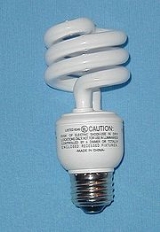
allows a building to use less heating and cooling energy to achieve and maintain a comfortable temperature. Installing fluorescent lights or natural skylights reduces the amount of energy required to attain the same level of illumination compared to using traditional incandescent light bulbs. Compact fluorescent lights use two-thirds less energy and may last 6 to 10 times longer than incandescent lights. Improvements in energy efficiency are most often achieved by adopting a more efficient technology or production process.
There are various motivations to improve energy efficiency. Reducing energy use reduces energy costs and may result in a financial cost saving to consumers if the energy savings offset any additional costs of implementing an energy efficient technology. Reducing energy use is also seen as a key solution to the problem of reducing emissions. According to the International Energy Agency
, improved energy efficiency in buildings, industrial processes and transportation could reduce the world's energy needs in 2050 by one third, and help control global emissions of greenhouse gases.
Energy efficiency and renewable energy
are said to be the twin pillars of sustainable energy policy. In many countries energy efficiency is also seen to have a national security benefit because it can be used to reduce the level of energy imports from foreign countries and may slow down the rate at which domestic energy resources are depleted.
, global warming
, energy security
, and fossil fuel depletion
. Many of these ideas have been discussed for years, since the 1973 oil crisis
brought energy issues to the forefront. In the late 1970s, physicist Amory Lovins
popularized the notion of a "soft energy path
", with a strong focus on energy efficiency. Among other things, Lovins popularized the notion of negawatts—the idea of meeting energy needs by increasing efficiency instead of increasing energy production.
Energy efficiency has proved to be a cost-effective strategy for building economies without necessarily growing energy consumption
. For example, the state of California
began implementing energy-efficiency measures in the mid-1970s, including building code and appliance standards with strict efficiency requirements. During the following years, California's energy consumption has remained approximately flat on a per capita basis while national U.S. consumption doubled. As part of its strategy, California implemented a "loading order" for new energy resources that puts energy efficiency first, renewable electricity supplies second, and new fossil-fired power plants last.
Lovins' Rocky Mountain Institute
points out that in industrial settings, "there are abundant opportunities to save 70% to 90% of the energy and cost for lighting, fan, and pump systems; 50% for electric motors; and 60% in areas such as heating, cooling, office equipment, and appliances." In general, up to 75% of the electricity used in the U.S. today could be saved with efficiency measures that cost less than the electricity itself. The same holds true for home-owners, leaky ducts have remained an invisible energy culprit for years. In fact, researchers at the US Department of Energy and their consortium, Residential Energy Efficient Distribution Systems (REEDS) have found that duct efficiency may be as low as 50-70%. The US Department of Energy has stated that there is potential for energy saving in the magnitude of 90 Billion kWh by increasing home energy efficiency.
Other studies have emphasized this. A report published in 2006 by the McKinsey Global Institute, asserted that "there are sufficient economically viable opportunities for energy-productivity improvements that could keep global energy-demand growth at less than 1 percent per annum"—less than half of the 2.2 percent average growth anticipated through 2020 in a business-as-usual scenario. Energy productivity, which measures the output and quality of goods and services per unit of energy input, can come from either reducing the amount of energy required to produce something, or from increasing the quantity or quality of goods and services from the same amount of energy.
The Vienna Climate Change Talks 2007 Report, under the auspices of the United Nations Framework Convention on Climate Change
(UNFCCC), clearly shows "that energy efficiency can achieve real emission reductions at low cost."
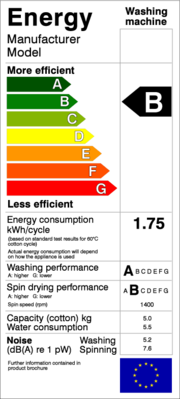 Modern energy-efficient appliances, such as refrigerators, freezers, oven
s, stoves, dishwashers, and clothes washers and dryers, use significantly less energy than older appliances. Current energy efficient refrigerators, for example, use 40 percent less energy than conventional models did in 2001. Following this, if all households in Europe changed their more than ten year old appliances into new ones, 20 billion kWh of electricity would be saved annually, hence reducing CO2 emissions by almost 18 billion kg. In the US, the corresponding figures would be 17 billion kWh of electricity and 27000000000 lb (12,246,993,990 kg) CO2. According to a 2009 study from McKinsey & Company the replacement of old appliances is one of the most efficient global measures to reduce emissions of greenhouse gases. Modern power management systems also reduce energy usage by idle appliances by turning them off or putting them into a low-energy mode after a certain time. Many countries identify energy-efficient appliances using energy input labeling
.
The impact of energy efficiency on peak demand depends on when the appliance is used. For example, an air conditioner uses more energy during the afternoon when it is hot. Therefore, an energy efficient air conditioner will have a larger impact on peak demand than off-peak demand. An energy efficient dishwasher, on the other hand, uses more energy during the late evening when people do their dishes. This appliance may have little to no impact on peak demand.
Dark roofs may become up to 39 C° (70 F°) hotter than the most reflective white surfaces, and they transmit some of this additional heat inside the building. US Studies have shown that lightly colored roofs use 40 percent less energy for cooling than buildings with darker roofs. White roof systems save more energy in sunnier climates. Advanced electronic heating and cooling systems can moderate energy consumption and improve the comfort of people in the building.
Proper placement of windows and skylights as well as the use of architectural features that reflect light into a building can reduce the need for artificial lighting. Increased use of natural and task lighting has been shown by one study to increase productivity in schools and offices. Compact fluorescent lights use two-thirds less energy and may last 6 to 10 times longer than incandescent light bulbs. Newer fluorescent lights produce a natural light, and in most applications they are cost effective, despite their higher initial cost, with payback periods as low as a few months.
Effective energy-efficient building design can include the use of low cost Passive Infra Reds (PIRs) to switch-off lighting when areas are unnoccupied such as toilets, corridors or even office areas out-of-hours. In addition, lux levels can be monitored using daylight sensors linked to the building's lighting scheme to switch on/off or dim the lighting to pre-defined levels to take into account the natural light and thus reduce consumption. Building Management Systems (BMS) link all of this together in one centralised computer to control the whole building's lighting and power requirements.
The choice of which space heating or cooling technology to use in buildings can have a significant impact on energy use and efficiency. For example, replacing an older 50% efficient natural gas furnace with a new 95% efficient one will dramatically reduce energy use, carbon emissions, and winter natural gas bills. Ground source heat pumps can be even more energy efficient and cost effective. These systems use pumps and compressors to move refrigerant fluid around a thermodynamic cycle in order to "pump" heat against its natural flow from hot to cold, for the purpose of transferring heat into a building from the large thermal reservoir contained within the nearby ground. The end result is that heat pumps typically use four times less electrical energy to deliver an equivalent amount of heat than a direct electrical heater does. Another advantage of a ground source heat pump is that it can be reversed in summertime and operate to cool the air by transferring heat from the building to the ground. The disadvantage of ground source heat pumps is their high initial capital cost, but this is typically recouped within five to ten years as a result of lower energy use.
Smart meter
s are slowly being adopted by the commerial sector to highlight to staff and for internal monitoring purposes the building's energy usage in a dynamic presentable format. The use of Power Quality Analysers can be introduced into an existing building to assess usage, harmonic distortion, peaks, swells and interruptions amongst others to ultimately make the building more energy-efficient. Often such meters communicate by using wireless sensor networks.
A term relevant for efficient energy use is energy use intensity, which is defined as energy consumption per floor area.
, petroleum fuels
and as electricity
. In addition some industries generate fuel from waste products that can be used to provide additional energy.
Because industrial processes are so diverse it is impossible to describe the multitude of possible opportunities for energy efficiency in industry. Many depend on the specific technologies and processes in use at each industrial facility. However there are a number of processes and energy services that are widely used in many industries.
Various industries generate steam
and electricity for subsequent use within their facilities. When electricity is generated, the heat that is produced as a by-product can be captured and used for process steam, heating or other industrial purposes. Conventional electricity generation is about 30 percent efficient, whereas combined heat and power (also called co-generation) converts up to 90 percent of the fuel into usable energy.
Advanced boilers and furnaces can operate at higher temperatures while burning less fuel. These technologies are more efficient and produce fewer pollutants.
Over 45 percent of the fuel used by US manufacturers is burnt to make steam. The typical industrial facility can reduce this energy usage 20 percent (according to the US Department of Energy) by insulating steam and condensate return lines, stopping steam leakage, and maintaining steam traps.
Electric motors usually run at a constant speed, but a variable speed drive allows the motor’s energy output to match the required load. This achieves energy savings ranging from 3 to 60 percent, depending on how the motor is used. Motor coils made of superconducting materials can also reduce energy losses. Motors may also benefit from voltage optimisation
.
Industry uses a large number of pumps and compressors of all shapes and sizes and in a wide variety of applications. The efficiency of pumps and compressors depends on many factors but often improvements can be made by implementing better process control
and better maintenance practices. Compressors are commonly used to provide compressed air
which is used for sand blasting, painting, and other power tools. According to the US Department of Energy, optimizing compressed air systems by installing variable speed drives, along with preventive maintenance to detect and fix air leaks, can improve energy efficiency 20 to 50 percent.
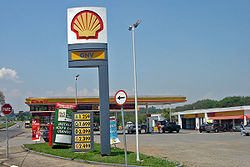
 The estimated energy efficiency for an automobile is 280 Passenger-Mile/106 Btu. There are several ways to enhance a vehicle's energy efficiency. Using improved aerodynamics
to minimize drag can increase vehicle fuel efficiency. Reducing vehicle weight can also improve fuel economy, which is why composite materials are widely used in car bodies.
More advanced tires, with decreased tire to road friction and rolling resistance, can save gasoline. Fuel economy can be improved by up to 3.3% by keeping tires inflated to the correct pressure. Replacing a clogged air filter can improve a cars fuel consumption by as much as 10 percent on older vehicles. On newer vehicles (1980s and up) with fuel-injected, computer-controlled engines, a clogged air filter has no effect on mpg but replacing it may improve acceleration by 6-11 percent.
Energy-efficient vehicles may reach twice the fuel efficiency of the average automobile. Cutting-edge designs, such as the diesel Mercedes-Benz Bionic
concept vehicle have achieved a fuel efficiency as high as 84 mpgus , four times the current conventional automotive average.
The mainstream trend in automotive efficiency is the rise of electric vehicle
s (all@electric or hybrid electric). Hybrids, like the Toyota Prius
, use regenerative braking to recapture energy that would dissipate in normal cars; the effect is especially pronounced in city driving. plug-in hybrids also have increased battery capacity, which makes it possible to drive for limited distances without burning any gasoline; in this case, energy efficiency is dictated by whatever process (such as coal-burning, hydroelectric, or renewable source) created the power. Plug-ins can typically drive for around 40 miles (64.4 km) purely on electricity without recharging; if the battery runs low, a gas engine kicks in allowing for extended range. Finally, all-electric cars are also growing in popularity; the Tesla Roadster
sports car is the only high-performance all-electric car currently on the market, and others are in preproduction.
s, are any material
s or substance
s that can be used as fuel
s, other than conventional fuels. Some well known alternative fuel
s include biodiesel
, bioalcohol (methanol
, ethanol
, butanol
), chemically stored electricity
(batteries and fuel cell
s), hydrogen
, non-fossil methane
, non-fossil natural gas
, vegetable oil
, and other biomass
sources.
is broader than energy efficiency in including active efforts to decrease energy consumption, for example through behavioural change, in addition to using energy more efficiently. Examples of conservation without efficiency improvements are heating a room less in winter, using the car less, or enabling energy saving modes on a computer. As with other definitions, the boundary between efficient energy use and energy conservation can be fuzzy, but both are important in environmental and economic terms. This is especially the case when actions are directed at the saving of fossil fuels. Energy conservation is a challenge requiring policy programmes, technological development and behavioral change to go hand in hand. Many energy intermediary
organisations, for example governmental or non-governmental organisations on local, regional, or national level, are working on often publicly funded programmes or projects to meet this challenge.
are said to be the “twin pillars” of a sustainable energy policy
. Both strategies must be developed concurrently in order to stabilize and reduce carbon dioxide emissions. Efficient energy use is essential to slowing the energy demand growth so that rising clean energy supplies can make deep cuts in fossil fuel use. If energy use grows too rapidly, renewable energy development will chase a receding target. Likewise, unless clean energy supplies come online rapidly, slowing demand growth will only begin to reduce total carbon emissions; a reduction in the carbon content of energy sources is also needed. A sustainable energy economy thus requires major commitments to both efficiency and renewables.
.
Estimates of the size of the rebound effect range from roughly 5% to 40%. The rebound effect is likely to be less than 30% at the household level and may be closer to 10% for transport. A rebound effect of 30% implies that improvements in energy efficiency should achieve 70% of the reduction in energy consumption projected using engineering models.
Since more efficient (and hence cheaper) energy will also lead to faster economic growth, there are suspicions that improvements in energy efficiency may eventually lead to even faster resource use. This was postulated by economists
in the 1980s and remains a controversial hypothesis. Ecological economists have suggested that any cost savings from efficiency gains be taxed away by the government in order to avoid this outcome.
Australia
European Union
Iceland
India
Japan
Lebanon
United Kingdom
United States
Building insulation
building insulation refers broadly to any object in a building used as insulation for any purpose. While the majority of insulation in buildings is for thermal purposes, the term also applies to acoustic insulation, fire insulation, and impact insulation...
allows a building to use less heating and cooling energy to achieve and maintain a comfortable temperature. Installing fluorescent lights or natural skylights reduces the amount of energy required to attain the same level of illumination compared to using traditional incandescent light bulbs. Compact fluorescent lights use two-thirds less energy and may last 6 to 10 times longer than incandescent lights. Improvements in energy efficiency are most often achieved by adopting a more efficient technology or production process.
There are various motivations to improve energy efficiency. Reducing energy use reduces energy costs and may result in a financial cost saving to consumers if the energy savings offset any additional costs of implementing an energy efficient technology. Reducing energy use is also seen as a key solution to the problem of reducing emissions. According to the International Energy Agency
International Energy Agency
The International Energy Agency is a Paris-based autonomous intergovernmental organization established in the framework of the Organisation for Economic Co-operation and Development in 1974 in the wake of the 1973 oil crisis...
, improved energy efficiency in buildings, industrial processes and transportation could reduce the world's energy needs in 2050 by one third, and help control global emissions of greenhouse gases.
Energy efficiency and renewable energy
Renewable energy
Renewable energy is energy which comes from natural resources such as sunlight, wind, rain, tides, and geothermal heat, which are renewable . About 16% of global final energy consumption comes from renewables, with 10% coming from traditional biomass, which is mainly used for heating, and 3.4% from...
are said to be the twin pillars of sustainable energy policy. In many countries energy efficiency is also seen to have a national security benefit because it can be used to reduce the level of energy imports from foreign countries and may slow down the rate at which domestic energy resources are depleted.
Overview
Making homes, vehicles, and businesses more energy efficient is seen as a largely untapped solution to addressing the problems of pollutionPollution
Pollution is the introduction of contaminants into a natural environment that causes instability, disorder, harm or discomfort to the ecosystem i.e. physical systems or living organisms. Pollution can take the form of chemical substances or energy, such as noise, heat or light...
, global warming
Global warming
Global warming refers to the rising average temperature of Earth's atmosphere and oceans and its projected continuation. In the last 100 years, Earth's average surface temperature increased by about with about two thirds of the increase occurring over just the last three decades...
, energy security
Energy security
Energy security is a term for an association between national security and the availability of natural resources for energy consumption. Access to cheap energy has become essential to the functioning of modern economies. However, the uneven distribution of energy supplies among countries has led...
, and fossil fuel depletion
Peak oil
Peak oil is the point in time when the maximum rate of global petroleum extraction is reached, after which the rate of production enters terminal decline. This concept is based on the observed production rates of individual oil wells, projected reserves and the combined production rate of a field...
. Many of these ideas have been discussed for years, since the 1973 oil crisis
1973 oil crisis
The 1973 oil crisis started in October 1973, when the members of Organization of Arab Petroleum Exporting Countries or the OAPEC proclaimed an oil embargo. This was "in response to the U.S. decision to re-supply the Israeli military" during the Yom Kippur war. It lasted until March 1974. With the...
brought energy issues to the forefront. In the late 1970s, physicist Amory Lovins
Amory Lovins
Amory Bloch Lovins is an American environmental scientist and writer, Chairman and Chief Scientist of the Rocky Mountain Institute. He has worked in the field of energy policy and related areas for four decades...
popularized the notion of a "soft energy path
Soft energy path
In 1976 energy policy analyst Amory Lovins coined the term soft energy path to describe an alternative future where energy efficiency and appropriate renewable energy sources steadily replace a centralized energy system based on fossil and nuclear fuels....
", with a strong focus on energy efficiency. Among other things, Lovins popularized the notion of negawatts—the idea of meeting energy needs by increasing efficiency instead of increasing energy production.
Energy efficiency has proved to be a cost-effective strategy for building economies without necessarily growing energy consumption
Energy consumption
Energy consumption is the consumption of energy or power. It is covered in the following articles and categories:* World energy consumption* Domestic energy consumption* Fuel efficiency in transportation* Electric energy consumption* Electricity generation...
. For example, the state of California
California
California is a state located on the West Coast of the United States. It is by far the most populous U.S. state, and the third-largest by land area...
began implementing energy-efficiency measures in the mid-1970s, including building code and appliance standards with strict efficiency requirements. During the following years, California's energy consumption has remained approximately flat on a per capita basis while national U.S. consumption doubled. As part of its strategy, California implemented a "loading order" for new energy resources that puts energy efficiency first, renewable electricity supplies second, and new fossil-fired power plants last.
Lovins' Rocky Mountain Institute
Rocky Mountain Institute
Rocky Mountain Institute is an organization in the United States dedicated to research, publication, consulting, and lecturing in the general field of sustainability, with a special focus on profitable innovations for energy and resource efficiency. RMI was established in 1982 and has grown into a...
points out that in industrial settings, "there are abundant opportunities to save 70% to 90% of the energy and cost for lighting, fan, and pump systems; 50% for electric motors; and 60% in areas such as heating, cooling, office equipment, and appliances." In general, up to 75% of the electricity used in the U.S. today could be saved with efficiency measures that cost less than the electricity itself. The same holds true for home-owners, leaky ducts have remained an invisible energy culprit for years. In fact, researchers at the US Department of Energy and their consortium, Residential Energy Efficient Distribution Systems (REEDS) have found that duct efficiency may be as low as 50-70%. The US Department of Energy has stated that there is potential for energy saving in the magnitude of 90 Billion kWh by increasing home energy efficiency.
Other studies have emphasized this. A report published in 2006 by the McKinsey Global Institute, asserted that "there are sufficient economically viable opportunities for energy-productivity improvements that could keep global energy-demand growth at less than 1 percent per annum"—less than half of the 2.2 percent average growth anticipated through 2020 in a business-as-usual scenario. Energy productivity, which measures the output and quality of goods and services per unit of energy input, can come from either reducing the amount of energy required to produce something, or from increasing the quantity or quality of goods and services from the same amount of energy.
The Vienna Climate Change Talks 2007 Report, under the auspices of the United Nations Framework Convention on Climate Change
United Nations Framework Convention on Climate Change
The United Nations Framework Convention on Climate Change is an international environmental treaty produced at the United Nations Conference on Environment and Development , informally known as the Earth Summit, held in Rio de Janeiro from June 3 to 14, 1992...
(UNFCCC), clearly shows "that energy efficiency can achieve real emission reductions at low cost."
Appliances
Oven
An oven is a thermally insulated chamber used for the heating, baking or drying of a substance. It is most commonly used for cooking. Kilns, and furnaces are special-purpose ovens...
s, stoves, dishwashers, and clothes washers and dryers, use significantly less energy than older appliances. Current energy efficient refrigerators, for example, use 40 percent less energy than conventional models did in 2001. Following this, if all households in Europe changed their more than ten year old appliances into new ones, 20 billion kWh of electricity would be saved annually, hence reducing CO2 emissions by almost 18 billion kg. In the US, the corresponding figures would be 17 billion kWh of electricity and 27000000000 lb (12,246,993,990 kg) CO2. According to a 2009 study from McKinsey & Company the replacement of old appliances is one of the most efficient global measures to reduce emissions of greenhouse gases. Modern power management systems also reduce energy usage by idle appliances by turning them off or putting them into a low-energy mode after a certain time. Many countries identify energy-efficient appliances using energy input labeling
Energy input labeling
The term energy input labeling involved producers of goods and services determining how much energy is used to produce their product, and then including that information on their product packaging. Energy input labeling is sometimes known by the acronym EIL...
.
The impact of energy efficiency on peak demand depends on when the appliance is used. For example, an air conditioner uses more energy during the afternoon when it is hot. Therefore, an energy efficient air conditioner will have a larger impact on peak demand than off-peak demand. An energy efficient dishwasher, on the other hand, uses more energy during the late evening when people do their dishes. This appliance may have little to no impact on peak demand.
Building design
A building’s location and surroundings play a key role in regulating its temperature and illumination. For example, trees, landscaping, and hills can provide shade and block wind. In cooler climates, designing buildings with south-facing windows increases the amount of sun (ultimately heat energy) entering the building, minimizing energy use, by maximizing passive solar heating. Tight building design, including energy-efficient windows, well-sealed doors, and additional thermal insulation of walls, basement slabs, and foundations can reduce heat loss by 25 to 50 percent.Dark roofs may become up to 39 C° (70 F°) hotter than the most reflective white surfaces, and they transmit some of this additional heat inside the building. US Studies have shown that lightly colored roofs use 40 percent less energy for cooling than buildings with darker roofs. White roof systems save more energy in sunnier climates. Advanced electronic heating and cooling systems can moderate energy consumption and improve the comfort of people in the building.
Proper placement of windows and skylights as well as the use of architectural features that reflect light into a building can reduce the need for artificial lighting. Increased use of natural and task lighting has been shown by one study to increase productivity in schools and offices. Compact fluorescent lights use two-thirds less energy and may last 6 to 10 times longer than incandescent light bulbs. Newer fluorescent lights produce a natural light, and in most applications they are cost effective, despite their higher initial cost, with payback periods as low as a few months.
Effective energy-efficient building design can include the use of low cost Passive Infra Reds (PIRs) to switch-off lighting when areas are unnoccupied such as toilets, corridors or even office areas out-of-hours. In addition, lux levels can be monitored using daylight sensors linked to the building's lighting scheme to switch on/off or dim the lighting to pre-defined levels to take into account the natural light and thus reduce consumption. Building Management Systems (BMS) link all of this together in one centralised computer to control the whole building's lighting and power requirements.
The choice of which space heating or cooling technology to use in buildings can have a significant impact on energy use and efficiency. For example, replacing an older 50% efficient natural gas furnace with a new 95% efficient one will dramatically reduce energy use, carbon emissions, and winter natural gas bills. Ground source heat pumps can be even more energy efficient and cost effective. These systems use pumps and compressors to move refrigerant fluid around a thermodynamic cycle in order to "pump" heat against its natural flow from hot to cold, for the purpose of transferring heat into a building from the large thermal reservoir contained within the nearby ground. The end result is that heat pumps typically use four times less electrical energy to deliver an equivalent amount of heat than a direct electrical heater does. Another advantage of a ground source heat pump is that it can be reversed in summertime and operate to cool the air by transferring heat from the building to the ground. The disadvantage of ground source heat pumps is their high initial capital cost, but this is typically recouped within five to ten years as a result of lower energy use.
Smart meter
Smart meter
A smart meter is usually an electrical meter that records consumption of electric energy in intervals of an hour or less and communicates that information at least daily back to the utility for monitoring and billing purposes. Smart meters enable two-way communication between the meter and the...
s are slowly being adopted by the commerial sector to highlight to staff and for internal monitoring purposes the building's energy usage in a dynamic presentable format. The use of Power Quality Analysers can be introduced into an existing building to assess usage, harmonic distortion, peaks, swells and interruptions amongst others to ultimately make the building more energy-efficient. Often such meters communicate by using wireless sensor networks.
A term relevant for efficient energy use is energy use intensity, which is defined as energy consumption per floor area.
Industry
Industry uses a large amount of energy to power a diverse range of manufacturing and resource extraction processes. Many industrial processes require large amounts of heat and mechanical power, most of which is delivered as natural gasNatural gas
Natural gas is a naturally occurring gas mixture consisting primarily of methane, typically with 0–20% higher hydrocarbons . It is found associated with other hydrocarbon fuel, in coal beds, as methane clathrates, and is an important fuel source and a major feedstock for fertilizers.Most natural...
, petroleum fuels
Petroleum
Petroleum or crude oil is a naturally occurring, flammable liquid consisting of a complex mixture of hydrocarbons of various molecular weights and other liquid organic compounds, that are found in geologic formations beneath the Earth's surface. Petroleum is recovered mostly through oil drilling...
and as electricity
Electricity
Electricity is a general term encompassing a variety of phenomena resulting from the presence and flow of electric charge. These include many easily recognizable phenomena, such as lightning, static electricity, and the flow of electrical current in an electrical wire...
. In addition some industries generate fuel from waste products that can be used to provide additional energy.
Because industrial processes are so diverse it is impossible to describe the multitude of possible opportunities for energy efficiency in industry. Many depend on the specific technologies and processes in use at each industrial facility. However there are a number of processes and energy services that are widely used in many industries.
Various industries generate steam
Steam
Steam is the technical term for water vapor, the gaseous phase of water, which is formed when water boils. In common language it is often used to refer to the visible mist of water droplets formed as this water vapor condenses in the presence of cooler air...
and electricity for subsequent use within their facilities. When electricity is generated, the heat that is produced as a by-product can be captured and used for process steam, heating or other industrial purposes. Conventional electricity generation is about 30 percent efficient, whereas combined heat and power (also called co-generation) converts up to 90 percent of the fuel into usable energy.
Advanced boilers and furnaces can operate at higher temperatures while burning less fuel. These technologies are more efficient and produce fewer pollutants.
Over 45 percent of the fuel used by US manufacturers is burnt to make steam. The typical industrial facility can reduce this energy usage 20 percent (according to the US Department of Energy) by insulating steam and condensate return lines, stopping steam leakage, and maintaining steam traps.
Electric motors usually run at a constant speed, but a variable speed drive allows the motor’s energy output to match the required load. This achieves energy savings ranging from 3 to 60 percent, depending on how the motor is used. Motor coils made of superconducting materials can also reduce energy losses. Motors may also benefit from voltage optimisation
Voltage optimisation
Voltage optimisation is a term given to the systematic controlled reduction in the voltages received by an energy consumer to reduce energy use, power demand and reactive power demand...
.
Industry uses a large number of pumps and compressors of all shapes and sizes and in a wide variety of applications. The efficiency of pumps and compressors depends on many factors but often improvements can be made by implementing better process control
Process control
Process control is a statistics and engineering discipline that deals with architectures, mechanisms and algorithms for maintaining the output of a specific process within a desired range...
and better maintenance practices. Compressors are commonly used to provide compressed air
Compressed air
Compressed air is air which is kept under a certain pressure, usually greater than that of the atmosphere. In Europe, 10 percent of all electricity used by industry is used to produce compressed air, amounting to 80 terawatt hours consumption per year....
which is used for sand blasting, painting, and other power tools. According to the US Department of Energy, optimizing compressed air systems by installing variable speed drives, along with preventive maintenance to detect and fix air leaks, can improve energy efficiency 20 to 50 percent.
Vehicles
Aerodynamics
Aerodynamics is a branch of dynamics concerned with studying the motion of air, particularly when it interacts with a moving object. Aerodynamics is a subfield of fluid dynamics and gas dynamics, with much theory shared between them. Aerodynamics is often used synonymously with gas dynamics, with...
to minimize drag can increase vehicle fuel efficiency. Reducing vehicle weight can also improve fuel economy, which is why composite materials are widely used in car bodies.
More advanced tires, with decreased tire to road friction and rolling resistance, can save gasoline. Fuel economy can be improved by up to 3.3% by keeping tires inflated to the correct pressure. Replacing a clogged air filter can improve a cars fuel consumption by as much as 10 percent on older vehicles. On newer vehicles (1980s and up) with fuel-injected, computer-controlled engines, a clogged air filter has no effect on mpg but replacing it may improve acceleration by 6-11 percent.
Energy-efficient vehicles may reach twice the fuel efficiency of the average automobile. Cutting-edge designs, such as the diesel Mercedes-Benz Bionic
Mercedes-Benz Bionic
The Mercedes-Benz Bionic was a concept car created by DaimlerChrysler AG under the Mercedes Group. It was first introduced in 2005 at the DaimlerChrysler Innovation Symposium in Washington, D. C...
concept vehicle have achieved a fuel efficiency as high as 84 mpgus , four times the current conventional automotive average.
The mainstream trend in automotive efficiency is the rise of electric vehicle
Electric vehicle
An electric vehicle , also referred to as an electric drive vehicle, uses one or more electric motors or traction motors for propulsion...
s (all@electric or hybrid electric). Hybrids, like the Toyota Prius
Toyota Prius
The Toyota Prius is a full hybrid electric mid-size hatchback, formerly a compact sedan developed and manufactured by the Toyota Motor Corporation...
, use regenerative braking to recapture energy that would dissipate in normal cars; the effect is especially pronounced in city driving. plug-in hybrids also have increased battery capacity, which makes it possible to drive for limited distances without burning any gasoline; in this case, energy efficiency is dictated by whatever process (such as coal-burning, hydroelectric, or renewable source) created the power. Plug-ins can typically drive for around 40 miles (64.4 km) purely on electricity without recharging; if the battery runs low, a gas engine kicks in allowing for extended range. Finally, all-electric cars are also growing in popularity; the Tesla Roadster
Tesla Roadster
The Tesla Roadster is a battery electric vehicle sports car produced by the electric car firm Tesla Motors in California. The Roadster was the first highway-capable all-electric vehicle in serial production available in the United States. Since 2008 Tesla has sold 2,024 Roadsters in 30 countries...
sports car is the only high-performance all-electric car currently on the market, and others are in preproduction.
Alternative fuels
Alternative fuels, known as non-conventional or advanced fuelFuel
Fuel is any material that stores energy that can later be extracted to perform mechanical work in a controlled manner. Most fuels used by humans undergo combustion, a redox reaction in which a combustible substance releases energy after it ignites and reacts with the oxygen in the air...
s, are any material
Material
Material is anything made of matter, constituted of one or more substances. Wood, cement, hydrogen, air and water are all examples of materials. Sometimes the term "material" is used more narrowly to refer to substances or components with certain physical properties that are used as inputs to...
s or substance
Chemical substance
In chemistry, a chemical substance is a form of matter that has constant chemical composition and characteristic properties. It cannot be separated into components by physical separation methods, i.e. without breaking chemical bonds. They can be solids, liquids or gases.Chemical substances are...
s that can be used as fuel
Fuel
Fuel is any material that stores energy that can later be extracted to perform mechanical work in a controlled manner. Most fuels used by humans undergo combustion, a redox reaction in which a combustible substance releases energy after it ignites and reacts with the oxygen in the air...
s, other than conventional fuels. Some well known alternative fuel
Fuel
Fuel is any material that stores energy that can later be extracted to perform mechanical work in a controlled manner. Most fuels used by humans undergo combustion, a redox reaction in which a combustible substance releases energy after it ignites and reacts with the oxygen in the air...
s include biodiesel
Biodiesel
Biodiesel refers to a vegetable oil- or animal fat-based diesel fuel consisting of long-chain alkyl esters. Biodiesel is typically made by chemically reacting lipids with an alcohol....
, bioalcohol (methanol
Methanol
Methanol, also known as methyl alcohol, wood alcohol, wood naphtha or wood spirits, is a chemical with the formula CH3OH . It is the simplest alcohol, and is a light, volatile, colorless, flammable liquid with a distinctive odor very similar to, but slightly sweeter than, ethanol...
, ethanol
Ethanol
Ethanol, also called ethyl alcohol, pure alcohol, grain alcohol, or drinking alcohol, is a volatile, flammable, colorless liquid. It is a psychoactive drug and one of the oldest recreational drugs. Best known as the type of alcohol found in alcoholic beverages, it is also used in thermometers, as a...
, butanol
N-Butanol
n-Butanol or n-butyl alcohol or normal butanol is a primary alcohol with a 4-carbon structure and the molecular formula C4H9OH. Its isomers include isobutanol, 2-butanol, and tert-butanol...
), chemically stored electricity
Electricity
Electricity is a general term encompassing a variety of phenomena resulting from the presence and flow of electric charge. These include many easily recognizable phenomena, such as lightning, static electricity, and the flow of electrical current in an electrical wire...
(batteries and fuel cell
Fuel cell
A fuel cell is a device that converts the chemical energy from a fuel into electricity through a chemical reaction with oxygen or another oxidizing agent. Hydrogen is the most common fuel, but hydrocarbons such as natural gas and alcohols like methanol are sometimes used...
s), hydrogen
Hydrogen
Hydrogen is the chemical element with atomic number 1. It is represented by the symbol H. With an average atomic weight of , hydrogen is the lightest and most abundant chemical element, constituting roughly 75% of the Universe's chemical elemental mass. Stars in the main sequence are mainly...
, non-fossil methane
Methane
Methane is a chemical compound with the chemical formula . It is the simplest alkane, the principal component of natural gas, and probably the most abundant organic compound on earth. The relative abundance of methane makes it an attractive fuel...
, non-fossil natural gas
Natural gas
Natural gas is a naturally occurring gas mixture consisting primarily of methane, typically with 0–20% higher hydrocarbons . It is found associated with other hydrocarbon fuel, in coal beds, as methane clathrates, and is an important fuel source and a major feedstock for fertilizers.Most natural...
, vegetable oil
Vegetable oil used as fuel
Vegetable oil is an alternative fuel for diesel engines and for heating oil burners. For engines designed to burn diesel fuel, the viscosity of vegetable oil must be lowered to allow for proper atomization of the fuel, otherwise incomplete combustion and carbon build up will ultimately damage the...
, and other biomass
Biomass
Biomass, as a renewable energy source, is biological material from living, or recently living organisms. As an energy source, biomass can either be used directly, or converted into other energy products such as biofuel....
sources.
Energy conservation
Energy conservationEnergy conservation
Energy conservation refers to efforts made to reduce energy consumption. Energy conservation can be achieved through increased efficient energy use, in conjunction with decreased energy consumption and/or reduced consumption from conventional energy sources...
is broader than energy efficiency in including active efforts to decrease energy consumption, for example through behavioural change, in addition to using energy more efficiently. Examples of conservation without efficiency improvements are heating a room less in winter, using the car less, or enabling energy saving modes on a computer. As with other definitions, the boundary between efficient energy use and energy conservation can be fuzzy, but both are important in environmental and economic terms. This is especially the case when actions are directed at the saving of fossil fuels. Energy conservation is a challenge requiring policy programmes, technological development and behavioral change to go hand in hand. Many energy intermediary
Intermediary
An intermediary is a third party that offers intermediation services between two trading parties. The intermediary acts as a conduit for goods or services offered by a supplier to a consumer...
organisations, for example governmental or non-governmental organisations on local, regional, or national level, are working on often publicly funded programmes or projects to meet this challenge.
Sustainable energy
Energy efficiency and renewable energyRenewable energy
Renewable energy is energy which comes from natural resources such as sunlight, wind, rain, tides, and geothermal heat, which are renewable . About 16% of global final energy consumption comes from renewables, with 10% coming from traditional biomass, which is mainly used for heating, and 3.4% from...
are said to be the “twin pillars” of a sustainable energy policy
Sustainable energy
Sustainable energy is the provision of energy that meets the needs of the present without compromising the ability of future generations to meet their needs. Sustainable energy sources include all renewable energy sources, such as hydroelectricity, solar energy, wind energy, wave power, geothermal...
. Both strategies must be developed concurrently in order to stabilize and reduce carbon dioxide emissions. Efficient energy use is essential to slowing the energy demand growth so that rising clean energy supplies can make deep cuts in fossil fuel use. If energy use grows too rapidly, renewable energy development will chase a receding target. Likewise, unless clean energy supplies come online rapidly, slowing demand growth will only begin to reduce total carbon emissions; a reduction in the carbon content of energy sources is also needed. A sustainable energy economy thus requires major commitments to both efficiency and renewables.
Rebound effect
If the demand for energy services remains constant, improving energy efficiency will reduce energy consumption and carbon emissions. However, many efficiency improvements do not reduce energy consumption by the amount predicted by simple engineering models. This is because they make energy services cheaper, and so consumption of those services increases. For example, since fuel efficient vehicles make travel cheaper, consumers may choose to drive farther and/or faster, thereby offsetting some of the potential energy savings. This is an example of the direct rebound effectRebound effect (conservation)
In conservation and energy economics, the rebound effect refers to the behavioral or other systemic responses to the introduction of new technologies that increase the efficiency of resource use. These responses tend to offset the beneficial effects of the new technology or other measures taken...
.
Estimates of the size of the rebound effect range from roughly 5% to 40%. The rebound effect is likely to be less than 30% at the household level and may be closer to 10% for transport. A rebound effect of 30% implies that improvements in energy efficiency should achieve 70% of the reduction in energy consumption projected using engineering models.
Since more efficient (and hence cheaper) energy will also lead to faster economic growth, there are suspicions that improvements in energy efficiency may eventually lead to even faster resource use. This was postulated by economists
Khazzoom-Brookes postulate
In the 1980s, the economists Daniel Khazzoom and Leonard Brookes independently put forward ideas about energy consumption and behavior that argue that increased energy efficiency paradoxically tends to lead to increased energy consumption...
in the 1980s and remains a controversial hypothesis. Ecological economists have suggested that any cost savings from efficiency gains be taxed away by the government in order to avoid this outcome.
Organizations and programs
International- 80 PLUS80 PLUS80 PLUS is an initiative to promote energy efficiency in computer power supply units . It certifies products that have more than 80% energy efficiency at 20%, 50% and 100% of rated load, and a power factor of 0.9 or greater at 100% load....
- 2000-watt society2000-watt societyThe 2000-watt society is a vision, originated by the Swiss Federal Institute of Technology in Zürich at the end of 1998, in which each person in the developed world would cut their over-all rate of energy use to an average of no more than 2,000 watts The 2000-watt society (2,000-Watt Society) is a...
- IEA Solar Heating & Cooling Implementing Agreement Task 13IEA Solar Heating & Cooling Implementing Agreement Task 13IEA Solar Heating & Cooling Implementing Agreement - Task 13 was an international effort organised by one of the International Energy Agency's Implementing Agreements to build several solar low-energy houses. This took place between 1989 and 1993...
- International Institute for Energy ConservationInternational Institute for Energy ConservationThe International Institute for Energy Conservation is a non-profit, non-governmental organization with the mission of promoting sustainable approaches to energy use in developing countries.- History :...
- International Energy AgencyInternational Energy AgencyThe International Energy Agency is a Paris-based autonomous intergovernmental organization established in the framework of the Organisation for Economic Co-operation and Development in 1974 in the wake of the 1973 oil crisis...
(e.g. One watt initiativeOne Watt InitiativeThe One Watt Initiative is an energy-saving initiative by the International Energy Agency to reduce standby power-use by any appliance to not more than one watt in 2010, and 0.5 watts in 2013, which has given rise to regulations in many countries and regions.-Standby power:Standby power,...
) - International Electrotechnical CommissionInternational Electrotechnical CommissionThe International Electrotechnical Commission is a non-profit, non-governmental international standards organization that prepares and publishes International Standards for all electrical, electronic and related technologies – collectively known as "electrotechnology"...
- International Partnership for Energy Efficiency CooperationInternational Partnership for Energy Efficiency CooperationThe International Partnership for Energy Efficiency Cooperation is a high-level international forum which includes developed and developing countries...
- World Sustainable Energy DaysWorld Sustainable Energy DaysThe World Sustainable Energy Days is an annual sustainability conference held in Austria. It hosts events centred on sustainable energy production and use, which covers energy efficiency and renewable energy sources for buildings, industry and transport...
Australia
- Department of Climate Change and Energy Efficiency
- Department of the Environment, Water, Heritage and the Arts
- Sustainable House DaySustainable House DaySustainable House Day is a national event held annually across Australia, where households open their doors to the public to give interested people the chance to learn about the benefits of energy efficiency in their homes...
European Union
- Building energy ratingBuilding energy ratingA building energy rating is similar to the energy label for a household electrical appliance. The label has a scale of A-G, with A-rated buildings the most energy efficient and G the least....
- Eco-Design of Energy-Using Products DirectiveEco-Design of Energy-Using Products DirectiveThe European Union's Ecodesign Directive establishes a framework to set mandatory ecological requirements for energy-using and energy-related products sold in all 27 Member States...
- Energy efficiency in EuropeEnergy efficiency in EuropeThe Energy efficiency in Europe study is part of the Odyssee project. It aims to monitor energy efficiency progress and CO2-reduction for the EU-27 countries and Norway and Croatia, understand the energy demand trends for European countries, compare the countries in their relative energy efficiency...
- OrgalimeOrgalimeOrgalime is the European Engineering Industries Association, speaking for 33 trade federations representing some 130,000 companies in the mechanical, electrical, electronics and metalworking and metal articles industries of 22 European countries...
, the European engineering industries association
Iceland
- MarorkaMarorkaMarorka is a company based in Reykjavík, Iceland. It operates wholly owned subsidiaries in Denmark and Norway. Marorka specializes in marine energy management. Marorka's mission is to deliver products and services to vessel owners and operators to save fuel, increase profitability and reduce...
India
- 88888 Lights Out88888 Lights Out88888 Lights Out was a campaign with the stated goal of increasing awareness of global warming and promoting actions to reduce energy consumption...
- Bureau of Energy EfficiencyBureau of Energy EfficiencyThe Bureau of Energy Efficiency is an agency of the Government of India, under the Ministry of Power created in March 2002 under the provisions of the nation's 2001 Energy Conservation Act. The agency's function is to develop programs which will increase the conservation and efficient use of...
Japan
- Cool Biz campaignCool Biz campaignThe Japanese Ministry of the Environment began advocating the Cool Biz campaign in summer 2005 as a means to help reduce electric consumption by limiting use of air conditioning...
Lebanon
- The Lebanese Center for Energy ConservationThe Lebanese Center for Energy ConservationThe Lebanese Center for Energy Conservation a joint project of The United Nations Development Programme and the Lebanese Ministry of Energy and Water...
United Kingdom
- The Carbon TrustThe Carbon TrustThe Carbon Trust is a not for dividend company limited by guarantee created by the UK government to help businesses and public organisations to reduce their emissions of carbon dioxide into the atmosphere, through improved energy efficiency and developing commercial low carbon technology...
- Energy Saving TrustEnergy Saving TrustEnergy Saving Trust is a non-profit organisation jointly funded by the British Government and the private sector in order to help fight climate change by promoting the sustainable use of energy, energy conservation and to cut carbon dioxide emissions in the United Kingdom.-Background:The Energy...
- National Energy ActionNational Energy ActionNational Energy Action is the leading fuel poverty charity that works to eradicate fuel poverty and campaigns for greater investment in energy efficiency to help those who are poor or vulnerable gain affordable heat....
- National Energy FoundationNational Energy FoundationThe National Energy Foundation is an independent British charity, established to encourage the more sustainable use and generation of energy.- Aims :...
United States
- Alliance to Save EnergyAlliance to Save EnergyThe Alliance to Save Energy is a coalition consisting largely of industrial, technological, and energy corporations. The Alliance states that its mission is to "support energy efficiency as a cost-effective energy resource under existing market conditions and advocate energy-efficiency policies...
- American Council for an Energy-Efficient Economy (ACEEE)American Council for an Energy-Efficient EconomyThe American Council for an Energy-Efficient Economy, or ACEEE, is a nonprofit, 501 organization. Founded in 1980, ACEEE's mission is to advance energy efficiency as a fast, cheap, and effective means of meeting energy challenges...
- Building Codes Assistance ProjectBuilding Codes Assistance ProjectThe Building Codes Assistance Project is a non-profit organization that advocates for the adoption, implementation, and advancement of building energy codes. It was established in 1994 as a joint initiative of the Alliance to Save Energy , the American Council for an Energy-Efficient Economy , and...
- Building Energy Codes ProgramBuilding Energy Codes ProgramThe U.S. Department of Energy’s Building Energy Codes Program supports increased energy efficiency in America’s residential and commercial buildings by helping to advance building energy codes...
- Energy StarEnergy StarEnergy Star is an international standard for energy efficient consumer products originated in the United States of America. It was first created as a United States government program during the early 1990s, but Australia, Canada, Japan, New Zealand, Taiwan and the European Union have also adopted...
, from United States Environmental Protection Agency - Industrial Assessment CenterIndustrial Assessment CenterCurrently there are 26 Industrial Assessment Centers in the United States. These centers are located at particular universities across the US, and are funded by the Department of Energy as a means to spread ideas relating to industrial energy conservation....
- National Electrical Manufacturers AssociationNational Electrical Manufacturers Associationis the association of electrical and medical imaging equipment manufacturers. Founded in 1926 and headquartered near Washington, D.C., its approximately manufacture products used in the generation, transmission, distribution, control, and end use of electricity. These products are used in utility,...
- Rocky Mountain InstituteRocky Mountain InstituteRocky Mountain Institute is an organization in the United States dedicated to research, publication, consulting, and lecturing in the general field of sustainability, with a special focus on profitable innovations for energy and resource efficiency. RMI was established in 1982 and has grown into a...
See also
|
Negawatt power Negawatt power is a theoretical unit of power representing an amount of energy saved. The energy saved is a direct result of energy conservation or increased efficiency. The term was coined by the Chief Scientist of the Rocky Mountain Institute and environmentalist, Amory Lovins in 1989. Negawatts... One Watt Initiative The One Watt Initiative is an energy-saving initiative by the International Energy Agency to reduce standby power-use by any appliance to not more than one watt in 2010, and 0.5 watts in 2013, which has given rise to regulations in many countries and regions.-Standby power:Standby power,... Passenger miles per gallon Passenger miles per gallon is a metric to evaluate the energy efficiency of a vehicle or transportation mode. The PMPG can be obtained by multiplying the miles per gallon of fuel by the passenger capacity or average occupancy... Renewable heat Renewable heat is an application of renewable energy and it refers to the renewable generation of heat, rather than electrical power .... Standby power Standby power, also called vampire power, vampire draw, phantom load, or leaking electricity , refers to the electric power consumed by electronic and electrical appliances while they are switched off Standby power, also called vampire power, vampire draw, phantom load, or leaking electricity... Solar Decathlon The U.S. Department of Energy Solar Decathlon is an international competition that challenges 20 collegiate teams to design, build, and operate the most attractive, effective, and energy-efficient solar-powered house... Sustainable energy Sustainable energy is the provision of energy that meets the needs of the present without compromising the ability of future generations to meet their needs. Sustainable energy sources include all renewable energy sources, such as hydroelectricity, solar energy, wind energy, wave power, geothermal... World Energy Engineering Congress The is an international energy industry conference and exposition hosted annually by the Association of Energy Engineers.Professionals in the field of energy engineering from around the world convene annually at the WEEC to discuss energy-related issues and technology such as:*Energy efficiency... |