


Duke of Devonshire

Encyclopedia
Duke of Devonshire is a title in the peerage of England
held by members of the Cavendish
family. This branch of the Cavendish family has been one of the richest and most influential aristocratic families in England since the 16th century, and have been rivalled in political influence perhaps only by the Earls of Derby
and the Marquesses of Salisbury
.
is now rarely called 'Devonshire', the title remained 'Duke of Devonshire'. Despite the title of the dukedom and the subsidiary title, the earldom of Devonshire, the family estates are centred in Derbyshire
. It should not be confused with the earlier title, Earl of Devon
.
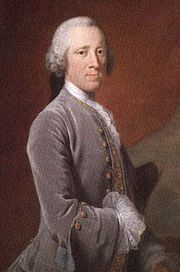 The Cavendish family descends from Sir John Cavendish
, who took his name from the village of Cavendish, Suffolk
, where he held an estate in the 14th century. He served as Chief Justice of the King's Bench from 1372 to 1381, and was killed in the Peasants' Revolt
. Two of his great-grandsons were George Cavendish, Thomas Cardinal Wolsey's biographer, and George's younger brother Sir William Cavendish. Sir William gained great wealth from his position in the Exchequer
and also, as it was alleged, from unfairly taking advantage of the Dissolution of the Monasteries
. He married as his third wife the famous Bess of Hardwick
, with whom he had eight children. One of their sons, Sir Charles Cavendish (1553–1617), was the father of William Cavendish, 1st Duke of Newcastle-upon-Tyne (see the Duke of Newcastle-upon-Tyne for more information on this branch of the family), while another son, Henry Cavendish, was the ancestor of the Barons Waterpark
. Yet another son, William Cavendish
, was a politician and a supporter of the colonialization of Virginia
. In 1605 he was raised to the peerage as Baron Cavendish, of Hardwicke in the County of Derby, and in 1618 he was further honoured when he was made Earl of Devonshire. Both titles are in the Peerage of England
.
. On his early death the titles passed to his son, the third Earl. He was also Lord-Lieutenant of Derbyshire. He was succeeded by his son, the fourth Earl. He was a strong supporter of the Glorious Revolution
and later served under William III
and Mary II
as Lord Steward of the Household. In 1694 he was created Marquess of Hartington and Duke of Devonshire in the Peerage of England. He was succeeded by his eldest son, the second Duke. He held political office as Lord President of the Council
and Lord Privy Seal
and was also Lord-Lieutenant of Devonshire. His eldest son, the third Duke, served as Lord Privy Seal, as Lord Steward of the Household and as Lord-Lieutenant of Ireland.
On his death the titles passed to his eldest son, the fourth Duke, who was a prominent politician. He was summoned to the House of Lords
through a writ of acceleration
in his father's junior title of Baron Cavendish of Hardwicke in 1751 and served as First Lord of the Treasury
and titular Prime Minister of Great Britain from 1756 to 1757. Devonshire married Charlotte Boyle, 6th Baroness Clifford, daughter of the famous architect Richard Boyle, 3rd Earl of Burlington
(on whose death in 1753 the earldom of Burlington became extinct). Their third and youngest son Lord George Cavendish
was created Earl of Burlington
in 1831. Devonshire was succeeded by his eldest son, William Cavendish
, who became the fifth Duke of Devonshire. He had already succeeded his mother as seventh Baron Clifford
in 1754. He served as Lord-Lieutenant of Derbyshire from 1782 to 1811 but is best remembered for his first marriage to Lady Georgiana Spencer
, the celebrated beauty and society hostess.
 Their only son, the sixth Duke, served as Lord Chamberlain of the Household from 1827 to 1828 and from 1830 to 1834. Known as the "Bachelor Duke", he never married and on his death in 1858 the barony of Clifford fell into abeyance between his sisters. He was succeeded in the other titles by his first cousin once removed, the second Earl of Burlington, who became the seventh Duke (see the Earl of Burlington
for earlier history of this branch of the family). He was the son of William Cavendish
, eldest son of the aforementioned first Earl of Burlington, youngest son of the fourth Duke. He was Lord-Lieutenant of Lancashire and Derbyshire and Chancellor of the University of London
and of the University of Cambridge
. He was succeeded by his second but eldest surviving son, the eighth Duke. He was a noted statesman and the most famous member of the Cavendish family. Known under his courtesy title of Marquess of Hartington until 1891, he held political office for a period spanning 40 years, notably as Secretary of State for India
and as Secretary of State for War
, and three times declined to become Prime Minister
. He married Louise, Dowager Duchess of Manchester
, who became known as the "Double Duchess".
, third son of the seventh Duke. He was a Conservative
politician and served as Governor General of Canada
from 1916 to 1921 and as Secretary of State for the Colonies
from 1922 to 1924. His eldest son, the tenth Duke, was also a Conservative politician and served as Under-Secretary of State for Dominion Affairs
, as Under-Secretary of State for India and Burma and as Under-Secretary of State for the Colonies
. His eldest son and heir apparent William Cavendish, Marquess of Hartington, married Kathleen Kennedy
, daughter of Joseph Kennedy and sister of the future President of the United States
, John Fitzgerald Kennedy. Lord Hartington was killed in the Second World War in 1944 shortly after the marriage. The couple had no children. Devonshire was therefore succeeded by his second but eldest surviving son, the eleventh Duke. He sat on the Conservative benches in the House of Lords and held political office under his uncle Harold Macmillan
and later Sir Alec Douglas-Home from 1960 to 1964. Devonshire married the Hon. Deborah Mitford
, the youngest of the famous Mitford sisters. As of 2009 the titles are held by their second and only surviving son, the twelfth Duke, who succeeded in 2004.
, second son of the first Duke, was Member of Parliament for Derby
. Lord James Cavendish, third son of the first Duke, also represented this constituency in the House of Commons
. Lord Charles Cavendish
, second son of the second Duke, was a politician and scientist. His son Henry Cavendish
was an influential scientist noted for his discovery of hydrogen
. Lord James Cavendish, third son of the second Duke, was a soldier and briefly represented Malton
in Parliament. Lord George Cavendish, second son of the third Duke, was a long-standing Member of Parliament and served as Comptroller of the Household
from 1761 to 1762. Lord Frederick Cavendish
, third son of the third Duke, was a Field Marshal
in the Army. Lord John Cavendish
, fourth son of the third Duke, was a politician and served as Chancellor of the Exchequer
in 1782 and 1783.
 Lord Richard Cavendish, second son of the fourth Duke, represented Lancaster
and Derbyshire
in the House of Commons. Lady Dorothy Cavendish, daughter of the fourth Duke, married Prime Minister William Cavendish-Bentinck, 3rd Duke of Portland
(who assumed the additional surname of Cavendish) and was an ancestor of Queen Elizabeth II
. Augustus Clifford
, illegitimate son by the fifth Duke and his mistress and later second wife Elizabeth Hervey, was a naval commander and was created a Baronet in 1838 (see Clifford Baronets
). William Cavendish
, eldest son of the first Earl of Burlington and father of the seventh Duke, represented Aylesbury
and Derby in Parliament. George Henry Compton Cavendish
, second son of the first Earl of Burlington, was Member of Parliament for Aylesbury. The Hon. Henry Frederick Compton Cavendish
, third son of the first Earl of Burlington, was a General
in the Army. The Hon. Charles Compton Cavendish
, fourth son of the first Earl of Burlington, was created Baron Chesham
in 1858.
Lord Frederick Cavendish
, third son of the seventh Duke, was a Liberal
politician. He had just been appointed Chief Secretary for Ireland
in 1882 when he was assassinated by nationalists in Phoenix Park
, Dublin. His wife Lady Frederick (Lucy) Cavendish
was a pioneer of women's education. Lord Edward Cavendish
, fourth and youngest son of the seventh Duke, sat as Member of Parliament for several constituencies. His second son Lord Richard Cavendish represented North Lonsdale
in Parliament. In 1911 he was one of the proposed recipients of peerages in case the Bill that was to become the Parliament Act 1911
was not accepted by the House of Lords. His grandson Hugh Cavendish
was created a life peer
as Baron Cavendish of Furness in 1990. Lady Dorothy Cavendish
, daughter of the ninth Duke, was the wife of Prime Minister Harold Macmillan
.
Marquess of Hartington, whilst the eldest son of the eldest son may use the title Earl of Burlington, and his eldest son may use the title Lord Cavendish.
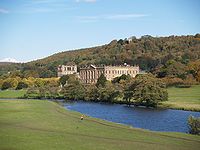
The family seats are Chatsworth House
, Bolton Abbey
in Yorkshire
, and Lismore Castle
in Co Waterford, in the Republic of Ireland
. Compton Place
in Eastbourne
belongs to the family (which developed Eastbourne as a seaside resort in the 19th century) but is let. Holker Hall
in now Cumbria
was left to a junior branch of the family in 1908 (while still Lancashire
). The family previously owned Londesborough Hall
, Yorkshire
; Hardwick Hall
, Derbyshire
; Chiswick House
, Middlesex
; and two London
mansions on Piccadilly
- Devonshire House
and Burlington House
.
The heir apparent
is the present holder's only son William Cavendish, Earl of Burlington (b. 1969).
Lord Burlington's heir apparent is his second child and only son, James Cavendish, Lord Cavendish (born 15 December 2010).
, then held to be extinct; but which was found to have been in existence de jure in 1831. These are held by different families, and are now held to be distinct titles.
When the earldom of Devonshire was created, there was already in existence an earldom of Derby. It would therefore have been unlikely that the Cavendish family would have chosen Derbyshire as their new honour. It is much more likely that the title of Devonshire was chosen deliberately. The Cavendish peerage was granted in 1618, 12 years after the last holder of an earlier creation of the earldom of Devonshire, Charles Blount, 8th Lord Mountjoy had died.
The Devon earldom had earlier been held by the ancient de Redvers family and by the Courtenay family who had married in the Tudor era the daughter of King Edward IV, Princess Katherine of York and whose son was later made Marquess of Exeter. The Marquess of Exeter was executed for treason and his son was probably poisoned in 1556. From that date, the peerage was vacant. By choosing Devonshire the Cavendish family, who had only recently arrived socially on the political scene, were aligning themselves with some of the oldest families in England. It should be noted that historically 'Devon' and 'Devonshire' were alternating terms and as late as the eighteenth century Georgiana Cavendish
was sometimes referred to as the Duchess of Devon.
directed by Saul Dibb
, starring Ralph Fiennes
as the Duke and Keira Knightley
as the Duchess. The film is based on Amanda Foreman's
biography of the scandalous 18th-century English aristocrat Georgiana Cavendish, Duchess of Devonshire
.
Along with Jane Austen
, Elizabeth
and the fifth Duke
appear, soon after Georgiana
's death, in Jane and the Stillroom Maid, a murder mystery by Stephanie Barron.
In John Buchan's novel The Three Hostages (1924), 'the late Duke of Devonshire' is cited as an epitome of Englishness. This probably refers to the eighth duke.
Peerage of England
The Peerage of England comprises all peerages created in the Kingdom of England before the Act of Union in 1707. In that year, the Peerages of England and Scotland were replaced by one Peerage of Great Britain....
held by members of the Cavendish
House of Cavendish
Cavendish is the surname of a British noble family, also known as the House of Cavendish, descended from Sir John Cavendish of Cavendish in the county of Suffolk Cavendish is the surname of a British noble family, also known as the House of Cavendish, descended from Sir John Cavendish of Cavendish...
family. This branch of the Cavendish family has been one of the richest and most influential aristocratic families in England since the 16th century, and have been rivalled in political influence perhaps only by the Earls of Derby
Earl of Derby
Earl of Derby is a title in the Peerage of England. The title was first adopted by Robert de Ferrers, 1st Earl of Derby under a creation of 1139. It continued with the Ferrers family until the 6th Earl forfeited his property toward the end of the reign of Henry III and died in 1279...
and the Marquesses of Salisbury
Marquess of Salisbury
Marquess of Salisbury is a title in the Peerage of Great Britain. It was created in 1789 for the 7th Earl of Salisbury. Most of the holders of the title have been prominent in British political life over the last two centuries, particularly the 3rd Marquess, who served three times as Prime Minister...
.
History
Although in modern usage the county of DevonDevon
Devon is a large county in southwestern England. The county is sometimes referred to as Devonshire, although the term is rarely used inside the county itself as the county has never been officially "shired", it often indicates a traditional or historical context.The county shares borders with...
is now rarely called 'Devonshire', the title remained 'Duke of Devonshire'. Despite the title of the dukedom and the subsidiary title, the earldom of Devonshire, the family estates are centred in Derbyshire
Derbyshire
Derbyshire is a county in the East Midlands of England. A substantial portion of the Peak District National Park lies within Derbyshire. The northern part of Derbyshire overlaps with the Pennines, a famous chain of hills and mountains. The county contains within its boundary of approx...
. It should not be confused with the earlier title, Earl of Devon
Earl of Devon
The title of Earl of Devon was created several times in the Peerage of England, and was possessed first by the de Redvers family, and later by the Courtenays...
.
Cavendish knights, and the 1st Earl of Devonshire
John Cavendish
Sir John Cavendish of Cavendish came from Cavendish, Suffolk, England. He and the village gave the name Cavendish to the aristocratic families, of the Dukedoms of Devonshire, Newcastle and Portland.-Biography:...
, who took his name from the village of Cavendish, Suffolk
Cavendish, Suffolk
Cavendish is a village and civil parish in the Stour Valley in Suffolk, England. It is from Bury St Edmunds and from Newmarket.It is believed that Cavendish is called so because a man called Cafa used to own a pasture or 'edisc' there, and it therefore became known as Cafa's Edisc and eventually...
, where he held an estate in the 14th century. He served as Chief Justice of the King's Bench from 1372 to 1381, and was killed in the Peasants' Revolt
Peasants' Revolt
The Peasants' Revolt, Wat Tyler's Rebellion, or the Great Rising of 1381 was one of a number of popular revolts in late medieval Europe and is a major event in the history of England. Tyler's Rebellion was not only the most extreme and widespread insurrection in English history but also the...
. Two of his great-grandsons were George Cavendish, Thomas Cardinal Wolsey's biographer, and George's younger brother Sir William Cavendish. Sir William gained great wealth from his position in the Exchequer
Exchequer
The Exchequer is a government department of the United Kingdom responsible for the management and collection of taxation and other government revenues. The historical Exchequer developed judicial roles...
and also, as it was alleged, from unfairly taking advantage of the Dissolution of the Monasteries
Dissolution of the Monasteries
The Dissolution of the Monasteries, sometimes referred to as the Suppression of the Monasteries, was the set of administrative and legal processes between 1536 and 1541 by which Henry VIII disbanded monasteries, priories, convents and friaries in England, Wales and Ireland; appropriated their...
. He married as his third wife the famous Bess of Hardwick
Bess of Hardwick
Elizabeth Talbot, Countess of Shrewsbury Elizabeth Talbot, Countess of Shrewsbury Elizabeth Talbot, Countess of Shrewsbury (c. 1521 – 13 February 1608, known as Bess of Hardwick, was the daughter of John Hardwick, of Derbyshire and Elizabeth Leeke, daughter of Thomas Leeke and Margaret Fox...
, with whom he had eight children. One of their sons, Sir Charles Cavendish (1553–1617), was the father of William Cavendish, 1st Duke of Newcastle-upon-Tyne (see the Duke of Newcastle-upon-Tyne for more information on this branch of the family), while another son, Henry Cavendish, was the ancestor of the Barons Waterpark
Baron Waterpark
Baron Waterpark is a title in the Peerage of Ireland. It was created in 1792 for Sarah, Lady Cavendish, in honour of her husband, Sir Henry Cavendish, 2nd Baronet. Sir Henry Cavendish was a politician who represented Lismore and Killybegs in the Irish House of Commons and served as Vice-Treasurer...
. Yet another son, William Cavendish
William Cavendish, 1st Earl of Devonshire
William Cavendish, 1st Earl of Devonshire was an English politician and courtier.-Life:The second son of Sir William Cavendish and Bess of Hardwick, he was educated with the children of George Talbot, 6th Earl of Shrewsbury, whom his mother married after his father's death. She made him a rich...
, was a politician and a supporter of the colonialization of Virginia
Colony and Dominion of Virginia
The Colony of Virginia was the English colony in North America that existed briefly during the 16th century, and then continuously from 1607 until the American Revolution...
. In 1605 he was raised to the peerage as Baron Cavendish, of Hardwicke in the County of Derby, and in 1618 he was further honoured when he was made Earl of Devonshire. Both titles are in the Peerage of England
Peerage of England
The Peerage of England comprises all peerages created in the Kingdom of England before the Act of Union in 1707. In that year, the Peerages of England and Scotland were replaced by one Peerage of Great Britain....
.
The 2nd Earl of Devonshire and the first five Dukes of Devonshire
He was succeeded by his eldest son, the second Earl. He served as Lord-Lieutenant of Derbyshire and was a patron of the philosopher Thomas HobbesThomas Hobbes
Thomas Hobbes of Malmesbury , in some older texts Thomas Hobbs of Malmsbury, was an English philosopher, best known today for his work on political philosophy...
. On his early death the titles passed to his son, the third Earl. He was also Lord-Lieutenant of Derbyshire. He was succeeded by his son, the fourth Earl. He was a strong supporter of the Glorious Revolution
Glorious Revolution
The Glorious Revolution, also called the Revolution of 1688, is the overthrow of King James II of England by a union of English Parliamentarians with the Dutch stadtholder William III of Orange-Nassau...
and later served under William III
William III of England
William III & II was a sovereign Prince of Orange of the House of Orange-Nassau by birth. From 1672 he governed as Stadtholder William III of Orange over Holland, Zeeland, Utrecht, Guelders, and Overijssel of the Dutch Republic. From 1689 he reigned as William III over England and Ireland...
and Mary II
Mary II of England
Mary II was joint Sovereign of England, Scotland, and Ireland with her husband and first cousin, William III and II, from 1689 until her death. William and Mary, both Protestants, became king and queen regnant, respectively, following the Glorious Revolution, which resulted in the deposition of...
as Lord Steward of the Household. In 1694 he was created Marquess of Hartington and Duke of Devonshire in the Peerage of England. He was succeeded by his eldest son, the second Duke. He held political office as Lord President of the Council
Lord President of the Council
The Lord President of the Council is the fourth of the Great Officers of State of the United Kingdom, ranking beneath the Lord High Treasurer and above the Lord Privy Seal. The Lord President usually attends each meeting of the Privy Council, presenting business for the monarch's approval...
and Lord Privy Seal
Lord Privy Seal
The Lord Privy Seal is the fifth of the Great Officers of State in the United Kingdom, ranking beneath the Lord President of the Council and above the Lord Great Chamberlain. The office is one of the traditional sinecure offices of state...
and was also Lord-Lieutenant of Devonshire. His eldest son, the third Duke, served as Lord Privy Seal, as Lord Steward of the Household and as Lord-Lieutenant of Ireland.
On his death the titles passed to his eldest son, the fourth Duke, who was a prominent politician. He was summoned to the House of Lords
House of Lords
The House of Lords is the upper house of the Parliament of the United Kingdom. Like the House of Commons, it meets in the Palace of Westminster....
through a writ of acceleration
Writ of acceleration
A writ in acceleration, commonly called a writ of acceleration, was a type of writ of summons to the British House of Lords that enabled the eldest son and heir apparent of a peer with multiple peerage titles to attend the British House of Lords or Irish House of Lords, using one of his father's...
in his father's junior title of Baron Cavendish of Hardwicke in 1751 and served as First Lord of the Treasury
First Lord of the Treasury
The First Lord of the Treasury is the head of the commission exercising the ancient office of Lord High Treasurer in the United Kingdom, and is now always also the Prime Minister...
and titular Prime Minister of Great Britain from 1756 to 1757. Devonshire married Charlotte Boyle, 6th Baroness Clifford, daughter of the famous architect Richard Boyle, 3rd Earl of Burlington
Richard Boyle, 3rd Earl of Burlington
Richard Boyle, 3rd Earl of Burlington and 4th Earl of Cork PC , born in Yorkshire, England, was the son of Charles Boyle, 2nd Earl of Burlington and 3rd Earl of Cork...
(on whose death in 1753 the earldom of Burlington became extinct). Their third and youngest son Lord George Cavendish
George Cavendish, 1st Earl of Burlington
George Augustus Henry Cavendish, 1st Earl of Burlington , styled Lord George Cavendish before 1831, was a British politician.-Background:...
was created Earl of Burlington
Earl of Burlington
Earl of Burlington is a title that has been created twice, the first time in the Peerage of England and the second in the Peerage of the United Kingdom. The first creation was for Richard Boyle, 2nd Earl of Cork, on 20 March 1664...
in 1831. Devonshire was succeeded by his eldest son, William Cavendish
William Cavendish, 5th Duke of Devonshire
William Cavendish, 5th Duke of Devonshire, KG was a British aristocrat and politician. He was the eldest son of the William Cavendish, 4th Duke of Devonshire by his wife the heiress Lady Charlotte Boyle, suo jure Baroness Clifford of Lanesborough, who brought in considerable money and estates to...
, who became the fifth Duke of Devonshire. He had already succeeded his mother as seventh Baron Clifford
Baron Clifford
The barony of this name has been in abeyance since 1858 – for the baronies with similar names that remain extant see Baron Clifford of Chudleigh and Baron de Clifford----...
in 1754. He served as Lord-Lieutenant of Derbyshire from 1782 to 1811 but is best remembered for his first marriage to Lady Georgiana Spencer
Georgiana Cavendish, Duchess of Devonshire
Georgiana Cavendish, Duchess of Devonshire , formerly Lady Georgiana Spencer, was the first wife of the 5th Duke of Devonshire, and mother of the 6th Duke of Devonshire. Her father, the 1st Earl Spencer, was a great-grandson of the 1st Duke of Marlborough. Her niece was Lady Caroline Lamb...
, the celebrated beauty and society hostess.
The sixth, seventh and eighth Dukes
Earl of Burlington
Earl of Burlington is a title that has been created twice, the first time in the Peerage of England and the second in the Peerage of the United Kingdom. The first creation was for Richard Boyle, 2nd Earl of Cork, on 20 March 1664...
for earlier history of this branch of the family). He was the son of William Cavendish
William Cavendish (1783-1812)
William Cavendish was an English politician, the son of Lord George Cavendish, later Earl of Burlington....
, eldest son of the aforementioned first Earl of Burlington, youngest son of the fourth Duke. He was Lord-Lieutenant of Lancashire and Derbyshire and Chancellor of the University of London
University of London
-20th century:Shortly after 6 Burlington Gardens was vacated, the University went through a period of rapid expansion. Bedford College, Royal Holloway and the London School of Economics all joined in 1900, Regent's Park College, which had affiliated in 1841 became an official divinity school of the...
and of the University of Cambridge
University of Cambridge
The University of Cambridge is a public research university located in Cambridge, United Kingdom. It is the second-oldest university in both the United Kingdom and the English-speaking world , and the seventh-oldest globally...
. He was succeeded by his second but eldest surviving son, the eighth Duke. He was a noted statesman and the most famous member of the Cavendish family. Known under his courtesy title of Marquess of Hartington until 1891, he held political office for a period spanning 40 years, notably as Secretary of State for India
Secretary of State for India
The Secretary of State for India, or India Secretary, was the British Cabinet minister responsible for the government of India and the political head of the India Office...
and as Secretary of State for War
Secretary of State for War
The position of Secretary of State for War, commonly called War Secretary, was a British cabinet-level position, first held by Henry Dundas . In 1801 the post became that of Secretary of State for War and the Colonies. The position was re-instated in 1854...
, and three times declined to become Prime Minister
Prime Minister of the United Kingdom
The Prime Minister of the United Kingdom of Great Britain and Northern Ireland is the Head of Her Majesty's Government in the United Kingdom. The Prime Minister and Cabinet are collectively accountable for their policies and actions to the Sovereign, to Parliament, to their political party and...
. He married Louise, Dowager Duchess of Manchester
Louisa Cavendish, Duchess of Devonshire
Louisa Frederica Augusta Cavendish, Duchess of Devonshire, formerly Louisa Montagu, Duchess of Manchester, née Luise Fredericke Auguste Gräfin von Alten , daughter of Karl Franz Viktor, Graf von Alten and his wife, Hermine de Schminke .On 22 July 1852 she was married at Hannover to...
, who became known as the "Double Duchess".
The ninth, tenth and eleventh Dukes
Devonshire died childless and was succeeded by his nephew, the ninth Duke. He was the eldest son of Lord Edward CavendishLord Edward Cavendish
Lieutenant-Colonel Lord Edward Cavendish was a 19th century British politician.Born in Marylebone, Cavendish was the third son of William Cavendish, 7th Duke of Devonshire, by his wife, Lady Blanche Cavendish, Duchess of Devonshire...
, third son of the seventh Duke. He was a Conservative
Conservative Party (UK)
The Conservative Party, formally the Conservative and Unionist Party, is a centre-right political party in the United Kingdom that adheres to the philosophies of conservatism and British unionism. It is the largest political party in the UK, and is currently the largest single party in the House...
politician and served as Governor General of Canada
Governor General of Canada
The Governor General of Canada is the federal viceregal representative of the Canadian monarch, Queen Elizabeth II...
from 1916 to 1921 and as Secretary of State for the Colonies
Secretary of State for the Colonies
The Secretary of State for the Colonies or Colonial Secretary was the British Cabinet minister in charge of managing the United Kingdom's various colonial dependencies....
from 1922 to 1924. His eldest son, the tenth Duke, was also a Conservative politician and served as Under-Secretary of State for Dominion Affairs
Under-Secretary of State for Dominion Affairs
The position of Under-Secretary of State for Dominion Affairs was a British ministerial position, subordinate to that of Secretary of State for Dominion Affairs, created in 1925 to deal with British relations with the Dominions — Canada, Australia, New Zealand, South Africa, Newfoundland, and the...
, as Under-Secretary of State for India and Burma and as Under-Secretary of State for the Colonies
Under-Secretary of State for the Colonies
The Under-Secretary of State for the Colonies was a junior Ministerial post in the United Kingdom government, subordinate to the Secretary of State for the Colonies and, from 1948, also to a Minister of State....
. His eldest son and heir apparent William Cavendish, Marquess of Hartington, married Kathleen Kennedy
Kathleen Cavendish, Marchioness of Hartington
Kathleen Agnes "Kick" Cavendish, Marchioness of Hartington , born Kathleen Agnes Kennedy, was the fourth child and second daughter of Joseph P. Kennedy, Sr. and Rose Kennedy. She was a sister of future U.S. President John F. Kennedy and widow of the heir to the Dukedom of Devonshire.-Biography:When...
, daughter of Joseph Kennedy and sister of the future President of the United States
President of the United States
The President of the United States of America is the head of state and head of government of the United States. The president leads the executive branch of the federal government and is the commander-in-chief of the United States Armed Forces....
, John Fitzgerald Kennedy. Lord Hartington was killed in the Second World War in 1944 shortly after the marriage. The couple had no children. Devonshire was therefore succeeded by his second but eldest surviving son, the eleventh Duke. He sat on the Conservative benches in the House of Lords and held political office under his uncle Harold Macmillan
Harold Macmillan
Maurice Harold Macmillan, 1st Earl of Stockton, OM, PC was Conservative Prime Minister of the United Kingdom from 10 January 1957 to 18 October 1963....
and later Sir Alec Douglas-Home from 1960 to 1964. Devonshire married the Hon. Deborah Mitford
Deborah Cavendish, Duchess of Devonshire
Deborah Vivien Cavendish, Dowager Duchess of Devonshire DCVO , née The Hon. Deborah Freeman-Mitford is the youngest and last surviving of the six noted Mitford sisters whose political affiliations and marriages were a prominent feature of English culture in the 1930s and 1940s...
, the youngest of the famous Mitford sisters. As of 2009 the titles are held by their second and only surviving son, the twelfth Duke, who succeeded in 2004.
Other notable members of the Cavendish family
Numerous other members of the Cavendish family have also gained distinction. Lord Henry CavendishLord Henry Cavendish
Lord Henry Cavendish was a British politician, the second son of William Cavendish, 1st Duke of Devonshire.He married Rhoda Cartwright and had one daughter:...
, second son of the first Duke, was Member of Parliament for Derby
Derby (UK Parliament constituency)
Derby is a former United Kingdom Parliamentary constituency. It was a constituency of the House of Commons of the Parliament of England then of the Parliament of Great Britain from 1707 to 1800 and of the Parliament of the United Kingdom from 1801 to 1950. It was represented by two Members of...
. Lord James Cavendish, third son of the first Duke, also represented this constituency in the House of Commons
British House of Commons
The House of Commons is the lower house of the Parliament of the United Kingdom, which also comprises the Sovereign and the House of Lords . Both Commons and Lords meet in the Palace of Westminster. The Commons is a democratically elected body, consisting of 650 members , who are known as Members...
. Lord Charles Cavendish
Lord Charles Cavendish
Lord Charles Cavendish FRS was a British nobleman, Whig politician and scientist.Cavendish was the youngest son of William Cavendish, 2nd Duke of Devonshire and Rachel Russell....
, second son of the second Duke, was a politician and scientist. His son Henry Cavendish
Henry Cavendish
Henry Cavendish FRS was a British scientist noted for his discovery of hydrogen or what he called "inflammable air". He described the density of inflammable air, which formed water on combustion, in a 1766 paper "On Factitious Airs". Antoine Lavoisier later reproduced Cavendish's experiment and...
was an influential scientist noted for his discovery of hydrogen
Hydrogen
Hydrogen is the chemical element with atomic number 1. It is represented by the symbol H. With an average atomic weight of , hydrogen is the lightest and most abundant chemical element, constituting roughly 75% of the Universe's chemical elemental mass. Stars in the main sequence are mainly...
. Lord James Cavendish, third son of the second Duke, was a soldier and briefly represented Malton
Malton (UK Parliament constituency)
Malton, also called New Malton, was a constituency of the House of Commons of the Parliament of England in 1295 and 1298, and again from 1640, then of the Parliament of Great Britain from 1707 to 1800 and of the Parliament of the United Kingdom from 1801 to 1885...
in Parliament. Lord George Cavendish, second son of the third Duke, was a long-standing Member of Parliament and served as Comptroller of the Household
Comptroller of the Household
The Comptroller of the Household is an ancient position in the English royal household, currently the second-ranking member of the Lord Steward's department, and often a cabinet member. He was an ex officio member of the Board of Green Cloth, until that body was abolished in the reform of the local...
from 1761 to 1762. Lord Frederick Cavendish
Lord Frederick Cavendish (soldier)
Field Marshal Lord Frederick Cavendish was a British field marshal and Whig politician, a younger son of William Cavendish, 3rd Duke of Devonshire.-Military career:...
, third son of the third Duke, was a Field Marshal
Field Marshal (UK)
Field Marshal is the highest military rank of the British Army. It ranks immediately above the rank of General and is the Army equivalent of an Admiral of the Fleet and a Marshal of the Royal Air Force....
in the Army. Lord John Cavendish
Lord John Cavendish
Lord John Cavendish PC was a British politician.-Background:Cavendish was the youngest son of William Cavendish, 3rd Duke of Devonshire, and his wife Catherine, daughter of John Hoskins. Prime Minister William Cavendish, 4th Duke of Devonshire, Lord George Cavendish and Field Marshal Lord...
, fourth son of the third Duke, was a politician and served as Chancellor of the Exchequer
Chancellor of the Exchequer
The Chancellor of the Exchequer is the title held by the British Cabinet minister who is responsible for all economic and financial matters. Often simply called the Chancellor, the office-holder controls HM Treasury and plays a role akin to the posts of Minister of Finance or Secretary of the...
in 1782 and 1783.
Lancaster (UK Parliament constituency)
Lancaster was a constituency of the House of Commons of the Parliament of England then of the Parliament of Great Britain from 1707 to 1800 and of the Parliament of the United Kingdom from 1801 to 1867, centred on the historic city of Lancaster in north-west England...
and Derbyshire
Derbyshire (UK Parliament constituency)
Derbyshire is a former United Kingdom Parliamentary constituency. It was a constituency of the House of Commons of the Parliament of England then of the Parliament of Great Britain from 1707 to 1800 and of the Parliament of the United Kingdom from 1801 to 1832...
in the House of Commons. Lady Dorothy Cavendish, daughter of the fourth Duke, married Prime Minister William Cavendish-Bentinck, 3rd Duke of Portland
William Cavendish-Bentinck, 3rd Duke of Portland
William Henry Cavendish-Bentinck, 3rd Duke of Portland, KG, PC was a British Whig and Tory statesman, Chancellor of the University of Oxford and Prime Minister. He was known before 1762 by the courtesy title Marquess of Titchfield. He held a title of every degree of British nobility—Duke,...
(who assumed the additional surname of Cavendish) and was an ancestor of Queen Elizabeth II
Elizabeth II of the United Kingdom
Elizabeth II is the constitutional monarch of 16 sovereign states known as the Commonwealth realms: the United Kingdom, Canada, Australia, New Zealand, Jamaica, Barbados, the Bahamas, Grenada, Papua New Guinea, the Solomon Islands, Tuvalu, Saint Lucia, Saint Vincent and the Grenadines, Belize,...
. Augustus Clifford
Sir Augustus Clifford, 1st Baronet
Admiral Sir Augustus William James Clifford, 1st Baronet, CB, MP was a British Royal Navy officer, court official, and usher of the Black Rod.-Naval career:...
, illegitimate son by the fifth Duke and his mistress and later second wife Elizabeth Hervey, was a naval commander and was created a Baronet in 1838 (see Clifford Baronets
Clifford Baronets
There have been two Baronetcies created for a person with the surname Clifford.The Clifford Baronetcy, of the Navy was created for Augustus William James Clifford, the illegitimate son of the 5th Duke of Devonshire on August 4, 1838 in the Baronetage of the United Kingdom...
). William Cavendish
William Cavendish (1783-1812)
William Cavendish was an English politician, the son of Lord George Cavendish, later Earl of Burlington....
, eldest son of the first Earl of Burlington and father of the seventh Duke, represented Aylesbury
Aylesbury (UK Parliament constituency)
Aylesbury is a parliamentary constituency represented in the House of Commons of the United Kingdom. The Conservative Party has held the seat since 1924, and held it at the 2010 general election with a 52.2% share of the vote.-Boundaries:...
and Derby in Parliament. George Henry Compton Cavendish
George Henry Compton Cavendish
George Henry Compton Cavendish was an English politician, the son of Lord George Cavendish, later Earl of Burlington....
, second son of the first Earl of Burlington, was Member of Parliament for Aylesbury. The Hon. Henry Frederick Compton Cavendish
Henry Frederick Compton Cavendish
General Henry Frederick Compton Cavendish was a British soldier, politician and courtier. He was the third son of George Cavendish, 1st Earl of Burlington and Lady Elizabeth Compton....
, third son of the first Earl of Burlington, was a General
General
A general officer is an officer of high military rank, usually in the army, and in some nations, the air force. The term is widely used by many nations of the world, and when a country uses a different term, there is an equivalent title given....
in the Army. The Hon. Charles Compton Cavendish
Charles Cavendish, 1st Baron Chesham
Charles Compton Cavendish, 1st Baron Chesham was a British Liberal politician.Cavendish was the fourth son of George Augustus Henry Cavendish, 1st Earl of Burlington, third son of the former Prime Minister William Cavendish, 4th Duke of Devonshire, and his wife Lady Charlotte Elizabeth Boyle,...
, fourth son of the first Earl of Burlington, was created Baron Chesham
Baron Chesham
Baron Chesham, of Chesham in the County of Buckingham, is a title in the Peerage of the United Kingdom. It was created in 1858 for the Hon. Charles Cavendish, who had earlier represented Aylesbury, Newtown, East Sussex, Youghal and Buckinghamshire in the House of Commons as a Liberal...
in 1858.
Lord Frederick Cavendish
Lord Frederick Cavendish
Lord Frederick Charles Cavendish was an English Liberal politician and protégé of the Prime Minister, William Ewart Gladstone...
, third son of the seventh Duke, was a Liberal
Liberal Party (UK)
The Liberal Party was one of the two major political parties of the United Kingdom during the 19th and early 20th centuries. It was a third party of negligible importance throughout the latter half of the 20th Century, before merging with the Social Democratic Party in 1988 to form the present day...
politician. He had just been appointed Chief Secretary for Ireland
Chief Secretary for Ireland
The Chief Secretary for Ireland was a key political office in the British administration in Ireland. Nominally subordinate to the Lord Lieutenant, from the late 18th century until the end of British rule he was effectively the government minister with responsibility for governing Ireland; usually...
in 1882 when he was assassinated by nationalists in Phoenix Park
Phoenix Park
Phoenix Park is an urban park in Dublin, Ireland, lying 2–4 km west of the city centre, north of the River Liffey. Its 16 km perimeter wall encloses , one of the largest walled city parks in Europe. It includes large areas of grassland and tree-lined avenues, and since the seventeenth...
, Dublin. His wife Lady Frederick (Lucy) Cavendish
Lucy Cavendish
Lucy Caroline Cavendish, Lady Frederick Cavendish was a pioneer of women's education....
was a pioneer of women's education. Lord Edward Cavendish
Lord Edward Cavendish
Lieutenant-Colonel Lord Edward Cavendish was a 19th century British politician.Born in Marylebone, Cavendish was the third son of William Cavendish, 7th Duke of Devonshire, by his wife, Lady Blanche Cavendish, Duchess of Devonshire...
, fourth and youngest son of the seventh Duke, sat as Member of Parliament for several constituencies. His second son Lord Richard Cavendish represented North Lonsdale
North Lonsdale (UK Parliament constituency)
North Lonsdale was a parliamentary constituency in north Lancashire. It returned one Member of Parliament to the House of Commons of the Parliament of the United Kingdom....
in Parliament. In 1911 he was one of the proposed recipients of peerages in case the Bill that was to become the Parliament Act 1911
Parliament Act 1911
The Parliament Act 1911 is an Act of the Parliament of the United Kingdom. It is constitutionally important and partly governs the relationship between the House of Commons and the House of Lords which make up the Houses of Parliament. This Act must be construed as one with the Parliament Act 1949...
was not accepted by the House of Lords. His grandson Hugh Cavendish
Hugh Cavendish, Baron Cavendish of Furness
Hugh Cavendish, Baron Cavendish of Furness FRSA , who usually uses the name Hugh Cavendish, is a British Conservative politician and landowner. He owns Holker Hall, and its 17,000 acre estate, that overlooks Morecambe Bay in Cumbria...
was created a life peer
Life peer
In the United Kingdom, life peers are appointed members of the Peerage whose titles cannot be inherited. Nowadays life peerages, always of baronial rank, are created under the Life Peerages Act 1958 and entitle the holders to seats in the House of Lords, presuming they meet qualifications such as...
as Baron Cavendish of Furness in 1990. Lady Dorothy Cavendish
Lady Dorothy Macmillan
Lady Dorothy Evelyn Macmillan GBE was a daughter of the 9th Duke and Duchess of Devonshire and the wife of the British Prime Minister Harold Macmillan.-Family life:...
, daughter of the ninth Duke, was the wife of Prime Minister Harold Macmillan
Harold Macmillan
Maurice Harold Macmillan, 1st Earl of Stockton, OM, PC was Conservative Prime Minister of the United Kingdom from 10 January 1957 to 18 October 1963....
.
Courtesy titles; family seats
The Duke of Devonshire's eldest son may use the courtesy titleCourtesy title
A courtesy title is a form of address in systems of nobility used for children, former wives and other close relatives of a peer. These styles are used 'by courtesy' in the sense that the relatives do not themselves hold substantive titles...
Marquess of Hartington, whilst the eldest son of the eldest son may use the title Earl of Burlington, and his eldest son may use the title Lord Cavendish.
The family seats are Chatsworth House
Chatsworth House
Chatsworth House is a stately home in North Derbyshire, England, northeast of Bakewell and west of Chesterfield . It is the seat of the Duke of Devonshire, and has been home to his family, the Cavendish family, since Bess of Hardwick settled at Chatsworth in 1549.Standing on the east bank of the...
, Bolton Abbey
Bolton Abbey
Bolton Abbey is the estate within which is located the ruined 12th-century Augustinian Bolton Priory in North Yorkshire, England. It gives its name to the parish of Bolton Abbey.-Bolton Priory:...
in Yorkshire
Yorkshire
Yorkshire is a historic county of northern England and the largest in the United Kingdom. Because of its great size in comparison to other English counties, functions have been increasingly undertaken over time by its subdivisions, which have also been subject to periodic reform...
, and Lismore Castle
Lismore Castle
Lismore Castle is located in the town of Lismore, in County Waterford in Ireland. It was largely re-built in the Gothic style during the mid-nineteenth century by William Cavendish, 6th Duke of Devonshire.-Early history:...
in Co Waterford, in the Republic of Ireland
Republic of Ireland
Ireland , described as the Republic of Ireland , is a sovereign state in Europe occupying approximately five-sixths of the island of the same name. Its capital is Dublin. Ireland, which had a population of 4.58 million in 2011, is a constitutional republic governed as a parliamentary democracy,...
. Compton Place
Compton Place
Compton Place is an English country house in Eastbourne, a town and borough in East Sussex. It was rebuilt for Sir Spencer Compton, to designs by Colen Campbell from 1726, and completed after Campbell's death by William Kent. The Elizabethan-Jacobean house called Bourne Place had Spencer Compton,...
in Eastbourne
Eastbourne
Eastbourne is a large town and borough in East Sussex, on the south coast of England between Brighton and Hastings. The town is situated at the eastern end of the chalk South Downs alongside the high cliff at Beachy Head...
belongs to the family (which developed Eastbourne as a seaside resort in the 19th century) but is let. Holker Hall
Holker Hall
Holker Hall is a country house with a celebrated garden situated on the Cartmel Peninsula, which was historically part of the county of Lancashire, but is now part of the county of Cumbria....
in now Cumbria
Cumbria
Cumbria , is a non-metropolitan county in North West England. The county and Cumbria County Council, its local authority, came into existence in 1974 after the passage of the Local Government Act 1972. Cumbria's largest settlement and county town is Carlisle. It consists of six districts, and in...
was left to a junior branch of the family in 1908 (while still Lancashire
Lancashire
Lancashire is a non-metropolitan county of historic origin in the North West of England. It takes its name from the city of Lancaster, and is sometimes known as the County of Lancaster. Although Lancaster is still considered to be the county town, Lancashire County Council is based in Preston...
). The family previously owned Londesborough Hall
Londesborough Hall
Londesborough Hall was a country house in the village of Londesborough in the East Riding of Yorkshire, England, close to the towns of Market Weighton and Pocklington....
, Yorkshire
Yorkshire
Yorkshire is a historic county of northern England and the largest in the United Kingdom. Because of its great size in comparison to other English counties, functions have been increasingly undertaken over time by its subdivisions, which have also been subject to periodic reform...
; Hardwick Hall
Hardwick Hall
Hardwick Hall , in Derbyshire, is one of the most significant Elizabethan country houses in England. In common with its architect Robert Smythson's other works at both Longleat House and Wollaton Hall, Hardwick Hall is one of the earliest examples of the English interpretation of the Renaissance...
, Derbyshire
Derbyshire
Derbyshire is a county in the East Midlands of England. A substantial portion of the Peak District National Park lies within Derbyshire. The northern part of Derbyshire overlaps with the Pennines, a famous chain of hills and mountains. The county contains within its boundary of approx...
; Chiswick House
Chiswick House
Chiswick House is a Palladian villa in Burlington Lane, Chiswick, in the London Borough of Hounslow in England. Set in , the house was completed in 1729 during the reign of George II and designed by Lord Burlington. William Kent , who took a leading role in designing the gardens, created one of the...
, Middlesex
Middlesex
Middlesex is one of the historic counties of England and the second smallest by area. The low-lying county contained the wealthy and politically independent City of London on its southern boundary and was dominated by it from a very early time...
; and two London
London
London is the capital city of :England and the :United Kingdom, the largest metropolitan area in the United Kingdom, and the largest urban zone in the European Union by most measures. Located on the River Thames, London has been a major settlement for two millennia, its history going back to its...
mansions on Piccadilly
Piccadilly
Piccadilly is a major street in central London, running from Hyde Park Corner in the west to Piccadilly Circus in the east. It is completely within the city of Westminster. The street is part of the A4 road, London's second most important western artery. St...
- Devonshire House
Devonshire House
Devonshire House in Piccadilly was the London residence of the Dukes of Devonshire in the 18th and 19th centuries. It was built for William Cavendish, 3rd Duke of Devonshire in the Palladian style, to designs by William Kent...
and Burlington House
Burlington House
Burlington House is a building on Piccadilly in London. It was originally a private Palladian mansion, and was expanded in the mid 19th century after being purchased by the British government...
.
Earls of Devonshire (1618)
- Other titles: Baron Cavendish of Hardwick, in the county of Derby (1605)
- William Cavendish, 1st Earl of DevonshireWilliam Cavendish, 1st Earl of DevonshireWilliam Cavendish, 1st Earl of Devonshire was an English politician and courtier.-Life:The second son of Sir William Cavendish and Bess of Hardwick, he was educated with the children of George Talbot, 6th Earl of Shrewsbury, whom his mother married after his father's death. She made him a rich...
(1552–1626) was an English courtier - William Cavendish, 2nd Earl of DevonshireWilliam Cavendish, 2nd Earl of DevonshireWilliam Cavendish, 2nd Earl of Devonshire was an English courtier and politician who sat in the House of Commons from 1614 until 1626 when he succeeded to the peerage and sat in the House of Lords.-Life:...
(1591–1628), eldest son of the 1st Earl - William Cavendish, 3rd Earl of DevonshireWilliam Cavendish, 3rd Earl of DevonshireWilliam Cavendish, 3rd Earl of Devonshire was the son of William Cavendish, 2nd Earl of Devonshire....
(1617–1684), elder son of the 2nd Earl - William Cavendish, 4th Earl of DevonshireWilliam Cavendish, 1st Duke of DevonshireWilliam Cavendish, 1st Duke of Devonshire KG PC was a soldier and Whig statesman, the son of William Cavendish, 3rd Earl of Devonshire and Lady Elizabeth Cecil.-Life:...
(1640–1707) was created Duke of Devonshire in 1694
- William Cavendish, 1st Earl of Devonshire
Dukes of Devonshire (1694)
- Other titles: Marquess of Hartington, in the county of Derby (1694), Earl of Devonshire (1618) and Baron Cavendish of Hardwick, in the county of Derby (1605)
- William Cavendish, 1st Duke of DevonshireWilliam Cavendish, 1st Duke of DevonshireWilliam Cavendish, 1st Duke of Devonshire KG PC was a soldier and Whig statesman, the son of William Cavendish, 3rd Earl of Devonshire and Lady Elizabeth Cecil.-Life:...
(1640–1707), only son of the 3rd Earl - William Cavendish, 2nd Duke of DevonshireWilliam Cavendish, 2nd Duke of DevonshireWilliam Cavendish, 2nd Duke of Devonshire KG, PC was a British nobleman and politician, the eldest son of William Cavendish, 1st Duke of Devonshire and Lady Mary Butler. A prominent Whig, he was sworn of the Privy Council in 1707, and served as Lord President of the Council from 1716 to 1717 and...
(1673–1729), eldest son of the 1st Duke - William Cavendish, 3rd Duke of DevonshireWilliam Cavendish, 3rd Duke of DevonshireWilliam Cavendish, 3rd Duke of Devonshire, KG, PC was a British nobleman and Whig politician, the son of William Cavendish, 2nd Duke of Devonshire and Hon. Rachel Russell....
(1698–1755), eldest son of the 2nd Duke - William Cavendish, 4th Duke of DevonshireWilliam Cavendish, 4th Duke of DevonshireWilliam Cavendish, 4th Duke of Devonshire, KG, PC , styled Lord Cavendish before 1729 and Marquess of Hartington between 1729 and 1755, was a British Whig statesman who was briefly nominal Prime Minister of Great Britain...
(1720–1764), eldest son of the 3rd Duke - Lord Richard Cavendish (1752–1781), second son of the 4th Duke, predeceased his eldest brother unmarried
- George Cavendish, 1st Earl of BurlingtonGeorge Cavendish, 1st Earl of BurlingtonGeorge Augustus Henry Cavendish, 1st Earl of Burlington , styled Lord George Cavendish before 1831, was a British politician.-Background:...
(1754–1834), third and youngest son of the 4th Duke, predeceased his nephew, the 6th Duke
-
-
- William Cavendish (1783–1812), eldest son of Lord Burlington, predeceased his father
-
- Other titles (5th & 6th Dukes): Baron CliffordBaron CliffordThe barony of this name has been in abeyance since 1858 – for the baronies with similar names that remain extant see Baron Clifford of Chudleigh and Baron de Clifford----...
(1628)- William Cavendish, 5th Duke of DevonshireWilliam Cavendish, 5th Duke of DevonshireWilliam Cavendish, 5th Duke of Devonshire, KG was a British aristocrat and politician. He was the eldest son of the William Cavendish, 4th Duke of Devonshire by his wife the heiress Lady Charlotte Boyle, suo jure Baroness Clifford of Lanesborough, who brought in considerable money and estates to...
(1748–1811), eldest son of the 4th Duke - William Cavendish, 6th Duke of DevonshireWilliam Cavendish, 6th Duke of DevonshireWilliam George Spencer Cavendish, 6th Duke of Devonshire KG, PC , styled Marquess of Hartington until 1811, was a British peer, courtier and Whig politician...
(1790–1858), only son of the 5th Duke, was called "The Bachelor Duke" and died unmarried
- William Cavendish, 5th Duke of Devonshire
- Other titles (7th Duke onwards): Earl of Burlington and Baron Cavendish of Keighley, in the county of York (1831)
- William Cavendish, 7th Duke of DevonshireWilliam Cavendish, 7th Duke of DevonshireWilliam Cavendish, 7th Duke of Devonshire KG, PC , styled as Lord Cavendish of Keighley between 1831 and 1834 and known as The Earl of Burlington between 1834 and 1858, was a British landowner, benefactor and politician.-Background and education:Cavendish was the son of William Cavendish, eldest...
(1808–1891), eldest son of William Cavendish, himself eldest son of George Cavendish, 1st Earl of BurlingtonGeorge Cavendish, 1st Earl of BurlingtonGeorge Augustus Henry Cavendish, 1st Earl of Burlington , styled Lord George Cavendish before 1831, was a British politician.-Background:...
, third and youngest son of the 4th Duke - Hon. William Cavendish (1831–1834), eldest son of the 7th Duke, died young
- Rt. Hon. Lord Frederick CavendishLord Frederick CavendishLord Frederick Charles Cavendish was an English Liberal politician and protégé of the Prime Minister, William Ewart Gladstone...
(1836–1882), third son of the 7th Duke, predeceased his second brother without issue - Lord Edward CavendishLord Edward CavendishLieutenant-Colonel Lord Edward Cavendish was a 19th century British politician.Born in Marylebone, Cavendish was the third son of William Cavendish, 7th Duke of Devonshire, by his wife, Lady Blanche Cavendish, Duchess of Devonshire...
(1838–1891), fourth and youngest son of the 7th Duke, predeceased his second brother - Spencer Cavendish, 8th Duke of DevonshireSpencer Cavendish, 8th Duke of DevonshireSpencer Compton Cavendish, 8th Duke of Devonshire KG, GCVO, PC, PC , styled Lord Cavendish of Keighley between 1834 and 1858 and Marquess of Hartington between 1858 and 1891, was a British statesman...
(1833–1908), second son of the 7th Duke, died without issue - Victor Cavendish, 9th Duke of DevonshireVictor Cavendish, 9th Duke of DevonshireVictor Christian William Cavendish, 9th Duke of Devonshire , known as Victor Cavendish until 1908, was a British politician who served as Governor General of Canada, the 11th since Canadian Confederation....
(1868–1938), eldest son of Lord Edward CavendishLord Edward CavendishLieutenant-Colonel Lord Edward Cavendish was a 19th century British politician.Born in Marylebone, Cavendish was the third son of William Cavendish, 7th Duke of Devonshire, by his wife, Lady Blanche Cavendish, Duchess of Devonshire...
, himself fourth and youngest son of the 7th Duke - Edward Cavendish, 10th Duke of DevonshireEdward Cavendish, 10th Duke of DevonshireEdward William Spencer Cavendish, 10th Duke of Devonshire, KG, MBE, TD , known as Marquess of Hartington , was the head of the Devonshire branch of the Cavendish family...
(1895–1950), eldest son of the 9th Duke - William Cavendish, Marquess of Hartington (1917–1944), eldest son of the 10th Duke, was killed in action in World War IIWorld War IIWorld War II, or the Second World War , was a global conflict lasting from 1939 to 1945, involving most of the world's nations—including all of the great powers—eventually forming two opposing military alliances: the Allies and the Axis...
, without issue - Andrew Cavendish, 11th Duke of DevonshireAndrew Cavendish, 11th Duke of DevonshireAndrew Robert Buxton Cavendish, 11th Duke of Devonshire KG, MC, PC , styled Lord Andrew Cavendish until 1944 and Marquess of Hartington from 1944 to 1950, was a British Conservative politician...
(1920–2004), younger son of the 10th Duke - Peregrine Cavendish, 12th Duke of DevonshirePeregrine Cavendish, 12th Duke of DevonshirePeregrine Andrew Morny Cavendish, 12th Duke of Devonshire, KCVO, CBE , is a British peer. He is the only surviving son of the 11th Duke of Devonshire and his wife, the former Deborah Mitford. He succeeded to the dukedom following the death of his father on 3 May 2004...
(b. 1944), second son of the 11th Duke
- William Cavendish, 7th Duke of Devonshire
The heir apparent
Heir apparent
An heir apparent or heiress apparent is a person who is first in line of succession and cannot be displaced from inheriting, except by a change in the rules of succession....
is the present holder's only son William Cavendish, Earl of Burlington (b. 1969).
Lord Burlington's heir apparent is his second child and only son, James Cavendish, Lord Cavendish (born 15 December 2010).
Earls of Devon
The earldom of Devonshire was originally granted as a recreation of the title of Earl of DevonEarl of Devon
The title of Earl of Devon was created several times in the Peerage of England, and was possessed first by the de Redvers family, and later by the Courtenays...
, then held to be extinct; but which was found to have been in existence de jure in 1831. These are held by different families, and are now held to be distinct titles.
When the earldom of Devonshire was created, there was already in existence an earldom of Derby. It would therefore have been unlikely that the Cavendish family would have chosen Derbyshire as their new honour. It is much more likely that the title of Devonshire was chosen deliberately. The Cavendish peerage was granted in 1618, 12 years after the last holder of an earlier creation of the earldom of Devonshire, Charles Blount, 8th Lord Mountjoy had died.
The Devon earldom had earlier been held by the ancient de Redvers family and by the Courtenay family who had married in the Tudor era the daughter of King Edward IV, Princess Katherine of York and whose son was later made Marquess of Exeter. The Marquess of Exeter was executed for treason and his son was probably poisoned in 1556. From that date, the peerage was vacant. By choosing Devonshire the Cavendish family, who had only recently arrived socially on the political scene, were aligning themselves with some of the oldest families in England. It should be noted that historically 'Devon' and 'Devonshire' were alternating terms and as late as the eighteenth century Georgiana Cavendish
Georgiana Cavendish, Duchess of Devonshire
Georgiana Cavendish, Duchess of Devonshire , formerly Lady Georgiana Spencer, was the first wife of the 5th Duke of Devonshire, and mother of the 6th Duke of Devonshire. Her father, the 1st Earl Spencer, was a great-grandson of the 1st Duke of Marlborough. Her niece was Lady Caroline Lamb...
was sometimes referred to as the Duchess of Devon.
In fiction
The fifth Duke and Duchess of Devonshire are portrayed in the 2008 film The DuchessThe Duchess (film)
The Duchess is a 2008 British drama film based on Amanda Foreman's biography of the 18th-century English aristocrat Georgiana Cavendish, Duchess of Devonshire. It was released in September 2008 in the UK...
directed by Saul Dibb
Saul Dibb
Saul Dibb is the British director of Bullet Boy, for which he was nominated for the Douglas Hickox Award, The Line of Beauty, and The Duchess. He is a graduate of the University of East Anglia.-Notes:...
, starring Ralph Fiennes
Ralph Fiennes
Ralph Nathaniel Twisleton-Wykeham-Fiennes is an English actor and film director. He has appeared in such films as The English Patient, In Bruges, The Constant Gardener, Strange Days, The Duchess and Schindler's List....
as the Duke and Keira Knightley
Keira Knightley
Keira Christina Knightley born 26 March 1985) is an English actress and model. She began acting as a child and came to international notice in 2002 after co-starring in the film Bend It Like Beckham...
as the Duchess. The film is based on Amanda Foreman's
Amanda Foreman (biographer)
Amanda Lucy Foreman is a British/American biographer and historian.-Family:Her father was the renowned screenwriter and film producer Carl Foreman who had to move to England in order to work after being blacklisted by the Hollywood movie studios during the McCarthyism of the 1950s...
biography of the scandalous 18th-century English aristocrat Georgiana Cavendish, Duchess of Devonshire
Georgiana Cavendish, Duchess of Devonshire
Georgiana Cavendish, Duchess of Devonshire , formerly Lady Georgiana Spencer, was the first wife of the 5th Duke of Devonshire, and mother of the 6th Duke of Devonshire. Her father, the 1st Earl Spencer, was a great-grandson of the 1st Duke of Marlborough. Her niece was Lady Caroline Lamb...
.
Along with Jane Austen
Jane Austen
Jane Austen was an English novelist whose works of romantic fiction, set among the landed gentry, earned her a place as one of the most widely read writers in English literature, her realism and biting social commentary cementing her historical importance among scholars and critics.Austen lived...
, Elizabeth
Elizabeth Cavendish, Duchess of Devonshire
Elizabeth Cavendish, Duchess of Devonshire , , is best known as an early woman novelist, and as the close friend of Georgiana Cavendish, Duchess of Devonshire...
and the fifth Duke
William Cavendish, 5th Duke of Devonshire
William Cavendish, 5th Duke of Devonshire, KG was a British aristocrat and politician. He was the eldest son of the William Cavendish, 4th Duke of Devonshire by his wife the heiress Lady Charlotte Boyle, suo jure Baroness Clifford of Lanesborough, who brought in considerable money and estates to...
appear, soon after Georgiana
Georgiana Cavendish, Duchess of Devonshire
Georgiana Cavendish, Duchess of Devonshire , formerly Lady Georgiana Spencer, was the first wife of the 5th Duke of Devonshire, and mother of the 6th Duke of Devonshire. Her father, the 1st Earl Spencer, was a great-grandson of the 1st Duke of Marlborough. Her niece was Lady Caroline Lamb...
's death, in Jane and the Stillroom Maid, a murder mystery by Stephanie Barron.
In John Buchan's novel The Three Hostages (1924), 'the late Duke of Devonshire' is cited as an epitome of Englishness. This probably refers to the eighth duke.
See also
- Earl of Devonshire
- Duke of Newcastle-upon-Tyne (1665 creation)
- Earl of BurlingtonEarl of BurlingtonEarl of Burlington is a title that has been created twice, the first time in the Peerage of England and the second in the Peerage of the United Kingdom. The first creation was for Richard Boyle, 2nd Earl of Cork, on 20 March 1664...
- Baron CheshamBaron CheshamBaron Chesham, of Chesham in the County of Buckingham, is a title in the Peerage of the United Kingdom. It was created in 1858 for the Hon. Charles Cavendish, who had earlier represented Aylesbury, Newtown, East Sussex, Youghal and Buckinghamshire in the House of Commons as a Liberal...
- Baron CliffordBaron CliffordThe barony of this name has been in abeyance since 1858 – for the baronies with similar names that remain extant see Baron Clifford of Chudleigh and Baron de Clifford----...
- Baron WaterparkBaron WaterparkBaron Waterpark is a title in the Peerage of Ireland. It was created in 1792 for Sarah, Lady Cavendish, in honour of her husband, Sir Henry Cavendish, 2nd Baronet. Sir Henry Cavendish was a politician who represented Lismore and Killybegs in the Irish House of Commons and served as Vice-Treasurer...