


Lord President of the Council

Encyclopedia
The Lord President of the Council is the fourth of the Great Officers of State
of the United Kingdom
, ranking beneath the Lord High Treasurer
and above the Lord Privy Seal
. The Lord President usually attends each meeting of the Privy Council
, presenting business for the monarch's approval. In the modern era, the holder is by convention always a member of one of the houses of Parliament
and the office is a Cabinet
post. The current Lord President is Nick Clegg
MP, who is also Deputy Prime Minister
.
or Leader of the House of Lords
.
Prior to the 2010 change of government, the Lord President was Lord Mandelson
, who was also First Secretary of State
and Secretary of State for Business, Innovation and Skills. This was the first time that the Lord President had not been a leader of one of the Houses since the period 20 October 1963 to 16 October 1964, wherein Lord Hailsham
, after resigning as Leader of the House of Lords, kept the office along with the offices of Minister for Sport and, from 1 April 1964, also of Secretary of State for Education and Science.
On several occasions since 1954, non-British Ministers have served briefly as acting Lords President of the Council, solely to preside over a meeting of the Privy Council held in a Commonwealth realm
. Examples of this practice are the meetings in New Zealand
in 1990 and 1995, when Sir Geoffrey Palmer and James Bolger respectively were acting Lords President.
In the 19th century, the Lord President was generally the cabinet member responsible for the education system amongst their other duties. This role was gradually scaled back in the late 19th and early 20th centuries but remnants of it remain, such as the oversight of the governance of various universities.
A particularly vital role was played by the Lord President of the Council during the Second World War. The Lord President served as chairman of the Lord President's Committee
. This committee acted as a central clearing house for dealing with economic problems that affected the country. As such, it was vital to the smooth running of the British war economy
and consequently the entire British war effort.
Winston Churchill
, clearly believing that this wartime co-ordinating role was beneficial, introduced a similar but expanded system in the first few years of his post-war premiership. The so-called 'overlord ministers' included Lord Leathers as 'Secretary of State for the Co-ordination of Transport, Fuel and Power' and Lord Woolton as Lord President. Woolton's job was to co-ordinate the then separate ministries of agriculture and food. The historian Peter Hennessy
quotes a PhD thesis by Michael Kandiah saying that Woolton was 'arguably the most successful of the Overlords' partly because his ministries were quite closely related, indeed they were merged in 1955 as the Ministry of Agriculture, Fisheries and Food
.
The Lord President has no role in the Judicial Committee of the Privy Council
.
for several British universities, including:
Great Officer of State
In the United Kingdom, the Great Officers of State are traditional Crown ministers, who either inherit their positions or are appointed to exercise certain largely ceremonial functions. Separate Great Officers exist for England and Scotland, and formerly for Ireland...
of the United Kingdom
United Kingdom
The United Kingdom of Great Britain and Northern IrelandIn the United Kingdom and Dependencies, other languages have been officially recognised as legitimate autochthonous languages under the European Charter for Regional or Minority Languages...
, ranking beneath the Lord High Treasurer
Lord High Treasurer
The post of Lord High Treasurer or Lord Treasurer was an English government position and has been a British government position since the Act of Union of 1707. A holder of the post would be the third highest ranked Great Officer of State, below the Lord High Chancellor and above the Lord President...
and above the Lord Privy Seal
Lord Privy Seal
The Lord Privy Seal is the fifth of the Great Officers of State in the United Kingdom, ranking beneath the Lord President of the Council and above the Lord Great Chamberlain. The office is one of the traditional sinecure offices of state...
. The Lord President usually attends each meeting of the Privy Council
Privy Council of the United Kingdom
Her Majesty's Most Honourable Privy Council, usually known simply as the Privy Council, is a formal body of advisers to the Sovereign in the United Kingdom...
, presenting business for the monarch's approval. In the modern era, the holder is by convention always a member of one of the houses of Parliament
Parliament of the United Kingdom
The Parliament of the United Kingdom of Great Britain and Northern Ireland is the supreme legislative body in the United Kingdom, British Crown dependencies and British overseas territories, located in London...
and the office is a Cabinet
Cabinet of the United Kingdom
The Cabinet of the United Kingdom is the collective decision-making body of Her Majesty's Government in the United Kingdom, composed of the Prime Minister and some 22 Cabinet Ministers, the most senior of the government ministers....
post. The current Lord President is Nick Clegg
Nick Clegg
Nicholas William Peter "Nick" Clegg is a British Liberal Democrat politician who is currently the Deputy Prime Minister, Lord President of the Council and Minister for Constitutional and Political Reform in the coalition government of which David Cameron is the Prime Minister...
MP, who is also Deputy Prime Minister
Deputy Prime Minister of the United Kingdom
The Deputy Prime Minister of the United Kingdom of Great Britain and Northern Ireland is a senior member of the Cabinet of the United Kingdom. The office of the Deputy Prime Minister is not a permanent position, existing only at the discretion of the Prime Minister, who may appoint to other offices...
.
The office and its history
The Privy Council meets once a month, wherever the Sovereign may be residing at the time, to give formal approval to Orders in Council. Only a few Privy Counsellors need attend such meetings, and only when invited to do so at the Government's request. As the duties of the Lord President are not onerous, the post has often been given to a government minister whose responsibilities are not department-specific. In recent years it has been most usual for the Lord President to also serve as Leader of the House of CommonsLeader of the House of Commons
The Leader of the House of Commons is a member of the Cabinet of the United Kingdom who is responsible for arranging government business in the House of Commons...
or Leader of the House of Lords
Leader of the House of Lords
The Leader of the House of Lords is a member of the Cabinet of the United Kingdom who is responsible for arranging government business in the House of Lords. The role is always held in combination with a formal Cabinet position, usually one of the sinecure offices of Lord President of the Council,...
.
Prior to the 2010 change of government, the Lord President was Lord Mandelson
Peter Mandelson
Peter Benjamin Mandelson, Baron Mandelson, PC is a British Labour Party politician, who was the Member of Parliament for Hartlepool from 1992 to 2004, served in a number of Cabinet positions under both Tony Blair and Gordon Brown, and was a European Commissioner...
, who was also First Secretary of State
First Secretary of State
First Secretary of State is an occasionally used title within the Government of the United Kingdom, principally regarded as purely honorific. The title, which implies seniority over all other Secretaries of State, has no specific powers or authority attached to it beyond that of any other Secretary...
and Secretary of State for Business, Innovation and Skills. This was the first time that the Lord President had not been a leader of one of the Houses since the period 20 October 1963 to 16 October 1964, wherein Lord Hailsham
Quintin Hogg, Baron Hailsham of St Marylebone
For the businessman and philanthropist, see Quintin Hogg Quintin McGarel Hogg, Baron Hailsham of St Marylebone, KG, CH, PC, QC, FRS , formerly 2nd Viscount Hailsham , was a British politician who was known for the longevity of his career, the vigour with which he campaigned for the Conservative...
, after resigning as Leader of the House of Lords, kept the office along with the offices of Minister for Sport and, from 1 April 1964, also of Secretary of State for Education and Science.
On several occasions since 1954, non-British Ministers have served briefly as acting Lords President of the Council, solely to preside over a meeting of the Privy Council held in a Commonwealth realm
Commonwealth Realm
A Commonwealth realm is a sovereign state within the Commonwealth of Nations that has Elizabeth II as its monarch and head of state. The sixteen current realms have a combined land area of 18.8 million km² , and a population of 134 million, of which all, except about two million, live in the six...
. Examples of this practice are the meetings in New Zealand
New Zealand
New Zealand is an island country in the south-western Pacific Ocean comprising two main landmasses and numerous smaller islands. The country is situated some east of Australia across the Tasman Sea, and roughly south of the Pacific island nations of New Caledonia, Fiji, and Tonga...
in 1990 and 1995, when Sir Geoffrey Palmer and James Bolger respectively were acting Lords President.
In the 19th century, the Lord President was generally the cabinet member responsible for the education system amongst their other duties. This role was gradually scaled back in the late 19th and early 20th centuries but remnants of it remain, such as the oversight of the governance of various universities.
A particularly vital role was played by the Lord President of the Council during the Second World War. The Lord President served as chairman of the Lord President's Committee
Lord President's Committee
The Lord President's Committee was a United Kingdom cabinet committee during the Second World War. This committee oversaw many aspects of home affairs, most notably the economy, and was vital to the smooth running of the British war economy and consequently the entire British war effort...
. This committee acted as a central clearing house for dealing with economic problems that affected the country. As such, it was vital to the smooth running of the British war economy
War economy
War economy is the term used to describe the contingencies undertaken by the modern state to mobilise its economy for war production. Philippe Le Billon describes a war economy as a "system of producing, mobilising and allocating resources to sustain the violence".Many states increase the degree of...
and consequently the entire British war effort.
Winston Churchill
Winston Churchill
Sir Winston Leonard Spencer-Churchill, was a predominantly Conservative British politician and statesman known for his leadership of the United Kingdom during the Second World War. He is widely regarded as one of the greatest wartime leaders of the century and served as Prime Minister twice...
, clearly believing that this wartime co-ordinating role was beneficial, introduced a similar but expanded system in the first few years of his post-war premiership. The so-called 'overlord ministers' included Lord Leathers as 'Secretary of State for the Co-ordination of Transport, Fuel and Power' and Lord Woolton as Lord President. Woolton's job was to co-ordinate the then separate ministries of agriculture and food. The historian Peter Hennessy
Peter Hennessy
Peter John Hennessy, Baron Hennessy of Nympsfield, FBA is an English historian of government. Since 1992, he has been Attlee Professor of Contemporary British History at Queen Mary, University of London.-Early life:...
quotes a PhD thesis by Michael Kandiah saying that Woolton was 'arguably the most successful of the Overlords' partly because his ministries were quite closely related, indeed they were merged in 1955 as the Ministry of Agriculture, Fisheries and Food
Ministry of Agriculture, Fisheries and Food
The Ministry of Agriculture, Fisheries and Food was a United Kingdom government department created by the Board of Agriculture Act 1889 and at that time called the Board of Agriculture, and then from 1903 the Board of Agriculture and Fisheries, and from 1919 the Ministry of Agriculture and Fisheries...
.
The Lord President has no role in the Judicial Committee of the Privy Council
Judicial Committee of the Privy Council
The Judicial Committee of the Privy Council is one of the highest courts in the United Kingdom. Established by the Judicial Committee Act 1833 to hear appeals formerly heard by the King in Council The Judicial Committee of the Privy Council (JCPC) is one of the highest courts in the United...
.
Visitorial role
The Lord President also serves as the VisitorVisitor
A Visitor, in United Kingdom law and history, is an overseer of an autonomous ecclesiastical or eleemosynary institution , who can intervene in the internal affairs of that institution...
for several British universities, including:
- University of BirminghamUniversity of BirminghamThe University of Birmingham is a British Redbrick university located in the city of Birmingham, England. It received its royal charter in 1900 as a successor to Birmingham Medical School and Mason Science College . Birmingham was the first Redbrick university to gain a charter and thus...
- University of BristolUniversity of BristolThe University of Bristol is a public research university located in Bristol, United Kingdom. One of the so-called "red brick" universities, it received its Royal Charter in 1909, although its predecessor institution, University College, Bristol, had been in existence since 1876.The University is...
- University of East AngliaUniversity of East AngliaThe University of East Anglia is a public research university based in Norwich, United Kingdom. It was established in 1963, and is a founder-member of the 1994 Group of research-intensive universities.-History:...
- University of HullUniversity of HullThe University of Hull, known informally as Hull University, is an English university, founded in 1927, located in Hull, a city in the East Riding of Yorkshire...
- Imperial College LondonImperial College LondonImperial College London is a public research university located in London, United Kingdom, specialising in science, engineering, business and medicine...
- Keele UniversityKeele UniversityKeele University is a campus university near Newcastle-under-Lyme in Staffordshire, England. Founded in 1949 as an experimental college dedicated to a broad curriculum and interdisciplinary study, Keele is most notable for pioneering the dual honours degree in Britain...
- University of LeedsUniversity of LeedsThe University of Leeds is a British Redbrick university located in the city of Leeds, West Yorkshire, England...
- University of LeicesterUniversity of LeicesterThe University of Leicester is a research-led university based in Leicester, England. The main campus is a mile south of the city centre, adjacent to Victoria Park and Wyggeston and Queen Elizabeth I College....
- University of LiverpoolUniversity of LiverpoolThe University of Liverpool is a teaching and research university in the city of Liverpool, England. It is a member of the Russell Group of large research-intensive universities and the N8 Group for research collaboration. Founded in 1881 , it is also one of the six original "red brick" civic...
- University of LondonUniversity of London-20th century:Shortly after 6 Burlington Gardens was vacated, the University went through a period of rapid expansion. Bedford College, Royal Holloway and the London School of Economics all joined in 1900, Regent's Park College, which had affiliated in 1841 became an official divinity school of the...
(but not King's College LondonKing's College LondonKing's College London is a public research university located in London, United Kingdom and a constituent college of the federal University of London. King's has a claim to being the third oldest university in England, having been founded by King George IV and the Duke of Wellington in 1829, and...
or University College LondonUniversity College LondonUniversity College London is a public research university located in London, United Kingdom and the oldest and largest constituent college of the federal University of London...
) - University of NottinghamUniversity of NottinghamThe University of Nottingham is a public research university based in Nottingham, United Kingdom, with further campuses in Ningbo, China and Kuala Lumpur, Malaysia...
- University of ReadingUniversity of ReadingThe University of Reading is a university in the English town of Reading, Berkshire. The University was established in 1892 as University College, Reading and received its Royal Charter in 1926. It is based on several campuses in, and around, the town of Reading.The University has a long tradition...
- University of SheffieldUniversity of SheffieldThe University of Sheffield is a research university based in the city of Sheffield in South Yorkshire, England. It is one of the original 'red brick' universities and is a member of the Russell Group of leading research intensive universities...
- University of SouthamptonUniversity of SouthamptonThe University of Southampton is a British public university located in the city of Southampton, England, a member of the Russell Group. The origins of the university can be dated back to the founding of the Hartley Institution in 1862 by Henry Robertson Hartley. In 1902, the Institution developed...
- University of SussexUniversity of SussexThe University of Sussex is an English public research university situated next to the East Sussex village of Falmer, within the city of Brighton and Hove. The University received its Royal Charter in August 1961....
- University of WalesUniversity of WalesThe University of Wales was a confederal university founded in 1893. It had accredited institutions throughout Wales, and formerly accredited courses in Britain and abroad, with over 100,000 students, but in October 2011, after a number of scandals, it withdrew all accreditation, and it was...
(but not LampeterUniversity of Wales, LampeterUniversity of Wales, Lampeter is a university in Lampeter, Wales. Founded in 1822 by royal charter, it is the oldest degree awarding institution in Wales and may be the third oldest in England and Wales after Oxford and Cambridge...
)
1530-1553
- Charles Brandon, 1st Duke of SuffolkCharles Brandon, 1st Duke of SuffolkCharles Brandon, 1st Duke of Suffolk, 1st Viscount Lisle, KG was the son of Sir William Brandon and Elizabeth Bruyn. Through his third wife Mary Tudor he was brother-in-law to Henry VIII. His father was the standard-bearer of Henry Tudor, Earl of Richmond and was slain by Richard III in person at...
(1530–14 August 1545) - William Paulet, 1st Baron St JohnWilliam Paulet, 1st Marquess of WinchesterSir William Paulet was an English Secretary of State and statesman who attained several peerages throughout his lifetime: Baron St John , Earl of Wiltshire , and Marquess of Winchester .-Family origins and early career in Hampshire:William Paulet was eldest son of Sir John Paulet of...
(January 1546–February 1550) - John Dudley, 1st Duke of NorthumberlandJohn Dudley, 1st Duke of NorthumberlandJohn Dudley, 1st Duke of Northumberland, KG was an English general, admiral, and politician, who led the government of the young King Edward VI from 1550 until 1553, and unsuccessfully tried to install Lady Jane Grey on the English throne after the King's death...
(February 1550–July 1553) - Henry FitzAlan, 19th Earl of ArundelHenry FitzAlan, 19th Earl of ArundelHenry FitzAlan, 19th Earl of Arundel was an English nobleman, who over his long life assumed a prominent place at the court of all the later Tudor sovereigns, probably the only person to do so.-Court career:...
(1553–?)
1621-1631
- Henry Montagu, 1st Earl of ManchesterHenry Montagu, 1st Earl of ManchesterSir Henry Montagu, 1st Earl of Manchester was an English judge, politician and peer.-Life:He was the grandson of Sir Edward Montagu, Lord Chief Justice of the King's Bench from 1539 to 1545, who was named by King Henry VIII one of the executors of his will, and governor to his son, Edward VI.Born...
(September 1621–July 1628) - James Ley, 1st Earl of MarlboroughJames Ley, 1st Earl of MarlboroughJames Ley, 1st Earl of Marlborough was Lord Chief Justice of the King's Bench in Ireland and then in England; he was an English Member of Parliament and was Lord High Treasurer from 1624 to 1628. On 31 December 1624, James I created him Baron Ley, of Ley in the County of Devon, and on 5 February...
(July 1628–14 December 1628) - Edward Conway, 1st Viscount ConwayEdward Conway, 1st Viscount ConwayEdward Conway, 1st Viscount Conway PC was an English soldier and statesman.-Life:He was the son and heir of Sir John Conway of Arrow, and his wife Ellen or Eleanor, daughter of Sir Fulke Greville of Beauchamp's Court, Warwickshire....
(14 December 1628–3 January 1631)
1678–1714
- Anthony Ashley-Cooper, 1st Earl of Shaftesbury (21 April 1679–15 October 1679)
- John Robartes, 1st Earl of RadnorJohn Robartes, 1st Earl of RadnorJohn Robartes, 1st Earl of Radnor PC , known as The Lord Robartes between 1634 and 1679, was an English politician, who fought for the Parliamentary cause during the English Civil War...
(24 October 1679–24 August 1684) - Laurence Hyde, 1st Earl of RochesterLaurence Hyde, 1st Earl of RochesterLaurence Hyde, 1st Earl of Rochester KG PC was an English statesman and writer. He was originally a supporter of James II but later supported the Glorious Revolution in 1688.-Early life:...
(24 August 1684–18 February 1685) - George Savile, 1st Marquess of HalifaxGeorge Savile, 1st Marquess of HalifaxGeorge Savile, 1st Marquess of Halifax PC was an English statesman, writer, and politician.-Family and early life, 1633–1667:...
(18 February 1685–4 December 1685) - Robert Spencer, 2nd Earl of SunderlandRobert Spencer, 2nd Earl of SunderlandRobert Spencer, 2nd Earl of Sunderland KG, PC was an English statesman and nobleman.-Life:Born in Paris, son of Henry Spencer, 1st Earl of Sunderland, Spencer inherited his father's peerage dignities at the age of three, becoming Baron Spencer of Wormleighton and Earl of Sunderland...
(4 December 1685–October 1688) - Richard Graham, 1st Viscount PrestonRichard Graham, 1st Viscount PrestonRichard Graham, 1st Viscount Preston PC was an English politician and diplomat. He became a Jacobite conspirator, but his reputation in the Jacobite community suffered when he gave evidence against his co-conspirators in exchange for a pardon.-Origins and education:Graham was born at Netherby,...
(October 1688–February 1689) - Thomas Osborne, 1st Marquess of CarmarthenThomas Osborne, 1st Duke of LeedsThomas Osborne, 1st Duke of Leeds, KG , English statesman , served in a variety of offices under Kings Charles II and William III of England.-Early life, 1632–1674:The son of Sir Edward Osborne, Bart., of Kiveton, Yorkshire, Thomas Osborne...
, 1st Duke of Leeds (1694) (14 February 1689–18 May 1699) - Thomas Herbert, 8th Earl of PembrokeThomas Herbert, 8th Earl of PembrokeThomas Herbert, 8th Earl of Pembroke, 5th Earl of Montgomery, KG, PC, FRS was a British politician during the reigns of William III and Anne....
(18 May 1699–29 January 1702) - Charles Seymour, 6th Duke of SomersetCharles Seymour, 6th Duke of SomersetCharles Seymour, 6th Duke of Somerset , sometimes referred to as the "Proud Duke". The son of Charles Seymour, 2nd Baron Seymour of Trowbridge, and Elizabeth Alington , he succeeded his brother Francis Seymour, 5th Duke of Somerset, to the dukedom when the latter was shot in 1678...
(29 January 1702–13 July 1702) - Thomas Herbert, 8th Earl of PembrokeThomas Herbert, 8th Earl of PembrokeThomas Herbert, 8th Earl of Pembroke, 5th Earl of Montgomery, KG, PC, FRS was a British politician during the reigns of William III and Anne....
(13 July 1702–25 November 1708) - John Somers, 1st Baron SomersJohn Somers, 1st Baron SomersJohn Somers, 1st Baron Somers, PC, FRS was an English Whig jurist and statesman. Somers first came to national attention in the trial of the Seven Bishops where he was on the their defence counsel. He published tracts on political topics such as the succession to the crown, where he elaborated his...
(25 November 1708–21 September 1710) - Laurence Hyde, 1st Earl of RochesterLaurence Hyde, 1st Earl of RochesterLaurence Hyde, 1st Earl of Rochester KG PC was an English statesman and writer. He was originally a supporter of James II but later supported the Glorious Revolution in 1688.-Early life:...
(21 September 1710–13 June 1711) - John Sheffield, 1st Duke of Buckingham and NormanbyJohn Sheffield, 1st Duke of Buckingham and NormanbyJohn Sheffield, 1st Duke of Buckingham and Normanby, KG, PC , was a poet and notable Tory politician of the late Stuart period, who served as Lord Privy Seal and Lord President of the Council.-Career:...
(13 June 1711–23 September 1714)
Hanoverian
- Daniel Finch, 2nd Earl of NottinghamDaniel Finch, 2nd Earl of NottinghamDaniel Finch, 2nd Earl of Nottingham, 7th Earl of Winchilsea PC , was an English Tory statesman during the late seventeenth and early eighteenth centuries.-Early life:...
(23 September 1714–6 July 1716) - William Cavendish, 2nd Duke of DevonshireWilliam Cavendish, 2nd Duke of DevonshireWilliam Cavendish, 2nd Duke of Devonshire KG, PC was a British nobleman and politician, the eldest son of William Cavendish, 1st Duke of Devonshire and Lady Mary Butler. A prominent Whig, he was sworn of the Privy Council in 1707, and served as Lord President of the Council from 1716 to 1717 and...
(6 July 1716–16 March 1718) - Charles Spencer, 3rd Earl of SunderlandCharles Spencer, 3rd Earl of SunderlandSir Charles Spencer, 3rd Earl of Sunderland KG PC , known as Lord Spencer from 1688 to 1702, was an English statesman...
(16 March 1718–6 February 1719) - Evelyn Pierrepont, 1st Duke of Kingston-upon-HullEvelyn Pierrepont, 1st Duke of Kingston-upon-HullEvelyn Pierrepont, 5th Earl and 1st Duke of Kingston-upon-Hull had been member of parliament for East Retford before his accession to the peerage in 1690. While serving as one of the commissioners for the union with Scotland he was created Marquess of Dorchester in 1706, and took a leading part in...
(6 February. 1719–11 June 1720) - Charles Townshend, 2nd Viscount TownshendCharles Townshend, 2nd Viscount TownshendCharles Townshend, 2nd Viscount Townshend Bt, KG, PC was a British Whig statesman. He served for a decade as Secretary of State, directing British foreign policy...
(11 June 1720–25 June 1721) - Henry Boyle, 1st Baron CarletonHenry Boyle, 1st Baron CarletonHenry Boyle, 1st Baron Carleton, PC , was an Anglo-Irish politician of the early eighteenth century.-Biography:...
(25 June 1721–27 March 1725) - William Cavendish, 2nd Duke of DevonshireWilliam Cavendish, 2nd Duke of DevonshireWilliam Cavendish, 2nd Duke of Devonshire KG, PC was a British nobleman and politician, the eldest son of William Cavendish, 1st Duke of Devonshire and Lady Mary Butler. A prominent Whig, he was sworn of the Privy Council in 1707, and served as Lord President of the Council from 1716 to 1717 and...
(27 March 1725–8 May 1730) - Thomas Trevor, 1st Baron TrevorThomas Trevor, 1st Baron TrevorThomas Trevor, 1st Baron Trevor PC was knighted in 1692 as Solicitor General and in 1695 became Attorney-General....
(8 May 1730–19 June 1730) - Spencer Compton, 1st Earl of WilmingtonSpencer Compton, 1st Earl of WilmingtonSpencer Compton, 1st Earl of Wilmington KG, KB, PC was a British Whig statesman who served continuously in government from 1715 until his death. He served as the nominal head of government from 1742 until his death in 1743, but was merely a figurehead for the true leader of the government, Lord...
(31 December 1730–13 February 1742) - William Stanhope, 1st Earl of HarringtonWilliam Stanhope, 1st Earl of HarringtonWilliam Stanhope, 1st Earl of Harrington, PC was a British statesman and diplomat.He was a younger son of John Stanhope of Elvaston, Derbyshire, and a brother of Charles Stanhope , an active politician during the reign of George I. His ancestor, Sir John Stanhope , was a half-brother of Philip...
(13 February 1742–3 January 1745) - Lionel Cranfield Sackville, 1st Duke of Dorset (3 January 1745–17 June 1751)
- John Carteret, 2nd Earl GranvilleJohn Carteret, 2nd Earl GranvilleJohn Carteret, 2nd Earl Granville, 7th Seigneur of Sark, KG, PC , commonly known by his earlier title as Lord Carteret, was a British statesman and Lord President of the Council from 1751 to 1763.-Family:...
(17 June 1751–2 January 1763) - John Russell, 4th Duke of BedfordJohn Russell, 4th Duke of BedfordJohn Russell, 4th Duke of Bedford KG, PC, FRS was an 18th century British statesman. He was the fourth son of Wriothesley Russell, 2nd Duke of Bedford, by his wife, Elizabeth, daughter and heiress of John Howland of Streatham, Surrey...
(9 September 1763–12 July 1765) - Daniel Finch, 8th Earl of WinchilseaDaniel Finch, 8th Earl of WinchilseaDaniel Finch, 8th Earl of Winchilsea and 3rd Earl of Nottingham, KG, PC was a British politician. Styled Lord Finch until 1730, he was the eldest son of Daniel Finch, 2nd Earl of Nottingham and his second wife Anne Hatton, daughter of Christopher Hatton, 1st Viscount Hatton...
and 3rd Earl of Nottingham (12 July 1765–30 July 1766) - Robert Henley, 1st Earl of NorthingtonRobert Henley, 1st Earl of NorthingtonRobert Henley, 1st Earl of Northington PC , was the Lord Chancellor of Great Britain. He was a member of the Whig Party in the parliament and was known for his wit and writing.-Family:...
(30 July 1766–22 December 1767) - Granville Leveson-Gower, 2nd Earl GowerGranville Leveson-Gower, 1st Marquess of StaffordGranville Leveson-Gower, 1st Marquess of Stafford PC , known as Viscount Trentham from 1746 to 1754 and as The Earl Gower from 1754 to 1786, was a British politician.-Background:...
(22 December 1767–24 November 1779) - Henry Bathurst, 2nd Earl BathurstHenry Bathurst, 2nd Earl BathurstHenry Bathurst, 2nd Earl Bathurst PC, KC , known as the Lord Apsley from 1771 to 1775, was a British lawyer and politician. He was Lord Chancellor of Great Britain from 1771 to 1778.-Background and education:...
(24 November 1779–27 March 1782) - Charles Pratt, 1st Baron CamdenCharles Pratt, 1st Earl CamdenCharles Pratt, 1st Earl Camden was an English lawyer, judge and Whig politician who was first to hold the title of Earl of Camden...
(27 March 1782–2 April. 1783) - David Murray, 7th Viscount StormontDavid Murray, 2nd Earl of MansfieldDavid Murray, 2nd Earl of Mansfield KT, PC , known from 1748 to 1793 as The Viscount Stormont, was a British politician. He succeeded to both the Mansfield and Stormont lines of the Murray family, inheriting two titles and two fortunes.-Life:Mansfield was the son of David Murray, 6th Viscount of...
(2 April 1783–19 December 1783) - Granville Leveson-Gower, 2nd Earl GowerGranville Leveson-Gower, 1st Marquess of StaffordGranville Leveson-Gower, 1st Marquess of Stafford PC , known as Viscount Trentham from 1746 to 1754 and as The Earl Gower from 1754 to 1786, was a British politician.-Background:...
(19 December 1783–1 December 1784) - Charles Pratt, 1st Earl CamdenCharles Pratt, 1st Earl CamdenCharles Pratt, 1st Earl Camden was an English lawyer, judge and Whig politician who was first to hold the title of Earl of Camden...
(1 December 1784–18 April 1794) - William Wentworth-Fitzwilliam, 4th Earl Fitzwilliam (1 July 1794–17 December 1794)
- David Murray, 2nd Earl of MansfieldDavid Murray, 2nd Earl of MansfieldDavid Murray, 2nd Earl of Mansfield KT, PC , known from 1748 to 1793 as The Viscount Stormont, was a British politician. He succeeded to both the Mansfield and Stormont lines of the Murray family, inheriting two titles and two fortunes.-Life:Mansfield was the son of David Murray, 6th Viscount of...
(17 December 1794–21 September 1796) - John Pitt, 2nd Earl of ChathamJohn Pitt, 2nd Earl of ChathamGeneral John Pitt, 2nd Earl of Chatham, KG, PC was a British peer and soldier.-Career:He was the eldest son of William Pitt the Elder and an elder brother of William Pitt the Younger...
(21 September 1796–30 July 1801) - William Henry Cavendish-Bentinck, 3rd Duke of Portland (30 July 1801–14 January 1805)
- Henry Addington, 1st Viscount SidmouthHenry Addington, 1st Viscount SidmouthHenry Addington, 1st Viscount Sidmouth, PC was a British statesman, and Prime Minister of the United Kingdom from 1801 to 1804....
(14 January 1805–10 July 1805) - John Jeffreys Pratt, 2nd Earl Camden (10 July 1805–19 February 1806)
- William Wentworth-Fitzwilliam, 4th Earl Fitzwilliam (19 February 1806–8 October 1806)
- Henry Addington, 1st Viscount SidmouthHenry Addington, 1st Viscount SidmouthHenry Addington, 1st Viscount Sidmouth, PC was a British statesman, and Prime Minister of the United Kingdom from 1801 to 1804....
(8 October 1806–26 March 1807) - John Jeffreys Pratt, 2nd Earl Camden (26 March 1807–8 April 1812)
- Henry Addington, 1st Viscount SidmouthHenry Addington, 1st Viscount SidmouthHenry Addington, 1st Viscount Sidmouth, PC was a British statesman, and Prime Minister of the United Kingdom from 1801 to 1804....
(8 April 1812–11 June 1812) - Dudley Ryder, 1st Earl of HarrowbyDudley Ryder, 1st Earl of HarrowbyDudley Ryder, 1st Earl of Harrowby, PC, FSA was a prominent British politician of the Pittite faction and the Tory party.-Background and education:...
(11 June 1812–17 August 1827) - William Cavendish-Scott-Bentinck, 4th Duke of Portland (17 August 1827–28 January 1828)
- Henry Bathurst, 3rd Earl BathurstHenry Bathurst, 3rd Earl BathurstHenry Bathurst, 3rd Earl Bathurst KG PC was a British politician.-Background and education:Lord Bathurst was the elder son of Henry Bathurst, 2nd Earl Bathurst, by his wife Tryphena, daughter of Thomas Scawen...
(28 January 1828–22 November 1830) - Henry Petty-Fitzmaurice, 3rd Marquess of LansdowneHenry Petty-FitzMaurice, 3rd Marquess of LansdowneHenry Petty-Fitzmaurice, 3rd Marquess of Lansdowne KG, PC, FRS , known as Lord Henry Petty from 1784 to 1809 and then as The Earl of Kerry to 1818, was a British statesman...
(22 November 1830–15 December 1834) - James St Clair Erskine, 2nd Earl of Rosslyn (15 December 1834–18 April 1835)
Victorian
- Henry Petty-Fitzmaurice, 3rd Marquess of LansdowneHenry Petty-FitzMaurice, 3rd Marquess of LansdowneHenry Petty-Fitzmaurice, 3rd Marquess of Lansdowne KG, PC, FRS , known as Lord Henry Petty from 1784 to 1809 and then as The Earl of Kerry to 1818, was a British statesman...
(18 April 1835–3 September 1841) - James Stuart-Wortley-Mackenzie, 1st Baron WharncliffeJames Stuart-Wortley-Mackenzie, 1st Baron WharncliffeColonel James Archibald Stuart-Wortley-Mackenzie, 1st Baron Wharncliffe PC , was a British soldier and politician...
(3 September 1841–21 January 1846) - Walter Montagu-Douglas-Scott, 5th Duke of BuccleuchWalter Montagu-Douglas-Scott, 5th Duke of BuccleuchWalter Francis Montagu Douglas Scott, 5th Duke of Buccleuch, 7th Duke of Queensberry KG, PC , styled Earl of Dalkeith between 1812 and 1819, was a British politician and nobleman.-Background and education:...
(21 January 1846–6 July 1846) - Henry Petty-Fitzmaurice, 3rd Marquess of LansdowneHenry Petty-FitzMaurice, 3rd Marquess of LansdowneHenry Petty-Fitzmaurice, 3rd Marquess of Lansdowne KG, PC, FRS , known as Lord Henry Petty from 1784 to 1809 and then as The Earl of Kerry to 1818, was a British statesman...
(6 July 1846–27 February 1852) - William Lowther, 2nd Earl of LonsdaleWilliam Lowther, 2nd Earl of LonsdaleWilliam Lowther, 2nd Earl of Lonsdale PC, FRS , styled Viscount Lowther between 1807 and 1844, was a British Tory politician.-Background:...
(27 February 1852–28 December 1852) - Granville George Leveson-Gower, 2nd Earl Granville (28 December 1852–12 June 1854)
- Lord John RussellJohn Russell, 1st Earl RussellJohn Russell, 1st Earl Russell, KG, GCMG, PC , known as Lord John Russell before 1861, was an English Whig and Liberal politician who served twice as Prime Minister of the United Kingdom in the mid-19th century....
(12 June 1854–8 February 1855) - Granville George Leveson-Gower, 2nd Earl Granville (8 February 1855–26 February 1858)
- James Brownlow William Gascoyne-Cecil, 2nd Marquess of Salisbury (26 February 1858–18 June 1859)
- Granville George Leveson-Gower, 2nd Earl Granville (18 June 1859–6 July 1866)
- Richard Temple-Nugent-Brydges-Chandos-Grenville, 3rd Duke of Buckingham and Chandos (6 July 1866–8 March 1867)
- John Winston Spencer-Churchill, 7th Duke of Marlborough (8 March 1867–9 December 1868)
- George Robinson, 1st Marquess of RiponGeorge Robinson, 1st Marquess of RiponGeorge Frederick Samuel Robinson, 1st Marquess of Ripon KG, GCSI, CIE, PC , known as Viscount Goderich from 1833 to 1859 and as the Earl de Grey and Ripon from 1859 to 1871, was a British politician who served in every Liberal cabinet from 1861 until his death forty-eight years later.-Background...
(9 December 1868–9 August 1873) - Henry Austin Bruce, 1st Baron Aberdare (9 August 1873–21 February 1874)
- Charles Gordon-Lennox, 6th Duke of Richmond and Lennox (21 February 1874–28 April 1880)
- John Poyntz Spencer, 5th Earl Spencer (28 April 1880–19 March 1883)
- Chichester Parkinson-Fortescue, 1st Baron CarlingfordChichester Parkinson-Fortescue, 1st Baron CarlingfordChichester Samuel Parkinson-Fortescue, 2nd Baron Clermont and 1st Baron Carlingford KP, PC , known as Chichester Fortescue until 1863 and as Chichester Parkinson-Fortescue between 1863 and 1874, Lord Carlingford from 1874 to 1887 and Lord Clermont after 1887, was a British statesman and Liberal...
(19 March 1883–24 June 1885) - Gathorne Gathorne-Hardy, 1st Viscount Cranbrook (24 June 1885–6 February 1886)
- John Poyntz Spencer, 5th Earl Spencer (6 February 1886–3 August 1886)
- Gathorne Gathorne-Hardy, 1st Viscount Cranbrook (3 August 1886–18 August 1892)
- John Wodehouse, 1st Earl of KimberleyJohn Wodehouse, 1st Earl of KimberleyJohn Wodehouse, 1st Earl of Kimberley KG , PC , known as the Lord Wodehouse from 1846 to 1866, was a British Liberal politician...
(18 August 1892–10 March 1894) - Archibald Philip Primrose, 5th Earl of Rosebery (10 March 1894–29 June 1895)
Edwardian and war-time
| Name | Portrait | Concurrent title(s) | Tenure | Political party | Prime Minister | |
|---|---|---|---|---|---|---|
| The Duke of Devonshire | President of the Board of Education (3 March 1900 – 11 August 1902) Leader of the House of Lords Leader of the House of Lords The Leader of the House of Lords is a member of the Cabinet of the United Kingdom who is responsible for arranging government business in the House of Lords. The role is always held in combination with a formal Cabinet position, usually one of the sinecure offices of Lord President of the Council,... (from 12 July 1902) |
29 June 1895 – 19 October 1903 | Liberal Unionist Liberal Unionist Party The Liberal Unionist Party was a British political party that was formed in 1886 by a faction that broke away from the Liberal Party. Led by Lord Hartington and Joseph Chamberlain, the party formed a political alliance with the Conservative Party in opposition to Irish Home Rule... |
The Marquess of Salisbury Robert Gascoyne-Cecil, 3rd Marquess of Salisbury Robert Arthur Talbot Gascoyne-Cecil, 3rd Marquess of Salisbury, KG, GCVO, PC , styled Lord Robert Cecil before 1865 and Viscount Cranborne from June 1865 until April 1868, was a British Conservative statesman and thrice Prime Minister, serving for a total of over 13 years... (CON Conservative Party (UK) The Conservative Party, formally the Conservative and Unionist Party, is a centre-right political party in the United Kingdom that adheres to the philosophies of conservatism and British unionism. It is the largest political party in the UK, and is currently the largest single party in the House... ) |
||
| Arthur Balfour Arthur Balfour Arthur James Balfour, 1st Earl of Balfour, KG, OM, PC, DL was a British Conservative politician and statesman... (CON) |
||||||
| The Marquess of Londonderry Charles Vane-Tempest-Stewart, 6th Marquess of Londonderry Charles Stewart Vane-Tempest-Stewart, 6th Marquess of Londonderry KG, GCVO, PC, DL, JP , styled Viscount Castlereagh between 1872 and 1884, was an Anglo-Irish Conservative politician, landowner and benefactor, who served in various capacities in the Conservative administrations of the late 19th and... |
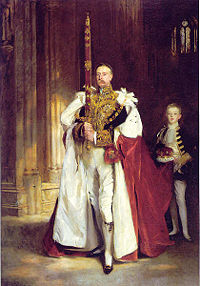 |
President of the Board of Education | 19 October 1903 – 11 December 1905 | Conservative Conservative Party (UK) The Conservative Party, formally the Conservative and Unionist Party, is a centre-right political party in the United Kingdom that adheres to the philosophies of conservatism and British unionism. It is the largest political party in the UK, and is currently the largest single party in the House... |
||
| The Earl of Crewe Robert Crewe-Milnes, 1st Marquess of Crewe Robert Offley Ashburton Crewe-Milnes, 1st Marquess of Crewe KG, PC , known as The Lord Houghton from 1885 to 1895 and as The Earl of Crewe from 1895 to 1911, was a British statesman and writer.... |
 |
— | 11 December 1905 – 16 April 1908 | Liberal Liberal Party (UK) The Liberal Party was one of the two major political parties of the United Kingdom during the 19th and early 20th centuries. It was a third party of negligible importance throughout the latter half of the 20th Century, before merging with the Social Democratic Party in 1988 to form the present day... |
Sir Henry Campbell-Bannerman Henry Campbell-Bannerman Sir Henry Campbell-Bannerman GCB was a British Liberal Party politician who served as Prime Minister of the United Kingdom from 1905 to 1908 and Leader of the Liberal Party from 1899 to 1908. He also served as Secretary of State for War twice, in the Cabinets of Gladstone and Rosebery... |
|
| The Lord Tweedmouth Edward Marjoribanks, 2nd Baron Tweedmouth Edward Marjoribanks, 2nd Baron Tweedmouth KT, PC was a British Liberal Party statesman who sat in the House of Commons from 1880 until 1894 when he inherited his peerage and then sat in the House of Lords... |
16 April – 19 October 1908 | H. H. Asquith H. H. Asquith Herbert Henry Asquith, 1st Earl of Oxford and Asquith, KG, PC, KC served as the Liberal Prime Minister of the United Kingdom from 1908 to 1916... |
||||
| The Viscount Wolverhampton Henry Fowler, 1st Viscount Wolverhampton Henry Hartley Fowler, 1st Viscount Wolverhampton PC , was a British solicitor and Liberal politician who sat in the House of Commons from 1880 until 1908 when he was raised to the peerage... |
 |
19 October 1908 – 21 June 1910 | ||||
| The Earl Beauchamp William Lygon, 7th Earl Beauchamp William Lygon, 7th Earl Beauchamp KG, KCMG, PC , styled Viscount Elmley until 1891, was a British Liberal politician. He was Governor of New South Wales between 1899 and 1901, a member of the Liberal administrations of Sir Henry Campbell-Bannerman and H. H... |
21 June – 7 November 1910 | |||||
| The Viscount Morley of Blackburn John Morley, 1st Viscount Morley of Blackburn John Morley, 1st Viscount Morley of Blackburn OM, PC was a British Liberal statesman, writer and newspaper editor. Initially a journalist, he was elected a Member of Parliament in 1883... |
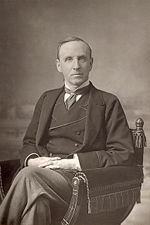 |
Secretary of State for India Secretary of State for India The Secretary of State for India, or India Secretary, was the British Cabinet minister responsible for the government of India and the political head of the India Office... (7 March – 25 May 1911) |
7 November 1910 – 5 August 1914 | |||
| The Earl Beauchamp William Lygon, 7th Earl Beauchamp William Lygon, 7th Earl Beauchamp KG, KCMG, PC , styled Viscount Elmley until 1891, was a British Liberal politician. He was Governor of New South Wales between 1899 and 1901, a member of the Liberal administrations of Sir Henry Campbell-Bannerman and H. H... |
— | 5 August 1914 – 25 May 1915 | ||||
| The Marquess of Crewe Robert Crewe-Milnes, 1st Marquess of Crewe Robert Offley Ashburton Crewe-Milnes, 1st Marquess of Crewe KG, PC , known as The Lord Houghton from 1885 to 1895 and as The Earl of Crewe from 1895 to 1911, was a British statesman and writer.... |
|
Leader of the House of Lords President of the Board of Trade (from 18 August 1916) |
25 May 1915 – 10 December 1916 | |||
| The Earl Curzon of Kedleston George Curzon, 1st Marquess Curzon of Kedleston George Nathaniel Curzon, 1st Marquess Curzon of Kedleston, KG, GCSI, GCIE, PC , known as The Lord Curzon of Kedleston between 1898 and 1911 and as The Earl Curzon of Kedleston between 1911 and 1921, was a British Conservative statesman who was Viceroy of India and Foreign Secretary... |
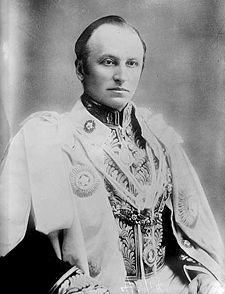 |
Leader of the House of Lords | 10 December 1916 – 23 October 1919 | Conservative | David Lloyd George David Lloyd George David Lloyd George, 1st Earl Lloyd-George of Dwyfor OM, PC was a British Liberal politician and statesman... (LIB Liberal Party (UK) The Liberal Party was one of the two major political parties of the United Kingdom during the 19th and early 20th centuries. It was a third party of negligible importance throughout the latter half of the 20th Century, before merging with the Social Democratic Party in 1988 to form the present day... ) |
|
| Arthur Balfour Arthur Balfour Arthur James Balfour, 1st Earl of Balfour, KG, OM, PC, DL was a British Conservative politician and statesman... MP |
— | 23 October 1919 – 19 October 1922 | ||||
| The Marquess of Salisbury James Gascoyne-Cecil, 4th Marquess of Salisbury James Edward Hubert Gascoyne-Cecil, 4th Marquess of Salisbury, KG, GCVO, CB, PC , known as Viscount Cranborne from 1868 to 1903, was a British statesman.-Background and education:... |
Chancellor of the Duchy of Lancaster Chancellor of the Duchy of Lancaster The Chancellor of the Duchy of Lancaster is, in modern times, a ministerial office in the government of the United Kingdom that includes as part of its duties, the administration of the estates and rents of the Duchy of Lancaster... (until 25 May 1923) |
24 October 1922 – 22 January 1924 | Bonar Law | |||
| — | Stanley Baldwin Stanley Baldwin Stanley Baldwin, 1st Earl Baldwin of Bewdley, KG, PC was a British Conservative politician, who dominated the government in his country between the two world wars... |
|||||
| The Lord Parmoor Charles Cripps, 1st Baron Parmoor Charles Alfred Cripps, 1st Baron Parmoor KCVO, PC, QC was a British politician who crossed the floor from the Conservative to the Labour Party and was a strong supporter of the League of Nations and of Church of England causes.... |
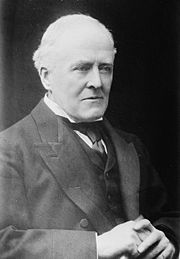 |
22 January – 3 November 1924 | Labour Labour Party (UK) The Labour Party is a centre-left democratic socialist party in the United Kingdom. It surpassed the Liberal Party in general elections during the early 1920s, forming minority governments under Ramsay MacDonald in 1924 and 1929-1931. The party was in a wartime coalition from 1940 to 1945, after... |
Ramsay MacDonald Ramsay MacDonald James Ramsay MacDonald, PC, FRS was a British politician who was the first ever Labour Prime Minister, leading a minority government for two terms.... |
||
| The Marquess Curzon of Kedleston George Curzon, 1st Marquess Curzon of Kedleston George Nathaniel Curzon, 1st Marquess Curzon of Kedleston, KG, GCSI, GCIE, PC , known as The Lord Curzon of Kedleston between 1898 and 1911 and as The Earl Curzon of Kedleston between 1911 and 1921, was a British Conservative statesman who was Viceroy of India and Foreign Secretary... |
|
Leader of the House of Lords | 6 November 1924 – 27 April 1925 | Conservative | Stanley Baldwin Stanley Baldwin Stanley Baldwin, 1st Earl Baldwin of Bewdley, KG, PC was a British Conservative politician, who dominated the government in his country between the two world wars... |
|
| The Earl of Balfour Arthur Balfour Arthur James Balfour, 1st Earl of Balfour, KG, OM, PC, DL was a British Conservative politician and statesman... |
— | 27 April 1925 – 4 June 1929 | ||||
| The Lord Parmoor Charles Cripps, 1st Baron Parmoor Charles Alfred Cripps, 1st Baron Parmoor KCVO, PC, QC was a British politician who crossed the floor from the Conservative to the Labour Party and was a strong supporter of the League of Nations and of Church of England causes.... |
|
Leader of the House of Lords | 7 June 1929 – 24 August 1931 | Labour | Ramsay MacDonald Ramsay MacDonald James Ramsay MacDonald, PC, FRS was a British politician who was the first ever Labour Prime Minister, leading a minority government for two terms.... (LAB Labour Party (UK) The Labour Party is a centre-left democratic socialist party in the United Kingdom. It surpassed the Liberal Party in general elections during the early 1920s, forming minority governments under Ramsay MacDonald in 1924 and 1929-1931. The party was in a wartime coalition from 1940 to 1945, after... ) |
|
| Stanley Baldwin Stanley Baldwin Stanley Baldwin, 1st Earl Baldwin of Bewdley, KG, PC was a British Conservative politician, who dominated the government in his country between the two world wars... MP |
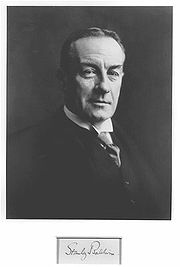 |
— | 25 August 1931 – 7 June 1935 | Conservative | ||
| Lord Privy Seal Lord Privy Seal The Lord Privy Seal is the fifth of the Great Officers of State in the United Kingdom, ranking beneath the Lord President of the Council and above the Lord Great Chamberlain. The office is one of the traditional sinecure offices of state... (from 29 September 1932) |
||||||
| Ramsay MacDonald Ramsay MacDonald James Ramsay MacDonald, PC, FRS was a British politician who was the first ever Labour Prime Minister, leading a minority government for two terms.... MP |
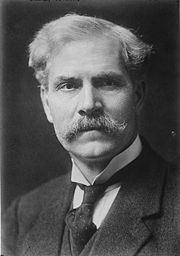 |
— | 7 June 1935 – 28 May 1937 | National Labour | Stanley Baldwin Stanley Baldwin Stanley Baldwin, 1st Earl Baldwin of Bewdley, KG, PC was a British Conservative politician, who dominated the government in his country between the two world wars... (CON) |
|
| The Viscount Halifax | Leader of the House of Lords Secretary of State for Foreign Affairs (from 21 February 1938) |
28 May 1937 – 9 March 1938 | Conservative | Neville Chamberlain Neville Chamberlain Arthur Neville Chamberlain FRS was a British Conservative politician who served as Prime Minister of the United Kingdom from May 1937 to May 1940. Chamberlain is best known for his appeasement foreign policy, and in particular for his signing of the Munich Agreement in 1938, conceding the... (CON) |
||
| The Viscount Hailsham Douglas Hogg, 1st Viscount Hailsham Douglas McGarel Hogg, 1st Viscount Hailsham PC was a British lawyer and Conservative politician.-Background:... |
 |
— | 9 March – 31 October 1938 | |||
| The Viscount Runciman of Doxford Walter Runciman, 1st Viscount Runciman of Doxford Walter Runciman, 1st Viscount Runciman of Doxford PC was a prominent Liberal, later National Liberal politician in the United Kingdom from the 1900s until the 1930s.-Background:... |
31 October 1938 – 3 September 1939 | Liberal | ||||
| The Earl Stanhope James Stanhope, 7th Earl Stanhope James Richard Stanhope, 13th Earl of Chesterfield and 7th Earl Stanhope KG, DSO, MC, PC , styled Viscount Mahon until 1905, and known as The Earl Stanhope from 1905 until 1967, was a British Conservative politician.-Background:Stanhope was the eldest son of Arthur Stanhope, 6th Earl Stanhope, and... |
Leader of the House of Lords | 3 September 1939 – 11 May 1940 | Conservative | |||
| Neville Chamberlain Neville Chamberlain Arthur Neville Chamberlain FRS was a British Conservative politician who served as Prime Minister of the United Kingdom from May 1937 to May 1940. Chamberlain is best known for his appeasement foreign policy, and in particular for his signing of the Munich Agreement in 1938, conceding the... MP |
— | 11 May – 3 October 1940 | Winston Churchill Winston Churchill Sir Winston Leonard Spencer-Churchill, was a predominantly Conservative British politician and statesman known for his leadership of the United Kingdom during the Second World War. He is widely regarded as one of the greatest wartime leaders of the century and served as Prime Minister twice... (CON) |
|||
| Sir John Anderson John Anderson, 1st Viscount Waverley John Anderson, 1st Viscount Waverley, GCB, OM, GCSI, GCIE, PC, PC was a British civil servant then politician who served as a minister under Neville Chamberlain and Winston Churchill as Home Secretary, Lord President of the Council and Chancellor of the Exchequer... MP |
3 October 1940 – 24 September 1943 | National | ||||
| Clement Attlee Clement Attlee Clement Richard Attlee, 1st Earl Attlee, KG, OM, CH, PC, FRS was a British Labour politician who served as the Prime Minister of the United Kingdom from 1945 to 1951, and as the Leader of the Labour Party from 1935 to 1955... MP |
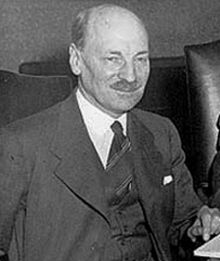 |
24 September 1943 – 23 May 1945 | Labour | |||
Post-War
| Name | Portrait | Concurrent title(s) | Tenure | Political party | Prime Minister | |
|---|---|---|---|---|---|---|
| The Lord Woolton | — | 25 May 1945 – 26 July 1945 | National | Winston Churchill Winston Churchill Sir Winston Leonard Spencer-Churchill, was a predominantly Conservative British politician and statesman known for his leadership of the United Kingdom during the Second World War. He is widely regarded as one of the greatest wartime leaders of the century and served as Prime Minister twice... (CON Conservative Party (UK) The Conservative Party, formally the Conservative and Unionist Party, is a centre-right political party in the United Kingdom that adheres to the philosophies of conservatism and British unionism. It is the largest political party in the UK, and is currently the largest single party in the House... ) |
||
| Herbert Morrison Herbert Morrison Herbert Stanley Morrison, Baron Morrison of Lambeth, CH, PC was a British Labour politician; he held a various number of senior positions in the Cabinet, including Home Secretary, Foreign Secretary and Deputy Prime Minister.-Early life:Morrison was the son of a police constable and was born in... MP |
Leader of the House of Commons Leader of the House of Commons The Leader of the House of Commons is a member of the Cabinet of the United Kingdom who is responsible for arranging government business in the House of Commons... |
27 July 1945 – 9 March 1951 | Labour Labour Party (UK) The Labour Party is a centre-left democratic socialist party in the United Kingdom. It surpassed the Liberal Party in general elections during the early 1920s, forming minority governments under Ramsay MacDonald in 1924 and 1929-1931. The party was in a wartime coalition from 1940 to 1945, after... |
Clement Attlee Clement Attlee Clement Richard Attlee, 1st Earl Attlee, KG, OM, CH, PC, FRS was a British Labour politician who served as the Prime Minister of the United Kingdom from 1945 to 1951, and as the Leader of the Labour Party from 1935 to 1955... |
||
| The Viscount Addison |  |
Leader of the House of Lords Leader of the House of Lords The Leader of the House of Lords is a member of the Cabinet of the United Kingdom who is responsible for arranging government business in the House of Lords. The role is always held in combination with a formal Cabinet position, usually one of the sinecure offices of Lord President of the Council,... |
9 March - 26 October 1951 | |||
| The Lord Woolton | — | 28 October 1951 – 25 November 1952 | Conservative Conservative Party (UK) The Conservative Party, formally the Conservative and Unionist Party, is a centre-right political party in the United Kingdom that adheres to the philosophies of conservatism and British unionism. It is the largest political party in the UK, and is currently the largest single party in the House... |
Winston Churchill Winston Churchill Sir Winston Leonard Spencer-Churchill, was a predominantly Conservative British politician and statesman known for his leadership of the United Kingdom during the Second World War. He is widely regarded as one of the greatest wartime leaders of the century and served as Prime Minister twice... |
||
| The Marquess of Salisbury Robert Gascoyne-Cecil, 5th Marquess of Salisbury Robert Arthur James Gascoyne-Cecil, 5th Marquess of Salisbury, KG, PC , known as Viscount Cranborne from 1903 to 1947, was a British Conservative politician.-Background:... |
Leader of the House of Lords | 25 November 1952 – 29 March 1957 | Sir Winston Churchill Winston Churchill Sir Winston Leonard Spencer-Churchill, was a predominantly Conservative British politician and statesman known for his leadership of the United Kingdom during the Second World War. He is widely regarded as one of the greatest wartime leaders of the century and served as Prime Minister twice... |
|||
| Sir Anthony Eden Anthony Eden Robert Anthony Eden, 1st Earl of Avon, KG, MC, PC was a British Conservative politician, who was Prime Minister from 1955 to 1957... |
||||||
| Harold Macmillan Harold Macmillan Maurice Harold Macmillan, 1st Earl of Stockton, OM, PC was Conservative Prime Minister of the United Kingdom from 10 January 1957 to 18 October 1963.... |
||||||
| The Earl of Home Alec Douglas-Home Alexander Frederick Douglas-Home, Baron Home of the Hirsel, KT, PC , known as The Earl of Home from 1951 to 1963 and as Sir Alec Douglas-Home from 1963 to 1974, was a British Conservative politician who served as Prime Minister of the United Kingdom from October 1963 to October 1964.He is the last... |
29 March 1957 – 17 September 1957 | |||||
| The Viscount Hailsham Quintin Hogg, Baron Hailsham of St Marylebone For the businessman and philanthropist, see Quintin Hogg Quintin McGarel Hogg, Baron Hailsham of St Marylebone, KG, CH, PC, QC, FRS , formerly 2nd Viscount Hailsham , was a British politician who was known for the longevity of his career, the vigour with which he campaigned for the Conservative... |
— | 17 September 1957 – 14 October 1959 | ||||
| The Earl of Home Alec Douglas-Home Alexander Frederick Douglas-Home, Baron Home of the Hirsel, KT, PC , known as The Earl of Home from 1951 to 1963 and as Sir Alec Douglas-Home from 1963 to 1974, was a British Conservative politician who served as Prime Minister of the United Kingdom from October 1963 to October 1964.He is the last... |
Leader of the House of Lords | 14 October 1959 – 27 July 1960 | ||||
| The Viscount Hailsham Quintin Hogg, Baron Hailsham of St Marylebone For the businessman and philanthropist, see Quintin Hogg Quintin McGarel Hogg, Baron Hailsham of St Marylebone, KG, CH, PC, QC, FRS , formerly 2nd Viscount Hailsham , was a British politician who was known for the longevity of his career, the vigour with which he campaigned for the Conservative... |
Leader of the House of Lords (until 20 October 1963) Minister for Science (until 1 April 1964) Secretary of State for Education and Science (from 1 April 1964) |
27 July 1960 – 16 October 1964 | ||||
| Quintin Hogg MP | Sir Alec Douglas-Home Alec Douglas-Home Alexander Frederick Douglas-Home, Baron Home of the Hirsel, KT, PC , known as The Earl of Home from 1951 to 1963 and as Sir Alec Douglas-Home from 1963 to 1974, was a British Conservative politician who served as Prime Minister of the United Kingdom from October 1963 to October 1964.He is the last... |
|||||
| Herbert Bowden Herbert Bowden Herbert William Bowden, Baron Aylestone, CH CBE PC was a British Labour politician.Born in Cardiff, Wales, Bowden was a councillor on Leicester City Council 1938–45 and president of Leicester Labour Party in 1938. He served in the Royal Air Force during World War II... MP |
Leader of the House of Commons | 16 October 1964 – 11 August 1966 | Labour | Harold Wilson Harold Wilson James Harold Wilson, Baron Wilson of Rievaulx, KG, OBE, FRS, FSS, PC was a British Labour Member of Parliament, Leader of the Labour Party. He was twice Prime Minister of the United Kingdom during the 1960s and 1970s, winning four general elections, including a minority government after the... |
||
| Richard Crossman Richard Crossman Richard Howard Stafford Crossman OBE was a British author and Labour Party politician who was a Cabinet Minister under Harold Wilson, and was the editor of the New Statesman. A prominent socialist intellectual, he became one of the Labour Party's leading Zionists and anti-communists... OBE MP |
11 August 1966 – 18 October 1968 | |||||
| Fred Peart Fred Peart, Baron Peart Thomas Frederick "Fred" Peart, Baron Peart, PC was a British Labour politician who served in the Labour governments of the 1960s and 1970s and was a candidate for Deputy Leader of the Party.... MP |
18 October 1968 – 19 June 1970 | |||||
| William Whitelaw MP | 20 June 1970 – 7 April 1972 | Conservative | Edward Heath Edward Heath Sir Edward Richard George "Ted" Heath, KG, MBE, PC was a British Conservative politician who served as Prime Minister of the United Kingdom and as Leader of the Conservative Party .... |
|||
| Robert Carr MP | 7 April – 5 November 1972 | |||||
| Jim Prior James Prior, Baron Prior James Michael Leathes Prior, Baron Prior, PC, known as "Jim Prior" , is a British politician. A member of the Conservative Party, he was a Member of Parliament from 1959 to 1987, representing the constituency of Lowestoft from 1959 to 1983 and the renamed constituency of Waveney from 1983 to 1987... MP |
5 November 1972 – 4 March 1974 | |||||
| Edward Short Edward Short, Baron Glenamara Edward Watson Short, Baron Glenamara, CH PC is a former Labour Member of Parliament for Newcastle upon Tyne Central, England. He was a minister during the Labour Governments of Harold Wilson... MP |
5 March 1974 – 8 April 1976 | Labour | Harold Wilson Harold Wilson James Harold Wilson, Baron Wilson of Rievaulx, KG, OBE, FRS, FSS, PC was a British Labour Member of Parliament, Leader of the Labour Party. He was twice Prime Minister of the United Kingdom during the 1960s and 1970s, winning four general elections, including a minority government after the... |
|||
| Michael Foot Michael Foot Michael Mackintosh Foot, FRSL, PC was a British Labour Party politician, journalist and author, who was a Member of Parliament from 1945 to 1955 and from 1960 until 1992... MP |
8 April 1976 – 4 May 1979 | James Callaghan James Callaghan Leonard James Callaghan, Baron Callaghan of Cardiff, KG, PC , was a British Labour politician, who was Prime Minister of the United Kingdom from 1976 to 1979 and Leader of the Labour Party from 1976 to 1980... |
||||
| The Lord Soames Christopher Soames, Baron Soames Arthur Christopher John Soames, Baron Soames, GCMG, GCVO, CH, CBE, PC was a British politician belonging to the Conservative Party and the son-in-law of Winston Churchill. A European Commissioner and the last Governor of Southern Rhodesia, he had previously been the longtime Member of Parliament... |
Leader of the House of Lords | 5 May 1979 – 14 September 1981 | Conservative | Margaret Thatcher Margaret Thatcher Margaret Hilda Thatcher, Baroness Thatcher, was Prime Minister of the United Kingdom from 1979 to 1990... |
||
| Francis Pym MP |  |
Leader of the House of Commons | 14 September 1981 – 7 April 1982 | |||
| John Biffen John Biffen William John Biffen, Baron Biffen, PC, DL , was a Conservative member of the House of Lords, who previously spent 36 years in the House of Commons.-Early life:... MP |
7 April 1982 – 11 June 1983 | |||||
| The Viscount Whitelaw | Deputy Prime Minister Deputy Prime Minister of the United Kingdom The Deputy Prime Minister of the United Kingdom of Great Britain and Northern Ireland is a senior member of the Cabinet of the United Kingdom. The office of the Deputy Prime Minister is not a permanent position, existing only at the discretion of the Prime Minister, who may appoint to other offices... Leader of the House of Lords |
11 June 1983 – 10 January 1988 | ||||
| John Wakeham John Wakeham John Wakeham, Baron Wakeham, PC, DL is a businessman and British Conservative Party politician and the current Chancellor of Brunel University.He was a director of Enron from 1994 until its bankruptcy in 2001.... MP |
Leader of the House of Commons | 10 January 1988 – 24 July 1989 | ||||
| Sir Geoffrey Howe Geoffrey Howe Richard Edward Geoffrey Howe, Baron Howe of Aberavon, CH, QC, PC is a former British Conservative politician. He was Margaret Thatcher's longest-serving Cabinet minister, successively holding the posts of Chancellor of the Exchequer, Foreign Secretary, and finally Leader of the House of Commons... MP |
Deputy Prime Minister Leader of the House of Commons |
24 July 1989 – 1 November 1990 | ||||
| John MacGregor MP | Leader of the House of Commons | 2 November 1990 – 10 April 1992 | ||||
| John Major John Major Sir John Major, is a British Conservative politician, who served as Prime Minister of the United Kingdom and Leader of the Conservative Party from 1990–1997... |
||||||
| Tony Newton MP | 10 April 1992 – 2 May 1997 | |||||
| Ann Taylor Ann Taylor, Baroness Taylor of Bolton Winifred Ann Taylor, Baroness Taylor of Bolton, PC is a British Labour Party politician, who was Minister for International Defence and Security, based at both the Ministry of Defence and the Foreign and Commonwealth Office, from October 2008 until 11 May 2010.-Member of Parliament:Taylor was the... MP |
3 May 1997 – 27 July 1998 | Labour | Tony Blair Tony Blair Anthony Charles Lynton Blair is a former British Labour Party politician who served as the Prime Minister of the United Kingdom from 2 May 1997 to 27 June 2007. He was the Member of Parliament for Sedgefield from 1983 to 2007 and Leader of the Labour Party from 1994 to 2007... |
|||
| Margaret Beckett Margaret Beckett Margaret Mary Beckett is a British Labour Party politician who has been the Member of Parliament for Derby South since 1983, rising to become the Deputy Leader of the Labour Party under John Smith, from 18 July 1992 to 12 May 1994, and briefly serving as Leader of the Party following Smith's death... MP |
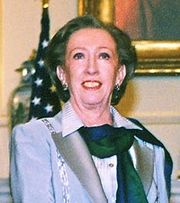 |
27 July 1998 – 8 June 2001 | ||||
21st Century
| Name | Portrait | Concurrent title(s) | Tenure | Political party | Prime Minister | |
|---|---|---|---|---|---|---|
| Robin Cook Robin Cook Robert Finlayson Cook was a British Labour Party politician, who was the Member of Parliament for Livingston from 1983 until his death, and notably served in the Cabinet as Foreign Secretary from 1997 to 2001.... MP |
 |
Leader of the House of Commons Leader of the House of Commons The Leader of the House of Commons is a member of the Cabinet of the United Kingdom who is responsible for arranging government business in the House of Commons... |
8 June 2001 – 18 March 2003 | Labour Labour Party (UK) The Labour Party is a centre-left democratic socialist party in the United Kingdom. It surpassed the Liberal Party in general elections during the early 1920s, forming minority governments under Ramsay MacDonald in 1924 and 1929-1931. The party was in a wartime coalition from 1940 to 1945, after... |
Tony Blair Tony Blair Anthony Charles Lynton Blair is a former British Labour Party politician who served as the Prime Minister of the United Kingdom from 2 May 1997 to 27 June 2007. He was the Member of Parliament for Sedgefield from 1983 to 2007 and Leader of the Labour Party from 1994 to 2007... |
|
| John Reid MP |  |
4 April 2003 – 13 June 2003 | ||||
| The Lord Williams of Mostyn Gareth Williams, Baron Williams of Mostyn Gareth Wyn Williams, Baron Williams of Mostyn, PC, QC, was a Welsh barrister and Labour politician who was Leader of the House of Lords, Lord President of the Council and a member of the Cabinet at the time of his sudden death in 2003.Williams was born near Prestatyn, in North Wales, a son of... |
Leader of the House of Lords Leader of the House of Lords The Leader of the House of Lords is a member of the Cabinet of the United Kingdom who is responsible for arranging government business in the House of Lords. The role is always held in combination with a formal Cabinet position, usually one of the sinecure offices of Lord President of the Council,... |
13 June 2003 – 20 September 2003 | ||||
| The Baroness Amos Valerie Amos, Baroness Amos Valerie Ann Amos, Baroness Amos, PC is the eighth and current UN Under-Secretary-General for Humanitarian Affairs and Emergency Relief Coordinator. Before her appointment to the UN, she had been British High Commissioner to Australia. She was made a Labour life peer in 1997 and served as Leader... |
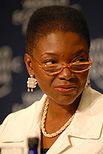 |
6 October 2003 – 27 June 2007 | ||||
| The Baroness Ashton of Upholland Catherine Ashton, Baroness Ashton of Upholland Catherine Ashton, Baroness Ashton of Upholland, , is a British Labour politician who in 2009 became the European Union's High Representative of the Union for Foreign Affairs and Security Policy... |
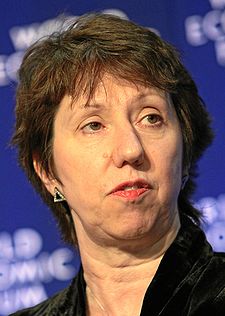 |
28 June 2007 – 3 October 2008 | Gordon Brown Gordon Brown James Gordon Brown is a British Labour Party politician who was the Prime Minister of the United Kingdom and Leader of the Labour Party from 2007 until 2010. He previously served as Chancellor of the Exchequer in the Labour Government from 1997 to 2007... |
|||
| The Baroness Royall of Blaisdon Janet Royall, Baroness Royall of Blaisdon Janet Anne Royall, Baroness Royall of Blaisdon, PC is a British Labour politician. She is the current Leader of the Opposition in the House of Lords.-Education and early political career:... |
3 October 2008 – 5 June 2009 | |||||
| The Lord Mandelson | First Secretary of State First Secretary of State First Secretary of State is an occasionally used title within the Government of the United Kingdom, principally regarded as purely honorific. The title, which implies seniority over all other Secretaries of State, has no specific powers or authority attached to it beyond that of any other Secretary... Secretary of State for Business, Innovation and Skills |
5 June 2009 – 11 May 2010 | ||||
| Nick Clegg Nick Clegg Nicholas William Peter "Nick" Clegg is a British Liberal Democrat politician who is currently the Deputy Prime Minister, Lord President of the Council and Minister for Constitutional and Political Reform in the coalition government of which David Cameron is the Prime Minister... MP |
Deputy Prime Minister Deputy Prime Minister of the United Kingdom The Deputy Prime Minister of the United Kingdom of Great Britain and Northern Ireland is a senior member of the Cabinet of the United Kingdom. The office of the Deputy Prime Minister is not a permanent position, existing only at the discretion of the Prime Minister, who may appoint to other offices... (with special responsibility for political and constitutional reform) |
11 May 2010 – present | Liberal Democrats Liberal Democrats The Liberal Democrats are a social liberal political party in the United Kingdom which supports constitutional and electoral reform, progressive taxation, wealth taxation, human rights laws, cultural liberalism, banking reform and civil liberties .The party was formed in 1988 by a merger of the... |
David Cameron David Cameron David William Donald Cameron is the current Prime Minister of the United Kingdom, First Lord of the Treasury, Minister for the Civil Service and Leader of the Conservative Party. Cameron represents Witney as its Member of Parliament .... (CON Conservative Party (UK) The Conservative Party, formally the Conservative and Unionist Party, is a centre-right political party in the United Kingdom that adheres to the philosophies of conservatism and British unionism. It is the largest political party in the UK, and is currently the largest single party in the House... ) |
||
See also
- Privy Council OfficePrivy Council Office (United Kingdom)The Privy Council Office provides secretarial and administrative support to the Lord President of the Council in his or her capacity of president of Her Majesty's Most Honourable Privy Council. The head of the Office is the Clerk of the Privy Council...
- Vice-President of the Executive CouncilVice-President of the Executive CouncilThe Vice-President of the Federal Executive Council is a position in Australian federal governments, whose holder acts as presiding officer of the Federal Executive Council in the absence of the Governor-General....
- President of the Queen's Privy Council for CanadaPresident of the Queen's Privy Council for CanadaIn the Canadian cabinet, the President of The Queen's Privy Council for Canada is nominally in charge of the Privy Council Office. The President of the Privy Council also has the largely ceremonial duty of presiding over meetings of the Queen's Privy Council for Canada, a body which only convenes...
- SinecureSinecureA sinecure means an office that requires or involves little or no responsibility, labour, or active service...