

Aromatherapy

Encyclopedia
Aromatherapy is a form of alternative medicine
that uses volatile plant materials, known as essential oils, and other aromatic compounds for the purpose of altering a person's mind, mood
, cognitive function or health
.
Some essential oils such as tea tree have demonstrated anti-microbial effects, but there is still a lack of clinical evidence demonstrating efficacy against bacterial, fungal, or viral infections. Evidence for the efficacy of aromatherapy in treating medical conditions remains poor, with a particular lack of studies employing rigorous methodology, however some evidence exists that essential oils may have therapeutic potential.
in the eleventh century, when Avicenna
isolated essential oils using steam distillation
.
The concept of aromatherapy was first moot
ed by a small number of European scientists and doctors, in about 1907. In 1937, the word first appeared in print in a French book on the subject: Aromathérapie: Les Huiles Essentielles, Hormones Végétales by René-Maurice Gattefossé, a chemist. An English version was published in 1993. In 1910, Gattefossé burned a hand very badly in a laboratory explosion. The hand developed gas gangrene
, which he successfully, and intentionally, treated with lavender oil.
A French surgeon, Jean Valnet, pioneered the medicinal uses of essential oils, which he used as antiseptics in the treatment of wounded soldiers during World War II
.
Two basic mechanisms are offered to explain the purported effects. One is the influence of aroma on the brain
, especially the limbic system
through the olfactory system
. The other is the direct pharmacological effects of the essential oils. While precise knowledge of the synergy
between the body and aromatic oils is often claimed by aromatherapists, the efficacy of aromatherapy remains unproven. However, some preliminary clinical studies of aromatherapy in combination with other techniques show positive effects. Aromatherapy does not cure conditions, but helps the body to find a natural way to cure itself and improve immune response.
In the English-speaking world, practitioners tend to emphasize the use of oils in massage . Aromatherapy tends to be regarded as a complementary modality at best and a pseudoscientific
fraud at worst.
to meet the FCC profile for that oil, but that aldehyde can come from a chemical refinery instead of from lemongrass. To say that FCC oils are "food grade", then, makes them seem natural when, in fact, they are not necessarily so.
Undiluted essential oils suitable for aromatherapy are termed therapeutic grade, but in countries where the industry is unregulated, therapeutic grade is based on industry consensus and is not a regulatory category. Some aromatherapists take advantage of this situation to make misleading claims about the origin and even content of the oils they use. Likewise, claims that an oil's purity is vetted
by mass spectrometry
or gas chromatography have limited value, since all such testing can do is show that various chemicals occur in the oil. Many of the chemicals that occur naturally in essential oils are manufactured by the perfume industry and adulterate essential oils because they are cheaper. There is no way to distinguish between these synthetic additives and the naturally occurring chemicals.
The best instrument for determining whether or not an essential oil is adulterated is an educated nose. Many people can distinguish between natural and synthetic scents, but it takes experience.
rather than from any actual physiological effect. The consensus among most medical professionals is that while some aromas have demonstrated effects on mood and relaxation and may have related benefits for patients, there is currently insufficient evidence to support the claims made for aromatherapy. Scientific research on the cause and effects of aromatherapy is limited, although in vitro
testing has revealed some antibacterial and antiviral
effects.
There is no evidence of any long-term results from an aromatherapy massage other than the pleasure
achieved from a pleasant-smelling massage.
A few double blind studies in the field of clinical psychology relating to the treatment of severe dementia have been published. Essential oils have a demonstrated efficacy in dental mouthwash products.
Skeptical literature suggests that aromatherapy is based on the anecdotal evidence
of its benefits rather than proof that aromatherapy can cure diseases. Scientists and medical professionals acknowledge that aromatherapy has limited scientific support, but critics argue that the claims of most aromatherapy practitioners go beyond the data, and/or that the studies are neither adequately controlled nor peer reviewed.
Some proponents of aromatherapy believe that the claimed effect of each type of oil is not caused by the chemicals in the oil interacting with the senses, but because the oil contains a distillation of the "life force
" of the plant from which it is derived that will "balance the energies" of the body and promote healing or well-being by "purging negative vibrations" from the body's "energy field". Arguing that there is no scientific evidence
that healing can be achieved, and that the claimed "energies" even exist, many skeptics
reject this form of aromatherapy as pseudoscience
.
Because essential oils are highly concentrated they can irritate the skin when used in undiluted form. Therefore, they are normally diluted with a carrier oil for topical application. Phototoxic reactions may occur with citrus
peel oils such as lemon
or lime
. Also, many essential oils have chemical components that are sensitisers
(meaning that they will after a number of uses cause reactions on the skin, and more so in the rest of the body). Some of the chemical allergies could even be caused by pesticide
s, if the original plants are cultivated. Some oils can be toxic to some domestic animals, with cat
s being particularly prone.
Two common oils, lavender
and tea tree
, have been implicated in causing gynaecomastia, an abnormal breast tissue growth, in prepubescent boys, although the report which cites this potential issue is based on observations of only three boys (and so is not a scientific study), and two of those boys were significantly above average in weight for their age, thus already prone to gynaecomastia.
A child hormone specialist at the University of Cambridge
claimed "... these oils can mimic estrogen
s" and "people should be a little bit careful about using these products."
The study has been criticised on many different levels by many authorities. The Aromatherapy Trade Council of the UK has issued a rebuttal
The Australian Tea Tree Association, a group that promotes the interests of Australian tea tree oil producers, exporters and manufacturers issued a letter that questioned the study and called on the New England Journal of Medicine for a retraction (ATTIA).
The New England Journal of Medicine has so far not replied and has not retracted the study.
As with any bioactive substance, an essential oil that may be safe for the general public could still pose hazards for pregnant and lactating women.
While some advocate the ingestion of essential oils for therapeutic purposes, licensed aromatherapy professionals do not recommend self prescription due the highly toxic nature of some essential oil. Some very common oils like Eucalyptus
are extremely toxic when taken internally. Doses as low as one teaspoon have been reported to cause clinically significant symptoms and severe poisoning can occur after ingestion of 4 to 5 ml.
A few reported cases of toxic reactions like liver
damage and seizures have occurred after ingestion of sage, hyssop, thuja, and cedar. Accidental ingestion may happen when oils are not kept out of reach of children.
Oils both ingested and applied to the skin can potentially have negative interaction with conventional medicine. For example, the topical use of methyl salicylate
heavy oils like Sweet Birch
and Wintergreen
may cause hemorrhaging in users taking the anticoagulant
Warfarin
.
Adulterated oils may also pose problems depending on the type of substance used.
Journals
Criticism
Alternative medicine
Alternative medicine is any healing practice, "that does not fall within the realm of conventional medicine." It is based on historical or cultural traditions, rather than on scientific evidence....
that uses volatile plant materials, known as essential oils, and other aromatic compounds for the purpose of altering a person's mind, mood
Mood
Mood may refer to:*Mood , a relatively long lasting emotional state*Grammatical mood, one of a set of morphologically distinctive forms that are used to signal modality*Mood , a city in Iran*Mood District, a district in Iran...
, cognitive function or health
Health
Health is the level of functional or metabolic efficiency of a living being. In humans, it is the general condition of a person's mind, body and spirit, usually meaning to be free from illness, injury or pain...
.
Some essential oils such as tea tree have demonstrated anti-microbial effects, but there is still a lack of clinical evidence demonstrating efficacy against bacterial, fungal, or viral infections. Evidence for the efficacy of aromatherapy in treating medical conditions remains poor, with a particular lack of studies employing rigorous methodology, however some evidence exists that essential oils may have therapeutic potential.
History
Aromatherapy may have origins in antiquity with the use of infused aromatic oils, made by macerating dried plant material in fatty oil, heating and then filtering. Many such oils are described by Dioscorides, along with beliefs of the time regarding their healing properties, in his De Materia Medica, written in the first century. Distilled essential oils have been employed as medicines since the invention of distillationDistillation
Distillation is a method of separating mixtures based on differences in volatilities of components in a boiling liquid mixture. Distillation is a unit operation, or a physical separation process, and not a chemical reaction....
in the eleventh century, when Avicenna
Avicenna
Abū ʿAlī al-Ḥusayn ibn ʿAbd Allāh ibn Sīnā , commonly known as Ibn Sīnā or by his Latinized name Avicenna, was a Persian polymath, who wrote almost 450 treatises on a wide range of subjects, of which around 240 have survived...
isolated essential oils using steam distillation
Steam distillation
Steam distillation is a special type of distillation for temperature sensitive materials like natural aromatic compounds....
.
The concept of aromatherapy was first moot
Moot
Moot may refer to:* from Moot as an Old English language term for meeting:**Folkmoot**Jamtamót, the old assembly of Jämtland**Witenagemot, the High Council of Anglo-Saxon England...
ed by a small number of European scientists and doctors, in about 1907. In 1937, the word first appeared in print in a French book on the subject: Aromathérapie: Les Huiles Essentielles, Hormones Végétales by René-Maurice Gattefossé, a chemist. An English version was published in 1993. In 1910, Gattefossé burned a hand very badly in a laboratory explosion. The hand developed gas gangrene
Gas gangrene
Gas gangrene is a bacterial infection that produces gas tissues in gangrene. It is a deadly form of gangrene usually caused by Clostridium perfringens bacteria. It is a medical emergency....
, which he successfully, and intentionally, treated with lavender oil.
A French surgeon, Jean Valnet, pioneered the medicinal uses of essential oils, which he used as antiseptics in the treatment of wounded soldiers during World War II
World War II
World War II, or the Second World War , was a global conflict lasting from 1939 to 1945, involving most of the world's nations—including all of the great powers—eventually forming two opposing military alliances: the Allies and the Axis...
.
Modes of application
The modes of application of aromatherapy include:- Aerial diffusion: for environmental fragrancing or aerial disinfection
- Direct inhalation: for respiratory disinfection, decongestion, expectoration as well as psychological effects
- Topical applications: for general massageMassageMassage is the manipulation of superficial and deeper layers of muscle and connective tissue to enhance function, aid in the healing process, and promote relaxation and well-being. The word comes from the French massage "friction of kneading", or from Arabic massa meaning "to touch, feel or handle"...
, bathsBath saltsThe term bath salts refers to a range of water-soluble, usually inorganic solid products designed to be added to a bath. They are said to improve cleaning, improve the experience of bathing, and serve as a vehicle for cosmetic agents...
, compresses, therapeutic skin care
Materials
Some of the materials employed include:- Absolutes: Fragrant oils extracted primarily from flowers or delicate plant tissues through solventSolventA solvent is a liquid, solid, or gas that dissolves another solid, liquid, or gaseous solute, resulting in a solution that is soluble in a certain volume of solvent at a specified temperature...
or supercritical fluidSupercritical fluidA supercritical fluid is any substance at a temperature and pressure above its critical point, where distinct liquid and gas phases do not exist. It can effuse through solids like a gas, and dissolve materials like a liquid...
extraction (e.g., roseRoseA rose is a woody perennial of the genus Rosa, within the family Rosaceae. There are over 100 species. They form a group of erect shrubs, and climbing or trailing plants, with stems that are often armed with sharp prickles. Flowers are large and showy, in colours ranging from white through yellows...
absolute). The term is also used to describe oils extracted from fragrant butters, concretes, and enfleurage pommades using ethanolEthanolEthanol, also called ethyl alcohol, pure alcohol, grain alcohol, or drinking alcohol, is a volatile, flammable, colorless liquid. It is a psychoactive drug and one of the oldest recreational drugs. Best known as the type of alcohol found in alcoholic beverages, it is also used in thermometers, as a...
. - Carrier oilCarrier oilCarrier oil, also known as base oil or vegetable oil, is used to dilute essential oils and absolutes before they are applied to the skin in massage and aromatherapy. They are so named because they carry the essential oil onto the skin. Carrier oils do not contain a concentrated aroma, unlike...
s: Typically oily plant base triacylglycerides that dilute essential oils for use on the skin (e.g., sweet almondAlmondThe almond , is a species of tree native to the Middle East and South Asia. Almond is also the name of the edible and widely cultivated seed of this tree...
oil). - Essential oilEssential oilAn essential oil is a concentrated hydrophobic liquid containing volatile aroma compounds from plants. Essential oils are also known as volatile oils, ethereal oils or aetherolea, or simply as the "oil of" the plant from which they were extracted, such as oil of clove...
s: Fragrant oils extracted from plants chiefly through steam distillationDistillationDistillation is a method of separating mixtures based on differences in volatilities of components in a boiling liquid mixture. Distillation is a unit operation, or a physical separation process, and not a chemical reaction....
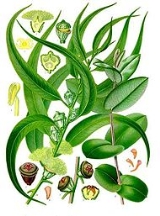
(e.g., eucalyptusEucalyptusEucalyptus is a diverse genus of flowering trees in the myrtle family, Myrtaceae. Members of the genus dominate the tree flora of Australia...
oil) or expression (grapefruitGrapefruitThe grapefruit , is a subtropical citrus tree known for its sour fruit, an 18th-century hybrid first bred in Barbados. When found, it was named the "forbidden fruit"; it has also been misidentified with the pomelo or shaddock , one of the parents of this hybrid, the other being sweet orange The...
oil). However, the term is also occasionally used to describe fragrant oils extracted from plant material by any solvent extraction. - Herbal distillateHerbal distillateHerbal distillates are aqueous solutions or colloidal suspensions of essential oils usually obtained by steam distillation from aromatic plants. These herbal distillates have uses as flavorings, medicine and in skin care...
s or hydrosols: The aqueous by-productBy-productA by-product is a secondary product derived from a manufacturing process or chemical reaction. It is not the primary product or service being produced.A by-product can be useful and marketable or it can be considered waste....
s of the distillation process (e.g., rosewaterRosewaterRose water or rose syrup is the hydrosol portion of the distillate of rose petals. Rose water, itself a by-product of the production of rose oil for use in perfume, is used to flavour food, as a component in some cosmetic and medical preparations, and for religious purposes throughout Europe and...
). There are many herbs that make herbal distillates and they have culinary uses, medicinal uses and skin care uses. Common herbal distillates are chamomileChamomileChamomile or camomile is a common name for several daisy-like plants of the family Asteraceae. These plants are best known for their ability to be made into an infusion which is commonly used to help with sleep and is often served with either honey or lemon. Because chamomile can cause uterine...
, roseRoseA rose is a woody perennial of the genus Rosa, within the family Rosaceae. There are over 100 species. They form a group of erect shrubs, and climbing or trailing plants, with stems that are often armed with sharp prickles. Flowers are large and showy, in colours ranging from white through yellows...
, and lemon balmLemon balmLemon balm , not to be confused with bee balm, Monarda species, is a perennial herb in the mint family Lamiaceae, native to southern Europe and the Mediterranean region....
. - InfusionInfusionAn infusion is the outcome of steeping plants with desired chemical compounds or flavors in water or oil.-History:The first recorded use of essential oils was in the 10th or 11th century by the Persian polymath Avicenna, possibly in The Canon of Medicine.-Preparation techniques:An infusion is very...
s: Aqueous extracts of various plant material (e.g., infusion of chamomileChamomileChamomile or camomile is a common name for several daisy-like plants of the family Asteraceae. These plants are best known for their ability to be made into an infusion which is commonly used to help with sleep and is often served with either honey or lemon. Because chamomile can cause uterine...
). - PhytoncidePhytoncidePhytoncides are antimicrobial allelochemic volatile organic compounds derived from plants. The word, which means "exterminated by the plant", was coined in 1937 by Dr. Boris P. Tokin, a Russian biochemist from Leningrad University. He found that some plants give off very active substances which...
s: Various volatile organic compoundVolatile organic compoundVolatile organic compounds are organic chemicals that have a high vapor pressure at ordinary, room-temperature conditions. Their high vapor pressure results from a low boiling point, which causes large numbers of molecules to evaporate or sublimate from the liquid or solid form of the compound and...
s from plants that kill microbes. Many terpeneTerpeneTerpenes are a large and diverse class of organic compounds, produced by a variety of plants, particularly conifers, though also by some insects such as termites or swallowtail butterflies, which emit terpenes from their osmeterium. They are often strong smelling and thus may have had a protective...
-based fragrant oils and sulfurSulfurSulfur or sulphur is the chemical element with atomic number 16. In the periodic table it is represented by the symbol S. It is an abundant, multivalent non-metal. Under normal conditions, sulfur atoms form cyclic octatomic molecules with chemical formula S8. Elemental sulfur is a bright yellow...
ic compounds from plants in the genus "AlliumAlliumAllium is a monocot genus of flowering plants, informally referred to as the onion genus. The generic name Allium is the Latin word for garlic....
" are phytoncides, though the latter are likely less commonly used in aromatherapy due to their disagreeable odorOdorAn odor or odour is caused by one or more volatilized chemical compounds, generally at a very low concentration, that humans or other animals perceive by the sense of olfaction. Odors are also commonly called scents, which can refer to both pleasant and unpleasant odors...
s. - VaporizerVaporizerA vaporizer or vapouriser is a device used to extract for inhalation the active ingredients of plant material, commonly cannabis, tobacco, or other herbs or blends....
(Volatized) Raw Herbs: Typically higher oil content plant based materials dried, crushed, and heated to extract and inhale the aromatic oil vapors in a direct inhalation modality.
Theory
Aromatherapy is the treatment or prevention of disease by use of essential oils. Other stated uses include pain and anxiety reduction, enhancement of energy and short-term memory, relaxation, hair loss prevention, and reduction of eczema-induced itching.Two basic mechanisms are offered to explain the purported effects. One is the influence of aroma on the brain
Brain
The brain is the center of the nervous system in all vertebrate and most invertebrate animals—only a few primitive invertebrates such as sponges, jellyfish, sea squirts and starfishes do not have one. It is located in the head, usually close to primary sensory apparatus such as vision, hearing,...
, especially the limbic system
Limbic system
The limbic system is a set of brain structures including the hippocampus, amygdala, anterior thalamic nuclei, septum, limbic cortex and fornix, which seemingly support a variety of functions including emotion, behavior, long term memory, and olfaction. The term "limbic" comes from the Latin...
through the olfactory system
Olfactory system
The olfactory system is the sensory system used for olfaction, or the sense of smell. Most mammals and reptiles have two distinct parts to their olfactory system: a main olfactory system and an accessory olfactory system. The main olfactory system detects volatile, airborne substances, while the...
. The other is the direct pharmacological effects of the essential oils. While precise knowledge of the synergy
Synergy
Synergy may be defined as two or more things functioning together to produce a result not independently obtainable.The term synergy comes from the Greek word from , , meaning "working together".-Definitions and usages:...
between the body and aromatic oils is often claimed by aromatherapists, the efficacy of aromatherapy remains unproven. However, some preliminary clinical studies of aromatherapy in combination with other techniques show positive effects. Aromatherapy does not cure conditions, but helps the body to find a natural way to cure itself and improve immune response.
In the English-speaking world, practitioners tend to emphasize the use of oils in massage . Aromatherapy tends to be regarded as a complementary modality at best and a pseudoscientific
Pseudoscience
Pseudoscience is a claim, belief, or practice which is presented as scientific, but which does not adhere to a valid scientific method, lacks supporting evidence or plausibility, cannot be reliably tested, or otherwise lacks scientific status...
fraud at worst.
Choice and purchase
Oils with standardized content of components (marked FCC, for Food Chemical Codex) are required to contain a specified amount of certain aroma chemicals that normally occur in the oil. But there is no law that the chemicals cannot be added in synthetic form in order to meet the criteria established by the FCC for that oil. For instance, lemongrass essential oil must contain 75% aldehydeAldehyde
An aldehyde is an organic compound containing a formyl group. This functional group, with the structure R-CHO, consists of a carbonyl center bonded to hydrogen and an R group....
to meet the FCC profile for that oil, but that aldehyde can come from a chemical refinery instead of from lemongrass. To say that FCC oils are "food grade", then, makes them seem natural when, in fact, they are not necessarily so.
Undiluted essential oils suitable for aromatherapy are termed therapeutic grade, but in countries where the industry is unregulated, therapeutic grade is based on industry consensus and is not a regulatory category. Some aromatherapists take advantage of this situation to make misleading claims about the origin and even content of the oils they use. Likewise, claims that an oil's purity is vetted
Vetting
Vetting is a process of examination and evaluation, generally referring to performing a background check on someone before offering him or her employment, conferring an award, etc...
by mass spectrometry
Mass spectrometry
Mass spectrometry is an analytical technique that measures the mass-to-charge ratio of charged particles.It is used for determining masses of particles, for determining the elemental composition of a sample or molecule, and for elucidating the chemical structures of molecules, such as peptides and...
or gas chromatography have limited value, since all such testing can do is show that various chemicals occur in the oil. Many of the chemicals that occur naturally in essential oils are manufactured by the perfume industry and adulterate essential oils because they are cheaper. There is no way to distinguish between these synthetic additives and the naturally occurring chemicals.
The best instrument for determining whether or not an essential oil is adulterated is an educated nose. Many people can distinguish between natural and synthetic scents, but it takes experience.
Popular uses
- LemonLemonThe lemon is both a small evergreen tree native to Asia, and the tree's ellipsoidal yellow fruit. The fruit is used for culinary and non-culinary purposes throughout the world – primarily for its juice, though the pulp and rind are also used, mainly in cooking and baking...
oil is uplifting and anti-stress/anti-depressant. In a Japanese study, lemon essential oilEssential oilAn essential oil is a concentrated hydrophobic liquid containing volatile aroma compounds from plants. Essential oils are also known as volatile oils, ethereal oils or aetherolea, or simply as the "oil of" the plant from which they were extracted, such as oil of clove...
in vapour form has been found to reduce stressStress (medicine)Stress is a term in psychology and biology, borrowed from physics and engineering and first used in the biological context in the 1930s, which has in more recent decades become commonly used in popular parlance...
in miceMouseA mouse is a small mammal belonging to the order of rodents. The best known mouse species is the common house mouse . It is also a popular pet. In some places, certain kinds of field mice are also common. This rodent is eaten by large birds such as hawks and eagles...
. Research at The Ohio State University indicates that LemonLemonThe lemon is both a small evergreen tree native to Asia, and the tree's ellipsoidal yellow fruit. The fruit is used for culinary and non-culinary purposes throughout the world – primarily for its juice, though the pulp and rind are also used, mainly in cooking and baking...
oil aroma may enhance one's mood, and help with relaxation. - ThymeThymeThyme is a culinary and medicinal herb of the genus Thymus.-History:Ancient Egyptians used thyme for embalming. The ancient Greeks used it in their baths and burnt it as incense in their temples, believing it was a source of courage...
oil - PeppermintPeppermintPeppermint is a hybrid mint, a cross between the watermint and spearmint . The plant, indigenous to Europe, is now widespread in cultivation throughout all regions of the world...
oil is often used to deter ants, by applying a few drops on their trail. - Both lavenderLavenderThe lavenders are a genus of 39 species of flowering plants in the mint family, Lamiaceae. An Old World genus, distributed from Macaronesia across Africa, the Mediterranean, South-West Asia, Arabia, Western Iran and South-East India...
and tea treeTea treeTea tree or Ti-tree is a popular name that has been applied to a number of different, unrelated plants:*Camellia sinensis , from which black, green, oolong and white tea are all obtained....
oil are used as antiseptics, sometimes in lotions or soaps. Lavender oil is said to help heal wounds and burns.
Efficacy
Some benefits that have been linked to aromatherapy, such as relaxation and clarity of mind, may arise from the placebo effectPlacebo effect
Placebo effect may refer to:* Placebo effect, the tendency of any medication or treatment, even an inert or ineffective one, to exhibit results simply because the recipient believes that it will work...
rather than from any actual physiological effect. The consensus among most medical professionals is that while some aromas have demonstrated effects on mood and relaxation and may have related benefits for patients, there is currently insufficient evidence to support the claims made for aromatherapy. Scientific research on the cause and effects of aromatherapy is limited, although in vitro
In vitro
In vitro refers to studies in experimental biology that are conducted using components of an organism that have been isolated from their usual biological context in order to permit a more detailed or more convenient analysis than can be done with whole organisms. Colloquially, these experiments...
testing has revealed some antibacterial and antiviral
Antiviral
Antiviral may refer to:*Antiviral drug*Antiviral protein*Antivirus software*Antiviral Therapy, an academic journal...
effects.
There is no evidence of any long-term results from an aromatherapy massage other than the pleasure
Pleasure
Pleasure describes the broad class of mental states that humans and other animals experience as positive, enjoyable, or worth seeking. It includes more specific mental states such as happiness, entertainment, enjoyment, ecstasy, and euphoria...
achieved from a pleasant-smelling massage.
A few double blind studies in the field of clinical psychology relating to the treatment of severe dementia have been published. Essential oils have a demonstrated efficacy in dental mouthwash products.
Skeptical literature suggests that aromatherapy is based on the anecdotal evidence
Anecdotal evidence
The expression anecdotal evidence refers to evidence from anecdotes. Because of the small sample, there is a larger chance that it may be true but unreliable due to cherry-picked or otherwise unrepresentative of typical cases....
of its benefits rather than proof that aromatherapy can cure diseases. Scientists and medical professionals acknowledge that aromatherapy has limited scientific support, but critics argue that the claims of most aromatherapy practitioners go beyond the data, and/or that the studies are neither adequately controlled nor peer reviewed.
Some proponents of aromatherapy believe that the claimed effect of each type of oil is not caused by the chemicals in the oil interacting with the senses, but because the oil contains a distillation of the "life force
Vitalism
Vitalism, as defined by the Merriam-Webster dictionary, is#a doctrine that the functions of a living organism are due to a vital principle distinct from biochemical reactions...
" of the plant from which it is derived that will "balance the energies" of the body and promote healing or well-being by "purging negative vibrations" from the body's "energy field". Arguing that there is no scientific evidence
Scientific method
Scientific method refers to a body of techniques for investigating phenomena, acquiring new knowledge, or correcting and integrating previous knowledge. To be termed scientific, a method of inquiry must be based on gathering empirical and measurable evidence subject to specific principles of...
that healing can be achieved, and that the claimed "energies" even exist, many skeptics
Scientific skepticism
Scientific skepticism is the practice of questioning the veracity of claims lacking empirical evidence or reproducibility, as part of a methodological norm pursuing "the extension of certified knowledge". For example, Robert K...
reject this form of aromatherapy as pseudoscience
Pseudoscience
Pseudoscience is a claim, belief, or practice which is presented as scientific, but which does not adhere to a valid scientific method, lacks supporting evidence or plausibility, cannot be reliably tested, or otherwise lacks scientific status...
.
Safety concerns
In addition, there are potential safety concerns.Because essential oils are highly concentrated they can irritate the skin when used in undiluted form. Therefore, they are normally diluted with a carrier oil for topical application. Phototoxic reactions may occur with citrus
Citrus
Citrus is a common term and genus of flowering plants in the rue family, Rutaceae. Citrus is believed to have originated in the part of Southeast Asia bordered by Northeastern India, Myanmar and the Yunnan province of China...
peel oils such as lemon
Lemon
The lemon is both a small evergreen tree native to Asia, and the tree's ellipsoidal yellow fruit. The fruit is used for culinary and non-culinary purposes throughout the world – primarily for its juice, though the pulp and rind are also used, mainly in cooking and baking...
or lime
Lime (fruit)
Lime is a term referring to a number of different citrus fruits, both species and hybrids, which are typically round, green to yellow in color, 3–6 cm in diameter, and containing sour and acidic pulp. Limes are a good source of vitamin C. Limes are often used to accent the flavors of foods and...
. Also, many essential oils have chemical components that are sensitisers
Stimulus (physiology)
In physiology, a stimulus is a detectable change in the internal or external environment. The ability of an organism or organ to respond to external stimuli is called sensitivity....
(meaning that they will after a number of uses cause reactions on the skin, and more so in the rest of the body). Some of the chemical allergies could even be caused by pesticide
Pesticide
Pesticides are substances or mixture of substances intended for preventing, destroying, repelling or mitigating any pest.A pesticide may be a chemical unicycle, biological agent , antimicrobial, disinfectant or device used against any pest...
s, if the original plants are cultivated. Some oils can be toxic to some domestic animals, with cat
Cat
The cat , also known as the domestic cat or housecat to distinguish it from other felids and felines, is a small, usually furry, domesticated, carnivorous mammal that is valued by humans for its companionship and for its ability to hunt vermin and household pests...
s being particularly prone.
Two common oils, lavender
Lavender
The lavenders are a genus of 39 species of flowering plants in the mint family, Lamiaceae. An Old World genus, distributed from Macaronesia across Africa, the Mediterranean, South-West Asia, Arabia, Western Iran and South-East India...
and tea tree
Tea tree
Tea tree or Ti-tree is a popular name that has been applied to a number of different, unrelated plants:*Camellia sinensis , from which black, green, oolong and white tea are all obtained....
, have been implicated in causing gynaecomastia, an abnormal breast tissue growth, in prepubescent boys, although the report which cites this potential issue is based on observations of only three boys (and so is not a scientific study), and two of those boys were significantly above average in weight for their age, thus already prone to gynaecomastia.
A child hormone specialist at the University of Cambridge
University of Cambridge
The University of Cambridge is a public research university located in Cambridge, United Kingdom. It is the second-oldest university in both the United Kingdom and the English-speaking world , and the seventh-oldest globally...
claimed "... these oils can mimic estrogen
Estrogen
Estrogens , oestrogens , or œstrogens, are a group of compounds named for their importance in the estrous cycle of humans and other animals. They are the primary female sex hormones. Natural estrogens are steroid hormones, while some synthetic ones are non-steroidal...
s" and "people should be a little bit careful about using these products."
The study has been criticised on many different levels by many authorities. The Aromatherapy Trade Council of the UK has issued a rebuttal
The Australian Tea Tree Association, a group that promotes the interests of Australian tea tree oil producers, exporters and manufacturers issued a letter that questioned the study and called on the New England Journal of Medicine for a retraction (ATTIA).
The New England Journal of Medicine has so far not replied and has not retracted the study.
As with any bioactive substance, an essential oil that may be safe for the general public could still pose hazards for pregnant and lactating women.
While some advocate the ingestion of essential oils for therapeutic purposes, licensed aromatherapy professionals do not recommend self prescription due the highly toxic nature of some essential oil. Some very common oils like Eucalyptus
Eucalyptus
Eucalyptus is a diverse genus of flowering trees in the myrtle family, Myrtaceae. Members of the genus dominate the tree flora of Australia...
are extremely toxic when taken internally. Doses as low as one teaspoon have been reported to cause clinically significant symptoms and severe poisoning can occur after ingestion of 4 to 5 ml.
A few reported cases of toxic reactions like liver
Liver
The liver is a vital organ present in vertebrates and some other animals. It has a wide range of functions, including detoxification, protein synthesis, and production of biochemicals necessary for digestion...
damage and seizures have occurred after ingestion of sage, hyssop, thuja, and cedar. Accidental ingestion may happen when oils are not kept out of reach of children.
Oils both ingested and applied to the skin can potentially have negative interaction with conventional medicine. For example, the topical use of methyl salicylate
Methyl salicylate
Methyl salicylate is a natural product of many species of plants. Some of the plants which produce it are called wintergreens, hence the common name.-Botanical background:...
heavy oils like Sweet Birch
Sweet Birch
Betula lenta is a species of birch native to eastern North America, from southern Maine west to southernmost Ontario, and south in the Appalachian Mountains to northern Georgia.-Characteristics and habitat:It is a medium-sized deciduous tree reaching 20 m tall with...
and Wintergreen
Wintergreen
Wintergreen is a group of plants. Wintergreen once commonly referred to plants that continue photosynthesis throughout the winter...
may cause hemorrhaging in users taking the anticoagulant
Anticoagulant
An anticoagulant is a substance that prevents coagulation of blood. A group of pharmaceuticals called anticoagulants can be used in vivo as a medication for thrombotic disorders. Some anticoagulants are used in medical equipment, such as test tubes, blood transfusion bags, and renal dialysis...
Warfarin
Warfarin
Warfarin is an anticoagulant. It is most likely to be the drug popularly referred to as a "blood thinner," yet this is a misnomer, since it does not affect the thickness or viscosity of blood...
.
Adulterated oils may also pose problems depending on the type of substance used.
Further reading
- Burke, L., & Chambers, P. (1995). The very essence: A guide to aromatherapy. Silver Link.
- Lis-Balchin, Maria (2006). Aromatherapy science: A guide for healthcare professionals. London: Pharmaceutical Press. ISBN 0-85369-578-4
- Schnaubelt, Kurt (1998). Advanced aromatherapy: The science of essential oil therapy. Rochester, VT: Healing Arts Press. ISBN 0-89281-743-7
- Schnaubelt, Kurt (1999). Medical aromatherapy: Healing with essential oils. Berkeley, CA: Frog. ISBN 1-883319-69-2
- Valnet, Jean; & Tisserand, Robert (1990). The practice of aromatherapy: A classic compendium of plant medicines & their healing properties. Rochester, VT: Healing Arts Press. ISBN 0-89281-398-9
- Wanjek, Christopher (2003). Bad medicine: Misconceptions and misuses revealed, from distance healing to vitamin O. New York: J. Wiley. ISBN 0-471-43499-X
- Valnet, Jean; & Tisserand, Robert (1982). The practice of aromatherapy. Saffron Walden: Daniel. ISBN 0-85207-143-4
External links
- The National Association for Holistic Aromatherapy
- International Federation of Aromatherapy
- What Does the Research Say About Essential Oils?
- Antiviral and Antimicrobial Properties of Essential Oils
- The Aromatherapy Global Online Research Archives
- Natural versus Synthetic Fragrances
Journals
Criticism
- Aromatherapy - does it work? Smell Research by Tim Jacob
- Aromatherapy: Making Dollars out of Scents