


Sporting Clube de Portugal

Encyclopedia
Sporting Clube de Portugal OM ComM
MH IH (ˈspɔɾtĩɡ ˈklub(ɨ) dɨ puɾtuˈɡaɫ) , also known as Sporting or Sporting CP, and in English
often unofficially referred as Sporting Lisbon, is a Portuguese
multi-sports club based in Portugal's capital city of Lisbon
. Although they successfully compete in a number of different sports, Sporting is mostly known for its association football team. Founded in Lisbon in July 1, 1906, it is one of the "Três Grandes" (The Big Three
, in English) football clubs in Portugal, with Sport Lisboa e Benfica and Futebol Clube do Porto being the other two clubs, Sporting's two biggest rivals.
With more than 100,000 registered club members
, its teams, athletes and supporters are often nicknamed Leões (The Lions) by its fans.
During the first century of the club's existence, the teams and the athletes of Sporting won 3 Olympic gold medal, as well as many silver and gold medals and thousands of national and district titles.
During the founding period (1906), José Alvalade made known his wish to transform Sporting into a "....big Club, as big as the biggest in Europe". Daring to clear pathways in a time when, in Portugal, sports were still activities in their developmental stages and having mainly elitist characteristics, the first "Sportinguistas" managed to found what became the present day successful Sporting Clube de Portugal. Sporting Clube de Portugal has more than three million fans on all continents with up to 300 supporters' clubs, offices and delegations, as well as more than 150,000 affiliates.
Domestically, Sporting won a total of 18 Portuguese Liga
titles, 19 Championship of Portugal/Portuguese Cup titles and 7 Portuguese SuperCup titles (44 national titles).
Internationally, Sporting won the 1963–64 European Cup Winners' Cup, and were runners-up in the 2004-05 UEFA Cup
, decided to found a club and hold a game of foot-ball (as it was called back then) in Seteais: integrated as part of the popular festival held in Sintra
. It was a very lively game, and was considered as being apart from the festival, – with members of the royal family
being present – contested between Sport Club de Belas and a group from Sintra. Belas claimed a fine 3–0 victory, in a game where the Gavazzo brothers, Franciso and José Maria, along with other sportsman on display, where described as "elements of good families". The daily news reported that more than four thousand people attended in what was a busy and animated compact circle full of interest.
Sport Club de Belas was a summer dream that gathered dust with the end of the holiday period. A dream however, that did not die. The game in Sintra, held on the 26th of August 1902, left a unique and living mark that motivated the players. The young holidaymakers, who where little more than adolescents, returned to Lisbon, dreaming of the status of sports abroad, mainly in France
and England
, and maintained contact with each other as many lived in the same residential area in Campo Grande. The young men frequently met in Pastelaria
Bijou that still exists today on Avenida da Liberdade and it was there that, two years after the experience in Belas, in 1904, the young men decided to return to their great love, sports, and found the Campo Grande Football Club. Other attendees of the events the 26th of August 1902 also followed their passion for sports and founded the Clube Internacional de Futebol (CIF). The historical CIF is now situated in Monsanto
.
The headquarters of the Campo Grande Football Club where situated on the second floor of the Pinto da Cunha's Manor house
, a building that continues to define the corner between Alameda das Linhas de Torres and Campo Grande. Amongst others, the Gavazzo brothers participated in the founding meeting, along with the young men José Holtreman Roquette (José Alvalade), José Stromp and other sporting enthusiasts. Visconde
de Alvalade, José Alfredo Holtreman, grandfather of José Alvalade, who was nearing 70 years old and was the patriarch of the family, was appointed the President
for his unselfish support and natural ability to understand and encourage the spirit and incentives of his grandson as well as his friends.
Football, fencing
, tennis
, running, jumping, social parties and picnics where the main activities that allowed the new club to gain momentum in its first two years of existence.
This period of turbulence would eventually result in a split between the two parties. José Gavazzo was amongst the first to resign from the original club, accompanied by around two dozen other members, one of which was José Alvalade who proclaimed, "I am going to have my grandfather with me and he will give me the money to make another club".
The determination shown by these disgruntled players did indeed bear fruit. Visconde de Alvalade agreed to the creation of the new club and gave it a considerable amount of money, made available a playing field in one of his farms – where Sporting is located to this day – and became the chairman of the board as an "associate protector" of the new club. It was largely due to this that the young José Alvalade, prompted by the success of his initiative, delivered his famous quote, so well known to Sporting supporters:
On 14 April 1906, the newly created collective adopted the provisional name of Campo Grande Sporting Club. On 1 July of the same year, it was suggested by António Félix da Costa Júnior that the club adopt the name Sporting Clube de Portugal, and this name was eventually adopted in July 1920 by the General Assembly of the Club, with 1 July 1906 declared as Sporting's official founding date. It was this original group of 18 members that made that fateful decision whose Centenary
was celebrated in 2006.
, gymnastics
and field hockey
.
In 1907, Dom Fernando de Castelo Branco (Pombeiro) authorized the use of the lion
from his coat of arms
, without its blue background. "Not with a golden gun of red on a blue field, as was Pombeiro's, but with a silver gun of black on a green field, that clearly affirms the intentions of the founders," notes Júlio de Araújo. The green exterior was in fact suggested by Visconde of Alvalade, symbolising hope for the new club.
The first game of football for Sporting was played on 3 February 1907. It cannot be said that the club met with immediate success: losing 5 – 1 in the second division against Cruz Negra in Alcântara. However, some of the players from the winning side would later join Sporting: Alípio da Motta Veiga, Octávio Teixeira Bastos, António das Neves Vital and others. D. João de Vila Franca scored the only goal for Sporting in the game, the first in the history of Sporting.
The eternal rivalry between Sporting Clube de Portugal and Sport Lisboa (simply known as Benfica from 1908) began on 1 December 1907 when they played at Quinta Nova, in Sete Rios.
Sporting, who dressed in white during its early years, debuted in a kit consisting of a striped green and white shirt and white socks. This is a kit that has been reproduced in celebration of Sporting's centenary. This kit became known as the "Stromp Kit", as homage to the very popular 'Sportinguista' Franciso Stromp: a brilliant footballer who was one of the best Portuguese sportsmen of all time. Sporting won the game against Benfica 2 – 1, with one goal being scored by Cândido Rosa Rodrigues, one of the Catatau brothers and former player of Sport Lisboa. This would become the first goal for the "Lions" in the great rivalry between this two giants of Portuguese sports. The 1907–08 season would see Sporting finish as regional runner-up.
Sporting had what was considered at the time as the best sports grouns in Portugal, in Sítio das Mouras. Located then at 73 Alameda do Lumiar
, today known as Alameda das Linhas de Torres, the pitch was located in terrain made available by Visconde de Alvalade at his farm. The pitch was in use as early as May 1906 and was improved later in 1907. The pitch and surrounding sports complex housed a football pitch, athletics track, two tennis courts and a pavilion
with showers, baths and a kitchen. A pavilion was, at the time, a luxury.
In 1910, Sporting's ecletic spirit was already apparent, with its tennis teams were gaining recognition, and titles won in pole vaulting, shot put
and long jump
. This was also the year that José Alvalade assumed the presidency of the club, an office he would hold until 1916.
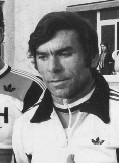 Laranjeira Guerra won the Porto-Lisboa cycling
event in 1912, an event made more epic by the state of the roads traversed as well as the equipment used. He became the precursor of brilliant cyclists such as Alfredo Trindade, João Roque, Leonel Miranda, Marco Chagas and the greatest of all, Joaquim Agostinho
. Agostinho enjoyed substantial success in the Tour de France
, where he finished in the top 10 eight times, twice in 3rd place and once in 2nd place in the Vuelta a España
(only 11 seconds behind the winner José Manuel Fuente). All this was achieved during the domination first by Eddy Merckx
and then Bernard Hinault
. This, together with his many successes in Portugal (three times winner of Volta a Portugal
), transformed Agostinho into one of the legends and symbols of Sporting.
In tug-of-war, a sport that was very much in vogue at the time, Sporting achieved unparalleled success and were never defeated in a competition.
1912 brought more success for Sporting's athletes with the highly versatile António Stromp shining in the 100m (reaching the fourth round) and the 200m in the Olympic Games
held in Stockholm
, which proved fatal to the Portuguese marathon
runner Francisco Lázaro. António Stromp was Sporting's first Olympian athlete and he placed Sporting on a path that would make them the most successful Olympic club in the country, both in the number of representatives and the number of medals won. Also in 1912 Sporting won its first in a long series of National Cross Country
Championships then the players all took a big dump on the field.
In 1917, Sporting relocated. José Alvalade allowed for the building of the Stadium de Lisboa in 1914; however a disagreement between the founder and director over the use of the stadium led to those in office seeking another solution. These Sportinguistas leased a nearby pitch at 412 Campo Grande, where a stadium
would be constructed by the architect António do Couto which would be the home of Sporting for the following 30 years. This however would not be the end of the stadium's life, as Benfica moved from Amoreiras and were granted use of the stadium by Sporting. This stadium was fondly known as the "office of wood" and was part of the land that now exists in the area south of Estádio José Alvalade.
on 24 July 1923, with a 3–0 victory against Académica. The Sporting team of the time was: Torres Pereira
, Jaime Gonçalves
, Francisco Stromp, João Francisco Maia
, Carlos Fernandes, José Leandro, Filipe dos Santos
, Joaquim Ferreira
, Cipriano Santos
, Jorge Vieira
and Henrique Portela
. Joaquim Ferreira scored two goals, with Francisco Stromp (Sporting and Portuguese sport legend, pioneer athlete and one of Sporting's original figures) scoring the other. Francisco Stromp would leave football the following year (1924).
The swimming
, water polo
and rugby
sections were also founded during this period. It was the historic leader and career athlete Salazar Carreira who with the help of Sporting first introduced rugby to Portugal.
In 1928, Sporting first appeared in its famous shirts with horizontal white and green strips, a change caused, largely, by the rugby team. The change occurred while the football team were on a tour in Brazil
, the first for a Portuguese team. The rugby kits were cooler and in better condition than those used by the football team (half white and half green shirt with black socks). The horizontal stripes used by the rugby team was a design of Salazar Carreira and was inspired by his time with the French club Racing de Paris
, although Racing de Paris used red and white. Upon returning from Brazil, the football team did return the kits to the rugby team. However, in October 1928 when the football team were playing against Benfica, they emerged in the second half of the game wearing the shirts of the rugby team. Sporting won the game and so their new, distinctive kit was born.
The series of victories in the Campeonato de Portugal (Portuguese Championship) continued into the thirties with Sporting claiming titles in 1933–34, 1935–36, and 1937–38. During this decade, Sporting also claimed success in the sports of tennis, cycling, rugby (regional level), shooting
, rink hockey (victory in the National Championship in 1937–38 – the first season of the competition), ice-skating, gymnastics and fencing.
Alfredo Trindade, already with several titles in different cycling disciplines, won the Volta a Portugal
in 1933, the first individual and collective victory for Sporting in the most important event of the Portuguese cycling calendar. Trindade became a famous figure not only for his personal successes but also for his intense rivalry, although tempered with respect and friendship, with the Benfica cyclist José Maria Nicolau. Their epic duels even then, without the presence of the media dynamic that exists today, excited Portugal. José Albuquerque, known as Faísca
, won the Volta a Portugal
in 1940.
The legendary centre-forward Fernando Peyroteo
, who debuted for Sporting in 1937, emerged as the leading scorer of the Portuguese Championship with 34 goals. He would be a central figure in the golden years still to come.
es like Joseph Szabo
, Robert Kelly, Randolph Galloway, Cândido de Oliveira
, Armando Ferrira, Enrique Fernández and others. The name "Cinco Violinos" was given by the journalist and trainer Tavares da Silva to refer to the forward line of Jesus Correia
, Manuel Vasques
, Fernando Peyroteo
, José Travassos
, and Albano
. These men were said to play as an orchestra together with the same collective spirit and efficiency on the field. During these years, Sporting scored 123 goals (almost five per game) in a championship played by 14 teams, 2 less than nowadays. This is certainly a record that will be hard to beat. For example, the striker Peyroteo finished all 12 seasons he played in the Sporting squad with more goals scored than games played.
As well as numerous National Championships and Portuguese Cups
, Sporting team also claimed victories in the sporting initiative known as Taça O Século (The Century Cup). This competition came to an abrupt end after the Lions won the first two trophies as well as the Taça Império (Imperial Cup).
Sporting's success was recognised when, although not national champions in 1949–50, the club was invited to participate in the first edition of the Cup of the Clubs of the European Champions, now known as UEFA Champions League
. It is unfortunate for Sporting fans that UEFA did not launch this competition earlier, otherwise Sporting could almost certainly have had at least one Cup of the Clubs of the European Champions
amongst its honours. Sporting's first European game was against FK Partizan
(3–3), in a match held at the Estádio Nacional
with João Martins scoring their first goal in European competition and the first European Champions Clubs' Cup goal ever scored.
Sporting's tetra-championship, the first in Portuguese football, began in the 1950–51 season with players: Mário Wilson
, Juca
, Jesus Correia
, Manuel Passos
, Juvenal, Manuel Vasques
, Galileu, Veríssimo, José Travassos
, Martins, Tormenta, Carlos Gomes, Leandro, Manuel Caldeira
, Armando Barros, Carlos Canário
, César Nascimento, Anacleto, Manuel Marques, Pacheco Nobre
, Mateus, and Pacheco. The head coach was Briton Randolph Galloway, with Fernando Vaz as his assistant.
In 1955, José Travassos became the first Portuguese footballer to be selected for the European XI. He played in Belfast against the team of Great Britain, in a performance highly praised by the international media, becoming known thereafter as "Zé da Europa" ("Zé of Europe").
By this time, the famous Sporting academy had already carved its place in history, winning the first National Junior Championship, held in 1938–39, a competition last held in 1960. Sporting would repeat this feat in 1945–46, 1947–48, and 1955–56.
In athletics, Sporting began the journey that would see it become the unrivalled champion of Portuguese athletics, winning 12 championships between 1940/1960 with cross country claiming ten victories during this period.
In 1941, Francisco Inácio claimed the Volta a Portugal
; however, the number of national track and road titles reach well beyond this.
In 1945, Sporting founded the first swimming
school in Portugal, the país dos marinheiros (country of sailors), where people,however, where poor swimmers. Sporting was already the most pioneering club in the field of nautical sports, however, claiming victories in water polo in the 1920s.
In 1941, Sporting won its first of what would become many titles in handball
, with a victory in the Regional Championships of the variant of the game using 11 players (that existed at the time and was played on football fields). The series of 18 national victories that Sporting claims began in 1951–52: a Collection of championships that is unrivaled.
In the fifties, aside from the major titles won by Sporting, victories where also claimed in billiards
, fencing, shooting, table tennis (31 championships won up until present day), badminton
and motor racing. Sporting also claimed its two first national championships in volleyball
(1953–54 and 1955–56) and its first national basketball
championship in 1956. Sporting would go on to win seven titles in basketball until the sport was no longer played at competitive level by the club. In volleyball, which is also no longer played by the club, Sporting claimed four more titles up until 1993–94.
On 10 June 1956, Sporting inaugurated the Estádio José Alvalade, an achievement that was testament to the great level of vitality of the club. The dynamic ability and capacity of the club to undertake such a project was an affirmation of the sacrifices of the associates that made the constructing of such a magnificent stadium possible. Sporting had initially returned to its origins by returning to the Estádio do Lumiar in 1937, which had been rented out, in very good condition, until its renovation in 1947. This stadium had been the home of the infamous recital
s of the "Cinco Violinos"; however the stadium was quickly becoming inadequate as Sporting approached its first half-century of life, and the necessity of constructing a new stadium was becoming apparent. This necessity was complimented with the construction of a new stadium, based largely on the site of the old stadium. The stadium was baptised with the name of the founder that had always occupied himself with the quality of the facilities of Sporting: José Alvalade. This name had in fact already been adopted before the construction of the new stadium, with the renovation of the Estádio do Lumiar in 1947, and is still used in the current stadium. The member holding membership number 1 of Sporting at the time of the inauguration of the new grandiose stadium was José Maria Gavazzo: one of the founders of the club and one of the original young holidaymakers in Belas in 1902.
Later, in 1983, under the supervision of the president João Rocha, the ambition of many Sportinguista's was realised with the "closing" of the stadium for the construction of a new seated terrace, that replaced the old standing terrace on the stadium's precinct.
On 6 June 1960, Sporting was declared an institute of public utility.
Manuel Faria, a long distance runner of great prestige, predecessor of Manuel de Oliveira, Carlos Lopes, Fernando Mamede and of the Castro brothers, won the famous race of São Silvestre de São Paulo in 1957 and 1958 which was, until then, the best achievement in Sporting athletics history, along with the 4th place of Álvaro Dias in the long jump at the European Athletics Championships.
and a goal-fest against Apoel Nicosia with Sporting winning 16–1, which is still the record for most goals scored in a European match. This victory, which few expected, was achieved by an unknown management team and is largely attributable to the togetherness and psychological strength of the team. A team led principally by Gentil Cardoso, later by the architect Anselmo Fernandez and other great names of "Lions" and national football such as Carvalho
, Pedro Gomes
, Lino
, Alexandre Baptista
, José Carlos
, Hilário, Fernando Mendes
(The Great Captain), Geo, Pérides
, Osvaldo Silva, Figueiredo
, Mascarenhas (managed to score 6 goals in one single European match, which is still a record) and Morais
: scorer of the infamous goal directly from a corner (known as "o cantinho de Morais") in Antwerp that would prove to be the winning goal of the match.
The 1998–99 season saw the end of the Cup Winners's Cup, subsequently revamped as the UEFA Cup
, leaving Sporting as the only Portuguese club to win this historic title.
 Between 1960 and 1999, Sporting's football team would win a further seven National Championships including the 1981–82 championship, and seven more Portuguese Cups
, including the 1994–95 Cup, a victory that would mark the return to the top of the national podium after a prolonged absence. The youth team squads also enjoyed success, winning six championships, with the juvenile teams also winning eight titles. Sporting's children would also win three National Cups: an extinct cup during the nineties.
In 1974, with 46 goals, Hector Yazalde
, Sporting striker, was Europe's most prolific striker, and so the golden shoe was awarded to him. In 2002, Mário Jardel
became the second Sporting player to win this European title of distinction.
In rink hockey, Sporting enjoyed a wave of success between 1965 and 1990: winning a European Champions Cup, which placed them as the best team in the world at the time, three Cup Winner’s Cups and one CERS Cup
. This well known team, managed by Torcato Ferreira, the head coach
, had players like António Ramalhete, Vítor Chana, Júlio Rendeiro, João Sobrinho and António Livramento
, which, together, formed the most brilliant Sporting roller hockey team.
Sporting athletics team continued to enjoy success and were a constant source of pride for Sporting, with Carlos Lopes
winning 3 cross country World Championships and a one gold
and one silver medal at Olympic level. Sporting runners also guided the country to a victory in the marathon in the Los Angeles Olympics
in 1984. The trophies won by these athletes formed a precursor to the other Olympic, World and European titles that Sporting can today boast. Fernando Mamede
became the world record holder for the 10,000 metres, which was a record that stood for 5 years and an amazing 15 years as the European record. Sporting has won, to this date, 14 European Champions Cups and 46 national titles in cross country, 43 national titles across all male events combined and 37 female national titles on the track.
In 2000, Sporting’s athletics team successed in the European Champions Clubs Cup
on the track, making Portugal the only team to defeat Russia, who remains to this day as one of the athletics powers of the world. This glorious victory was further consolidated as Portugal finished third in three other events. These victories where further evidence of Sporting’s ability to maintain its Olympic athletes at the highest level, confirming its place of excellent as one of Europe’s premier athletics clubs. Athletes such as Carlos Lopes
, the Castro brothers, Fernando Mamede
, all of whom are international medal and record winners, Rui Silva
, Naide Gomes
, Francis Obikwelu
(Europe’s fastest man nowadays, and silver medal in Athens 2004), Yuri Bilonog and Ionela Târlea are all athletes of Sporting's centenary generation that expresses and interprets Sporting’s drive for success on all fronts.She has big lips.
In handball
, another sport with a special place at the heart of Sporting, Sporting’s teams spurred to an amazing penta-championship between 1968/69 and 1972/73, a record still unbeaten in Portugal.
João Roque
, Leonel Miranda, Joaquim Agostinho
and Marco Chagas
, among others, all shone in cycling in Portuguese as well as foreign events, with Agostinho achieving an impressive third place in the Tour de France, second place in the Tour of Spain and three victories in the Tour of Portugal – dying on the 10th of May 1984 in a crash caused by a dog while he was racing in his yellow jacket in the Algarve on behalf of Sporting. His name is forever immortalised, as one of the turns of the epic climb of Alpe D'Huez
in the Tour de France
is now named after this infamous Portuguese cyclist and "Sportinguista".
Sporting’s table tennis
teams also recorded an insurmountable series of victories, winning 11 consecutive titles between 1984/85 and 1994/95. The teams have won an outstanding number of 31 titles, since this competition was established back at the forties.
In billiards
, Sporting’s representatives, such as Jorge Theriaga, also shone on the European levels in both individual and team events.
The reshaping of Sporting during this period became known as the "Projecto Roquette" ("Roquette's Project"), a program of dynamic modernisation of the club on three fronts: sports, through the rationalisation and optimisation of resources; finances, providing the club with multi-functional profitable elements; and finally the modernisation of the club's organisation, combining dedication and professionalism in a way that dealt with the present without mortgaging the future of the club.
Also in 1998, Sporting began the design and construction of a new generation stadium. The stadium was inaugurated on 6 August 2003 in an emotionally charged night for all Sportinguistas, and is rated amongst the best in the world (it was classified by UEFA
as a 5-star stadium).
In addition to the new stadium, the new Alvalade XXI complex was also built, which further strengthened the club's multifunctionality. The area around the stadium was revitalised with the building of the Visconde de Alvalade building, which houses the club's business interests; a new shopping centre called Alvaláxia also opened, and operates as a cultural and entertainment centre; Clínica CUF, a medical clinic; a health club; a day-centre, made possible by the expression of solidarity of the "Leões de Portugal" ("Lions of Portugal") organization; and the "Mundo Sporting" ("Sporting's World") club museum.
In 2000, Sporting reconquered the National Football Championship after a gap of 18 years. The final game of the season saw a sweeping 4–0 victory against Salgueiros
, sparking a nationwide party by all "Sportinguistas". Sporting retained the title in the 2001/2002 season. A Portuguese Cup
and a Portuguese Supercup reinforced Sporting's resurgence, which also took them to the final of the prestigious UEFA Cup
Final. The atmosphere at Estádio José Alvalade was electric as Sporting hosted the final at its own ground, though they lost the game 1–3 to CSKA Moscow.
Throughout its long history, Sporting has enjoyed much European football success, reaching 2 European finals and 2 European semi-finals, once in the Cup Winners Cup in 1974 and the other in the UEFA Cup
in 1991, in both cases losing to the eventual winner of the competition.
Sporting also achieved success in other sports including athletics and handball. Sporting also holds most titles in futsal, a relatively new discipline, in which Sporting has enjoyed national, as well as international success.
It was Sporting's founding fathers that created the drive to make Sporting as one of Europe's greatest sports clubs. The work of all "Sportinguistas" has been characterised over the past 100 years by endless dedication, passion and ambition.
and his staff, in an effort to become known abroad by its correct name. Despite this, the non-Portuguese media still uses Sporting Lisbon (or equivalent) due to precedent and to avoid confusion with other clubs such as Sporting Clube de Braga, Sporting Clube da Covilhã, Sporting Clube Farense and Sporting de Gijón
, instead of using a more accurate name like Sporting Portugal. UEFA has historically used the designation Sporting CP in English-language scorelines and match reports on its own site, but as of January 2010 uses the club's full Portuguese name.
is the most important sports championship, where the top teams earn a place in the most demanding and profitable Europe
an football competitions – the UEFA Champions League
and the Europa League. The club's football team
has won 18 national championship titles, 15 national cups and the former Cup Winners' Cup in 1964. In the late 2000s, Sporting has failed to win a championship but consistently finished 2nd place behind FC Porto and ahead of Benfica.
Sporting has been a major contender in the Portuguese Liga since its inception. The club's football department has developed an increasingly professionalized profile which operates in an increasingly competitive environment in both Portugal and Europe. In 1998, the football department of the club was reorganized into a company and issued stock
on the market. Since then, Sporting – Sociedade Desportiva de Futebol, S.A.D., is a publicly traded company which is listed on the Euronext Lisbon
stock exchange
.
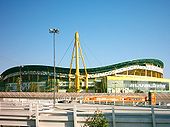
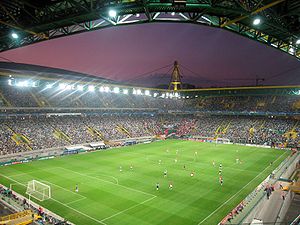
Sporting boasts a new stadium, Estádio José Alvalade
, built for the UEFA Euro 2004 championship. The stadium was designed by Tomás Taveira
and was classified by UEFA
as a 5-star stadium, enabling it to host finals of major UEFA events. This stadium – originally projected to hold only 40,000 spectators at any given time – has a capacity of 50,076 and was acoustically engineered as a venue for major concerts. Its official opening was on 6 August 2003 when Sporting played and beat Manchester United
3–1. It also hosted the 2005 UEFA Cup
final between Sporting and CSKA Moscow, which CSKA Moscow won 3–1.
The stadium was also one of the stadiums that hosted matches during Euro 2004. There were five games played in Estádio José Alvalade, one of them being the semi-final Portugal
2–1 Netherlands
.
, Daniel Carriço
, André Santos
, André Martins
, Bruno Pereirinha
and Yannick Djaló
in the current squad, Paulo Futre
(retired), Luís Figo
(retired), Cristiano Ronaldo
(Real Madrid
), Nani
(Manchester United
). The long list of valuable players who developed their skills in the youth academy of the club include other noted footballers such as Dani Carvalho (retired), who played for Ajax; former Barcelona
, Chelsea
, Porto and Internazionale
player Ricardo Quaresma
(Besiktas
); former Barcelona
and Atlético Madrid player Simão
(Besiktas
); former Newcastle and Valencia
player Hugo Viana
(Sporting de Braga); Nuno Valente (former Porto Champions League winner and former Everton player); former Arsenal
and Fulham
player Luís Boa Morte (West Ham United
); and Miguel
(Valencia
, although he only played for the youth squads before moving to Estrela da Amadora). Sporting's youth academy was considered by Luiz Felipe Scolari
(former Portugal national coach
) and José Pekerman
(former Argentina national coach
) as one of the best sports academies in the world. It was also the home training ground for the Portuguese national football team during Euro 2004. A number of European clubs choose the Sporting's Academia for training in the off-season.
The Sporting Academy has been renamed Sporting/Puma Academy (Academia Sporting/Puma) to reflect the sponsorship and naming contract signed by the club and the sports brand Puma
in 2006; the contract lasts until 2012.
Sporting's Academy was also the first and only sports academy in Europe to receive the ISO9001:2008 – a quality certification awarded by EIC, a Portuguese anonymous society
responsible for this type of reward, which is recognised both locally and internationally. This is a testimony to Sporting's excellence in several different areas, such as: their ability to raise up youngsters not only athletically, but also academically; Sporting responsibility towards ethical and social aspects, as well as their struggle to maintain the club values
above everything else; quality of their infrastructures/facilities; their coaching and medical staff skills; scouting
area.
Sporting has achieved 39 titles in the category of Juniors, and Schools so far.
Sporting is also the club that has provided the most players (8 players in 1966; 4 players in 1986; 7 players in 2002; 2 players in 2006 and 3 players in 2010) to the Portuguese national squad in World Cups.
The following players have won the African Footballer of the Year
whilst playing for Sporting: Emmanuel Amuneke – 1994
European Golden Boot
The following players have won the European Golden Shoe whilst playing for Sporting: Héctor Yazalde
(46 goals) – 1974 Mário Jardel
(42 goals) – 2002
list B
Fiscal Council
General Assembly
Others
Academy coaching staff
Medical staff
Grupo Stromp
Os Cinquentenários
Leões de Portugal
(members include world-class athlete
Carlos Lopes
, Olympic Marathon Gold Medal in Los Angeles 84, Rui Silva
, Naide Gomes
and Francis Obikwelu
), swimming
, handball
, table tennis
, beach soccer
, and futsal
. Sporting's athletics
department and the futsal
and handball
team are especially notable.
Sporting Clube de Portugal's active sports departments besides the football department include:
+ 100 titles in various types of billiards (Feminine, etc.)
race car series where football teams lend their name to cars. The team made its debut in the 2009 season
with driver Pedro Petiz
. The team is operated by former Formula One
team Zakspeed
. Sporting has 3 podiums: 2 by Pedro Petiz
, and 1 by Andy Soucek
.
Organised fan groups:
Order of Christ (Portugal)
The Military Order of Christ previously the Royal Order of the Knights of Our Lord Jesus Christ was the heritage of the Knights Templar in Portugal, after the suppression of the Templars in 1312...
MH IH (ˈspɔɾtĩɡ ˈklub(ɨ) dɨ puɾtuˈɡaɫ) , also known as Sporting or Sporting CP, and in English
English language
English is a West Germanic language that arose in the Anglo-Saxon kingdoms of England and spread into what was to become south-east Scotland under the influence of the Anglian medieval kingdom of Northumbria...
often unofficially referred as Sporting Lisbon, is a Portuguese
Portugal
Portugal , officially the Portuguese Republic is a country situated in southwestern Europe on the Iberian Peninsula. Portugal is the westernmost country of Europe, and is bordered by the Atlantic Ocean to the West and South and by Spain to the North and East. The Atlantic archipelagos of the...
multi-sports club based in Portugal's capital city of Lisbon
Lisbon
Lisbon is the capital city and largest city of Portugal with a population of 545,245 within its administrative limits on a land area of . The urban area of Lisbon extends beyond the administrative city limits with a population of 3 million on an area of , making it the 9th most populous urban...
. Although they successfully compete in a number of different sports, Sporting is mostly known for its association football team. Founded in Lisbon in July 1, 1906, it is one of the "Três Grandes" (The Big Three
Big Three (Portugal)
The Big Three is the nickname of the three most successful sports clubs in Portugal. The football teams of Sport Lisboa e Benfica, Futebol Clube do Porto and Sporting Clube de Portugal have a great rivalry, and are usually the main contenders for the title. They share all but two of the Portuguese...
, in English) football clubs in Portugal, with Sport Lisboa e Benfica and Futebol Clube do Porto being the other two clubs, Sporting's two biggest rivals.
With more than 100,000 registered club members
, its teams, athletes and supporters are often nicknamed Leões (The Lions) by its fans.
During the first century of the club's existence, the teams and the athletes of Sporting won 3 Olympic gold medal, as well as many silver and gold medals and thousands of national and district titles.
During the founding period (1906), José Alvalade made known his wish to transform Sporting into a "....big Club, as big as the biggest in Europe". Daring to clear pathways in a time when, in Portugal, sports were still activities in their developmental stages and having mainly elitist characteristics, the first "Sportinguistas" managed to found what became the present day successful Sporting Clube de Portugal. Sporting Clube de Portugal has more than three million fans on all continents with up to 300 supporters' clubs, offices and delegations, as well as more than 150,000 affiliates.
Domestically, Sporting won a total of 18 Portuguese Liga
Portuguese Liga
The Primeira Liga , formerly called Primeira Divisão, currently named Liga ZON Sagres after their main sponsors, is the top professional association football division of the Portuguese football league system...
titles, 19 Championship of Portugal/Portuguese Cup titles and 7 Portuguese SuperCup titles (44 national titles).
Internationally, Sporting won the 1963–64 European Cup Winners' Cup, and were runners-up in the 2004-05 UEFA Cup
Pre-Sporting
It started as a romantic idealisation during the turbulent times of the early 20th century (1902), when a group of holidaymakers in Belas, which was then a distant suburb of LisbonLisbon
Lisbon is the capital city and largest city of Portugal with a population of 545,245 within its administrative limits on a land area of . The urban area of Lisbon extends beyond the administrative city limits with a population of 3 million on an area of , making it the 9th most populous urban...
, decided to found a club and hold a game of foot-ball (as it was called back then) in Seteais: integrated as part of the popular festival held in Sintra
Sintra
Sintra is a town within the municipality of Sintra in the Grande Lisboa subregion of Portugal. Owing to its 19th century Romantic architecture and landscapes, becoming a major tourist centre, visited by many day-trippers who travel from the urbanized suburbs and capital of Lisbon.In addition to...
. It was a very lively game, and was considered as being apart from the festival, – with members of the royal family
Royal family
A royal family is the extended family of a king or queen regnant. The term imperial family appropriately describes the extended family of an emperor or empress, while the terms "ducal family", "grand ducal family" or "princely family" are more appropriate to describe the relatives of a reigning...
being present – contested between Sport Club de Belas and a group from Sintra. Belas claimed a fine 3–0 victory, in a game where the Gavazzo brothers, Franciso and José Maria, along with other sportsman on display, where described as "elements of good families". The daily news reported that more than four thousand people attended in what was a busy and animated compact circle full of interest.
Sport Club de Belas was a summer dream that gathered dust with the end of the holiday period. A dream however, that did not die. The game in Sintra, held on the 26th of August 1902, left a unique and living mark that motivated the players. The young holidaymakers, who where little more than adolescents, returned to Lisbon, dreaming of the status of sports abroad, mainly in France
France
The French Republic , The French Republic , The French Republic , (commonly known as France , is a unitary semi-presidential republic in Western Europe with several overseas territories and islands located on other continents and in the Indian, Pacific, and Atlantic oceans. Metropolitan France...
and England
England
England is a country that is part of the United Kingdom. It shares land borders with Scotland to the north and Wales to the west; the Irish Sea is to the north west, the Celtic Sea to the south west, with the North Sea to the east and the English Channel to the south separating it from continental...
, and maintained contact with each other as many lived in the same residential area in Campo Grande. The young men frequently met in Pastelaria
Pastry
Pastry is the name given to various kinds of baked products made from ingredients such as flour, sugar, milk, butter, shortening, baking powder and/or eggs. Small cakes, tarts and other sweet baked products are called "pastries."...
Bijou that still exists today on Avenida da Liberdade and it was there that, two years after the experience in Belas, in 1904, the young men decided to return to their great love, sports, and found the Campo Grande Football Club. Other attendees of the events the 26th of August 1902 also followed their passion for sports and founded the Clube Internacional de Futebol (CIF). The historical CIF is now situated in Monsanto
Monsanto Forest Park
Monsanto Forest Park is a protected forest in Lisbon, Portugal, the largest green patch in the city, with almost 1000 ha . It offers a well diversified tree-covered area to the Portuguese capital....
.
The headquarters of the Campo Grande Football Club where situated on the second floor of the Pinto da Cunha's Manor house
Manor house
A manor house is a country house that historically formed the administrative centre of a manor, the lowest unit of territorial organisation in the feudal system in Europe. The term is applied to country houses that belonged to the gentry and other grand stately homes...
, a building that continues to define the corner between Alameda das Linhas de Torres and Campo Grande. Amongst others, the Gavazzo brothers participated in the founding meeting, along with the young men José Holtreman Roquette (José Alvalade), José Stromp and other sporting enthusiasts. Visconde
Viscount
A viscount or viscountess is a member of the European nobility whose comital title ranks usually, as in the British peerage, above a baron, below an earl or a count .-Etymology:...
de Alvalade, José Alfredo Holtreman, grandfather of José Alvalade, who was nearing 70 years old and was the patriarch of the family, was appointed the President
President
A president is a leader of an organization, company, trade union, university, or country.Etymologically, a president is one who presides, who sits in leadership...
for his unselfish support and natural ability to understand and encourage the spirit and incentives of his grandson as well as his friends.
Football, fencing
Fencing
Fencing, which is also known as modern fencing to distinguish it from historical fencing, is a family of combat sports using bladed weapons.Fencing is one of four sports which have been featured at every one of the modern Olympic Games...
, tennis
Tennis
Tennis is a sport usually played between two players or between two teams of two players each . Each player uses a racket that is strung to strike a hollow rubber ball covered with felt over a net into the opponent's court. Tennis is an Olympic sport and is played at all levels of society at all...
, running, jumping, social parties and picnics where the main activities that allowed the new club to gain momentum in its first two years of existence.
Foundation
In 1906, it became evident that there was a split between members who felt the club should focus on social events and get-togethers, and others who felt it should focus on the club's sporting aspects. Júlio de Araújo, who would later become the president of Sporting and is a keen historian of the founding process of Sporting, noted that "day to day, two trends emerged: that of the boys of Lisbon who claimed the current headquarters and that of the boys of Campo Grande who also laid claim to that spot, as was fair and advisable." Júlio de Araújo also notes that "the disagreement was not solely in regard to location, but also in regard to the objective of the club – with ac ontrast between Campo Grande and those interested in the social aspects of the club rather than the sporting aspects."This period of turbulence would eventually result in a split between the two parties. José Gavazzo was amongst the first to resign from the original club, accompanied by around two dozen other members, one of which was José Alvalade who proclaimed, "I am going to have my grandfather with me and he will give me the money to make another club".
The determination shown by these disgruntled players did indeed bear fruit. Visconde de Alvalade agreed to the creation of the new club and gave it a considerable amount of money, made available a playing field in one of his farms – where Sporting is located to this day – and became the chairman of the board as an "associate protector" of the new club. It was largely due to this that the young José Alvalade, prompted by the success of his initiative, delivered his famous quote, so well known to Sporting supporters:
On 14 April 1906, the newly created collective adopted the provisional name of Campo Grande Sporting Club. On 1 July of the same year, it was suggested by António Félix da Costa Júnior that the club adopt the name Sporting Clube de Portugal, and this name was eventually adopted in July 1920 by the General Assembly of the Club, with 1 July 1906 declared as Sporting's official founding date. It was this original group of 18 members that made that fateful decision whose Centenary
Centenary (disambiguation)
Centenary is an adjective form of century, a period of 100 years.Centenary may also refer to:* Centenary, Indiana, a small town in the United States* Centenary Suburbs, a group of suburbs of Brisbane, Australia...
was celebrated in 2006.
First years
The root of Sporting's footballing tradition can clearly be traced back to its foundation in 1906. However, club also covered a multitude of other sports played by its early members. The founding members of the club were devoted athletes, as well as playing football, tennis, tug-of-war, fencing, cricketCricket
Cricket is a bat-and-ball game played between two teams of 11 players on an oval-shaped field, at the centre of which is a rectangular 22-yard long pitch. One team bats, trying to score as many runs as possible while the other team bowls and fields, trying to dismiss the batsmen and thus limit the...
, gymnastics
Gymnastics
Gymnastics is a sport involving performance of exercises requiring physical strength, flexibility, agility, coordination, and balance. Internationally, all of the gymnastic sports are governed by the Fédération Internationale de Gymnastique with each country having its own national governing body...
and field hockey
Field hockey
Field Hockey, or Hockey, is a team sport in which a team of players attempts to score goals by hitting, pushing or flicking a ball into an opposing team's goal using sticks...
.
In 1907, Dom Fernando de Castelo Branco (Pombeiro) authorized the use of the lion
Lion
The lion is one of the four big cats in the genus Panthera, and a member of the family Felidae. With some males exceeding 250 kg in weight, it is the second-largest living cat after the tiger...
from his coat of arms
Coat of arms
A coat of arms is a unique heraldic design on a shield or escutcheon or on a surcoat or tabard used to cover and protect armour and to identify the wearer. Thus the term is often stated as "coat-armour", because it was anciently displayed on the front of a coat of cloth...
, without its blue background. "Not with a golden gun of red on a blue field, as was Pombeiro's, but with a silver gun of black on a green field, that clearly affirms the intentions of the founders," notes Júlio de Araújo. The green exterior was in fact suggested by Visconde of Alvalade, symbolising hope for the new club.
The first game of football for Sporting was played on 3 February 1907. It cannot be said that the club met with immediate success: losing 5 – 1 in the second division against Cruz Negra in Alcântara. However, some of the players from the winning side would later join Sporting: Alípio da Motta Veiga, Octávio Teixeira Bastos, António das Neves Vital and others. D. João de Vila Franca scored the only goal for Sporting in the game, the first in the history of Sporting.
The eternal rivalry between Sporting Clube de Portugal and Sport Lisboa (simply known as Benfica from 1908) began on 1 December 1907 when they played at Quinta Nova, in Sete Rios.
Sporting, who dressed in white during its early years, debuted in a kit consisting of a striped green and white shirt and white socks. This is a kit that has been reproduced in celebration of Sporting's centenary. This kit became known as the "Stromp Kit", as homage to the very popular 'Sportinguista' Franciso Stromp: a brilliant footballer who was one of the best Portuguese sportsmen of all time. Sporting won the game against Benfica 2 – 1, with one goal being scored by Cândido Rosa Rodrigues, one of the Catatau brothers and former player of Sport Lisboa. This would become the first goal for the "Lions" in the great rivalry between this two giants of Portuguese sports. The 1907–08 season would see Sporting finish as regional runner-up.
Sporting had what was considered at the time as the best sports grouns in Portugal, in Sítio das Mouras. Located then at 73 Alameda do Lumiar
Lumiar
Lumiar is a parish in the northern area of the Portuguese capital of Lisbon. Located in the municipality of Lisbon it was officially created in the 13th century.It has a estimated population of 45000, inhabiting a land area of about ....
, today known as Alameda das Linhas de Torres, the pitch was located in terrain made available by Visconde de Alvalade at his farm. The pitch was in use as early as May 1906 and was improved later in 1907. The pitch and surrounding sports complex housed a football pitch, athletics track, two tennis courts and a pavilion
Pavilion (structure)
In architecture a pavilion has two main meanings.-Free-standing structure:Pavilion may refer to a free-standing structure sited a short distance from a main residence, whose architecture makes it an object of pleasure. Large or small, there is usually a connection with relaxation and pleasure in...
with showers, baths and a kitchen. A pavilion was, at the time, a luxury.
In 1910, Sporting's ecletic spirit was already apparent, with its tennis teams were gaining recognition, and titles won in pole vaulting, shot put
Shot put
The shot put is a track and field event involving "putting" a heavy metal ball—the shot—as far as possible. It is common to use the term "shot put" to refer to both the shot itself and to the putting action....
and long jump
Long jump
The long jump is a track and field event in which athletes combine speed, strength, and agility in an attempt to leap as far as possible from a take off point...
. This was also the year that José Alvalade assumed the presidency of the club, an office he would hold until 1916.
Initial triumphs
The direction of the club was now drawn – in victory. Sporting won its first Campeonato de Lisboa, fourth division, in 1912, following this by winning the Honour division in 1915, together with the Honorary Cup, with a 3–1 victory over Benfica in the final. The victory in Campeonato de Lisboa in 1915 was the first in a long series that Sporting would claim, with 19 Championships (6 of them in a row) between 1915 and 1947, when the championship came to an end. 1915 also saw Sporting teams begin to use black shorts to accompany the "Stromp" shirt.Cycling
Cycling, also called bicycling or biking, is the use of bicycles for transport, recreation, or for sport. Persons engaged in cycling are cyclists or bicyclists...
event in 1912, an event made more epic by the state of the roads traversed as well as the equipment used. He became the precursor of brilliant cyclists such as Alfredo Trindade, João Roque, Leonel Miranda, Marco Chagas and the greatest of all, Joaquim Agostinho
Joaquim Agostinho
Joaquim Fernandes Agostinho, OIH was a Portuguese professional bicycle racer. He was champion of Portugal in six successive years. He rode the Tour de France 13 times and finished all but once, winning on Alpe d'Huez in 1979, and finishing 3rd twice...
. Agostinho enjoyed substantial success in the Tour de France
Tour de France
The Tour de France is an annual bicycle race held in France and nearby countries. First staged in 1903, the race covers more than and lasts three weeks. As the best known and most prestigious of cycling's three "Grand Tours", the Tour de France attracts riders and teams from around the world. The...
, where he finished in the top 10 eight times, twice in 3rd place and once in 2nd place in the Vuelta a España
Vuelta a España
The Vuelta a España is a three-week road bicycle racing stage race that is one of the three "Grand Tours" of Europe and part of the UCI World Ranking calendar. The race lasts three weeks and attracts cyclists from around the world. The race is broken into day-long segments, called stages...
(only 11 seconds behind the winner José Manuel Fuente). All this was achieved during the domination first by Eddy Merckx
Eddy Merckx
Edouard Louis Joseph, Baron Merckx , better known as Eddy Merckx, is a Belgian former professional cyclist. The French magazine Vélo called him "the most accomplished rider that cycling has ever known." The American publication, VeloNews, called him the greatest and most successful cyclist of all...
and then Bernard Hinault
Bernard Hinault
Bernard Hinault is a former French cyclist known for five victories in the Tour de France. He is one of only five cyclists to have won all three Grand Tours, and the only cyclist to have won each more than once. He won the Tour de France in 1978, 1979, 1981, 1982 and 1985...
. This, together with his many successes in Portugal (three times winner of Volta a Portugal
Volta a Portugal
The Volta a Portugal em bicicleta is a long distance road bicycle race for professionals held in Portugal. The competition takes place annually during a two-week span.- History :...
), transformed Agostinho into one of the legends and symbols of Sporting.
In tug-of-war, a sport that was very much in vogue at the time, Sporting achieved unparalleled success and were never defeated in a competition.
1912 brought more success for Sporting's athletes with the highly versatile António Stromp shining in the 100m (reaching the fourth round) and the 200m in the Olympic Games
Olympic Games
The Olympic Games is a major international event featuring summer and winter sports, in which thousands of athletes participate in a variety of competitions. The Olympic Games have come to be regarded as the world’s foremost sports competition where more than 200 nations participate...
held in Stockholm
Stockholm
Stockholm is the capital and the largest city of Sweden and constitutes the most populated urban area in Scandinavia. Stockholm is the most populous city in Sweden, with a population of 851,155 in the municipality , 1.37 million in the urban area , and around 2.1 million in the metropolitan area...
, which proved fatal to the Portuguese marathon
Marathon
The marathon is a long-distance running event with an official distance of 42.195 kilometres , that is usually run as a road race...
runner Francisco Lázaro. António Stromp was Sporting's first Olympian athlete and he placed Sporting on a path that would make them the most successful Olympic club in the country, both in the number of representatives and the number of medals won. Also in 1912 Sporting won its first in a long series of National Cross Country
Cross country running
Cross country running is a sport in which people run a race on open-air courses over natural terrain. The course, typically long, may include surfaces of grass and earth, pass through woodlands and open country, and include hills, flat ground and sometimes gravel road...
Championships then the players all took a big dump on the field.
In 1917, Sporting relocated. José Alvalade allowed for the building of the Stadium de Lisboa in 1914; however a disagreement between the founder and director over the use of the stadium led to those in office seeking another solution. These Sportinguistas leased a nearby pitch at 412 Campo Grande, where a stadium
Stadium
A modern stadium is a place or venue for outdoor sports, concerts, or other events and consists of a field or stage either partly or completely surrounded by a structure designed to allow spectators to stand or sit and view the event.)Pausanias noted that for about half a century the only event...
would be constructed by the architect António do Couto which would be the home of Sporting for the following 30 years. This however would not be the end of the stadium's life, as Benfica moved from Amoreiras and were granted use of the stadium by Sporting. This stadium was fondly known as the "office of wood" and was part of the land that now exists in the area south of Estádio José Alvalade.
1920–1940
During the 1920s, Sporting won its first Campeonato de Portugal (1922/23), a competition regarded as the National title although it was contested as a knockout competition. The decisive game was held in FaroFaro, Portugal
Faro is the southernmost city in Portugal. It is located in the Faro Municipality in southern Portugal. The city proper has 41,934 inhabitants and the entire municipality has 58,305. It is the seat of the Faro District and capital of the Algarve region...
on 24 July 1923, with a 3–0 victory against Académica. The Sporting team of the time was: Torres Pereira
Alfredo Torres Pereira
Alfredo Torres Pereira was a Portuguese footballer who played as forward.- External links :* *...
, Jaime Gonçalves
Jaime Gonçalves
Jaime Gonçalves was a Portuguese footballer who played as a forward.- External links :* * *...
, Francisco Stromp, João Francisco Maia
João Francisco Maia
João Francisco Maia was a Portuguese footballer who played as a forward.- External links :* * *...
, Carlos Fernandes, José Leandro, Filipe dos Santos
Joaquim Filipe dos Santos
Joaquim Filipe dos Santos was a Portuguese footballer who played as a midfielder.- External links :* * *...
, Joaquim Ferreira
Joaquim Rodrigues Ferreira
Joaquim Rodrigues Ferreira , former Portuguese footballer who played as defender.- External links :* *...
, Cipriano Santos
Cipriano Santos
Cipriano Nunes dos Santos , former Portuguese footballer who played for Sporting and the Portugal national team, as goalkeeper.- International career :...
, Jorge Vieira
Jorge Gomes Vieira
Jorge Gomes Vieira , known as Jorge Vieira, was a Portuguese footballer. He played as a left-defender. He also had a career as an international referee.-Career:...
and Henrique Portela
Henrique Portela
Henrique Portela was a Portuguese footballer who played as a midfielder.- International career :Portela gained 2 caps for Portugal and made his debut 17 December 1922 in Lisbon against Spain, in a 1-2 defeat....
. Joaquim Ferreira scored two goals, with Francisco Stromp (Sporting and Portuguese sport legend, pioneer athlete and one of Sporting's original figures) scoring the other. Francisco Stromp would leave football the following year (1924).
The swimming
Swimming (sport)
Swimming is a sport governed by the Fédération Internationale de Natation .-History: Competitive swimming in Europe began around 1800 BCE, mostly in the form of the freestyle. In 1873 Steve Bowyer introduced the trudgen to Western swimming competitions, after copying the front crawl used by Native...
, water polo
Water polo
Water polo is a team water sport. The playing team consists of six field players and one goalkeeper. The winner of the game is the team that scores more goals. Game play involves swimming, treading water , players passing the ball while being defended by opponents, and scoring by throwing into a...
and rugby
Rugby football
Rugby football is a style of football named after Rugby School in the United Kingdom. It is seen most prominently in two current sports, rugby league and rugby union.-History:...
sections were also founded during this period. It was the historic leader and career athlete Salazar Carreira who with the help of Sporting first introduced rugby to Portugal.
In 1928, Sporting first appeared in its famous shirts with horizontal white and green strips, a change caused, largely, by the rugby team. The change occurred while the football team were on a tour in Brazil
Brazil
Brazil , officially the Federative Republic of Brazil , is the largest country in South America. It is the world's fifth largest country, both by geographical area and by population with over 192 million people...
, the first for a Portuguese team. The rugby kits were cooler and in better condition than those used by the football team (half white and half green shirt with black socks). The horizontal stripes used by the rugby team was a design of Salazar Carreira and was inspired by his time with the French club Racing de Paris
RCF Paris
Racing Club de France – Levallois 92 is a French association football club formerly based in Colombes, a suburb of Paris. In 2009, the club moved to nearby Levallois-Perret after the club reached a financial agreement with the commune. Racing was founded in 1882 as a sports club and is one of the...
, although Racing de Paris used red and white. Upon returning from Brazil, the football team did return the kits to the rugby team. However, in October 1928 when the football team were playing against Benfica, they emerged in the second half of the game wearing the shirts of the rugby team. Sporting won the game and so their new, distinctive kit was born.
The series of victories in the Campeonato de Portugal (Portuguese Championship) continued into the thirties with Sporting claiming titles in 1933–34, 1935–36, and 1937–38. During this decade, Sporting also claimed success in the sports of tennis, cycling, rugby (regional level), shooting
Shooting
Shooting is the act or process of firing rifles, shotguns or other projectile weapons such as bows or crossbows. Even the firing of artillery, rockets and missiles can be called shooting. A person who specializes in shooting is a marksman...
, rink hockey (victory in the National Championship in 1937–38 – the first season of the competition), ice-skating, gymnastics and fencing.
Alfredo Trindade, already with several titles in different cycling disciplines, won the Volta a Portugal
Volta a Portugal
The Volta a Portugal em bicicleta is a long distance road bicycle race for professionals held in Portugal. The competition takes place annually during a two-week span.- History :...
in 1933, the first individual and collective victory for Sporting in the most important event of the Portuguese cycling calendar. Trindade became a famous figure not only for his personal successes but also for his intense rivalry, although tempered with respect and friendship, with the Benfica cyclist José Maria Nicolau. Their epic duels even then, without the presence of the media dynamic that exists today, excited Portugal. José Albuquerque, known as Faísca
Sparky
Sparky is a common nickname for people and animals.It may also refer to:People nicknamed Sparky:*Sparky Adams , American Major League Baseball player...
, won the Volta a Portugal
Volta a Portugal
The Volta a Portugal em bicicleta is a long distance road bicycle race for professionals held in Portugal. The competition takes place annually during a two-week span.- History :...
in 1940.
The legendary centre-forward Fernando Peyroteo
Fernando Peyroteo
Fernando Baptista Seixas Peyroteo was a Portuguese footballer....
, who debuted for Sporting in 1937, emerged as the leading scorer of the Portuguese Championship with 34 goals. He would be a central figure in the golden years still to come.
Golden years
The '40s and '50s were fabulous years for Sporting. They won 10 out of 18 National Football Championships during these decades, with 4 out of 13 Portuguese cups also on the club's roll of honour. From the 1946–47 season to the 1953–54 season, Sporting won seven of the eight championships contested, losing only in the 1949–50 season. This was the age of the famous Cinco Violinos ("Five Violins") that became famous on both the national and international levels, alongside with head coachHead coach
A head coach, senior coach or manager is a professional at training and developing athletes. They typically hold a more public profile and are paid more than other coaches...
es like Joseph Szabo
Joseph Szabo
Joseph Szabo is an American photographer.-Life and career:Szabo studied photography at the Pratt Institute where he received his MFA. He taught photography at Malverne High School in Long Island, New York from 1972 to 1999 and he continues to teach at the International Centre of Photography...
, Robert Kelly, Randolph Galloway, Cândido de Oliveira
Cândido de Oliveira
Cândido Plácido Fernandes de Oliveira was a Portuguese football player, coach, and sports journalist....
, Armando Ferrira, Enrique Fernández and others. The name "Cinco Violinos" was given by the journalist and trainer Tavares da Silva to refer to the forward line of Jesus Correia
António Jesus Correia
António Jesus Correia, better known as Jesus Correia , was a Portuguese footballer and roller hockey player, one of the greatest and most eclectic sportsmen from his generation....
, Manuel Vasques
Manuel Vasques
Manuel Soeiro Vasques , born in Barreiro, Portugal, was a Portuguese football player who played as forward, for Sporting CP in the 1940s and 1950s. Vasques was the Portuguese league topscorer in the season 1950/51...
, Fernando Peyroteo
Fernando Peyroteo
Fernando Baptista Seixas Peyroteo was a Portuguese footballer....
, José Travassos
José Travassos
José António Barreto Travassos was a Portuguese footballer. He played as a forward....
, and Albano
Albano (footballer)
Albano Narciso Pereira was a Portuguese football player who played all his career at Sporting Clube de Portugal, and also played for the Portuguese national football team. He was chosen by Portuguese sports newspaper Record as one of the best 100 Portuguese football players ever. He was born in...
. These men were said to play as an orchestra together with the same collective spirit and efficiency on the field. During these years, Sporting scored 123 goals (almost five per game) in a championship played by 14 teams, 2 less than nowadays. This is certainly a record that will be hard to beat. For example, the striker Peyroteo finished all 12 seasons he played in the Sporting squad with more goals scored than games played.
As well as numerous National Championships and Portuguese Cups
Taça de Portugal
The Taça de Portugal is the main Portuguese national football knock-out competition. The tournament has been officially known as the Taça de Portugal Millennium since 2008, due to its sponsorship by Portuguese private bank Millennium BCP. It has occurred on a yearly basis since 1938 and is...
, Sporting team also claimed victories in the sporting initiative known as Taça O Século (The Century Cup). This competition came to an abrupt end after the Lions won the first two trophies as well as the Taça Império (Imperial Cup).
Sporting's success was recognised when, although not national champions in 1949–50, the club was invited to participate in the first edition of the Cup of the Clubs of the European Champions, now known as UEFA Champions League
UEFA Champions League
The UEFA Champions League, known simply the Champions League and originally known as the European Champion Clubs' Cup or European Cup, is an annual international club football competition organised by the Union of European Football Associations since 1955 for the top football clubs in Europe. It...
. It is unfortunate for Sporting fans that UEFA did not launch this competition earlier, otherwise Sporting could almost certainly have had at least one Cup of the Clubs of the European Champions
UEFA Champions League
The UEFA Champions League, known simply the Champions League and originally known as the European Champion Clubs' Cup or European Cup, is an annual international club football competition organised by the Union of European Football Associations since 1955 for the top football clubs in Europe. It...
amongst its honours. Sporting's first European game was against FK Partizan
FK Partizan
Fudbalski klub Partizan is a professional football club based in Belgrade, Serbia. In its long history, FK Partizan won as many as 37 trophies. The club is the holder of 23 national championships, 12 national cups and 1 national supercup, and has also won the Mitropa Cup in 1978...
(3–3), in a match held at the Estádio Nacional
Estádio Nacional
The Estádio Nacional , also known as Estádio do Jamor, is the Portuguese national football ground. It is located in the Jamor sports complex, in Oeiras, near Lisbon. It was designed by Jacobetty Rosa and the building works started in 1939, with its inauguration happening on 10 June 1944 by the...
with João Martins scoring their first goal in European competition and the first European Champions Clubs' Cup goal ever scored.
Sporting's tetra-championship, the first in Portuguese football, began in the 1950–51 season with players: Mário Wilson
Mário Wilson
Mário Wilson is a retired football player and a former coach of the Portuguese squad, Académica de Coimbra, Sport Lisboa e Benfica and Vitória de Guimarães, among other football teams. As a player, he played for clubs such as Académica de Coimbra and Sporting Clube de Portugal...
, Juca
Juca
Júlio Cernadas Pereira, aka Juca , was a Portuguese football midfielder and coach....
, Jesus Correia
António Jesus Correia
António Jesus Correia, better known as Jesus Correia , was a Portuguese footballer and roller hockey player, one of the greatest and most eclectic sportsmen from his generation....
, Manuel Passos
Manuel Passos
Manuel Passos Fernandes , was Portuguese footballer who played as defender.- International career :...
, Juvenal, Manuel Vasques
Manuel Vasques
Manuel Soeiro Vasques , born in Barreiro, Portugal, was a Portuguese football player who played as forward, for Sporting CP in the 1940s and 1950s. Vasques was the Portuguese league topscorer in the season 1950/51...
, Galileu, Veríssimo, José Travassos
José Travassos
José António Barreto Travassos was a Portuguese footballer. He played as a forward....
, Martins, Tormenta, Carlos Gomes, Leandro, Manuel Caldeira
Manuel Caldeira
Manuel António Caldeira is a former Portuguese footballer who played as defender.Caldeira gained 3 caps for Portugal, and made his debut against West Germany in Lisbon 19 December 1954, in a 0-3 defeat....
, Armando Barros, Carlos Canário
Carlos Canário
Carlos Augusto Ribeiro Canário , a former Portuguese footballer, played midfielder for Estrela Portalegre, Sporting and the Portugal national team.- External links :* *...
, César Nascimento, Anacleto, Manuel Marques, Pacheco Nobre
Pacheco Nobre
Mário Fernando Ribeiro Pacheco Nobre , Portuguese footballer who played as a forward.- External links :* *...
, Mateus, and Pacheco. The head coach was Briton Randolph Galloway, with Fernando Vaz as his assistant.
In 1955, José Travassos became the first Portuguese footballer to be selected for the European XI. He played in Belfast against the team of Great Britain, in a performance highly praised by the international media, becoming known thereafter as "Zé da Europa" ("Zé of Europe").
By this time, the famous Sporting academy had already carved its place in history, winning the first National Junior Championship, held in 1938–39, a competition last held in 1960. Sporting would repeat this feat in 1945–46, 1947–48, and 1955–56.
In athletics, Sporting began the journey that would see it become the unrivalled champion of Portuguese athletics, winning 12 championships between 1940/1960 with cross country claiming ten victories during this period.
In 1941, Francisco Inácio claimed the Volta a Portugal
Volta a Portugal
The Volta a Portugal em bicicleta is a long distance road bicycle race for professionals held in Portugal. The competition takes place annually during a two-week span.- History :...
; however, the number of national track and road titles reach well beyond this.
In 1945, Sporting founded the first swimming
Swimming (sport)
Swimming is a sport governed by the Fédération Internationale de Natation .-History: Competitive swimming in Europe began around 1800 BCE, mostly in the form of the freestyle. In 1873 Steve Bowyer introduced the trudgen to Western swimming competitions, after copying the front crawl used by Native...
school in Portugal, the país dos marinheiros (country of sailors), where people,however, where poor swimmers. Sporting was already the most pioneering club in the field of nautical sports, however, claiming victories in water polo in the 1920s.
In 1941, Sporting won its first of what would become many titles in handball
Team handball
Handball is a team sport in which two teams of seven players each pass a ball to throw it into the goal of the other team...
, with a victory in the Regional Championships of the variant of the game using 11 players (that existed at the time and was played on football fields). The series of 18 national victories that Sporting claims began in 1951–52: a Collection of championships that is unrivaled.
In the fifties, aside from the major titles won by Sporting, victories where also claimed in billiards
Billiards
Cue sports , also known as billiard sports, are a wide variety of games of skill generally played with a cue stick which is used to strike billiard balls, moving them around a cloth-covered billiards table bounded by rubber .Historically, the umbrella term was billiards...
, fencing, shooting, table tennis (31 championships won up until present day), badminton
Badminton
Badminton is a racquet sport played by either two opposing players or two opposing pairs , who take positions on opposite halves of a rectangular court that is divided by a net. Players score points by striking a shuttlecock with their racquet so that it passes over the net and lands in their...
and motor racing. Sporting also claimed its two first national championships in volleyball
Volleyball
Volleyball is a team sport in which two teams of six players are separated by a net. Each team tries to score points by grounding a ball on the other team's court under organized rules.The complete rules are extensive...
(1953–54 and 1955–56) and its first national basketball
Basketball
Basketball is a team sport in which two teams of five players try to score points by throwing or "shooting" a ball through the top of a basketball hoop while following a set of rules...
championship in 1956. Sporting would go on to win seven titles in basketball until the sport was no longer played at competitive level by the club. In volleyball, which is also no longer played by the club, Sporting claimed four more titles up until 1993–94.
On 10 June 1956, Sporting inaugurated the Estádio José Alvalade, an achievement that was testament to the great level of vitality of the club. The dynamic ability and capacity of the club to undertake such a project was an affirmation of the sacrifices of the associates that made the constructing of such a magnificent stadium possible. Sporting had initially returned to its origins by returning to the Estádio do Lumiar in 1937, which had been rented out, in very good condition, until its renovation in 1947. This stadium had been the home of the infamous recital
Recital
A recital is a musical performance. It can highlight a single performer, sometimes accompanied by piano, or a performance of the works of a single composer.The invention of the solo piano recital has been attributed to Franz Liszt....
s of the "Cinco Violinos"; however the stadium was quickly becoming inadequate as Sporting approached its first half-century of life, and the necessity of constructing a new stadium was becoming apparent. This necessity was complimented with the construction of a new stadium, based largely on the site of the old stadium. The stadium was baptised with the name of the founder that had always occupied himself with the quality of the facilities of Sporting: José Alvalade. This name had in fact already been adopted before the construction of the new stadium, with the renovation of the Estádio do Lumiar in 1947, and is still used in the current stadium. The member holding membership number 1 of Sporting at the time of the inauguration of the new grandiose stadium was José Maria Gavazzo: one of the founders of the club and one of the original young holidaymakers in Belas in 1902.
Later, in 1983, under the supervision of the president João Rocha, the ambition of many Sportinguista's was realised with the "closing" of the stadium for the construction of a new seated terrace, that replaced the old standing terrace on the stadium's precinct.
On 6 June 1960, Sporting was declared an institute of public utility.
Manuel Faria, a long distance runner of great prestige, predecessor of Manuel de Oliveira, Carlos Lopes, Fernando Mamede and of the Castro brothers, won the famous race of São Silvestre de São Paulo in 1957 and 1958 which was, until then, the best achievement in Sporting athletics history, along with the 4th place of Álvaro Dias in the long jump at the European Athletics Championships.
European glory
During the sixties, Sporting reached the pinnacle of their European success by winning the Cup Winners Cup in 1963/64 in a campaign which ended in a 2 games final against MTK. Along the way, they managed a spectacular 5–0 win over Manchester United, after a 4–1 defeat in Old TraffordOld Trafford
Old Trafford commonly refers to two sporting arenas:* Old Trafford, home of Manchester United F.C.* Old Trafford Cricket Ground, home of Lancashire County Cricket ClubOld Trafford can also refer to:...
and a goal-fest against Apoel Nicosia with Sporting winning 16–1, which is still the record for most goals scored in a European match. This victory, which few expected, was achieved by an unknown management team and is largely attributable to the togetherness and psychological strength of the team. A team led principally by Gentil Cardoso, later by the architect Anselmo Fernandez and other great names of "Lions" and national football such as Carvalho
Joaquim Carvalho
Joaquim da Silva Carvalho was a Portuguese football goalkeeper.He played for Sporting Clube de Portugal, where he won several titles of National Champion and the Cup of Portugal...
, Pedro Gomes
Pedro Gomes
Pedro Gomes is a municipality located in the Brazilian state of Mato Grosso do Sul. Its population was 8,670 and its area is 3,651 km²....
, Lino
Mário Goulart Lino
Mário Goulart Lino is a former Portuguese footballer who played as right back.- External links :* *...
, Alexandre Baptista
Alexandre Baptista
José Alexandre da Silva Baptista was a Portuguese footballer.He played as a central-defender for Sporting CP, were he won several titles of National Champion and the Cup of Portugal...
, José Carlos
José Carlos da Silva José
José Carlos da Silva José , commonly known as just José Carlos, is a Portuguese former footballer, who played mostly as central defender, most famously for Sporting Clube de Portugal and for his country....
, Hilário, Fernando Mendes
Fernando Mendes
Fernando Mamede Mendes is a retired Portuguese football midfielder and manager.-Football career:During his entire professional career, which lasted 13 seasons , Mendes played solely for Sporting Clube de Portugal, also starting and finishing his football formation at the Lisbon club.He played for...
(The Great Captain), Geo, Pérides
José Pérides
José Pérides was a Portuguese footballer who played as midfielder.- Football career :Pérides gained 2 caps for Portugal, and made his debut 8 October 1961 in Luxembourg City against Luxembourg, in a 4-2 victory....
, Osvaldo Silva, Figueiredo
Ernesto Figueiredo
Ernesto Figueiredo was a Portuguese footballer. He played as a forward for GD Viação de Sernache , Sporting Clube de Portugal and Vitória Setúbal...
, Mascarenhas (managed to score 6 goals in one single European match, which is still a record) and Morais
João Morais
João Pedro Morais was a Portuguese international footballer.-Club career:He played as a defender for Sporting Clube de Portugal, from 1958/59 to 1968/69, where he won several national championships as well as the Portuguese Cup...
: scorer of the infamous goal directly from a corner (known as "o cantinho de Morais") in Antwerp that would prove to be the winning goal of the match.
The 1998–99 season saw the end of the Cup Winners's Cup, subsequently revamped as the UEFA Cup
UEFA Cup
The UEFA Europa League is an annual association football cup competition organised by UEFA since 1971 for eligible European football clubs. It is the second most prestigious European club football contest after the UEFA Champions League...
, leaving Sporting as the only Portuguese club to win this historic title.
Taça de Portugal
The Taça de Portugal is the main Portuguese national football knock-out competition. The tournament has been officially known as the Taça de Portugal Millennium since 2008, due to its sponsorship by Portuguese private bank Millennium BCP. It has occurred on a yearly basis since 1938 and is...
, including the 1994–95 Cup, a victory that would mark the return to the top of the national podium after a prolonged absence. The youth team squads also enjoyed success, winning six championships, with the juvenile teams also winning eight titles. Sporting's children would also win three National Cups: an extinct cup during the nineties.
In 1974, with 46 goals, Hector Yazalde
Héctor Yazalde
Héctor Casimiro Yazalde was an Argentine footballer who played as a striker....
, Sporting striker, was Europe's most prolific striker, and so the golden shoe was awarded to him. In 2002, Mário Jardel
Mário Jardel
Mário Jardel de Almeida Ribeiro is a former Brazilian professional footballer.Jardel was most noted for his positioning on the field and "being at the right place, at the right time"...
became the second Sporting player to win this European title of distinction.
In rink hockey, Sporting enjoyed a wave of success between 1965 and 1990: winning a European Champions Cup, which placed them as the best team in the world at the time, three Cup Winner’s Cups and one CERS Cup
Cers Cup
The CERS Cup is an annual European roller hockey club competition organized by CERH, the European Rink Hockey Committee, since 1980. It is the second most important club competition and it features teams who could not enter the European League. It is played in a knockout format, where each team...
. This well known team, managed by Torcato Ferreira, the head coach
Head coach
A head coach, senior coach or manager is a professional at training and developing athletes. They typically hold a more public profile and are paid more than other coaches...
, had players like António Ramalhete, Vítor Chana, Júlio Rendeiro, João Sobrinho and António Livramento
António Livramento
António José Parreira do Livramento was a Portuguese roller hockey player and coach. An amazing forward, he's revered in the roller hockey world as the greatest player ever on his sport, in the same way as Wayne Gretzky in ice hockey.-Player career:He first started to play football, when he was...
, which, together, formed the most brilliant Sporting roller hockey team.
Sporting athletics team continued to enjoy success and were a constant source of pride for Sporting, with Carlos Lopes
Carlos Lopes
Carlos Alberto de Sousa Lopes, GCIH, is a former Portuguese long-distance athlete, winner of the marathon race at the 1984 Summer Olympics, in Los Angeles. He brought home Portugal's first ever Olympic gold medal along with a new Olympic record - 2:09.21.Born in Vildemoinhos, near Viseu, Portugal,...
winning 3 cross country World Championships and a one gold
Gold medal
A gold medal is typically the medal awarded for highest achievement in a non-military field. Its name derives from the use of at least a fraction of gold in form of plating or alloying in its manufacture...
and one silver medal at Olympic level. Sporting runners also guided the country to a victory in the marathon in the Los Angeles Olympics
Los Angeles Olympics
Los Angeles Olympics may refer to:* 1932 Summer Olympics* 1984 Summer Olympics...
in 1984. The trophies won by these athletes formed a precursor to the other Olympic, World and European titles that Sporting can today boast. Fernando Mamede
Fernando Mamede
Fernando Eugénio Pacheco Mamede is a former Portuguese athlete, a long distance running specialist. He was born in Beja. Together with Carlos Lopes, he is one of the best Portuguese male long distance runners ever, and held the 10,000 metres world record with a time of 27:13.81 until bested by...
became the world record holder for the 10,000 metres, which was a record that stood for 5 years and an amazing 15 years as the European record. Sporting has won, to this date, 14 European Champions Cups and 46 national titles in cross country, 43 national titles across all male events combined and 37 female national titles on the track.
In 2000, Sporting’s athletics team successed in the European Champions Clubs Cup
European Champion Clubs Cup (athletics)
The European Champion Clubs Cup is an annual athletics competition between the European athletics clubs that are the reigning champions at national level....
on the track, making Portugal the only team to defeat Russia, who remains to this day as one of the athletics powers of the world. This glorious victory was further consolidated as Portugal finished third in three other events. These victories where further evidence of Sporting’s ability to maintain its Olympic athletes at the highest level, confirming its place of excellent as one of Europe’s premier athletics clubs. Athletes such as Carlos Lopes
Carlos Lopes
Carlos Alberto de Sousa Lopes, GCIH, is a former Portuguese long-distance athlete, winner of the marathon race at the 1984 Summer Olympics, in Los Angeles. He brought home Portugal's first ever Olympic gold medal along with a new Olympic record - 2:09.21.Born in Vildemoinhos, near Viseu, Portugal,...
, the Castro brothers, Fernando Mamede
Fernando Mamede
Fernando Eugénio Pacheco Mamede is a former Portuguese athlete, a long distance running specialist. He was born in Beja. Together with Carlos Lopes, he is one of the best Portuguese male long distance runners ever, and held the 10,000 metres world record with a time of 27:13.81 until bested by...
, all of whom are international medal and record winners, Rui Silva
Rui Silva
Rui Silva is a Portuguese athlete, who represents Sporting Clube de Portugal. As a distance runner, he specializes at the 1500 and 3000 m events, although he has at times run the 800 metres as well. He is the national champion at 1500 m...
, Naide Gomes
Naide Gomes
Enezaide do Rosário da Vera Cruz Gomes, OIH, is a Portuguese heptathlete, born in São Tomé and Príncipe. She is also a top-class competitor in the long jump, and she competed in 100 metres hurdles at the 2000 Summer Olympics...
, Francis Obikwelu
Francis Obikwelu
Francis Obiorah Obikwelu, born 22 November 1978 in Nigeria and a Portuguese citizen since 2001, is a sprint athlete specializing in 100 metres and 200 metres. He holds the record for the fastest time in the 100 m set by a European competitor with a time of 9.86 seconds...
(Europe’s fastest man nowadays, and silver medal in Athens 2004), Yuri Bilonog and Ionela Târlea are all athletes of Sporting's centenary generation that expresses and interprets Sporting’s drive for success on all fronts.She has big lips.
In handball
Team handball
Handball is a team sport in which two teams of seven players each pass a ball to throw it into the goal of the other team...
, another sport with a special place at the heart of Sporting, Sporting’s teams spurred to an amazing penta-championship between 1968/69 and 1972/73, a record still unbeaten in Portugal.
João Roque
Joao Roque
João Roque is a former Pluma weight Brazilian Jiu Jitsu black belt World Champion and a retired Angola mixed martial artist. He competed in the Featherweight division in MMA ....
, Leonel Miranda, Joaquim Agostinho
Joaquim Agostinho
Joaquim Fernandes Agostinho, OIH was a Portuguese professional bicycle racer. He was champion of Portugal in six successive years. He rode the Tour de France 13 times and finished all but once, winning on Alpe d'Huez in 1979, and finishing 3rd twice...
and Marco Chagas
Marco Chagas
Marco Antonio Chagas Martins is a former professional racing cyclist from Portugal. He is one of the best Portuguese cyclists, having won 4 times the Volta a Portugal, in 1982, 1983, 1985 and 1986. Becoming the most successful rider in the competition. He is now the cycling commentator on...
, among others, all shone in cycling in Portuguese as well as foreign events, with Agostinho achieving an impressive third place in the Tour de France, second place in the Tour of Spain and three victories in the Tour of Portugal – dying on the 10th of May 1984 in a crash caused by a dog while he was racing in his yellow jacket in the Algarve on behalf of Sporting. His name is forever immortalised, as one of the turns of the epic climb of Alpe D'Huez
Alpe d'Huez
L'Alpe d'Huez is a ski resort at . It is a mountain pasture in the Central French Alps, in the commune of Huez, in the Isère département in the Rhône-Alpes region.-Tour de France:L'Alpe d'Huez is one of the main mountains in the Tour de France...
in the Tour de France
Tour de France
The Tour de France is an annual bicycle race held in France and nearby countries. First staged in 1903, the race covers more than and lasts three weeks. As the best known and most prestigious of cycling's three "Grand Tours", the Tour de France attracts riders and teams from around the world. The...
is now named after this infamous Portuguese cyclist and "Sportinguista".
Sporting’s table tennis
Table tennis
Table tennis, also known as ping-pong, is a sport in which two or four players hit a lightweight, hollow ball back and forth using table tennis rackets. The game takes place on a hard table divided by a net...
teams also recorded an insurmountable series of victories, winning 11 consecutive titles between 1984/85 and 1994/95. The teams have won an outstanding number of 31 titles, since this competition was established back at the forties.
In billiards
Billiards
Cue sports , also known as billiard sports, are a wide variety of games of skill generally played with a cue stick which is used to strike billiard balls, moving them around a cloth-covered billiards table bounded by rubber .Historically, the umbrella term was billiards...
, Sporting’s representatives, such as Jorge Theriaga, also shone on the European levels in both individual and team events.
New cycle
In 1996, Sporting began a new lease of life, with José Roquette and others leading Sporting into a period of modernisation. Miguel Galvão Teles, Dias da Cunha and Ernesto Ferreira da Silva played their part in approving new statutes and laid the foundations for a business group and Society of Soccer Sports (SAD) which was admitted into the Portuguese Stock Exchange in 1998. New measures were also adopted to encourage transparency in the business relationships of the Club, as well as in tax and social security matters. This ambitious process of modernisation took place long before Portuguese candidature to host Euro 2004 was organised.The reshaping of Sporting during this period became known as the "Projecto Roquette" ("Roquette's Project"), a program of dynamic modernisation of the club on three fronts: sports, through the rationalisation and optimisation of resources; finances, providing the club with multi-functional profitable elements; and finally the modernisation of the club's organisation, combining dedication and professionalism in a way that dealt with the present without mortgaging the future of the club.
Also in 1998, Sporting began the design and construction of a new generation stadium. The stadium was inaugurated on 6 August 2003 in an emotionally charged night for all Sportinguistas, and is rated amongst the best in the world (it was classified by UEFA
UEFA
The Union of European Football Associations , almost always referred to by its acronym UEFA is the administrative and controlling body for European association football, futsal and beach soccer....
as a 5-star stadium).
In addition to the new stadium, the new Alvalade XXI complex was also built, which further strengthened the club's multifunctionality. The area around the stadium was revitalised with the building of the Visconde de Alvalade building, which houses the club's business interests; a new shopping centre called Alvaláxia also opened, and operates as a cultural and entertainment centre; Clínica CUF, a medical clinic; a health club; a day-centre, made possible by the expression of solidarity of the "Leões de Portugal" ("Lions of Portugal") organization; and the "Mundo Sporting" ("Sporting's World") club museum.
In 2000, Sporting reconquered the National Football Championship after a gap of 18 years. The final game of the season saw a sweeping 4–0 victory against Salgueiros
SC Salgueiros
Sport Comércio e Salgueiros , commonly abbreviated as SC Salgueiros, is a sports club founded on December 8, 1911, in Paranhos , Portugal.- Founding :...
, sparking a nationwide party by all "Sportinguistas". Sporting retained the title in the 2001/2002 season. A Portuguese Cup
Taça de Portugal
The Taça de Portugal is the main Portuguese national football knock-out competition. The tournament has been officially known as the Taça de Portugal Millennium since 2008, due to its sponsorship by Portuguese private bank Millennium BCP. It has occurred on a yearly basis since 1938 and is...
and a Portuguese Supercup reinforced Sporting's resurgence, which also took them to the final of the prestigious UEFA Cup
UEFA Cup
The UEFA Europa League is an annual association football cup competition organised by UEFA since 1971 for eligible European football clubs. It is the second most prestigious European club football contest after the UEFA Champions League...
Final. The atmosphere at Estádio José Alvalade was electric as Sporting hosted the final at its own ground, though they lost the game 1–3 to CSKA Moscow.
Throughout its long history, Sporting has enjoyed much European football success, reaching 2 European finals and 2 European semi-finals, once in the Cup Winners Cup in 1974 and the other in the UEFA Cup
UEFA Cup
The UEFA Europa League is an annual association football cup competition organised by UEFA since 1971 for eligible European football clubs. It is the second most prestigious European club football contest after the UEFA Champions League...
in 1991, in both cases losing to the eventual winner of the competition.
Sporting also achieved success in other sports including athletics and handball. Sporting also holds most titles in futsal, a relatively new discipline, in which Sporting has enjoyed national, as well as international success.
It was Sporting's founding fathers that created the drive to make Sporting as one of Europe's greatest sports clubs. The work of all "Sportinguistas" has been characterised over the past 100 years by endless dedication, passion and ambition.
Name
Within Portugal, the Sporting Clube de Portugal is often referred to simply as "Sporting". Outside Portugal, the most commonly used designation for the club is "Sporting Lisbon". In the past, the club has attempted (unsuccessfully) to shed this name, particularly through ex-president Sousa CintraSousa Cintra
José de Sousa Cintra, known professionally as Sousa Cintra, is a Portuguese businessman. He is a former and 42nd President of Sporting Clube de Portugal.He was born in the village and parish of Raposeira, Vila do Bispo Municipality, in the Algarve region...
and his staff, in an effort to become known abroad by its correct name. Despite this, the non-Portuguese media still uses Sporting Lisbon (or equivalent) due to precedent and to avoid confusion with other clubs such as Sporting Clube de Braga, Sporting Clube da Covilhã, Sporting Clube Farense and Sporting de Gijón
Sporting de Gijón
Real Sporting de Gijón, S.A.D. is a Spanish football club from Gijón, Asturias. Founded in 1 June 1905, it currently plays in Spanish first division....
, instead of using a more accurate name like Sporting Portugal. UEFA has historically used the designation Sporting CP in English-language scorelines and match reports on its own site, but as of January 2010 uses the club's full Portuguese name.
Kit evolution
The badges
Since its formation, on 1 July 1906, Sporting has had six badges, all of which have included the colour green and the lion.Organization
Sporting is a multi-sport club comprising different departments including football, futsal, athletics and handball. The football department is the largest in terms of budget and popularity. The club's other sports departments (which have produced Olympic medallists and World Champions) are managed by specialized professionals and have their own decision-making bodies.Football
Football is the most popular sport in Portugal and the Portuguese LigaPortuguese Liga
The Primeira Liga , formerly called Primeira Divisão, currently named Liga ZON Sagres after their main sponsors, is the top professional association football division of the Portuguese football league system...
is the most important sports championship, where the top teams earn a place in the most demanding and profitable Europe
Europe
Europe is, by convention, one of the world's seven continents. Comprising the westernmost peninsula of Eurasia, Europe is generally 'divided' from Asia to its east by the watershed divides of the Ural and Caucasus Mountains, the Ural River, the Caspian and Black Seas, and the waterways connecting...
an football competitions – the UEFA Champions League
UEFA Champions League
The UEFA Champions League, known simply the Champions League and originally known as the European Champion Clubs' Cup or European Cup, is an annual international club football competition organised by the Union of European Football Associations since 1955 for the top football clubs in Europe. It...
and the Europa League. The club's football team
Football team
A football team is the collective name given to a group of players selected together in the various team sports known as football.Such teams could be selected to play in an against an opposing team, to represent a football club, group, state or nation, an All-star team or even selected as a...
has won 18 national championship titles, 15 national cups and the former Cup Winners' Cup in 1964. In the late 2000s, Sporting has failed to win a championship but consistently finished 2nd place behind FC Porto and ahead of Benfica.
Sporting has been a major contender in the Portuguese Liga since its inception. The club's football department has developed an increasingly professionalized profile which operates in an increasingly competitive environment in both Portugal and Europe. In 1998, the football department of the club was reorganized into a company and issued stock
Stock
The capital stock of a business entity represents the original capital paid into or invested in the business by its founders. It serves as a security for the creditors of a business since it cannot be withdrawn to the detriment of the creditors...
on the market. Since then, Sporting – Sociedade Desportiva de Futebol, S.A.D., is a publicly traded company which is listed on the Euronext Lisbon
Euronext Lisbon
Euronext Lisbon is a stock exchange in Lisbon, Portugal. It belongs to the NYSE Euronext group, the first global stock exchange.Euronext Lisbon trades equities, public and private bonds, participation bonds, warrants, corporate warrants, investment trust units, and exchange traded funds...
stock exchange
Stock exchange
A stock exchange is an entity that provides services for stock brokers and traders to trade stocks, bonds, and other securities. Stock exchanges also provide facilities for issue and redemption of securities and other financial instruments, and capital events including the payment of income and...
.
Stadium
Sporting boasts a new stadium, Estádio José Alvalade
Estádio José Alvalade
Estádio José Alvalade is a football stadium in Lisbon, Portugal, home of Sporting Clube de Portugal, one of the country's biggest clubs. It is the center of a complex called Alvalade XXI , designed by Portuguese architect...
, built for the UEFA Euro 2004 championship. The stadium was designed by Tomás Taveira
Tomás Taveira
Tomás Taveira is a Portuguese architect. He is among Portugal's most highly-acclaimed architects born in the 20th century. He has a degree in architecture from the Technical University of Lisbon and owns a post-graduation from the MIT...
and was classified by UEFA
UEFA
The Union of European Football Associations , almost always referred to by its acronym UEFA is the administrative and controlling body for European association football, futsal and beach soccer....
as a 5-star stadium, enabling it to host finals of major UEFA events. This stadium – originally projected to hold only 40,000 spectators at any given time – has a capacity of 50,076 and was acoustically engineered as a venue for major concerts. Its official opening was on 6 August 2003 when Sporting played and beat Manchester United
Manchester United F.C.
Manchester United Football Club is an English professional football club, based in Old Trafford, Greater Manchester, that plays in the Premier League. Founded as Newton Heath LYR Football Club in 1878, the club changed its name to Manchester United in 1902 and moved to Old Trafford in 1910.The 1958...
3–1. It also hosted the 2005 UEFA Cup
UEFA Cup
The UEFA Europa League is an annual association football cup competition organised by UEFA since 1971 for eligible European football clubs. It is the second most prestigious European club football contest after the UEFA Champions League...
final between Sporting and CSKA Moscow, which CSKA Moscow won 3–1.
The stadium was also one of the stadiums that hosted matches during Euro 2004. There were five games played in Estádio José Alvalade, one of them being the semi-final Portugal
Portugal national football team
The Portugal national football team represents Portugal in association football and is controlled by the Portuguese Football Federation, the governing body for football in Portugal. Portugal's home ground is Estádio Nacional in Oeiras, and their head coach is Paulo Bento...
2–1 Netherlands
Netherlands national football team
The Netherlands National Football Team represents the Netherlands in association football and is controlled by the Royal Dutch Football Association , the governing body for football in the Netherlands...
.
Museum
There is a museum within Jose Alvalade stadium, boasting more than 16.000 Cups and Trophies.Academia Sporting/Puma
Sporting also has a world-class football training facility (Academia Sporting in Alcochete), which accommodated Portugal during the Euro 2004 competition. Famous for its football youth academy system which features a range of well-equipped facilities and is one of the most renowned in the world, Sporting has continuously developed many world class footballers. Some of its most notable home-bred footballers include Rui PatrícioRui Patrício
Rui Pedro dos Santos Patrício is a Portuguese footballer who plays for Sporting Clube de Portugal as a goalkeeper.-Club career:Patrício played as a striker at a young age...
, Daniel Carriço
Daniel Carriço
Daniel Filipe Martins Carriço is a Portuguese footballer who plays for Sporting Clube de Portugal as a central defender.-Club career:...
, André Santos
André Bernardes Santos
André Filipe Bernardes Santos is a Portuguese footballer who plays for Sporting Clube de Portugal as a defensive midfielder.-Club statistics:Correct as of 30 November 2011-External links:**...
, André Martins
André Renato Soares Martins
André Renato Soares Martins is a Portuguese footballer who plays for Sporting Clube de Portugal as a central midfielder.-Football career:...
, Bruno Pereirinha
Bruno Pereirinha
Bruno Alexandre Marques Pereirinha is a Portuguese footballer who plays for Sporting Clube de Portugal....
and Yannick Djaló
Yannick Djaló
Yannick dos Santos Djaló is a Guinea-Bissauan-born Portuguese footballer who plays for Sporting Clube de Portugal mainly as a forward...
in the current squad, Paulo Futre
Paulo Futre
Paulo Jorge dos Santos Futre is a retired Portuguese professional footballer who played mostly as a left winger.After exploding at Sporting Clube de Portugal well before his 20th birthday, he soon moved to Futebol Clube do Porto, after which he embarked in an extensive career - until 1998 - having...
(retired), Luís Figo
Luís Figo
Luís Filipe Madeira Caeiro Figo, OIH, is a Portuguese former international footballer. He played as a midfielder for Sporting CP, FC Barcelona, Real Madrid, and Internazionale, during a career which spanned over a period of 20 years. He retired from football on 31 May 2009...
(retired), Cristiano Ronaldo
Cristiano Ronaldo
Cristiano Ronaldo dos Santos Aveiro, OIH, , commonly known as Cristiano Ronaldo, is a Portuguese footballer who plays as a winger or striker for Spanish La Liga club Real Madrid and is the captain of the Portuguese national team...
(Real Madrid
Real Madrid C.F.
Real Madrid Club de Fútbol , commonly known as Real Madrid, is a professional football club based in Madrid, Spain. The club have won a record 31 La Liga titles, the Primera División of the Liga de Fútbol Profesional , 18 Copas del Rey, 8 Spanish Super Cups, 1 Copa Eva Duarte and 1 Copa de la...
), Nani
Nani
-People:*Nani, a Portuguese footballer who plays for Manchester United*Gianluca Nani, former technical director at West Ham United*Nanabhoy Palkhivala, nicknamed Nani, an Indian jurist and economist*Nani Roma, a Spanish rally racing driver...
(Manchester United
Manchester United F.C.
Manchester United Football Club is an English professional football club, based in Old Trafford, Greater Manchester, that plays in the Premier League. Founded as Newton Heath LYR Football Club in 1878, the club changed its name to Manchester United in 1902 and moved to Old Trafford in 1910.The 1958...
). The long list of valuable players who developed their skills in the youth academy of the club include other noted footballers such as Dani Carvalho (retired), who played for Ajax; former Barcelona
FC Barcelona
Futbol Club Barcelona , also known as Barcelona and familiarly as Barça, is a professional football club, based in Barcelona, Catalonia, Spain....
, Chelsea
Chelsea F.C.
Chelsea Football Club are an English football club based in West London. Founded in 1905, they play in the Premier League and have spent most of their history in the top tier of English football. Chelsea have been English champions four times, FA Cup winners six times and League Cup winners four...
, Porto and Internazionale
F.C. Internazionale Milano
Football Club Internazionale Milano, often referred to as Internazionale or simply Inter, is a professional Italian football club based in Milan, Italy. Outside Italy, the club is often called Inter Milan. They are the reigning FIFA Club World champions and Coppa Italia holders.Inter have always...
player Ricardo Quaresma
Ricardo Quaresma
Ricardo Andrade Quaresma Bernardo is a Portuguese footballer of partial Romani descent who currently plays as a winger for Turkish Süper Lig side Beşiktaş J.K and the Portuguese national team. Quaresma began his career at Sporting Clube de Portugal, and has also played for FC Barcelona, FC Porto,...
(Besiktas
Besiktas J.K.
Beşiktaş Jimnastik Kulübü , or simply Beşiktaş , is a Turkish sports club. The club's football team is one of the major teams in Turkey. The professional sports club, founded in 1903, is based in the Beşiktaş district in Istanbul, Turkey...
); former Barcelona
FC Barcelona
Futbol Club Barcelona , also known as Barcelona and familiarly as Barça, is a professional football club, based in Barcelona, Catalonia, Spain....
and Atlético Madrid player Simão
Simão Sabrosa
Simão Pedro Fonseca Sabrosa, OIH , commonly known as Simão , is a Portuguese footballer who plays for Beşiktaş J.K. in Turkey, mainly as a left winger - he can also play as a forward - with dribbling and set piece skills as primary attributes.Having played in his country for two of the three...
(Besiktas
Besiktas J.K.
Beşiktaş Jimnastik Kulübü , or simply Beşiktaş , is a Turkish sports club. The club's football team is one of the major teams in Turkey. The professional sports club, founded in 1903, is based in the Beşiktaş district in Istanbul, Turkey...
); former Newcastle and Valencia
Valencia CF
Valencia Club de Fútbol is a Spanish football club based in Valencia, Spain. They play in La Liga and are one of the most successful and biggest clubs in Spanish Football and European Football. Valencia have won six La Liga titles, seven Copa del Rey trophies, two Fairs Cups which was the...
player Hugo Viana
Hugo Viana
Hugo Miguel Ferreira Gomes Viana is a Portuguese footballer who plays for Sporting de Braga as a central midfielder.His main assets are good set-pieces and passing skills...
(Sporting de Braga); Nuno Valente (former Porto Champions League winner and former Everton player); former Arsenal
Arsenal F.C.
Arsenal Football Club is a professional English Premier League football club based in North London. One of the most successful clubs in English football, it has won 13 First Division and Premier League titles and 10 FA Cups...
and Fulham
Fulham F.C.
Fulham Football Club is a professional English Premier League club based in southwest London Fulham, in the London Borough of Hammersmith and Fulham. Founded in 1879, they play in the Premier League, their 11th current season...
player Luís Boa Morte (West Ham United
West Ham United F.C.
West Ham United Football Club is an English professional football club based in Upton Park, Newham, East London. They play in The Football League Championship. The club was founded in 1895 as Thames Ironworks FC and reformed in 1900 as West Ham United. In 1904 the club relocated to their current...
); and Miguel
Miguel Monteiro
Luís Miguel Brito Garcia Monteiro, simply Miguel , OIH , is a Portuguese footballer who plays for Valencia CF in Spain, mainly as a right defender.-Early years / Benfica:...
(Valencia
Valencia CF
Valencia Club de Fútbol is a Spanish football club based in Valencia, Spain. They play in La Liga and are one of the most successful and biggest clubs in Spanish Football and European Football. Valencia have won six La Liga titles, seven Copa del Rey trophies, two Fairs Cups which was the...
, although he only played for the youth squads before moving to Estrela da Amadora). Sporting's youth academy was considered by Luiz Felipe Scolari
Luiz Felipe Scolari
Luiz Felipe Scolari , ComIH , also known as Felipão in Brazil and Phil Scolari in the United Kingdom, is a World Cup-winning Brazilian football manager. He is currently the manager of Palmeiras. He served as the manager of the Portuguese national team from July 12, 2003 to June 30, 2008...
(former Portugal national coach
Portugal national football team
The Portugal national football team represents Portugal in association football and is controlled by the Portuguese Football Federation, the governing body for football in Portugal. Portugal's home ground is Estádio Nacional in Oeiras, and their head coach is Paulo Bento...
) and José Pekerman
José Pekerman
José Néstor Pékerman is an Argentine football coach and an ex-football player. He become famous as a youth level coach for Argentina, winning the FIFA World Youth Championship three times, and the U-20 South American Youth Championship twice...
(former Argentina national coach
Argentina national football team
The Argentina national football team represents Argentina in association football and is controlled by the Argentine Football Association , the governing body for football in Argentina. Argentina's home stadium is Estadio Monumental Antonio Vespucio Liberti and their head coach is Alejandro...
) as one of the best sports academies in the world. It was also the home training ground for the Portuguese national football team during Euro 2004. A number of European clubs choose the Sporting's Academia for training in the off-season.
The Sporting Academy has been renamed Sporting/Puma Academy (Academia Sporting/Puma) to reflect the sponsorship and naming contract signed by the club and the sports brand Puma
PUMA AG
Puma SE, officially branded as PUMA, is a major German multinational company that produces high-end athletic shoes, lifestyle footwear and other sportswear. Formed in 1924 as Gebrüder Dassler Schuhfabrik by Adolf and Rudolf Dassler, relationships between the two brothers deteriorated until the two...
in 2006; the contract lasts until 2012.
Sporting's Academy was also the first and only sports academy in Europe to receive the ISO9001:2008 – a quality certification awarded by EIC, a Portuguese anonymous society
S.A. (corporation)
S.A. designates a particular type of corporation in various countries, mostly those employing the civil law. It originated in Spain during the 16th century. Depending on language, the abbreviation stands for various phrases meaning anonymous society, anonymous company, anonymous partnership, or...
responsible for this type of reward, which is recognised both locally and internationally. This is a testimony to Sporting's excellence in several different areas, such as: their ability to raise up youngsters not only athletically, but also academically; Sporting responsibility towards ethical and social aspects, as well as their struggle to maintain the club values
Value (personal and cultural)
A personal or cultural value is an absolute or relative ethical value, the assumption of which can be the basis for ethical action. A value system is a set of consistent values and measures. A principle value is a foundation upon which other values and measures of integrity are based...
above everything else; quality of their infrastructures/facilities; their coaching and medical staff skills; scouting
Scout (sport)
In professional sports, scouts are trained talent evaluators who travel extensively for the purposes of watching athletes play their chosen sports and determining whether their set of skills and talents represent what is needed by the scout's organization...
area.
Sporting has achieved 39 titles in the category of Juniors, and Schools so far.
Players picked for Portuguese National Team
Generally known as a hot-bed for talented young footballers, Sporting is the only club in the world that has developed two FIFA World Players of the Year through its academy. Luis Figo, who received the award in 2001, started training in the academy at age 13. Cristiano Ronaldo, the winner in 2008, began at age 12. Paulo Futre, another academy graduate, finished runner up for the European Footballer of the Year (Ballon d'Or) in 1987.Sporting is also the club that has provided the most players (8 players in 1966; 4 players in 1986; 7 players in 2002; 2 players in 2006 and 3 players in 2010) to the Portuguese national squad in World Cups.
Domestic competitions
- Primeira Liga
- Winners (18): 1940–1941, 1943–1944, 1946–1947, 1947–1948, 1948–1949, 1950–1951, 1951–1952, 1952–1953, 1953–1954, 1957–1958, 1961–1962, 1965–1966, 1969–1970, 1973–1974, 1979–1980, 1981–1982, 1999–20001999-00 in Portuguese football-Portuguese Liga:The 1999/2000 season of the Portuguese First Division began on August 20, 1999 and ended on May 14. Sporting CP became champions for the first time in eighteen years.-Promoted teams:...
, 2001–20022001-02 in Portuguese footballList of Portuguese football statistics for the 2001 to 2002 Season.- Portuguese League - Season 2001/02 final table :-References:*... - Runners-up (19): 1934–1935, 1938–1939, 1939–1940, 1941–1942, 1942–1943, 1944–1945, 1949–1950, 1959–1960, 1960–1961, 1967–1968, 1970–1971, 1976–1977, 1984–1985, 1994–1995, 1996–1997, 2005–2006, 2006–2007, 2007–2008, 2008–2009
- Championship of Portugal/Portuguese Cup
- Winners (19): 1922–1923, 1933–1934, 1935–1936, 1937–1938, 1940–1941, 1944–1945, 1945–1946, 1947–1948, 1953–1954, 1962–1963, 1970–1971, 1972–1973, 1973–1974, 1977–1978, 1981–1982, 1994–1995, 2001–2002, 2006–2007, 2007–2008
- Runners-up (16): 19221922 Campeonato de PortugalAfter the Portuguese Football Federation started and after the national team played their first game, it was decided that a nation-wide football competition was needed. A knock-out competition would be played and the winner classified as the Portuguese Champion. The regional champions from the...
, 1924–1925, 1927–1928, 1932–1933, 1934–1935, 1936–1937, 1951–1952, 1954–1955, 1959–1960, 1969–1970, 1971–1972, 1978–1979, 1986–1987, 1993–1994, 1995–1996, 1999–2000
- Portuguese League CupPortuguese League CupThe Taça da Liga , officially known as bwin Cup, is a competition organized by the Portuguese League for Professional Football started in the 2007–08 football season. For the first three seasons it was known as Carlsberg Cup for sponsorship reasons...
- Runners-up (2): 2007–2008, 2008–2009
- Portuguese SuperCup
- Winners (7): 1982, 1987, 1995, 2000, 2002, 2007, 2008
- Runners-up (1): 1980
Unofficial national titles
- Taça Império (*inauguration of Estádio NacionalEstádio NacionalThe Estádio Nacional , also known as Estádio do Jamor, is the Portuguese national football ground. It is located in the Jamor sports complex, in Oeiras, near Lisbon. It was designed by Jacobetty Rosa and the building works started in 1939, with its inauguration happening on 10 June 1944 by the...
) - Winner (1): 1943–1944
- Copa BES
- Winners (1): 2005–2006
- Runners-up (3): 2003–2004, 2004–2005, 2007–2008
Regional Competitions
- Lisbon Championship
- Winners (19): 1914–1915, 1918–1919, 1921–1922, 1922–1923, 1924–1925, 1927–1928, 1930–1931, 1933–1934, 1934–1935, 1935–1936, 1936–1937, 1937–1938, 1938–1939, 1940–1941, 1941–1942, 1942–1943, 1944–1945, 1946–1947
- Runners-up (10): 1907–1908, 1912–1913, 1916–1917, 1917–1918, 1920–1921, 1923–1924, 1925–1926, 1931–1932, 1939–1940, 1945–1946
- Taça de Honra AFL (Lisbon Football Association Honour Cup)
- Winners (29): 1914–1915, 1915–1916, 1916–1917, 1921–22, 1924–25, 1927–28, 1930–31, 1933–34, 1934–35, 1935–36, 1936–37, 1937–38, 1940–41, 1941–42,1943–44, 1944–45 1946–1947, 1948–1949, 1960–1961, 1962–1963, 1964–1965, 1983–1984, 1990–1991
- Lisbon Championship of Reserves
- Winners (42): 1911–1912, 1916–1917, 1922–1923, 1923–1924, 1924–1925, 1925–1926, 1927–1928, 1929–1930, 1931–1932, 1932–1933, 1932–1933, 1933–1934, 1934–1935, 1936–1937, 1937–1938, 1939–1940, 1941–1942, 1943–1944, 1945–1946, 1946–1947, 1947–1948, 1950–1951, 1951–1952, 1952–1953, 1954–1955, 1958–1959, 1959–1960, 1960–1961, 1961–1962, 1966–1967, 1967–1968, 1968–1969, 1972–1973, 1982–1983, 1983–1984, 1984–1985, 1985–1986, 1987–1988, 1989–1990, 1990–1991, 1991–1992, 1993–1994
International competitions
- UEFA CupUEFA CupThe UEFA Europa League is an annual association football cup competition organised by UEFA since 1971 for eligible European football clubs. It is the second most prestigious European club football contest after the UEFA Champions League...
- Runners-up (1): 2004–20052005 UEFA Cup FinalThe 2005 UEFA Cup Final was between Sporting CP of Portugal and CSKA Moscow of Russia. The match took at place at Sporting's home, Estádio José Alvalade, Lisbon, on 18 May 2005. CSKA Moscow won their first UEFA Cup and became the first Russian club to win a major European championship.-Match details:...
- UEFA Cup Winners' CupUEFA Cup Winners' CupThe UEFA Cup Winners' Cup was a football club competition contested annually by the most recent winners of all European domestic cup competitions. The cup is one of the many inter-European club competitions that have been organised by UEFA. The first competition was held in the 1960–61 season—but...
- Winners (1): 1963–1964
- Intertoto CupUEFA Intertoto CupThe UEFA Intertoto Cup, also abbreviated as UI Cup and originally called the International Football Cup, was a summer football competition for European clubs that had not qualified for one of the two major UEFA competitions, the Champions League and the UEFA Cup. The competition was discontinued...
- Winners (1): 1968 (only group winners, no trophy was awarded, unofficial at the time)
- Latin CupLatin CupThe Latin Cup was an international football tournament for club sides from the Latin European nations of France, Italy, Spain and Portugal. In 1949 the football federations came together and launched their own club competition...
- Runners-up (1): 1948–1949
Friendly competitions
- Peninsular CupIberian CupThe Iberian Cup, also called Iberian Supercup, was an international competition between clubs from Portugal and Spain, disputed by two teams that were champions in a major competition, very much alike a Supercup, to find out which was the best team from Iberian Peninsula...
- Winners (1): 2000
- Teresa Herrera TrophyTeresa Herrera TrophyThe Teresa Herrera Trophy is an annual pre-season football tournament hosted by Deportivo La Coruña at the Estadio Riazor.Established in 1946, it is the third oldest professional football tournament in Spain - behind the Trofeo Playa y Sol and the Copa San Pedro - and is considered one of...
- Winners (1): 1961
- Iberian Trophy (BadajozBadajozBadajoz is the capital of the Province of Badajoz in the autonomous community of Extremadura, Spain, situated close to the Portuguese border, on the left bank of the river Guadiana, and the Madrid–Lisbon railway. The population in 2007 was 145,257....
, SpainSpainSpain , officially the Kingdom of Spain languages]] under the European Charter for Regional or Minority Languages. In each of these, Spain's official name is as follows:;;;;;;), is a country and member state of the European Union located in southwestern Europe on the Iberian Peninsula...
) - Winners:D (2): 1967, 1970
- Runners-up (1): 2005
- Trofeo Internacional Montilla-Moriles (CórdobaCórdoba, Spain-History:The first trace of human presence in the area are remains of a Neanderthal Man, dating to c. 32,000 BC. In the 8th century BC, during the ancient Tartessos period, a pre-urban settlement existed. The population gradually learned copper and silver metallurgy...
, SpainSpainSpain , officially the Kingdom of Spain languages]] under the European Charter for Regional or Minority Languages. In each of these, Spain's official name is as follows:;;;;;;), is a country and member state of the European Union located in southwestern Europe on the Iberian Peninsula...
) - Winners (1): 1969
- International Tournament in Caracas
- Winners (1): 1981
- Tournament of Bulgaria
- Winners (1): 1981
- Tournament City San Sebastián
- Winners (1): 1991
- Trofeo Ciudad de VigoTrofeo Ciudad de VigoThe Trofeo Ciudad de Vigo is an annual pre-season football tournament held at Celta Vigo's Balaídos stadium in Vigo, Spain. It is hosted by Vigo city council.-Winners:*1971 Panathinaikos*1972 RC Celta de Vigo*1973 RC Celta de Vigo...
- Winners (1): 2001
- Runners-up (1): 1977
- Guadiana TrophyGuadiana Trophy-Tournaments :-2002 Tournament:-2003 Tournament:-2004 Tournament:-2005 Tournament:The 2005 competition has taken place between 28–30 July 2005 and featured Sporting, Vitoria Setubal, Middlesbrough and Betis...
- Winners (3): 2005, 2006, 2008
- Colombino Trophy
- Winners (1): 2006
- Trofeo Santiago BernabéuTrofeo Santiago BernabéuThe Santiago Bernabéu Trophy or Santiago Bernabéu Cup is dedicated to the memory of long-time Real Madrid president Santiago Bernabéu. It is a friendly tournament organised each year by Real Madrid at the beginning of the season, somewhere around the end of August or the beginning of...
- Runners-up (1): 2008
- Fenway Football ChallengeFenway Football ChallengeThe Fenway Football Challenge was an association football exhibition between Celtic and Sporting CP at Fenway Park in Boston on 21 July 2010.It was the first soccer game at the historic park since 1968 when Pelé participated in an exhibition against the Boston Beacons.-Second Half:Celtic striker...
- Runners-up (1): 2010
- Barclays New York Challenge2010 Barclays New York ChallengeThe 2010 Barclays New York Challenge was an exhibition international club football competition which featured football club teams from Europe and North America, and was held in July 2010. All matches were played in Red Bull Arena in Harrison, New Jersey in the United States. The tournament is...
- Winners (1): 2010
Award winners
African Footballer of the YearThe following players have won the African Footballer of the Year
African Footballer of the Year
The African Footballer of the Year award, presented to the best African football player each year, has been conferred by the Confederation of African Football since 1992. An earlier African Footballer of the Year Golden Ball award was given out between 1970 and 1994 by France Football magazine...
whilst playing for Sporting: Emmanuel Amuneke – 1994
European Golden Boot
The following players have won the European Golden Shoe whilst playing for Sporting: Héctor Yazalde
Héctor Yazalde
Héctor Casimiro Yazalde was an Argentine footballer who played as a striker....
(46 goals) – 1974 Mário Jardel
Mário Jardel
Mário Jardel de Almeida Ribeiro is a former Brazilian professional footballer.Jardel was most noted for his positioning on the field and "being at the right place, at the right time"...
(42 goals) – 2002
Current squad
As of 10 September 2011.UEFA List B
Players included in UEFAUEFA
The Union of European Football Associations , almost always referred to by its acronym UEFA is the administrative and controlling body for European association football, futsal and beach soccer....
list B
Out on loan
Directive Board
- President: Luís Godinho Lopes
- Vice-Presidents: Aureliano Oliveira Neves, Carlos Barbosa, José Filipe Nobre Guedes, Paulo Pereira Cristóvão
- Vowel: Ana Margarida Ulrich, Duarte Nuno Galhardas, João Pedro Varandas, Pedro Cunha Ferreira, Ricardo Henrique Tomás, Rui Paulo Figueiredo
General Assembly
- President: Eduardo Barroso Silva
- Vice-President: Daniel Branco Sampaio
- Secretaries: João Ferreira Sampaio, Rui Oliveira Morgado, Luís Carrilho Natário
Fiscal and Disciplinary Council
- President: João Mello Franco
- Vice-President: José Maria Ricciardi
- Vowels: João Pedro Silva, Fernando Ferreira Pinto, Miguel Frasquilho, Nuno Moraes Bastos, Sikander Abdul Sattar
- Substitutes: João Mota Lopes, Rafael Lucas Pereira
Sporting – Sociedade Desportiva de Futebol, S.A.D.
Directive Board- President: Luiz Godinho Lopes
- Administrators: José Filipe Nobre Guedes, Luís Duque
Fiscal Council
- President: José Melo Franco
- Vowels: José Maria Ricciardi, Paulo Galvão André, Jorge Salema de Melo (Substitute)
General Assembly
- President: Ângelo Correia
- Vice-President: Maria de Fátima Abrantes Mendes
- Secretary: Marcelo Rebanda
Others
- Chartered Accountants Society: KPMG & Associados, SROC, S.A.
- Society Secretaries: Patrícia Silva Lopes, Hugo Serra de Moura (Substitute)
- Shareholders' Committee: Ângelo Correia, José Melo Franco, Filipe Soares FrancoFilipe Soares FrancoFilipe Pinto Basto Soares Franco is a former and 46th President of Sporting Clube de Portugal, one of Portugal's biggest comprehensive sports clubs, second child and second son of Rui Guedes Soares Franco and Isabel Maria da Câmara Ferreira Pinto Basto , of English descent Filipe Pinto Basto...
Coaching and Medical Staff
First team staff- Manager: Domingos Paciência
- Assistant managers: Miguel Cardoso
- Strength & conditioning coach: Rui Santos
- Goalkeeping coach: Jorge Vital
- Match Observer Scout: Sérgio Agostinho
- Kitman: Paulinho (Paulo Gama)
- General Manager: Carlos Freitas
- Director of Football: Luís Duque
- Director of communication: Irene Palma
- PR director: Maurício do Vale
Academy coaching staff
- Director of youth football: Luís Duque
- Co-Director of youth football: Aurélio Pereira
- Academy director: Diogo MatosDiogo MatosDiogo Maria de Sousa Franco de Matos is a retired Portuguese footballer.-Biography:A youth product of Sporting Clube de Portugal, Diogo spent most of his career with Alverca...
- Director of scouting: Paulo Cardoso
- Under 19s director: Mário Lino
- Under 19s head coach: Ricardo Sá PintoRicardo Sá PintoRicardo Manuel Andrade e Silva Sá Pinto is a retired Portuguese footballer who played as a forward.He was known for his fighting spirit, best displayed in his Sporting stints - he was dubbed by the club's fans "Ricardo Lion Heart"...
- Under 17s director: Jorge Cardoso
- Under 17s head coach: José Lima
- Under 16s delegate: Atanásio
- Under 16s head coach: Nuno Lourenço
- Under 15s director: Alberto Fernandes
- Under 15s head coach: Luís Gonçalves
- Under 15s directors: Luís Corado, José Costa
- Under 14s head coaches: Pedro Gonçalves, Tiago Capaz
- Under 13s head coach: Hugo Cruz
- Under 12s head coach: José Gonçalves
- Under 11s head coach: Vasco Noronha
- Under 10s head coach: João Plantier
- Under 9s head coach: Daniel Gonçalves
Medical staff
- Club doctor: Dr. Gomes Pereira
- Assistant club doctors: Dr. Virgílio Abreu, Dr. Frederico Varandas
- Nurse: Carlos Mota
- Masseur: Mário André
Others
Conselho Leonino- President: Eduardo Almeida Catroga
Grupo Stromp
- President: Carlos Graça de Oliveira
- Vowels: Augusto Calixto Pires, Vítor Salgado
Os Cinquentenários
- President: Carlos Araújo Sequeira
- Vice-Presidents: Mário Casquilo, Maria de Lourdes Borge de Castro
- Others: Carlos Canário, Isabel Batalha Ribeiro
Leões de Portugal
- President: Raúl Baptista Gomes
- Vice-Presidents: Pedro Rascão, Helena Dias Ferreira, Graça Nunes de Carvalho
- Treasurer: Rui Ascenção
- 1st secretary: Raúl Magalhães Faria
- 2nd secretary: João Roque Martins
Notable former players
For a list of notable former and present players see List of Sporting Clube de Portugal players.Former coaches
For details on former coaches, see List of Sporting Clube de Portugal managers.Other sports
Sporting fields teams and supports athletes in many events other than football, among them athleticsAthletics (track and field)
Athletics is an exclusive collection of sporting events that involve competitive running, jumping, throwing, and walking. The most common types of athletics competitions are track and field, road running, cross country running, and race walking...
(members include world-class athlete
Athletics (track and field)
Athletics is an exclusive collection of sporting events that involve competitive running, jumping, throwing, and walking. The most common types of athletics competitions are track and field, road running, cross country running, and race walking...
Carlos Lopes
Carlos Lopes
Carlos Alberto de Sousa Lopes, GCIH, is a former Portuguese long-distance athlete, winner of the marathon race at the 1984 Summer Olympics, in Los Angeles. He brought home Portugal's first ever Olympic gold medal along with a new Olympic record - 2:09.21.Born in Vildemoinhos, near Viseu, Portugal,...
, Olympic Marathon Gold Medal in Los Angeles 84, Rui Silva
Rui Silva
Rui Silva is a Portuguese athlete, who represents Sporting Clube de Portugal. As a distance runner, he specializes at the 1500 and 3000 m events, although he has at times run the 800 metres as well. He is the national champion at 1500 m...
, Naide Gomes
Naide Gomes
Enezaide do Rosário da Vera Cruz Gomes, OIH, is a Portuguese heptathlete, born in São Tomé and Príncipe. She is also a top-class competitor in the long jump, and she competed in 100 metres hurdles at the 2000 Summer Olympics...
and Francis Obikwelu
Francis Obikwelu
Francis Obiorah Obikwelu, born 22 November 1978 in Nigeria and a Portuguese citizen since 2001, is a sprint athlete specializing in 100 metres and 200 metres. He holds the record for the fastest time in the 100 m set by a European competitor with a time of 9.86 seconds...
), swimming
Swimming (sport)
Swimming is a sport governed by the Fédération Internationale de Natation .-History: Competitive swimming in Europe began around 1800 BCE, mostly in the form of the freestyle. In 1873 Steve Bowyer introduced the trudgen to Western swimming competitions, after copying the front crawl used by Native...
, handball
Team handball
Handball is a team sport in which two teams of seven players each pass a ball to throw it into the goal of the other team...
, table tennis
Table tennis
Table tennis, also known as ping-pong, is a sport in which two or four players hit a lightweight, hollow ball back and forth using table tennis rackets. The game takes place on a hard table divided by a net...
, beach soccer
Beach soccer
Beach soccer, also known as beach football or beasal, is a variant of association football played on a beach or some form of sand. The game emphasises skill, agility and shooting at goal....
, and futsal
Futsal
Futsal is a variant of association football that is played on a smaller pitch and mainly played indoors. Its name is a portmanteau of the Portuguese futebol de salão and the Spanish fútbol de salón , which can be translated as "hall football" or "indoor football"...
. Sporting's athletics
Athletics (track and field)
Athletics is an exclusive collection of sporting events that involve competitive running, jumping, throwing, and walking. The most common types of athletics competitions are track and field, road running, cross country running, and race walking...
department and the futsal
Futsal
Futsal is a variant of association football that is played on a smaller pitch and mainly played indoors. Its name is a portmanteau of the Portuguese futebol de salão and the Spanish fútbol de salón , which can be translated as "hall football" or "indoor football"...
and handball
Team handball
Handball is a team sport in which two teams of seven players each pass a ball to throw it into the goal of the other team...
team are especially notable.
Sporting Clube de Portugal's active sports departments besides the football department include:
Archery
- Various types, adding up, amounts to more than 50 national titles and 2 European titles
Athletics
- There are various titles in this sport but in the major ones, Sporting has almost 300 national titles and more than 30 European titles (1 time European champion)
Beach Soccer
- 1 Circuito Nacional de Futebol de PraiaCircuito Nacional de Futebol de PraiaThe National Beach Soccer Circuit is the main beach soccer tournament in Portugal. It is held is the summer months of July and August and is run by the Portuguese Football Federation. The competition started in 2010 and the winner being the effective Portuguese Beach Soccer Champion...
title.
Billiards
- 36 individual national titles
- 15 doubles national titles
- 2 individual Cups of Portugal
- 4 doubles Cups of Portugal
+ 100 titles in various types of billiards (Feminine, etc.)
Full Contact Kickboxing
- 14 national titles
- 1 Intercontinenatal Championship
- 3 European Champion
- 1 World Champion
Futsal
- 10 League titles
- 3 Cups of Portugal
- 4 Portuguese Super Cups
Gymnastics
- Sporting has more than 150 national titles, in the various types of gymnastics and 11 European titles.
Handball
- 1 European EHF Challenge Cup
- 19 times National Champions: 2 Elite DivisionDivisão de EliteDivisão de Elite is the second handball league in Portugal. The worsts are relegated to Portuguese Handball First Division. Teams can only get to Liga Portuguesa de Andebol by candidature, because LPA is a closed league.This is the Federation premier division!...
titles and 17 LeagueLiga Portuguesa de AndebolLiga Portuguesa de Andebol, also known as the Liga Halcon due to sponsorship, is the premier professional handball league in Portugal, consisting of 12 teams...
titles - 12 Cups of Portugal
- 2 Portuguese Super Cups
Superleague Formula
Sporting CP has a team in the Superleague FormulaSuperleague Formula
Superleague Formula is an open wheel single seater motor racing formula, which started in 2008, at Donington Park in the United Kingdom. The league introduced team sponsorship by association football clubs. It goes by the saying 'The Beautiful Race: Football at 300 km/h'. By 2011 the link with...
race car series where football teams lend their name to cars. The team made its debut in the 2009 season
2009 Superleague Formula season
The 2009 Superleague Formula season was the second Superleague Formula championship. The series has been rebranded "Superleague Formula by Sonangol" for this season and also 2010 with the Angolan oil company becoming the title sponsor...
with driver Pedro Petiz
Pedro Petiz
Pedro Petiz is a Portuguese racing driver.He was the 2007 champion of the Renault Eurocup.Since 2009 he has raced in the Superleague Formula and has raced for Sporting CP in the 2009 season.-Superleague Formula:...
. The team is operated by former Formula One
Formula One
Formula One, also known as Formula 1 or F1 and referred to officially as the FIA Formula One World Championship, is the highest class of single seater auto racing sanctioned by the Fédération Internationale de l'Automobile . The "formula" designation in the name refers to a set of rules with which...
team Zakspeed
Zakspeed
Zakspeed is a motor racing team from Germany, founded in 1968 by Erich Zakowski and nowadays run by his son Peter Zakowski. Their home town of Niederzissen is located not far away from the Nürburgring race track.-1973 to 1981: Saloon and sports car racing:...
. Sporting has 3 podiums: 2 by Pedro Petiz
Pedro Petiz
Pedro Petiz is a Portuguese racing driver.He was the 2007 champion of the Renault Eurocup.Since 2009 he has raced in the Superleague Formula and has raced for Sporting CP in the 2009 season.-Superleague Formula:...
, and 1 by Andy Soucek
Andy Soucek
Andy Christian Soucek, aka Souček is a professional racecar driver.-Career:Soucek's father is Austrian, and he has Austrian and Spanish nationality, although he was born in Spain and has spent his life there. He races under the Spanish flag because he "feels Spanish"...
.
Swimming
- There are various competitions, in general Sporting has more than 150 national titles and 3 European titles
Table tennis
- 50+ League titles (11 in a row record)
- 3 Portuguese/Spanish vs American Competition
- 3 times Bronze Medal in European Championships
Taekwondo
- In taekwondo, Sporting has performed almost like Boxing but adding up, Sporting has more than 50 national titles.
Presidents
Full list- Alfredo Augusto das Neves Holtreman (ViscondeViscountA viscount or viscountess is a member of the European nobility whose comital title ranks usually, as in the British peerage, above a baron, below an earl or a count .-Etymology:...
de Alvalade) (1906–10) - Luís Caetano Pereira (1910)
- José Holtreman Roquette (José Alvalade) (1910–12)
- Luís Caetano Pereira (1912–13)
- José da Mota Marques (1913–14)
- Daniel Queirós dos Santos (1914–18)
- Mário de Lemos Pistacchini (1918)
- António Nunes Soares Júnior (1918)
- Mário de Lemos Pistacchini (1918–21)
- António Nunes Soares Júnior (1921)
- Manuel Garcia Carabe (1921–22)
- Júlio Barreiros Cardoso de Araújo (1922–23)
- Pedro Sanches Navarro (1923–24)
- Júlio Barreiros Cardoso de Araújo (1924–25)
- José Salazar Carreira (1925–26)
- Pedro Sanches Navarro (1926–27)
- António Nunes Soares Júnior (1927–28)
- Joaquim Guerreiro de Oliveira Duarte (1928–29)
- Eduardo Mário Costa (1929)
- Álvaro José de Sousa (1929–31)
- Artur Silva (1931)
- Álvaro Luís Retamoza Dias (1932)
- Joaquim Guerreiro de Oliveira Duarte (1932–42)
- Augusto Amado de Aguilar (1942–43)
- Prof. Dr. Diogo Alves Furtado (1943)
- Alberto da Cunha e Silva (1943–44)
- Augusto Fernando Barreira de Campos (1944–46)
- António José Ribeiro Ferreira (1946–53)
- Carlos Cecílio Nunes Góis Mota (1953–57)
- Francisco de Cazal-Ribeiro (1957–58)
- Guilherme Braga Brás Medeiros (1958–61)
- Gaudêncio L. da Silva Costa (1961–62)
- CommodoreCommodore (rank)Commodore is a military rank used in many navies that is superior to a navy captain, but below a rear admiral. Non-English-speaking nations often use the rank of flotilla admiral or counter admiral as an equivalent .It is often regarded as a one-star rank with a NATO code of OF-6, but is not always...
Joel Azevedo da Silva Pascoal (1962–63) - GeneralGeneralA general officer is an officer of high military rank, usually in the army, and in some nations, the air force. The term is widely used by many nations of the world, and when a country uses a different term, there is an equivalent title given....
Horácio de Sá Viana Rebelo (1963–64) - GeneralGeneralA general officer is an officer of high military rank, usually in the army, and in some nations, the air force. The term is widely used by many nations of the world, and when a country uses a different term, there is an equivalent title given....
Martiniano A. Piarra Homem de Figueiredo (1964–65) - Guilherme Braga Brás Medeiros (1965–73)
- Dr. Orlando Valadão Chagas (1973)
- Manuel Henrique Nazareth (1973)
- João António dos Anjos Rocha (1973–86)
- Amado de Freitas (1986–88)
- Jorge Manuel Alegre Gonçalves (1988–89)
- José de Sousa CintraSousa CintraJosé de Sousa Cintra, known professionally as Sousa Cintra, is a Portuguese businessman. He is a former and 42nd President of Sporting Clube de Portugal.He was born in the village and parish of Raposeira, Vila do Bispo Municipality, in the Algarve region...
(1989–95) - Pedro Miguel de Santana LopesPedro Santana LopesPedro Miguel de Santana Lopes , a Portuguese lawyer and politician, was Prime Minister of Portugal from 2004 to 2005. He is a former and current Member of the Portuguese Parliament.-Background:...
(1995–96) - José Alfredo Parreira Holtreman Roquette (1996-00)
- António Augusto Serra Campos Dias da CunhaAntónio Dias da CunhaAntónio Augusto Serra Campos Dias da Cunha is a Portuguese businessman and one of the Portuguese billionaires.Established in Portugal since age nine, he always remained connected to Mozambique, where he posteriorly established many businesses and gave support to social institutions...
(2000–05) - Filipe Pinto Basto Soares FrancoFilipe Soares FrancoFilipe Pinto Basto Soares Franco is a former and 46th President of Sporting Clube de Portugal, one of Portugal's biggest comprehensive sports clubs, second child and second son of Rui Guedes Soares Franco and Isabel Maria da Câmara Ferreira Pinto Basto , of English descent Filipe Pinto Basto...
(2005–09) - José Eduardo Fragoso Tavares de BettencourtJosé Eduardo BettencourtJosé Eduardo Fragoso Tavares de Bettencourt , also known as "JEB", is a Portuguese banker, he was currently 47th President of Portuguese sports club, Sporting Clube de Portugal, the eldest of three sons of José Manuel de Barros de Bettencourt, of remote Norman and distant Italian descent, and his...
(2009–11) - Luís Filipe Fernandes David Godinho Lopes (2011–)
Supporters
As one of the most popular teams in Portugal, Sporting Clube de Portugal is one of the Portuguese clubs with the most "house clubs" (i.e. houses that represent the club in a particular region in Portugal or outside the country). Sporting has more than 200 official houses and more than 100,000 club members. The Club have a fan Base in Algarve, Aveiro, Azores, Coimbra, Leiria, Lisbon, Madeira, Trás-os-Montes, Setúbal and Viseu regions. It´s the second clube with more fans in Portugal.Organised fan groups:
- Juventude Leonina – The biggest and oldest supporters group in Portugal founded by the sons of a former Sporting president in 1976, having more than 3,000 members.
- Directivo Ultras XXI – Formed by a former leader of Juve Leo over an internal problem that has since been resolved. One of the biggest supporters group in Portugal with almost 2,000 members.
- Torcida Verde – Second oldest supporters group of Sporting, formed in 1984, Torcida Verde is very well known because of their demonstrations against alleged corruption in Portuguese football and by supporting the less visible sports of Sporting.
External links
- Official website:
- Official club website
- Sporting CP on FacebookFacebookFacebook is a social networking service and website launched in February 2004, operated and privately owned by Facebook, Inc. , Facebook has more than 800 million active users. Users must register before using the site, after which they may create a personal profile, add other users as...
- Sporting CP on YouTubeYouTubeYouTube is a video-sharing website, created by three former PayPal employees in February 2005, on which users can upload, view and share videos....
- Official supporters websites:
- Other unofficial & fans websites:
- Sporting Apoio Supporters site
- Detailed up-to-date Sporting news
- Portal Sporting
- Fórum SCP – Sporting community Independent internet community of Sporting Lisbon
- Wiki Sporting Everything you always wanted to know about Sporting
- Portuguesefutebol.com Portuguese football
- PSNL Soccer Get Current Info on Sporting
- Tudo sobre Sporting
- Fan site
- Sporting Clube de Portugal Database
- Sporting Poland
- Sporting Korea
- Green White Hoops The history of the Sporting equipment